Voter ID laws are a poll tax on women

In the United States, 10 states have recently passed so-called voter ID laws, laws that require not only photo IDs but official state-issued photo IDs. The Brennan Center issued a report today, The Challenge of Obtaining Voter Identification. Much of the report confirms what you already knew. The voter ID laws have a disproportionate effect on low- and no-income individuals and communities, on individuals and communities of color, and on rural individuals and populations.

But the voter ID laws go even further than the run-of-the-mill exclusionary practices. They target … married women. Voter ID laws are a poll tax on married women: “More than 1 million eligible voters in these states fall below the federal poverty line and live more than 10 miles from their nearest ID-issuing office open more than two days a week. These voters may be particularly affected by the significant costs of the documentation required to obtain a photo ID. Birth certificates can cost between $8 and $25. Marriage licenses, required            for married women whose birth certificates include a maiden name, can cost between $8 and $20. By comparison, the notorious poll tax — outlawed during the civil rights era — cost $10.64 in current dollars. The result is plain: Voter ID laws will make it harder for hundreds of thousands of poor Americans to vote….

“Married women who have changed their surname face an additional burden: They may need to present a marriage license with their current name to obtain a photo ID. Only 48 percent of voting-age American women who have ready access to their birth certificate have their current name on it. Fees for official copies of            marriage licenses range from $5 to $40. Thus, a married woman            who does not have a certified copy of her birth certificate and marriage license could easily spend $30 to $70 acquiring the documents necessary to obtain a photo ID.”

And that is the tip of the iceberg. Passports cost money, birth certificates cost money. The costs for those born without proper birth certificates, for whatever reason, are astronomical. Every aspect of the restrictive voter ID laws addresses and attacks women. Women of color. Low- and no-income women. Rural women. Women who are naturalized citizens. And yes, married women. It’s the triumph of patriarchal capitalism.


(Photo Credit: St. Louis Post-Dispatch)


Spain’s women of coal are singing, rising up and sitting down

The women of Asturias are singing En el pozo Maria Luisa.

For centuries, Asturias has relied on coal mining. For centuries, mostly men have gone down into the earth to pull out coal. They have been injured and killed by the lethal working conditions. For centuries, their families and communities have struggled and organized. For centuries, the men have sung a song of resistance, called En el pozo Maria Luisa, a song to Santa Bárbara Bendita, the patron saint of miners. They sang this song during miners’ uprisings and strikes, such as those in 1934 that rocked Spain, and they sang this song during the Civil War.

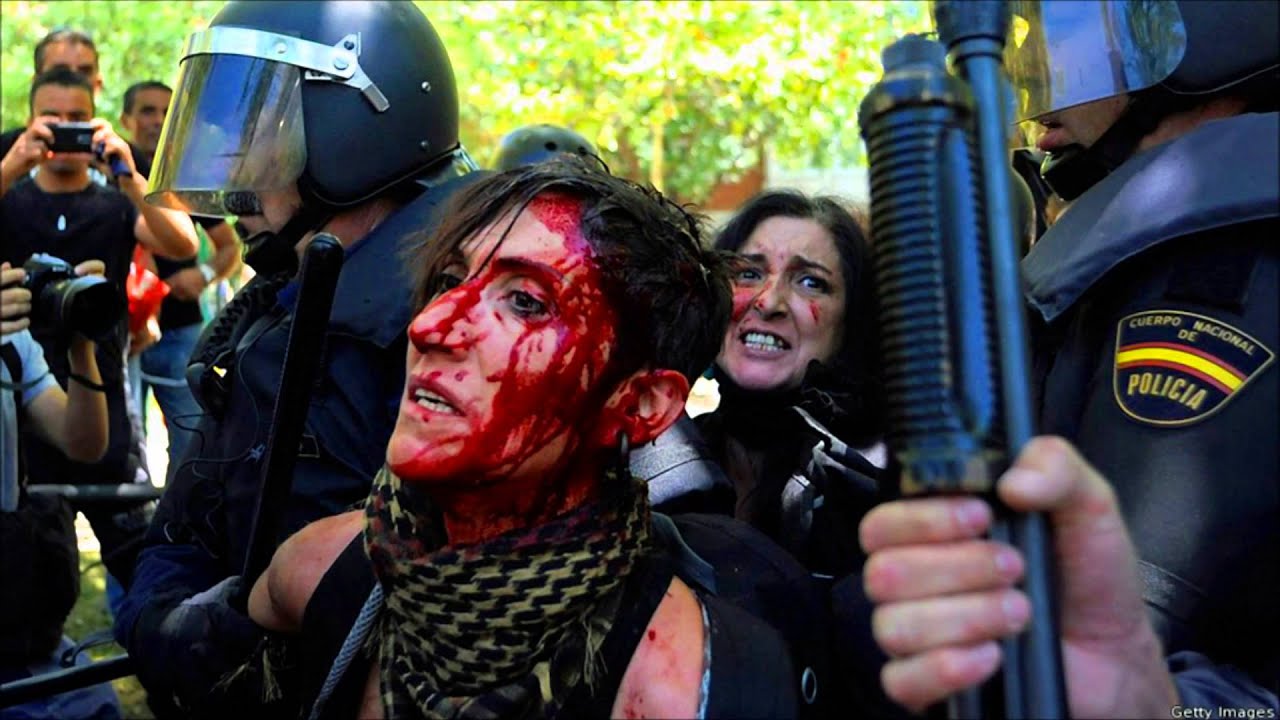
The song tells the story of an explosion in the infamous Maria Luisa mine. A miner comes home from a mine blast in which four miners were killed. He is covered in their blood, and in his own, his head split wide. And he calls to his wife, Maruxina, and has one request: “mirái.” “Look.”

“mirái, mirái Maruxina, mirái / mirái como vengo yo”.

Look. Look Maruxina, look. Look at how I am.

This is a song traditionally sung by men, but times are changing.

Last month, the Spanish government announced it would cut subsidies to the coal mining industry by 63%. That would mean the end of coal mining in Spain. And that would mean the end of the mining provinces: Asturias, Castile and León. The miners engaged in local actions, and then declared a general strike. They have organized a Black March, which should arrive in Madrid on July 11, when the Prime Minister will report on the bank bailout and the economy.

Though a distinct minority, there are women miners now in Asturias. Women such as Ana Sánchez, who is on the Black March. She marches for herself, for her comrades, for her community, for her daughter and granddaughters. Somewhere right now she is singing the words to En el pozo Maria Luisa: “mirái, mirái Maruxina, mirái / mirái como vengo yo”.

Before the miners started walking, another group leapt into action, the women of coal, las mujeres del carbon. On June 18, some 400 showed up at the Senate in Madrid, at the discussion of the budget. 110 were allowed into the chambers, and they raised a ruckus. They chanted, they roared, they thundered, “Aquí están, estas son, las mujeres del carbon”. “Here they are, and they are … women of coal.” And they stopped the proceedings, while they sang the words to En el pozo Maria Luisa.

They continued in the streets, and they continue to this day. Today, the Black March arrived in León. This morning, two hundred women went to the national highway that cuts through town, and they sat down. And they stopped traffic, all traffic, for two hours. And they sang: Look, look how I am.

A specter haunts Spain. Look: “Aquí están, estas son, las mujeres del carbon”. Look. They’re everywhere.


(Photo Credit: YouTube.com) (Video Credit: https://www.youtube.com/watch?v=x2FjKa7Bhwk)

Elderly? Disabled? Far from home? Afraid? Have we got a jail for you!

There are two stories concerning Lemlem Hussein Abdu. One is the story of the State. The other is her story.

Here’s the story of the State: are you an elderly disabled woman seeking asylum? If you are, have we got a prison cell for you! But there’s more. Almost immediately after caging you, we’ll send you `home’ to the very people and State that burned your village and killed your family. You’re welcome.

Lemlem Hussein Abdu is a 62-year-old woman living with disabilities, applying for asylum in the United Kingdom. She is, significantly, a resident of Sheffield.

Here is her story, as told on the petition “Lemlem must stay!”:

“Lemlem was born in 1950 in what is now Eritrea. In 1978 her village was burned down and her entire family was murdered during an attack by Ethiopian forces. Her family and neighbours were targeted due to their support for the Eritrean Liberation Front (ELF), which was fighting for independence from Ethiopia.

Lemlem fled to Sudan and then subsequently to Saudia Arabia, where she obtained a position as a domestic worker. In 2000, Lemlem’s employers visited the UK and took her with them. Lemlem had a fall and injured herself when looking after the family’s children and has never fully recovered. Her employers stopped paying her wages as she could no longer carry out some heavy physical tasks. Then, in 2007, on a subsequent visit to the UK, the family abandoned her, with no money and no identification.

Lemlem is unable to return to Eritrea due to her affiliation with the ELF, which is persecuted by the government there. The United Nations has called on all countries to cease returns of asylum seekers to Eritrea due to the severe human rights abuses that have been committed against returnees.

Lemlem claimed asylum but has been refused. She is not allowed to work and receives no support, so has to rely on short-term help from a local charity, help which is now running out.

Despite her difficult position, Lemlem has a positive outlook. She is working hard to improve her English and is an active and well-loved member of her local community in Sheffield.

The Home Office is currently planning to deport Lemlem to Ethiopia. This is despite the fact that she has never lived in Ethiopia and has no contacts there. Her age and disability (a very bad limp and eyesight problems) mean that she would be unable to obtain work and support herself in a new country. She would have no means of earning a living and no support whatsoever in Ethiopia and the language spoken is not her first language. Lemlem is furthermore a member of the ELF, which Ethiopia has been at war with.”

Last Tuesday, Lemlem went to initiate new asylum proceedings. She was immediately rejected and transported to Yarl’s Wood. She was told to prepare for a flight Sunday night to Ethiopia.

Sheffield is a City of Sanctuary, the first such city in the United Kingdom. When Lemlem was carted off, the people of Sheffield – Lemlem’s friends, neighbors, supporters and also those who hadn’t known her previously – organized, protested, marched, and obtained a bit of a reprieve. Today, Tuesday, there’s a meeting with the Home Office.

As Gina Clayton, a trustee of Sheffield’s City of Sanctuary, put it, “Lemlem is absolutely terrified to the core of being taken to Ethiopia. She has no family and no connections in that culture and no physical ability to work. She doesn’t speak the language and she probably would be reduced to begging. The chances are she would simply die of starvation.”

Absolutely terrified to the core. That is the sum total of an asylum policy that sees prison and deportation as the normative response to vulnerability and pleas for assistance. A policy that places so-called national security over human needs fills the human heart with absolute terror.


(Photo Credit: https://sheffieldrasag.wordpress.com)

Widows demand justice

Tomorrow, June 23, is International Widows Day. Around the world, widows are denied justice. They are dropped from social networks, they are forgotten, they are denied access to property, they are circled in by various `cultural’ and legal restrictions. Around the world. This is not about `the developing world’. It’s global.

Rio + 20 ends today. Many who care about the environment, in whatever way, are frustrated by the lack of meaningful action. Women and women’s advocates, in particular, object to the absolute failure of the conference to understand as fundamental the link between family planning and environmental justice. Family planning covers the entire arc of family history, from before cradle to the grave … or at least it should. Did you hear any major discussion in Rio about widows’ rights? Me neither. What about at the G20 meeting in Mexico City this past week? No? Neither did I. How will widows figure into the family planning summit conference in London, in July? Wait and see.

Widows around the world are of all ages, and they share more than grief. They share reduced access to means of survival and well being. Some are workplace widows, such as Shelly Anderson, Rhonda Burkeen, Sheila Clark, Nancy Curtis, Michelle Jones, Courtney Kemp, Tracy Kleppinger, Sherri Revette, Natalie Roshto, whose respective partners were killed in the Deepwater Horizon rig explosion, Have they received proper compensation? No. Do the widows of mining disasters receive proper compensation for their loss? Seldom.

Nanda Bhandare’s husband was a cotton farmer. Debts rose, Indian small farmers faced multinational agro-corporations and a hostile global market, bankruptcy and starvation loomed larger and larger. One day, Bhandare’s husband protested with his life. He drank enough pesticide to kill himself. He died, but his debts live on. Years later, his widow has taken the children out of school to work the fields to pay those debts. Each day, they move closer to death by starvation. Where is Nanda Bhandare in the global conference circuitry? Nowhere.

Around the world, widows are initially acknowledged and supported, especially after a catastrophe such as the recent airline crash in Nigeria. What happens next? Too often they are abandoned. Individuals, communities, agencies move on, feeling they have done their due diligence. They haven’t. We haven’t..

Around the world widows are organizing. In the Cross River State, in Nigeria, widows and their supporters are talking about what is needed: enhanced livelihood options through access to real education and equitable finance; increased cooperation among widows and widows-focused organisations through the formation of widows cooperatives and networks; increased public awareness on widowhood issues through information, education and communication; and, finally, enabling a policy environment for widows through an advocacy campaign.

In Nigeria, as almost everywhere, the condition of widows is lamentable, but it is not inevitable.

In Sierra Leone, for example, more than 20% of households are headed by women. Over a third of the women who are heads of households are widows. Women, like Gladys Brima, the founder of Women’s Partnership for Justice and Peace, are advocating, organizing, pushing. Women like Sia Bona are staking their lives on organizing. When Bona’s husband died, her in laws swooped in and pushed her and her mother off the farm, a farm that had been Bona’s father’s farm. The law says one thing, customary and traditional law says another. Women, and especially rural women, don’t live in `the State’. They live where they live, locally. Federal or national laws without built in requirements for local transformation are, at best, empty symbols. More often than not, they are tools of oppression, exclusion, and betrayal. Bona, Brima and other women in Sierra Leone are organizing at all levels to change that situation … now.

A version of that exclusion takes place almost everywhere. Widows must have more than a seat at the conference table. They must be prioritized, not just recognized. Thus far, they are not. Instead, widows haunt the discussion of global and of local justice. And they are organizing.


(Photo Credit: PTI)

Remember and recognize Alem Dechasa-Desisa and her sisters

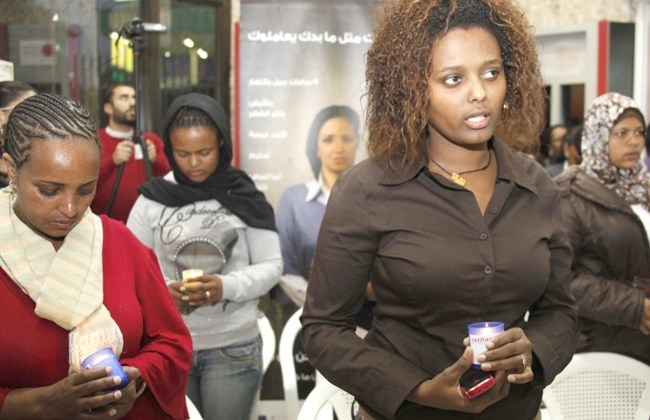
Ethiopian women hold a mass in memory of Alem Dechasa in Beirut, March 21, 2012

March 30 is International Domestic Workers’ Day. Around the world domestic workers, overwhelmingly women, work to clean households, cook, mend, care for children, for elders, for the sick, for those with disabilities. Around the world, domestic workers, millions upon millions of women and girls, travel to or wake up in other peoples’ homes and take care of their employers’ emotional well-being. Around the world, domestic workers organize and struggle with denial of payment, denial of social security, unpaid extended workdays, mistreatment, exploitation, abuse. So, when Ai-Jen Poo, of the National Domestic Workers Alliance, wishes her sisters happy international domestic workers’ day, the wish is as aspirational as it is of the present moment. It’s as hopeful as it is courageous.

Alem Dechasa-Desisa’s life story demonstrates that all too well. On March 8, a video started circulating. The video showed a young Ethiopian woman, presumed to be a domestic worker, pleading for help outside the Ethiopian Embassy in Beirut, Lebanon. A car pulls out. Men jump out, attack the young woman, kick her, knock her to the ground, and worse, and then force her into the car and disappear. All this was caught on video and then shown on Lebanese television news.

Later it was reported that the young woman was indeed an Ethiopian domestic worker, Alem Dechasa-Desisa, 33 years old. She was from Addis. She was the mother of two children. She arrived in Beirut in December 2011, less than three months earlier.

Dechasa-Desisa was suffering. According to her employer, she was suffering a nervous breakdown. Many in Lebanon doubt that was the case. Her employer dumped her at the Embassy, who did nothing. Worse, the Embassy told the employer to take Dechasa-Desisa to a mental health hospital. Take her anywhere. Take her away.

When the police found the young Ethiopian woman, they took her to the immigrant detention center, with the intention of deporting her. She cried so much she was taken … to a mental health hospital. Two days later, she was dead, by hanging. Suicide. Structural homicide. Alem Dechasa-Desisa was dead.

The video shocked Lebanon. The video shocked Ethiopia as well. The death of Alem Dechasa-Desisa disturbed Europe as well, and received some mention in the United States. But what exactly is the shock, the scandal?

The abuse of domestic workers is systemic. The abuse of transnational, migrant workers is, if possible, even more systemic. This new form of a very old situation is intensified by nationalism, racism, sexism. It is also intensified by the structurally induced greater vulnerability of the transnational migrant domestic worker. More often than not, she is a live-in worker. Her `home’ is her employer’s home. Live-in for a transnational migrant worker means more than being on-call 24 hours a day, although that would be bad enough. It means the worker is homeless. If she’s kicked out … there’s no place to go. If she leaves, there’s no place to go. Her very being on the street becomes a criminal act.

All domestic workers struggle with exploitation and abuse. All domestic worker struggle with the absence of any real possible response to exploitation and abuse, other than personal resistance. They know that no State will aid them. Quite to the contrary.

For transnational domestic workers, it’s worse.

The vulnerability of the transnational domestic worker is intensified by the reliance of the home country on the money earned and sent home by the workers who have traveled to richer countries. The home countries also rely, heavily, on the absence of those workers, the reducing of pressures to employ them. The home country needs its workers in other countries and it needs them `to behave’.

The Ethiopian Embassy responded to Alem Dechasa-Desisa’s pleas. It closed its doors.

Alem Dechasa-Desisa’s story is the story of young women on the move, around the world. Hers is the story of modern labor, young women workers struggling to make a living. Without strong unions, women domestic workers are left to their own devices. Without strong unions, women domestic workers’ stories only come to the surface when someone is abused in public and caught on video. Without strong unions, women domestic workers’ lives are defined, by the public, by `suicide.’

Women domestic workers define their own lives differently. Hard work. Advancement. Struggle. Shared laughter and tears.

Yesterday, Friday, March 30, 2012, was International Domestic Workers’ Day. Remember and recognize Alem Dechasa-Desisa and her sisters. Honor them as builders, as the women who have built the everyday lives of the entire planet, and support their organizing efforts. Happy International Domestic Workers’ World!

(Photo Credit: Daily Star)

Education cannot be stolen, handcuffed, or imprisoned

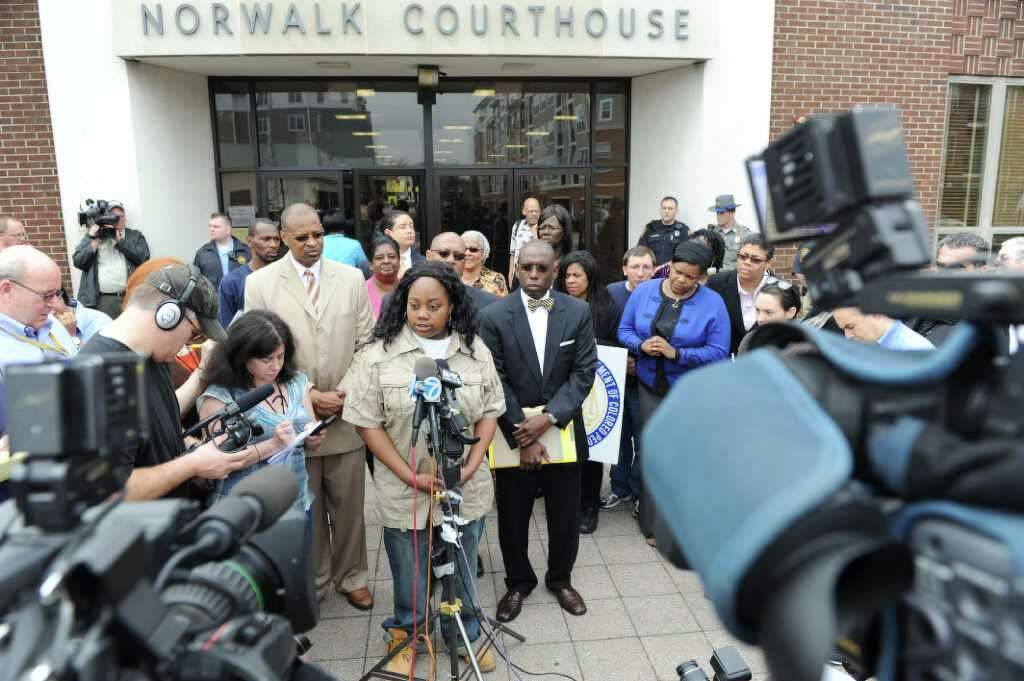
Tanya McDowell addresses reporters

Forty some years ago Paulo Freire argued against what he called the banking model of teaching and learning. That was then. Today, the bank  is gone, and a prison stands in its place.

Ask Tanya McDowell or Mireya Gaytan.

Tanya McDowell is a Black woman, a single mother, living with her 6-year-old son. She lives, officially, in Bridgeport. `Officially’ because in fact McDowell is homeless. Or she was last April when she was arrested, in Norwalk, for stealing education. Stealing education is a first-degree larceny offense.

McDowell registered her son in Norwalk, using the address of her babysitter. When this was `discovered’, McDowell was charged with theft. Two weeks ago, she pled out, and was sentenced to five years in jail and five years probation. That’s almost a year for each year of her son’s life.

The public story is `complicated’ by McDowell’s arrests and convictions for selling drugs. Thus, the trial in Norwalk, despite her attorney’s protest, was for both the sale of narcotics and the first-degree larceny, because, somehow, these have to be taken together. That way, it can be demonstrated that Tanya McDowell is not a woman trying to get a decent education for her child. No. She’s a bad mother. She must be. She sells drugs. And she’s not only a bad mother and a drug dealer. She’s Black, homeless, unemployed, underemployed.

The story hearkens to that of Kelley Williams-Bolar, the Black woman in Ohio who was found guilty of stealing education. The story is complicated by the ongoing narratives of the national and regional campaigns to criminalize Black women, and women of color, more generally.

And to criminalize their daughters as well.

Yajira Quezada is eleven years old. She lives, and goes to school, in Colorado. Earlier this week, she got into some trouble with the administration in her schooling, mouthing off or not showing proper respect or deference. So … they called in a counselor. That didn’t work. So … they called in “the school resource officer.” He handcuffed the eleven-year-old girl, took her into his squad car, and delivered her to the juvenile holding facility. As explained by the local sheriff, this is standard operating procedure for `transport’ of juveniles.

This public story is `complicated’ as well.  Children across the United States are subjected to such treatment regularly. School `resource officers’ routinely handcuff children; routinely take them off to juvenile `facilities.’ Children across the country are routinely dumped into `seclusion rooms’. Solitary confinement.  In Georgia, in Wisconsin, children have met their deaths in school-based solitary confinement.

Yajira’s mother, Mireya Gaytan, is outraged. She doesn’t want her daughter to be allowed to misbehave or show disrespect … to anyone. But she also doesn’t want her daughter to be treated as a criminal. In short, she wants her daughter to receive an education.

Tanya McDowell, Mireya Gaytan, two women in America who want their children to receive an education. Not a prison sentence. Not a death sentence. Not a criminal record. Not a trace memory on the wrists. Not a sense of overwhelming vulnerability. Not an indictment based on the color of skin, not a conviction based on where you live … or don’t.

An education.

Education is not merchandise. Those who seek education are not `clients’ or `customers’. They are human beings who know that education is always shared, always social. They are women and girls, and especially women and girls of color, who know that education cannot be stolen, handcuffed, or imprisoned.  Education is a human right, a civil right, a women’s right. Period.


(Photo Credit: Kathleen O’Rourke / Stamford Advocate)

The group, mostly women, entered the morgue

There is nothing to say about last week’s fire in Comayagua, Honduras. Nothing. A prison at 200 percent capacity is a tinderbox. A prison in Honduras, like prisons all over the world, are not only `congested’. They are filled with people awaiting trial. This detail somehow `complicates’ the situation, adds some sort of `irony’.

Because if they were convicted of crimes, well then … there would be no presumption of innocence.

There is nothing to say about last week’s fire in Comayagua, Honduras. It was a catastrophe long foretold. It was simply another sign of the chaos that is Honduras.

And you know … Honduras … it’s a banana republic, after all. Notorious for its prisons and violence.

There is nothing to say about this week’s fire in a factory in Bhalwani village, in Solapur, Maharashtra, India. Nothing. On Monday, a fireworks factory `suffered’ a fire. Five women workers, at least, were burnt alive, at least nine women workers were injured, and 40 women workers were trapped inside the burning complex. Trapped.

The reports will say the fires were accidental. The one in Honduras, the one in India. The reports will say the death of those burnt alive is `tragic’. But the relatives and friends, and the survivors of the flames, the ones who walked out somehow, they know better. They know the work of mourning, they know the architecture of being-trapped.

They know that the burning factories and the burning prisons are part of the everyday of the global economy. These buildings in flames and the human bodies within them are not some ritual drama nor are they resistant pockets of primitive capitalism. They are the Shining Globe that has replaced the Brave New World. Shining India. Shining Free Trade Zones, such as the DR-CAFTA, Dominican Republic – Central America Free Trade Agreement. Smoke and ashes from sea to shining sea.

And every time the fire explodes, it is described as somehow exceptional. A throwback. It’s not. It’s the globe itself, today, now, here.

The women who come for their loved ones, they already know all this. They were struggling for their loved ones before the fire, and they will continue after the world’s attention has drifted elsewhere.

That is why the women stormed the morgue in Comayagua on Monday, the same day of the fire in Bhalwani.  That is why their demand for justice is total. Every corner of the prison, every corner of the nation-State that runs the prison, every corner of the Empire-State that runs the world economies on violence, must be swept clean.

But first … begin by honoring the dead, by reclaiming their bodies, by cleaning them of the ash and the gash, and returning them to the earth.

In the landscape of smoke and ashes, women must storm the morgues to reclaim their loved ones. There is nothing to say. Nothing.


(Photo Credit: NPR / Esteban Felix / AP)

Chilean resort worker Luz Herrera says `NO!’ to austerity

A funny thing happened on the way to austerity. Women workers said, `NO!” And won. This week, it happened in Chile.

Sebastián Piñera is the president of Chile. He is Chile’s first billionaire president. He is a family man. He says he is a “Christian humanist.”

In December of last year, Piñera was at a summit meeting in Mexico when, to `lighten’ the mood, he told a joke concerning the difference between a politician and a woman. The joke ends as follows: “When a lady says no, she means maybe; when she says maybe, she means yes; when she says yes, then she’s not a woman.” No one in the Chilean women’s movements or sectors laughed. Even Carolina Schmidt, Piñera’s Minister for Women’s Services, publically criticized the President.

Sexual violence is not funny. Neither is the exploitation of women workers.

This past Sunday, Piñera and his family were on their way to Mass, when three women workers from the Bahía Coique resort stopped him and started shouting. They explained that they had been working for years, were receiving criminally sub-standard and illegal wages, were forced to work too long hours with no time off. Piñera is part-owner of Bahía Coique, in the southern part of Chile.

The leader of the trio seems to have been Luz Herrera. She explained that she is a laundry worker who has worked at the resort for nine years. She hasn’t received a raise in three years. The salaries are below the minimum wage. She can’t take care of her family on the money she earns. There’s no contract, there’s no protections, there’s workers’ comp or health insurance. She’s forced to work without breaks and without days off, in the very place that the President goes `to relax’.

Piñera vacations, often, at Bahía Coique. That’s where he was when the women workers approached him. He was, no doubt, getting some down time after his grueling time making jokes on the summit.

The government response was textbook classic. First, they tried to ignore the women. Then they claimed that Piñera didn’t have any holdings in the resort. Then they argued that the President can’t be expected to pay attention to every detail of his vast holdings. It’s hard to see the workers from the commanding heights.

That was yesterday.

Today, Luz Herrera announced that she and her fellow workers had received a raise that would bring the company in compliance with the law. Herrera is neither impressed nor grateful: “For us, life is hard, but for him, as President, he always washes his hands of us. He’s rich, he has money, and so for him, it’s all fine and dandy. But for us, it’s not good. In fact, it’s very bad. I am not afraid of anyone. I began this, and I will see it to its conclusion, because it’s not just about me. It’s about all workers.”

The women students of Chile are indignant. The women workers of Chile are as well. And they are not afraid of anyone or anything. They have begun this, and they will see it to its conclusion. Ask Luz Herrera.


(Photo Credit: Radio Biobio)

Women do not haunt the State. They occupy it.


Around the world, women are taking to the streets in great numbers, to protest, to take charge, to transform. In the past couple weeks, women have led and populated mass protests and marches in Malawi, Uganda, Lebanon, Argentina, Romania, Chile, Haiti. Women have occupied Wall Street, Nigeria, and beyond.

Women have been the bearers, in every sense, of Spring … in Syria, Tunisia, Yemen, Bahrain. Today, January 25, women are returning to Tahrir Square … and to every square in Egypt. This is nothing new for northern Africa. Women, such as Aminatou Haidar, have born `spring’ in Western Sahara now for decades.

For women, the street does not end at the sidewalk. It runs, often directly, into the State offices.

Women are everywhere on the move, changing the face and form of State.

In Argentina, Cristina Fernández de Kirchner returned to her office today, after a 21-day health related absence, to resume her activities as President. On Thursday, January 5, Portia Simpson Miller was inaugurated, for the second time, as Prime Minister of Jamaica. On Monday, January 16, Ellen Johnson Sirleaf was inaugurated to her second term, of six years, as President of Liberia.

These are precisely not historic stories or events, and that’s the point. Women in positions of State power are women in positions of State power. Not novelties nor exotic nor, most importantly, exceptions. That is the hope.

But for now, that struggle continues.

In Colombia, women, such as Esmeralda Arboleda, helped organize the Union of Colombian Women, fought for women’s rights and power, and was the first woman elected as a Senator to the national Congress. That was July, 1958. Fifty or so years later, in January 2012, women in Chile launched “Mas mujeres al poder”, “More women in power”.  In tactics, strategies and cultural actions, Mas mujeres al poder builds on the work of student activists in the streets. Women are saying enough, women are saying the time is now, and women are pushing their way through the electoral process, with or without the political parties, into the provincial and national legislatures.

Meanwhile, in Bolivia, Gabriela Montaño was named President of the Senate and Rebeca Delgado was named President of the House of Representatives. Women are everywhere … and on the move.

On Tuesday, January 10, voters in Minnesota, in the United States, elected Susan Allen to the state legislature. Allen is the first American Indian woman to serve in that body. She is a single mother, and she is lesbian. Many firsts accrue to her election.

Across Europe, Black women are struggling and entering into legislative bodies with greater and greater success: Manuela Ramin-Osmundsen, originally from Martinique,  in Norway; Nyamko Sabuni, originally from the DRC, in Sweden; Mercedes Lourdes Frias, originally from the Dominican Republic, in Italy. The struggle continues … into the national and regional legislatures, into the political structures, into the cultures of power as well as recognition.

Across the African continent, women are on the move. In Kenya, women, such as Charity Ngilu, are set to make their marks in the upcoming elections … and beyond. Meanwhile, South Africa’s Minister of Home Affairs Nkosazana Dlamini-Zuma is running, hard, for the Chairpersonship of the African Union Commission. She would be the first woman in that post, and some say she would be the most powerful woman in Africa.

And in South Korea, four women, Park Geun-hye, Han Myeong-sook, Lee Jung-hee and Sim Sang-jung lead the three major political parties. Together, their three parties control 262 seats of the National Assembly’s 299.

This barely covers the news from the past three weeks. Everywhere, women are cracking patriarchy’s hold on and of power, in the streets, in the State legislatures, in the political structures. Today, and tomorrow, women do not haunt the State. They occupy it.


(Photo Credit: BeBlogerra)

Malawian women said today, “The future starts now!”


The Maravi Post headline pretty much says it all, “DON’T MESS WITH MALAWI WOMEN!

But actually, today, the women of Malawi said it, and sang it, and prayed it, and danced it, and shouted it, and did it better, much better, than any headline could claim.

The story, in brief, is a familiar one, around the world. Women are attacked in a public place, allegedly for wearing `provocative’ or `untraditional’ clothes. In this instance, vendors, or `vendors’, in the two major cities of Malawi – Lilongwe and Blantyre – attacked and stripped women, ostensibly for wearing pants and mini-skirts.

Bad move. Very bad.

The news media described the incidents largely as `trouser stripping.’ The women understood otherwise. They understood the actions as violence, as violence against women, and as violence against democracy.

First, women were beaten. How do you think a crowd of men forcibly undresses a woman … especially in public? By invitation?

Second, the women know that Malawi has a history of “indecency” laws. Eighteen years ago, the so-called indecency in dress laws were repealed, partly because they were an offense to women, largely because they were part and parcel of the dictatorship of Hastings Kamuzu Banda. An attack on women, an attack on women’s clothes, is an attack on democracy. Anywhere. Even in a `conservative’ country. Just because it’s conservative doesn’t mean women give up on their democratic rights.

Instantly, women started organizing, organizing boycotts of the vendors, demands and campaigns. One such campaign is called Lelo N’kugule, Mawa Undivule? Today I buy from you, tomorrow you undress me? Others call it Venda, Ndikugule, Undibvulenso??? Vendor, I buy from you and you strip me naked?

Good question. A very good question.

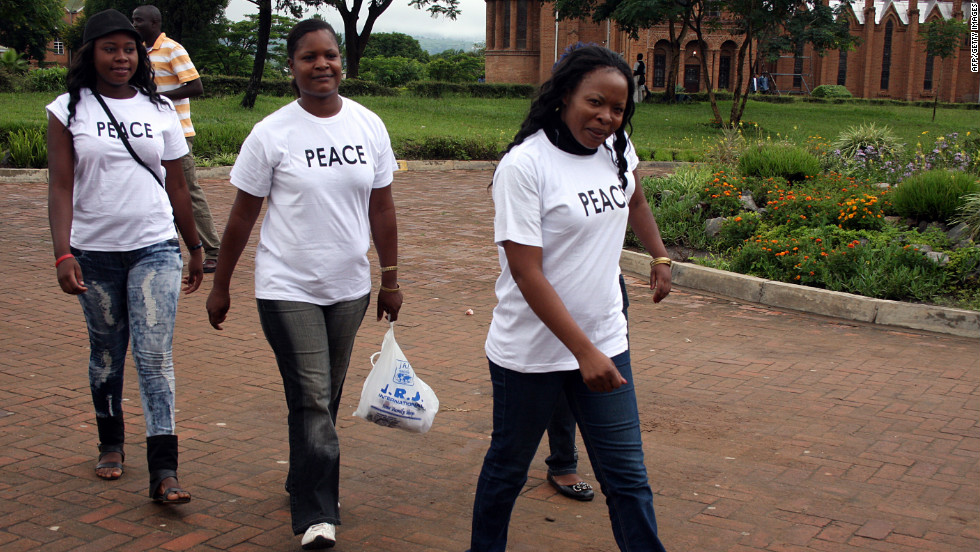
Today, Friday, the women of Malawi filled the streets of Blantyre. They brought some men with them, too. Some wore t-shirts emblazoned with “PEACE”, others wore all white. Many wore trousers, some wore mini-skirts … whatever those are.

Women of Malawi today did what they have always done. They organized. They organized for autonomous spaces. Autonomous doesn’t mean separate. It means spaces in which women’s autonomy is more than respected. They spoke of democracy. They expressed outrage, not only for themselves but for the ambitions of the nation. They said, “We are all Sophie Munthali”, one of the women who was beaten and stripped.

Someone asked `the question’, that question that always gets asked in moments of mass assaults on women: “Isn’t this really about economic hardship, about difficult times?” Women’s rights activist Seodi White answered directly, “In times of instability, women are targeted.” She then went on to explain that [a] instability is no excuse, [b] violence against women is an outrage, [c] violence against women is violence against democracy.

Repeatedly, the women invoked dignity and democracy. Don’t mess with Malawi women. That’s the news story, or should be. Malawian women said today, “The future starts now!”


(Photo Credit: CNN)