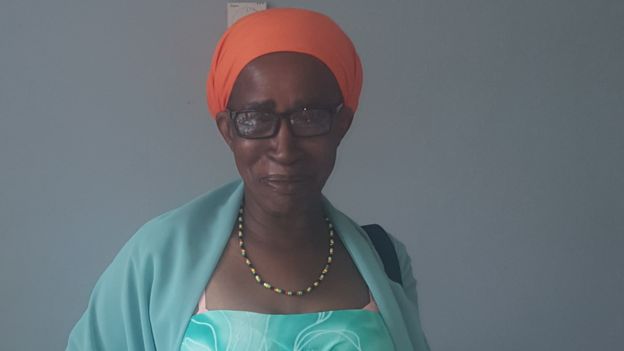
Haunts: Jackie Nanyonjo died last Friday

My grandmother did not die of uremic poisoning. She died because she was in hiding, in Nazi-occupied Brussels, and could not get the medical care she needed. And so she died and was buried in an unmarked grave in a potter’s field `somewhere in Brussels’.

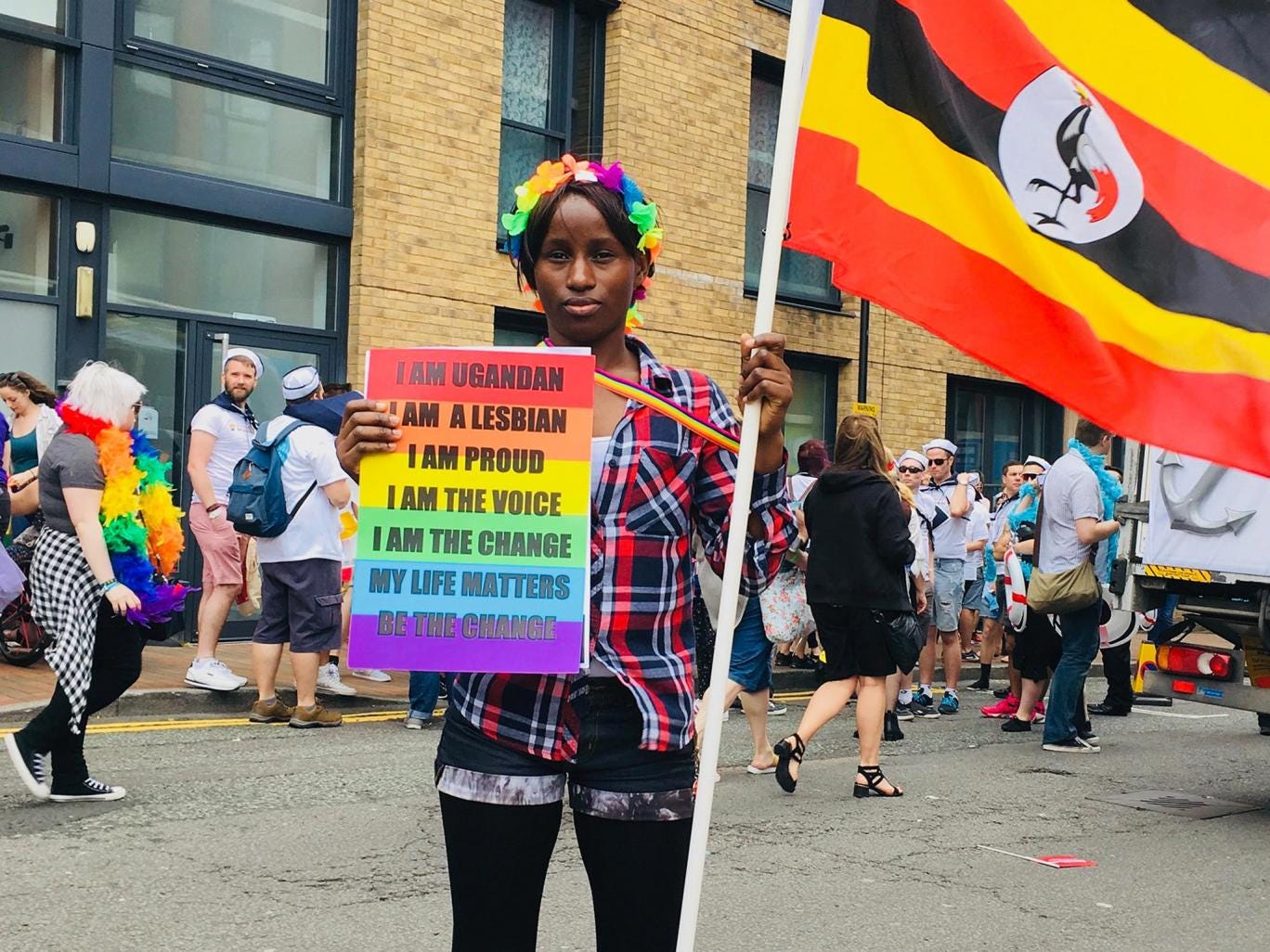
Jackie Nanyonjo died in Kampala, Uganda, last Friday. Jackie Nanyonjo was a lesbian who fled Uganda, made it to England, and applied for asylum. In so doing, she joined women like Betty Tibikawa, Linda Nakibuuka and so many other Ugandan lesbians who, having asked for safe haven, trade one rung of hell for another.

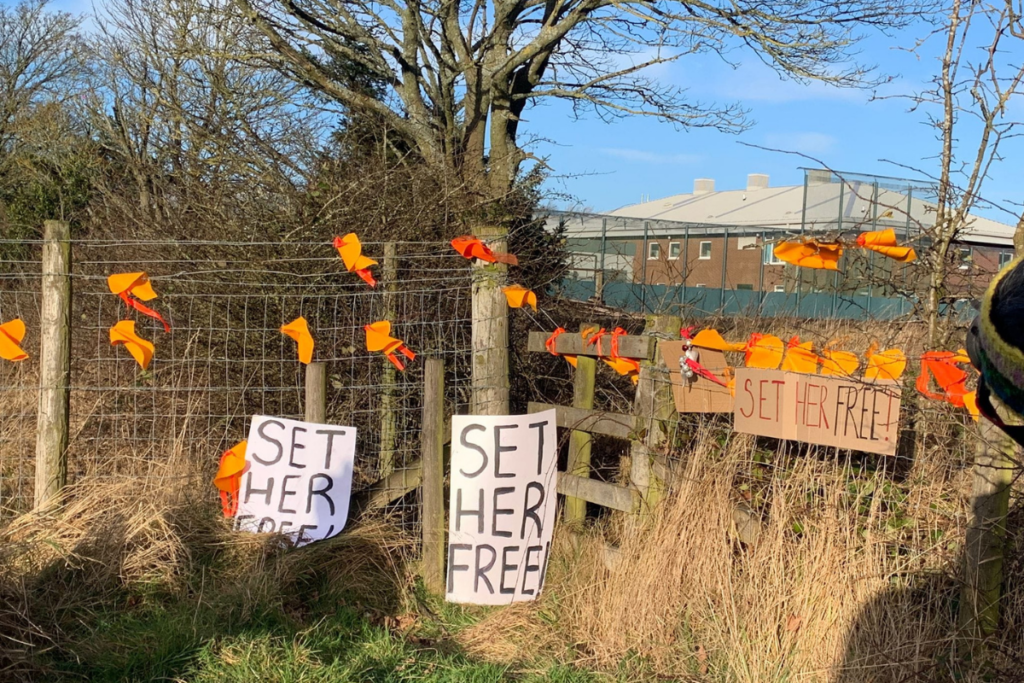
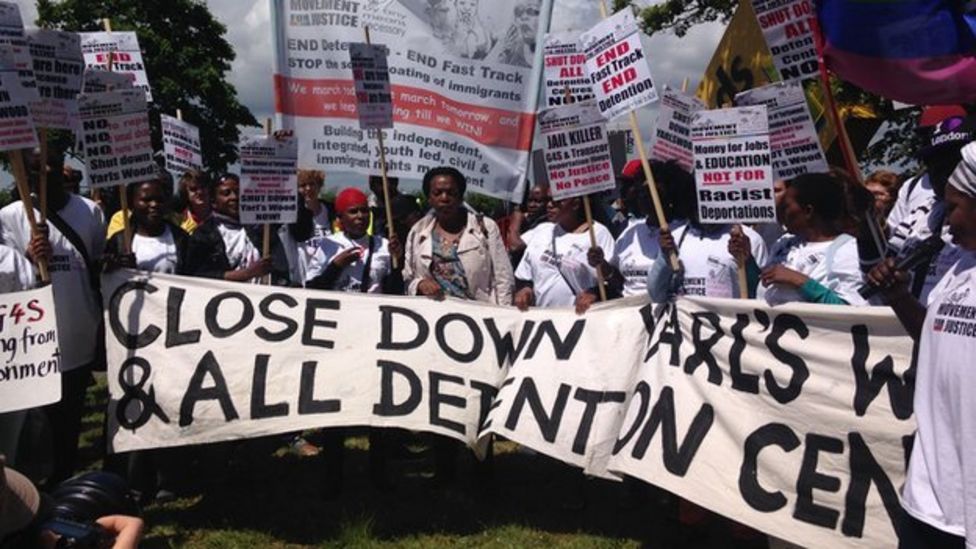
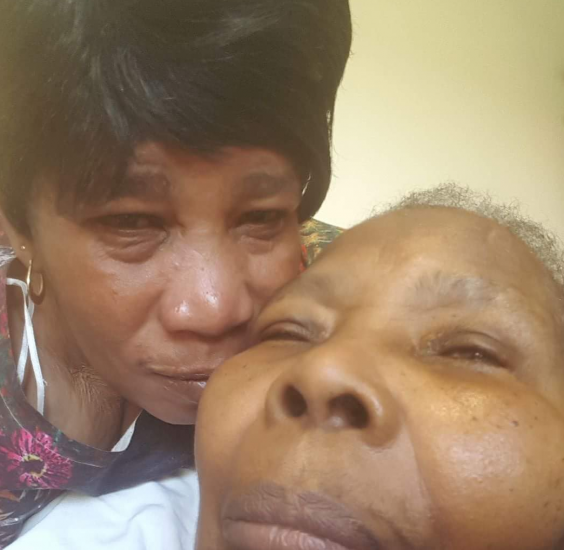
Jackie Nanyonjo fought for the rights, power and dignity of women, LGBTI individuals and communities, lesbians, asylum seekers. She fought for those rights on the streets; in the cells and corridors of Yarl’s Wood; and in the airplane that took her, abducted her more accurately, to Kampala two months ago. When she arrived in Kampala, she went into hiding. She didn’t contact members of the organized LGBT rights communities, most likely because of the current pogroms against lesbians and gays and their organizations. And so, on Friday, March 8, 2013, International Women’s Day, Jackie Nanyonjo died, in hiding, in Kampala.

Friends report that she was in poor health in the United Kingdom and in very poor health when she arrived in Kampala.

My grandmother did not die of uremic poisoning. Jackie Nanyonjo did not die of poor health. They were both killed. May they both rest in peace. May we do better than merely remember and intone their names.

Dan Moshenberg dmoshenberg@gmail.com

Haunts: Welcome, asylum seeker, to the society of the queer spectacle

In the United Kingdom, gay asylum seekers increasingly feel pressured to prove they are gay. In the last three years, the United Kingdom Border Agency rules, and application of rules, for those seeking asylum based on persecution of sexual minorities in their home countries have changed.

Previously, the policy was one of `discretion’, in which gay asylum seekers’ applications were rejected because, it was felt, the asylum seeker merely needed to act with greater discretion. If she or he was tortured, it was her/his fault. If she or he was killed, again, her/his fault. If she or he was kicked out of family and community and left to suffer the ravages of the streets, she or he should have known better. It was a policy of shut up, go away.

In 2010, a Supreme Court decision changed that. In the case of HJ(Iran) and HT (Cameroon) vs. Secretary of State for the Home Department, an Iranian gay man feared imprisonment and lashing, while a Cameroonian gay man was terrorized by his neighbors. The Court rejected discretion: “An interpretation … which denies refugee status to gay men who can only avoid persecution in their home country by behaving discreetly (and who say that on return this is what they will do) would frustrate the humanitarian objective of the Convention and deny them the enjoyment of their fundamental rights and freedoms without discrimination. The right to dignity underpins the protections afforded by the Refugee Convention.”

Since then, with mounting austerity-led, privatization-pushed campaigns by the State to close the non-existent asylum pipeline so as to protect the country from the non-existent tsunami of asylum seeking detritus, that compassionate “opening” has been translated into a cross between a peep show for the State.

Gay? Lesbian? Transgender? From a dangerous, toxic place, which could be your household, could be your neighborhood or `community’, could be your country, because you’re gay or lesbian? Prove it. Hunted down by the State and/or Civil Society because of your sexual minority status? Prove it. If you don’t have the scars to prove it, well … show us some skin.

It’s the society of the spectacle, in which gay and lesbian asylum seekers, who have not only suffered so much but have had to work strenuously to finally make it to “safe haven” are told they must labor some more … now to prove their sexual identity. In 1967, Guy Debord described a new society of the spectacle, in which labor and capital were shifted from production of goods to production of spectacle. He began writing and thinking of an “integrated spectacle (that) has transformed the world economically … using police methods to transform perception”. In 1992, Debord wrote: “The same formidable question that has been haunting the world for two centuries is about to be posed again everywhere: How can the poor be made to work once their illusions have been shattered, and once force has been defeated?”

How? Make them work to prove their claims to identity. Make them work to prove their claims to existence. This is where the spectacle of queer asylum seekers makes economic sense.

A lesbian woman from Uganda fled for her life to the UK. Upon arrival, “the UKBA officials wanted me to prove that I was lesbian but they wouldn’t tell me how I could.” Her application was denied. She spent months in Yarl’s Wood. She brought copies of Ugandan newspapers that called for her murder if she should be seen in Kampala. These were disregarded. Finally, she was given asylum. But first she had to do all the work. The State said no, sat back, and watched.

There all sorts of legal debates about the implications of the Supreme Court decision, touching on `queer cases’ and the law, the legal meaning of discretion, where lines should and shouldn’t be drawn, assessment protocols for LGBTQ asylum seekers, good sense and common sense, the centrality of LGBTQ rights on the map of human rights, the rights of gay men and lesbians to live freely, openly and on equal terms. The list goes on.

But there’s something else, something not of the courthouse but rather of the everyday world of work. Major investments are made in prisons and their outlying service networks for asylum seekers. It costs money to house a Ugandan lesbian asylum seeker for months. It costs money to threaten her with deportation, day in and day out. Major profits emerge from those investments. At the same time, there’s a newer form of extraction, that of making the asylum seeker work to prove identity claims. So … welcome gay man, lesbian woman. You have traveled so far and struggled so much. Welcome to your new workhouse, your new poorhouse … your body, your self, the new, and not so new, queer spectacle.

Dan Moshenberg dmoshenberg@gmail.com

Haunts: Is Marie Therese Njila Nana a human being? Are you?

Subjected to the trials of Job, Marie Therese Njila Nana has survived with dignity, and is rewarded, by the United Kingdom, with prison and worse.

Nana is from Cameroon. In her area, her family was fairly prominent. When Marie Therese Nana converted to Pentecostalism, her family took, bound her, tortured and beat her. She fled to another part of the country, joined a local Pentecostal Church, and tried to begin a new life.

She lived in that town for ten years. Then the Church decided she must marry a Church elder. Nana refused, and was forced to move again, to avoid violence.

She met a man from another tribe, whom she married. Her family discovered this and sent nine masked family members to her house. They beat her.

Her husband left for Germany, for work. Threats, and worse, from Church and family escalated. Marie Therese Nana tried to reconcile with her family. She returned home to meet with her parents, or so she thought. Her family held her for days, beating her senseless and humiliating and degrading her, all in an attempt to `purify’ her. Then they took her to the police, where she was further beaten.

Marie Therese Njila Nana then fled, to England, where she applied for asylum. Which was denied. The Home Office claims that Marie Therese Njila Nana can return safely to Cameroon, because there are `support services’ available. Not the police, notoriously corrupt and violent and beyond reproach. Her family has proven its capacity to reach her anywhere in the country. The Pentecostal Church as well is all over the place. And her name is known. But somehow the United Kingdom Border Agency has decided that Marie Therese Njila Nana is not a true candidate for asylum.

And so they sent her to Yarl’s Wood, where she has been for the last nine months. Nana describes her experience in Yarl’s Wood as torture. According to doctors, she is clearly suffering from trauma, and has received no medical attention. To the contrary, guards have taunted and harassed her.

This is not surprising from an agency that commonly and blithely uses forces on pregnant prisoners. This is not surprising from an agency that, in report after report, is found to treat prisoners with abuse, violence, and viciousness. Prisoner after prisoner reports that the staff treats them “like dogs”, like animals. Marie Therese Nana puts it succinctly: “English people need to know that there are concentration camps in their country where aliens are tortured and oppressed.”

And now, the United Kingdom plans to send Marie Therese Njila Nana back to Cameroon. What’s the reward an African woman gets for having survived violence after violence after violence? More violence.

Marie Therese Njila Nana asks, “Am I a HUMAN BEING? I ran from my country to save my life and I just seek asylum. After destroying me mentally more than 8 months now they plot to send me back to my killers.” But the real question is this, “Are we human beings?” Only concerted and collective action to stop the flight, and all the flights, will do, if we want to answer, “Yes. Yes, we are human beings.”

Dan Moshenberg, dmoshenberg@gmail.com

Haunts: Elderly? Disabled? Far from home? Afraid? Have we got a jail for you!

There are two stories concerning Lemlem Hussein Abdu. One is the story of the State. The other is her story.

Here’s the story of the State: are you an elderly disabled woman seeking asylum? If you are, have we got a prison cell for you! But there’s more. Almost immediately after caging you, we’ll send you `home’ to the very people and State that burned your village and killed your family. You’re welcome.

Lemlem Hussein Abdu is a 62-year-old woman living with disabilities, applying for asylum in the United Kingdom. She is, significantly, a resident of Sheffield.

Here is her story, as told on the petition “Lemlem must stay!”:

“Lemlem was born in 1950 in what is now Eritrea. In 1978 her village was burned down and her entire family was murdered during an attack by Ethiopian forces. Her family and neighbours were targeted due to their support for the Eritrean Liberation Front (ELF), which was fighting for independence from Ethiopia.

Lemlem fled to Sudan and then subsequently to Saudia Arabia, where she obtained a position as a domestic worker. In 2000, Lemlem’s employers visited the UK and took her with them. Lemlem had a fall and injured herself when looking after the family’s children and has never fully recovered. Her employers stopped paying her wages as she could no longer carry out some heavy physical tasks. Then, in 2007, on a subsequent visit to the UK, the family abandoned her, with no money and no identification.

Lemlem is unable to return to Eritrea due to her affiliation with the ELF, which is persecuted by the government there. The United Nations has called on all countries to cease returns of asylum seekers to Eritrea due to the severe human rights abuses that have been committed against returnees.

Lemlem claimed asylum but has been refused. She is not allowed to work and receives no support, so has to rely on short-term help from a local charity, help which is now running out.

Despite her difficult position, Lemlem has a positive outlook. She is working hard to improve her English and is an active and well-loved member of her local community in Sheffield.

The Home Office is currently planning to deport Lemlem to Ethiopia. This is despite the fact that she has never lived in Ethiopia and has no contacts there. Her age and disability (a very bad limp and eyesight problems) mean that she would be unable to obtain work and support herself in a new country. She would have no means of earning a living and no support whatsoever in Ethiopia and the language spoken is not her first language. Lemlem is furthermore a member of the ELF, which Ethiopia has been at war with.”

Last Tuesday, Lemlem went to initiate new asylum proceedings. She was immediately rejected and transported to Yarl’s Wood. She was told to prepare for a flight Sunday night to Ethiopia.

Sheffield is a City of Sanctuary, the first such city in the United Kingdom. When Lemlem was carted off, the people of Sheffield – Lemlem’s friends, neighbors, supporters and also those who hadn’t known her previously – organized, protested, marched, and obtained a bit of a reprieve. Today, Tuesday, there’s a meeting with the Home Office.

As Gina Clayton, a trustee of Sheffield’s City of Sanctuary, put it, “Lemlem is absolutely terrified to the core of being taken to Ethiopia. She has no family and no connections in that culture and no physical ability to work. She doesn’t speak the language and she probably would be reduced to begging. The chances are she would simply die of starvation.”

Absolutely terrified to the core. That is the sum total of an asylum policy that sees prison and deportation as the normative response to vulnerability and pleas for assistance. A policy that places so-called national security over human needs fills the human heart with absolute terror.

Dan Moshenberg, dmoshenberg@gmail.com

Haunts: We don’t burn children anymore. We send them to prison.

Monday, November 21, 2011, must have been Juvenile (In)Justice Day. Juvenile (In)Justice appeared everywhere, in the news.

In Kashmir, there’s juvenile (in)justice. Children charged with throwing stones are treated, formally, as terrorists. They can be jailed, caged, for up to two years without a trial. Children are placed in adult prisons, while awaiting trial and when convicted. And they will be convicted. Yes, there are laws that protect juveniles. But those laws don’t matter in a state of emergency. Children don’t matter in a state of emergency. They aren’t `juveniles’, and they aren’t `youth’. They’re children.

The state of emergency, the so-called public safety crisis, is always an alibi. States abuse children. In Kashmir, there’s juvenile (in)Justice, and the excuse is crisis. In Malawi, where there is no state of emergency, juvenile (in)justice is simply business as usual, the price of maintaining order. The law says children under 18 deserve special treatment and protection. In fact, children are tried in adult courts and then sent to overcrowded adult prisons. That is the rule of law… everywhere. Take children and maximize their vulnerability.

And then lie about it.

That’s what the United Kingdom has been doing, systematically lying about the abuse of children of asylum seekers and, worse, of asylum seeker children. Sexual abuse. Other forms of physical abuse. Psychological abuse. Spiritual abuse. Of course, there are no laws that address the crimes of breaking the spirit of a child. What’s going on in the United Kingdom is not `merely’ officials lying. It’s Official Lying. The State defines democracy by lying and then chants, “This is what democracy looks like.”

The ministers lie, the professors lie, the television lies, the priests lie. . . .
These lies mean that the country wants to die.”

And then finally, in the name of security, stability, sovereignty, and, of course, peace, the State, in this instance the United States, proposes a budget that would gorge on prisons and gouge youth of resources, of hope, of life itself. Again, the youth, the juveniles, they’re children.

Meanwhile, cities, like New York, work on plans to increase the use of solitary confinement. It’s called “punitive segregation”, and it preys in particular on `juveniles’, those prisoners living with mental disabilities, and those awaiting trial. Maximize vulnerability. It’s a kind of efficiency that brings education, mental health care, and justice itself to a screaming, screeching halt.

None of this is new or news, of course. The abuse of children in prison is systemic. In the United States, for example, photographer Richard Ross has been exposing juvenile (in)justice for years, and it’s everywhere. It’s the fabric of national democracy. It’s today’s version of burning children, as Robert Bly wrote, some four decades ago:

“But if one of those children came near that we have set on fire,
came toward you like a gray barn, walking,
you would howl like a wind tunnel in a hurricane,
you would tear at your shirt with blue hands,
you would drive over your own child’s wagon trying to back up,
the pupils of your eyes would go wild—

If a child came by burning, you would dance on a lawn,
trying to leap into the air, digging into your cheeks,
you would ram your head against the wall of your bedroom
like a bull penned too long in his moody pen—
If one of those children came toward me with both hands
in the air, fire rising along both elbows,
I would suddenly go back to my animal brain,
I would drop on all fours, screaming,
my vocal chords would turn blue, so would yours,
it would be two days before I could play with my own children again.”

The news Monday was this. We don’t burn children anymore. We send them to prison.

Dan Moshenberg, dmoshenberg@gmail.com

Haunts: The children just can’t stop crying

Today, November 10, 2011, Angola marked its 36th Independence Day. How does Europe mark Angola’s independence?

Jimmy Mubenga was on `hit list’ in Angola, and so he fled to England. He applied for asylum. Denied asylum, he was put on a plane. His wife and five children remained in England. Mubenga resisted deportation. He was forcibly placed on a plane and, according to witnesses, killed by G4S escorts. His widow, Makenda Kambana, reported, “The children just can’t stop crying and I don’t know what to say to them.” That was then. A year later, Makenda Kambana reports that little has changed, except, perhaps, for her education. Now she knows that her husband was not an anomaly, that he was part of a culture of mistreatment and abuse of people of color by the so-called escorts. What does she say to her children now?

That was 2010.

Five years earlier, Manuel Bravo, suffered a related fate. Bravo had arrived in England, with his wife Lidia and two sons, in 2001. He had been imprisoned for pro-democracy activities, and his parents and sister had been killed. In 2004, his wife took their son, Nelio, and returned to Angola, to take care of ailing relatives. She was arrested, and, upon release, fled to Namibia. Manuel Bravo was denied asylum, and then, in the middle of the night, border agents came to the house, took him and his son, Antonio, to the notorious, privately run Yarl’s Wood Immigration Removal Centre, and told them to prepare for deportation the next day. That night, Manuel Bravo hanged himself, leaving a note that read, in part, “I kill my self, because I don’t have life for live any more. My son Antonio stay here in UK to continue his studying. When he grow up, he [illegible] your decision. I really sorry because I can’t return to Angola.”

Antonio did in fact stay in England. He did pursue his studies. He grew up to be a fine young man. And his reward, now that he’s an adult? The government seeks to deport him. Happy birthday, Antonio, welcome to adulthood.

And then there’s Amalia and Tucha. Amalia is 17; Tucha is 19. Their father was killed, for political activities. Tucha was raped. In 2005, alone and unaccompanied, they fled Angola. Last year, after living in the Netherlands for five years, they were denied asylum and peremptorily shipped back to Angola. No matter that Amalia was a minor. No matter that no one can locate their relatives.

Amalia explains, “A group of policemen entered our bedroom in the middle of the night. They said: ‘Pack your stuff.’ I said: ‘Why, why, why? I’m not yet 18!’ But they grabbed us and put us on a plane. Five people accompanied us; I don’t know who they were. I just cried and cried.”

I just cried and cried.

This is the narrative of empire: The children just can’t stop crying.

Dan Moshenberg, dmoshenberg@gmail.com

Haunts: In the UK, disbelief haunts the asylum process for women

Two hundred years ago, poetic faith was described as “that willing suspension of disbelief.” At that point, a culture of disbelief meant folk cultures and fantasy were relegated to the dustbin of history by `the lettered classes.’ Today, disbelief sends women asylum seekers to prison. Progress?

In the United Kingdom, women asylum seekers encounter a “culture of disbelief.” When Asylum Aid looked into the situation of initial decision-making in women asylum seekers cases, they found that 87 percent were turned down at the first hearing. Why? The UK Border Agency agents didn’t believe the claims. 87 percent is high, but that’s actually not the higher math. 42 percent of the rejected claims were overturned on appeal. In fact, 50% were ultimately overturned. The over-all average for overturning rejected appeals is 28%. That means that women’s stories are discounted as lies, at least by the border agents who make the preliminary decisions.

And it gets worse. Women wait longer than men to hear a final decision. How do they live while waiting?

In Scotland, all asylum seekers receive free healthcare. This includes those whose claims have been rejected. This means women. First, women make up a proportionately large part of those appealing, post rejection. Second, addressing women’s health concerns and, even more, women asylum seekers’ health concerns by engaging with the women as autonomous persons helps bring them into the larger and everyday social world. It is part of a larger Scottish project of refugee integration. But Scotland is the exception. For the rest of the United Kingdom, for Westminster, the situation is toxic, lethal.

Asylum seekers do not need to labor under the additional burdens, or are they punishments, of isolation and desperation. And depression. The vast majority of women asylum seekers are fleeing sexual and physical violence. Add to that isolation and a dehumanizing process, and you have a perfect recipe for self-harm and worse.

What is the architecture of the culture of disbelief? Prison. Private prison, at that, such as Yarl’s Wood, run by Serco. The typical scenario for a woman asylum seeker is travel long distance, end up in an overcrowded room with tons of strangers, approach a person sitting, austerely, behind a glass, and then, in a loud enough voice to be heard by a bunch of people, tell him or her the story of how you were violated. And then suffer rejection, being called a liar. And then go to Yarl’s Wood … or some other prison.

Welcome to the so-called “culture of disbelief.” Welcome to `democracy’.

It’s not disbelief. It’s efficiency. If 87 percent of the storytellers are rejected, that’s because the judge isn’t listening. Anyway, it’s more efficient to reject 87 percent, even if half will be overturned. Think of the savings from those who don’t appeal and from those who appeal and don’t succeed. And then think of the profits generated through the incarceration of innocent women courageous enough to tell their stories to strangers, courageous enough to seek a better world, despite all odds. That’s extraction of value, of profit, from time, from flesh, from pain and suffering, from degradation, from women.

This system, this version of `democracy’, was established during the bubbly times, during the economically ascendant times … for some. What is coming, as the UK charges from efficiency to austerity, is predictable. More cuts. Cuts to legal aid. Cuts to health services. Cuts upon cuts.

What is needed is a national campaign of willing a suspension of the culture of disbelief. Call it …  democracy. Call it, as well, feminism.

Dan Moshenberg, dmoshenberg@gmail.com

Haunts: Betty Tibikawa’s asylum nightmare

Betty Tibikawa is a Ugandan lesbian who has applied for asylum in the United Kingdom. She has been turned down and sits in Yarl’s Wood, waiting to be deported, struggling to live.

Betty Tibikawa’s family has disowned her. The infamous Ugandan tabloid, the Red Pepper, identified Tibikawa as lesbian, and so extended the threat to her life and well being.

And she has been tortured. Having just graduated from high school, Betty Tibikawa was preparing to go to university in Kampala when three men abducted her. They took her to an abandoned building and branded her thighs with a hot iron. They left her unconscious. She remained at home, in bed, for two months. In the home of the family that then disowned her for being lesbian.

The United Kingdom Border Agency has decided that Betty Tibikawa shall not receive asylum. The scars are real, and they do indicate having been branded with a hot iron, but she shall not remain in the United Kingdom. Has the agency decided, despite all evidence to the contrary, that Uganda is now magically safe for LGBTQ persons? That can’t be. There’s too much evidence to the contrary. Is Betty Tibikawa not lesbian enough for the UKBA, and thus not in enough danger? Being tortured, being abducted, being threatened by a national newspaper, being disowned and abandoned by one’s family aren’t enough? What would be credible enough?

Betty Tibikawa’s story is an old story, a familiar story. In pleading for asylum, Tibikawa is  “at the mercy of states not only jealous of their own sovereignty but dominant on the international scene, pressed to intervene here rather than or sooner than there”. Hers is a story of mercy, a test of the sovereign nation-State’s capacity to engage in mercy. The State has failed … again.

She has come before strangers and revealed herself. She has been prodded, poked, interrogated, poked again, prodded again, all in the name of some sort of science. In this, Betty Tibikawa mirrors Saartjie Baartman, a Khoisan woman brought to France, an African woman who, in the end, “craved … mercy. Mercy. I was one colored woman against a thousand dead white men.” All she craved was mercy. She found none. She found, instead, European men who claimed science, who claimed mercy.

Betty Tibikawa mirrors as well Joseph “John” Merrick, the “Elephant Man”, who looked at the world of English scientists and doctors and wondered aloud, “If your mercy is so cruel, what do you have for justice?” The doctors responded that Merrick had much to learn about science, about religion, about mercy.

Where is mercy?

Is it to be found in a court of law? Does mercy abide anywhere in the processes of asylum? Do mercy and justice ever meet? What crime did Betty Tibikawa commit? The crime of self knowledge? The crime of knowing whom she loves? The crime of love itself?

Betty Tibikawa says she can’t sleep and has terrible nightmares. The current practice of asylum is a nightmare, a nightmare from which we all must try to awake. Meanwhile, Betty Tibikawa waits to be deported back to Uganda.

Dan Moshenberg, dmoshenberg@gmail.com

Haunts: I’m a human. I know the fear

The governor of Texas recently declared a state of legislative emergency. The emergency is sanctuary. Cities in Texas are declaring themselves `sanctuary cities’ or are acting as such, and that somehow threatens Texas.

The Texas House of Representatives leapt to action and dutifully passed a bill, HB 12, that would effectively outlaw sanctuary zones. The moment the bill passed, House Representative Ana Hernandez Luna requested to speak to the body, as a matter of personal privilege.

Representative Luna explained that she, her sister, and her parents had come to Texas from Mexico. The family overstayed their visa and lived in the shadows until the 1986 amnesty was signed, by Ronald Reagan. In the intervening twenty-five years, Ana Hernandez Luna attended and successfully completed grade school, college, law school, and was elected to the House of Representatives at the age of 27.

Representative Luna began her remarks by articulating the new version of W.E.B. DuBois’ color-line: “I’m not an alien. I’m not a problem that must be handled. I’m a human.”

She then described the new, and not so new, world order: the politics of fear: “I remember the constant fear my family lived with each day.”

And then Ana Hernandez Luna found it difficult, impossible, to simply speak the words. Tears began to flow, as she struggled to speak: “The fear my parents experienced each day as their two little girls went to school – not knowing the there would an immigration raid that day – and they wouldn’t be able to pick up their daughters from school – and not knowing who would take care of them if that were to occur . . . . The daily task of going to the grocery store to buy groceries might seem a simple task to you, but to us it was a death sentence, that one of my parents may be deported. . . . I know the fear.”

The Texas Senate managed to gut the bill, but the fear persists. Twenty-five years after receiving amnesty, after twenty-five years of steady work and accomplishment, Ana Hernandez Luna still lives, immediately and viscerally, with the knowledge of the fear and with the fear itself.

The politics, and the politicians, of fear dream of a world without sanctuary. Some say that when it comes to prison reform, to addressing mass incarceration, money trumps civil rights. When it comes to children, whose access to `civil rights’ is already tenuous, fear trumps sanctuary. It’s a war zone.

Seven years ago, Else Temesgen and her daughter Betty, who was seven at the time, fled to the United Kingdom. Else was fleeing, first, an abusive husband and, second, a situation of certain separation. Else is Eritrean-born, and her daughter is Ethiopian-born, and so, if the two had returned to Ethiopia, the mother would have been deported. They arrived in England and immediately applied for asylum.

The two were detained in a variety of centers before, finally, receiving asylum. Else describes Yarl’s Wood as “very horrible.” Asylum only came because of the intervention of a prominent local politician. Otherwise, they would still be in the shadowlands of immigrant detention … or worse. They know the fear.

The politics of fear sows only tears. Twenty-five years after coming out of the shadows, Ana Hernandez Luna lives with the knowledge of fear, a shared knowledge, a knowledge whose borders are expanding, and weeps. Twenty-five years from now, how will Betty tell the story of her sojourn in Yarl’s Wood?

What exactly is the nation-State that would be threatened by sanctuary? Sanctuary is not an emergency. If anything, sanctuary is holy. Sanctuary is a time and space in which the human can be recognized and sustained. “I’m a human.”

Sanctuary haunts the State of fear.

Dan Moshenberg, dmoshenberg@gmail.com

Haunts: Protection stalks transnational women workers

For many transnational women workers, life in the global economy is hard. They often deal with separation and alienation, abuse, isolation, and more, and worse. For some, the monetary rewards make it worthwhile. For others, the periods of autonomy, however partial, and the developing mastery of strange and foreign cultures is a kind of reward. For others still, over the years, they develop bonds, ties, community, intimacy. And for many, after all is said and done, they did what they felt they had to do, and really there’s nothing to be said, as far as they’re concerned.

That the contemporary world is a hard place for transnational women workers may be worth repeating, but it’s not news, and it’s not new. The `birth’ of the global economy, of world-systems of development and trade, with its reliance on women’s cheap and available labor, produced new species of vulnerability, precariousness, exploitation, hardship; and women workers have developed new strategies of survival with dignity and of struggle. We know this already.

The contemporary world is not only a hard place for transnational women workers. It’s an unforgiving place. Ask those whose names must be withheld. Ask them about `protection.’

There’s a woman from Moldova whose name must be withheld. At 14 she was abducted, forced into prostitution, and shipped from Moldova to Italy, Turkey, Hungary, Romania, Israel and the United Kingdom. For seven years, she was regularly beaten, raped, threatened with death. According to various reports, she was treated as a slave.

In 2003, she was arrested in a brothel in England. No one bothered to listen to, or to ask for, her story. No one asked if she needed, wanted or could use `protection’, and none was offered. Instead, she served three months in Holloway prison, and then was summarily turned over to the UK Border Agency. At Oakington detention centre, she was shot through the Detained Fast-Track system, and then ejected. It was all very efficient. Seek protection in this world, and ye shall find deportation.

The woman was shipped back to Moldova. The men who had kidnapped her in the first place knew she was coming, found her, savagely beat her, and forced her back into prostitution. Four years later, in 2007, she was again arrested in England and sent to Yarl’s Wood. There, someone from the Eaves Housing Poppy Project identified her as a refugee, and helped her to make a successful asylum claim. At last, someone saw her, identified her, as a woman, as a human being.

This week, four years later, the United Kingdom Home Office finally agreed to a `groundbreaking’ settlement with the woman, paying her a `substantial’ amount for having so efficiently sent her back into a place where she was destined to encounter extraordinary violence against her person.

Today, the woman remains anonymous, her name is withheld, because the men who kidnapped, tortured, and exploited her are still out there, and her life and the lives of her family members are in danger.

There is a woman from the Philippines whose name likewise must be withheld. She is a domestic worker in Dubai. She is 42 years old, the mother of one. She has worked as a maid for three years. She has worked in one household, where the conditions have been intolerable. And yet, for three years, she tolerated the intolerable. Finally, in January, she gave her boss a one-month notice, after three years of mental abuse, 16-hour work days, 7 days a week. Her boss refused to accept her resignation. He told her she must stay.

He said he controlled her. Her visa depended on her employer. He placed a visa ban on her, and informed the Dubai Naturalisation and Residency Department. The Department concurred. In Dubai, as in all the United Arab Emirates, a visa ban means one must leave and one can never return.

The employment agency that had placed her offered to replace her with a new maid. The employer refused.

Having exhausted every possible legal means, the woman fled. She sought refuge at the Philippines Overseas Labour Office. They offered to help her fight, to help her stay and find another job, to help her get the visa ban lifted.

But they could not offer the woman protection. In Dubai, every month, over fifty domestic workers appeal to their various embassies for help, for protection. This was just one more case.

The woman was arrested and taken to Al Wasl immigration holding prison, where she now awaits imminent deportation. “All I want to do is work hard for a good family. Now I have to go back with nothing. I can’t stand to tell my family in the Philippines, they rely on me for financial support.”

These stories of abuse are altogether unexceptional. They are absolutely ordinary stories of ordinary violence committed by ordinary employers, States, everyone against ordinary transnational women workers, women whose names must be withheld. They are part of the everyday, of the parable of protection that is global, intimate, and everywhere. In the global economy, protection stalks transnational women workers.

Dan Moshenberg, dmoshenberg@gmail.com