If elected, Amanda Burrows would be Vancouver’s first renter and woman mayor

Amanda Burrows

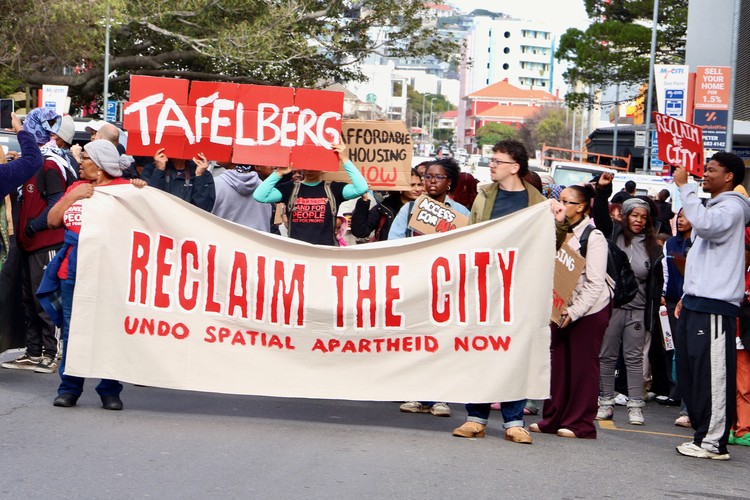
Who sets housing policy where you live? Renters? Homeowners? Or both? Does anyone in charge of housing policy in your area really know anything about the experience of facing eviction or, more drastically, of being evicted? Recently, Amanda Burrows announced her candidacy for the mayoral nomination of Vancouver. Burrows is “a prominent social justice advocate in Vancouver” as well as Executive Director of FIRST UNITED, a faith-based community services provider. Vancouver is Canada’s least affordable city. Burrows knows that. As she explained in a recent interview, “I have been evicted before, which is so many people’s stories in this city: being severed from the community and not finding a place to live because there’s barely any vacancy and it’s so expensive. I couldn’t even find a place if I wanted to.”

Burrows explicitly raises the question of renter representation in her campaign. In a world in which global, national and local economies have equated “wealth” and “development” with greater and growing inequality, increasing numbers of people are facing the varied and yet not so varied landscapes of “affordable housing crisis”. Part of that means more and more folks are renting. For example, according to a recent report, in the United States “the share of first-time home buyers dropped to a record low of 21%, while the typical age of first-time buyers climbed to an all-time high of 40 years”. That means many are putting off buying a home, and leaving the rental markets, for over a decade.

In 2022, researchers from Boston University and the University of Georgia published a report, “Who Represents the Renters?” The researchers pored over the data concerning 10,000 local, state and federal officials. Guess what they concluded? “We find that renters are starkly underrepresented by a margin of over 30 percentage points—a gap that persists across a variety of institutional and demographic contexts. Public officials are substantially more likely to own single-family homes that are more valuable than other homes in their neighborhoods. Collectively, these findings suggest deep representation inequalities that disadvantage renters at all levels of government.” 89% of city councilors were homeowners in sample cities where homeownership hovered around 51%. 83% of mayors and 76% of city councilors were homeowners. Finally, the average homeowning officeholder’s property was worth 50% more than the median value in their ZIP code.

The report concludes, “The underrepresentation of renters among elected officials is troubling and affects the kinds of policies discussed on the local and national stages.” Troubling, indeed. The troubling is not about this councilmember or that mayor, but about the composition of the body that decides, and in many instances creates, housing policy, and therefore housing itself. You may or may not live in Canada or the United States, but wherever you live, the question of renters and homeowners pertains. Amanda Burrows may or may not be elected, although I for one wish her well. The question here is the question asked by researchers a few years ago, as by researchers in mid-nineteenth century England: Who sets housing policy where you live? Renters? Homeowners? Or both? Does anyone in charge of housing policy in your area really know anything about the experience of facing eviction or, more drastically, of being evicted? Who speaks, whose voices and experiences are excluded?

Homeownership rates by office category

(By Dan Moshenberg)

(Photo Credit: Kate Hyslop / The Tyee) (Infographic: Katherine Levine Einstein, Joseph T. Ornstein & Maxwell Palmer, Who Represents the Renters)

If we are serious about housing affordability for wage earners

“If we are serious about housing affordability for wage earners, we must understand that the market alone will not deliver it.” Patrick Condon

On October 27, England (but not Scotland, Wales and Northern Ireland) officially enacted the long-awaited Renters’ Rights Act: “Central to the Act is its provision to abolish Section 21 ‘no fault’ evictions, under which private landlords have been able to remove tenants even if they have done nothing wrong.” Between July 2024 and June 2025, 11,400 households suffered Section 21 no fault evictions. There is no count of how many people found themselves homeless as a result. As happens so often, the term “households” conceals as much as it reveals, but suffice it so say, tens of thousands of people were given two months to find a place, people who had done nothing wrong and now faced homelessness. Again, “homelessness” covers as much as it conceals. Numbers exist for those in shelters or seeking assistance. No one knows how many moved in with family or friends … “temporarily”.

While the Renters’ Rights Act is a welcome change, and not only because of the abolition of Section 21, some must wonder why it took so much to eliminate no-fault eviction, and why it takes so much to do so in other countries, such as the United States? No fault eviction was always wrong, always a violation of people’s human dignity and human and civil rights, but in a climate in which living on the streets has itself become criminalized, it’s even worse.

The Renters’ Rights Act does more than abolish Section 21. It also bans landlords from refusing tenants that receive benefits or that have children and establishes a new Private Rented Sector Landlord Ombudsman, where renters will be able to register complaints about landlords. Furthermore, landlords will not be able to raise the rent above the “market rate”. Landlords will not be allowed to allegedly respond to “bidding wars” by demanding a rent greater than the advertised one. Finally, landlords will be prohibited from asking for more than one month’s rent upfront from tenants.

This welcome news should have happened long ago. The housing crisis didn’t happen overnight. Renters, housing advocates, homeless service providers and others have long campaigned for these measures and more. Building more, rezoning, controlling landlord behavior, raising wages for low-income workers, regulating the market, controlling land prices and values have to happen together. This has been public knowledge for decades.

Vienna has been investing in and supporting social, aka public, housing for decades, and it’s paid off. While the city’s not paradise, it’s a practical response to unaffordable housing. Or take Melbourne. Until 2021, Melbourne was the second most expensive city in Australia. That’s when the city decided that that was an unacceptable situation. Melbourne built more, and it controlled real estate investing, by taxing real estate investors, taxing platforms like Airbnb, taxing vacant properties and land. Will Melbourne’s success continue? Who knows, the point is that the city recognized the patterns.

At midnight tonight, Vancouver will close public comment on the Vancouver Official Development Plan, a plan described as ambitious, thoughtful and well-crafted in vision and intent, on one hand, and faltering in diagnosis and prescription. In the next week or so, voters in the Netherlands and New York City will make their decisions largely based on candidates’ and parties’ promises, proposal, and plans for affordable housing. Let’s make sure the focus is on the residents, the people, living the crisis, rather than the buildings.

(By Dan Moshenberg)

(Image Credit: Blandford Fletcher, “Evicted” (1887) / Queensland National Art Gallery)

To starve, to die, or cause to die

“Starving / Help Now / Millions Are Starving in Bible Lands! …”

Today’s headline reads: “Anger Over Starvation in Gaza Leaves Israel Increasingly Isolated”. There’s, finally, been much, or some, discussion among “the powers that be” of Israel’s politics of starvation in Gaza. There’s some anger, some dismay, not enough but some. There’s some disgust, some revulsion, not enough but some. As so often, much of this timidity and “modesty” results in an articulation that is actually a blurring of meaning. Starvation is not hunger. Hunger is ”the uneasy or painful sensation caused by want of food; craving appetite. Also: the exhausted condition caused by want of food.” Hunger is bad, destructive, and a politics and public policy based on hunger is evil. But hunger is not starvation. Starvation, and these definitions all come from the Oxford English Dictionary, or better to starve, means “To die, or cause to die”. When starve is a transitive verb, it means “to cause to die”, that is, to kill, to murder, by refusing access to food. That’s what’s going on in Gaza. Nothing else. Starvation.

Does it matter that children are being starved? Yes. Yes, it does. Does it matter that adults are being starved, adults of all genders? Yes. Yes, it does. Is the world acting as if these deaths and this mass murder actually matters? No. Palestinians are not starving to death. They are being starved. That is a death sentence, for the individuals, families, communities, people and nation. What would you call such a public policy?

(By Dan Moshenberg)

(Image Credit: American Committee for Armenian and Syrian Relief Artist(s), 1914 – 1918 / Smithsonian Museum)

Chronicle of a death foretold: Eviction’s `adverse impact’ on parenting college students

New America, in collaboration with Princeton’s Eviction Lab, released a brief this week, “Ousted from Opportunity: Eviction’s Adverse Impact on Parenting College Students”. While the report is dire and grim and much of the findings are tragically predictable, it’s still worth consideration, especially this, the last of the major seven findings: “Parenting Students Threatened with Eviction Die at Higher Rates 10 Years Post-Enrollment: Parenting students who were threatened with eviction were more than twice as likely to die over the 10 years immediately following enrollment than parenting students who were not threatened (see Figure 8). Threatened parenting students’ mortality rates were even significantly higher than those of nonparenting students who were threatened with eviction.” What else is there to say? What more do you need to know? People who are parents and attending college have a difficult time, often and even typically. People who are parents and attending college who receive an eviction notice die relatively soon after. What more do you need to know?

The data concerning mortality rates come from a report published this month, “Consequences of Eviction for Parenting and Non-parenting College Students”. The authors found the following: “The mortality rate 10-years post-grad is 290 (200-380) per 100,000 for threatened parenting students compared to 140 (110-160) for non-threatened parenting students; in other words, an eviction filing is associated with a 107% increase in risk of death over the next ten years.” Where will you be in ten years? Where were you ten years ago?

To be clear, this slow-moving massacre does not concern parenting college students who have actually been evicted. This 107% increase in risk of death over the next ten years involves those who have had eviction filings. Who are they? You already know the answers. Parenting students disproportionately come from historically underserved groups. They are more likely to be women, especially women of color, and tend to be older. They are also more frequently first-generation college goers, low-income, and veterans. Student fathers are more likely to be Black than any other racial group. Parenting students have higher rates of food insecurity and are more likely to be working full time. 20% of undergraduate students care for one or more children while enrolled in college. What else is there to say?

The report had seven major findings. Parenting students threatened with eviction tended to be younger than parenting students not threatened by eviction. Parenting students threatened with eviction tend to come from lower-income backgrounds, compared to parents and non-parents who were not threatened with eviction. Black students, whether parenting or not, were far more likely to be threatened with eviction, but Black parenting students are the most at risk. Parenting students who were threatened are much more likely to identify as female, at 81%, compared to 63% of non-threatened parenting students. These are both extraordinarily high percentages. 37% of parenting students who were never threatened with eviction completed a bachelor’s degree, while only 15% of parenting students who were threatened completed a bachelor’s degree. Parenting students threatened with eviction had significantly reduced family income five years post-enrollment.

Parenting students who were threatened with eviction were more than twice as likely to die over the 10 years immediately following enrollment than parenting students who were not threatened

Twenty-two years ago, Achille Mbembe opened his seminal article “Necropolitics”, with these words, “The ultimate expression of sovereignty resides … in the power and the capacity to dictate who may live and who must die.” Who may live and who must die. A young person receives a notice saying they face eviction. No matter what happens, whether they are evicted or not, within ten years they are dead. What else is there to say? What more do you need to know?

Who may live … and who must die?

(By Dan Moshenberg)

(Image Credit 1: Day Gleeson and Dennis Thomas, “Title Deed Second Ave.” / hyperallergic)

(Image Credit 2: New America)

Welcome to the age of the tolerated Intolerable

“To regard the lives of those your country is subjugating as being equal to your own would make even one death intolerable.” Owen Jones, 2014

In the past twenty-four hours, the word “intolerable” has figured prominently, a kind of keyword marking this moment. Perhaps what set this off is the joint statement by Canada, France and the United Kingdom, which deplored current Israeli actions in Gaza, adding, “The level of human suffering in Gaza is intolerable.” During his address to the House of Commons, Keir Starmer explained “I would like to say something about the horrific situation in Gaza, where the level of suffering innocent children being bombed again is utterly intolerable.” In an interview on the BBC yesterday, an aid worker, just returned from Gaza, called the withholding of food “simply intolerable.”

While any actions to end the atrocities being committed in Gaza are welcome, the question of timing hovers and with it the meaning of “intolerable”. What makes the situation “intolerable” today, rather than, say, three months ago, when the Israeli blockade of Gaza formally began? A complete blockade of any assistance to a population desperately needing aid and assistance is always meant to starve that population. The Israeli government said as much from the very beginning. For weeks, we’ve seen, read and heard reliable reports of children suffering malnutrition, hunger on their way to dying, or, for the “lucky ones”, “merely” living with the consequences of prolonged starvation for the remainder of their lives, however brief they may be. Wasn’t the situation simply intolerable then?

Intolerable: that which physically, mentally, or morally “cannot be tolerated, borne, or put up with; unendurable, unbearable, insupportable, insufferable.” It doesn’t mean that which no longer can be tolerated; it means that which, in its essence, cannot be tolerated. Again, while the recognition of the intolerable situation is preferrable to the denial, while any action emerging from that recognition is welcome, we live today with the painfully obvious fact of our ongoing, deepening and expanding capacity to tolerate the intolerable and thereby to contribute to the intolerable.

(By Dan Moshenberg)

(Image Credit: Simon Pemberton / The Guardian)

Landmark case: In Australia, Raya Meredith leads class action case against strip-searches

In 2018, at the Splendour in the Grass music festival in Byron Bay, New South Wales, Australia, Raya Meredith was strip-searched. Not that it matters, but nothing illegal was found. In 2022, then-27-year-old Raya Meredith filed a class action suit against the police of New South Wales, arguing that the strip-searches conducted at music festivals from 2016 to 2022 were unlawful and constituted assault, battery, and false imprisonment. Her landmark suit now represents 3,000 people who were strip-searched. That case is currently being heard in court. Today, Raya Meredith’s attorneys explained that the New South Wales police admitted the strip-search was unlawful but “objectively reasonably necessary.” What?

Kylie Nomchong, Raya Meredith’s attorney, responded to that claim, ““We get to the quite outrageous submissions … where the defendant is asking your honour to infer that it was objectively necessary to search the plaintiff’s breasts and genital area,” Nomchong told the court. It is unbelievably offensive to assert, without any evidence whatsoever, that there was some objectively reasonable basis on the part of the searching officer to inspect the plaintiff’s vagina, to ask her to pull out her tampon, to ask her to bare her buttocks and anal area and to bend over and drop her breasts. It’s just offensive.”

Justice Dina Yehia, the presiding judge in the case, agreed with Nomcholeng, “I’m not quite sure I understand those submissions, given the way this matter has proceeded.”

What else is there to say? For the police, the violation of a woman’s body and person was, and continues to be, “objectively reasonably necessary.” The objective and reasonable necessity of the strip-searches is so self-evident that just days before the hearing began, the police withdrew 22 witnesses, mostly police … because it was objectively reasonably necessary for them not to speak under oath.

Raya Meredith’s attorneys note that strip-searches seldom “work”, as in produce any evidence of illegal activity. But police engage in them anyway. So, what’s the point and purpose of strip-search? A study published in 2021, the year before Raya Meredith’s encounter with the police, considered the scale and scope of strip-searches conducted by New South Wales police from 2014 to 2018, As Raya Meredith’s attorneys suggest, most of those searches produced nothing, other than trauma and pain. Nevertheless, the use of strip-searches “at music festivals, at train stations, in police vehicles and at other locations” increased. What did the few strip searches that did produce any evidence of illegal activity show? 96% involved drugs, either possession or distribution: “It can be inferred from these data that the strip search regime is primarily being used for the enforcement of the summary offence of drug possession, rather than the serious indictable offences for which the power to strip search was envisaged.” A War on Drugs was declared, and strip-searches were normalized, naturalized, deemed “objectively reasonably necessary”.

When the State declares War on its population, as in a War on Drugs or a War on Crime, it declares a state of exception. That is, it declares a crisis so grave, so threatening to the State that the elimination, ostensibly temporary, of constitutional rights and protections is reasonably objectively necessary. The police in New South Wales were just following orders.

(By Dan Moshenberg)

(Image Credit: Roberto Matta, “Nuremberg Judgment” / MoMA)

Michigan’s special hell for women, the Women’s Huron Valley Correctional Facility, belongs to everyone

I had said I wasn’t gonna write no more poems like this
Gil Scott-Heron

Michigan has one women’s prison, the Women’s Huron Valley Correctional Facility in Ypsilanti, and it is a piece of work. On Monday, attorneys representing 20 women filed a $500 million lawsuit, claiming that recorded and recording strip searches constitutes invasion of privacy, intentional abuse, and violation of rights. According to the filing, “Defendants … implemented a policy of recording strip searches that they knew or should have known would trigger trauma responses in a population with high rates of sexual abuse history …. What these women continue to endure is nothing short of horrific. This case exposes a grotesque abuse of power that directly retraumatizes survivors of sexual assault …. This history of problematic strip search practices at WHV demonstrates a recurring pattern.” Since its inception, Women’s Huron Valley Correctional Facility has a demonstrated recurring pattern of willful, intentional violence against women.

In 2012, Carol Jacobsen, founder and Director of the Michigan Women’s Justice and Clemency Projectnoted, “Abu Ghraib has nothing on Huron Valley.” She was describing the irony that Huron Valley was meant to solve the crisis of abuse of women prisoners in the Robert Scott Correctional Facility. As a result of widespread torture and abuse, Scott was closed in 2009, and all the women were moved to Huron Valley, which, according to Carol Jacobsen, was worse than Scott.

In 2014, Women’s Huron Valley Correctional Facility was investigated for human and civil rights abuses against mentally ill female patients.

In November 2015, a twenty-five-year-old Black woman, Janika Nichole Edmond died, or better was executed, in the Women’s Huron Valley Correctional Facility. Janika Edmond’s story is short and terribly familiar: Janika Edmond lived with mental illness. Once in Michigan’s `criminal justice’ system, her condition deteriorated. She had a history of assaulting prison guards, which resulted in her being sent to solitary, which resulted in her becoming more aggressive. The rate of `incident reports’ skyrocketed. No one did anything. In 2014, Janika Edmond made a rope out of a towel and tried to hang herself. Earlier in 2015, Janika Edmond was found with a razor. She said, repeatedly, that she was “tired of being here” and was hearing voices. Unfortunately, no one on staff heard or listened to Janika Edmond’s voice. The day she died, Janika Edmonds asked for a suicide prevention vest. The guards laughed. Hours later, she lay dead on the floor. “The death report provided by the MDOC [Michigan Department of Corrections] for Edmond shows her presumed cause of death was suicide.” That was no suicide. That was murder at the hands of the State.

In 2019, the Women’s Huron Valley Correctional Facility was sued for “perilous” conditionsAccording to the lawsuit, “The women have complained about the presence of mold in the facility for years, and continue to do so, but their pleas have been ignored.” Huron Valley “is operating under a state of degradation, filth, and inhumanity, endangering the health and safety of incarcerated women.” One of the attorneys described Huron Valley as “medieval and dungeon-like.” Three weeks ago, six years after the lawsuit was filed, a Michigan community forum heard the following, “The Women’s Huron Valley Correctional Facility is accused of having severe cases of black mold.”

Six years ago, we wrote, “Michigan’s only women’s prison, the Women’s Huron Valley Correctional Facility, is the architecture of shame in the United States of America. Michigan built a special hell for women, the Women’s Huron Valley Correctional Facility, and it’s been going on for years and it’s going on now. Have we no shame?” Nine years ago, we wrote, “What happened to Janika Nichole Edmond? Absolutely nothing out of the ordinary, just another Black woman crying out for help, dying in agony, “tired of being here.” In her death, she joins “the most common.” Who cares? Who cares? Who cares?”

How many more lawsuits will it take, how many more tortured and traumatized women, how many more corpses? How often must we discover the brutality of our “caring” before we finally demolish the special hell for women we have constructed not once but every day that we allow it to continue. Michigan’s special hell for women, Women’s Huron Valley Correctional Facility, belongs to each and every one of us.

(by Dan Moshenberg)

(Image Credit: Jenny Holzer,  MoMA)

The cruelty is the pointlessness


To sacrifice God for nothingness—this paradoxical mystery of the ultimate cruelty has been reserved for the rising generation; we all know something thereof already.
Friederich Nietzsche, Beyond Good and Evil

In a recent interview, a person who recently voted for Trump reflected on the pain and suffering imposed by the current reign of detention and deportation for immigrants: “You could say it seems really cruel, but at the same time, wasn’t it really cruel when we had an open border and just let all these people in?” No.

No matter one’s view on the “open border”, having an open border is not really cruel, and saying so empties the word cruel of all its meaning. From its inception, in the late 13th century, to today, cruelty has meant wanting to inflict suffering; taking pleasure in the pains of others; being completely devoid of kindness or compassion; being merciless, pitiless, hard-hearted. Being dead, and worse, inside.

The real issue isn’t the “correct” definition of cruelty, but rather the complete gutting of the word and concept. In what universe is the violence committed against immigrants equivalent to an “open border” (an entity which the United States never countenanced anyway, but that’s another conversation)? In what universe is the terror imposed upon children, women, men, nonbinary people, families and others equivalent to the free passage of migrants across a border, any border? In the universe of grievance, in which meaning become meaningless.

In the universe of grievance, any complaint becomes reality, and that reality imposes equivalence, which then becomes identity, and there you have it. And so really the open border, which again never existed, is the same as abducting, terrorizing and torturing the most vulnerable people and community. Isn’t it? Isn’t it? No.

No matter what aspect of social, political, economic, emotional, personal, environment or other justice you may be engaged in pursuing or caring about, the current administration is not only attacking it but trying to exterminate it and its exponents. More often than not, our responses have involved the discovery, “The cruelty is the point.” In 2018, Adam Serwer wrote “The Cruelty Is the Point”, noting, “President Trump and his supporters find community by rejoicing in the suffering of those they hate and fear.” In the same year, Julianne Hing wrote “For Trump, Cruelty Is the Point”, noting, “Under Trump, the country has embarked on an enforcement policy that willfully causes suffering and that doesn’t even factor into the decisions of desperate people trying to escape dangerous situations …. Like so much else with this administration, the US immigration agenda is now being driven by a disdain for the most vulnerable communities among us.”

Well, it’s 2025, and the “cruelty is the point” argument has returned. While at one level, the argument is correct: those supporting the current administrative policies take pleasure and find community by rejoicing in the pain and suffering they’re causing others. But the argument doesn’t go far enough. For those who formulate and implement the policies, the point is there is no point. There is no point to the policy, there is no point of no return, there is no middle point and no end point. There is only power, sacrificing all for nothingness. The cruelty is not the point; it’s the pointlessness.

(By Dan Moshenberg)

(Image Credit: Sandro Botticelli, “The Abyss of Hell” / Vatican Apostolic Library)


In England and Wales, where are the women? Still in prison, still awaiting trial, still under attack

In the United Kingdom, the Prison Reform Trust recently released its report, Resetting the approach to women’s imprisonment, which it describes as follows: “This briefing sets out the latest facts about women in contact with the criminal justice system in England and Wales. It contains statistics on the number of women imprisoned, the characteristics of women in prison and the drivers to their offending, as well as information about community-based services and solutions.” The only problem with this description is that many of the imprisoned women have not committed any offense. They are remand prisoners, women awaiting trial, women presumed innocent until proven guilty, women awaiting their day in court, their encounter, however brief, with due process.

According to the report, “The number of women in prison, especially on remand and on short sentences, has remained stubbornly high …. On 30 December 2024, 26% of women in prison were being held on remand. Almost nine in 10 women on remand are considered a low to medium risk of serious harm to the public. In 2023, 3,622 women were remanded into custody from the Magistrates’ Courts, of which 32% went on to receive a custodial sentence. By contrast, 2,639 women were remanded into custody from the Crown Courts and 54% went on to receive a custodial sentence. In 2023, 26% of self-harm incidents by women in prison were by those held on remand.”

Finally, despite the ongoing crisis of incarcerated women’s self-harm, they continue to be remanded to prison “for their own good”: “Women in contact with the criminal justice system who are considered to be in ‘mental health crisis’ are being remanded to prison for their ‘own protection’ or ‘as a place of safety’.”

While all of this is distressing and alarming, none of it is new or surprising, and therein lies the both the real crisis and the real shame. Consider the following, from these pages.

December 5, 2024: “According to the Howard League, “`proportion of women on remand is both higher than in the men’s estate and growing at a faster rate, and vulnerable women are still remanded to custody as a ‘place of safety’, while the government is struggling to keep women in prison safe …. Over half of the receptions into prison are of women on remand and a third are of women serving short sentences.’ Finally, according to arecent report from the National Police Chiefs’ Council, “Proportionately, more women than men are remanded in custody, and women remanded in custody at Crown Court are much less likely to go on to receive a custodial sentence than men (52% vs 71%).”

January 17, 2023: “Two-thirds of the women remanded to prison are found not guilty or given a community outcome. There are little to no services in the remand sections of prisons, and yet “acutely mentally unwell women” are remanded to prison, often.”

September 29, 2014: “Between 1997 and 2007, there was a 40% increase in the number of women in prison awaiting trial. In the same period, men prisoners awaiting trial decreased by 11%. More than 40% of women prisoners awaiting trial have attempted suicide at some point in their lives; for men that number is a little over 25%. Nearly two-thirds of women remand prisoners suffer from depression, a figure far higher than that of sentenced women prisoners. Half of all women on remand receive no visits from their family (for men, that number is 25%).”

Since at least 1997, the issue of the high incidence of women remand prisoners and of the mental health of many of those women has been pretty much public knowledge … and yet, decades later, here we are … again: “On 30 December 2024, 26% of women in prison were being held on remand. Almost nine in 10 women on remand are considered a low to medium risk of serious harm to the public.”

Part of the issue here is the gender constitution of due process.

In the United States, we hear and read and talk a great deal these days about due process, as it is being assaulted, battered, besieged by the current presidential administration. The concept itself first seems to have arisen in the Magna Carta. Clause 39 of the original 1215 version of the Magna Carta reads, “No free man shall be seized or imprisoned, or stripped of his rights or possessions, or outlawed or exiled, or deprived of his standing in any other way, nor will we proceed with force against him, or send others to do so, except by the lawful judgment of his equals or by the law of the land.” Subsequent editions of the Magna Carta were shortened, and so, in 1354, Clause 39 became Clause 29, “No man of what state or condition he be, shall be put out of his lands or tenements nor taken, nor disinherited, nor put to death, without he be brought to answer by due process of law.”

Whatever the earlier, and later, authors may have meant by “man”, the practices of the State in terms of women make it clear that the centuries old exclusion of women continues, in the courts, in the police stations, in the prisons and jails, as well as in the streets. Women are disproportionately remanded to prison because they are women, because as women they are excluded from any sense of due process. Women haunt due process.

(By Dan Moshenberg)

(Image Credit: Smithsonian)


To universities “choosing to stay neutral”, despise, abhor, and spew out all neutralities!


“If you are neutral in situations of injustice, you have chosen the side of the oppressor. If an elephant has its foot on the tail of a mouse, and you say that you are neutral, the mouse will not appreciate your neutrality.”
Archbishop Desmond Tutu

According to a headline in today’s New York Times, “More Universities Are Choosing to Stay Neutral on the Biggest Issues”. According to the report, “148 colleges had adopted “institutional neutrality” policies by the end of 2024”. There is no neutrality here, there is, at best, compromising of values foundational to the liberal arts. In the immortal words of Rastaman, played by Amiri Baraka in the film Bulworth, universities have chosen to be ghosts in a time when we need spirits.

Neutrality: not taking sides in a controversy, dispute, disagreement, impartial, unbiased. Neutrality: In relation to war or armed conflict: not assisting, or actively taking the side of, any belligerent party, state, etc.; remaining inactive in relation to belligerent powers. Neutrality: Not belonging to or controlled by any belligerent party, state, etc.; belonging to a power which remains inactive during hostilities; exempted or excluded from the sphere of warlike operations.

Universities who “choose to stay neutral” have chosen sides, and not only in the matter of Palestine and Israel. They have chosen to be the property of major donors. They have chosen to forsake inquiry, debate, difficulty for … for what? Survival? As what? As ghosts of their former selves. They have chosen the elephant, and the mouse will not thank them.

In the twentieth century, thinker after thinker decried the claim of neutrality in periods of crisis, especially those of mounting state violence. Desmond Tutu stands in a crowd of righteous survivors and martyrs who faced injustice and oppression and warned against the neutral stand. In the seventeenth century, Robert Herrick wrote Neutrality Loathsome.

Neutrality Loathsome

God will have all, or none; serve Him, or fall
Down before Baal, Bel, or Belial:
Either be hot, or cold: God doth despise,
Abhorre, and spew out all Neutralities.

From Herrick in the 1600s to the Rastaman today and beyond, spew out all neutralities! You can’t be no ghost! Be a spirit!


(By Dan Moshenberg)