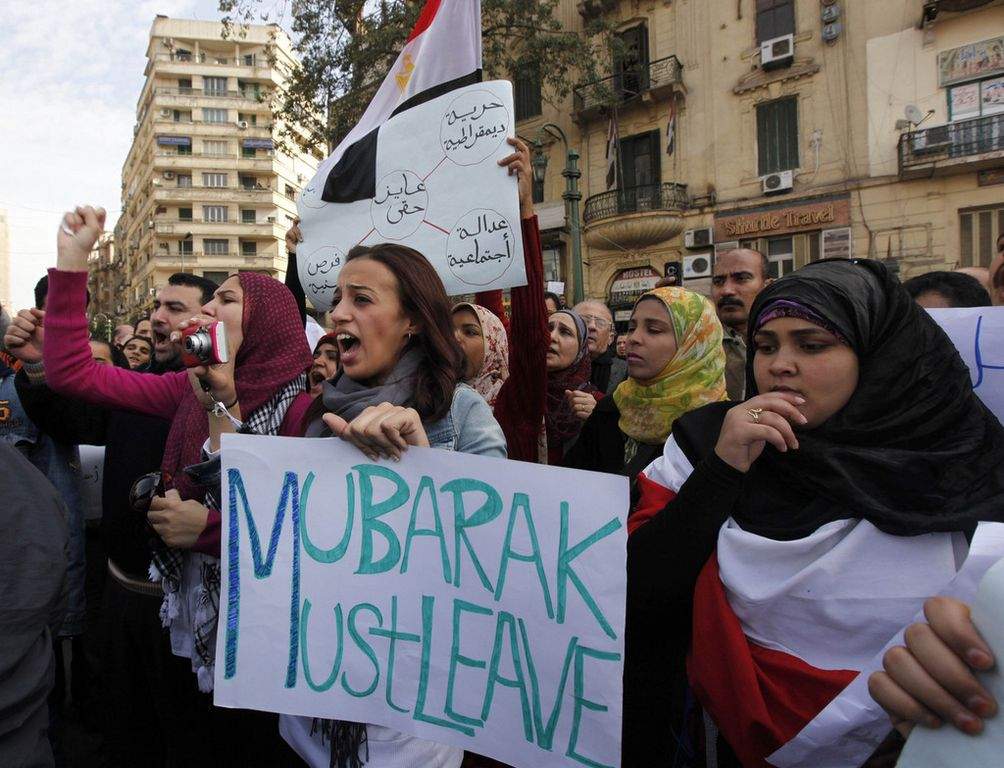
Mubarak did not step down today. He was pushed … by the women of Egypt

Mona Seif

February 11, 2011. The news media say that Hosni Mubarak stepped down today. They say he has resigned.

Hosni Mubarak did not step down today, and he did not resign. He was pushed. He was pushed by a mass of people, he was pushed by a convergence of sectors and forces, from students to workers to the unemployed to the working poor to the middle class to doctors to truck drivers to everyone. Hosni Mubarak did not step down. He was pushed … by women the women of Egypt.

Mubarak was pushed by women writers, novelists, poets, bloggers, such as Shahira Amin, Nawal El Saadawi, Yasmine El Rashidi, Mona Helmy, Ahdaf Soueif, Zeinobia, and Dalia Ziada.

Mubarak was pushed by women filmmakers and video makers, such as Asmaa Mahfouz, Jehane Noujaim, and Tahani Rached.

Mubarak was pushed by women doctors, such as Aida Seif El Dawla and Sally Moore.

Mubarak was pushed by women performance artists, such as Karima Mansour.

Mubarak was pushed by women who came as partners, wives, mothers, daughters, such as the mother of Khaled Said, her son beaten to death last year by police in Alexandria; Doaa Abdulla, who awakened her husband and said we must go to the protests; and Elham Eidarous, who alternated nights in Tahrir Square with her husband.

Mubarak was pushed by women human rights activists, women’s rights activists, and pro-democracy activists, such as Mona El Seif, Mozn Hassan, Nehad Abul Komsan, Selma al-Tarzi, Sonda Shabaik, and Ghada Shahbandar.

Mubarak was pushed by women whose names are only partly known, such as Asma, Ghada, Mona, Mariam, and Rania.

Mubarak was pushed. The categories don’t matter. The filmmakers are students, the writers are doctors, the activists are dancers. The elders are youthful, the youth are wise. The names are signatures of millions of women and girls, and men and boys, who have filled the streets and the skies, who have seized the day and the night. Liberation is possible, revolution is possible, hope is material, dreams are material.

Hosni Mubarak did not step down today. He did not resign. He was pushed … by the women of Egypt.


(Photo Credit: Al Jazeera)
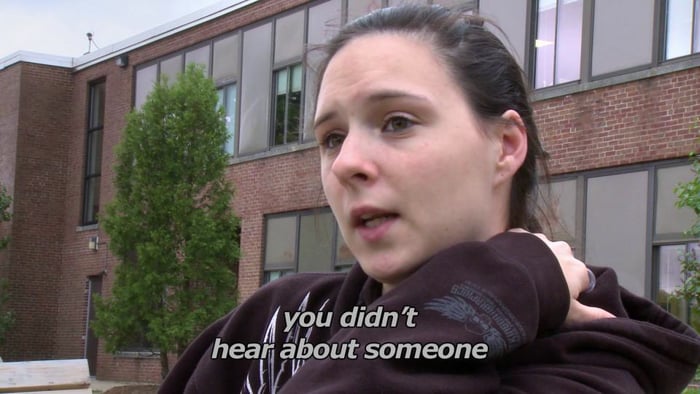
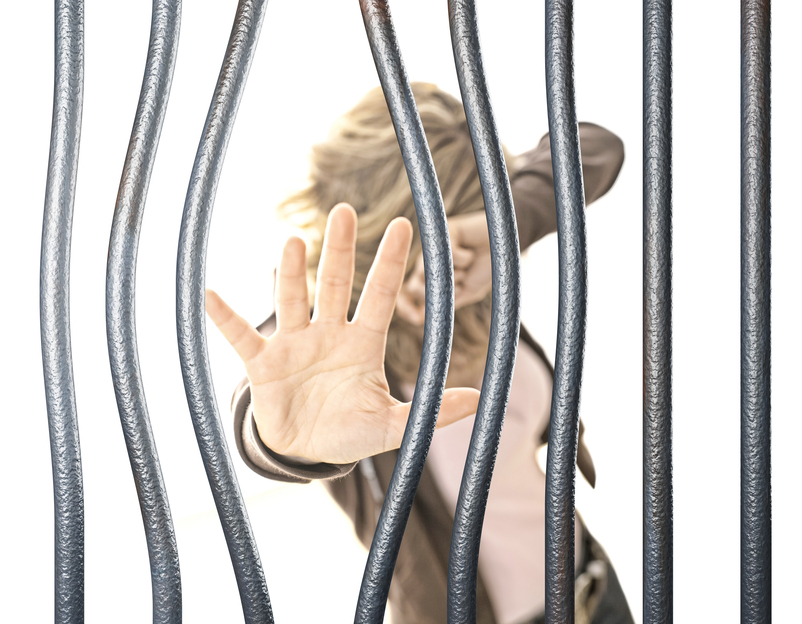
The child prisoners of St. Patrick’s haunt Ireland


In Ireland, today, Ombudsman for Children Emily Logan issued a report, entitled Young People in St. Patrick’s Institution. St. Patrick’s is a men’s, and boys’, prison for children and adults between the ages of 16 and 21. It is the only place in Ireland that `accommodates’ male prisoners aged 16 and 17, whether they have been sentenced or are awaiting trial. The boys of St. Patrick’s come from all over the country.

The report describes St. Patrick’s Institution as follows: “St. Patrick’s Institution is a closed, medium security prison managed by the Irish Prison Service, which holds remand and sentenced young people between 16 and 21 years of age. Adjacent to Mountjoy Prison in Dublin, the Institution’s main buildings are part of a Victorian prison complex dating back to 1850 and were the site of the women’s prison before becoming a place of detention for young offenders.” Women and children first, or, in this case, women first, then children, both subjected to a male adult prison regime.

As is so often the case with Victorian prisons still in use, St. Patrick’s has been criticized for a long time, for decades. The 1985 Whitaker Report called for St. Patrick’s closure, arguing that it was too old and dilapidated to repair, arguing further that it contributed to further juvenile delinquency rather than rehabilitation. That was over 25 years ago. In July 2007 the Irish Penal Reform Trust issued a new report, The Whitaker Committee Report 20 Years On: Lessons Learned or Lessons Forgotten? It described the earlier report as  “the most detailed and thoughtful analysis of Irish prisons to date”. There was much discussion of lessons learned, forgotten, suppressed, ignored. The 200 Years On analysis described deteriorating conditions. The prison was going from very bad to much worse.

Today, Wednesday, February 9, 2001, that prison still houses child prisoners, still does harm to them, their families, and their communities, still defines the Irish state.

According to today’s report, every aspect of St. Patrick’s denies and offends the particularities of the prisoners as children. For many, contact with family is difficult because the prison is far from home, and so getting there is expensive and time consuming. Remand prisoners are allowed five fifteen-minute visits per week. Sentenced prisoners are allowed two half-hour visits. Imagine the family that will travel hours for a fifteen-minute `interview’. Then imagine the child.

Meanwhile, maintaining and developing healthy relationships with family and friends is made almost impossible by visiting conditions and regulations that prohibit intimacy or privacy.

Children can’t be children, parents can’t be parents.

When the children’s wing, the B-Wing, is overcrowded, either the boys are dumped two to a bed, or they’re moved to C- and D-Wings, where adult prisoners are kept. Again, this includes children who are remand prisoners.

The food is terrible, the educational facilities are outmoded and archaic, the health facilities are decrepit, there is little attention to rehabilitation and reintegration in any way that is attentive to the needs of children, of adolescents. The boy’s in jail, he’s treated like a man.

Finally, there’s `the pad’, or special observation cell. The prison administration claims this is only used to protect the prisoners. The prisoners see it as solitary confinement: degrading, punitive, silencing. Putting an adult in long term solitary confinement is torture. Placing an adolescent in a `seclusion room’, without explanation, without … anything, is as well. `The pad’ teaches the young that they must not complain, they must not whimper, they must just tough it out and get through. If they have problems, especially mental health problems, they must be silent. They must not seek help. They must learn to shut up. That is the lesson of solitary confinement when administered on the young.

None of this is new and none of this is news. The conditions of St. Patrick’s have been known for longer than any of these children have walked the earth. This is what it means to be a child in the care of the modern State.


(Image Credit: The Ombudsman for Children, Ireland) (Video Credit: The Ombudsman for Children, Ireland / YouTube)

Tahrir Means Liberation

Today, Saturday, February 5, 2011, the eyes of the world are on Egypt. According to Al Jazeera’s most recent report, the protesters in Tahrir Square are standing their ground, consolidating their gains, and organizing further. Ten thousand pro-democracy protesters showed up outside the main train station in Alexandria, Egypt’s second largest city, as well.

Tahrir means liberation. The people in Tahrir Square have said they will stay until liberation. The people in Tahrir Square are teaching the world a new lesson, the lesson of liberation now and liberation to come. Ask the women of Tahrir Square, ask the youth, ask the workers, ask … everyone.

Another word emerged this week with stunning ease and fluidity: thugs. And a phrase: Mubarak’s thugs.

Yesterday, for example, in a one-hour international news of the week roundup, the National Journal’s Defense Correspondent Yochi Dreazen referred to “pro-Mubarak thugs”, and no one batted an eye, not the NPR host nor the reporters from MBC, the Middle East Broadcasting Center, and from the Washington Post, respectively.

Al Jazeera today reports: “On Friday, Al Jazeera’s offices in Cairo were attacked by “gangs of thugs”, according to a statement from the network. The office was burned, along with the equipment inside it.”

From Tahrir Square itself, Egyptian activists Mona El Seif and Selma Al-Tarzi offer a more detailed picture of thugs. According to El Seif, “We have caught a lot of the thugs….We have searched them. Most of them were one of two things. Either they had police IDs on them …or they were unemployed people that were promised either jobs or money….We know this. We know this since every demo we went to. They always plant thugs and pretend—let them pretend to be civilians, so they can start the violence. I just never saw this amount of violence, this publicly displayed, and nobody stopping it.”

Al-Tarzi added, “The Mubarak thugs were shooting at us with the machine guns. The army shot back at them. Two of them were killed. One of us was killed….More are coming. And we are so tired. People are so tired. We’ve been fighting for the past 12 hours. And we’re just protesters; we’re civilians. We’re protesters.…All we have is stones and sticks. And we’re tired. This is not what we’re here to do. This is not—this is not how—this is a crime of war. They’re killing us.”

Mozn Hassan, Director of Nazra for Feminist Studies, tells a similar story: “If the military is ever to be a legitimate national force, it must side with the protesters against Mubarak’s thugs and the police.… It is crucial at this moment in the Egyptian Uprising to understand that this is the Egyptian Army’s moment of truth. As the thousands of unarmed demonstrators are tortured, trampled, firebombed and molested by Mubarak’s thugs, will the military move to protect, or to crush the non-violent democratic movements that have occupied Tahrir Square in Cairo for the last ten days.”

Who are the thugs? They are the police, the are the security forces, they are the baltaguia, “plainclothes thugs from the state security services and gang members on their payroll.” And they are everywhere: Cairo, Alexandria, Luxor. And they are everywhere all the time: protests, labor strikes, elections. They are the body politic of `security’. When it is reported, or rumored, that 90 percent of the `thugs’ caught in Tahrir Square had identity cards linking them to the police, state and Central Security forces, the only surprise was that they were actually carrying the cards. They are the State.

A State that relies on thugs for security, for stability, for well being, for its identity as a nation-State is a thug state. It is a rogue, whose gender “remains generally, as it was originally, masculine”, who knows only the reason of the strongest and the practice of fear: “those who inspire fear frighten themselves, they conjure the very specter they represent. The conjuration is in mourning for itself and turns its own force against itself.”

Tahrir means liberation. The protesters in Tahrir Square, such as Mona El Seif and Selma Al-Tarzi, they are living a form of liberation now, today. Liberation haunts the thugs and the thug states.


(Photo Credit: https://revolutionaryfrontlines.wordpress.com)

Not just another murder, Brenda Namigadde

On February 4, 2006, almost five years ago, Zoliswa Nkonyana, “a young Khayelitsha lesbian”, was chased by a group of 20 or so young men. When they caught up with her, they clubbed, kicked and beat her to death. They tortured her to death for being lesbian, for being openly lesbian, for being a woman, for being.

It took two weeks for the news of her brutal murder to finally reach the media. The police didn’t make much of the death or its circumstances. The press in Khayelitsha, five years ago as today, is marked largely by its absence. It was `just another murder.’

Five years later, the case is still open, the trial is not yet finalized. Memorials will take place, no doubt, protests and commemorations.

Yesterday, January 26, 2011, gay rights activist David Kisule Kato was brutally murdered in Mukono, Kampala, Uganda. Kato was the advocacy officer for Sexual Minorities Uganda. Along with Julian Pepe Onziema and Kasha Jacqueline, Kato had recently won a case against Rolling Stone, restraining it from publishing photos and names of gay men and lesbian women. The High Court ruled that the tabloid violated the rights to privacy and safety. This time the news of the murder spread quickly. The Kampala police claimed, almost immediately, that they’re on the case.

In both instances, and so many others, the assault is on the right to public being, the right to access as gay men and lesbian women, to public spaces, to common and shared experiences, to mutual recognition.

Brenda Namigadde is a woman from Uganda. She fled Uganda in 2003 after her house was destroyed and her life was threatened … because her life partner was a woman. Namigadde fled to the United Kingdom, where she sought asylum. She was turned down, because of insufficient proof of `being lesbian’. Now Namigadde sits in Yarl’s Wood, and awaits, in terror, to be deported to Uganda.

One way to honor the memory of Zoliswa Nkonyana, of David Kato, of all the other gay men and lesbian women who have been brutalized, tortured, murdered, for the sin of being gay in public, for the sin of sharing their love in the common and shared spaces, is to make sure that Brenda Namigadde and other gay and lesbian asylum seekers are not transported back to the House of Death. If not, then Zoliswa Nkonyana, David Kato, and all the others, they’re just another murder.


(Mosaic of Zoliswa Nkonyana by Ziyanda Majozi. Thanks to inkanyiso.org)

Mental health haunts the prison state

For prisoners living with mental illness, the situation today, in the face of severe budget cuts following decades of imposed austerity in the name of efficiency and the pursuit of profit, is a hellhole.

In Jamaica, prisoners living with mental illness are trapped in a human rights nightmare. Prisoners living with mental illness require more supervision and more assistance, and that means an investment of resources. Instead, those prisoners living with mental illness are left to fend for themselves and for one another. That means those prisoners living with mental illnesses stay for long periods in soiled clothes and environments, suffer rapid deterioration and decline, and spend longer periods in prison than healthy prisoners. Not surprisingly, the situation is particularly lethal for elder prisoners.

In Canada, 35 per cent of the 13,300 prisoners in federal penitentiaries have a mental impairment requiring treatment. That’s triple the 2004 estimations and way higher than the general population. It’s a flood. And what happens when someone with mental illness goes into prison: “The mind-bending isolation of a segregation cell brings no peace to a depressed or unhinged mind. Nor does an environment of slamming cell doors, fear and intimidation.”

And what is isolation … really? If it’s long-term, it’s torture. According to Dr. Atul Gawande, “The people who become psychotic in solitary confinement are people who often have attention deficit disorder or low IQ or issues of prior mental illness. … There’s a very high rate of psychosis and people flat-out going crazy under the confinement conditions. And so, then what I puzzle over is, does it actually reduce our violence in our prisons? The evidence from multiple studies now is that not only that it has not reduced violence, it’s increased the costs of being in prison.”

Long-term solitary confinement is torture because it targets those living with mental illnesses. The same could be said for prisons and jails.

In the United States, somewhere between 16 and 20 percent of prisoners are living with mental illnesses. In California, there are nearly four times as many people with serious mental illnesses in jails and prisons than there are in hospital. Ohio reports that the mental health system “has shifted the problems to prisons and homeless shelters.” Arizona and Nevada have the highest ratio of prisoners living with mental illness. Some call this a tragedy. Some say prisons and jails have become the new asylums. Prisons and jails have become the New Bedlam, and we are all the wardens.

A thirteen-year-old girl in Ottawa kicked in the back window of a police cruiser. The State determined that she was mentally ill and had her institutionalized. Where? Ottawa “shifts the problem” to Utah: “the … province’s Ministry of Health and Long Term Care … has funding arrangements with U.S. facilities to provide residential treatment to Ontario residents”. After nine days, the girl was deemed too violent, and `shifted’ to a children’s hospital. Now the parents face the possibility of having to pay astronomical hospital fees while their daughter faces the near certainty of incurring further criminal charges. Only prison awaits her. This is the practice of `shifting the problems.’

The withering of the welfare state has produced national programs, public policies, and popular ethics of `shifting the problem.’ In the United States, in the past fifty years, the number of psychiatric beds has been reduced by 90 percent. In the 1950s, there was one psychiatric bed for every 300 persons. Now, it’s one bed for every 3000. Where have those beds gone, where have those resources gone, and most importantly where have those people living with mental illness gone? Prisons. Jails. The New Bedlam. They went into the hellhole, they are in the hellhole, and we are the wardens.


(Image Credit: http://www.mentalhealthy.co.uk)

The State expresses its grief, and Felani is dead


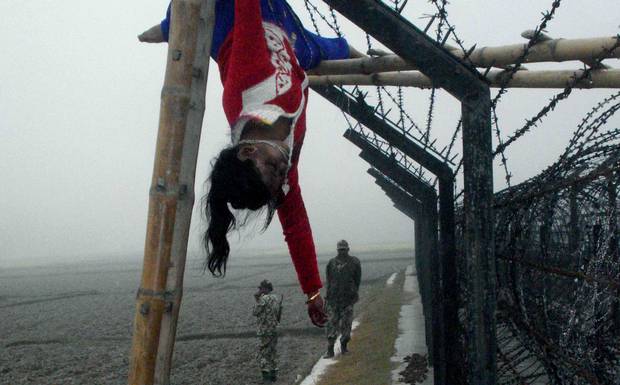
Children, girls and boys, are being killed by Indian soldiers on the India-Bangladeshi border. Each time it happens, the State claims grief and promises never again. The most recent girl to suffer this indignity, last week, was a fifteen-year-old girl named Felani:

“Indian border forces have handed over to Bangladesh Rifles (BDR) the body of ‘Felani’, 15, who was shot dead on Friday as she had gotten entangled in barbed-wire while crossing the border.… In the meeting, BDR condemned the brutal killing of the teenaged girl. BSF had expressed its grief over the incident and assured that such incident will not take place in future.”

What is to done with the grief of States expressed each time border troops kill or maim someone? What is the worth of their repeated assurances? Where is the future in which border guards will not shoot at children caught on barbed wire? And what is the name of the space that separates the dead body of 15 year old Felani, about whom the State is silent, and `the incident’ over which the State expresses its grief?

Apparently Felani and her father left their home in Bangladesh ten years ago and crossed into India. They were on their way home because a marriage to a local boy had been settled. Felani’s father successfully scaled the border fence. Felani got tangled up in the barbed wire and started to scream. The Indian Border Security Forces heard the screams, saw the girl, came, shot her and waited for her to die. Some say she bled and screamed for four hours, others say for less time. Whatever the duration, Felani, a fifteen- year-old girl, hanging upside down from the border fence, riddled with bullets, bleeding and screaming, died. The BSF then waited and finally cut her down and carried her away, hands and feet bound to a pole, like so much animal carcass. A day or so later, they arranged the meeting where they returned the body and expressed grief … over the incident.

Bangladeshis, and Indians, have expressed outrage at the incident and shock and disgust at the photographs. But who expresses grief at the border fence?

According to a Human Rights Watch report issued just last month, the Border Security Forces at that particular border are `trigger happy’. Children, such as 12-year-old Rumi Akhter Nipa, are routinely, randomly and indiscriminately shot. What do girls, like Rumi, want? According to Dr. Abdus Samad who treated her, she simply wants a daily life, to start school. What do children, like Rumi Akhter Nipa, get? “A pattern of grave abuses”. And, as Felani’s story suggests, they are to be considered the lucky ones.

The borderland is a graveyard. As long as the State, any State, is ruled by security first, as long as the borders are considered primary and the crossers, with or without documents, are secondary, the borderland will remain a graveyard. That is the reason that “despite numerous complaints no member of the BSF has been arrested, much less held to account in civilian courts.” Hundreds of Bangladeshis and of Indians have been killed and not a single member of the BSF has been arrested. Felani is not alone.

Grief emerges from graves, not from incidents. Apologies cover incidents, shrouds cover the bodies of the dead. The State of India expresses its grief? And Felani is dead.


(Photo Credit: BDNews24)

Children are disappearing, into the night, into the fog

Children are disappearing. Sometimes spectacularly. Sometimes silently. Sometimes `without notice’. That children are disappearing is not new. Children asylum seekers and children of asylum seekers have been disappearing into detention centers in Australia, the United Kingdom, the United States, Greece, and elsewhere. In Australia, imprisoned children of asylum seekers are disappearing into the tortured self mutilation that must serve as a kind of escape from their current everyday circumstances.  Children of incarcerated mothers are disappearing in South Africa, Scotland, the United States and elsewhere. Children in schools are disappearing into seclusion rooms, aka solitary confinement.  In the United States, children of undocumented residents are disappearing, shipped like so much baggage, back to Mexico and parts unknown, often on their own.  In Jamaica, girl prisoners disappear into prison fires that were altogether predictable and preventable.  None of this is new. We have discussed this and more before. The events are not new nor is the failure to take responsibility.

Children are disappearing. Sometimes spectacularly, sometimes silently, other times `without notice’.

In England, an inquest opens today. It’s the second time around for this inquest. It concerns the death in custody, in August 2004, of Adam Rickwood. Adam was 14 when he was found hanging in his cell at Hassockfield Secure Training Centre, a private prison run by Serco, the same people who run Yarl’s Wood in the UK and all the immigrant detention centers in Australia, most notoriously Villawood.

When Adam Rickwood, who had never been in custody before, refused to go to his cell, he was `forcibly restrained’ with `a nose distraction’, a violent and invasive chop to the nose. Hours later, he was found dead, hanging, in his cell. At the first inquest, in 2007, the coroner refused to let the jury decide if the restraint constituted an assault.  It took thirteen years of struggle on the part of Adam’s mother, Carol Pounder, before the first hearing took place. Dissatisfied with the complete opacity of the system, she continued to push, and finally, finally a second inquest has been ordered. That starts today. Adam Rickwood would be thirty years old now.

Meanwhile, across England, there are 6000 children whose mothers are incarcerated, and, basically, no one officially knows their whereabouts. According to the Prison Advice and Care Trust, or PACT, they are “the forgotten children.”  According to PACT, the mothers of 17,000 children are in prison, and of those, 6000 are not in care nor are they staying with their fathers. They are `forgotten.’ Children are disappearing, some into the night, others into the fog.

At the same time, in Ireland, eleven unaccompanied children asylum seekers went missing last year.  Six have yet to be found.  Between 2000 and 2010, 512 unaccompanied children seeking asylum were `forgotten’. Of those, only 72 were ever found by the State. Forgetting children is not an exception, it’s the rule, when the children are children of color, children of asylum seekers, children of the poor, children in prison.  Children of strangers, children of neighbors are disappearing, into the night, into the fog.

In the United States, Phylicia Simone Barnes is a 16 year old honor student from Monroe, North Carolina. In December, she was visiting Baltimore, thinking of attending Towson University, a local university. Phylicia went missing on December 28. There has been little, very little, media attention, despite the efforts of family, the Baltimore Police Department, and the FBI to draw attention to this case.  Why? Baltimore Police spokesman Anthony Guglielmi thinks he knows the reason: “”I can’t see how this case is any different from Natalee Holloway. Is it because she’s African-American? Why?” When teenager Natalee Holloway disappeared, on holiday in Aruba, there was a `media frenzy.’ For Phylicia Simone Barnes, who is Black, there is fog. She is a forgotten child.

Christina Green was born on September 11, 2001, to Roxanna and John Green, in West Grove, Pennsylvania. She was one of the 50 Faces of Hope, faces of children born on that fateful day.  Like Phylicia Simone Barnes, Christina was a star student, an engaging child, bright, mature, `amazing’. She was killed on Saturday, in a volley of gunfire apparently directed primarily against Congresswoman Gabrielle Giffords.

What becomes of hope when a Face of Hope is lost? Children are disappearing, sometimes spectacularly, amidst blazing gunfire, sometimes through a policy of practiced omission and amnesia.  In the moment, the route of spectacle or silent lack of notice seems to matter. But in the end, they are all forgotten children, and they haunt the days and ways of our world.


(Photo Credit: BBC.co.uk)

Prison labor haunts `history’

Elaine Brown

When is slavery not slavery? When the slaves are called prisoners, their condition is not slavery. It’s … history. The Thirteenth Amendment of the United States Constitution says so, and so do the United Kingdom Border Authority, UKBA, and the private prison corporation, Serco.

Last month, on December 9, 2010, prisoners in several prisons across Georgia went on strike.  According to Elaine Brown, one of the prisoners’ spokespersons, the strike involved “Augusta, Baldwin, Calhoun, Hancock, Hays, Macon, Rogers, Smith, Telfair, Valdosta and Ware state prisons.” Others claim seven prisons were involved. The strike concerned prisoners’ working and living conditions across the state. The conditions of prisoners in Georgia are famously bad. Prisoners in Georgia receive no pay for the work they perform. The possibility of going to jail in Georgia, especially for people of color, is infamously high. Georgia has the highest rate of prison `involvement’ in United States: “In Georgia, 1 in 13 adults is either in prison, in jail, on probation, or on parole.” The national average is 1 in 31.

The strike was non violent, peaceful even. The media focused on the capacity of prisoners to organize a structured, non spontaneous, non violent work stoppage across the state. This was facilitated by the use of contraband cell phones, bought largely from guards.

The strike was called `historic’, in two senses. On one hand, it was massive. Again according to Elaine Brown, the strike was “historic in scope and in the unity of thousands of black, brown, white, Muslim, Christian and Rastafarian prisoners.” Others claimed it was one of the largest prison strikes and the biggest prisoner strike in U.S. history. In terms of scale, of numbers of prisoners involved, of numbers of kinds of prisoners involved, the action was historic.

On the other hand, the strike was historic in that it protested the history of prison labor. Prison labor has historically been part of a racially, ethnically segregated labor market, “an emblem of racial subjugation.” Prison labor, especially in the United States, has its roots in slavery. Read the Constitution of the United States.

According to the Thirteenth Amendment to the United States Constitution: “Neither slavery nor involuntary servitude, except as a punishment for crime whereof the party shall have been duly convicted, shall exist within the United States, or any place subject to their jurisdiction.” For prisoners, slavery and involuntary servitude are constitutionally just fine. Where do slavery and justice sleep comfortably together? In prison.

And not only in the United States.

At Yarl’s Wood, in the United Kingdom, women refugees and asylum seekers are held in detention … for the crime of applying for asylum. This week, current and former prisoners, all women, revealed their working conditions and described them as modern day slavery.

Asylum seekers are not allowed to work while their application is in process. But not at Yarl’s Wood. There they work, for next to nothing. Gloria Sestus, a 32-year-old Nigerian, says she is paid £1 to clean the dining room twice a day. The job takes more than an hour each time. As former prisoner Nordia Hylton, 34-year-old Jamaican asylum seeker, noted, “People who work without papers to try and feed their families are arrested for illegally working and detained. But once they get to Yarl’s Wood they can work for next to nothing. The UKBA and Serco are hypocrites. They are taking advantage of people’s situation.”

Gloria Sestus sees it as more than hypocrisy, “It is like slavery in a modernised form.”

It is like slavery in a modernized form. African women, Afro Caribbean women, women of the African diaspora know a thing or two about the history of slavery. The prison strike across Georgia was historic. The prisoners’ testimonies and protests concerning Yarl’s Wood are historic as well. Both call on us to speak and address the historic name of prison labor: slavery.


(Photo Credit: hiphopandpolitics.com)


The human faces of asylum seekers haunt Australia

Two months ago, it was reported that Australia was preparing for an uptick of children in detention mutilating themselves. At the time, there were around 700 children. These children `in detention’ are imprisoned asylum seekers and migrant children, and children of asylum seekers and migrants.

Two months later, almost to the day, on Wednesday, December 15, a wooden fishing vessel carrying an untold number of asylum seekers and refugees, thought to be Iranian and Iraqi Kurds, crashed off the shores of Christmas Island. The residents watched in horror, the nation watched in horror.

The dead were fished out of the rough seas. The survivors were either sent to hospital in Perth or sent to detention centers on Christmas Island.

Prime Minister Gilliard called the event a `terrible human tragedy’. The event is now commonly referred to, in the news media, as `the asylum-seeker boat tragedy.’ The Prime Minister said the full death toll may never be known. She was more right than she knew.

This is not the first time Australia has confronted an asylum-seeker boat tragedy. In 2001, there was the infamous Children Overboard affair.

On October 7, 2001, a fishing boat, the Olong, was filled with asylum seekers and headed for Christmas Island when it was caught by the HMAS Adelaide, north of Christmas Island. Under orders from the government, the warship fired warning shots, boarded several times, and finally forced the boat to turn back. The boat was old, battered, and overloaded, with over 200 people on board. The engines failed. The Adelaide took the boat in tow, and waited for instructions from the government. Then the boat literally began to fall apart and sink. Parents held their children in the air, to alert the navy of their presence on board. There were 53 children on board the Olong. The then Prime Minister John Howard claimed the parents were throwing their children overboard. They were not. The evidence from the Australian Navy showed, immediately, they were not throwing their children overboard. But the claim was out there, in the air. Refugees and asylum seekers were somehow less than human.

This most recent asylum-seeker boat tragedy is said to have put a human face on the `asylum issue’. Here’s how Nick Clegg, of the BBC, describes the situation: “Australia’s asylum seeker debate is often conducted as if the people heading for its shores were an abstraction, with the term “boat people” almost shorn of its human meaning. With such harrowing images from Christmas Island broadcast on early evening news shows – which only 24 hours earlier had dwelt more happily on the visit to Sydney of Oprah Winfrey – millions of Australians would have seen the anguished faces of those seeking to reach its shores, and witnessed the lengths to which they would go to get there. Put simply, it was shockingly real….Whatever its outcome, after the tragedy on Christmas Island the debate has a human face.”

Others had a similar response: “In Australia, perhaps for the first time, the disaster gave the asylum-seeker issue a human face. Not even those who dismiss boat people as “queue-jumpers” could have failed to be moved by footage of men, women and children screaming for help as their vessel was dashed to bits.”

The asylum-seeker debate, or situation, now has a human face. Prime Minister Gilliard says there will be no repeat of the children overboard affair in dealing with the situation. She says as well that the full death count will never be known. In a nation in a world in which human beings must sew their lips together, must mutilate themselves, must perish in the rough seas in order to be endowed with a human face, where does one begin to measure the full extent of the death count? The human faces of asylum seekers – not the asylum seeker debate nor the asylum seeker situation – haunt Australia and the world.


(Photo Credit: Australia Human Rights Commission)

Afghanistan’s women prisoners haunt WikiLeaks

Afghan women imprisoned for `moral crimes’

Afghanistan has been in the news of late.

WikiLeaks recently dumped a quarter million diplomatic cables. One of the earliest subjects to emerge from the swelter of data, information and gossip was … Afghanistan. In particular, the world press focused on `corruption’. The Guardian reported, “Rampant government corruption in Afghanistan – and the apparent powerlessness of the US do to anything about it – is laid bare by several classified diplomatic cables implicating members of the country’s elite.” The New York Times responded, “It is hardly news that predatory corruption, fueled by a booming illicit narcotics industry, is rampant at every level of Afghan society. Transparency International, an advocacy organization that tracks government corruption around the globe, ranks Afghanistan as the world’s third most corrupt country, behind Somalia and Myanmar.” National Public Radio’s All Things Considered opened an interview with the New York Times reporter Mark Mazzetti, “More now from the WikiLeaks release of U.S. diplomatic cables.  The New York Times has been poring over those cables, including some that document a particular problem in Afghanistan: corruption.”

What are the particularities of corruption, as narrated in these various accounts? On one hand, it seems that graft, bribe taking, fraud, embezzlement, coercion are rife in the corridors of the Afghan government. On the other hand, corruption seems to stop at the gates of the government. Outside, it’s fine.

What are the particularities of corruption, as narrated in the cables themselves? The Guardian has posted 58 cables referring to Afghanistan. Some concern prisoners, many concern government officials, some concern regional affairs, all are about `security’ and `the war effort’. None mention women. In the 58 cables thus far available, not a single conversation, not a single cable, talks about the condition of women in Afghanistan. Afghan women are fine; they are not part of any “particular problem in Afghanistan” that goes by the name of corruption.

Afghan women prisoners, however, are not so sanguine about corruption. According to the United Nations Afghanistan Human Development Report 2007, institutionalized corruption abounds, especially in the so-called justice system, and women are particularly hard hit. For example, this past week, in the Balkh Prison in northern Afghanistan, prisoners went on a hunger strike to protest unbearable overcrowding conditions.

The situation for women at Balkh Prison is particularly dire: “Fariba Majid, director of the government office for women’s affairs in Balkh, agreed that conditions for female prisoners was a concern. She voiced concern that women guilty of only minor offences were being held alongside hardened criminals…. In Afghanistan, women and girls can be imprisoned for up to a year for simply running away from the family home.”

Who are these women who are guilty of only minor offenses?

In Afghanistan, women and girls go to prison for running away: “Fawzia Nawabi, head of the women’s department at the national Human Rights Commission, said that on a recent tour of women’s prisons, she met 15 girls imprisoned for running away from home in Balkh province, 22 in Jowzjan, eight in Sar-i Pol province and four in Samangan. `All of them said they had been married off against their will,” she said. “Some of them had run away because they were beaten for no reason, and others because they had been given away as ‘baad’.’ `Baad’ is an Afghan custom where girls are given in marriage in exchange for debts owed to the other family, or as compensation for a death.”

Once in prison, women often remain in prison for longer than their allotted time: “Zarghoona* has completed her three-month sentence at a prison in Kandahar Province, southern Afghanistan, but she is not allowed home because no male relative has shown up to guarantee that she will not run away from home again.… Women’s rights activists and government officials confirmed that in many cases female prisoners could not be released due to the absence of a male relative. `This is illegal but it happens quite often in Afghanistan,’ said Suraya Subhrang, a women’s rights commissioner at the Afghanistan Independent Human Rights Commission (AIHRC) in Kabul. What should women without `Mahram’ [close relative such as father, brother, son or husband] do? Should they end their lives because there is no man to take care of them?’ she said.”

It is illegal but it happens quite often. Afghan women do not appear in the WikiLeaks cables on Afghanistan, nor do they appear in the narratives of Afghan `corruption’. What do you call the state of illegal-but-happens-quite-often? When women suffer that kind of corruption, it isn’t called anything. It’s business as usual, and it’s fine.


(Photo Credit: BBC News)