South Africa’s media landscape is a mess and this must change

South Africa’s media landscape is a mess, and this must change.

The horrible news that New Frame will be shutting down immediately because its only funder is pulling the entirety of its support in one swoop, underscores the vulnerability of not-for-profit news in South Africa.

I think this also underscores a massive structural problem in South African for-profit media which relies heavily on progressive, well-researched and investigative *free content* from non-profit media. This is especially the case with the Daily Maverick, an outlet that will publish dozens of articles a week from various non-profit news sites, will make tons of money off this free content, but will not pay a single cent back to the non-profit site in exchange for this content.

This form of crass exploitation by for-profit news in South Africa cannot continue.

Non-profit media in this country needs to come together and rethink this model. They cannot continue to rely on for-profit media for exposure while at the same time allowing the for-profit media to exploit their hard work. Some options that I think non-profit media in South Africa should consider:

Non-Profit Media Consortium. Forming a consortium (or association) which sets a minimum price that all for-profit outlets must pay if they are going to use non-profit content. This minimum price can be per article or per word. But there must be a minimum cost. GroundUp, Bhekisisa, amaBhungane, New Frame, AIAC, ViewFinder, and the list goes on, cannot continue to give free content to for-profit news. This is capitalist theft from the commons.

New Non-Profit News Website. Forming a collectively run or cooperatively owned non-profit news website to rival Daily Maverick, News24 and IOL and that is the primary or sole publisher of all non-profit media in the country. The purpose of this website would be to bring readers over from capitalist outlets like the Daily Maverick and starve these for-profit entities of the free content they rely on so heavily. Why should anyone go to DM for their news if GroundUp, Bhekisisa, amaBhungane, and the others, are all publishing in one collective place and Daily Maverick is stuck with its sub-par journalists like Stephen Grootes who can only write nonsense about Zuma and Ramaphosa?

Op-ed writers and other writers must be paid. In the past, newspapers used to pay people whose opinion pieces they publish. In this day, most op-eds are published without compensation. Again, the Daily Maverick is one of the worst perpetrators. It’s time the media stop exploiting the ideas and unpaid labour of intellectual workers. If the above consortium could also act as a union of sorts or a clearinghouse for opinion writers, they could negotiate with the for-profit media in order to ensure that Op-ed content is paid for. Or it could post the pieces directly on their own website. Those of us, especially those of us who are progressive, must stop publishing think pieces for free in places. If we work instead through such a consortium, not only would we be able to receive compensation, but we would ensure that we also retain the rights over our own ideas instead of giving them away for free to media moguls.

(By Jared Sacks)
To Keep the Poor Poor…and Working


Fuck!

FUCK

FUCK FUCK FUCK FUCK

The Supreme Court’s ruling, effectively dismantling Roe v. Wade and setting precedence that will roll back hard-won rights for minorities, women, and LGBTQ people was not a surprise. Documents that leaked before the ruling all but insured that Roe would not make it to the end of my lifetime, but still, the decision was read with the same emotions and feelings…

FUCK.


FUCK YOU.


FUCK EVERY DECISION YOU’VE MADE AND WILL CONTINUE TO MAKE.


FUCK YOU FOR TAKING AWAY THE RIGHTS THAT MY MOTHER, MY GRANDMOTHER HAD, FROM ME.


I am tired. I’m so tired. And I know, that organizing is a long and arduous process, full of losses and set back-with the endgame being victory. But I am tired. And I’M PISSED


This has never been about protecting the sanctity of life. Historically abortion bans have never been about being pro-life, or about morality, or about anything that pertains to protecting the unborn or whatever a fetus is called in the eyes of hypocrites.


Abortion bans started in this country because of an influx of Catholic immigrants, striking fears about a Protestant minority (Comstock Laws). Abortion bans and controlling women’s sexuality have been about chattel slavery, creating an influx of enslaved black people when the slave trade was shut down.


Abortion and contraceptive bans were NOT stringently enforced when women had to replace men as laborers in the World Wars.


I wonder why?


And lastly, abortion bans pre-Roe were about a return of those men from war, and a forcing of women out of the workforce and back into where America thinks they belong-in the home, under patriarchal power.


We all know banning abortion doesn’t stop abortions. We know that abortion bans are one next step to beginning to ban contraceptive. And Covid highlighted the reason abortion bans and contraceptive bans are being reintroduced. FUCK, even those assholes in positions of power know. They’re not stupid-they’re pure evil.


It’s all about creating and sustaining an influx of those in positions of poverty.


Childbirth for people is about a descent into poverty. Raising children is expensive. Forcing people to carry a pregnancy to term, to give birth without any insurance (a more than $20,000 bill), raise them without universal childcare, with no living wage, almost guarantees a pool of workers that can be exploited.


And given that poor people and workers were hardest hit during Covid-19 (they DIED), it’s more necessary to make sure there are people that can work low wage jobs. We do not have enough labor power to replace the aging population.


AND I AM SICK AND TIRED OF DEMOCRATS DOING NOTHING BUT SENDING ME FUNDRAISING EMAILS.   


The mistresses and wives of the people who struck down Roe—and are stamping on its ashes—will still be able to get abortions. They’ll be able to afford a ticket out of the state or, if a national ban is implemented (which it sure as fuck sounds like), a plane ride first class to another country.


Poor people, people of color, and queer people will be harmed the most from this loss.


But really, isn’t that what the Supreme Court wanted?


FUCK.


(By Nichole Smith)

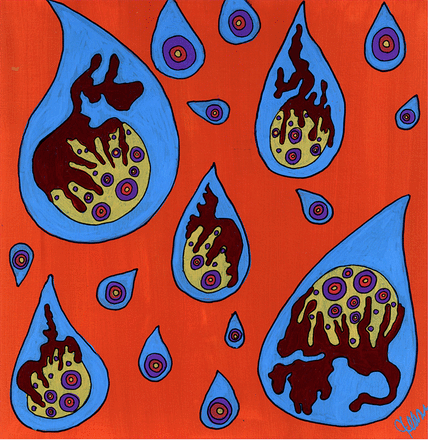
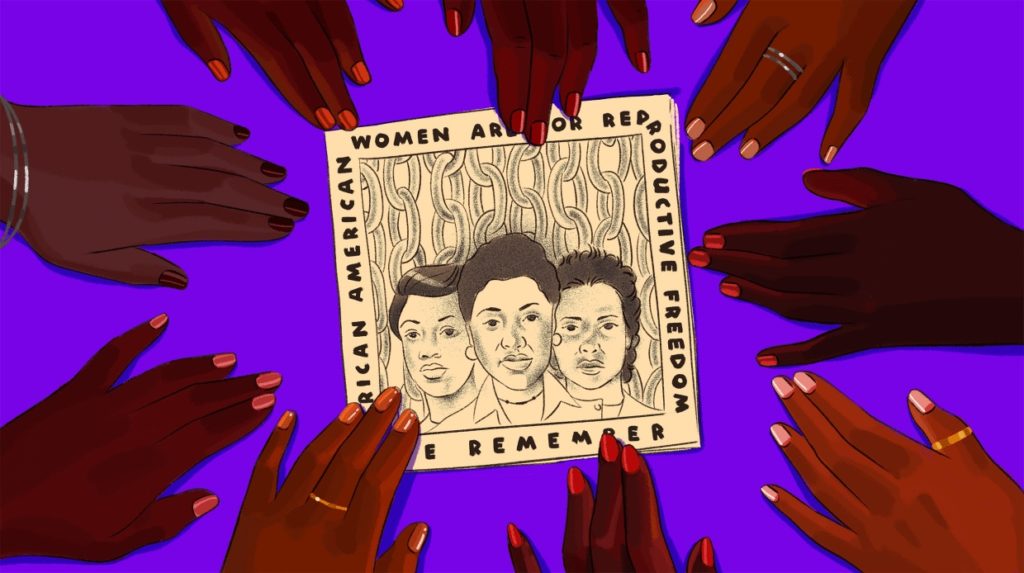
(Image Credit 1: Simone Noronha / NBC) (Image Credit 2: by Raffaele Ciotola: Saatchi Art)

The spectacularly ordinary and vicious cruelty of the Supreme Court’s Gang of Six

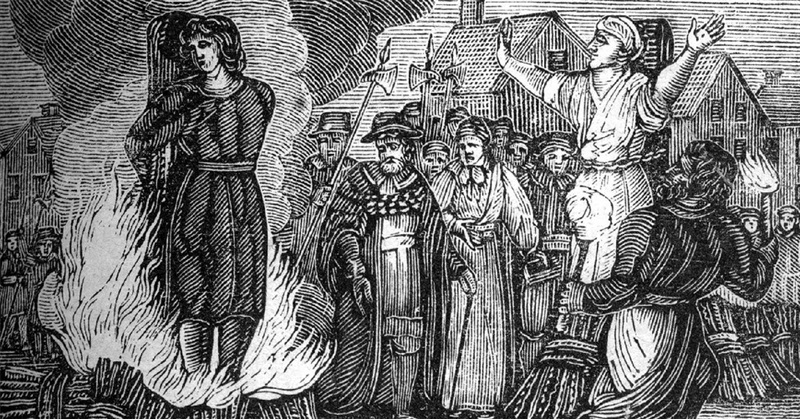
A gang of six, with a stroke of a pen, condemned women in the United States to a world of second class, if that, `citizenship’; increased maternal mortality; peril and precarity. When patriarchy rules supreme, cruelty is the point, in this case masquerading as Constitutional concern, even when the Constitution is grossly misread. It’s a femicidal program, and pogrom, as old as patriarchy and capitalism, as Silvia Federici  noted twenty years ago, when she argued that the great witch hunts of Europe and then of the colonies, including the United States, focused on women’s reproductive knowledges and capacities in a campaign of degradation of women: “In the `transition from feudalism to capitalism’ women suffered a unique process of social degradation that was fundamental to the accumulation of capital and has remained so ever since.”

The United States has the highest maternal mortality of any so-called developed country. In 2018, the maternal mortality rate was 17.4 per 100,00 live births; in 2019, 20.1, in 2020, it was 23.8. At the time, 17.4 was considered astronomical, compared to national comperes. It was. 23.8 is criminal. For non-Hispanic Black people, the maternal mortality rates for those three years are 37.3, 44.0, 55.3, respectively. The recent decision will only intensify this situation, raising maternal mortality rates, already critical and criminal, precipitously. According to one study, a nationwide ban would raise maternal mortality rates by 21%. It would raise maternal mortality rates among non-Hispanic Black people by 33%. This decision merges Witch Hunt with Jane Crow, with altogether predictable consequences of increased mortality, intensified control, devastation, immiseration. Women, and especially women of color, will become refugees in their own lands and their own bodies. As Federici noted, again, the degradation of women is always forced through programs of privatization, in which women are separated from land, home, community, body, self.

The Economic Consequences of Being Denied an Abortion”, published in 2020, brings the impact of denied access to abortion home … literally. Debts increase by 78%, bankruptcy and eviction increase by 81%: “Women who were denied an abortion experience a large increase in financial distress that is sustained for several years … We find evidence that being denied an abortion has large and persistent negative effects on a woman’s financial well-being. Women denied an abortion experience a significant increase in financial distress during the year that they give birth. Unpaid debts that are 30 or more days past due more than double in size, and the number of public records, which include negative events such as evictions and bankruptcies, increases substantially. This financial impact extends…up to four years after the birth year …. The impact of being denied an abortion on collections is as large as the effect of being evicted and the impact on unpaid bills is several times larger than the effect of losing health insurance …. Denying a woman an abortion reduces her credit score by more than the impact of a health shock resulting in a hospitalization or being exposed to high levels of flooding following Hurricane Harvey.”

The impact on women, children, communities, generally, and even more on Black and Brown women, children, communities is known. There’s no mystery here, and no misprision of either the Constitution or of a sense of humanity can be allowed to cloud the issue. Along with the immediate violence visited upon women’s bodies, lives, dreams, the long-term impact built into a ban on abortions is eviction and homelessness; severe reduction of access to education, health care, social services; increasing inequality; more deaths, more debts.

Yet again we encounter the ordinary, everyday cruelty of necropower: “In our contemporary world, weapons are deployed in the interest of maximum destruction of persons and the creation of death-worlds, new and unique forms of social existence in which vast populations are subjected to conditions of life conferring upon them the status of living dead.” Cruelty is the point.

(By Dan Moshenberg)

(Image Credit: Caliban and the Witch)

Louise Powell, Hollie Grote, Leah Porter, Delilah Blair cried out in pain. Nobody in charge cared.

In 2020, in HMP Styal, in Cheshire, England, Louise Powell was in excruciating pain. She told the staff. The staff gave her two aspirins and told her to chill out. On June 18, 2020, Louise Powell delivered her baby, stillborn, in a cellblock toilet. Across the ocean, Hollie Grote, in the Pike County Jail, in Missouri, began feeling excruciating pains. The staff gave her two aspirins and told her to chill out. For months, she cried out, in pain, begging for help. Finally, Hollie Grote died of a brain tumor. Chill out, they said.

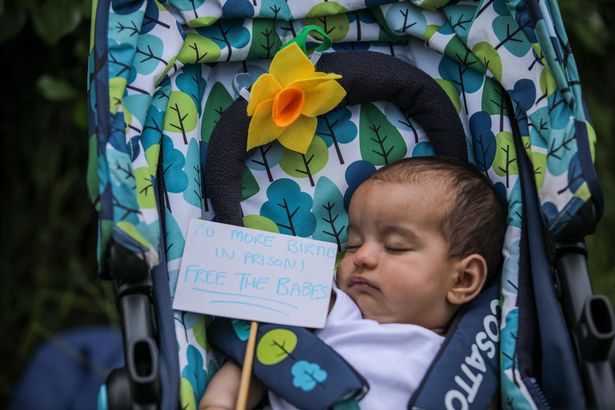
What happened to Louise Powell? A young woman, call her Louise Powell, was held in HMP Styal. She did not know that she was pregnant. She did know that she was in excruciating pain. She did tell the staff, who told her to take two aspirins and chill out. The pains increased. Finally, someone realized that the woman was pregnant. By then, it was too late. The young woman delivered her baby, stillborn, in a cellblock toilet. The Prison Service expressed its deep concern, promised an investigation. None came. No changes came. Today, two years later, members of the “No Births Behind Bars” campaign organized a demonstration outside the walls of HMP Styal.

Organizers said the demonstration was too traumatic for Louise Powell to attend, and so instead she sent a message: “Brooke is always in my heart and my mind. Two years ago on 18 June 2020 I was left to give birth in a toilet, despite begging for help. It has been two years since she died and still we do not have accountability for what happened. I fully support the campaign for ‘No Births Behind Bars’ and thank you for your condolences and support for Brooke.”

What happened to Hollie Grote? A 41-year-old mother, call her Hollie Grote, was detained in the Pike County jail a year ago, in June, 2021. In July, she started complaining of pains. The first recorded complaint was July 28,2021. When Hollie Grote told her family she couldn’t get medical assistance, the family went to talk with the sheriff, to plead to have her sent to the hospital, the sheriff responded that people claim excruciating pain to attract attention. Take two aspirin, don’t call me in the morning. By October 23, Hollie Grote said the pain was so intense that she was considering suicide. A staff member noted “scratch marks on the forearm/wrist area.” She still wasn’t sent to hospital or given any medical attention. Staff noted that she was lying on the floor, groaning, grunting. They put her in suicide watch. Then they watched and did nothing. Finally, she rolled off her bed and died on the floor. Hollie Grote’s sister and daughter claim that when they asked the sheriff what it would take to send someone to hospital, he replied “someone would have to be bleeding out or vomiting in a way that it would be obvious something is wrong.” An investigation is `in process’.

It’s easy, and correct, to condemn the staffs of HMP Styal and of Pike County Jail. But what about the State, the society, and the world, that has decided that women behind bars deserve this sort of treatment, medical staffs who refuse to offer medical care, systems in which sheriffs and guards decide major health issues? Last month, Leah Porter, mother of two, was “found dead” in her cell at Villawood Immigration Detention Centre, in Sydney, Australia. Leah Porter lived with mental health issues. She told the staff she needed her medication and she needed it at specific times. The staff decided they knew better, and gave the medication midday, rather than early in the morning, as she had requested. The night before she committed suicide, Leah Porter told other detainees, “I want my story to be heard. I want the people to know what happened to me. I want to tell the people what these detention centres do to the people.” When the Villawood staff expressed shock and dismay, Leah Porter’s relative, Narelle Aitken, replied, “She should never have been in detention. I loved her to pieces. She was very funny.”

In 2017, Delilah Blair, 30-year-old mother of four, Cree, was detained at South West Detention Centre, in Windsor, Ontario. What happened to Delilah Blair? On May 21, 2017, Delilah Blair was in the mental health block when a staff member “found her body” lying on the floor, with a blanket tied around her neck. The State is currently holding an inquest, delayed by over two years by Covid. Selina McIntyre, Delilah Blair’s mother, who testified today, described the last time she saw her daughter, “When I held my daughter for the last time, I made a promise to her that I would not stop until I had the answers of what happened.” What happened? Delilah Blair was a woman with a mental health issue, which meant she was placed in an inferior system of health care. In the men’s unit, everything from supervision protocol to room and furniture design was designed to improve health and prevent suicide or self-harm. None of that was, or is, the case in the women’s unit. This was “revealed” in testimony yesterday, revealed even though everybody involved knew.

They should never have been in detention. Tell the people what these detention centers do to the people. I loved her to bits. What happened to Louise Powell, Hollie Grote, Leah Porter, Delilah Blair? Take two aspirin, chill out.

(By Dan Moshenberg)

(Photo Credit: James Speakman/Manchester Evening News)

The spectacularly ordinary cruelty of England’s abuse of the vulnerable

While State cruelty is nothing new, since the advent of neoliberal state practice, the cruelty has become `dignified’ by rendering the objects of the violence both invisible and fully public, through a prism darkly of obfuscating discourse, networked technologies that are both massive and seemingly impenetrable and simultaneously intimately invasive, and a State addiction with policing and incarceration, all in the name of security and something aptly named criminal justice. In the United Kingdom in the past month, this has somewhat garnered attention with the Home Office’s plan to send asylum seekers to Rwanda. Yes, Rwanda. This plan has been referred to as callous and torture. Prince Charles, who is headed for a Commonwealth meeting in Kigali later this month, has called the plan, and the entire direction it betokens, “appalling”, and Prince Charles is certainly someone who knows a thing or two about appalling behavior. While all these critiques are apt, they miss the point. The plan is spectacularly ordinarily cruel, and the cruelty is the point.

From the international perspective, the idea of Rwanda is an extension of the global “safe third country” programme. Trump tried it with El Salvador, Guatemala, and Honduras. The United States still has a “safe third country” agreement with Mexico. Australia tried it with Cambodia, Nauru, Manus Island. Sometimes it’s called “safe third country”, other times It’s called “country of first asylum”, as Europe has `negotiated’ with Greece and Turkey. Whatever it’s called, it means “Don’t come here if you really need help.” Also, whatever it’s called, every iteration has been, on the surface, a screaming disaster … unless, of course, cruelty is the point.

The latest British iteration is marked by deception and investment. The Home Office spent £14,273.32, or $ 17,593.79, to develop “branding and messaging.” The spent an additional £38,000 to £50,500, or up to $109,000, on Facebook and Instagram ads. This is only a partial accounting. All of this in a time of rampaging inflation and government calls for austerity, for “the public good.” The Home Office informed asylum seekers that the United Nations High Commissioner for Refugees was intimately involved and working with the Rwanda plan. That was not and is not true, as the UNHCR has stated publicly.

In its implementation and design, the Home Office refused to consider the particular dangers to LGBTQ+ refugees. It refused to consider the particular dangers to refugees living with disabilities. For those asylum seekers who reported that, due to past trauma as well as the prospect of being shipped off to Rwanda, they were at serious risk of suicide, the Home Office provided a “trauma handout pack”. Here’s their considered advice: “Do a crossword or Sudoku”. “Ask the officers for a job”. “Punch a punching bag”. “Do some colouring or paint”. “Try aromatherapy”. In other words, just die already. Cruelty is the point.

In the past month, reports have shown that, between 2016 and 2021, more than half of the 5,403 incarcerated people in England assessed by prison-based psychiatrists to require hospitalization were never transferred. That’s an 81% increase over the preceding five years. The situation is particularly dire for and prevalent among incarcerated women. Women who should be in treatment are left, often in solitary, at places like HMP Styal, where 18-year-old Annelise Sanderson was sent in the summer of 2020. From the outset, Annelise Sanderson said she was unwell and wanted to die. The staff did less than nothing, and in December 2020, Annelise Sanderson killed herself, or better was executed. According to Shell Ball, a formerly incarcerated woman, speaking of her time at HMP Styal, where, despite being diagnosed with anxiety, depression, PTSD and borderline personality disorder, she never saw a psychiatrist, was never transferred to any medical facility, said, “About 90% of the women in there had mental health issues – most probably that’s why they were in there in the first place.”

In 2020, a woman at HMP Styal endured a stillbirth, in her cell. When she had cried out, saying she was in excruciating pain, she was given two aspirins and told to chill out. Do a crossword or Sudoku. Months earlier, a woman at HMP Bronzefield, England’s and Europe’s largest women’s prison, alone in her cell, gave birth to a child. The child died. In both institutions,  self-harm is rampant. No matter. Pregnant women are sent there anyway. Looking at this situation, some ask, “How cruelly they must have been treated. And for what?

From the “Rwanda plan” to HMP Styal and HMP Bronzefield, the message to the vulnerable, to those living with trauma, mental health, grief and sorrow, is as it has been, “Do a crossword or Sudoku, and then just die”. Cruelty is the point. The point is cruelty.

(By Dan Moshenberg)

(Image Credit: Raluca Bararu, “Anatomy of Cruelty” / Artsper)

The Massachusetts Correctional Institution at Framingham is the U.S’s oldest women’s prison still in operation

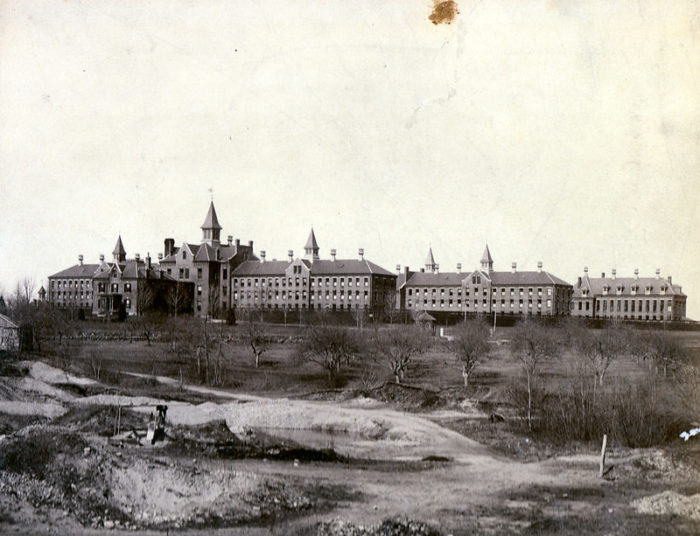
The exterior of Sherborn Reformatory for Women in 1877 | Photo courtesy of Framingham Public Library

The Massachusetts Correctional Institution (MCI) at Framingham is the U.S.’s oldest women’s prison still in operation. In 2019, MCI-Framingham was closed indefinitely: “The latest Department of Public Health inspection report for MCI-Framingham, from June 2019, listed 107 repeat violations, from plumbing that was not in good repair to a dirty kitchen to rusted and moldy showers to lights that were out. There were not enough toilets per inmate in one unit, hot water was not hot in many places, and rodent droppings were observed in multiple rooms.” Until its closure, MCI-Framingham was operating at full capacity, almost 450 beds.

MCI-Framingham’s 2020 closure is the result of the city’s effort to rebuild and reform the prison, a dangerous proposal masquerading as a humanitarian effort in good faith. As Mallory Hanora said: “… if they build a larger prison or a newer prison, they’re going to fill it” Hanora is the executive director of Families for Justice as Healing, an advocacy group based outside of Boston that fights for the end to the incarceration of women and girls. She is correct, and she aptly notes one of the many paradoxes of prison. The state has proposed a budget of $50 million to replace MCI-Framingham with a new prison in Norfolk, a town just thirty minutes south. Families for Justice as Healing worked with State Senator Joanne Comefore to introduce S. Bill 2030 to the Massachusetts State Legislature in 2021, a moratorium that would immediately halt any new construction for the next five years.

Lee Peck Unitt is a Malaysian-American woman who was incarcerated at MCI-Framingham for six years. During her sentence at Framingham, Unitt worked tirelessly at the jail’s law library to collect testimony, formal medical documents, and state reports to assemble what would become the basis for three lawsuits: Lee P. Unitt v. Luis Spencer 2014, Lee P. Unitt v. Daniel Bennett et al. and Unitt v. Bissonette (2018). The lawsuits outline the use of excessive force, inadequate healthcare, and unsafe living conditions in the prison. Unitt herself suffered three “mini-strokes” in her Framingham cell, where the temperature reached 101 degrees fahrenheit. Her cellmate, Connie Garcia contributed affidavits and medical records. Garcia spent time in solitary confinement after her close friend committed suicide in MCI-Framingham which sent Garcia into a grave depressive episode. Instead of receiving mental health care, Garcia was restrained by four officers, placed under observation for 24 hours, and then prescribed heavy doses of antidepressants and psychotropic medications for the next 13 years.

Unitt also alleges that her legal documents were taken by MCI-Framingham officials. The day that Unitt’s first motion was due in court, a third of her legal documents were missing from her personal storage locker at MCI-Framingham. Recovered email correspondence between the prison superintendent and officers at the prison reveal instructions to search Unitt’s cell for legal documents. When Unitt finished her sentence years later, she would be missing nearly two thirds of all the legal documents she had accumulated.

Despite reform from both the state DOC and internally within MCI-Framingham itself, abuse of power and excessive force run rampant. For example, in 2014 Massachusetts enacted an anti-shackling law that prohibited the handcuffing of women during labor and childbirth. However, a 2016 report by the Prison Birth Project revealed that the Massachsetts DOC consistently violated this law and there are no mechanisms built into the legislation to prevent this from happening. Further, Massachusetts Governor Charlie Baker (R) signed into law two bills in 2018 that restricted the use of solitary confinement for pregnant women and women with mental illnesses. However, Framingham found a loophole in the new restrictions, creating new units for women with mental illness that effectively placed them in solitary by holding the women for up to 21 hours every day.

There is some hope, however. Families for Justice as Healing (FJAH), a nonprofit founded and led by formerly incarcerated women of color in the Boston area, has been leading the charge to finally end the incarceration of girls and women in Massachusetts. FJAH was started by Andrea James while she was incarcerated in Danbury, Connecticut. Upon her release, she based FJAH in Roxbury, Massachusetts, just 40 minutes from Framingham. James has built FJAH up to become a nationally active nonprofit organization, part of various coalition groups intent on dismantling the criminal justice system. Of Framingham, FJAH said:

“Former Superintendent [of MCI-Framingham] Hallet mentioned today that there’s 50 women who are lifers. What she didn’t talk about was how many of those women are disabled, how many of those women are chronically ill, how many of those women are elderly and how many of those women who have already done literally decades in prison, and that’s almost all of them. All of them are survivors of trauma and specifically sexual and domestic violence. For us, even that population who the general public might look at as having caused more serious harm, they’ve already paid for that with their lives, their bodies, and we want them to come home and live in dignity and experience healing before they die. Otherwise — we need to be very clear — they will die in a prison.”

To find out more information on how to assit FJAH in their fight to pass S.B 2030 and end incarceration in Massachusetts, visit justiceashealing.org.

Information for this blog post was gathered from reporting posted by Shelby Grebbin and Isha Marathe at digboston.com as well as reporting from Liberation News.


(By Caitlin Davan)

(Photo credit: DigBoston)


COMMENTS

Shannon RUTH: i was in there in 2013 hen i was 19 and do you know they wouldnt allow us the book about the prison within the prison library? and i know a lot of the secrets that wnt on and the black mold at the end. i was getting bailed out and a girl thats a lifer -my friend- asked me to call fox news and beg them to get attention to the mold and conditions. Now its so covered in secrecy what they are doing with Framingham Prison, most people think its shut down. Not true. The lifers are still there. Still- a lot of people dont even think it stil exists because -yes these women a lot of them will die there. it was a fascinating, traumatizing and insane experience to be in a prison for minor offenses at 19 with women in there for murder. no seperation. no classification actually- when you first get there (in2013) -newly sentenced girls – they put you in the same unit as people JUST getting out of the hole. insane. eventually went to a pre release for my county which was wicked nice compared to this hell hole. There are acquaintances of mine behind those walls from time to time. these women all have a deep story and deep pain. and i hope they are ok.


In Chile, a victory for HIV-positive women, for all women, everywhere!

In 2002, a 20-year-old, married rural woman now known as Francisca discovered she was pregnant. She and her partner were elated. When, early in the pregnancy, Francisca went in for tests, she discovered that she was HIV positive. She immediately began a protocol of antiretrovirals. She had a caesarean delivery, successfully, and the child was HIV negative. That child, now 22 years old himself, is still HIV negative. When Francisca emerged from the surgery, a nurse informed her that the surgeon had sterilized her.  Francisca never asked for or wanted to be sterilized and had never consented. In 2007, Francisca sued the doctor. In 2008, the case was dismissed; the court decided the doctor’s actions were not criminal. In 2009, the Center for Reproductive Rights and Vivo Positivo took the case, on Francisca’s behalf, to the Inter-American Commission on Human Rights. In August 2021, the Chilean government signed a settlement accepting responsibility and offering something like reparations: a housing subsidy and healthcare for both Francisca and her son as well as a commitment to raise awareness of HIV and reproductive rights. After eleven years of intensive struggle and labor, Francisca responded, “I receive the apology offered to me by the Chilean state… [but] it must be clear that I was not the only one. I am happy to know that my case can serve to end stereotypes about people living with HIV, and to improve healthcare for other women.” Francisca knew and knows: her struggle is a collective struggle is a universal struggle.

From 1935 to 1976, Sweden sterilized women it deemed socially or racially inferior. `No one’ knew about this program until it was revealed in 1997. In 1999, Sweden agreed to pay victim-survivors a one-off payment of $22,6000. Then, in 2012, it was `revealed’ that Sweden required transgender people to undergo sterilization. The law requiring sterilization was passed in 1972, but “no one” knew. In February 2012, thirty years after its passage, the law was repealed.

In 2009, three women, all HIV positive, sued the Namibian government for engaging in forced and coerced sterilizationIn 2014, five women, all HIV positive, sued the Kenyan government, two maternity hospitals, and two international ngo’s for engaging in forced and coerced sterilization. In 2014, in Chhattisgarh, India, 15 women died in a `sterilization camp’. Fifty others went in hospital, with at least 20 in critical condition. The world was forced to `discover’ the widespread policy of forced sterilization … yet again. In 2014, California formally banned forced and coerced sterilization of women prisoners. In 2015, the Virginia legislature agreed to pay $25,000 in compensation to those who had suffered forced sterilization during the Commonwealth’s decades long adventure in eugenics. In 2015, in South Africa, 48 women living with HIV and AIDS who had suffered forced sterilization lodged a formal complaint against the South African government. In 2018, former President of Peru Alberto Fujimoro was formally informed he would be charged with having engaged in forced sterilizations on thousands of indigenous women, during his reign of terror. That case is still pending. In 2018, Native and Indigenous women in Canada filed a class action lawsuit for decades of forced sterilizations in Saskatchewan, Ontario and Manitoba. In 2019, the Japanese legislature offered a one-off compensation of around $28,770 to victim-survivors of forced sterilization. That was the result of a 23-year campaign.

Francisca and her supporters know this long and arduous history. They knew all along that no state has ever willingly, easily acknowledged the torture, violation, cruelty of decades of forced sterilization. They knew that doctors always claimed, as did Francisca’s, that they knew what was right and wrong, and that the forced sterilization was the ethical route. The ostensible reasons differed from one area to another, from one period to another, but the underlying current was always the same. The women were subhuman and needed, demanded, to be violated.

On May 26, 2022, newly elected President Gabriel Boric announced, “I would like to start by apologising to Francisca ….  for the serious violation of your rights and also for the denial of justice and for all the time you had to wait for this. How many people like you do we not know? It hurts to think that the state, which today I have the honour to represent, is responsible for these cases. I pledge to you, and to those who today represent you here in person, that while we govern, we will give the best of each one of us as authorities so that something like this will never happen again and certainly so that in cases where these atrocities have already been committed, they will be properly redressed.”. Boric went on to promise to provide specialist training to medical workers on HIV/AIDS to curb discrimination and to ensure that judges and lawyers are aware that affected women have a right to reparations.

Chilean activist Elayne Leyton responded, “For years, no one has talked about women living with HIV. We’ve had to hide in our houses like rats, suffer discrimination, and practically eliminate ourselves from society. At last, someone is taking responsibility.” Elayne Leyton has lived with HIV since the late 1990s. Sara Araya, Coordinator of Vivo Positivo, added, “Finally, justice was done; through this case we call on all governments to continue to invest in the elimination of HIV discrimination in all services, including health care”. Finally, Francisca, who, in order to protect her anonymity, was not at the announcement, sent this message, “I would love to have been me, with my voice, my face and my body, the one who after so many years of struggle stood present to lead this act in my own name. However, making my identity known would have closed endless doors for me. To this day, people who carry HIV are still looked down upon with contempt as if it was our decision to become infected. However, I want to believe with conviction that this will change.”

(By Dan Moshenberg)

(Image Credit: Jennifer Leason / Canadian Family Physician)

I did not need to watch the trial

I did not need to watch the Depp/Heard trial. The endless documentation around it and its live feed are meaningless. Even if the libel defendant were destroyed, aggressive, confused and/or totally without credibility, it would not change my opinion.

In my opinion, the person with gender privilege, more money, more symbolic power and more fame, not to mention more physical torque, is far more at liberty to walk away from a conflict than a person who has less of these things and is dealing with gendered ideology — a thing that lives in the minds of many femmes people, particularly cis-het women, reminding forever that femmes or childbearing bodies can be and are frequently trafficked, femmes minds are not valued; bank accounts not owned by men are precarious (as in evidence in the case of Britney Spears), and that displeased het-men have a social history of violence. Any invocation of the witch trials reminds that those bodies historically described as “women” are constructed as disposable.

Though in many contexts, these fears may be much less relevant, the true lovers of femmes people will understand that this internal siege exists and help us feel safe. Since the “Depp is innocent” campaign, that internal dreamscape has become a more, not less, dangerous place. Now that he has won his case, the dangers of that dreamscape will pierce the membrane into reality with the help of that repository called the internet.

The non-imperial gender and less powerful person in a relationship is far more likely to be stripped of other forms of material and social power if they are the one to choose to leave. Though I have little interest, fascination or even patience for a ‘Hollywood set’ of huge means, this relatively ‘less’ is of great importance when we are talking about ‘the union between a man and woman’ in the spectacle. Because it’s here in cis-hetero-ville that patriarchy finds itself and simmers its eggs against any social or structural change. When the imperially gendered famous person can pay an entire media machine to produce its slogans and re-frame events, his ex-wife has every reason to be and to have been terrified. Breakups for the person with less social power can be exponentially more frightening; they carry with them more potential for exile and violence. With the femmes gender having a history of being property, the gender who has been permitted to feel entitled to that property may construct being left as a form of being expropriated.

At the scale Heard will face here, where one can be certain that such an actress will face an entire regime of misogynistic death threats from other similarly entitled/sex privilege expropriated people, and with the more powerful actor most assuredly knowing that such harassment exists, it’s hard not to assume that his abuses continue.

Since I’m a reader, not a watcher, the bits I have caught pertain to some jocular death threats issued by Johnny Depp for whom the Stanford Experiments defense is suddenly deemed relevant. “Burn the witch” is not only misogynistic, it’s an elemental and originary form of misogyny. It represents a fundamentalist dogma of hate towards life-bearing bodies and a reference to a ‘first cause’ of a gendered regime change that brutalized bodies with vaginas. Team Depp argues that the context for him writing these texts was terrible, and so he became terrible. But why does this line of reasoning not work for Amber Heard? Was the context not also somehow terrible for her?

Indeed, what must a woman do to save her life? Sometimes the material manifestations of such decisions are surprising as, for instance, when Lucy DeCoutere gave Jian Ghomeshi flowers. That she did this was also used to prove Ghomeshi’s innocence in Canada. Fear does a lot of things to people: it can make them hyper-conciliatory, or it can make them enraged. But one thing is certain: the double standard has been holding in case after case.

It doesn’t matter to me that Winona Ryder (an actress I am a fan of as much as I can “like” any of these people) or Kate Moss didn’t experience violence with Depp. Sometimes a rapist abuser has a pattern that is obviously visible among his exes, and sometimes he doesn’t. While the pattern could serve as evidence, it’s not a foregone conclusion that if no one else comes forward, then he must be “innocent.” Perhaps Depp has categories of people he abuses, and categories he doesn’t. Perhaps he felt he could get away with exploring his violent side with Heard in particular; perhaps he was drunk. The reason doesn’t much matter. In any scenario, it still would have been much easier for him to walk away and shut the door than it would have been for her because the world doesn’t punish men, and particularly famous White, powerful men, the way it punishes every other identity at every social level.

Whatever Heard is or isn’t, she isn’t lying when she says that the judgment of this case hurts everyone. The judgement that proclaims Depp as “innocent” hurts abuse victims by making them more afraid to come forward, and it hurts abusers by declaring their innocence and thereby “finishing” the episode in what appears to be their favor. While it may look like a win, it actually deprives the abuser of self-reflection and the possibility of change and growth. More crucially, it deprives all of us because it re-installs the rigidity of gendered roles in marriage, men permitted to be controlling and women expected not to fight back and/or stay silent about what they endure; or that women’s roles remain circumscribed, though perhaps prescribed in kind by the whims of a particular era. Such a judgment reifies patriarchy at the center of the internet tabloid sphere, making a serious matter into a fluff piece about a woman’s derangement. So long as we live like this, there will be more Putins, Trumps, Enrons and all the forms of social destabilization created by excess greed, and a class of mostly White-man-people who are judged immune from ethics.

The raison d’etre of libel cases has often pertained to missed job opportunities. In this case, the consequence of Depp not issuing a libel accusation against Heard might have meant that he no longer would be allowed to make more pirate movies. But he would have assuredly not starved because of this, and indeed, it might be time for a new actor to benefit from such an opportunity. That blockbusters require a star in order to maintain their dominion over what adults and children watch is also problematic, normalizing, exclusionary and controlling.

If Depp were ethical, he would have written a well-considered op-ed back to Heard’s, supporting the social movements of femmes bodily autonomy namely the right to live without abuse and rape. He could have corrected where he thought she was wrong or talked about trying to understand how certain acts could, at least, have been read, understood or felt by her as they were in the context of his own predicament. He, like any other imperial identity in his position, could use such a moment to evolve the conversation, to avow his acts of cruelty or callousness, to read and learn about gender violence and support all of us in the travails and discomforts of what it means to truly and respectfully love the other and co-exist and co-create the world with them.

An onslaught of “Johnny Depp is innocent” is an abuse of the entire systemic socius for his petty battle. It ignores what the power of these signs do and which engines they feed. Maybe Depp did or did not abuse Amber Heard, but the accusation and judgment that supports libel abuses all of us. On that alone, Depp is an abuser.


(by Dora Bleu)

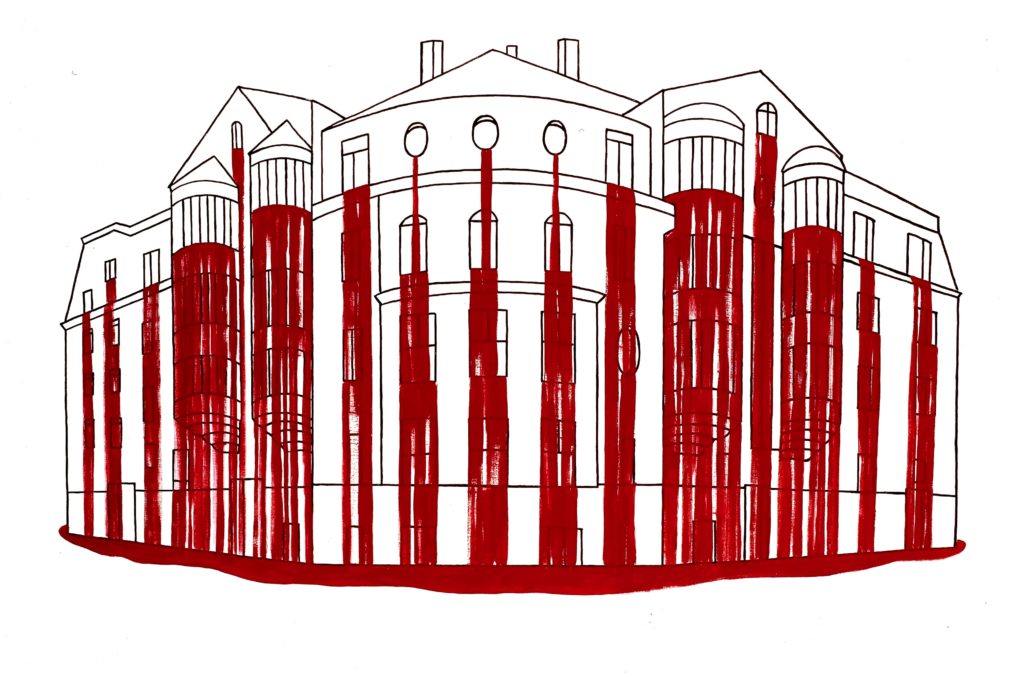
(Image credit 1: “Bleeding House Somewhere in Miami-5”, by Marko Mäetamm / The Cotton Factory)

(Image credit 2: “Bleeding House – 10”, by Marko Mäetamm / The Cotton Factory)

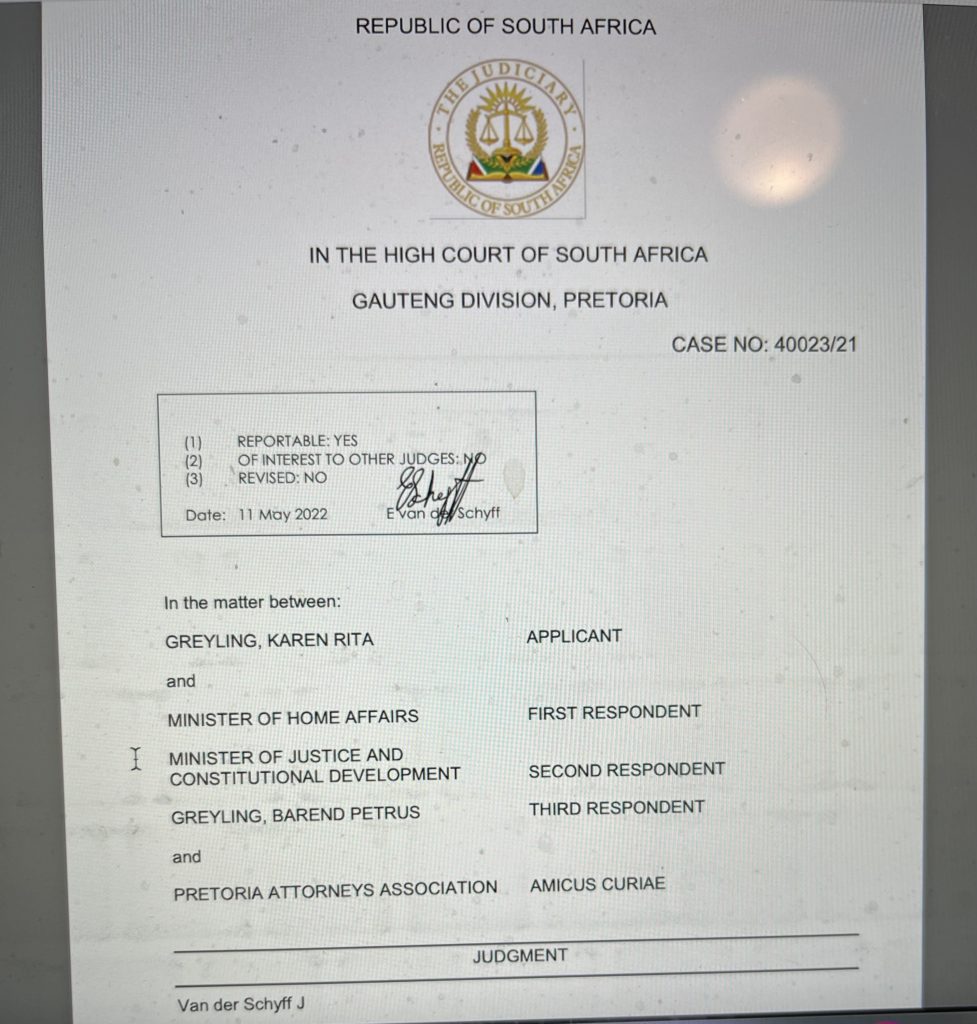
Landmark cases: In South Africa, Karen Greyling said NO! to women being economically trapped in toxic marriages … and won!

In South Africa, Karen Greyling argued that any system, any Constitution, that leaves women economically trapped in toxic marriages is unconstitutional. On May 11, the Gauteng Division of the High Court of South Africa agreed. Near the end of her 40-page decision, Judge Elmarie van der Schyff noted, “Aspects like the now abolished marital power and the man’s headship of the family are factors that contributed, and continues to play a significant role in the way some men, and even women themselves, regard the roles, and stature of women in society. Only those who go blindfolded through life can deny that gender equality has not yet been achieved in South Africa. In fact, the South African society still has a long way to go.” Karen Greyling said enough is enough. Beverly Clark, specialist family lawyer Beverley Clark of Clarks Attorneys, who agreed to take on the case, agreed. Judge Elmarie van der Schyff agreed as well. Now the case goes on to the Constitutional Court. Here is the story of a woman who said, no matter what the Constitution said, inequality is a violation of her rights and she demanded justice.

In March 1988, Karen and Barend Petrus Greyling were married “out of community of property, excluding the accrual system”. When it comes to assets and liabilities, and especially as pertains to divorce, South Africa has three marriage regimes: in community of property, where both parties share in liabilities and assets; out of community of property with accrual, where parties stipulate assets to be excluded, declare asset values, so that, in the case of divorce, only the accrued estate will be shared; and out of community of property, excluding the accrual system, in which each party has their own estate, and that’s that, no shared assets or liabilities. This third category was added in November 1984, with the enactment of the Matrimonial Property Act 88 of 1984.

In 1988, Karen Greyling was 22 years old. A little before the two married, Barend Greyling’s father announced the marriage would be no community property, no accrual. The lawyer presented the 22-year-old with a one-page contract, she signed, and the deal was done.

The couple lived in a rural area. They had three children. Karen Greyling took care of the children and of the house. Barend Greyling became a very successful, award-winning farmer. They were rich. Actually, he was rich. The relationship became toxic and abusive. In 2016, the couple separated. It was then that Karen Greyling, thirty years later, learned the meaning of “out of community of property, excluding the accrual system”. Other than a small inheritance from her mother, she had nothing.

Karen Greyling knew that was wrong. She searched for an attorney. Many turned her down, explaining the law was not on her side. Finally, Beverly Clark took on her case: “My client went to a number of attorneys who told her she didn’t have a case. Eventually she came to me in 2019, and I was keen to take this on because I have always thought the law was unfair. I have had so many clients where the woman got such an unfair deal. Many women who have been homemakers are trapped in unhappy or abusive marriages because they know they will walk away with nothing.”

Karen Greyling’s attorney argued, “The blanket deprivation of excluding spouses from the potential benefits of a just and equitable redistribution order constitutes unfair discrimination based on sex, gender, marital status, culture, race, and religion. As a result, it operates to trap predominantly women in harmful, and toxic relationships when they lack the financial means to survive outside of the marriage.” They argued that the law was unconstitutional. As Beverly Clark later explained, “This is not about bread and milk money. It’s about proper compensation and it’s about the courts being allowed to step in and exercise discretion to avoid unfairness.”

They took the case, finally, to the High Court, where Judge Elmarie van der Schyff agreed. Twenty five years of false promises and blindfolds threw women either into effectively forced marriages or deep poverty while denying their agency and contributions. As Judge van der Schyff noted, “The equality issue brought to the fore in this application is not solely attributable to race or gender or religion, but also to economic inequity.”

South Africa’s Bill of Rights, Chapter 2 of its Constitution, begins its enumeration of rights with Equality: “Everyone is equal before the law and has the right to equal protection and benefit of the law.” Equality is followed immediately by Human Dignity: “Everyone has inherent dignity and the right to have their dignity respected and protected.” These are the first articulations of “everyone” in the Constitution of the Republic of South Africa. In March 2021, the Constitutional Court rendered a landmark decision in favor of five women who had been excluded from inheritance on the basis of gender. In December 2021, the Constitutional Court rendered a landmark decision in favor of survivors, the majority of whom are women, excluded from inheritance on the basis of formal rituals. In May 2022, the High court rendered a landmark decision in favor of women seeking equality in marriage and divorce. Everyone is equal before the law and has the right to equal protection and benefit of the law. Everyone has inherent dignity and the right to have their dignity respected and protected.

(By Dan Moshenberg)

“Return to normal”: Rising evictions, nowhere to go

Welcome to the so-called `liberal’ DMV, DC – Maryland – Virginia. Yesterday, Maryland’s Republican Governor, Larry Hogan, vetoed a bipartisan bill that would have extended protection from eviction if the tenant has a pending rent relief application. That protection would have been a mere 35 days. The Governor also vetoed a bipartisan bill that would have required landlords prove their compliance with local rental laws before trying to evict a tenant. Who needs proof of compliance, when we’re talking landlords? These modest proposals were vetoed by the Governor because “Maryland already has some of the strongest tenant protection laws in the nation”. That’s a low bar, not to mention a lousy reason. On the same day, Virginia’s Republican Governor Glenn Youngkin vetoed bipartisan bills that would have assisted indigent public housing residents. The bills would have exempted very low-income tenants from having to pay exorbitant appeal bonds, which can run into the thousands, in order to appeal an eviction notice. The Governor explained that he preferred his vision, which was essentially to gut the entire bill and then claim victory. At least he didn’t claim Virginia already has some of the strongest protection laws in the nation. Both governors have national aspirations.

From Australia to the United Kingdom and beyond, the story is largely the same. Pandemic protections, such as they were, are coming to an end. The housing market, for purchase or rent, is hot and getting hotter. Landlords find, or create, loopholes in the already tattered safety net for renters. For example, across England and Wales, even weak restrictions on “no fault” evictions are blithely ignored. Of course, Parliament promised to and failed, or refused, to ban no fault evictions. This week, the New York legislature failed, or refused, to pass Just Cause eviction protections. Wages have not kept up with housing. Inflation is forcing low to moderate income families to decide among paying the rent or mortgage, putting food on the table, or paying for utilities. The affordable housing stock, already reduced after a decades’ long hiatus in construction, is being reduced. In many parts of the world, the mantra for those facing eviction is “Nowhere to go”.

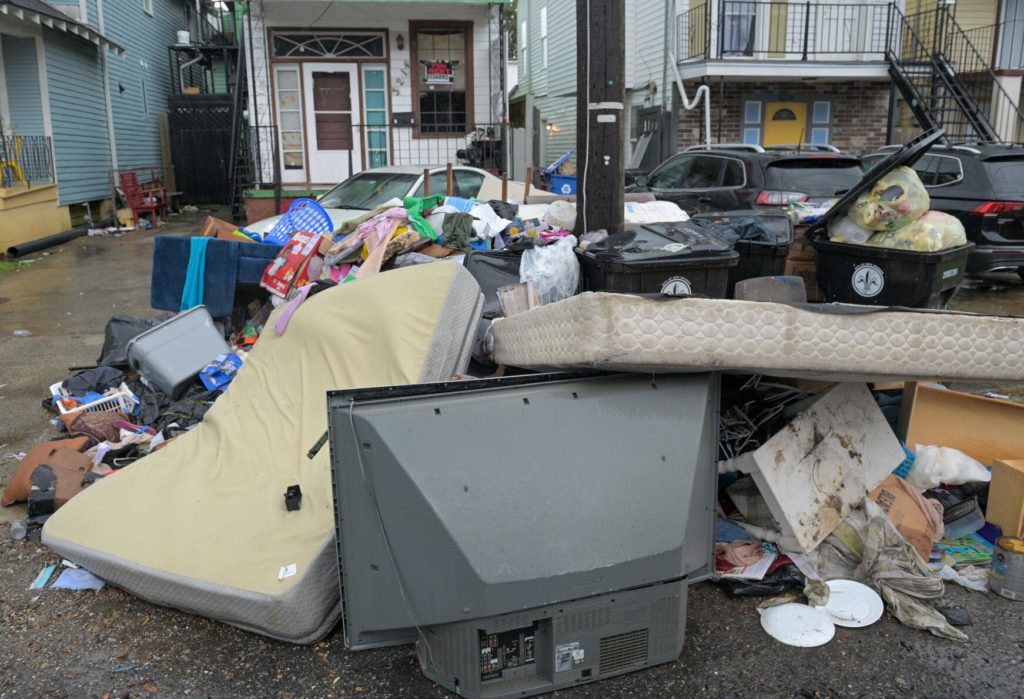
In New Orleans, eviction filings and evictions are rising rapidly. The explanation is rising rents and decreasing availability of affordable housing. Those are symptoms, not cause. Public policy is the cause. Look at any eviction court in the country. More than 90% of landlords have legal representation, fewer than 10%, often fewer than 5%, of tenants have lawyers. There are no scales of justice in that space. Only imbalance, inequality, injustice.

In Detroit, half the residents say their financial situation is more or less the same as a year ago, 23% say improved, 23% say worse. 35% of low-income residents say they are worse off now than a year ago. 33% of Detroit renters report spending 31-50% of their income on housing. 24% of renters report spending more than half of their monthly income on housing. According to the United State government, anything 30% or higher qualifies as “housing insecure”.

This is a brief overview of news of the last 24 hours. We entered the pandemic `discovering’ the lack of data. Individual organizations and people across the country created and expanded local eviction dashboards. There still is no national data bank. Courts remain spaces of collusion between judges and landlords. And the options offered by so-called leaders, with some exceptions, are either the protections in place are sufficient, when they clearly are not, or the protections in place or offered are excessive, when they are paltry. For too many, “return to normal” means nowhere to go.

(By Dan Moshenberg)

(Photo Credit: Max Becherer, NOLA.com, The Times-Picayune | The New Orleans Advocate)