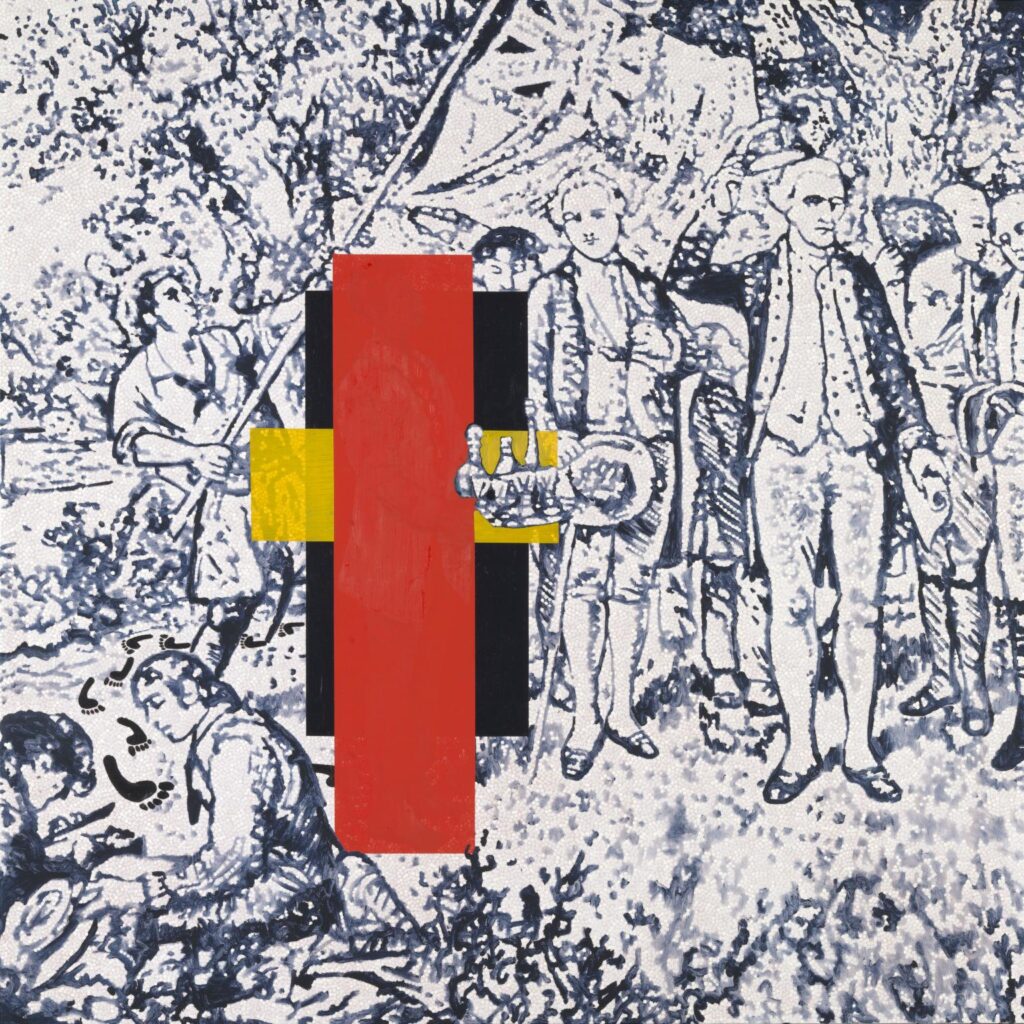
“The blues remembers everything the country forgot”
Gil Scott-Heron and Brian Jackson, “Bicentennial Blues”
What does it mean to forget the meaning of peace? Of ceasefire? Or, what does it mean to never have known?
In 1976, the year of the United States Bicentennial, the Welsh activist scholar Raymond Williams published Keywords: A Vocabulary of Culture and Society. Williams was careful to state, and repeat often, that his work was a vocabulary, not a dictionary, that it was imbedded in and woven through the social and political usages and tendencies of both his time and the times that produced his times, and the people that made and were made by, in and through those times. In 1976, Williams’ vocabulary included neither peace nor ceasefire. Nineteen words comprised the total of C-words. From capitalism to culture, C was the largest collection of words in his vocabulary. Peace did not figure in among the nine words beginning with P, from peasant to psychological. In 1976, no one gave peace a chance … and why would they? Has anything changed since then?
In 1976, the year of the United States Bicentennial, Gil-Scott Heron and Brian Jackson wrote and recorded Bicentennial Blues. The song investigates reasons the United States is the “home of the blues”. A few stanzas in, after the initial explanation, the song explains:
“The point is
That the blues has grown
The blues is grown now, full grown
And you can trace the evolution of the blues
On a parallel line with the evolution of this country
From Plymouth Rock to acid-rock
From 13 states to Watergate
The blues is grown
But not the home
The blues is grown
But the country has not
The blues remembers everything the country forgot
It’s a bicentennial year and the blues is celebrating a birthday
And it’s a bicentennial blues
America has got the blues and it’s a bicentennial edition
The blues view might amuse you
But make no mistake, it’s a bicentennial year
A year of hysterical importance
A year of historical importance”
And here we are, 2026, a year of hysterical importance, a year of historical importance, a year, five decades later, in which the blues remembers everything the country forgot.
In 1982, June Jordan published “Apologies to all the people in Lebanon”. The poem opens:
“I didn’t know and nobody told me and what
could I do or say, anyway?
They said you shot the London Ambassador
and when that wasn’t true
they said so
what
They said you shelled their northern villages
and when U.N. forces reported that was not true
because your side of the cease-fire was holding
since more than a year before
they said so
what
They said they wanted simply to carve
a 25 mile buffer zone and then
they ravaged your
water supplies your electricity your
hospitals your schools your highways and byways all
the way north to Beirut because they said this
was their quest for peace
of mankind isn’t that obvious?”
Here we are, decades later, and the “quest for peace” remains invasion, destruction, devastation, and death, and we continue to say, “I didn’t know and nobody told me and what could I do or say, anyway?” Where is the vocabulary, where are the culture and society, in which peace and ceasefire are keywords, words of critical significance, rather than invitations to say, “So what?”
The illustration below appeared in yesterday’s issue of The Guardian. How many more times will we see such illustrations? So what?
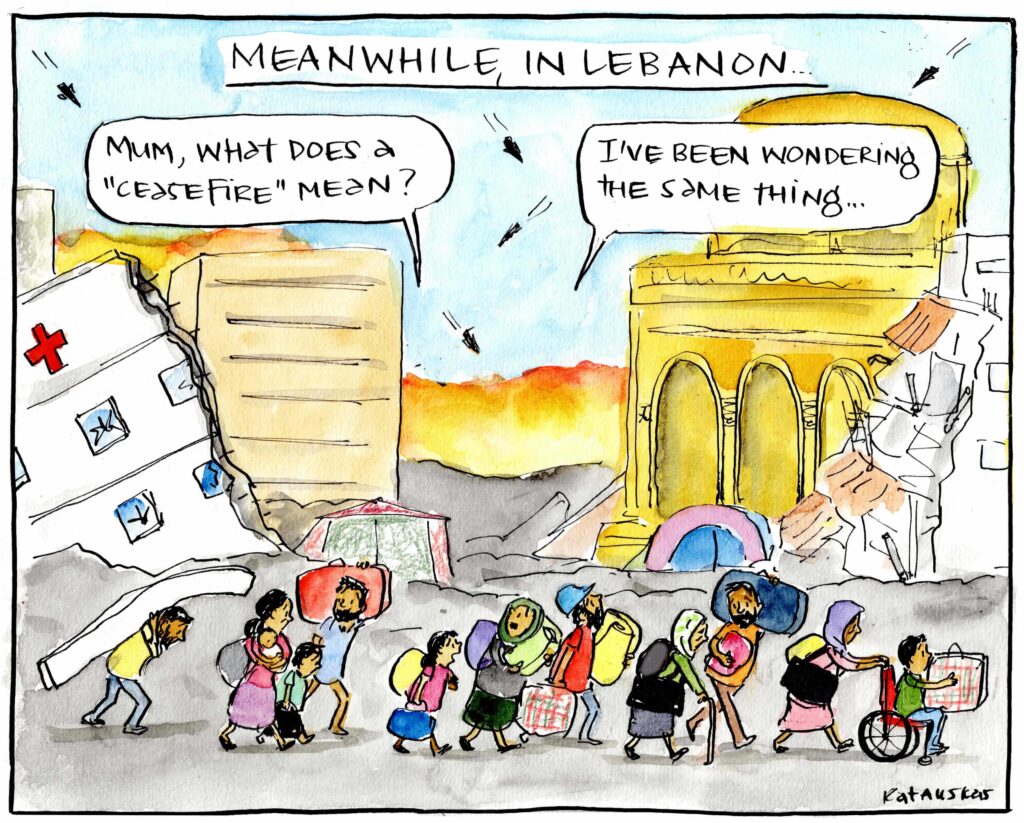
(By Dan Moshenberg)
(Illustration: Fiona Katauskas / The Guardian)