Our friend Charlie Hebdo

Not Afraid 2

The journalists and cartoonists of Charlie Hebdo had a constant presence on our political and civil lives. They used insolent humor to address some of the most dreadful deviances and provocations of our society. They would take pseudo-mythic authoritarian figures or representations and breathe into them their own true humanity. They attacked authoritarian ideas and leaders in ways that shook blind followers into introspections.

Philippe Val the former editor of Charlie Hebdo responded, “A certain way of saying, of writing, of thinking, of drawing of experimenting has been decimated. They were people who never despised anyone.”

Charlie Hebdo represents for many, including us, an important means of progressive expression with their very famous satirical cartoons.

I would like to quote Jean Louis Borloo, a political French leader: “The journalists of Charlie are incredible, they are the lightning rod of our society, they have been struck down. It is a planetary event to see an editorial staff being decimated like that. We must fight mistaken reactions, so there is no confusion.”

If I may talk for them, that is what they would affirm tonight. They were anti racist, anti fascist. They were bringing us a civic consciousness that allowed dissent.

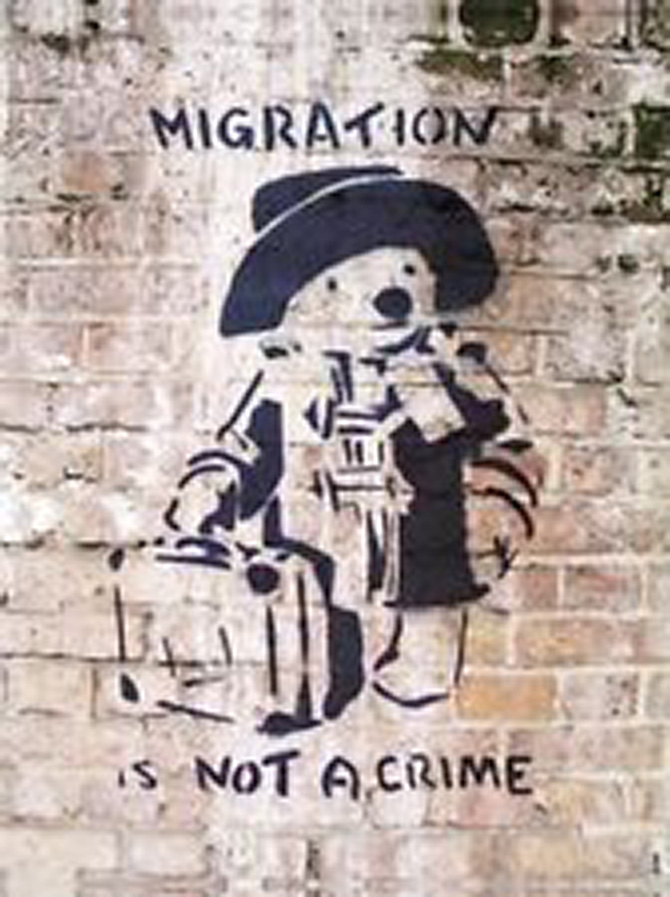
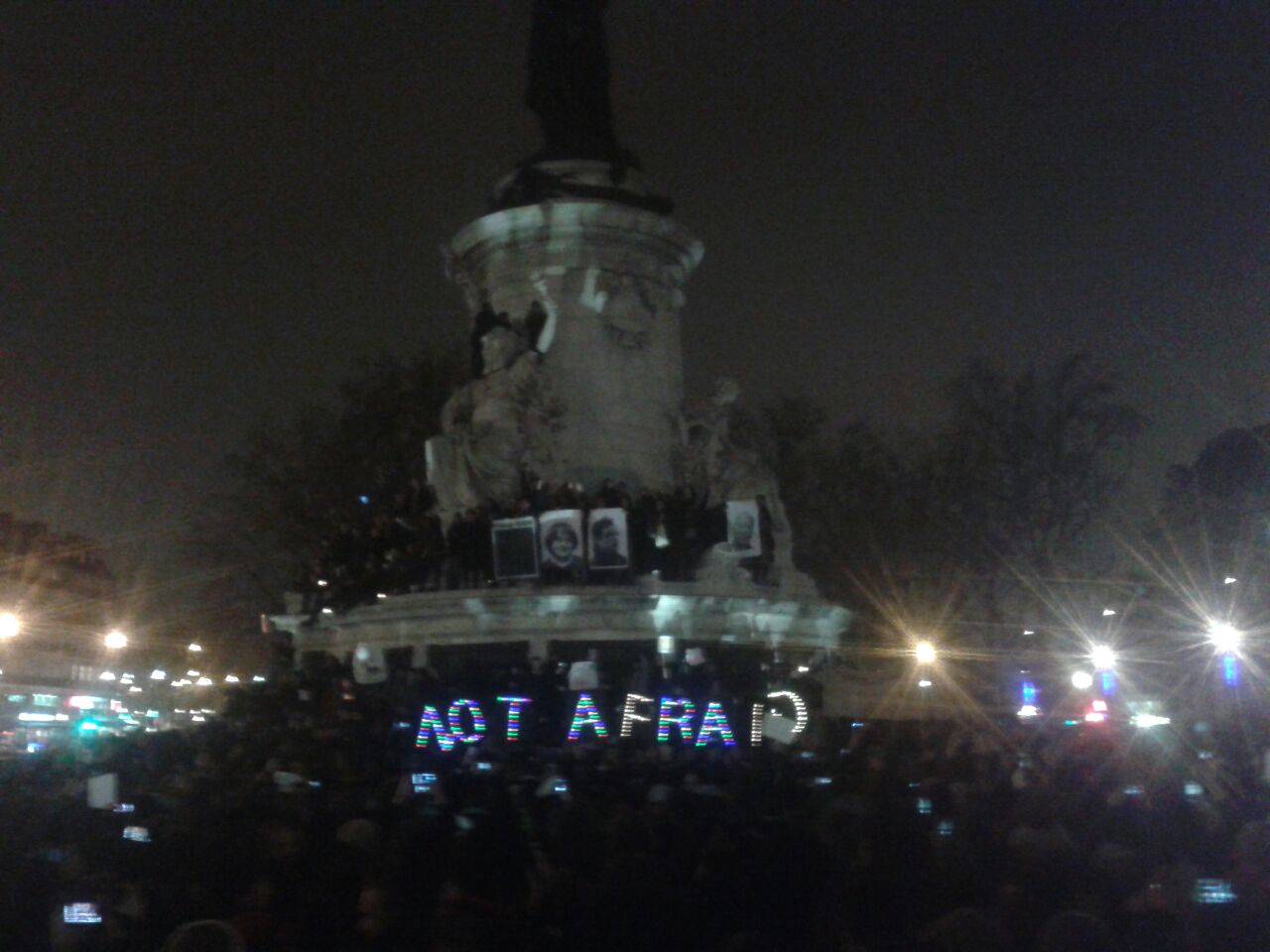
Tonight in France and across Europe hundreds and thousands of people have gathered spontaneously, some holding pencils high, some chanting freedom of expression, or singing “quand on a que l’amour” (If we only have love) by Jacques Brel, or holding signs “Je suis Charlie”( I am Charlie), or Meme pas peur (not even afraid).

We are sad and nous sommes Charlie

Tomorrow I will re subscribe to Charlie Hebdo.


(Photo Credit: Robin Marti)
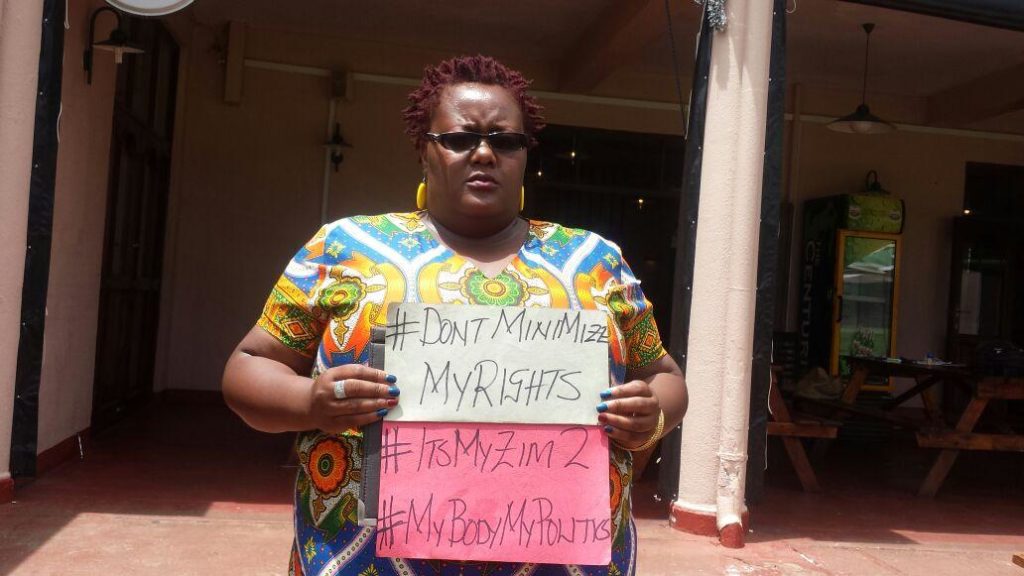
In Zimbabwe, women say #DontMinimizeMyRights!

On December 12, in Harare, a group of men attacked a woman. They were `punishing’ her for wearing a short or mini skirt. The woman was walking past the taxi rank when a man beckoned her over. She refused to answer. He called her a prostitute and then called his friends, and together they attacked her. Another man intervened to stop the men, and was threatened off. Finally, the woman paid a commuter omnibus crew two dollars and got away. The assault was captured on video, which went viral.

Women immediately organized. #DontMinimizeMyRights began to appear on social media, placards, and in the air. The full message began to circulate: #DontMinimizeMyRights. Our Cities. Our Streets. Our Dignity. Our Rights. Our Ubuntu. Hunhu Hwedu. Respect for all. Women organized a protest march, not the first one to take on violence against women that occurs within the fog of `preserving traditional culture.’ In the streets, courtrooms, police station, legislative bodies, schools, crèches, kitchens and beyond and in between, women spoke out.

Harare West MP Jessie Majome explained, “This is a fundamental women’s rights issue. It violates all known basic freedoms, freedom of movement and expression; it undermines everything and even the right to the protection of the law and the right to equality.” Tendai Garwe agreed, “For the women of Zimbabwe, this is an opportunity for us to be heard and to realise that we are coming for the rights that have been side lined for too long. This is not just about a mini-skirt issue because if you can control what l wear what else are you controlling? What power do you have over me? We are very interested in this case because we are pushing an agenda for the amplification of voice and the rights of women.” Women Coalition board member Ms Nyaradzo Mashayamombe added, “It might appear as an act directed at one woman, but its effect is to damage our children psychologically, dehumanise women and present us as a lawless nation. As women of Zimbabwe, we will not stand by and watch women being harassed and humiliated.” SAfAIDS communications director Tariro Makanga warned, “Enough is enough. This is our last time to talk as women. Now we want action!”

Jessie Majome added, “There is no public transportation system and this leaves commuters, especially defenceless women prone to such violent attacks. The government must come up with measures to address the current crisis as well as create employment to ensure that these people who have turned to touting for a living have decent jobs. We need an effective transport system that is convenient and reliable.”

Assaults on women that use clothing as a pretext, whether they come from the government, as in Uganda, or from men on the street, as recently in Kenya, are never an assault on one woman and never occur spontaneously. They attack women’s mobility, presence and power. They attack any hint of intervention into patriarchy. They work to deflect critical energy and attention on failings of the State and society. Violence against women occurs in a climate as well as an instant. That climate is not exclusive to Zimbabwe nor to Africa. In 2012, India, Kyrgyzstan, Indonesia, South Korea, Mexico, Nepal, France, and the United States engaged in State policing of women’s fashion. In New York, for example, transgender women, and especially transgender women of color, were routinely stopped, for the crime of cross-dressing.

And the women always fight back and organize. In South Africa, Namibia, Malawi, Kenya, Uganda, and Zimbabwe, women have forcefully rejected the violence and the excuses for the violence. They have thrown out the alibis of the State and have managed to throw out the State on occasion. Women don’t forget. For Tafadzwa Choto, a prominent Zimbabwean activist, two events politicized her. The first occurred in 1993: “A woman at the University of Zimbabwe was stripped of her skirt. It was said to be a miniskirt and was publicly ripped off her. I was disgusted.” The second was in 1995: “In Harare, in the city center, … three civilians were shot by the police, while the police were chasing after some thieves who had stolen a manual typewriter. Three civilians were shot dead and for what?”

#SavetheMiniskirt. #StripMeNot. #MyDressMyChoice. #DontMinimizeMyRights.

#DontMinimizeMyRights. Our Cities. Our Streets. Our Dignity. Our Rights. Our Ubuntu. Hunhu Hwedu. Respect for all.

(Photo Credit: Afrika Kontakt)

In Canada, Native women disappear, bodies never counted!

In 2008, Maisy Odjick and Shannon Alexander, two young indigenous women, disappeared in the Maniwaki area in Quebec. Their wallets and clothes were found but not their bodies. Despite claims to the contrary, the indigenous and Quebecois authorities took very little action to find them. Meanwhile, at the same time in the same area, the resources to find a young white runaway boy addicted to video game were easily gathered with Microsoft offering $50 000. There were no such resources available for two young indigenous women.

Last July, James Anaya, United Nations Special Rapporteur on the Rights of Indigenous People, released a report that exposed the “unresolved” issues at the basis of the socio economic gap between the non-indigenous and indigenous populations in Canada. Among these issues lies the increasingly precarious situation of Native women and their high vulnerability to sexual violence and murder. The report denounces the lack of “effective actions to address the problem of missing indigenous women and girls.” The report also points out the current issues of treaty negotiations as the indigenous land has become the target of non-indigenous mining and dam building.

About 2 000 indigenous young women have disappeared or been killed between 1980 and 2012 in Canada in the authorities’ indifference. The bodies of 90% of them have been found; still the code of silence prevails. It would be as if 55 000 women in France had disappeared or been murdered and the State did absolutely nothing. According to French journalist Emmanuelle Walter, that would not be tolerated. In her recent book, she describes Canada’s policy toward missing and murdered indigenous women as femicide.

Walter’s investigation took her back into the history of conquest and destruction of the Amerindian communities. She notes that the European patriarchal misogyny has contaminated Native men. Indian laws dictated by the colonizers affected the status of indigenous women. Moreover, the politics of assimilation that the Canadian government implemented in the 19th century were politics of elimination. In Canada, like in the United States, boarding schools were in charge of removing the indigenous culture with extreme violence, including sexual violence. It is estimated that 150 000 indigenous children were boarded in these schools during 150 years. This colonial past is not resolved and allows this indifference to the fate of indigenous women and girls.

In her book Conquest: Sexual Violence and American Indian Genocide, Andrea Smith established the correlation between land conquest and sexual violence as a genocidal instrument. With the ongoing conquest of underground lands in Canada by energy and mining special interests, Smith’s argument that “sexual violence is a tool by which certain peoples become marked as inherently “rapable” is most important to remember.

When Stephen Harper became the prime minister of Canada in 2006, he immediately abolished social programs for indigenous people. Then, his C45 Law project to modify the environmental laws that protected the indigenous land and populations was introduced. The same government downplayed the attacks on indigenous women, treating them as isolated crimes. These connections must be recognized to allow a better understanding of the situation of indigenous people in Canada and elsewhere. Indigenous people are fighting on every front.

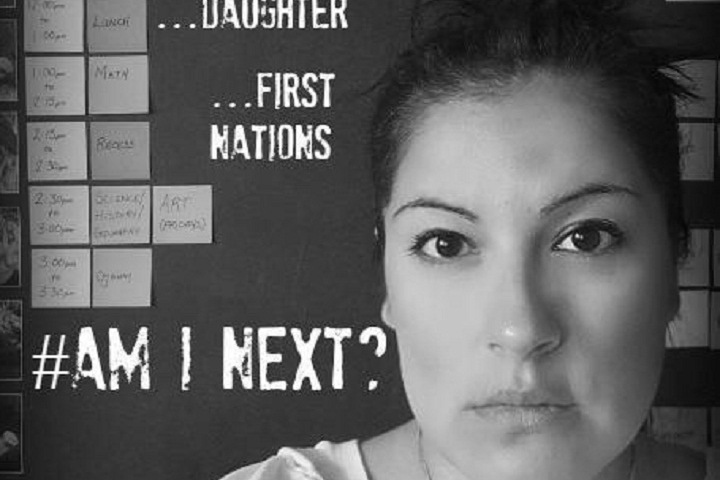
Indigenous women don’t want to be the victims and live in fear. The Native Women’s Association of Canada (NWAC) has organized actions to expose this femicide. After the murder of another young indigenous woman last summer, indigenous women defied the Prime Minister Harper with a series of photos of women holding a sign that says “Am I next?”

They demand a nationwide inquiry with financial means attached to it and in consultation with indigenous women. But, as Michelle Audette from NWAC underlined, “The government refused the visit of the UN Rapporteur. Do you think it is going to receive our demands?”

That is why the organizing and actions to break the code of silence and recognize this femicide are not weakening and must be made visible.

(Photo Credit: Humber News)

To those who turned their backs on Akaila Gurley: Shame

Akaila Gurley searches for her father


On November 20, Akai Gurley was walking with his girlfriend in a dark stairwell in `the projects’ in New York. An officer came upon them, fired and killed Akai Gurley. Gurley was unarmed. Gurley was Black. Gurley was 28 years old. Gurley was a father. His daughter, Akaila Gurley, is two years old.

The local district attorney is impaneling a grand jury to `investigate the matter.’ Many in New York have protested Akai Gurley’s killing and it context. Their placards read: “Once again in sorrow”, “Not one more”, “Don’t shoot”, “We are human.” Some ask questions: “How long will they kill our sons and daughters while we stand aside and look?” Others simply call for the names: “AKAI GURLEY”.

Akaila Gurley is often at the head of the protests. Akaila Gurley is two years old. Every one of the lethal bullets this year, and in for decades past, has not hit only its victim. Each bullet struck a daughter, a mother, a partner, a community. Whatever the grand jury finds, whatever the newspapers report or the scholars later on unravel, this much is clear right now. Akaila Gurley’s is two years old, and her father is dead.

Akai Gurley was not killed simply by a single officer, and that bullet was no “unfortunate accident”. Akai Gurley was killed those who have agreed that parts of a city are `real estate’ rather than residents, that some must `tragically’ die so that others might prosper. What is the lesson for Akaila Gurley and for the children of her community? The slaughter of the innocents never involves only the innocents slaughtered. The slaughter of the innocents attacks the dreams and aspirations of generations of innocents, no child left innocent behind. To those, uniformed and not, who turned their backs on Akaila Gurely, one word: shame.


(Photo Credit: Nicole Bengiveno / The New York Times)

Aura Rosser, Kyera Singleton, Shae Ward, Shirley Beckley: Black women’s lives matter

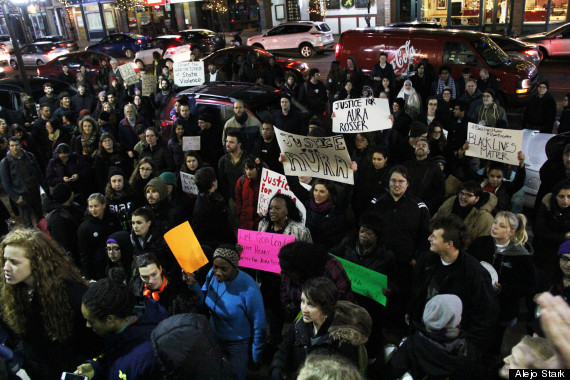
A year ago, Aura Rosser moved from Detroit to Ann Arbor to start a new life, and by many accounts, she was succeeding. On November 9, however, she and her partner were fighting. Her partner called the police. Two police officers arrived. One of them shot and killed Aura Rosser, who apparently held a knife in her hand. Then the police department went silent. The ACLU and the Ann Arbor Independent filed Freedom of Information Act applications. Students and townspeople organized. The officers were named. The Ann Arbor City Council voted to equip police with body and car cameras. The lack of cameras did not kill Aura Rosser. A man with a gun killed Aura Rosser.

Students, led by Kyera Singleton, have mobilized communities across Ann Arbor and beyond. Singleton explained, “It’s really important that we break the silence about who’s a victim of police violence. We can’t be silent when it happens to a woman and then go out and march when it happens to a man. … These national movements often take place around the bodies of men, and then black women may get erased.”

Aura Rosser’s sister, Shae Ward, agrees. She knew Aura Rosser and doubts that she would have actually attacked anyone, much less someone with a gun. Who was Aura Rosser? According to Shae Ward, “She was very artistic. She was deeply into painting with oils and acrylics. She’s a culture-type of gal. She was a really sweet girl. Wild. Outgoing. Articulate.” She was also the mother of three children.

Now, communities are trying to raise money for the funeral and for the children. Many are asking where the State is in all this. They argue that the State, in this instance Ann Arbor, killed a young Black woman, and the very least it could do is to bear the expenses of her funeral. Ann Arbor has opted to purchase cameras for police bodies and cars.

Shirley Beckley, 71 years old, went to the City Council and demanded a different kind of payment. Respect. Dignity. She asked for three minutes of silence. This request actually confused the City Council, but finally, after the Mayor laughed, they allowed for three minutes, three whole minutes, of silence.

Black women’s lives matter. Cameras will not stop the State assault on Black women’s lives. They will only record and document the assaults. In the same way that prisons have not reduced crime, because they never were intended to, cameras will not reduce State violence against Black women, people, or communities. Only a fundamental change in policing practices and cultures will begin to do that, and that change begins with this: Black women’s lives matter.


(Photo Credit: Huffington Post / Alejo Stark)

In Burkina Faso, the women continue to push for justice and transformation

In October, women carrying spatulas took to the streets of Ouagadougou, and sparked an uprising that finally overthrew Blaise Compaoré. With spatulas and brooms, they pushed open doors and windows that had been long closed. Thomas Sankara’s widow, Mariam Sankara, called for a real investigation into the circumstances of her husband’s death. Joséphine Ouédraogo, a minister in Sankara’s government, was appointed Minister of Justice. This week, Ouédraogo announced that she will re-open the investigation into the murder of Norbert Zongo, a prominent journalist who was killed in 1998. Genevieve Zongo, his widow, has been pushing for an investigation for the past sixteen years. Now, at last, as a result of women’s organizing, that investigation will take place.

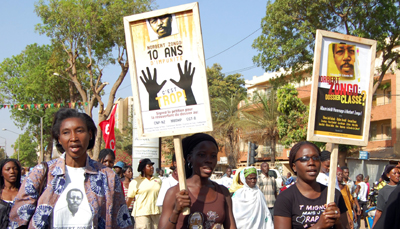
In December 13, the anniversary of Norbert Zongo’s murder, Genevieve Zongo told the thousands of demonstrators who had gathered to demand justice, “I demand that that the perpetrators be arrested and judged for the full extent of their crimes.” Burkinabé women never stopped demanding justice, for their loved ones, for themselves, for the strangers who had been imprisoned, tortured, murdered.

As a militant feminist, trade unionist, and journalist, Genevieve Zongo never gave up on the struggle for justice. First, she tried the Burkinabé courts. Then, in 2008, she launched the Ten Years campaign, and went international. In 2011, Zongo took her case to the African Court on Human and Peoples’ Rights, in Arusha, Tanzania. On March 28, 2014, the Court “concluded that the Respondent State, Burkina Faso, failed in its obligation to take measures, other than legislative, to ensure that the rights of the Applicants for their cause to be heard by competent national Courts are respected. The Respondent State … failed to act with due diligence in seeking, trying and judging the assassins of Norbert Zongo and his companions. Hence, Burkina Faso simultaneously violated Article 1 of the Charter by failing to take appropriate legal measures to guarantee the respect of the rights of the Applicants pursuant to Article 7 of the Charter.” The Campaoré administration did nothing in response.

But that’s all changed now, thanks to the persistence of women, the road to justice and democracy is being built. Some of the women – like Mariam Sankara, Joséphine Ouédraogo, and Genevieve Zongo – are well known. Others are not. But the women’s message across Burkina Faso is clear. The years of impunity are over. Women with spatulas and brooms and elbows and voices and dreams and aspirations and demands are pushing for more. Thanks to these women, a new day is dawning, and hopefully not only in Burkina Faso.

(Photo Credit: AFP)

In drone wars, women disappear, bodies never counted, names never known

The United States drone program, run by the CIA with the complicity of the NSA, inaugurated a new form of deterritorialized death sentence without trial or any form of public review in developing countries: Afghanistan, Pakistan, Yemen and Somalia. This secret program fits in with the rhetoric of domination and control. Its process is obscure, and its cruelty is obscured. As for its victims they are nameless, genderless and without rights.

Reprieve, an NGO that litigates for victims of these obscured actions whose access to legal recourse would be sketchy, recently published a report entitled: You Never Die Twice. It brings to light the strange body count of the US secret drone war. The report also deconstructs the false claims by the Obama administration that the drone attacks are appropriate surgical strikes. The administration along with most of the American political establishment has backed the drone program as a “humanitarian advance” in warfare.

The Reprieve report tells another story. For example, 41 men on the Obama’s Kill List have been announced as killed several times. Seven of them are still alive. For instance Ayman al-Zawahiri, a targeted man was reported killed twice although he is still alive. Meanwhile, 105 people were killed as a result of these “surgical strikes.”

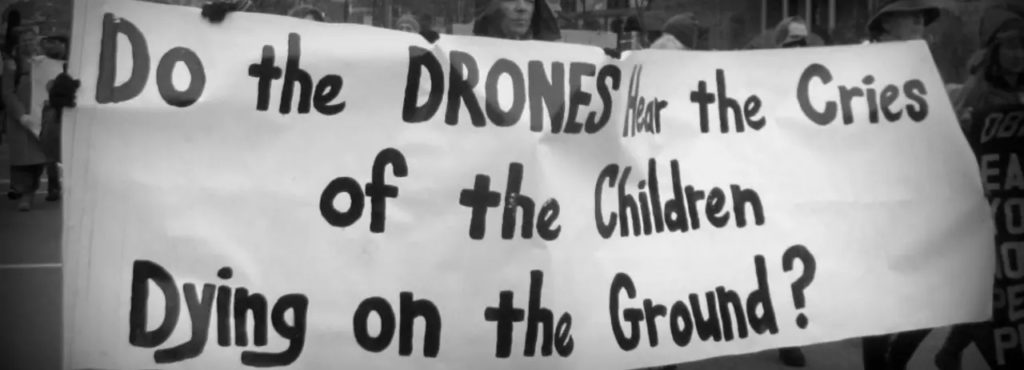
The report identified 24 men reported killed in Pakistan and 874 other people died as a result, among them 142 children, adding “each person was killed on average three time.” In Yemen, 17 were reported killed, and 273 other people were killed. The report describes the collateral casualties as other people and children who are typically innocent victims.

Innocence is difficult to prove from a distance, especially when the observer, the judge and the executor (all at once) have already deprived every one of all humanity, using a language that stereotypes all adults as potential terrorists. Thus, children are the only ones left to play the role of the innocent. Meanwhile, women who care for these innocent children are eliminated in an anonymous way. Women casualties are underreported or not reported at all.

A principle of secrecy characterizes the American drone program. The authors of the report explain that putting together this information is a considerable challenge. They use many sources including data from the Bureau of Investigative Journalism local sources, crossing-checking news sources with testimonies. In this process, women disappear and once again become invisible or passively subdued.

Meanwhile, mainstream media have been skillfully normalizing the arguments of the Obama administration to support the Drone program. Media-designated experts reinforce these false images. For example, former Ambassador Christopher Hill told CNN audiences, “I have seen a number of these strikes and it is amazing how accurate and how well-targeted they are. I mean, the idea that innocents are being killed, it’s really not the case.”

As Europe adopts more of the anti terrorist rhetoric accompanied with laws making legal what was in a recent past considered morally unacceptable, many European countries are investing in “the drone market.” For now, only the United Kingdom has armed its drones; its intelligence is directly involved in the establishment of the Kill List.

The French government is considering purchasing US Reaper drones, clearly signaling its intention to follow this deadly direction. A recent report has explored the possibilities for arming French drones. With the rest of the EU, France has abolished the death penalty and signed international laws that imply the respect of humanistic principles and the principle of distinction between combatants and civilians.

Nonetheless, the authors of the report articulate concrete recommendations, claiming “this study also opens deciders to ways susceptible to help them to overcome some of the identified difficulties.” So deciders should have necessary tools to overthrow the identified difficulties that stop them from carrying out deadly and blinded attacks on populations in other countries. Are these identified difficulties the still imperfect international laws that have attempted to establish humanistic conduct? In addition, the report examines what will be the degree of acceptance by the French establishment if these attacks were to be carried out. They would annihilate the existence of populations that are far from the deciders of their fate.

In February 2014, the European Parliament passed a resolution, expressing concerns over the use of armed drones. The resolution listed demands and restrictions, including a ban on the practice of extrajudicial targeted killings, and the inclusion of armed drones in international disarmament and arms control regimes. Groups such as Code Pink are pressuring Europe to renounce to the purchase of American or Israeli drones that can be armed.

The use of drones is another example of the dehumanization that accompanies the ruthless devaluation of targeted populations in certain locations for the protection of some. This recently developed armament that carries out an illegal death sentence, fits the neoliberal deterritorialization process. As the program uses obscure criteria to determine the culpability of people, it also aggravates the destabilization of regions that have been targeted for their strategic value by richer countries. The richer countries always claim to defend international laws. In this process, women have disappeared; their bodies are not even countable.


(Photo Credit: Debra Sweet / Flickr / Common Dreams)


Joséphine Ouédraogo’s long slow burn to democracy

Joséphine Ouédraogo

For some, it’s the end of the year, and so a time for reflection and celebration. 2014 has been a year of brave, inspiring young feminists. It has also been a year in which women, young and old and in between, have pushed out long-standing rulers and sparked the process of State transformation. In Burkina Faso, women sparked a revolution with their presence in the streets and their raised spatulas. Joséphine Ouédraogo was there, as she has been for decades.

A number of commentators have identified Burkina Faso as a bright spot for the year, even though they seldom, if ever, recognize women’s role in that brightness:

For protesters in Burkina Faso who have known only one ruler for the last 27 years, 2014 was a very good year. The peaceful overthrow of Blaise Compaoré at the end of October was a victory for democracy.”

Large segments of society were demanding the benefits of genuine representation. Democracy could not be reduced to a facade while old authoritarian networks remained. It was a striking warning to other African autocrats who might be tempted to stay in power indefinitely.”

Over the course of a couple of days in late October, an awe-inspiring display of people power in Burkina Faso forced President Blaise Compaore to scuttle into exile, his tail firmly between his legs. It was a humiliating exit for the man who had ruled Burkina Faso since 1987 … This was a magnificent example that power is not immutable; that people can be in control of their own destinies.”

Call it Spring, call it harmattan, women’s protests led to mass protests led to hope and the promise of democracy. Inside Burkina Faso and around the world, people spoke once again of Thomas Sankara, the President of Burkina from 1983 to 1987, when he was assassinated. In particular, people were reminded of Sankara’s commitment to women’s emancipation. He wrote and spoke of women’s liberation often: “The revolution and women’s liberation go together. We do not talk of women’s emancipation as an act of charity or because of a surge of human compassion. It is a basic necessity for the triumph of the revolution. Women hold up the other half of the sky.” More to the point, Sankara acted. His government outlawed female genital mutilation, forced marriages and polygamy; encouraged women to work outside the home; encouraged girls and women to stay in school, even if pregnant; promoted the distribution of contraceptives. Finally, he appointed many women to high governmental positions. Joséphine Ouédraogo was one of those women.

During the Sankara years, Ouédraogo was Minister of Family Development and Solidarity. Every attempt to transform women’s status and place in Burkina Faso came out of and was implemented by Ouédraogo’s office, including State support for the Women’s Strike of 1984.

When Sankara was overthrown and murdered, Ouédraogo went into exile. She worked as a consultant on development and gender. She continued to work as a sociologist, researching areas that others overlooked, such as the role of women heads of households in rural Burkina Faso. In 1997, Ouédraogo became Director of Gender and Development at the United Nations Economic Commission for Africa, followed by a stint as Secretary General of Enda-Third World, based in Dakar. In both positions, she spoke forcefully and directly of the central position of women in any program to improve the world or any of its parts.

And now, Joséphine Ouédraogo is back in Burkina Faso, and back in the government. She is a self-described militant feminist and militant anti-globalization activist, and she is now the Minister of Justice of Burkina Faso. From 1987 to the present, Joséphine Ouédraogo never forgot the revolution she had helped start, and she never tired of working to create the new spaces for militant democratic practice and for women’s emancipation. As she has known all along, the two need each other. And today, Joséphine Ouédraogo’s long slow burn has been a key part of the Burkinabé women’s spark that set off a revolution.

(Photo Credit: Ouaga.com)

Texas built a special hell for immigrant women and children

Today, December 18, 2014, is International Migrants Day. On December 18, 1990, the United Nations General Assembly adopted the International Convention on the Protection of the Rights of All Migrant Workers and Members of Their Families. What better way to honor that convention than to build the biggest, baddest prison for migrant women and children? Welcome to Texas, welcome to the United States of America, welcome to hell.

Here’s how the United States builds hell. First, constitute migrants and immigrants as a threat. Include asylum seekers and refugees in this. Then, quickly translate threat into criminal element. Then build the prisons, et voilà! Hell! Homeland Security keeps building prisons for immigrants and migrants. It builds “family detention centers” for women and children. It then outsources the job to a limited number of mega companies. They keep failing at the job and then keep getting new contracts. The prisons keep “running into difficulties”, ranging from lack of health care and education and recreational facilities to overcrowding to sexual exploitation and violence by the staff.

Early this week, Homeland Security Secretary Jeh Johnson toured a site in Dilley, Texas, that `promises’ to be the largest “family residential center” in the country. By end of May, it will hold 2400 “family members,” overwhelmingly women and children, overwhelmingly from Central America. Meanwhile, earlier in December, after some debate and resistance, Karnes County agreed to expand its “family residence” from under 600 to close to 1200 beds. Forcing children and women to live behind razor wire is a growth industry in south Texas this year. Homeland Security sees dropping children into cages as “a deterrent.”

Here’s a typical story from Karnes: “Ana and Victor are from El Salvador, and along with their mother, Alta Gracias, and their 2-year-old brother, Martín, they have been held at the Karnes detention facility for over two months … As the years passed and her children grew up, Alta worried about raising her children in an environment rife with extreme poverty and violence … She was afraid her daughter’s pretty face and her son’s rambunctious spirit would get them into trouble. So she did what any good parent would do: look for a brighter future for her children. Because her husband was already in the United States, it seemed like the best option, despite the hazardous journey.”

Here’s another typical story from Karnes: “This fall, Zadia and her son Jose came to the United States to escape years of physical abuse by her common-law husband. With the help of members of their church, Zadia and Jose fled Honduras. But rather than find refuge, they have been locked up for the last seven weeks in Karnes City, Texas, at one of the federal government’s new detention centers for migrant families.”

The typical is actually worse. The American Civil Liberties Union, the Mexican American Legal Defense and Education Fund and others have written letters, filed complaints, and sued the Federal government because of the conditions at Karnes. MALDEF has documented numerous cases of sexual abuse, extortion and harassment of women. The ACLU cites numerous women, who fled domestic violence at home, only to be locked behind bars in Texas.

None of this is new. It repeats the violence against women that marked T. Don Hutto Residential Center, five years ago also in Texas, and the Eloy Detention Center in Arizona and the Artesia “Family Residential Center” in New Mexico. Everyone of them a colossal snake pit of sexual violence, extortion, harassment of women and children. Everyone of them a death-in-life sentence for hundreds and thousands of children and their mothers. Each time the violence is “discovered”, the “residents” are shipped like so much cargo to the next killing field.

Honor International Migrants Day by celebrating the miracle of freedom, freedom of movement, association, life, choice and love. Celebrate the miracle of being truly human. Close the prisons. Tear down the walls. Beat the guns into plowshares and the barbed wire and batons into pruning hooks. Welcome the migrants with open arms. Welcome the stranger as yourself.

(Image Credit: Migration Museum)

No crime, no trial, indefinite detention: Happy birthday Glory Anawa

Suffer little children, and forbid them not, to come unto me: for of such is the kingdom of heaven.” We have traveled far, and quickly, from such notions of childhood, tenderness, and caring. Instead, we now have prison camouflaged as `detention’, and hell powder puffed as “indefinite detention.” Indefinite detention is not indefinite. It’s eternal damnation, and we, not the children, are the damned.

Glory Anawa fled Cameroon after a threat of Female Genital Mutilation. She sought refuge. Now she sits in a Canadian immigration detention center with little to no hope of seeing anything like freedom ever again.

Anawa’s story is long and complicated, and yet quite simple. At the age of 23 and pregnant, Glory Anawa was sent to Yarl’s Wood, where she remained until she was 8 months and 2 weeks pregnant. Then she was released … for a matter of weeks, after which it was back to Yarl’s Wood for the young mother and her 6-week-old daughter, Tracy. From there, things went downhill, as they had for other mothers and daughters in Yarl’s Wood. Finally, Glory Anawa and daughter Tracy were released.

In February 2013, Glory Anawa, pregnant, sought refuge in Canada. She was immediately taken into custody. In August 2013, Glory gave birth to her son, Alpha Ochigbo. Since birth, Alpha, a Canadian citizen, has been with his mother in prison. The authorities have tried to deport Glory, but Cameroon won’t provide papers. So, Glory Anawa is stuck, because Canada does not have a limit on how long it can detain immigrants, migrants, asylum seekers, or refugees. Glory is not stuck. She has been firmly planted by Canada into a new rung of hell, that of the women who seek asylum, refuge, or help. Welcome to the neoliberal world order.

I don’t even have words to express how I feel. It makes me speechless. I’ve been robbed of my life,” says Glory Anawa. Suffering beyond expression followed by silence followed by a total and global theft that results in death-in-life. Around the world, this is the formula for those who seek asylum, generally, and for women in particular. Canada adds the twist of indefinite detention. Glory Anawa is one of 145 migrants in Canada who are under indefinite detention. Why? Why hold anyone indefinitely? Why hold those who have committed no crime indefinitely? Why hold those who have never been tried indefinitely?

Today, December 15, 2014, is Glory Anawa’s 29th birthday. She should not be condemned to indefinite anything. No one should. And we should not be condemned for eternity for the crime of looking the other way. Tear down more than the walls. Tear down the processes, tear down the consciousness that allows us to think it’s right to condemn women, children, men, all who seek haven from a life of pain and suffering.


(Photo Credit: TheMainlander.com)