In Sierra Leone, OUTRAGE FOR HANNAH!

Fatou Wurie 1 Fatou Wurie 4 Fatou Wurie 2

Hannah was raped. It does not end there. Hannah was disembodied; skull fractured, glue found in her eyes, broken bones in multiple areas of her body, her spinal cord – shattered. When Hannah was found, only a pink brassier covered the top part of her body. Her legs were sprawled apart, the only cover came from the beach’s sand and seaweed. Hanna was raped and her murder, an inhumane act of violence.

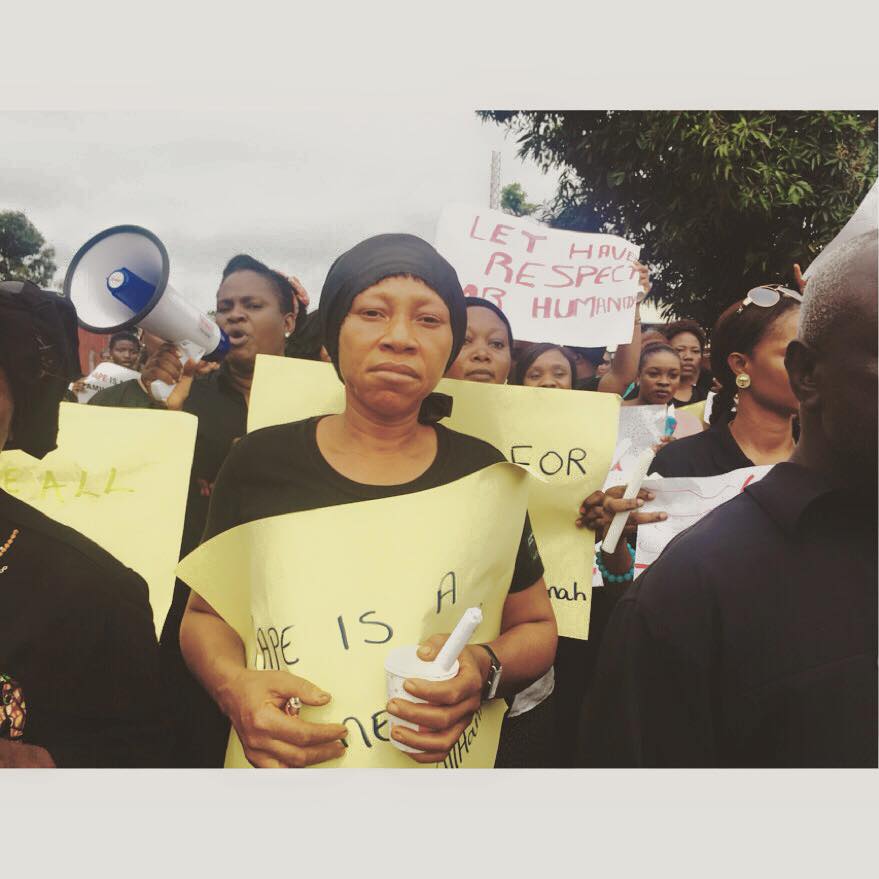
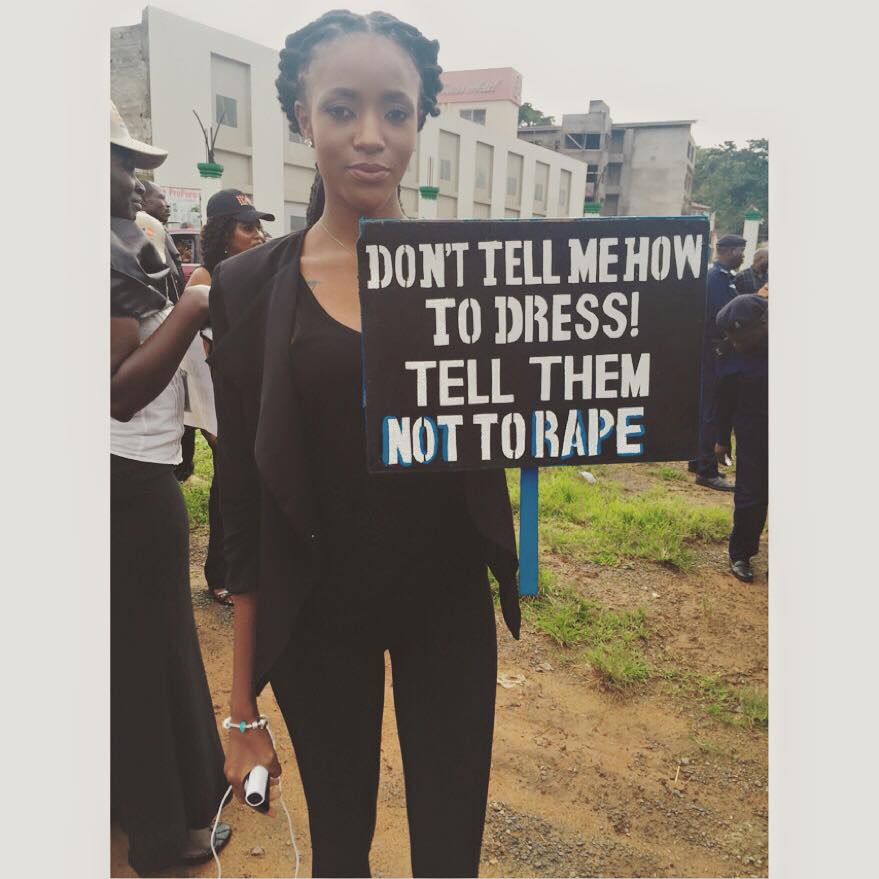
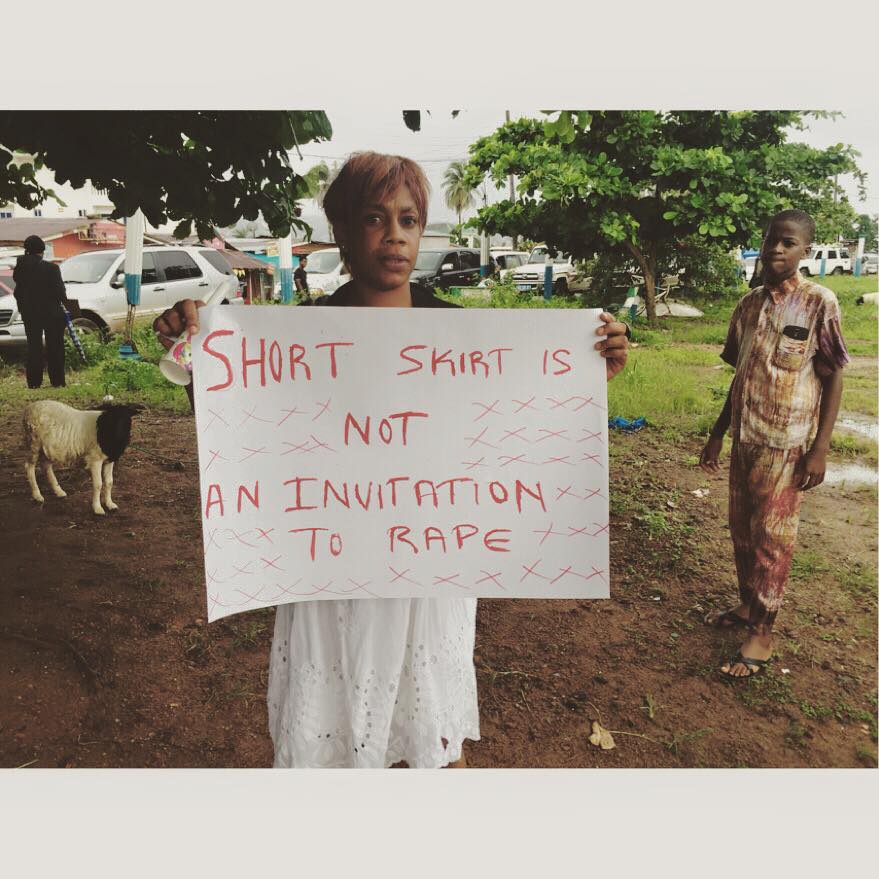
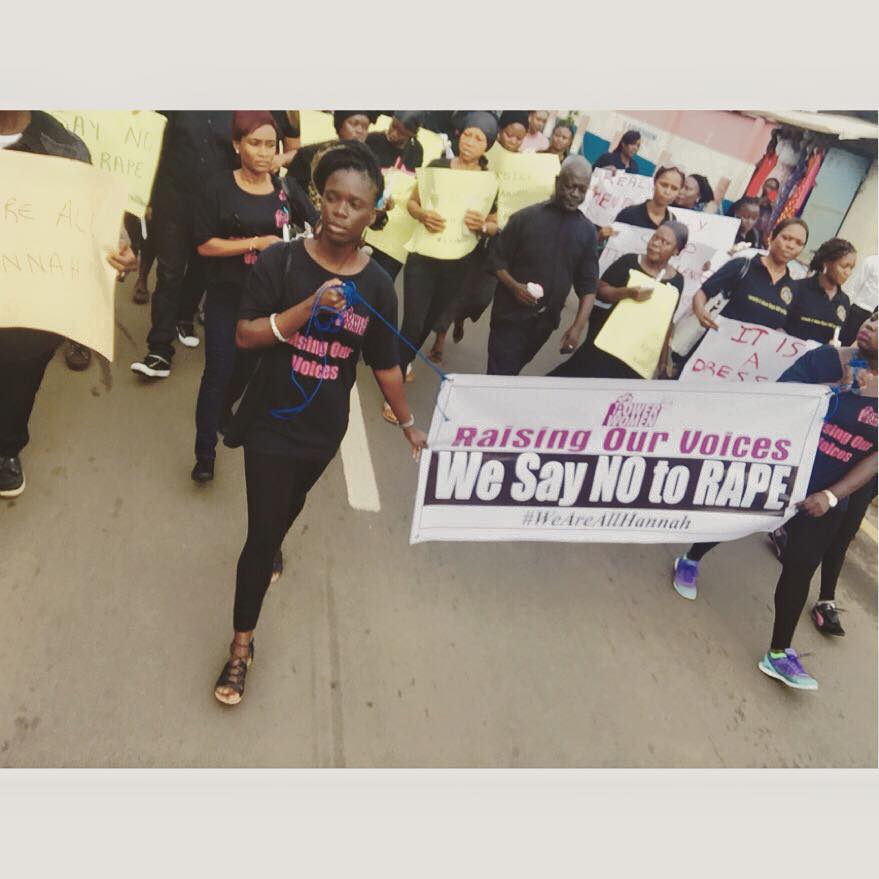
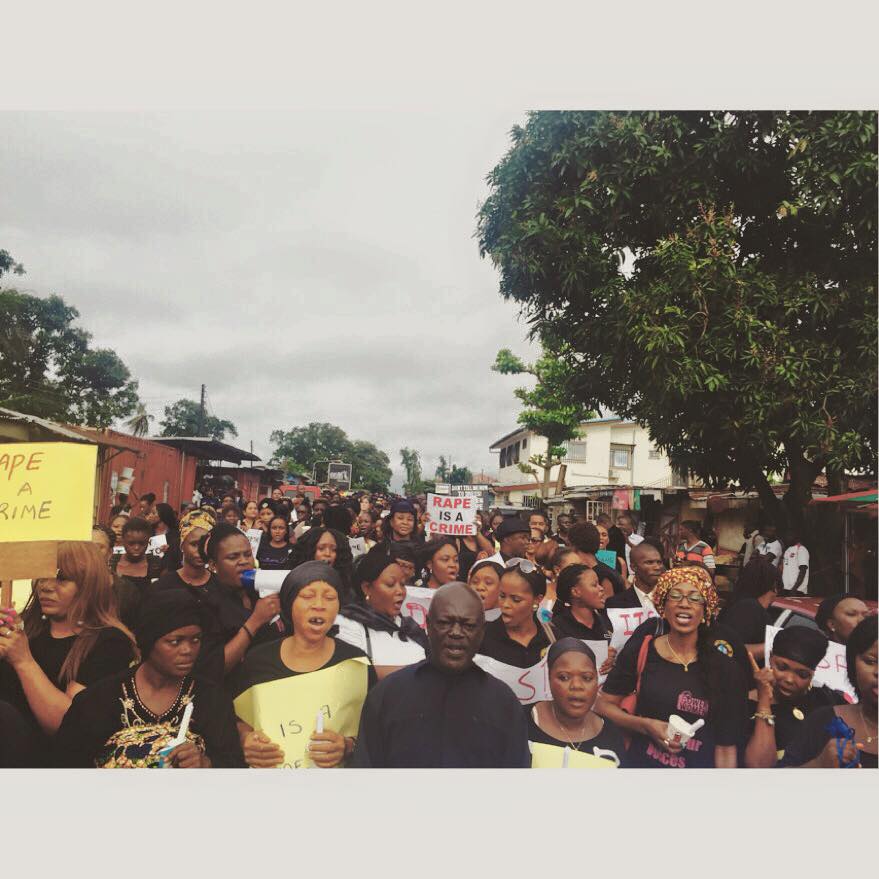
Hundreds of women and men took to the streets on Thursday August 20th in a march organized by PowerWomen 232, a network for professional Sierra Leonean women. PowerWomen led the way for solidarity, chanting “Justice for Hannah, Justice for Women”. The outrage sourced from the predisposition that Hannah was raped (before autopsy results were released) and then murdered when images of Hannah’s deceased body were proliferated across local social media platforms. Those images forced us all to stop, question, mourn and be reminded that horrific acts of sexual violence very much thrive in our small nation’s shores.

Sierra Leoneans from all levels, high political personalities, leaders of women’s groups, activists, entrepreneurs, and students; the UN body, expatriates, and men marched wearing black, symbolic of solidarity at a time when being passive is no longer an option. Many who marched that day were not expecting this depth of brutality that Hannah’s young body had endured into her death.

Hannah’s death pierces through a plethora of Sierra Leone’s social and political issues currently circuiting in the country. Her death screams over denial about her violent murder, screams over blame (that it is because she was a sex worker that she got raped), and screams over the thick silence that has clothed action when it comes to enforcing punitive action against perpetuators of sexual violence.

Hannah’s death reminds us all that women’s bodies in Sierra Leone are under heavy siege. That Sierra Leone’s highly patriarchal society still subjugates with structural discrimination in practice, custom, and law, with a plethora of women still facing suppression in education, employment and politics. Sexual violence has always been rampant in Sierra Leone – the rhetoric that Ebola has induced a spike in sexual violence undermines the reality that little has been done to improve social and economic options for women.

Hannah was raped, maimed and murdered. Let that resonate with us all. This is a stark reminder that urgent work must be done to continue to speak up against sexual violence; that laws must no longer lie dormant but must be activated with stringent punitive actions against all perpetrators. More women who have experienced sexual violence must speak up, if enough of us are talking about this, sharing our stories – policy makers, communities, our women and men, the world will LISTEN.

Hannah’s death must not go in vain – we must channel our outrage into positive change. We have been reminded that the bodies, and psyches and spirits of Sierra Leonean women are not safe because Hannah was not only raped, she was brutally murdered and left exposed. We cannot turn away, we must act NOW.
Fatou Wurie 5 Fatou Wurie 3

(Photo Credit: Fatou Wurie)
The treatment of Sulma Franco is a national disgrace


The signs read, “SULMA IS WELCOME HERE”, but for how long, and what is welcome? Ask Sulma Franco, a 31-year-old LGBT activist from Guatemala who has lived in Texas for six years, part of that in San Antonio, much of it in Austin. In Austin, she owned a thriving food truck business, La Ilusión. No longer.

In 2009, Sulma Franco applied for asylum as an open lesbian who faced violence if she returned home. She passed her initial interview with immigration officers, who determined she had a “credible fear” of returning to Guatemala. Released from detention, she was allowed to work. For years, she reported to immigration officers every three months. In June 2014, she was arrested and faced deportation. She says her former attorney failed to file some papers, and so her asylum case ended, abruptly and without her knowledge: “I didn’t have any problems until then. The immigration official said to me, ‘You know what, I want to tell you your case is closed and you’ll be detained.’ As simple as that. My record is clean. I’m not a criminal … I was paying taxes on my business, and was contributing to society. I had a work permit, driver’s license, business permits that were all in my name.”

No one disputes that Sulma Franco, as an open lesbian and prominent LGBT activist, faces peril if she returns to Guatemala. According to a 2012 study, Guatemala is a world leader in “the frequency and severity of violence against women — including lesbians, bisexual women, and transgender (LBT) women”. Sulma Franco already knows this: “The most difficult situation is that I would end up dead. The discrimination, the hate due to my sexual orientation … In my country, these are things that happen because of sexual orientation. That’s why I fear returning. They can’t tolerate the idea that two women can fall in love, have a child, run a business. If I fled this, why would I want to return? Here, I was able to take my girlfriend to a restaurant and have no problems … I don’t want to go back. I’ve suffered enough there. I’ve been discriminated against, abused and beaten up in every form because of my lifestyle … I can be tortured. I can be sexually abused. I can also be killed.”

On June 11, Sulma Franco was given sanctuary in an Austin church. Faith based groups joined immigrant rights organizers and women’s groups to push for a stay in deportation. On Tuesday, August 18, Sulma Franco was granted an order of supervision, which allows her to stay in the United States “for the time being.” Meanwhile, La Ilusión is no more, thanks to months in detention.

The treatment of Sulma Franco is a national disgrace, and it’s far from over. Yet again, for one woman to arrive at a precarious for-the-time-being, hundreds of people have to invest thousands of hours. In a famous scene in The Elephant Man, John Merrick, the protagonist, asks his mentor, “If your mercy is so cruel, what do you have for justice?” His mentor replies, “I am sorry. It is just the way things are.” Sulma Franco knows the way things are: cruel mercy, injustice posing as rule of law, and massive and intensive exploitation of those women who dare to dream. As simple as that.

Sulma Franco

(Photo Credit 1: Mari Hernandez / The Austin Chronicle) (Photo Credit 2: Alberto Martinez / San Antonio Current)

In New Zealand’s prisons, Māori women’s lives don’t matter

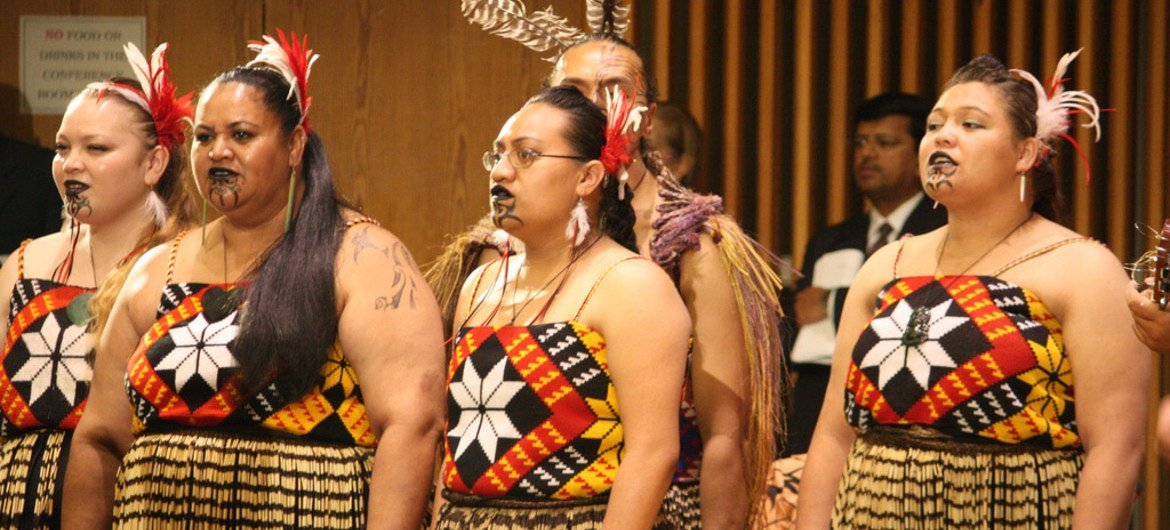
#NativeLivesMatter. Native women’s lives matter. Tell that to New Zealand Aotearoa. The island nation increasingly uses both names. Aotearoa, the Māori name, is being used with greater frequency. That may be so, but at the same time, the prisons of that island nation are overwhelmingly Māori, and in particular Māori women, and the State doesn’t care.

The active lack of concern for Māori women is shown in the new Te Tirohanga, or Focus, program in the prisons, a new program based on Māori principles: “With 8,500 prisoners among a national population of 4.5 million, New Zealand ranks as one of the highest jailers in the developed world. But as has been repeatedly highlighted in reports by the UN Working Group on Arbitrary Detention, the Māori component is staggering. While those who identify as Māori make up about 15% of the New Zealand population, the corresponding figure behind bars is more than 50%. Among women, for whom there is no Te Tirohanga option, it is higher still, at 60%.”

60 percent of the women in prison in New Zealand are Māori, and for them, there is no Te Tirohanga option. Why are Māori women excluded from this option?

The United Nations Working Group on Arbitrary Detention has long noted the dire mathematics of New Zealand’s prisons. In its 2014 report, the Working Group identified five areas of concern: over-incarceration; detention of Māori; detention of refugees, asylum seekers, and irregular migrants; detention of persons with mental or intellectual disabilities; detention of children and young persons. The only people not over incarcerated are White adults not living with mental or intellectual disabilities. For Māori women, however, the situation is dire: “The over-representation of Māori in the prison population poses a significant challenge as recognised in New Zealand’s National Report to the 2014 Universal Periodic Review (UPR) in the Human Rights Council. Māori make up more than 50 per cent of the prison population while Māori comprise some 15 per cent of the population of New Zealand. In the case of Maõri women, they account for more than 65 per cent of the prison population … The Working Group recalls that the United Nations Committee on the Elimination of Racial Discrimination, the Human Rights Committee and, in two reports, the Special Rapporteur on the rights of indigenous peoples, have recommended that New Zealand increase its efforts to prevent the discrimination against Māori in the administration of justice. Particular concerns have been raised in relation to the overrepresentation of Māori women.”

Particular concerns have been raised in relation to the overrepresentation of Māori women. How has the State responded? For Māori women, there is no Te Tirohanga option. In its most recent Census Report, the New Zealand government includes prison populations under Living outside the norm: An analysis of people living in temporary and communal dwellings. Too often, prisons come up as “outside the norm”, but for Māori women, it’s exactly the opposite. Prison is the norm, and, for prisons, Māori women are the norm. Neil Campbell, the director of Māori for the New Zealand Aotearoa Department of Corrections looks at the Te Tirohanga program and wonders, “If this is such a great program, why are we limiting it to the five whare [units]? Why aren’t we running it in the community? Why don’t women have access to it?” Why don’t Māori women have access to it? Because, for the State, Māori women’s lives don’t matter.

(Photo Credit: New Zealand Department of Corrections)

We remember: Send a message of solidarity to the widows of Marikana

(Photo Credit: Greg Nicolson / Daily Maverick)

Burundi “where living is an act of resistance”: Ketty Nivyabandi

Ketty Nivyabandi during a protest on May 13, 2015, in Bujumbura

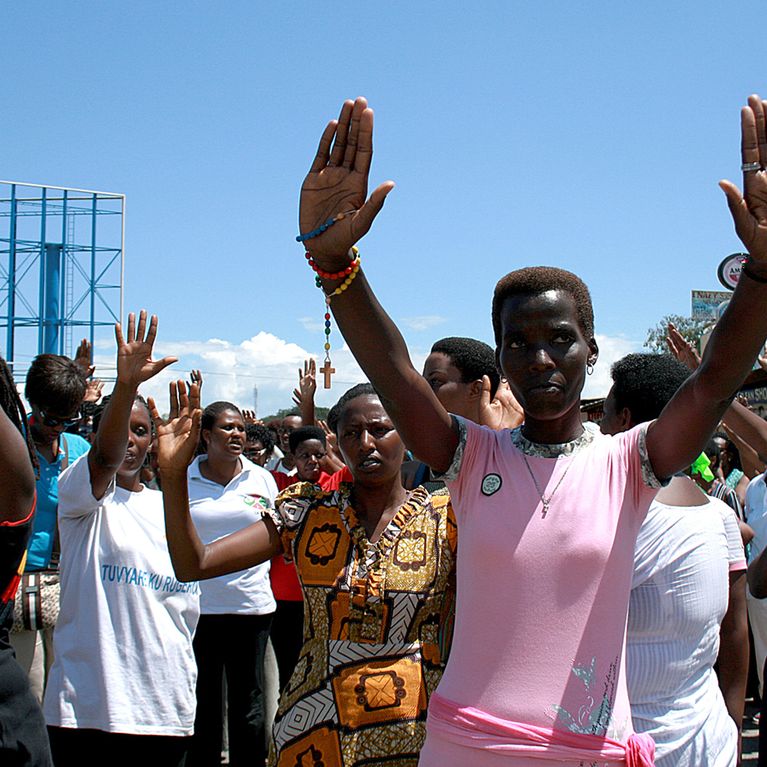
In May, women brought the struggle for democracy to the Burundi’s capital’s city Center. In the first major protest in Bujumbura, the women protested much more than President Pierre Nkurunziza’s move to take a third term. They demanded peace, unity, democracy, and recognition of their own power. As Ketty Nivyabandi, Burundian poet and activist, declared, “We came here to express our distress. We, the women, we are made helpless in this country because women are always the first victims of conflict. We are always the first to be affected by the situation, and we are tired. We want respect from our nation, we want freedom of expression for all Burundians.” In the aftermath, Ketty Nivyabandi was forced into exile, but not into silence. She continues to express, demand, and organize. According to Nivyabandi, the Bujumbura has become more and more like Oran in Camus’s The Plague, “a city where living is an act of resistance.”

In this season of bare life, silence is impossible: “It is impossible to remain silent in the face of all that’s happening in Burundi. We are a generation of Africans who did not live throught the struggle for independence, and we were too young to understand what was going on during the struggles for multi-party democracy. But today, we bear the responsibility to struggle for liberty in our countries. I feel responsible. I don’t want to look at my children, later, and tell them there was nothing I could do during this period in our history.”

Ketty Nivyabandi sees the current moment in Burundi as part of an African wave, “There is a wave blowing across Africa where a new generation demands greatness. We want excellence. We want leaders who deliver, and we want our laws to be upheld.” Call it Spring, call it harmattan, women’s protests have led to mass protests have led to hope and the promise of democracy.

For Ketty Nivyabandi, the push for expanded democracy is always already a push for democracy itself, and the “Burundi crisis” is a global crisis, “If the justice system, the judicial system, is not independent, and is not able to function freely, how is this a democracy? Democracy is not about going to vote. It’s not just about voting. It’s all the conditions that allow for the freedom of every citizen to express their views and to choose the way they’d like to be led. Right now there is no choice. Our responsibility as global citizens is to ensure that this doesn’t go on. That this is stopped as soon as possible. Urgently. We need to act urgently.”

We need to act urgently, because the very substance of peace is at stake: “My hopes for Burundi are as big and wide as the sky. But most of all, especially this year, I hope for peace. Not the kind of peace that is signed by a few, on a loose sheet of paper. The kind that sits in people’s bellies. A sense of freedom and possibility. The kind that secures and liberates every Burundian to be what they wish to be. All that artists and poets like me can do is to be so true with our art, that through it, Burundi is able see itself, and to keep stirring its heart alive.”

Urgently.


(Photo Credit 1: Ketty Nivyabandi / VICE) (Photo Credit 2: aufeminin.com)

From fast track to rocket dockets: On the assembly line of rejected women asylum seekers

Another week, another `discovery’ that the liberal democratic State is in the business of torturing women asylum seekers. This week’s offering, Report on an unannounced inspection of Yarl’s Wood Immigration Removal Centre by HM Chief Inspector of Prisons, opens: “Yarl’s Wood immigration removal centre in Bedfordshire held 354 detainees at the time of this inspection. Most of those held were single women … The centre has been controversial since it opened in 2001 and in recent months it has been the subject of new allegations about the treatment of women held there and the conduct of staff. We last inspected the centre in June 2013 … This inspection found that in some important areas the treatment and conditions of those held at the centre had deteriorated significantly, the main concerns we had in 2013 had not been resolved and there was greater evidence of the distress caused to vulnerable women by their detention.” Yarl’s Wood has always been bad, and now it’s `deteriorated.’

The Chief Inspector concludes, “Yarl’s Wood is rightly a place of national concern … Yarl’s Wood is failing to meet the needs of the most vulnerable women held … We have raised many of the concerns in this report before. Pregnant detainees and women with mental health problems should only be held in the most exceptional circumstances. Rule 35 processes are meant to protect people from detention when they have been tortured and traumatised or are extremely vulnerable in other ways. Staff should have the training and support they need to better understand the experiences of the women for whom they are responsible. There are not enough female staff. This inspection has also identified new concerns. Health care needs to improve urgently. Staffing levels as a whole are just too low to meet the needs of the population. Yarl’s Wood has deteriorated since our last inspection and the needs of the women held have grown. In my view, decisive action is needed to ensure women are only detained as a last resort. Procedures to ensure the most vulnerable women are never detained should be strengthened and managers held accountable for ensuring they are applied consistently. Depriving anyone of their liberty should be an exceptional and serious step. Other well-respected bodies have recently called for time limits on administrative detention. In my view, the rigorously evidenced concerns we have identified in this inspection provide strong support for these calls, and a strict time limit must now be introduced on the length of time that anyone can be administratively detained.”

None of this is new; we have raised many of the concerns before. One by one by one, women tell their stories of life, and death, inside Yarl’s Wood, and, after a momentary shuffle, Yarl’s Wood remains. A year ago today, in response to the abuse rained upon Nigerian lesbian, feminist, asylum seeker Aderonke Apata, we wrote, “End the United Kingdom’s current witch-hunt against African lesbians, against African women asylum seekers, against African women generally. Shut down Yarl’s Wood. Don’t delay, don’t pretend it’s complicated. It’s not. The `conditions in there are very bad.’ Every day Yarl’s Wood is open, women living trauma are forced to engage with their past traumas wrapped into new ones, with the pain intensifying by the second. Every day Yarl’s Wood is open, women who sought help are exploited and then exploited again more intensively. It’s not complicated. Shut down Yarl’s Wood, because it’s bad and wrong, and every day it’s open, we are steeped deeper and deeper into guilt and shame. All of us are. Shut down Yarl’s Wood. Do it today.”

365 days later, the protest numbers grow, and Yarl’s Wood stands, solid as ever.

Yarl’s Wood is part of the global economy of miserable efficiencies, in which women who seek haven are criminalized and then forced to pay for “the troubles” they have caused. From fast track in the UK to rocket dockets in the USA, time is money. The assembly line of rejected women, and children, asylum seekers, overwhelmingly racially and ethnically identified, must continually accelerate. No time for health care. These women can’t afford that, anyway. No time to hire adequate staff. These women can’t afford to pay for proper staff. Why are women seeking asylum put in prison? Because these women can’t afford to live here. That’s the law.


(Photo Credit: Sally Hayden / VICE News)

Black Lives Matter, ACT UP, and let the naysayers be damned

All movements for justice that have participated in direct actions have been maligned. Actions have been called misguided and worse by non-participants. There’s a place and time for righteous criticism but it’s not outside the doors of a movement. It’s inside, with the strategists and actors and real-world risk takers.

The last two days I have been thinking about when ACT UP burst onto the scene. I was young, a teenager, and a huge number of my friends then were gay and artists and musicians and most of them are dead. They died fast and ugly and with lesions and mostly alone. I remember how even hugging my friends in hospitals seemed like an act of resistance. That’s how deep the lies were, the fears.

And I didn’t know how to process so much loss before I was 21, but I do know how nasty the comments were when ACT UP disrupted Wall St trading for the first time in history, when they interrupted the nightly news, when activists got Body Positive naked in Manhattan. And I do know after there at least began to be a public discussion about how to save lives, a conversation that had previously been viciously squashed by the Reagan administration and stigmatized by the wider society. And then public and private funding increased for research. And more people lived. And we stopped having to whisper that someone we loved had AIDS. And there is so much more to do about HIV/AIDS especially for Black people, people living in the Global South and people living in poverty but there was also a beginning and it ACTed the fuck UP and every person in reach of this post who cares about Black lives should too and let the naysayers be damned.


(Photo Credit 1: Naomi Ishisaka / http://ijoarts.com) (Photo Credit 2: Queerty)

Women are attacked in the mirror of reproduction, and where is the outrage?


I often hear women in France wondering how it is possible that women’s access to abortion or to safe delivery is so outrageously compromised and mostly a source of revenue rather than inalienable rights in the United States. The current political landscape might help them, and us, understand.

Once again women and their bodies occupy the center stage of the presidential elections in the United States. While the last attempt to defund Planned Parenthood failed to pass, there were still too many votes in favor. The issue continues to obsess the GOP candidates and allows them to stigmatize women. They used the usual recipe to fabricate a scandal, this time targeting Planned Parenthood. They made deceptive images in order to emotionally manipulate a large portion of the population, brush aside the truth and reality, and focus on the anti women’s reproductive rights credo. The videos were assembled to manufacture false images of the use of “for-money tissues” coming from aborted embryos; ironically these accusations came from the candidates who defend profiteering at any cost. Actually, women who had had an abortion donated tissues for research on diseases such as Parkinson, Alzheimer, or orphan diseases, but does it really matter? The press was reluctant to explain the scam.

Planned Parenthood provides health care to women. One out of five have had recourse to their services because nothing exists for them in a for-profit medical system. This is not only about abortion. Across the United States, pregnant women are also mistreated: sent to prison, denied basic rights, and having no labor protection and no legally supported maternity leave.

It seems that nothing can impede the United States Republican candidates from bawling out injurious slurs toward minorities and women, while keeping silent about the reality of the violence of their economic views. But this time the farce is grotesque as well as threatening. As witnessed by the first GOP debate, the current US conservative battle for the primaries sheds light on the debacle of “democratic” debates in the cradle of neoliberal conservatism.

I asked in France what if the shocking Sarkozy or the heinous Le Pen had said something similar to launch their campaigns. Most said that this would not be accepted, not that there is no anti immigration sentiments. They said it would have triggered more mockery as well as indignation. Additionally, the response coming from the numerous associations that work on immigration rights and immigrant women’s rights would have been strong and irrefutable and accompanied with legal actions.

The question of reproductive rights is also shaped differently as deliveries and abortions are free, and pregnant women’s labor rights are still guaranteed in France as well as in many other countries, and the commitment to these rights, in France and across Europe, is robust, and again a vast range of associations is watching.

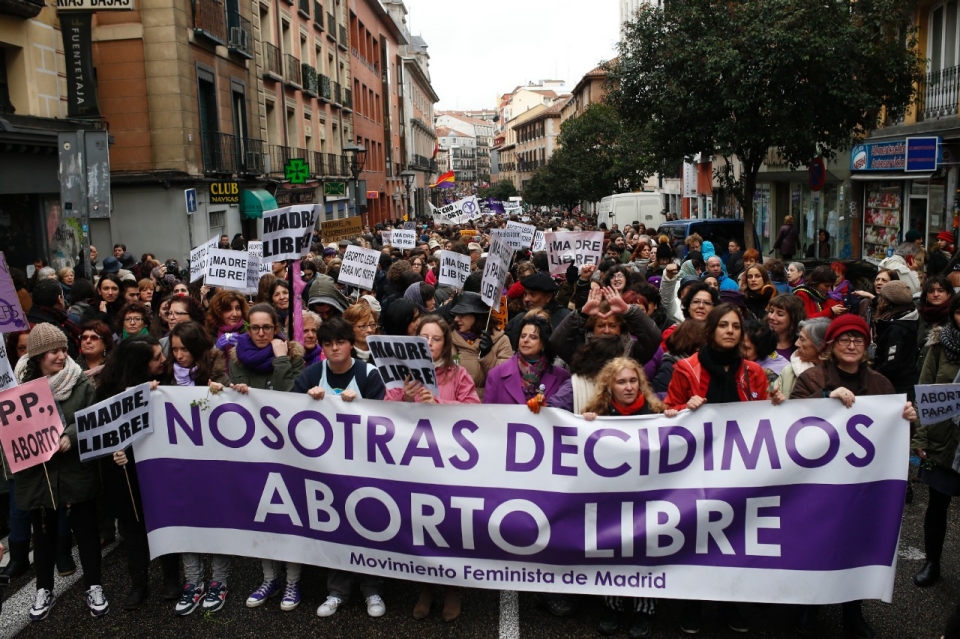
For example, when the conservative Spanish Prime Minister attempted to reduce reproductive rights in Spain, women and men from all over Europe went to the streets in support of Spanish women’s rights, thanks to these very associations, and forced the withdrawal of the bill.

However, women’s rights have been threatened in relation to the restructuring of the European Union, as we saw in Greece, Spain, Portugal, Germany, and France. This signifies another form of violence against women’s bodies, taking the oppressed body, the migrant’s body, hostage.

In the United States, the threat of these attacks against women persists in a distractive form. As Ruth Wilson Gilmore has explained, energy is going to be spent fighting each scandalous initiative while the source of the problem will be kept blurred. The debt economy that works with violence, stigmatizing women and people of color and/or lower social status, is forgotten in these debates.

Women are particularly targeted. Many women in the United States, including in my own family, have struggled during pregnancy to keep employment, to have pregnancy health particularities respected, to keep 100 % of their salary, or to pay for delivery.

Where is the outrage? Where are the images of the united colors of precarity, of women living precariously?

The neoliberal order bathes in this spectacle, and the reality of life disappears. Let’s keep in mind that the state of the status of women and women’s reproductive rights mirrors the fate of most of the population.


(Photo Credit 1: Javier Barbancho / Reuters / Landov / AlJazeera)

(Photo Credit 2: Marlon Headen of Headen Photography / RH Reality Check)

Michelle Cusseaux’s body lies a-mouldering in the grave

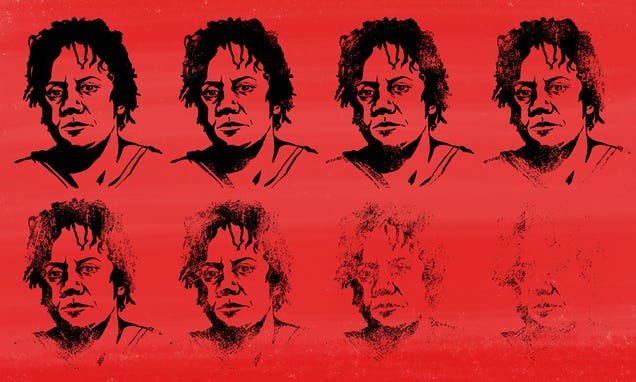
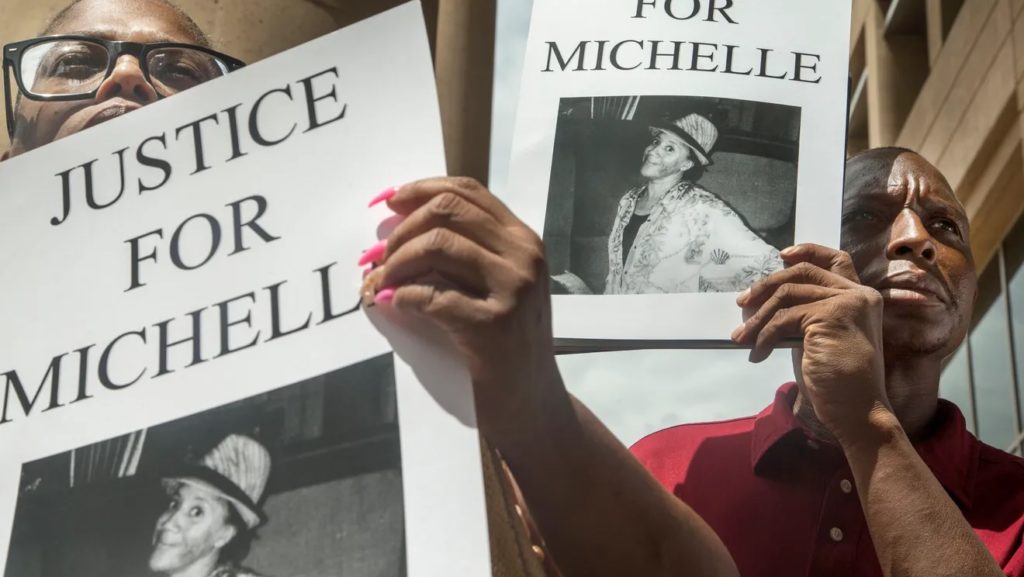
On August 14, 2014, just days after Michael Brown was fatally shot in Ferguson, a police officer in Phoenix, Arizona fatally shot Michelle Cusseaux, a 50-year-old Black woman living with bipolar disorder, schizophrenia, and depression. Michelle Cusseaux had called for a taxi to take her to the hospital. When the taxi didn’t show, she called her case manager. The case manager called the police to take her to an inpatient mental health facility. Four police officers came. Words were exchanged. Police took the door down. A few minutes later, Michelle Cusseaux lay with a single bullet in her chest. She died soon after. A week later, on August 22, activists carried Michelle Cusseaux’s casket to City Hall. The march was led by Frances Garrett, Michelle Cusseaux’s mother. Michelle Cusseaux’s body lies a-mouldering in the grave, but her soul goes marching on.

The Phoenix police knew why they were going to Michelle Cusseaux’s residence. They called Frances Garrett to determine if she had ever had a gun. She had not. They knew this situation. Their knowledge made no difference; their knowledge executed another Black women, another Black woman living with mental illness. Michelle Cusseaux’s death echoes that of Shereese Francis, in Brooklyn, in 2012.

Each time, the family mourns and calls for independent investigations. Each time, a mother stands up and asks, “Why?” Shereese Francis’s mother, Eleen Francis, faces Michelle Cusseaux’s mother, Frances Garrett. The nation is blanketed with Mothers of Mourning who had nowhere to go, who called the police to help them, and now …

They knew. They knew, because of the orders, the orders to pick her up and take her in to a facility,” Frances Garrett explains. They knew, they knew. On March 18, 2015, Maricopa County Attorney Bill Montgomery said the killing of Michelle Cusseaux was justified. They knew, they knew, and they continue to know. #SayHerName


(Image Credit: Tara Jacoby / http://justice.gawker.com) (Photo Credit: Nick Oza / Arizona Republic )

The women in Yarl’s Wood demand FREEDOM. Don’t you?

Movement for Justice Freedom

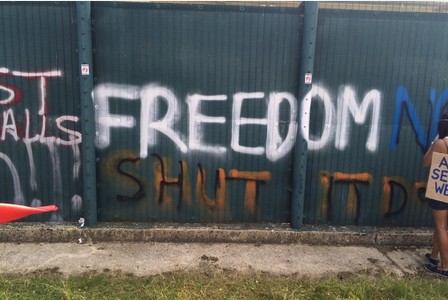
The women imprisoned in Yarl’s Wood wore homemade t-shirts today. The shirts said FREEDOM. Though invisible to those outside, the message was heard loud and clear. Brought together by the Movement for Justice, hundreds of people showed up at Yarl’s Wood today, with one message. FREEDOM! Shut it down now! Never open it again! Set her free! #SetHerFree #ShutItDown. Dignity! FREEDOM! The crowd united diverse communities and organizations. Women chanted from one side of the fence surrounding the prison, and the women inside Yarl’s Wood responded, amplifying the demand to shut it down, now and forever. Women inside, women formerly inside, and women never inside are organizing, and each day, their numbers grow and, more importantly, each day they grow closer and closer. A lesson of this movement to shut down immigration detention centers, once and for all, is written in diminishing spaces-between. The State chose an architecture of division and conquest, and the people responded, FREEDOM! Freedom unites. Since last year, each demonstration at Yarl’s Wood has literally been closer to the prison than the preceding one. FREEDOM is drawing nigh.

Increasingly, the women inside Yarl’s Wood are communicating directly with their sister supporters surrounding Yarl’s Wood. Today, for example, when those outside shouted, “What do you want?” The women inside responded, “We want FREEDOM!” And their shouts were heard and then broadcast. When the women inside Yarl’s Wood waved clothes, banners, signs reading SOS, they were legible to those outside. They were legible and audible because the distances-between are being eroded. Demonstrations are coming closer and closer; under cover news cameras are entering with greater facility; and former Yarl’s Wood prisoners are bringing the call for FREEDOM not only to the gates of Yarl’s Wood but also to the heart of the public.

Today, for example, Raja Khouja, 56 years old, recalled her time inside, “Along with my husband, Mahmoud, and all of the other detainees we were treated like animals. My husband is a diabetic and had his medication withheld for hours, we were unable to get the money given to us by a friend so we could contact the outside world, it was awful. There were women in there who were pregnant, or who had been detained while their children were put into the social care, and it was heart-breaking to see them just breaking down.”

In March, 2015, the women in Yarl’s Wood wore t-shirts they’d made, which read, “We are not animals.” Today, their message is shorter: FREEDOM! The women in Yarl’s Wood demand FREEDOM. Don’t you?


(Photo Credit: http://www.bedfordshire-news.co.uk) (Video Credit: Vimeo.com / Movement for Justice)