Resistances: A gynecologist faces the epidemic of guidelines for teenage girls

In the United States, a recent set of guidelines for teenage girls’ reproductive health has been released, declaiming various ages for marketing “healthy reproductive practices”.

There is a burgeoning recently of updated guidelines that fix teenage sexual health and life. These include: Chlamydia testing advised for the sexually active adolescent starting as young as 10; LARC (long acting reversible contraception) recommended as first line contraception for girls as young as 14; Plan B available over the counter for 15-18 year olds; HPV vaccination beginning at 12 years of age; and delaying pap smears until the age of 21.

We should wonder: why teenage girls, and why now?  The answer is simple. Teenage girls are engaged, and embedded, in a range of ages and activities that make them targets for the for-profit medical industry.

Why does the Plan B over the counter availability start at the age of 15, while the newly designed, streamlined IUD chose 14 years for its recommendation?  Why is the newly patented DNA testing for Chlamydia, that is not perceived as sensitive as the old culture, being promoted as an inescapable test for girls on birth control for acne?  Meanwhile, pap smears that have proven to be the most effective method to diagnose HPV infection leading to cervical cancer are being withheld until 21 regardless of the woman’s sexual history.

Tests are being indiscriminately assigned by guidelines on a time frame with no connection to the needs of the girl.  Doctors are told to follow these guidelines that are based on studies with a positive cost/benefit ratio to the system. The underlying system is not driven by the art of medicine, which demands patients and doctors to talk to each other on an intimate level. Products, devices, and profit margins are the driving force. This epidemic of guidelines keeps teenagers disconnected, fragmented and voiceless.

Once again, in the great scheme of population control, privatization of services and a dearth of social protection, these guidelines have the greatest negative effect on the most vulnerable: teenage girls. In this scheme, girls’ sexuality is not linked to being or becoming a woman (and how is that defined?), but rather something comparable to a package.

The teenage girl is treated as a health package with no prospect of becoming a woman, and yet somehow is treated “like an adult” inasmuch as girls suffer restrictive reproductive health care and reproductive health rights. What does the future hold for teenage girls in this regime, that they are meant to become increasingly and more intensely marginalized women?

Carol Ritter cocoehl@gmail.com and Brigitte Marti bridgemarti@gmail.com

Resistances: Revealing the code of silence that rules reproductive rights

In Algeria abortion is simply illegal. A woman can be punished by six months to two years in prison and a fine. The abortionist is subject to one to five years in prison and a hefty fine.

According to the president of a women’s rights association, as reported in the Algerian newspaper L’Expression, there are about 80 000 abortions a year for 775 000 pregnancies in Algeria. The police reported only 27 cases in 2012. So what is happening in Algeria?

The code of silence is the rule.

Women who seek help with unwanted pregnancies have few options and they all imply a sense of shame and fear. The rule is to use word of mouth information and have enough money, on average $400, which is high price in Algeria.

The journalist of L’Expression follows the same principle of word of mouth to investigate the providers’ identities, how women get information and how the procedure is performed. It leads him and his partner to doctors who are militant and outraged by the situation as well as to charlatans who take advantage of women’s desperate search for relief. In any case, women are ashamed, isolated and have no protection and no recourse as they face horrendous medical consequences.

The article sends a clear message that this situation is shameful for society and that it has to change. As the reporters note, there have been changes, especially with the advent of the Internet. Women in Algeria have begun to engage in a public forum to break the rule of silence. We have seen the possibilities of these strong women’s voices in neighboring countries.

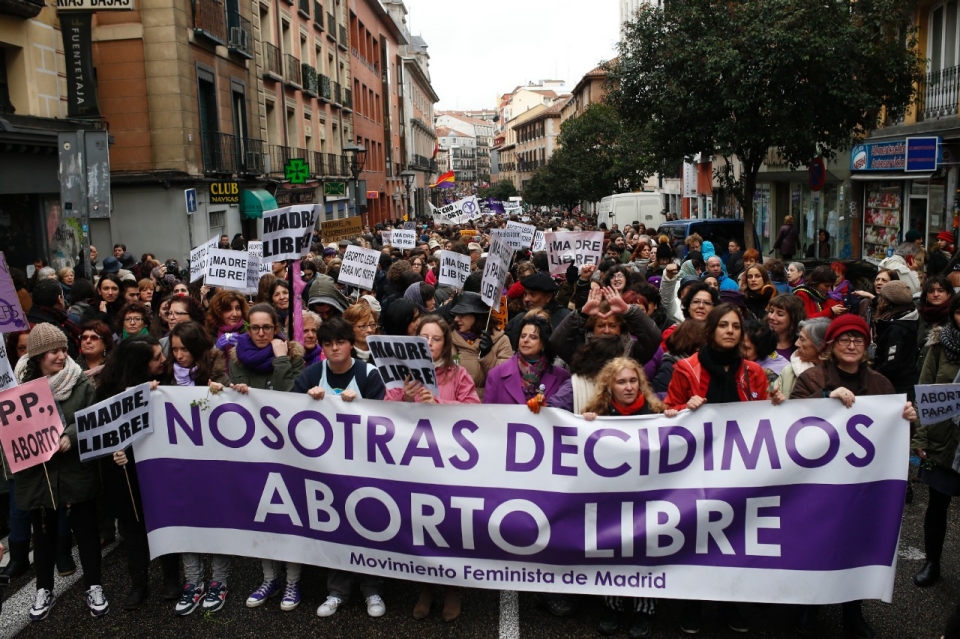
The code of silence has become the rule as well for many women in the United States seeking reproductive services where, law after law, women’s right are being restricted, putting many women to precarious situations. In 42 states restrictions on abortion rights have already been anticipated under the Patient Protection and Affordable Care Act, which will be enacted in 2014.

2012 has been the second year with the greatest number of new legislation to restrict access to reproductive services such as abortion, with about 122 provisions related to restrict access to reproductive health. Being a woman at the age of reproduction is a risky condition … in the United States as in Algeria.

Stop the code of silence, let’s hear women’s voices and respect their right to be.

Brigitte Marti bridgemarti@gmail.com

Resistances: Mixing human rights, peace and violence against women

This year the European Union received the Nobel Peace Prize. Was it for having the only human rights court in the world with binding judgments? Was it for its Erasmus program that has broken down nationalistic sentiments through education? Or was it for its new take on women’s rights with the nomination of a new commissioner for Health and Consumer Policy—Tonio Borg from Malta—who is notorious for his harsh positions against LGBT and also against women who resort to having an abortion for various reasons (including for malformations of fetus)?

Borg has been the foreign minister of Malta until his recent confirmation by the European Parliament of his nomination by 386 votes in favor and 281 against with 28 abstentions. The former commissioner John Dalli was from Malta as well, and had to resign for collusion with the tobacco industry to influence European decisions on tobacco legislation. This time, the commissioner will be in collusion with the anti women’s rights groups.

This new development highlights the ambivalence of the European Union’s women’s rights approach.

The parliamentary Assembly Resolution 1607 (2008) questions the antiabortion position of some member states: “The Assembly is nonetheless concerned that, in many of these states, numerous conditions are imposed and restrict the effective access to safe, affordable, acceptable and appropriate abortion services. These restrictions have discriminatory effects, since women who are well informed and possess adequate financial means can often obtain legal and safe abortions more easily.”

Article 7.5 insists on the means to address restrictions on access to safe and appropriate abortion services: “7.5. adopt evidence-based appropriate sexual and reproductive health and rights strategies and policies, ensuring continued improvements and expansion of non-judgmental sex and relationships information and education, as well as contraceptive services, through increased investments from the national budgets into improving health systems, reproductive health supplies and information.”

Conservative MEP (Members of European Parliaments) have argued that Borg was right when he declared that the EU had no competence on abortion rights and should not interfere with member States’ affairs on this issue. On the other side, the opposition to Borg’s nomination have insisted, “Access to adequate public health rights, including sexual and reproductive health rights is a basic right”.

Once again the question of human rights is filtered through an individualistic patriarchal lens that distorts the reality of  the lives of women and LGBT’s.

Meanwhile, MEPs from nationalist groups declared the confirmation of Borg was “a victory of common sense over prejudice and intolerance.” How should we understand common sense, prejudice and intolerance? Are these notions associated with refusing sexual and reproductive health services to women, which is tantamount to promoting violence against women?

When President Obama received the Nobel Peace Prize, he approved the drone program and other violent interventions throughout the Muslim world. And now, true to form, the Prize is given to the European Union just as its commission has taken a retrograde step on women’s rights. In this spiral of discourses and praxis of rights and peace, the conservative dominant power legitimizes violence against women who are the majority of the Wretched of the Earth.

Brigitte Marti, bridgemarti@gmail.com

Resistances: In the capital of the greatest incarcerating country in the world

On March 28, Ruth Wilson Gilmore gave the annual Yulee Endowed Lecture, hosted by the Women’s Studies Program at the George Washington University. Her talk opened with a slide showing an NAACP billboard that said, against the Statue of Liberty as background,

Welcome to America home to
5% of the world’s people &
25% of the world’s prisoners.

This is the same America that is home to 5% of the world’s population and produces 27.8% of the world’s greenhouse gases from fossil fuel, according to the National Environment Trust.

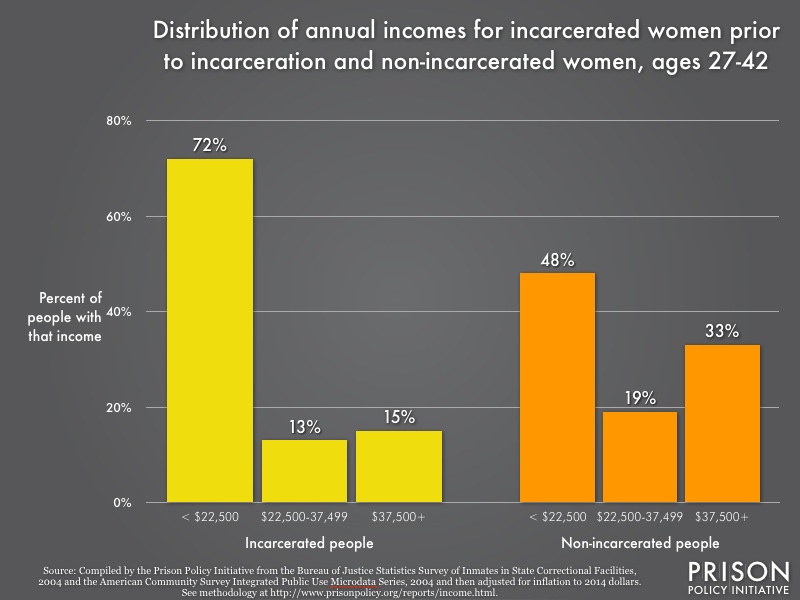
Pollution and incarceration reveal a dreadful, man-made reality. For both prison and pollution, the United States tries to change its image rather than face up to the reality. The United States is the primary source of world pollution and of prison practices. A prison binge has been built on the disregard of women, of people of color, of the poor. High levels of pollution have been built on absurd consumerism passed off as a social good. Meanwhile, for many, these add up to a cruel reality.

United States administration after administration has produced more laws to incarcerate more people and more “Acts” to cover up the high level of emission of Green House gases and other pollutants. Images of poor people, especially of women of color, abusing the welfare became as visible as the images of the destruction of the “Commons” became invisible. What one hand giveth, the other taketh away.

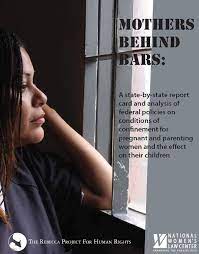
In her lecture, Ruth Wilson Gilmore talked about the reality of incarceration.  Her book, The Golden Gulag Prisons, Surplus, Crisis, and Opposition in Globalizing California, started as a community project: a research for Mothers ROC (Mothers Reclaiming Our Children) in California, women who know too well the reality of and reasons for incarceration. They needed “a non-lawyer activist with research skills, access to university libraries, and a big vocabulary, to help them.” Gilmore fit the bill perfectly.

In her book, Gilmore relocates the two laws that sent the Mothers’ children to prison—the Street Terrorism Enforcement and Prevention Act and the “three strikes and you’re out” law—into their historical political economic context. Ruthie, as everyone calls her, presented on the particular history of capitalism in the United States, the story of opportunity fertilized with inequality and racism. Her lecture was called “What Would Harriet Do? Unfinished Liberation or the Dangers of Innocence”.

Harriet is Harriet Tubman.

Harriet Tubman’s story exemplifies the root of the social and racial American construction. For Gilmore, Tubman was a designer and a political artist. Tubman’s story of unwavering determination to bring slaves of the south to freedom speaks directly to today’s “zero tolerance.” As the false stories told of African and African-derived people helped to justify the slavery of thousands of women, men and children of African descent, so today’s false story of “zero tolerance” attacks African Americans. 65 million people are currently banned from employment because of previous convictions, and those people live in the communities that most need steady employment.

The following day Ruth Wilson Gilmore continued the conversation in Dan Moshenberg’s Seminar, “Women In and Beyond the Global Prison.”

Again, the discussion focused on the construction of images, from the witch-hunt that put women back in the “domus,” to the “Reaganomic” image of the welfare-queen that re-segregated poor and working African American women, thereby legitimating the re-appropriation of power and global capital. Welfare-queen became pathology. To unpack that pathology, we must learn to study “the genealogy of the phrase,” and thereby reinforce the importance of historical consciousness.

Gilmore brings to light the reality of the political economic project that requires mass incarceration. That project is genocidal, and that project of mass incarceration speaks directly to the situation of health care and reproductive rights in the United States.

Slavoj Žižek recently argued, “one of the strategies of totalitarian regimes is to have legal regulations (criminal laws) so severe that, if taken literally, everyone is guilty of something. But then their full enforcement is withdrawn… At the same time the regime wields the permanent threat of disciplining its subjects.”

I am not saying that we live in a true totalitarian regime. That is not the question. The question is whether we understand that these ‘all-guilty’ laws work to control and subjugate certain sections of the population, such as the African Americans, Native Americans, immigrants, and also women. Of course, women intersect with the other “guilty” populations. In many states, laws limiting women’s reproductive rights are blossoming, and punishment and incarceration await the women who try to secure or wield their rights. At the same time, the story of Trayvon Martin’s assassination fits this framework of being eternally guilty. His corpse was tested for drugs and alcohol. His shooter never had to be tested and is still alive and free.

There are many other stories that show that the current rule of law is an active political-economic tool. Ben Saperstein and May Young, two activists from North Carolina, attended the seminar with Gilmore and Moshenberg. They were there to learn and exchange ideas for their own struggle. They are involved with the Greensboro Legal Fund, which works to bring to light the fate of members of a Latino organization that has been wrongfully accused of racketeering, and has been incarcerated for political reasons.

The exchanges among activists and scholars from North Carolina, Washington, New York and beyond showed the importance of research working with activism. In this time of neoliberal surge, as Žižek remarked, “what unites us is the same struggle”. In this struggle, Ruth Wilson Gilmore’s inspirational work reminds us of the importance of excellent scholarship as a means of resistance.

Brigitte Marti, bridgemarti@gmail.com

Fierce: Nicaraguan feminists protest for their bodies, autonomy, lives

The news of the day was that Democratic representatives walked out of a hearing on “religious liberty and birth control.” Republicans had blocked the testimony of a woman who wanted to speak in favor of the Obama administration’s compromise on birth control.  But the Republicans allowed representatives, men, from conservative religious organizations to testify.  House Representative Carolyn Maloney remarked, “What I want to know is, where are the women?”

A picture tweeted by Planned Parenthood illustrates this question completely.

Where are the women?  In Nicaragua, some women are in the streets.

Yesterday, at the International Poetry Festival in Granada, there was a parade, with dancing and singing and cheers.

There was also a protest by Nicaraguan women.  Nicaraguan feminists.

On the parade route, a group of Nicaraguan women, wearing signs that read “Fui violada y ahora estoy embarazada.  ¿Te parece justo?” (“I was raped and now I am pregnant.  Does that seem just?) lay down in the middle of the parade, stopping the flow of the marching.  They passed out flowers in protest of the ban against therapeutic abortion in the country.

Therapeutic abortion—an abortion performed to save the life of a pregnant woman—had been constitutional in Nicaragua up until October 2006.  When Sandinista politician Daniel Ortega re-assumed the presidency, he kept the law intact, a complete reversal from his stance before his re-election.  Women’s groups have been pressuring the State to repeal the ban, but Ortega’s switch came with the support of an important Catholic bishop.  Within a year of the law’s passing, 82 women had died due to lack to life-saving abortion procedures.

The State passes regulations preventing women from accessing health care that would save their lives.  Then the State uses religious institutions to embolden its position.  Sound familiar?

Violence against women more than often flows from patriarchal institutions trying to police their bodies and autonomy.  It happens globally, outside the United States, and inside the country just as easily.

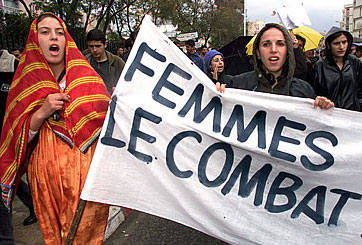
Women are defending their equality all over the world, in the State and in the streets.  That is where they will be until the job is done.

Paul Seltzer