Deported children haunt the world

Emily Samantha Ruiz

A radio broadcast town meeting was held today in Fairfax, Virginia, a community renowned for its public school system, to discuss discipline in the Fairfax County schools. Near the end of the hour-long discussion, the moderator, Kojo Nnamde, presented a scenario based on a recent event, in which a six year old child was found to have brought cocaine into school and shared it with his friends. What is to be done? Should the child be expelled?

Tina Hone, Fairfax County School Board member, responded, “He’s a six-year-old. And what lesson are we teaching a six- or seven-year-old child by expelling him?… It is a six-year-old child. I am not going to label a six-year-old child for the rest of their lives as a drug dealer. I’m not going to do that… It’s a six-year-old child, for God’s sake. I think we need to think about that.”

We need to think about children, because children are being actively forgotten by the State. Children are addressed instead as surplus populations and disposable objects. Nowhere is this more evident than in the willingness of modern so-called democratic nation-States to ship off children, six years old, seven years old, four years old. The line from primary school expulsion to national deportation of very young children is a straight line, and it is the measure of our current historical moment.

Consider Emily Samantha Ruiz.

Emily Samantha Ruiz is four years old, a Long Island tot, a four-year-old little girl, a very little girl. Emily Samantha Ruiz is caught in an immigration snafu or perhaps quagmire. Emily Samantha Ruiz is currently in Guatemala, to which she was deported. Emily Samantha Ruiz is a United States citizen. Her parents are both undocumented residents.

Emily and her grandfather, who has, or had, a work visa, went to Guatemala, to visit family, to get away from the harsh winter and its impact on her asthma. On their return, as they came through Dulles Airport, in Virginia, the grandfather’s name came up at Customs and Border Protection, CBP, as having perhaps committed some immigration infraction twenty some years ago. CBP won’t reveal the exact details. The grandfather was detained. The parents were calling everywhere to find their daughter. They contacted a CPB agent, who asked if either was in the country legally. Mr. Ruiz responded they were not. The agent replied that the options were Emily could go enter the custody of the State of Virginia or return to Guatemala with her grandfather. The Ruizes were terrified that `custody’ would result in adoption. Likewise, they had reason to fear that if they showed up to pick up their daughter, her `custodians’ would arrest them. They `opted’ to have Emily return to Guatemala with her grandfather. The government says it did nothing wrong, played by the book, followed the rules.

What are the rules?

The public discussion of this event has focused, rightly, on the fact that Emily Samantha Ruiz is a U.S. citizen. Her citizenship is indeed important. So is her racial and ethnic status. So is her language.

But let’s not forget, Emily Samantha Ruiz is a four-year-old child, for God’s sake. “I think we need to think about that.” Emily is part of a global phenomenon in which nation-States – in the name of sovereignty, security, protection, even democracy – actively forget their responsibility to remember that children are children. What lesson are we teaching those children? Deported children haunt the modern world.

(Photo Credit: NY Daily News)

Domestic workers Mwanahamisi Mruke and R Pranathi haunt labor

R. Pranathi’s relatives argue with police

Mwanahamisi Mruke and R Pranathi are two faces, two names, for global domestic labor. Perhaps they are the same face, the same name.

R Pranathi is a domestic worker in Ennore, a suburb of Chennai, India. For the last four months, she has worked as a household worker in a constable’s family. She comes from a poor family. She has worked in the house and taken care of the couple’s child. Pranathi is known as “a brave girl who would fight eve teasers in the locality.”

Pranathi is 14 years old, and she is dead.

The couple’s story is that the girl suffered stomach pains and hanged herself. People from her hometown and members of the Tamil Nadu Domestic Workers’ Union have a different story: the girl was raped, murdered, and then `translated’ into a suicide.

Whether or not Pranathi’s death was murder, and one suspects it was, the story of domestic workers being killed and then translated into suicides occurs every day, all over the world. Some gain some notice, such as the 31-year-old Nepalese domestic worker Samoay Wanching Tamang, who died by hanging in Lebanon in late February. Others simply vanish into the void. Some deaths are said to be mysterious, others are allegedly clear-cut. What is not mysterious is that domestic workers are dying, at work, across the globe, at an alarming rate.

Domestic labor is a growth industry, but it is also a labor killing field. And the ways of dying are many, some swift, others slow.

Mwanahamisi Mruke suffered the slow death. In October 2006, Mruke left Tanzania for England, where she had been promised employment as a domestic worker. She left her home and homeland for higher wages that would allow her daughter Zakia to attend college. She went to work for Saeeda Khan, a widow with two adult disabled living children, a hospital director with a good job. Khan kept Mruke a slave for the past four and a half years. Mruke’s passport was taken away, she was not allowed to leave the house, she worked from six am to midnight, sometimes more. Mruke was forced to sleep on the kitchen floor. After the first year, Khan stopped paying the worker. She was “treated like a slave.” Slavery, as sociologist Orlando Patterson explained in his magisterial work, Slavery and Social Death: A Comparative Study, “the slave’s powerlessness was that it always originated (or was conceived of having originated) as a substitute for death, usually violent death.”

On Wednesday, March 16, 2011, in a groundbreaking case, Saeeda Khank was found guilty of trafficking a person into the United Kingdom for exploitation. Mwanahamisi Mruke is now pursuing a civil suit.

These stories are an intrinsic part of the fabric of global waged domestic labor, one of the major growth industries of the past three decades worldwide. On one hand, they tell the story of terrible employers. Venal, corrupt, violent and vicious. It’s an important story to tell.

But there’s another story as well, that of the isolation, the silence, the exclusion of domestic workers from the world of workers and of labor.

This year, on May 1, 2011, Hong Kong will implement a Minimum Wage Ordinance. The new legislation will apply to full-time and part-time employees, regardless of whether they are employed under continuous employment contracts. Anyone who has been employed continuously by the same employer for four weeks or more, with at least 18 hours worked in each week, will be covered.

Almost anyone, that is: “the MWO does not apply to certain classes of employees, including live-in domestic workers, certain student interns and work experience students.”

In British Columbia, in Canada, this week, the minimum wage has been increased for the first time in ten years. This is good news, but does it cover domestic workers? Jamaica awaits a government study on livable wages. Will the study consider domestic workers?

In June 2011, the International Labour Organization may adopt a Convention on the rights of domestic workers. If so, it would aim to strengthen legal protection for the billions of paid domestic workers around the globe. The ILO Convention could be an important step. But it depends on the language of respective member countries’ labor laws.

Until the trade union movements formally include domestic workers in every worker protection campaign, in every campaign and action, billions of paid domestic laborers will remain super-exploited and under a death sentence. Employers have indeed been known to isolate, imprison, torture, and even kill domestic workers. But the rest of us, in our day-to-day failures and refusals to see domestic workers as real workers, and domestic labor as real labor, exclude, silence, and isolate precisely those workers.  Mwanahamisi Mruke and R Pranathi haunt us.

(Photo Credit: The New Indian Express)


Sendai, Fukushima, and the narrow road to the ancients


The road to the ancients, this week, is a narrow path to the north. It is composed of the dead, the suffering, the children and the elders and the pregnant women. It began with crushing noise followed by obliterating silence, and now … the return of black rain.

In Port-au-Prince, this week, people shudder, look at one another and whisper, “Nous sommes tous Japonais.” We are all Japanese.

We are not all Japanese, but we are all stunned. What are we to say, to think, to feel, to do as the images continue, as the news worsens, as our heads continue to shake in disbelief and our tears continue to sting?

The evacuation proceeds. Some say the evacuation is too cautious, too reactionary.  When nuclear reactors are threatened, when there is a danger of radiation leakage, as clearly there is in Fukushima, remove the pregnant women, remove the children, remove the elders.  Do it whether or not the reactors have blown, exploded, ignited. Do it in advance. That is a lesson of Chernobyl, especially for pregnant women. That is a lesson of Three Mile Island, especially for children.

The elders suffer particular hardships in the disaster in Sendai. First, Japan is the most rapidly aging country in the world, with the longest life expectancy. Women live to 86 years old, men to 79. More than 20 percent of Japan’s estimated population of 127 million is over 65 years old. 20 percent of Japan’s elders live in poverty. Elder care has been a crisis for some time now.

Second, Sendai is an area with many elders. Some came for the `peaceful’, and less costly, life. Others have lived their lives in the Tohoku region, in the northeast of Japan, and have watched as the younger generations moved south, to better jobs, to the metropole.  The tsunami struck an area with a higher proportion of elders.

The earthquake, the tsunami, the flames and the radioactive leaks struck at the most vulnerable. They came down, and continue to come down, on the deep north of the country, which is also the interior, the inner recesses, even the dead-end.

On the 16 May 1689, at the age of 45, the poet Matsuo Basho set off, with a companion and friend Sora, to walk to Oku, on the island of Honshu. His travel journal, if it can be called that, Oku no Hosomichi, is said to be one of the most revered literary texts in Japanese history. Its title is variously translated as The Narrow Road to the Deep North, The Narrow Road to Oku, Narrow Road to the Interior. Upon his return to his home in Edo, Basho spent the next three years editing and revising the journal, which he completed in 1694. Then he died, and the book was published posthumously.

The journey began: “Days and months are travelers of eternity.  So are the years that pass by. Those who steer a boat across the sea, or drive a horse over the earth till they succumb to the weight of years, spend every minute of their lives, travelling. There are a great number of ancients, too, who died on the road.”

At one point, Basho and Sora arrive at Sendai. It was a day of celebration, in which residents tied blue irises to the eaves and roofs of their homes and prayed for health. The travelers stayed for a few days, prayed, relaxed, sought out a famous painter Kaemon, and then moved on. They followed a map drawn by Kaemon and came to a monument, over a thousand years old, and paused:

“In this ever-changing world where mountains crumble, rivers change their courses, roads are deserted, rocks are buried, and old trees yield to young shoots, it was nothing short of a miracle that this monument alone had survived the battering of a thousand years to be the living memory of the ancients. I felt as if I were in the presence of the ancients themselves.”

On the road leading out of Sendai to the deep north, the poet Basho came face to face with time, with timelessness, and with the ancients. And he knew joy.  What would he know today?

This week, the road to the ancients is once again a narrow path to the north.

(Photo Credit: Fukushima `Black Rain” by Soichiro Koriyama)

Black women prisoners haunt International Women’s Day

BobbyLee Worm

Stacey Lannert grew up in the middle of the United States, in Missouri. Her father sexually abused her, starting when she was eight years old. On July 5, 1990, at the age of 18, Lannert walked into her father’s bedroom and shot him, twice, killing him. The `final straw’ was her father raping her younger sister. Two years later, in December 1992, Lannert was sentenced to life in prison without parole. In January 2009, at the age of 36, Stacey Lannert was released, thanks to the outgoing Missouri governor, Matt Blunt, who commuted her sentence: “After eighteen years, I was allowed to be Stacey Ann Lannert instead of Offender #85704. I’ll never completely shed the number, but I did start over.”

Wilbertine Berkley would like to start over as well, but the State of Florida has other plans.

In the United States, over five million people cannot vote because of past criminal offenses. One million of those people live in Florida. In one state alone, a million people who have served their time are disenfranchised. Of that million, almost 300,000 are African American.

Wilbertine Berkley is a Black woman in Florida who struggled with drug abuse, spent time in jail, turned her life around, joined a program, got clean, went to college, and gave back to the community in volunteer work. She was awarded the Presidential Volunteer Award. She did everything she was supposed to do and more, and the State response has been to `alienate’ her, to identify her as frozen in the past. Her good work counts for nothing.

Tomorrow, Wednesday, March 9, 2011, the Florida Board of Executive Clemency will vote on whether to make it even more difficult for former prisoners to be re-instated. The proposed change would include a five-year mandatory waiting period before being able to apply for `clemency’. Florida’s Attorney General sees this as a fight against entitlements: “I believe that every convicted felon must actively apply for the restoration of his or her civil rights and that there should be a mandatory waiting period before applying. The restoration of civil rights for any felon must be earned, it is not an entitlement…The burden of restoring civil rights should not fall on the shoulders of government, but rather it should rest on the individual whose actions resulted in those rights being taken in the first place.”

Wilbertine Berkley wants and deserves respect for who she is today, for who she has become, for what she has made of herself and of her world. She made a mistake. She worked hard. She paid her debt.

But for Black women, the debt of incarceration is the gift that keeps on giving.

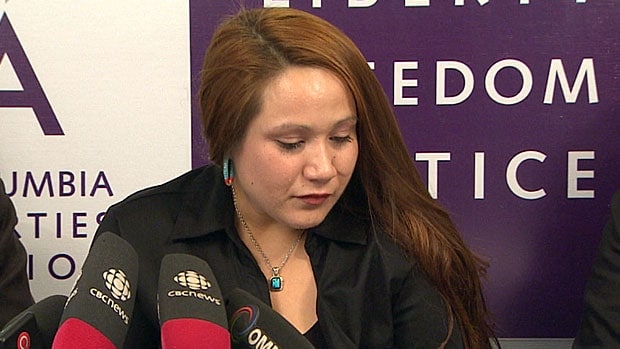
Ask BobbyLee Worm. BobbyLee Worm is a 24 year old aboriginal woman prisoner in the Fraser Valley Institution, a Canadian federal prison that describes itself as “a multi-level facility for women…. Programs focus on the particular needs of women offenders, including Aboriginal inmates and those with psychological problems or learning disabilities.”

One of these particular programs is called Management Protocol.

Management Protocol is “a special program for handling women prisoners who have been involved in a major violent incident or threat of incident while in the system.” Established in 2005, seven women prisoners have been on Management Protocol. All seven have been aboriginal women.

Management Protocol is open ended, unrestricted solitary confinement. Twenty- three hours a day for as long as the prison deems `adequate’ and `necessary.’ How does one leave Management Protocol? One earns one’s way out. How does one earn? What are the wages? No one knows.

BobbyLee Worm entered prison June 7, 2006. She is a first time offender, sentenced to six years, four months. She has spent the majority of her time in segregation, paying off the debt of years of physical, emotional and sexual abuse and trauma. For Black women, the debt of incarceration is the gift that keeps on giving.

These stories are typical of the conditions of women, and girl, prisoners around the world. Girls whose only `crime’ is being the daughters of asylum seekers, or of being born into oppressive communities, are stuck into detention centers, such as the Inverbrackie Detention Center in Australia. Once there, they suffer nightmares, turn violent, and refuse to eat. What is their crime, what is the debt to society that must be paid? They were born in Iran, they sailed to Australia.

Around the world, women of color, Black women, and their daughters, sit in prisons. Their debt grows incrementally by the second. Their numbers grow incrementally by the day. Today is March 8, 2011, International Women’s Day.  These women prisoners haunt International Women’s Day.


(Photo Credit: British Columbia Civil Liberties Association)

The murdered mothers of Côte d’Ivoire continue their march


On Thursday, March 3, 2011, there was a women’s march for peace in Abobo, a suburb of Abidjan, in Côte d’Ivoire.  This was not the first women’s peace march in Côte d’Ivoire. In the past weeks, the violence of the `stalemate’ has both increased and intensified. Neighborhoods are regularly tear gassed, houses invaded, men taken off. One side attacks, the other responds with either greater force or at the very least with the threat of greater force. Barricades are met with tanks, tanks are met with paving stones or with petrol bombs. Blood flows, and then more blood flows.

The women of Côte d’Ivoire have lived through this. They have lived through the intensification and expansion of violence before. They have lived through the increase and intensification of sexual violence as well. They have experienced rape used as a weapon of war, in not so distant times of `civil strife’ and of `national stalemate’.

The women of Côte d’Ivoire have lived through incarceration at the infamous Maison d’Arrêt et de Correction, or MACA, reputed to be one of the worst on the African continent. They have lived through the torture, the massacres, the brutality, the lethal conditions of MACA, where any sentence is a virtual death sentence. They have lived through the brief improvement of conditions, only to see them deteriorate into even worse depravity. The women of Côte d’Ivoire know the meaning of `civil strife’, of `national stalemate’, of mass and targeted detention.

And so they have organized. They have organized women’s marches, peaceful marches, marches of peace.

The women march because they do not want to become the mourning mothers, nor do they want to become the grieving widows. They know there is an alternative. They march for an immediate cessation of the violence, in their own names, in the names of their children and of their partners.

Last Friday, February 25, 2011, the women of Treichville, a district of Abidjan, organized a march. They marched “to liberate our husbands and children.” Five hundred or so women marched, with whistles, banging pots and pans. They were followed by the security forces. Men armed to the teeth surrounded the women on both sides. The women sat down in the street then, and shouted, “”Tirez-nous dessus, qu’on en finisse!” Roughly translated: “Attack us then, and be done with it.” And with that, the women took off their clothes. They sat in the street, naked, and dared the police, the armed forces, the paramilitaries, to come forward. They sat naked in the street, and they said, “So much blood has flowed. We have nothing to lose. We are not afraid to die. We are not afraid of you. We are not afraid of men with guns.”

Six days later, on Thursday, the women of Abobo took to the streets.

Suddenly, tanks appeared, men with guns appeared, gunfire exploded, women ran for shelter, and seven fell, dead. According to one eyewitness, “We were slaughtered. Eight women, including a pregnant woman, were killed on the spot. During the shooting, a bullet blew open the head of one of the victims. It was the first time I had seen someone’s brains out. As for the pregnant woman, her belly literally exploded. We have no idea why they shot at us. We were just a gathering of women, nothing else but women.”

Men with guns, men with tanks, fear women with whistles and pots and pans. Men with guns fear women’s autonomy, they fear an alternative to the exclusive power of violence. Why else would they murder the innocents? The murdered women of Côte d’Ivoire continue to march, continue to blow their whistles and bang on their pots and pans, continue to sit down in the streets, continue to strip naked, continue to demand their bodies be recognized, continue to demand the peace of justice, the justice of peace. Those women, the women of Côte d’Ivoire, haunt the world.


(Photo Credit: France 24 / AldoLaClass)


Forty abducted women prisoners haunt New Jersey


In March 2007, forty women were abducted.

The New Jersey Department of Corrections is made up of thirteen centers, facilities and prisons. The Edna Mahan Correctional Facility for Women, EMCF or EMCFW, is the only women’s prison in the state of New Jersey. The New Jersey State Prison, NJSP, is a men’s maximum-security prison.

These two prisons are night-and-day different. EMCFW has programs for survivors of domestic violence, parenting skills programs, and family unity programs, which include greater opportunity for family visits and contacts. EMCFW offers free phone calls to family members. A phone call from NJSP costs $25. Before March 2007, the difference between the two prisons was clear and stark. And then night and day were one:

In March 2007, approximately forty women, the majority of whom were classified as medium-security prisoners, had excellent disciplinary records, and/or held paraprofessional job assignments for months or years while at EMCF, were abruptly transferred to a maximum-security housing unit in NJSP. No notices, hearings, or other procedures preceded these transfers. …

“The mass transfers of women occurred on two separate occasions. On each occasion, women held at EMCF were locked in their cells without explanation. A convoy of trucks arrived and guards in full riot gear carrying batons, mace, and other weapons descended on the women’s quarters and took women from their rooms. Each woman was taken to a separate room and stripped naked while guards, including male guards, observed her and filmed her with a video camera. When the strip searches were complete, the women were handcuffed and shackled, then loaded onto a bus and taken to NJSP.

“During these chaotic and terrifying transfers, women panicked in their cells and wept hysterically. Because many of the women held at EMCF have experienced sexual and physical abuse by men prior to and in some cases during their incarceration, they were extremely frightened by the procedures employed during the transfers and the prospect of transfer to a men’s prison. Nursing and psychiatric staff had to be called to attend to the panic-stricken women, and many women were medicated or received increased dosages of medication. NJDOC has informed the women that their placement in NJSP is permanent.”

The conditions in the New Jersey State Prison were bad for men, and worse for women. The women were confined to their housing units and prohibited from moving about the prison. Their cell windows were painted over, leaving them in perpetual semi-darkness.

The women were denied psychiatric counseling and medication in their unit. If they requested psychiatric care, they were threatened with, and sometimes sent to, “Unit 1GG”, a “stabilization unit” famous for its degree of filth, danger and degradation. Women were denied access to adequate medical care. Medical examinations, such as they were, were conducted in the open area of the housing unit, in the presence of guards, including male guards.

Women were denied legal access, especially access to the prison’s library. Women were denied access to educational programs. They couldn’t get decent work, couldn’t exercise, and couldn’t take care of their personal hygiene. And throughout, women were denied any privacy.

The women found themselves in practical lockdown and almost complete isolation.

Why? What had these women done to deserve this? Nothing. Absolutely nothing. Forty women were treated, dragged about, as forty sacks of nothing.

Kathleen Jones, Sylvia Flynn, Helen Ewell and Lakesha Jones had been model prisoners. Through the ACLU, these four women sued the State “on behalf of themselves and all individuals similarly situated.” They charged the State with “violations of their due process and equal protection rights, their right to be free from cruel and unusual punishment, and their right to privacy.” They protested the “restrictive, inhumane, and physically and psychologically damaging conditions”. Finally they noted, “The Department’s ill-considered measure is also symptomatic of its general failure to plan for the women in its custody.”

In the first week of September 2008, nine months later, the forty women were returned to the not great conditions of the Edna Mahan Correctional Facility for Women. Then, for another year and a half, the women fought to make the State accountable for its actions. Last week, the women won. It was a victory “for civil rights, justice and common sense.”

What happened in New Jersey? The State now says EMCFW was overcrowded, and so it moved 40 women. What system of reason moves 40 women model prisoners into an all male supermax holding 1800 some prisoners? There were other prisons in the state, and there were other options. Model women prisoners could have been given early release. No one sought an alternative, because women prisoners counted for and as nothing.

There was no mass transfer in March of 2007. There was abduction. In the middle of the night, groups of men, armed to the teeth, faces covered, rounded up forty unarmed women. The women were stripped naked, prodded, shackled, and carted off to parts unknown, where they were then abused. What is that called? Call it terrorism.

Kathleen Jones and daughter

Sylvia Flynn


(Photo Credit: Jerry McCrea/Star-Ledger) (Photo Credit: ACLU)

Child prisoners in Pennsylvania haunt the United States

In 2003, children started disappearing in Luzerne County, in northeastern Pennsylvania. By 2009, over 5000 had vanished, or more precisely had been disappeared. They were sold into juvenile prison system in what some call a kids-for-cash scam. On Friday, February 18, 2011, Judges Mark Ciaverella  and Michael Conahan pled guilty to wire fraud and income tax fraud.

In a nutshell, the story is that two private juvenile prisons, PA Child Care and Western PA Child Care, paid the judges to send children to jail. Over 5000 children. In a five or six year period. In one county. Many were first time offenders. Many are today still in prison. In 2009, the Pennsylvania Supreme Court voided almost all the juvenile convictions from 2003 on. Senior Judge Arthur Grim has the task of adjudicating the mess.

But what exactly is the mess? Ask the mothers of the children, ask the children themselves.

Erica Michaliga’s son damaged the hood of the family car. She called the police, to “put a good scare into him.” Once in, her son spent four years in prison. “Not only is this kids for cash, this is kids forgotten.”

Thirteen-year-old Alissa Conahan got into an argument with her grandmother. The family called the cops, to put a good scare into her. She spent most of four years, from the age of 14 to 18, in prison: “He ruined my life, so I don’t care what happens to him.”

At the age of 12, Eric Stefanski took his mother’s car and went on a quick joyride. No one was hurt. Eric ran over a barrier, smashing the undercarriage. In order to get insurance to pay for the damage, his mother, Linda Donovan, had to file a police report. She thought appearing before the judge might also “give him a little scare.” Eric Stefanski was shackled then and there, and spent the next two years in prison.

Edward Kenzakoski was 17 years old, a good kid with a bright future, a high school senior, a wrestler who was `expected to take state in his high school’. Edward looked forward to college scholarships based on his athletics, good record, and general life story. Edward started hanging out with `a different crowd, sneaking out at night.’ So, his mother called the police. She found out he was at an underage drinking party, and she asked the police to intervene, to help, “to put a little scare into him.” The police thought that’s what they were doing. Helping.

His mother, Sandy Fonzo, remembers and re-lives the rest: “Before we knew it, he was shackled, and he was taken. And I just remember his face looking at me. And it was just – it was horror. It was almost like—you know, he’s my kid, and I had just no control. They actually—at one time, while they had him in that juvenile center, he called me the next day. He’s in some place hours away. They needed a bed to fill for somebody else, so they moved him in the middle of the night, pouring down rain. I didn’t even know where my 17-year-old son was. I was having like a nervous breakdown. This whole thing has been nothing but a nightmare, and it just has never ended. It never ended. And now I live with this nightmare the rest of my life. And I just want him to at least pay for what he’s done. I mean, these people are to protect our kids. He was the adult here. He made these kids all think that they’re such bad kids. And, you know, it’s just terrible the way he beat them down. They’re not bad kids. I want them to know: it wasn’t them, it was him. They’re not bad. I want them to heal and go on with their lives so nothing happens to them like it did to my son.”

Edward committed suicide last June.

What runs through these stories? Efficiency. Child care.

According to Judge Grim, the average court proceeding for these children was “a minute and a half to three minutes.” It took that long to weigh the value of a child, of a child’s life. Judge Ciavarella was acting efficiently. Otherwise, how did this horror continue for six whole years?

Children make mistakes. In Luzerne County, families, mothers and grandmothers in particular, called on the police, called on the State, to put a scare into their kids. They called for help. In an economically devastated area, like that of Luzerne County, like that of Wilkes-Barre, that long ago lost its industrial, economic base, this is child care. There are few, if any, public services for children. There are few, if any, public services for families. The public juvenile detention centers have been closed and replaced with privately owned and operated ones, with names like PA Child Care and Western PA Child Care.

Five thousand children disappeared in a six year period, from 2003 to 2009, in a small place called Wilkes-Barre. Their mothers watched, helpless, as they were shackled and disappeared. Five thousand families suffered the disappearance of their children. The children haunt Pennsylvania. The mothers and grandmothers haunt Pennsylvania. The six years haunt Pennsylvania. Loss haunts Pennsylvania. The horror haunts Pennsylvania.

And Pennsylvania haunts the United States.

(Photo Credits: Kids For Cash) (Video Credit: Juvenile Law Center / YouTube)

In Zimbabwe, the revolution will be …

Trevor Ncube is a Zimbabwean. On Friday, February 18, 2011, Trevor Ncube, owner of The Mail & Guardian, and publisher of the Zimbabwean The Standard, The Zimbabwe Independent and NewsDay, published a piece he’d written, entitled “We are our own liberators.” In this piece, Ncube reflected on the lessons of Egypt and Tunisia, and who knows where else by now, for Zimbabwe, for Zimbabweans. He noted, “I have written before about the need for a “Third Way” in Zimbabwe’s politics. Egypt and Tunisia tell us that perhaps the people constitute that Third Way in resolving our political impasse. Only a new beginning will suffice…. Tunisia and Egypt have restored our collective faith in the power of the people.”

That was Friday.

Munyaradzi Gwisai is a Zimbabwean. Gwisai has been a member of the Zimbabwe National Parliament, is a lead member of the Zimbabwe branch of the International Socialist Organisation, and is the director of the Labour Law Centre, in Harare. Gwisai is also a law lecturer at the University of Zimbabwe.

On Saturday, the Zimbabwe branch of the International Socialist Organisation apparently held a meeting at the Labour Law Centre. Individuals and organizations were invited to a discussion. On the agenda was something like “What lessons can be learnt by the working class in Zimbabwe and Africa?” Gwisai and 50 some others were arrested for “plotting an Egypt”, or, more formally, “subverting the government.”

Fifty or so people were arrested, and for what? They were arrested for “normal academic debate,” or for the crime of discussing politics, or perhaps, as the government representative said, for having “attempted to inspire and motivate people to demonstrate.” Included among those arrested were passersby and others in the building who had nothing to do with the meeting.

Roselyn Hanzi of Zimbabwe Lawyers for Human Rights (ZLHR) reports that eight of the activists claim to have been tortured, beaten, starved. They have been allowed little contact with their attorneys. Shantha Bloemen, Munyaradzi Gwisai’s wife and a prominent figure in her own right, reports that the arrestees are being interviewed individually. Those determined to be `ringleaders’ are then beaten. It is reported that Gwisai is now unable to walk on his own.

Tafadzwa Choto was among the fifty or so arrested. Choto is a prominent ISO figure, a national coordinator in Zimbabwe. In 2001, at a May Day Rally in Harare, Choto was savagely beaten by “Mugabe’s thugs”. What is the distance between Mubarak’s thugs and Mugabe’s thugs? Ask Tafadzwa Choto.

According to Choto, two events served to politicize her. The first occurred in 1993: “A woman at the University of Zimbabwe was stripped of her skirt. It was said to be a miniskirt and was publicly ripped off her. I was disgusted.” The second was in 1995: “In Harare, in the city center, … three civilians were shot by the police, while the police were chasing after some thieves who had stolen a manual typewriter. Three civilians were shot dead and for what?”

Women were attacked, and for what? Civilians were shot dead, and for what? Fifty were arrested, and for what? Among them many were beaten, tortured, starved, and for what? For daring to inspire and motivate people to demonstrate? For daring to inspire and motivate people to become the people? In Zimbabwe, the revolutions of far off lands are being discussed and will be debated, and someday, hopefully someday soon, the reckoning of the `for what’ will begin. The `for what’ haunts Zimbabwe.


(Video Credit: Union Solidarity International / YouTube.com)

The orphan children of asylum seekers haunt Australia

Seena weeps at the funeral of an eight-month-old baby, drowned on the rocks of Christmas Island

On Wednesday, December 15, 2010, a wooden fishing vessel carrying an untold number of asylum seekers and refugees, thought to be Iranian and Iraqi Kurds, crashed off the shores of Christmas Island. The residents watched in horror, the nation watched in horror. Some of the dead were fished out of the rough seas. Others were never found. Estimates suggest that 50 people perished that day.

The survivors were either sent to hospital in Perth or sent to detention centers on Christmas Island. Prime Minister Gilliard called the event a `terrible human tragedy’.

Yesterday, Tuesday, February 15, 2011, two months to the day, eight of the dead were buried in two separate funerals in Sydney. Twenty-one survivors were flown in from Christmas Island and Perth, where they have been detained for the last two months.

Among those survivors was a nine-year old boy named Seena.

Seena lost both of his parents in the tragedy. Seena’s brother drowned that day as well. His father’s body was fished out of the waters. His mother was never found. Seena spends every day staring and waiting for new boats to arrive, for his mother to arrive. At the funeral, Seena said, “Leave me alone. I just want to go to my father. I just want to see him, I just want to see him.” According to one cousin, he wanted to be “buried with his father”.

Seena is nine years old. He has cousins, aunts and uncles, who live in Sydney. They have begged the State to let the child stay in Sydney, where he has an extended family network, where there are mental health providers ready to attend to him. “We are more than happy to take responsibility for him,” his cousin explains.

They are more than happy to take responsibility.

The State however is not happy to take responsibility for this nine year old child. The State initially planned to ship him back, with the others, back to Christmas Island, back to isolation, back to desolation, back to endless and daily waiting for his mother to arrive. If Seena is returned to Christmas Island, who will take care of him? His aunt, who is also a prisoner there. His aunt, who is in even worse psychological condition than he is.

Tonight, Seena is at Villawood Immigrant Detention Centre, outside of Sydney, … again. Seena spent the day before his father’s funeral in Villawood. When ten relatives came to see him, his spirits lifted. Seena is a nine-year old child. Of course, seeing his relatives cheered him up.

Seena is meant to be flown back to Christmas Island tomorrow, Thursday, morning. Perhaps he has been, perhaps not. The State now says it will consider the family’s request.

What does it take for the nation-State to be happy, more than happy, to take responsibility for the children in its midst?

Article 37 of the United Nations Convention on the Rights of the Child reads, in part:

“No child shall be subjected to torture or other cruel, inhuman or degrading treatment or punishment….Every child deprived of liberty shall be treated with humanity and respect for the inherent dignity of the human person, and in a manner which takes into account the needs of persons of his or her age.”

Australia ratified that ConventIon in December 1990, twenty years almost to the day of Seena losing his family and being sent to Christmas Island. More countries have ratified the Convention than any other human rights treaty in history. If there is anything like a global consensus, it is the United Nations Convention on the Rights of the Child.

And yet … protecting, securing and sustaining the rights of the child and the rights of children is viewed as a bureaucratic obligation. Which nation-State is more than happy to take responsibility for the child?

Seena is nine years old. Seenah haunts Australia. The orphan children of asylum seekers haunt the world.


(Photo Credit: Sydney Morning Herald / Getty Images)


Prisoners die in agony, begging and screaming for care

Amy Lynn Cowling went for a drive on Christmas Eve, 2010. 33 years old, a grandmother of a one-day old child, bipolar, methadone dependent, and with only one kidney, Amy Lynn Cowling went for a drive in East Texas, where she was picked up for speeding, then arrested for some outstanding warrants on minor theft charges and traffic violations. Five days later, in the Gregg County Jail, after a day of wailing and seizures, of excruciating pain and suffering, of agony, Amy Lynn Cowling died. Amy Lynn Cowling died after five days of her family begging and pleading with the prison staff to make sure they gave her the life sustaining medicines she needed. The pills were just down the hall, in Amy Lynn Cowling’s purse, in the jail storage room. Nobody went, nobody came. Amy Lynn Cowling died.

Gregg County Jail is `troubled’. Since 2005, nine prisoners have died there, one of suicide, eight from `health conditions.’ Prisoners are dying, and prisoners are coming out hurt and injured. Across the country and across the world. Some suggest that Amy Lynn Cowling’s death `exposes health care problems in local jails.’ History suggests otherwise.

Ashley Ellis was twenty-one years old when she went for a drive one night, in 2007, in Rutland, Vermont. She hit a motorcycle and partially paralyzed its driver. Two years later, she was convicted of misdemeanor negligence. Ellis was sent to the Northwest State Correctional Facility in Swanton, Vermont.

In the two years between the accident and the sentencing, Ellis had gone from120 pounds to 86. She was depressed. She was under treatment for anorexia. This treatment required her to take regular potassium pills. She told the staff at the prison. Ellis’s doctor faxed the prison all the necessary information concerning her illness and treatment. At that time, the prison health services were outsourced to a private corporation, Prison Health Services, or PHS.

Ashley Ellis told the Prison Health Service staff that she needed the potassium pills, to live. They said they were out, they give her food, they did not provide the pills. After two days in prison, Ashley Ellis died. That was August 2009. In January 2010 Vermont suspended its contract with Prison Health Service, because the contract had `expired’. Prison Health Service advised its employees not to speak to anyone. The investigation went nowhere.

The medical examiner found that Ashley Ellis had died in part because of denial of access to medication. As we noted last year, a similar case occurred in New York, at about the same time. Chuneice Patterson, a prisoner in the Onondaga County Justice Center, in Syracuse, New York, screamed, writhed for nine hours in pain before dying of an ectopic pregnancy. She pressed the emergency button. Nobody came.

The New York State Commission of Correction concluded: “Chuneice Patterson was a twenty-one year old black woman who died on 11/12/09 at 8:30 a.m. from a ruptured ectopic pregnancy while in the custody of the Onondaga County Sherriff at the Onondaga County Justice Center….Had Ms. Patterson received adequate and competent medical care, her death would have been prevented.”

It’s too soon to say the exact cause of death for Amy Lynn Cowling. It’s too late to claim that another women dying in prison exposes anything. As attorney, prison expert and University of Texas faculty member Michele Deitch notes, “Until it affects a family like this, no one knows how bad things are.” As long as incarceration means isolation, as long as prison is a form of exile within the borders of one’s own state, as long as prisoners are invisible to `citizens’, they will continue to die in agony, begging and screaming for care.


(Photo Illustration: Todd Wiseman / Callie Richmond / The Texas Tribune)