But tell me, where do the children live?

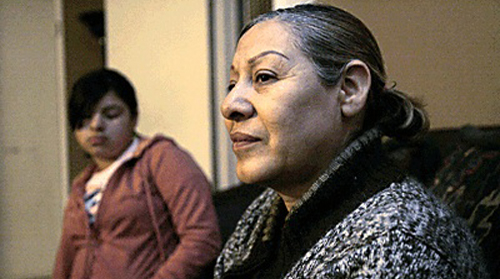
Maria Olvera with Valory, one of the two grandchildren she is raising in Altadena, Calif.

Where do children live?

Some children live at home. Sometimes, the families are their own extended families. Often they are their grandparents’ homes. Sometimes the parents have been taken by illness. Other times, the market has insisted that mothers and fathers travel extraordinary distances and stay away for long periods of time. And sometimes the parents have been deported.

Other children live in family homes that are worksites and worse. These children might be domestic workers, and they live as strangers in their own domiciles.

In Burkina Faso, for example, children, especially girls, work as street vendors, or hawkers, and as domestic workers.  Legally, domestic work is considered “light work”, and so children officially can begin working in households at the age of 15. In fact, children, mostly girls, begin as young as 7. Almost half of all children in Burkina Faso work, and proportionately the girls outnumber the boys.

The local Red Cross has a child labor project that is trying to help child domestic workers. Other local NGOs also are trying to help child domestic workers. How? The NGOs are offering girls training in cleaning and housekeeping, and, occasionally, reading, writing, and sewing.  The Red Cross is sending stern, `blunt’ text messages to government officials, employers, traditional leaders, teachers, business owners and housewives.  Here’s one example: ““Employers: domestics have the same rights as your children. Stop under-paying them; stop subjecting them to mistreatment, sexual violence, and long hours”.

Who are the children? They are typically described as children “from rural areas where there are few work opportunities”, and so they are sent, or some would say trafficked, to the cities, in this case Ouagadougou or Bobo-Dioulosso. They have the same rights as your children? Hardly. `Your children’ go to school. `Your children’ inhabit days and lives that aren’t measured by wage scales and work opportunities. `Your children’ are … your children, and their opportunities are the opportunities of childhood. These children are not `your children’. If they were, their situation would not be described in terms of lack of work but rather lack of school.

But tell me, where do the children live?

In the United States, one of every ten children lives with their grandparents. Close to three million children live with a grandparent or grandparents.  Close to three million grandparents are the primary caregivers to the children living with them.  Of the three million grandparents, 62%, or a little less then two million, are women. While the primary caregiver grandparents are disproportionately African American and Latina, the numbers are increasing, rapidly, among White grandparents as well. Of the primary caregiver grandparents, 65% are either poor or near-poor.

This development is considered a social trend. For Latina grandmothers, it is often complicated by another `social trend’: deportation. For example, Maria Olvera takes care of two of her grandchildren. Their mother, Maria Reyes, was deported, returned to Mexico, where she now lives, on the border in Tijuana. Their father died in 2008. Maria Reyes has four children. The other two stay with an aunt nearby. The four siblings come together daily, to encourage a sense of family.  Meanwhile, Maria Olvera is herself undocumented. A survivor of domestic abuse, she helped authorities locate and prosecute her abuser. Now she waits to see if she can obtain a U visa. Meanwhile, she has little or no formal rights or claims to the children.

And if Maria Olvera looks around, she will already know another `social trend’ that legal scholars are just beginning to discover and document: the deportation of grandparent caregivers, and in particular of grandmothers. Parents gone, grandparents under threat, where do you think the children live? Limbo.

The illegal but common child domestic workers of Burkina Faso, the grandchildren of undocumented grandparent primary caregivers in the United States, live formally, officially … nowhere. They are shadows. As nations design and implement so-called austerity programs, the world of shadow children expands as it grows more thickly populated. In the United Kingdom, for example, it is anticipated that, as a result of so-called austerity budget cuts, 300,000 children will be shoved into poverty. Like a bird, child poverty is set to soar.

But tell me, where will the children live?

(Photo Credit: Sarah Reingewirtz / San Gabriel Valley News Group /  El Nuevo Sol)

Let them eat pesticide

There are hunger strikes and there are hunger strikes.

For the past 37 days, six pro-democracy Iranian asylum seekers have been on a hunger strike outside the central headquarters of the United Kingdom Border Agency, in Croydon, in the south of London. Some had sewn their lips shut. Sewing one’s lips is minor compared to the torture all six had suffered in Iranian prisons. They had the medical evidence to prove the torture, and yet were initially denied asylum. Finally, today, after 37 days on hunger strike, the six refugees – Ahmad  Sadeghi Pour, Morteza Bayat, Keyvan Bahari, Kiarash Bahari, Mahyrar Meyari and Mehran Meyari – were assured their cases would be reopened and they would at least be able to apply once again. They ended the hunger strikes, and proclaimed the struggle continues.

Sometimes, hunger strikes save lives and secure at least the glimmering hope of something like justice.

Then there are the hunger strikes that are fatal and ferocious drone strikes, assaults on the body, community, and land. Globally, over 900 million people go hungry every day. That’s down from one billion the year before, but the prospects for the next year are gloomy. Food prices are on the rise everywhere. In fact, food prices are at a twenty-year high. In Asia and among Pacific island nations, food prices are skyrocketing and food `shortages’ loom large. For example, in the Philippines, thanks in large part to marketization and speculation, rice is suddenly both scarce and overly expensive.  Egypt is running out of food, as is the entire Middle East and North Africa.

But it’s not all bad news. Glencore, for example, is “a leading commodities producer and marketer.” Glencore is doing fine. Along with tons of mineral, literally, Glencore controls 10 percent of the world’s wheat, and 25% of the world’s barley, sunflower, and rape seed. Glencore takes, the world slakes. And then dies … again, literally.

Across the United States, two million men, women and children work on farms, picking by hand fresh fruits and vegetables. The US government estimates that every year 10,000 to 20,000 of those workers suffer acute pesticide poisoning.

In India, over the last sixteen years, 250,000 farmers have committed suicide. That’s one farmer every 30 minutes. And this number only includes the farmers who are acknowledged as such by the national government. Those who can’t hold title, they’re not included. Women farmers, Dalit farmers, Adivasi farmers: they don’t count in life, they don’t count in death. What killed these farmers? Indebtedness. Market liberalization. The invisible hand of the market, that hand which polished shining India, provided farmers with loans they could never pay but had to assume, with dwindling access to water, with impossible competitive demands. And so the farmers die.

And they leave behind notes, addressed to the Prime Minister, to the President, to all the lofty people who are nestled in the invisible hand that killed them.

And they leave loved ones behind. Widows. Children. Women like Nanda Bhandare, a farmer, a widow since 2008. When her husband killed himself, she had to pull her two young children out of school to work the farm. The money, if there was any, has gone to pay off the predators. The land, a small parcel, no longer provides sufficient harvest in the current economies to feed even a family of three. Who will be next to drink the pesticide in that household?

There are hunger strikes and there are hunger strikes. For every hunger strike that saves a life, even temporarily, such as that of the six Iranians in England, there are literally 900 million deadly hunger strikes. The planet is aflame with hunger strikes. Farmers are poisoned and are dying, women and children in particular are starving, and the response of the global market, and of the nation-States it supports and controls, is as it has always been. Let them eat pesticide.


(Photo Credit: http://indiatoday.intoday.in)


The State `honors’ mothers while abusing their children

Yesterday, Sunday, May 8, 2011, was Mother’s Day in many parts of the world. Mothers were celebrated and honored. How does the State `honor’ mothers?

According to a recent report by the Organisation for Economic Co-operation and Development, or OECD, inequality among OECD countries is rapidly growing. Starting in the 1980s, the United States and the United Kingdom led the way in growth-through-inequality. Then the movement spread. Today, it rules the vast majority of OECD countries. Those are countries identified as wealthy and developed. Growing structural inequality has come to mean developed.

How are women honored in this development model? “Since the mid-1980s, women’s employment has grown much more rapidly than that of men. But many women work part-time and earn less which explains part of widening earnings gaps among the workforce. On average across the OECD, the share of part-time employment in total employment increased from 11% in the mid-1990s to about 16% by the late 2000s”.

Women have entered or been forced, or some combination thereof, into the jobs market. Many countries have followed the United States model in which public assistance, or welfare, has been cut and limited. There’s less money and the restrictions, especially the time restrictions, are severe. This toxic storm strikes single mothers particularly hard. Remove all supports and then create a labor market in which those with low or limited educational qualifications must work part-time for practically nothing. Eliminate public services, such as childcare and extended school programs. Even out-of-school suspension policies assault all working mothers, and particularly low- and no-wage mothers, and particularly single mothers.

If the women complain or try to unionize, they are reminded that there’s no assistance out there, that all the jobs available for `people like them’ are pretty much the same, and that they are women, mothers especially, who have near catastrophic household, and community, responsibilities. They are not reminded that, in the United States, union women earn 34% more than nonunion women.  That information wouldn’t be prudent.

The same period, early 1980s to the present, has witnessed increased incarceration of children. In Australia, the immigrant and asylum detention centers have been  “factories for producing mental illness”, and have been broadly criticized for caging children of migrants, refugees and asylum seekers, sometimes for long periods. What is the State response? Cover-up. Privatize. Outsource.

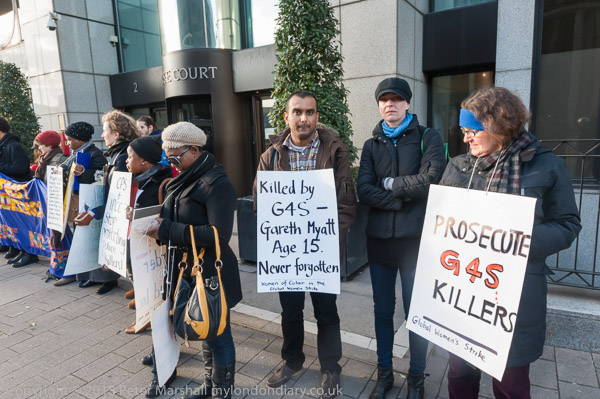
In the United Kingdom, children in custody die as a result of constraint methods.  One popular method is the tantrum hold, sure to result in injury 9 out of 10 times. In 2004, fifteen-year-old Gareth Myatt died of asphyxiation after being `tantrum held.’ Finally, an investigation into the constraint methods was conducted. That report was completed in May 2008 and presented to the government. What was the State response? Silence? Actually, it was worse in that it was more active. The State suppressed and hid the report. This Wednesday, three years later, the report will be made public.

In the United States, eleven states treat 17-year-olds charged with felonies as adults.  Illinois is one of the eleven states. A recent study of convictions in Illinois suggests that only 25% of the youths convicted with gun charges were ever actually identified as having the gun in question. In fact, of the cases studied, only 46% of them had any gun recovered.  Children were sent to adult prisons for gun possession in cases in which no gun was ever found, in cases in which the children in question were never identified as holding the gun in question. How does the State respond? The State legislature is debating a bill, right now, to reduce the age limit from 17 to 15 and 16, if convicted for gun possession. In Illinois, this is considered inclusion.

From Australia to the United Kingdom to the United States and beyond, the State incarceration of children and the State abuse of child prisoners is a direct assault on their adult guardians. Overwhelmingly, that assault targets women. Mothers. Grandmothers. Aunts. All of these women are mothers,  `a woman who undertakes the responsibility of a parent towards a child.”

Nation-States designed, or bought, economic development models that targeted vast numbers of women and children. The same States designed, or bought, justice programs that targeted vast numbers of women and children. Those State economic and justice models have devastated communities of color and low-income communities generally.

And yesterday those States honored women and celebrated mothers and motherhood? Rather call those State festivities `honor celebrations’, and invite them to sit at the same family table as honor killings. Mothers, and their children, can sit at other, better tables.


(Photo Credit: mylondondiary.co.uk)

Call them, simply, workers

Yesterday was May 1, 2011. Around the globe, millions marched. Among the workers marching were sex workers, domestic workers, other denizens of the informal economy. Today is May 2, 2011. What are those workers today? Are they considered, simply, workers or are they `workers’, part worker, part … casual, part … informal, part …shadow, part … contingent, part … guest? All woman, all precarious, all the time.

Categorizing workers as part of a somehow other-than-formal work force and work space naturalizes their exclusion and subordination. Why should they have full rights when they’re not full workers? Minimum wage? For `real’ workers, yes. For live-in domestic workers? Not yet.

Why should informal workers have full `protections’ when they’re not full partners in the social industrial contract? They didn’t sign on. They’re informal. How could they have? They were coerced, trafficked, seduced, forced into their current jobs. They must have been. Otherwise, how could they have accepted such abysmal working conditions? The logic is impeccable … and wrong.

Over the weekend, sex workers in South Africa and India brought the lie of the informal economy logic to light. In South Africa, three Cape Town sex workers are suing the State for harassment. They say they were repeatedly taken into custody and held for forty-eight hours, after which they were released without being charged. The three women argue that when they were arrested, they were not `on duty.’ They were not arrested as sex workers but rather as women who at some point or another have engaged in sex work.

This some-point-or-another is the main insight of The First Pan-India Survey of Sex Workers, a major study of sex workers in India, released on Saturday, April 30. Over the past two years, Rohini Shani & V Kalyan Shankar surveyed three thousand women sex workers from fourteen states.

They found that poverty and limited education matter, but not in the way many expect. Poverty and limited education push girls into labor markets early on, often at the age of six or so, but not into sex work. The largest principal employment sector for the very young was domestic labor. The majority of women waited until they were somewhere between 15 and 22 before entering into sex work. That means women had been wage earning workers, for nine to sixteen years before they entered into sex work.

Over seventy percent of the women said they entered sex work of their own volition. For the vast majority, income was the reason. Sex work pays better than domestic labor, agricultural work, daily wage earning or so-called petty services.

In other words, from the perspectives of the sex workers, sex work is one of a number of `livelihood’ options, as Shani and Shankar conclude: “Sex work cannot be considered as singular or isolated in its links with poverty, for there are other occupations as well which fit into the category of `possible livelihood options’ before sex work emerges as one of them. Sex work is not the only site of poor working conditions. For those coming from the labour markets, they have experienced equally harsh conditions of highly labour intensive work for very low incomes. It is from these background cases, that the significance of sex work as a site of higher incomes or livelihoods emerges.”

From South Africa to India and beyond, the sex worker story centers on the fluidity of identity. In South Africa, three women argue that sex work is a job. It’s not an identity, it’s not permanent. Like any other job, when the worker leaves work, she gets to become herself … again. As herself, she has rights, including the rights to dignity, security, and the preservation of freedom.

In India, the researchers learned that context counts. They had to accept women’s multiple work identities if they wanted to depict and understand women’s choices and situations. As women sex workers described their working lives, they moved fluidly among various occupations, often in the same time period. For Indian women struggling in an unforgiving economy, no occupation is an island entire unto itself.

South African sex workers suing the State, Indian sex workers discussing their lives have something to say to workers, trade unions, researchers, and allies everywhere. Sex workers are not like workers nor are they labor lite. They are workers. While it may be true that none of us is free until all of us are free, they tell us that none of us can talk about women workers’ freedom until all of us recognize the fluidity of women workers’ identities. But for now, as a start, call them, simply, workers.


We want our revolution NOW

In many parts of the world, prisons have become the principal sites for people living with mental illnesses. In the United States, jails and prisons increasingly house the mentally ill. It is estimated that, in the United States, for every person living with severe mental illness in hospital, there are three currently in prison or jail. In Arizona and Nevada, the number is ten mentally ill people in prison and jail for every one in hospital. For women, the numbers are worse yet. For women living with mental illness in the United States, prison is the new pink. The final coup de grace is when the inmates living with mental illness are described as putting a strain on the prison system. It’s their fault … of course. The same story occurs elsewhere. In Canada, for example, mentally ill prisoners are said to flood the system. Apparently, this is what democracy looks like.

But what happens when people living with mental illness end up in prison? What exactly is their treatment `protocol’? Too often, it’s long term solitary confinement. Colorado may be the solitary confinement capital of the world. In Colorado, it’s customary to lock up mentally ill patients … for their own good. Of those in solitary confinement, it’s estimated that four out of every ten is living with developmental disability or with mental illness. Despite that arithmetic, reformers have yet again failed to persuade the Colorado legislature that perhaps, just maybe, another prison is possible. The madness continues.

Mary Braswell knows something about this form of State, and corporate, madness. Braswell is grandmother to Frank D. Horton. She is also his `conservator’, or legal guardian. Frank Horton is an African American adult living with mental illness, who has had a number of run-ins with the law. At one point, he missed his parole appointment, and so was taken to prison, specifically to the Metro Nashville Detention Facility, run by Corrections Corporation of America, or CCA. That’s when things went from bad to worse to near fatal.

According to Horton’s attorneys, his intake papers suggested a history of psychological and mental illness, with a likelihood of schizophrenia. The system `recognized’ the symptoms. And so what happened? Horton was put in general population, where, within a month, he started fighting, or attacked, his cell mate, and was placed in solitary. His cell mate said Horton was hearing voices.

Once in solitary, not surprisingly, Horton’s condition deteriorated … rapidly. He began refusing to leave solitary. Soon, he was allowed to stay in solitary, permanently. This meant nine months without a bath or shower, nine months with no one cleaning his cell. Nine months.

Nine months of guards walking past, knocking the door, asking if he was still alive, and then moving on. Nine months.

Finally, in January 2008, a guard, Patrick Perry, realized what was happening, stepped in and informed the Metro Public Health Department: “Patrick Perry, an officer at the detention facility from August 2006 to January 2008, began to notice that something was wrong late in 2007. In January 2008, Perry attempted to communicate with Horton, but Horton was speaking “gibberish.” Perry testified that Horton’s cell was filthy, that there were several food trays on the floor and bacteria growing in the toilet, that Horton’s beard and hair were “matted” and “out of control,” and that it appeared Horton had not washed himself or had his cell cleaned for months.”

For nine months, Frank Horton was left to live, or die, in filth that grew worse and worse, until, for some, he became indistinguishable from his surroundings.

Frank Horton was removed to a special facility in April 2008. Patrick Perry was fired immediately, on that day in January. Horton’s grandmother, Mary Braswell, has struggled for three years to get some kind of accountability, some element of responsibility, for the abuse into which her grandson was dumped. Two weeks ago, at last, she was given permission to proceed. CCA, no doubt, will appeal that decision.

On one hand, Frank Horton’s story is a common one, and sadly so is that of Mary Braswell, the story of prisoners living with mental illnesses and of the women, grandmothers, mothers, who try to care for them. At the same time, the story of prison driving people into deeper mental illness is also all too common. Young women and men, largely of color and largely low- to no-income, enter into prison, and when they come out, their minds are never the same.

And they call it democracy, this universe of systematic deprivation and devastation of minds and bodies. Rather call it Charenton, the Bedlam where the patients sing: “We’ve got Human Rights, we’ve got the right to starve; we’ve got jobs waiting for work; we’ve got Brotherhood, we’re all covered with lice; we’ve got Equality, we’re equal to die like dogs ….

“Marat, we’re poor, and the poor stay poor.
We want our rights and we don’t care how.
We want our revolution NOW”.

(Image Credit: Goldberg & Osborne)

The Gulf of Mourning and Memory

Deepwater Dirge by Dana Sherwood

April 20, 2011. It is a year to the day since the Deepwater Horizon rig exploded, sending fire into the sky, oil into the seas, and death and destruction across space and time. It is a year since eleven workers were killed, some say murdered, by the `inevitable’ conditions of work on that rig.

Eleven workers died that day: Jason Anderson, Aaron Dale Burkeen, Donald Clark, Stephen Curtis, Gordon Jones, Roy Wyatt Kemp, Karl Dale Kleppinger, Blair Manuel, Dewey Revette, Shane Roshto, Adam Wiese.

Nine women became widows that day: Shelly Anderson, Rhonda Burkeen, Sheila Clark,  Nancy Curtis, Michelle Jones, Courtney Kemp, Tracy Kleppinger, Sherri Revette, Natalie Roshto. For a year, these women have mourned and grieved and organized. They continue to mourn, grieve, organize. They continue to take care of their daughters and sons and lives. The work of mourning and the work of survival are one. But for these women, and their children, and their loved ones and neighbors and communities, the work of memory has become critical.

And the work of memory is difficult, arduous even. Theresa Carpenter, Courtney Kemp’s mother, knows the men’s names are vanishing from the public conscience: “These men are all but forgotten except by their families.” Billy Anderson, Jason Anderson’s father, knows as well: “”Within seven or 10 days as far as the media’s concerned, those guys didn’t count for anything. They cared more about some oil-covered pelican or little bird, or something. It was like those 11 men’s lives didn’t mean anything.”

What is the meaning of these workers’ lives? What is the meaning of mourning? What is the meaning of grief? What is the meaning of memory? A year ago the sky blew up and the waters seized. Today, according to many, the situation is the same.  Ask the fisher folk, like Diane Wilson or Darla Rooks or Kim Chauvin or Rosina Philippe and her aunt Geraldine Philippe.

What is the meaning of memory if we continue to insist on forgetting? Twenty years ago, in 1991, Adrienne Rich’s collection, An Atlas of the Difficult World was published. The title poem, “An Atlas of the Difficult World”, has thirteen sections. The second section is entitled, “Here is a map of our country.”

“Here is a map of our country:
here is the Sea of Indifference, glazed with salt
This is the haunted river flowing from brow to groin
we dare not taste its water . . . .
This is the sea-town of myth and story             when the fishing fleets
went bankrupt    here is where the jobs were            on the pier
processing frozen fishsticks    hourly wages and no shares ….”

Here is a map of our country, twenty years ago, one year ago, today … and tomorrow? The Gulf of Mexico is a natural body of water. We, however, are the builders of the Gulf of Mourning and Memory. A year later the situation is still the same.


(Image Credit: Dana Sherwood http://danasherwoodstudio.com/projects/deepwater-dirge-2011)


The dead shall not walk through those open doors

Andries Tatane's Wife

Who is the stranger in our midst? Ask the police.

There was a protest, a service delivery protest, on Wednesday in Setseto, outside of  Ficksburg, in the eastern part of the Free State, in South Africa. During the protest, Andries Tatane, a 33 year old activist, approached the police. Either he approached the police to plead for some consideration for an elderly man who was not part of the protest or he approached the police to ask them to stop using water cannons because there were elderly people in the protest. Tatane was shirtless, unarmed, unthreatening. About six or seven riot police attacked him, beat and kicked him. Then Andries Tatane was shot. Finally he collapsed, and died, 20 minutes later. By the time the ambulance arrived, Andries Tatane was dead, and the mourning, and outrage, had begun.

There was a protest, a student protest, on Monday in Kabale district, in southwestern Uganda. Students at Bubaare Secondary School went on strike, protesting a policy shift affecting the disposition of male and female students. During the protest, Judith Ntegyerize, a senior, walked by, on her way to classes. The riot police showed up just then, allegedly shot their rifles in the air, and a `stray’ bullet hit Ntegyerize in the head and killed her, instantly.

These are only two stories, only two stories from the past week. In the past year, there have been similar stories of unarmed innocents killed by police fire everywhere. Around the world there are murals to the martyrs, more often than not young women and men, such as Oscar Grant, in the United States, or Neda Agha-Soltan in Iran, or the young women and men killed by live fire in protests in Yemen, Syria, Bahrain, Egypt. Sometimes, their names become known, more often they remain anonymous. Sometimes, the State apologizes, but usually it just spins.

Whenever police are armed with live bullets and sent to a protest, the State has decreed that deadly force is an acceptable means to an end. But what is the end? It is the identification of the strangers, the strangers in our midst. Only the strangers can be so blithely beaten, kicked, shot, disposed of, dumped like so much garbage, killed. That is the nation-State’s rule of law, the law that protects `citizens’ against the threat, the pathogen, of strangers.

In a poem entitled “Passover”, Primo Levi enjoined us, all of us, to “light the lamp, open the door wide so the pilgrim can come in”. That poem ends with these words: “This year in fear and shame, next year in virtue and in justice.” Open the door, open it wide, and when you do, remember Andries Tatane and Judith Ntegyerize. Remember. The dead shall not walk through those open doors.


Protection stalks transnational women workers

For many transnational women workers, life in the global economy is hard. They often deal with separation and alienation, abuse, isolation, and more, and worse. For some, the monetary rewards make it worthwhile. For others, the periods of autonomy, however partial, and the developing mastery of strange and foreign cultures is a kind of reward. For others still, over the years, they develop bonds, ties, community, intimacy. And for many, after all is said and done, they did what they felt they had to do, and really there’s nothing to be said, as far as they’re concerned.

That the contemporary world is a hard place for transnational women workers may be worth repeating, but it’s not news, and it’s not new. The `birth’ of the global economy, of world-systems of development and trade, with its reliance on women’s cheap and available labor, produced new species of vulnerability, precariousness, exploitation, hardship; and women workers have developed new strategies of survival with dignity and of struggle. We know this already.

The contemporary world is not only a hard place for transnational women workers. It’s an unforgiving place. Ask those whose names must be withheld. Ask them about `protection.’

There’s a woman from Moldova whose name must be withheld. At 14 she was abducted, forced into prostitution, and shipped from Moldova to Italy, Turkey, Hungary, Romania, Israel and the United Kingdom. For seven years, she was regularly beaten, raped, threatened with death. According to various reports, she was treated as a slave.

In 2003, she was arrested in a brothel in England. No one bothered to listen to, or to ask for, her story. No one asked if she needed, wanted or could use `protection’, and none was offered. Instead, she served three months in Holloway prison, and then was summarily turned over to the UK Border Agency. At Oakington detention centre, she was shot through the Detained Fast-Track system, and then ejected. It was all very efficient. Seek protection in this world, and ye shall find deportation.

The woman was shipped back to Moldova. The men who had kidnapped her in the first place knew she was coming, found her, savagely beat her, and forced her back into prostitution. Four years later, in 2007, she was again arrested in England and sent to Yarl’s Wood. There, someone from the Eaves Housing Poppy Project identified her as a refugee, and helped her to make a successful asylum claim. At last, someone saw her, identified her, as a woman, as a human being.

This week, four years later, the United Kingdom Home Office finally agreed to a `groundbreaking’ settlement with the woman, paying her a `substantial’ amount for having so efficiently sent her back into a place where she was destined to encounter extraordinary violence against her person.

Today, the woman remains anonymous, her name is withheld, because the men who kidnapped, tortured, and exploited her are still out there, and her life and the lives of her family members are in danger.

There is a woman from the Philippines whose name likewise must be withheld. She is a domestic worker in Dubai. She is 42 years old, the mother of one. She has worked as a maid for three years. She has worked in one household, where the conditions have been intolerable. And yet, for three years, she tolerated the intolerable. Finally, in January, she gave her boss a one-month notice, after three years of mental abuse, 16-hour work days, 7 days a week. Her boss refused to accept her resignation. He told her she must stay.

He said he controlled her. Her visa depended on her employer. He placed a visa ban on her, and informed the Dubai Naturalisation and Residency Department. The Department concurred. In Dubai, as in all the United Arab Emirates, a visa ban means one must leave and one can never return.

The employment agency that had placed her offered to replace her with a new maid. The employer refused.

Having exhausted every possible legal means, the woman fled. She sought refuge at the Philippines Overseas Labour Office. They offered to help her fight, to help her stay and find another job, to help her get the visa ban lifted.

But they could not offer the woman protection. In Dubai, every month, over fifty domestic workers appeal to their various embassies for help, for protection. This was just one more case.

The woman was arrested and taken to Al Wasl immigration holding prison, where she now awaits imminent deportation. “All I want to do is work hard for a good family. Now I have to go back with nothing. I can’t stand to tell my family in the Philippines, they rely on me for financial support.”

These stories of abuse are altogether unexceptional. They are absolutely ordinary stories of ordinary violence committed by ordinary employers, States, everyone against ordinary transnational women workers, women whose names must be withheld. They are part of the everyday, of the parable of protection that is global, intimate, and everywhere. In the global economy, protection stalks transnational women workers.


(Photo Credit: scholarlymartyr.wordpress.com)

Zimbabwe, Haiti, just go …

What are these lies?
They mean that the country wants to die.”

Haitians, Zimbabweans, everything at home is just fine. So say the United States and the United Kingdom. Everything is just fine and you must just go.

Except that everything is not just fine.

In Harare yesterday, Saturday, April 9, 2011, thousands met at a church service at St Peters Kubatana in Highfield. They engaged in a peaceful demonstration to pray for peace. They came together to pray to end the escalating violence in Zimbabwe. Police threw tear-gas canisters into the church, and when the parishioners and congregants ran out or leapt through the windows, the police attacked them, beating them with batons.

This is peace and unity in Zimbabwe today.

But, according to the UK, Zimbabwe is a-ok, so much so that it’s time to start deporting all those pesky `failed’ and `undocumented’ asylum seekers, people like Nyasha Musvingo. Musvingo fled Zimbabwe after her husband was beaten, tortured, and then died as a result. She knows she can’t return, because of `the situation’.

The UK would disagree. Last month, on March 14, the most senior immigration judge in the country, Mr. Justice Blake of the Upper Tribunal (Immigration and Asylum Chamber), ruled that Zimbabwe is fine. The violence is over. People need not live in fear in Zimbabwe nor need they fear returning. So what if disappearances, indefinite detention, torture and violence have returned and are on the rise? Zimbabwe is `safe’ enough.

Likewise, in Haiti, everything is not just fine.

In Haiti, high levels of violence continue. Rape is epidemic. Over a million people remain homeless. Everyday, the so-called temporary camps seem to become more and more permanent. Cholera is on the rise. A recent study suggests that by November the number of cholera cases in Haiti will be close to 800,000, and the number of deaths will reach a little over 11,000. The crisis is worsening in Haiti.

The United States would disagree. This week, the United States government announced it has formally resumed deportations to Haiti. Haiti is `safe’ enough.

Cholera is on the rise in Zimbabwe as well.

In 2008 – 2009, in large part due to the intensification of political violence, Zimbabwe suffered a cholera epidemic that killed over 4000 people. Close to 100,000 cases were reported, and, according to a recent report, a rapid response, once the 400 cases were reported, would have reduced the number of cases by 34,900, or 40%, and the number of deaths by 1,695 deaths, also 40%. Why was nothing done, why were so many allowed to die? `The political situation.’

But that was then. This past Friday it was reported that over the last month, 36 people died of cholera in Manicaland and Masvingo provinces, in Zimbabwe. In the past week alone, 13 died, and the Ministry of Health notes that the death toll could be higher, as records are not up to date.

Sending people back to Zimbabwe is a death sentence. The United Kingdom would disagree … or would it? The Foreign and Commonwealth Office describes Zimbabwe:  violence on the farms, in the streets, random and targeted; abominable prison conditions; torture; and a culture of impunity. The most recent Foreign and Commonwealth Office Human Rights report, from 2009, paints an equally grim picture.

The Department for International Development describes the state as `unstable’. 25% of Zimbabwean children are described as `vulnerable’. Most live in households, and neighborhoods, built of poverty, HIV/AIDS and State violence. Well over half live in households headed by single women or girls. Of special concern are children living alongside incarcerated mothers and pregnant and breastfeeding women.

All of these statements come from United Kingdom government websites. And yet, somehow, Zimbabwe is now `safe enough’ for asylum seekers to return to.

Sending people back to Haiti is a death sentence. The United States would disagree … or would it? This past week the US State Department released its 2010 Country Reports on Human Rights Practices. Haiti? “Alarming increases of sexual violence” against women and girls. Alarming increases of domestic violence. No effective agency to deal with sexual or domestic violence, and not much of a plan to do so. “Corrupt judges often release suspects for domestic violence and rape.” Often. LGBT persons face constant violence. The prisons are a hotspot for violence, torture, cholera, and worse.

All of this comes from the US State Department.

If the government of the United Kingdom finds Zimbabwe perilous and the government of the United States finds Haiti perilous, how is it possible in the same breath to determine that Zimbabwe and Haiti are `safe’? In both Haiti and Zimbabwe, the prisons are a nightmare. Deportees to both countries typically `return’ through an extended stay in prison. In both Haiti and Zimbabwe, cholera is on the rise, violence is epidemic, violence against women and girls is more than epidemic, and not only sexual violence.

Sending asylum seekers and prisoners to Zimbabwe and to Haiti is a death sentence. Whether the individual persons live or die matters … terribly. At the same time, the political economy of this moment is that the lives of Zimbabweans and of Haitians to the so-called democracies of the world are of no value. If you are Haitian, if you are Zimbabwean, you must just go. If you die, you die. If you live, perhaps you were fortunate, perhaps not. Either way, you are no longer `our problem’. Your country is `safe enough’. Just go.


(Photo Credit: http://www.marieclaire.co.uk)

State sexual violence haunts the world

Eman Al Obeidy burst into a hotel dining room in Tripoli, Libya, on Saturday, and struggled to tell the story of how she’d been raped and beaten, for two days, by Qaddafi’s forces. She was then attacked, in the hotel dining room, and carried out. Journalists present were disturbed, as much by the treatment they witnessed as by Al Obeidy’s account. The latest report suggests that she is being held hostage at Qaddafi’s compound in Tripoli.

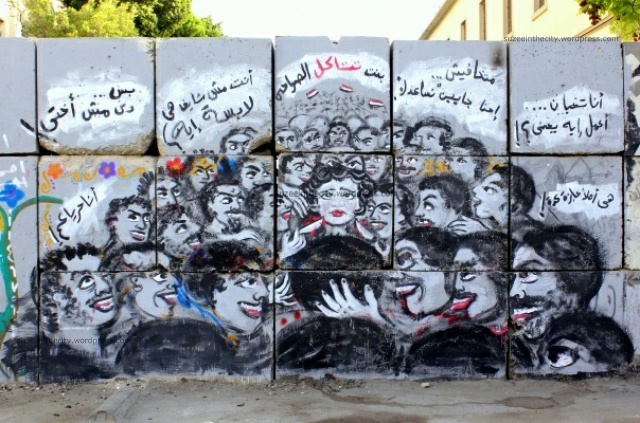
Salwa al-Housiny Gouda was one of the proud citizens of Tahrir Square, in Cairo. She was also one of seventeen women, arrested by the Egyptian army, imprisoned, tortured, stripped and subjected to a `virginity test.’

These women’s stories are critical to any understanding of the ongoing struggles in particular places, such as Libya, such as Egypt. They are also part of the treatment of women in prisons around the globe. There are more prisons and jails now then ever before, and women are the fastest growing prison population, globally and in many regions of the world. Across the world, nation states rigorously refuse to address sexual violence. At the same time, across the world, nation states build more prisons in which sexual violence against women intensifies and spreads.

From the United States to Jamaica to South Africa and beyond, rape kits sit unprocessed for months, some times years. In the United States, many cities, such as Los Angeles and Chicago, have failed to process rape kits in a timely manner … if at all. When called to task for the failure, the administrations stonewall or, if forced to reform, drag their feet. Illinois just this past week passed a law “that will force law agencies to submit DNA evidence for testing.” They had to pass a law to make agencies process DNA. In New Jersey, also last week, the State legislature passed a law banning the practice of charging rape victims for the cost of processing the rape kits.

In Jamaica, rape survivors wait an average of two years for their attackers’ cases to be heard. In South Africa, the State has failed to adequately educate police about the appropriate procedures to follow in cases of sexual violence. Sometimes the training is a pro forma run through, with little follow up or evaluation. More often, there’s no training at all.

This is the state of the world. This state is made most manifest in the asylum and immigrant detentions centers. When the United Kingdom set up its fast track asylum processes, it did so with complete disregard for the women asylum seekers who are fleeing sexual violence. For example, one woman applied for asylum. She was part of a dissident movement in Angola, had been tortured, raped, and suffers from post traumatic stress syndrome, among other mental issues.  The first official to hear her case, in 2008, decided she was `lying’. She was detained at Yarl’s Wood, despite compelling evidence of both torture and mental illness. All part of the system.

This is just one of many such tales. The asylum system has been described as “simply not equipped to handle rape, slavery, the threat of ‘honor killings,’ or other complex claims”. The simplicity of being unequipped is this: the state chooses not to equip, because women, and especially women of color, don’t matter.

At the same time, women prisoners suffer sexual violence at the hands of prison staff. Jan Lastocy is a woman prisoner in the United States, and hers is a typical story. She was raped, repeatedly, by a corrections officer. The warden made it clear that any reports of problems tagged the prisoner as a troublemaker. Lastocy was a few months from release. For seven months, three or four times a week, the prison guard raped Jan Lastocy. Terrified and desperate, she kept her silence. Upon release, she reported the assaults, and now suffers a sense of great and intense guilt for her silence. According to recent US government studies, the vast majority of sexual violence committed in prisons is committed by the staff.

Prison rape is a human rights crisis in the United States today. It is a crisis in juvenile prisons. It is a crisis in women’s prisons across the globe. This crisis is not accidental nor is it exceptional. It is the crisis of predictable consequence. Rape today is being used in Libya as a weapon. That is terrible. Rape has been used, across the globe, as a tool in the construction of so-called criminal justice systems, in the construction of more prisons with more women prisoners. That too is terrible, and to continue to claim shock and surprise at the use of rape is unacceptable. State sexual violence haunts the world.


(Photo Credit: suzeeinthecity/ Mira Shihadeh and El Zeft)