In criminalizing HIV transmission, the US and Canada lead a global war on women

The United States leads the world in prosecuting people for HIV transmission and exposure. Canada comes in second. All but two of Mexico’s 30 states criminalize HIV-status nondisclosure. North America leads the way … in a global war on women.

Globally, women bear the brunt of the HIV pandemic. In the United States, that’s particularly true for women of color. In the US, HIV-positive women of color face extraordinarily high rates of morbidity and mortality. They also report high rates of intimate partner violence. This doubles the risk of death for HIV-positive women. The house is a war zone, and then the State jumps in and intensifies it … through laws that universally and without distinction criminalize `everyone’ for nondisclosure of their status.

Women in abusive, toxic relationships are supposed to `share’ with their partners? It’s that simple? Cicely Bolden shared with her partner. He killed her. He justified his murder by claiming the disclosure drove him mad.

In October, the Supreme Court of Canada handed down two decisions concerning so-called criminal transmission. The Court claimed its decisions were meant to clarify some vagueness in a 1998 decision, R. v. Cuerrier. In that decision, the Court said people living with HIV and AIDS had to disclose their status before engaging in sex. To not do so constituted `fraud’. The two recent cases, R. v. Mabior and R. v. D.C., dismally clarified the Court’s understanding of what’s at stake here: risk.

Here’s the story of the D.C. case:

A woman living with HIV, D.C., had a partner for four years. The partner claims the first time they had sex together, she had not disclosed her status to him. When she did reveal her status, he said it was fine. They stayed together for four years. At some point, he became abusive and violent. Finally, he was convicted for beating D.C. and her son. That’s when he accused her of not disclosing her HIV+ status. Although she claimed that they used a condom the first time they had sex, the trial judge did not believe her and found that their first sexual encounter was unprotected. D.C. was convicted of sexual assault and aggravated assault for not disclosing her HIV status to her partner. The partner is HIV negative, by the way. On appeal, the Quebec Court of Appeal overturned D.C.’s convictions on the basis that, even if no condom had been used for that first sexual encounter, her viral load was undetectable at the time. Based on her viral load, there was no “significant risk” of transmission. Non-disclosure, thus, was not a crime. That’s the case Supreme Court of Canada heard.

The Court decided against D.C. and, in so doing, declared that the risk of AIDS is so great that those living with AIDS must disclose, use condoms, and have low viral loads if they are to avoid criminal prosecution.

According to the Canadian HIV/AIDS Legal Network, with this decision “the Supreme Court of Canada made the law even harsher for PHAs: people must now disclose their status before having sexual relations that pose a `realistic possibility’ of HIV transmission. But in the Court’s view, a `realistic possibility’ encompasses almost any risk, no matter how small.”

For the Court, the risk of disclosure, especially for women, means less than nothing. In its decision, the Court further codified the absolute lack of value of a woman’s life. It ignored study after study and legal argument after legal argument, some local and others international, which demonstrate that criminalization of HIV-positive status does not impede the spread of AIDS. The Court ignored as well innumerable studies and legal arguments that clarify the impossible position HIV-positive women in dependent as well as abusive relationships face when forced to disclose.

None of that mattered. All that mattered was `risk aversion.’

You know what has actually spread over the last decade? Criminalization of HIV disclosure. And you know who has pushed that spread? The United States Agency for International Development, USAID, which first funded and then `encouraged’ nations to adopt a so-called Model HIV/AIDS Law. Over 60 countries now criminalize HIV transmission or exposure. These laws do not protect women. These laws attack women and do them harm. It’s an active front in a global war on women, lead by the United States and Canada.


(Image Credit: Positive Women)
 

The tragic and the everyday of the garment industry


On May 10, 1993, 188 workers died, or were killed, in a fire at the Kader Toy Factory, in Bangkok, Thailand. 177 of the killed workers were women. The factory had no fire alarms, no sprinklers, very few fire extinguishers, and practically no means of escape. Those not immediately burned to death jumped out of third and fourth story windows … and were killed or seriously injured.

On November 19, 1993, 87 workers, all women, died, or were killed, in a fire at the Zhili Handicraft Factory, in Shenzhen, China’s first Special Economic Zone. A month later, on December 13, 61 women workers died, or were killed, in a fire at the Gaofu Textile Factory, in Fuzhou.

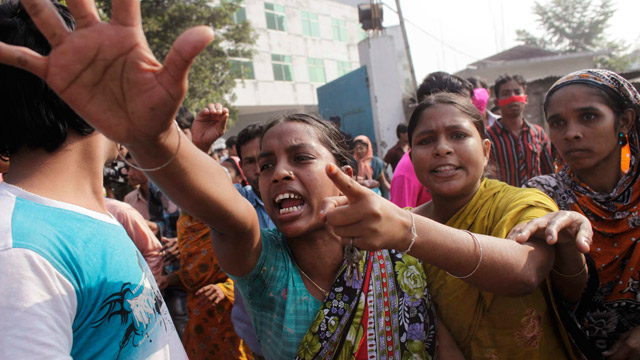
On Sunday, November 25, 2012, Bangladesh suffered its worst-ever factory fire, at the Tazreen Fashions factory, one of 4500 garment factories in the country. At last count, 123 workers died. By all accounts, the workers were all or almost all women.

Nothing here is new. Industries rely on women’s `nimble fingers’ to produce goods. Factories filled with women are overcrowded, have no fire alarms or sprinklers, and have no means of escape. Many women are burned to death. In these more recent versions, as in the earlier Triangle Shirtwaist Factory fire, the factories are the signature of the modern. They are proof positive of progress made, or so the public is told.

Until the fire next time.

And each time, the fire, the tragedy, `enlightens’ a public that was previously innocent of any knowledge of the circumstances of industrial women workers. Fortunately for the innocent public, the dead cannot speak, cannot contradict the protestations of surprise and the performances of dismay.

But the living can.

At almost the same time the Tazreen factory burst into flames, garment workers, women workers, gathered in Bengaluru, in India, to give testimony to their working lives and to make demands. Managers abuse the women verbally and physically. The production targets are impossible. The pay is bare. The list goes on. What do the women want? They want what every worker wants. They want dignity, they want a living wage, they want the right to organize. They want everything that constitutes dignity, they want everything that expands dignity.

The women know they are working in a factory that is all women workers because a factory full of women is a factory of low wages. They are told this is a sign of development, of modernity. The women know better.

As we enter into the 16 Days of Activism Against Gender Violence, mourn the women workers who have died in the fires and support the women workers who continue to organize and make demands, as they produce clothing, toys, microchips, textiles, and more. Don’t let the brilliance of the fire obscure the urgencies of women workers’ everyday struggles for dignity and a living wage.


(Photo Credit: The Guardian)

World Toilet Day is WORLD Toilet Day, not developing world toilet day

November 19, 2012: it’s World Toilet Day. Around the world, one in three women has no access to a safe toilet. The situation, especially for women, is desperate. It’s a global crisis, driven in many instances by taboos and stigma and in others by public policy. From Uganda, Mozambique, India, and the Solomon Islands to Mongolia and Vietnam to Haiti to Bolivia to South Africa and Kenya and Zambia and Ghana to Sri Lanka to Ethiopia, the situation is serious.  As Jack Sim, founder of the World Toilet Organization, the real WTO, and one of the initiators of World Toilet Day has argued, it’s a human tragedy.

Women’s lack of access to safe toilets is a human tragedy everywhere. Not just in developing countries.

Last week, 20 women U.S. Senators gathered for an event. Before the event, they headed off to the women’s bathroom, only to discover there were only two stalls. While much levity has been generated by “first time ever traffic jam at the women’s Senators’ bathroom”, by women Senators hitting up against the porcelain ceiling, the Senators’ lack of access to a safe, clean, available toilet points to a more dire situation, in the United States.

Women prisoners often lack access to safe, clean, available toilets. Women living with disabilities who have been institutionalized often lack access to safe, clean, available toilets. In fact, women living with disabilities out on the streets often lack access to safe, clean, available toilets. Women and girls in schools often find going to the bathroom a hazardous journey.

Women in traditionally all-male fields often lack access to safe, clean, available toilets. For example, women in the building trades often describe “limited access to sanitary toilets.”

Many women farm workers find no toilets in the fields, and when there is one, it’s often a site of sexual harassment. They find the housing provided to farm workers has a similar lack of functioning toilets, as well as a lack of functioning sewage and potable water.

And of course, across the United States, when landlords look to move tenants out in the name of `development’, the first line of attack is maintenance. Along with failure, or refusal, to repair public spaces, such as hallways and lobbies, landlords use broken plumbing in their `assault by blight’. Across the United States, women, mostly women of color, living in targeted neighborhoods struggle with lack of access to safe, clean, available toilets.

World Toilet Day is WORLD Toilet Day, not developing world toilet day.

(Image Credit: United Nations)

Kadi Sesay, a Sierra Leonean feminist leader and builder of democracy

All eyes are on Sierra Leone and its cliffhanger elections tomorrow. It actually is a crucial election, with a great deal at stake (even if The New York Times has thus far not mentioned a word). And one group that is precariously positioned in this election is women.

Out of 538 candidates for Parliament, only 38 are women. Of 1,283 candidates for local council seats, a mere 337 are women. Many women activists, such as Barbara Bangura, the director of the women’s organisation Grassroots Empowerment for Self Reliance, lay much of the blame on current women parliamentarians who failed to get the Parliament to pass, or even seriously consider, the Gender Equality Bill. The Gender Equality Bill would have mandated that 30% of the legislators be women.

Why did the Bill fail? Some in the Women’s Parliamentary Caucus claim there was confusion. Others say intimidation of women candidates and office holders is all too common.

Whatever the reason, there will be a sharp decline in the number of women in Parliament and in local offices. For that reason alone, women are already organizing to re-table it post election.

While the numbers are fairly dismal, there’s one number that shows some promise: 2. And that number 2 has a woman’s name: Kadi Sesay. The opposition party, Sierra Leone People’s Party (SLPP), is running Kadi Sesay as vice-president. If Julius Maada Bio becomes President, Sierra Leone will have a woman Vice-President for the first time.

Sesay has been a first woman on a number of occasions, from academic head of department to National Commission head to Ministerial positions. She’s a groundbreaker Sierra Leonean feminist leader and feminist builder of real democracy who, for decades and at every step, has worked closely with women’s groups, women’s movements, women.

While the election of one woman to a high office won’t resolve the extraordinarily high maternal mortality rate in Sierra Leone, nor the crisis of women’s high indebtedness, nor the challenges women farmers face either in the rural zones or in the cities, nor the inequities women face in the courts,  it’s still something.

According to the BBC tomorrow’s election is all about becoming an adult: “Sierra Leone may be about to prove it has grown up.”

The possible accession of Kadi Sesay to the Vice-Presidency of Sierra Leone is not a passage into adulthood. Sierra Leone is not a child. Tell the BBC. Tell them, as well, about Kadi Sesay, an African feminist leader.


(Photo Credit: SierraExpressMedia.com

The agony of Savita Halappanavar

Savita Halappanavar

Savita Halappanavar

Savita Halappanavar died, or was killed, because an Irish hospital refused to perform a medically necessary abortion until they were absolutely positively sure the fetal heartbeat had stopped. The life of the mother was of no concern. Savita Halappanavar spent more than two days in agony, and died, or was killed, in agony.

The agony of Savita Halappanavar is a commonplace globally, according to the UN’s  The State of World Population 2012, released today. From Poland to Armenia to Uganda to Swaziland to India to Nicaragua to the United States, and all points between and beyond, pregnant women, women in childbirth, women die in agony, thanks to criminalization, stigma, public policy and more.

They die in agony like so many prisoners, begging for care, screaming for mercy. They receive neither. Why? What is a global culture of women-dying-in-agony? A little over 50 years ago, Frantz Fanon had an answer to that question: “Le colon oubliait singulièrement qu’il s’enrichissait de l’agonie de l’esclave.” “The colonist forgot strangely enough that he was getting rich on the agony of the slave. In fact what the colonist was saying to the colonized subject: “Work yourselves to death, but let me get rich!

The agony of Savita Halappanavar is part of the ongoing global crisis of the wretched and the damned: women. Slavery has not ended; it has simply changed clothes for the new season. Colonialism has not ended; it has moved the furniture around. The colonists continue to forget strangely enough and continue to enrich themselves on the agony of women.

(Photo credit 1: The Irish Times) (Photo Credit 2: The Journal)

Where are the women of rural Mozambique?

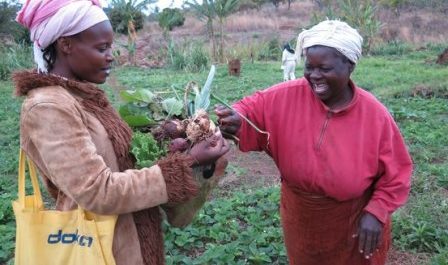
In an otherwise informative article this past Sunday, the New York Times reported on a rural Mozambique without women. Reporting on the “rural poor…left behind”, and pushed around, by multinational mining and natural gas companies and by the national government, the Times mentioned not a single Mozambican woman. In the accompanying slide show, there’s a slide of “people gathered by a river to bathe, play and wash their dishes”. The `people’ are, not surprisingly, all women and girls. Another slide shows, and names, Beatriz Jose, condemned to living in a tent, thanks to the dismal housing provided by the mining companies. And that’s pretty much it.

Where are the women of rural Mozambique? On the farms and in the countryside of Mozambique, the women are everywhere. Study after study has described the relentless feminization of poverty in rural Mozambique. As one study, conducted for the Mozambican government, explains, “The majority of agricultural workers in Mozambique are women and an increasing number of households are being headed by females.” Eighty percent of Mozambique’s population is rural, and 80% percent of rural workers are women. An exceptionally high number of those rural women workers are divorced, separated or widowed. That means a very large numbers of households are headed by single women. The feminization of poverty has been accompanied by the feminization of household headship. At the same time, women farmers have organized into cooperatives and cooperative associations, such as MuGeDe – Mulher, Genero e Desenvolvimento (Women, Gender and Development).

Thanks to labor migration of men, to the HIV and AIDS pandemic, and to women’s organizing on the ground, the lives of women in rural households and in the fields has been constantly changing in Mozambique. Personal and structural, or sectoral, vulnerability has intensified at the same time that women’s formal and informal organizing has intensified. It takes real work to write about rural Mozambique and avoid any mention of women.

And that’s precisely what The New York Times did this weekend.


(Photo Credit: La Via Campesina)

Ashley Smith, who haunts the Correctional Service of Canada


Ashley Smith and her guards

On October 19, 2007, 19-year-old Ashley Smith, a prisoner under suicide watch, killed herself. Seven guards watched and did nothing to stop her. They were under orders to let her go. Someone wanted to teach her a lesson, not to be `a nuisance’. And so, she died … or was killed by active neglect.

Now, five years later, perhaps, the Canadian government will finally conduct an inquest. The murder of Ashley Smith didn’t stop at her death. For five years, the Correctional Service of Canada has fought tooth and nail to bury any evidence of the event … other than the corpse of Ashley Smith, the pain of her family and friends, and the horror.

For five years, the Canadian prison system first denied the existence of the damning videos released, finally, just recently. They didn’t inform the parties in the inquiry of the existence of the tapes. Then, when the tapes could no longer be denied, the Correctional Service tried to keep the public from having access.

If Ashley Smith were the only young woman prisoner who was effectively tortured in prison, left to die slow death or `self-inflicted’ death in solitary, left to die while monitored in suicide watch, her death would indeed be a tragedy.

But Ashley Smith is not alone in her fate. Many prisoners, and especially women prisoners, living with mental health disabilities, find themselves deep in a system of abuse and exploitation. Many prisoners, and especially women prisoners, find their attempts at self-harm are not viewed as symptoms of a need to be treated but rather as bureaucratic inconveniences. Taking care of mentally ill prisoners `costs’ too much. Caring about the welfare of mentally ill prisoners costs way too much. Caring about the destiny and lives of young women … priceless.

There has been and will continue to be much condemnation, much finger pointing, all of it well deserved. But at the same, Ashley Smith’s death by proxy was precisely part of the `service’ the Correctional Service offers. Adjudicating those involved is important, getting the details of the story is important, too. Transforming the system and the nation and world that built it is necessary.

That won’t bring Ashley Smith back. That won’t mean she didn’t die in vain. But it could mean something for those who follow.


(The Globe and Mail)


How the women of Burkina Faso turned lemon into shea butter

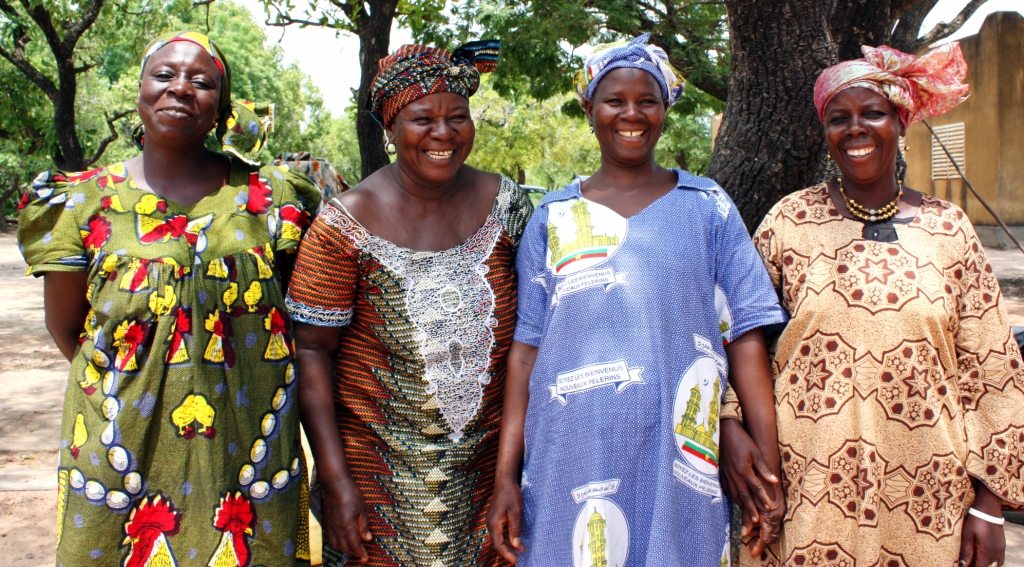
The forests of the world are under attack, `thanks’ to consumer demand for food, fuel, and fiber. The people who live in, and depend on, forests are also under attack. In Burkina Faso, a group of over 4000 plus rural women forest dwellers have taken the lemon they were dealt and turned it into … shea butter. And by so doing, they are transforming the world.

That dealt lemon has many components. First, life for rural women is often one of severely limited education, income, and hope. Second, the labor market in rural Burkina Faso relegated women to collecting and processing shea kernels. Collecting is arduous work, and butter production is even worse. The profits were less than meager. Third, the sales of shea kernels and butter were controlled by more powerful multinational companies that would buy the vast majority of kernels and ship them to Europe or Japan, for processing there. 95% of shea butter went into chocolate, margarine, confections. The rest went into cosmetics.

That was before.

In the late 1990s, women in Burkina Faso and a French cosmetic firm, L’Occitane, teamed up. L’Occitane understood that the market for organic and sustainable and fair market cosmetics was growing. The women gatherers in Burkina Faso knew there had to be a better way to live, for themselves as women, for their households and for their communities.

So, with some assistance, in 2001, about 600 women got together and formed l’Union des Groupements de Productrices des Produits du Karité de la Sissili et du Ziro (UGPPK/S-Z), the Union of Women Producers of Shea Products of Sissili and Ziro. By 2009, they numbered almost 3000. Today, 4,6000 women are members of the cooperative, now called the Nununa Federation. And their ranks are growing.

The women set themselves to understanding the economies of scale, certification, market, and cooperative development. When they had to, they diversified. When the time seemed right, they moved into semi-industrial production. At each step, they have been a model of transparency and democratic and shared decision making. International bodies have certified their product as organic and their processes as Fair Market. They are committed to sustainable development, and they have largely succeeded. They are also committed to a better life. They redesigned the production processes so that no woman has to endure the kind of pain that went into `traditional’ gathering and butter-making processes. From the forests of Burkina Faso to the faces of Europe, the United States, Canada, Japan, the women of the Nununa Federation are leading the way to a better world.

The Nununa Federation is the first organization anywhere to invest successfully in the semi-industrialisation of shea-butter production based on churning. As such, these women are literally breaking new ground. This organization of women has successfully increased its members’ income, increased their autonomy, increased their spare time, improved their health and wellbeing, and increased their stature … at home, in the marketplace, and around the world. And it all begins with the political education of standing up at a meeting and asking hard questions and getting direct answers. The Nununa Federation is simply “the best example in terms of organization, high quality service and products, and ingenuity.” They are a model of democratic, transparent governance.

Today, they say they “are filled with hope to continue the struggle.” The struggle continues.


(Photo Credit: http://rsr.akvo.org)


We need Dayamani Barla

Dayamani Barla is back in jail, and the State won’t say why.

Dayamani Barla lives in Ranchi, the capital of Jharkand, in India. There she runs a small tea shop. That is not why she’s in jail. That is not why the State `released’ her on bail, only to put her back in jail immediately. It’s not tea that has placed Dayamani Barla in a  revolving door of jail – jail – jail, always accompanied by thunderous State silence.

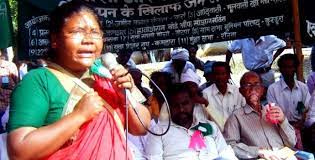
Dayamani Barla is a journalist, according to some the first Tribal journalist from Jharkand. She is a women’s activist, tribal activist, and anti-displacement activist. She’s a popular leader who has refused to be intimidated by either multinational corporations or by the State. She has been described as “Iron Lady” and as “a woman with a steely resolve.”

Actually, she’s not made of steel or iron, but rather of flesh and bone and commitment and action and vision. Transformation and liberation come from ordinary people engaged in ordinary practices. Real change is and must be ordinary.

Dayamani Barla organizes, teaches, and writes in the realm of the ordinary. In 2008, she famously opposed construction of an Arcelor-Mittal plant in Jharkhand. Between 2005 and 2008, the State of Jharkhand signed 112 memoranda of understanding with multinationals. Development was booming … at the expense of those who lived on, nurtured and cherished the land. Dayamani Barla opposed the displacement of those who take care of the land, and of the Earth.

The Arcelor-Mittal plant would have involved 12,000 acres and would have displaced over 70,000 people from some 45 villages. For those people, land is not an asset. It is heritage. Ironically, officially at least, the Indian government agrees. This land is protected, and so cannot be sold for non-agricultural use. And yet, repeatedly, it is.

Dayamani Barla listened to her neighbors and helped them organize. Her neighbors understood the essential truth of displacement. Once displaced, you never return: “We will not allow the Arcelor Mittal Company to enter into the villages because one can not be rehabilitated if once displaced. The lands, which we cultivate belong to our ancestors therefore we will not leave it”.

The “simple” folk of rural Jharkand already knew what the International Red Cross and Red Crescent would only `discover’ four long years later. As the World Disaster Report stated, last week: “Development is a major, but often ignored, driver of forced displacement.” And where’s a hotspot for development-driven displacement? India. The poor of India `bear the brunt’ of development, making up one of the largest populations of internally displaced persons anywhere … ever. And, as is so often the case, there is actually little data concerning those displaced through development. This is ironic given that, unlike all the other drivers of displacement, such as natural disasters and conflict, development is always planned. And yet … the data is `surprisingly’ missing.

But the cost of development to the poor has not been ignored by the poor, by the marginalized. Dayamani Barla has not been surprised by the lack of information, by the ignorance. Neither the State nor the multinational corporations nor the un-civil society made up of journalists, academics, ngo’s and so on, know how to or care to listen to the people actually on the ground.

Since 2010, Dayamani Barla has led a movement to stop government acquisition of farmers’ land for three schools, one of management, one of information technology, and one a law school. Villagers have gone on hunger strikes. Others mobilize. They are not opposed to `knowledge’ or to schools being built. They want consultation. They want a say as to which plot, or plots, of hundreds of acres will be used. They want an end to military occupation. And they want answers. For example, they want to know who decided that Jharkhand needs a knowledge triangle of technology-management-law, rather than, say, basic healthcare or primary education?

Many answer, What Jharkand needs is Dayamani Barla. The Gandhian activist Himanshu Kumar agrees. In a recent poem he asks: “Why do we need Dayamani Barla?” Here’s the beginning of his answer:

“It is a grave danger now to be Dayamani Barla
It is a danger to be an adivasi
It is a danger now to reside in the village

There is land in the village
There are trees in the village
There are rivers in the village
There are minerals in the village
There are people in the village
There is also Dayamani Barla in the village”

There is also Dayamani Barla in the village. We need Dayamani Barla, and not just in the village. We need her in the world. We need her writing. We need her organizing. We need her reminding us that women are the shakers as well as the bakers of revolutionary action and praxis: “The participation of the adivasi women in our struggles has been more than that of men. They are more vociferous as they have to bear the major brunt of the economic and cultural destabilization. Adivasi women in the villages facing the threat of displacement … have clamped a people’s curfew. They equally participate with men in blocking any project-related vehicles, machinery or personnel inside their villages. Women ploughed up the roads and sowed seeds. Volunteers stood as watch guards to see that no one tramples upon their sown fields. Organizations involved in the struggle cannot take any decisions or make any settlements without consulting women’s groups.”

Women tear down walls of `development’ and plant saplings of self-determination and autonomy. We need Dayamani Barla.


(Photo Credit: India Resists)

It’s a great day for Edith Mmusi and her sisters and her sisters’ sisters

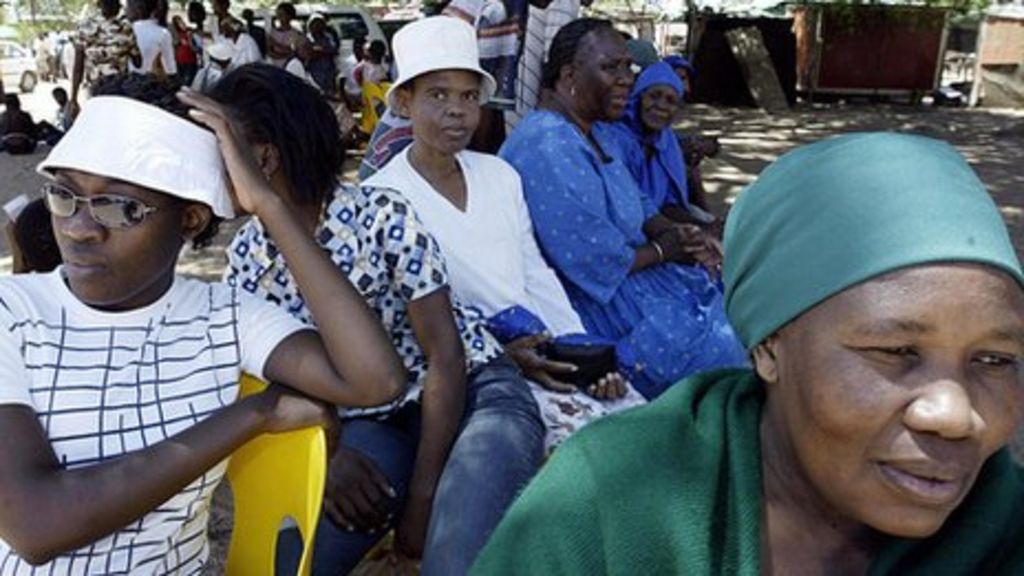
Five years ago, four women elders, four sisters – Edith Mosadigape Mmusi, Bakhane Moima, Jane Lekoko, and Mercy Kedidimetse Ntshekisang – decided enough is enough. Today, the High Court of Botswana agreed. Today, four sisters and their sisters opened the door for women across Southern Africa.

Here’s “the story”:

A couple had one son and four daughters. The father had another son in a previous relationship with another woman. At some point prior to the distribution of the inheritance, the younger son told his half-brother that the half-brother could inherit the family home, when the time came. The time never came. Both brothers died in the intervening period. When the time did come to distribute the inheritance, the half-brother’s son, Molefi Ramantele, showed up and claimed the house.

Edith Mmusi had been living in the house all along. She and her sisters had paid for the upkeep all along. But customary law, the so-called law of male primogeniture, said that the youngest male would inherit. He told Edith Mmusi and her sisters that they had to go.

That’s when Edith Mmusi and her sisters had enough. They went to court.

In 2007, the Lower Customary Court ruled in Ramantele’s favor. In 2008, the Higher Customary Court held that the home belonged to all of the children. In 2010, the Customary Court of Appeal argued in favor of Ramantele. Edith Mmusi and her sisters then decided, again, that they’d had enough, and appealed the decision to the High Court.

They were supported by Priti Patel, of the Southern African Litigation Centre, based in Johannesburg, as well as other women’s rights activists across Southern Africa. They were also supported by the earlier Attorney General v Unity Dow, a landmark women’s rights case. Unity Dow found that Botswana law denied citizenship to children born to a Botswana woman married to a non-citizen, while extending citizenship to Botswana men married to non-citizens. Dow then did what women do, she did what Edith Mmusi and her sisters did. She said enough and took action. She took the government to court and, in 1992, won. Her actions opened a door for women in Botswana, across Southern Africa, and beyond.

The story is the actions of Edith Mosadigape Mmusi, Bakhane Moima, Jane Lekoko, Mercy Kedidimetse Ntshekisang, Priti Patel, Unity Dow and thousands upon thousands of women whose names go unrecorded. It was not the rule of law that won today. Women won today: women pushed and pushed again, women said enough, women organized, women persisted. Upon leaving the High Court in Gabarone today, Edith Mmusi said, “It’s a great day for us.” It is indeed a great day for Edith Mmusi and her sisters and her sisters’ sisters across Botswana, across Southern Africa and beyond.


(Photo Credit: BBC)