In the California Institution for Women, women are STILL dropping like flies!

What happened to Shaylene Graves? She was “found” hanging in her cell at California Institution for Women, or CIW. Given the situation at CIW, what happened to Shaylene Graves is nothing out of the ordinary. Last July, California Department of Corrections officials “discovered” a crisis. In the previous eighteen months, four women prisoners at the California Institution for Women, or CIW, in Chino killed themselves … or were killed by willful neglect: 31-year-old Alicia Thompson, 23-year-old Margarita Murguia, 73-year-old Gui Fei Zhang, and 34-year-old Stephanie Feliz. After Feliz’s death, fellow CIW resident April Harris wrote, “We have women dropping like flies, and not one person has been questioned as to why … I have been down almost 20 years and I have never seen anything like this. Ever.” The suicide rate at CIW is only exceeded by the rates of attempted suicide and self harm. What happened to Shaylene Graves? Just another death in the hellhole California Institution for Women.

According to Victoria Law, “Graves’ death is the latest to rock CIW, which is currently at 135 percent capacity: 1,886 women in a prison designed for 1,398.” Shaylene Graves’ mother, Sheri Graves, wrote an open letter to the public concerning her daughter. The letter ends: “I got a call, `your daughter has died in custody.’ They said she was found hanging. My son said, `Shaylene would not hang herself. The officer said, `I know.’ The prison system failed my daughter. The prison system failed her son, Artistlee. The prison system failed our family, her friends and everyone she would have blessed with her vision for her organization. Most of all, the prison system had failed to protect her life. She lost her right to freedom in order to pay her debt to society. But, she wasn’t supposed to lose her right to life and protection while incarcerated.”

Shaylene Graves was a month from being released from CIW. According to all reports, she was a vivacious, engaged, sociable, charming, funny young woman. She was preparing to leave CIW, and to start an organization to help other women in their transition out of prison. She cared about her son, her family, her community. She cared about her sister prisoners, at CIW and elsewhere. Those who knew her are shocked by her death and deeply doubtful of the initial report of suicide.

Many are shocked, but the death of Shaylene Graves did not rock the Institution, no more than the prison system failed. The prison system did far worse than fail. It refused, and in so doing killed Shaylene Graves. Whatever “facts” or “details” emerge concerning the specifics of Shaylene Graves’ last hours on earth, the facts are that if it hadn’t been her, it would have been some other woman at CIW. The numbers bear that out. There is no surprise when an institution fails to address a suicide rate eight times that of the national rate for people in women’s prisons, when “suicide prevention” in the institution is consistently rated as “problematic”, when the answer to an overcrowded suicide watch unit is to shunt the “overflow” into solitary confinement.

The California Institution for Women is overcrowded, but so are the Central California Women’s Facility and the women’s section of Folsom State Prison. The overcrowding is worse at Central California, but the women there are not dropping like flies. Shaylene Graves requested to be moved from Central California to CIW, so as to be closer to her family. And now … she’s closer to her god, and her family grieves and rages and demands answers and, even more, demands justice. So should we all. We have had enough reports asking why are so many women attempting suicide at the California Institution for Women. We have had too many “discoveries” to claim any sort of innocence. Women are dropping like flies in the California Institution for Women because pushing women to drop like flies is more convenient than treating women as full human beings, more convenient than treating prisoners as full human beings, and a whole lot more convenient than treating women prisoners at all.

Women prisoners and supporters, such as the California Coalition for Women Prisoners, long ago identified the crisis. They have continually, loudly denounced the conditions and called for a thorough overhaul, beginning with releasing most of the prisoners. Three years ago, when women in the California Institution for Women participated in California’s statewide hunger strike, they called attention to the State assault on their bodies, minds and souls. They identified a crisis, and the State looked away, and instructed all good citizens to do the same. That was three years ago. It is September 2016, and the assembly line of women prisoner deaths is not slowing down. It’s time to smash the machinery once and for all. Do it in the memory of Shaylene Graves.


(Image Credit: San Francisco Bay View / California Coalition for Women Prisoners)
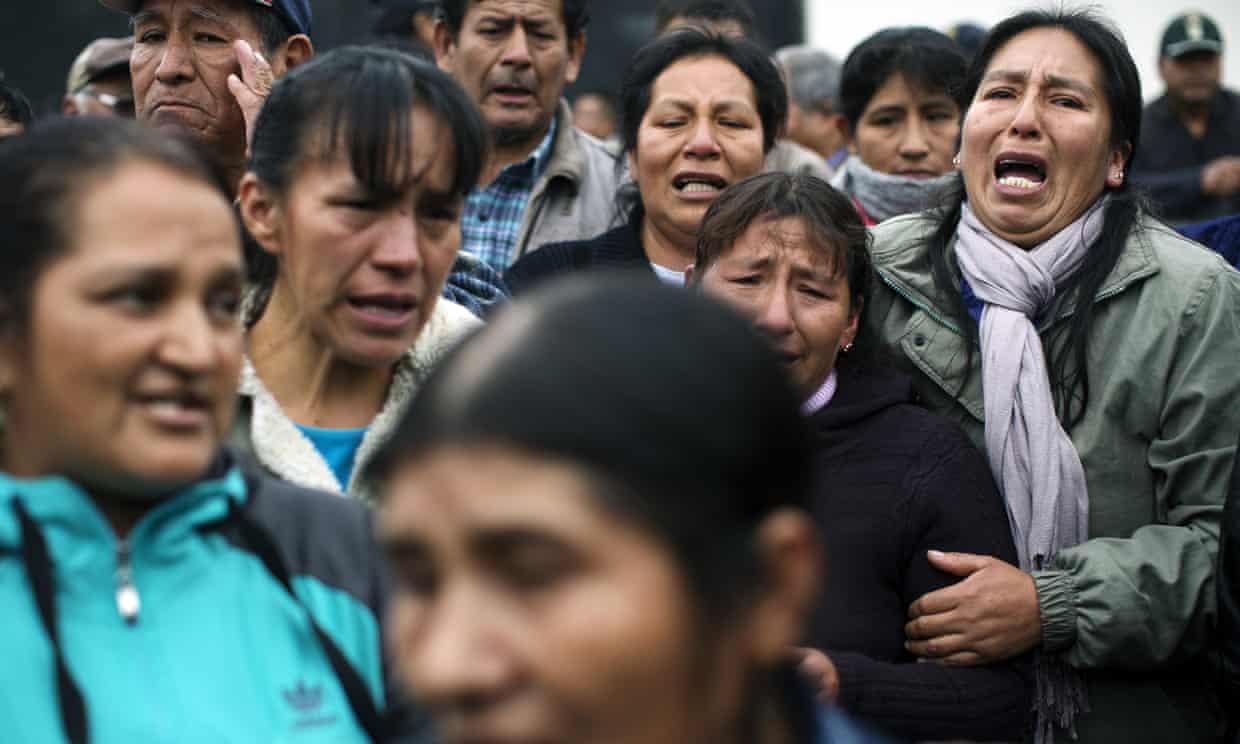
The Quechua women of Accomarca demand justice!

Survivors and relatives of those killed in the Accomarca massacre

Survivors and relatives of those killed in the Accomarca massacre

Thirty-one years ago, almost to the day, a terrible thing happened to the residents of Accomarca, a largely Quechua village in the Andean province of Ayacucho. On August 14, 1985, the Peruvian army entered the village, looking for Shining Path fighters. Finding none, they took the villagers, around 70 of them, separated the men from the women and children, killed and burned the men; rape and then killed and burned the women; killed and burned the children. For thirty-one years, the women of Accomarca have demanded justice for the violence that was wreaked upon their village, families, community, and upon themselves. This week, a court gave them something that begins to approximate justice.

From the day of the Accomarca massacre until today, women have led the movement for real justice: “For groups that are not allowed a voice in the administration of justice, how does one quell a desire for retribution? For whom does reconciliation sit like a lump in their stomach and a constant irritant of their heart? For women, especially the widows. The work of grief is `women’s work,’ and women literally embody the suffering of their communities in this gendered division of emotional labor. Thus it is phenomenological that they would carry the memories of unaddressed wrongs in their nerves, the lower back, in the nape of their necks. A thwarted desire for justice becomes a felt grievance. It was long conversations with women that demonstrated the need for a political economy of forgiveness and reconciliation. Without economic redistribution, asking people to feel `forgiving’ is itself an immoral act. For the women (and the orphans) their poverty serves as a constant reminder of all they lost. Consensus-making mechanisms may stifle their voices but not their rage.”

While the bestiality of the Peruvian army in Accomarca is beyond horror, the real story is the women who refused to sit down and shut up, who refused to melt into the Andean landscape as just another unfortunate, but unavoidable, consequence of a dirty war. The women of Accomarca told their stories, repeatedly, and insisted that the stories were theirs. They consistently rejected the bartering system in which survivors share their pain and trauma and, in exchange, receive compassion from a “grateful nation.” From 1985 until today, the women have insisted they don’t want compassion. The women of Accomarca want indignation. First, they organized indignation in their families and communities, and then they moved to Lima with their structures of indignation. They want indignation to move the nation to transform the violence. They want people to understand that the material and economic poverty of their lives are built of the ashes of their loved ones, and that must end. They want the nation to address the racist sexist violence that surrounds and attacks Quechua, and all, indigenous women in Peru.

The women of Accomarca – including Salomé Baldeón, Cirila Pulido Baldeón, Teófila Ochoa Lizarbe, Justa Chuchón – demanded a justice that would replace the smell of burning flesh from their noses, the taste of soured milk from their breasts, and the pounding rage from their hearts and minds. This week, Peru’s National Criminal Court convicted ten officers and soldiers for their roles in the massacre. Meanwhile, the women of Accomarca continue to organize. To this day, those who were killed in the massacre thirty-years ago have yet to be properly buried.


(Photo Credit: Proceso / Rodrigo Abd / AP)

Supporting Gordhan against Zuma weakens the resistance politics of the poor

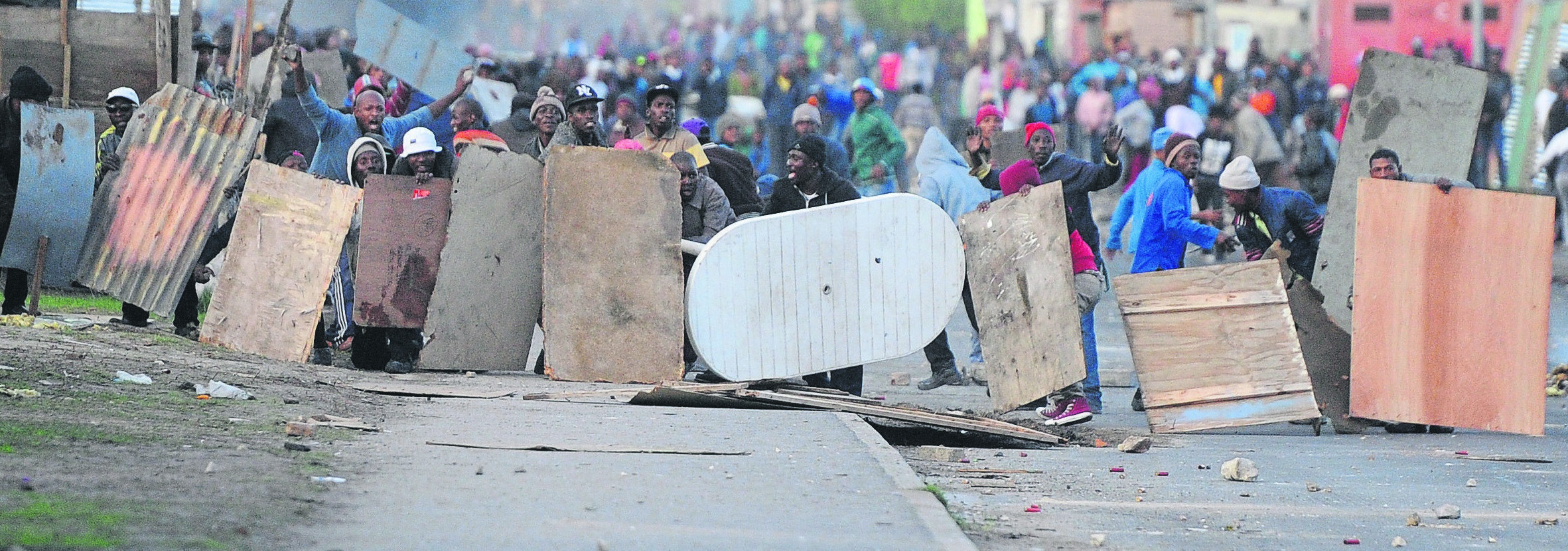
A sense that there is a crisis at the highest levels of government has taken hold in South Africa. The Directorate for Priority Crime Investigations, known as the Hawks, has instructed Pravin Gordhan, Minister of Finance, to make a warning statement on allegations of illegal spying and corruption against him relating to his time as tax commissioner. Gordhan’s refusal to comply, plus his stand-off with senior leaders of some state owned enterprises, have led even Deputy President Cyril Ramaphosa to speak of a state at war with itself as he declared his support for Gordhan.

The finance minister is enjoying an outpouring of support, especially from the business sector and academics and journalists aligned to it. Their positions are all presented as ultimately a concern for the poor, who they say will suffer even more should Gordhan be defeated by his enemies. Even some in civil society have now taken this position, although they disagree with the economic policies Gordhan and his fellow neoliberal capitalists stand for.

Supporting Pravin Gordhan in the belief that the poor are better off with him rather than his ANC rivals in charge of the finance ministry is based on a mistaken theory. Perhaps the cruellest tyranny of politics is that no amount of sincerity, passion and effort can deliver desired results if the political framework does not support those results.

Maybe Gordhan is a better person than whoever might replace him. And let’s say a neoliberal capitalist system based on the rule of law, which Gordhan is debatably seen to represent, is better than a neoliberal capitalist system without the rule of law, which the so-called patronage politicians in the ANC fighting against Gordhan are seen to represent. But the amount of resources going to the poor is not determined by the ethical character of the rulers, nor by the presence or absence of the rule of law. All three of these factors are the result of the relative strength of the resistance politics of the poor. Supporting Gordhan against Zuma subordinates the resistance politics of the poor to the factional battles of the ANC and thereby weakens it.

This resistance politics of the poor is ultimately based on two broad tactics known as direct action. The first is where poor people simply take resources denied to them, for example through occupying land for residential or agricultural purposes or through poaching. The second tactic is to disrupt the wealth and comforts of the elites until they concede needed resources to the poor, for example through strikes, road blockages and office occupations. Both of these are high risk options usually forbidden by law and almost always repressed by force, and therefore there are a number of other tactics such as marches, demonstrations, negotiations and media interventions, which are often in effect threats to employ direct action and, importantly, processes of building up the necessary support for it.

How does supporting Gordhan weaken resistance politics? Because this support is framed as supporting the rule of law and the power of the ANC. The rule of law is an idea through which the ruling class legitimises their power. It does not exist in reality, although it influences reality, sometimes in ways that benefit the poor. The ruling class does not seriously operate within the law, least of all the faction that Gordhan is part of, even as they use the law to present their power as just and fair. It is precisely the power of the ANC legitimised by the rule of law that has enforced neo-liberal capitalism and led to explosive growth of poverty and inequality.

The struggle for more resources for the poor is essentially a struggle to build the politics of resistance against elite power. Aligning with one elite faction against another on the basis of a framework supportive of elite power as a whole just consolidates the position of the ruling class. Those concerned that Gordhan’s defeat will mean less resources and freedoms for the poor should step up direct actions and deepen the exposure of the power of the ANC and the so-called rule of law as sources of domination and exploitation of the poor.


(Photo Credit 1: Roar Magazine) (Photo Credit 2: Right 2 Know Campaign)

Free Jacqueline Sauvage, domestic violence survivor, patriarchal (in)justice prisoner!


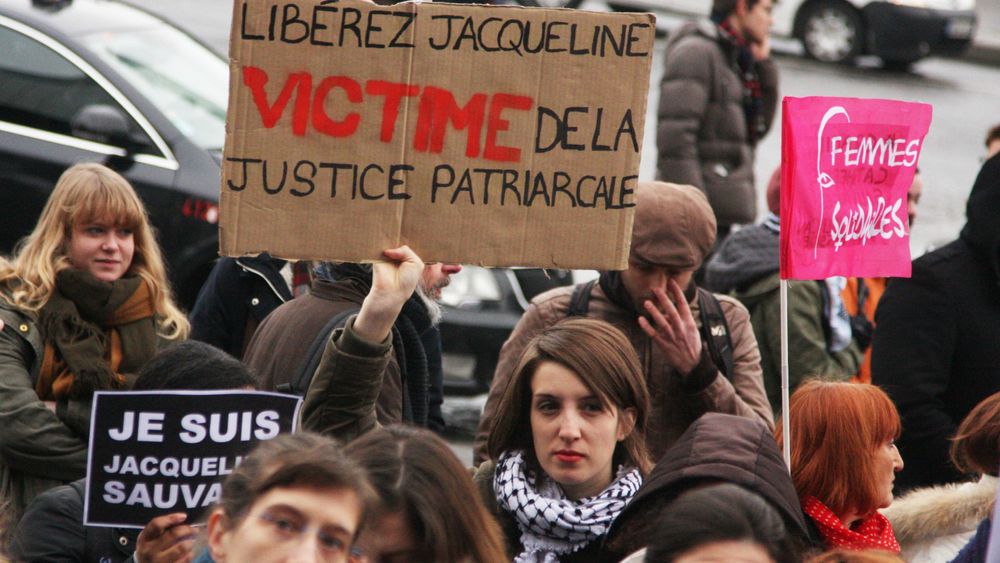
In France, the case of Jacqueline Sauvage captures the inability of the justice system to do away with patriarchal rules and with prison as the essential means to assert punitive power. Jacqueline Sauvage’s story is the archetype of the effects of repetitive domestic violence. In September 2012, Sauvage, the daughter of a victim of domestic violence, shot her husband in the back, thinking that this time he would carry out his brutal threats, after 47 years of constant and ferocious abuses. She feared for her life one time too many.

The couple had four children, one boy and three girls, all raised in a climate of violence orchestrated by the father. The family is a middle-class family that runs a small business in Montargis, in central France; all these years of abuse, nobody dared say anything. The daughters were sexually abused and the son verbally abused. The son reproduced the climate of violence in his own life. He committed suicide the night before his mother killed her husband, but she did not know that when she killed her abusive husband.

Jacqueline Sauvage was accused by the prosecutor of faking or lying, arguing that she and her daughters never pressed charges against the husband/father oppressor. She lived in fear of retaliations; moreover she was under his control.

In France only 14 % of the women who declare having been a victim of violence file a complaint. Every year, 134 women are killed by their respective partner. In addition, 90% of rapists are known by their victims; 37% are their husbands.

Jacqueline Sauvage’s defense attorneys relied on a self-defense argument to save their client from more punishment. The court dismissed the argument and sentenced her to 10 years for aggravated murder. Another court dismissed the argument a second time in appeal. Meanwhile, the case became emblematic of the lack of support for women victims of domestic violence.

Then, Jacqueline Sauvage’s lawyers sought presidential pardon. They obtained a partial pardon, which means that it allows the justice system to grant remission but does not change the charges. She was still convicted of aggravated murder. The pardon skillfully did not challenge the status quo.

Finally, two weeks ago, a court decided that Jacqueline Sauvage would remain in prison despite the presidential pardon. The judge declared that self-defense cannot be applied, and she should have responded to the violence of her husband with proportionate action. With mass support, Jacqueline Sauvage is now appealing this last decision.

In the patriarchal code of justice women are still held responsible of their situation, particularly cases of abuse. In refusing to free Jacqueline Sauvage, the judge has normalized violence against women, making clear that revolt for abused women is unacceptable, even unfathomable. This long and painful story demonstrates one more time that women’s well being and rights are still a burden that lies on women’s shoulders, no matter what outfit they are wearing!

(Photo Credit 1: Grazia) (Photo Credit 2: 20 minutes)

The shaming of Black Women’s bodies cannot continue to be a casual matter


Pretoria Girls High. A disgraceful bastion of White privilege and ongoing violence against the Black psyche. It joins University of Free State, Rhodes University, Stellenbosch, Wits and so many other historically White institutions that remind us and now our children that we are visitors to our own country and extras in the imperial imagination. As a mother of two dreadlocked/braided teen girls, I salute these girls aged 12 to 18 who are rejecting the body shaming that insists that afros, dreadlocks and braids are ”dirty and messy” and the cultural genocide that does not want African pupils to speak African languages to each other at school, the criminalising of their movements that surveys Black girls when they are in groups of more than 2.

I recall being body shamed all through High School because of my baby fat and beautiful African bum. It was brutal. The shaming of Black Women’s bodies cannot continue to be a casual matter. It is violent. Ladies and Gentlemen, welcome to Racist South Africa where White minority imagination is resisting the liberation project and where the revolution IS being televised. Just like 1976, language and Black being are sites of contestation. This Women’s Month is far more meaningful and has done far more to honour the spirit of the 1956 Women’s March than the pointless, vacuous , de-radicalised , ”soft and fluffy” celebrations of the past 15 years. Thank you Khwezi 4, thank you Marikana widows, thank you Caster Semenya and thank you Pretoria Girls High.

Black Girl – you MATTER. Your HAIR matters, your LANGUAGE matters, your CHOICES matter and your VOICE matters. In case I haven’t told you today – you are valuable, loved, precious and powerful. Speak even if your voice shakes and fight even while you are scared. I LOVE you Black Child, Black Girl, and I stand with you. You give me such hope and courage. #Racism and imperialism ARE falling #Afros and Dreadlocks are Rising.

Our Lives Do Matter! Women Fight for Water in Somkhele and Fuleni!


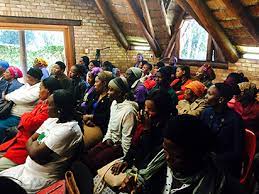
“We have been reduced to animals now. Our lives do not matter, that is why no one cares about our suffering over water,” says Mrs Nkhosi from Somkhele. “The water taps are mere decorations now, nothing ever comes out.” On August 12, women representing the communities of Somkhele and Fuleni gathered at a Women’s Water Assembly in Embonambi Kwa Zulu Natal. The Water Assembly was a critical moment for women to reflect on a participatory action research process on women’s experiences of water scarcity in both communities. Women activists also shared findings from the research with key stakeholders, including representatives from the local municipality and WoMin allies – Centre for Environmental Rights (CER)Earthlore, and the Global Environmental Trust (GET), and developed a set of clear demands to inform their strategies going forward.

“I would like to ask the Municipality, councillors and officials how they feel that they bath every day and have safe water and my family and I do not.” – Medical, from Somkhele

The absence of water…

Water is a critical issue in drought-stricken communities impacted by heavy coal mining and other extractives industries—it’s an even bigger issue for women. “Water is big issue for women because water is for them life itself as it touches on the everyday facets in their lives. Women are socially responsible for ensuring that the family has water,” says activist, Nyonde Ntswana. “Without water women cannot have livelihoods, no farming, no livestock, without water they cannot work as they have to walk long distances for look for water and have to time to engage in productive work. Without water they cannot prepare food and keep themselves and the household clean. The absence of water is the absence of a productive life for a woman.”

The communities of Somkhele and Fuleni are especially vulnerable to the challenges of water scarcity due to drought and coal mining activities in the area. Somkhele is situated where the Somkhele (Tendele) Coal Mine, a subsidiary of the Petmin group, has been operating for over 10 years. Nearby Fuleni is the proposed site for a highly contested coal mining project under Ibutho Coal. Some of the core issues surfaced in the research include:

  • The long distances women walk to fetch water on a daily basis, sometimes spending up to six hours – which impacts women’s livelihoods and leaves them extremely vulnerable to sexual harassment and rape as they travel long distances to isolated areas in search of water.
  • How unsafe the water collected is, despite efforts to purify it such as adding a bleach (JIK), cement and keeping it standing overnight, many often fall ill after drinking the water and women are further burdened with caring for the sick because of a highly unequal existing division of labour which assigns them primary responsibility for the care of the sick.
  • The scarcity and pollution of water has led to inadequate nutrition and rising hunger as most families can no longer engage in farming to grow variety of food as they previously used to and most of the livestock has since died.
  • Inadequate delivery of public water supplies by the local municipality, meaning families have to spend ZAR600 for just 5000 litres of water provided by private companies. This is a clear violation of the government’s Free Water Policy to these communities who are then forced to rely on contaminated water to survive.
  • Kwa Zulu Natal is currently experiencing a severe drought and most parts including where Somkhele and Fuleni fall have been declared Disaster Zones by the government.
  • Women in the communities have tried to engage with community leaders such as councillors and indunas over access to water but have met many challenges along the way. Some of the indunas do not take women’s demands seriously and see the women’s organising as a ‘challenge’ to authority.

At the assembly, the Centre for Environmental Rights (CER) conducted an information session to give women a framework for understanding what rights citizens within these communities have when it comes to water access.

Building a collective voice for concrete change

The assembly, supported by WoMin, was a powerful moment for women from the Somkhele and Fuleni communities to share their experiences and build solidarity so they can mobilise and co-strategise going forward. Given the political moment in South Africa, women are poised to raise their voices and use their collective power to push the government, local leadership and corporate interests to listen. “How do the politicians expect us to vote for them yet they have neglected us in this manner,” declares Sthoko from Fuleni. “Come election time we will show them our anger over this water issue.”


(This first appeared, in slightly different form, here. Thanks to Maggie Mapondera and to WoMin for this collaboration.)

(Photo Credit: WoMin)

Standing Rock: Women began Sacred Stones Camp as a prayer that the waters remain pure


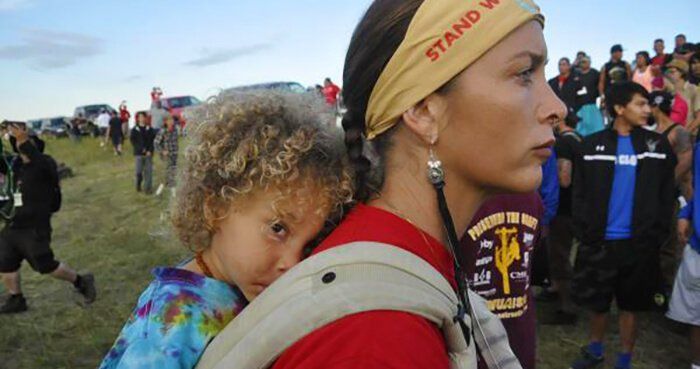
This spring, in April, to protest an oil mega-pipeline running through their waters and a general politics of disrespect for both the Earth and for Indigenous peoples, a group of Lakota Sioux women from the Standing Rock Sioux Tribe established the Sacred Stones Camp as a prayer that the waters remain pure. That began as a small group, which now numbers in the thousands, with solidarity actions across the country, from other Native Tribes as well as other supporters. When it looked like the construction of the pipeline might not be stopped, Lakota women jumped over the barriers and put their bodies in the way and on the line. This summer, Lakota Sioux women are making sure Spring doesn’t end early this year.

In January, with no consultation with the residents of the Standing Rock Sioux Reservation, North Dakota approved the Dakota Access Pipeline. Residents of the Reservation immediately petitioned the U.S. Army Corps of Engineers to deny a final permit. In April, the women set up the camp, as a monitor, because, despite lack of formal approval, construction on the pipeline had begun. In July, a group of Lakota youth ran from North Dakota to Washington to deliver a petition to stop the pipeline … to no avail. The Corps approved the permit … or so everyone thought. This week, it turns out that the pipeline developer actually does not have a written easement to build on corps property.

Nevertheless, construction began in earnest in August, and Native protector protesters launched the next phase of their campaign, which included peaceful road blockades. Then, on Monday, August 15, Native women stormed the pipeline and stopped construction. Since then, the numbers of water protectors on site and of solidarity actions around the world have grown.

From the beginning, the Lakota women, men and children have said they are not so much protesters as water protectors. As Iyuskin American Horse explained, “ From all across the country, tribes are bringing us shelter, food and most importantly, prayers. To have all this unity of tribes standing together in solidarity before my eyes is a beautiful sight. Our tribes now live together, eat together, and pray together on the front lines. We are not protesters. We are protectors. We are peacefully defending our land and our ways of life. We are standing together in prayer, and fighting for what is right. We are making history here. We invite you to stand with us in defiance of the black snake.”

Sarah Sunshine Manning added, “When I close my eyes, I can still see the mist in the camp in the morning and feel the power in the shaking voices of the women who stormed in front of moving machinery to stop the pipeline construction as they told their stories late into the night. Standing Rock has changed us forever. Our hearts are with the water, the land, and with each other. Today, we stand armed with the medicine of unity and prayer, and the strength of our ancestors. Still standing for water. Still standing for life. In so many ways, we have already won.”

Joye Braun has been in the Sacred Stones Camp since April 1 “when there was still snow on the ground. Now we’re getting ready for winter again. We’re not going anywhere.” While the women of Sacred Stones Camp, and the women who are coming from Standing Rock Sioux Reservation and those coming in support, prepare for winter, they are also preparing us for Spring. Still standing for water. Still standing for life. In so many ways, we have already won.

If interested, you can donate to the Sacred Stone Camp fund at https://www.gofundme.com/sacredstonecamp. There’s a petition to stop the pipeline here www.change.org/RezpectOurWater

#RezpectOurWater #StandWithStandingRock #NODAPL

(Photo Credit: Unicorn Riot)

Will France choose to follow the U.S. and build and overcrowd more prisons?

Adeline Hazan
Last week, with media in tow, Manuel Valls
accompanied Minister of Justice Jean Jacques Urvoas, who replaced Christiane Taubira, to Nimes prison, one of many overcrowded French prisons. Located in southeast France, Nimes prison is designed to receive 192 prisoners but currently holds 406 prisoners. Nationally, the number of detainees has reached record levels. Since 2010 the number of convicted prisoners went from 45 583 to 49 340 in 2016, but more significantly the number of remand detainees has moved from 15 395 in 2010 to 20 035 in 2016.

The previous president Nicolas Sarkozy instituted a martial discourse of intimidating governance based on penal populism and social ostracizing of social and racial minorities. He envisioned building new prisons to “accommodate” 80 000 more inmates.

Urvoa’s predecessor, Christiane Taubira tried to reverse this trend with her reform, passed in August 2014, to make incarceration the last result. Focusing on restorative rather than punitive justice, Taubira’s reform created penal counselors for reintegration as well as alternative sentences. The reform passed, but implementation has been to slow to none, thanks to a justice system that has followed the global trend of imprisonment as a social and governing instrument in a time of global violence. Recruitment of the counselors has been slow and underfunded while alternative sentencing has been ignored by a hardened justice system that has responded positively to the populist call for a repressive justice. The number of liberations under the control of the counselors has been reduced by 20% in one year. A Union representative declared that, instead of emptying prisons, the reform has filled them because the magistrates don’t play fair.

At the end of their visit to the Nimes prison, the head of government and his minister of justice declared that they would come up with a “specific, concrete and financed plan” to remedy the problem. They announced the building of more prisons to add 6000 beds, still largely inferior to what the right and extreme right political elite is demanding. Despite the few good moves such as the opening of “observatoire de la récidive et de la désistance” (Observatory of repeating offense and crime exit), as well as Jean Jacques Urvoas’ stated commitment to enforce the sentencing reduction bill, the funds have not been allocated.

In a climate of fear in which the “radicalization” of Muslim youth in France is offered as a source of violence that has to be fought in the most brutal manner, the political elite has given a radical and superficial picture of the situation in order to impose prison as the immediate and natural solution to all problems.

Meanwhile, a regime of urban marginality is reinforced with increased incarceration, making prisons and jails the instruments of violent isolation and ostracism. The over representation of populations of Muslim descent in prison mirrors the over representation of minorities in US prisons, with some differences of course. Will French elite choose to follow the American model of building and overcrowding more prisons?

In response, Adeline Hazan, the “contrôleure général des lieux de privation de liberté” (an independent body that monitors all places where people are deprived of liberty, and checks that fundamental rights of people in these places are respected) insisted “the more prisons we build, p the more we will fill them.” She added that carceral inflation year after year is not the solution and lamented that the law of 2014 has not been applied properly, and case-by-case sentencing, which was the heart of the Taubira’s bill, has not been implemented.

In a public radio program Hazan explained that according to French law, prison should remain the last result. The quantum leap in the number of short sentences demonstrates the opposite. The prison suicide rate is also rising with 90 attempts a month. Most of the attempts occur during the first days in prison. The suicide rate in French prisons has increased from 4 to 19 between 1945 and 2010, seven times more than outside of prison. The number of pretrial detainees is also on the rise. The state of emergency and its violent policing of demonstrations has sent many to pretrial detention.

Adeline Hazan remarked that women, who are only 3.8% of the detainees, have seen the degradation of their conditions of detention as a consequence of the over populated male prisons. She added that it is like a double sentence for women. The institution that she presides has produced numerous reports to alert the authorities about these situations. She noted that it is hard to be heard in this context of hard line security propaganda. Nonetheless, she acknowledged one of their recent victories in the elimination of incarceration of pregnant women.

In 2017, France will hold presidential elections. In France’s pre election climate of fear of terrorist attacks, the tough on crime approach seems to be the main message used by the political elite while neoliberal budget restrictions of public services increase and aggravate the inequality and abuse of those left behind in French society. In his most recent book Achille Mbembe has called this the “politics of enmity”. Prisons are places of enmity and gender racial discrimination: we don’t need more of them.

(Photo Credit: Liberation / Jacques Demarthon / AFP)

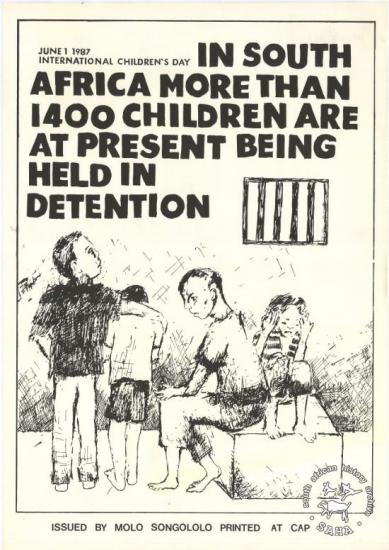
Michell Joyce Raduvha said NO to the trauma of child detention … and won!

On April 6, 2008, two police officers arrested 15-year-old Michell Joyce Radhuva and her mother and held them in custody overnight. Michell’s father came to the police station to secure their release, to no avail. Both were released the next day, without imposition of bail, and ultimately no charges were filed. But Michell and her mother knew the arrest was wrong, and so they immediately sued for wrongful arrest. They lost, repeatedly and at various levels, until last week, when the highest court in South Africa unanimously ruled that Michell’s rights, as a child, had been violated in the arrest and detention. The Court decided South Africa’s Constitution “seeks to insulate them [children] from the trauma of an arrest by demanding in peremptory terms that, even when a child has to be arrested, his or her best interests must be accorded paramount importance.” Amen to that.

The case is fairly straightforward. Two police officers came to the Raduva house to arrest Michell Joyce Raduva’s mother. Michell tried to intervene. The two were then arrested. The daughter was arrested for obstruction of justice. They were taken to the police station, booked, and held overnight. Whether the police knew Michell’s age at the time of arrest, by the time they arrived at the police station, they knew she was a minor. Not that that matters, since the police said, in court, that they would have arrested and detained her anyway, minor or not. To this, the Court responded, “What is more disconcerting is … a lack of knowledge and appreciation by the police officers of their constitutional obligation when arresting a child to consider her best interests as demanded by section 28(2). They demonstrate that the police officers did not care whether the applicant was a minor or not. Sergeant du Plessis said it expressly, that even if he knew that the applicant was a minor, he would still have arrested her. This is because he considers it to be his job to arrest. The fact that the arrestee is a minor would make no difference.”

According to Judge Lebotsang Bosielo, who handed down the Court’s decision, while the situation may be messy, the Constitution is clear: the best interest of the child is paramount. Period. In the balance of rights, the best interest of the child is paramount. In the actual existential moment, the best interest of the child is paramount. In this, the South African Constitution agrees with human decency and common sense, but, too often, not with State practice, not in South Africa nor the United States nor Australia nor England, where the State “considers it to be his job to arrest” and detain.

Judge Bosielo notes, “Under any circumstances an arrest is a traumatising event. Its impact and consequences on children might be long-lasting if not permanent … Detention has traumatic, brutalising, dehumanising and degrading effects on people … The applicant was seriously traumatised by this experience. Her detention has left her with serious psycho-emotional problems. Wounds that are still festering. These are the deleterious effects of incarceration against which the Constitution seeks to protect children.”

Being arrested is traumatic; being detained is traumatic … for anyone. For children, each can be catastrophic, and combined they can be life altering in the extreme. Michell Joyce Radhuva and her mother sued so that we might all know that, so that we might all remember that children are children are children. Children are children are children. Each child is a child and must be treated, and respected, as a child. That’s the law.

(Image Credit: South African History Online)

What happened to Mariam Abdullah and Rebecca Maher? Just another death in custody

Mariam Abdullah

Barely eighteen years old, Mariam Abdullah died, July 19th, while in solitary confinement at the Perryville Prison in Arizona. Rebecca Maher, 36 years old, died, July 19th, while in police custody in the Maitland police station, in New South Wales, in Australia. Though the two never met, the circumstances and date of their deaths joins them in a tragic tale of State negligence and refusal. Both women deserved better, and in both instances, we all share the shame of their deaths and the manner of their deaths, for both of them needed help, and the State refused. Both of them were meant to be protected by State law and policy, and yet, on July 19th, both Mariam Abdullah and Rebecca Maher died … or were killed.

In June 2014, Mariam Abdullah, 16 years old, was arrested. After a year in the Estrella Jail, where juveniles charged with adult crimes are `kept’, she agreed to a plea deal that would result in three years imprisonment. From the moment she entered Estrella, Abdullah was in and out of trouble, which meant in and out of solitary confinement. According to her attorneys and to advocates who met with her, her mental health deteriorated perceptibly. Then she turned eighteen, and was moved to Perryville, and again to isolation. Six weeks later, she wrapped a bed sheet around her neck and strangled herself to death.

On numerous occasions, Mariam Abdullah asked, both in writing and in conversation, to meet with mental health staff. She knew she was [a] having problems and [b] deteriorating. She said so. Other than her lawyers and supporters, no one listened. Prison Law Office attorney Corene Kendrick wrote to Arizona’s Attorney General with concerns about Mariam Abdullah’s situation, noting that the State’s abuse of Abdullah was in violation of earlier court orders, the law, and human decency. Kendrick never received never received a response. Kendrick noted, “She [Mariam Abdullah] just seemed very sad and very isolated [and] was clearly traumatized when I talked to her. She’s a child, and she was being held in isolation conditions worse than what the adults were being held in — not that it’s okay for anyone to be held in isolation, but all of the best practices say to stop using isolation on children.”

Peggy Plews, of Arizona Prison Watch, added, “She was no angel — she’s the first to admit that. [But] she was a sweet kid, wanted to be a firefighter and save other people someday. Instead, we just threw her away. We all broke that kid long before she killed herself.”

Rebecca Maher, Aboriginal, mother of four, was walking home drunk when the police picked her up, ostensibly for her own good, and threw her into a cell, a little after midnight. At 6 am, she was “found dead.” Her death and the last hours of her life are shrouded in confusion and controversy. In New South Wales, if an Aboriginal person is arrested, the police are supposed to use the Custody Notification Service, which immediately contacts the Aboriginal Legal Service (ALS). This system is a model. No Aboriginal person has died in police custody since 2000 … until Rebecca Maher. But Rebecca Maher, though in police custody, was never arrested. She was thrown into the cell because she was drunk. The police were “protecting” her from herself, and that is the problem. Many, such as Gary Oliver of the ALS, believe that if the police had contacted them, “there may have been a different outcome. Fundamentally this is a process that has failed because a police officer has not followed a procedure.”

Family friend Kathy Malera-Bandjalan asks, “How do you take someone into custody who’s legally done nothing wrong, then detain them in a cell then they’re dead in four hours. Rebecca’s death is not going to be in vain.” According to Kathy Malera-Bandjalan, the family was never notified of Rebecca Maher’s detention and was notified of her death many hours later.

What happened to Mariam Abdullah and Rebecca Maher? Absolutely nothing, and that’s what killed them. Arizona has specific policies, forced upon it by court decisions that should have ensured Mariam Abdullah’s survival and well being while in custody. Arizona refused to follow its own policies. New South Wales has specific policies that should have ensured Rebecca Maher’s survival and well being while in custody. New South Wales refused to follow its own policies. It wasn’t one staff member here or one there. It was the State that decreed, and decrees that what happens in custody stays in custody, and whatever vulnerable woman happens to fall into custody can expect to suffer and die in custody. That’s the rule of law when the custodians are told they have no custodial responsibilities to care for their residents. So, rest in peace Mariam Abdullah; rest in peace Rebecca Maher. You deserved better. We all do. Instead, we all broke you and just threw you away.

Rebecca Maher

Rebecca Maher