No, It Is Totally Acceptable to Confront Politicians

The entire point of organizing and direct action is to confront people and power, disrupting their everyday lives-or their paths of least resistance-to make sure to hold those people accountable and to reclaim power of those who normally feel powerless. So, when there is consistent criticism of an immigration activist who followed Senator Sinema into the bathroom of ASU, I am fascinated to ask what organizing and disrupting state power means to those who are voicing that criticism?

Is it not an act of violence and dismissiveness when Sinema, using her position as a Senator of the United States Congress, dramatically girl-bossed her rejection of raising the federal minimum wage to $15 an hour? A provision that would have lifted millions in this country out of poverty.

It is not violence, worthy of a faceoff in the bathroom, on an airport, in a airplane, when Sinema rejected an infrastructuredeal agreed upon in August, demanding a smaller bill from $3.5 trillion to $1 trillion, erasing the potential for universal childcare, free community college, and investing in cleaner energies that would combat a disastrous climate crisis?

Then if it is, what does it matter if Sinema is asked some questions about her vote, in the only places that constituents can get to her? She hasn’t had a town hall in three years! So what if they get her at a university-where she ran away from them into a bathroom stall. So what if they catch her at the gate of an airport? Is she doing any outreach herself?

But it’s inappropriate!

So is delaying a bill that has the potential to help people.

But you wouldn’t want to be accosted in the bathroom!

 Goodness I hope not. That would mean I’m a terrible politician that would deny her constituents the means to be uplifted out of poverty, comprehension immigration reform, and cleaner infrastructure. And I’m not Kyrsten Sinema, who is doing just that.

But you need to be polite! This distracts from your goal of getting the bill passed!

This is exactly what activists should be doing. Disrupting a person’s path of least resistance. If those students and activists did nothing, then she would have easily gone back to Arizona and spent the entire time fundraising and thinking it was ok. This is putting her shady habits into the spotlight. Why the hell are activists blocking traffic? Or occupying spaces? It’s so those in power don’t ignore them. Which politicians have a surprising habit of doing.

Sinema should be prepared for more questions in inconvenient places. So should Manchin too, while we’re at it, because it seems a little too spot on the nose that he is lecturing about fiscal responsibility atop his yacht.

You can’t respectability politics your way out of this one.

(By Nichole Smith)

(Photo Credit: NY Post / Twitter)

Instacart Workers Are Going on Strike: Fighting Against the Precarious Gig Economy

Instacart is facing a nationwide strike, happening October 16th.

Its workers will log off the grocery delivery app until the company agrees to a series of demands, the priority being higher pay. Instacart became a vital source during the pandemic, while customers and people in general limited their going out in the face of COVID-19, increasing the demand for food delivery services, grocery shopping applications, and online shopping. But with the conveniences of such types of services, comes the ultimate issue in these quick shopping trips: the workers are usually underpaid, overworked, and given virtually no benefits.

That comes with a whole slew of problems when it comes to workers in the gig economy. Yes, the job is flexible, where you can make your own hours or choose your own customers, but the pay and the work equal to what amounts to poverty wages, with some employees complaining (via New York City) that they are unable to access bathrooms and often cannot see or access the tips that customers add to orders. This has prompted legislative changes, including provisions to put the hourly wages of the gig workers (averaged at $7.90/hour) on par with the state’s minimum wage provisions. I have had conversations with Instacart workers before. They are a vital part of the grocery industry but are not given the stability of a good wage and health benefits. One worker complained that they take the job because of the high tips on the app, which can be reduced any time as the customer sees fit. There is no promise of the original tip available to them.

Most notoriously, in California, gig companies like Uber counteracted bills which entitled drivers to benefits and better pay with Prop 22, allowing gig workers to be exempt from the requirement. In August Prop 22 was found to be unconstitutional.

These issues continue to amass as more people look for easier ways to access goods and services, mostly through gig companies (like Uber Eats, Instacart, Lyft, and Shipt), and the precariousness within the economy itself increases. Workers are at very high risk of injury as well and are not able to access any healthcare benefits and workers’ compensation.

Considering the failures of the company to help the workers, or the legislation going to slow to help in anyway, workers have been on their own, to strike for better working conditions. In June, Uber and Lyft drivers participated in a day long strike to demand the right to organize, DoorDash workers protested outside the CEO’s house in California to demand better pay, tip transparency and PPE.

Notwithstanding the massive labor uprising happening in all sectors of the industry, the gig economy is ready for workers to organize and demand better wages and working conditions. On October 16th, customers can join the strike by deleting their Instacart app to demand the company take care of its workers. Because we have nothing to lose but our chains.

(By Nichole Smith)

(Photo Credit: Vice / Michael Loccisano / Getty Images)

HMP Bronzefield: An architecture built of women’s pain, grief, corpses. Shut it down!

HMP Bronzefield, in Surrey, England, is England’s and Europe’s largest women’s prison. It is run by Sodexo “Justice Services” (because irony is dead). On September 27, an 18-year-old woman, now known as Ms A, alone in her cell, gave birth to a child. The child, now known as Baby A, died. The Director said, “We are supporting the mother through this distressing time and our thoughts are with her, her family and our staff involved.” Sodexo claimed it was “undertaking a review”. At first, the Prisons & Probation Ombudsman, supposedly the agency that investigates deaths in prisons and detention centers, did not conduct an investigation. Surrey Police investigated the death, because it was “unexplained.” End of story. HMP Bronzefield, In Surrey, England, was then and is today England’s and Europe’s largest women’s prison. Last week, two years later, the Prisons & Probation Ombudsman finally issued a report, which demonstrated that absolutely nothing has been learned.

The report begins with the Ombudsman’s “vision”, “To carry out independent investigations to make custody and community supervision safer and fairer.” Anyone who knows anything at all about HMP Bronzefield’s abysmal record can only read that statement and weep. Though filled with alarming details, the most alarming aspect of the “investigation” is that the situation at HMP Bronzefield has been known since its opening in 2004. For example, remember Petruta-Cristina Bosoanca?  In 2017, Petruta-Cristina Bosoanca was pregnant and a prisoner in HMP Bronzefield. Petruta-Cristina Bosoanca gave birth alone, unattended, in her cell. Her child survived. What happened to care provision in the four years since Petruta-Cristina Bosoanca gave birth? Absolutely nothing. In 2010, the Chief Inspector of Prisons found that HMP Bronzefield was a nightmare, especially for women with “complex needs”, meaning women living with drug or alcohol addiction, PTSD, and a long list of other mental and physical health issues. There was no treatment, there was no attempt at treatment, there was only solitary confinement, for years on end. When the Chief Inspector returned to HMP Bronzefield in 2013, he noted, “We were dismayed that the woman who had already been in the segregation unit for three years in 2010 was still there in 2013.” We were dismayed. The nation claimed to be dismayed … for a nanosecond, and then went back to the business of inflicting pain on women and piling up the bodies of women and children, all victims of State-sponsored torture.

The latest report notes that “Ms A did not receive the routine bereavement and practical support that would normally be provided to a bereaved mother by the child death review nurse for Surrey.” Ms A did not receive counseling, but the staff did. The staff explained that the only thing amiss with Ms A was that she had a “bad attitude”. Not that she was 18 years old, incarcerated for the first time while awaiting trial, not vulnerable, not frightened. Just a “bad attitude”. The staff, however, needed and received counseling.

The State response to this ongoing crisis of incarcerated pregnant women has been to suggest it must build more and bigger women’s prisons. HMP Bronzefield is the largest women’s prison in the United Kingdom and in Europe. It is a building made of pain and grief. There was no `failure’ of care at HMP Bronzefield, and there never has been. There was refusal of care, refusal to care. We are dismayed. Do not build more, do not investigate more, do not imprison more. Shut it down.


(By Dan Moshenberg)

(Photo Credit: SurreyLive)

Covid Operations: In prisons, jails, immigrant detention centers, the United States refuses to address Covid

In June, the Florida Department of Corrections ended all Covid-related pandemic emergency protocols. This includes reporting, and so now, although cases increase and people behind bars are dying, the state issues no reports. It’s none of your or our business. Go away. Florida is not an outlier. The whole country has refused do care for people behind bars. According to the most recent Prison Policy Initiative analysis, the United States gets an F, the Federal Bureau of Prisons gets an F. 42 state prison systems get F or F+. The highest grade went to New Jersey, C. Another study, looking at jail populations, finds that one of the best forms of Covid mitigation – along with vaccination, mask mandates, social distancing – is jail decarceration: “The globally unparalleled system of mass incarceration in the US, which is known to incubate infectious diseases and to spread them to broader communities, puts the entire country at distinctive epidemiologic risk …. Public investment in a national program of large-scale decarceration and reentry support is an essential policy priority for reducing racial inequality and improving US public health and safety, pandemic preparedness, and biosecurity.” As to immigrant detention centers, “The Department of Homeland Security (DHS) has proven itself ill-equipped to manage the spread of coronavirus disease 2019 (COVID-19) in its detention facilities.” This applies as well to the “nongovernmental detainee facilities across the country”, such as the Otay Mesa Detention Center, site of the largest Covid outbreak among detained migrants … thus far. Say what you like about Florida, when it comes to concern for the vulnerable, for care of those people living and suffering in prisons, jails, immigrant detention centers, it’s just one of the guys.

As the Prison Policy Initiative analysis suggests, this shouldn’t have been so complicated or difficult. Reduce the prison population. Reduce infection and death rates behind bars. Vaccinate everyone living behind bars. Address basic health and mental health needs through easy policy changes: waive video and phone call charges; provide masks and hygiene products; suspend medical co-pays; require staff wear masks; require staff be tested regularly. That’s it. It’s not complicated. It’s not hard. Everyone failed. I know … New Jersey got a C, California a C-Everyone else got a D or F.New Jersey vaccinated and released many living behind bars, but New Jersey’s infection rate in prisons was almost four times higher than the state COVID infection rate, and the prison Covid mortality rate was almost double that of the state.

Four states – California, Illinois, Pennsylvania, New Jersey – made significant efforts to reduce prison population, partly through early release, early medical parole, suspension of incarceration for technical violations of probation and parole. Even with that, no state actually passed: “the nation’s response to the pandemic behind bars has been a shameful failure.” The response is shameful because there has been no response, and here I don’t only mean on the part of prisons, jails, immigrant detention centers. Where is the outrage? Where is the attention? Other than the usual suspects, who really cares? The failure is shameful because it is part and parcel of the national project. This is us, brutal and bankrupt in our lack of concern.

(By Dan Moshenberg)

(Infographic Credit: Prison Policy Initiative) (Photo Credit: The Guardian / Tannen Maury / EPA)

We criminalized and demonized relief for forty plus years: Of Eviction

The U.S. federal government released $45 billion for rent relief. What happened? On one hand, a great deal … for those lucky few who received the money. But they are the lucky and they are the few. Otherwise, the money has mostly sat in the proverbial vaults. Why? Many policy analysts, activists, advocates and just plain folk have looked at the situation and concluded that many, actually most, states and localities created impossibly cumbersome processes that tenants often found inscrutable, if they found the process at all, and landlords found, or claimed to find, too `burdensome’? While the analyses are informative and hopefully will help streamline programs, significant questions remain. Why did states and localities design such difficult processes for relief? If you were standing on the deck of a ship and saw someone drowning in the water, how many preconditions would you lay before throwing the person a lifeline?

First, as eviction researchers, anti-eviction activists and advocates, and anyone who’s ever been in an eviction proceeding concur, eviction processes in the United States have long been weighted heavily in favor of landlords. Typically, 90% of landlords show up with attorneys, while 10% or fewer of tenants have any legal representation. Then there are arcane processes no one really understands, except that they make it almost impossible for tenants to get anything like justice. For example, Nevada has something called summary eviction process in which a tenant receives a seven-day eviction notice for non-payment of rent. If the tenant doesn’t file an affidavit in court within seven days, the landlord receives automatic approval to evict the tenant. No summons, no complaint, no hearing. The tenant must sue in order to be sued to be evicted. If your head is spinning, call it property vertigo.

Many localities and even some states have passed or are considering right to counsel that would begin to readjust the imbalance and injustice. That would be an important step.

At the same time, questions remain. Are all situations of non-payment really the same? Is there any concern for those who suddenly lose their jobs, fall sick, live with someone who falls sick, and the list goes on? The answer, bluntly, is No. And that No is our national policy of relief.

Since 1980, every national government has demonized and criminalized those who need, and deserve, relief and assistance. From Welfare Queen to Ending Welfare as We Know It, the focus of the assault has been on Black and Brown women. What’s been good for the national goose has been even better for the state and local ganders. Funds for public services were cut, deeper and deeper, in successive decades, those who in any way relied on those funds were criminalized and demonized further and further.

And so here we are, in the second year of a pandemic with its consequent economic crisis, and we’re somehow shocked that states put security before relief. Why is self-attestation such a difficult point for states and localities? Because they fear fraud. Why do they fear fraud? Because those who seek help, who need help, are, by definition, demonic and criminal. Ignore the history of banks in creating the last recession. Too big to fail, too big to jail. Ignore the history of corporate landlords abusing eviction processes to harass tens of thousands of tenants. Ignore the recent history of corporate landlords `finding loopholes’ in the CDC moratorium to continue their practices of mass eviction. Focus instead on the possibility of fraud and create processes that are so difficult, so burdened with evidence, that really no one is meant to apply. And that qualifies as success, by the metrics of the last 40 some years.

This is not even about putting people first, although we should. A government and a country that cares about people at all would set up structures to help them immediately and then worry over the details later. $45 billion would go a long way, but instead it sits in the proverbial vault. If you are standing on the deck of a ship and see someone drowning in the water, do not delay, do not lay preconditions, throw the person a lifeline. Anything else is a crime.

(By Dan Moshenberg)

(Image Credit: Fresno Bee / SW Parra)

Criminalization in Texas and Celebrations in Mexico

“Today is a historic day for the rights of all Mexican women,” said Supreme Court Chief Justice Arturo Zaldivar. “It is a watershed in the history of the rights of all women, especially the most vulnerable.” On Tuesday, Mexico’s Supreme Court ruled that making abortion a crime was unconstitutional, establishing a precedent for legalizing abortion nationwide in a conservative Catholic country of approximately 120 million people.

The unanimous ruling from the nation’s top court follows a growing women’s movement in Mexico that has taken to the streets of major cities across the country, demanding greater rights and protections for women against femicide and violence against women.

This landmark ruling comes on the heels of a measure that Governor Greg Abbott signed into law to prohibit abortions as early as six weeks in Texas. Senate Bill 8 (S.B. 8) or the “Heartbeat bill” includes cases where the pregnancy resulted from rape or incest. There is an exception for medical emergencies. Additionally, the S.B. 8 opens the door for almost any private citizen to sue abortion providers and others—making this bill the most restrictive abortion law in the U.S.

The passage of S.B. 8 comes after the U.S. Supreme Court agreed to hear a case concerning a Mississippi law that would ban most abortions after 15 weeks. Sequentially, it could lead to new limits on abortion rights. It is the first major abortion case heard before the court’s newly expanded conservative majority.

These two milestones in abortion rights have demonstrated two sharp contradictions in prioritizing women’s rights globally. It is blatantly obvious women’s reproductive rights in the U.S. are and will always be under the threat of attack. In addition to S.B. 8, the Texas Legislature has also enacted a lengthy list of conservative priorities on transgender rights, voting, and teaching about racism in schools—contradictory to the notion of the U.S. as a global leader in creating and promoting human rights.

The future of the Roe v. Wade remains uncertain. One thing is certain, countries around the globe are shifting to a new global standard for women’s rights and protections. But, more importantly, countries like Argentina and Mexico are global leaders in creating and promoting human rights and women’s rights.

(By Tatiana Ruiz)

(Photo Credit: AFP / La Jornada)

Facing eviction without a lawyer

Amoy Bailey broke her leg, missed work, fell behind in rent, ended up at Bronx Housing Court.

Housing insecurity in the United States has mushroomed in this coronavirus pandemic. Millions of Americans are at risk of becoming evicted. I know what that’s like. When I became physically disabled in a fluke car crash, could no longer work and fell behind in my rent, my New York City landlord quickly filed papers to have me evicted.

Unable to find a pro bono lawyer to represent me, I had to go it alone. Not unusual, unfortunately. Only 10% of tenants in housing court have legal counsel, while 90% of landlords do.

I did, however, learn I had two issues working in my favor. First, the landlord had failed to deliver my eviction papers according to protocol. Second, he had also refused to fix numerous housing code violations, e.g. brown tap water, ceiling holes and leaks. I filed the necessary court forms for both.

But I’ll tell you something. Actually being in the court room, not knowing up from down about its laws, regs, and loopholes when you’re fighting for your life and all you’ve accomplished, heightened anxiety renders you incapable of functioning at your best. Too often, I realize now, I was just following my nose instead of keeping these two critical issues in the forefront.

I arrived in the New York City courtroom alone, passed the all-important advocacy table in the entryway outside, and rushed to the court’s uniformed officer to be marked present. Since it wasn’t yet nine o’clock, I asked permission to speak with advocate. But when I got there, two women were already in line. Scared they’d call my name in the court room and I’d lose the case because I wasn’t there, I rushed back to the officer to ask if I still had time. “Go ahead,” he said, adding another word or two which I didn’t catch. Something by his tone and look conveyed not only power over me, control (which, of course, he had), but also condescension and a level of suspicion, as though I were trying to get one over on him.

When it was finally my turn, the advocate brought up stipulations of settlement, a binding agreement between landlord and tenant. She warned about the hallway stipulation or “hallway stip” in which the landlord’s lawyer takes the tenant away from the courtroom to settle the case. If I preferred to go before the judge instead, she said, I had that right.

Inside, the court attorney called my case. I approached her station, as did the landlord’s lawyer. Either she assumed I understood the procedure and my rights or was unconcerned that I didn’t because, right away, she instructed me to follow him out. Yeah. The dreaded hallway stip. She probably didn’t think I knew about that. I didn’t want to go, but didn’t feel I had a choice.

Out there, he was in charge. He tried various approaches to force my signature, pledging I would pay a monthly amount so indisputably beyond my current means that I would default the very first month. He knew I was out of my depth. He was banking on it. Yet I stood my ground each time until he gave up.

When the court attorney recalled our case, she urged me to have a “conference” – a threesome with her, the landlord’s lawyer, and me – an even more intimidating process since, together, they’d form a tag team. I refused this, too. I wanted the judge.

Finally the moment arrived. Standing up against the rich mahogany wall of the judge’s bench, I handed him documents I prepared detailing the improper delivery of eviction papers and the housing code violations. In answer to my question, he explained ways this could all play out. I couldn’t focus well enough to follow. I only remember his saying, “And then if that happens, you’ll be evicted.” With no breath of time after hearing that word “evicted,” all my repressed terror burst open. Tears flooded my eyes, streamed down my face and out of my nose, and I couldn’t stop. But there was something I really wanted him to know, so I met his eyes and mouthed the words, “I’ve never not paid my rent before.” His eyes conveyed empathy. That, I remember well.

He told me to sit down and compose myself. I crawled back to the pews, head down, sobbing. Lack of privacy intensified the demoralization in court, but that’s part of the whole process of falling from grace in the US. What has always been private becomes public. I have no memory of having stepped up to the judge’s bench again that day, though I may have.

Back with the court attorney, a surprise. She adjourned the case to give the landlord’s lawyer time to locate the process server who supposedly delivered my eviction notice. Now why wasn’t this brought up earlier? Before I was ordered out for the hallway stip? How could that be right? Were the judge to find that the papers had been improperly served, the eviction case against me would have been dismissed. The landlord would surely refile, but it would buy me that precious commodity: time. Time to heal, get back to work, catch up on rent.

The court attorney ordered me to return the following Thursday. I explained that I was scheduled for surgery on my spine on Thursday. She seemed not to believe me, as was her pattern. I didn’t trust her, didn’t like the way her eyes failed to meet mine in our exchanges. She saw no equal in me. She granted me an extension of only seven days. I knew that would never be enough time to recover, and in fact it wasn’t, but I hadn’t a shred of strength left in me to argue.

More court appearances followed. The landlord’s process server never showed up, the housing code violations were never addressed. In that calendar year, 44,572 NYC households were evicted by court order. One of them was mine.

(By Joy Ann Juvelis, Ph.D.)

(Photo Credit: City Limits / Adi Talwar)

(Joy Ann Juvelis PhD is a medical anthropologist whose research has explored barriers to health care for people living with HIV in poverty, homelessness, in jails and prisons, as well as for those being released from correctional facilities. @JAJuvelisPhD)

Missouri regulates the use of seclusion rooms and restraints … finally!

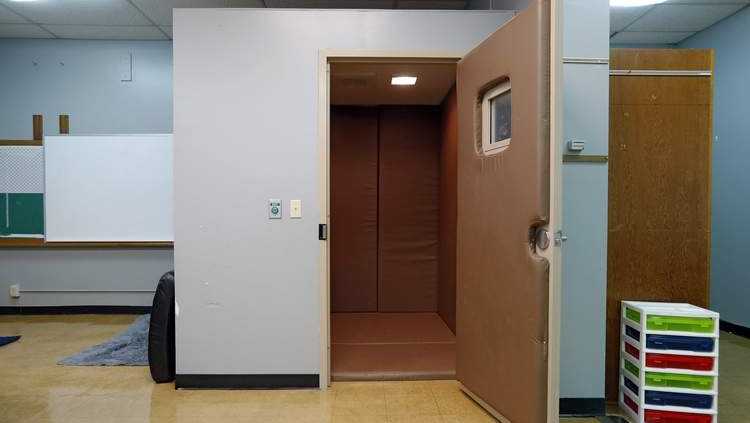
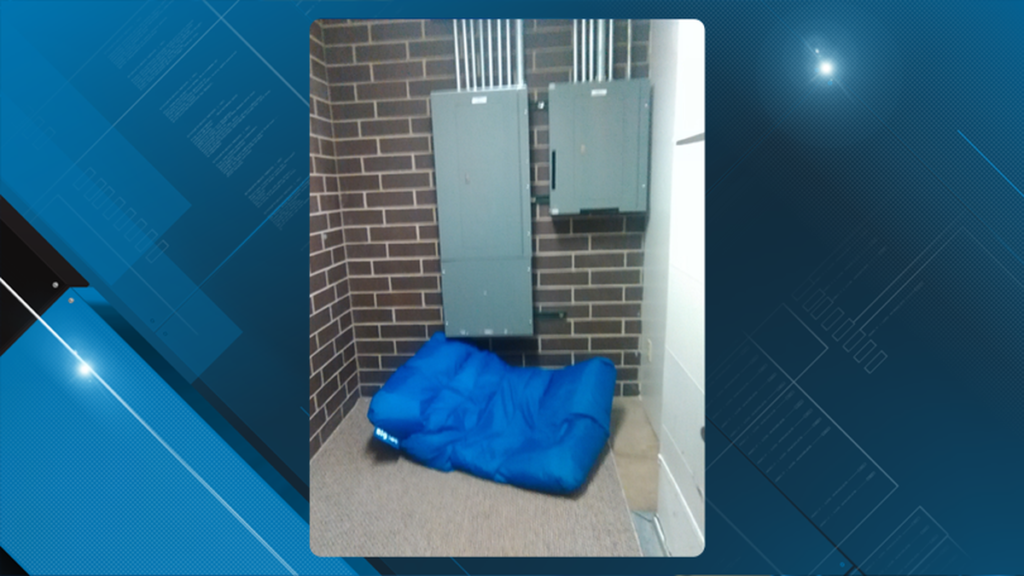
A “blue room” seclusion room in Missouri

American education remains haunted by inhumane treatment of children, especially those living with disabilities. Yesterday, Saturday, August 28, a new law went into effect in Missouri regulating and, in some instances, curtailing the use of seclusion rooms and physical restraints in all public, private and charter schools in the state. This is a welcome move, won by long hard struggle of children, parents, allies, advocates. Why is it so difficult to abandon practices that are clearly harmful and inhumane?

In May 2009, the Missouri state legislature passed a law giving school districts two years in which to devise written policies governing the use of seclusion rooms. Before that, there were no policies, only the practice of solitary confinement of school children without a single written guideline or rule. Nothing came of that. Nothing happened as a result of this non-compliance.

Eleven years later, in January 2020, 11-year-old Ryphath Knopp stood before a committee of the Missouri state legislature and described being put into solitary confinement in the Columbia, Missouri, school system. Knopp told the legislators he lives with autism, anxiety, and depression. He described beings placed in a small padded room “almost all day, every day” until his parents took him out of school and homeschooled him. Knopp called seclusion rooms “an adapted version of solitary confinement, which was a form of torture, may I remind you.”

Mothers of other children in the Columbia school district recounted similar experiences. Shawan Daniels described the room her fourth-grade child was locked into: “These rooms didn’t have vents in them, water, or anything.” Another mother said the isolation had caused her son emotional trauma, asthma attacks, and head injuries. Both used the same phrase to describe Columbia schools’ treatment of their children: being “thrown into a box.” At that point, Missouri had no rules and no oversight over the use of restraint or seclusion in its schools.

In March 2020, Missouri legislators passed House Bill (HB 1568) that would establish a ban on seclusion and restraint rooms “except in cases where there is imminent danger to the student or others”. Who decides the exception? No guidelines were provided, and besides, it didn’t really matter. Apart from completely discretionary guidelines, Missouri still had neither rules nor oversight concerning the use of restraint or seclusion in schools.

All that changed, for the better, yesterday. In its latest session, the Missouri legislature passed House Bill 432, which regulates and codifies the use of restraint and seclusion in schools. Missouri now has actual guidelines for the use, and not, of restraint and seclusion rooms. The guidelines include rules on documentation of any use of seclusion or restraint, annual uniform training of faculty and staff concerning the use of seclusion or restraint, and new protection for whistleblowers.

Ryphath Knopp attended school in Columbus, Missouri. Frankie Bono attended school in St. Charles, Missouri. According to his mother, “My son was locked in a closet. He didn’t have the skills and ability to appropriately communicate what was really happening at school. We were driving in the car recently and a song came on the radio, and he just started sobbing. That was a song that had been playing in the room, one of the times they had tackled him, held his face against the cold floor, grabbed him by the hair and dragged him into the seclusion room.” Frankie called it “the blue room”.

According to the most recent federal data, in school year 2017 – 2018, 50.9 million students were enrolled in public schools. 101,990 were subjected to physical or mechanical constraint or seclusion. 27,538 were subjected to seclusion. In that school year, 13% of the students enrolled were classified as living with disabilities. Of those subjected to physical restraint, 80% were living with disabilities. Of those subjected to mechanical constraint, 41% were living with disabilities. Of those subjected to seclusion, 77% were students living with disabilities.

This is a war against children, and exactly what crime have these children committed? Why do we routinely send children into solitary confinement? What are we teaching children, all the children in all the schools, when we torture their classmates and then call it “seclusion” and “restraint”? How many more children must suffer the “blue rooms” of torture? Perhaps Missouri will shed a light on that cold floor.

(By Dan Moshenberg)

(Photo Credit: Zbigniew Bzdak / Chicago Tribune / ProPublica)

In the name of dignity, North Carolina is about to limit shackling pregnant incarcerated women!

Three years ago, March 26, 2018, the North Carolina Director of Prisons responded to SisterSong and other members of the Coalitions to End Shackling in North Carolina and officially ended the shackling of incarcerated women in childbirth. It was a momentous occasion and, in its way, a joyous and hopeful day. For the past three years, North Carolina legislators have tried to expand on that decision and now, finally, it seems they are ready to move forward. Yesterday, August 25, 2021, the Senate voted unanimously to approve a partial ban on pregnant women serving time in North Carolina prisons. The House had unanimously passed a similar bill in May, and now looks set to pass this bill, probably unanimously, and then pass it on to the Governor for signature. As Senator Natalie Murdock, Democrat from Durham, noted, “This is just transformational work. Folks have been in talks about this for years.”

While state prisons were already limited as to when a pregnant woman could be shackled and were banned altogether from shackling a woman in childbirth, the rules were both too vague and too often ignored or “left to the discretion” of staff. This bill codifies, in law, the rules. It limits shackling during the second and third trimesters, labor and delivery, for a six-week postpartum recovery period. If a staff member decides restraints are required, those restraints can only be wrist cuffs and that decision initiates a report to the warden, who then sends all the reports, on a determined regular basis, to the Department of Public Safety Leadership.

While the matter of staff compliance remains, as it always does, the transformational unanimity of the legislature suggests that, at least for the foreseeable future, there will be eyes on the prisons, at least in this matter. Additionally, by insisting on making explicit in law the appropriate treatment and care for women, the North Carolina legislature is demonstrating the conclusion recently reached by researchers of carceral pregnancy and childbirth: “Incarcerated pregnant people and their babies deserve better care that is codified in policy”.

Along with constraint limitations, the bill says newborn babies must remain with their mothers after delivery; mothers must be incarcerated within 250 miles of their babies until the children reach one year old; mothers must have two visits weekly with their children. Pregnant women must be allotted bottom bunks or beds no more than 3 feet off the floor. Guards can’t conduct body cavity searches on pregnant women.

At another time, the question of why it takes three years to arrive at a common sense, clear policy will be debated. For now, though, a celebration is in order. Yesterday’s Senate vote was a unanimous affirmation of the original House bill, House Bill 608, “An Act To Promote The Dignity Of Women Who Are Incarcerated.” Let us all celebrate the promotion of women’s dignity, everywhere, always. That would be just and transformational work.


(By Dan Moshenberg)

(Image Credit: Radical Doula)


We must address the racist cruelty: Of eviction

Standing outside a Virginia courthouse, waiting for justice

“If you’re not outraged, you’re not paying attention”
Heather Heyer

The pandemic turned the economy upside down and inside out, or so we are told. We are also told, still, that `we are all in it together’. Welcome to the place where the theater of cruelty merges with the wretched of the earth, and, through the cataclysmic changes, the worst remains the same and absolutely ordinary. We are talking, once more, of eviction. Two reports appeared today, both focusing on Georgia. In one, we learn that, among African Americans, youth and housing insecurity are primary causes of “vaccine hesitancy”. In the other, we learn that, in the Atlanta metro area, evictions are concentrated in low income and Black, Indigenous, People of Color, BIPOC, neighborhoods. At one level, we learn that we have learned nothing, since, as both reports suggest, these patterns preceded the pandemic and have `simply’ continued. What are we to do with that `simplicity’, with the persistence of systemic racism in the real estate industry as in the courts? And what is to be done?

According to a study of “vaccine hesitancy” among African Americans in Georgia, “COVID-related housing insecurity—difficulty paying the rent or mortgage or even eviction—increased the odds of vaccine resistance sevenfold”. Actually, housing insecurity increased those odds by 7.3-fold. Why does housing insecurity increase those odds so dramatically? According to the report, those living with `housing insecurity’ tend to live in highly segregated neighborhoods, are low wage essential workers, and have little to no access to health care systems. They’re not `hesitant’, they’re excluded. For “highly segregated neighborhood”, read “ghetto”. For “low wage essential worker”, read “indebted servant” or, better, “serf”. Again, that’s not hesitation. That’s feudalism.

According to the second report, five counties make up 63% of the Atlanta metropolitan area population and 74% of its occupied rental units. During the pandemic, eviction filings continued, especially in “hotspots”, census tracts that were below 80% of the Area Median Income, or AMI, and were 50% or more Black, Indigenous, and People of Color. These hotspots were not a surprise to the researchers, since, prior to the pandemic, the same neighborhoods were eviction hotspots and the same patterns devastated those neighborhoods, communities, families and individuals. As the authors note at the outset of their report, “An eviction marks a crisis point of housing instability that ripples into nearly every facet of a person’s life and harms future chances of housing security …. With the added urgency of a global pandemic, the impacts of eviction mushroom and tighten the nexus between individual outcomes like an eviction and community-level harm.” In the Atlanta metro area, as across the United States, evictions are working as planned, condemning majority BIPOC communities, especially low- to moderate-income BIPOC communities, to a certain death sentence. None of this is new, even if its context makes it seem worse than before.

We “learn” this week that in Virginia, the Virginia that has improved on its shameful history of mass evictions, high eviction rates, and easy eviction procedures, in that Virginia, “Black women … are disproportionately evicted.” We “learn” this week that in New York, the New York that only recently started distributing any rent relief funds, Black women make up nearly two-thirds of those applying for rent relief. Again, that relief has only now started, barely, reaching people.

In light of the new CDC Eviction Moratorium, and the challenges to it which are currently being argued before the Supreme Court, the Supreme Court that barely kept the last CDC Eviction Moratorium going and, with a single vague sentence, tried to gut the New York State Eviction Moratorium, the Eviction Lab took a look at the first iteration of CDC Eviction Moratorium. Here’s what they found: “A large number of eviction cases originate from a relatively small number of Census tracts … Neighborhoods with high eviction filing rates prior to the pandemic continued to see the highest rates during the CDC moratorium … Neighborhoods with high eviction filing rates prior to the pandemic continued to see the highest rates during the CDC moratorium … Prior to the pandemic, Black renters received a disproportionate share of all eviction filings: they made up 22% of all renters in ETS sites, but received 35% of eviction filings. They continued to be over-represented during the CDC moratorium period, receiving 33% of filings.”

What they found is that we have learned absolutely nothing. Where is the outrage at the predictability of these findings? Around the country, activists are pushing, often with success, for right to counsel, where every tenant would have an attorney present and engaged, long before every going to court; Just Cause restrictions, which would require that landlords give just cause before not renewing a lease; sealing eviction records; mandatory mediation; and more. Those are all important policies. At the same time, we have a reckoning due. Where is the outrage at the loss of life, the devastation, the twenty first century version of feudalism? Why does it take a plague for people to begin paying attention to our neighbors, and have we actually begun paying attention, if, in the end, each study concludes that the present and the past are one and the same.


(By Dan Moshenberg)

(Photo Credit: ABC News / AP / Ben Finley)