How the corporate university exploits sexual assault

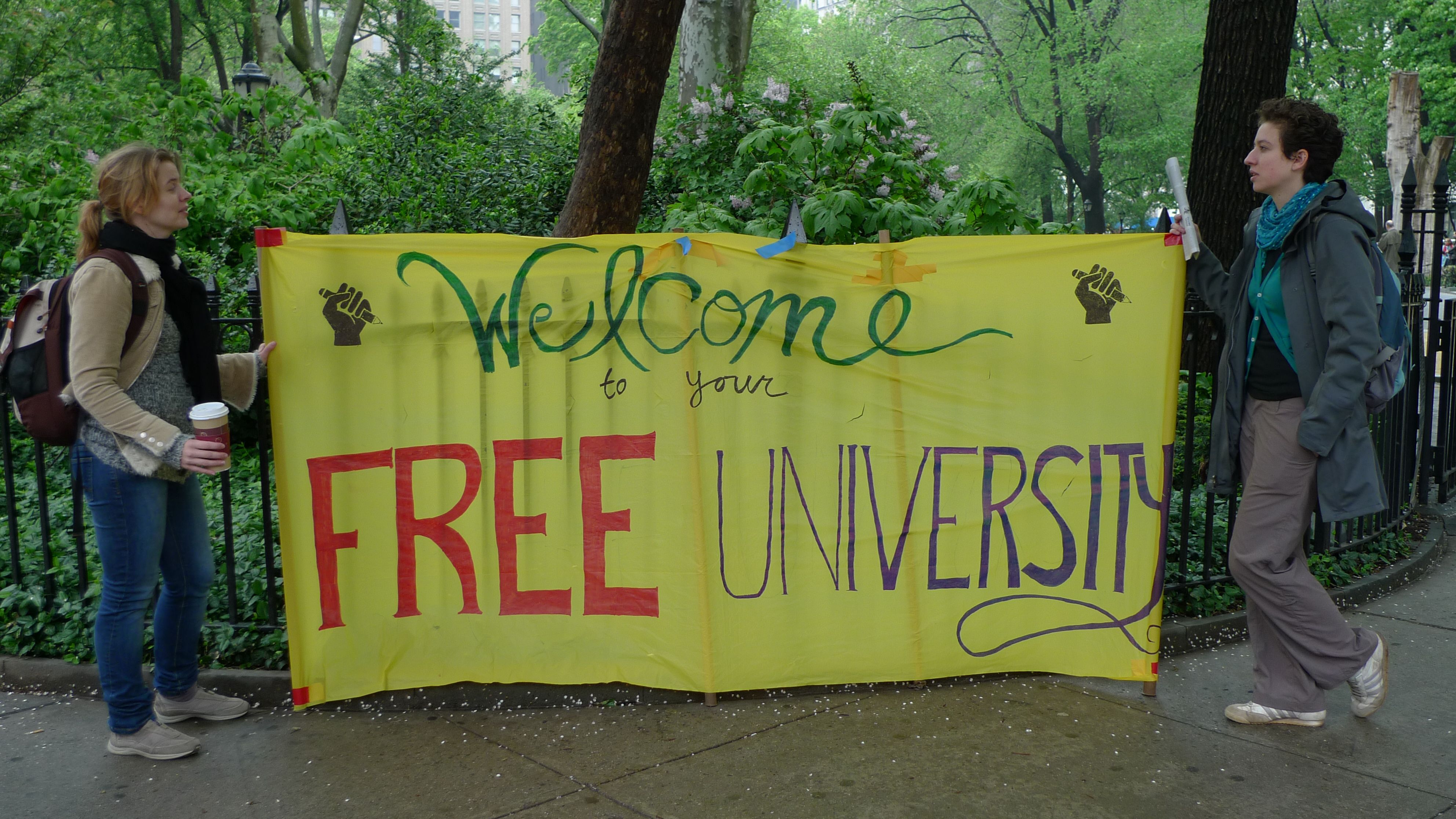
Sexual assault happens on university and college campuses.  It happens a lot.  More often than not, women are on the receiving end of this violence.

How does the university respond when it becomes aware of such violence?  It responds with blaming and insulting survivors, with bogus advice about not drinking alcohol, and with purposely underfunding resources for survivors.  One way or another, the university removes itself from the narrative and responsibility, and places the work of preventing sexual assault on individual students, often individual women.

This is institutional violence, the violence that flows from institutions like the university through the active neglect of certain groups deemed extra, or surplus.  The story of institutional violence is the story of a crisis, and that crisis is a lack: a lack of institutional responsibility, a lack of proper safety measures, a lack of proper resources for survivors, and a supposed lack of a proper amount of time for the university to put together a proper response.  The university actively creates these lacks, crises, and violence.

Stories of sexual assault and university neglect repeat, campus to campus.  These cases of sexual assault appear to fit the model of the “crisis ordinary,” when crisis is everywhere and inescapable.  The crisis ordinary gives the university the excuse to hide behind resources it fails to provide or else provides paltry, inadequate sums.  The crisis ordinary of sexual assault lets us see the inherent instability in the university’s bumbling, ineffective responses to this violence.  It also allows us to re-narrate the crisis, and the new narration might go something like this:

There are women who have been sexually assaulted.  These women do the work of finding and utilizing resources for survivors, the work of telling and re-telling their stories, and the work of demanding accountability from the university and its administration.

The university increasingly wants diversity.  But it has not provided adequate resources to survivors of sexual assault and further pressures survivors to do their own work of coordinating resources.  Then, the university shows its cruelty by insulting survivors for not following “widely accepted” advice.  Within the supposedly diverse community of the university, survivors and their labor are produced as victims, as extra, as surplus, as valueless, as the university backs away slowly.

The university passes off the actual work of diversity, of maintaining a safe and inclusive community, onto survivors of sexual assault—and it makes a profit!  It diverts the savings from this unpaid work to projects that are in its real interests: accumulating as much capital in as little time as possible.  The university is not merely the university, but the corporate university.

The corporate university appears diverse through the spectacle of branding, but this hides the violence underneath: the violence of sexual assault, the violence of workers’ rights abuses on its ever-expanding campuses, and the violence of producing women, people of color, LGBTIQ people, disabled people, and others as key members of its so-called diverse community at the same it produces them as victims.  None of this is shocking—it’s business as usual, ordinary business, for the corporate university.

To abolish institutional violence, we must abolish the farce of the institution that is the corporate university.  It is in organizing for abolition that we find alternatives.


(Photo Credit: Nicholas Mirzoeff)
How the women of Burkina Faso turned lemon into shea butter

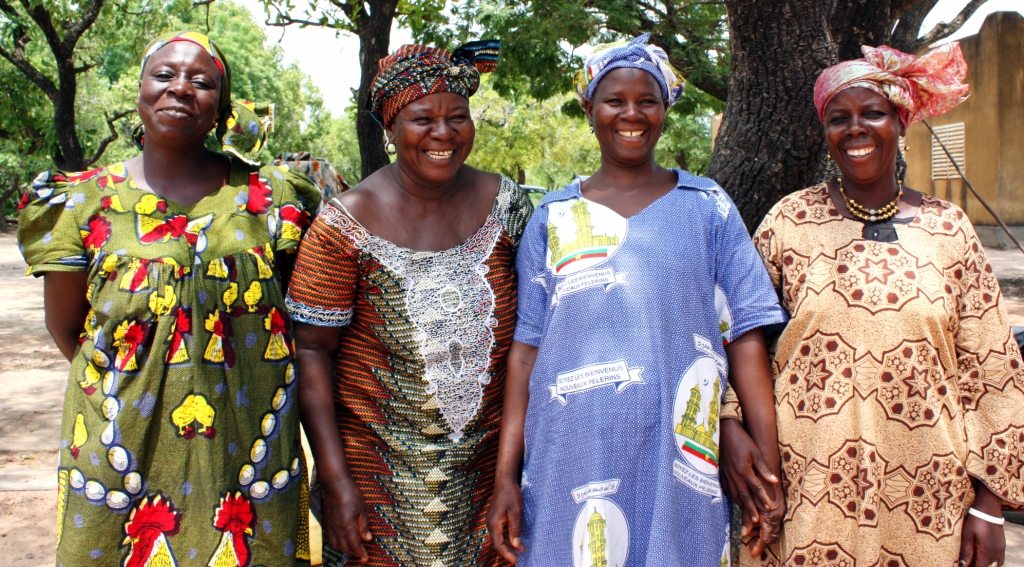
The forests of the world are under attack, `thanks’ to consumer demand for food, fuel, and fiber. The people who live in, and depend on, forests are also under attack. In Burkina Faso, a group of over 4000 plus rural women forest dwellers have taken the lemon they were dealt and turned it into … shea butter. And by so doing, they are transforming the world.

That dealt lemon has many components. First, life for rural women is often one of severely limited education, income, and hope. Second, the labor market in rural Burkina Faso relegated women to collecting and processing shea kernels. Collecting is arduous work, and butter production is even worse. The profits were less than meager. Third, the sales of shea kernels and butter were controlled by more powerful multinational companies that would buy the vast majority of kernels and ship them to Europe or Japan, for processing there. 95% of shea butter went into chocolate, margarine, confections. The rest went into cosmetics.

That was before.

In the late 1990s, women in Burkina Faso and a French cosmetic firm, L’Occitane, teamed up. L’Occitane understood that the market for organic and sustainable and fair market cosmetics was growing. The women gatherers in Burkina Faso knew there had to be a better way to live, for themselves as women, for their households and for their communities.

So, with some assistance, in 2001, about 600 women got together and formed l’Union des Groupements de Productrices des Produits du Karité de la Sissili et du Ziro (UGPPK/S-Z), the Union of Women Producers of Shea Products of Sissili and Ziro. By 2009, they numbered almost 3000. Today, 4,6000 women are members of the cooperative, now called the Nununa Federation. And their ranks are growing.

The women set themselves to understanding the economies of scale, certification, market, and cooperative development. When they had to, they diversified. When the time seemed right, they moved into semi-industrial production. At each step, they have been a model of transparency and democratic and shared decision making. International bodies have certified their product as organic and their processes as Fair Market. They are committed to sustainable development, and they have largely succeeded. They are also committed to a better life. They redesigned the production processes so that no woman has to endure the kind of pain that went into `traditional’ gathering and butter-making processes. From the forests of Burkina Faso to the faces of Europe, the United States, Canada, Japan, the women of the Nununa Federation are leading the way to a better world.

The Nununa Federation is the first organization anywhere to invest successfully in the semi-industrialisation of shea-butter production based on churning. As such, these women are literally breaking new ground. This organization of women has successfully increased its members’ income, increased their autonomy, increased their spare time, improved their health and wellbeing, and increased their stature … at home, in the marketplace, and around the world. And it all begins with the political education of standing up at a meeting and asking hard questions and getting direct answers. The Nununa Federation is simply “the best example in terms of organization, high quality service and products, and ingenuity.” They are a model of democratic, transparent governance.

Today, they say they “are filled with hope to continue the struggle.” The struggle continues.


(Photo Credit: http://rsr.akvo.org)


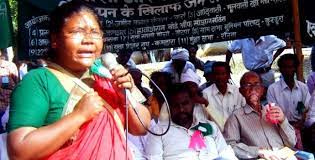
We need Dayamani Barla

Dayamani Barla is back in jail, and the State won’t say why.

Dayamani Barla lives in Ranchi, the capital of Jharkand, in India. There she runs a small tea shop. That is not why she’s in jail. That is not why the State `released’ her on bail, only to put her back in jail immediately. It’s not tea that has placed Dayamani Barla in a  revolving door of jail – jail – jail, always accompanied by thunderous State silence.

Dayamani Barla is a journalist, according to some the first Tribal journalist from Jharkand. She is a women’s activist, tribal activist, and anti-displacement activist. She’s a popular leader who has refused to be intimidated by either multinational corporations or by the State. She has been described as “Iron Lady” and as “a woman with a steely resolve.”

Actually, she’s not made of steel or iron, but rather of flesh and bone and commitment and action and vision. Transformation and liberation come from ordinary people engaged in ordinary practices. Real change is and must be ordinary.

Dayamani Barla organizes, teaches, and writes in the realm of the ordinary. In 2008, she famously opposed construction of an Arcelor-Mittal plant in Jharkhand. Between 2005 and 2008, the State of Jharkhand signed 112 memoranda of understanding with multinationals. Development was booming … at the expense of those who lived on, nurtured and cherished the land. Dayamani Barla opposed the displacement of those who take care of the land, and of the Earth.

The Arcelor-Mittal plant would have involved 12,000 acres and would have displaced over 70,000 people from some 45 villages. For those people, land is not an asset. It is heritage. Ironically, officially at least, the Indian government agrees. This land is protected, and so cannot be sold for non-agricultural use. And yet, repeatedly, it is.

Dayamani Barla listened to her neighbors and helped them organize. Her neighbors understood the essential truth of displacement. Once displaced, you never return: “We will not allow the Arcelor Mittal Company to enter into the villages because one can not be rehabilitated if once displaced. The lands, which we cultivate belong to our ancestors therefore we will not leave it”.

The “simple” folk of rural Jharkand already knew what the International Red Cross and Red Crescent would only `discover’ four long years later. As the World Disaster Report stated, last week: “Development is a major, but often ignored, driver of forced displacement.” And where’s a hotspot for development-driven displacement? India. The poor of India `bear the brunt’ of development, making up one of the largest populations of internally displaced persons anywhere … ever. And, as is so often the case, there is actually little data concerning those displaced through development. This is ironic given that, unlike all the other drivers of displacement, such as natural disasters and conflict, development is always planned. And yet … the data is `surprisingly’ missing.

But the cost of development to the poor has not been ignored by the poor, by the marginalized. Dayamani Barla has not been surprised by the lack of information, by the ignorance. Neither the State nor the multinational corporations nor the un-civil society made up of journalists, academics, ngo’s and so on, know how to or care to listen to the people actually on the ground.

Since 2010, Dayamani Barla has led a movement to stop government acquisition of farmers’ land for three schools, one of management, one of information technology, and one a law school. Villagers have gone on hunger strikes. Others mobilize. They are not opposed to `knowledge’ or to schools being built. They want consultation. They want a say as to which plot, or plots, of hundreds of acres will be used. They want an end to military occupation. And they want answers. For example, they want to know who decided that Jharkhand needs a knowledge triangle of technology-management-law, rather than, say, basic healthcare or primary education?

Many answer, What Jharkand needs is Dayamani Barla. The Gandhian activist Himanshu Kumar agrees. In a recent poem he asks: “Why do we need Dayamani Barla?” Here’s the beginning of his answer:

“It is a grave danger now to be Dayamani Barla
It is a danger to be an adivasi
It is a danger now to reside in the village

There is land in the village
There are trees in the village
There are rivers in the village
There are minerals in the village
There are people in the village
There is also Dayamani Barla in the village”

There is also Dayamani Barla in the village. We need Dayamani Barla, and not just in the village. We need her in the world. We need her writing. We need her organizing. We need her reminding us that women are the shakers as well as the bakers of revolutionary action and praxis: “The participation of the adivasi women in our struggles has been more than that of men. They are more vociferous as they have to bear the major brunt of the economic and cultural destabilization. Adivasi women in the villages facing the threat of displacement … have clamped a people’s curfew. They equally participate with men in blocking any project-related vehicles, machinery or personnel inside their villages. Women ploughed up the roads and sowed seeds. Volunteers stood as watch guards to see that no one tramples upon their sown fields. Organizations involved in the struggle cannot take any decisions or make any settlements without consulting women’s groups.”

Women tear down walls of `development’ and plant saplings of self-determination and autonomy. We need Dayamani Barla.


(Photo Credit: India Resists)

What is happening in Baltimore? Women going to jail

On October 7th, an event at the Charles Theater in Baltimore packed the theater. It was the viewing of the house we live in, a documentary by Eugene Jarecky. This documentary revisits the history of “the war on drugs” in correlation with the decline of American cities and today’s lucrative business of incarceration for non-violent crimes, showing how the poor and minority populations have become the majority population in jail and prisons of the United States.

It was not incidental that the movie was presented in Baltimore, a city that has been devastated by the “war on drugs”. In fact, the creator of The Wire, David Simon was there to introduce the film. But he did not come to praise it. Instead, he explicitly linked the devastation of Baltimore City, the impoverished inner city population and the policies of the war on drugs.  This great documentary shows that the hyper incarceration of African American men followed a plan to incapacitate the “wretched” of neo liberal globalization.

At the same time, the documentary does not show even one woman in jail. Although the number of women in jail represents about 10% of the overall incarcerated population, their incarceration has accelerated more than men’s, increasing six fold between 1980 and 2008. Again not just any woman goes to jail; the rate of incarceration of African American women in 2007 (150 per 100 000) exceeded the imprisonment rate of European countries’ men and women, minus Spain. This dramatic reality is often overlooked or avoided in documentaries and mainstream media.

Women are growing the ranks of people rendered vulnerable. This is especially true in Baltimore where 9 out of 10 in jail are awaiting trial. Only 7 % of the women incarcerated in Baltimore have been sentenced, destabilizing even more precarious lives. Despite the reduction of the number of violent crimes, about 77% of mostly African American women in the Baltimore Detention Center were arrested for non-violent crimes. The rhetoric of toughness applies efficiently to women these days. The invisible woman is in jail, sent by the invisible hand of the market that has been punishing women and especially African American women. Women’s existence is typically dematerialized, under the social and financial radar, and in Baltimore, sent to jail.


(Photo Credit: wypr.org)


Read Study Work

Read Study Work

Read study work
(pardon my punctuation)
jailbirds all equal
in their prison-orange

(Adult education courses
will be compulsory
ABET from levels 1 to 4)

Read study work
pardon the spelling
and the homophobia
of a tweeting Hawk

Remember your Vaseline,
Jub-Jub, quips he,
unaware apparently
of sexual violence inside

A fresh-faced musician
hip-hopping his way
guilty on murder charges
(what example is he
to our fresh-faced youth)

Read study work
rehabilitate yourself
and the homophobes
wherever they masquerade
(befrocked, veiled and the like)

Rehabilitate yourself
so that you may join
the world outdoors
of your particular prison

Read study work
in prisons transformed
into schools (where matrics
go through the rites)

Like we didn’t know
of the school called prison
and their myriad graduates

Student of life – and French-speaking too – Hawks man McIntosh Polela says sorry for tweeting ‘in poor taste’; whilst Jailbirds to ‘read, study, work’ (Cape Times briefs, Friday Oct 19 2012).


(Photo Credit: Readucate)


What’s happening in Baltimore? Incarceration

Governor of Maryland Martin O’Malley just announced the building of a new juvenile detention center specifically for youth charged as adults. It will cost a hefty $100 million dollars … at least. All this is supposed to ensure the safety of Baltimore and its youth.

Revisiting Maurizio Lazzarato’s recent argument that debt is the neoliberal condition, let’s think about the penal debt imposed here on women and men. But not just any women and men. In Baltimore’s Detention Center, eight out of ten women and nine out of ten men are black (Jail Daily Extract, division of Pretrial and Detention Services).

Baltimore’s Detention Center is part of the surge of incarceration that has taken place in the United States within the past thirty years. As sociologist Loic Wacquant has noted, in “the stingy social state and the gargantuan penal state,” three determinants make people more likely to be incarcerated: class, race and place. That’s how the state cares for the poor, for minority men and women.

Baltimore is one of the few cities in the United States that lost financial control of its detention center. In 1991, following a budget crisis, the city relinquished management of its detention center to the State, at the behest of then Governor Donald Schaeffer. The State’s agenda included the construction of Central Booking, opened in 1995. For many in Baltimore, Central Booking became the place to stay. Previously, one stayed in one of nine district police stations, which were more integrated into neighborhood communities. But neighborhood and community facilities were insufficiently “tough on crime,” and so they had to go.

In the logic of creating a penal debt, targeted populations have to be put into a position where they owe their freedom to the authorities. In Baltimore, the police have intensified their activity, thanks to the war on drugs, the war on the poor, the various wars on women, including the Personal Responsibility and Work Opportunity Act and the welfare reform of 1996.

Central Booking was hailed  as a model of “efficiency”. That efficiency meant the increasingly robotic incarceration of the increasingly impoverished populations of Baltimore, where 63% of the population is African American.  As a result of intensified and broadened police activity, 90% of people incarcerated in Baltimore City are awaiting trial compared to 63% nationally (Division of Pretrial Detention and Services Daily Population Report, January 4, 2010). 89% of the incarcerated are African Americans. Once in the system, your penal credit score drops. And that, in Baltimore, is called efficiency.

With 12 million “bodies being processed” every year by Central Booking institutions across the country, one wonders why the State is so invested in this form of manipulation of bodies. In the current ownership society, the penal credit score is now clearly attached to faster rates of prison recidivism, thanks to programs that keep track of the lives of former prisoners. For instance, Johns Hopkins (both the university and the hospital) demands a background check, criminal and financial, for any applicant to any job, including that of volunteer. This system of background checks has become so routine that its threatening panoptic dimension has been into “keeping Hopkins safe”. “Tough on crime” morphs into “safe” at work.

What is happening in Baltimore? Debt through incarceration. The impoverished youth of Baltimore is going to incur more penal debt through a project that invests scarce social welfare money into a prison that will have to be filled … with the impoverished youth of Baltimore. The circle is closed … efficiently.


(Photo Credit: Baltimore Sun)


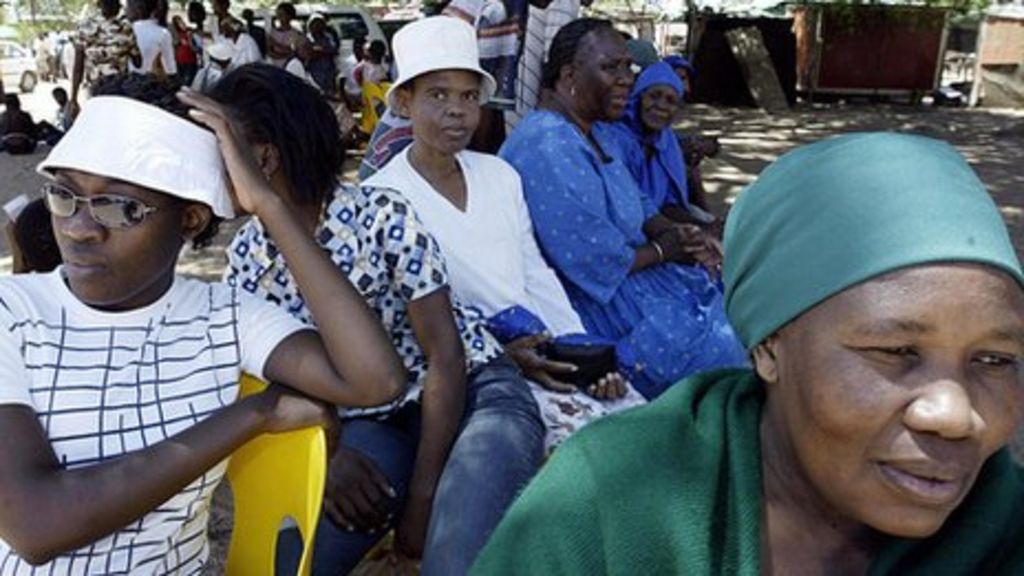
It’s a great day for Edith Mmusi and her sisters and her sisters’ sisters

Five years ago, four women elders, four sisters – Edith Mosadigape Mmusi, Bakhane Moima, Jane Lekoko, and Mercy Kedidimetse Ntshekisang – decided enough is enough. Today, the High Court of Botswana agreed. Today, four sisters and their sisters opened the door for women across Southern Africa.

Here’s “the story”:

A couple had one son and four daughters. The father had another son in a previous relationship with another woman. At some point prior to the distribution of the inheritance, the younger son told his half-brother that the half-brother could inherit the family home, when the time came. The time never came. Both brothers died in the intervening period. When the time did come to distribute the inheritance, the half-brother’s son, Molefi Ramantele, showed up and claimed the house.

Edith Mmusi had been living in the house all along. She and her sisters had paid for the upkeep all along. But customary law, the so-called law of male primogeniture, said that the youngest male would inherit. He told Edith Mmusi and her sisters that they had to go.

That’s when Edith Mmusi and her sisters had enough. They went to court.

In 2007, the Lower Customary Court ruled in Ramantele’s favor. In 2008, the Higher Customary Court held that the home belonged to all of the children. In 2010, the Customary Court of Appeal argued in favor of Ramantele. Edith Mmusi and her sisters then decided, again, that they’d had enough, and appealed the decision to the High Court.

They were supported by Priti Patel, of the Southern African Litigation Centre, based in Johannesburg, as well as other women’s rights activists across Southern Africa. They were also supported by the earlier Attorney General v Unity Dow, a landmark women’s rights case. Unity Dow found that Botswana law denied citizenship to children born to a Botswana woman married to a non-citizen, while extending citizenship to Botswana men married to non-citizens. Dow then did what women do, she did what Edith Mmusi and her sisters did. She said enough and took action. She took the government to court and, in 1992, won. Her actions opened a door for women in Botswana, across Southern Africa, and beyond.

The story is the actions of Edith Mosadigape Mmusi, Bakhane Moima, Jane Lekoko, Mercy Kedidimetse Ntshekisang, Priti Patel, Unity Dow and thousands upon thousands of women whose names go unrecorded. It was not the rule of law that won today. Women won today: women pushed and pushed again, women said enough, women organized, women persisted. Upon leaving the High Court in Gabarone today, Edith Mmusi said, “It’s a great day for us.” It is indeed a great day for Edith Mmusi and her sisters and her sisters’ sisters across Botswana, across Southern Africa and beyond.


(Photo Credit: BBC)

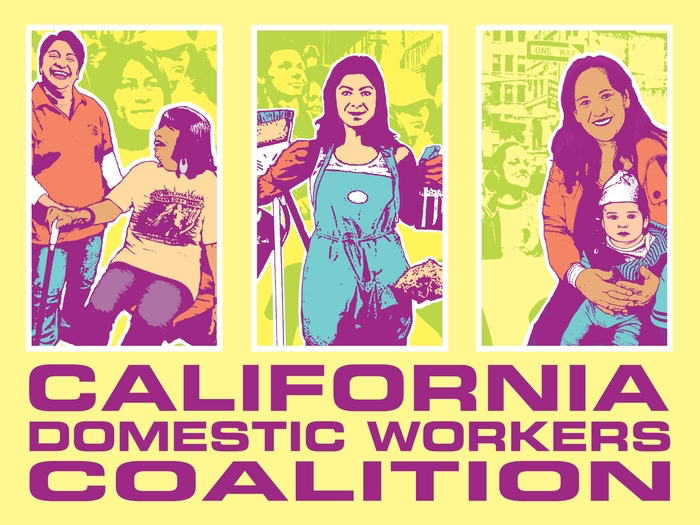
Domestics: Tell Governor Brown Domestic Workers Are Workers

Hundreds of thousands of domestic workers will remain unprotected by state law while at work following Governor Jerry Brown’s veto of AB889. While Brown acknowledged they were doing “noble work”, he felt there were “too many unanswered questions” about the bill’s contents. A fair portion of his questions expressed concern for the employer, not the domestic worker.

The measure would have provided meal breaks, overtime pay, and rest periods during long shifts. Opponents of AB889, such as the California Chamber of Commerce, argued that allowing domestic workers to have such provisions would be “impractical at best and dangerous at worst.”

Cost effectiveness is something that should be considered in the course of any measure, but not at the expense of workers’ safety. This sort of logic is not tolerated at other levels of business. Domestic work should be no exception. There is a tendency to overlook the importance of domestic workers and to ignore the fact that they are indeed workers. Working in an environment previously deemed the private sphere is no justification for denying over 200,000 individuals their rights.

Their place within the home and their performance of duties that are not traditionally viewed as the task of a non-family member have somehow earned them a place below that of other working class individuals. Brown claimed that domestic work is a “noble endeavor”. If that’s so, why doesn’t it warrant the protections granted to all other occupations of similar status and pay?

Additionally, a large percentage of domestic workers in California are female immigrants. Advocates of this legislation have explained that the Domestic Worker Bill of Rights would provide them with some sorely needed protections. By vetoing this bill, Governor Brown has denied domestic workers their civil rights and forced them to face unsafe working conditions with no means of recourse.

(Image Credit: California Domestic Workers Coalition)

Domestics: Who’s Burdening Whom?

Following Governor Jerry Brown’s veto of the California Domestic Workers’ Bill of Rights (AB 889), the California Chamber of Commerce expressed support for Brown’s decision and claimed that the bill would have placed a “burden onto working families who are struggling.” Apparently the California Chamber of Commerce does not view sexual harassment, underpayment and  70 hour work weeks – just three of the countless unjust labor standards faced by domestic workers – to be burdensome.

What’s even more alarming than the California Chamber of Commerce’s ignorance is the fact that Brown is on their side. Brown asked, “What would be the additional costs [to the employers of domestic workers]?” But whose cost is greatest here? While the price of nannies, care takers and housekeepers may increase for employers, the cost of not having basic labor protections is surely a greater issue.

Although the business community in California considered AB 889 to be ‘radical’ in its demands, in reality, the bill would have simply extended the rights granted to the rest of the labor workforce to domestic workers. What is ‘radical,’ however, is denying the 200,000 domestic workers in California the same labor protections granted to almost every other manual laborer since the New Deal. As Caitlin Vega, a legislative advocate with the California Labor Federation, stated, “We’re not creating new rights that no one has ever heard of.”

Sylvia Lopez, a worker with the California Domestic Workers Coalition stated, “For decades we have tirelessly cared for California’s homes, children, the elderly and people with disabilities with the protection of basic rights.” Even Brown referred to the work done by domestic workers to be a “noble endeavor.” But until California grants basic labor protections to its domestic workers, a burden will continue to lie on these hard workers and their families.

Michael Smith, michaelsmith093@gmail.com

Domestic Workers’ Rights: An Increasingly Relevant Transnational Issue

California Governor Brown’s recent veto of the Domestic Workers‘ Bill of Rights (AB889) has given several domestic workers‘ groups a platform on which to raise awareness about and discuss the significance of equal rights for and, even more, valuation of domestic workers. Unfortunately, this is the only positive outlook on Brown’s veto.

According to a member of the California Domestic Workers Coalition, “more than just protecting meal breaks, the workers had hoped the bill would signal a fundamental shift in the way society regards their work.” Domestic workers, most of whom also need to provide and take care of their own families, deserve to both feel and actually be legitimate in regards to their job security and self-representation while on the job.

By referring to domestic workers as “companions” to the elderly and disabled, it evokes a responsibility of love and devotion to their employers – one that is too easily manipulated and exploited by the state (in this case, Gov. Brown specifically) who believes it would be dangerous for the elderly and disabled to regulate domestic work.

However, this seems like it would be a very workable issue once domestic workers are recognized under the basic protection of job rights. In fact, the Director of the National Domestic Workers Alliance, Ai-jen Poo, says that “it was clear [they] would work through [the state’s questions] during the regulatory process [after the bill was signed].” One foreseeable solution could be the implementation and regulation of shifts by domestic worker unions. This would hopefully allow the workers to receive eight hours of daily and fairly paid work.

Without saying it, it appears that another concern of Governor Brown’s is the immigration status of these California domestic workers. As a US citizen myself, I am less concerned with this aspect of the issue. Since these domestic workers are worthy enough to take care of other people’s children, grandparents, houses, etc., this should earn them the right to visibility in regards to both the law and society.

Zoë Waltz

(Photo Credit: California Domestic Workers Coalition)