In France, mandatory minimum sentences kill

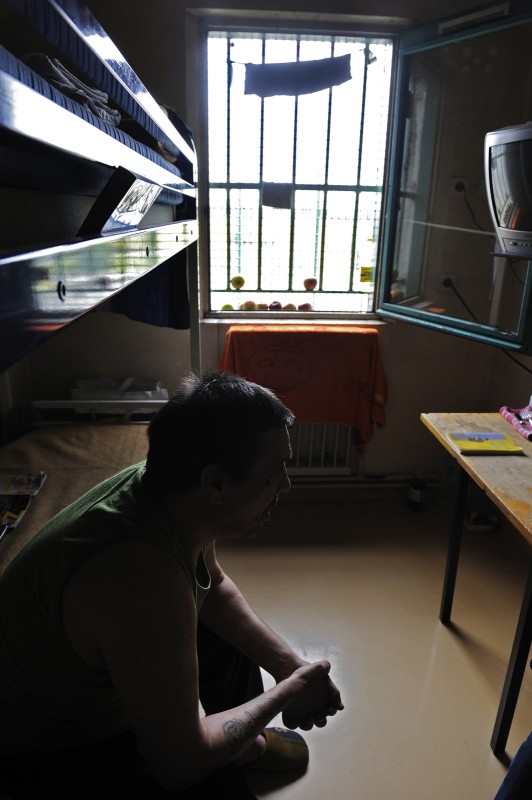
A cell in Longueness Prison

The Council of Europe‘s recently published Annual Penal Statistics officially reveal that European prisons are overcrowded. The report looks at 47 countries of the pan European organization, including the EU countries. The report coordinator, Marcelo Aebi, explained that every country, except Russia, sent data that seemed valid. The numbers may be valid, but the interpretations bear scrutiny. For example, in the calculation of the prisoner-to-space ratio, each country seemed to assess the need for space differently.

Space is never a neutral issue. In penal space, bodies are manipulated, processed and intentionally humiliated. They are confined with no horizon in sight, both figuratively and literally. With bodies piling up in the global prison, the prospect of “rehabilitative” policies and practices becomes ever more distant. Media promotion of insecurity linked with neoliberal austerity measures that trivialize public services have played a major role in passing tough-on-crime legislation, particularly mandatory minimum sentences. This happened in many European Countries, including France under the administration of Nicolas Sarkozy, 2007 to 2012.

The results are clearly visible in France’s prisons today. French prisons are still overcrowded, as are those in half of the European countries. Under the Sarkozy government, judges were encouraged, rewarded, for sending people to jail or prison. Mandatory minimum sentences for recidivist and the obsessive tough-on-crime attitudes pressured judges to sentence for more years. Between 2007 and 2012, 4000 years of incarceration were added every year. According to the president of the conference of prosecutors, while the current executive branch exerts less direct pressure, as long as the mandatory minimum sentences remain in place, little will change.

More importantly the rate of suicides in prison has increased tremendously, with 15.5 for 10,000 prisoners in France and a European high of 29 per 10,000 in Luxembourg. While the conditions before were difficult, today the length of pretrial detention contributes to the escalating suicide rate. This means that much of the overcrowding has nothing to do with “rates of crime”, since many of those being held are awaiting trial. France has a high rate of pretrial detentions compared to other European countries, although still much lower than the United States. The issue of pretrial detention is a key to understanding the rising suicide rate, since most suicide attempts occur at the beginning of detention. When it comes to suicide, the distinction between pretrial and convicted is moot.  All that matters is being behind bars.

The Observatoire International des Prisons (OIP) published the story of Martial, who chose to be sent to solitary confinement rather than `share’ a cell with another prisoner. He requested a single cell, which is impossible in Longueness Prison. Longueness was built for a maximum of 196 prisoners. It currently warehouses 380 prisoners. There are no `singles’.

This situation must change!

Christiane Taubira, the current French minister of justice, has pledged to make prison the last resort. As Marcelo Aebi has acknowledged, this is a good but too small step, especially since it doesn’t affect the rest of the European countries and their overpopulated prisons.  Instead, Aebi has called for a new approach that reduces the length of sentences and relies much more on alternatives. Aebi argues that the cost of keeping someone in jail (85Euros/day in pretrial detention in France) is high compared to supporting decent housing: “It would cost society less to invest in prevention, from early childhood and adolescence, which would keep us from having almost 2 million Europeans (1, 828 000) in prison.” The global lockdown costs lives, money, well-being, the future. We need to interrogate the relationship between economic crisis, austerity and rates of incarceration.

In all of this, let’s not forget the women, who are overlooked in these statistics, perhaps because 95% of the prisoners are men. None of the articles and reports used for this blog statistically addressed or qualitatively discussed the fate of women prisoners. Where are the women in the French, and the European, lockdown?

(Photo Credit: Michel Le Moine / Divergence)
I read the news today

I read the news today

I read the news today
our press is gloomy
sending the world
a pessimistic image

A pessimistic image
no-one has as yet won
the war on poverty
(R500b leaves Africa yearly)

I read the news today
foot-in-jaw politicians
puckering up for elections
(a ‘people-orientated leader’
denies a R100,000 kickback)

I read the news today
rarely do we hear of
active democracies
hale and hearty citizens
who can read and write

(perhaps it is in parenthesis
secreted inside of digressions
by the enemies of the nation
awaiting the reputed rainy day)

And violence against women
is on a high especially in Africa
(1 in 3 women victims of partners)
(did our Finance chief get that)

But that is just
a little bit on the side
in the grander scheme of things

Gender-based violence makes the SAFM radio’s Weekend PMLive programme, in an interview with a Medical Research Council doctor,Sunday evening 23 June 2013 (see “One in three women victims of partners”, Cape Times, June 21 2013); whilst “Gordhan scorches ‘gloomy’ SA press” (Cape Times Business Report, June 20 2013).

“Africa loses R500 billion a year to illicit outflows – Mbeki”, and “Minister denies R100 000 game farm kickback claim” (both in the Cape Times, June 18 2013).  By the by the line “I read the news today” comes from the Beatles’ ditty “A day in the life”.

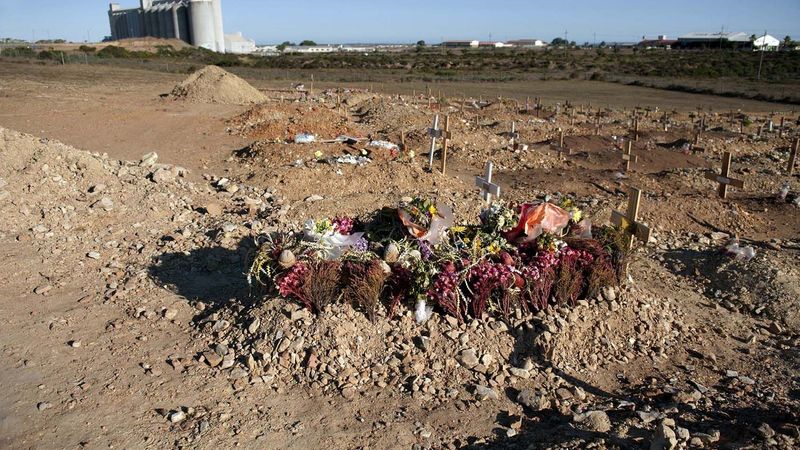
(Photo Credit: David Harrison / Mail & Guardian)

The `taint of racism’ for Black Women and Girls On Death Row

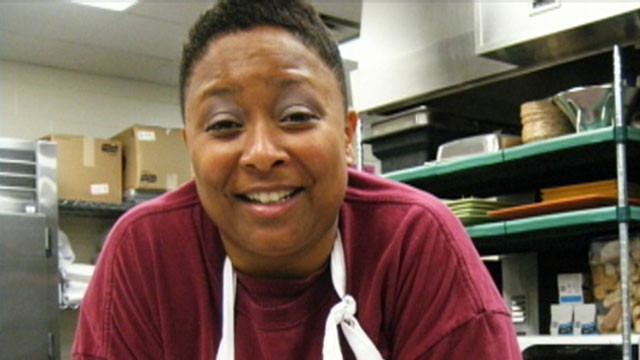
Paula Cooper, savoring her freedom

Between Kimberly McCarthy and Paula Cooper lies either a chasm or a tremendous healing.

Texas is poised to execute Kimberly McCarthy, a 52-year-old African American woman accused of having murdered her White neighbor in 1997. If McCarthy is executed, she will be the 500th person to be executed by Texas since the death penalty was reinstated, in 1976. Texas is far and away the leader in this field, with Virginia a distant second.

According to Maurie Levin, McCarthy’s current attorney, the case must be revisited because the proceedings were `tainted by racism.’ That `taint’ is many layers deep and covers much. In Texas, 283 people are currently on Death Row: 39.2% are African American; 29.7 percent are Latino; 29.7 percent are White. Those racial demographics are geographic as well. Texas has 254 counties. In the past five years, 22 counties have sent people to Death Row. It’s not `Texas’ that fills the death rosters … but it is Texas that executes them. Rick Perry holds the record as the U.S. governor presiding over the most executions ever carried out. Texas is #1; Rick Perry is #1.

Nationally, Harris County, Texas, is the top county for executions, both in Texas and the United States. #2 is Dallas County. Kimberly McCarthy’s case was heard in Dallas County. In Dallas County, it was almost impossible for African Americans to get on a jury. McCarthy’s jury had one African American on it. That was no accident, according to Maurie Levin. It was also no accident that the attorneys who sort of represented McCarthy in her earlier forays never touched on the racial composition of the entire proceedings. Why would they? McCarthy was an African American, coke addicted woman worker who was accused of having brutally murdered a 71-year-old White woman. Case closed.

Last week, Indiana demonstrated that there’s a better way. Paula Cooper walked out of prison, not quite yet a `free woman’, but not a prisoner and not on Death Row.

In 1985, Paula Cooper was 15 years old. She was accused of having murdered Ruth Pelke, who was 78 years old. Cooper is African America; Pelke was White. Paula Cooper was convicted of murder and, at the age of 16, was sentenced to death. At that time, she was the youngest Death Row `guest of the State’ in the country.

A local, national, and global campaign erupted at the prospect of a 16-year-old girl being sentenced to death. Two years later, the Indiana Supreme Court agreed, and set aside the death penalty. The Court sentenced Cooper to 60 years behind bars.

In the intervening decades, Cooper has earned a college degree and time off for good behavior. On Monday, June 17, 2013, Paula Cooper walked out of prison.

That’s not all that changed during those decades. The prosecuting attorney in the case came to oppose the death penalty. Even further, Bill Pelke, Ruth Pelke’s grandson, has become a leading death penalty abolitionist. As Bill Pelke explains, “It was about a year and a half after my grandmother’s death, about three-and-a-half months after Paula Cooper had been sentenced to death, where I became convinced, beyond a shadow of a doubt, that my grandmother would have been appalled by the fact that this girl was on death row and there was so much hate and anger towards her. I was convinced she would have had love for Paula Cooper and her family. I felt she wanted some of my family to have that same sort of love and compassion. … I learned the most important lesson of my life that night, and it was about the healing power of forgiveness, because when my heart was touched with compassion, the forgiveness became automatic. And when it happened, it brought a tremendous healing.”

When the State of Indiana decided to forego vengeance against a child, to treat the child as one of us, as a sister or a daughter or a simply another human being, a tremendous healing began. The State can do that; it can opt for healing. Tell Rick Perry and Texas right away. Then tell everybody else.


(Photo Credit: ABC News)

Around the world, women say, “Hell no!”

Vinegar Revolution

Around the world, women are loudly, softly, even silently rejecting the `advances’ of repressive regimes, from Turkey and Greece to Senegal and Brazil, women are saying, “Hell no.” The State says vacate, and women say, “No, we’re staying.” The State says move on, and women say, “We’ll just stand still for a while.” The State says, “Come to our big event”, and the women say, “No, and here’s why.” The State says, “Ok, come on in,” and women respond, “You know what? After the way you’ve treated me, you can keep your so-called invitation.”

When the Greek state tried to close the ERT television station, workers, women like Maria Kodaxi, refused to move. Across Turkey, women refused to accept the violence of the State and, one by one and then in tens and hundreds, became “duran kadin”, standing women. In Greece and Turkey, the struggle continues.

As Turkey gave the world Gezi Park and #durankadin, Brazil this week gave the world … vinegar. Vinegar uprising. Vinegar revolt. The salad revolution. Police thought they’d quell and dispel a relatively small group of protesters with tear gas, batons, and violence. Instead of quell, they got rebel. Where there were tens, a million marched and more are on the move. And vinegar became the symbol of resistance and solidarity. It’s a good week for new symbols that match new forms of action.

Carla Dauden is one Brazilian woman engaged in protest, and she is not going to the World Cup. Dauden is a young filmmaker, a native of Sao Paolo, and the director, producer, narrator and face of “No, I’m not going to the World Cup.” Part of her reason is an ethical calculus: “Now tell me, in a county where illiteracy can reach 21%, that ranks 85th in the Human Development Index, where 13 million people are underfed every day and many people die waiting for medical treatment, does that country need more stadiums?” As of this writing, over 2.5 million people have watched and listened, and maybe heard, Carla Dauden explain why she is saying, “No”.

In Senegal, Bousso Dramé is not going to Paris. Bousso Dramé is, by any standards, an accomplished woman, whatever that means. The World Economic Forum thinks she’s a “global shaper”: “a proud African, committed Senegalese citizen and vibrant young woman.” Dramé works for the World Bank, has many advanced degrees, speaks many languages. She recently won a national spelling bee. Part of the prize was a round trip ticket from Dakar to Paris and back. When Dramé went to the French Embassy to apply for her visa, she was treated like dirt, “as less than nothing.” This abuse happened repeatedly, and was visited upon her by a number of embassy personnel. And so, when Dramé finally, finally was informed that she had finally been approved for a visa, she write an open letter to the French government saying, “No, thank you.”

Dramé said no not only in her own name, but in the name of Senegalese across Europe, of Africans across Europe: “If the price to pay … is to be treated like less than nothing, I prefer to reject this privilege altogether… I wanted to put forth a symbolic act for my Senegalese brothers and sisters who, every day, face being crushed in the embassies of Schengen zone.”

From Turkey to Greece to Brazil to Senegal and France, the particulars may change, but the dance is the same. And women across borders, in studios, parks and streets, videos, embassies, consulates, and open letters, are saying, “Hell no.”

(Photo Credit: Reuters)

From Gezi Park to Bakirköy Women’s Prison, the struggle continues

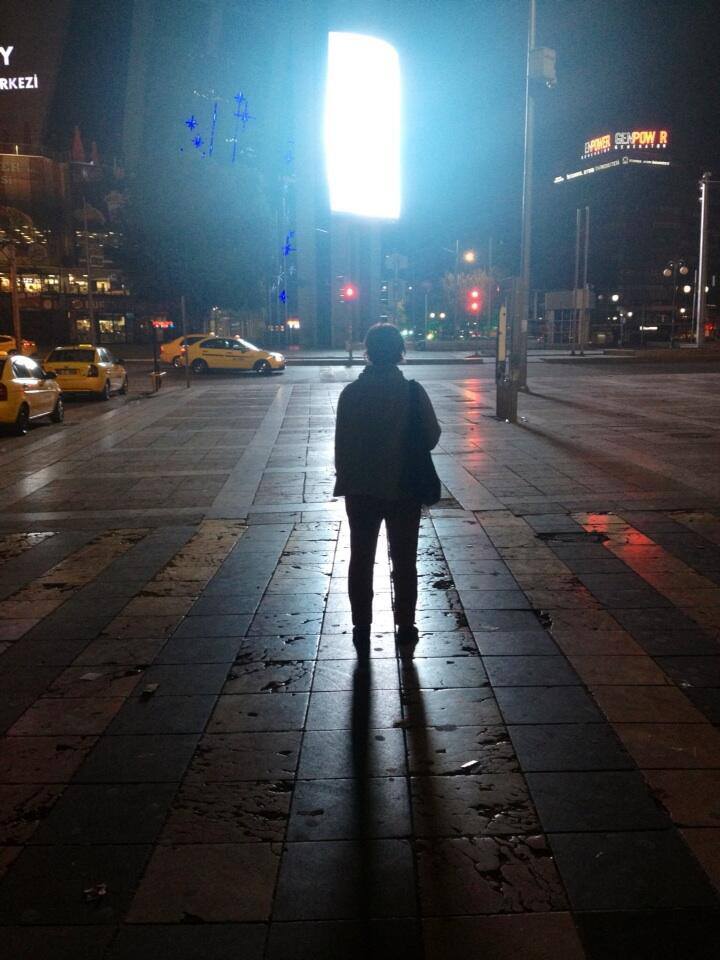
In Ankara, a #standingwoman surfaces. She is standing in Kizilay Sq, where Ethem Sarisuluk was shot dead by the police.” Across Turkey, individuals are standing, facing, moving while perfectly still. #duranadam. It means, “standing man.”

Revolutions change our language. How many around the world knew of Tahrir before the Egyptian uprisings? Now, we all do. It’s a gift Egyptians have given to the world.

The democracy and social movements across Turkey have given us Gezi, Taksim, and now #duranadam. This is part of the inherent creativity of people in movement.

The State has responded with predictable, moribund redundancies. First, it tried to criminalize the protesters. Then it claimed they were foreign agents. Then it tried to claim they were only a dissident, spoiled fringe minority. This is textbook `Statecraft’ at its emptiest.

Then the State sent in the police, to `clear’ the parks, to `reclaim’ the commons in the name of `the people’. Familiar, no?

Today’s news is filled with the predictable: “Turkey arrests dozens in crackdown”; “scores detained”; “dozens detained.”

Behind the `niceties’ of detention and arrest stands the prison. Turkish prisons are notorious for their human rights violations and abysmal conditions. On October 20, 2000, Turkey “gave” to the world the longest and deadliest hunger strike in modern history. Across Turkey, for three years, prisoners fasted, and died, protesting the construction of F-Type prisons, which are basically supermax. Across Turkey, women prisoners went on hunger strike, `even though’ women prisoners weren’t sent to F-Type prisons. In Turkey, solidarity is not a new phenomenon. Neither is standing, seemingly alone and yet decidedly with others.

Since then, hunger strikes, by prisoners and others, have become a regular part of the Turkish political landscape. Last September 60 or so Kurdish prisoners went on hunger strike. By the end of the strike, close to 70 days later, close to 700 prisoners had joined the strike, plus untold others across the country and even around the world.

At the same time, sexual violence, rape, and torture also form a part of the Turkish political landscape that emerges from and returns to prison. Women, like Hamdiye Aslan and Asiye Zeybek, have reported on the extreme and continuous violence they suffered. For more than a decade, national and international groups have documented this. Little to nothing has changed.

Some things have changed. In 2002, there were 55,000 people in Turkish prisons and jails. In early May, there were more than 130,000. Health care in the prisons has gone from bad to criminally worse, as acknowledged recently by none other than Recep Tayyip Erdogan.

In October 2011, Ayşe Berktay, writer, translator, peace and justice activist, pro-Kurdish activist, was arrested. She’s still in prison, two years later. In December 2011, Berktay wrote from Bakirköy Women’s Prison: “The situation here is rather critical. Feeling ever more powerful with the support he is getting from `Western powers’ as a representative of so-called `Western ideals of democracy and freedom’ in the region, Erdoğan has turned his back on—or done away with—all semblance of democracy at home and is preparing to intervene actively in the region. Your action is valuable in the sense that it exposes the true nature of the Erdoğan government…He feeds on this `democratic prestige’ he has abroad to take harsher measures against democratic opposition at home. Such prestige makes his hand stronger against opposition in the country. Anyone who does not agree or go along with his way of solving the problem is a terrorist, an enemy—familiar, no?”

Familiar, no?

This morning, Rumeysa Kiger, a journalist who had been part of the delegation that met with Erdoğan last week, was arrested. According to her husband, she was on the way to an interview when she saw police arresting protesters. She went to object and was herself arrested. Familiar, no?

As Berktay concluded, two years ago, “Protests against this anti-democratic obstruction of political struggle and the arbitrary nature of the detentions, against arbitrary detentions to obstruct political struggle and democratic opposition, are very important. They need to know that the world knows and follows.”

One man standing. One woman standing. Thousands of women and men standing, in prisons, parks, squares, and streets. Extraordinary, no?


(Photo Credit: http://www.ayresmendevrim.com/2013/07/dunyadan-ve-turkiyeden-duranadam.html)

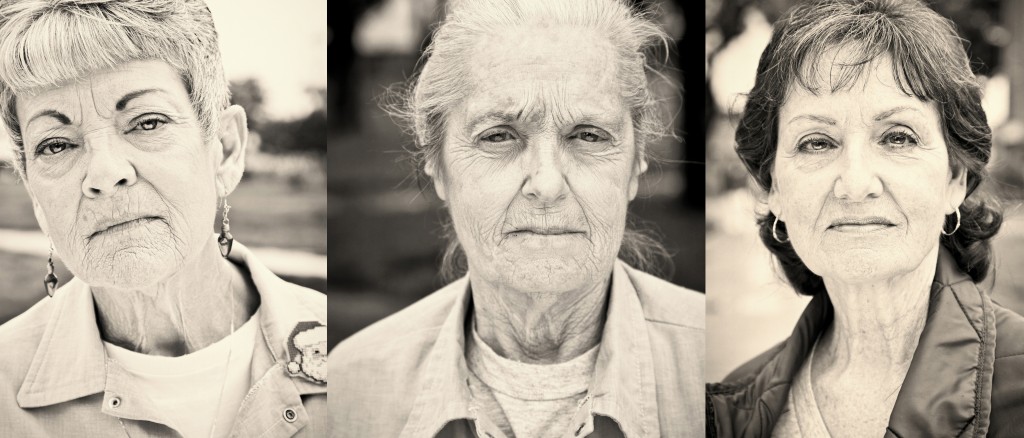
But some of us are older women prisoners

A new infographic, Aging Behind Bars, focuses attention on the grim realities of the graying prison nation: “Between 2007 and 2010, the number of state and federal prisoners age 65 or older grew 94 times faster than the overall prison population. Between 1981 and 2010, the number of state and federal prisoners age 55 and over increased from 8,853 to 124,900. By 2030, that number is projected to grow to 400,000, an increase of 4,400 percent from 1981.”

Thanks to three-strikes policies and other aberrations, prison is not only the national mental health institution. It’s also fast becoming the national senior “care” facility, except without the care. Elder women live poorly and die hard in those “care facilities”. For example, in California, a few years ago, Helen Loheac, 88 years old, nearly blind and deaf, suffering from late stage Alzheimer’s and in the very last phase of kidney failure, applied for compassionate release. She had a place waiting for her… for ten years. But she was denied parole because she would be a risk to public safety. And so on January 5, 2009, Helen Loheac died of pneumonia in a hospital near the Central California Women’s Facility (CCWF) in Chowchilla. She died shackled at her waist and ankles, two guards at her bedside. It’s called “care.”

In California, elder women prisoners call themselves Golden Girls and they’re organizing. Elder women prisoners in Alabama, residents of the Julia Tutwiler Prison for Women, are organizing as well. Some of them, like Erline Bibbs, are members of the Longtimers/Insiders. For over a decade, they have been pushing, through the courts and through collective advocacy and activism, to have a role in prison reform. They understand, with their bodies, that the women’s prison population is too large and that there have to be better conditions for women prisoners and for women, more generally. This means building identifying low-risk women prisoners and “sending them out the door”; building more work-release sites, rather than bigger prisoners, so that women prisoners could stay connected with the so-called free world and could have some savings when the get out; building and sustaining well-run drug facilities that would actually pay attention to the particularities of women’s lives, and especially of the lives of women of color and of low income women.

Eleven years ago, Bibbs and others sued the state of Alabama and won. Their overcrowded prison was found to be in violation of the Constitution. The Julia Tutwiler Prison for Women was designed to hold at most 370 prisoners. In 2002, it held a thousand.

So where are the women prisoners of Alabama today, and in particular the elder women prisoners?

Last year, Equal Justice Initiative investigated and found the following. Women prisoners are raped, sexually assaulted, and sexually harassed by the staff. Officials systematically under-report sexual assaults. Women prisoners who report sexual assault are punished, which creates a climate intimidation. Male staff members continually view nude women prisoners, despite the rules, and are never punished or disciplined.

The Federal government sent in an investigative team, and they found the level of sexual violence, harassment, and intimidation [a] as high as ever, [b] pervasive and part of the fabric of the place, [c] part of the physical architecture of the prison. According to the federal investigators, the spatial and architectural “inducements” to sexual violence could be fixed, and at very little cost.

But what is very little cost when talking about women prisoners, and especially older women prisoners? We know that elder care is costly, and yet the numbers continue to grow. We know that sexual violence preys on the vulnerable and does not discriminate among age groups. None of this is new, and none of this is hidden or esoteric knowledge.

In Alabama, some officials and some newspapers are “appalled” by the “shameful”. After over a decade of women prisoners organizing, advocates winning case after case, the Federal government intervening time and again, the Julia Tutwiler Prison for Women is one of the ten worst prisons in the United States. At Tutwiler, all the prisoners are women, most of them need help rather than imprisonment, and some of them are older.


(Photo Credit: Ron Levine/http://sowkweb.usc.edu)

Prison is bad for pregnant women and other living things


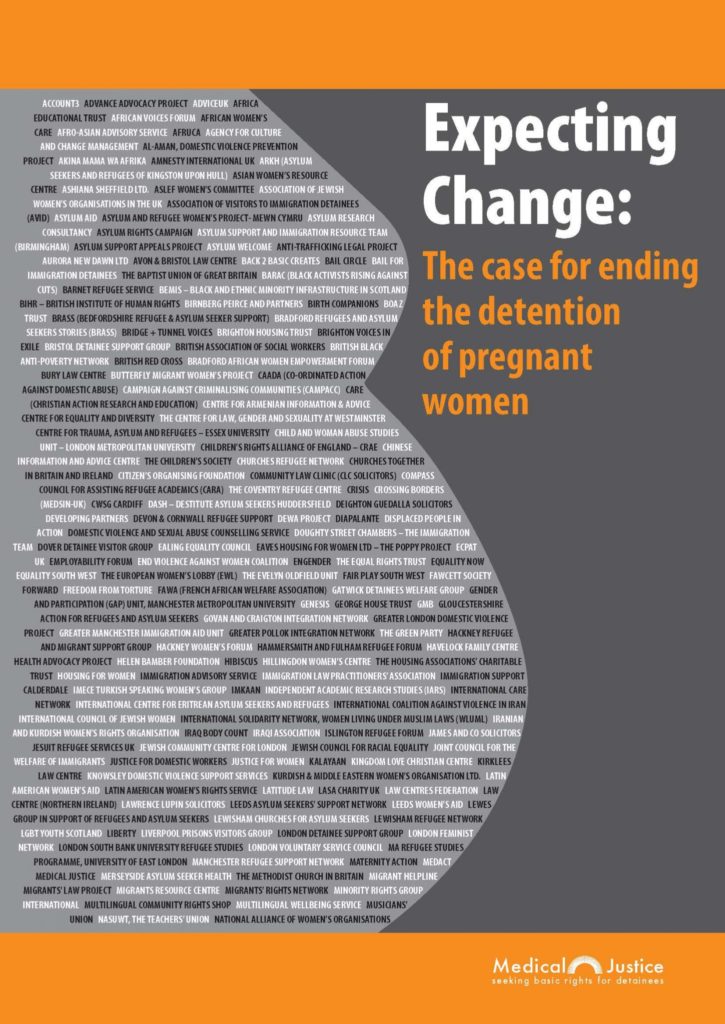
A report entitled Expecting Change: the case for ending the immigration detention of pregnant women was released today. It describes the nightmare that is Yarl’s Wood. The report bristles in its portrait of a system built of violence, planned inefficiencies and incompetence, and general disregard for women. You should read this report.

At the same time, a question haunts the report. So much of it is commonsensical that one feels compelled to wonder about the groundwork and horizons of social justice research. Here’s an example: “Asylum seeking women have poorer maternity outcomes than the general population. Many women in the sample were victims of rape, torture and trafficking.” The vast majority of women asylum seekers are fleeing sexual and other forms of violence, and so it comes as no surprise that they have poorer maternity outcomes than the general population. They also have poorer health outcomes generally, including mental and emotional health. They are asylum seekers.

On the one hand, we could discuss `the system’. We could talk about the planning that goes into systematically “failing to recognize” and “failing to appreciate” the particularities of women prisoners’ lives and situations. We could talk about the political economy of that planned failure, about who benefits and howbut we’ve done that already.

Instead, let’s imagine. Imagine what we could be researching and developing if we weren’t constantly working to undo over three decades of intensive, systematic and, for a very few, profitable mass incarceration.

Here’s where we are today. We have to conduct a multi-year study to prove that pregnant women asylum seekers shouldn’t be in prison.

We have to conduct other studies to prove that prison is an inappropriate place for children seeking asylum. We have to conduct another series of studies to suggest that maybe prison isn’t the best place for children, and that adult prison might be an even worse option. We need another multi-year study to `prove’ that sexual violence against children in juvenile prisons is epidemic. We need that same study to `demonstrate’ that the majority of acts of violence against those children, our children, were perpetrated by adult staff members.

We need another study to prove that the reason that self-harm and hunger strikes are so common, so everyday, in immigrant prisons is that the conditions are inhuman and dire. Prisoners have given up hope as they refuse to give up hope. We need many studies to demonstrate adequately that LGBT immigrants suffer inordinately in immigration prisons, and we need many more studies to demonstrate that the same is true for immigrants who live with disabilities. And then of course we’ll need more studies to prove that immigrant prisoners living with HIV have a tough time behind bars. We’ll need studies to prove that the prisons for immigrants and migrants and asylum seekers are extraordinarily cruel, and then we’ll need other studies to prove that the cruelty of those prisons is actually quite normal, and quite like the cruelty of all the other prisons.

We’ll need studies to prove that immigration prisons embody the architecture of xenophobia, and we’ll need other studies to prove that the asylum system is “flawed”. We’ll need other studies to understand that the xenophobia and the flaws are gendered. And then we’ll need meta-studies that will analyze the curious phenomenon of the complete lack of improvement. These studies will note, with compassion, that after decades of detailed research, the prisons are still hell.

I am grateful for the work scholars have performed. It’s often impossible work, and yet individuals and groups, such as those at Medical Justice who produced today’s study, do that work, and do it with grace. At the same time, imagine. Imagine what we could be researching and learning if we weren’t still drowning in our own Hundred Years’ War of Mass Incarceration. Imagine.


(Image Credit: Medical Justice)

For women workers, it’s time to change the song

Reading the names of missing women

Across Turkey, women are at the forefront of the demonstrations. And not only women. Feminists: “At first groups of students chanted: `We are the soldiers of Ataturk’; this died out after feminist protesters objected to its militaristic overtones.”

From the first eruption through today, the Turkish movement has been a giant popular feminist education site, and one that includes sex workers: “`We used to sing ‘Erdogan is the son of a whore’. But when the police teargassed us, one of the brothels on Taksim Square opened its doors, and the women gave us shelter and treated us with lemons. We don’t sing that any more.’”

The solidarity of sex workers taught demonstrators that sex workers are workers, sisters, and women. Sex workers are not epithets or metaphors, and they are not criminals. They are part of the working mass, and they can represent themselves.

In the past week, sex worker organizations have taught exactly the same lesson to workers, social movements, and the State, around the world.

Across Canada this weekend, sex workers and supporters demonstrated, under the Red Umbrella, for legalization of sex work and for sex workers’ rights as workers, women, and women workers. This week, Canada’s Supreme Court will finally hear a challenge by Terri-Jean Bedford, Valerie Scott and Amy Lebovitch to the constitutionality of the laws concerning sex work.

Former and current sex workers have argued that criminalization makes sex workers more vulnerable, forces them further underground, further isolates them, and impedes access to public and social services. It’s a hard life, and the laws only make it harder, sometimes fatally so: “When Kerry Porth remembers her life as a sex worker in Vancouver, she can’t help but wonder how she survived when so many other prostitutes died a gruesome death at the hands of notorious serial killer Robert Pickton. `They were women just like me. Looking back, realizing just how much risk I was at, it was a real eye-opener.’”

In Kenya, sex workers in Laikipia District have organized a group called the Laikipia Peer Educators. They want formal recognition. They want the protection that formal recognition might provide, and they want the citizenship, the opportunity to participate and contribute to the common good in the same manner as every other worker. They want to trade in stigma for taxes.

In Australia, the Scarlet Alliance, representing Australian sex workers, lobbied to have foreign sex workers included among the skilled work visas. Sex work is legal across Australia, to varying degrees, but it’s not considered “skilled labor” by the State, at least not yet. Massage therapists, gardeners, florists, cooks, dog handlers, fashion designers, bed and breakfast operators, entertainers, dancers, recreation officers, makeup artists, jockeys, gymnastic coaches and horse riding instructors are considered skilled labor, but not sex work.

This is about work that is not called work, workers who are not called workers, and women who are told they cannot represent themselves. This concerns sex workers, as it concerns domestic workers in the United States. Both Hawaii and California seem to be on the verge of implementing or of passing respective Domestic Workers Bill of Rights. All workers are workers. Period.

Feminist political economists have argued for decades that women’s work is work, whether it’s waged or not, whether it’s called work or not. Women workers have known this and have organized for centuries for recognition, dignity, autonomy, rights and power.

From the social movements in Turkey to the courthouse in Canada to the District government in Kenya to the Australian Department of Immigration and Citizenship to the state houses across the United States, it’s time. It’s time to recognize women’s work, all work, as work, and to recognize all workers as workers. It’s time to change the song.


(Photo Credit: Rabble.ca / Murray Bush / Flux)

Laura S. didn’t have to die

This is the story of Laura S.

Laura was born in Mexico in 1986. She became involved with a boy, Sergio. Early on Sergio became violent. And Laura stayed with him. At the age of fourteen Laura S. gave birth to their first son, in 2001. She became a resident of Hidalgo County, Texas. She gave birth to two other sons by Sergio, in 2007 and 2005, respectively.

Sergio became increasingly violent and abusive. In March 2003, Laura obtained protection from the local police and courts. Sergio kept harassing Laura. In 2008, she obtained an order of emergency protection. Furious, Sergio returned to Mexico.

On June 8, 2009, Laura S. went out with a cousin and two friends. They were stopped near Pharr, Texas, by a local police officer for a minor alleged driving infraction. The officer then demanded their immigration papers. Only the cousin could produce papers.

“Laura S. began to weep, begging the officer to let her go.”

She explained about Sergio, about the threat to her life. She explained about the protective orders. She explained that her life would be finished, and violently so, if she were returned to Mexico. She talked about her three small children, one of whom was about to have surgery.

The police officer turned the three over to ICE. ICE took the three to Harlingen U.S processing center.

“On the way to Harlingen, Laura S. continued to weep and beg to be released.” More agents came in. Laura explained everything, again, to the federal agents. Laura wept and explained, explained and wept, begged and explained, explained and begged. No one listened.

Laura wept and trembled as she spoke with the agents. No one asked her any questions. No one tried to verify or evaluate her risk of harm. No one explained any of her legal rights to her. If Laura had had a hearing, even in Texas, there’s a good chance she would have been able to stay in the country.

Given the dangers Laura faced in Mexico, a hearing should have been “mandatory and non-discretionary”. Laura never saw Judge or lawyer. Instead, the federal agents decided on their own to ship Laura S to Mexico.

Although the agents intimidated and coerced Laura, she never agreed to go. She continued to beg and explain, to explain and weep, all the way to the Hidalgo/Reynosa international bridge. In the early morning hours of June 9, 2009, a mere few hours after having been stopped, Laura S. was forced to cross the bridge into Mexico.

Within a few days, Sergio found Laura, and slowly tortured and then brutally killed her. On June 14, less than a week after the traffic stop, Laura’s body was found in a burning car. Her mother went to Mexico and testified against Sergio, who was imprisoned. He later escaped.

Now Laura’s mother and her three young children are suing ICE and the Border Police.

Laura S. was forced to cross the bridge into Mexico. What authorizes that force? What is the the force that `gives’ a woman protection only to steal it at the moment its needed? What is the force that refuses to listen to or hear a woman begging for life? What is the force that refuses to recognize its own “mandatory and non-discretionary” rules?

That force is the regime of brothers, the fratriarchy, which underwrites national democratic sovereignty. One law protected Laura, but those federal agents understood that there is a more powerful law. There is the law of force that makes brothers of police agents on one side of a border and a torturer on the other. And the shuttle that binds them is always a woman.

And so Laura S, weeping and begging and explaining and trembling, was forced to cross the bridge. Her mother’s lawyer says, “Laura didn’t have to die.” Tell that to the State.

(Photo Credit: Proceso)

Le droit des femmes enceintes aux Etats unis

Cet article est fondé principalement sur la publication aux États Unis d’un article concernant les rapports entre les femmes enceintes, l’État fédéral et les états de la fédération. Ces rapports pourraient être décrits comme rapports de force mais ce serait une description incomplète puisque la force ne se situe que du côté des états (ont la capacité de passer des lois indépendamment de l’État Fédéral) et de l’Etat Fédéral.

Quand on parle de droit à l’avortement aux États Unis on se réfère à la fameuse décision de la Court Suprême: Roe versus Wade. Celle-ci est souvent présentée comme une remarquable avancée pour les droits des femmes.

Roe v. Wade repose, entre autre, sur le 14ème amendement qui souligne le droit individuel à l’intimité, « privacy». De plus, la question de la vie du fœtus indépendante de la mère est sous-jacente. Cela permet de penser que le droit de la femme à décider de la poursuite d’une grossesse « n’est pas absolu, et ….est sujet à limitations…l’Etat peut avec raison affirmer l’importance de son intérêt dans la protection de la santé de la mère, ainsi que dans la protection d’une vie potentielle,» et peut repositionner la mère en mère porteuse.

Ainsi, le droit des femmes à contrôler leur fécondité est soumis à la façon dont l’État conçoit la protection de la santé de la mère ainsi que la protection de la vie potentielle celle du fœtus qui se mesure éventuellement par rapport à la mère. Par la suite, en 1977 le « Hyde Amendment » a interdit tout financement fédéral de l’IVG, ce qui intrinsèquement interdit l’accès à l’avortement aux  femmes les plus pauvres et  sanctionne financièrement les autres.

Dans ce contexte où l’accès à l’avortement est limité, et la vie des femmes jaugée par rapport à leur reproduction, la grossesse se devait d’être sous contrôle.

Une étude publiée le 15 janvier 2013 dans le Journal of Health Politics and Law décrit une nouvelle réalité pour les femmes enceintes résidantes des Etats Unis, celle de finir en prison durant une grossesse ou après une fausse couche ou d’avoir un juge qui décide du mode d’accouchement.

Depuis quelques années, les efforts pour donner au fœtus les droits constitutionnels d’une personne ont motivé les lois dites « fœticides » qui ont restreint les droits des femmes à disposer de leurs corps et sont en vigueur dans trente huit états. Ces lois et les arguments pour les justifier ouvrent la porte à toutes sortes d’interventions, dotées une légitimité légale, sur les femmes enceintes au nom de la protection d’un fœtus devenu une personne à part entière.

Les auteures de l’article ont recherché en suivant différentes méthodes les femmes enceintes arrêtées entre 1973 et 2005. Elles soulignent la difficulté rencontrée pour identifier les cas en raison de l’absence de centralisation des dossiers et de la nature élusive des condamnations.  Leur étude recense 413 cas dans 44 Etats et ce nombre est certainement très inférieur au nombre réel de cas.

Elles démontrent combien être une femme enceinte devient risqué en particulier dans les milieux défavorisés. Dans tous les cas, on observe que les droits des femmes sont purement et simplement remis en cause en toute impunité.

Depuis la décision Roe v Wade qui a légalisé l’avortement, les opposants à cette loi se sont attachés à faire du fœtus une personne investie de droits civiques.

Mais qu’est ce qu’être `une personne’ aux États Unis ? Qu’est-ce que cela veut dire ? D’abord il faut rappeler l’histoire de dénégation de personnalité [personhood]. Ni les populations indigènes ni les esclaves africains, ni les femmes, ni les ouvriers chinois n’étaient des personnes. Cette longue liste engendre une lutte continue. Après tant de souffrances, tant de batailles, tant de campagnes, après la `libération’ des esclaves, que s’est-il passé? Des décennies pendant lesquelles toutes les personnes marquées comme personne de couleur [people of color] n’étaient considérées ni légalement ni politiquement ni dans l’Économie comme des personnes. De même, les femmes n’étaient pas considérées comme des personnes nanties de droits civiques. Ainsi, pour cette raison, le viol conjugal n’était reconnu ni dans la loi ni dans les structures de pouvoir. Pourquoi? Parce que, comme expliqué plus haut, le 14ème amendement souligne le droit individuel à l’intimité, « privacy», mais protégeait aussi la violence du patriarcat du domicile.

Rappelons qu’avec le Hyde Amendment, voté en 1977, cette situation s’est accélérée et intensifiée dans la décennie 1980 – 1990, et perdure. Cela signifie donc que l’attaque contre les femmes, les corps féminins et le corps de femme faisait partie du programme Reaganien. Le Hyde Amendment était comme l’avant-garde du programme contre les services publics. Couper toute possibilité de soutien aux femmes, et spécifiquement aux femmes de couleur, aux femmes de la classe ouvrière, aux femmes étrangères ou simplement `différentes’. Quant à la justification? L’efficacité, la dette, les incohérences économiques, le chômage, peu importait la raison avancée, la cause mère du problème incriminait, tout simplement, les « reines de l’aide sociale », les « welfare queens. » Et cet arrangement s’est poursuivi jusqu’à aujourd’hui où un outil de contrôle supplémentaire a vu le jour puisqu’on a des prisons pour toutes ces femmes.

Parallèlement à l’évolution néolibérale de la société américaine des années 70/80 les théories néoconservatrices ont conduit aux doctrines de fermeté qui ont produit des slogans tel que : « Tough on crime ». Ainsi des attaques corporelles sur des femmes enceintes souvent issues de la classe moyenne ont fourni le prétexte légal pour la formation de lois qui traitent ces agressions comme des attaques sur le fœtus et non exclusivement sur la femme elle-même, dépossédant les femmes d’une partie de leur corps. C’est ainsi que les lois fœticides sont apparues et menacent aujourd’hui l’intégrité des femmes enceintes souvent précarisées.

L’article de Paltrow et Flavin présente en préface cinq situations de femmes enceintes maltraitées, arrêtées et condamnées qui symbolisent les 408 autres cas. Ce qui ressort clairement est que non seulement leurs droits sont abrogés mais aussi qu’elles ont peu de moyens pour se défendre le moment venu. Il faut aussi comprendre qu’être envoyé en prison est lourd de conséquences car les maigres aides sociales sont alors retirées et souvent les droits civiques compromis.  De plus les médecins et personnels soignants sont aussi impliqués dans ces décisions parfois en dénonçant leurs patientes ou en commandant des actions de justice pour imposer leur décision. Aux Etats Unis, il n’y a pas de gratuité pour les accouchements, et n’ayant pas de système de santé public cohérent, les soins peuvent être très coûteux. Toutefois, Medicaid, une aide d’état, offre une couverture pour les femmes enceintes qui se situent au dessous de 133% du seuil de pauvreté. Il s’agit d’une couverture sous condition, les médecins ou centres hospitaliers doivent signer un contrat avec l’administration Medicaid ; ceci engendre un grand nombre de contraintes et de surveillance pour limiter les soins. Quoi qu’il en soit, les décisions médicales ne sont en général guère fondées sur un consensus ou un dialogue patient – médecin.

Prenons pour exemple Laura Pemberton, une femme blanche de Floride en cours de travail. Elle s’est vue refuser le droit de tenter un accouchement par voie basse après une césarienne.  Le médecin l’a trainée devant le juge pour lui imposer une césarienne. La police est allée à son domicile, lui a attaché les jambes (procédure courante aux Etats Unis y compris pour les prisonnières enceintes) et l’a forcée à se rendre à l’hôpital où le juge a ordonné une césarienne au nom de la protection du fœtus. Les Pemberton n’ont pas eu la possibilité d’avoir un conseiller juridique au moment des faits. Après cette césarienne forcée,  Madame Pemberton a eu trois autres enfants par voie vaginale. Ceci n’est pas un cas isolé, et le rapport fait part de situations identiques. Rappelons que nous avons à faire à une logique commerciale de la médecine qui repose sur le nombre d’actes et est aussi assujettie aux procès.

Les politiques néolibérales de ces dernières 40 années ont réduit les aides sociales et les services publics tout en limitant l’accès au travail doté d’un salaire décent « living wage », maintenant un plus grand nombre en situation précaire. Enfin, l’absence de système de santé non seulement limite l’accès à une contraception adéquate pour les femmes de milieux défavorisés mais précarise toute une partie de la société américaine. De plus comme souligné précédemment, les doctrines de fermeté ont menées à l’hyper criminalisation de la drogue tout en laissant à celle ci le rôle d’une économie parallèle présente dans l’environnement d’une population laissée pour compte. Cette population est souvent de couleur mais pas uniquement. Et en effet, l’étude montre que dans 84% des cas la drogue fait partie de l’histoire de ces femmes.

L’article donne quelques exemples édifiants sur la façon dont les futures mères ayant des problèmes de toxicomanie sont traitées même si celles ci souhaitent avoir l’aide du corps médical lors de telles circonstances. Ce fut le cas de  Rachael Lowe une jeune femme de 20 ans enceinte pour la première fois, angoissée par son rapport à la drogue et ses prises d’Oxycontin, elle se rend au Wauskesha Memorial Hospital dans le Wisconsin pour demander de l’aide. Des membres du personnel hospitalier la dénoncent immédiatement aux autorités sous le couvert de la loi « Cocaine Mom » qui permet à l’Etat de garder en détention les femmes enceintes ayant des problèmes d’alcoolisme ou de toxicomanie. A la suite de ces actions, Rachel Lowe fut placée en garde à vue contre son gré dans une unité psychiatrique d’un hôpital situé à plus d’une heure de son domicile.  On lui prescrit alors de nombreux médicaments à visée psychiatrique y compris du xanax, mais sans réel suivi de grossesse. Lors d’une audience sur la légalité de sa détention, aucune information n’a été donnée ni sur l’état de santé du fœtus ni sur le traitement qui était imposé à Rachel. En revanche, un médecin a témoigné sur le danger de la toxicomanie de Rachel pour son fœtus affirmant qu’il fallait, par voie de conséquence la garder sous contrôle judiciaire et médical.

Comme Rachel Lowe, d’autres femmes enceintes ne peuvent compter sur le respect du secret médical, ce qui pousse parfois ces femmes à fuir les services médicaux qui devraient être là pour les aider et non les rendre plus coupables aux yeux de la loi qui ne leur fait aucune confiance à la base.

Les personnels de santé sont mis en cause dans ce rapport, pour leur empressement à collaborer avec la police et la justice plutôt que de concentrer leurs efforts pour trouver des solutions sociales et médicales pour aider leurs patientes souvent en fonction de leurs origines. Ainsi, dans près de la moitié des cas les femmes dénoncées sont des Africaines Américaines, contre 27% d’origine européenne. Lors de ces détentions, les femmes reçoivent  des soins prénataux très insuffisants ce qui met en danger la poursuite de leur grossesse sans compter le préjudice moral et psychologique infligé à ces femmes par ces décisions arbitraires. Il faut ajouter que le système carcéral américain ne suit aucune norme commune, les recommandations habituelles concernant les soins de santé prénataux  ne sont que rarement reconnues et suivies. Rappelons que le projet de santé de l’organisation Mondiale de la Santé pour l’Europe affirme par l’article 60 que «les détenues enceintes devraient bénéficier de soins de santé de même niveau que ceux fournis aux femmes en milieu libre.»

Faire une fausse couche aux États Unis peut mener à la prison. Les femmes risquent d’être privées de liberté après la naissance d’un fœtus mort-né. Encore une fois la responsabilité de la vie du fœtus incombe entièrement à la femme. Quand il y a suspicion de toxicomanie, la femme est bien souvent déclarée coupable de la mort de son enfant et les peines sont lourdes. L’utilisation de la drogue est un argument de poids, même si la toxicomanie de la femme n’est pas directement en cause dans la perte du fœtus.

Les lois fœticides ont permis de faire de l’homicide fœtal un moyen de pénalisation  des femmes. Bien qu’il n’y ait pas de lois qui permettent une privation de liberté pour telle ou telle situation de grossesse,  y compris dans les cas de toxicomanie ou d’exposition à la drogue, certaines femmes enceintes sont toujours menacées d’incarcération par ces lois fœticides. Les privations de liberté lors de la grossesse dépendent de l’état bien sûr et aussi de la couleur de la peau et la situation socio économique.

L’article montre que dans 86 % des cas les femmes menacées d’incarcération l’étaient sous le couvert de lois destinées à d’autres circonstances.

Il faut remarquer l’absurdité de certaines lois qui permettent ces recours. Au Texas la loi de fœticide a été nommée The Prenatal Protection Act  la loi de protection prénatale. La loi a été entérinée en 2003 par le gouverneur Rick Perry, ancien candidat à la présidence connu pour ses positions ultra conservatrices et anti femmes. Puis une procureur  (district attorney) Rebecca King, fit passer une lettre à tous les médecins les informant que d’après la nouvelle loi ils devaient dénoncer toute femme enceinte qui aurait utilisé des narcotiques durant sa grossesse. Il nous faut nous rappeler que les médecins français n’avaient pas cédé aux pressions  de l’armée allemande pour dénoncer leurs patients blessés pendant la guerre et avaient donc protégé le secret médical.

Les sentences sont lourdes pour les femmes qui ont eu un bébé mort-né et soupçonnées  d’avoir consommé de la drogue. L’article donne quelques exemples de ces condamnations assassines. Le cas de Regina McKnight fait partie des cinq cas symboliques de l’article. Il montre le caractère cruel et injuste de ces condamnations. Elle a été condamnée à 12 ans de prison pour la naissance de son bébé mort-né. Elle était accusée d’avoir consommé de la cocaïne. Plus tard il fut établi que le décès du fœtus était du à une infection. Trop tard ! Regina McKnight avait déjà passé 8 ans en prison quand la sentence fut infirmée.

Dans cet environnement, nous serions tentés de dire qu’il n’y a pas d’alternative au désespoir pour donner une suite au fameux TINA (there is no alternative, il n’y a pas d’alternative) de Margaret Thatcher qui a servi à justifier les politiques de privatisation, d’austérité et de réduction des dépenses publiques des années 80. Celles-ci ne sont malheureusement pas passées de mode. Il faut bien reconnaître qu’aux États Unis la police remplace les services sociaux. La justice peut même être en charge de la santé et de la psychiatrie. La corrélation d’un obscurantisme rampant, de l’entretien de la pauvreté pour des raisons économiques et de l’absence de système de santé publique ouvre la voie à la remise en cause de valeurs éthiques fondamentales et cela dans une sorte d’impunité sociale et judiciaire dont les femmes et en particulier les femmes de couleur font les frais. La prison est le point de départ car un tiers des femmes du monde qui sont en prison le sont aux États Unis. De même, il est frappant d’observer que dans une société qui impose « le tout sécuritaire » comme ordre social, cela se traduit par des actions violentes ordonnées par l’État ou les états sur des femmes enceintes  allant jusqu’à la privation abusive de liberté ce qui implique aussi le port de chaines, et tout cela  au nom de la protection du fœtus que ces femmes portent.

La privation de liberté fait encourir de grands risques à ces femmes, leur entourage et la société toute entière.

Pour information, le projet de santé de l’OMS pour l’Europe stipule dans l’article 58 « pour protéger la santé de la mère et du nouveau né, la grossesse devrait, en principe, être un obstacle à l’incarcération que ce soit avant le procès ou après la condamnation et les femmes enceintes ne devraient pas être emprisonnées, sauf pour des motifs absolument impérieux».

Le rapport et l’article démontrent que la grossesse n’est pas un obstacle mais au contraire est devenue une raison pour l’incarcération des femmes aux États Unis.

Brigitte Marti             Dan Moshenberg