Recently, I moved to the city of Louisville, Kentucky, largest city in the state. It is famous for the Kentucky Derby, bourbon, Louisville Slugger baseball bats, and being the “Gateway to the South,” among other things. Last year, AARP rated Louisville as the number one best city to visit in 2014. So when I packed my things and resettled in Louisville, I was unprepared for a warning I got from a resident there.
The resident was a worker for a pest-control company, doing routine preventative spraying in my apartment. Right after he finished spraying but right before leaving the apartment, he told me that he was glad to be done with his assignments that day in the West End of Louisville. I asked him why he felt this way.
“Well, you know, those people in the West End, the way they live. They make really great choices with their lives. Always doing what’s best for themselves,” he told me. The sarcasm in his voice was obvious. New to the city, I had not been in the West End yet. The pest control worker left quickly, and I did not get to press him on what he meant by his implications about “those people” who live in the West End and their supposed “choices.”
Then, at a recent meet-up of leftists in Louisville, someone made a comment that “white people are afraid to go into the West End.” I was intrigued.
I did a quick search on the internet of the words “West End Louisville.” From the results, it was obvious that the West End is Louisville’s Black ghetto. The first result that came up was a webpage listing “Louisville Warnings and Dangers.” Many commenters on the page remark that the West End is unsafe in general and especially for visitors. They warn of high crime, of drugs, of gang violence, while demarcating a border not to cross: “DO NOT venture past 8th st at night.”
One commenter writes: “there are kentucky fried chicken stands on every corner and crack dealers..the west end is where 99 percent of murders and rapes happen..its kinda like the harlem of the mid west,,so if your white and go past 8th street run the stop signs and dontstop.” These comments remind me of what a well-meaning friend of mine said to me when I told her I would be living in South Atlanta (where much of the city’s Black underclass resides) for a while: “Stay away from the areas around the airport They are incredibly unsafe.”
If you look at a map, the West End is a very large portion of Louisville and is made up of many different neighborhoods. Yet the political class, media, and outsiders talk about the West End as a monolithic block. Yet when analysts examine “crime in the ‘West End’,” the data does not uphold the myth of a criminal (Black) area where most crimes are committed.
We are familiar with the narratives around neighborhoods with high densities of Black people, constructed through histories of neoliberal gentrification schemes and the War on Drugs. They use tropes such as welfare queens, thugs, rampant violent crackheads, etc. They also invoke the theme of personal choice, as if the Black working class and underclass somehow willingly chose to live in substandard housing, to work low-wage jobs, and to be subjected to intense surveillance. These narratives are part of the white paranoia that makes excuses for State violence against Black people; they are always already guilty of a crime, always already guilty of making the society at large unsafe.
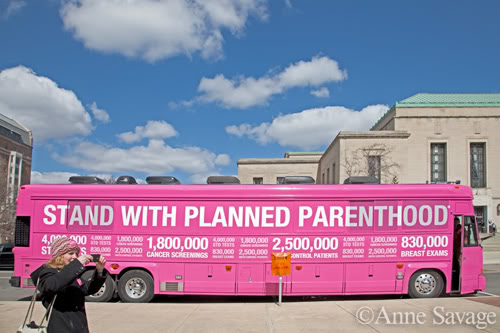
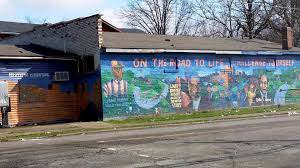
I drove west down Broadway, into the Shawnee neighborhood of the West End, to get my Kentucky drivers license and library card. As I drove and walked through various blocks, I did not see roving thugs, dead bodies, or drug deals. In fact, I did not see much of anything. No grocery stores, few restaurants beyond fast food, fewer houses with central air conditioning, fewer people out and about. The landscape was bare, save a paternalistic billboard here and there warning Black mothers not to have abortions. I wonder what everyone is so scared of.

(Photo Credit 1: Irena Tran / louisville.com) (Photo Credit 2: Sierra Club)