At HMP Bronzefield, we were dismayed

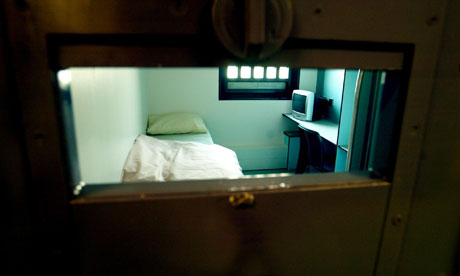
Welcome to HMP Bronzefield, a “Private Finance Initiative”, or PFI, prison for women in southeast England. If you are a `women with complex needs’, a women who is both `vulnerable and violent’, you can expect to spend your time, years and years of it, in isolation, in a squalid cell.

That is the finding of an unannounced visit by Nick Harwick, the Chief Inspector of Prisons. In April he visited Bronzefield, and here’s part of his report: “HMP Bronzefield is a closed women’s local prison run by Sodexo Justice Services that at the time of this inspection held 446 women on remand or serving sentences ranging from a few weeks to life … At our last inspection in 2010 we reported:

“The prison held a small number of ‘restricted status’ women, some of whom had severe personality disorders. Their needs could simply not be met by the prison. One woman, who had exhibited unpredictable and violent behaviour, had effectively been held in the segregation unit for three years with very little human contact or activity to occupy her. The conditions in which she was held seemed likely to lead to further psychological deterioration and were completely unacceptable. There was little evidence that senior staff in the Prison Service had oversight of women segregated for long periods to ensure their conditions were humane. Bronzefield is not an appropriate place for women with these needs and there was a lack of a national strategy to manage women with such complex demands.

“We were dismayed that the woman who had already been in the segregation unit for three years in 2010 was still there in 2013. Her cell was unkempt and squalid and she seldom left it. Although more activities had been organised for her and better multi-disciplinary support was available, she still had too little to occupy her. Her prolonged location on the segregation unit amounted to cruel, inhumane and degrading treatment – and we use these words advisedly. The treatment and conditions of other women held for long periods in segregation was little better. Much of this was outside the prison’s direct control and required a national strategy for meeting the needs of these very complex women – as exists in the male estate. However, Bronzefield itself needed to do more to ameliorate the worst effects of this national failure.”

When Bronzefield opened in 2004, it was the first PFI prison for women in the United Kingdom. In their nine years of operation, they have not managed, or refused, to take into account `women with complex needs.’

Juliet Lyon, of the Prison Reform Trust, wondered, “Why in this day and age are women with such complex needs transported like cattle and dumped in prison, where one of the most damaged women is left to rot in some form of solitary confinement for five years?”

Frances Cook, Chief Executive of the Howard League for Penal Reform, was a bit more direct: “This shocking case of treatment, which appears to amount to torture, in an English prison should shame ministers who tolerate the over-use of custody for women and consequent poor treatment.”

It should should … but it didn’t. They loudly proclaim their opposition to violence in Syria but for `women with complex needs’ in their own backyards? Not so much.

Jan Sambrook, the Chair of the Independent Monitoring Board at Bronzefield, wrote, today, “We are … very concerned about the humane and fair treatment of a small number of such women. The discussion so far has been about one woman. This is not an isolated case … I, previous chairs, and members of the IMB have raised our concerns repeatedly about the women held long-term in the segregation unit. This is in direct contravention of National Offender Management Service (Noms) guidance, falls well below what is fair, decent and humane, and discriminates against female prisoners, as the special accommodation available to men is not provided for women … I’d like to emphasise that the concern is not just about the one woman being talked about today, but the wider issue of the holding of the small number of women who are potentially very violent, difficult and volatile but also vulnerable. Presently there are no dedicated facilities for the holding of these women such as those available in the male prison estate, meaning that they get held in what we consider unsuitable conditions, including being isolated for far too long. This is unfair and discriminatory.”

What do we know about women’s prisons? They have a higher ratio of people living with mental health illnesses and a higher ratio of people who have been sexually and otherwise abused. What else do we know about women’s prisons? If you’re a woman prisoner in the United Kingdom and you’ve got any problems, unlike in the male prison system, there’s nowhere to go but in a hole … for a long time.

Call it torture. Call it systematic as well. And please refrain from expressions of shock. This is not an isolated case; this is not about one woman or one prison; and none of this is new.


(Photo Credit: Martin Argles / The Guardian)
A specter haunts Pennsylvania


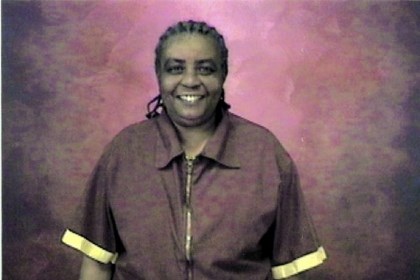
Sharon Wiggins

Sharon Wiggins died in March. Wiggins was a 62-year-old Black woman living with serious health problems. But it wasn’t her health that did her in. What killed Sharon Wiggins was the criminal justice system in Pennsylvania. Sharon Wiggins died behind bars at SCI-Muncy, the maximum security and intake `facility’ for all women prisoners in Pennsylvania, as well as the site of its death row for women.

Wiggins entered Muncy at the age of 17, convicted initially to death and then, a few years later, to life without parole. She spent 45 years behind bars. When she died she was the oldest and the longest serving woman prisoner in Pennsylvania. That’s no mean feat. Pennsylvania has more prisoners who began as juvenile lifers than any other state in the Union. Effectively, this means Pennsylvania has more juvenile lifers than any place else in the world.

Reports suggest that Wiggins set out, early on, to improve her life, to atone for her crimes, sins, and mistakes. She finished a degree at Penn State and when on to tutor and to manage tutoring programs. She completed thousands of educational certificate programs. She mentored others; she took care of women and helped women grow, and not only women prisoners. Nancy Sponeybarger, a former counselor at Muncy, has said, “As I got to know her a little bit, she was the one person who always made me feel my humanity.”

On another occasion, Sponeybarger elaborated, “She’s grown into a really insightful, compassionate, capable older woman – despite all the odds, because it’s not like you have a ton of role models when you’re in prison, especially when you’re tossed in there as a little girl.”

Especially when you’re tossed in there as a little girl.

Last June, the U.S. Supreme Court ruled that it’s unconstitutional to sentence juveniles to mandatory life sentences without parole. Wiggins applied for release, and she and her lawyers and supporters hoped that she would be released, at last: “I want to know what it feels like to wake up by myself. Here, you live on public view. There’s always a big piece of glass on your door. I want to wake up by myself. I want to know how it feels to walk down the street. I want to know how it feels to sit in the car and hear the rain just beat down. I want to know how it feels to sit with my sister and have a cup of coffee.”

The State dragged its feet, and Sharon Wiggins died. She never got to know.

Pennsylvania leads the nation and the world in the incarceration of children for life without parole. Last year, nationally, close to 1600 people were serving out juvenile life sentences without parole. Of the girls, almost 80% reported physical abuse, and over 77% reported sexual abuse.

And it gets worse. Historically and immediately, juvenile justice institutions are designed for boys. They don’t work for boys, mind you, but for girls, they’re particularly and specifically toxic, lethal even. The research on this systematic `oversight’ is abundant and easily available.

Custody for girls virtually guarantees that that their unique needs are not met and they react differently to their treatment than boys. Sentencing young girls to LWOP (life without parole) in adult court exacerbates girls’ unique issues in several ways. First, with the small number of women in the prison population, girls are often sent to women’s prisons with adult offenders rather than to separate units for youth offenders.  Girls are all too often subjected to sexual abuse and rape while in prison. Male corrections staff at women’s prisons may use coercive methods to initiate sexual relationships with inmates, or may abuse their position to obtain sexual favors. Sentencing girls to serve a life sentence in adult prison creates circumstances that are very traumatic and that should raise the specter of a punishment that is cruel and unusual.”

A specter haunts Pennsylvania, the specter of a punishment that is cruel and unusual, the specter of compassion and decency, the specter of justice for Sharon Peachie Wiggins. It is the specter of those children tossed in there as little girls.


(Photo Credit: Pittsburgh Post-Gazette)

More support is needed for South Africa’s subsistence fisherwomen

South African women fish for a living, and for their lives.

Fishing for a living is a hard life, everywhere. Subsistence fishing can be brutally difficult, but it has its dignity. For example, in Durban, on the east coast of South Africa, women and men have been subsistence fishing off the piers and beaches for over a hundred years. Generation after generation, they have used the skills their forebears brought when they came from India as indentured workers. Across generations and for decades upon decades, subsistence fishing brought fisherwomen and fishermen economic income as well as spiritual and cultural fulfillment.

Four years ago, that all came to a crashing close when much of the harbor was closed to fishing. On one hand, there were `security’ issues. On the other hand, there was rapid private development, referred to `expansion’. It wasn’t `expansion’. It was privatization; it was theft of public and common space. The results for the subsistence fisherwomen and fishermen were devastating, and continue to be so.

For the fisherwomen and fishermen, the act of fishing successfully, of bringing home food and some money from the sales of their day’s labor, is value. Honoring the labor of their forebears is value. Being on the water, being together, being a community, is value.

For those who occupy the commanding heights of Durban, real estate is value, and the water, the beach front, recreational fishing, have all become big business, and promise to intensify, or `expand’, in the future. For them, extraction is value.

For fisherwomen, the closure of and exclusion from public spaces has particular, gendered aspects. Fishing together off the piers provided safety. As the spaces closed, competition increased. As the competition intensified, tensions turned to violence. This occurred in an environment that was already hard on fisherwomen. Women’s subordinate position in fishing communities generally made them more vulnerable to exploitation and abuse. This has meant high levels of HIV and AIDS, drug and alcohol abuse, and violence. With the reduction of available spaces for fishing, the loss of income, increased and intensified unemployment, the daily lives of fisherwomen and of women in fishing communities predictably became more perilous and more toxic.

It’s the predictability that has to be taken into account. None of this is a surprise and none of this is a secret. It’s public policy; it’s part of the development scheme for Durban … and beyond.

During the last two decades, South African fisherwomen have organized. The South African Fisherwomen’s Association, organized by Sahra Luyt, has been on the frontline of integrating women into the fishing industries, as well as combating the increased difficulties due to climate change. There’s the Oceanview Fisherwomen’s Association, colored women from the Cape Flats who took up fishing to survive and to live with dignity, as documented in Penny Gaines’ 2002 documentary, “Strong Enough”.

That women fish for a living, and for their lives, in South Africa is well known, except at IRIN, “a service of the UN Office for the Coordination of Humanitarian Affairs”, which ran a news piece today headlined, “More support needed for South Africa’s subsistence fishermen.” The article should come with a disclaimer, “No fisherwomen were interviewed in the making of this article.” Nowhere does the article reference fisherwomen. Not even fisherfolk. Only `fishermen’ make the IRIN cut.

South African subsistence fisherwomen have always had a tough time in fishing communities. More recently, they have been under attack by State and private developers. And now they are erased by coordinators of humanitarian affairs. More support is needed for South Africa’s subsistence fisherwomen.


(Photo Credit: Lee Middleton / IPS)

The political economies of mental illness, solitary confinement, and women’s labor

Sonya Hall, Amir Hall’s aunt.

Across the United States, people living with mental illness are sent to prisons, rather than hospitals, clinics or other health programs. In the last three decades, prisons and jails have become the single largest institutional residence for those living with mental illnesses. While this is more or less public knowledge, the prison and jail systems have steadfastly refused to address the new tsunami. Funding for mental health providers has not increased. If anything, it’s been sliced and diced. Guards and other staff have not received additional training to address the `new populations.’

And so …

And so, what happens is exactly what you expect would happen. Prisoners `manifest symptoms’ and are placed in solitary confinement, often for prolonged periods of time. Acting out is seen as acting up, and that means the hole. And for prisoners living with mental illnesses, that can, and often does, mean death.

In this theater of atrocity, women take a number of specific hits. Here’s one.

Meet Sonya Hall, Shaleah Hall, and Donna Currao.

Donna Currao is the wife of Tommy Currao. Tommy Currao is one of the `lucky ones’. Currao attempted suicide at least ten times in ten months in solitary confinement. He tried to overdose, to hang himself, to slash himself, using the metal inside of his hearing aid. For the last attempt, with the hearing aid innards, Currao was charged $500 for `destruction of state property.’ In New York, where Currao is imprisoned, irony is not dead.

Donna Currao pushed and pulled and pushed some more. She saw what was happening to her husband in solitary. She knew how to read the words and, even more, the silences, and she forced the State to do something as her husband lost both weight and words.

A few months ago, Donna Currao’s insistent organizing finally forced the State to send her husband to a psychologist, who diagnosed the prisoner as in serious need of help. He was moved from the hole to health treatment and now, a mere months later, is “1,000 times better.”

Donna Currao now wonders, “Why do we have to fight so hard to get them evaluated?”

Sonya Hall and Shaleah Hall also ask why. Sonya Hall is Amir Hall’s aunt. Shaleah Hall is Amir Hall’s sister. Both are now part of the United States’ version of Mothers of the Disappeared.

Amir Hall’s story is tragically short. He lived with severe mental illness. He would have outbursts. One outburst resulted in prison, for parole violation. He had outbursts in prison. That led, finally, to ten months in solitary. He never returned. As Shaleah Hall noted, watching a video of his `transfer’, “There was somebody who looked defeated, like the life was beat out of him. I don’t know who that person was. The person in that video was not my brother.”

Why? Why, when doctors and pretty much everyone else had diagnosed and recognized Amir Hall as someone living with severe mental illness was the young Black man `diagnosed’ by prison staff as not serious? Why? Why must Shaleah Hall and Sonya Hall now work so hard, so intensely, so long to get something that will not be justice and will not be healing but will be something? Why? Why must Donna Carao fight so hard to get something so obvious?

The populations targeted for incarceration are also targeted for intensive and extensive labor, none of which counts as labor. That population, the laboring non-laboring ones, is made up overwhelmingly of women. Who benefits from women’s non-laboring labor in the prison industrial factory system that shoves those living with mental illnesses into death holes?


(Photo Credit: Shannon DeCelle / ProPublica)

Marikana: Don’t commemorate. Compensate.

It’s been a year, almost, since the massacre at Marikana, and the nation, and its media, are struggling, sort of, to find a way to address all that has, and even more has not, happened in the intervening year. A year later, tensions simmer, the Farlam Commission is more or less falling apart, some great and moving documentaries are beginning to emerge, and the widows of Marikana organize and wait, wait and organize.

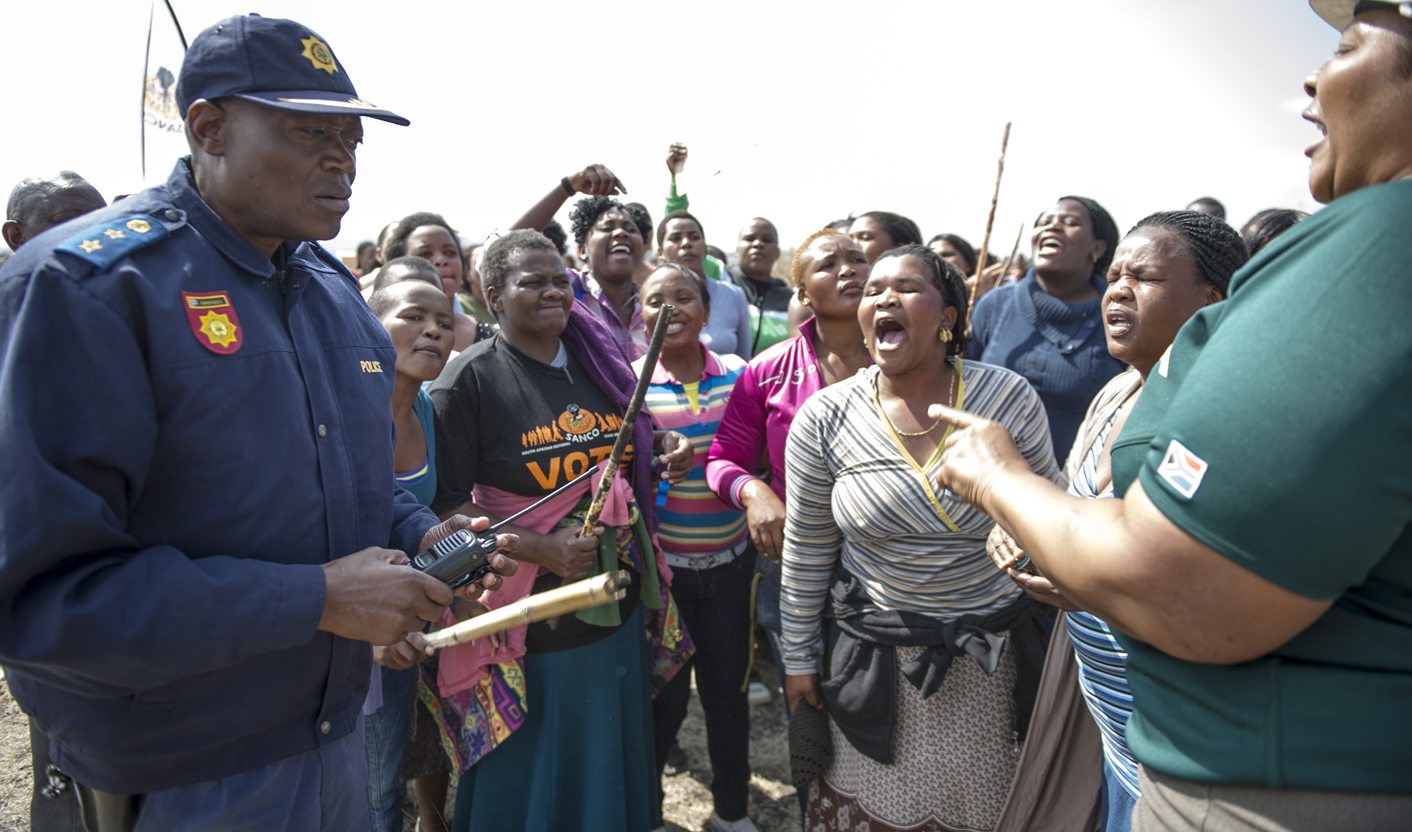
This is how the week began. On Sunday, in a prayer service in Langa, national police commissioner Riah Phiyega announced that South Africa would `commemorate’ the Marikana tragedy. How exactly will the police, who used live ammunition to put down a mineworkers’ strike, `commemorate’ the event?

More to the point, is commemoration the best way to honor the dead miners and, even more, their survivors, the widows and children? As one widow explained, soon after the massacre, “Today I am called a widow and my children are called fatherless because of the police. I blame the mine, the police and the government because they are the ones who control the country.”

How will `the nation’ commemorate those who are now called widows and those who are now called fatherless? What happened on August 16, 2012? 34 miners were killed. Many others were wounded. And widows were made. Soon after one mineworker was arrested, police told him, “Right here we have made many widows … we have killed all these men.”

The State machinery, call it a factory, produced widows of women that day, and has continued to produce widows of those very women every single day since. So, here’s a suggestion. Rather than `commemorate’, compensate.

(Photo Credit: Greg Marinovich /Daily Maverick)

A girl hanged herself. A girl was hanged here.

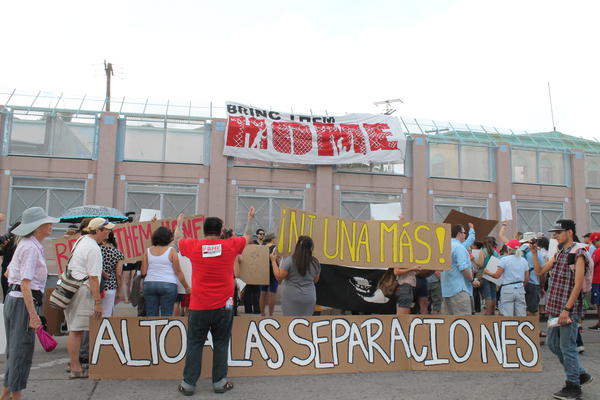
Women prisoners in Eloy Detention Center in Florence, Arizona, are on hunger strike to protest conditions there. This hunger strike was sparked by the internment of the Dream 9 activists, and in particular of 24-year-old Lulu Martinez and 22-year-old Maria Peniche, who have spent practically all of their time in isolation. No doubt, the conditions are `preventive’. What is the women’s crime that places them in solitary? Too much autonomy? Too much independence? Too much hope?

The U.S. Supreme Court yesterday ruled that overcrowded is overcrowded, and too much overcrowded is inhumane, as in cruel and unusual punishment. It’s good news for thousands of prisoners in the California prison system, who soon will be released. And who “bears the brunt” of California’s systematic prison overcrowding? Women.

At first, women benefited from both early-release programs and from alternative sentencing programs. Those benefits were shortlived. Now the women’s prisons are once severely overcrowded and getting worse by the day. As so-called low-level women offenders are shunted off to county jails, which are not and more to the point have not prepared for the particularities of this influx, the levels of violence in the prisons intensifies. This means more and more women are being sent to solitary. And so the cycle not only continues but spins ever more rapidly, ever more violently, ever more viciously.

Given all the studies that point to the concentrated levels of mental health issues among women prisoners, what has been California’s response? Solitary isolation. It’s … preventive. It’s also typical.

The same abuse of women prisoners occurs around the world. In Australia, journalist Christine Rau laments that nothing was learned from the abuse her sister, Cornelia Rau, suffered in immigration detention. It’s a common story. Cornelia was picked up and wrongfully detained, by immigration authorities. She then vanished into the system. Literally. For a year, her family and NSW Missing Persons detectives searched for her. Finally, she was located, in an immigration detention cell.

While fellow prisoners recognized that Cornelia Rau lived with serious mental illnesses, the prison guards and system chose to ignore the symptoms, and so effectively ignored the woman.

Upon her release, Cornelia Rau received a hefty settlement for her torture, but the money is meaningless. As Christine Rau, her sister, notes: “Her life is a misery. Her neurological pathways have been so damaged after 10 months in an untreated psychosis, that she cannot settle in any permanent residence, she can’t sustain relationships beyond fleeting ones, and she is one of the unhappiest people I know. The money is meaningless: it’s handled by financial administrators employed by the NSW Government; her medical needs are rarely followed up, and we rely on a network of friends and acquaintances to try and make sure she’s safe. It’s a nightmare; but anyone with a family member without insight into a mental illness would tell you that. It’s hardly unusual.”

It is hardly unusual.

It is more than hardly unusual. It is the entire system. While immigrants are treated abysmally in “detention centers” around the world and prisoners with disabilities are abused pretty much universally, there is a special hell designated for women immigrants, for women prisoners with disabilities, for women. In Australia as in the United States, private corporations profit from the particular abuse of women, and so does the State.

It is hardly unusual. It is the systematic abuse and torture of women.

So, the women prisoners of Eloy are on hunger strike. As Thesla Zenaida, a sister prisoner and hunger striker at Eloy, explained: “Look, a girl hanged herself. A girl was hanged here. [After] she was hanged, they didn’t want to take her body down. And for the same reason—because they treat us poorly. A guard treated her poorly, and that guard is still working here.”

The torture and abuse of women is the work of the State. That’s the lesson we are meant to learn.


(Photo Credit: NACLA.org)

What exactly is the women’s crime? Democracy? Autonomy?

Ingrid Turinawe

In Kampala yesterday, Ingrid Turinawe and eleven other women activists were placed under `preventive arrest.’ Preventive arrest means the person arrested hasn’t actually done anything wrong … but might. What was the imminent danger posed by Turinawe and her sisters? Some would say a petition, others might say illegally approaching Parliament, and still others would say, democracy. Yet again, Ingrid Turinawe has been arrested for wanting to take that long walk to democracy.

The story, in a nutshell, is this. A hundred or so Forum for Democratic Change women activists gathered at the FDC headquarters. They wanted to write and present a petition to Parliament protesting new, higher taxes on water and kerosene. Water and kerosene are women’s issues, in Uganda as everywhere else in the world. That’s it. That’s the whole present and imminent danger. A women’s petition to Parliament. The police heard of the meeting, surrounded the building, forced their way, selected and arrested 12 of the women, including Ingrid Turinawe, head of the FDC Women’s League, and Anna Adeke Ebaju, Makerere University Guild President.

As of this morning, five of the women are still being held.

What exactly is the women’s crime that is being prevented? Democracy? Autonomy?

The same question is being asked in Harare, where, on the cusp of today’s elections, dozens of women were rounded up and charged with prostitution. The women’s initial `crime’ was ostensibly `loitering’, which simply means being a woman on the street. This time, the manly cleansing of the public spaces was dubbed “Operation Zvanyanya.” Operation It’s Too Much.

It’s too much … what?

Zimbabwean feminist activist Judith Chiyangwa went to the places where the women had been arrested and she found loads of men, hanging out on the streets, selling, chatting, being. They weren’t arrested.

Too much … what? Too many women in one room in Kampala? Too many individual women on the streets in Harare? Too many women being women, demanding and creating oppositional, autonomous, independent, and even democratic women’s spaces?

(Photo Credit: Pearl Posts)

Roseline Akhalu and the atrocious barbarism of the Home Office

Roseline Akhalu on her way to an immigration tribunal

Despite the greatest efforts of the United Kingdom Home Office, it appears that Roseline Akhalu will be allowed to live. Last week, judges rejected `an appeal’ by the Home Office to deport Roseline Akhalu. Akhalu committed no crime, other than that of being ill and of being Nigerian. If she were to return to Nigeria, it is certain that she would die. No one disputes this. And yet … the Home Office has spent years and untold resources trying to deport her. Why?

Furthermore, why do they call it the Home Office, when that agency dedicates its resources to expelling, incarcerating, and generally despising the precisely those who need help? What kind of home is that, anyway?

In 2004, Roseline Akhalu was one of 23 people to win a Ford Foundation scholarship to study in England. That would be enough to celebrate in itself, but Akhalu’s story is one of extraordinary pain and perseverance. Five years earlier, she and her husband were working in Benin City, in Nigeria. Her husband was a nurse, and Roseline Akhalu worked for the local government. They didn’t earn much but they got by. Until March 1999, when her husband was diagnosed with a brain tumor. The couple was told that they must go to South Africa, or India, for care, but the costs of such a venture were prohibitive. And so … Roseline Akhalu watched her husband die because there was no money.

Now a widow, and a widow without a child, Akhalu confronted a hostile future. After her in-laws took pretty much everything, Roseline Akhalu set about the work of making a life for herself. She worked, she studied, she applied for a masters’ scholarship, and she succeeded.

Akhalu went to Leeds University, to study Development Studies. She joined a local church; she tended her gardens, saving tomatoes that were otherwise destined to die; she worked with young girls in the area. She planned to return to Nigeria and establish an ngo to work with young girls. It was all planned.

Until she was diagnosed with kidney failure. That was 2004, a few months after arriving. In 2005, Akhalu was put on regular dialysis. In 2009, she had a successful kidney transplant, but the transplant meant that for the rest of her life Roseline Akhalu would need hospital check-ups and immunosuppressant drugs. In Nigeria, those drugs would be impossibly costly.

Her attorney informed the government of her change in status, that due to unforeseen circumstances Roseline Akhalu, who had never planned on staying in the United Kingdom, now found that, in order to live, she had to stay.

And so began Roseline Akhalu’s journey into the uncanny unheimlich of the Home Office, where home means prison or exile, and nothing says “compassion” like humiliation and degradation and persecution.

Once a month, Akhalu showed up, in Leeds, at the United Kingdom Border Agency Reporting Office. Then, in March of 2012, without explanation, she was detained and immediately packed off, by Reliance `escorts’, to the notorious Yarl’s Wood, where she was treated like everyone’s treated at Yarl’s Wood, and especially women … disgustingly.

So far this is business as usual. Here’s where it gets interesting. In May, Akhalu was released from detention. In September, the Home Office refused her appeal. In November, a judge overturned the Home Office decision. The judge declared that, since Akhalu had established a private life of value to her, to members of the Church, and to a wider community, removing her would violate her right to a private and family life protected by Article 8 of the European Convention on Human Rights. The judge noted that Akhalu had done absolutely nothing illegal. She had come to the United Kingdom legally and was diagnosed while legally in the country. Most chillingly, perhaps, the judge agreed that to send Roseline Akhalu back to Nigeria was a swift death sentence. Given the health care system and costs in Nigeria, she would be dead within four weeks. Nigerian and English doctors agreed.

On December 14, the Home Office appealed the decision. That’s right. They’re pursuing a case against Roseline Akhalu, despite all the evidence and mounting pressure from all sides. Why? Because that’s what the Home Office does. Want an example? In 2008, Ama Sumani, 43-year old Ghanaian woman, was lying in hospital in Cardiff, in Wales, receiving kidney dialysis for malignant myeloma. That was until the good old boys showed up and hauled her out and then shipped her off to Ghana, where she died soon after. The Lancet put it neatly: “The UK has committed an atrocious barbarism.” That was January 19, 2008. Five years later and more … the atrocity continues.

(This originally appeared, in January 2013, in a different version, at Africa Is a Country. Thanks as ever for the collaboration and support.)


(Photo Credit: guardian.co.uk)

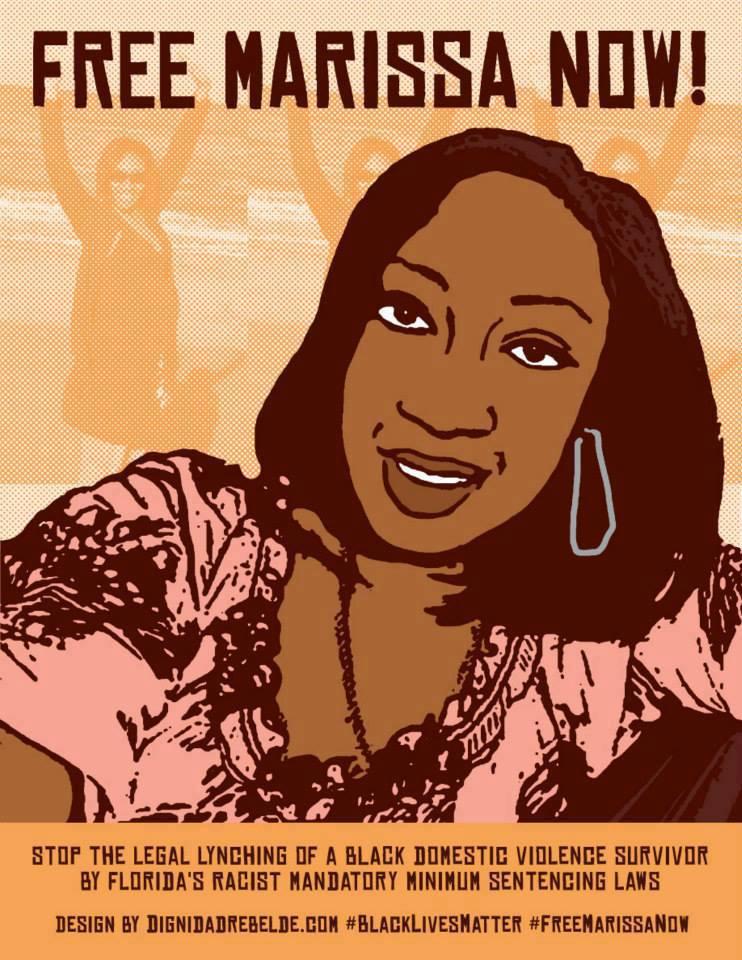
The tragedy of Sybrina Fulton, the agony of Marissa Alexander

Sybrina Fulton

“My message to you is, please use my story, please use my tragedy, please use my broken heart to say to yourself, ‘We cannot let this happen to anybody else’s child… I speak to you as Trayvon’s mother. I speak to you as a parent, and the absolutely worst telephone call you can receive as a parent is to know that your son — your son — you will never kiss again. I’m just asking you to wrap your mind around that, wrap your mind around: No prom for Trayvon. No high school graduation for Trayvon. No college for Trayvon. No grandkids coming from Trayvon, all because of a law, a law that has prevented the person who shot and killed my son to be held accountable and to pay for his awful crime.”

Sybrina Fulton spoke these words yesterday.

Sybrina Fulton and Marissa Alexander face each other across a chasm of tragedy and agony, a condition known by far too many Black women in the United States, women who live under the regime of more than Stand Your Ground laws. Black women in the United States today live in an internally coherent system of racial-sexual oppression.

When Trayvon Martin was killed, and even more when his killer was released, across the country, Black families understood that Stand Your Ground was code for Understand Your Place. Understand that your place is the crossroads of your race and gender.

This lesson is being lived out today by Sybrina Fulton. Marissa Alexander is also living out that hard lesson. Marissa Alexander is a Black woman in Florida, in the same jurisdiction as Travyon Martin. She is the mother of three children. One day, in desperation at the abusiveness of her partner, she picked up a gun and shot it, once, in the air. It was a warning shot.

When she was arrested and tried, she said she was protecting herself and her children, she argued their lives were in real, present and immediate danger. She invoked Stand Your Ground. The prosecuting attorney Angela Corey, the same prosecuting attorney in the Trayvon Martin case, rejected the argument.

Many want to know why. Why does a Black woman get such different treatment? Others respond, “Hey, welcome to Florida. Welcome to America.”

Marissa Alexander was sentenced to 20 years behind bars. She now `awaits her appeal.’ For Black women in the United States, the options provided by the so-called criminal justice system are simple, agony or tragedy. Those options are unacceptable. Release Marissa Alexander from prison. Relase CeCe McDonald from prison. Reject the Stand Your Ground, `Stand Your Position program. Instead, Stand Your Dignity

(Photo Credit: New York Times / Chang W. Lee ) (Image Credit: DignidadRebelde.com)

Auriol Cloete, the Tiresias of Hangberg

Auriol Cloete

Sometimes a dune is a dune is a dune (thank you, Gertrude Stein). And sometimes … it’s not.

The Cape Times reports: “The city council has created a Frankenstein’s monster by planting grass on the Hout Bay dunes to stabilise them.” Here’s the story, in a nutshell. Until the 1940s, the winds between Hout Bay and Sandy Bay created a mobile sand dune. Then, people built houses. Then, homeowners demanded the dunes be stopped. And so the City started grassing the dunes. Now, Sandy Beach is just about disappeared, and Hout Bay has a second dune that is literally devouring roads, houses, and more. And there’s more to come. It’s the urban development eggplant that ate … Hout Bay.

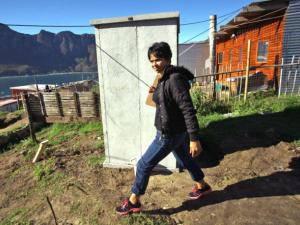
This would be a laughable parable of urban `development’ if it weren’t for other recent Hout Bay news: toilets. A little while ago, 14 new toilets were installed in the Hangberg informal settlement. In 2010, Hangberg was the site of ferocious engagements, as the City Council, the same one that has created the second dune, did its best, or worst, to pound the location into smithereens. That resulted in the uprising of Hangberg.

Since the Hangberg Peace Accord, according to Auriol Cloete, the number of folks living in Hangberg has tripled. Who’s Auriol Cloete? Here’s a report from 2010: “Hangberg resident Auriol Cloete made breakfast for her children, saw two of them off to school and felt proud as she sat in the house she had built for them. Hours later the mother of four was partially blind, cowering on her bed, bleeding from the left eye, and screaming at her children to keep lying flat on the floor as police and residents clashed outside…. She was injured…when violence broke out between residents and police who had entered the settlement to escort workers contracted by the City of Cape Town to demolish about 20 unoccupied dwellings erected illegally on a firebreak. Residents threw rocks and petrol bombs and fired distress flares at officers who used rubber bullets in retaliation. A rubber bullet hit Cloete in the left eye… Cloete ran back into her house as it was too dangerous to try to get to an ambulance… Later, she was taken to hospital with another resident, who was apparently also shot in the left eye, and who is now unable to see because his right eye has become infected… Cloete, who worked whenever she could secure a job, has lived in Hangberg all her life and had spent more than R60 000 on a home for her children.”

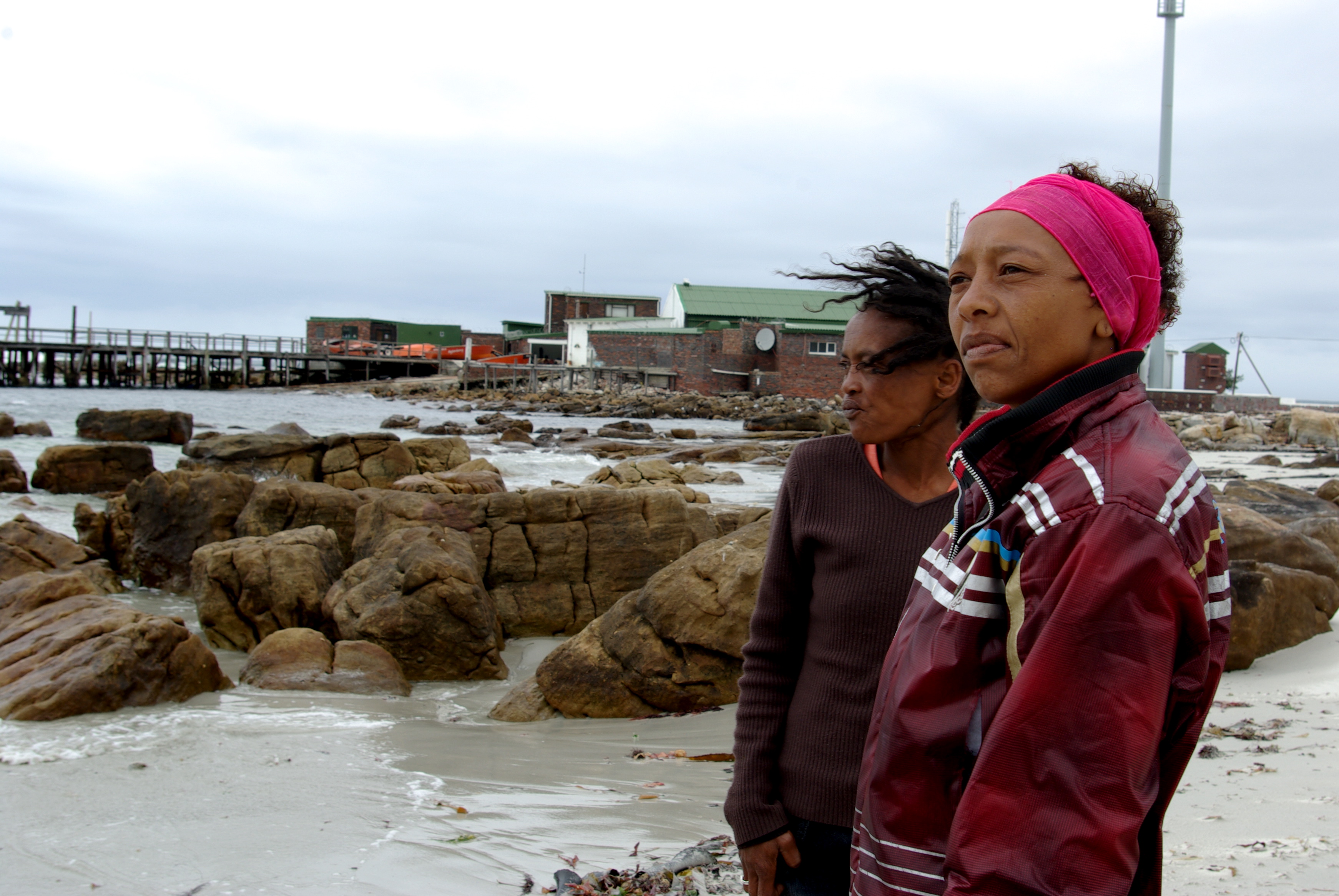
Auriol Cloete is the Tiresias of Hangberg, and what she sees today are 14 toilets that, after three years and untold injuries, somehow signify welcome.

Here’s what Cloete might see in the future. Sometimes a dune is a dune. And sometimes a toilet is a toilet. And sometimes, urban development isn’t development at all. When nature and populations are seen as problems to be controlled, when – in the name of well being and prosperity – the histories of shifting sands and populations on the move are ignored or worse, expect the worst.


(Photo Credit: Thomas Holder / Independent Newspapers)