The false case against Christiane Taubira


Next weekend, Europe goes to the polls. Betting on the destabilization and nationalist sentiment fostered through neoliberal economies of fear and debt, the right and extreme right parties hope to win more seats in the European parliament. Their strategy is simple: announce a time of turmoil and crisis and then reduce political discourse to the mythology of the white male moralistic views as the only source of security. In fairness, the leftist parties have not done much to propose real alternative discourses and policies.

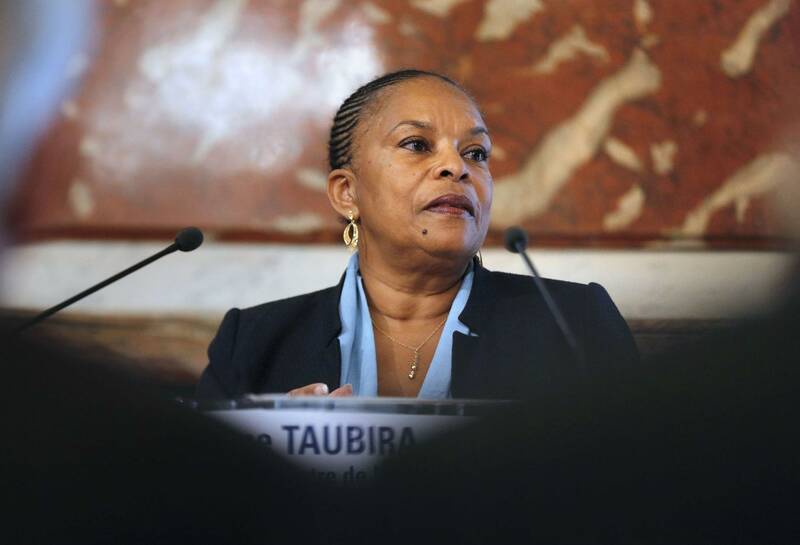
Last week, the right used this strategy in France against Christiane Taubira, the French Minister of Justice.

At the beginning of her appointment, Taubira brilliantly passed a same-sex marriage bill. When the most conservative constituents launched sordid assaults, Taubira responded with literary quotations that won the day. It was a virtuoso performance.

No virtuoso performance and no victory in the name of justice and equality can go unpunished.

And so the French right wing has launched an all-out campaign against Christiane Taubira.

They Americanized their techniques, using the power of repetition of simple and nationalistic slogans against her. Their goal was to blur her message and vitiate her work on undoing the politics of security that criminalized the vulnerable, at-risk populations attacked by anti-migrants sentiment or austerity measures.

After innumerable racist attacks, the neoliberal conservative coalition finally created a buzz around a song. The song was the National Anthem, La Marseillaise, sung by a chorus and soloists. Along with other members of Government and the President of France, Taubira attended a ceremony to commemorate the abolition of slavery. It was a solemn occasion, althought not for the Front National (FN), the nationalist party, that marked its denial of the offense of slavery by refusing to participate. They also refused to celebrate General Dumas, the first French General born in slavery and father of Alexander Dumas.

What happened was this. Taubira didn’t sing. This was presented as refusing to sing, which triggered a methodic orchestration in the media of repetitive messaging. The only problem is that singing the national anthem has never been popular in France. None of Taubira’s colleagues sang the anthem that day, but it was Taubira who was viciously attacked. Some questioned her “Frenchness” and demanded her resignation. The message was already prepared. A series of attacks and accusations overloaded the media. What is remarkable it the technique; the terms used repetitively by the members of this political “SWAT team” went from accusing her of sectarianism and of being unworthy of her position to being lax and having a contemptuous tone.

Thanks to her strong background in racial and social justice and activism in Guiana where she was born and grew up, Taubira was undaunted. Guiana is a French overseas department located in the Caribbean side of South America. Her political engagement is linked to this land, and she embodies a liberating ideal that has made her the bane of the elite of the right and extreme right in France. Before she became Minister of Justice, Taubira had been a French parliamentary deputy for Guiana between 1992 and 2002. In 2001, she put her name on a bill that recognized the Trans-Atlantic slave trade and slavery as a crime against humanity. At that time, she published a book, L’esclavage raconté à ma fille (Slavery explained to my daughter).

At the beginning of her career, Taubira denounced the crude mistreatment by the post-colonial French state of the overseas population. As Minister of Justice, she has denounced the politics of mass incarceration. She has also asserted the responsibility of civil society to respect human dignity as France’s overcrowded prisons have resulted in France being reprimanded by the European Committee for the Prevention of Torture and Inhuman or Degrading Treatment or Punishment in 2012.

Taubira’s problem is not singing the national anthem. Her problem is keep open the possibility of a fair debate on her penal bill in a National Assembly in which some members have gendered and racist slurs prepared for her. The manipulation of public opinion is not new, but these violent and ongoing attacks on Christiane Taubira signal that the project of hyper incarceration knows no limits.

This instrumentalization of language and communication is there to obscure the real responsibility of conservatives in the advancement and normalization of fascist and extreme right parties in Europe, not to forget the Tea Party and the dramatic turn to the right in the United States. The songs we should pay attention to are those of social destruction as multiple trade agreements are secretly negotiated, in particular TAFTA that threatens women and social cohesion in Europe, in France and elsewhere. The global prison is inscribed all over this agreement.

Christiane Taubira did not make any faux pas. If you must attack someone, attack her neoliberal detractors, who are not worthy of public position and who know neither the lyrics nor the melodies to the songs of justice and humanity.

(Photo Credit: Libération / Kenzo Tribouillard / AFP)

French prison guards strike for global incarceration and dehumanization

May 6, 2014, following other strikes by prison guards across Europe, French prison guards blocked about 100 of the 192 prisons in France. They protested their working conditions in the overpopulated prisons. Several unions joined forces for the occasion. They claimed to have lost authority over the inmates. They advocated against a tolerant approach of managing inmates. At the same time, the automation of prison work has resulted in a substantial reduction of personnel. The rising number of inmates has combined with the rising number of administrative tasks into a rising tide of aggression against guards.

The guards feel that they are at the mercy of this or that policy. None of this is surprising. Many had predicted this crisis. At the same time, the condition for inmates has been aggravated, both in sentencing and detention, which are intimately related.

Since the beginning of the 21st century, modifications of penal laws have sent more people to prison. At the same time, inequality has increased in France and around the world. The economy of debt has allowed transfer of public monies to private hands. The previous Sarkozy administration accelerated the Americanization of the French penal system: increase of incarceration, fewer sentence reductions and longer time in prison, fewer resources for reinsertion programs, longer distance between inmates and their families, higher prices for goods inside prisons, fewer jobs.

Between 2002 and 2012 in France, the politics of security served as an excuse to enact as many as 50 laws. These laws replaced the independence of justice with a political economy that favored building more prisons by so-called private public partnerships. These partnerships were a construction of a debt system through the public sector. For example, an investment of 679 millions of Euros by a private prison builder will generate 2.7 billion Euros for the private lender, paid for by the public over 27 years.

These laws brought more video surveillance into prisons and reduced the number of guards while sending more people to prison, 35.4% more over ten years, especially in recent years with the minimum mandatory sentencing system. The conditions in French prisons are untenable. The laws are ineffective, as evidenced by the rise in repeat offenses.

After her nomination in 2012, the Minister of Justice, Christiane Taubira announced that she would end this spiral that serves neither justice nor civil society. She had grand ambitions for a much needed reform of the penal system. The “conference de consensus de la prevention de la recidive” (consensus conference on the prevention of recurrent offenses) worked well and helped her to articulate a better vision.

This situation is endemic in Europe. Although the numbers cannot be compared with the United States’ figures, the change of policies associated with the diminution of financial means for public services, which include prisons, have contributed to a remarkable rise of incarceration in the past 15 years.

In Europe women are more incarcerated than ever before. Their offences reflect their social conditions and are often minor. In France 2 275 women are behind bars. 76% of them are mothers. They represent 3.7% of the total inmates. 50% are under the age of 30, and the duration of time behind bars has increased 50 % in 15 years. They are too many and too few to have adequate conditions of incarceration, if such a thing exists. They are marginalized in prisons built for men. In these quarters, they don’t exist as women but as incarcerated bodies.

Though the guards unions concerns were about the men’s prisons, women have been subjected to the modifications of penal laws in a harsh way.

The guards deal with these new conditions every day, with their own vision of their work and the limits of this system of hyper-incarceration. The demands are real as drug and weapons trafficking are more common than before. However these realities hurt inmates as well. In prison, everything is 30% more expensive; it is difficult to talk and report; where much power resides in a few hands. It is a place to which the general public does not want to be connecte

A prison psychiatrist who was recently taken hostage inside a prison by an inmate, said, “Apart from all the ethical and humanistic considerations, if we want to protect ourselves, we are going the wrong direction. The absence of hope and possibility of release pushes a person to the worst side of himself.”

Christiane Taubira will soon present a reform package to the parliament. The President has forced her to remove what the French section of the International Observatory of Prisons considered the coherence of the project. Nonetheless, some parts remain. For instance, it will overturn the mandatory sentencing and create more alternatives to prisons. The conservatives have already warned that they will oppose it. Taubira, a woman who has galvanized many women’s energy, has also been the target of unthinkable racist attacks. These issues are the reflection of the malaise that the neoliberal order creates and counts on to thrive.

The guards’ demonstrations may bring more populist responses or they might force society to consider what is happening in the penal system. A change of direction is needed in France and in the global prison orchestrated by the politics of impoverishment and control.

(Photo Credit: Anne-Christine Poujoulat / AFP / Libération)

Thais Moreira and Yashika Bageerathi: faces of democracies’ new witch-hunt


From the perspective of the State, young asylum seekers and young undocumented residents are the same. They are not supposed to be `here’. They are not supposed to speak up, and certainly not for themselves. Under no circumstances are they to succeed. Unkempt citizens of the unwashed criminal classes, they are to stay in the shadows … as shadows. This week, , in France, and Yashika Bageerathi, in England, are the faces of democracies’ new witch-hunt, and they reveal that a specter haunts Europe.

Thais Moreira is a 20-year-old student who came to France, from Brazil, in June 2009. She came with her mother. Since her arrival, Moreira has been a model student, resident, everything. She has fully integrated herself into her neighborhood, school, and new country. In mid February, she went to the local police station for `regularization.’ According to French law, if one has been in the country for five years and has completed three years of schooling, one can apply for residence papers. Some bureaucrat decided that Moreira had only arrived in France in 2010. And so, on March 7, she received the dreaded OQTF, or Obligation de quitter le territoire français. The letter gave her 30 days to leave the country.

Yashika Bageerathi is 19 years old. With her mother, younger sister and brother, a 16-year-old Bageerathi arrived in England in 2012, fleeing physical violence from a family member in Mauritius. Last week, Yashika Bageerathi was informed that, since she was now of majority, her case had been separated from that of the family, and her application for asylum was denied. She was to report to Yarl’s Wood. She was sent to the airport where, apparently, British Airways refused to give her passage. This seemed like a reprieve … until the State responded to the young woman’s appeal to not be separated from her family. The Home Department’s replied, “Fine, the whole family’s denied asylum, and you’re all going back to Mauritius.” That’s where the situation sits now.

In both Thais Moreira’s and Yashika Bageerathi’s cases, students and staff mobilized and organized. They have protested, marched, organized Twitter campaigns (check out #FightforYashika), organized petitions, and more. They have raised a mighty ruckus. And they are asking questions, especially about “the yawning gap between official rhetoric against immigrants “who do not fit” and the violent reality of expulsion and deportation.”

From the Dreamers in the United States to Thais Moreira in France to Yashika Bageerathi (and before her, Lorin Sulaiman) in England, young people, students all, are protesting the witch-hunt that is immigration policy. And it’s not just those students who are asylum seekers or undocumented residents. It’s their friends as well, the students they study, play, and live with. They confront State viciousness with hope and creativity. They oppose State callousness with love. Who’s the teacher and who’s the student now? Stop the democracies’ witch-hunt. Empty the immigration prisons. Stop the deportations … now!


(Photo Credit: http://www.comunidadebrasileiranafranca.com)

Mujeres unidas, jamás serán vencidas!

From Madrid to Paris, from London to Berlin and all over Europe, women and men went to the streets to demand respect for women’s rights, including the right to decide to continue or end a pregnancy. These massive demonstrations were a response to the attempt from the Spanish government to curtail women’s rights with an outrageous bill.

In Spain women and men rode the “train of freedom,” to reach the capital. The older participants remembered the time before the first laws in the 80s when women risked their lives for not pursuing an unwanted pregnancy. The younger were afraid for the future of their lives. Men expressed worries for their partners, their daughters. Many were afraid of the moral and social setbacks and the threat of the extreme right rule. After all, the time of Franco dictatorship left its marks on the Spanish population.

Sizeable demonstrations took place in 32 cities in France. Thirteen women politicians from the left to the right, who also recently supported LGBT rights, launched an appeal to the Spanish Prime Minister Mariano Rajoy. They noted that Spain has often led Europe in passing progressive laws that made headway in defense of women’s rights, especially targeting sexual and sexist violence. Spanish law inspired other countries like France in shaping better anti sexist laws to address violence against women.

People who joined or supported the demonstrations know that what is happening in Spain is just one side of a multifaceted battle against women’s rights and public services that is raging across Europe. These rights are social rights.

Annie Ernaux who wrote an iconic book on her experience with abortion when it was illegal, asks, “Is it really unfathomable to imagine a return to clandestine abortion? I have always been convinced that nothing is ever definitely won for women.” What happened to women when their reproductive rights were not respected? “We would see women dying of hemorrhage, septicemia, or losing their uterus” recalled Martine Hatchnel a gynecologist who started working before the Veil abortion law.

As the neoliberal crisis has extended its grip on populations through austerity measures, Europe has experienced a certain hardening on human rights issues and the rise of far right power. However, the Spanish government’s attack on women’s rights has galvanized a stronger opposition than expected. 81 % of Spanish people oppose the bill; throughout Europe support for reproductive rights is increasing. In France these rights have been reinforced in law, social organization, and public support, which is large.

There is a movement that demands that these rights be recognized as nonnegotiable in the EU. For example, Portuguese European deputy Edite Estrela has tried to have sexual and reproductive rights recognized through a vote on her Report on Sexual and Reproductive Rights, which had already been altered with the removal of LGBT sexual rights.  Her report was defeated by only 7 votes, largely because a translation error led to some thirty votes being misdirected. Estrela is appealing the decision. This Report would have broadened the commitment to sexual and reproductive rights within the EU, especially directed toward Ireland, Poland, Spain, Malta and Italy.

Revolt and indignation are brewing across Europe, according to Isabelle Louis, of Paris Planning Familial and one of the organizers of the Paris demonstration. Visibly pregnant, she read the declaration of the French Family Planning in support of sexual and reproductive rights. She said that there was something very important taking place during this demonstration as she observed the varied crowd, men, women and definitely with a trans-European coloration. She saw older women too old to march showing their support from their windows and balconies.

Isabelle Louis concluded that the battle continues and this time she’d like to believe that it could be won!


(Photo Credit: L’Humanité)

From France, more than a bill, an act of resistance for women’s rights

Something important happened in the French parliament on Tuesday, January 21. After two hours of tumultuous debate, the National Assembly voted on two amendments to the abortion bill.

One, that triggered the most controversy, was a change in language in the Veil Law, passed in 1975. The initial law stated, “a pregnant woman whose conditions puts her in a situation of distress has the right to terminate pregnancy”. The amendment changed that to “all women should be allowed to choose whether or not to continue with their pregnancy.”

The second amendment further penalized the offense of obstruction, making any obstruction to information about abortion and reproductive rights a crime.

The debate occurred only two days after a demonstration organized by pro-life groups in Paris. This event gathered about 16000 people coming from the same groups that opposed the marriage for all bill passed in 2013.

These two amendments were part of a bill for equality between men and women that also passed both chambers. This bill had been in preparation since Najat Vallaud Belkacem has been nominated the Minister of Gender Equality. The objective is to create conditions for more equality between men and women in many areas of their lives, including wage equality, parental leave for fathers, stronger child support mechanisms, protection of single mothers, protection of women against all sorts of violence, with additional protection for abused undocumented women migrants, and protection of reproductive rights especially access to abortion. The bill is strong and contains enforcement power, a rare situation for bills about women’s rights.

The message was strong, especially after a series of setbacks for women’s rights in the world and notably in Europe. In fact, the bill also symbolized a strong affirmation that “abortion is a right in itself and not something dependent on conditions,” as Najat Vallaud-Belkacem noted. The specter of recent proposals against women’s reproductive rights in Spain was present as Axelle Lemaire a sponsor of the bill said, “Should we be in fear and live in a French centric world and not reach out to Spanish women who risk seeing a historical regression of their rights?”

The Spanish bill that outrages the Spanish population with 81 % against it, could basically make access to abortion almost impossible. For more fortunate Spanish women, there will always be the possibility to travel to neighboring France.

Reproductive rights that were once recognized have been under attack in Europe. The recent debate at the European parliament over the Estrela Report on sexual and reproductive health rights has shown the divide more clearly. The report was rejected over faulty simultaneous interpretation that misled supporters of the report. Nonetheless, Estele Estrela, the author of the report, declared: “It’s shameful that in 2013, the European Parliament adopted a more conservative resolution than the previous text on this issue, adopted in 2002.”

In February, a vote will take place in Switzerland to determine whether abortion will continue to be reimbursed, as is now the case in Austria. Hungary has already closed the last clinic to offer access to RU486. And we could add the dismal state of reproductive rights in the United States to the list.

At a time when women’s rights reduction and economic oppression are happening concomitantly, the bill that passed in France carries an important message that goes beyond French politics. This is a bill of hope for a stronger solidarity in support of women’s rights and human dignity. In fact women are not distressed they have rights!


(Photo Credit: THOMAS SAMSON via Getty Images)

These racist attacks assault the heart of the Republic

Christiane Taubira

Last week, France’s much acclaimed Minister of Justice, Christiane Taubira, a Black woman from the French Department of Guyana, was confronted with yet another series of racist slurs in the city of Angers where she was to deliver a speech to the magistrates. A group of men, women, and children, evidently representing the good Christian family model, was waiting for the minister outside the courthouse. When Christiane Taubira passed by them, they shouted, “Taubira, get lost, you stink, piss off.” Then, a 12 years old girl hurled  a racist slur involving monkeys and banana, something she learned in her family circle no doubt. Even a Catholic priest was seen screaming racist epithets.

These attacks have been Christiane Taubira’s everyday life since she was appointed Minister of Justice, but initially they were somewhat more limited. Last spring, however, after Taubira passed the “le mariage pour tous” (marriage for all) bill, the vitriol escalated. Many have applauded her determination and her superb appearance at the Assembly, echoing Simone Veil’s fight for abortion rights. She received a standing ovation, from representatives of the left, center as well as some right wing supporters. She is no average politician.

Coming from a family of eight, Taubira left Guyana to study. She holds two PhDs and quotes commonly René Char, Paul Ricoeur or Aimé Césaire and Léon Gontan Damas, the poets of Negritude.  Now, she is courageously introducing a bill to reverse the penal policies of increasing lock up at a time of reduction of funding for social services, introduced by the previous government under Sarkozy. Sarkozy and some of his ministers and collaborators were known for statements and actions that encouraged the racialization of French society by stigmatizing and insulting many from various origins.

First, there was Sarkozy’s infamous address at the University in Dakar in 2007, where he argued that Africa is backward. He said, “The tragedy of Africa is that the African man has not entered history”, suggesting of course that the white man had a “civilizing mission”. Then there was his collaborator Claude Gueant who proposed that “not all civilizations are of equal value” (toutes les civilizations ne se valent pas). Then there was the “identity discourse” debate that he wanted to bring to the Assembly, out of which emerged the newly created Ministry of National Identity. Sarkozy’s political approach has ripped apart the social fabric of France.

In a recent interview, Christiane Taubira, remarked that under the previous government “an inner enemy has been constructed … It has thrived under the doctrine of decline.” These attacks are part of the deconstruction of social cohesion, which is the constant inspiration for Taubira’s work at the Ministry of Justice.  For Taubira, the “not republican right” has forgotten the history of the French nation. This is more serious than a slip up. It signals that something particular has been going very wrong, even though racism has always been rampant in the former colonial powers, especially at the time of financial crisis. Here, the sense of impunity that these demonstrators showed is “a challenge to the republic,” said Taubira. She called on the political leaders of the country to speak clearly as the foundations of a country are shaken when a Minister of Justice is attacked in these racialized, sexualized terms. She expressed her surprise “that there hasn’t been a clear and distinct voice decrying this drift in French society.”

Instead of the “clear and distinct voice,” the right and extreme right wing has done everything to control the debate through a reverse attack against Christiane Taubira , so as to signal that they are the masters.

Some voices have been heard not only to denounce the attacks but also to express distress, as Christiane Taubira has been an iconic figure of the hope for a better republic for many French women and men. In the face of these nationalist racist, sexist attacks, it is clearly time to finish the work of the revolution and rewrite the emblem of the French Republic. Let “Liberty, Equality, Fraternity” become Liberty, Equality, Humanhood.


(Photo Credit: Liberation / Francois Guillot / AFP)

A right is a right: women have the right to contraception and abortion

The role of a government is to inform the population of its rights said Najat Vallaud-Belkacem, France’s Minister of Women’s Rights and Gender Equality, to a gathering at the Planning Familial center in Paris. Vallaud-Belkacem was there to unveil the new government information website on abortion. Since the passage of the Simone Veil bill in 1975, abortion has been a right in France.

Nonetheless, many in France, noting the shattering of reproductive rights in many countries throughout the world, don’t want to take any risk. Without much increase in their numbers, the anti IVG (anti abortion), as they are called in France, has managed to occupy a disproportionately large chunk of cyber space, by using deceptive sites that simulate abortion right sites. These sites mislead women in search of information concerning abortion procedures. They try to make women feel guilty as they spread rumors about the danger of abortion.

Isabelle Louis, the president of Planning Familial for Paris and its region, hosted Najat Vallaud-Belkacem.  Although only a few journalists showed up, Louis said, “the event went well. The Minister appreciates the work that we at Planning Familial do in support of women’s rights and she was clearly comfortable. At the same time, she delivered a crucial message for us, that is to say that abortion is not a service to women, it is a right; and that it was important to assert that this right is fully supported by the government.”

Control of the body is critical for women to fully participate in the society. Isabelle Louis emphasized that contraception and abortion are a real means of emancipation for women. She added, “In contrast, what tires me  a great deal are the journalists’ questions. Instead of problematizing this issue, they only carry out the discourse of the anti-IVG (anti-abortion) with stupid questions asking if this website is going to encourage abortion. It is worrisome to see that we are in a society that does not allow itself to think and reflect but is just good at peddling ideas as if they were equivalent. As if the ideological words of the anti (anti abortion groups) were equivalent to a state that affirms the rights of women.”

Every journalist present at the event asked that question, including journalists from leftist newspapers. Isabelle Louis reminded them that “women are not stupid. If they go to this site, it is because they want information about abortion. We must stop thinking that women are completely bewildered by what is happening to them.” Moreover, the woman who had written to the Minister to complain about the deceptive websites was present. Her alerts pushed the Minister to take action to clarify the situation. As the Minister explained, she does not want to encourage anything. Rather, the role of a government is to inform people of their rights. The Minister’s message was clear; she relocated the question of abortion and reproductive rights in its proper context: public rights and public service.

The control of the woman’s body is key to women’s full participation in the world. In the United States, Senator Elizabeth Warren recently denounced the blackmailing by Republicans who want to “change the law so that employers can deny women access to birth control coverage. In fact letting employers decide for the women if they can get birth control covered on their insurance plan is so important that the Republicans are willing to shut down the government.” At a time when the right to an abortion is threatened and denied in many states, we wish that reproductive rights would appear as a moral and governmental responsibility rather than as a political game.

The French Minister of Women’s Rights and Gender Equality is rightly defending those rights. A right is a right: women have the right to contraception and abortion.

(Written by Brigitte Marti, with Isabelle Louis, the President of Planning Familial Paris and its region)

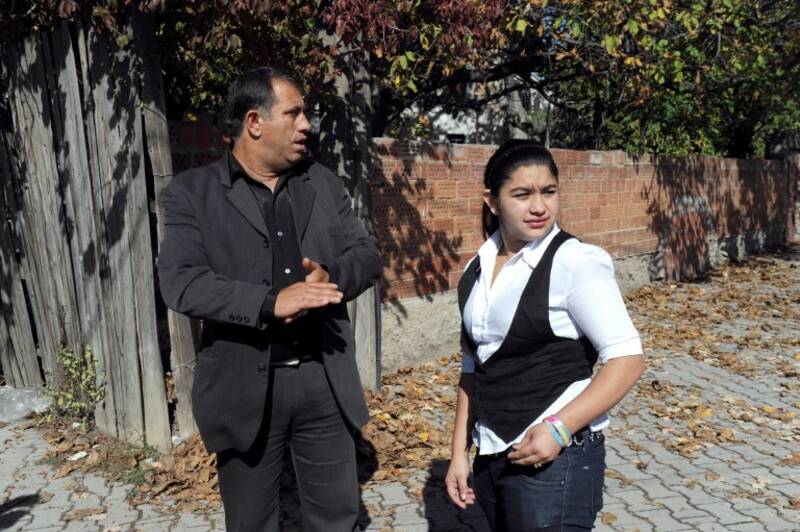
Léonarda Dibrani: Not Kosovar enough either!

Léonarda Dibrani and her father in their temporary residence in Kosovo.

On October 16th, Léonarda Dibrani and her family were attacked in the street in Mitrovica in Kosovo, a week after their deportation from France on October 9th. Agence France Presse said that the Dibranis were walking in the streets of Mitrovica with their children when they were attacked by strangers. Then the story changed, and “they” were not strangers but people involved in a private dispute. Either way, a policeman who remained anonymous said “it demonstrates that the Dibranis are not safe in Kosovo.”

Actually, the Kosovar authorities are quite embarrassed since none of the Dibranis are from Kosovo, except for the father. The mother and most of the children were born in Italy. The younger girl was born in France.

The father admitted to having lied because he thought that declaring Kosovar origins would give them documentation to remain in France more easily.

This story brings to light the question of documentation, proper or not, that allows life with less stress and anxiety. For Léonarda and her brothers and sisters, life was going to school in France. Ever since her arrest and deportation, her teachers have been mobilized to denounce this particular situation, the end of her life in France.

Léonarda’s story is symbolic of asylum rights, say the high school French union and Reseau Education Sans Frontiere (Education Without Borders Network). Their demonstration in Paris numbered 7000 people, students and teachers who demanded that the socialist government respect the people who are in France and stop deporting undocumented students. The `Léonarda affair’ shows how the Roma population has been stigmatized at a time when borders have different meanings, whether we are talking about financial profits, military armaments, or people.

The demonstrations in Paris were supported by many personalities from the same party as the Minister of the Interior Manuel Valls, who is accused of continuing the inhuman immigration policies of the previous President Sarkozy.

President Hollande promised to overturn some Sarkozy’s policies. He did extend the right to work in France after having completed studies in France. He stopped to stop prosecuting people who help undocumented immigrants. He also said that his government is working to stop the imprisonment of asylum seekers. It is time to change all the policies and to defend the humanistic values that the socialists claim to have.

This debate should not be only about France, or Europe. It has to occur everywhere as the neoliberal free-market order works to destabilize populations throughout the world. Léonarda Dibrani: not French enough, not Kosovar enough? Human enough?


(Photo Credit: Liberation / AFP)

Léonarda Dibrani: Not French enough?

Léonarda Dibrani

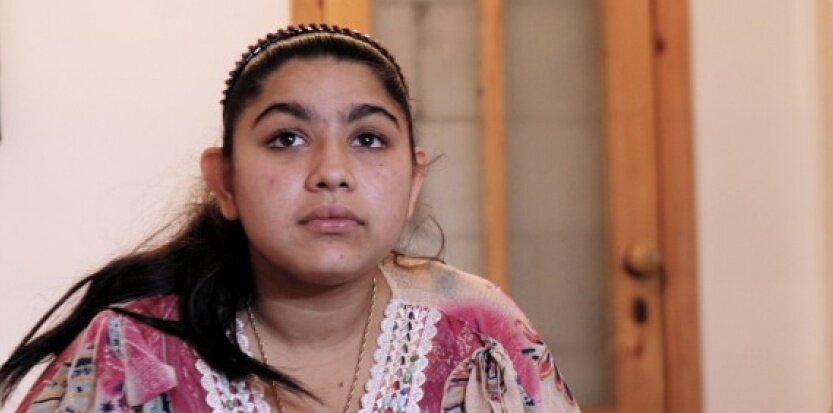
A couple weeks ago, Léonarda Dibrani, a fifteen-year-old girl, was with her class on a field trip. Léonarda lived with her Kosovar Roma family in eastern France, in Levier. The Dibranis had applied for asylum years earlier. In the meantime, Léonarda went to school, grew up, made friends, and integrated herself into the community. Basically, Léonarda became French.

But not French enough. While on the field trip, police stopped the school bus, asked the fifteen-year-old to get down, and then took her away. With her family, she was immediately deported to Kosovo, a place she doesn’t know, a place whose languages she doesn’t speak.

And so now, Léonarda sits in Mitrovica, in Kosovo, gives interviews and pushes to return to Levier, to France, to her school, to her friends, to her community.

Meanwhile, as the adults dither about whether Léonarda was taken `properly’, because apparently there are strict rules for State abductions of minors; about whether the Interior Minister is still `of the Left’; about whether the Left is still … the Left, the high school students have taken to the streets in protest.

Across France yesterday, thousands of high school students marched, shouted, demonstrated, closed schools and boulevards. Their message? “Documented or undocumented, they are like us. They are students!” “They” are Léonarda and Khatchik Kachatryan, a 19-year-old Paris student who, on Saturday, was deported to Armenia.

High school students said clearly, “These deportations touch people just like us.” They argued that education is a universal human right, not merely a civil right bestowed by any particular nation-State. They look at Léonarda and Khatchik and, rightly, see themselves.

The high school students of France are arguing, and demonstrating, for the sake of humanity. As the story develops, more details will emerge that will serve to complicate and obfuscate the simple truth of the students’ message: We are all humans, and no human being is illegal.

Like so many other children, Léonarda Dibrani was abducted by the State. No list of rules followed will alter that. Let’s hope the State hears and listens to its schoolchildren and returns Léonarda, Khatchik, and so many other children to France, to their homes and to their friends … now.

Twenty years after Cairo, women’s rights are reduced around the world

Almost 20 years ago, the Conference on Population and Development (ICPD) took place in Cairo (1994). ICPD, also called the Cairo Consensus, declared women’s reproductive and health rights as fundamental to the well being of women and to the full political and economical participation of women.

In Paris last week, Medecins du Monde (Doctors of the World), Planning Familial and Equilibres et populations hosted a briefing, titled: “Access to contraception, unwanted pregnancies and unsafe abortions:  the state of reproductive rights and health in the global South.” The briefing panel consisted of Margarita Gonzales and Catherine Giboin, both of Medecins du Monde; Serge Sabier, from Equilibres et Populations; Lise Marie Dejean from Solidarité Fanm Ayisyen, SOFA, a Haitian feminist organization; and Véronique Séhier, of French Family Planning. They all agreed that the global conservative turn has had tremendous and destructive consequences for women. Serge Sabier, who participated in the drafting of the Cairo resolutions, said that today it would be impossible to get 172 countries to agree to sign such a document.

Véronique Séhier added that these rights are still not considered fundamental. The goals have not been reached. For young women, access to reproductive health services, and to education and education about sexuality in particular, is limited. In many regions, and not only in the South, contraceptives are difficult to obtain or unavailable. Meanwhile, many countries oppose the right to abortion. In Europe, three countries officially deny access to abortion services, thereby defying European law.  Séhier insisted that no dissociation should be made between contraception and abortion; access to both is a fundamental right.

Catherine Giboin reminded the audience that data on reproductive health were almost non-existent until 1985. She then shared some data to show that evidence is not enough to have sound politics to support women’s rights. One fourth of women in the world have no access to contraceptives. In 2012, 73% of the women who did not receive the contraceptives they needed were in the poorest countries. About 40% of the pregnancies in the world are unwanted, and this rate climbs to about 60% in Latin America and the Caribbean. One out of ten births occur with girls between the age of 15 and 19. The ratio of unsafe abortions has increased from 44% in 1995 to 49% in 2008; 98% of unsafe abortions are in developing countries. In 2008, 47000 women died as a result of not having access to safe abortion and 8 million had complications. 40% of the world women live in countries that have very restrictive abortion legislations. Chile, Malta, Nicaragua, and El Salvador forbid abortion without exception.

Lise Marie Dejean put these data and numbers in the reality of Haitian women who represent 52% of the country’s population. Haiti’s high maternal mortality and high rate of complications after abortion have to be linked to women’s under-representation and invisibility in Haitian institutions and politics.  Dejean affirmed the crucial role that the colonial and post-colonial patriarchal power has played, reminding the audience that contraceptive pills were tested on Haitian women, who now have little to no access to those very contraceptives. She insisted that women’s reproductive health and women’s health in general, are interdependent with women’s levels and quality of participation, women’s poverty, and rape. As Dejean noted, in Haiti “our body doesn’t belong to us, the patriarchal system has profited from this body to establish places of domination (des lieux de domination).” Across Latin American and the Caribbean, women are organizing to demand that their right to control their body be respected as well as their right to have equal participation in the decisions of their countries.

France’s Minister for Gender Equality, Najat Vallaud-Belkacem, presented the position of her ministry. Although France has some problems of access to abortion services, its situation is still one of the best in the world, with free-of-charge reproductive services, including for undocumented immigrant women. Vallaud-Belkacem insisted on the commitment of France and its diplomacy in asserting women’s rights and also more practically in supporting women’s organizations through its embassies. One NGO representative asked how activists from poor countries who are often poor themselves could have a voice in international instances. Vallaud-Belkacem replied that feminist diplomacy is there to facilitate their travel and to increase the visibility and real participation of those activists in international conferences.

The Minister’s language radically departed from the usual monolithic paternalistic language that often prevails in such meetings. She recognized the difficulties and said that while her action in promoting women’s rights and also participation of feminist organizations has been oriented to francophone countries, she also inscribed that in a broader feminist diplomatic perspective. For example, at the conference des ambassadeurs (ambassador conference) in August 2013, she argued for a new diplomacy for women’s rights. Additionally, according to Vallaud-Belkacem, France is the fourth country in terms of financial aid in the world and 500 million Euros were dedicated between 2012 and 2014 to support reproductive health initiatives around the world.

A member of the Greek’s family planning and the vice president of UNICEF Greek committee then made a striking remark that demonstrated once again that women are the first affected by the neoliberal order, which begets crisis. In Greece, women’s rights registered a major set back when austerity measures privatized public services and gutted the social state. And so now 40% of the population cannot access health services. While abortion remains legal, it now costs too much for many Greek women. The fee for an abortion is about half a minimum monthly wage, and contraceptives are expensive and hard to find. Greece, which had a good health care system, has seen a significant increase in infant mortality.

Greece demonstrates the pervasiveness of the neoliberal order on women’s health and reproductive rights. The current reduction of women’s reproductive rights and health has to be recognized as part of a political and economic order rather than as some unfortunate situation.


(Photo and Video Credit: Daily Motion)