The orphan children of asylum seekers haunt Australia

Seena weeps at the funeral of an eight-month-old baby, drowned on the rocks of Christmas Island

On Wednesday, December 15, 2010, a wooden fishing vessel carrying an untold number of asylum seekers and refugees, thought to be Iranian and Iraqi Kurds, crashed off the shores of Christmas Island. The residents watched in horror, the nation watched in horror. Some of the dead were fished out of the rough seas. Others were never found. Estimates suggest that 50 people perished that day.

The survivors were either sent to hospital in Perth or sent to detention centers on Christmas Island. Prime Minister Gilliard called the event a `terrible human tragedy’.

Yesterday, Tuesday, February 15, 2011, two months to the day, eight of the dead were buried in two separate funerals in Sydney. Twenty-one survivors were flown in from Christmas Island and Perth, where they have been detained for the last two months.

Among those survivors was a nine-year old boy named Seena.

Seena lost both of his parents in the tragedy. Seena’s brother drowned that day as well. His father’s body was fished out of the waters. His mother was never found. Seena spends every day staring and waiting for new boats to arrive, for his mother to arrive. At the funeral, Seena said, “Leave me alone. I just want to go to my father. I just want to see him, I just want to see him.” According to one cousin, he wanted to be “buried with his father”.

Seena is nine years old. He has cousins, aunts and uncles, who live in Sydney. They have begged the State to let the child stay in Sydney, where he has an extended family network, where there are mental health providers ready to attend to him. “We are more than happy to take responsibility for him,” his cousin explains.

They are more than happy to take responsibility.

The State however is not happy to take responsibility for this nine year old child. The State initially planned to ship him back, with the others, back to Christmas Island, back to isolation, back to desolation, back to endless and daily waiting for his mother to arrive. If Seena is returned to Christmas Island, who will take care of him? His aunt, who is also a prisoner there. His aunt, who is in even worse psychological condition than he is.

Tonight, Seena is at Villawood Immigrant Detention Centre, outside of Sydney, … again. Seena spent the day before his father’s funeral in Villawood. When ten relatives came to see him, his spirits lifted. Seena is a nine-year old child. Of course, seeing his relatives cheered him up.

Seena is meant to be flown back to Christmas Island tomorrow, Thursday, morning. Perhaps he has been, perhaps not. The State now says it will consider the family’s request.

What does it take for the nation-State to be happy, more than happy, to take responsibility for the children in its midst?

Article 37 of the United Nations Convention on the Rights of the Child reads, in part:

“No child shall be subjected to torture or other cruel, inhuman or degrading treatment or punishment….Every child deprived of liberty shall be treated with humanity and respect for the inherent dignity of the human person, and in a manner which takes into account the needs of persons of his or her age.”

Australia ratified that ConventIon in December 1990, twenty years almost to the day of Seena losing his family and being sent to Christmas Island. More countries have ratified the Convention than any other human rights treaty in history. If there is anything like a global consensus, it is the United Nations Convention on the Rights of the Child.

And yet … protecting, securing and sustaining the rights of the child and the rights of children is viewed as a bureaucratic obligation. Which nation-State is more than happy to take responsibility for the child?

Seena is nine years old. Seenah haunts Australia. The orphan children of asylum seekers haunt the world.


(Photo Credit: Sydney Morning Herald / Getty Images)


The child prisoners of St. Patrick’s haunt Ireland


In Ireland, today, Ombudsman for Children Emily Logan issued a report, entitled Young People in St. Patrick’s Institution. St. Patrick’s is a men’s, and boys’, prison for children and adults between the ages of 16 and 21. It is the only place in Ireland that `accommodates’ male prisoners aged 16 and 17, whether they have been sentenced or are awaiting trial. The boys of St. Patrick’s come from all over the country.

The report describes St. Patrick’s Institution as follows: “St. Patrick’s Institution is a closed, medium security prison managed by the Irish Prison Service, which holds remand and sentenced young people between 16 and 21 years of age. Adjacent to Mountjoy Prison in Dublin, the Institution’s main buildings are part of a Victorian prison complex dating back to 1850 and were the site of the women’s prison before becoming a place of detention for young offenders.” Women and children first, or, in this case, women first, then children, both subjected to a male adult prison regime.

As is so often the case with Victorian prisons still in use, St. Patrick’s has been criticized for a long time, for decades. The 1985 Whitaker Report called for St. Patrick’s closure, arguing that it was too old and dilapidated to repair, arguing further that it contributed to further juvenile delinquency rather than rehabilitation. That was over 25 years ago. In July 2007 the Irish Penal Reform Trust issued a new report, The Whitaker Committee Report 20 Years On: Lessons Learned or Lessons Forgotten? It described the earlier report as  “the most detailed and thoughtful analysis of Irish prisons to date”. There was much discussion of lessons learned, forgotten, suppressed, ignored. The 200 Years On analysis described deteriorating conditions. The prison was going from very bad to much worse.

Today, Wednesday, February 9, 2001, that prison still houses child prisoners, still does harm to them, their families, and their communities, still defines the Irish state.

According to today’s report, every aspect of St. Patrick’s denies and offends the particularities of the prisoners as children. For many, contact with family is difficult because the prison is far from home, and so getting there is expensive and time consuming. Remand prisoners are allowed five fifteen-minute visits per week. Sentenced prisoners are allowed two half-hour visits. Imagine the family that will travel hours for a fifteen-minute `interview’. Then imagine the child.

Meanwhile, maintaining and developing healthy relationships with family and friends is made almost impossible by visiting conditions and regulations that prohibit intimacy or privacy.

Children can’t be children, parents can’t be parents.

When the children’s wing, the B-Wing, is overcrowded, either the boys are dumped two to a bed, or they’re moved to C- and D-Wings, where adult prisoners are kept. Again, this includes children who are remand prisoners.

The food is terrible, the educational facilities are outmoded and archaic, the health facilities are decrepit, there is little attention to rehabilitation and reintegration in any way that is attentive to the needs of children, of adolescents. The boy’s in jail, he’s treated like a man.

Finally, there’s `the pad’, or special observation cell. The prison administration claims this is only used to protect the prisoners. The prisoners see it as solitary confinement: degrading, punitive, silencing. Putting an adult in long term solitary confinement is torture. Placing an adolescent in a `seclusion room’, without explanation, without … anything, is as well. `The pad’ teaches the young that they must not complain, they must not whimper, they must just tough it out and get through. If they have problems, especially mental health problems, they must be silent. They must not seek help. They must learn to shut up. That is the lesson of solitary confinement when administered on the young.

None of this is new and none of this is news. The conditions of St. Patrick’s have been known for longer than any of these children have walked the earth. This is what it means to be a child in the care of the modern State.


(Image Credit: The Ombudsman for Children, Ireland) (Video Credit: The Ombudsman for Children, Ireland / YouTube)

Children are disappearing, into the night, into the fog

Children are disappearing. Sometimes spectacularly. Sometimes silently. Sometimes `without notice’. That children are disappearing is not new. Children asylum seekers and children of asylum seekers have been disappearing into detention centers in Australia, the United Kingdom, the United States, Greece, and elsewhere. In Australia, imprisoned children of asylum seekers are disappearing into the tortured self mutilation that must serve as a kind of escape from their current everyday circumstances.  Children of incarcerated mothers are disappearing in South Africa, Scotland, the United States and elsewhere. Children in schools are disappearing into seclusion rooms, aka solitary confinement.  In the United States, children of undocumented residents are disappearing, shipped like so much baggage, back to Mexico and parts unknown, often on their own.  In Jamaica, girl prisoners disappear into prison fires that were altogether predictable and preventable.  None of this is new. We have discussed this and more before. The events are not new nor is the failure to take responsibility.

Children are disappearing. Sometimes spectacularly, sometimes silently, other times `without notice’.

In England, an inquest opens today. It’s the second time around for this inquest. It concerns the death in custody, in August 2004, of Adam Rickwood. Adam was 14 when he was found hanging in his cell at Hassockfield Secure Training Centre, a private prison run by Serco, the same people who run Yarl’s Wood in the UK and all the immigrant detention centers in Australia, most notoriously Villawood.

When Adam Rickwood, who had never been in custody before, refused to go to his cell, he was `forcibly restrained’ with `a nose distraction’, a violent and invasive chop to the nose. Hours later, he was found dead, hanging, in his cell. At the first inquest, in 2007, the coroner refused to let the jury decide if the restraint constituted an assault.  It took thirteen years of struggle on the part of Adam’s mother, Carol Pounder, before the first hearing took place. Dissatisfied with the complete opacity of the system, she continued to push, and finally, finally a second inquest has been ordered. That starts today. Adam Rickwood would be thirty years old now.

Meanwhile, across England, there are 6000 children whose mothers are incarcerated, and, basically, no one officially knows their whereabouts. According to the Prison Advice and Care Trust, or PACT, they are “the forgotten children.”  According to PACT, the mothers of 17,000 children are in prison, and of those, 6000 are not in care nor are they staying with their fathers. They are `forgotten.’ Children are disappearing, some into the night, others into the fog.

At the same time, in Ireland, eleven unaccompanied children asylum seekers went missing last year.  Six have yet to be found.  Between 2000 and 2010, 512 unaccompanied children seeking asylum were `forgotten’. Of those, only 72 were ever found by the State. Forgetting children is not an exception, it’s the rule, when the children are children of color, children of asylum seekers, children of the poor, children in prison.  Children of strangers, children of neighbors are disappearing, into the night, into the fog.

In the United States, Phylicia Simone Barnes is a 16 year old honor student from Monroe, North Carolina. In December, she was visiting Baltimore, thinking of attending Towson University, a local university. Phylicia went missing on December 28. There has been little, very little, media attention, despite the efforts of family, the Baltimore Police Department, and the FBI to draw attention to this case.  Why? Baltimore Police spokesman Anthony Guglielmi thinks he knows the reason: “”I can’t see how this case is any different from Natalee Holloway. Is it because she’s African-American? Why?” When teenager Natalee Holloway disappeared, on holiday in Aruba, there was a `media frenzy.’ For Phylicia Simone Barnes, who is Black, there is fog. She is a forgotten child.

Christina Green was born on September 11, 2001, to Roxanna and John Green, in West Grove, Pennsylvania. She was one of the 50 Faces of Hope, faces of children born on that fateful day.  Like Phylicia Simone Barnes, Christina was a star student, an engaging child, bright, mature, `amazing’. She was killed on Saturday, in a volley of gunfire apparently directed primarily against Congresswoman Gabrielle Giffords.

What becomes of hope when a Face of Hope is lost? Children are disappearing, sometimes spectacularly, amidst blazing gunfire, sometimes through a policy of practiced omission and amnesia.  In the moment, the route of spectacle or silent lack of notice seems to matter. But in the end, they are all forgotten children, and they haunt the days and ways of our world.


(Photo Credit: BBC.co.uk)

The human faces of asylum seekers haunt Australia

Two months ago, it was reported that Australia was preparing for an uptick of children in detention mutilating themselves. At the time, there were around 700 children. These children `in detention’ are imprisoned asylum seekers and migrant children, and children of asylum seekers and migrants.

Two months later, almost to the day, on Wednesday, December 15, a wooden fishing vessel carrying an untold number of asylum seekers and refugees, thought to be Iranian and Iraqi Kurds, crashed off the shores of Christmas Island. The residents watched in horror, the nation watched in horror.

The dead were fished out of the rough seas. The survivors were either sent to hospital in Perth or sent to detention centers on Christmas Island.

Prime Minister Gilliard called the event a `terrible human tragedy’. The event is now commonly referred to, in the news media, as `the asylum-seeker boat tragedy.’ The Prime Minister said the full death toll may never be known. She was more right than she knew.

This is not the first time Australia has confronted an asylum-seeker boat tragedy. In 2001, there was the infamous Children Overboard affair.

On October 7, 2001, a fishing boat, the Olong, was filled with asylum seekers and headed for Christmas Island when it was caught by the HMAS Adelaide, north of Christmas Island. Under orders from the government, the warship fired warning shots, boarded several times, and finally forced the boat to turn back. The boat was old, battered, and overloaded, with over 200 people on board. The engines failed. The Adelaide took the boat in tow, and waited for instructions from the government. Then the boat literally began to fall apart and sink. Parents held their children in the air, to alert the navy of their presence on board. There were 53 children on board the Olong. The then Prime Minister John Howard claimed the parents were throwing their children overboard. They were not. The evidence from the Australian Navy showed, immediately, they were not throwing their children overboard. But the claim was out there, in the air. Refugees and asylum seekers were somehow less than human.

This most recent asylum-seeker boat tragedy is said to have put a human face on the `asylum issue’. Here’s how Nick Clegg, of the BBC, describes the situation: “Australia’s asylum seeker debate is often conducted as if the people heading for its shores were an abstraction, with the term “boat people” almost shorn of its human meaning. With such harrowing images from Christmas Island broadcast on early evening news shows – which only 24 hours earlier had dwelt more happily on the visit to Sydney of Oprah Winfrey – millions of Australians would have seen the anguished faces of those seeking to reach its shores, and witnessed the lengths to which they would go to get there. Put simply, it was shockingly real….Whatever its outcome, after the tragedy on Christmas Island the debate has a human face.”

Others had a similar response: “In Australia, perhaps for the first time, the disaster gave the asylum-seeker issue a human face. Not even those who dismiss boat people as “queue-jumpers” could have failed to be moved by footage of men, women and children screaming for help as their vessel was dashed to bits.”

The asylum-seeker debate, or situation, now has a human face. Prime Minister Gilliard says there will be no repeat of the children overboard affair in dealing with the situation. She says as well that the full death count will never be known. In a nation in a world in which human beings must sew their lips together, must mutilate themselves, must perish in the rough seas in order to be endowed with a human face, where does one begin to measure the full extent of the death count? The human faces of asylum seekers – not the asylum seeker debate nor the asylum seeker situation – haunt Australia and the world.


(Photo Credit: Australia Human Rights Commission)

The children of Afghanistan haunt the modern democratic nation-State

Children of asylum seekers and children who are asylum seekers in prison. What is their crime? Seeking asylum. These are children fleeing violence, in their households, in their communities, in their countries of birth. And how do `we’ respond? Prison.

Australia is bracing for a serious uptick in children in detention mutilating themselves: “Self-mutilation in Australia’s detention centres is increasing with the number of recorded cases quadrupling in the past year and mental health experts bracing for worse to come as children begin cutting themselves.” Why are the children cutting themselves? The prisons are becoming more overcrowded, the time spent in prison is increasing, and government officials are `promising’ increased rates of deportation. Who are these scoundrel children? Afghans. Sri Lankans.

According to Harry Minas, director of the Centre for International Mental Health at the University of Melbourne, the conditions for imprisoned asylum seekers and immigrants is returning to the dark days of 2001 – 2003, “when children drank shampoo and detainees sewed their lips together.” All of this has happened before, and it is happening again. We are told the first time it was tragedy.

Why are children cutting themselves? There is no school, there are no sustaining structures, there is no home life, there is no community, there is no future, and, increasingly, there is no past. There is only prison. From the State, there is only the promise that the rate of deportation to Afghanistan will increase. For the children, there is only threat and more threat.

The children are cutting themselves, they are poisoning themselves, because they are children, and self-harm is the only electoral process allowed them by the modern democratic nation-State. There are currently around 700 children in immigrant detention `facilities’ in Australia.

These children of asylum-seekers, these children asylum seekers are viewed as budget targets, as opportunities for greater efficiency. In Britain, it was announced today that “thousands of child asylum-seekers are to be removed … under savage budget cuts being drawn up by the Home Office ahead of this week’s comprehensive spending review. A briefing document sent to ministers sets out detailed proposals to remove child refugees before they reach 17 years old, and recommends bearing down on benefits given to asylum seekers…. Of greatest concern will be a policy of mass removal of unaccompanied children before they reach 17 and a half, the age when they are deemed to be adult asylum-seekers. Under current rules unaccompanied child asylum-seekers are usually granted leave to remain in the UK until they can make a fresh asylum application as an adult. There are more than 4,200 unaccompanied child asylum-seekers in Britain, with most being supported in local authority social services homes.”

The opportunity for economy here, for efficiency, is great. It is so great that the United Kingdom is willing to invest £4m in a `re-integration center’ in Afghanistan. The children of Afghanistan have traveled far, to seek asylum, to seek haven, to escape the violence of the Big War and the myriad forms of violence of the more intimate wars of the everyday. These children shall be returned to Afghanistan, after having been subjected to the democratic rule of law and of due process.

The planes are waiting, the ministers are promising swift, increasing, and ever more efficient returns. The children who have come asking for help will be returned to Afghanistan because Afghanistan is a better place … for them. It must be. It has been democratically decided. Those children who have not been allowed to kill themselves shall be sent `home’. The modern democratic nation-State is bracing itself for mass removals, for bearing down, for the mutilation of children. The children who seek asylum and the children of those who seek asylum have been targeted. The children of Afghanistan haunt the modern democratic nation-State.


(Photo Credit: Australian Human Rights Commission)

More than Jamaica is haunted

The burnt-out room at the Armadale Juvenile Correctional Centre in St Ann

Jamaica is haunted by the memories of charred prisoners’ bodies. More than Jamaica is haunted by their ghosts.

About a year ago, May 22, 2009, seven girls died in a fire in Armadale Juvenile Correctional Centre in Jamaica. On May 22, 2010, people around the world gathered to commemorate their deaths and to commit themselves to improving the conditions and situations of State child-care in Jamaica. Those seven girls haunt Jamaica and haunt more than Jamaica. They are part of a global story of the wasting of children and of children’s lives through incarceration, in prisons, detention centers, and `reception centers’, in impossibly overcrowded cells and solitary confinement, in adult prisons and in juvenile detention, in interminable remand or permanent lockdown or else caught in a never ending choreography of revolving doors.

But now another charred body appears to publically haunt Jamaica, that of Lester Coke:

“Wherever Christopher (Dudus) Coke is hiding in the heavily fortified neighbourhood and fief known as Tivoli Gardens, whether he’s surrounded by armed henchmen, ducking in a crawlspace, or peering from a rooftop at the police officers in flak jackets below, Jamaicans are sure of one thing: He’s thinking of his father’s charred corpse. The late Lester Coke, who went by the alias Jim Brown, and his Shower Posse gang ruled Tivoli Gardens with an iron fist – along with the steadfast support of then-prime-minister Edward Seaga – throughout the 1980s. But when he was finally arrested in 1992, and set to be extradited to the United States, a bizarre thing happened in his cement jail cell. He burned to death, despite the absence of flammable materials.”

The stories unfolding in the streets of Tivoli Gardens and across Kingston and beyond, that of the violence by State and by others, that of the bullets and bodies that haunt the nation, and all the rest of the stories, interpretations, diagnoses and critiques, meet in the story and in the ghost of the charred remains of Lester Coke, a violent man, a bad man, a prisoner of State in a global War on Drugs directed from Washington, DC, who met an impossible death.

Memories of those impossibly charred remains of his father haunt not only Christopher Dudus Coke, not only Tivoli Gardens, not only Jamaica. They haunt a world order whose War on Drugs relies on extrajudicial violence in the streets and phantom executions in the prisons. Eighteen years ago, Lester Coke burned to death in a room where no fire could occur. Impossible fires produce eternal smoke. A fire that never happened cannot be extinguished. This is the magical realism of the prison state, and it haunts the world.

Whatever happens next in Jamaica, whatever happens to Christopher Coke, whatever happens to the US government that forced all of this on the Jamaican people, nothing substantive will have happened until the magical realism of the prison state is shut down and replaced with a better story. The story of the lives of the seven girls who died in the Armadale fire is not the same as the story of the life of Lester Coke, but the story of the flames that consumed them is. We must do better than continually raking ashes.


(Photo Credit: The Jamaica Gleaner)

What is left: after solitary confinement in schools

Prison is a bad place for children. Solitary confinement is worse yet. Extended solitary confinement is lethal. These are not surprising statements, and the news that underwrites them, though dismaying, is not particularly shocking.

Immigration detention centers in the US, such as the Eloy Detention Center in Arizona, run by Corrections Corporation of America, or the Reeves County Detention Center, run by GEO, are lethal, fatal black holes for all residents. Joe Arpaio’s jail in Maricopa County is only the best known example of humiliation and terror against all Latinas and Latinos, irrespective of status, and which results in increased anxiety and mental health problems for Latina and Latino children.

And it is estimated that more than 60 of those held in Guantanamo were under 18 when they were arrested and sent to Cuba.

In England, Yarl’s Wood Immigration Removal Centre is so terrible for children that the entire nation is now considered unsafe for children of immigrant parents, including those seeking asylum and refuge. The place literally drives children mad.

Juvenile centers in the United States report that sexual abuse of prisoners, by other prisoners and, more, by staff, is off the charts. In 2008 – 2009, in more than a few juvenile detention centers, a recent study suggested that nearly one out of every three prisoners suffered some sort of sexual abuse.

When children go to prison, how are they educated? According to some, they’re not at all. California is being sued in a federal class action case for failing to educate youth in their `probation camps.’

These are terrible and tragic and all too familiar. Prison is a bad place, after all. Bad things happen.

Those bad things that happen to children are not restricted to prisons. Take “seclusion rooms”, for example: “Seclusion is the involuntary confinement of a student alone in a room or area from which the student is physically prevented from leaving. This includes situations where a door is locked as well as where the door is blocked by other objects or held by staff.”

This happens in schools all over the United States.

In the state of Georgia, public schools have “seclusion rooms,” solitary confinement cells. The doors are double bolted on the outside: “Seclusion rooms are allowed in Georgia public schools provided they are big enough for children to lie down, have good visibility and have locks that spring open in case of an emergency such as a fire. In 2004, Jonathan King, 13, hanged himself in one such room, a stark, 8-foot-by-8-foot “timeout” room in a Gainesville public school.” Time out. When schools put children into solitary confinement, what time is left?

What is left for Jonathan King’s parents, so many years later? Pain, anguish. Only now is Georgia finally responding by considering a law that protects all students from seclusion and restraint. It only took the State legislature six years … equal to almost half of Jonathan King’s entire life.

In May 2009, the Missouri state legislature passed a law giving the school districts two years in which to devise written policies governing the use of seclusion rooms. Before that, there were no policies, only the practice of solitary confinement of school children without a single written guideline or rule. This is now an issue in the upcoming GOP primary for State Senate. One candidate sees restrictions on solitary confinement of children as a violation of local sovereignty.

Florida state legislators are also considering a bill to restrict the use of restraint and seclusion. There are seclusion rooms all over the state school system, from elementary on up. Up til now, there has been no written policy.

Not surprisingly, solitary confinement is of particular concern to parents of children living with disabilities. Here are two stories from Florida:

When a twelve year old girl with autism repeated names of movies, shoved papers off her desk or waved her arms and kicked her legs toward approaching teachers, they responded by grabbing the eighty pound girl, forcing her to the ground and holding her there. This happened forty-four times during the 2006-07 school year.  She was held once for an hour, and, on average, twenty-two minutes at a time.  At least one incident left her back badly bruised.

When a seven year old girl, diagnosed with autism and bipolar disorder had her head pushed to the floor, the parents discovered several other frequent inappropriate uses of restraint and seclusion. The county where they live leaves it to individual schools to write their own policies on restraint or seclusion use.

These come from a 2009 report issued by the National Disability Rights Network: School is not supposed to hurt: Investigative Report on Abusive Restraint and Seclusion in Schools.  The stories come from all over the United States.

On the cover is the picture of a lovely, smiling seven year-old girl, from Wisconsin:

A seven year old girl was suffocated and killed at a mental health day treatment facility when several adult staff pinned her to the floor in a prone restraint.  This child, who was diagnosed with an emotional disturbance and Attention Deficit Hyperactivity Disorder, died because she was blowing bubbles in her milk and did not follow the time-out rules regarding movement.

Greenfield School District, outside Milwaukee, Wisconsin, applied to use Federal stimulus funds to build seclusion rooms in elementary and middle schools. The Wisconsin Department of Public Instruction recently rejected the application, instructing all school districts in the state that stimulus funds and special education funds not be used for that purpose. Greenfield is disappointed.

School is not supposed to hurt. It’s not only the children sent to isolation who suffer. What are the other children in the classrooms, in the hallways, in the school offices, who witness these acts and know of these rooms as part of the norm, what are they being taught? What becomes of a generation of child witnesses to torture?


(Video Credit: Vimeo/StopHurtingKids.com)

Black Looks: Yarlswood refuses xmas for imprisoned children

December 15th, 2009 

I heard on Sunday morning of an asylum seeker who was picked up yesterday and sent to Yarlswood women and children’s detention center. I have visited and met some of the women in Yarlswood and personally know two women, a young Nigerian lesbian and a young Ugandan woman both deported last year to Lagos and this year to Kampala – two cities where neither has lived or has family. The Ugandan woman had spent 5 years within the legal process of seeking asylum on the basis of sexual assault. Every few weeks asylum seekers have to check in with the police. As the date nears one becomes more and more anxious wondering if this will be the time they decide to physically grab you and send you to Yarlswood and 24 hours later on a plane.

Once again, the papers are full of reports about children being placed in Yarlswood which is run by a private security company SERCO. The horror of Yarlswood is that it is a prison yet no one imprisoned there has committed a crime. Still they are locked up, harassed, subject to body searches, abuse and sexual assault by guards, and wait for the moment they will be physically restrained en route to Gatwick or Heathrow and forced on to a plane. The latest story centers on SERCO refusing to allow two Anglican pastors from bringing Christmas presents for the children.

The Mothers’ Campaign of the All African Women’s group are mothers who have had to flee to the UK. The mothers had to make the very difficult decision to leave their children behind because they felt they would be safer without them. They have launched a petition for family reunion which they plan to submit on Mothers Day in March 2010. You can sign here. .

Sokari Ekine writes and organizes at Black Looks: http://www.blacklooks.org/ . This post appeared originally at http://www.blacklooks.org/2009/12/yarlswood_refuses_xmas_for_imprisoned_children.html

Baring the brunt

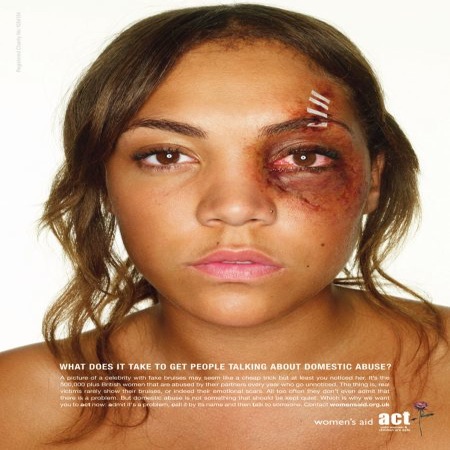
September, the song was, “Women hold up half the sky.” By the look of news reports this week, October, Domestic Violence Awareness Month, the tune might well be “Women and children bear the brunt”. From households and intimate relations to the armed forces to global poverty, women bear the brunt, children bear the brunt. This is not good news.

The new song began last Friday, with an article that centered on LeAnna M. Washington, Pennsylvania State Senator from the 4th District, which covers part of Philadelphia and Montgomery County. Senator Washington’s official Senate biography reports, “Washington has triumphed over many personal challenges in her life. She was a high school dropout, teen parent, and victim of domestic violence early in her marriage. Her tenacity, perseverance and faith in God allowed her to transform victimhood to victory. Washington, who earned a Master’s degree in Human Services from Lincoln University said of the road she has traveled: “I will go where there is no path and I will leave a trail for others to follow.””

In Friday’s article, Senator Washington is described as having been married at 18, and then living with the big secret of domestic violence, of spousal abuse. She is described as one of `many black women across the country….It’s about absorbing the reality that close to five in every 1,000 black women aged 12 and up are victims of domestic violence, according to the U.S. Department of Justice. It’s understanding that among those abused aged 15 to 34, murder by a husband or boyfriend remains a leading cause of death. More importantly, it’s about actively working on changing those outcomes….Verbal, sexual and physical abuse are forms familiar to a large swath of black females. Historically so…. These are the scars of slavery, lack of education, discrimination, unemployment and other frustrations that have been exacerbated among African-Americans. Poverty tends to be an indicator for abuse, though violence is not confined to one social class. The difference is having options and resources to escape – options not always afforded by those struggling to survive day-to-day. Feeling trapped leads many women to stay put – and in peril.”

The article is titled “Black women bear the brunt of domestic violence,” and it appeared in blackamericaweb. In every community, women bear the brunt of domestic violence. In every community, the language of that particular brunt, of that bearing, is silence.

And those communities are not only defined by race and ethne. For example, on Thursday we `learned’ that in the U.S. military “lesbians bear brunt of military discharges….Every military branch dismissed a disproportionate number of women in 2008 under the policy banning openly gay service members. But the discrepancy was particularly marked in the Air Force, where women were a majority of those let go under the policy, even though they made up only 20 percent of personnel.”

On the same day, Thursday, it was reported that in Lesotho, “children bear the brunt of the deepening economic crisis…”Adult frustration” translated into a grim reality of child abuse, violence, neglect and exploitation, with thousands left to fend for themselves, excluded from crucial services such as hospitals and schools.” The next day, the Africa Child Policy Forum sent out a press release, announcing a new publication, Child Poverty: African and International Perspectives. Here’s what they said in the release: “Poor children to bear the brunt of global economic crisis. New book looks at the brutal reality of child poverty….The book also includes analysis of the impact of the current financial crises on child poverty in the face of increased estimates of the actual number of newly poor and reduced economic growth in sub-Saharan Africa estimated to be down to 3.5 percent – implying a 7 percent increase in poverty in Africa, of which children will bear a huge brunt.”

From one community to another, what exactly is meant by “bearing the brunt”, and why is it always women and children who are endowed with that particular role and capacity? Can community exist without women and children bearing a, or the, brunt? A brunt is “An assault, charge, onset, violent attack….The shock, violence, or force (of an attack)…. The chief stress or violence; crisis.” To bear can mean so many things, from carry to bring forth fruit or offspring, but when it comes to bearing the brunt, it means “to suffer without succumbing, to sustain without giving way, to endure.” Bearing the brunt as an acceptable facet of everyday life, as an acceptable `neutral’ phrase, is a perversion of any vision of sustainability as articulated with wellbeing.

Domestic Violence Awareness must transform the language and the logic of the brunt. It’s time to stop talking about bearing the brunt and start talking and acting on baring the brunt. What is the attack, who and what are the assailants, what is the violence, the force, the stress, the crisis? All must be addressed as part of the same question and part of the same solution. And it begins and ends with women, not majestically holding up half the sky but rather ordinarily and daily populating and sustaining all the daily world. Bare the brunt now, today, and always.

(Photo credit: Precious Jones in NCKU)

The rule of lawless

The United States immigrant detention system has been called a gulag. The California state prison system has been called a golden gulag. Millions of women, children, men inhabit severely overcrowded, ferociously under-resourced, rigorously unmonitored and opaque `centers’. This gulag has been likened to sites of bare life where national sovereignty is articulated by the power and capacity to kill and to reduce life to physical survival, and less. These descriptions are accurate, but they miss something. It turns out that the U.S. immigration detention system is just the most recent articulation of the rule of lawless.

The rule of lawless haunts the rule of law. In fact, when the rule of law looks in the mirror, it’s the lawless it sees, and then quickly names as dangerous other. This became clear this past week, when the Obama administration announced its intention to overhaul the immigrant detention system.

National Public Radio reported, “The Obama administration is planning to overhaul the nation’s immigrant detention system.” According to The New York Times, “The Obama administration intends to announce an ambitious plan on Thursday to overhaul the much-criticized way the nation detains immigration violators, trying to transform it from a patchwork of jail and prison cells to what its new chief called a `truly civil detention system.’” The Austin American-Statesman called it a larger and then, the next day, a broader “overhaul of the nation’s immigration detention system”.

Everyone cried overhaul. Overhaul, to change significantly, abruptly, swiftly, with force or violence.

The first site of this supposed overhaul is the T. Don Hutto Residential Center, in Taylor, Texas, a notorious private prison, run by the Corrections Corporation of America, and just down the road from Austin.

Hutto came to public attention over the past few years for its abysmal treatment of children and women. The ACLU, the Women’s Refugee Commission and others weighed in and waged mighty campaigns. Now, children will no longer be sent to Hutto. In fact, `families’ will no longer be sent to Hutto. They’re going to the Berks Family Shelter Care Facility, in Leesport, Pennsylvania.

But Hutto will stay open, as an all-women’s immigration detention center. Michelle Chen, of RaceWire, wrote a terrific piece, “New Direction for Detention?”, that explains in great detail what Hutto means for women, what immigrant detention has meant for women. It’s been terrible, and there’s no reason to think it will improve.

At the same time, and here’s where the rule of lawless kicks in, many think the only way to overhaul the system would be to actually overhaul the system. NPR reporter Michelle Brand interviewed NPR reporter Daniel Zwerdling on the overhaul. Zwerdling reminded Brand that immigrant detainees are “civil detainees”. They are charged with having broken civil, or administrative, laws, “like overstaying a visa”, but are housed with “regular criminals”, and so are treated accordingly: beaten, overcrowded. Many die for lack of medical care. Treated like prisoners in the U.S. system. Ask California, under order to release 43,000 prisoners. The difference is that the immigrants are, again, civil. As Zwerdling explained, “government officials have told me that 90 percent of the immigrants they detain never have a lawyer. So they can’t really even challenge their own detention.”

Why don’t they have lawyers? Because constitutionally, they don’t exist.

“Zwerdling: ` lawyers say the best way to make sure the jails treat immigrants humanely is to pass a law that requires it. Period.’

Brand: ` So, wait, there’s no law that says treat detainees humanely?’

Zwerdling: ` No, absolutely not. The detention standards are legally just guidelines, you know, so nobody can actually force the government and the jails to obey them.

And now some members of Congress have introduced bills that would turn those standards into law. And I asked the Homeland Security spokesman today, will you support that? And he said, no. And I said, why? And he did not give me an answer.’”

That, in a nutshell, is the rule of law. If no law says your category must be treated humanely, you have no legal, juridical protection. Period. And you will not get an answer from members of State about that. More accurately, radical silence shall be your answer.

According to Michelle Brané, Director of the Detention and Asylum program at the Women’s Refugee Commission, when it comes to immigrants, “Our current laws are unforgiving and unrealistic.” Yes, but our current system of non-laws is lethal.

This legal system is one of negation. Everywhere, this negation, this system of absence-of-law, this reliance on written law as the only means of preventing abuse and atrocity, as the only means of `protection’, this is the rule of lawless. The rule of lawless haunts the rule of law, and it targets women. Don’t send women to Hutto. Shut it down.

(Image Credit: WomensRefugeeCommission.org)