Watch where you walk

Watch where you walk

Watch where you walk
we are advised
by folks in the know

don’t do a midnight
or an early hours one

(boyfriends bury
their girlfriends
in backyards)

don’t frequent the hotspots
police cannot be everywhere

behind closed doors
in gated mansions
in ivory towers
be-suited in committees

(you know dangerous areas
places like home like school
like the workplace like)

Watch where you walk
twin knifes mom and sister
famine on the horizon
for millions of children
(what way our grant fiasco)

femicide is the order
women besieged
sexual assault the daily custom
(in the broad light of day)

(a woman or girl raped
every 25 seconds down here)

Watch where you walk
International Women’s Day
and our 16 days anti-abuse campaign
has long since passed us by

Watch where you walk

‘Watch where you walk’ – cops (People’s Post Athlone, 14 March 2017). “Boyfriends bury their girlfriends in backyards” (Cape Times, January 31 2017), “Twin ‘knifes’ mom, sister” (Cape Times, February 6 2017); and “Millions of children are facing famine” (Sunday Argus, January 29 2017)

(Image Credit: 702)
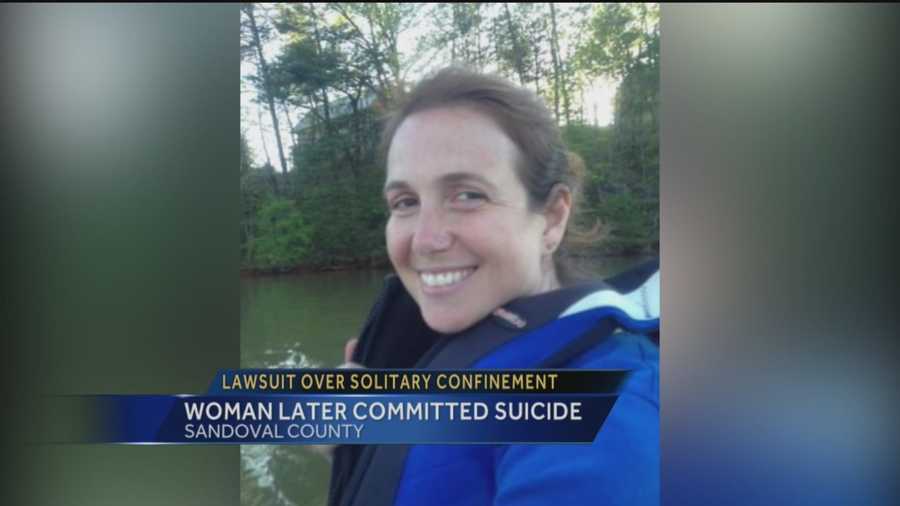
What happened to Raynbow Gignilliat? The routine torture of solitary confinement

Raynbow Gignilliat

“They didn’t treat her for two months and she was left in a manic state. Basically, in all aspects, I would call it torture,” said attorney Jack Jacks, discussing the final months of Raynbow Gignilliat’s short life. Raynbow Gignilliat, 39-year-old mother of three, was arrested in October 2013. She was sent to the Sandoval County Jail, in Bernalillo, New Mexico, where she spent two months in solitary confinement. Then she was sent to an emergency room. Then, against doctors’ orders, she was returned to solitary. In January 2014, Raynbow Gignilliat was sent to the New Mexico Behavioral Health Institute. In the Spring 2014, Raynbow Gignilliat was released from the hospital and all charges against her were dropped. By June 2014, Raynbow Gignilliat was dead. The reports say she “committed suicide”, but her family and supporters know that Raynbow Gignilliat was killed by State torture.

From the moment Raynbow Gignilliat encountered the so-called criminal justice system to today, almost three years after her death, from beginning to end, this is a story of State violence, viciousness and brutality. Raynbow Gignilliat had been diagnosed with bipolar disorder. For most of her life, she had managed her mental health without medication. Then, things fell apart, largely due to a messy divorce and custody battle. In late October 2013, Raynbow Gignilliat was arrested on a domestic battery charge, following a dispute with her mother, with whom she was living. Her mother called the police, hoping they would take her daughter to the hospital. Instead, they arrested her and sent her off.

After about two weeks in custody, Raynbow Gignilliat was moved into solitary confinement, also known as segregation. Remarkably, there are no records to explain this move. Once in solitary, Raynbow Gignilliat’s health deteriorated swiftly. Staff watched as she covered herself in feces, punched herself, dunked her head in her toilet water, hallucinated, screamed. Staff watched Raynbow Gignilliat’s increasing and intensifying dementia for six weeks. Finally, they sent her to an emergency room, where doctors said she should be sent to a psychiatric hospital or she would die. Instead, she was returned to solitary confinement, where she sat for another month, begging for help in the only way she could, through self-harm.

Finally, in January, Raynbow Gignilliat was moved to a hospital where she received treatment. While there, all charges against her were dropped. When Raynbow Gignilliat was released from the hospital, she was free … to kill herself. Her family says the damage had already been done. She was not the same woman.

Last week, Sandoval County agreed to a settlement of $1.8 million, to be distributed to trust funds for each of Raynbow Gignilliat’s children. The jail’s medical provider, Correct Care Solutions, has also settled, for an undisclosed amount. Sandoval County is quick to note that its insurance company covers this sort of thing, and so Sandoval County is only on the hook for $15,000.

Meanwhile, the case of Raynbow Gignilliat led to the discovery of the abuse and torture of Sharon Vanwagner, who was also booked in the Sandoval County Jail in October 2013, who lives with psychosis and delusions, who spent three months in solitary confinement, who deteriorated rapidly and dramatically, and whose charges were ultimately dropped.

What happened to Raynbow Gignilliat and Sharon Vangwaner, what is happening to so many women living with mental illness in county jails across the country? “Basically, in all aspects, I would call it torture.”

(Photo Credit: KOAT TV)

More than a single International Women’s Day, this is an international movement


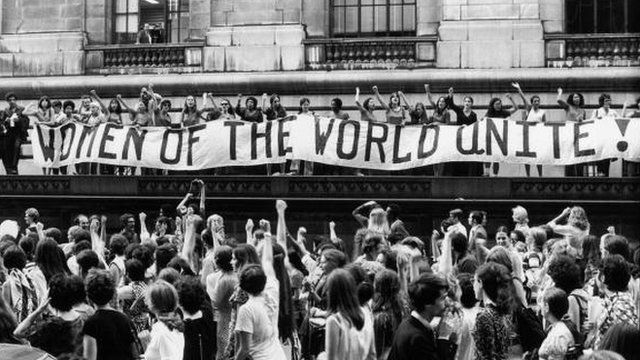
Every year, since the 1900s, International Women’s Day has been offered as a celebration of women’s achievements. This year was different. Women went to the streets not to celebrate but to demand. The international women’s strike also called “a day without a woman” has been organized in more than 50 countries. Women took the streets in the Middle East, Asia, Africa, Europe, Australia, and the Americas.

In 1975, Icelandic women showed that if women stopped all their activities at home and at work, the country could not function. That day started an important movement in Iceland, certainly, since the country elected the first female president, and elsewhere as well.

In October 2016, women in Poland, threatened by a total ban on abortion, organized. They were followed by women in South Korea, Argentina and Sweden. On January 21st, after inauguration of the new sinister president in the United States, women went to the streets and women around the world took the streets in solidarity.

On March 8th, women again showed their solidarity. They called a strike. The strike was a call to end unfair wages, austerity, inequalities and wage inequalities in particular, precarious work, patriarchal control of women’s bodies, femicides, and more.

It should be the responsibility of the state to bring these demands to reality. Instead, many states have moved away from their responsibilities, which is why women took the streets worldwide. The state is now more involved in supporting the neoliberal economic order than to be the guarantor of the well-being of women and men. Every year, the World Economic Forum publishes The Global Gender Gap Report. This year’s report says that the economic gender gap has regressed to the level of 2008. According to the report, equal pay between women and men is now unattainable for another 170 years.

There is no natural evolution to equality, justice and dignity for women. This strike is the beginning of an international organizing and solidarity movement for women.

In many countries, it is not always easy to strike for women. In the United States, many school systems shut down, as in Alexandria, Virgnia; Princes Georges County, Maryland; and many other counties, because women called in to take the day off. In the United States, with each day’s executive order, the danger for women and humanity becomes more real. Responding to this clear and present danger, the United States-based organizers aimed to repoliticize the day.

In Washington, DC, the crowd gathered wearing red, the color of active and political dissent. Among the marchers, women from Latin America talked to us in front of the Department of Labor where the march started.

When the march reached a plaza with a podium, people were invited to reflect on the importance of the work of women in unions and their role in wage negotiations and in stopping the abuse of workers, all workers.

A speaker addressed the threat for women that the current “predator in chief” represents: “This regime cannot be taken lightly and the fight has to be taken to the next level.” The next level entails forming strong solidarity movements. Women are in thrall of the abusive patriarchal order that uses them as cheap labor, weapons of war, reproductive slave, and more. Solidarity must be international as well as national and local.

The sisters in solidarity from the restaurant industry reminded the audience what it means to work for tips: sexual harassment, and all kinds of assaults and threats. They called for fair wages. Some Congresswomen, who were in white for Trump’s first address to the Congress, came in solidarity with the movement.

The place was joyful and serious about forming new solidarities, conscious of the racial and social divisions that keep women in danger of being raped, killed, degraded, ignored, in their own rights and dignity.

Yes, Women’s Lives Matter, Black Lives Matter, Indigenous Lives Matter.

A number of women took the stage to honor the women who lost their lives in historical and contemporary struggles, shouting “Say her name!” Listen to their voices and say their names:


(Photo Credit 1: The Hill) (Photo Credit 2: Slate / Reuters / Brendan McDermid)

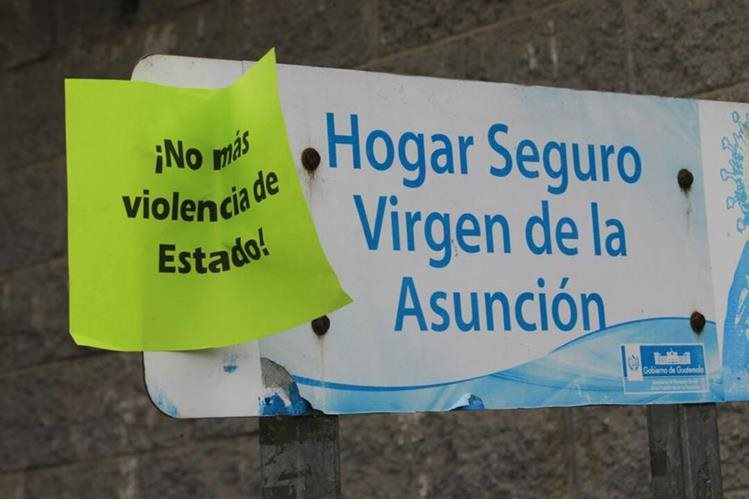
Who will remember the girls burned to death in the Hogar Virgen de la Asunción in Guatemala?

Yesterday, March 8, 2017, a fire broke out in the Hogar Virgen de la Asunción, in Guatemala. At last count, 32 girls burned to death yesterday. As with the Topo Chico prison fire, in Mexico last year; the Kentex factory fire in the Philippines, in 2015; the 2013 Rana Plaza Factory fire and the 2012 Tazreen Fashion Factory fire, both in Bangladesh; and the Armadale Juvenile Correctional Centre fire, in Jamaica in 2009, this was more than an avoidable and predictable tragedy. It was a brutal and planned massacre, and like Kentex, Rana Plaza, Tazreen and Armadale, it was femicide. And like Armadale, the State chose the most vulnerable girls and burned them, alive, at the stake. Once the requisite lamentations and invocations of the tragic are done, who will remember those girls? If history is any guide, their families and communities, a cadre of activists, and no one else.

Seven years ago, almost to the day, we reflected on the aftermath of the Armadale fire, in Jamaica: “Someone was meant to die at Armadale, and that someone was meant to be a young woman, a girl. Which girl, how many girls, remained open. But someone was meant to die there, in a fire. And someone did. And she was a young woman, a girl. And absolutely no one can claim ultimate responsibility for that until they have transformed the everyday world of ordinary women and girls in which women are the fastest growing prison population, and women are the majority of sweatshop workers.” Now, after the fire at the Hogar Virgen de la Asunción, we can add “girls under care” to women and girl prisoners and women and girl sweatshop. Yet again, while many are shocked, no one is surprised. The theater of cruelty is always played out in the open.

The Hogar Virgen de la Asunción, near Guatemala City, is variously described as a government-run “shelter”, a “home for children”, a “safe home”, a “children’s care home”, a “home for abused teens”. The only accurate part of those descriptions is that the Hogar is government-run.

By all accounts, life inside the Hogar Virgen de la Asunción has been a living, and dying, hell of torture; intimidation; sexual violence; toxic overcrowding; inadequate and rotten, infested food. On Tuesday, 40 some girls decided that they had had enough, and staged a mass escape. Riot police stopped the escape and returned the girls to the “home”, where, as punishment, they were locked in their dormitories. Wednesday morning, one of the girls set fire to her mattress. She cried out that she would sacrifice herself “so that everyone would know what they were living inside.” Everything else is silence and smoke.

Marta Lidia García, 39, mother of a 17-year-old daughter, said, “I brought her because she doesn’t follow my orders to do housework and because she was starting to go out on the streets, and I did not want to lose her. She told me that they treated her badly and gave them food with worms and that the cops who take care of them sometimes bother them.”

As of late this afternoon, 12 of the sacrificed girls’ names have been released: Rosa Julia Espino Tobar. Indira Jarisa Pelicó. Daria Dalila López Mérida. Ashely Gabriela Méndez Ramírez. Sonia Hernández García. Mayra Haydé Chután Urías. Skarlet Yajaira Pérez Jiménez. Yohana Desirée Cuy Urizar. Rosalinda Victoria Ramírez Pérez. Madeleine Patricia Hernández Hernández. Savia Isel Barrios Bonilla. Ana Nohemí Morales Galindo. We did not want to lose them. Who will remember them, who will remember their names, once the invocations of tragedy have passed?

(Photo Credit: Prensa Libre /Estuardo Paredes)

I am a woman of color. An immigrant. A mother of two young children. A new activist.

I am a woman of color. An immigrant. A mother of two young children. A new activist. I am many other things, but what is common among all of my identities is that they are not cloaks that I can easily cast off. Each identity is intricately woven into the fabric that is me. Wherever I go, I take my whole self with me and this context is critical to understanding what I am about to share.

Recently, my husband, our friend, our 2-year-old son, and 4-year-old daughter attended a local rally in support of the Affordable Care Act. It was the latest in our efforts to be activists. Prior to the election and the weeks and months since it, my husband and I moved out of the shadows and started to find our political voice. Since the election, we are using our bodies to bring visibility to the important human rights crises affecting so many. It was especially important that we bring our children with us to this rally.

We are a biracial family, and since I am the person of color in my family, I am especially sensitive to diversity. As I looked around at the rally, I realized that I was one of very few people of color there. Still, I felt united with the people there as we listened to our Member of Congress and to the speakers, as we assembled to advocate for achieving our human rights to health care.

About two hours into the rally, my children, who had remarkably sat quietly and even paid attention to the speakers, finally got up and started to play. Though there were not very loud in their child like chatter, I was already up and trying to avoid them disturbing anyone. No one seemed to mind, except for one woman. She sharply and rudely told me, “Can you keep those kids quiet? We can’t hear the speakers. Could you move them over there or something?”

To this point, I was so captured in the spirit of unity in these types of spaces that it was easy to believe that they were inclusive. In this moment, I was reminded that unity and inclusivity are not synonymous. My family packed up our children and left earlier than we’d planned.

Since then, I must have replayed that moment in my head a hundred times. I think about what I should have said to that woman. What I know is that I can no longer be silenced. Where before I would have retreated to the shadows, the climate of this political environment compels me to stand my ground. I can no longer afford to not claim a space and lend my voice to this movement.

If only she knew that my son was born with a heart defect. If only she knew that he had open heart surgery in June before he was two and in the Fall accompanied our young family as we went canvassing for Hillary Clinton. If she only knew that the only time my children have been away from me was when I felt morally compelled to join the Women’s March in Washington. If she only knew my daughter chanted “This is what democracy looks like!” as we marched to Mar-a-Lago. If she only knew that my children tolerated their mother doing unpaid political work after work while working full time. If she only knew my children are the first and only grandchildren of a 59 year old woman bravely fighting stage IV lung cancer.

I know some would agree with that woman. To those people, I ask you to understand that child care is often unavailable and/or unaffordable for low income women, people of color, and many whom we desperately need to join our political movement. This space was as much mine and my children’s as it was that woman’s.

We often talk about privilege in this movement. I do not know that woman, and she did not know me. But in that time and space, she was in a place of privilege. We are a young family with two young children in a place we needed to be. She also needed to be there, but she had the privilege of also being able to easily move away from my children to a spot that would allow her to hear better. She also had the privilege of choosing to be tolerant and inclusive.

Our movement can never be successful until we bring people of color, immigrants, people across the socio – economic spectrum, and every marginalized group into the fold. We must be inclusive and representative of the people we claim to represent. The voices of people of color, of immigrants, and the less visible in our society must be elevated. We must demonstrate these characteristics by recognizing and respecting each other’s whole identities. Our work will never be finished until we have equal rights, equitable access to resources, and dignity for everyone. This all starts with creating the kinds of spaces where anyone is welcome.

This was an important and effective event – so important that we chose to share one of our precious 1000 Saturdays of childhood with our children to attend. I hope the organizers of all future events in this movement would somehow try to incorporate this attitude of tolerance and inclusivity into otherwise powerful and effective occasions.


(Photo Credit: BBC)


For Alma Glisson, the issue is justice

Alma Glisson looks at pictures of her son, Nicholas

“Not many days
And your house will be full of men and women
weeping,
And curses will be hurled at you from far
Cities grieving for sons unburied, left to rot”

Sophocles, Antigone

Alma Glisson only wants justice. Alma Glisson is the mother of Nicholas Glisson, whose life ended in tragedy. He was murdered by the State while in the custody of the Indiana Department of Corrections. On February 21, the United States Court of Appeals for the Seventh Circuit decided that [a] something terrible had happened to Nicholas L. Glisson and [b] his mother had the right to pursue the entire institution that had killed her son. The Court’s decision offers a heartrending account of institutional malice: “Nicholas Glisson entered the custody of the Indiana Department of Corrections on September 3, 2010, upon being sentenced for dealing in a controlled sub- stance (selling one prescription pill to a friend who turned out to be a confidential informant). Thirty-seven days later, he was dead from starvation, acute renal failure, and associated conditions. His mother, Alma Glisson, brought this lawsuit …. She asserts that the medical care Glisson received at the hands of the Department’s chosen provider, Correctional Medical Services, Inc. (known as Corizon) violated his rights.”

In 2003, Nicholas Glisson was diagnosed with laryngeal cancer, for which he underwent radical surgery. His larynx, part of his pharynx, parts of his mandible and 13 teeth were removed. As a result, he had a tube in his throat and needed a voice box to speak. The surgery and ongoing radiation weakened Nicholas Gilson’s neck to the point that it could not support his head. As a result, his head slumped forward, impeding his breathing. To breathe, he needed a neck brace. Then Nicholas Glisson developed cervical spine damage. In 2008 doctors placed a tube in stomach for supplemental feeding. Nicholas Glisson also suffered from hypothyroidism, depression, and damage resulting from his smoking and excessive alcohol use. Finally, there was some evidence of cognitive decline.

As the court noted, “Despite all this, Glisson was able to live independently. He learned to clean and suction his stoma. With occasional help from his mother, he was able to use his feeding tube when necessary. He was able to swallow well enough to take his food and other supplements by mouth most of the time. His hygiene was fine, and he helped with household chores such as mowing the lawn, cleaning, and cooking. He also provided care to his grandmother and his dying brother.”

Everything changed when a “friend”, actually a police informant, persuaded Glisson to give him a prescription painkiller. Glisson was charged and convicted to ten years in prison … for one Oxycontin pill. On August 31, 2010, Nicholas Glisson was convicted, sentenced and transferred to the Wayne County Jail. His doctor wrote a letter to the court, which concluded, “This patient is severely disabled, and I do not feel that he would survive if he was incarcerated.” Nicholas L. Glisson, 50 years old, died, or was killed, on October 10, 2010.

When Glisson was sent to Wayne County Jail, Alma Glisson made sure he had his neck brace, medicine, and suction machine. No one in authority seems to know what happened when Nicholas Glisson was transferred to Plainfield Correctional Facility. His neck brace never arrived. His voice box was often out of reach. On the morning Nicholas Glisson died, the suction machine used to clear his throat was outside his cell.

Nicholas Glisson couldn’t eat, and so slowly, painfully, starved to death. For 37 days, according to the Court decision, Nicholas Glisson presented the symptoms of a person suffering starvation and renal failure. His body weight, behavior, blood tests and more showed this. Finally, he was sent to hospital … and then returned to the prison. The hospital discharge included the following: “Acute renal failure/acidosis/hyperkalemia on top of chronic kidney disease; acute respiratory insufficiency/pneumonia; tracheoesophageal voice prosthesis replacement; hypothyroidism; malnutrition; squamous cell carcinoma of left lateral tongue; hypertension; chronic pain; dementia/psychological disorder/depression; pressure wound on the sacrum.” This is only a partial list.

Throughout the 37 days, Alma Glisson called Plainfield every day, “`Is he getting his medicine?’ Nobody seemed to know. They assured me he was OK.” She was never allowed to see her son. Alma Glisson was not allowed to visit her son while he was in the hospital. This is how she found about his death: “Some lady called and said, `I’m sorry to tell you your son passed.’ I said, ‘Oh my God, you killed my son!’”

What happened to Nicholas Glisson? The ordinary torture of chronically ill prisoners that passes for care. As Chief Judge Diane Wood concluded: “Nicholas Glisson may not have been destined to live a long life, but he was managing his difficult medical situation successfully until he fell into the hands of the Indiana prison system and its medical-care provider, Corizon. Thirty-seven days after he entered custody and came under Corizon’s care, he was dead. On this record, a jury could find that Corizon’s decision not to enact centralized treatment protocols for chronically ill inmates led directly to his death.”

Alma Glisson agrees, “The issue is justice.” The issue is justice.


(Photo Credit: South Bend Tribune / Robert Franklin)

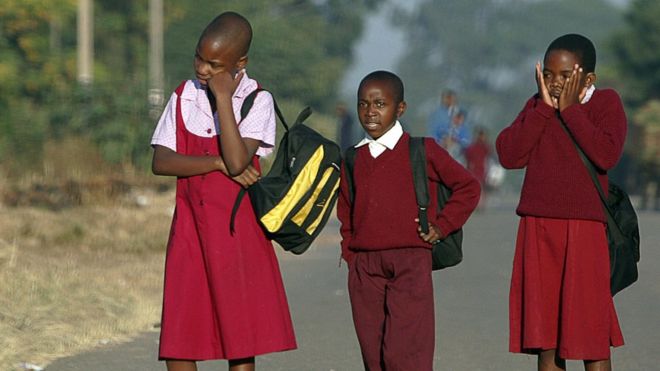
In Zimbabwe, Linah Pfungwa said NO! to violence against children … and won!

Linah Pfungwa is the mother of a six-year-old girl. Recently, the girl came home from school with multiple bruises. Linah Pfungwa’s daughter reported that her teacher had beaten her with a rubber pipe because she did not have her parent’s signature on her homework. Linah Pfungwa took pictures of her daughter, posted them to local social media, discovered that the practice of beating children in school was widespread, and said, NO! With support from the Justice for Children’s Trust, Linah Pfungwa sued not only the instructor but the entire school system and, beyond that, the entire nation. Last week, the High Court of Zimbabwe agreed with Linah Pfungwa and declared that adults hitting children is a violation of the Constitution of Zimbabwe.

As Linah Pfungwa explained, “I believe that corporal punishment is violence against children and I do not believe that children should be subjected to any form of violence. I further believe that corporal punishment is a physical abuse of children. It amounts to deliberately hurting a child, which causes injuries such as bruises, broken bones, burns or cuts. In my opinion, there is no excuse for physically abusing a child. It causes a serious and everlasting harm and in some cases death.”

Linah Pfungwa further noted that because of the beatings, her daughter couldn’t sleep, didn’t want to go to school, and was generally traumatized and afraid. That is not only wrong, it’s a violation of the Constitution, she argued. As a parent, mother, woman, human being, Linah Pfungwa said that the way to engage with children, including when they should be disciplined, is through dialogue.

The High Court agreed, “The imposition of corporal punishment and any form of physical punishment to children by any person or persons including teachers, parents or relatives is ultra vires the provision of section 81, 51 and 53 of the Constitution of Zimbabwe.”

This meant, first, that a provision that allowed for teachers’ use of corporal punishment was declared unconstitutional and that that also extended to parents. Linah Pfungwa’s lawyer, Tendai Biti, said, “We are very proud of the ruling as the papers showed there has been heavy assaulting of children in school.”

While much remains to be done, from a further hearing at the Constitutional Court to retraining teachers – and parents – concerning the rights children hold to educating children themselves about their rights, this is a landmark decision and day, and we all owe that to the great work and labor of Linah Pfungwa. And yes, we all owe her praise and gratitude. With this decision, Zimbabwe joins 52 other nations that have outlawed corporal punishment, the most recent being France last December. Linah Pfungwa is one of the women – as women, citizens, residents, mothers, caregivers, witnesses and more – who are leading Zimbabwe, and the world, into a kind new world in which dialogue replaces violence, in which education means learning how to conduct ourselves as loving, decent, dignified human beings; how to encourage sharing and dialogue, rather than repression and violence; and how to form welcoming community.


(Photo Credit: BBC / AFP)

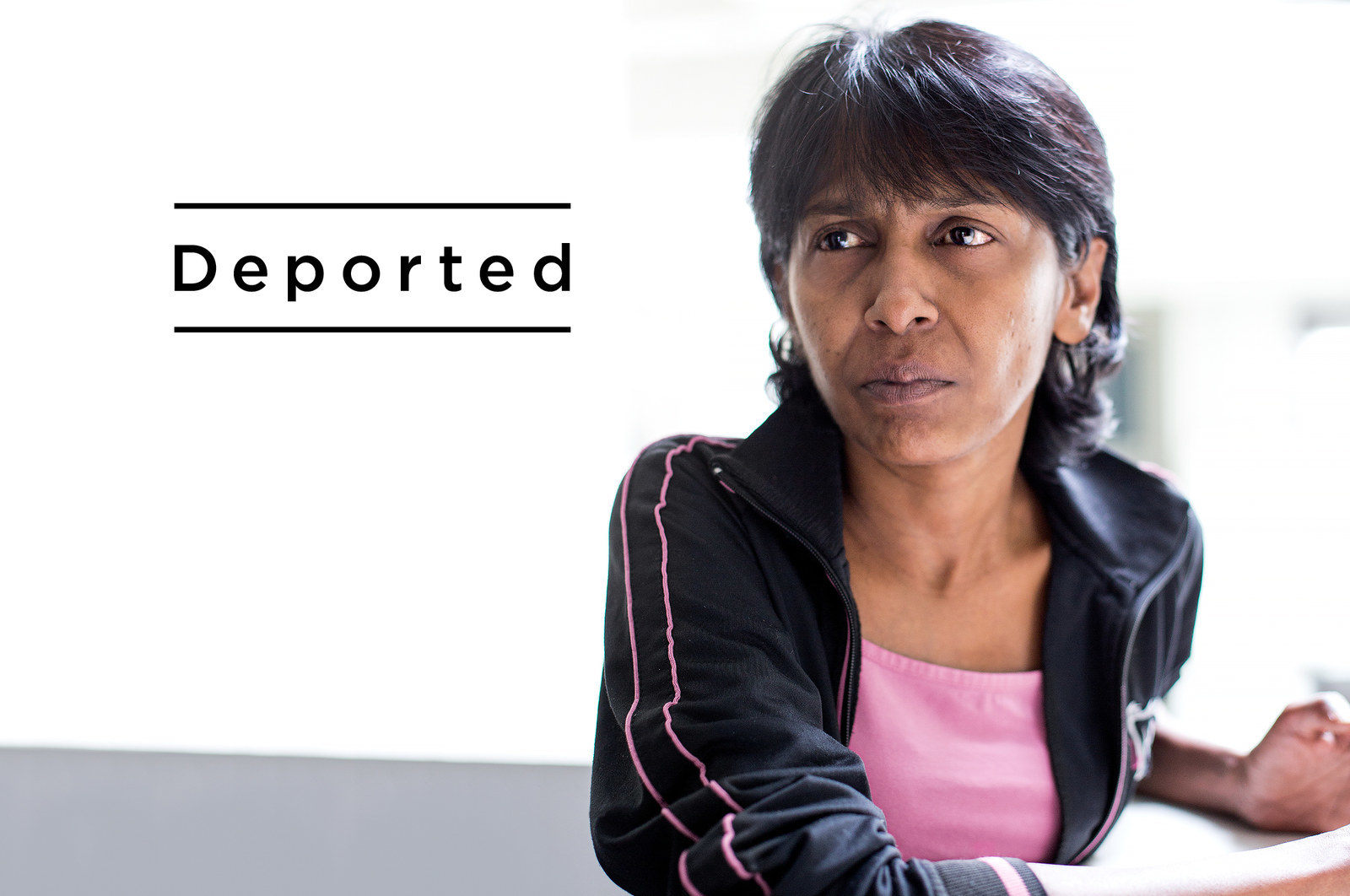
Why does England hate Erioth Mwesigwa, Shiromini Satkunarajah, and Irene Clennell?

Irene Clennell

Why does the English government hate Erioth Mwesigwa, Shiromini Satkunarajah, and Irene Clennell? What horrible crime has each committed? Individually, each woman’s story shows a State built of shameful violence against women. Taken together, the collective story of Erioth Mwesigwa, Shiromini Satkunarajah, and Irene Clennell shows a State in which “callous attitudes towards immigrants” entails expanding and intensifying evil, a key part of which is the humdrum ordinariness of the women’s stories. What happened and is happening to Erioth Mwesigwa, Shiromini Satkunarajah and Irene Clennell happens every day and all the time. It is the State unguent that keeps the everyday together.

More than 30 years ago, Erioth Mwesigwa’s husband was suspected of opposing Milton Obote, the then-President of Uganda. Her husband escaped and made it to England, where he was given asylum. Erioth Mwesigwa stayed, was imprisoned and raped by soldiers. Finally, Erioth Mwesigwa escaped prison and went into hiding. She changed hiding places repeatedly. Her godfather, who hid her at one point, was killed.  In 2002, Erioth Mwesigwa fled Uganda and made her way to England. She has lived in England for nearly 14 years. Recently, she was detained and sent to Yarl’s Wood Immigration Removal Centre. On February 10, guards came to take her to the airport and “remove” her to Uganda. Erioth Mwesigwa reportedly politely but firmly declined the invitation. The guards backed off, threatening to return with more force.

Erioth Mwesigwa has been an active, vocal and visible member of the All African Women’s Group, a self-help group of women asylum seekers, immigrants and refugees, formed in 2003. Erioth Mwesigwa called the All African Women’s Group and left this message: “I do not understand why the Home Office gave refugee status to my ex-husband, who thankfully was able to escape with our children before anything terrible happened, yet refuses it to me when I was the one unable to get out in time and so suffered the terrible consequences. It took many years for me to escape from Uganda after the imprisonment and rapes. I lived those years in constant fear; hiding from place to place, rarely leaving the house and only in darkness. I had lost all hope, self-confidence, and nearly my mind. Finally I was found and ordered to make my husband come back to Uganda. My friends told me that I would be killed and organized my escape to the UK. It is here that I have found people who love and care for me. The men who abused me in Uganda are still in positions of authority. I can never go back and be safe.”

Shiromini Satkunarajah studies engineering at Bangor University and is an exceptional student. Shiromini Satkunarajah arrived in the United Kingdom eight years ago, at the age of 12. She worked hard, studied hard, and planned hard. She, her father and mother had fled the civil war in Sri Lanka, and had arrived on her father’s student visa. When her father died, in 2011, she and her mother, Roshani, were allowed to stay so as to complete her studies. On February 21, they appeared for their regular sign-in and were informed that Shiromini Satkunarajah’s application for full student visa was denied. The two were taken home to pack, taken back to the local police station where they were held for two days, and then carted off to Yarl’s Wood, where they were told they would be shipped off to Sri Lanka, Tuesday, February 28.

More than 165,000 people signed a petition to overturn the petition. Her local Member of Parliament waged a mighty campaign within the halls of the legislature. Clergy and other prominent figures lobbied and urged. At the eleventh hour, Shiromini Satkunarajah and her mother were told they would be set free, and that Shiromini Satkunarajah could return to her studies.

On Sunday, February 26, Irene Clennell was forcibly put on a plane to Singapore.

Irene Clennell moved to England in 1988. Two years later, she met and married an Englishman, John. They have two children together, and one grandchild, all in England. For the past few years, Irene Clennell has been the primary carer for her husband, who has suffered various major illnesses. Starting in 1990, Irene Clennell was given indefinite leave to remain in the UK. During that time, she spent periods in Singapore caring for her parents before they died. Recently passed laws require that a couple can demonstrate long periods of uninterrupted time living in the United Kingdom. Because Irene Clennell took care of her parents when they were dying, she was picked up, carted off to Dungavel House Immigration Removal Centre, in Scotland, and from there, with £12 in her pocket and the clothes on her back, she was shipped off to Singapore.

Now the 53-year-old grandmother, mother, wife sits in Singapore and gives interviews, organizes, waits, and hopes: “If there are enough people fighting and giving support, I think I will get back to Britain.”

On Monday, February 20, hundreds called for Erioth Mwesigwa to be set free. Shiromini Satkunarajah was set free, thanks to the intervention of close to 200,000 people. Irene Clennell now relies on the work of “enough people fighting” to have her set free. This is the new face of the old White Male Supremacist Imperial State. For non-native born women of color, “freedom” must be purchased, with actual money and with the labor time of hundreds of thousands. The English government hates Erioth Mwesigwa, Shiromini Satkunarajah, and Irene Clennell because hatred pays.

Shiromini Satkunarajah


(Photo Credit 1: Laura Gallant / Buzzfeed) {Photo Credit 2: Wales On Line)

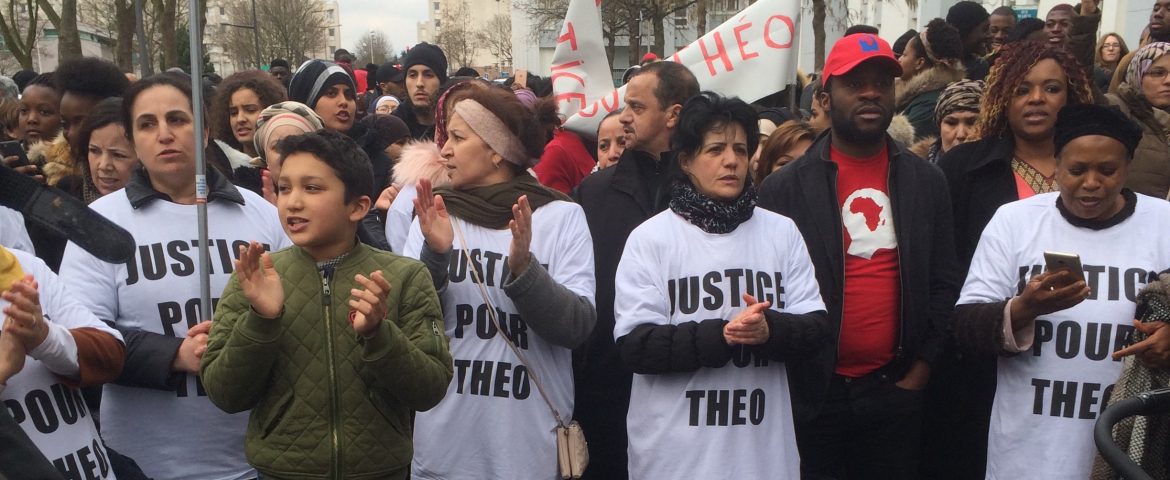
#JusticePourThéo: We must end police impunity and call their violence rape

Tongues are starting to loosen after the sexual police aggression on Théo in Aulnay-sous-Bois, France. More young men regularly stopped for ID check have come forward to talk about the violence always more humiliating and sexual, the insults of the police forces. They feel lawlessly trapped. Only 5% of the young people violently searched after ID checks file a complaint.

Moreover, as the press release from feminist group Femmes Solidaires pointed out, “What this crime tells us…is when a man wants to humiliate and dominate another man, he resorts to the same type of brutality as the one used to dominate a woman: rape.” They also note the uneasiness of the media to accurately identify this crime. For Femmes Solidaires, in the scale of police violence, pushing a baton in the rectum of a young man is a most serious crime and feminists must name what happened to Théo and other young men with the right word: rape. They exhort people not to turn a blind eye on this crime and conclude, “Silence tortures, impunity kills, invisibility condemns the victim to relive the same crimes.”

In addition to using rape, the police forces use homophobic and racist slurs regularly. The word “bamboula”, commonly uttered by police, carries its own colonial history. During a TV program, a police union representative admitted that although this word could be considered an insult, it remained tolerable. The anchor immediately reacted, saying “no” it is intolerable. In fact, “bamboula” is undoubtedly racist. As historian Mathilde Larrère explained, Bamboula is the name of a drum, which name became an expression of colonial racism. As she clarified, racism was born from the violence of domination and enslavement of populations to justify this very violence.

These expressions of racism shed light on identity politics as a way to differentiate the rights-bearing population from the rest that loses rights and can be mistreated, attacked and insulted. The ID checks are expressions of identity politics and the use of rape the expression of masculinity as a brutal authority.

Recently, a court decision in Bobigny, asuburb of Paris, on a similar case that occurred in 2015 has clearly stated that from now on a rape with a baton or something else committed by a police officer or not will be judged as a rape instead of violence. That decision signals what many have lounged for: police will no longer be granted impunity.

This is not over and the mobilization against violence and sexual violence cannot end with this decision.  More integrative measures should be taken to break the isolation and sense of abandonment of many “real” French residents who have been left out by the republic.

(Photo Credit: BondyBlog)

Why do we hate Sara Beltran Hernandez and Nasrin Haque?

Dr Nasrin Haque

Why does the United States of America hate Sara Beltran Hernandez? Why does Australia hate Nasrin Haque? Why does the State hate, and fear, non-native born women? Why does the State, built on the principles of white male supremacy, hate, and fear, non-native born women of color? What horrible crimes have these women committed that the State has chosen to persecute them?  For Sara Beltran Hernandez, it is the crime of being a Latina, of being a Central American, woman seeking refuge. For Nasrin Haque, it is the crime of being an Asian woman. The real crime is not in their bodies, but in our States and therefore in ourselves.

Sara Beltran Hernandez is very sick. Doctors say she may have a brain tumor and should have surgery quickly. Hernandez has been in immigration detention since 2015. Her family, in New York, say that she fled an abusive partner in El Salvador. They have been applying for asylum since her detention. This month, Sara Beltran Hernandez complained of headaches, nosebleeds, and memory loss. When she finally collapsed, she was taken to Huguley Hospital in Fort Worth, Texas. While awaiting emergency surgery, Sara Beltran Hernandez was taken, by ICE agents, and removed to the Prairieland Detention Center in Alvarado, Texas. Already weak and confined to a wheelchair, she was tied by her hands and ankles. The family is desperate and terrified.

The family is desperate, and by all accounts Sara Beltran Hernandez is dying: “Sara is worse than we thought. Death may be imminent.”

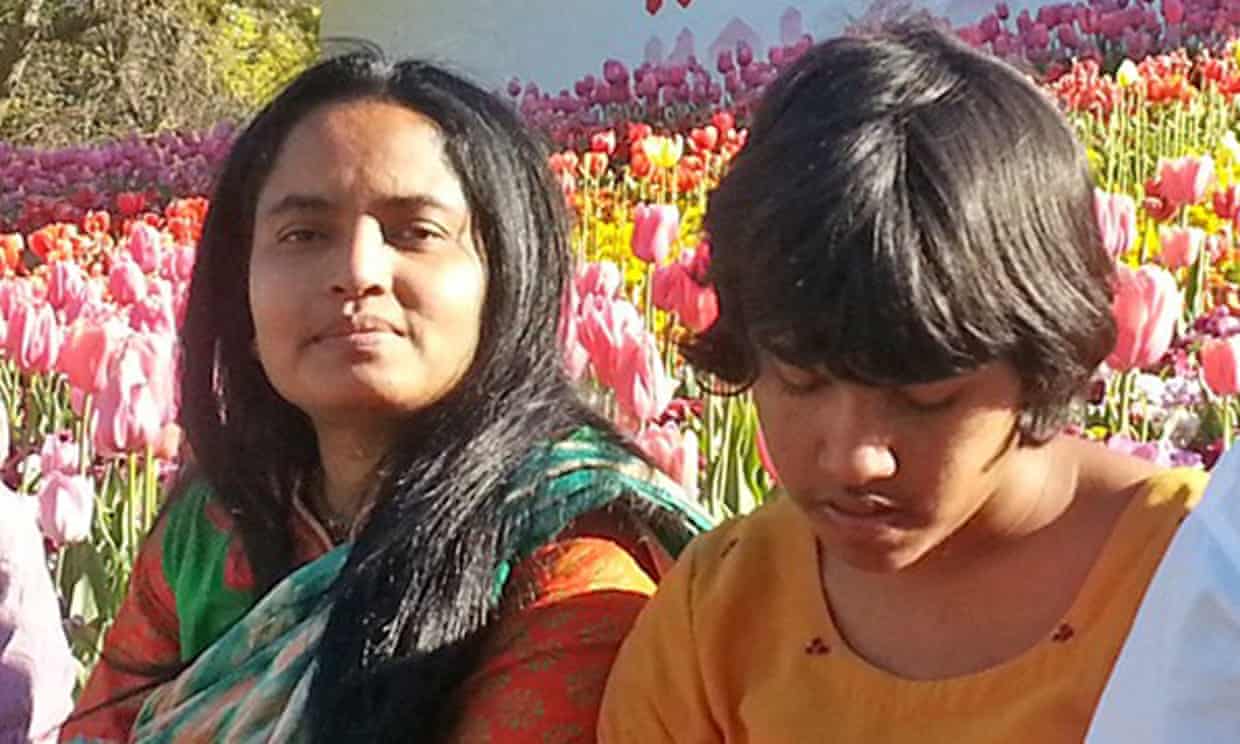
Nasrin Haque’s story is different and yet connected. Dr. Nasrin Haque, originally from Bangladesh, has lived in Australia for eight years. Previously Dr. Haque lived in Hungary. Nasrin Haque’s sister, brother, and parents are all Australian citizens. But her sixteen-year-old daughter Sumaya is not a citizen. When Nasrin Haque applied for permanent residency, she was turned down because her daughter lives with autism: “Her application for permanent residency was rejected because Sumaya’s condition, which is described as a `moderate developmental delay’, was deemed a burden on Australian taxpayers.” When does someone become a burden to the State, and how is that not only determined but calibrated and weighed? Where are the scales of injustice, and who set them?

Nasrin Haque is a successful doctor in Sydney. With friends and supporters, she waged a campaign to keep Sumaya, and the rest of the family, in Australia: “Although she does attend a special school, she has not received any other support from the state during her eight years in Australia. Sumaya is an independent young girl with strong computer skills and manages all activities of daily living on her own. My full-time position as a GP allows me to financially support my family without assistance from the Australian state … If we are deported back to Hungary, we will not be able to function. Deportation would tear our family apart, and destroy my childrens’ chances of completing their education and becoming productive members of society.”

Nasrin Haque was given until February 24, today, to present herself and her daughter with airline tickets in hand, or else they would be deported. Today, it was reported that, at the eleventh hour, the deportation was stayed and Nasrin Haque and her daughter Sumaya would be given permanent residency.

While the story for Nasrin Haque and Sumaya ends more or less happily, or at least with tears of relief, it’s a shameful episode in an even more shameful ongoing tragedy. When a young Salvadoran woman awaiting emergency surgery is forcibly and violently seized and taken off; when a young girl living with disabilities and her loving mother are told to leave, forever, because the disabilities cost too much, we have arrived at the intersection of State and Hate. The State built, like a fortress, on hatred, always assaults women, first, last, most intensely and most violently. Why do we hate Sara Beltran Hernandez and Nasrin Haque?

Sara Beltran Hernandez

(Photo Credit 1: The Guardian / Dr. Nasrin Haque) (Photo Credit 2: NY Daily News / Melissa Zuniga)