Bondita Acharya and Micaela Garcia refuse to let women be crushed

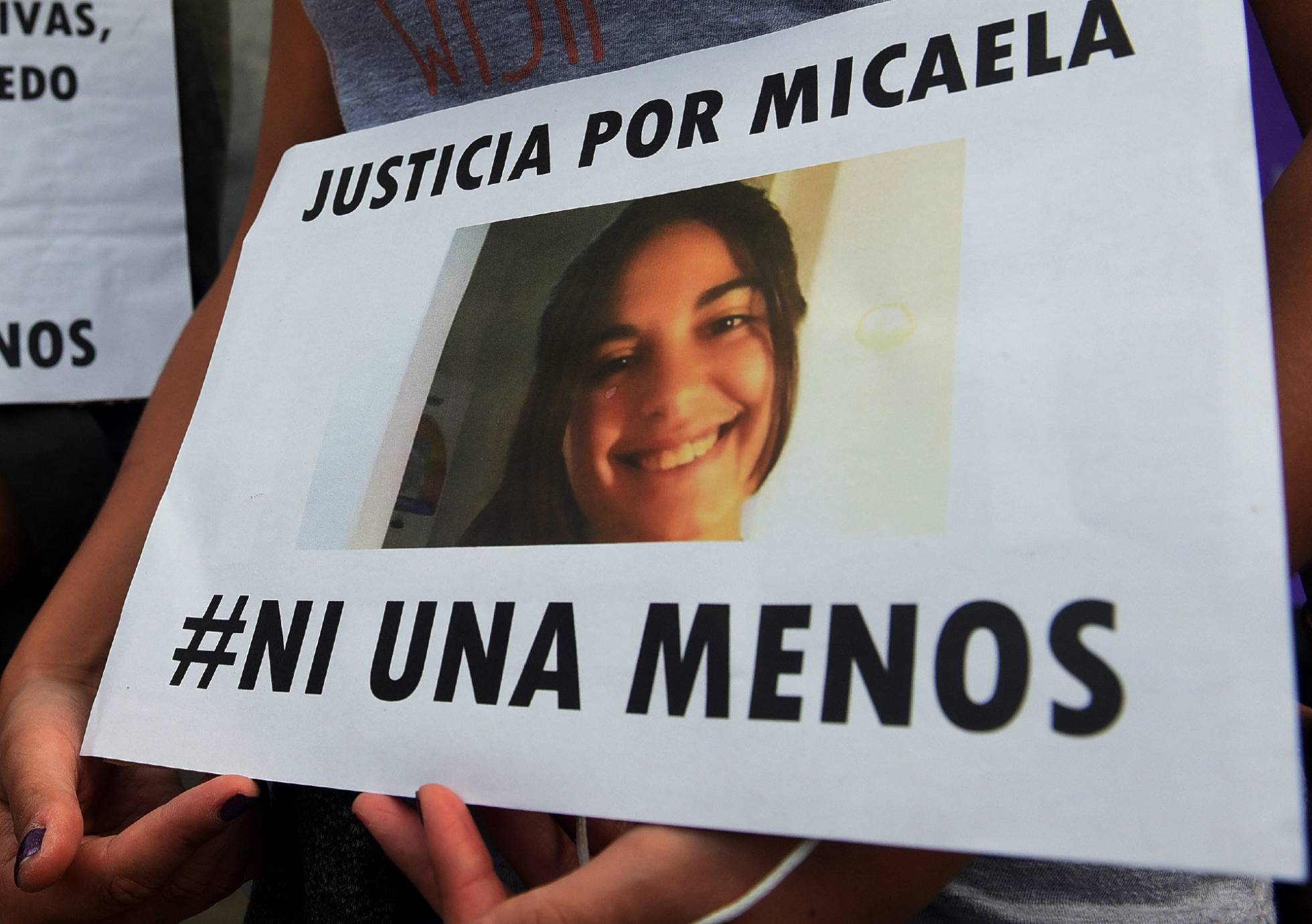
In case we needed any reminder, this week has already demonstrated that rape culture is expanding, intensifying and globalizing. Yesterday, across Argentina, thousands marched and protested violence against women, femicide, and rape. They marched under the banner of Ni Una Menos and Justicia Para Micaela. Micaela Garcia was a 21-year-old feminist activist who dedicated her life to the struggle to end femicide and violence against women. Last week, she was raped and murdered. In India, human rights activist Bondita Acharya criticized the arrests of three people for the crime of possessing beef. Very quickly after Bondita Acharya expressed her views, she was threatened with acid attacks, rape, and death. According to Bondita Acharya, “They threatened me with death, rape, acid attacks, and also hurled sexually explicit abuse to defame me … I also feel the anger was directed at me because I am a Brahmin and a woman.”  And in South Africa, yesterday, a prominent cartoonist decided to make his point by graphically describing the gang “rape” of South Africa. The nation was drawn as a Black South African woman, held down by three men.

Women have responded forcibly and directly to each and all of these atrocities. In Argentina, women mobilized by the thousands. As Marta Dillon, of Ni Una Menos, explained, “It is a day of mourning, but we know how to turn pain into power.” Nina Brugo added, “We are going to take revenge for Micaela by getting organized.” In India, Women against Sexual Violence and State Repression strongly condemned the persecution and harassment of Bondita Acharya, and are pushing the State to take action. Others have joined in the cause. In South Africa, women have led the charge against the abuse of their bodies and lives. Kathleen Dey, Director of Rape Crisis Cape Town Trust, capturing the feelings of many, wrote, “The impact of rape on survivors is severe, many will lie awake at night and are not be able to sleep or eat properly for days because of the powerful emotions they feel. Feelings of fear, anxiety and vulnerability in particular provide the kind of undermining emotional preoccupation that often prevents women from working, studying or parenting effectively. Reliving rape is easily triggered. It disturbs and disrupts everything rape survivors do and distresses the people close to them who feel helpless to do anything to mitigate these powerful feelings. The fact that these same women often face the stigma of being socially disgraced when they speak out about being raped is another example of rape culture. Challenging rape culture in South Africa and asking ourselves what a culture of consent might look like and how we would build that culture instead would be a worthy subject for the media.”

It would be a worthy subject indeed. In 1986, feminist political economist Maria Mies wrote, “It is a peculiar experience of many women that they are engaged in various struggles and actions, the deeper historical significance of which they themselves are often not able to grasp. Thus, they do in fact bring about certain changes, but they do not ‘understand’ that the changes they are aiming at are much more far-reaching and radical than they dare to dream. Take the example of the worldwide anti-rape campaign. By focussing on the male violence against women, coming to the surface in rape, and by trying to make this a public issue, feminists have unwittingly touched one of the taboos of civilized society, namely that this is a ‘peaceful society’. Although most women were mainly concerned with helping the victims or with bringing about legal reforms, the very fact that rape has now become a public issue has helped to tear the veil from the facade of so-called civilized society and has laid bare its hidden, brutal, violent foundations. Many women when they begin to understand the depth and breadth of the feminist revolution, are afraid of their own courage and close their eyes to what they have seen because they feel powerless vis-à-vis [the] task of overthrowing several thousand years of patriarchy. Yet the issues remain. Whether we – women and men – are ready or not to respond to the historic questions raised, they will remain on the agenda of history. And we have to find answers to them which make sense and which will help us to restructure social relations in such a way that our ‘human nature’ is furthered and not crushed.”

Thirty-one years later, rape remains on the agenda of history but too often not on the agendas of nation-States nor organizations nor the media. We still await that revolution.


(Photo Credit: José Granata / EFE / El Pais)
In Indonesia, women farmers crush cement mining and production factories

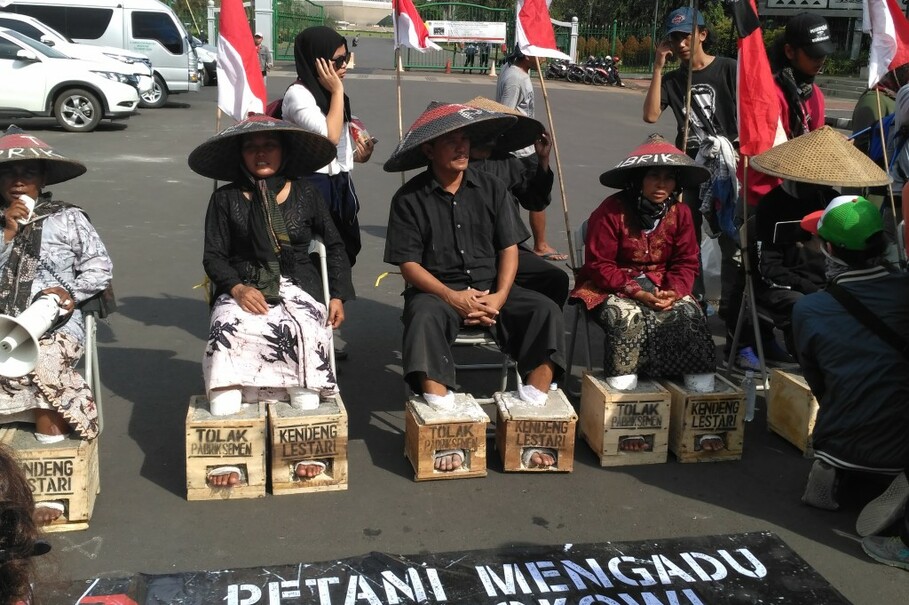
Cement companies are looking to expand both mining and production on Kendeng Mountain, in central Java, Indonesia. Kendeng Mountain is located in a karst, or limestone, mountain range. It is also rich agricultural land. Women farmers in the area have protested, organized, militated, with great success, but the corporations keep coming back. Sometimes, women mobilize with the great movement of marches. Sometimes, women mobilize by concentrating all the energy into staying perfectly, and immovably, still. The Nine Kartinis of Kendeng, nine fierce women farmers, have opted for the latter. They planted their feet in cement, let the cement harden, and refused to move. Sometimes, women on the move are women being absolutely, perfectly, loudly, hilariously, outrageously still.

This battle has been going on since at least last year, but for the Kartinis of Kendeng, who hail from the Samin community of Central Java, it’s another chapter in a centuries’ long struggle. From the earliest struggles to today, Samin women have organized to preserve and promote the integrity of the Earth, the land, and the peoples who work and live with the land. In the latest iteration of that struggle, women have named themselves after Raden Adjeng Kartini, a leading Indonesian feminist freedom fighter who lived from 1870 to 1904. R.A. Kartini was born in Java during the Dutch colonial occupation, and worked for independence, women’s emancipation and girls’ education. The Samin community, also known as Sedulur Sikep, also began during the Dutch colonial era. The founder, Samin Surosentiko, advocated non-violent resistance to colonialism. This resistance took the form of non-violent civil disobedience. People refused to build roads, pay taxes or participate in forced-labor. Refusal as resistance, from R.A. Kartini to the Samin community to today’s Nine Kartinis of Kendeng, and what better way to refuse than to plant one’s feet into blocks of cement and refuse to move?

That’s what nine women did last year. The cement factory has been `in process’ since 2014. Women have led the opposition. Last April, “nine middle-aged women cast their legs in concrete during 36-hour protest against the cement plant outside the presidential palace in Jakarta”. In October, they led 300 farmers in a long march to protest a new government decision to reinstate the legality of the cement factory. They’re still on the move.

At last April’s protest, Sukinah, the spokeswoman for the Kartinis of Kendeng, explained that the protest was as much educational as immediately political, “We want to give a message for the younger generation, to show that nature is not only seen as a source of wealth, but also something that has to be preserved.” More recently, she added, “I will fight to my last drop of blood because our ancestors fought for this land for hundreds of years, and that’s why we now can enjoy the water and the fruits from this land. We won’t allow it to disappear like that.”

In their struggle, the Kartinis of Kendeng link arms with Aleta Baum, who, in the Indonesian part of the island of Timor, organized indigenous women’s weaving circles that crushed the marble mining companies. The Kartinis of Kendeng also link arms with Mavis Staples and all those women engaged in Black Liberation struggles and labor struggles across the United States. In Indonesia, women farmers planted their feet in cement, and off in the impossibly intimate distance, one can hear, “… Just like a tree that’s planted by the waters, we shall not be moved.”


(Photo Credit: Jakarta Globe / Komnas Perempuan) (Video Credit: Film First / YouTube)


In Canada, Ava Williams sues to end police rape myth culture

Ava Williams today

For the past 20 months, The Globe and Mail has been investigating the ways police respond to sexual assault victims. On average, in one in five instances, the police decide that a sexual assault allegation is “unfounded.” Nationally, the rate for physical assault is one in ten. In London, Ontario, a university town, the rate of “unfounding” is 30 percent. One in three sexual assault allegations are rejected out of hand by police. In London, Ontario, less than 2% of physical assault charges are deemed unfounded. Ava Williams knows these mathematics in her bones, and has said, “No!” On Friday, Ava Williams sued the London Police Services Board and Detective Paul Gambriel for violating women’s Constitutional right to equality.

On October 16, 2010, Ava Williams was eighteen years old, a first-year student at Western University, in London, Ontario. She went to a party, got drunk, blacked out, woke up outside, naked, under a tree, and found a man sexually assaulting her. She told him to stop, she said No, he didn’t stop. People came, he ran away, two women came to her aid. They found clothes for her. She said she wanted to go home, and so they put her in a cab and sent her home. When Ava Williams arrived at her dormitory, her parents and the police were notified. She was taken to the hospital for a sexual assault examination. She was interviewed, preliminarily. Then she was sent to police headquarters for the full, and filmed, interview. That began in the early afternoon, twelve hours after the assault. Ava Williams had not slept or eaten, and was hung over. That’s how she was when she met Detective Paul Gambriel.

From the start, Detective Gambriel doubted Ava Williams’s account. He wonders how drunk she really was, how much she does and does not remember, how her clothes could have been removed without being torn. All of this, and more, according to Canadian law, is completely beside the point. Once intoxicated, a person cannot consent. Period. The law be damned, Detective Gambriel insinuated and intimated, and Ava Williams decided not to pursue the case. The police easily found the man who raped Ava Williams, and let him off with a warning. A warning. The case was closed as unfounded.

Later, Ava and her family protested the proceedings. The London Police Service Board investigated Detective Paul Gambriel, and found him innocent of any wrongdoing. Twice over, the case was closed.

Then The Globe and Mail investigated the situation of unfounded sexual assault cases, and highlighted this one. Initially, Ava Williams insisted on a kind of anonymity, only using her first name, but when the series began to run and she saw the response, she decided to come out, say her name fully, Ava Williams, and sue: “I feel like I’m in a place that I can use my voice to help other people.

Unlike an earlier similar case, in the 1990s, that of Jane Doe vs Toronto, Ava Williams is charging more than negligence. She’s protesting the violation of her civil rights as a woman. If she wins, the London Police Service Board will have to adopt the Philadelphia Model, in which advocates audit police case files looking for bias and missteps. According to Elaine Craig, a law professor specializing in sex-assault and constitutional law, “If it was litigated all the way up to the Supreme Court of Canada and the Supreme Court concluded that there was a constitutional obligation on the part of the police to adopt the Philadelphia Model, that would have massive ramifications for police services – that’s shooting for the stars. But I think just bringing a claim of this sort is groundbreaking, regardless of the outcome because … it’s framing the issue as a matter of constitutionality – as a fundamental right.”

Women, as women have a constitutional right to safety and well-being. You know what’s unfounded? 30 percent of sexual assaults are unfounded compared to 2 percent of physical assaults. You know what’s unfounded? That Ava Williams has had to go to heroic lengths to argue for simple decency and equality. You know what’s unfounded? A State that abandons women.

(Photo Credit: The Globe and Mail / Galit Rodan)

In and beyond prison, reproductive justice is a State responsibility


Christiane Taubira the former French minister of justice likes to remind the public of the government’s responsibility toward the vulnerable.  She had to defend this position while trying to make the penal system in France more comprehensive. She was only partially successful. The state of vulnerability comes very fast when unwanted pregnancy starts. Even though such situations are produced by a man and a woman, the burden remains entirely on the woman. If we add another layer to the state of vulnerability, such as poverty, things become immediately more complicated for the woman.

In the United States, the state does not assume its responsibility toward the vulnerable, who are sexualized, racialized and declassified instead of being supported. The state uses the vulnerable as a source of surplus value through its imprisonment making the institution an industrial complex with contractors running the game. They even charge women prisoners for their basic amenities, such as soap. In this combination of neoliberal development of consumerism and unfettered capital gain, punishing women as members of the vulnerable combines growing inequalities with awesome wealth building.

Trump and his team have brought this idea to its paroxysm, but everything was in place before this election.

The right to abort is a constitutional right that should be respected everywhere, but the case of access to abortion points to the lack of reproductive justice, inside prison and outside. Women in need of abortion often experience stigmatization, reinforcing the sentiment of disqualification as full citizens. In prison, the challenge to wield this right to abortion is real, with enormous discrepancies from state to state and from county to county.

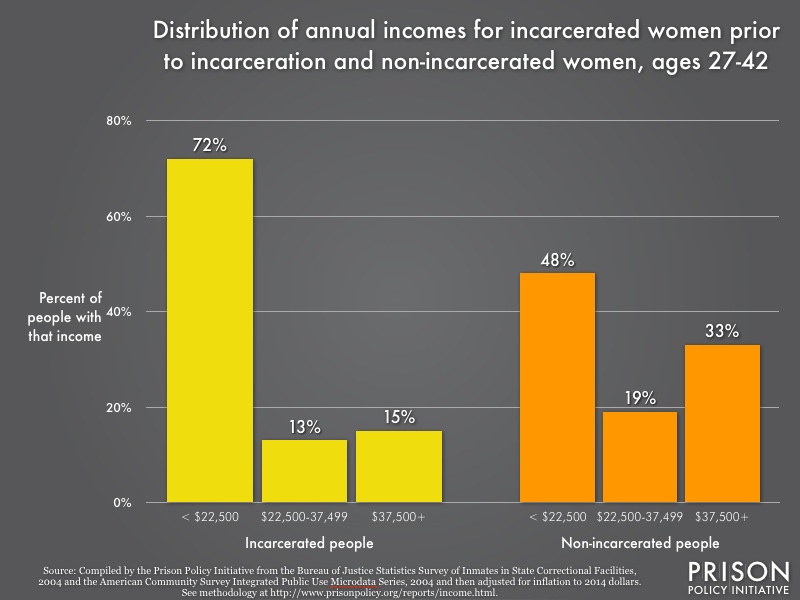
Worldwide, 33% of women prisoners are in the US, and so it is important to examine the reasons for the push to punish women with the detention conditions worsening the punishment itself. The number of incarcerated women in the United States has increased 700% between 1980 and 2014. Being poor is a condition for incarceration and particularly affects women. As the Prison Policy Initiative exposed in its latest report 72% of incarcerated women had an income less than $22 500 while the rate is 48% for non-incarcerated women, and for men 23% for non-incarcerated men compared to 57% for incarcerated men.

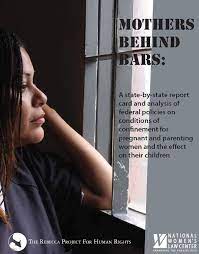
Pregnant women are sent to prison, jail, or immigration detention centers. In federal prisons 1 in 33 women and 1 in 25 in state prisons are pregnant. The number is hard to establish in other kinds of detention facility.

If women decide or are intimidated to pursue their pregnancy behind bars, they face harsh conditions with disastrous prenatal conditions in detention facilities in general. In 2011, 38 states had no prenatal policies and 41 states did not require prenatal nutrition. Children born in prison are removed from their mothers right after birth, which demonstrates that a child’s well-being has no meaning when the child is born in prison, another double standard.

In addition, there is no adequate health care for inmates in the United States, though, based on the 8th Amendment, prisoners are the only ones who have a constitutional right to medical care. Instead, medical care in prison is often decided through court orders by penal and judicial personnel who have no medical expertise, and so treatments are delayed, ignored, or never performed.

If women inmates don’t want to become mothers, although it is their constitutional right to have access to abortion, few states offer comprehensive solutions. In most of states, the women must deal with a hodgepodge of rules and regulations, all defined from the male-standard of incarceration. Generally, the hurdles are numerous, high, and burdensome. From having access to a clinic to payment to transport, every step is an “undue burden” for women prisoners in most states. As ACLU attorneys recall, the US Supreme Court Roe v Wade decision clearly said “laws that restrict abortion access cannot create an `undue burden.’”

The legal dispute around abortion in prison should be taken seriously by everyone outside of prison who believe that respecting the dignity of women as full citizens means ensuring they control their reproduction. Women have been sentenced to jail for the failure of the state to provide abortion or prenatal services to the vulnerable. The Purvi Patel case is one of too many cases that proves that the State is not concerned with women’s well-being, especially when in a state of vulnerability.

ACLU and other groups have called for more research on the application of reproductive rights inside the United States penal systems. Although this demand is important to resist the conservative anti-abortion wave, the invisibility of living conditions of women behind bars is full of lessons about the way attacks on women’s right and reproductive justice is waged in general and its social meaning. When state leaders are ready to fulfill their responsibilities to serve the vulnerable, often women and more often women of color and/or women prisoners, they will serve all women and the society better.


(Photo Credit: National Women’s Law Center) (Infographic credit: Prison Policy Initiative)

#RememberKhwezi today more than ever


Ahmed Kathrada died and was buried this week. Part of the funeral and mourning invoked an open letter Kathrada wrote last year, calling on Comrade President Zuma to resign. With Ahmed Kathrada’s death, that letter turned into a warning from the grave. On Wednesday, Ahmed Kathrada was laid to rest. On Thursday, in the middle of the night, President Zuma did what he does. He went for his machine gun and “reshuffled” the cabinet, in particular Pravin Gordhan. Once again, the President has thrown South Africa into uproar and disarray. Once again. In October 2016, Fezekile Kuzwayo was laid to rest. Fezekile Kuzwayo was better known, to the public at least, as Khwezi. Remember the One in Nine Campaign, the purple shirts, the women? Remember the four young Black women, dressed in black, last August, who stood, in silent protest, before President Zuma, and held up five placards: “I am 1 in 3”, “#”, “10 years later”, “Khanga” and “Remember Khwezi”? Remember Khwezi? We should, today more than ever. Today, more than ever, #RememberKhwezi.

Remember how Jacob Zuma responded to Khwezi? He sang umshini wam, Bring My Machine Gun. As Pumla Dineo Gqola has written, “When Jacob Zuma sang the hugely popular struggle toyi-toyi song `umshini wam’ when he was charged with rape, he understood the power of heroic masculinity, having previously embodied it himself and know how to reference it to shame Khwezi … Khwezi becomes the enemy and safe to treat in any way because she is an enemy that has been marked with associations that come from apartheid. All righteous, freedom-loving people are reminded of the wound of apartheid, incited to anger, always ready because the apartheid memory is too fresh in all of us, so that Khwezi becomes possible to burn. It is therefore not a huge leap from seeing her as a political enemy … to chanting `burn the bitch.”

And that strategy worked … up to a point. It didn’t work with Khwezi herself, who remained steadfast and revolutionary to the very end. It didn’t work with the courageous women of the One in Nine campaign. But it did work. Jacob Zuma walked free, while Khwezi and her sister comrades had to look over their shoulders more than once. Zuma has gone on to govern with his machine gun, or at least his love song to the machine gun, always already at the beck and call.

So, today’s tumult has everything to do with Pravin Gordhan, nuclear deals, state capture, and much more. Today’s tumult reminds us we should re-read Ahmed Kathrada’s letter from last year, and we should study it, discuss it, and share it, and make it part of a popular education campaign. And even more, we should remember the four young Black women who last year dared us to remember Khwezi, and we should remember the courageous women of the One In Nine Campaign, who dared to break the silence and challenged us to stand with and listen to the women who refused to shut up. And today, more than ever, we should remember the revolutionary Khwezi. #RememberKhwezi

Fezekile Ntsukela Kuzwayo also known as Khwezi


(Photo Credit 1: Simphiwe Nkwali / TimesLive) (Photo Credit 2: TimesLive)

Why does the English government hate Chennan Fei?

Chennan Fei

Why does the English government hate 28-year-old Chennan Fei? What horrible crime has she committed? The same crime committed by other immigrant women of color: Mabel Gawanas, Dianne Ngoza, Erioth Mwesigwa, Shiromini Satkunarajah, and Irene Clennell, to name a few. Chennan Fei is blameless. She has done everything right, and, in the spectacle of State intimidation of immigrant women of color, that counts for less than nothing.

In 2002, Chennan Fei, then 13 years old, was brought by her parents to Scotland. Her parents were on student visas. Chennan Fei grew up in Glasgow, attended school there and university in Edinburgh, developed a community of friends, fell in love in Glasgow and thrived. Glasgow is Chennan Fei’s home.

Unbeknownst to Chennan Fei, her parents’ visa expired a few years after their arrival. Then, in 2012, the then-Home Secretary Theresa May announced new, stringent restrictions on immigrants. Tucked into the new menu was the withdrawal of Paragraph 276B(i)(b) of the Immigration Rules, which allowed for settlement in the United Kingdom after 14 years’ residence. With that, Chennan Fei was thrown into limbo, and, until recently, she had no idea.

On March 23, Chennan Fei was arrested and taken to Dungavel Immigration Removal Centre. On March 25, she was moved to Yarl’s Wood and told she would be deported to China today, Wednesday, March 29.

While in Yarl’s Wood, Chennan Fei wrote: “It’s a strange feeling. Although they say it’s not a prison, I am trapped. My mind and my body wants to be liberated. I can’t seem to remember much from the last few days, and this agonising feeling just grows stronger every passing day. Being here is mind numbing, I see others losing track of the date and time. I just hope I don’t have to stay here too long. I want to come home to Scotland.”

Her partner Duncan Harkness says: “Chennan …  is deeply loved by a wide circle of friends and family … As Chennan moved to the UK as a young child, she has no friends, family or contacts in China. It would be inhumane to deport her back to a country where she has no support, nowhere to stay and no family to provide assistance.”

Chennan Fei’s local MP, Anne McLaughlin, says, “I met Chennan 18 months ago when she visited my Glasgow North East constituency to explain the circumstances surrounding her current immigration status. I was very impressed with this sensitive, intelligent young woman. Although, there is no rule or provision in the Immigration Act that deals directly with the ‘children’ of over-stayers, for Chennan to be exiled from all her friends and family in the UK is an extremely harsh decision for the Home Office to make. Chennan is now 28 years old and has lived more than half her life in Scotland. She has a Scottish partner and most definitely established a strong ‘private life’ here. Although her almost 15 years living in the UK may not be considered ‘legal’, this is through no fault of Chennan’s. She is blameless.”

Her attorney Usman Aslam, agrees, “Chennan, despite having funded her education from her own resources, having attained a degree in accountancy through the University of Edinburgh and having integrated within society and being involved in community activities, was still considered as someone who should be sent away from Scotland. The decision shocked a number of local groups with which she had volunteered. Chennan hopes to ultimately be granted leave to remain so that she can look forward to her life in the community and country that she loves.”

A friend, Annette Christie, started a petition, “Help Chennan Fei stay in Scotland“. Thus far, over 2000 people have signed. Please consider adding your name.

On Tuesday night, Chennan Fei was given a temporary reprieve, and today returned by train to Glasgow. She now awaits her next court appearance. Who benefits from such persecution? This form of structural and immediate brutality etches into the body and soul of the blameless, the individuals and their communities, that, despite all evidence to the contrary, they are the ones who bear the blame, the ones who dared to call this place home. That’s why the English government hates Chennan Fei. #SaveChennanFei

(Photo Credit: Change.org)

The Philippines factory fire was yet another planned massacre of workers

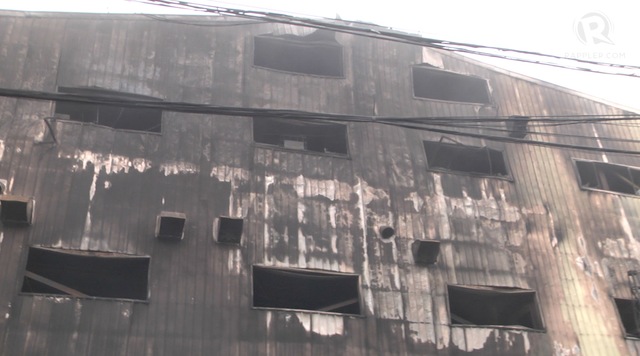
In the Philippines, House Technologies Industries owns a three-story factory in the Cavite Export Processing Zone, also known as the Cavite Economic Zone, south of Manila. On February 1, in the evening during shift change, a fire broke out. That fire raged for two full days before it was finally put out. Fire exits were locked, windows barred, corridors far too narrow to allow for quick passage: this was no accident. Yet again, as in the Kentex fire two years ago, this fire and those workers burned to death and the workers critically injured are part of the brutal architecture of industrial production. Every report covers up more than it reveals, and the workers, charred beyond recognition, wait for nothing now. What have the owners, including the State, learned in the years since the Kentex fire? They’ve learned the art of cover-up.

According to a report released by the Center for Trade Union and Human Rights, “Nearly all those interviewed … believed that many were trapped inside and have died. The stream of people desperately seeking to go out of the building was too big for the employee’s passageways and fire exits to accommodate. There were accounts that the fire exits were locked, forcing escaping workers to break windows as their means of egress. Workers claim that the company’s exit stairs land inside the building, or in the delivery section within the company compound. There was no exit that lands on the streets. A witness shared that he did not see anyone who escaped using the same exit he went out of, only through passageways and windows.

“There were accounts that windows were tightly screwed on window sill and witnesses saw workers including a pregnant woman jumped out from the third floor window. Other witnesses narrated that on their way out, they left behind workers on the floor, unconscious. They also saw flames rapidly chasing the escaping workers. Relatives of those who were injured also told that their relative was able to escape by crawling over and stepping on unconscious bodies on the floor, whom they presumed dead.

“The National Building Code of the Philippines (Republic Act 6541) and the Occupational Safety and Health Standards prescribed specific design, size, width and dimension for fire exits and passageway, particularly in structures for different loads and those that contain highly combustible materials for safer egress and other. Examining the accounts, the law’s prescriptions were amiss in the HTI fire, the biggest fire in the country’s history of Export Processing Zones (EPZs).”

In its conclusion, the Commission notes, “There were more women working in the Quality Control in the 3rd floor including a pregnant woman who jumped out from the 3rd  floor window and more possibly trapped. From the reported 126 workers injured brought to hospital … there were 25 women … Where were those women workers? What happened to that pregnant woman? The distance from the ground floor to the third floor is high, as vertical clearance alone from the 1st to the 2nd floor, where containers are brought in, is estimated to about 18 feet (5.49 meters) high.”

We have been here before. The State can find violation of safety regulations, or not, and the trade unions can protest working conditions and demand an independent investigation, but the factories and sweatshops go up, bars cover the windows, doors are locked from the outside, and no one does anything. This is the second fire at the HTI factory in four years. In the first fire, HTI was exonerated of any fault. After this fire, HTI called in employees and told them to keep quiet. Some say the company forced them to erase video and photo evidence from their phones. Some say the company only counted full time employees in its tally. HTI is the largest employer in the Cavite Economic Zone.

From the Triangle Shirtwaist Factory on March 25, 1911, in New York, to the Kader Toy Factory in 1993 Bangkok, to the Zhili Handicraft Factory in 1993 Shenzen, to the Tazreen Fashions Factory in 2012 Dhaka, and to the Kentex Manufacturing Corporation in 2015, to the House Technologies Industries in 2017, the architecture is the same, as are the smoke, stench, exploitation, workers and bosses. The factory was built as a slaughterhouse. When the flames burst and the workers’ bodies exploded, there was no accident. Today, March 26, 2017, we begin the 117th year of the Triangle Shirtwaist Factory Fire Era, in which we can eradicate epidemic diseases and yet stand by and watch as the factory fires grow larger, more intense, and more lethal, and women jump from windows to the hard earth below.

After the fire


(Photo Credit 1: CTUHR) (Photo Credit 2: Rappler / Naoki Mengua)


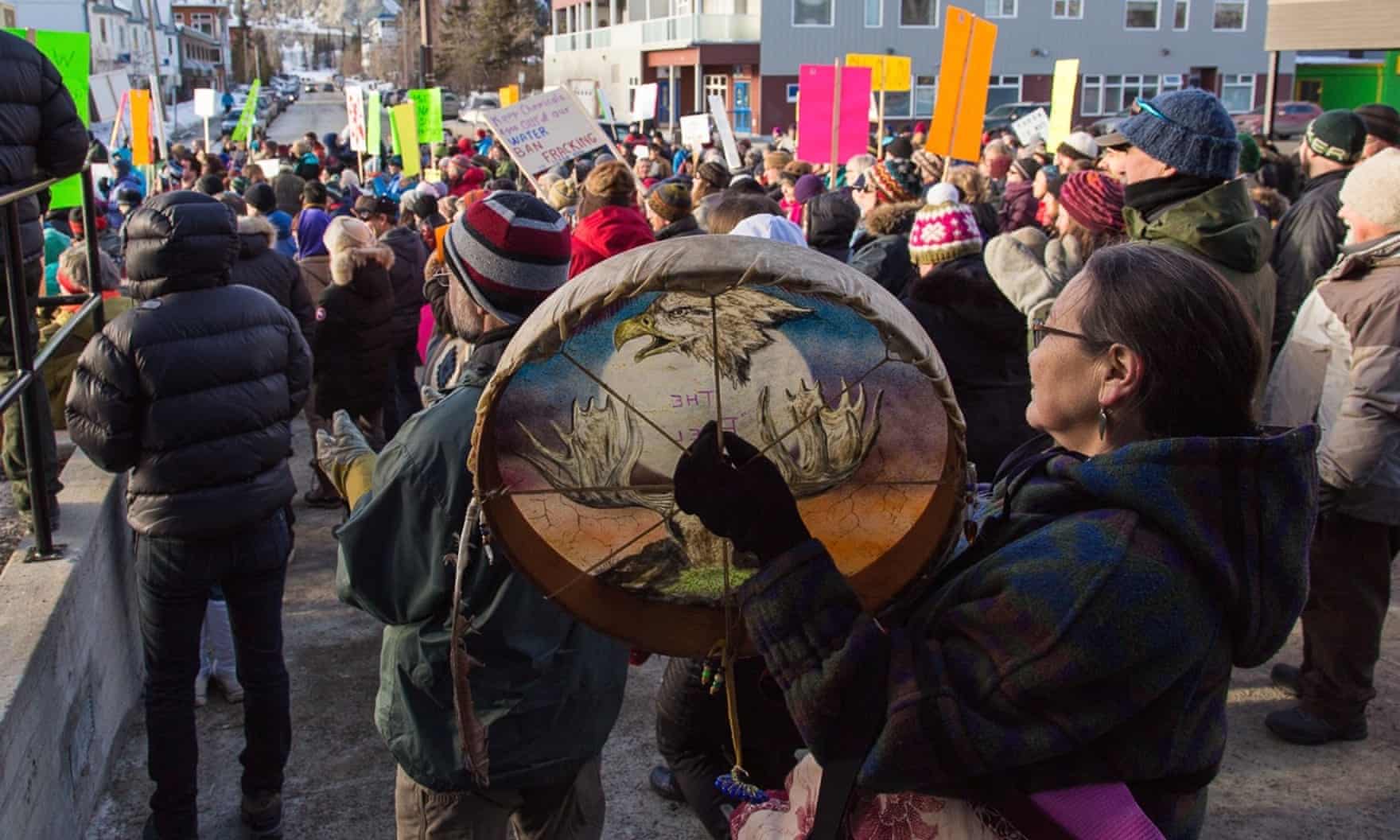
Yukon First Nation women water protectors organize to save the Peel Watershed, the planet … and our soul

Protect the Peel

Today, March 22, World Water Day, Canada’s Supreme Court heard a case concerning the fate of the Peel River Watershed and of the three Yukon First Nations who live with the river. This case has gone through the courts for three years, but it has gone through the land for centuries. First Nation women water protectors decided enough was way too much, and they’ve organized, for the water, for their nations and communities, for the planet, and for our soul.

For Roberta Joseph, Chief of the Tr’ondëk Hwëch’in, the struggle engages betrayal and redemption: “Six rivers flow from the Yukon’s northern mountains down through boreal forest, tundra and wetlands to the Peel River, which runs north to the Arctic Ocean. Along the way, these rivers drain 68,000 square kilometres, an area larger than Nova Scotia. The Peel Watershed is intimately known by three Yukon First Nations—the Tr’ondëk Hwëch’in, the First Nation of Na-Cho Nyäk Dun, and Vuntut Gwitchin First Nation—and the Tetlit Gwich’in in the Northwest Territories, who have hunted, harvested, and lived on the land and the rivers for millennia. The parties ended up in court due to the Yukon government’s betrayal of its agreements with the three First Nations. In 1973, Yukon Chiefs presented Canada with the historic document Together Today For Our Children Tomorrow, convincing the federal government to begin negotiating a modern-day treaty with Yukon First Nations.

“Today, most Yukon First Nations have reached agreements with the Yukon and Canadian governments. The First Nations whose traditional territory includes parts of the Peel River watershed signed their Final Agreements in the 1990s. In these agreements, First Nations yielded control of much of their traditional territory in exchange for a meaningful role in land-use planning for these settlement lands and guaranteed surface and subsurface rights to smaller fractions of their traditional territory.”

In 2004, the Yukon government established a land use commission to consider the disposition of the Peel Watershed. In 2011, the commission issued its final report. According to Roberta Joseph, “The ‘Final Recommended Land Use Plan’ called for 80 per cent protection of the watershed (55 per cent permanent protection, 25 per cent interim protection), with 20 per cent open to roads and industrial development. First Nations have always called for 100 per cent protection of the watershed, but accepted this compromise. Then, the betrayal occurred.”

In July 2014, the Yukon government released its own report, without consultation with First Nations, and it called for 29 per cent protection, and leaving the remaining 71 per cent open to “development”. There are currently nearly 8000 mining claims waiting for the floodgates to open. In 2014, the Yukon First Nations joined with conservationist groups CPAWS Yukon and the Yukon Conservation Society and sued the government.

As Roberta Joseph explains, “We do not want the government to carve up the Peel Watershed with roads and industry. We do not want the government to be rewarded for betrayal with a second chance to overturn the collaborative, democratic land-use planning process. The Final Agreements are supposed to be a meaningful partnership, and the Yukon government did not honour the spirit of these agreements. That is why we appealed to the highest court in the land.”

Elaine Alexie, a Tetlit Gwich’in First Nation member, adds, “What’s most precious to us is the water. If anything should happen to that water, it will directly affect us … I spent half my childhood in the Peel. I see it as a place that I have a connection to as a Tetlit Gwich’in woman. Once a year I go up the Peel, because it’s such a part of who we are.”

Roberta Joseph agrees, “The Peel Watershed is a place where the rivers run clear, the herds of caribou are healthy, and grizzlies have the room to roam. Please visit www.protectpeel.ca to learn more about this irreplaceable landscape and how you can help support the campaign to protect it.”

Roberta Joseph


(Photo Credit 1: The Guardian / Tyler Kuhn) (Photo Credit 2: CBC News / Cheryl Kawaja)

Ending the War on Drugs: It’s time to have the conversation


History of the War on Drugs: From Prohibition to Gold Rush
, the video we did with dream hampton, Jay Z and Molly Crabapple, has officially won best nonprofit video of the year!!! Thank you to all who voted and shared!! Be with me for a moment as I share some thoughts about why this was important:

Winning this award helps us center the critical importance of ending the drug war–for those of us who value human rights, freedom, justice, compassion and dignity. Make no mistake. The drug war started by Nixon in 1971, was a direct response to the civil rights movement. Period.

Ending the drug war is not only about ending a set of intricate series of policies rooted in racism, xenophobia and false morality. It’s about transforming a way of thinking that would even allow those policies to be enacted and thrive. That way of thinking has helped make us the world’s largest incarcerator. It has provided a disturbingly large range of people cover when police kill our kids and our elders. It has allowed us to shrug as our own neighbors and family members struggled and died. It has destroyed families, ripping children from their parents’ arms. It has created a created a nation evermore deeply committed to the horrific, really, the demonic, notion that some lives are valuable and others wholly expendable.

Our movement is a big tent and as such we hold space for everyone but unlike many other movements for justice and peace, we also hold space the most disenfranchised, the most harmed: the poorest, the darkest, the criminalized, those least afforded civil rights because of where they were born or the gender they identify/don’t identify with or the person they love–and of these groups of people, those additionally disparaged because of their involvement with drugs. Our work is noble and life-saving because our work speaks for the least of these, for people often rejected by their very families and scapegoated by all of society.

As soon as it’s said that someone uses or sells drugs, all other questions seem to fall away. Did they actually harm anyone else? If so, how and what’s a way to respond to that harm that restores all to whole? Was that person themselves a target of harm? How does that factor in the equation? Since every society in recorded history has used drugs, what is the way to respond to that without hurting people? What keeps people alive and safe????? These are questions even the progressives among us have sometimes shirked, but it’s time to have the conversation.


(Image and Video Credit: YouTube / Drug Policy Alliance)

At the Koshe Garbage Landfill, most of the dead were women and children


Koshe Garbage Landfill is the only landfill site in Addis Ababa. Hundreds of people live in the shadow of the dump’s mountains of trash. Their communities are on the landfill itself. Hundreds of people, adults and children, work on sides of those mountains of trash. On Saturday, March 11, one of the mountains of trash in the Koshe Garbage Landfill collapsed. As of today’s count, 115 corpses have been pulled out from the rubble. 75 of them were women. Of the initial 35 who were pulled out, almost all were women and children. Now the streets are filled with the wailing of women. Ethiopians demand answers. We all should.

Many will ask what happened? What causes garbage mountains to collapse? What caused this particular mountain of trash to collapse? Urban development? Construction? “A simple failure of an oversteepened slope”? What causes garbage mountains to grow? Who builds a city in which hundreds of people spend their lives as scavengers, climbing, descending and burrowing into mountains of trash? What happened Saturday in the Koshe Garbage Landfill?

What happened, as well, to women and children? How is that slightly over 65% of the dead are women and children? How is that human stampedes and urban garbage landslides have the same toxic gender mathematics of mortality? What does it mean that women and children are the sacrifices to the human forces that built and build landfills choked by ever-rising mountains of trash?

The planet of slums has produced a global archipelago of garbage mountains on which mostly women and children work and live. And in that brave new world, there is never a surprise that when the mountains collapse, as they regularly do, the overwhelming majority of the dead are women and children. There was no accident in the Koshe Garbage Landfill last Saturday; there was instead a planned massacre of women and children. Ethiopians demand answers. We all should.

(Photo Credits: Al Jazeera / Elias Meseret / AP)