The time is now: Time to ramp up the struggle for Nigerian women workers’ rights

Today marks another epoch in advancing and championing the cause of women’s rights, equality, safety and justice worldwide. This year’s theme, Rural and Urban Activists Transforming Women’s Lives, references past struggles, the progress that has been made, the tenacity of those who have made the achievements possible and the challenges of the future. Women have recorded giant strides and made great advancements in several spheres over the past decade, but significant gender inequality and widespread discrimination still persist in the world of work.

Employment is central to empowering and emancipating women.  Qualitative jobs, positive work environments and good employment conditions are essential for women to self actualize, maximize  potentials, enhance status and contribute to development at all levels. A clear evaluation of the dynamics of the average Nigerian work setting reveals that women workers still have a long way to go in terms of enjoying basic rights and dignity and participating fully as stakeholders. Working women in Nigeria disproportionately and frequently encounter stunted promotion progression, lopsided hiring practices overt discriminatory policies, sexual harassment/violence, working conditions disparities, limited training opportunities, poor employment security and are concentrated mostly in three D jobs.  As a result, Nigeria is losing out on utilizing women’s skills, ideas and expertise.

Women workers face a war on their rights on all fronts. Nigerian Labour laws are outdated and do not contain enough provisions to protect women workers’ rights and address their issues. Weak remedies in these laws enable employers to impugn and assail women workers’ rights. Nigerian trade unions fail to protect women workers’ rights, advance women issues and promote qualitative participation in trade unionism. Nigerian women routinely cater for their children, sick family members, and elderly parents, a mass of unpaid work which they combine with paid work. Meanwhile, the employment policies of majorities of public and private sector establishments in Nigeria fail to take these into consideration.

Nigerian women workers have issues organizing and mobilizing themselves and using the power in their numerical strength to change their situation. They have failed to maintain a united front against their oppressors at work. For example, Nigerian women workers cannot even produce the national president of trade unions in sectors that they dominate, such as the Medical and Health Workers Union of Nigeria, National Association of Nigeria Nurses and Midwives, National Union of Food, Beverage and Tobacco Employees, National Union of Hotels and Personal Services Workers, National Union of Textiles Garment and Tailoring Workers and Nigeria Union of Teachers. The necessity for the mass spectrum of women workers in Nigeria to unite and lead the campaign to fight for their rights is long overdue.

In some Nigerian workplaces, pregnancy can translate to demotion, punitive transfers and even termination of employment. The Labour Act Cap 198 LFN 1990 54 (1) stipulates a maternity leave of 12 weeks, but many Nigerian enterprises deny women workers this basic right. In some cases, companies have served women termination letter four weeks after giving birth or during their confinement or after delivery. Others deny women of the benefit of enjoying both annual and maternity leave in the same year. In some cases, marriage, childbirth, weight gain and aging have also been sufficient grounds for overt discrimination and maltreatment.

Women workers habitually endure overt and covert sexual comments, innuendos, provocations and unwarranted sexual advances in Nigerian workplaces. Even married women are not left out, as the “sacred institution of marriage” is no longer a hindrance to sexual harassment. Women are viewed as part of the perks of the job for the pleasure of some ogas at the top. It is an open secret that several public institutions and private sector firms demand some form of gratification in kind from women workers to earn promotion, get favourable postings and obtain positive reviews.

The World Economic Forum’s Global Gender Gap Report 2017 affirmed that globally gender parity is shifting into reverse this year for the first time in a decade. Nigeria also witnessed increasing gaps in participation, remuneration and advancement between women and men in the Education participation and opportunity sub index with a decline from 118th position on the 2016 Index to 122nd position in 2017. The 2017 International Trade Union Confederation’s Workers Rights Index rated Nigeria among the world’s worst countries for workers. In the same perspective, Walkfree Foundation’s Global Slavery Index  2016 classified Nigeria among the ten countries with the largest estimated absolute numbers of people in modern slavery in the world. The linkage between the three reports and the situation of women at work in Nigeria and the fact that women bear the brunt of the results of the reports cannot be controverted.

The negative multiplier effects of the assault on the dignity, rights and person of women are evident in terms of heightened employee turnover, development of inferiority complex syndrome or depression, strong resentment and loss of self worth, creation of hostile work environment, non utilization of potentials due to by passing qualified women for promotion, positions, employment, general lethargy through loss of motivation and morale necessary to work. Denying women basic rights hurts their long-term earning capacity, on-the-job performance and professional integrity. As noted in the Global Gender Gap Report 2017, as the world moves from capitalism to an era of talentism, competitiveness on a national and organizational level will be decided more than ever before by the innovative capacity of a country or company. In this new context, the integration of women into the talent pool becomes a must. But when women are being oppressed and unfairly treated, how possible is it to maximize their limitless potentials and utilize their assets?

It is time to ramp up actions geared towards removing all systemic barriers to women’s employment status, ensuring that all women workers have a level playing field at work, curbing all forms of gender discrimination, putting an end to the systemic undervaluing of work traditionally performed by women, ending all forms of sex stereotypes, misconceptions and bias about women and their capabilities at work and discarding the notion that workplace policies are modeled on traditional male norms. It is time to stop the humiliation, assault and inhumane treatment women workers in Nigerian workplaces endure daily.

This can be done when all of us individually and collectively join forces as stakeholders to ensure that women workers are accorded their rights, treated with dignity, taken care of fairly and given unfettered access to employment opportunities. Male workers can take a pledge that we will not demote, discriminate against, take adverse actions at, intimidate, denigrate and sexually harass and then accord all respect and rights to women workers. Trade unions should do more to put an end to the abuse of women’s rights in Nigerian workplaces. NLC and TUCN as the central labour organization need to set their shoulders more firmly against the boulder of oppression that burdens women workers despite their immense contributions to national development.

Employers associations led by NECA have a big role to play by telling their members to curb unfair labour practices and workplace policies that obviate and abridge the rights of women workers. The Federal Government should double its efforts to safeguard the rights of women workers.  They should partner with the National Assembly to enact effective labour laws that can protect the basic rights of women at work, take special cognizance of and offer special protection for pregnancy, motherhood, childbirth, care and related issues.

Ramping up the struggle for women workers rights entails initiating changes to how people, associations, and organizations and society interface with, perceive and regard women,. It encompasses amending and expunging obnoxious laws that encumber women workers’ rights and dignity and involves creating effective and durable women policies, programmes and institutions that can protect women’s rights. Ramping up the ante for women workers rights entails involving everybody to stand up for and speak against this situation. The Executive Director of UN Women noted that healthy societies have a wide mix of voices and influences that provide the checks and balances, the differing threads of experience and perspectives, and the debate that shapes good decision-making. The silence of these voices bodes ill for any society.  The time is more than ripe for these voices in Nigeria to speak up and lead the struggle to end the retrogressive abuse of women workers’ rights and promote decent work, fair conditions of work and a level playing field for women in employment in Nigeria. The time is now.

.

(Image Credit: Pulse).

.

I explain (a thing or two)

I explain (a thing or two)
 
I explain
a thing or two
to a young learner
 
she an ardent reader
chess player and now
its marabaraba too
 
and to our delight
she also shares
her learning
with others
 
(like each one
and teach one)
 
I explain
a thing or two
about a book
she is busy with
 
a few instalments of
The Young Children’s
Encyclopaedia
 
donated they were
by neighbours next-door
who intuitively bought them
at a market somewhere
and donated them to us
 
I grin to myself
as I think
of Pablo Neruda’s
I explain a Few Things
 
This I do as I recall
the Neruda poem read
at my trade unionist
father’s recent memorial
 
In death I want to be with the poor
who have no time to study it,
while those who have the sky
divided and deeded beat upon them….”
 
Need I explain (more)
(Photo Credit: YouTube / Maria Farantouri)

Why does the English government hate Opelo Kgari and Florence Kgari?

Opelo Kgari

The hunger strike at Yarl’s Wood is now in its second week. In the past week, the Home Office first tried to claim there was no hunger strike, then tried to claim that if there was a hunger strike there was no reason for it, and finally lit upon the great idea of claiming the hunger strike was for dietary and religious reasons. None of these patent lies worked, the hunger strike continues, and the support for it deepens and grows. Meanwhile, on Saturday, Opelo Kgari, one of the spokespersons for the hunger strikers, and her mother, Florence Kgari, were, without notice, dumped into a van, hauled to Heathrow, and told that they were to be dumped onto an 8:15 pm Ethiopian Airlines flight to Addis Ababa. Opelo Kgari and Florence Kgari are originally from Botswana. Thanks to last minute interventions, the two were `spared’ that ordeal … and returned to Yarl’s Wood. Why does the English government hate Opelo Kgari and her mother, Florence Kgari?

Opelo Kgari is 27 years old. She has lived in England since she was 13 years old. She excelled in secondary school, and has an unblemished record of accomplishment. Last May, on her way back from a brief holiday with friends in Belfast, Opelo Kgari was thrown into a holding cell for 12 hours … for no apparent reason. Six weeks ago, Opelo Kgari dutifully reported to the Home Office, as she does every two weeks, and was thrown into a holding cell, again for 12 hours, and then shipped to Yarl’s Wood: “This time round, I wasn’t even wearing a bra. I was going to yoga with a friend after reporting to the Home Office, so I just threw a coat on. I never got to the class. They put me and my mum in a holding cell for over 12 hours, with three officers outside. I didn’t have a bra for five days once I got here, or a change of underwear.” What justifies such inhumane treatment?

Opelo Kgari has been asking that exact question, on her own and as one of the spokespersons for the 120 women on hunger strike in Yarl’s Wood. Opelo Kgari has become the spokesperson partially because her English is so good, but more because she has much to say about the conditions and their impact on the women: “There’s one woman who spends all day walking around the centre with a packed handbag, claiming she had everything she needs in there. She’s clearly not well. And there’s an Iranian woman who’s on suicide watch. Officers just sit outside her cell with the door open. She clearly shouldn’t be in here at all. It’s inhumane.”

It’s inhumane. Hatred is always inhumane. Why does the English government hate Erioth Mwesigwa, Shiromini Satkunarajah, Irene Clennell, Chennan Fei, Kelechi Chioba, Paulette Wilson, Patricia Simeon, Lazia Nabbanja, and this is only a partial list of prominent cases within the last twelve months. Why does the English government hate Opelo Kgari and her mother, Florence Kgari? What is the point of a policy that predictably traumatizes women, of whom the majority are women of color? The Independent has put a focus on Opelo Kgari’s situation, calling it “a terrible case” and, echoing Opelo Kgari, a facet of England’s inhumane immigration system. Today, Independent reporter Charlotte England wrote, “Saturday night was a victory. But we must keep paying attention to what is happening in Yarl’s Wood — where Opelo is still being held against her will and still faces deportation — and other similar facilities, and we must keep putting pressure on politicians to end detention and unlawful, unjust deportations entirely.”

Deportation is preceded by incarceration. For those not deported, incarceration has preceded “community release.” In either case, “incarceration” is a cover for institutional violence against women. Why does the English government hate Opelo Kgari and Florence Kgari?


(Photo Credit: Independent)

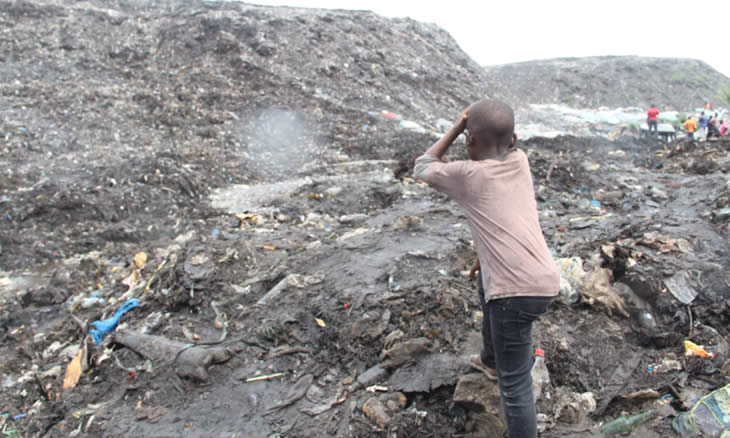
At the Hulene garbage dump collapse, most of the dead were women

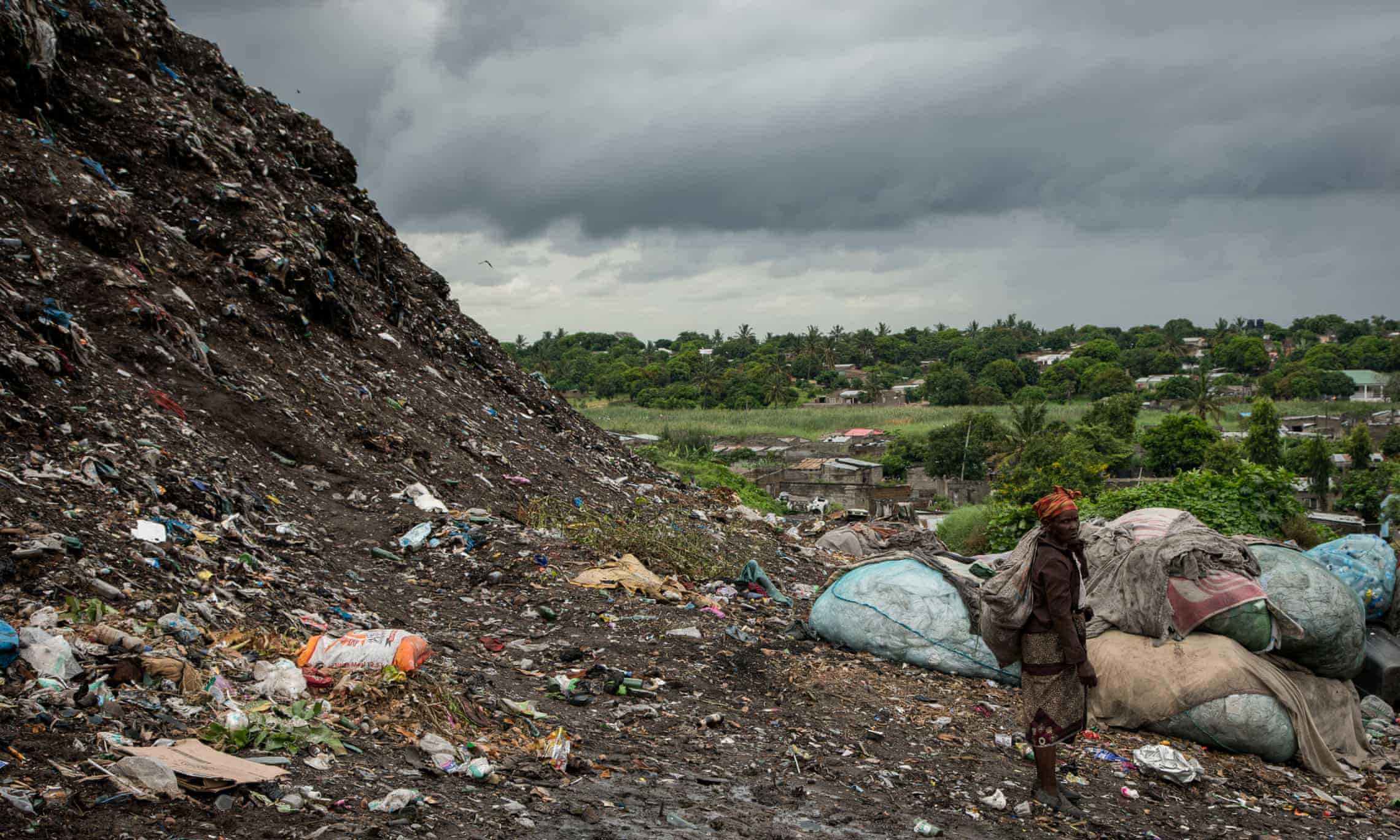
The Hulene garbage dump, also known as the Bocario dump, is the only garbage dump in Maputo, Mozambique, a city of over a million people and growing. Thousands of people live in the shadow of the dump’s mountains of trash. Many live on the sides of the trash mountain itself. Those who pick through the garbage in search of food and something to sell are called catadores. Predictably, catadores are mostly women, children, the disabled, the elderly, and immigrants. Last Monday, February 19, the mountain collapsed, and sixteen or seventeen people were killed. Initial state reports say sixteen died: 12 women, 4 men. Mozambicans want answers. We all should.

Many will ask what happened? What causes garbage mountains to collapse? What caused this particular mountain of trash to collapse? Urban development? Construction? What causes garbage mountains to grow? Who builds a city in which hundreds of people spend their lives as scavengers, climbing, descending and burrowing into mountains of trash? What happened last Monday in Hulene?

What happened, as well, to women and children? How is that 16 die, and 12 are women? How is that that ratio is almost precisely the same as the ratio at the Koshe Garbage Landfill collapse, in Addis Ababa, Ethiopia, a year ago?  How is that human stampedes and urban garbage landslides have the same toxic gender mathematics of mortality? What does it mean that women are sacrifices to forces that built and build landfills choked by ever-rising mountains of trash?

None of this is new. Scholars, activists, and residents have long decried the conditions in and around the Hulene dump. In a 2011 WIEGO report, researchers noted, “It is likely that the Hulene dump will remain in use until 2015, when development of the new land is expected to be complete.” In 2013, in response to local community pressure, the Maputo government agreed to close the Hulene rubbish dump. It’s 2018. The dump is open, and now it’s a graveyard. Call it the price of urban development.

The planet of slums has produced a global archipelago of garbage mountains on which mostly women work and live. There is no surprise allowed when the mountains collapse, as they regularly do, and the overwhelming majority of the dead are women. There was no accident in Hulene, also known as Bocario, last Monday. There was a planned massacre of women. Mozambicans demand answers. We all should, and we all should have long ago.


(Photo Credit 1: Club of Mozambique) (Photo Credit 2: The Guardian / Shaun Swingler)

To the next generations, from a millennial

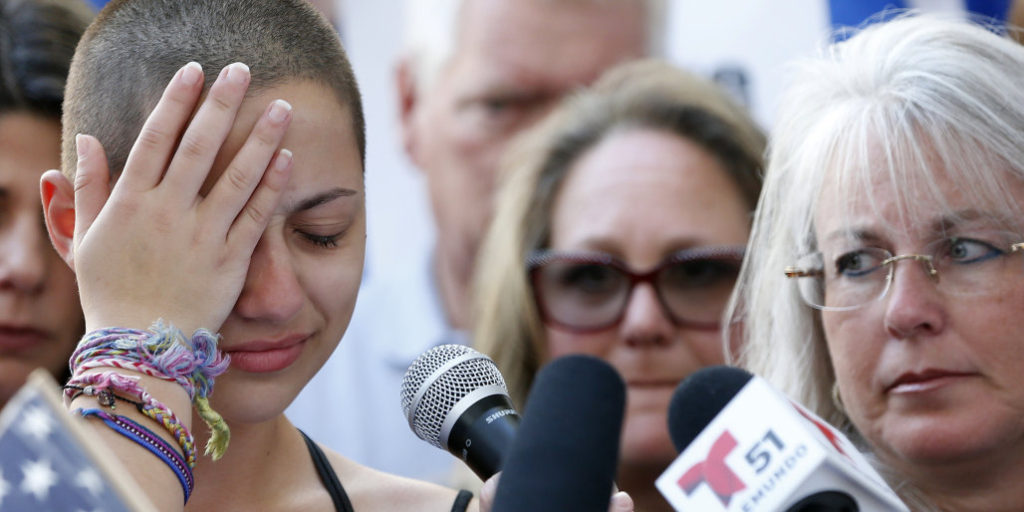
This is a letter for all the next generations, terrified of the world and dismissed by the older generations. I remember being in Middle School and participating in lockdown drills, hiding in the back of the school while pretending that the school was under attack. I remember moving to different schools after there was a bomb threat that had been called into the school. I didn’t think anything of it, and most likely neither did my parents; it was just protocol, it’s not like anything like that would happen anyway. I remember everyone scoffing at participation trophies, and mocking the hurt Millennials who were too much of an emotional mess. And as I watch the next generations growing into adulthood, I am terrified to see some of my generation taking up their mantle.

We laugh at tide pods, forgetting we grew up with Jackass and the Cinnamon Challenge, the Gallon Milk Challenge, and every stupid thing we did for notoriety and our minutes of fame. We call the next generation Snowflakes, forgetting we were the original Snowflakes. I am watching, horrified, that seventeen year old kids are begging for some action by Congress after the bomb threats and lockdowns from my generation have turned into an all-out massacre of the newest generation. And more than likely, we’ll all forget what happened in the next two days, to be shelved until forty or fifty kids are killed in the next shooting.

To whoever comes after us, you are already better. You have not given up where 26-year-olds like myself have scoffed at the world, because it isn’t our problem; but it is. It will forever be our problem. We condemned the generations before us, the Baby Boomers and the like, for destroying the economy, bankrupting social welfare programs, demanding more in their ever-increasing narcissism, but we have been falling back on their ways. That cannot happen.

To the students who are calling for action from Congress because you are losing friends and teachers from the alarming increase in mass shootings, don’t give up. To the kids who are resisting the destruction of our environment and the rise of intolerance and hate, don’t give up; we all want a better world to give to our children and future generations. To students who fight for debt-free education and knowledge, don’t throw in the towel; knowledge and education is a human right. To younger generations demanding a living wage, we are all there with you; all jobs where we sell our labor should at least equal the cost of living. To the girls and young women protesting unfair dress codes and lack of access to birth control, your body is yours, not something to be controlled and censored by boys and men. You are already better than us for so many reasons, for your optimism and activism in the face of ever growing hatred.

Please continue this, and fight for a better world: a world without hate, violence and death; a world without people working and barely making ends meet; a world where a child can get an education free of the burden of debt and the fear of not making it home that day.

And Millennials, remember that once, not too long ago, we were those “stupid kids” who demanded everything and gave nothing. Our goal in a society is to improve upon it for the generations that come after us. That should forever be our mantra, and right now, that is not our mantra. Instead, we are posting on Facebook about guns and mental illness and making fun of the high school kids without taking a step back into ways we can fight for ourselves and the generations to come. It’s not too late, it’s never too late.


(Photo Credit 1: Affinity) (Photo Credit 2: New York Times / Zachary Fagenson / Reuters)

At Yarl’s Wood, 120 women prisoners are on hunger strike! #ShutYarlsWood


England built a special hell for women: Yarl’s Wood. This week, 120 Yarl’s Wood women prisoners are on hunger strike. The women are protesting indefinite detention, abysmal healthcare services, abuse, and denial of personal and collective dignity and humanity. Today, after being denied entry for a year, shadow home secretary Diane Abbott was finally allowed inside the complex. Abbott was accompanied by Shami Chakrabarti, the shadow attorney general. Eight years ago, to the day, women prisoners at Yarl’s Wood engaged in a hunger strike from February 5 to March 19, 2010. That same year, in January, Bita Ghaedi entered into a weeks long individual hunger strike, out of fear of certain death if she was returned to Iran. In March 2015, women prisoners at Yarl’s Wood went on a hunger strike. Why does England, or the government of England, want to demean, abuse and traumatized so many vulnerable already traumatized women, most of women are African and Asian? Why does England hate so many women so intensely? When will this reign of terror end?

One hunger striker, an Algerian woman who has lived in England since she was 11 years old, explained, “Every day I wake up and I have to think of a reason to go on. I’ve given up thinking about the outside – I’ve given up thinking about it. I feel like I’m in someone’s dungeon and no one is letting me out. I might as well be blindfolded in a van going 100 miles an hour in a direction I don’t know. The indefinite detention causes people so much stress. People are breaking down psychologically. We have no fight left. They break you down. It’s inhumane. And there’s no psychological help. I’ve tried speaking to a psychological nurse in the centre about issues I have, and he advised me to speak to my solicitor about it.” This woman has been in Yarl’s Wood for three months. She has no idea if and when she will be released.

In 2017, `Voke’ spent eight months in Yarl’s Wood. While imprisoned there, she attempted suicide: “It was such a relief to get out of there. But I don’t understand why they had to put me through it at all. I hope I will start to feel better soon, but I will never forget being detained. I will never forget Yarl’s Wood.”

Eight years ago, Yarl’s Wood hunger strikers – including Denise McNeil, 35 year old Jamaican asylum seeker; Mojirola Daniels, Nigerian asylum seeker; Leila, Iranian asylum seeker; Victoria Odeleye, 32 year old Nigerian asylum seeker –  reported torture, rape, starvation, other forms of abuse. They described the devastating impact of Yarl’s Wood on imprisoned children, such as 10-year-old Egyptian Nardin Mansour. They mourned and protested the suicides as they explained that Yarl’s Wood was intent on killing them. As Laura A, a Sierra Leonean and former Yarl’s Wood prisoner, noted: “I am a fighter, I am used to fight to live, but to be told, ‘You faked your life,’ is a little like death.”

The Yarl’s Wood women hunger strikers took the calculus of the killing and turned it on its head, saying they were better than that. They said they were women, fighters used to fighting, peacemakers used to making peace, and no one could decide that it was right for them to be slaughtered. They called out, shouted, screamed, fasted, demanded to be heard … and here we are eight years later.

Over 80 percent of the women in Yarl’s Wood are survivors fleeing sexual or gender-based violence. The vast majority of women in Yarl’s Wood end up being released into the community. What sort of factory is designed to produce damage: damaged bodies, souls, psyches, lives? Yarl’s Wood. The time for concern and for discussion is over. The time for justice, and for reparations, is long overdue. Shut Yarl’s Wood down; do it now.


(Photo Credit: Politics.co.uk) (Image Credit: Detained Voices)

The Revival of the Poor People’s Campaign and its Effects on Women in Poverty

Bishop William Barber and Rev. Dr. Liz Theoharis led a mass meeting in Charlotte, North Carolina

With the re-launch of the Poor People’s Campaign over fifty years after the call by the Rev. Dr. Martin Luther King Jr, Fight for $15 joined the new movement launch with a one day strike and rallies of low wage service workers across the South, in memory of the Memphis sanitation strike. On Feb. 12, 1968, the strike began after two co-workers died on the job and drew the attention of the Rev. Dr. Martin Luther King Jr to the location where he was killed.

Across the Mid-south, there were more than 30 demonstrations, and fast-food workers went on strike for a day. The protest served as uniting of the coalition between the Fight for $15 Movement and the Campaign, which focuses on shared goals: the push for a $15 hourly wage, and the right to unionize and the right to organize. Rev. William Barber of North Carolina, one of the co-founders alongside Rev. Dr. Liz Theoharis, explained, “Both of our movements will do whatever it takes to ensure everyone has a living wage, a strong union and the right to organize for their rights so we can unrig America’s broken politics and lift people of all races out of poverty.” The movement will kick off in May, on Mother’s Day, with six weeks of direct action and nonviolent civil disobedience in effort to address the issues of racism, poverty, militarism and ecological disaster.

The re-launch of the campaign is in response to the Trump administration’s rising hostility and white nationalist backlash to the progress of women and minorities: “We’re witnessing fundamental changing our demographics around the world. We see extremist policies in America today and it’s driven by the growing blackening and browning of America and a fusion of every creed, color and class.”

The federal government has invested only $183 billion of its budget in social programs but has relocated a $630 billion to the Department of Defense for the country’s continuous wars. That money could be spent lifting people out of poverty and helping them get the necessities of food, shelter, heat and air conditioning, and other basics. Today in America, nearly 140 million people, including 31 million children, are poor or near-poor; and the country has a growing trend of adults who work full time hours but are considered impoverished.

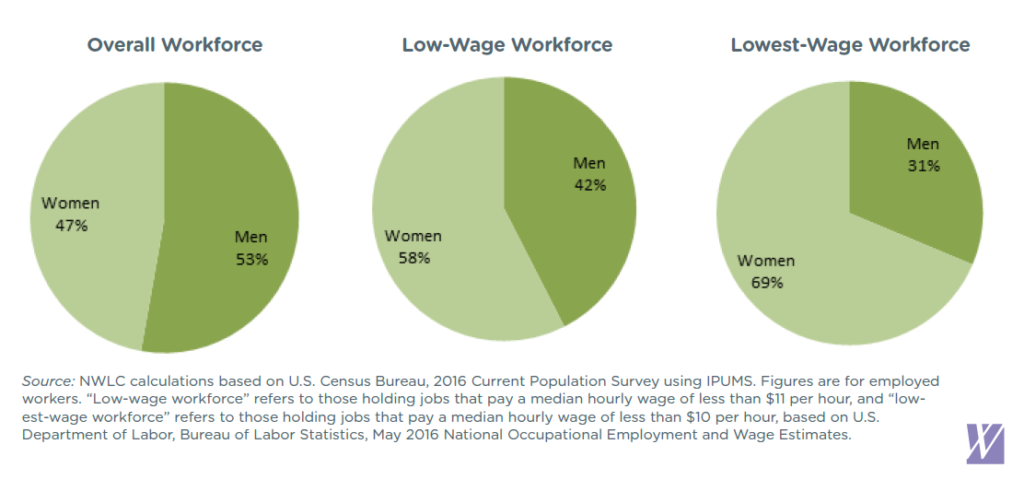
Low-wage work has fallen on the shoulders of women who, according to the National Women’s Law Center, make up 60% of the workforce. Low wage workforce typically pays $11 per hour; in jobs paying less than $10 per hour, women make up 70% of those workers. Women primarily are bearing the consequences of the Trump administration’s attack on social welfare programs in the United States, and that trend is only likely to continue, such as replacing SNAP benefits with a food delivery service and calling for additional Medicaid work requirements.

It is symbolic and important that the launch would begin on Mother’s Day, as women and mothers are those who most need the campaign to succeed.


(Photo Credit: Facing South) (Infographic Credit: National Women’s Law Center)

I’ve felt every massacre profoundly, but this one literally hits close to home

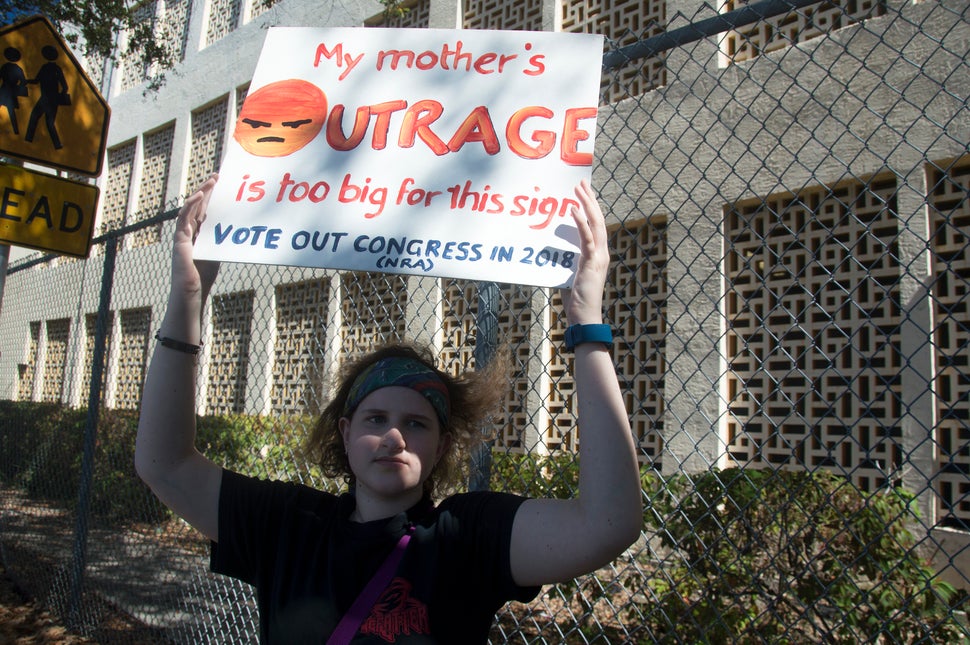
I’ve felt every massacre profoundly, but this one literally hits close to home. The shooter once lived a 10 minute drive from my home. My elder child is about to enter kindergarten. This shooter could easily have chosen her soon to be school or any of the stores and restaurants we visit in our neighborhood. This is not right and it’s not normal.

If you say you empathize with the victims but will blindly vote the party line without regard for the candidate’s position on sensible gun control, or you don’t believe access to guns is the problem, then no one wants your prayers, thoughts, and sympathies. They are useless. They may offer small comfort to the survivors and their families, and assuage your consciousness and feeling of complicity, but they do nothing to prevent the loss of lives.

Governments are supposed to protect its people and for too long our government has been too ready to look the other way and ignore the very real gun crisis epidemic that is ravaging our country. The government has failed its people. Gun reform should be a bipartisan issue.

And finally, you mess with our cubs and us mama tigers and lionesses will come after you, starting at the poll booths, then the House, Senate, and White House.


(Photo Credit: Johanne Rahaman / Huffington Post)

Why did Adelina Lisao have to be tortured to death before anyone sought justice?

Indonesian officials wait to retrieve Adelina Lisao’s body

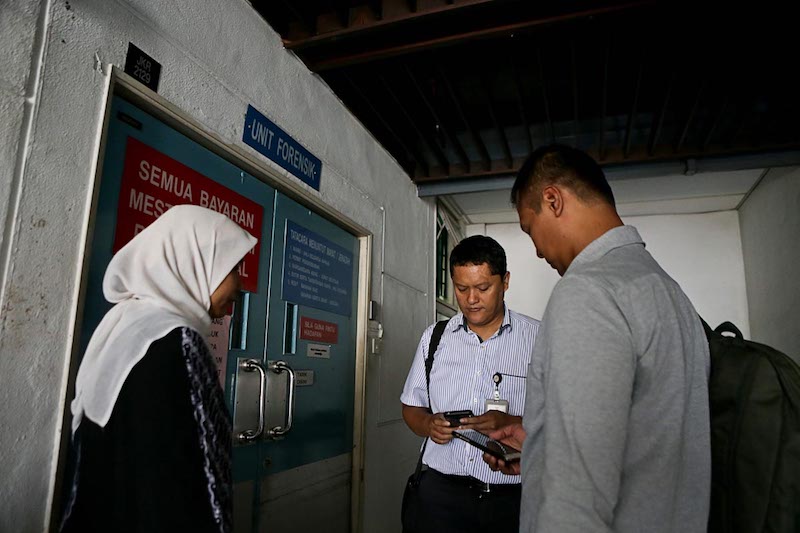
On Saturday, February 10, 2018, 26-year-old Adelina Lisao was “rescued” from her employers’ house. She was taken to hospital, where she died on Sunday. Adelina Lisao was one of hundreds of thousands of domestic workers in Malaysia. Most of those workers are Indonesian and Filipino. For weeks, Adelina Lisao was tortured, often in plain sight and earshot of neighbors. The sort of violence visited upon Adelina Lisao is not an unusual occurrence for Indonesia and Filipina domestic workers in Malaysia, as has been documented for decades. Adelina Lisao died on Sunday. On Monday, the Indonesian government demanded “justice for Adelina.” On Tuesday, the press announced, in headlines, “Death of maid treated ‘like a dog’ casts spotlight on migrant abuse in Malaysia”. Just because there’s a glimmer in the dark doesn’t mean that a light is shining. If history is any guide, by Friday, Adelina Lisao’s named will be filed away and forgotten, and the mass abuse will continue.

In 1997, Christine B.N. Chin, a scholar of transnational migrant women’s labor, studied “the distinct ways in which public walls of silence continue to surround the absence of labor rights and benefits for foreign female domestic workers in the receiving country of Malaysia.” Chin noted that, despite the best efforts of Malaysian ngo’s, “efforts to break down public walls of silence surrounding the absence of labor rights and benefits for foreign female domestic workers have met with little success.” Twenty years ago, the situation of Indonesian domestic workers in Malaysia was recognized as an already longstanding issue. Since then, the public walls of silence have only grown thicker and higher. There is no spotlight nor loudspeaker breaking through that wall, not as yet.

In 2004, Human Rights Watch published a report on abuses against women domestic workers in Malaysia, which began: “In May 2004, graphic photographs of the bruised and burned body of Nirmala Bonat, a young Indonesian domestic worker in Malaysia, were splashed across newspapers in Southeast Asia. In a case that drew international attention and outrage as well as a prompt response by both the Malaysian and Indonesian governments, Bonat accused her employer of brutally beating and abusing her.” Who remembers Nirmala Bonat? What is the life span of “international attention”? Where is the outrage today?

According to the ILO, in 2016, Malaysia employed 300,000 to 400,000 domestic workers, almost exclusively from Indonesia, Cambodia and the Philippines. In 2010, approximately 230,000 Indonesian women worked, legally, as domestic workers in Malaysia. In 2015, Malaysia and Indonesia met to discuss “ways to improve protection of Indonesian domestic migrant workers in Malaysia.” Where was that “protection” while Adelina Lisao was being abused, tortured, demeaned, starved, beaten, and all in plain sight?

Indonesia should have demanded justice for Adelina Lisao long before she arrived in Malaysia. Malaysia should have demanded justice for Adelina Lisao as well. Adelina Lisao, this week’s moment of “international attention and outrage”, cannot be merely another empty sign. She is the brick and mortar of success in the now-decades-old new economy. A specter haunts the world … and her name is Adelina Lisao.

(Photo Credit: Sayuti Zainudin / The Malay Mail)

Oklahoma: Time to shut down debtors’ prisons and jails

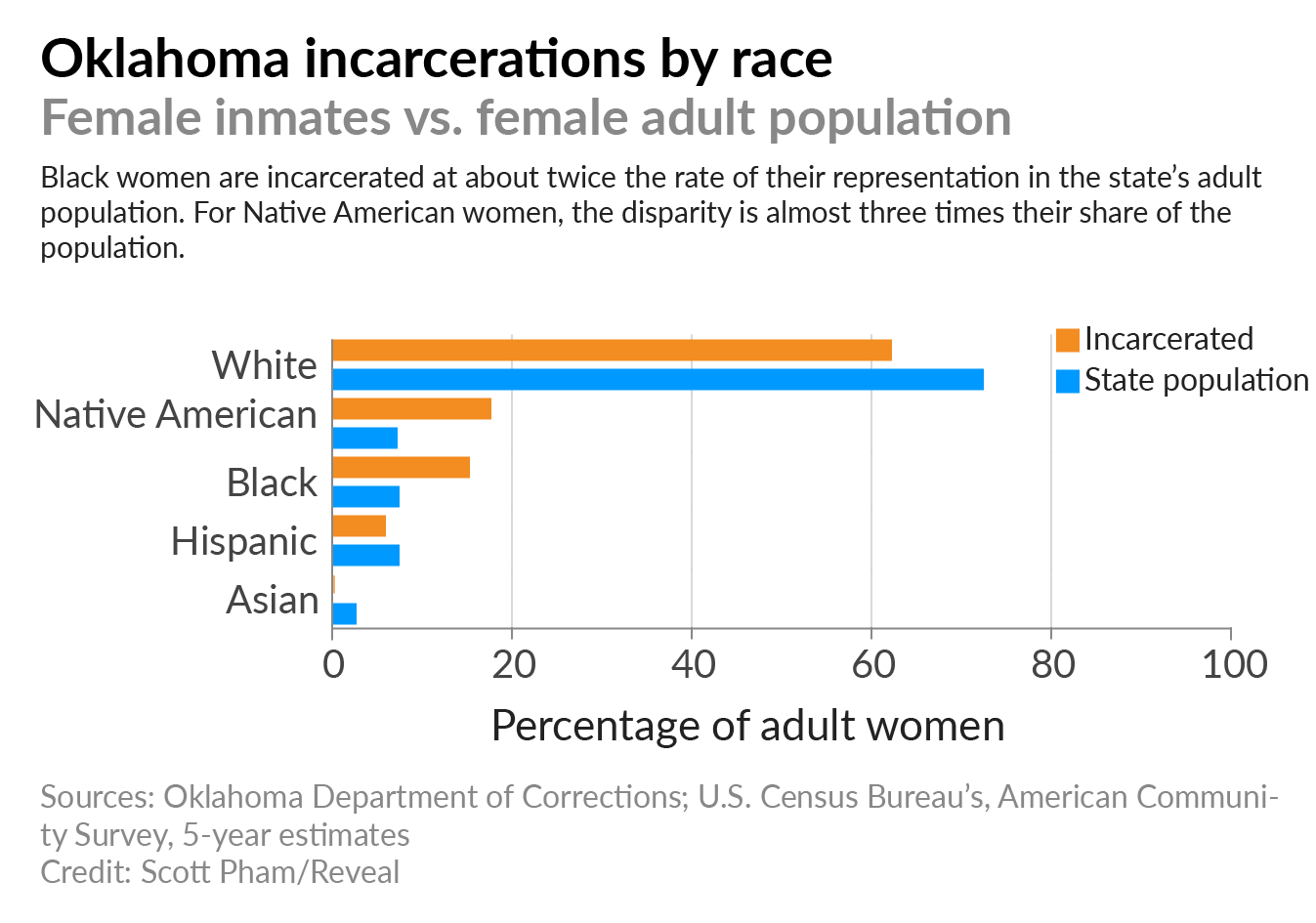
Since 2010, sheriffs across Oklahoma have used bail collection as a means to wage war on the poor and to enrich themselves. That helps explain why Oklahoma is the Number One incarcerator of women in the United States, disproportionately Black and Native American,  and Number Two incarcerator of men. Last November, Ira Lee Wilkins, an indigent Tulsa resident, sued to stop the fine and cost collection system. At that time, Wilkins had two local attorneys. On February 1, 2018, an amended complaint was filed. Ira Lee Wilkins has been joined by Carly Graff, Randy Frazier, David Smith, Kendallia Killman, Linda Meachum, and Christopher Choate. Two national criminal justice law firms joined two attorneys. Together these women and men are saying NO! to a system that converts the most vulnerable into walking ATMs. In so doing, they join those in Texas challenging fine collection systems, and those in Tennessee, Mississippi, and Georgia who have successfully challenged the cycle. The time to shut down debtors’ prisons and jails is long past.

While the stories of the complainants are heartrending, the real story here are the plaintiffs, in particular the Oklahoma Sheriffs’ Association and Aberdeen Enterprizes II, Inc. In 1991, the Oklahoma Sheriffs’ Association was formed as a private entity, and was almost immediately drenched in scandals involving embezzlement. Then, the Association’s world changed. In 2003, it was allowed to have a role in misdemeanor fine collections. In 2010, that role was expanded to include felonies and traffic tickets. At the end of 2009, the Oklahoma Sheriffs’ Association had $40,686 in the bank. At the end of 2016, that number was $2.8 million.

Aberdeen Enterprizes was founded in 2006 “by a disbarred attorney after he was released from federal prison for bankruptcy fraud.” According to the suit, “Aberdeen Enterprizes II, Inc. (“Aberdeen, Inc.”) is a for-profit Oklahoma corporation registered to do business in Oklahoma. Aberdeen, Inc. contracted with Defendant Oklahoma Sheriffs’ Association to collect court debts owed in court cases arising in 54 counties throughout Oklahoma. The Agreement provides that Aberdeen, Inc. receives a percentage of the money that it collects. Aberdeen, Inc.’s cut of the money that it collects constitutes Aberdeen, Inc.’s sole revenue source.” Aberdeen’s cut of the money is the only money Aberdeen has.

The sheriff’s private association grows rich. The company doing the dirty work depends on intimidation and extortion to survive and thrive. The jails and prisons are choking with overpopulation, and everyone wonders how this happened. Oklahoma is open for business.

Kendallia Killman is 48 years old, indigent, and the caretaker of her intellectually disabled adult son. They live on monthly disability payments of $543. In 2009, Kendallia Killman was fined for two misdemeanors. She couldn’t pay the fees and fines, and tried to negotiate an arrangement. In 2015, her file was turned over to Aberdeen, who told her that she had to pay a lump sum of $1000. She called Aberdeen and offered to pay $25 a month. Aberdeen hung up on her. This happened more than once. Now there’s a failure to pay warrant, and Kendallia Killman lives in constant fear of being arrested: “When these police departments sent this to Aberdeen, they took out the humanity part of it. … They took out having to see people and seeing the hurt and seeing the pain”.

Carly Graff, 40 years old, mother of two, has a single traffic ticket. She can’t pay the fees and fines. Half the time she can’t afford to pay for food or electricity. She didn’t pay the fees and fines, and a warrant, and more fees and fines, were issued. Aberdeen now has her file: “Ms. Graff now lives in constant fear of arrest and does not leave her home unless necessary to care for her children because she is so afraid of being taken to jail for nonpayment.”

Linda Meachum, 58 years old, disabled by domestic violence, living on $244 a month, knows the same fear. Arrested for a misdemeanor, Linda Meachum spent a month in jail and was ordered to pay $200 fine and court fees. She set up a plan to pay $40 a month. Then she lost her job. Then her file went to Aberdeen, who insisted on at least $75 a month. She couldn’t pay. A warrant was issued, and Linda Meachum went back to jail. Now she owes $800, and still can’t pay: “She has no money to pay Aberdeen, Inc. and fears that she will be arrested for nonpayment of court debt.”

In Oklahoma, big money is made extracting impossible value from the poorest of the poor through an ever expanding ever intensifying system of constant fear and terror. That’s criminal justice. It’s time to shut the whole system down.

(Infographic Credit 1: The Oklahoman) (Infographic Credit 2: Scott Pham / Reveal)