Thailand bus fire kills 20 migrant workers from Myanmar. 18 were women. Who cares?

Early Friday morning, March 30, in Tak Province, a bus carrying workers from Myanmar to a factory district caught fire. The bus was carrying 48 workers, plus the driver and his wife. 20 workers were killed, 18 women, 2 men. Once again, despite the overwhelming gender composition of this event, the international press described the dead as simply “migrant workers” and then proceeded to focus on Thailand’s hazardous roads and the shoddy condition of the bus. Thailand has dangerous roads, but this incident was a rolling factory fire. As in Tangerang, Indonesia;  Triangle Shirtwaist Factory, United States; Kader Toy Factory, Thailand; Zhili Handicraft Factory, China; Tazreen Fashions Factory, Bangladesh; Kentex Manufacturing Corporation; Philippines; House Technologies Industries, Philippines; Bawana Industrial Area, India, and so many others, this bus fire was a planned massacre of women workers. And, as so often in these cases, the news media generally glosses over the massacre as an assault on women.

What happened? A bus carrying 48 women workers, a bus driver and his wife, was on route  from Myanmar to the Nava Nakorn Industrial Zone, near Bangkok. The bus was without air conditioning. Around 1:40, a fire broke out in the middle of the bus and spread quickly. Those in the front managed to escape. Those in the back were burnt to death.

Pa Pa Hlaing, a 19-year-old woman worker survivor, said, “When we were asleep, some people from the back of the bus started shouting and screaming ‘fire, fire’ and as we awoke, the smoke was already filling the bus. We couldn’t see anything or breathe. We just tried to get out of the bus as soon as possible. We were just rushing toward the bus door. I don’t even remember how I actually got out of that bus. There were bruises all over my legs as I was just randomly running around. Then, three minutes right after we got out of the bus, the flames just swallowed the bus.”

According to reports, the workers, from Myanmar, were all properly registered migrant workers. According to the Thai Labor Ministry, Thailand has about 2.7 million registered migrant workers, primarily from Myanmar and Cambodia. Women migrant workers figure prominently in the industrial and agricultural sector as well as among domestic workers. There is no surprise when, of 20 people killed in a factory fire, 18 are women. There is no surprise that the bus was in such bad shape it would have to be described as equipped to kill at least 20 people in the event of a fire or other catastrophe. There is no surprise here, none of this is new. It’s all part of the development model the entire world has signed on to. Apparently, the women workers in this particular bus were heading to work in a Japanese-owned toy factory.

At what point do women matter to the world at large? At what point do the world media begin to consider the high numbers of women killed in the disasters built into our built landscapes, from the garbage dumps of Maputo, Mozambique, and Addis Ababa, Ethiopia, to the earthquake struck buildings of Mexico City, Mexico, to the factories across the globe? This past week, a bus in Thailand caught fire. 20 migrant workers from Myanmar were killed. 18 were women. Who cares?


(Photo Credit: Bangkok Post)
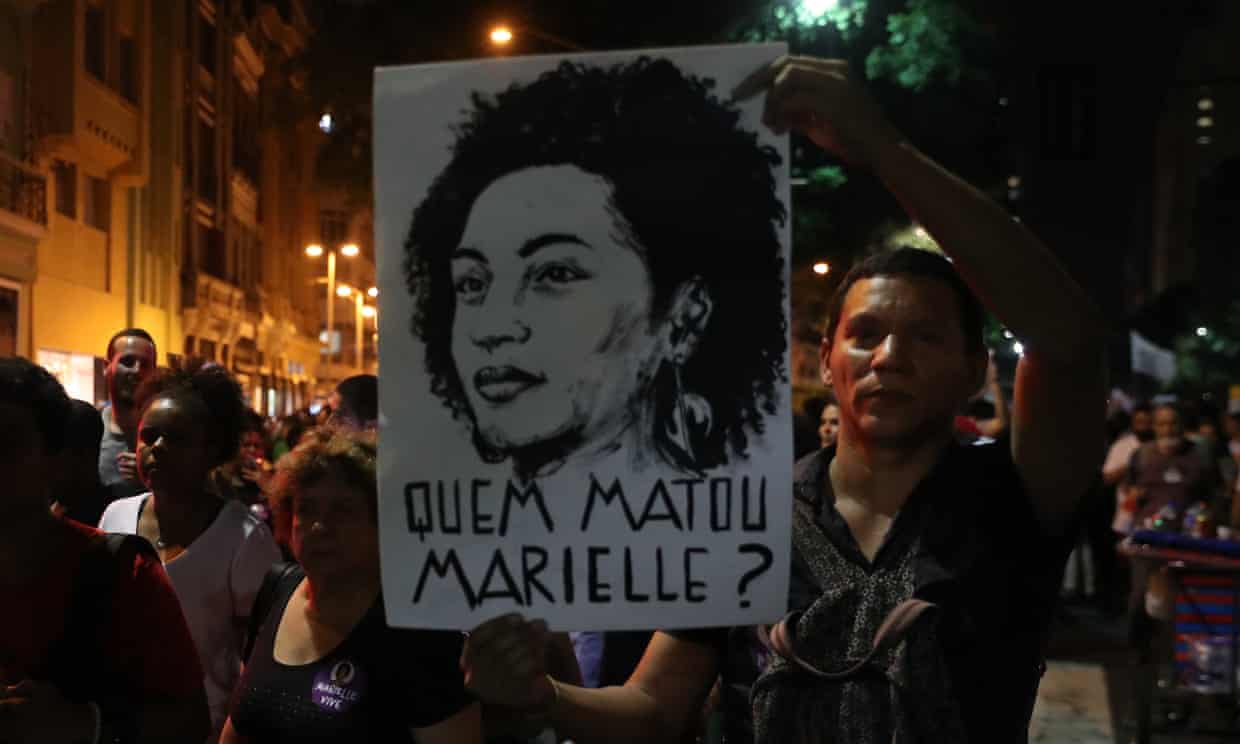
Marielle Franco spoke for Afro-Brazilians, and for that she was killed

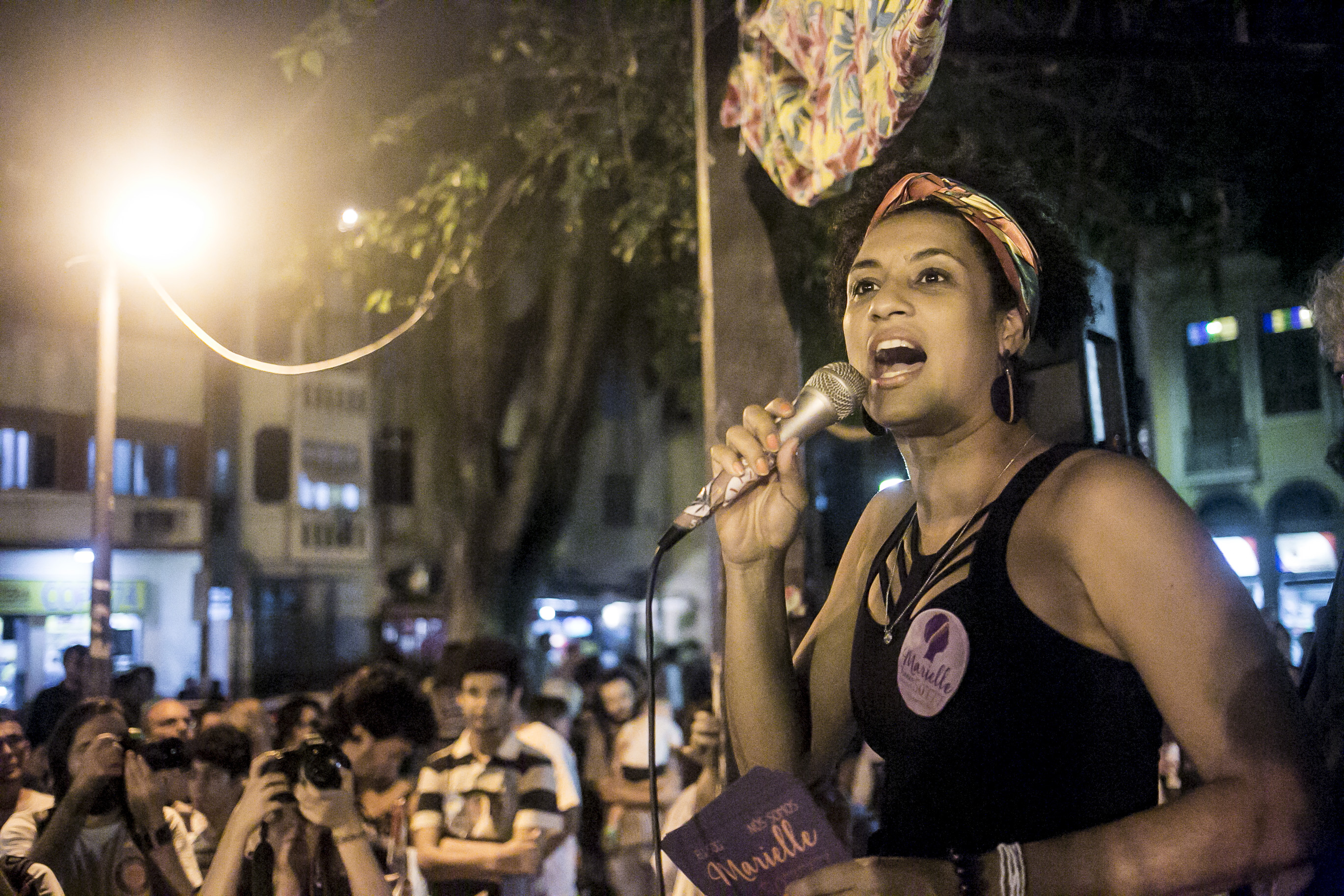
Marielle Franco was gunned down in her white Chevy after giving a speech at Rio’s House of Black Women on March 14th, in what appeared to be an assassination and an attempt to silence what Franco was best known for: speaking out against police brutality on Afro-Brazilians and marginalized people in the favelas in Rio de Janeiro. If those who fired the nine bullets at Franco thought they would silence a movement to address the rampant corruption and racism in Brazil, they were sorely wrong. The next day, tens of thousands of people rushed into the streets across Brazil to protest her murder. Many hoped that her tragic death would shine light on corruption of police officials, violence in the Maré slums between gangs and police and the “federal intervention” of the favelas by President Michel Temer, blaming rising crime as an excuse to put the army in charge of Rio’s state police forces and prisons. Franco was vehemently against the intervention, serving on a council commission to oversee the occupation.

Franco was a light of hope for marginalized people residing in Rio’s slums where violence and police intervention is frequent. A resident of the favelas herself, she worked for a scholarship to Rios Pontifical Catholic University, studying social sciences and graduated with a master’s degree in public administration. She became militant after a stray bullet during a shootout between police and gang members killed her friend in 2005.

A black single mother and a lesbian, Franco fought for single mothers, women, gay rights and favela residents. She addressed the rampant racial inequality and police brutality in Rio, an Afro-Brazilian elected to a government post which has been ruled by rich middle-aged elite white men, in a country where more than half the population is black or mixed race. One woman, an Afro-Brazilian nurse who attended a “Black Genocide” protest in downtown Rio after Franco’s death and who refused to give her name because of fear of police intervention, claimed, “Why am I afraid? Because I’m a black woman, and my life is worth nothing here.”

While Brazil touts being post-racial, believing a black/white divide is expressly imported from America and never happened in the country, critics claim the myth silences all conversations concerning discrimination and violence. Every day, 112 Black or mixed-race Brazilians are killed. Making up 54% of the national population, Black and mixed-race Brazilians account for 71% of all homicides. From 2005-2015, the proportion of Black and mixed-race Brazilians killed rose by 18% while the figure for whites dropped by 12%. Meanwhile, white politicians in power are attempting to divert the cause of Franco’s death away from discussing race. “Her bloodshed can’t be used as an opportune moment to talk about hate. When you talk about a black-white divide, you are contributing to this division,” announced white national senator from Rio Grande do Sul state, Ana Amélia. In 2017, 1,124 people were killed at the hands of the police; 80% of those killed were Black or mixed-race.

Franco denounced police killings of Black favela residences, with special criticism for Rio’s 41st Military Police Battalion, known as “the death brigade” for killing and shooting Black youth. Franco’s last tweet condemned the death of Matheus Melo, a young Black favela resident who was shot coming out of a church with his girlfriend, “How many more people need to die before this war ends?” He was only one of the latest victims in a conflict between drug traffickers, militias and police in Rio state.

Franco’s killers have not been caught. Federal prosecutors in Rio believe the evidence points to corrupt police officers. The bullets came from police ammunition stocks, and the location of her murder seems to have been meticulously chosen, since her killers followed her from the meeting and chose a “blind spot” where street cameras were not functioning. How many more people need to die before this war ends?


(Photo Credit 1: Whose Knowledge) (Photo Credit 2: The Guardian / Marcelo Sayao / EPA)

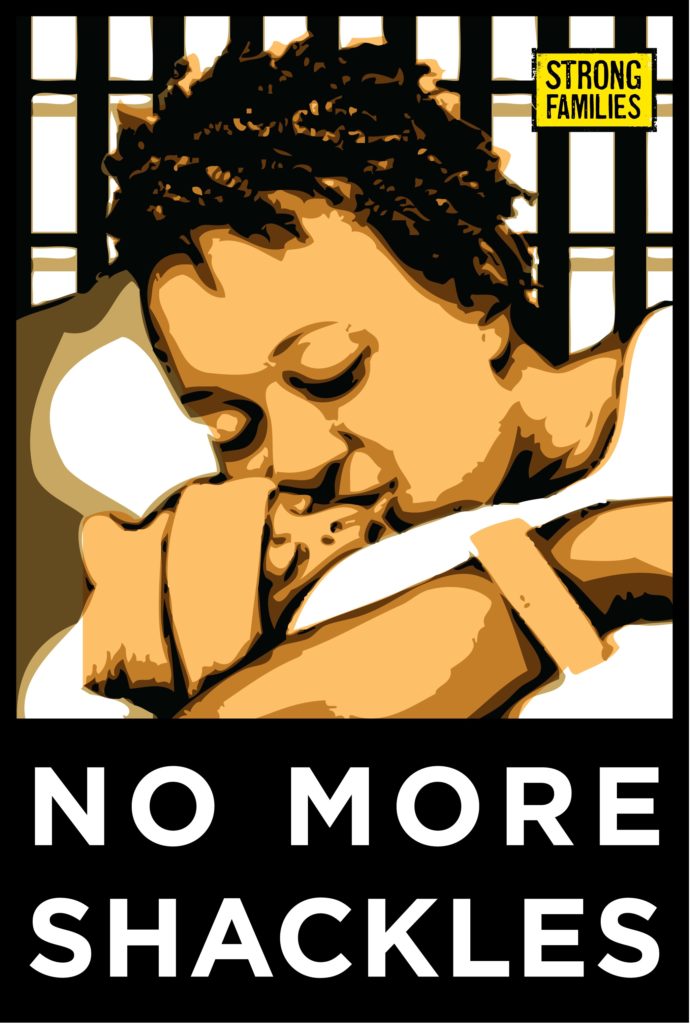
North Carolina Stops Shackling Women (Prisoners) in Childbirth!


Yesterday, March 26, 2018, the North Carolina Director of Prisons officially ended the shackling of women (prisoners) in childbirth. This came after SisterSong and other members of the Coalitions to End Shackling in North Carolina sent a letter to the North Carolina Director of Prisons, which read, in part: “The North Carolina Department of Public Safety prohibits the use of shackling during delivery and yet in recent weeks at least two people from North Carolina Correctional Institute for Women were restrained throughout their laboring process at a local medical center. This was in spite of the concerns of medical staff and the fact that it was in violation of NC Department of Public Safety written policies and legal precedent.” After two months `deliberation’, the North Carolina Director of Prisons agreed. In so doing, North Carolina joins 22 states that currently prohibit or limit the shackling of pregnant women. While there is cause for celebration, why do more than half the states in the United States allow women (prisoners) to be shackled during childbirth?

The letter from SisterSong and the coalition noted that shackling people during and after childbirth is “inhumane and unsafe”; that no state that has banned shackling has suffered any negative consequences; that the American Congress of Obstetricians and Gynecologists (ACOG) has long opposed shackling; that “shackling interferes with the ability to properly treat and care for people and to respond to crisis situations”. Along with doctors, the courts have found that shackling violates the right to be free from cruel and unusual punishment. Further, “with people of color overrepresented in the prison system, this issue falls hardest on people who already struggle with health disparities and higher rates of pregnancy complications and maternal mortality.”

The letter concluded, “We are demanding that the policy be updated to be brought in line with the best practices and recommendations of health professionals and that training be provided to ensure that it is implemented consistently. This practice serves no public benefit. It does, however, risk harmful impacts on individuals and their children. It is not only bad health policy, it is a violation of individual’s human rights.”

Last year in North Carolina, 81 women (prisoners) gave birth … shackled. As of a month ago, North Carolina prisons “boasted” 50 pregnant women.

According to Omisade Burney-Scott, director of strategic partnerships and advocacy for SisterSong, explained, SisterSong wants to ban shackling “throughout the entire pregnancy, so during prenatal care, labor and delivery, postnatal, out to eight weeks and also during breast feeding.” In Kentucky, State Senator Julie Raque Adams filed Senate Bill 133, known as the “Dignity Bill,” which would prohibit shackling of women prisoners in childbirth. Currently, the bill is “one floor vote away” from passage. Georgia and Connecticut are considering bills that would ban the shackling of women in childbirth.

Women prisoners are women. It is wrong and harmful to shackle pregnant women. It is right to support women’s right to health, well-being, and being women. So, thank you to SisterSong and their allies. Thank you to State Senator Julie Raque Adams and her allies. Thank you to North Carolina and Kentucky. Last year, Senators Cory Booker and Elizabeth Warren introduced the Dignity for Incarcerated Women Act, “requiring the Federal Bureau of Prisons to consider the location of children when placing mothers behind bars, expanding visitation policies for primary caretakers, banning shackling and solitary confinement for pregnant women, and prohibiting prisons from charging for essential health care items, such as tampons and pads.” The clock is ticking. End the shackling of pregnant from sea to shining sea.


(Image Credit: Radical Doula) (Infographic Credit: Nursing for Women’s Health Journal)

What happened to Jessica DiCesare? Just another jail suicide in Massachusetts

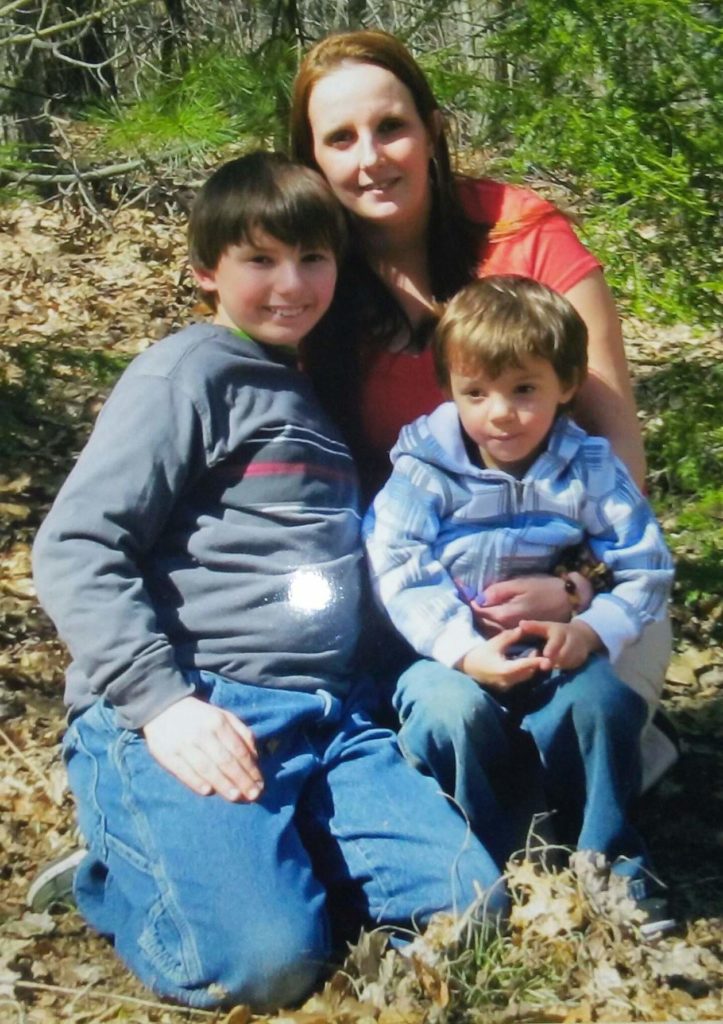
Jessica DiCesare and her two sons, now 15 and 7 years old

What happened to 35-year-old Jessica DiCesare last year? On July 8, 2017, Jessica DiCesare, mother of two, was “found” dead in her cell in the Barnstable County Correctional Facility, in Buzzards Bay, Massachusetts. The investigation officer found a note, which read, in part, “This place is so fucked … this is not justice, nor innocent until proven guilty, nor `good for the common wealth’. We are treated like sub-animals here …. I’m losing my mind / I want to die.” On July 7, following a panic attack, Jessica DiCesare wrote a note to the jail staff, which read, in part, “Being in segregation is deteriorating my mental status, as well as my physical health. I have no prior convictions, no prior jail time, and was placed here almost one month ago. I have PTSD … Being locked in here is bringing my mental health status back 10 years … also having been taken off my meds I have been on. I went from running a successful business to mental deterioration because of being locked up 23 hours a day … I also suffer major depression, bipolar disorder, prior hospitalizations for suicidal feelings and am losing my mind in here.” Am losing my mind in here. Despite the pleas from a social worker who had read the note, the supervisor of mental health clinicians decided that DiCesare did not require any special attention.  What happened to Jessica DiCesare? The routine torture of women in jails in Massachusetts and across the United States. On July 11, 2017, Jessica DiCesare was pronounced dead.

Jessica DiCesare was initially picked up for drug and theft charges. Her bail was set at $500. Her mother, Sue DiCesare, and brother, Richard DiCesare decided not to pay. Since high school, Jessica DiCesare had struggled with substance abuse and mental illness. Mother and brother both thought Jessica DiCesare would be safer and maybe get some help while in jail awaiting trial. Now, Sue DiCesare says, “The guilt we feel for not bailing her out is huge.”

From schools to streets to courts to jails and prison, everyone who comes into contact with the aptly named criminal justice system is meant to struggle with this guilt. It’s an additional fee levied on “those who chose”, chose to be poor or of color or immigrant or woman or LGBTIQ or living with mental illness or living with drug addiction. Those who “made poor choices” carry an impossible debt they never incurred. You know who doesn’t feel huge guilt. The medical supervisor at Barnstable County Correctional Facility, who insisted that Jessica DiCesare did not warrant special attention.

And so now, jail officials intone their version of “prayers and thoughts”, namely that jail is not designed to be a mental health institution nor an addiction treatment facility . “Every suicide is a tragedy.” How long before the individual tragedies are seen, collectively, as an epidemic? At what point do we recognize that jail is the public health crisis? When do Sue and Richard DiCesare stop being made to feel guilty?

In 2017, fourteen people died of suicide in Massachusetts’ prisons and jails, the highest number since the last peak, in 2014. Of the 14, 4 were in Massachusetts prisons and 10 were in Massachusetts jails, where prisoners include people awaiting trial and people sentenced to up to 2 ½ years. Massachusetts houses about 20,000 people in jails and prisons, with about 10,000 in each. Three weeks prior to Jessica DiCesare’s death, 21-year-old William Jarosiewicz “was found dead” in his cell at the same Barnstable County Correctional Facility. Jessica DiCesare joins the circle of  Tanna Jo Fillmore, Madison Jensen, Madaline Christine PitkinSarah Lee Circle BearChristina TahhahwahAmy Lynn CowlingAshley EllisKellsie GreenJoyce CurnellSandra BlandKindra Chapman, Kellsie Green and so many other women who have “been found” in America’s jails. Jessica DiCesare begged for help; her family pleaded for help. When did asking for help become a death sentence?


(Photo Credit: Cape Cod Times)

It’s Hell to Work at the Happiest Place on Earth

Disney is supposedly the cornerstone of every American family’s dream; two and a half kids, a white picket fence, and a family vacation to the Happiest Place on Earth. But the reality of Disney World employees that make your trip extra magical is anything but happy: low wages, employee poverty, a weakened union, and company-proposed “bonuses” that force workers to jump through additional, strenuous hoops in order to receive their justly deserved benefits.

The entire company posted a quarterly net income of $4.42 billion in February and, thanks to the Republican tax cut, the company posted $9.3 billion dollars for 2017. Any proposed bonuses of $1000 for lower level employees would only constitute 8% of a nearly $1.6 billion expected windfall from tax cuts, and the promised bonuses are now bargaining chips meant to force the unions that represent Disney World and Disneyland to agree to lower wage increases of only $.50 or 3%, whichever is larger. Already, the 80,000 nonunion workers saw $250 addition to their paycheck, with a promise of $750 to complete the bonus; the union workers, numbering 38,000 employees, have seen nothing. For a company reported to have pulled in nearly $10 billion in the last year, workers who make the parks run smoothly every single day deserve to have living wages, without the fear of homelessness or food insecurity.

Many employees do suffer from being homeless and are food insecure. For example, nearly 85 % of cast members make less than $15 per hour, and 11% have experienced homelessness in the past two years. Wages at Walt Disney World are 68% lower than the national average, some working for as little as $13,000 per year. Meanwhile, in an attempt to limit the number of housekeeping employees, predominantly women, Walt Disney World offers guests “incentives” in the form of $40 Disney gift cards in exchange for declining housekeeping services each day. Though declining is still in its testing phase, it is a way for the company to save money and cut costs, at the expense of the “mousekeepers” who are employed at the resorts.

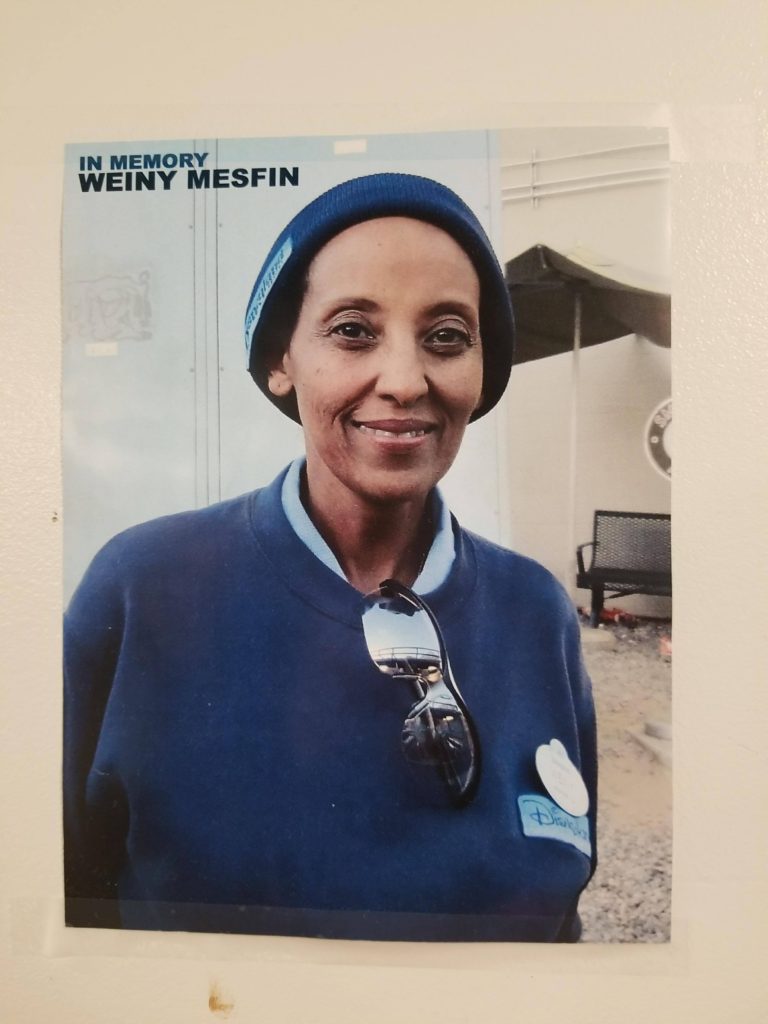
While wages at the park for most employees are subpar, housekeepers and custodians at both American parks suffer the most from the lack of a living wage, as seen in the story of Eritrean immigrant Yeweinisht “Weiny” Mesfin. A loyal night custodian in Disney’s California Adventure in Anaheim, Mesfin went missing after Thanksgiving weekend in 2016. She was found dead, on December 19 in her car outside a 24 Hour Fitness Gym. She had suffered a heart attack on November 30, was struggling with homelessness and living in her car in front of the gym she had a membership with so she could take a shower for work. A reliable employee, she worked six days a week, at 48 hours a week, and was unable to afford an apartment even though she worked full time hours. Three days after she went missing, she was automatically terminated as per company policy.

Angered by Disney’s dismissive attitude concerning the plight of Disney employees struggling to secure wage increases sufficient to pull them out of poverty, former custodian and friend of Mesfin, Vanessa Muñoz, wrote of her friend’s death, nearly a year later, “Someone out there on third shift at Disney now wears my Weiny’s beanie, her sweater, shirts and pants. Someone out there is about to give as much as Weiny did for a company that refuses to pay the employees an affordable living wage.” It may be too late for Mesfin, but maids and other employees at Walt Disney deserve living wages as they provide a magical experience for all guests to the parks.

If you could, please sign this petition in solidarity with Disney workers, who are being strong-armed into signing a contract against their interests for the bonuses that they were promised. The Walt Disney World Office number is 407-939-2273. Tell them Weiny sent you. #StopDisneyPoverty

(Photo Credit: OC Weekly / Vannesa Muñoz)

Who will honor 5-year-old Lumka Mketwa, another State execution by pit latrine?

Lumka Mketwa

“Who will honor the city without a name
If so many are dead … “ Czeslaw Milosz, “City Without a Name

“Childhood? Which childhood?
The one that didn’t last?”  Li-Young Lee, “A Hymn to Childhood

On Monday, March 12, 2018, five-year-old Lumka Mketwa went to the toilet at her school, Luna Primary School, in Bizana‚ in the Eastern Cape, South Africa. She never returned. She wasn’t found until the next day. When authorities “reported” her death, they said her name was Viwe Jali. Lumka Mketwa went to the bathroom and drowned in a pool of human shit. No one even noticed until she didn’t show up for her after school transport. Then her parents and the community searched frantically. They found her the next day. The State never came. The parents did, and when they finally found her, the State refused her the dignity of her own name. They might as well have named her Michael Komape, the five-year-old child who, in 2014, drowned to death in a pit latrine at the Mahlodumela Primary School, in Limpopo, South Africa. In the Eastern Cape, as in Limpopo, the State never came. The State refused to acknowledge and refused to act. As with Michael Komape, Lumka Mketwa did not fall to her death in a pit latrine. She was pushed, by a State that decided it had more important issues to deal with. In 2014, five-year-old Michael Komape did not fall to his death. He was murdered. In 2018, five-year-old Lumka Mketwa did not fall to her death. She was murdered.

And then the speeches began. The South African Human Rights Commission pronounced, “Only three years after the tragic and preventable death of 5-year-old Michael Komape‚ the failure of the State to prevent a reoccurrence and to eradicate the prevalence of pit latrines in schools is unacceptable.” Basic Education Minister Angie Motshekga expressed “shock”, “The death of a child in such an undignified manner is completely unacceptable and incredibly disturbing.” The provincial education spokesperson first noted that the Executive Council had donated to the child’s funeral and then went on to say that what was truly “shocking” was that Luna Primary is “a state-of-the-art school, with good toilets” and yet, somehow, pit latrine toilets. Everyone is “shocked.”

According to the most recent National Education Infrastructure Management System report, published in January 2018, 37 Eastern Cape schools have no toilets whatsoever. None. 1,945 Eastern Cape schools have plain pit latrines, and 2,585 have so-called ventilated pit latrines. The Eastern Cape has 5393 schools.

Of the nine provinces, only the Eastern Cape has schools with no toilets whatsoever. But, of the 23,471 schools under the aegis of the national Department of Basic Education, 4358 have only pit latrines. KwaZulu-Natal’s 5840 schools boast 1337 schools with only pit latrines, while of Limpopo’s 3834 schools, 916 have only pit latrines. Of the 4056 schools in Gauteng, the Northern Cape and the Western Cape, none has only a pit latrine. None. Zero. This is the state of the art.

Lumka Mketwa’s family has serious questions. We all should have serious questions, rather than hollow condolences. Let’s start with the children who have not yet fallen to their deaths into schoolhouse pit latrines. At the very least, where is the map of these latrines? Where is the actual action plan to remove all of those death traps? Where is the Day Zero for school house pit latrines? Why is this not a national emergency? How many more children have to die and how many more families have to be haunted? Michael Komape’s family is haunted, to this day. Lumka Mketwa’s family is haunted. The State is not haunted. If it were, it would act.

Her name is Lumka Mketwa and she is five years old.” She now resides in that city without a name where so many children are dead. Which children? Which childhoods? Who will honor Michael Komape? Who will honor Lumka Mketwa?


(Photo Credit: Times Live)

Where are transgender individuals in intersectional Feminist, Women’s, Gender and Sexuality Studies?

On Tuesday March 6th, 2018, I attended a 45th Anniversary celebration for the Women’s, Gender and Sexuality Studies Program at The George Washington University. The department had brought alumna Lisa Bowleg to give a presentation on her work in the field of Women’s, Gender and Sexuality Studies, with an emphasis on intersectionality. As Dr. Bowleg gave her presentation on her work researching HIV and condom usage in different types of Black communities, we came to a slide describing her work with Black Gay, Bisexual, and Lesbian individuals. The acronym that stood starkly at the top of the large projected screen was “LGB.” It took me a second, but I looked at the acronym again, specifically excluding that last, small letter “T”. Now, the slide only discussed Dr. Bowleg’s work with Lesbian, Gay and Bisexual people, which may be the reason she did not use the “T” at the end of this acronym. But if you are going to use such a specific describer for talking about queer people, why not just say “Lesbian, Gay and Bisexual people” rather than “LGB” people? The longer the presentation went on, the more I noticed the specific exclusion of transgender individuals from the otherwise incredible and interesting research Dr. Bowleg was conducting. I spent the rest of the presentation formulating how to express my unease at the exclusion of the “T” on her slide that had been specifically set aside for members of the LGBTQIA community. Her presentation came to an end, and I tentatively raised my hand.

“Dr. Bowleg, I see you’ve done research on HIV and condom usage in the Black lesbian, gay, and bisexual communities. Have you ever done research in regard to, or come across other works, that delve into these same issues with the Transgender community as well?” Dr. Bowleg’s quickly responded,  “Well, yes, we did come across a few individuals, but there were only four, and so I did not include them in my research.”

Four. Four? My mind was reeling. Certainly, there are more than four Black transgender people, especially in Washington, DC. And even if there were only four black transgender people, wouldn’t their stories and experiences be worth including in such an important study on the prominence of HIV and condom usage? I understand that I have not done extensive research, nor do I have a Ph.D. in anything, but, at the very least, I understand that saying “Oh, I could only find 4 black transgender people” is unacceptable research methodology as well as discriminatory towards transgender individuals. Especially in a discussion with so much emphasis on intersectionality, why were transgender individuals suddenly not worth including? Being a non-binary person in a Women’s Gender and Sexuality Studies program, I have come across similar situations in my classes. In Feminist and Women’s studies, researchers often see the word “gender” and think on a binary scale, Man vs. Woman. I have brought this issue up with professors before and been told, “There simply isn’t enough research on transgender and non-binary people”. Well, I would like to call bullshit. I am tired of being swept under the rug, and I am tired of being excluded from the discussion.

Across the globe, transgender individuals, and specifically transgender women of color, are the most at-risk group of people for violence and discrimination. We need to be more inclusive of all members of the LGBT community. Our research does as well. When professors tell me there is “not enough” research to warrant a discussion of non-binary and transgender individuals, it is the explicit exclusion of transgender individuals, and passivity towards the importance of their inclusion in research such as that of Dr. Bowleg, which prevent that discussion from happening.

(Image Credit: Equality Archive)

Maira Verónica Figueroa Marroquín leaves El Salvador’s hell for women, Ilopango Women’s Prison

Maira Verónica Figueroa Marroquín and her father embrace

Around the world this week, the news reported that Maira Verónica Figueroa Marroquín was finally free … or at least out of prison. Headlines read “Salvadoran woman jailed for stillbirth set free after 14 years”; “El Salvador woman freed after 15 years in jail for abortion”; “Salvadoran Woman, One of ‘Las 17,’ Freed After Spending 15 Years Behind Bars Following a Miscarriage”. Maira Verónica Figueroa Marroquín is 34 years old. In 2003, Marroquín became pregnant and suffered a late-term miscarriage. She was arrested and convicted of aggravated homicide and sent to Ilopango Women’s Prison. Maira Verónica Figueroa Marroquín has spent more than half her life in Ilopango. This week, her sentence was commuted, though not overturned, and she walked out and greeted her family, friends and supporters. Maira Verónica Figueroa Marroquín was greeted by Teodora Vasquez. In February, Teodora Vasquez was released, after ten years in Ilopango Women’s Prison. Teodora Vasquez is 35 years old. In El Salvador, the intersection of women’s rights, women’s autonomy, and the State is marked by el Centro de Readaptación para Mujeres de Ilopango, the Ilopango Center for Women’s Readaptation. Call it the Ilopango Women’s Prison, El Salvador’s special hell for women.

Starting in 1998, El Salvador banned all abortions. Previously, abortion had been illegal but generally not prosecuted.  El Salvador is one of six countries to ban all abortions. El Salvador opened hunting season on pregnant women; any woman who suffered a miscarriage was suspected of both having had an abortion and of having committed murder. Between 2000 and 2014, over 250 women were reported to the police. 147 women were prosecuted.  49 women were convicted – 26 for murder and 23 for abortion. Salvadoran women’s groups, such as the Citizen’s Group for the Decriminalization of Therapeutic and Ethical Abortion and Abortion for Reasons of Fetal Anomaly and the Feminist Collective, have waged a mighty campaign, and the release of Maira Verónica Figueroa Marroquín and Teodora Vasquez owes much to their persistent organizing.

Meanwhile, the absolute and total ban of abortions is predictably only partial: “The majority of the cases were referred to the police from hospitals—specifically, from public hospitals. Indeed, not a single hospital report to police came from the country’s private practice doctors or private hospitals.” The “totality” of the ban applies only to those women dependent on the public health system.

This is Ilopango Women’s Prison three years ago: “Ilopango is squalid and cramped: Overcrowding stands at nearly 1,000 percent, according to some estimates. Women sleep some 40 to a cell; one prison guard told me that over 100 children under five live there with their mothers.” In 2015, Ilopango held 2000 women; it was designed for 225 women, maximum. Women slept five to a bed, or on the floor. Water was scarce, and medical care even scarcer. Prisoners relied on their mostly impoverished families for pretty much everything. Since then, the situation has only worsened. Everyone “operates between resignation and despair.”

This week, Teodora Vasquez and Maira Verónica Figueroa Marroquín embraced and celebrated freedom. They also decried the 24 women convicted of homicide abortion who remain in Ilopango and promised to “continue supporting those women trapped inside who are paying for a crime we never committed.” For the women who suffered miscarriages, the viciousness of the State is a crime. For the women, all the women, who ended up in Ilopango, the sentence of death-in-life is the crime, not abortion, not miscarriage, not this or that act, not being a woman. Ilopango is the crime.

Ilopango Women’s Prison


(Photo Credit 1: Univision / Reuters / Jose Cabezas) (Photo Credit 2: New York Times / Meridith Kohut)

Women are Tunisia’s revolutionary guards: “Equality is a right, not a favor!”

Last week, women filled the streets to demand equal rights, women’s rights, civil rights, employment rights, social rights, human rights, and power. Indigenous women in Ecuador linked arms across the Atlantic with women in Turkey who, in turn, linked arms with women in South Sudan who linked arms with women in the Philippines who linked arms with women in Australia, and all points between and beyond. In Pakistan, women organized the Aurat March, or Women’s March, “a revolutionary feat for Pakistan”. Initially planned as a single march, by March 8, women across Pakistan were on the streets, marching, resisting misogyny and patriarchy. Women in Spain called for a 24-hour feminist strike, una huelga feminista, and the State shut down. More than five million joined the feminist strike. In Spain alone, women marched and refused to work and stopped work in over 120 cities. The Spanish feminist strike was a historic first for Spain … and beyond. On Saturday, March 11, in Tunisia, women marched in another historic first, a march for women’s equality in inheritance rights, a first-ever demand not only for Tunisia but for the Arab world. In Tunisia, equality is a right, not a favor.

On Saturday, in Tunis, women chanted, “Moitié, moitié ; c’est la pleine citoyenneté!”; “Pour garantir nos droits, il faut changer la loi!”; “L’égalité est un droit, pas une faveur!”. “50-50 equals full citizenship!” “ To guarantee our rights, we have to change the law!” “Equality is a right, not a favor!” As with the feminist strike in Spain, in Tunisia, women explicitly framed their action as a feminist intervention into patriarchy. As with the marches and actions everywhere, in Tunisia, the women understood their march to be local, national, regional and global. The immediate issue was inequality in inheritance, where men inherit twice as much as women. The women insisted that their action occur in a historical context, a historical context that encompasses the future as much as the past.

In January 2018, Tunisian women mobilized, protested and ignited the anti-austerity protests, under the banner, “What are we waiting for?” “Qu’attendons-nous?” “فاش نستناو ؟” In March, women are again filling the streets; rocking the nation; demanding autonomy, equality, power; seizing the moment. Today, as ever, women are Tunisia’s revolutionary guards.


(Photo Credit 1: Hassene Dridi / AP / SIPA / Jeune Afrique) (Photo Credit 2: Reuters / Zoubeir Suissi)

Pay raises, affordable healthcare: Teachers strike across the country

West Virginia teachers, wildcat strikers, on the move

When teachers in West Virginia closed every school in the state for nine days to strike for better wages and better healthcare plans, other educators, and the public around the country, took notice. One of the key issues of the West Virginia teachers was the Public Employee Insurance Agency, or PEIA, and the increasing payments from employees’ paychecks alongside the lack of quality take-home pay for teachers. West Virginian teachers rank 48th in the country in terms of pay, and any raise agreed upon between the West Virginia Education Association and the state would not have been enough to cover the rising PEIA costs.

Instead of caving to the governments’ demands, and suggestions to return to work from the union leaders, West Virginia teachers continued striking two days longer than the union had wanted; when a tentative “agreement” for a five percent raise for teachers and three percent raise for public sector workers was announced by union leaders, the teachers balked, rejecting the agreement and voting to continue the strike, shouting, “We are the union bosses!” and “Back to the table!” The fear would be that the raises would not do anything to fix the more pressing concern of rising healthcare costs, which, teachers argued, would only have short term impact. Chants echoed at the state capitol while the Senate was in session, “Pass that bill or we walk out!” “Hey, hey, whaddya say, fund PEIA!” In the end, instead of a watered down 3-4% raise, the Senate passed a 5% raise and will consider long term action for fixing the state’s public employee healthcare system.

News of the success in the teachers’ strike seems to be emboldening educators in other states. Oklahoma teachers, the lowest paid in the country, are considering a strike, the first major strike since 1990, to demand higher pay from the State Legislature. Teachers in the state are so underpaid that there has been an educator crisis, forcing the state the allow for three day weekends to entice teachers to work in Oklahoma.

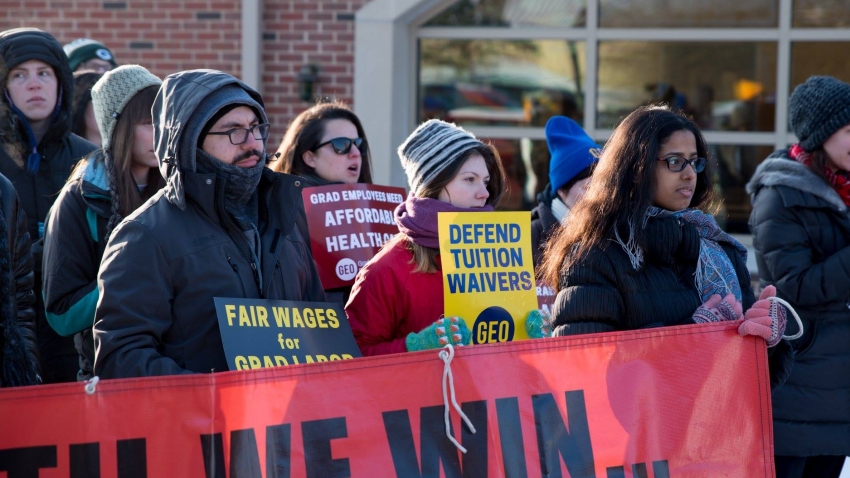
On February 26, graduate student workers at the University of Illinois at Urbana-Champaign launched a strike to protect tuition waivers, which the university is planning to roll back by allowing academic departments to exclude students in their program from being members of the Graduate Student Union (GEO) bargaining unit. The strike also aims to making graduate education accessible for all students, demanding comprehensive childcare, healthcare and financial provisions to keep access to graduate level education open to poor and working-class people. The “Education for All” proposal was announced on day four of the strike.

In New Jersey, Jersey City educators have voted to strike, demanding relief from the rising cost of insurance. The union and teachers are demanding a reform of a Christie Era law, signed in 2011, called Chapter 78. The law required teachers to begin paying for their healthcare costs by percentages that increased over a four-year phase-in. Now that the four years are over, the district is permitted to allow teachers to pay a lower contribution than Chapter 78 requires, something the school board does not want to give in on. Any raises from the contract would not cover the cost of the healthcare payments, as one special education teacher pointed out, “I’m making less than I was five years ago.” As of today, the teachers are still working without a contract.

The rising tide of labor, like waking a slumbering giant, is a welcome relief form the ongoing attack on unions across the country, especially during the Trump administration. This time, instead of relying on union bosses, teachers relied on a collective, on each other, and on public support. And they’re winning.

University of Illinois at Urbana – Champaign graduate students, strikers, on the move


(Photo Credit 1: In These Times / West Virginia Education Association / Facebook) (Photo Credit 2: In These Times / GEO / Facebook)