BTS: Caught between an entertainment rock and a military service hard place

The South Korean boy band, BTS, continues their domination of the music charts. On May 21st, they released a new all-English pop song, “Butter,” which has broken a number of records because of their devoted fan base and the fact that it’s a catchy song. (You, too, should stream “Butter”). While BTS’ musical successes continue to set them apart as leaders in the global music industry, their domination can only continue for so long. Fans know that a concern for many male groups is their time away from music and in South Korea’s mandated conscription. For 18 months, male South Korean citizens are required to enlist in the military by the time they are 28 years old. However, a recent change in the law prompted by the success of BTS, allowed individuals who elevate the country’s global reputation to postpone their mandated time in the military by two years, when they are 30 years old. The reason for this mandate is because the Korean War never ended and at any point, active combat between North Korea and South Korea can start again. As with many wars in Asia, America is involved; therefore, BTS and other male groups straddle an in-between of success determined by America. 

In a previous blog post, I noted the popularity and dominance of BTS in the American music industry that secures them the title of one of the most successful Korean male acts. Their success as global superstars is tied to their global dominance which is primarily denoted by Western accolades: they are Grammy-nominated and have topped the Billboard charts since the release of their new song, “Butter.” Interestingly, it is these accomplishments, determined by American critics, that define BTS as one of the most successful male group acts. On the other hand, the possible end of their career is military service for 18 months that is influenced by American intervention in the Korean War.

A brief overview of the Korean War: after World War II, America’s concern about communism forced them to focus their foreign policy on containing it. Asia and specifically, Korea was the site of this war on communism when the US and “the Soviet Union agreed to temporarily divide Korea and oversee the removal of Japanese forces” (National). The Soviet Union occupied the North and was organized as a communist government by Kim Il Sung; the United States occupied the South and was organized as the Republic of Korea (National). It was primarily these concerns about the growth of communism around this time and in Asia that prompted the US to intervene, and unfortunately, Korea was a puppet of some sorts for the stronger powers of the US and the Soviet Union. The outcome: a military and humanitarian disaster. Many lives were lost on both sides with many civilians caught in the crossfire and the separation of families, consequences that can’t ever really be resolved or healed. 

BTS is similarly caught in a crossfire in both their entertainment and military obligations. While they were a largely successful act before they caught the attention of the US market, it was this very attention that placed them in their own stratosphere as global artists. It capitulated them into a whole new level of fame and thousands of new loyal and dedicated fans. On the other hand, the presumed end of their careers is tied to their military service which the US has played a part in. This is an example of the damaging effects of US imperialism (if it wasn’t clear before) and how the US continues to dictate the people of the countries that it has intervened in. 

Recently, President Biden was abroad building a foreign policy agenda focused on repairing alliances and re-establishing America’s leadership on the global stage. Biden’s approach is focused on ensuring that any foreign policy decisions are made with domestic impacts in mind. While it is important that the President of the United States leads with clear commitment to protecting American citizens abroad, it might be worthwhile to also lead with consciousness of the effects for the very people and countries in which the US believes it necessary to establish its presence.

(By Michelle Nguyen)

(Photo Credit: UNICEF)

ICE is the super spreader agency

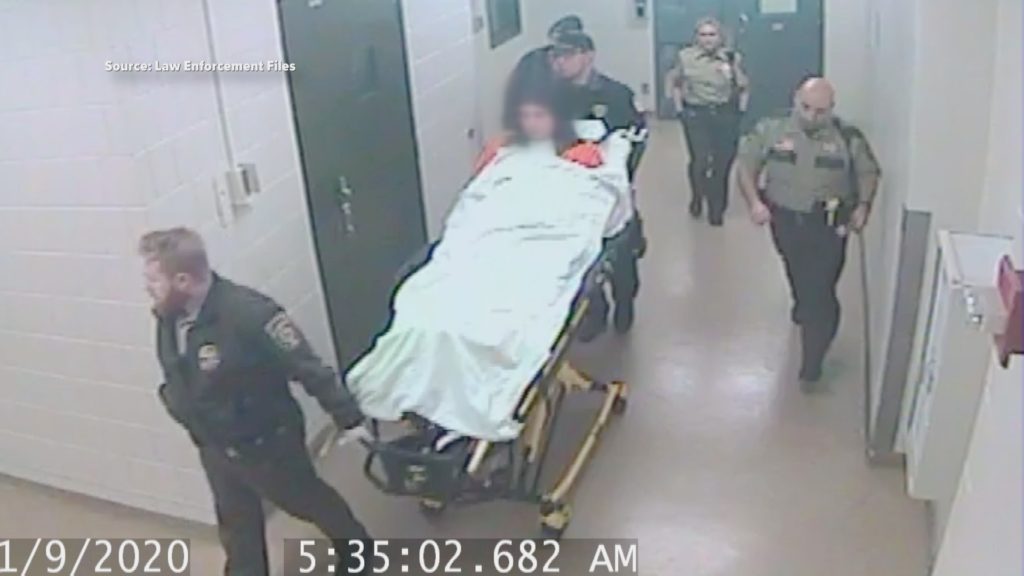
The Washington Post reported that more than 8 percent of individuals held in migrant detention centers have contracted the coronavirus, proving that ICE is the super spreader agency. This update comes months after aCongressional Oversight Committee found that migrants died after receiving inadequate medical care in detention centers. In fact, in 2020 ICE detention centers had the highest annual death toll of people in ICE custody since 2005, with 21 deaths—8 of which were caused by COVID-19. Just this week, 47 children tested positive for coronavirus at a temporary migrant facility in Long Beach. Overall, deaths in detention have increased sevenfold since 2018, despite a marked decrease in the population of migrants living there.

Why is ICE the super spreader agency? Why is ICE unable, or unwilling, to protect the health of migrant detainees? The state of COVID-19 in prisons, jails, and detention centers is an illustration of state necro politics at work. Achille Mbembe describes necro politics as, “the use of social and political power to dictate how some people may live and how some must die.” This framework questions: Who lives, who dies, and how are state actors implicated in the outcome?

In the US, the pre-existing structural vulnerabilities faced by migrants are compounded by statuses of illegality that further restrict access to healthcare and community-based services. In detention, migrant health is deprioritized due to their criminal status. The state weaponizes social notions of (il)legality by asserting visibility or invisibility, presence or absence, according to its interests. In the case of transnational migrants, the state’s absence is felt through neglect and invisibility, ignorance and intentional abandon. ICE enforces large-scale detainment while failing to account for the health and safety of those confined.

Clearly, carceral spaces are particularly susceptible locations for COVID-19 transmission. And yet, ICE continues to detain migrants in large numbers. The agency does not even have enough spaces in detention for all the migrants it imprisons. Overcapacity further complicates health promotion measures, especially in relation to COVID prevention. A lack of resources leads to inappropriate medical responses to health emergencies. The underdevelopment of medical capacities and frequent documentation of “health emergencies” in detention proposes the question: Does ICE even try to protect migrant health and limit COVID-19 transmission? If it really intends to protect migrant health, wouldn’t the logical approach be decarceration? After all, incarceration is the antithesis of social distancing.

Migrants in detention are subject to intersecting sources of acute violence: the violence of COVID-19 and exposure to illness are compounded by the violence of incarceration. The inability to exert bodily autonomy—to isolate, protect, and remove oneself from sites of COVID-19 exposure—is another source of violence. The fear of potential exposure to the virus, without any way to fully protect yourself, is paralyzing. Despite being the most recent and publicized threat to migrant safety, COVID-19 exposure is just one danger to migrant health. Suicide rates continue to rise in detention centers. Research shows that detention centers are dangerous for women’s health and rights. Trans women are particularly vulnerable to abuse, illness, and death in detention centers. Why is the criminalization of migration prioritized over the safety of migrant bodies?

The dehumanization of migrant communities correlates to their danger in detention. Each day, new facts and statistics regarding a rising number of migrants crossing the border arise in the media. A “number of unaccompanied children,” “US border surge,” or a new “wave of migrants” are coming to the US in “record” numbers. How does our rhetoriccontribute to the dehumanization of migrants? Should we use these words to describe human beings? “The rhetoric framing immigration prisoners as criminals disassociates prisoners from those who may influence their wellbeing, leading to treatment of confined migrants as dangerous and disposable.” Through this rhetorical process, the state “creates illegality,” inviting mistreatment and exclusion for a community depicted as criminal.

This rhetorical framing manifests in the poor quality of care and abuse prevalent in detention centers. How much more compelling is it to describe a “wave of migrants” as a “group of persecuted, oppressed vulnerable men, women, and children seeking economic, social, and political security from a neighboring country”? Perhaps even this description fails to sensitize opponents. Nonetheless, it is our responsibility to put names to the “waves” and “surges” in an attempt to acknowledge the grief experienced by communities of color across the United States—migrants whose loved ones were not “martyrs” but casualties of state policy and carceral beliefs: Anthony Jones, Felipe Montes, Jesse Dean, Roxsana HernandezMaria Celeste Ochoa Yoc de Ramirez, Johana Medina Leon, and many more.

(By Alex Groth: Alex Groth, a young advocate, is passionate about deconstructing migrant detention centers and promoting safer, more dignified alternatives to incarceration.)

(Image Credit: Alex Groth)

Why do landlords have so much discretionary, and ultimately fatal, power?

Yesterday, Virginia’s Secretary of Finance Aubrey Layne informed the Virginia House of Delegates’ Appropriations Committee that the Commonwealth of Virginia is looking at a $2 billion surplus. The Virginia state legislature will meet in special session, starting August 2, to decide how to divide the Covid relief moneys. No matter what they decide, $2 billion is a lot of money. And yet … and yet people concerned about eviction are worried, very worried. Why? Partly because the money in Virginia, as elsewhere, has moved at a snail’s pace. The process of application is cumbersome and, for many, almost impossible. The scale of demand has far exceeded the capacity of state agencies. But there’s something else, something more structural than agency capacity and poorly designed procedures: landlords’ discretionary power. 

Virginia has more than a billion dollars in aid for people behind on rent”. Again, that’s a lot of money, and, again, people who need that money and their allies, communities and networks are worried. Why? “To tap into $1 billion worth of federal aid earmarked for Virginia, tenants or their landlords must proactively apply, and there’s no longer any rules requiring property owners to cooperate.”

Fairfax County, in northern Virginia, is the second richest county in the United States, a close to its neighbor, Loudoun County. Despite its great wealth, and despite the fact that it has access to great sums of rent relief money, Fairfax County officials and advocates are worried about eviction. Why? “Although Fairfax officials and other stakeholders say there’s plenty of emergency rental assistance to help low-income residents, they are concerned that it’s taking too long to get that money to landlords. County officials said that even if the rental assistance is available, landlords may decide it’s not worth it to wait months to receive the overdue rent and may evict their tenants anyway.”

Landlords may decide it’s not worth it to wait months to receive the overdue rent and may evict their tenants anyway.

Despite all the research and all the public discussion of the intimate link between transmission of the pandemic and eviction, between health and housing more generally, landlords still get to decide whose life is `worth it’ and whose life is not worth it. Do not ask what it is … 

Across the country, local jurisdictions are responding to this injustice. Some are instituting “just cause” eviction restrictions, others are going with right to counsel. Philadelphia, today, approved legislation to restrict landlords’ decision-making process. From now, landlords will not be able to deny potential tenants just because they have low credit scores or past evictions or evictions filings. The landlords’ process will have to be transparent and rational. Housing is not only a right, it’s also a matter of life and death, and that matter is passed down from one generation to the next. 

How did landlords become the arbiters of life and death, in the midst of a pandemic … or ever? Where does landlords’ discretionary power come from? And why and h ow did we let this happen? On one hand, the answer is in decades of real estate driven urban economies, that reward White homeowners and punish Black and Brown renters, creating an ever wider racial wealth gap, that is also a death gap. Some live long, others are “not worth it”, and the necropolitical maps of `urban development’ proceed. At its source, the concept of landlord is the power of a lord, “the male head of a household; a man who has authority over servants, attendants, or slaves.” It’s time to rewrite the terms and change the power. Our lives are worth it.

(By Dan Moshenberg)

(Photo Credit: NBC Washington)


Welcome to the USA, where we routinely shackle children!

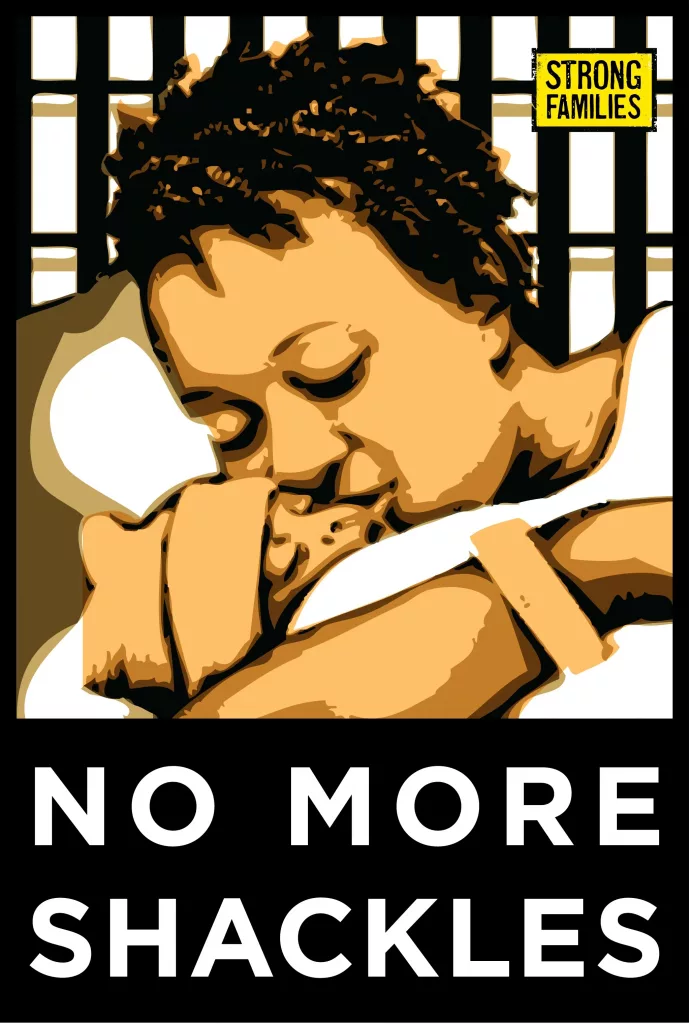
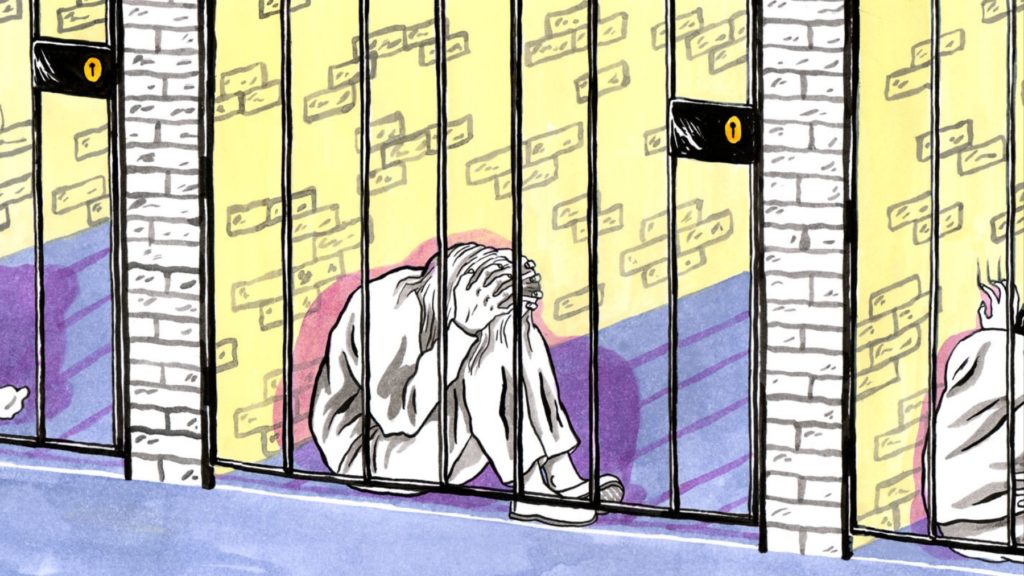
Minnesota lawmakers could end routine shackling of children in court”. Minnesota legislators are currently debating a bill that would end the routine shackling of children in court. You know what routine means? “Acquisition of skills through practice (as opposed to academic study)”. When public defender Sarah Ellsworth greets a client, a ten-year-old child, in shackles, what does she say? “Small steps. It breaks my heart.” The children need to learn that, if you don’t want to fall on your face and your legs and belly and arms are shackled, you must take small steps. Welcome to the United States where this routine is the lesson we teach certain children. 

Up to the present, this routine shackling of children hasn’t been deemed important enough to merit any kind of uniform legislation or guidance. Thus, some counties don’t shackle juveniles, others shackle children at the discretion of the judge, other routinely shackle children. As of July 2019, 32 states including the District of Columbia limited the indiscriminate use of restraints on children in court, but even there the guidelines are fairly inconsistent

So, some counties indiscriminately shackle and some counties … discriminately shackle. Of course, the whole system is based on discrimination, anyway, as a study released earlier this year suggests. The national youth incarceration rate is 138 per 100,000. The rate in Minnesota is 116 per 100,000. At the national level, for every 83 White children incarcerated, 383 Black children are incarcerated. That’s a disparity of 4.61. In Minnesota that looks like this: for every 56 White children incarcerated, 473 Black children are sent behind bars. That’s a disparity of 8.45. That is the eleventh worst in the country (New Jersey has the worst). Nationally, for every 83 White children incarcerated, 118 Latinx are incarcerated. That’s a disparity of 1.42. In Minnesota, for every 56 White children incarcerated, 89 Latinx children are incarcerated, with a disparity of 1.59 (Massachusetts `leads’ the pack in this disparity race to the bottom). In Minnesota, as across the United States, the routine of shackling is the lesson we teach certain children

When Angel Knutsen was 14 years old, she violated probation and `consumed’ something she shouldn’t have. Her ankles and hands were shackled and attached to a chain around her belly, and then she was loaded into a van. She was 14 years old. She never committed anything but petty nonviolent offenses, for which she was in and out of the criminal justice system for five years. During that period, she figures she was shackled 30 times or so. What lesson did this routine teach Angel Knutsen? “I felt a lot of shame.” She also felt the system was telling her she was a bad person who was destined to do bad things, and so she did. Today, at the age of 21, Angel Knutsen is a certified nursing assistant who wants to teach a better lesson, a better routine.

Minnesota has debated a version of this year’s bill every year since 2013. Why is it so difficult to stop shackling children? Why must these bills be debated year in and year out? Even when they’re passed, why is it that, so often, the language is rife with vagueness and loopholes? Stop shackling children. Period. In fact, stop shackling people. Period. This should not be so difficult. Can we not routinely act better towards one another?

(By Dan Moshenberg)

(Youth Law)

In South Africa, women assert the Constitutional right to breathe fresh air is a State responsibility

Promise Mabilo

Section 24a of the Constitution of the Republic of South Africa declares, “Everyone has the right to an environment that is not harmful to their health or well-being.” Everyone means, or should mean, everyone. For decades, coal mining and coal-fired power plants have turned the Mpumalanga Highveld into the site of the most polluted air in the world. Two years ago, Greenpeace reported that the area was the world’s largest power plant emission hotspot. In 2007, the South African government created the Highveld Priority Area to respond to the deadly situation. Nothing changed. If anything, the air became more deadly. This year, women in Mpumalanga, most of them members of the Vukani Environmental Justice Movement in Action, decided enough was already way too much, and, with another environmental justice organization, groundWork, sued the South African government. The women declared they knew what was happening to their children, neighbors, community, and to themselves, and they said that they had pushed every other way conceivable and now, it was time for the South African government to abide by its Constitution. Everyone has the right to an environment that is not harmful to their health or well-being. Everyone means everyone. The case is known as the “Deadly Air” case. In May, the Pretoria High Court heard the case, and the decision could come out any day.

After the case was heard, Promise Mabilo, coordinator of Vukani Environmental Justice Movement in Action and one of the claimants, explained, “For me, this case is very important because people around the Highveld are really suffering. I have a son who is suffering from asthma and I feel the pain when I look at him. His childhood had limitations because he couldn’t play with other children, run around or carry heavy objects. I also noticed his school performance dropping because he wasn’t attending school regularly as he would be sick for one week then be okay the next …. The more I see the results of breathing in this polluted air and the people I live with in the community who are also sick and suffering from asthma, I feel abused and violated because I know what the cause is … We wish for the government departments to work together with other departments, such as the Department of Health. We do not just want compliance from the polluters because once we get sick, we even struggle to get proper healthcare because we don’t have money.”

Mbali Vosmang added, “I live with my  two children. Princess is seven, and Asemahle is three years old. When they were born, they were not sick but since living Emalahleni, we have become sick. It is very tough to sleep in hospitals due to COVID-19. The beds are full, and our children are put on oxygen tanks from the bench. The Deadly Air case is very important because I do not want others to continue to suffer the same issues as we do.”

When the government tried to explain that cleaning up an area takes time and that the claimants, majority women, were being emotional rather than rational, their attorney, Steven Budlender, responded, “The Constitutional Court has spoken with great force and passion about the need to … make a difference in ordinary people’s lives, and when you speak about 10 000  deaths of predominantly poor people in an area, that’s not emotional, it’s not irrational. It is the fact and the facts give rise to a constitutional violation.”

The facts give rise to a constitutional violation. The women of the Mpumalanga Highveld know the cause of the rampaging death in their communities. It is the air and it is the refusal of the State to care sufficiently. A state that can save its airline industry and its tourist industry is able to address the deadly air, produced by mines and power plants, in its rural areas. In Mpumalanga, in the northeast of South Africa, the women want the world to know, everyone has the right to an environment that is not harmful to their health or well-being. The women want the world to know, everyone means everyone.

(By Dan Moshenberg)

(Photo Credit: Daily Maverick / Daylin Paul / Life After Coal)


In South Africa, elderly rural women take a patriarchal King to court … and win!

Linah Nkosi

In South Africa in 1990, Sizani Ngubane co-founded the Rural Women’s Movement, a coalition of over 500 community-based organizations and a membership of over 50,000 indigenous women and girls. Until her untimely death at the end of last year, Sizani Ngubane, as Director of the Rural Women’s Movement, challenged traditional leaders’ misogyny, sexism, authoritarianism, patriarchy. In the last decades, she focused much of her work on KwaZulu-Natal, and especially on the Ingonyama Trust, a trust with only one trustee. At the time of Sizani Ngubane’s death, that trustee was King Goodwill Zwelithini. He alone controlled close to 30 percent of the land in KZN. Around five million people, about 50% of KZN, live on land the Ingonyama Trust controls. For years, the Ingonyama Trust ran roughshod over local landowners who actually had title, under traditional law, to the land. The Trust was especially vicious and dismissive of traditional women landowners. Last year, some of those women, along with the Rural Women’s Movement, took the Ingonyama Trust to court. This past Friday, the Court decided in the women’s favor. The court decided the Trust must repay the stolen money and land. This is a monumental victory for women, democracy, justice, and a demonstration that a person may die but the spirit lives on. Long live Sizani Ngubane!

In 2018, Sizani Ngubane described the Ingonyama Trust: “The Ingonyama Trust was established to secure the 2.8 million hectares of land in KwaZulu-Natal for white people, who were not sure if the ANC led government would accommodate them after the colonial and apartheid regimes took 87% of the South African land from the indigenous communities …. The Ingonyama Trust’s actions concerning land have been terrible for the communities who reside on land designated as the Trust land … The Trust invites people to bring in their Permission to Occupy (PTO) certificates and other documentary proof of land rights in order to convert them into lease agreements, whose annual rentals escalate by 10%. A PTO Certificate is an apartheid-era land right that is upgradeable to ownership in terms of the Upgrading of Land Tenure Rights Act 112 of 1991. Not everyone has PTO Certificates because under the apartheid regime the issuing of these certificates was only for men. Nevertheless, anyone who has established long-term occupation of land is likely to have customary ownership, especially in instances where the inheritance of the land occurred over generations. The Trust’s standard lease agreement turns the indigenous and/or rural communities from owners into tenants of the Trust, binding them to pay rent that escalates at 10% a year. If one defaults on the rent, one stands to lose the land, including any buildings and improvements one, or one’s family, made on the land.”

Linah Nkosi, 64, lives on a pension. She has a plot of land that’s about seven acres. Linah Nkosi and her sister acquired that land years ago, through the local traditional council. The Ingonyama Trust decided all landholders needed leases. When Linah Nkosi came to sign hers, the Trust rejected her because she’s a woman. The Trust told her to get a man to cosign. Linah Nkosi protested … to no avail. She returned with her male partner, and he signed. Linah Nkosi continued to protest and then, with others, went to court.

Margaret Rawlings, 65, Thembekile Zondi, 62, Hluphekile Mabuyakhulu, 75,and other women tell similar stories. Margaret Rawlings has a title deed that goes back to 1926, and yet traditional leaders and the Ingonyama Trust seized parts of her property, and when she protested, guns went off. Thembekile Zondi was married to a local traditional leader. When he died, a new leader was installed, and he promptly evicted Thembekile Zondi and her daughters from the house that Zondi and her husband had built. To this day, Zondi and her daughters “feel like refugees who have been forced to flee from their own home and watch the usurpers enjoying the fruits of our hard work.” At a community meeting, Hluphekile Mabuyakhulu was told to sign the lease or lose her land and become homeless. 

The women who were badgered, dismissed, threatened, injured, stolen from said “NO”. They said the Constitution, justice, decency, the rule of law, and women matter. On Friday, the Court agreed. The Legal Resources Centre, who represented the women in the case commented: “For the seven individuals, this fight is personal. The group comprises of single mothers, factory workers, pensioners, farmers and fathers trying to provide for their families. For many, their ascendents worked the land on which they are now being forced to pay rent. They have – along with the other 5.2 million residents of the Ingonyama Trust land – built their homes and their lives on this land. The applicants represent these 5.2 million South Africans and the threat that this matter poses to their security of tenure on this land.”

This fight is personal, for the seven individuals who took the Ingonyama Trust to court, as it is for everyone everywhere. Around the world, people face eviction from their homes, homes which they built, under all sorts of pretenses. Pandemic billionaires rake in untold wealth and avoid paying taxes, while the majority of the world population suffers economic crisis. Historically racist, sexist and economically discriminatory housing policies continue to build today’s Americas, Europe, Asia, Australia, as well as South Africa. Industrial capital was founded on pushing people off their land and then criminalizing them. Post-industrial capital continues to rely on the disenfranchisement and mass eviction of rural populations, especially women. No one, no one man, no one group of men, should control 30 percent of anything, but they continue to do so. That must come to an end. Friday’s judgement was a personal and a global victory. Long live Sizani Ngubane!

(By Dan Moshenberg)

(Photo Credit: New Frame)

Chile’s Constitutional Reformation From a Feminist Perspective

Chile’s new constitution will be the first drafted in the aftermath of the global #MeToo movements and a wave of feminist activism across Latin America confronting strict abortion laws, violence against women, and femicide. The conception of the new document will be crucial in the fight for gender equality and political representation in Chile. The new constitution will spur progress for women in Chile and potentially set a new global standard for gender equality in politics. 

Generations of Chilean women have long fought for social, gender, and class equality—beginning under the two most decisive periods of Chilean history, the socialist government of President Salvador Allende and the military government of General Augusto Pinochet. More recently, feminists and LGBT organizations have mobilized to confront a brutal neoliberal and increasingly authoritarian state. Chilean feminists have protested state violence, anti-statism, and anti-capitalist beliefs. These movements centered on accessibility to legal abortion, violence against women, and femicide have ignited broader demands for social equity outside the parameters of gender and reproductive issues in Latin America. 

The 2019 Chilean feminist anthem, “Un Violador en Tu Camino” (“Rapist in your Path”), which is fundamentally rooted in the feminist theory and anti-statism, demands the Chilean state to claim responsibility and accountability for Chilean women’s violence and deaths. First performed in Chile by the interdisciplinary, intersectional, and trans-inclusive feminist collective, Las Tesis, the anthem and performance quickly became viral and spread from France, Mexico to Kenya, and India, igniting a global feminist movement against violence. 

In the wake of recent feminist movements such as “Un Violador en Tu Camino” and similar movements in Latin America, Chile has elected 155 members, 77 women and 78 men. The members will be in charge of writing Chile’s new Magna Carta and decide on fundamental issues as social rights, the country’s private property regime, and the state’s role. This process emerged in response to the demands of the social outbreak that shook the country in October 2019. The procedure, supported by 78% of the voters in a referendum in October 2020, will end in 2022 with another widespread consultation that will approve or reject the text that will replace the 1980 Constitution written under the military regime of Augusto Pinochet.

With the new constitution, what does that mean for women? The structural reformation will prove pivotal in creating a more inclusive and representative body. The nearly perfect, 77 women and 78 men, gender parity provides a step in the right direction. Feminist activists and organizers consider this provision a historic victory for women in obtaining political visibility. Activists believe the gender parity will create visibility for minority communities, including the country’s Indigenous communities, LGBT groups, and gender non-conforming people. 

Though the outcome of this gender parity and the new body of laws remains yet to be seen, one thing is certain—feminist grassroots organizers globally are eagerly awaiting the long-overdue seat(s) at the table that has the potential to set a new global standard of politics.


(By Tatiana Ruiz)

(Image Credit: Emily Matteson / Anthropology News)

Australia is not shocked by its torture of women refugees and asylum seekers

Ellie

“I have been left like a worthless object in a corner of a prison …. Every day, I sink deeper into the swamp of fear and despair. But no one hears me.” Ellie is a 34-year-old Iranian refugee who fled Iran in 2013 to escape family violence. She attempted to reach Australia and apply for asylum. Australia shipped her off to Nauru, where she spent six years in detention. Then, Australia shipped Ellie to Melbourne, where she has spent the past 20 months in detention. Ellie is part of the `deal’ between the United States and Australia to `address’ the `situation’ on Nauru and Manus Island. Ellie is the last woman refugee in Australian detention. Because of Covid, she couldn’t have her interview with the U.S. Department of Immigration, and so was dumped in the Melbourne Immigration Transit Accommodation, or MITA, a place of neither transit nor accommodation. Eight years ago, refugee and asylum seekers at MITA went on hunger strike. Their request was simple: “Please release us into the community or please kill as on the mercy basis.” That’s where Ellie has been for the past 20 months. Because the U.S. hasn’t yet processed her application and so hasn’t yet decided on her case, she can’t apply to Canada. Because the Australian Department of Home Affairs has refused to issue a visa, Ellie can’t stay in Australia, and so she is currently scheduled for deportation to Nauru. Where irony died, cruelty reigns.

Over a hundred Australian-based academic researchers and experts in migration and refugee studies, including in Australian refugee law, history and policy sent an open letter to the Minister of Home Affairs: “We are extremely concerned about the effects of closed immigration detention on women refugees and asylum seekers in Australia. We are writing to express particular and urgent concern in relation to the prolonged immigration detention of one woman refugee in the Melbourne Immigration Transit Accommodation closed immigration detention facility who suffers from a range of health issues as a result of her previous detention on Nauru …. For women, in particular, immigration detention can be a place of heightened physical and sexual violence. Women in detention not only suffer the effects of prolonged, indefinite incarceration but they may also live in constant fear for their bodily safety and integrity …. In addition, routine practices such as room inspections and bodily searches within immigration detention can cause particular gendered harms …. For survivors of gender-based violence, such practices of routine or unannounced room checks and body searches can make the already-punitive experience of immigration detention extremely distressing. For such women, being involuntarily subjected to invasive body searches or room inspections also can be directly re-traumatising. It means that they are likely to experience immigration detention as an unsafe place where they lack bodily autonomy and their consent or privacy is disregarded. We respectfully ask that you act immediately to release any women refugees or asylum seekers who are being held in closed immigration detention. In particular, we draw your attention to the situation of Ellie, referred to above, and respectfully request that you grant her a permanent visa so that she can live in the Australian community.

Since 2013, Australia has effectively kidnapped scores of asylum seekers and refugees and shipped them off to detention center in Nauru and Manus Island. From the very beginning, reports of the torture of women, children, men circulated, and Australia shrugged its shoulders at that torture of the innocents. Australia was not shocked by the torture of refugees and asylum seekers. It was occasionally shocked by their survival. Australia was not, is not shocked, `shocked’, or SHOCKED at the torture of Ellie. “I have been left like a worthless object in a corner of a prison …. Every day, I sink deeper into the swamp of fear and despair. But no one hears me.” Ellie is a 34-year-old Iranian refugee who fled Iran in 2013 to escape family violence. For three years, Ellie has been described as “in limbo”. Ellie is not in limbo. She’s in hell … and absolutely no one is shocked.


(By Dan Moshenberg)

(Photo Credit: The Guardian / Saba Vasefi)

Keeping Appalachians out of the prison system

The people in Appalachia are currently battling two public health crises at once: the COVID-19 pandemic and the opioid crisis. Though overdose rates declined significantly across the country, they remain the highest in Appalachia and are surging again, currently at the highest rate since the start of the opioid epidemic in the late nineties. 

Overprescription, expansion of incarceration, and decades of economic stagnation created a breeding ground for addiction in the region. During COVID, the people of Appalachia are under more stress than ever before, leading more folks to relapse. When transportation modes and job opportunities are limited, it is significantly harder for those with substance use disorders to access proper treatment for their addiction. Compounding that, rehabilitation centers have severely decreased the number of patients they can take in order to follow pandemic safety protocols. 

Growing up in the mountains of southwest Virginia on the edge of Appalachia, the opioid epidemic hit us fairly hard though many areas nearby were worse off. All of the people I personally knew who passed due to heroin overdoses were women. All of them were single mothers. I don’t believe this is a coincidence. 

According to a 2017 report by the Health Resources and Services Administration, women were most affected by the opioid crisis, experiencing higher rates of usage, hospitalizations, and overdoses compared to their male counterparts. Though the epidemic is commonly framed as only impacting white people, the report found that the crisis affected women across all racial identities and ethnic groups equally. 

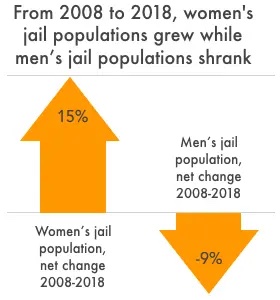
This comes as no surprise as women were disproportionately affected by the “War on Drugs”. While men are being incarcerated at a decreasing rate, the opposite is true for women who are currently propping up the carceral state. The “War on Drugs” fueled the mass expansion of prisons and jails and led to the imprisoning of large numbers of Black Americans and also introduced women as the fastest growing prison population. Whereas before women were mostly locked up in mental institutions, prison became the new way to control and abuse women. Even today, the majority of women incarcerated in the US are there for non-violent drug crimes. I want to emphasize this disproportionately affects BIPOC and transgender women even in Appalachia, a region with little racial and ethnic diversity. 

Poverty, sex work, and drug abuse are all risk factors for incarceration that often overlap. Across the region but particularly in West Virginia, many women with opioid addictions turned to selling their bodies on the streets as a form of survival. While some women choose to enter the sex work industry to make money to satisfy their addiction or trade sex for drugs directly, others are trafficked. The criminalization of drugs and sex work has created a vicious cycle of addiction, prostitution, incarceration, and relapse and uniquely affects women, both cis and trans.  

This gendered experience in the prison system is only exacerbated by the reality that a majority of incarcerated women (60%) are mothers, most of whom are single. Removing any parent from a home is severely destabilizing and increases the likelihood of an incarcerated individual’s own children from being locked up. 

In Appalachia, the foster care systems are currently being overloaded as a direct result of the opioid epidemic. Being under the intense surveillance of the state from such a young age conditions those within it in such a way that a quarter of foster children will end up in the justice system within just two years of aging out of care. In West Virginia, the state hit the hardest by the opioid epidemic, saw a 70% increase of children in the foster care system in the past six years. About 85% of the children in West Virginia’s foster care have at least one parent with an addiction issue. The currently overwhelmed foster care system is compounding the children’s odds of winding up in prison or jail as it’s more likely for them to be institutionalized and placed in a group home. Young girls in foster care, particularly black girls, are the most vulnerable to sex trafficking. Though not fully visible yet, in the next decade we can expect the incarceration rate in Appalachia to rise significantly partly due to the foster care to prison pipeline. 

It feels like there will always be a way for those affected by poverty and addiction in Appalachia to fall into the hands of the justice system. So, what is the solution? 

In the words of Angela Davis in her book Are Prisons Obsolete?, “…with respect to the project of challenging the role played by the so-called War on Drugs in bringing huge numbers of people of color into the prison system, proposals to decriminalize drug use should be linked to the development of a constellation of free, community-based programs accessible to all people who wish to tackle their drug problems.”

Though Davis addresses the need to rehabilitate BIPOC individuals, this approach, along with the decriminalization of sex work, will be crucial in reuniting families, healing those with substance use disorders, and keeping Appalachians out of the prison system. 

If the necessary change is not acted upon now, the carceral state will continue to seep further and further into the mountain ground, as deep as the coal deposits once did. 

(By Hadley Chittum)

(Picture Credit: Kiki Ljung – Folio Art / NBC)

In El Salvador, Sara Rogel was (almost) released from prison. She should have never been there

“The witch-hunt, then, was a war against women; it was a concerted attempt to degrade them, dehumanize them, and destroy their social power. At the same time, it was in the torture chambers and on the stakes on which the witches perished that the bourgeois ideals of womanhood and domesticity were forged.”  Silvia Federici

Sara del Rosario Rogel García, aka Sara Rogel, has spent the last ten years in a prison in eastern El Salvador for a crime she never committed which wasn’t a crime in the first place but which non-crime event never occurred. Once again, El Salvador is willing, even eager, to sacrifice a young woman’s life in the pursuit of complete control over women’s lives, bodies, everything. On Monday, a judge ruled that Sara Rogel could be released from prison because she no longer presented “a danger” to society. Sara Rogel still sits in prison, however, because the prosecution has five days to appeal. Even if Sara Rogel is released from prison, at the end of the week, it is clear that her `freedom’ will be conditional, as was the case with Cindy Erazo last year, Evelyn Beatríz Hernández Cruz in 2019, Maira Verónica Figueroa Marroquín and Teodora Vasquez in 2018, all women who were wrongly imprisoned … and for what?

In 2012, 21-year-old Sara Rogel was a student and was pregnant, a pregnancy of which,  according to her attorney, she was happy. While doing laundry, Sara Rogel slipped, fell, suffered a miscarriage, hemorrhaged, had to be taken to the hospital, where she was initially charged with an illegal abortion and then with aggravated murder. Sara Rogel was sentenced to 30 years in prison. From the moment Sara Rogel was charged to today, feminist groups, human rights advocates, international groups such as the United Nations Office of the High Commissioner for Human Rights protested the violations of Sara Rogel’s basic human rights. At first, to no avail, but finally, this week, a bit of light began to flicker through. For the last ten years, and beyond, Agrupación Ciudadana por la Despenalización del Aborto the Citizen’s Group for the Decriminalization of Abortion, has led, pushed, persisted.

Cindy Erazo, Evelyn Beatríz Crus, Maira Verónica Figueroa Marroquín, Teodora Vasquez, and Sara Rogel, together, spent a total of 44 years in prison … a life time. For what? For having suffered an obstetric emergency? No. When will Sara Rogel be free, and who will pay for the years of captivity? When and where does the witch hunt end? Where is the global outrage at the torture being visited upon women, especially young women, in El Salvador and beyond?


(By Dan Moshenberg)


(Photo Credit: CNN)