Hope in the time of choler: Nigeria, South Korea, Guatemala, Colombia, Mexico, Chile

The Green Wave, Bogota, February 2022

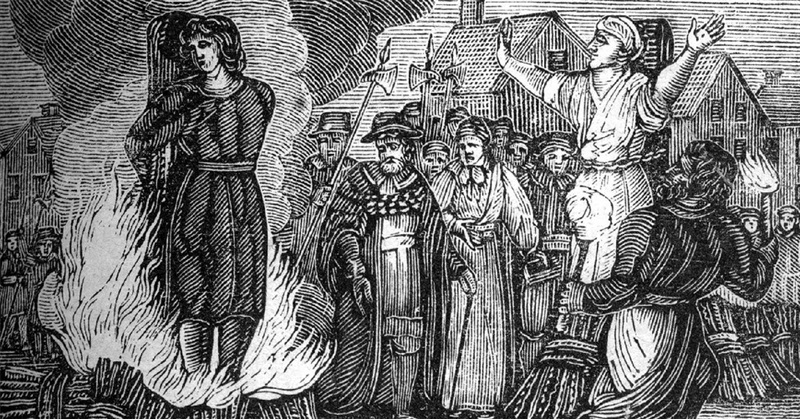
Welcome to March 2022, International Women’s Month; welcome to March 8, International Women’s Day; welcome to … the Thunderdome where, amidst all the recognition and all the ceremonies honoring women’s accomplishments and very being, one government, Nigeria’s, rejects Constitutional amendments designed to begin the process of gender parity, equity, equality. Another country, South Korea, elects a new President largely because he’s not only misogynist but explicitly anti-feminist. In a third country, Guatemala, on March 8, the legislature passed a law which extended the prison term for terminating a pregnancy from three to ten years, banned the teaching of sexual diversity, and, for good measure, in the name of the “protection of life and family”, banned same-sex marriages. So, basically, we’re not in Kansas anymore. We’re in Texas. Welcome to the Thunderdome.

On Sunday, the newly elected President of South Korea reiterated his determination to eliminate the Ministry of Gender Equality and Family. He argued, first, that the work of the ministry had been completed. There was complete and total gender equality in South Korea. No matter that employment numbers, prior to the pandemic and even more, paint a different picture. No matter that violence against women and non-binary people is on the rise. What really matters is that `feminists’ have gone too far, and that’s the reason the new President is shutting the machinery, such as it is, down. It’s also a reason he was elected. He campaigned explicitly as an anti-feminist, who argued that gender based quotas stand in the way of “national unity”; that feminism caused South Korea’s low birth rate; that women falsely report sexual violence, and they must be punished, severely. Exit polls suggest that men in their 20s and 30s voted overwhelmingly for the anti-feminist.

These are grim times. But they are not without hope. There is light, there is real and serious opposition in the Thunderdome.

February ended with a landmark decision in Colombia decriminalizing abortion and setting the stage for the government to go further to codify and secure women’s access to reproductive health services as well as to dignity and autonomy. This victory in court was the product of numerous women’s organizations and movements doing the arduous, and joyful, work of reaching out and reaching in, of engaging with all parts of the society, with demanding while also educating while also learning. This is part of the great Green Wave that is surging across Latin America. It is also part of the electoral politics of Colombia, and so it is worth noting that in yesterday’s primary elections, leftist candidate Gustavo Petro has taken a resounding lead. The elections are in May. Further, on March 8, the Congress of Sinaloa, a state in northwest Mexico, decriminalized abortion.

And speaking of elections, in December, Chile elected 36-year-old, leftist, pro-feminist Gabriel Boric to be President of Chile. Boric is the youngest person to ever hold that position. Perhaps more importantly, he won with the largest majority ever recorded in a Chilean election. On Friday, March 11, Gabriel Boric was sworn in. He stood with his progressive, majority-women Cabinet by his side. Bread and roses, words and deeds. Hope springs in the place that served as the proving ground for neoliberal devastation, and not only for Chile, for all of Latin America and beyond. Even now, even here, there is hope and optimism, being found, being made.

Chile


(By Dan Moshenberg)

(Photo Credit 1: Nathalia Angarita / New York Times) (Photo Credit 2: Carolina Pérez Dattari / Open Democracy)

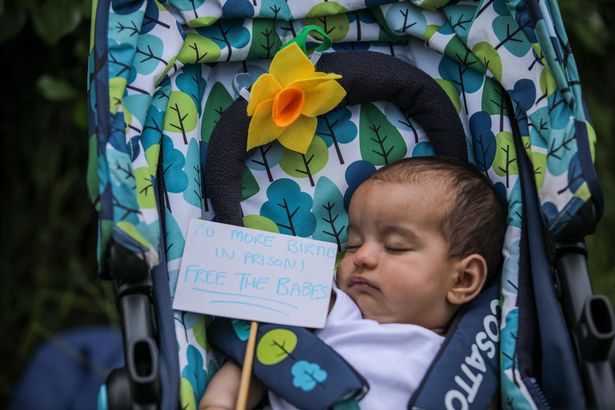
Indiana banned shackling incarcerated people in childbirth … `with certain exceptions’

On Thursday, May 10, Indiana’s Governor Eric Holcomb received a bill, passed unanimously by both the Indiana House and Senate, concerning the “restraint of pregnant prisoners”. The Governor had until May 17 to sign the bill into law. He signed it immediately. The bill’s digest reads: “Restraint of pregnant inmates; pregnancy from certain sex offenses. Provides that a correctional facility, including a jail, shall: (1) use the least restrictive restraints necessary on a pregnant inmate when the pregnant inmate is in the second or third trimester of pregnancy; or (2) use no restraints on a pregnant inmate who is in labor, delivering a baby, during the immediate postdelivery period, or dealing with a medical emergency related to the pregnancy, with certain exceptions. Repeals the current statute concerning prenatal and postnatal care and treatment and incorporates it into the new chapter concerning pregnant inmates.” On Thursday, Indiana joins the District of Columbia, 31 states and the U.S. Federal government in limiting or banning the shackling of pregnant incarcerated people.

While this is welcome progress, the question of implementation and enforcement, not to mention why it’s taken this long and what’s going on with the remaining states, looms large, in at least two ways. “With certain exceptions” and enforcement, more generally.

Why do almost all the laws include exceptions? On one hand, it’s conceding to prison staffs and in particular prison staff unions. Who will decide that an exception is warranted? Again and again, we have seen doctors, nurses and other health providers object to the use of restraints on pregnant incarcerated people, and each time, the doctor was rebuffed by a member of the prison or jail staff. There simply is no reason to shackle or otherwise restrain a pregnant person, a person delivering a baby, in labor or immediately postdelivery. At a time when the use of shackles on juvenile incarcerated people and on incarcerated people in court is being debated and, in some places, banned, again `with certain exceptions’, it’s time to find more opportunities to codify “with no exceptions”.

This leads to the second issue, enforcement. Remember the case of Jane Doe, in New York, in 2018? In 2009, New York outlawed the use of physical restraints on pregnant women during labor and delivery. In 2015, New York outlawed the use of physical restraints on pregnant women during in-custody transportation and the eight-week postpartum recovery period. Despite nine years of having banned, “physical restraints” on pregnant women during labor and delivery, in February 2018, Jane Doe was forced to undergo labor and delivery while her ankles were shackled and her wrists were handcuffed to the bed. Who did this? The New York Police Department. Why? Because they could. Because she was already a Jane Doe, as far as they were concerned. That was February 2018. In December of that year, a second woman suffered the identical abuse. New York City settled with the second Jane Doe last year, four years later, for $750,000. The officers faced no discipline whatsoever.

In 2020, a woman was shackled in childbirth in Minnesota. Minnesota had passed its own anti-shackling and pregnancy needs laws in 2015. How many more times must we hear or read this story?

The history of shackling pregnant incarcerated people in the United States is the ongoing history of slavery. While we remove statues and rename schools and other institutions, we should end the shackling of all incarcerated people, beginning at the very least with pregnant incarcerated people. In 2011, Christina Kovatswas incarcerated.  A week after her arrest, she discovered she was pregnant. She was shackled during and after delivery. As she explained to the Indiana legislators, “It’s the most painful and traumatic thing that I can recall. I had nightmares. I still do have nightmares.” Eleven years later, she still has nightmares.

How many more times must we hear or read similar accounts before we take real action? It’s time to bring slavery to an end. End the shackling of incarcerated pregnant people, end the shackling of all people. Do it without exceptions.

(by Dan Moshenberg


(Image Credit: Radical Doula) (Image Credit 2: New York Times / Andrea Dezsö)


Thank you, Paul Farmer, for all you came here to do and did so exceptionally well!

Those who know his work and its significance for understanding why despite (and because of) all the technologies and knowledge and money and means, so many people are sick, suffering and dying before their time will be devastated to hear about Paul Farmer’s death.

Being born and raised in a Black working-class family, in a society like ours, one does not need to be taught about inequity, let alone health inequity, how it is produced and shapes lives. The nature of societies has always fascinated me, as did the interplay between societies and the power contestations that shape the socio-political stratosphere called “the global”.

I studied a few “ologies” at varsity hoping they would help explain how mine and my society’s lived experience got to be what it is. Some of it helped. Some of it left me feeling like I was being sent to the North Pole on a boat sailing on dry land.

I came across Paul Farmer’s writings at what I felt was late but in the end was just the right time in my life. Among others, his Pathologies of Power; Infections and inequalities; and To Repair the World became the texts for the missing answers in my own journey as a social justice activist and leader. He helped me link the dots in ways that enriched my concept of social justice and why there can be no greater pursuit in life. I didn’t know him well at all. The few times I met him (no I never focus on taking photos when I meet people, a real flaw in my life), I was surprised how simple and understated he was, until he spoke. I loved how dedicated he was to elevating people, never making one feel diminished in his presence like some famous are wont to do.

Some people need to live.

But at minimum, with each passing of a great person we need to ask, what is it that needs to die for us to live.

I woke up with this haunting question this morning. Thank you, Paul Farmer, for all you came here to do and did so exceptionally well!

Because you did, the mission of global health equity gets to have a long lifespan!

Thank you!


(By Siphokazi Mthathi)

(Photo Credit: Gilles Peress / The New Yorker)

Covid Operations: Rebecca “Maria” Adams, Juanita Haynes, and Bree Eberbaugh asked for compassionate release. It never came.

Alderson Federal Prison Camp is the oldest federal women’s prison in the United States. Founded in 1927, Alderson was meant to serve as a model of “reform”. Ten years ago, it became famous, or infamous, for housing Martha Stewart for a while. At that time, it was reputed to be one of the best prisons for women in the country. And what did that model of the best look like? “Overcrowded, understaffed, and short on funds … It now follows a punitive rather than a rehabilitative model …  There’s intimidation, humiliation, and sexual harassment … a symbol of all that’s wrong with how the criminal justice system deals with women.” Ten years or so later, what’s Alderson? “Covid-19 rips through West Virginia women’s prison as federal agency takes heat”. This is the story of compassion in the covid carceral. The is the story of Rebecca “Maria” Adams, Juanita Haynes, and Bree Eberbaugh, three women who very reasonably asked for compassionate release. It never came, and, within one week in January, they died. There is no “heat” that can bring them back or bring justice for them or their loved ones.

Rebecca “Maria” Adams, Juanita Haynes, and Bree Eberbaugh’s collective list of preexisting medical conditions included Type 2 diabetes, hypertension, congestive heart failure, obesity, and chronic obstructive pulmonary disease. Any one of those should have qualified. Adams was denied. Eberbaugh was denied. Juanita Haynes was “granted release”, when she was already intubated. She died four days later. Because she died in hospital, a `free woman’, her death is not counted as a prison fatality by the Federal Bureau of Prisons. Alderson Federal Prison Camp is indeed a model, as is FCI Waseca, another low-security federal prison for women that functions as a death trap.

In March 2020, Bree Eberbaugh applied for compassionate release. In August, she was denied. The judge said the cases were too few to warrant compassionate release. As of February 8, Alderson, with fewer than 700 `residents’, reported 50 cases. Many assume the numbers of both cases, and, given what happened to Juanita Haynes, deaths is considerably higher. Eberbaugh appealed that decision. In April 2021, the appeal was denied. Nine months later, Bree Eberbaugh died.

This is the text of the handwritten letter Bree Eberbaugh wrote to the judge after the first denial:

“Dear Your Honor:

I am writing to request your assistance to obtain an attorney through the federal public defender’s office to assist me with pursuing compassionate release or home confinement based on my three underlying medical conditions that place me at a much higher risk of contracting the COVID-19 virus and suffering irreparable medical damage or loss of life.

COVID-19 has been confirmed in 114 of the 122 facilities in the BOP, yet the BOP is opening the facilities up to accept transfers from other institutions. Your Honor, it is only a matter of time before it reaches here and I am in fear of my life.

Please grant my legal counsel to properly represent my concerns and convey all that is happening that requires your assistance.

Thank you for your consideration and I anxiously await your reply.

Respectfully submitted,
Bree Eberbaugh”

Incarcerated people in federal and state prisons are twice as likely to die of Covid as the general population. The situation in jails is presumed to be worse, but there’s no data as of yet. When the pandemic is over, will we recall Rebecca “Maria” Adams, Juanita Haynes, and Bree Eberbaugh, three women who asked for compassionate release that never came? Will we remember compassion itself?


(Photo Credit: Kaiser Health News / LJ Dawson)

From Yvonne Farrell to Nzinga King: The State’s war on Black women bodies continues

Nzinga King

In July 2021, 19-year-old Nzinga King was taken into custody in rural Jamaica, pepper sprayed, and then, while in custody, was forcibly subjected to having her hair cut. After some public outcry, an internal investigation was launched … sort of. The results came out this past week. According to the Director of Public Prosecution, it was all fine. In August 2018, 50-plus-year-old Yvonne Farrell was in her partner’s car in Stevenage, about a half hour north of London, when the car broke down. When the police arrived, with the tow truck, Yvonne Farrell refused to give her name. She saw no reason to. The police took her in. Since she didn’t give her name, they stripped her naked and left her on the cell floor for three hours. Yvonne Farrell sued, and last. Week, the police apologized and paid £45,000 in damages: “I accept that you should not have been arrested. I am extremely sorry for any injuries that you suffered as a result of the actions of Hertfordshire Police. On this occasion we got it wrong. I apologise unreservedly.” Nzinga King and Yvonne Farrell are Rastafarian women … unreservedly.

Nzinga King was travelling with friends in a taxi. Some were not wearing masks. Nzinga King was wearing a mask. The police stopped the car to question those not wearing masks. The police pepper sprayed some in the car. Nzinga King got out and started arguing with the police. She was arrested for disorderly conduct. On July 22, she received a $40 fine or 10 days in jail. She couldn’t pay the fine, and so went to jail, where a police officer cut her hair. As Jamaican journalist Emma Lewis noted this week, Nzinga King “had several counts against her from the start”: She is young. She is Black. She is poor. She is Rastafari. She is a woman. She is a rural dweller. With all that, Nzinga King should consider herself lucky to have been `merely’ humiliated. Right?

Yvonne Farrell is not young, poor or a rural dweller. She is Black. She is Rastafari. She is a woman. And she knows that and she knew that, and she knew that to be criminalized for the nexus of Black, Rastafari, woman is unjust. As Yvonne Farrell explains, “I could have been a Jewish woman. I could have been a Muslim woman … That just shows they wanted to humiliate me – they did humiliate me.” Yvonne Farrell has since `relocated’ to somewhere in the Caribbean.

Two years ago, in 2020, in London, Ruby Williams won an out-of-court settlement of £8,500 for the abuse she suffered, for wearing her hair in an Afro, for Being Black, from the age of 11 years old on. Two years ago, in 2020, Jamaica’s high court ruled that a school was within its rights to tell a 5-year-old girl student, identified as Z, that she must cut her dreadlocks or leave school.  By all accounts, she was an excellent student. By all accounts, she had not in any way prevented others around her from pursuing their education. To the contrary, she was described as an ideal student and learner who helped her fellow students. But Z’s desire to learn was deemed Constitutionally inferior to the politics of Black girls’ hair. Two years later, Yvonne Farrell and Nzinga King lock arms with Z and Ruby Williams. Compensation is not enough, apologies won’t do. Meanwhile, the State-sponsored war on Black women bodies continues.

Yvonne Farrell


(By Dan Moshenberg)


(Photo Credit 1: Petchary’s Blog) (Photo Credit 2: BBC)

In Covid-hit India, where are the women? In Byculla Women’s Jail, awaiting trial, awaiting death

When Covid hit India, the reports, and for some expectation, were that the State would consider pandemic measures, such as the need for social distancing, and would reduce the incarcerated populations. To no one’s great surprise, that did not happen generally, and in particular it did not happen in women’s jails and prisons. For example, the state of Maharashtra has 60 central and district jails. Of them, one, Byculla Women’s Jail, is the only one dedicated for women and children, but that doesn’t mean the conditions are in any way better. Byculla Women’s Jail has always been an overcrowded hellhole for women and children.

But first, let’s consider the national situation. The most recent National Crime Records Bureau (NCRB)’s annual Prison Statistics of India looks at 2020. It finds, first, that, between 2015 and 2020, the prison population increased by 16.4%. In 2020, the number of undertrial prisoners increased by 11.7%. In 2020, there were 1427 women prisoners with 1628 children. 1184 were undertrial, with 1345 children. 214 convicted, w 246 children. Where are the women? In prison, awaiting trial. Occupancy rate for women in all jails at national level was 72.2%, but in many states the rate was much higher. 20,046 women were held in jail, of whom 15.4% were in women’s jails. The number of women in women’s jails increased 3.7% from 2015 – 2020; in Other Jails, 14.2%. Between 2015 and 2020, the number of convicted incarcerated people decreased by 16.1% while the number of undertrial inmates increased by 31.8%. Again, where are the women? In prison, awaiting trial.

In 2020, 4,83,585 were incarcerated: 4,64,260 men, 19,255 women, 70 transgenders were confined in various Indian jails at the end of the year 2020. Of that 4,83,585 population 3,68,381 were remand, awaiting trial. 96% are undertrial. Incarcerated women are disproportionately, overwhelmingly undertrial.

Finally, in 2020, 1,291,504 people awaiting trial were released. In 2019, that number was 1,606,731. So much for pandemic concerns.

Byculla Women’s Jail was at 101.5% of capacity, in the midst of the ferocious first wave that hit India, and Mumbai in particular, where Byculla is located.  On March 31, 2020, held 352 women. Its capacity is 200. That’s 176% occupancy rate.  Last September, when Covid raged through Byculla, the jail held close to 300 women. According to activist Sudha Bharadwaj, recently released, sort of, on bail from Byculla, her unit housed 75 women. It had a maximum capacity of 35. Women slept side by side by side on the floor, each on a mat the “size of a coffin. Overcrowding becomes a source of fights and tensions. There’s a queue for everything – food, toilets.” 24% of the women in Sudha Bharadwaj’s unit were infect with Covid: “The judiciary should consider decongesting our jails more seriously. Even during the pandemic most people did not get interim bail to return to their families.” In April 2021, Byculla accounted for 33% of the Covid cases in Mumbai’s five jails.

Amidst a pandemic and despite promises to reduce the incarcerated populations, why is Byculla Women’s Jail a death trap? Why is the entire prison system, the entire criminal justice system, filling prisons and jails with people who are presumed to be innocent and are awaiting trial? Why sentence people to death or serious infirmity in this manner? We have seen this before, in pretty much every carceral system in the world. Out of sight, out of mind, out of luck, and, soon, out of breath. This is the State of Abandonment: “Zones of abandonment … accelerate the death of the unwanted. In this bureaucratically and relationally sanctioned register of social death, the human, the mental and the chemical are complicit: their entanglement expresses a common sense that authorized the lives of some while disallowing the lives of others.” That original formulation pertained to Brazil, but we have seen it in the United States, England and Wales, South Africa and beyond. What happened in the prisons and jails of India in 2020,  during the pandemic, what happened in Byculla Women’s Jail? Absolutely nothing. Nothing happened … absolutely.

(By Dan Moshenberg)

(Art Work: Arun Ferreria / Free Them All)
 

Jocko Graves two: Dreams

Jocko as myself

Jocko Graves two: Dreams

Was Jocko Graves real?

He was as real as the meanings of myths and symbols

As real as flags

And paper dollar bills

As real as non-ethnic statues of Jesus
Adorning the churches of Black and Brown People
Who willingly participate in a prayerful contradiction

As real as dreams

As real as The American Dream

What is the difference between a Bitcoin
And a hundred dollar bill?

Can the subconscious mind differentiate between
The real and the imagined?

Do you know who you are in a dream?

Are your dreams and nightmares
More real than mine?

Martin dreamed.

Gene Roddenberry dreamed.

George Washington Dreamed.

A patriots dream
That saw beyond the years
Where alabaster cities gleamed
Undimmed by human tears

Jocko Graves was as real as the patriotic songs I had to sing
To start my day
In elementary school

As real as The Pledge of Allegiance

And The Star Spangled Banner

As real as Colin Kaepernick’s kneeling

And the Diplomatic boycotting of

The 2022 Chinese Winter Olympics

Although we can’t seem to decide when athletic events
And athleticism
Can be allowed to be used
To make political statements

Waking, dreaming, and dreamless sleep
We sing
In all three states of mind

But are most creative when we dream

Bring my dreams and songs to me when I awaken
So that I can refine them when I sleep and dream again

Let me inhale my whole day and reforge it as I sleep
And heal myself in the most ancient of ways

As I blissfully inhabit one third of my human life

Let me sing the songs of my childhood again
Because they still work

And now

I better understand their meaning

Master Blaster Curtis Mayfield
D.C.’s own Marvin Gaye

Tell us.

Tell us: What’s Going On.

Tell us: people get ready.

Mercy, Mercy Me!
Everybody
It’s a Future Shock.

Again.

And the world is still so full of WTF!

American miasma
And the mindless chanting of
“Make America Great again, again”

To reaffirm a nightmare

Rather than to refine George Washington’s dream

I mean

That is

If he actually ever had it.

Who broke the unwritten laws
To cause this dark virtueless cloud
To overshadow us all?

COVID-19 proves that separate but equal is still alive and well

As we live and die

In the gigantic shadow
Of the microscopic

Although separate is doing much better than equal

And equal has only ever been an American dream

The difficult conversations that America should have
That we have been having for a long time

Since before Archie Bunker got kissed by Sammy Davis Jr. on national TV
And before George Jefferson got sassed by his Black maid

Because the network wouldn’t let him have a White one

Before Petula Clark held hands with Harry Belafonte
And Sidney Poitier sang Amen to Eastern European nuns.

Swing low sweet chariot

Swing down sweet chariot ship and let me ride

Before Martin Luther King Jr. asked Nichelle Nichols
Not to leave Star Trek

(Because Diahann Carroll in Julia was still two full years away)

And before her character, Lt. Uhura, kissed Captain Kirk on a planet full of
sadistic
decadent
telekinetic
psychic
aliens

Who liked to watch

Before there were three Catwomen and one of them was Eartha Kitt

But she couldn’t kiss Batman
Even though the other two had

And before there were no Blacks in Mayberry RFD

But do you recall any in Friends or on Seinfeld?

Out of 8,000,000 stories in the five boroughs of The Naked City
Quite a few of them were missed

Because even if “you” are one in a million in New York
There should be at least eight of you

Before Granny freely waved the confederate flag on network television on the Beverly Hillbillies

Proving that you could live anywhere in America
As long as you were rich and White

And before there was a Hooterville Junction

Or, an acid trippy Green acres, too.

Before Sticks, one of the few Black men on Happy Days, played the drums
And before he — the actor Jack Baker — actually died of cancer in real life
After a marginal career in golden age pornography

America has needed to have a conversation
That, actually, it’s been having.

And we’re not yet finished talking

Not by a long way.

Because conversations matter.

Hidden under the masks of The Predator
And dancing in the Xenomorph’s black biomechanical prosthetics

We are the voice of Darth Vader

The base voices that make the Klingons menacing

And the voice that invites America to eat at Arby’s, too.

Tell us fairy tales for troubled times
Or, of a past some call “the good old days”

Which weren’t

When George Washington dreamed of a gleaming tomorrow
That has never come

Living in this once upon a time
Called right now.

But, I still like happy endings
Never no tears.

I keep hearing people say that both America
And American Democracy
Are a grand experiment

I ask

An experiment upon whom?

A sleep study?

Sleep better by problematizing the word:
“Woke”

While calling yourself contemporary non-religious Mindful Buddhist

Now that he’s dead, Thich Nhat Hanh can roll over in his grave

Jungian analyst say that this chaos is the digestion of America’s Shadow

Bullshit, I say.

It’s the American inability to digest the spicy masala stew
In in its melting pot

(Shout out Kamala Harris)

I say to you, co-opters

Thieves of the worlds great cultures
Ideas
And peoples

You imprisoners of the ancient arts and achievements of:

Persia

Africa

India

China

Japan

and Greece

Stolen treasures housed in Colonial museums
Where Keats contemplated his urn
And wrote an ode

Because contemplations matter

Was Jocko Graves real?

As real as Paul Reveres midnight ride

As real as underground railroads
That had neither trains
Nor tracks

Listen my children and you shall hear

All of it is as real as you want it to be.

And it’s only real when you want it to be.

Real

When we make it real.

The faithful groomsmen

(By Heidi Lindemann and Michael Perry)

(Art credit 1: Chase Hall / Dazed) (Art Credit 2: Jalen Law)

For women in England and Wales, `safety in custody’ still means self-harm

Once upon a time, the word custody meant protection, safekeeping, responsibility for protecting or taking care of. No longer. If one is to take the sorry and sordid output and history of the United Kingdom’s Ministry of Justice, custody today means the power to cage and code for cruelty. It’s that time of the year again when the Ministry releases its in no way long awaited “safety in custody” reports, and, yet again, one can only look at the numbers and wonder. If this is safety in custody, what would danger look like?

And so, without further ado, here’s the Safety in Custody Statistics, England and Wales: Deaths in Prison Custody to December 2021, Assaults and Self-harm to September 2021: “In the 12 months to December 2021, there were 371 deaths in prison custody, an increase of 17% from 318 deaths the previous 12 months … In the most recent quarter there were 84 deaths, a 29% increase from 65 deaths in the previous quarter … [In the 12 months to September 2021] the rate of self-harm incidents per 1,000 prisoners, which takes account of the reduction in the prison population between this and the previous year, decreased 9% in male establishments but increased 5% in female establishments … The rate of assault in male establishments decreased by 15% from the previous 12 months, while the rate in female establishments increased by 3%. Assault rates for the 12 months to September 2021 were higher in female establishments (327 incidents per 1,000 prisoners) than in male establishments (253 incidents per 1,000 prisoners). The rate of assault on staff decreased by 6% in male establishments but increased by 12% in female establishments compared with the previous 12 months. Assault rates have remained higher in female establishments than in male establishments. In the latest quarter, the number of assaults in male establishments increased by 8%, and the number of assaults in female establishments increased by 21%. In the 12 months to September 2021, the proportion of assaults that were on staff was higher in female establishments (56%) than in male establishments (38%).” This is the latest portrait of “safety in custody”.

Since 2011, the rate of self-harm in women’s prisons in England and Wales has risen 61%. That is the trajectory of “safety in custody”.

In the 12 months leading up to December 2021, deaths in custody rose by 14%. Suicides in custody rose by 28%. More than half the suicides occurred within the first 30 days in custody and the first 30 days in the current prison. Prisoners awaiting trial had the highest rate of suicide. Most of the suicides were by hanging.

Last year was the worst for deaths in custody in England and Wales in recorded, documented history. While some of that is attributed to Covid, much of it is systemic. Why is the rate of violence against self and others rising among women in custody?  Women In Prison,  Hibiscus Initiatives, Muslim Women In Prison, Zahid Mubarek Trust, Criminal Justice Alliance and Agenda: the Alliance for women and girls at risk have spent the last year poring over reports; meeting with everyone, especially  “with women with lived experience on the challenges they face at different stages of the criminal justice system, from policing in the community, to courts and sentencing, to prison, to probation and re-entering the community”, and today they released a 10-point action plan for change to end inequality for Black, Asian, minoritized and migrant women in the criminal justice system. Among the many practical, and often common sensical, actions, the fifth calls for the “use of diversion and out of court disposals and end the use of disproportionate custodial sentencing and remands for Black, Asian, minoritized, and migrant women.” Custodial sentencing. There it is again, custody. They call for “the Government to amend the Bail Act (1976) to make it unlawful to remand people to prison `for their own protection’”. By its own report, the so-called criminal justice system of England and Wales indiscriminately targets women of color, minoritized and migrant women. This is the system designated to protect women who have “exhibited anti-social behavior” … by throwing them behind bars? And then we are surprised that every year, rates of self-harm rise, rates of assault rise?

Earlier in the week, the Action Foundation released a report based on the experiences of women sent to the recently built women-only Immigration Centre in Derwentside, which has replaced Yarl’s Wood … for the moment. The study found that women in community do demonstrably better than women in detention. Significantly, community residence costs less than half the price of detention. Detention costs too much, in every sense. Custody should mean protection, safekeeping, responsibility for protecting or taking care of. Community is custody. Nothing else will do.


(By Dan Moshenberg)

(Infographic Credit: UK Ministry of Justice) (Photo Credit: Action Foundation)


In South Africa, a victory for Jane Bwanya, the Constitution, and equality for all!

Jane Bwanya

South Africa’s Bill of Rights, Chapter 2 of its Constitution, begins its enumeration of rights with Equality: “Everyone is equal before the law and has the right to equal protection and benefit of the law.” Equality is followed immediately by Human Dignity: “Everyone has inherent dignity and the right to have their dignity respected and protected.” These are the first articulations of “everyone” in the Constitution of the Republic of South Africa. Last year, Jane Bwana, a domestic worker, a lifelong partner, a widow, challenged the meaning and substance of “everyone” … and on December 31, the Constitutional Court of South Africa ruled in her favor, and in favor of equality and Constitutional rights. This is the story of Jane Bwanya.

Jane Bwanya migrated from Zimbabwe to South Africa. In 2014, she was at a taxi rank in the posh Camps Bay neighborhood of Cape Town. She was on her way to send goods to her family in Zimbabwe. She was laden with various boxes and packages, when Anthony Ruch, a wealthy businessman, stopped and offered her a lift. She accepted the offer, and they never separated. Months later, at Ruch’s insistence, Jane Bwanya moved into his Camps Bay residence, although she continued to work as a domestic worker. Jane Bwanya and Anthony Ruch celebrated their relationship publicly, attending social functions together, identifying each in public as life partners. By October 2015, they said they were planning to get married. They were also planning to open a cleaning business together. In November 2015, Anthony Ruch proposed marriage to Jane Bwanya. Anthony Ruch sold property so as to pay for lobola and arranged for a trip to Zimbabwe, to meet the family and finalize arrangements. They planned to marry after the trip to Zimbabwe. That trip was planned for June 2016. On April 23, 2016, Anthony Ruch died. His will named his mother as his sole heir. His mother died in 2013.

Jane Bwanya filed two claims, one for maintenance the other for inheritance, as a permanent life partner. The executor of the estate rejected both claims, basically stating that the Maintenance of Surviving Spouses Act and the Intestate Succession Act did not allow for opposite-sex life partners, and so, with the help of the Women’s Legal Centre, Jane Bwanya sued, arguing that the exclusions were unconstitutional. And so, Jane Bwanya sued for, and in the name of, equality and dignity. Everyone.

Writing for the majority, Justice Mbuyiseli Russel Madlanga noted, the rights, equality and dignity of same-sex survivors had already been established. According to the court, according to the 2016 census, “3.2 million South African were cohabiting outside of marriage and that number was … increasing.” Throughout his opinion, Justice Madlanga insisted [a] that the Court had to look at the world as it is and [b] not accept arguments that “typify what is to be expected in a society that is dominated by men in virtually all areas of human endeavour.”  And with that, the Court ruled in favor of Jane Bwanya, declaring that the exclusion is “unfair discrimination” and ordering the Parliament to fix the language of the two acts within 18 months. That decision was delivered December 31, 2021. Happy new year!

In March 2021, the Constitutional Court rendered a landmark decision in favor of five women who had been excluded from inheritance on the basis of gender. In December 2021, the Constitutional Court rendered a landmark decision in favor of survivors, the majority of whom are women, excluded from inheritance on the basis of formal rituals. Everyone is equal before the law and has the right to equal protection and benefit of the law. Everyone has inherent dignity and the right to have their dignity respected and protected.

(By Dan Moshenberg)

(Photo Credit: Times Live)

Boys will be boys, girls will be jailed, and then they will die at an early age

Detention harms children and youth, all children and youth. In fact, it leads to greater likelihood of early death, according to a recent study: “In this cohort study of 3645 previously incarcerated youths, the all-cause mortality rate was 5.9 times higher in previously incarcerated youths than the rate observed in general population, Medicaid-enrolled youths.” Given that on any given day, the United States holds more than 50,000 children and youth in juvenile detention center, that ratio should give pause. Of course, any ratio of childhood and youth mortality should give pause. Sadly, tragically, such is not the case. Further, “Of particular significance was the mortality rate in previously incarcerated females … The all-cause mortality rate among females was nearly 9 times that of the Medicaid comparison group …. Formerly incarcerated females were at a considerable higher risk of early mortality compared with female Medicaid-enrolled youths. Research shows complex histories of trauma contribute to females in the juvenile legal system to a much greater extent than males. Incarceration can exacerbate the adverse effects of these experiences.” Though shocking, none of this is new. Sixteen years ago, a study reported, “The mortality rate among female youth was nearly 8 times the general-population rate.” Sixteen years later, here we are, from eight times the general population to nine times.

Just prior to the pandemic, reports were that juvenile detention was dropping, but not as much for girls. Last year, the U.S. Office of Juvenile Justice and Prevention reported, “Male and female juvenile arrest rates have declined in the last 10 years; however, the relative declines have been greater for males than for females across many offenses. As a result, the female share of juvenile arrests has grown since 1980.” According to another recent report, during the pandemic, in urban areas, the number of boys in juvenile detention has dropped 41%; the number of girls dropped 37%. In rural areas, the number of boys dropped 30%, girls dropped 23%. What’s going on?

Two years ago, a study in Virginia found “that girls, especially girls with school conduct problems and no documentation of structured activities were treated more punitively at both intake and adjudication.”

Girls are criminalized for `misbehaving’, boys aren’t. Running away, skipping school, disobeying a parent sends girls, and not boys, to juvenile detention It’s been like that forever, and it continues, especially for girls and gender expansive youth of color. Year after year, for the last decade, reports have noted, and decried, the alarming rate at which girls are entering into the juvenile `justice’ system. The only problem is that, apart from the usual suspects, such as the Vera Institute, no alarm has been raised. Three years ago, the Vera Institute launched the Initiative to End Girls’ Incarceration. They do great work, both nationally and in respective states and municipalities, and yet, as the same time, girls `enter the criminal justice system’ in disproportionate numbers and, as a result, die at a young age in disproportionate number. The time for discovery is over. It’s time, it’s way past time, to stop the slaughter of girls and gender expansive youth.


(By Dan Moshenberg)

(Photo Credit: Richard Ross)