The gender of stampede

There was a stampede in Jakarta, Indonesia today. Few agencies have reported it, I’ve found only one. Thirteen people are reported injured, and it is reported that the thousands who gathered for free food and cash handouts, to mark the end of Ramadan, were overwhelmingly women and children.

Human stampedes are reported throughout the year, everywhere. In the past week or so, four human stampedes have been reported, Jakarta’s being the most recent.

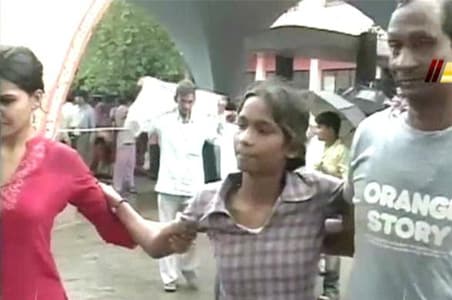
In New Delhi, India, on Thursday, September 10, “Tragedy struck a government secondary school in Indian national capital New Delhi Sept 10 when five girls were killed and 27 other students injured, six of them very critically, in a stampede. The incident occurred when students were trying to make their way up and down a narrow staircase when they were asked to shift classrooms during an examination in the Khajuri Khas Senior Secondary School….Some students said they were asked to shift classes as certain classrooms were water-logged due to incessant rains since Sept 9 night. One of the girls, going down the staircase, fell leading to the stampede….All but one of the 27 injured students were girls.” In the end, 34 students were reported injured, five killed.

That was Thursday. On Saturday, in KwaNongoma, KwaZulu Natal, South Africa, “Tragedy struck at the annual Royal Reed Dance … when one of the maidens was crushed to death during a stampede that broke out following a scramble for promotional caps. Another maiden is in a critical condition while 10 others were seriously injured as the event turned into pandemonium.”

That was Saturday. On Monday, September 14, in Karachi, Pakistan, “Eighteen people were suffocated to death during a stampede here on Monday as poverty-stricken women battled for a free bag of flour being distributed by a philanthropist in Khohri Garden. The dead reportedly include a number of children as well. Meanwhile, several unconscious women were rushed to the emergency ward of the Civil Hospital in Karachi.” Actually, it was twenty women and girls killed, and fifteen were injured. Or was it at least 25? At any rate, the women and girls were waiting for free food.

Stampedes occur all the time. It could be sports events, such as in March of this year at the Houphouet-Boigny Stadium in Côte d’Ivoire at a football, or soccer, match when a wall collapsed and the crush killed 22 and injured over 130. It could be the proverbial fire in a crowded theater or club, as happened in Bangkok this New Year’s, when at least 59 people were killed and over 200 were injured. Or it could be a sale at a big store, like Wal-Mart, as happened late last year, in Valley Stream, New York, not far from New York City. That was on the Friday after Thanksgiving, when people couldn’t wait any longer and broke through the doors, trampling a worker, Jdimytai Damour, to death. It happens all the time.

All of these incidents were described as stampedes. In the most recent, the dead and injured were all or almost all women and girls, but that is not my point here today. What exactly is a stampede, and how does a crowd crush become a stampede?

Stampede is a relatively new word, and it seems to be North American. According to the Oxford English Dictionary, it was coined early in the 1800s, Cowboys in the United States borrowed the Spanish word, estampido, which means crash, explosion, or report of a firearm, and estampida, which means a stampede of cattle or horses. It was an early example of transnational vaquero cowboy culture. The word didn’t come from Spain, it came from Mexico. Stampede, or stompado, was a “sudden rush and flight of a body of panic-stricken cattle” or horses. Later, stampede came to mean a “sudden or unreasoning rush or flight of persons in a body or mass”.

Here’s the thing. At its inception, stampede meant a thundering herd, powerful, dangerous. Today, when referring to people, it means a mass of people in flight who are threat mostly to themselves. How does that happen? Here’s one possibility. At the beginning, stampede was virile, masculine, big roaring animals and big riding cowboys. People, on the other hand, that was panic. In fact, the word in Spanish for the phenomenon of people rushing as a crowd and crushing one another in the process is precisely pánico. Panic. Sudden, wild, unreasoning, excessive, at a loss and out of control. And what is the term for mass panic?  Hysteria, the women’s condition: “Women being much more liable than men to this disorder, it was originally thought to be due to a disturbance of the uterus and its functions”.  Hysteric: “belonging to the womb, suffering in the womb”.

It doesn’t matter who is trampled in the event called a stampede. What began as an articulation of masculinity, the enraged capacity to destroy all in its path, has become the embodiment of womanhood, the helpless implosion of self. What began as a roar has become somehow a whimper. When you read that a group was in a stampede, know this. It is not a neutral word. It is a gender, and the gender is woman.

And those who were in the stampede? Writing of the trampling to death of Jdimytai Damour, one person commented, “I’m particularly troubled by reports that police are thinking about charging individual members of the crowd. When people behind you start pushing you forward, there is often nothing you can do. And there’s a real fear that if you try to resist, you too will be trampled. Part of the tragedy is that there are undoubtedly people in that crowd who know they stepped on something that day, or who, in their excitement, spurred on the surge. These thoughts may haunt them for many years.”  Those who trampled will be haunted, those who lost loved ones will be haunted. The rest of us, we are meant to be haunted by the gender of stampede.

(Photo Credit: NDTV)
“Eclipsed” Last 10 days! See it now!

“Eclipsed” Last 10 days! See it now!

Written by Danai Gurira, directed by Liesl Tommy, world premier at the Woolly Mammoth, Washington, DC, until September 27, 2009 

In case you’re only going to read this one paragraph, I’m going to jump the gun. Don’t be put off by the subject of this play – five Liberian women in a rebel commander’s compound. Don’t file this event under “worthy but arduous.” Because this is the real deal: credible breathing funny characters emerge within minutes. You know them from the first volley of dialogue and action, and you understand the situation. This shack exists to serve and service CO, the commanding officer aka warlord who issues orders from just off stage to wives who call each other Number One and Number Three. As the lights come up, they are concealing from CO and the other men in the camp a third woman, a girl really, who has fled the fighting. The war, largely offstage, presses down on the play, as it did and does on Liberia. 

I like information, analysis and argument as much as the next woman, but the things I really know – outside my own experience – I learned from stories, through the powerful engagement that conjures empathy. The emotions experienced inside a story’s world burn into you and, fire-tempered, that knowledge stays. Such a story and such a world has Zimbabwean playwright and actress Danai Gurira written. 

A photograph from the conflict, featured in a New York Times article, sparked the play: three women combatants sporting tight jeans, attitude and AK47s. Gurira filed away the image and all it evoked. Years ago, she says (but it can’t be that many; she’s an elegant slip of barely 30), Gurira resolved to create stories about African women as real characters, not the usual stereotypes. If you were fortunate to see “In the Continuum,” the two-hander she wrote as her NYU drama school graduation project and performed in 2006 across the US and in her native Zimbabwe, you know she’d already begun to make good on that promise. Then, in 2007, she headed to peace-time Liberia to run workshops and interview numerous women about their experiences as combatants, wives, and survivors, as well as Peace Women in the mass movement credited with forcing the adversaries – Charles Taylor and the warlords opposing him – to the negotiating table and finally to a settlement. (As an innovative marketing strategy for “Eclipsed,” Woolly Mammoth held two screenings of “Pray the Devil Back to Hell,” a powerful documentary about the Peace Women.) Gurira taped many hours of interview and promised the women that she would tell their story. 

Pledging to do justice to real, live women’s experiences makes perfect moral and emotional sense, but compromised drama, right? In this instance, happily, wrong! I could tell you about Bessie, the wise Fool of the piece, and her wig (“it still mek me look like Janet Jackson oh”), or about Maima, wife Number Two who takes the war name Disgruntled when she becomes a soldier (“now Disgruntled do whot Disgruntled like and no man come do no stupid ting to me or tell me whot to do”), or about the girl, who “can read and write and do all dem book ting,” reading juicy snippets from the biography of a certain American president, or about Rita, the peace woman, and her double quest in this particular camp. But you’d do better to meet them yourself, embodied with great skill and conviction by five African American actors. Five of the twenty – as South African director Liesl Tommy points out – who are employed in productions of “Eclipsed” in Washington, DC, in New York, in Los Angeles, and at Yale. Under Tommy’s direction and through a process of physical and visual immersion, the actresses at Woolly Mammoth (especially Uzo Aduba playing Helena, Number One) move like women who pound cassava, who kneel to scrub clothes in a tub or on a river bank, and who carry water in buckets on their heads, that swaying gait that gives African village women such straight-back carriage. 

What is this, you’re asking, a commercial? Where’s the critique? Ok, then. My major beef with Gurira is titles. “In the Continuum”? “Eclipsed”? These could name just about anything, including the latest soft-focus teen vampire porn series. Then, one of the actresses is more difficult to hear than the others. More interestingly, on Q+A night, an audience member was concerned that the wider context wasn’t clear enough from the play – although the ties between Liberia and the US – “America our fada,” says Bessie – are woven throughout. Political artists and audiences want it all – the art and the analysis. Think of 1986’s “Place of Weeping,” Darrell Roodt’s first film: one slim story staggering under the burden of representing all of apartheid South Africa’s types and tribulations.

I wonder, too, how Gurira will fare with male African critics. We don’t see a single man in the play, but like the war itself their presence surrounds the stage. Of the men of the LURD army and their demand for village girls after fighting, Maima/Disgruntled tells the girl, “Dey is beasts and beasts need to be fed. It dat simple.” Will Gurira, like novelists Alice Walker and Tsitsi Dangerembga, be accused of betrayal? Or have we moved on? And/or does the context of war qualify the situation – and therefore men’s behavior – as extraordinary? Perhaps Women In and Beyond the Global will make space for more discussion on this. Once you’ve seen the play, that is. The Woolly Mammoth run ends on September 27th. I’m all done pressing and exhorting. It’s up to you now. Except, to close, a few predictions:

You will leave Woolly Mammoth after a performance of “Eclipsed”

  • speaking like a Liberian (at least inside your head) for many weeks to come – “Ya dat funny oh”
  • your hands tingling from applause (and you might still be crying)
  • with a new awareness of women and war
  • living with and thinking about five characters, as if they were women you’ve known well and laughed with and care about, which by now they are. 

 Reviewed by Annie Holmes, knowledge coordinator for JASS (www.justassociates.org) and writer (www.pembaproductions.com)

Links

More about the play in Woolly Mammoth program notes:

http://www.woollymammoth.net/performances/show_content/Eclipsed_program_notes.pdf

Danai Gurira on NPR:

http://www.npr.org/templates/story/story.php?storyId=112636506

“Eclipsed” rehearsals in LA:

http://www.playbill.com/news/article/132140-PHOTO_CALL_Gurira%27s_Liberia-Set_Eclipsed_Rehearses_in_L.A.

Washington Post Review:

http://www.washingtonpost.com/wp-dyn/content/article/2009/09/07/AR2009090702044.html

Variety Review:

http://www.variety.com/review/VE1117940982.html?categoryid=33&cs=1

Womanhood, the original ‘pre-existing condition’

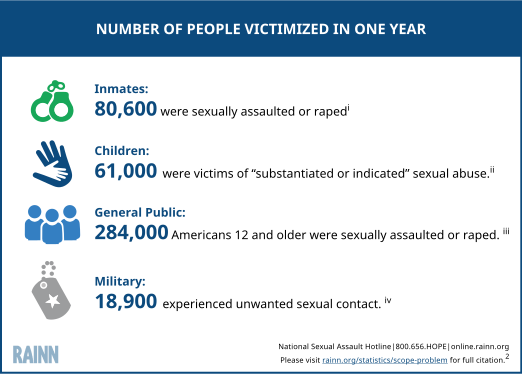
Every two minutes another American is sexually assaulted.

On September 11th the Service Employees International Union (SEIU) discovered that domestic violence is legally considered a ‘pre-existing condition’ in eight states and the District of Columbia and therefore a reason to deny health insurance.  The issue, however, is not new and in fact the Senate HELP committee voted on the issue in 2006; 10 Senators blocked the bill that would have made such discrimination illegal.  Unsurprisingly, all of these Senators are white, male, Republican and over 40.  In contrast, women are 85% of persons affected by domestic violence and the type of cold logic that looks at women in abusive situations as merely not cost-effective is not limited to either the insurance industry or Congress.

Victim-blaming happens every two minutes, at least.  The same neo-liberal ‘pull yourself up by your bootstraps’ discourse that places responsibility for healthcare, childcare, all care really and economic stability on the backs of individuals equally without regard for privilege is used the blame individuals for their situations.  A woman being abused by her significant other, usually but not always a man, is blamed for the fact that this other person has chosen to mentally, physically and/or sexually abuse her and is in turn punished for it by the government and private insurance companies. The primary underlying assumption here: that someone being abused is actively choosing to be there or at least hasn’t chosen to leave. Aside from the gross ignorance and arrogance required to assume that all individuals have the personal financial, legal, physical and emotional capacity to pick up and leave an intimate partner, the fact that U.S. media and society removes all culpability from abusers is in every way abhorrent.  A woman may be a victim worthy of pity, if she never fights backs, but her abuser rarely is affected by his own actions.  Domestic violence is one of the most underreported crimes in the U.S.

The mentality which allows for trivialization of domestic violence plays itself out much more often in the public sphere than the private one.  Anyone who has ever been whistled at, flashed, followed or fondled on the streets could tell you that. Street harassment has been garnering more attention in the last few years and Washington, DC has become a city notorious for the intensity of the harassment that primarily women are subjected to every day on their ways home, to work or anywhere. With even a casual glance at HollaBack DC, one of a dozen blogs nationwide devoted to empowering individuals to end gendered street-based sexual harassment through talking about it (how novel), patterns become obvious.  The victim-blaming myths that preach that women are harassed because of how they act, what they wear and where they are when fall apart.  Harassment and abuse occur because someone chooses to harass and to abuse.  They occur because they happen in a culture which says that abuse is a private issue and that women are asexual and helpless.  Because street harassment, like domestic violence, is rooted in privilege.  It is a reminder that gender must be performed in certain ways and that certain groups are more equal than others.

Street harassment against women is generally committed by men and in DC it seems that most harassment is propagated by men of color.  This is not accidental considering that DC remains one of the most segregated cities in the US and that communities of color in the metro area are disproportionately poor and in the prison system.  While men of color are intensely disempowered, they still are able to gain power and reinforce privilege over women on the street.  Street harassment is the perfect tool for this because it is based in exploiting gendered assumptions of female sexuality, the most effective manner of gender policing in existence.  Whore, slut and cunt are after all still some of the most degrading terms for women in American English.

So what do we do?  The Tokyo police are in the midst of a so-called ‘groping prevention week’ in which police presence on the subway trains is significantly higher and gropers can expect to receive as much as 7 years in jail.  Some trains are even equipped with ‘women only’ cars now, a flashback to the 19th century in which women were seated apart from cars where men were smoking.  It’s swell and all that the government is taking the issue seriously in Tokyo, but this is a band-aid and instead of tearing a little skin, its segregating women and sending people to prison for almost a decade.  Not exactly productive.  In the U.S., gropers, if they were ever actually prosecuted, would have the added joy of being labeled a sex offender for the rest of their lives and be subject severe job and living restrictions.  But, recent events involving Philip Garrido have shown that these sort of punitive measures do little to stop abuse.  Separating men and women more and placing the police in the role of protecting women’s sexual purity is not just a bad idea, but ineffective.  Street harassment, domestic violence, asshole politicians and insurance companies are symptoms of larger privilege based problems which have only been exacerbated by extreme neo-liberal rule for the past 8 years.  There is no singular fix all and none of these things can be solved separately, but empowering discussion and action is a good start.  And getting some of those guys out of government wouldn’t be bad either.

(Image Credit: RAINN (Rape, Abuse & Incest National Network))

ACAS Bulletin 83: Sexual and gender based violence in Africa

Sexual and gender based violence in Africa

A New ACAS Bulletin edited by Daniel Moshenberg

This Bulletin began in response to news reports of “corrective” and “curative” gang rapes of lesbians in South Africa. These were then followed by news reports of a study in South Africa that found that one in four men in South Africa had committed rape, many of them more than once. We wanted to bring together concerned Africa scholars and committed African activists and practitioners, to help contextualize these reports. We wanted to address the ongoing situation of sexual and gender based violence on the continent, the media coverage of sexual and gender based violence in Africa, and possibilities for responses, however partial, that might offer alternatives to the discourse of the repeated profession of shock or the endless, and endlessly reiterated, cycle of lamentation. To that end, we have brought together writers of prose fiction (Megan Voysey-Braig), lawyer-advocates (Salma Maoulidi, Ann Njogu), poets (Chinwe Azubuike), trauma scholars (Sariane Leigh), human righs and women’s rights advocates (Michelle McHardy), gender and transgender advocates (Liesl Theron), activist researchers (Sasha Gear). These categories are fluid, since every writer here is involved in various activist projects, advocates in many ways. The writers do not pretend to `cover Africa’, and neither does the collection of their writings. The writings treat South Africa, Nigeria, Zanzibar, Kenya, Sierra Leone. They are meant to continue certain conversations, to initiate others.

Read more here : http://concernedafricascholars.org/analysis/acas-bulletin-83/

Download the Entire pdf (3.4mb) here: http://concernedafricascholars.org/docs/Bulletin83.pdf

Table of Contents

Sexual and gender based violence: everyday, everywhere, and yet… | pdf
Daniel Moshenberg

Untitled | pdf
Megan Voysey-Braig

Zanzibar GBV advocacy: important lessons for future legal reform strategies | pdf
Salma Maoulidi

Searching for the will to conscientiously prosecute sexual crimes in Zanzibar | pdf
Salma Maoulidi

Poet’s Note | pdf
Onwu Di
Of Widowhood
Chinwe Azubuike

Post conflict recovery in Sierra Leone: the spiritual self and the transformational state | pdf
Sariane Leigh

To be a woman in Kenya: a look at sexual and gender-based violence | pdf
Ann Njogu and Michelle McHardy

Trans-hate at the core of gender based violence? | pdf
Liesl Theron

Manhood, violence and coercive sexualities in men’s prisons: dynamics and consequences behind bars and beyond | pdf
Sasha Gear

Supplemental Material

Profile: Dr Denis Mukwge
Lelly Morris / The Lancet

Interview: Sexual terrorism in eastern DRC
Amy Goodman interveiws Christine Shuler Deschryver

Report: Soldiers who rape, commanders who condone
Human Rights Watch


The Association of Concerned African Scholars (ACAS) is a network of academics, analysts and activists. ACAS is engaged in critical research and analysis of Africa and U.S. government policy; developing communication and action networks; and mobilizing concerned communities on critical, current issues related to Africa. ACAS is committed to interrogating the methods and theoretical approaches that shape the study of Africa.

Critical: Does Social Injustice Alter Our Epigenome (for generations to come)?

A new subset of genetics—“epigenetics”—appeared on the horizon in the 1990s and has been getting a lot of attention lately because it suggests some fascinating and frightening things about how “lifestyles and environment can change the way our genes are expressed” over the course of our lifetime. It has even reintroduced the once discredited idea that “traits acquired during an organism’s lifetime could be passed on to future generations”, and several studies on plants and animals have already shown that such modified gene expression can be inherited. Unfortunately, other more problematic scientific theories—that activists and social scientists worked hard to debunk—are also being resurrected in the wake of epigenetic research, including genetic (or epigenetic) determinism”.

On one hand, research into epigenetics has the potential to strengthen social justice movements, especially environmental justice, by uncovering yet another way in which low-income communities of color are disadvantaged on a global scale. We already know that the so-called “Green Revolution” has wreaked havoc on women’s health, a fact which becomes even more ominous in light of epigenetic research showing that exposure to pesticides (in mice) has negative impacts on their offspring’s health for at least four more generations. This is not good news for migrant farm workers and their families in the United States or Yaqui girls in Mexico who are already unable to breastfeed due to pesticide exposure. Although epigenetic studies of human populations are just beginning, there is already some cutting edge research that supports these findings- for instance, Kaati, et al, analyzed a century of demographic information from Sweden, exposing that even temporary famine experienced by grandparents can affect the life expectancy of grandchildren.

On the other hand, in our neoliberal age that stresses “personal responsibility” it may be more likely that this research will be used to blame people rather than help them. In his appearance on the PBS show about epigenetics, Dr. Randy Jirtle, Director of the Epigenetics and Imprinting Laboratory at Duke University, says that people have a responsibility to consider their lifestyle choices in light of the impact it could have on their children. In a similar vein, Dr. Szyf, professor of pharmacology and therapeutics at the McGill University School of Medicine, explains the relevance of epigenetics for psychiatry as follows:

the environment early in life anticipates the kind of life the person is going to live, for example whether it is going to be a stressful life or a calm life…The mother can convey to the offspring the type of world they are going to live in; that changes DNA methylation in the brain, and now we know, also in peripheral cells… I think that social environment can be as toxic as the chemical environment, if not more so.”

This sounds frighteningly similar to twentieth-century psychiatric theories on the etiology of mental illness- for instance, the once popular belief that children developed schizophrenia because they had a “schizophrenogenic mother”. In fact, schizophrenia.com has already jumped at the opportunity to re-open the mother-blaming theory- the website uses epigenetics to assert that “Research findings suggest that a mother’s parenting style can affect the activity of a child’s genes”, leading to mental illness. As always, no mention of the father’s (or other guardian’s) parenting style here.

In their interview for PBS, Szyf and Meaney explain their research on rats: offspring put in cages with “attentive” females could deal with stress better later in life than those raised by more “neglecting” females. To prove this was an epigenetic response, Szyf and Meaney gave the rats a drug that undoes the effects of epigenetics, which miraculously made the neglected rats “normal” again. How is this a women’s issue? Well, to build on this research there is a “10-year study, now underway, that will look at children from both nurturing and neglected backgrounds”. Szyf predicts that as a result of this research scientists will be able to show how stressful childhoods lead to poor health in adulthood, including depression, anxiety, drug abuse, diabetes, heart disease, and obesity. In other words, being a “neglecting” mom can give your kid heart disease. Surprisingly (or not surprisingly) the show fails to explore the idea that other stresses in a child’s environment—such as aspects of social inequality—might have similar effects. Given that disadvantaged groups, such as low-income African American women, often have disproportionately high levels of these illnesses (depression, obesity, heart disease, diabetes), will epigenetics be used to investigate the links between stress and poverty, racism, and sexism, or to blame these women for their children’s poor health?

In the Psychological Bulletin, Lawrence Harper (Chair of the Human Development program at UC Davis) does argue that social injustice can alter epigenetic expression:

oppression, is another recurrent, if unpredictable, and often long-term event that also meets the criteria for a selective advantage for epigenetic transmission. In this case, the nature of an adaptive response is not so obvious, but some aspects of temperament would be likely candidates for consideration….To the extent that undue bravery in the face of a potential enemy could lead to anything from reduced access to resources to death, caution would be an adaptive trait” (p. 11).

In other words, disadvantaged individuals may pass on “advantageous” personality traits to their children, like timidity. That’s a troubling assertion. Moreover, Harper decides that women are most likely responsible for this: “because the egg provides the larger contribution to the developing zygote, any epigenetic modifications are most likely to be transmitted via the mother”.

Epigenetic research is still in its infancy and there are certainly many scientists—perhaps even the majority—who think that the above studies relating to humans are correlational at best. However, the potential implications of future epigenetic research are virtually endless. In all likelihood, the field will lead to significant advances in medicine, including therapies for cancer that “turn off” the expression of certain genes. Yet the seemingly endless human propensity for using science to support ideological agendas makes it imperative that academics outside of the “hard” sciences, and activists, are included in the discussions about epigenetic findings in the coming decades.

Scatterlings: “Shoot to kill”


At this time four years ago, New Orleans residents of color were being hunted like animals by white citizens and National Guardsmen alike as the waters of Katrina receded…

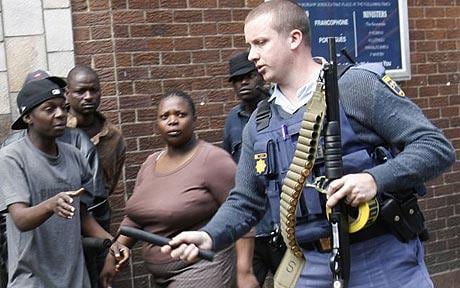
…and now ZA has its own “shoot to kill” policy. On the anniversary of 9/11, it really makes me wonder about how “we” define terrorism. Brutality by the state = law and order, mean to protect “football fans [that] could become easy targets during next year’s World Cup“. The low income (or no income) citizens of South Africa, of course, are always easy targets in the state’s shooting range. Oh wait, did I say citizens? Turns out “those who use illegal weapons would lose their normal rights as citizens“. Is this not terrorism?

It certainly is terrifying, and there are so many more layers yet: the resources being allotted to “security” and construction for this event instead of towards economic justice, the high rates of crime seen as unacceptable for Western tourists but the price of admission for South Africans…and where is the speech at an ANC dinner, the huge push of resources, regarding violence against women and rape?

(Photo Credit: The Telegraph / AFP)

It may be Labor Day in the USA but not for the `un-worthy’ cleaners

Hands in Solidarity, Hands of Freedom mural on the United Electrical Workers building, Chicago, Illinois

It’s Labor Day weekend in the United States, and I’ve been thinking of the names, words, and voices that are consistently dropped out of the public accounts of workers and of labor. They’re stories that are deemed not worth telling or selling. Who decides the value of a story or the worth of a person or a people? Who decides something or someone is beyond worthless, beyond unworthy, is actually filled with un-worth? Consider two stories, from this weekend, that concern cleaners, and how their gender is `of no consequence’.

One involves cleaners at the University of the Free State, in South Africa, the other involves cleaners at GEICO headquarters, in suburban Washington, DC, in the U.S.

In February 2008, four white students at the University of the Free State made a horrible video. According to one report, “The video depicts four white male students taking four black, elderly, female workers and making them down a bottle of beer, run a race, play rugby and then kneel and eat meat which had been urinated on”. According to other reports, it was five Black elder workers, four women and one man.

Whatever the number, the workers were Black, overwhelmingly women, and elders. The media consensus? Racism. This was simply a matter of racism. Why? Perhaps because the students themselves said the video was in protest of racial integration of the residences. Perhaps.

Over this weekend, a full eighteen months later, the South African Sunday Times reports those cleaners, “four elderly female cleaners” are now “still being taunted”, by students, and are still haunted every time they don their cleaner uniforms. They have asked, since February 2008 when the film was made and circulated, for the University to change their uniforms. As of yet, nothing has changed, in either outfit or culture.

The report never deigns to quote any of the cleaners, instead opting only for the words of minister of higher education Blade Nzimande. And so the video remains simply racist. Gender matters not, elder status matters not. These topics are un-worthy.

I’ve been thinking about the names, words and voices of women workers, and in particular cleaners, because of an incident in Washington, DC. “12 union workers” lost their jobs recently when GEICO, the insurance giant, changed cleaners, and in so doing, moved from a unionized company to a non-union company. Service Employees International Union, SEIU, local 32BJ represents `property service workers’, and is staging protests. Washington Business Journal reports on the situation, without any names, other than those of corporations and union locals. Local National Public radio station WAMU reports on the protest, and interviews union district chair Jaime Contreras and company senior vice president Don Lyons. No workers. Radio América interviewed Jaime Contreras, who spoke, compellingly, of the workers’ situation. The television network, Univision, also ran a piece. They interviewed Dima Diaz, of SEIU, and Jose Rafael Cabrera, a dismissed worker. They tried to interview company boss Derek Miller, but no luck.

If you watch the Univision piece, you might notice that the majority of union activists and workers in the piece are women. Where are they in the reports? I am not saying the SEIU or the news media conspired to keep them out. But they did keep them out. It would be surprising if a crew of 17 cleaners was exclusively men workers. In fact, it would be shocking.

I understand that workers, women or men, may not want to have their names shared, might have reasons, many reasons, to protect their anonymity. But their words? As long as women workers, and in particular women workers of color, are kept out of reports of their own struggles, they will be continue to be considered un-worthy of attention, respect or recognition. Those women workers, those cleaners, have names, words, voices.

(Photo Credit: Harvard College Women’s Center)

Martyring the ‘Ballbreakers’

Shrine in memory of Tyli’a ‘NaNa Boo’ Mack

Last Wednesday, August 28th, residents of the 200 block of Q St. NW in Washington, DC were shocked by a brutal assault against two women, one of whom was killed.  Violence is nothing alien to DC, the District was once known as the ‘murder capital’ of the U.S., but this act stands out.  The motive, officially, is unknown.  The act occurred at 2:30 in the afternoon in broad daylight after the assailant had followed both women for several blocks and was exceptionally brutal. Tyli’a ‘NaNa Boo’ Mack was stabbed in throat; her injuries were fatal. The women involved were also both African-American, male-to-female transgender, were possibly been sex workers and there were supposedly several anti-LGBT epithets used by the assailant. The scene was also only a few blocks from a local transgender health center.  Yet, the motive is said to be unclear.

What is clear, other than that the attacker saw them as less than human, is that the media is not entirely sure how to talk about these women.  Different news outlets used several different ways of referring the Mack’s and the other victim’s gender.  A local television affiliate of Fox utilizes no uniform language at all.  Aside from one line mentioning that the victims were transgender women, the piece contains quotes utilizing exclusively male pronouns and refers to Mack by her birth name, Joshua, while focusing almost exclusively on the reactions of neighbors.  The focus is not on the victims but rather fear and the violent disruption of a normally tranquil area.  Coverage by the Washington Post, however, is a step worse.  The Post article refers to the women as transgender people and biological men living as women throughout the piece, again only referring to Mack by her birth name.  The writer, Paul Duggan, seems to be scraping for some shred of objectivity, but his own discomfort is readily apparent.  On the other end of the news spectrum, the Washington Blade, a local LGBT newspaper, utilizes Mack’s taken name and gender while focusing much more on what happened to these women, family’s and friends’ reactions and violence against transgender people more generally. All of these articles relate to the same incident but provide radically different information.  The kicker is that all of this criticism is possible after all of the articles, save Chibarro’s article in the Blade, had already been re-edited.  The original versions all referred to Mack and her friend as “transgender men”. News articles that blatantly disregard the gender identity of Mack and the other victim are no less policing than the act of violence itself.  One is simply more subtle, hiding behind science and journalistic integrity, and reinforces the fears that feed these acts of violence.

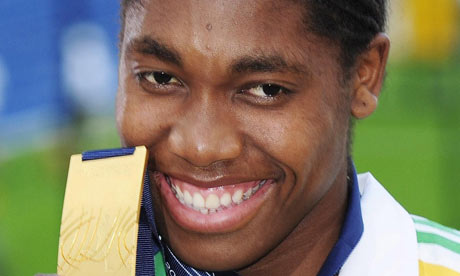
On the other side of the world, the media and science are policing gender more overtly.  Over the last couple of weeks, Caster Semenya has been ever-present in the international press, not because of her 800m win which would have garnered little attention in mainstream press, but because her sex was under scrutiny.  The media’s scrutiny and judgment of Semenya is more obvious perhaps because it is not tempered by a major act of violence.  But words are weapons and they feed already active fires that are raging against women outside of and within the LGBT community.  Semenya was required to take a gender test in order to be eligible to compete because she did ‘too well’ in recent competitions.  Such athleticism is not thought possible for women and Semenya’s muscular body was used as additional evidence to justify the testing.  The fact that she is a professional athlete and that most female athlete’s are muscular does not seem to dissuade the judging officials.

This case is disturbing and unsurprising for several reasons.  First, Semenya’s sex is called into question due to the combination of her athleticism and her apparently masculine or nonfeminine presentation and features.  The assumption is transparent; women are supposed to be soft, white and frail.  It is an assumption and argument that has been at the core of colonial politics and postcolonial politics.  There is actually not a chance in hell that Meadows would have been tested had she ran as well as Semenya did.  Second, Semenya’s family, like President Obama in a surprisingly parallel situation with the birthers, was able to furnish a birth certificate.  However, the documentation provided by a poorer black community in South Africa is apparently not reliable enough to be considered proof of the girl’s sex.  Would it have been has the runner come from a wealthy, Western and white family?  Third, the media has chosen to not only vilify and attempt to embarrass this young woman, but has likewise conflated several unrelated and yet entirely related issues: sex, gender and sexual orientation.  The latter two categories are not actually relevant to the IAAF’s argument of fairness.  The only thing they relate to is heteronormative notions of what it means to be a woman.

The results of Semenya’s test later revealed that she had 3 times the ‘normal’ female amount of testosterone in her system.  This was released on the same day as a BBC article claiming that high levels of testosterone turn women into “risk takers” and “ballbreakers”.  The implication is that ‘masculine’ women are practically not even women and that only masculinity can and should be able to compete in our society. Thus, by questioning her sex so publicly and utilizing gossip and conjecture as evidence, the media has placed Semenya on the 21st century’s version of the pillory.  She is meant to be an example for all young girls, especially if they are darker skinned and athletic, of what they can’t be: strong. In the same way, Tyli’a Mack was publicly murdered to warn against those born male being anything other than hypermasculine.

Caster Semenya

(Photo Credit 1: Washington’s Other Monuments) (Photo Credit 2: John Giles / PA / The Guardian)

The sky that knows no borders

This week’s New York Times Magazine is titled “Saving the World’s Women.” That’s an unfortunate title, made worse by the title of the lead article, “The Women’s Crusade” by Nicholas Kristoff and Sheryl WuDunn. Does The New York Times understand the word crusade? Just this month, Blackwater’s founder/owner Erik Prince was reported to think of his company’s mission in Iraq as a holy Christian crusade, “tasked with eliminating Muslims and the Islamic faith from the globe”. It’s The New York Times that broke this news: “C.I.A. Sought Blackwater’s Help to Kill Jihadists”. The Crusades come in many guises, and yet only one form.

“The Women’s Crusade” is nestled in a curious neighborhood of articles. “A New Gender Agenda” offers a fairly adulatory interview with Hillary Clinton, while “Madame President” offers a fairly adulatory interview with Helen Johnson Sirleaf. “A School Bus for Shamsia” tells a personal account of trying to do good for and by girls in rural Afghanistan: “it turns out that giving isn’t always easy.” An article on women’s philanthropy, “The Power of the Purse,” suggests that women giving to women in need actually isn’t all that complicated.  What’s complicated, according to “The Daughter Deficit”, is that in China and in India, “development” has not eradicated prejudice against nor disappointment in the birth of girls. To the contrary, modernity and prosperity have seemingly worsened the situation. And the last story, “Truck-Stop Girls”, is the `human interest’ piece. It combines a U.S.-based international aid worker, a Swazi sex worker, tears, compassion and wisdom. The issue as a whole follows a fairly predictable script, that of liberal concern for the poor women of the world.

Kristoff and WuDunn’s article centers on personal accounts of women’s heroic efforts to organize their own individual resources and those of their communities. These are contextualized by statistics that show how women in developing countries have it hard, especially when compared to the lives of women in economically `advanced’ countries.

The article is framed by “the sky”. Near the beginning, the authors note, “`Women hold up half the sky’, in the words of a Chinese saying.” That sky all but disappears until the very end, the story of Tererai Trent, a young rural Zimbabwean woman who struggled and organized, with the aid of an international agency, and managed to get an education, and is managing now to further her education, in the United States. Here’s how the article ends: “There are many metaphors for the role of foreign assistance. For our part, we like to think of aid as a kind of lubricant, a few drops of oil in the crankcase of the developing world, so that gears move freely again on their own. That is what the assistance to Tererai amounted to: a bit of help where and when it counts most, which often means focusing on women like her. And now Tererai is gliding along freely on her own — truly able to hold up half the sky.”

Individually, these are important and inspirational stories, stories to be shared and celebrated. At the same time, taken together, they are haunted by that sheltering sky.

An incautious or quick reader would think that the sky only exists in `distant places’, such as Zimbabwe, Swaziland, Liberia, Kenya, India, China, Afghanistan, Pakistan. An incautious or quick reader would think that there is no sky to be held up in the United States. That reader would never know that women of color, immigrant and native-born, comprise the fastest growing sector of the prison explosion in the United States. That reader would never know that women of color, immigrant and native-born, constitute the material as well as political body of the domestic service sector, one of the fastest growing in the United States, and, structurally, one of the most prone to abuse and super-exploitation of workers. That reader would never know that women of color have been targeted for violence, by policy makers and legislators, by law enforcement officers and prison staff, by employers and urban renewal `developers’. That reader would never know of the Crusade against women, and especially women of color, that goes on now, in the United States.

Women in the United States, and especially women of color, irrespective of where they were born, also hold up half a sky, also know themselves to be part of “a powerful truth: Women and girls aren’t the problem; they’re the solution”. The sky that knows no borders, and recognizes no crusaders, sits over all woman, everywhere.

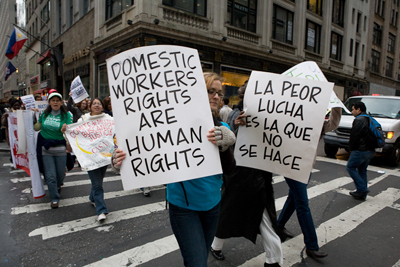
(Photo Credit: NYC Independent Media Center)

Security of Sex: Legally Bound (and Gagged)

In the good ‘ol US of A, we’ve been seeing some odd juggling around not just civil but human rights under the new administration. President Obama has been under fire for reneging on his campaign promise to repeal Don’t Ask Don’t Tell and for offering support of DOMA, though Obama recently issued a statement negating his previous statement. And the good news has been that there has been vigorous debate and even some voting regarding the Matthew Shepard Act.  These three issues are supposed to represent the pinnacle of LGBTQ rights in America: the right to shoot people for my country, the ability to legally enter into a heteronormative institution and the ability to put more people in jail for longer. OK.  These are considered basic civil rights that affect the entire ‘community’.   The problem is that none of these topics actually relate to the needs of the larger LGBTQ community, because is there is no community, no consensus.  The only thing uniform about this community is that there are individuals across every major racial group, ethnicity, gender, sex, religion and class that consider the ability to discriminate and even harm LGBTQ persons a necessary right.  Such universal disempowerment only exists for one other group: women.  Despite this, the larger issues affecting the LGBTQ community of domestic and sexual violence and abuse, unusually high suicide rates, under-education, harassment both generally and by police, discrimination, heteronormativity, etc. are overwhelmed by marriage, military and prison. Sound familiar?

Meanwhile, the struggle for ‘equality’ looks a little different in South Africa, but only a little. Africa’s largest economy has had full legal equality for LGB persons since the ratification of the post-Apartheid constitution, gender identity and expression or transgender rights are not listed.  Despite having one of the most liberal constitutions in the world, South African LGBTQ persons are commonly subject to brutal acts of violence.  And they aren’t the only ones.  In particular, African lesbians in South Africa have been explicitly targeted for gang-rapes.  I’ve talked about this particular situation before, that women and specifically queer women are targeted is no accident.  That these acts are not causing mass outcry or even being consistently investigated is no accident.

The United States of course is no better we just have a legal term for these types of acts. Individuals who commit these ‘hate crimes’ are often portrayed as either marginal and extreme or victims themselves of an awkward circumstance, in South Africa they are generally faceless groups of males, assumedly black.  Such portrayals justify larger apathy and inaction by removing these acts from the larger debate. When violence against LGBTQ persons is mentioned as being part of larger systemic prejudices, it is usually to say that violence is caused by laws against LGBTQ persons, that it will wane once there is full legal equality.   It is the same argument that has been used for women for more than a century.  Yet, the elephant in the room is the fact that South Africa has those legal rights that the mainstream American LGBTQ organizations are hung up on and not only are LGBTQ persons in South Africa not equal, they are the subjects of intense discrimination and violence.  Full legal equality, whatever that means, will not magically create a society of equals because the issue is only in part about laws.  It’s like giving someone painkillers and saying it will cure cancer.  No amount of legal progressivism will undo the damage of a country’s President making a mockery of rape and being elected despite it.  It is primarily about power and how disempowered groups are balkanized and ranked creating a system in which low class African males in Johannesburg and minority males in California gain power through the gang-rape of lesbians.

Reliance on law, regardless of whether or not the laws are good, has not accounted for a lack of willingness to enforce.  The U.S. is established as the imprisonment capital of the world and South Africa is playing catch up.  If a state emphasizes that criminalization and long sentences equal justice but refuses to actually prosecute or even investigate acts of violence against LGBT persons, of color and women especially, then that government not only seems to condone these actions but sends the message these are just actions.  They are public services.  It’s the same message that both the Apartheid and Jim Crow governments sent in their heydays.  Yet, now the messages are masked by so called legal progresses. The moral of the story remains the same as it has always been, ‘no one’ cares if you are poor, black, queer and/or female, no matter where you are.

(Photo Credit: DavidMixner.com)