Deported children haunt the world

Emily Samantha Ruiz

A radio broadcast town meeting was held today in Fairfax, Virginia, a community renowned for its public school system, to discuss discipline in the Fairfax County schools. Near the end of the hour-long discussion, the moderator, Kojo Nnamde, presented a scenario based on a recent event, in which a six year old child was found to have brought cocaine into school and shared it with his friends. What is to be done? Should the child be expelled?

Tina Hone, Fairfax County School Board member, responded, “He’s a six-year-old. And what lesson are we teaching a six- or seven-year-old child by expelling him?… It is a six-year-old child. I am not going to label a six-year-old child for the rest of their lives as a drug dealer. I’m not going to do that… It’s a six-year-old child, for God’s sake. I think we need to think about that.”

We need to think about children, because children are being actively forgotten by the State. Children are addressed instead as surplus populations and disposable objects. Nowhere is this more evident than in the willingness of modern so-called democratic nation-States to ship off children, six years old, seven years old, four years old. The line from primary school expulsion to national deportation of very young children is a straight line, and it is the measure of our current historical moment.

Consider Emily Samantha Ruiz.

Emily Samantha Ruiz is four years old, a Long Island tot, a four-year-old little girl, a very little girl. Emily Samantha Ruiz is caught in an immigration snafu or perhaps quagmire. Emily Samantha Ruiz is currently in Guatemala, to which she was deported. Emily Samantha Ruiz is a United States citizen. Her parents are both undocumented residents.

Emily and her grandfather, who has, or had, a work visa, went to Guatemala, to visit family, to get away from the harsh winter and its impact on her asthma. On their return, as they came through Dulles Airport, in Virginia, the grandfather’s name came up at Customs and Border Protection, CBP, as having perhaps committed some immigration infraction twenty some years ago. CBP won’t reveal the exact details. The grandfather was detained. The parents were calling everywhere to find their daughter. They contacted a CPB agent, who asked if either was in the country legally. Mr. Ruiz responded they were not. The agent replied that the options were Emily could go enter the custody of the State of Virginia or return to Guatemala with her grandfather. The Ruizes were terrified that `custody’ would result in adoption. Likewise, they had reason to fear that if they showed up to pick up their daughter, her `custodians’ would arrest them. They `opted’ to have Emily return to Guatemala with her grandfather. The government says it did nothing wrong, played by the book, followed the rules.

What are the rules?

The public discussion of this event has focused, rightly, on the fact that Emily Samantha Ruiz is a U.S. citizen. Her citizenship is indeed important. So is her racial and ethnic status. So is her language.

But let’s not forget, Emily Samantha Ruiz is a four-year-old child, for God’s sake. “I think we need to think about that.” Emily is part of a global phenomenon in which nation-States – in the name of sovereignty, security, protection, even democracy – actively forget their responsibility to remember that children are children. What lesson are we teaching those children? Deported children haunt the modern world.

(Photo Credit: NY Daily News)
We can’t talk to the imprisoned women, but we can chant with them

Saturday, 5th of March 2011

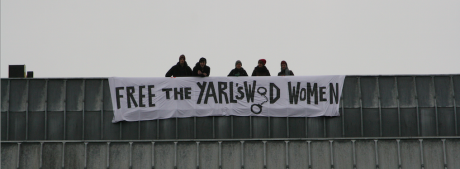
It is wet and foggy in the fields of Bedfordshire and our shoes fill with mud as we walk away from the group of policemen that have followed us in a circle along the fences of Yarl’s Wood migrants’ detention centre. This Saturday, the 5th March, as women demonstrate in London at the start of International Women’s Week, a group of migrant rights, no border and feminist activists travel to Bedford to bring our solidarity to the migrant women (and men) detained in Yarl’s Wood. We manage to reach the women locked in one of the units. At a distance, we can’t talk to the imprisoned women, but we can chant with them. We cannot hear exactly what they say but one message arising across the barbed wires is simple, loud and clear: ‘freedom, we want freedom’.

Yarl’s Wood is one of the seven privately run ‘Immigration Removal Centres’ in the UK, detaining ‘irregular migrants’ on behalf of the UK Border Agency. Initially the building accommodated 900 people in two blocks, making it the largest immigration prison in Europe. In February 2002 the capacity of the centre was reduced after one of the buildings was burnt down during a protest organized by detainees against staff harassment. At present the centre is composed of 4 units ‘hosting’ about 400 people.

In February of last year, the situation in the removal centre again exploded. The horrible conditions of detention were denounced by migrant detainees as some women decided to start a hunger strike demanding an end to indefinite and abusive imprisonment. In an attempt to end their protest, the management subjected many of the women to violent attacks and various forms of punishment. At that time six women detainees, accused of being ‘ring-leaders’, were moved into isolation and prisons.

On the 25th January, after almost a year in Holloway prison, Denise McNeil, one of the `leaders’, was granted bail at an immigration court. Two women still remain in jail without charge: Aminata Camara and Sheree Wilson. Activists from the campaign to Free the Yarl’s Wood 3, including members of No One is Illegal, No Borders, Crossroads Women’s Centre, Communities of Resistance, Stop Deportation Network and members of the RMT, filled the court for Denise’s bail hearing. They provided an important support and will keep campaigning ‘for Sheree and Aminata and all the people in Yarl’s Wood until the centre will be closed’. (For updates, see Free the Yarl’s Wood 3 campaign Facebook page http://www.facebook.com/pages/Free-Denise-Now/174533002581566 and Twitter feed: @freedenisenow. Also see the NCADC site: http://www.ncadc.org.uk/campaigns/DeniseMcNeil.html).

The reasons for the detention of people in centers like Yarl’s Wood are multiple, and sometimes quite different. One of the activists involved in the campaign to support the hunger strikers explained to me that many of the women who end up in detention have already served a prison sentence, often for a minor offence, such as using fake documents to travel or work. Rather than being released, these women are transferred back to detention as a ‘second punishment’ where they wait for their immigration case to be cleared and eventually granted status or deported. They are trapped in an indefinite space of juridical and existential limbo, from one prison to the other, on the grounds that their migration case is still ‘pending’: they cannot be returned to their country of origin (on complex juridical or humanitarian grounds), and yet their status as asylum seekers is not recognized either.

Denise has just been released on bail, and her status, as well as her future stay in the UK, remains uncertain. However, her case shows how important the external support of migrants’ rights activists to sustain legal individual cases can be by helping access legal advice and to build publicity around their otherwise invisible stories.  While it may appear only a small achievement, these forms of solidarity provide the migrant women with encouragement and help instill confidence as they engage in the hard battles for freedom of movement and the right to stay in a country where they have worked and toiled for many years. In many cases the women are ‘caught’ by the UK Border Agency after many years of residence in the country, where they have probably built a family, found work and made a home. This is a typical story for the women detained in Yarl’s Wood.

(Photo Credit: Open Democracy / IndyMedia.UK)

Domestic workers Mwanahamisi Mruke and R Pranathi haunt labor

R. Pranathi’s relatives argue with police

Mwanahamisi Mruke and R Pranathi are two faces, two names, for global domestic labor. Perhaps they are the same face, the same name.

R Pranathi is a domestic worker in Ennore, a suburb of Chennai, India. For the last four months, she has worked as a household worker in a constable’s family. She comes from a poor family. She has worked in the house and taken care of the couple’s child. Pranathi is known as “a brave girl who would fight eve teasers in the locality.”

Pranathi is 14 years old, and she is dead.

The couple’s story is that the girl suffered stomach pains and hanged herself. People from her hometown and members of the Tamil Nadu Domestic Workers’ Union have a different story: the girl was raped, murdered, and then `translated’ into a suicide.

Whether or not Pranathi’s death was murder, and one suspects it was, the story of domestic workers being killed and then translated into suicides occurs every day, all over the world. Some gain some notice, such as the 31-year-old Nepalese domestic worker Samoay Wanching Tamang, who died by hanging in Lebanon in late February. Others simply vanish into the void. Some deaths are said to be mysterious, others are allegedly clear-cut. What is not mysterious is that domestic workers are dying, at work, across the globe, at an alarming rate.

Domestic labor is a growth industry, but it is also a labor killing field. And the ways of dying are many, some swift, others slow.

Mwanahamisi Mruke suffered the slow death. In October 2006, Mruke left Tanzania for England, where she had been promised employment as a domestic worker. She left her home and homeland for higher wages that would allow her daughter Zakia to attend college. She went to work for Saeeda Khan, a widow with two adult disabled living children, a hospital director with a good job. Khan kept Mruke a slave for the past four and a half years. Mruke’s passport was taken away, she was not allowed to leave the house, she worked from six am to midnight, sometimes more. Mruke was forced to sleep on the kitchen floor. After the first year, Khan stopped paying the worker. She was “treated like a slave.” Slavery, as sociologist Orlando Patterson explained in his magisterial work, Slavery and Social Death: A Comparative Study, “the slave’s powerlessness was that it always originated (or was conceived of having originated) as a substitute for death, usually violent death.”

On Wednesday, March 16, 2011, in a groundbreaking case, Saeeda Khank was found guilty of trafficking a person into the United Kingdom for exploitation. Mwanahamisi Mruke is now pursuing a civil suit.

These stories are an intrinsic part of the fabric of global waged domestic labor, one of the major growth industries of the past three decades worldwide. On one hand, they tell the story of terrible employers. Venal, corrupt, violent and vicious. It’s an important story to tell.

But there’s another story as well, that of the isolation, the silence, the exclusion of domestic workers from the world of workers and of labor.

This year, on May 1, 2011, Hong Kong will implement a Minimum Wage Ordinance. The new legislation will apply to full-time and part-time employees, regardless of whether they are employed under continuous employment contracts. Anyone who has been employed continuously by the same employer for four weeks or more, with at least 18 hours worked in each week, will be covered.

Almost anyone, that is: “the MWO does not apply to certain classes of employees, including live-in domestic workers, certain student interns and work experience students.”

In British Columbia, in Canada, this week, the minimum wage has been increased for the first time in ten years. This is good news, but does it cover domestic workers? Jamaica awaits a government study on livable wages. Will the study consider domestic workers?

In June 2011, the International Labour Organization may adopt a Convention on the rights of domestic workers. If so, it would aim to strengthen legal protection for the billions of paid domestic workers around the globe. The ILO Convention could be an important step. But it depends on the language of respective member countries’ labor laws.

Until the trade union movements formally include domestic workers in every worker protection campaign, in every campaign and action, billions of paid domestic laborers will remain super-exploited and under a death sentence. Employers have indeed been known to isolate, imprison, torture, and even kill domestic workers. But the rest of us, in our day-to-day failures and refusals to see domestic workers as real workers, and domestic labor as real labor, exclude, silence, and isolate precisely those workers.  Mwanahamisi Mruke and R Pranathi haunt us.

(Photo Credit: The New Indian Express)


Sendai, Fukushima, and the narrow road to the ancients


The road to the ancients, this week, is a narrow path to the north. It is composed of the dead, the suffering, the children and the elders and the pregnant women. It began with crushing noise followed by obliterating silence, and now … the return of black rain.

In Port-au-Prince, this week, people shudder, look at one another and whisper, “Nous sommes tous Japonais.” We are all Japanese.

We are not all Japanese, but we are all stunned. What are we to say, to think, to feel, to do as the images continue, as the news worsens, as our heads continue to shake in disbelief and our tears continue to sting?

The evacuation proceeds. Some say the evacuation is too cautious, too reactionary.  When nuclear reactors are threatened, when there is a danger of radiation leakage, as clearly there is in Fukushima, remove the pregnant women, remove the children, remove the elders.  Do it whether or not the reactors have blown, exploded, ignited. Do it in advance. That is a lesson of Chernobyl, especially for pregnant women. That is a lesson of Three Mile Island, especially for children.

The elders suffer particular hardships in the disaster in Sendai. First, Japan is the most rapidly aging country in the world, with the longest life expectancy. Women live to 86 years old, men to 79. More than 20 percent of Japan’s estimated population of 127 million is over 65 years old. 20 percent of Japan’s elders live in poverty. Elder care has been a crisis for some time now.

Second, Sendai is an area with many elders. Some came for the `peaceful’, and less costly, life. Others have lived their lives in the Tohoku region, in the northeast of Japan, and have watched as the younger generations moved south, to better jobs, to the metropole.  The tsunami struck an area with a higher proportion of elders.

The earthquake, the tsunami, the flames and the radioactive leaks struck at the most vulnerable. They came down, and continue to come down, on the deep north of the country, which is also the interior, the inner recesses, even the dead-end.

On the 16 May 1689, at the age of 45, the poet Matsuo Basho set off, with a companion and friend Sora, to walk to Oku, on the island of Honshu. His travel journal, if it can be called that, Oku no Hosomichi, is said to be one of the most revered literary texts in Japanese history. Its title is variously translated as The Narrow Road to the Deep North, The Narrow Road to Oku, Narrow Road to the Interior. Upon his return to his home in Edo, Basho spent the next three years editing and revising the journal, which he completed in 1694. Then he died, and the book was published posthumously.

The journey began: “Days and months are travelers of eternity.  So are the years that pass by. Those who steer a boat across the sea, or drive a horse over the earth till they succumb to the weight of years, spend every minute of their lives, travelling. There are a great number of ancients, too, who died on the road.”

At one point, Basho and Sora arrive at Sendai. It was a day of celebration, in which residents tied blue irises to the eaves and roofs of their homes and prayed for health. The travelers stayed for a few days, prayed, relaxed, sought out a famous painter Kaemon, and then moved on. They followed a map drawn by Kaemon and came to a monument, over a thousand years old, and paused:

“In this ever-changing world where mountains crumble, rivers change their courses, roads are deserted, rocks are buried, and old trees yield to young shoots, it was nothing short of a miracle that this monument alone had survived the battering of a thousand years to be the living memory of the ancients. I felt as if I were in the presence of the ancients themselves.”

On the road leading out of Sendai to the deep north, the poet Basho came face to face with time, with timelessness, and with the ancients. And he knew joy.  What would he know today?

This week, the road to the ancients is once again a narrow path to the north.

(Photo Credit: Fukushima `Black Rain” by Soichiro Koriyama)

In the steam room: not the cricket thing to do

This may be surprising but the topic of sport can easily raise the temperature in the steam room.

Yep, we talk about sport in there and it’s usually when one of two extremes happen: we won or we lost. Imagine that!!  There’s not much focus on amazing agility or magical manoeuvres. It’s all about whether our team did us proud or not. And the code of sport is not really of consequence. But this Sunday things got a bit hazy in there. Yep we beat India in the cricket match when there seemed little hope of winning. But the glory of this victory was clouded by the previous loss against England.

As I watched wicket after wicket fall in the SA vs England game, my other fallen hero, Hansie Cronje, then captain of the South Africa cricket team and who had confessed to match fixing and taking bribes, came to mind. In the glory days after apartheid I believed he was the role model of sportsmanship, of integrity and doing the right thing on the sports field. But then my hero went up in flames when his crooked ways came to light, this being followed by his plane crashing against a mountain.  Talk about divine justice. Sadly the apologies and explanations of being led by the devil did not heal my broken heart. And making a movie about it all seemed like just another get rich ploy.

Today our newspapers are filled with stories of struggle heroes and comrades getting sickeningly rich through tenders to build national highways and collecting tolls. On the one hand we cannot build roads at the expense of the national treasury. We are not a socialist state and we have to live in the real world.  And of course we cannot become a ‘welfare’ state. Let’s forget for a moment that the state is  the main source of sheltered employment (those endless circles of de ja vu are driving me batty). Someone must pay for the roads. Forever. On the other hand let’s nationalise the mines. After all we professed socialism. Mmmmm impending implosions?? And for whom do these bells now toll?

So we girls added more lavender to the steam, waddled over to our bits of colourful towels, and found momentary solace in the professed peacemaking of lavender. Somehow Cosmo seemed more plausible than anything in the real world at this moment.


Zimbabwe Voices: ALICE: That bullet is yours

ALICE: a former organizer, cross-border trader and domestic worker, aged 42, interviewed in a safe house.

In winter it gets dark early. It was some time after six p.m. and it was dark. Three cars full up with people drove up to my house. This was the 7th of June, 2008. When I heard the sound of cars, I looked through the curtain and saw that it was bad. There was nowhere to run. They were wearing army uniforms, not the militia uniforms of the Green Bombers8 but camouflage, the Zimbabwean army uniform, and they were armed with guns. They all got out of the cars. Some jumped over my gate. They found my stepson and started beating him, because he could not get the door of my bedroom open. He was trying to insert the key but I holding the key on my side. When I realized that they were beating him, I came out. I said, Please don’t beat up my son. He has done nothing wrong. I am the problem because I am a member of MDC. They said, Are you showing off with your MDC?

They went into my bedroom and started searching. They found MDC posters and flyers and T-shirts. They told me to carry all the stuff out of the house. They left my stepson and took me in their open truck, a cream Mitsubishi. I was sitting in the back, in the middle, and they were surrounding me, sitting on the sides. They were all beating me, kicking me and hitting me with sticks and fists. Some were saying that they wanted to throw me into the dam. Another car stopped and someone inside said, Did you find her? and they said, Yes, we did.

They wanted me to tell them where the MDC MPs lived, the MDC youths’ houses, the councillor’s house. That’s why they were beating me up—because I was refusing to tell them. They were saying, So you are be-ing like Jesus, who died for others? And now are you going to die for those people? I said, No. Whoever showed you my house should have shown you all the other houses. They said I was rude. They beat me up so badly. After that they said, Take off your clothes.

When I removed my clothes, just before we got to the Methodist church, they stopped the car in the dark and there they raped me. There were many soldiers. I don’t know how many raped me. I saw the first eight men who raped me but then I became unconscious.

I think they threw water on me because I became conscious just before we got to the police station. They said, Put on your clothes. I refused. They said, You don’t listen. In the end, I put on my clothes. When we got there, they said, Get off and carry your stuff. I got off the back of the truck but I couldn’t even walk. I fell down and they said Get up and I did.

Inside, when they got behind the counter in the police station, they threw a bullet at me and said Kiss it and I did, and they said, That bullet is yours.


(Annie Holmes and Peter Ortner edited Hope Deferred: Narratives of Zimbabwean Lives (McSweeney’s, 2010), the fifth volume in the Voice of Witness Series. Thanks to Voice of Witness for sharing the excerpts in this series.)

Black women prisoners haunt International Women’s Day

BobbyLee Worm

Stacey Lannert grew up in the middle of the United States, in Missouri. Her father sexually abused her, starting when she was eight years old. On July 5, 1990, at the age of 18, Lannert walked into her father’s bedroom and shot him, twice, killing him. The `final straw’ was her father raping her younger sister. Two years later, in December 1992, Lannert was sentenced to life in prison without parole. In January 2009, at the age of 36, Stacey Lannert was released, thanks to the outgoing Missouri governor, Matt Blunt, who commuted her sentence: “After eighteen years, I was allowed to be Stacey Ann Lannert instead of Offender #85704. I’ll never completely shed the number, but I did start over.”

Wilbertine Berkley would like to start over as well, but the State of Florida has other plans.

In the United States, over five million people cannot vote because of past criminal offenses. One million of those people live in Florida. In one state alone, a million people who have served their time are disenfranchised. Of that million, almost 300,000 are African American.

Wilbertine Berkley is a Black woman in Florida who struggled with drug abuse, spent time in jail, turned her life around, joined a program, got clean, went to college, and gave back to the community in volunteer work. She was awarded the Presidential Volunteer Award. She did everything she was supposed to do and more, and the State response has been to `alienate’ her, to identify her as frozen in the past. Her good work counts for nothing.

Tomorrow, Wednesday, March 9, 2011, the Florida Board of Executive Clemency will vote on whether to make it even more difficult for former prisoners to be re-instated. The proposed change would include a five-year mandatory waiting period before being able to apply for `clemency’. Florida’s Attorney General sees this as a fight against entitlements: “I believe that every convicted felon must actively apply for the restoration of his or her civil rights and that there should be a mandatory waiting period before applying. The restoration of civil rights for any felon must be earned, it is not an entitlement…The burden of restoring civil rights should not fall on the shoulders of government, but rather it should rest on the individual whose actions resulted in those rights being taken in the first place.”

Wilbertine Berkley wants and deserves respect for who she is today, for who she has become, for what she has made of herself and of her world. She made a mistake. She worked hard. She paid her debt.

But for Black women, the debt of incarceration is the gift that keeps on giving.

Ask BobbyLee Worm. BobbyLee Worm is a 24 year old aboriginal woman prisoner in the Fraser Valley Institution, a Canadian federal prison that describes itself as “a multi-level facility for women…. Programs focus on the particular needs of women offenders, including Aboriginal inmates and those with psychological problems or learning disabilities.”

One of these particular programs is called Management Protocol.

Management Protocol is “a special program for handling women prisoners who have been involved in a major violent incident or threat of incident while in the system.” Established in 2005, seven women prisoners have been on Management Protocol. All seven have been aboriginal women.

Management Protocol is open ended, unrestricted solitary confinement. Twenty- three hours a day for as long as the prison deems `adequate’ and `necessary.’ How does one leave Management Protocol? One earns one’s way out. How does one earn? What are the wages? No one knows.

BobbyLee Worm entered prison June 7, 2006. She is a first time offender, sentenced to six years, four months. She has spent the majority of her time in segregation, paying off the debt of years of physical, emotional and sexual abuse and trauma. For Black women, the debt of incarceration is the gift that keeps on giving.

These stories are typical of the conditions of women, and girl, prisoners around the world. Girls whose only `crime’ is being the daughters of asylum seekers, or of being born into oppressive communities, are stuck into detention centers, such as the Inverbrackie Detention Center in Australia. Once there, they suffer nightmares, turn violent, and refuse to eat. What is their crime, what is the debt to society that must be paid? They were born in Iran, they sailed to Australia.

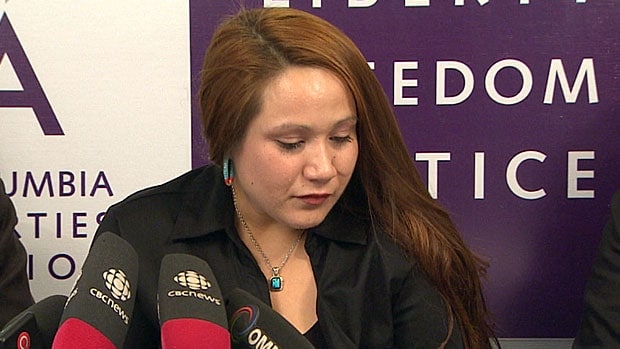
Around the world, women of color, Black women, and their daughters, sit in prisons. Their debt grows incrementally by the second. Their numbers grow incrementally by the day. Today is March 8, 2011, International Women’s Day.  These women prisoners haunt International Women’s Day.


(Photo Credit: British Columbia Civil Liberties Association)

In the steam room: Born in the you of SA

Some may call this past week in South Africa a turning point. I won’t. Because I think we are probably embarking on our fourth or fifth concentric circle now. It’s so dizzying and I have lost count. Racial identities and identifiers twirl in a myriad of hues in this rainbow nation.  So while leading political figures point accusing fingers and shout you are colored, you are black, but not quite, you are a gangster, you are a racist, I am left reeling and wondering who I am.

Some years ago it was all crystal clear. I knew that I was a South African fighting the evil of apartheid. Although I ate curry and rice and spoke Tamil, I knew I was not Indian. Some weeks ago I was sitting in the steam room and was trying to chill out by adopting a meditation pose, closing my eyes and desperately trying to ‘smile with my liver’ as Julia Roberts advised in ‘Eat, pray love’, I sensed a small movement to my right. Not assuming this to be any kind of political positioning I was mildly taken aback when a strong and delectable Indian accent accosted me with the words: “Are you from India”.

True, I was wearing bangles. True I had a Lutchmi red string on my hand. True I had a coloring that could be construed to be originating somewhere in India (nobody in my family actually knows where and this has not unduly disturbed us, nor has it been of any interest to us). I was quick to say no I was not and that I was (I think) fourth generation South African. It turns out of course that my detractor was indeed Indian, no less than the wife of the deputy ambassador to South Africa, a lively and wonderfully engaging woman who was fun to talk with.  She was quick to apologize for the assumption that I was Indian (perhaps the steam room did not quite warm up the chill in my reply) and said she had noticed my bangles and thought that I may have been from Indian. Good diplomatic training. Given that we are all sitting around naked in the steam room, bangles could probably pass for one of the few legitimate items we could focus on, without crossing any borders, imaginary or otherwise. We laughed about family, about her mother the strong and powerful women in her life, her own determination that one child was enough, her love of having her own job despite being a ‘diplomatic wife’. I secretly chastised my own preconceptions that expected from her a bride like shyness found only in Bollywood movies. And so a friendship was born. We exchanged advice on where to buy good fresh fish, how to survive Pretoria and promised each other that we were going to knocks the socks off the other in the next cricket season. I was proudly South African.

This week as I read the vitriolic attacks among leading political figures I find no place to belong. In the accusing voice of “you” reverberating though my country, while masculine and political posturing signal ever increasing battle lines, I wonder who ‘we’ are. There is no longer an ‘us’.  What is the legacy I hand over to my amazing daughters?


The murdered mothers of Côte d’Ivoire continue their march


On Thursday, March 3, 2011, there was a women’s march for peace in Abobo, a suburb of Abidjan, in Côte d’Ivoire.  This was not the first women’s peace march in Côte d’Ivoire. In the past weeks, the violence of the `stalemate’ has both increased and intensified. Neighborhoods are regularly tear gassed, houses invaded, men taken off. One side attacks, the other responds with either greater force or at the very least with the threat of greater force. Barricades are met with tanks, tanks are met with paving stones or with petrol bombs. Blood flows, and then more blood flows.

The women of Côte d’Ivoire have lived through this. They have lived through the intensification and expansion of violence before. They have lived through the increase and intensification of sexual violence as well. They have experienced rape used as a weapon of war, in not so distant times of `civil strife’ and of `national stalemate’.

The women of Côte d’Ivoire have lived through incarceration at the infamous Maison d’Arrêt et de Correction, or MACA, reputed to be one of the worst on the African continent. They have lived through the torture, the massacres, the brutality, the lethal conditions of MACA, where any sentence is a virtual death sentence. They have lived through the brief improvement of conditions, only to see them deteriorate into even worse depravity. The women of Côte d’Ivoire know the meaning of `civil strife’, of `national stalemate’, of mass and targeted detention.

And so they have organized. They have organized women’s marches, peaceful marches, marches of peace.

The women march because they do not want to become the mourning mothers, nor do they want to become the grieving widows. They know there is an alternative. They march for an immediate cessation of the violence, in their own names, in the names of their children and of their partners.

Last Friday, February 25, 2011, the women of Treichville, a district of Abidjan, organized a march. They marched “to liberate our husbands and children.” Five hundred or so women marched, with whistles, banging pots and pans. They were followed by the security forces. Men armed to the teeth surrounded the women on both sides. The women sat down in the street then, and shouted, “”Tirez-nous dessus, qu’on en finisse!” Roughly translated: “Attack us then, and be done with it.” And with that, the women took off their clothes. They sat in the street, naked, and dared the police, the armed forces, the paramilitaries, to come forward. They sat naked in the street, and they said, “So much blood has flowed. We have nothing to lose. We are not afraid to die. We are not afraid of you. We are not afraid of men with guns.”

Six days later, on Thursday, the women of Abobo took to the streets.

Suddenly, tanks appeared, men with guns appeared, gunfire exploded, women ran for shelter, and seven fell, dead. According to one eyewitness, “We were slaughtered. Eight women, including a pregnant woman, were killed on the spot. During the shooting, a bullet blew open the head of one of the victims. It was the first time I had seen someone’s brains out. As for the pregnant woman, her belly literally exploded. We have no idea why they shot at us. We were just a gathering of women, nothing else but women.”

Men with guns, men with tanks, fear women with whistles and pots and pans. Men with guns fear women’s autonomy, they fear an alternative to the exclusive power of violence. Why else would they murder the innocents? The murdered women of Côte d’Ivoire continue to march, continue to blow their whistles and bang on their pots and pans, continue to sit down in the streets, continue to strip naked, continue to demand their bodies be recognized, continue to demand the peace of justice, the justice of peace. Those women, the women of Côte d’Ivoire, haunt the world.


(Photo Credit: France 24 / AldoLaClass)


Forty abducted women prisoners haunt New Jersey


In March 2007, forty women were abducted.

The New Jersey Department of Corrections is made up of thirteen centers, facilities and prisons. The Edna Mahan Correctional Facility for Women, EMCF or EMCFW, is the only women’s prison in the state of New Jersey. The New Jersey State Prison, NJSP, is a men’s maximum-security prison.

These two prisons are night-and-day different. EMCFW has programs for survivors of domestic violence, parenting skills programs, and family unity programs, which include greater opportunity for family visits and contacts. EMCFW offers free phone calls to family members. A phone call from NJSP costs $25. Before March 2007, the difference between the two prisons was clear and stark. And then night and day were one:

In March 2007, approximately forty women, the majority of whom were classified as medium-security prisoners, had excellent disciplinary records, and/or held paraprofessional job assignments for months or years while at EMCF, were abruptly transferred to a maximum-security housing unit in NJSP. No notices, hearings, or other procedures preceded these transfers. …

“The mass transfers of women occurred on two separate occasions. On each occasion, women held at EMCF were locked in their cells without explanation. A convoy of trucks arrived and guards in full riot gear carrying batons, mace, and other weapons descended on the women’s quarters and took women from their rooms. Each woman was taken to a separate room and stripped naked while guards, including male guards, observed her and filmed her with a video camera. When the strip searches were complete, the women were handcuffed and shackled, then loaded onto a bus and taken to NJSP.

“During these chaotic and terrifying transfers, women panicked in their cells and wept hysterically. Because many of the women held at EMCF have experienced sexual and physical abuse by men prior to and in some cases during their incarceration, they were extremely frightened by the procedures employed during the transfers and the prospect of transfer to a men’s prison. Nursing and psychiatric staff had to be called to attend to the panic-stricken women, and many women were medicated or received increased dosages of medication. NJDOC has informed the women that their placement in NJSP is permanent.”

The conditions in the New Jersey State Prison were bad for men, and worse for women. The women were confined to their housing units and prohibited from moving about the prison. Their cell windows were painted over, leaving them in perpetual semi-darkness.

The women were denied psychiatric counseling and medication in their unit. If they requested psychiatric care, they were threatened with, and sometimes sent to, “Unit 1GG”, a “stabilization unit” famous for its degree of filth, danger and degradation. Women were denied access to adequate medical care. Medical examinations, such as they were, were conducted in the open area of the housing unit, in the presence of guards, including male guards.

Women were denied legal access, especially access to the prison’s library. Women were denied access to educational programs. They couldn’t get decent work, couldn’t exercise, and couldn’t take care of their personal hygiene. And throughout, women were denied any privacy.

The women found themselves in practical lockdown and almost complete isolation.

Why? What had these women done to deserve this? Nothing. Absolutely nothing. Forty women were treated, dragged about, as forty sacks of nothing.

Kathleen Jones, Sylvia Flynn, Helen Ewell and Lakesha Jones had been model prisoners. Through the ACLU, these four women sued the State “on behalf of themselves and all individuals similarly situated.” They charged the State with “violations of their due process and equal protection rights, their right to be free from cruel and unusual punishment, and their right to privacy.” They protested the “restrictive, inhumane, and physically and psychologically damaging conditions”. Finally they noted, “The Department’s ill-considered measure is also symptomatic of its general failure to plan for the women in its custody.”

In the first week of September 2008, nine months later, the forty women were returned to the not great conditions of the Edna Mahan Correctional Facility for Women. Then, for another year and a half, the women fought to make the State accountable for its actions. Last week, the women won. It was a victory “for civil rights, justice and common sense.”

What happened in New Jersey? The State now says EMCFW was overcrowded, and so it moved 40 women. What system of reason moves 40 women model prisoners into an all male supermax holding 1800 some prisoners? There were other prisons in the state, and there were other options. Model women prisoners could have been given early release. No one sought an alternative, because women prisoners counted for and as nothing.

There was no mass transfer in March of 2007. There was abduction. In the middle of the night, groups of men, armed to the teeth, faces covered, rounded up forty unarmed women. The women were stripped naked, prodded, shackled, and carted off to parts unknown, where they were then abused. What is that called? Call it terrorism.

Kathleen Jones and daughter

Sylvia Flynn


(Photo Credit: Jerry McCrea/Star-Ledger) (Photo Credit: ACLU)