The Massachusetts Correctional Institution at Framingham is the U.S’s oldest women’s prison still in operation

The exterior of Sherborn Reformatory for Women in 1877 | Photo courtesy of Framingham Public Library

The Massachusetts Correctional Institution (MCI) at Framingham is the U.S.’s oldest women’s prison still in operation. In 2019, MCI-Framingham was closed indefinitely: “The latest Department of Public Health inspection report for MCI-Framingham, from June 2019, listed 107 repeat violations, from plumbing that was not in good repair to a dirty kitchen to rusted and moldy showers to lights that were out. There were not enough toilets per inmate in one unit, hot water was not hot in many places, and rodent droppings were observed in multiple rooms.” Until its closure, MCI-Framingham was operating at full capacity, almost 450 beds.

MCI-Framingham’s 2020 closure is the result of the city’s effort to rebuild and reform the prison, a dangerous proposal masquerading as a humanitarian effort in good faith. As Mallory Hanora said: “… if they build a larger prison or a newer prison, they’re going to fill it” Hanora is the executive director of Families for Justice as Healing, an advocacy group based outside of Boston that fights for the end to the incarceration of women and girls. She is correct, and she aptly notes one of the many paradoxes of prison. The state has proposed a budget of $50 million to replace MCI-Framingham with a new prison in Norfolk, a town just thirty minutes south. Families for Justice as Healing worked with State Senator Joanne Comefore to introduce S. Bill 2030 to the Massachusetts State Legislature in 2021, a moratorium that would immediately halt any new construction for the next five years.

Lee Peck Unitt is a Malaysian-American woman who was incarcerated at MCI-Framingham for six years. During her sentence at Framingham, Unitt worked tirelessly at the jail’s law library to collect testimony, formal medical documents, and state reports to assemble what would become the basis for three lawsuits: Lee P. Unitt v. Luis Spencer 2014, Lee P. Unitt v. Daniel Bennett et al. and Unitt v. Bissonette (2018). The lawsuits outline the use of excessive force, inadequate healthcare, and unsafe living conditions in the prison. Unitt herself suffered three “mini-strokes” in her Framingham cell, where the temperature reached 101 degrees fahrenheit. Her cellmate, Connie Garcia contributed affidavits and medical records. Garcia spent time in solitary confinement after her close friend committed suicide in MCI-Framingham which sent Garcia into a grave depressive episode. Instead of receiving mental health care, Garcia was restrained by four officers, placed under observation for 24 hours, and then prescribed heavy doses of antidepressants and psychotropic medications for the next 13 years.

Unitt also alleges that her legal documents were taken by MCI-Framingham officials. The day that Unitt’s first motion was due in court, a third of her legal documents were missing from her personal storage locker at MCI-Framingham. Recovered email correspondence between the prison superintendent and officers at the prison reveal instructions to search Unitt’s cell for legal documents. When Unitt finished her sentence years later, she would be missing nearly two thirds of all the legal documents she had accumulated.

Despite reform from both the state DOC and internally within MCI-Framingham itself, abuse of power and excessive force run rampant. For example, in 2014 Massachusetts enacted an anti-shackling law that prohibited the handcuffing of women during labor and childbirth. However, a 2016 report by the Prison Birth Project revealed that the Massachsetts DOC consistently violated this law and there are no mechanisms built into the legislation to prevent this from happening. Further, Massachusetts Governor Charlie Baker (R) signed into law two bills in 2018 that restricted the use of solitary confinement for pregnant women and women with mental illnesses. However, Framingham found a loophole in the new restrictions, creating new units for women with mental illness that effectively placed them in solitary by holding the women for up to 21 hours every day.

There is some hope, however. Families for Justice as Healing (FJAH), a nonprofit founded and led by formerly incarcerated women of color in the Boston area, has been leading the charge to finally end the incarceration of girls and women in Massachusetts. FJAH was started by Andrea James while she was incarcerated in Danbury, Connecticut. Upon her release, she based FJAH in Roxbury, Massachusetts, just 40 minutes from Framingham. James has built FJAH up to become a nationally active nonprofit organization, part of various coalition groups intent on dismantling the criminal justice system. Of Framingham, FJAH said:

“Former Superintendent [of MCI-Framingham] Hallet mentioned today that there’s 50 women who are lifers. What she didn’t talk about was how many of those women are disabled, how many of those women are chronically ill, how many of those women are elderly and how many of those women who have already done literally decades in prison, and that’s almost all of them. All of them are survivors of trauma and specifically sexual and domestic violence. For us, even that population who the general public might look at as having caused more serious harm, they’ve already paid for that with their lives, their bodies, and we want them to come home and live in dignity and experience healing before they die. Otherwise — we need to be very clear — they will die in a prison.”

To find out more information on how to assit FJAH in their fight to pass S.B 2030 and end incarceration in Massachusetts, visit justiceashealing.org.

Information for this blog post was gathered from reporting posted by Shelby Grebbin and Isha Marathe at digboston.com as well as reporting from Liberation News.


(By Caitlin Davan)

(Photo credit: DigBoston)


In Chile, a victory for HIV-positive women, for all women, everywhere!

In 2002, a 20-year-old, married rural woman now known as Francisca discovered she was pregnant. She and her partner were elated. When, early in the pregnancy, Francisca went in for tests, she discovered that she was HIV positive. She immediately began a protocol of antiretrovirals. She had a caesarean delivery, successfully, and the child was HIV negative. That child, now 22 years old himself, is still HIV negative. When Francisca emerged from the surgery, a nurse informed her that the surgeon had sterilized her.  Francisca never asked for or wanted to be sterilized and had never consented. In 2007, Francisca sued the doctor. In 2008, the case was dismissed; the court decided the doctor’s actions were not criminal. In 2009, the Center for Reproductive Rights and Vivo Positivo took the case, on Francisca’s behalf, to the Inter-American Commission on Human Rights. In August 2021, the Chilean government signed a settlement accepting responsibility and offering something like reparations: a housing subsidy and healthcare for both Francisca and her son as well as a commitment to raise awareness of HIV and reproductive rights. After eleven years of intensive struggle and labor, Francisca responded, “I receive the apology offered to me by the Chilean state… [but] it must be clear that I was not the only one. I am happy to know that my case can serve to end stereotypes about people living with HIV, and to improve healthcare for other women.” Francisca knew and knows: her struggle is a collective struggle is a universal struggle.

From 1935 to 1976, Sweden sterilized women it deemed socially or racially inferior. `No one’ knew about this program until it was revealed in 1997. In 1999, Sweden agreed to pay victim-survivors a one-off payment of $22,6000. Then, in 2012, it was `revealed’ that Sweden required transgender people to undergo sterilization. The law requiring sterilization was passed in 1972, but “no one” knew. In February 2012, thirty years after its passage, the law was repealed.

In 2009, three women, all HIV positive, sued the Namibian government for engaging in forced and coerced sterilizationIn 2014, five women, all HIV positive, sued the Kenyan government, two maternity hospitals, and two international ngo’s for engaging in forced and coerced sterilization. In 2014, in Chhattisgarh, India, 15 women died in a `sterilization camp’. Fifty others went in hospital, with at least 20 in critical condition. The world was forced to `discover’ the widespread policy of forced sterilization … yet again. In 2014, California formally banned forced and coerced sterilization of women prisoners. In 2015, the Virginia legislature agreed to pay $25,000 in compensation to those who had suffered forced sterilization during the Commonwealth’s decades long adventure in eugenics. In 2015, in South Africa, 48 women living with HIV and AIDS who had suffered forced sterilization lodged a formal complaint against the South African government. In 2018, former President of Peru Alberto Fujimoro was formally informed he would be charged with having engaged in forced sterilizations on thousands of indigenous women, during his reign of terror. That case is still pending. In 2018, Native and Indigenous women in Canada filed a class action lawsuit for decades of forced sterilizations in Saskatchewan, Ontario and Manitoba. In 2019, the Japanese legislature offered a one-off compensation of around $28,770 to victim-survivors of forced sterilization. That was the result of a 23-year campaign.

Francisca and her supporters know this long and arduous history. They knew all along that no state has ever willingly, easily acknowledged the torture, violation, cruelty of decades of forced sterilization. They knew that doctors always claimed, as did Francisca’s, that they knew what was right and wrong, and that the forced sterilization was the ethical route. The ostensible reasons differed from one area to another, from one period to another, but the underlying current was always the same. The women were subhuman and needed, demanded, to be violated.

On May 26, 2022, newly elected President Gabriel Boric announced, “I would like to start by apologising to Francisca ….  for the serious violation of your rights and also for the denial of justice and for all the time you had to wait for this. How many people like you do we not know? It hurts to think that the state, which today I have the honour to represent, is responsible for these cases. I pledge to you, and to those who today represent you here in person, that while we govern, we will give the best of each one of us as authorities so that something like this will never happen again and certainly so that in cases where these atrocities have already been committed, they will be properly redressed.”. Boric went on to promise to provide specialist training to medical workers on HIV/AIDS to curb discrimination and to ensure that judges and lawyers are aware that affected women have a right to reparations.

Chilean activist Elayne Leyton responded, “For years, no one has talked about women living with HIV. We’ve had to hide in our houses like rats, suffer discrimination, and practically eliminate ourselves from society. At last, someone is taking responsibility.” Elayne Leyton has lived with HIV since the late 1990s. Sara Araya, Coordinator of Vivo Positivo, added, “Finally, justice was done; through this case we call on all governments to continue to invest in the elimination of HIV discrimination in all services, including health care”. Finally, Francisca, who, in order to protect her anonymity, was not at the announcement, sent this message, “I would love to have been me, with my voice, my face and my body, the one who after so many years of struggle stood present to lead this act in my own name. However, making my identity known would have closed endless doors for me. To this day, people who carry HIV are still looked down upon with contempt as if it was our decision to become infected. However, I want to believe with conviction that this will change.”

(By Dan Moshenberg)

(Image Credit: Jennifer Leason / Canadian Family Physician)

I did not need to watch the trial

I did not need to watch the Depp/Heard trial. The endless documentation around it and its live feed are meaningless. Even if the libel defendant were destroyed, aggressive, confused and/or totally without credibility, it would not change my opinion.

In my opinion, the person with gender privilege, more money, more symbolic power and more fame, not to mention more physical torque, is far more at liberty to walk away from a conflict than a person who has less of these things and is dealing with gendered ideology — a thing that lives in the minds of many femmes people, particularly cis-het women, reminding forever that femmes or childbearing bodies can be and are frequently trafficked, femmes minds are not valued; bank accounts not owned by men are precarious (as in evidence in the case of Britney Spears), and that displeased het-men have a social history of violence. Any invocation of the witch trials reminds that those bodies historically described as “women” are constructed as disposable.

Though in many contexts, these fears may be much less relevant, the true lovers of femmes people will understand that this internal siege exists and help us feel safe. Since the “Depp is innocent” campaign, that internal dreamscape has become a more, not less, dangerous place. Now that he has won his case, the dangers of that dreamscape will pierce the membrane into reality with the help of that repository called the internet.

The non-imperial gender and less powerful person in a relationship is far more likely to be stripped of other forms of material and social power if they are the one to choose to leave. Though I have little interest, fascination or even patience for a ‘Hollywood set’ of huge means, this relatively ‘less’ is of great importance when we are talking about ‘the union between a man and woman’ in the spectacle. Because it’s here in cis-hetero-ville that patriarchy finds itself and simmers its eggs against any social or structural change. When the imperially gendered famous person can pay an entire media machine to produce its slogans and re-frame events, his ex-wife has every reason to be and to have been terrified. Breakups for the person with less social power can be exponentially more frightening; they carry with them more potential for exile and violence. With the femmes gender having a history of being property, the gender who has been permitted to feel entitled to that property may construct being left as a form of being expropriated.

At the scale Heard will face here, where one can be certain that such an actress will face an entire regime of misogynistic death threats from other similarly entitled/sex privilege expropriated people, and with the more powerful actor most assuredly knowing that such harassment exists, it’s hard not to assume that his abuses continue.

Since I’m a reader, not a watcher, the bits I have caught pertain to some jocular death threats issued by Johnny Depp for whom the Stanford Experiments defense is suddenly deemed relevant. “Burn the witch” is not only misogynistic, it’s an elemental and originary form of misogyny. It represents a fundamentalist dogma of hate towards life-bearing bodies and a reference to a ‘first cause’ of a gendered regime change that brutalized bodies with vaginas. Team Depp argues that the context for him writing these texts was terrible, and so he became terrible. But why does this line of reasoning not work for Amber Heard? Was the context not also somehow terrible for her?

Indeed, what must a woman do to save her life? Sometimes the material manifestations of such decisions are surprising as, for instance, when Lucy DeCoutere gave Jian Ghomeshi flowers. That she did this was also used to prove Ghomeshi’s innocence in Canada. Fear does a lot of things to people: it can make them hyper-conciliatory, or it can make them enraged. But one thing is certain: the double standard has been holding in case after case.

It doesn’t matter to me that Winona Ryder (an actress I am a fan of as much as I can “like” any of these people) or Kate Moss didn’t experience violence with Depp. Sometimes a rapist abuser has a pattern that is obviously visible among his exes, and sometimes he doesn’t. While the pattern could serve as evidence, it’s not a foregone conclusion that if no one else comes forward, then he must be “innocent.” Perhaps Depp has categories of people he abuses, and categories he doesn’t. Perhaps he felt he could get away with exploring his violent side with Heard in particular; perhaps he was drunk. The reason doesn’t much matter. In any scenario, it still would have been much easier for him to walk away and shut the door than it would have been for her because the world doesn’t punish men, and particularly famous White, powerful men, the way it punishes every other identity at every social level.

Whatever Heard is or isn’t, she isn’t lying when she says that the judgment of this case hurts everyone. The judgement that proclaims Depp as “innocent” hurts abuse victims by making them more afraid to come forward, and it hurts abusers by declaring their innocence and thereby “finishing” the episode in what appears to be their favor. While it may look like a win, it actually deprives the abuser of self-reflection and the possibility of change and growth. More crucially, it deprives all of us because it re-installs the rigidity of gendered roles in marriage, men permitted to be controlling and women expected not to fight back and/or stay silent about what they endure; or that women’s roles remain circumscribed, though perhaps prescribed in kind by the whims of a particular era. Such a judgment reifies patriarchy at the center of the internet tabloid sphere, making a serious matter into a fluff piece about a woman’s derangement. So long as we live like this, there will be more Putins, Trumps, Enrons and all the forms of social destabilization created by excess greed, and a class of mostly White-man-people who are judged immune from ethics.

The raison d’etre of libel cases has often pertained to missed job opportunities. In this case, the consequence of Depp not issuing a libel accusation against Heard might have meant that he no longer would be allowed to make more pirate movies. But he would have assuredly not starved because of this, and indeed, it might be time for a new actor to benefit from such an opportunity. That blockbusters require a star in order to maintain their dominion over what adults and children watch is also problematic, normalizing, exclusionary and controlling.

If Depp were ethical, he would have written a well-considered op-ed back to Heard’s, supporting the social movements of femmes bodily autonomy namely the right to live without abuse and rape. He could have corrected where he thought she was wrong or talked about trying to understand how certain acts could, at least, have been read, understood or felt by her as they were in the context of his own predicament. He, like any other imperial identity in his position, could use such a moment to evolve the conversation, to avow his acts of cruelty or callousness, to read and learn about gender violence and support all of us in the travails and discomforts of what it means to truly and respectfully love the other and co-exist and co-create the world with them.

An onslaught of “Johnny Depp is innocent” is an abuse of the entire systemic socius for his petty battle. It ignores what the power of these signs do and which engines they feed. Maybe Depp did or did not abuse Amber Heard, but the accusation and judgment that supports libel abuses all of us. On that alone, Depp is an abuser.


(by Dora Bleu)

(Image credit 1: “Bleeding House Somewhere in Miami-5”, by Marko Mäetamm / The Cotton Factory)

(Image credit 2: “Bleeding House – 10”, by Marko Mäetamm / The Cotton Factory)

Landmark cases: In South Africa, Karen Greyling said NO! to women being economically trapped in toxic marriages … and won!

In South Africa, Karen Greyling argued that any system, any Constitution, that leaves women economically trapped in toxic marriages is unconstitutional. On May 11, the Gauteng Division of the High Court of South Africa agreed. Near the end of her 40-page decision, Judge Elmarie van der Schyff noted, “Aspects like the now abolished marital power and the man’s headship of the family are factors that contributed, and continues to play a significant role in the way some men, and even women themselves, regard the roles, and stature of women in society. Only those who go blindfolded through life can deny that gender equality has not yet been achieved in South Africa. In fact, the South African society still has a long way to go.” Karen Greyling said enough is enough. Beverly Clark, specialist family lawyer Beverley Clark of Clarks Attorneys, who agreed to take on the case, agreed. Judge Elmarie van der Schyff agreed as well. Now the case goes on to the Constitutional Court. Here is the story of a woman who said, no matter what the Constitution said, inequality is a violation of her rights and she demanded justice.

In March 1988, Karen and Barend Petrus Greyling were married “out of community of property, excluding the accrual system”. When it comes to assets and liabilities, and especially as pertains to divorce, South Africa has three marriage regimes: in community of property, where both parties share in liabilities and assets; out of community of property with accrual, where parties stipulate assets to be excluded, declare asset values, so that, in the case of divorce, only the accrued estate will be shared; and out of community of property, excluding the accrual system, in which each party has their own estate, and that’s that, no shared assets or liabilities. This third category was added in November 1984, with the enactment of the Matrimonial Property Act 88 of 1984.

In 1988, Karen Greyling was 22 years old. A little before the two married, Barend Greyling’s father announced the marriage would be no community property, no accrual. The lawyer presented the 22-year-old with a one-page contract, she signed, and the deal was done.

The couple lived in a rural area. They had three children. Karen Greyling took care of the children and of the house. Barend Greyling became a very successful, award-winning farmer. They were rich. Actually, he was rich. The relationship became toxic and abusive. In 2016, the couple separated. It was then that Karen Greyling, thirty years later, learned the meaning of “out of community of property, excluding the accrual system”. Other than a small inheritance from her mother, she had nothing.

Karen Greyling knew that was wrong. She searched for an attorney. Many turned her down, explaining the law was not on her side. Finally, Beverly Clark took on her case: “My client went to a number of attorneys who told her she didn’t have a case. Eventually she came to me in 2019, and I was keen to take this on because I have always thought the law was unfair. I have had so many clients where the woman got such an unfair deal. Many women who have been homemakers are trapped in unhappy or abusive marriages because they know they will walk away with nothing.”

Karen Greyling’s attorney argued, “The blanket deprivation of excluding spouses from the potential benefits of a just and equitable redistribution order constitutes unfair discrimination based on sex, gender, marital status, culture, race, and religion. As a result, it operates to trap predominantly women in harmful, and toxic relationships when they lack the financial means to survive outside of the marriage.” They argued that the law was unconstitutional. As Beverly Clark later explained, “This is not about bread and milk money. It’s about proper compensation and it’s about the courts being allowed to step in and exercise discretion to avoid unfairness.”

They took the case, finally, to the High Court, where Judge Elmarie van der Schyff agreed. Twenty five years of false promises and blindfolds threw women either into effectively forced marriages or deep poverty while denying their agency and contributions. As Judge van der Schyff noted, “The equality issue brought to the fore in this application is not solely attributable to race or gender or religion, but also to economic inequity.”

South Africa’s Bill of Rights, Chapter 2 of its Constitution, begins its enumeration of rights with Equality: “Everyone is equal before the law and has the right to equal protection and benefit of the law.” Equality is followed immediately by Human Dignity: “Everyone has inherent dignity and the right to have their dignity respected and protected.” These are the first articulations of “everyone” in the Constitution of the Republic of South Africa. In March 2021, the Constitutional Court rendered a landmark decision in favor of five women who had been excluded from inheritance on the basis of gender. In December 2021, the Constitutional Court rendered a landmark decision in favor of survivors, the majority of whom are women, excluded from inheritance on the basis of formal rituals. In May 2022, the High court rendered a landmark decision in favor of women seeking equality in marriage and divorce. Everyone is equal before the law and has the right to equal protection and benefit of the law. Everyone has inherent dignity and the right to have their dignity respected and protected.

(By Dan Moshenberg)

“Return to normal”: Rising evictions, nowhere to go

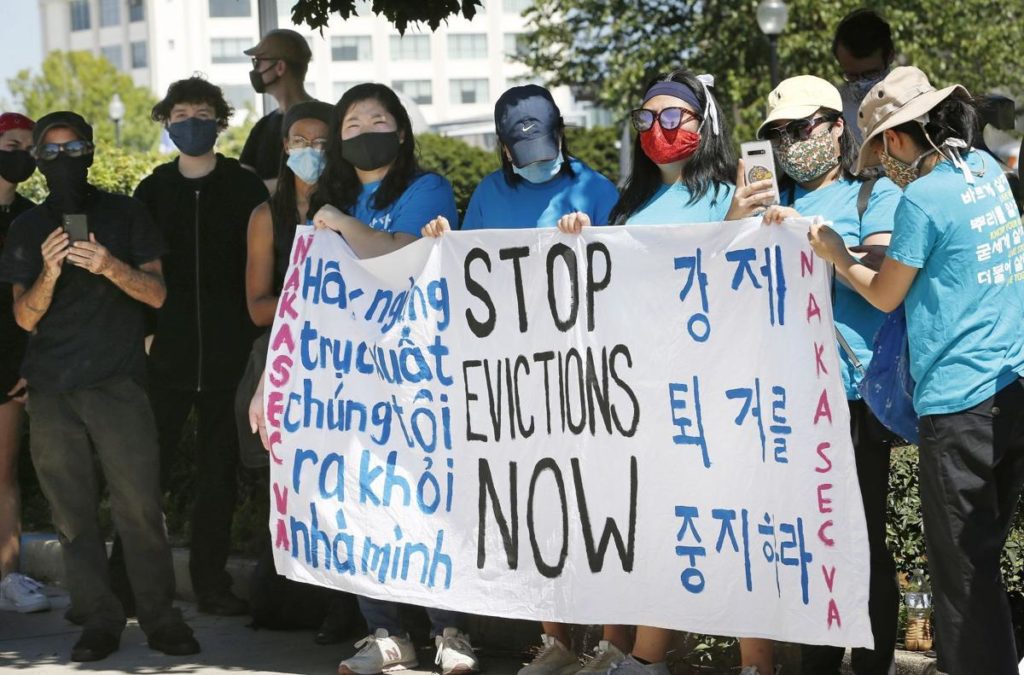
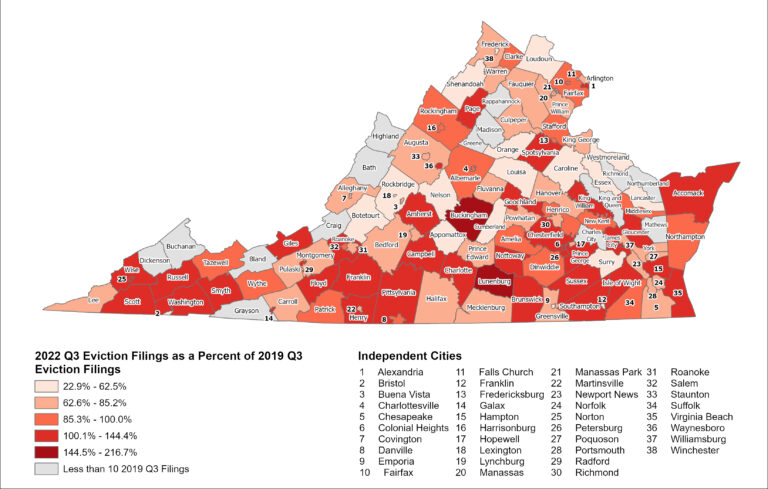
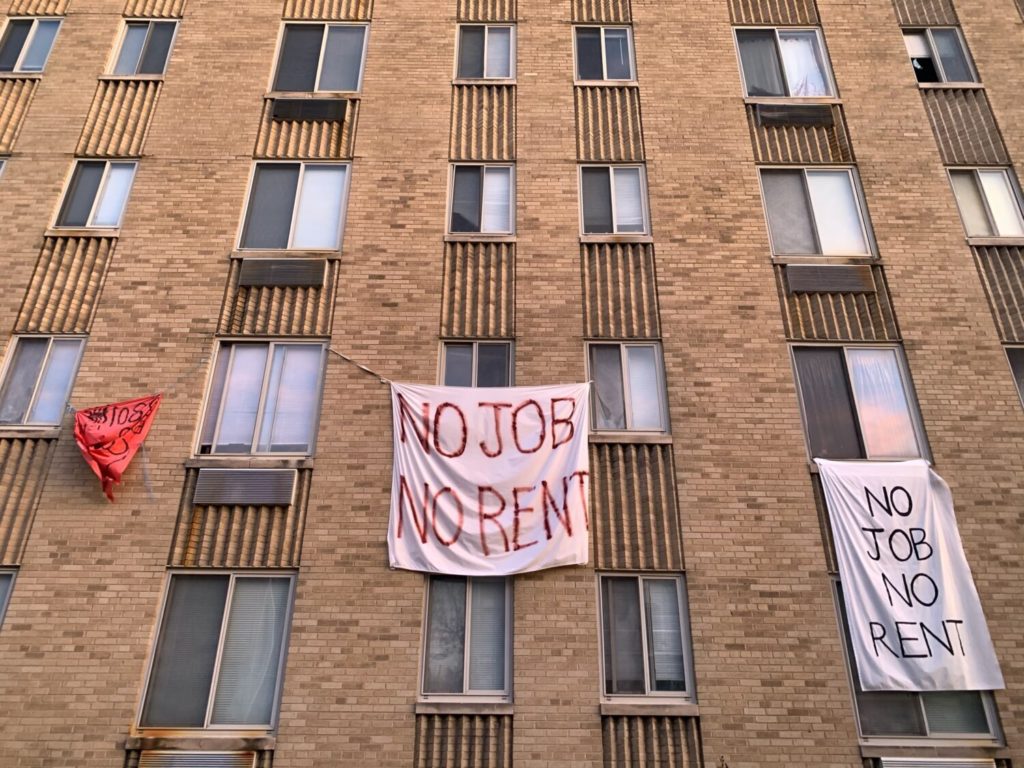
Welcome to the so-called `liberal’ DMV, DC – Maryland – Virginia. Yesterday, Maryland’s Republican Governor, Larry Hogan, vetoed a bipartisan bill that would have extended protection from eviction if the tenant has a pending rent relief application. That protection would have been a mere 35 days. The Governor also vetoed a bipartisan bill that would have required landlords prove their compliance with local rental laws before trying to evict a tenant. Who needs proof of compliance, when we’re talking landlords? These modest proposals were vetoed by the Governor because “Maryland already has some of the strongest tenant protection laws in the nation”. That’s a low bar, not to mention a lousy reason. On the same day, Virginia’s Republican Governor Glenn Youngkin vetoed bipartisan bills that would have assisted indigent public housing residents. The bills would have exempted very low-income tenants from having to pay exorbitant appeal bonds, which can run into the thousands, in order to appeal an eviction notice. The Governor explained that he preferred his vision, which was essentially to gut the entire bill and then claim victory. At least he didn’t claim Virginia already has some of the strongest protection laws in the nation. Both governors have national aspirations.

From Australia to the United Kingdom and beyond, the story is largely the same. Pandemic protections, such as they were, are coming to an end. The housing market, for purchase or rent, is hot and getting hotter. Landlords find, or create, loopholes in the already tattered safety net for renters. For example, across England and Wales, even weak restrictions on “no fault” evictions are blithely ignored. Of course, Parliament promised to and failed, or refused, to ban no fault evictions. This week, the New York legislature failed, or refused, to pass Just Cause eviction protections. Wages have not kept up with housing. Inflation is forcing low to moderate income families to decide among paying the rent or mortgage, putting food on the table, or paying for utilities. The affordable housing stock, already reduced after a decades’ long hiatus in construction, is being reduced. In many parts of the world, the mantra for those facing eviction is “Nowhere to go”.

In New Orleans, eviction filings and evictions are rising rapidly. The explanation is rising rents and decreasing availability of affordable housing. Those are symptoms, not cause. Public policy is the cause. Look at any eviction court in the country. More than 90% of landlords have legal representation, fewer than 10%, often fewer than 5%, of tenants have lawyers. There are no scales of justice in that space. Only imbalance, inequality, injustice.

In Detroit, half the residents say their financial situation is more or less the same as a year ago, 23% say improved, 23% say worse. 35% of low-income residents say they are worse off now than a year ago. 33% of Detroit renters report spending 31-50% of their income on housing. 24% of renters report spending more than half of their monthly income on housing. According to the United State government, anything 30% or higher qualifies as “housing insecure”.

This is a brief overview of news of the last 24 hours. We entered the pandemic `discovering’ the lack of data. Individual organizations and people across the country created and expanded local eviction dashboards. There still is no national data bank. Courts remain spaces of collusion between judges and landlords. And the options offered by so-called leaders, with some exceptions, are either the protections in place are sufficient, when they clearly are not, or the protections in place or offered are excessive, when they are paltry. For too many, “return to normal” means nowhere to go.

(By Dan Moshenberg)

(Photo Credit: Max Becherer, NOLA.com, The Times-Picayune | The New Orleans Advocate)

The Massacre of the Innocents


THE MASSACRE OF THE INNOCENTS
By William Jay Smith

Because I believe in the community of little children,
Because I have suffered such little children to be slain;
I have gazed upon the sunlight, dazed, bewildered,
As is a child by nothing more than rain.

Not until I can no longer climb,
Until my life becomes the tallest tree,
And every limb of it a lint of shame,
Shall I look out in time, in time to see

Again those who were so small they could but die,
Who had only their vast innocence to give:
That I may tell them, pointing down the sky,
How very beautiful it was to live.

(Poetry August 1946, p 241)


(Image Credit 1: Peter Paul Rubens, The Massacre of the Innocents / Art Gallery of Ontario)

(Image Credit 2: Léon Cognate, Massacre des Innocents / Musée des Beaux-Arts de Rennes)

Women Fighting Against Miami’s Housing Crisis

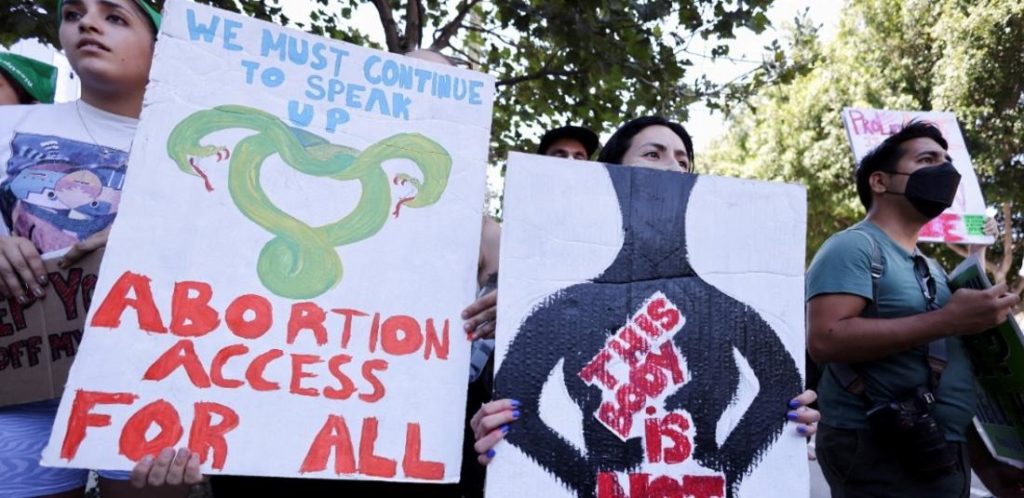
Women of color have always been at the forefront of advocacy, resistance, and social change. On Tuesday, May 3, 2022, the Miami-Dade Board of County Commissioners approved the Miami Tenants Bill of Rights. Behind its creation and passage was the Miami Workers Center, which “organiz[es] towards dignity, power, and self-determination with workers, tenants, and families in Miami, FL,” many of whom are low-wage earning women of color working in the service industry and as care workers. Miami women have been mobilizing and protesting against Miami’s housing crisis, and many spoke before the commission detailing their living conditions and abusive experiences with landlords. At the Miami-Dade County Hall, Mercedes Cabrera, a 38-year-old mother living in private housing subsidized by a federal Section 8 housing voucher, presented to the Miami-Dade County Commission photos of flooded floors and damaged walls, and pleaded for protection against a landlord attempting to evict her because she reported the poor conditions of her housing to authorities. Cabrera asserted to the County Commission, “We have no rights at all. It’s all biased in favor of landlords.” Miami’s housing crisis is not only an economic issue, it is a public health and human security issue.

The Tenants Bill of Rights includes protections for withholding rent to pay for neglected repairs by allowing tenants to deduct the costs of repairs from their rent bills. It establishes the county Office of Housing Advocacy, which creates a telephone hotline for tenants who need assistance and oversees compliance with tenant rules. It protects tenants from retaliation if they seek government help in dealing with a landlord, particularly if the landlord pursues an eviction if a tenant called the helpline within the last 60 days. Additionally, the bill requires landlords to notify tenants of a sale of their home at closing and help them identify a new landlord. It prevents discrimination based on past evictions by prohibiting general questions about evictions during the application process, although landlords can still research past evictions. Black and Hispanic mothers and children are disproportionately impacted by eviction. They are “three times more likely to be evicted than another tenant owning the same amount of back rent.” Having an eviction on one’s record makes finding another place to rent challenging. At the same time, Miami Workers Center reports that less than ten percent of tenants in eviction court have access to legal representation.

Women are disproportionately impacted by Miami’s housing crisis, especially women of color. A 2016 study reports that 20.5% of women in Miami-Dade live under the poverty line, nearly five percent more than men. Miami is the most unaffordable housing market in the country, with rent prices up 30% to 40%. As wages remain stagnant and expenses rise, it is becoming harder and harder for Miamians, especially low-wage, service industry and care workers, to get by. The cost of living in Miami is 17% higher than the national average. According to the Community Justice Project, 20,363 evictions were filed from the beginning of the pandemic (March 12, 2020) through December 31, 2021.

Along with housing costs, housing discrimination is also rising. In the first three months of 2022, one in four complaints to the Miami-Dade Commission on Human Rights was related to housing. Erin New, the director of the commission, states that in addition to housing complaints, there is also an increase in complaints related to “source of income,” which harms vulnerable populations. The majority of complaints, New says, are “members of traditionally underserved, disadvantaged groups. People of color. People with disabilities. Members of the LGBTQ+ community.”

Housing security is critical for formerly incarcerated people and to prevent incarceration. Many nuisance crime arrests in Miami are related to homelessness. In 2021, City of Miami commissioners passed a resolution (4 to 1) that makes homeless encampments illegal, even though housing prices have nearly doubled and wages do not align with rising costs. Without access to affordable and stable housing, it is almost impossible for individuals to avoid homelessness or actions of survival deemed illegal. Women of color are the most vulnerable to becoming homeless after incarceration and face high recidivism rates.

The Miami Tenants Bill of Rights is a victory for tenants, workers, and youth, but, as the Miami Workers Center says, “it is only as strong as it is enforced.” It does not solve the housing crisis, but it is the first step in holding the government and landlords accountable for providing secure housing. The people who build and sustain Miami, the domestic workers, service workers, teachers, janitors, and home care workers, deserve to live here affordably without the fear of eviction and homelessness, and people need protection from arbitrary incarceration. Tenants, and women, are continuing to build power in Miami-Dade.


(By Madeline Ley)

(Madeline Ley is a Miami-based, born and raised in Miami, activist)

(Photo credit: Miami Workers Center)

The global prison population is at an all-time high. Women are the fastest growing prison population, still and again.

Penal Reform International and the Thailand Institute of Justice released Global Prison Trends 2022. While not particularly surprising, it is still a sobering read. First, the global prison population is at an all-time high; 11.5 million people are currently reported as incarcerated. It must be recalled that many countries don’t gather data on prison populations, and other refuse to make public the data they have. 121 countries report prisons above official capacity … in the middle, still, of a highly contagious pandemic. 33% of incarcerated people are awaiting trial, innocent until something or other. Overall, the prison population has risen 24% since 2000. Women are the center of that catastrophic rise: “The number of women in prison has increased 33% over the past 20 years, compared to a 25% rise among men.” Where are the women?

What accounts for the rate of women’s incarceration? The short, and long, answer is patriarchy, misogyny. Women are particularly targeted by the ongoing so-called War on Drugs, especially across Latin America, as well as India, Indonesia, Kenya, Russia, South Africa and Uganda. While women make up a small fraction of people currently on death row, the vast majority are on death row for drug offenses. In Malaysia, for example, 90% of the women on death row were convicted of a drug offense, compared to 70% of the men. Women are also particularly targeted by laws that criminalize poverty and status. For example, 42 African countries criminalize people with no fixed address or means of subsistence. Petty survival theft is treated as a major felony. Women have been arrested for taking discarded food from restaurant trash receptacles.

Globally, the use of formal life imprisonment sentences has increased. In the United States, for example, since 2008, the number of women serving life imprisonment without the possibility of parole has increased 43%. In the United States, one of every fifteen incarcerated women is serving a life sentence, up 19% over thirteen years. Where are the women? In prison, for life.

Globally, the situation for indigenous women has worsened. In Canada, 48% of incarcerated women are Native women. In New Zealand, 60% of incarcerated women are Māori and Pacific women. In New Zealand prisons, Māori women make up as much as almost 80% of those sent into solitary. Further, still in New Zealand, Māori and Pacific women make up 93% of women segregated for 15 days or longer. Where are the indigenous women? In solitary.

Over 740,000 women are in prison. Increasingly, those women are in for longer and longer sentences. Over the past three decades, the number of women serving an indeterminate sentence in England and Wales has increased by 241%. In country after country, women serving life sentences, or sentences that might as well be life sentences, are living with trauma, abuse, violence. Those histories are seldom considered, and the prisons have little to no appropriate health or healing services. `Status offense’ laws – abortion, adultery, sexwork – target increasing numbers of women.

Reproductive health is practically nonexistent for incarcerated women, although eleven countries have passed laws to prohibit the incarceration of pregnant women. Incarcerated women disproportionately live with mental health issues. For example, in England Wales, 70% of incarcerated women, and 48% of incarcerated men, live with mental health `problems’. Self harm and suicide are rampant among incarcerated women. More incarcerated women live with HIV than incarcerated men. According to UNAIDS, in 2020, the average HIV prevalence among women in prison was 5.2%, for men 2.9%.

Globally, prisons are increasingly and more intensely overcrowded. Although women are the fastest growing prison population, they are still the minority. This means they have least access to water and to sanitation. Little drinking water, no toilets, broken toilets are commonplace for incarcerated women.

The global prison population has reached an all-time high. Women are the fastest growing prison population, still and again: Low-income women, Indigenous and Aboriginal women, women of color, minority women, LGBTIQ+ women, elder women, younger women, homeless women, shackdweller women, women living with trauma, women survivors of violence, and so many other women. Nation-states have invested heavily in this program and continue to do so. Last year, at least 21 countries announced their plans to build more prisons. Alabama announced it will use Covid relief funds to build a new women’s prison. The struggle continues.

(By Dan Moshenberg)

(Image Credit: Penal Reform International)

NO NEW JAILS: Asian American history and community opposition to the Manhattan Chinatown “Megajail”


The United States likes to present itself as “the best country in the world” but the only thing they are best at is incarcerating individuals. Over the last fifty years, the United States carceral system has expanded dramatically. It incarcerates a large proportion of its population, more than any other country in the modern world. This carceral crisis in the US targets the poor, people of color, and increasingly, women.

The US has pumped billions into the carceral system including funding the police state, sustaining carceral establishments such as jails, prisons and immigrant detention centers, and building new ones. Much like the proposed “megajail” that will be built in the Chinatown neighborhood of Manhattan, New York.

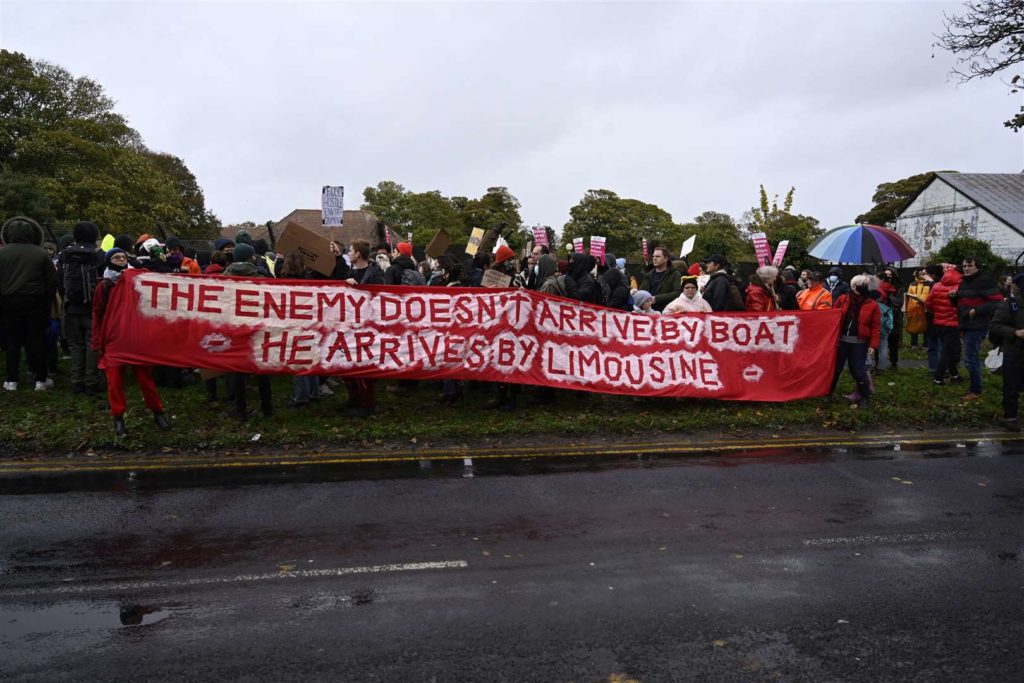
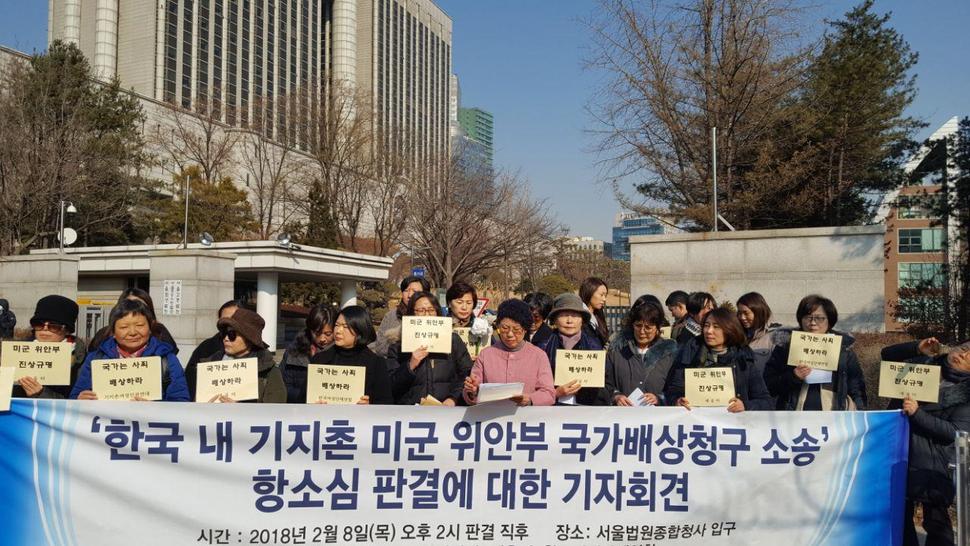
The community-based organization Welcome to Chinatown reports that the Chinatown megajail project is estimated to cost $8.3 billion and that its construction would last for five years, ending in 2027. On March 20, 2022, two thousand protestors showed up to the proposed site of construction to rally against the project and its devastating consequences for Chinatown and its people.

In his campaign, Mayor Eric Adams promised to close Rikers and build other, “humane” jails, to create borough-based prisons instead. It must be noted that the city and Adams have plans to build new jails in all of the New York City boroughs, except for Staten Island. In April 2021, when Adams was still a candidate for mayor, he declared that he opposed the construction of the jail from Mayor Bill de Blasio’s administration. However, as mayor, he approved the project and its $8.3 billion budget.

With the construction of the megajail, the city and its leaders are once again proving that they have never cared about the dignity nor affirmed the humanity of Chinatown’s residents, majority of whom are Chinese American-Asian American, elderly, working class, and families. Aside from the initial demolition, the construction of the jail will negatively impact the neighborhood’s small businesses and restaurants that are already struggling through the pandemic and the rise of Anti-Asian hate and racism in recent months.

Abolition scholars and activists and scholars such as Assata Shakur and Julia Sudbury have pointed out that building jails is more profitable than investing in care institutions, such as schools, hospitals, and community centers. The lack of care institutions and social safety nets also pushes people into the carceral system, so the system fulfills its purpose by neglecting its citizens.

Protests against the building of the megajail have been ongoing and I turn towards two movements that have helped increase the movement’s visibility and urgency. After the summer of 2020, during which protests across the US sparked after the death of George Floyd at the hands of police brutality, the rise of the Defund the Police and No New Jails followed. Another breakpoint that followed as the rise of Anti-Asian hate and explicit violence due to the fake news connecting Asians (East Asians in particular) to the origin and spread of COVID-19, which was also spurred by the racist former president Donald Trump. These two moments contributed to the resistance and organizing of the Chinatown community (and Asian American individuals and communities around the country) against the megajail.

There has been a dramatic and alarming increase in anti-Asian violence ranging from verbal abuse casually stated towards Asian individuals, to attacking elderly Asians in Chinatown, to the shooting of 8 individuals, including 6 women of Asian descent, at a spa and wellness district in Atlanta, Georgia. However, these individual acts of violence do not stand by themselves. They are a part of a larger and more imbedded culture of systemic violence normalized against Asian Americans, which has hurt and marginalized our communities.

While the protests and mobilizations against the Chinatown megajail continue, it is important to keep our eyes on existing campaign efforts such as Welcome to Chinatown and the efforts of the community on social media. The construction of jails and the disruption and harming of communities is not an isolated case in Chinatown. I believe that continuing the discussion and fight against the carceral system is also the underlying mode of action we can currently do. There can be no liberation from Anti-Asian hate and the threat of the Chinatown megajail without the liberation of the incarcerated, those in poverty, and other communities of color.


(By Wella Lobaton)

(Photo Credit 1: AMNY The Villager / Dean Moses) (Photo Credit 2: AMNY The Villager / Dean Moses)

Friday’s factory fire in New Delhi was yet another planned massacre of women workers

Woman worker’s shoe outside the burned building

On Friday, May 13, a fire broke out in a “commercial building” in the Mundka suburb of New Delhi. As of two days later, at least 27 people were killed, or better murdered. That number is expected to rise. “Women made up the majority of … workers.” Again. The building had a factory. The factory owners have been arrested. The building had two owners. The owners have been arrested. Their arrest will not bring back the 27 people, the majority if not all of whom are women.

The building is stories tall. The building has never passed any fire department inspection. The building had no fire safety equipment, such as fire extinguishers. The building had no fire exit. Most of the people who died, the twenty-seven “charred bodies” that were recovered, died of asphyxiation. The only exit to the building was blocked “by rubbish”. The staircases were packed with cartons. Those inside never had a chance. Women made up the majority of workers.

According Atul Garg, the Delhi Fire Chief, “It seems the entire building was illegal.” Illegal and in plain sight. The area in which the building stands is village land, zoned only for residential and small shops. Commercial enterprises on village lands are prohibited. “However, commercial activity in these areas is rampant.” Four stories high, completely and visibly illegal.

The women manufactured and assembled CCTVs and WiFi routers. They are the latest addition to the roster of women workers sacrificed to the global, national, and local economies. December 11, 2019: “Sunday’s factory fire in New Delhi was a planned massacre of workers: We know”. July 16, 2019: “Saturday’s factory fire in New Delhi was a planned massacre of women workers”. January 22, 2018: “The factory fire in New Delhi was a planned massacre of women workers”. Women made up the majority of workers.

(By Dan Moshenberg)

(Photo Credit: BBC)