Stop sending Aboriginal women to prison!


Canada’s federal prisons hold more prisoners than ever before. The provincial prisons are also full to the brim. What’s going on? Crime is on the decline. The White prison population is also in decline.

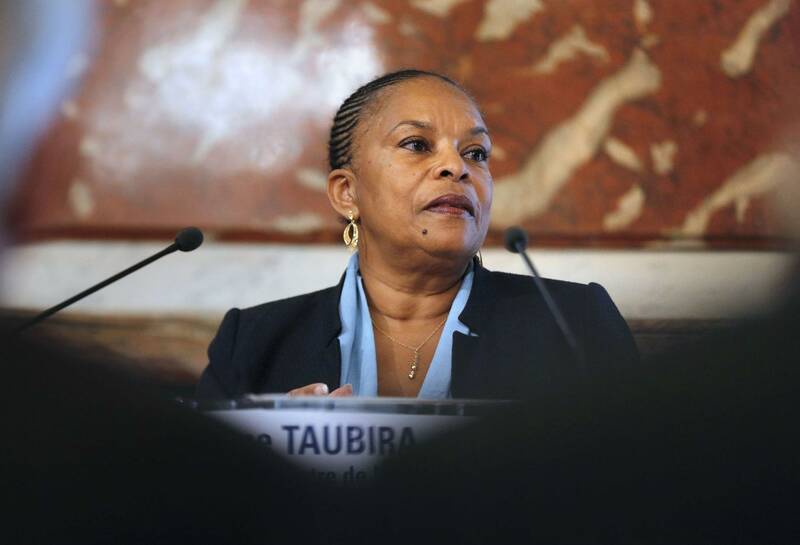
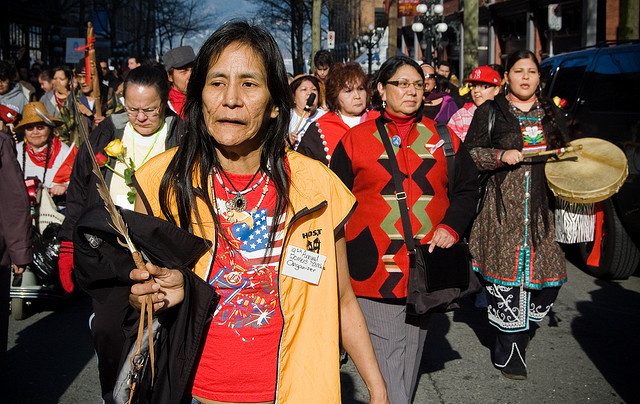
Last Tuesday, Canada’s Correctional Investigator Howard Sapers issued his annual report. The picture is both grim and not surprising. There’s a `boom’ in prisoners, and it’s made up of people of color. Aboriginal people make up around 4 per cent of the population, and close to 25% of the Federal prison population.

Black prisoners are “over-represented”, especially in maximum-security prisons. Black prisoners are also “over-represented” in solitary confinement. Black prisoners disproportionately face the “use of force” from guards. Black prisoners also face discrimination in prison jobs employment and in parole release.

Meanwhile, the prison staff remains overwhelmingly White. The Fear of a Black Planet continues to this day. To no one’s surprise.

For women in the system, the rates of incarceration far exceed those of men. Since 2003, the female prison population increased by over 60%. One in three women the federal prison system is Aboriginal. Since 2003, the Aboriginal women’s federal prison population has increased by 83.7%

Why are Aboriginal women being imprisoned at such high, and higher, rates? What happens to Aboriginal women when they enter into the prison system?

In September 2012, an independent review commissioned by the Department of Public Safety entitled Marginalized: The Aboriginal Women’s Experience in Federal Corrections was released. The external report examined the reasons behind the over-representation of Aboriginal women in federal penitentiaries, revealing a depressing picture of dislocation, isolation, violence, poverty, victimization and discrimination. It examines several themes that are consistent with the Office’s own findings and recommendations in this area of corrections: over-classification of Aboriginal women inmates; high prison self-injury rates among Aboriginal women; lack of culturally appropriate programming; and limited use of CCRA [Corrections and Conditional Release Act] provisions to share care and custody of Aboriginal offenders with Aboriginal communities.”

Aboriginal women are “over-represented” in solitary and maximum security. Force is used on Aboriginal women prisoners at an extraordinarily high rate. But the highest rate is that of self harm. From 2011 to 2012 Aboriginal women accounted for almost 75% of self-injuries among women prisoners. More often than not, self-injury results in charges being filed, solitary confinement, and security reclassification. If an Aboriginal woman hurts herself, it’s a crime. Instead of help, counseling, anything supportive, she’s sent into the hole.

Correctional Investigator Howard Sapers concluded, “You cannot reasonably claim to have a just society with incarceration rates like these.” Public Safety Minister Steven Blaney replied, “The only minority I would say we are interested in are the criminals.”


(Photo Credit: flickr / Vice)
It’s that time (of the year again)


It’s that time (of the year again)

It’s that time
of the year
again

The ritual of
16 Days of Activism
for No Violence
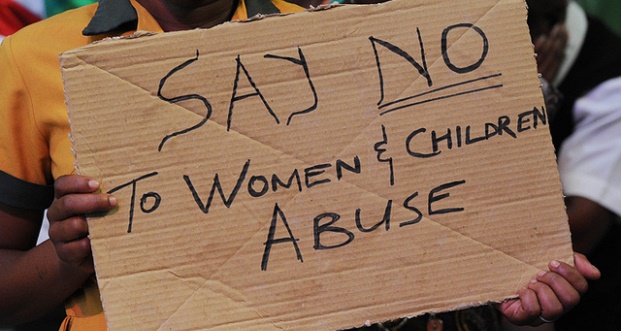
against Women and Children

(It is here
can you feel it)

(It is here
in the troubled area
that is the mind
and its beliefs
wherever it finds itself)

The ritual of 16 Days
is here with its white ribbons
official fanfare and road shows
smart slogans adorn banners
and good men marching

(a sudden media hype
tweeters and twerkers
personalities surface
all out to pledge themselves
with quasi-religious fervour)

How long
is the road
we will travel
these 16 days
and beyond

How long
still is the road
we have to travel
beyond
the 16 days

How many more
more 16 days

The Cape Times Editorial tells us that “16 days” is with us again; we hear of “16 days of activism to target 16 troubled areas”, and the SA Faith and Family Institute’s Elisabeth Petersen’s writes “Act against abuse” (Cape Times, 25 November 2013).


(Image Credit: The Daily Vox)

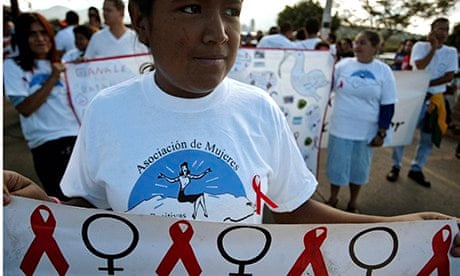
The global AIDS war on young women … and especially girls

A global war is being waged against girls and young women. From 2005 to 2012, public policy and popular determination resulted in a global dip of 30% in AIDS-related deaths. In that same period, 10- to 19-year-olds suffered a 50% increase in AIDS-related deaths. The epicenter of this is sub-Saharan Africa, and the heart of that epicenter is comprised of girls and young women. How did this happen?

From global agencies (and their donors) to national governments to local practitioners, everyone refused to respect the arc of peoples’ lives. They refused to think of the number of children born HIV+.  Many of those children never received antiretroviral treatment, or ART. Of those who did, few received adequate, or any kind, of follow-up or support. Everyone refused to plan child- and adolescent-friendly services. Children were left to fend for themselves, often without the knowledge or information of their status.

And so the children have died in increasing numbers… especially girls: “Adolescents and young people remain extremely vulnerable to acquiring HIV infection, especially girls who live in settings with a generalized HIV epidemic or who are members of populations at high risk for HIV acquisition or transmission.”

Especially girls. Consider some numbers:

92% of the world’s pregnant women with HIV live in sub-Saharan Africa. 59% of those women received ART or prophylaxis during pregnancy and delivery.

A recent survey indicates that only 15% of young women in sub-Saharan Africa know their status. Put more directly, 85% have no idea.

Young women are three times more likely than young men to become infected.

The situation is actually worse, because there are well-known successful youth-centered programs and projects. They’re out there, and there not difficult to find, from South Africa to Botswana to Mozambique to Jamaica and beyond, successful programs begin with respect for the individual and collective autonomies of children, adolescents, and youth, and they work to better understand the particular operations of genders in their communities.

One study released this week indicates, “Child support grant keeps sugar daddies away.” Or, as the researchers put it, “Our findings provide evidence that government-administered cash transfers are associated with reduced incidence in the past year and lower prevalence of risky sexual behaviours in adolescent girls, but no consistent associations for boys… Child-focused cash transfers target specific—rather than all—risky sexual behaviours, and that a possible mechanism of change might be interruption of risks driven by economic necessity. This finding is especially important because transactional and age-disparate relationships are linked and major vectors of HIV infection, via power inequalities and higher infection rates in older male partners and male partners who provide financial support.”

Do you need a study to tell you that most young girls engaging in sex with older, and wealthier, men are acting “transactionally”? Common sense or conversations with those young girls would suggest as much.

National governments and their international partners have steadfastly refused to have those conversations. They refused to look at girls and young women with anything like a gender lens, with anything like respect. And so the death tolls mount, and the piles of corpses are overwhelmingly women and girls. Girls and young women are not “falling through gaps in HIV services”. They were not forgotten or overlooked. They have been positioned, targeted, by agencies and nation-States that give lip service to women’s rights while colluding in the mass deaths of young women … and especially girls.


(Photo Credit: The Guardian / Elmer Martinez / AFP / Getty Images)

A specter haunts the festive shopping season


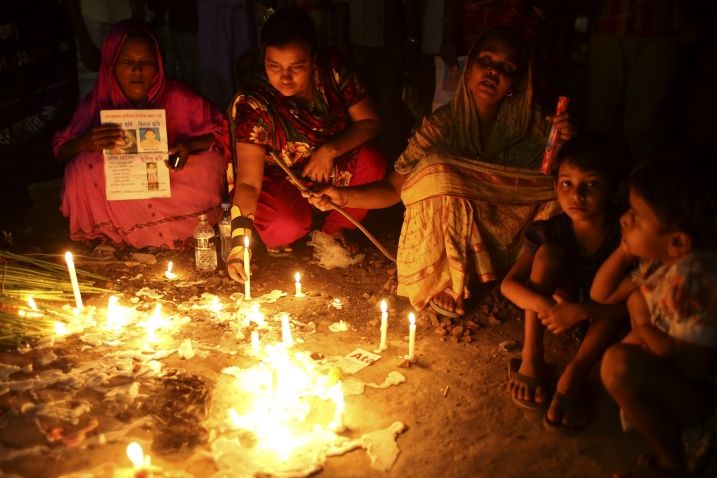
Tomorrow, November 24, will mark seven months since the Rana Plaza collapsed, killing over a thousand garment workers, overwhelmingly women. Tomorrow, November 24, will also mark the one-year anniversary of the Tazreen Fashion factory fire in which over a hundred garment workers were killed. Almost all of those killed were women. These were not accidents but rather pieces of a plan in which the lives of women, of women workers, of Asian women workers count for less than nothing.

Today, a report notes that U.S. retailers have `declined’ to aid “factory victims in Bangladesh.” The phrase “factory victims” is both telling and apt. The women who died, often slowly and always terribly, were indeed victims of factory production. A year later, as inspectors and engineers begin for the first time ever to examine factory structures in Bangladesh, Wal-Mart, Sears, Children’s Place have “declined” to assist at all in any compensation or aid program for “factory victims”. In fact, as of yet, every U.S. retailer has “declined.” Corporations from elsewhere, such as the Anglo-Irish company Primark and the Dutch-German company C&A have been “deeply involved in getting long-term compensation funds off the ground.”

Across the globe, factory workers struggle with corporate exploitation. Factory workers in sectors, such as garment and textile, that are “reserved” for women workers struggle with super-exploitation. That is part of the tragic and the everyday of the garment industry. But this tale of “factory victims” is more particular. This is about U.S.-based corporate global development plans, in which women workers of color are not only worth less than the machines they work at. For Walmart, Sears, Children’s Place and their confreres, those women are worth less than the chairs on which they sit every day, producing goods and profits.

80% of Rana Plaza survivors are women. Now they find themselves in a situation more desperate than ever.”  That too is part of the plan. That were no accidents; there were massacres. Remember that on Monday, as we enter, again, the 16 Days of Activism Against Gender Violence. Remember the specter of “factory victims’ that haunts the end-of-year shopping seasons.

(Photo Credit 1:  IndustriALL) (Photo Credit 2: IndustriALL)

It is the responsibility of the State to defend reproductive rights and health

Twenty years ago the Cairo conference, also called the Cairo Consensus, stated that women’s reproductive health and rights, as well as women’s empowerment and gender equality, were the cornerstone of population and development programs. A few weeks ago, panelists at a conference in Paris agreed that the anticipated advances for women had not materialized. To the contrary.

The backlash against women’s advances isn’t a function of developing countries. For example, what is happening in the United States is remarkable. Women’s health and rights are now under the control, and at the mercy, of some powerful men, such as those on the US House of Representatives Judiciary Committee. One of the great mistakes is to look at the demise of women’s rights as an isolated event. Soaring inequality and legislative measures to control women’s health and rights work together to disempower women and civil society.

This past June two terrible bills were passed. The US House of Representatives passed a bill with the distorted name of “Pain-capable Infant Protection Act” (HR1797), banning all abortions for any reason including the health of the woman after 20 weeks. Then, Ohio Governor John Kasich signed a state budget that restricted reproductive rights and defunded many women’s services, with the potential to defund poor children’s programs as well. Three amendments strategically embedded in the budget bill severely restrict women’s rights. Two of those amendments are part of the TRAP (Targeted Regulation of Abortion Providers) strategy to impose constraints on medical facilities and providers that deliver abortion services.  These included banning public hospitals from making transfer agreements with abortion clinics, or requiring clinics to perform sonograms and make women listen to the iconic sound of a heartbeat, with criminal charges applicable.  The third amendment said that a state program “Parenting and Pregnancy” would be created and funded by public money and run by private organizations with the requirement that the word abortion not be used. This last amendment carries the neoliberal mark of transferring public money to private interest groups that work against women’s interests.

The ACLU Ohio has challenged the three Ohio amendments on the basis, arguing that they were tacked onto a budget bill in violation of the “single subject” rule of the Ohio constitution, meant precisely to prevent such practices.

Working on all fronts, the federal bill has just been introduced in the US Senate. It will certainly not pass with a democratic Senate. Nonetheless this ban has passed in 13 States. These bills are there to threaten women’s civil rights as they are devalued in comparison with the fetus they carry.

Lynn Paltrow and Jeanne Flavin recently warned against the legal implications of these series of bills (feticide bills and ban on abortion after 20 weeks). National Advocates for Pregnant Women has documented an increase of forceful actions against pregnant women. They report the case of a doctor who threatened his “patient” that he would send the police to take her to the hospital for a cesarean, if she didn’t go by herself that very day. These are not isolated cases. Across the country pregnant women report a climate of constant and intimidating surveillance of their pregnancy.

Whether the fetus is viable or not is not the issue. These attacks on women’s rights, using the threat of criminal charges against women, are not accidental. This type of legislative action is designed to bring women and civil society to its knees. It is designed to make them obey absurd authoritarian laws that only serve the neoconservative, religious fundamentalist neoliberal consortium, with its forceful and violent surveillance system of racialized and gendered bodies.

The threat is global and it is real. This is not only a problem for women. We should hear “clear and distinct voices,” to use Christiane Taubira’s phrase, to denounce and thwart the dehumanization process that is plaguing the American society.

(Photo Credit: RhReality Check)

Biopolitics, and business as usual, in India

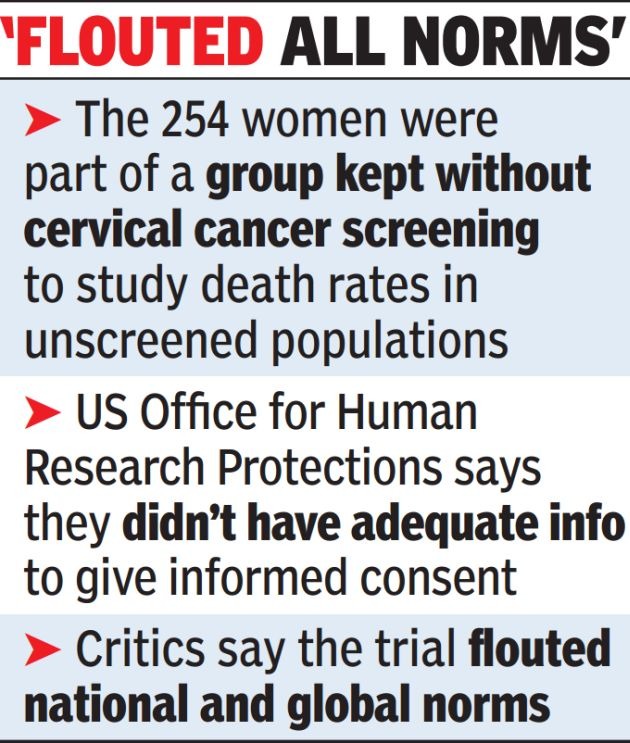
The clinical trial is a form of neo-imperialism. Heralding modernity under the banner of science, the West makes the Third World its guinea pig to promote scientific innovation. It exists as the sovereign power, which controls the lives of developing countries, exercising a right over life and death through imperial and capitalist measures, and taking advantage of another’s need for self-empowerment/ perpetuation. The Indian layperson is exploited with the rise of clinical trials, and the body, deprived of its humanity, becomes an instrument to promote political interest; scientific advancement is made at the cost of human life.

In Over 2,500 Deaths During Indian Clinical Trials, Ranjita Biswas disparages clinical trials. She argues clinical trials in India lack standard protocols and unethical practices are rampant in the Indian drug industry. SAM, a health rights forum, draws a petition for transparency in the clinical trials, appealing for equal compensation to participants and informed consent from participants. Chinmoy Mishra, the coordinator of SAM extrapolates: “We are not against clinical trials in the country. But there should not be exploitation of participants. Human life is precious.” What exactly is the value of human life?

Clinical trials exploit the disadvantaged, whose lives are bought for experimentation: after all, who would want to die for the sake of scientific advancement alone?  The rhetoric of “transparency”, “equal compensation”, and “informed consent” rings hollow as it strives to justify the worth of human life in the market. The Supreme Court’s decision to ban clinical trials until the government comes up with a “‘foolproof’ mechanism to regulate experiments”, would probably suspend the deaths resulting from clinical trials, subsequently interrupting scientific development– but for how long? How would India progress/regress if it completely banned clinical trials? How does the political body use the personal body for its advancement? Can there be a “foolproof” mechanism at all for a health experiment? These are some of the pressing questions we need to ask ourselves.

Health rights forums, such as SAM, fix a price tag on the human species and strive in good faith to educate the participants and prevent them from capitalist exploitation. But conversely, such health rights forums work in favor of capitalism by quoting a price for health. It is not “transparency” that SAM champions—it is business. By ascribing health rights to humanity, organizations tend to overlook the disadvantaged position of the participant who is ready to trade health for monetary fulfillment.

Several unacknowledged guinea pigs must die before an experiment succeeds. Unfortunately, science has to feed on human health for the advancement of welfare. Clinical trials queer the individual in complex ways, combining personal and political interests to exploit the body and de-humanize humanity.


(Photo Credit: The Times of India)

Life without parole: The staggering work of heartbreaking

Two recent reports, taken together, describe a United States in which the violence of mass and hyper incarceration has become an intrinsic part of the contemporary American project. As at least one writer noted years ago in a different context, the rule of law is the force of law. And that force is coming down on Black populations with particular intensity.

The American Civil Liberties Union’s report, A Living Death: Life Without Parole for Nonviolent Offenses, has attracted attention and sparked conversation, although thus far not beyond the circle of usual participants. The ACLU findings, while horrible, are not all that surprising. The so-called War on Drugs has fueled the life without parole, or LWOP, economy. Pretty much any hint of `drug involvement’ can land a person in jail for life without parole. Most of the LWOP prisoners are first-time drug offenders.

Here’s the heart of living-death: “There is a staggering racial disparity in life-without-parole sentencing for nonviolent offenses. Blacks are disproportionately represented in the nationwide prison and jail population, but the disparities are even worse among the nationwide LWOP population and worse still among the nonviolent LWOP population. Based on data provided by the United States Sentencing Commission and state Departments of Corrections, the ACLU estimates that nationwide, 65.4 percent of prisoners serving LWOP for nonviolent offenses are Black, 17.8 percent are white, and 15.7 percent are Latino. In the 646 cases examined for this report, the ACLU found that 72.9 percent of these documented prisoners serving LWOP for nonviolent offenses are Black, 19.8 percent are white, and 6.9 percent are Latino.”

Staggering? Yes. Surprising? Not at all.

According to the ACLU, 3, 279 people are serving life without parole for nonviolent crimes. Of that group, 2,074 are in federal prisons and jails. Of the 2074, 1757 are Black. That’s 60%. 91.4% of Louisiana’s LWOP prisoners are Black, and so Louisiana wins the Race Race to the Bottom.

The individual stories are heartbreaking… and not surprising. Life without parole is a death sentence. It emerges not only from the War on Drugs, but also from a national belief that rehabilitation does not work, that `criminals’ are not human and so must be caged.

As the Sentencing Project report, Life Goes On: The Historic Rise in Life Sentences in America, suggests, the initial impetus for the LWOP was the elimination of the death penalty. So, state-by-state, over twenty years, the `nation’ replaced the instant of death with a lifetime of dying.

The Sentencing Project findings, while useful, are also not surprising. Serious crime is down, and the number of LWOP prisoners, in the same period, has more than quadrupled. Last year, over 159,000 people were serving life sentences. Close to 50,000 were LWOP.

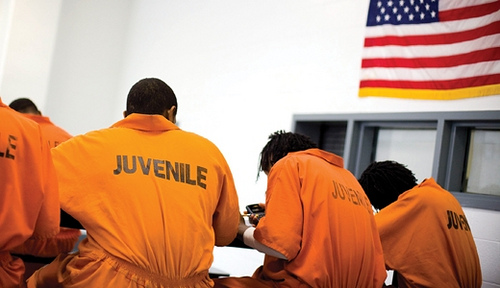
One in nine prisoners is in for life, and, as the Sentencing Projected documented earlier in the year, this includes an increasing number of juveniles, of children. Around 10,000 people have been sentenced to life in prison for nonviolent offenses. Almost half the `lifers’ are Black. Nearly 10,000 people have been sentenced to life behind bars for crimes that occurred before they turned 18. Around 2,500 of that 10,000 were sentenced to life without parole. Children waiting to die.

More than 5,300, or 3.4%, of prisoners sentenced to life are women.

According to the Sentencing Project, the United States boasts 5,361 women serving life sentences. That’s up 13.2% since 2008. Who are these women?

Women serving life sentences often have particularly tragic histories. Among the females serving LWOP for offenses committed in their teenage years, the vast majority experienced sexual abuse in their childhood. Among women convicted of intimate partner violence-related homicides, the majority have been battered. This is even more evident among women serving life sentences. Statistics from nationally representative inmate survey data show that 83.8% of life-sentenced women were sexually or physically abused and that abuse is significantly more common among female lifers than male lifers or female prisoners not serving life sentences.”

Who are the women serving life sentences, and even more those serving life without parole? They are the abandoned. Growing up in a period in which public and social services, caring services, were slashed, growing up in a time and place in which needing help was criminalized, as girls they were left to fend for themselves. Today, they are the fantastic products of a national social factory, one that stretches from `Welfare Queens’ to `Drug Mules’.

There is no surprise in this, and there is no `genius.’ There is only the staggering work of heartbreaking.


(Photo Credit: ACSlaw.org / lawanddisorder.org)

These racist attacks assault the heart of the Republic

Christiane Taubira

Last week, France’s much acclaimed Minister of Justice, Christiane Taubira, a Black woman from the French Department of Guyana, was confronted with yet another series of racist slurs in the city of Angers where she was to deliver a speech to the magistrates. A group of men, women, and children, evidently representing the good Christian family model, was waiting for the minister outside the courthouse. When Christiane Taubira passed by them, they shouted, “Taubira, get lost, you stink, piss off.” Then, a 12 years old girl hurled  a racist slur involving monkeys and banana, something she learned in her family circle no doubt. Even a Catholic priest was seen screaming racist epithets.

These attacks have been Christiane Taubira’s everyday life since she was appointed Minister of Justice, but initially they were somewhat more limited. Last spring, however, after Taubira passed the “le mariage pour tous” (marriage for all) bill, the vitriol escalated. Many have applauded her determination and her superb appearance at the Assembly, echoing Simone Veil’s fight for abortion rights. She received a standing ovation, from representatives of the left, center as well as some right wing supporters. She is no average politician.

Coming from a family of eight, Taubira left Guyana to study. She holds two PhDs and quotes commonly René Char, Paul Ricoeur or Aimé Césaire and Léon Gontan Damas, the poets of Negritude.  Now, she is courageously introducing a bill to reverse the penal policies of increasing lock up at a time of reduction of funding for social services, introduced by the previous government under Sarkozy. Sarkozy and some of his ministers and collaborators were known for statements and actions that encouraged the racialization of French society by stigmatizing and insulting many from various origins.

First, there was Sarkozy’s infamous address at the University in Dakar in 2007, where he argued that Africa is backward. He said, “The tragedy of Africa is that the African man has not entered history”, suggesting of course that the white man had a “civilizing mission”. Then there was his collaborator Claude Gueant who proposed that “not all civilizations are of equal value” (toutes les civilizations ne se valent pas). Then there was the “identity discourse” debate that he wanted to bring to the Assembly, out of which emerged the newly created Ministry of National Identity. Sarkozy’s political approach has ripped apart the social fabric of France.

In a recent interview, Christiane Taubira, remarked that under the previous government “an inner enemy has been constructed … It has thrived under the doctrine of decline.” These attacks are part of the deconstruction of social cohesion, which is the constant inspiration for Taubira’s work at the Ministry of Justice.  For Taubira, the “not republican right” has forgotten the history of the French nation. This is more serious than a slip up. It signals that something particular has been going very wrong, even though racism has always been rampant in the former colonial powers, especially at the time of financial crisis. Here, the sense of impunity that these demonstrators showed is “a challenge to the republic,” said Taubira. She called on the political leaders of the country to speak clearly as the foundations of a country are shaken when a Minister of Justice is attacked in these racialized, sexualized terms. She expressed her surprise “that there hasn’t been a clear and distinct voice decrying this drift in French society.”

Instead of the “clear and distinct voice,” the right and extreme right wing has done everything to control the debate through a reverse attack against Christiane Taubira , so as to signal that they are the masters.

Some voices have been heard not only to denounce the attacks but also to express distress, as Christiane Taubira has been an iconic figure of the hope for a better republic for many French women and men. In the face of these nationalist racist, sexist attacks, it is clearly time to finish the work of the revolution and rewrite the emblem of the French Republic. Let “Liberty, Equality, Fraternity” become Liberty, Equality, Humanhood.


(Photo Credit: Liberation / Francois Guillot / AFP)

Shackling the birthing, dead and dying: All in a day’s work

Juana Villegas

Juana Villegas

Which is worse, the use of chains and shackles to confine the most vulnerable in times of crisis or the fact that the usage has become routine? Ask pregnant women prisoners across the United States. Ask terminally ill, hospitalized, disabled and even dead prisoners in the United Kingdom.

Last month the Nevada Prison Board voted to stop shackling and otherwise `restraining’ women prisoners in labor, in delivery, and in post-delivery recuperation. This decision resulted from a lawsuit brought by Valorie Nabors, with the ACLU. Nabors had been an inmate at the Florence McClure Women’s Correctional Center. She went into labor and was placed in leg shackles in the ambulance. Ten minutes after giving birth to a daughter, Nabors was again placed in shackles. Valorie Nabors and her attorneys argued, apparently convincingly, that she suffered injury when doing doctor prescribed rehabilitative exercises while shackled.

Juana Villegas has lived a related story. In 2008, nine months pregnant, Mexican, undocumented, Villegas was picked up in a traffic stop in suburban Nashville. Under `an arrangement’ between Davidson County and Federal authorities, Villegas was detained for six days. Villegas went into labor, was taken to the hospital, where she was chained to a bed, during labor and during recovery. She has since sued for damages and recently won, not only financial compensation but also, possibly, a resident visa.

Meanwhile, in the United Kingdom, prisoners literally at death’s door, prisoners living with paralyzing and debilitating disabilities, are shackled, not only when taken to hospital but also during their stay. Michael Tyrrell, dying from cancer and too weak to move; Kyal Gaffney, diagnosed with leukemia, unconscious due to a brain hemorrhage; Daniel Roque Hall, 30, in intensive care, wasting away, and barely able to use arms or legs: these are typical of the `security risks’ that required not only chains and shackles but three prison guards … each.

And then there’s `Lucy’. In 2007, Lucy was transported to hospital for a recurring and serious gynecological problem. Although Lucy had no history of violence and had actually just returned from a daylong release on license, she was handcuffed to a male and a female officer en route to the hospital and while at the hospital. During the interview with the doctor, Lucy was handcuffed to both officers. When the doctor said he would be doing an internal examination, the male prison guard said he would have to remain in the examination room. At last, the doctor convinced the male officer to handcuff Lucy to the examining table and wait outside. Throughout the entire internal examination, the female officer remained handcuffed to Lucy.

That the global prison has produced a boom niche market in chains and shackles is horrible enough. Worse is that the shackling has become routine. Prison guards routinely shackle women in childbirth and women and men on deathbeds, and then go home to their families and communities. Medical professionals routinely tend to shackled women in childbirth and shackled women and men on their deathbeds, and then go home to their families and communities. It’s all in a day’s work.


(Photo Credit: The New York Times / Mark Humphrey / Associated Press)

I am on cloud nine


I am on cloud nine

I am on cloud nine
says a school principal
of two young people
just up your street

(but not high as a kite
at a Kite Festival
or on a local quick fix)

I am on cloud nine
for bursary recipients
one old one new

(in a manner of speaking
the old on a doctoral journey
the new inspired by law)

No victims they are
due to their circumstances
in post-apartheid South Africa
far too many still trapped
in racial and tribal habits

I am on cloud nine
down Spes Bona High-way
for young Shameez Camphor
a grade 12 pupil there
(and past matriculant Eugene Davids)

Setting boundaries and standards
consciously, of their own
their school helping them
to reach their potential

Inspiring and motivating
rather than the habitual
barefoot and pregnant
no-role-models variety

(business is as usual
are folks the world over
all charmed by bling-bling)

I am on cloud nine
might you not be too

Spes Bona High School principal Abu Solomons is on cloud nine (“Bursary recipient gets life-changing opportunity” – Athlone News, November 6 2013).

(Photo Credit: Cape Talk)