Pregnant asylum seekers in the UK: Punished for being a woman


Most women asylum seekers are fleeing so-called ‘non-political’ violence. Domestic violence, including within the extended family and community, ranks high. So does religious persecution of women and violence against lesbians. Women flee such violence because they know it’s wrong. When women asylum seekers are criminalized for seeking asylum, they are being punished for the knowledge they have as women. That’s a witch-hunt, and that’s what’s happening around the world today.

Last week, world leaders overwhelmingly endorsed the Every Newborn Action Plan, which calls for a global concerted effort to address infant mortality. This endorsement came on the heels of a major report, also released last week, which notes, “Every year, 2·9 million newborn babies die from largely preventable causes, and 2·6 million more are stillborn.” The report argues that every newborn counts, and, implicitly, that every mother of every newborn counts.

Would that it were true.

Around the world, women asylum seekers learn that not all maternities are equal. For example, in the United Kingdom, a recent study found asylum seekers receiving housing and subsistence support from the Home Office are regularly `dispersed’ to areas outside London. Pregnant women seeking asylum are often dispersed very late in their pregnancies or soon after delivery. The National Institute for Health and Care Excellence has argued that pregnant women asylum seekers have special needs and particular vulnerabilities and need additional and particular support. The Home Office has steadfastly refused to acknowledge that finding. Women asylum seekers have reported the experience of `dispersal’ is distressing. `Dispersal’ interrupted established maternity care. It left women without social and family support. Because of the day-to-day realities of dispersal and of childbirth, many women asylum seekers gave birth alone. Midwives have reported that they do the best they can, but the `dispersal’ system disrupts everything.

A pregnant woman asylum seeker suffered flashbacks from sexual violence in her home country. She was `dispersed’ in late pregnancy. According to her midwife, “She needed some stability and care because she felt confident with the people who were looking after her and felt she could trust them. The best outcome would have been for her not to be transferred especially at that late stage.”

Since 2000, there has been a 9% increase in maternal mortality in the United Kingdom. One of the factors pumping the increase is “poorer access to healthcare, especially in some ethnic minority communities and among asylum seekers.”

The criminalization of asylum seekers is an assault on “mental, developmental and physical health,” and it is part and parcel of global mass incarceration. The criminalization of women asylum seekers inevitably means the pain, suffering and often death of women in childbirth as of their children. And who are these women? Women fleeing torture, seeking justice. Punished for fleeing, punished for remembering, punished for needing, punished for being a woman.

(Image Credit: freedomfromtorture.org)

European Elections: Let’s organize hope with a feminist voice!

The campaign for this weekend’s European elections has seen the formation of lists that express a strong resistance to conservative, neoliberal and nationalistic attempts to control the European Parliament. Among these newly formed political entities is the Feminist Party for a Europe of Solidarity. This election is an opportunity for feminists to argue in the political realm. The public campaign system allows them to have their campaign clip filmed by professionals and mandates space for them in the media.

Each country in Europe will vote to elect their Members of the European Parliament (MEP). Then the MEPs regroup according to political visions and agreements to form groups. In the past Parliament several issues concerning women’s rights were downplayed.

The 2008 Parliamentary Assembly Resolution 1607 showed how the EU has delayed a clear positioning on women’s rights to control their own bodies. In December 2013, the European parliament failed to vote for the Estrela report that stated that reproductive rights are human rights. The reports spoke about the role of access to contraception and abortion especially for young women in the advancement of gender and economic equality in Europe. These lists demand the right to abortion to be inscribed in the European Charter, which, ideally, woud constrain the countries (Poland, Ireland and Malta) that have no such right to take action.

In France, Caroline de Haas, the top candidate for the Paris region, affirms that public policies are not neutral. In the rise of neoliberal debt economies, women are the most vulnerable to their policies. The austerity measures that have swept European countries recommend cuts on public services. Women are the most dependent on public services, which include reproductive services. Across Europe, women constitute an average of 70% of civil servants. When pay cuts and hiring freeze are the economic tools that governments adopt, the consequences for women and ultimately for society are dire. We have seen the devastation of these policies in Greece. In this destabilization of the civil society, violence against women has increased and the difficulties to report these crimes remain significant across Europe.

The Feminist Party program demands that the EU protect migrant women’s work conditions, whether for pay or not. Women are generally underpaid compared to their male counterparts, but when their immigration status is uncertain, the gap increases. The “ represent half of the migrants residing in Europe. Feminists in the Green party have also been critical of the immigration and refugee’s policies resulting in mistreatment of migrants.

The European feminist candidates, half of whom are men, assert that the feminist project is a political project in which both women and men must work together. That project is vast. The lists have been formed in Sweden with one candidate likely to have a seat, as well as Germany and France. In other countries, feminist political voices are heard in the Green Party, in other smaller progressive lists and in socialist coalitions. Feminists are realistic and clear: “Before changing the mentalities, which will take a long time, direct actions have to be taken. That is why feminism has to become a political matter.” The goal is to fight for new majorities and new solidarities and to fight the political apathy that the TINA (there is no alternative) doctrine has encouraged.

The fight is real, as nationalist parties have progressed all over Europe. Feminists know that gender does not guarantee feminism. Angela Merkel has fostered neoliberal policies with dire consequences for women’s rights and reproduction rights. Marine Le Pen the leader of the French nationalist party is promoting hatred and is ready to support the Spanish government’s breach on reproductive rights.

These lists have triggered positive reactions also among other progressive candidates who perceive the importance of building coalitions to force women’s rights and organize resistance to neoliberal infringement on public policies. Clearly, the threats of nationalistic and neoliberal demons are real. But as Paulo Freire stated, “Despair is unconvincing…and hope is reliable.” Let’s organize hope with a feminist voice!


(Image Credit: Féministes pour une Europe solidaire)

Now my troubles are going to have troubles with me!


“Mixed-income housing was supposed to liberate the poor from the projects. Instead, it has only created more hardship and isolation,” reads the tagline for Maya Dukmasova’s “The Problem with Mixed-income Housing”. While I agree that “mixed-income” housing has increased hardship and isolation, I think it’s for those who have been permanently evicted, not for those who made it into the shiny new buildings.

I don’t object to “mixed-income housing” per se. My mom practiced it in her own way: when we emigrated from Jamaica, we lived in a studio apartment in NW Washington, DC, where my bedroom was the walk-in closet (if you need tips, I can show you how it’s done), and we lived in the last low-income housing in Chevy Chase (now pricey townhouses). The idea was to live among the better-off to access their schools, but it didn’t hurt that their groceries and drug stores and libraries and dentists and employment opportunities were also a step up (my mom’s side hustle after her full-time secretarial job was babysitting, like for Robert McNamara’s kids — yeah, that Robert McNamara — while I was in Jamaica at Grandma’s/boarding school). We weren’t welcomed, and I felt ashamed of the busted up road in front of our Chevy Chase apartment, and definitely felt the class differences, but no one could stop me from shining at school, or shopping or even just browsing at the store. The park was open to all, even kids with second-hand tennis rackets and balls they found in the underbrush on the way to the court, and safe, even for girls. There’s no accounting for how many magazines I read in the air-conditioning at People’s Drugs, or records I listened to at the then-new library on Arlington Road, to evade the summer heat — and learn something, just through the exposure.

Dukmasova’s description of the current version of “mixed-income” housing, where the poor are barely admitted or tolerated, and thoroughly policed, is not quite that. On paper, at least, it looks better: planned, and state-funded. But the cynicism of its roots are showing in its actual practices of exclusion and the drive to privatization that results not in the replacement of public housing, but its near-elimination in favor of maximizing market-rate units and minimizing subsidized ones. For those who have made it into what seems to be a mere 10% return rate for prior residents, I must admit I’m less concerned about how folks manage once they get there. It is possible to act prouder than the rich folk and carry on with finding what’s usable and needed — we took buses all over the place to meet up with other West Indians; when Grandma visited, she found the all-day Black church for Sunday worship — and to talk about the snobby neighbors in the privacy of one’s family and friends. The real exclusion happens right at the beginning, where so few former residents squeak through, and so many more are discarded forever, because of a police record, or credit record issues, etc.

Still, the ultimate exclusion is where I live now, in Ward 8, at the center of concentrated poverty in DC. I can’t uphold that. I can’t romanticize the compound effect of generational impoverishment, shit schools, absent health care, only recently improving libraries, absent employment opportunities, high transportation costs to other parts of the city, vibrant illegal and violently dangerous economy, and it goes on and on. Yes, we have each other’s backs, mostly; yes, we speak on the street, and there’s a gracefulness to how most folks relate. But I don’t know one young person who doesn’t know their future lies in getting out of SE, some way or somehow. And sometimes that’s no further than NW for workshops and bringing back the stuff they’re learning to the community. But even that is a Very Big Deal and hard to get hold of.

So yes, there are problems with the current version of mixed-income housing that need to be addressed, but nothing excludes like concentrated poverty and living with the daily knowledge that the greater society has deemed you disposable and forgettable. The folks in Barry Farms here in Ward 8, who have seen how few came back when the Douglass and Stanton Projects were torn down and replaced by Henson Ridge I and II, know this, and are fighting to make it different. Their first concern is who gets to come back and how many. I’m pretty sure that if someone tried to say some folks can have grills on their balconies and some can’t, they’d call bullshit, and invite some lawyer to go have fun with that.

(Photo Credit: Truthout / Rania Khalek)

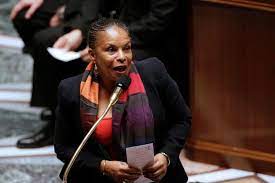
The false case against Christiane Taubira


Next weekend, Europe goes to the polls. Betting on the destabilization and nationalist sentiment fostered through neoliberal economies of fear and debt, the right and extreme right parties hope to win more seats in the European parliament. Their strategy is simple: announce a time of turmoil and crisis and then reduce political discourse to the mythology of the white male moralistic views as the only source of security. In fairness, the leftist parties have not done much to propose real alternative discourses and policies.

Last week, the right used this strategy in France against Christiane Taubira, the French Minister of Justice.

At the beginning of her appointment, Taubira brilliantly passed a same-sex marriage bill. When the most conservative constituents launched sordid assaults, Taubira responded with literary quotations that won the day. It was a virtuoso performance.

No virtuoso performance and no victory in the name of justice and equality can go unpunished.

And so the French right wing has launched an all-out campaign against Christiane Taubira.

They Americanized their techniques, using the power of repetition of simple and nationalistic slogans against her. Their goal was to blur her message and vitiate her work on undoing the politics of security that criminalized the vulnerable, at-risk populations attacked by anti-migrants sentiment or austerity measures.

After innumerable racist attacks, the neoliberal conservative coalition finally created a buzz around a song. The song was the National Anthem, La Marseillaise, sung by a chorus and soloists. Along with other members of Government and the President of France, Taubira attended a ceremony to commemorate the abolition of slavery. It was a solemn occasion, althought not for the Front National (FN), the nationalist party, that marked its denial of the offense of slavery by refusing to participate. They also refused to celebrate General Dumas, the first French General born in slavery and father of Alexander Dumas.

What happened was this. Taubira didn’t sing. This was presented as refusing to sing, which triggered a methodic orchestration in the media of repetitive messaging. The only problem is that singing the national anthem has never been popular in France. None of Taubira’s colleagues sang the anthem that day, but it was Taubira who was viciously attacked. Some questioned her “Frenchness” and demanded her resignation. The message was already prepared. A series of attacks and accusations overloaded the media. What is remarkable it the technique; the terms used repetitively by the members of this political “SWAT team” went from accusing her of sectarianism and of being unworthy of her position to being lax and having a contemptuous tone.

Thanks to her strong background in racial and social justice and activism in Guiana where she was born and grew up, Taubira was undaunted. Guiana is a French overseas department located in the Caribbean side of South America. Her political engagement is linked to this land, and she embodies a liberating ideal that has made her the bane of the elite of the right and extreme right in France. Before she became Minister of Justice, Taubira had been a French parliamentary deputy for Guiana between 1992 and 2002. In 2001, she put her name on a bill that recognized the Trans-Atlantic slave trade and slavery as a crime against humanity. At that time, she published a book, L’esclavage raconté à ma fille (Slavery explained to my daughter).

At the beginning of her career, Taubira denounced the crude mistreatment by the post-colonial French state of the overseas population. As Minister of Justice, she has denounced the politics of mass incarceration. She has also asserted the responsibility of civil society to respect human dignity as France’s overcrowded prisons have resulted in France being reprimanded by the European Committee for the Prevention of Torture and Inhuman or Degrading Treatment or Punishment in 2012.

Taubira’s problem is not singing the national anthem. Her problem is keep open the possibility of a fair debate on her penal bill in a National Assembly in which some members have gendered and racist slurs prepared for her. The manipulation of public opinion is not new, but these violent and ongoing attacks on Christiane Taubira signal that the project of hyper incarceration knows no limits.

This instrumentalization of language and communication is there to obscure the real responsibility of conservatives in the advancement and normalization of fascist and extreme right parties in Europe, not to forget the Tea Party and the dramatic turn to the right in the United States. The songs we should pay attention to are those of social destruction as multiple trade agreements are secretly negotiated, in particular TAFTA that threatens women and social cohesion in Europe, in France and elsewhere. The global prison is inscribed all over this agreement.

Christiane Taubira did not make any faux pas. If you must attack someone, attack her neoliberal detractors, who are not worthy of public position and who know neither the lyrics nor the melodies to the songs of justice and humanity.

(Photo Credit: Libération / Kenzo Tribouillard / AFP)

Did Mother’s Day end early this year?

Mother’s Day seemed to end early and abruptly this year.

In Australia, under the proposed new national budget, women who have a child, otherwise known as mothers, face paying 30% more on student loans than their male counterparts. No matter that another government policy encourages women to have three children, one for ma, one for pa, and for the nation down the road: “These aren’t choices we force on men. These are penalties we extract from women, based on their gender.”

Speaking of penalties, this week, the Pennsylvania ACLU revealed that in Pennsylvania, pregnant women prisoners are routinely shackled, including during childbirth. Pennsylvania is one of the states that actually has a law, the Healthy Birth for Incarcerated Women Act, which prohibits this kind of treatment. That law was passed in 2010. The ACLU has written to the Attorney General of Pennsylvania asking her to `clarify the law.’

Speaking of clarifying the law, Marissa Alexander still can’t catch a break. For having shot once in the air and not endangered anyone, in order to ward off an abusive partner, Marissa Alexander still faces a possible 60 years behind bars. While her lawyers may have all sorts of new evidence, the prosecuting attorney says the evidence isn’t new enough and the judge is worried about the precedent set by having a second Stand Your Ground hearing. Happy Mother’s Day.

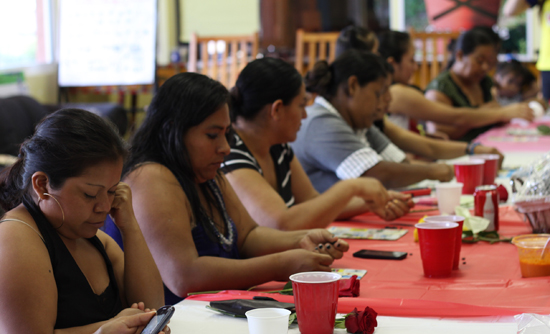
But for the women farmworkers of Immokalee, it may just be a Mother’s Day to celebrate. For the fourth year in a row, farmworker mothers, members of the Coalition of Immokalee Workers, stormed the ramparts of Publix, armed to the teeth with hope, a vision of a decent and dignified future for all, a dream of industrial democracy, and a letter, which read:

“May 11, 2014
Mother’s Day

To Publix:

We are farmworker women.  This is the fourth celebration of Mother’s Day in which we are writing to Publix to ask that you join the Fair Food Program.

As mothers, we work in the fields to support our families, especially to help our children through school.

As mothers, we do not make enough to fully support our family.  And the little that we do make is not easy to earn: We work under the sun and rain of Florida.  We do everything so that you can have tomatoes:  we plant, we tie up the plants, we harvest, and then we do it all again the next season.  In spite of all that, it seems that you do not understand and do not want to hear the voice of farmworkers.

Publix profits from the sweat of those of us who work in the fields.  We deserve respect and we deserve a fair wage.

Now is the time to join the Fair Food Program to protect the rights of workers and ensure a fair wage, with the penny per pound that 12 other corporations are already paying.  What are you waiting for, Publix?

Sincerely,

The Women’s Group of the Coalition of Immokalee Workers”

After delivering the letter, Lupe Gonzalo reported, “Publix presumes to say that they support families — but in reality, we don’t see this support. And we are not afraid to tell them that what they are saying is not true.  We are not afraid to come and protest in front of their stores.  Because we are speaking the truth, with our heads held high. For all of us, when we speak to our children, we tell them the truth.  And we tell them that Publix has not signed onto the Program because they are afraid.  Even children can see that.  But what does Publix say to its children?  Only lies?  Is that how they are educating their children?  That is not how we prepare our children for the future.”

Others, like Nely Rodriguez, mother of four, agreed. Now is the time!

Thanks to the work of women like Marissa Alexander, Lupe Gonzalo, Nely Rodriguez, maybe Mother’s Day didn’t end early this year, because, for them, the struggle of women continues, and that’s what Mother’s Day is all about.

(Photo Credit: Coalition of Immokalee Workers)

Artists remodel, repurpose and reclaim Barbie and beyond


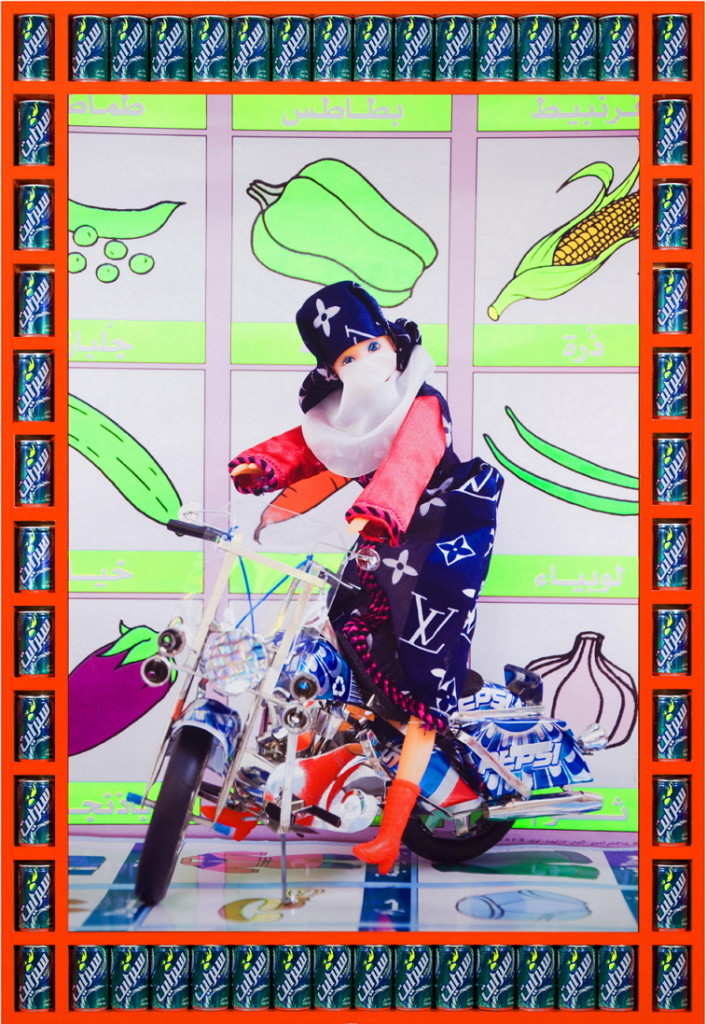
One of Hassan Hajjaj’s Moroccan Biker Barbie Dolls

Recently, London-based artist Hassan Hajjaj created a photo series in which he dressed Barbie dolls in Moroccan apparel embellished with designer brands. The juxtaposition of designer brands and traditional apparel is particularly striking, allowing the photos to pay homage to women’s biker culture while raising critical questions about the impact of Western consumer culture.

Hajjaj is not the only artist repurposing Barbie dolls. In fact, a large community of artists works with 1:6 scale models and figures, customizing them to more accurately represent objects of fandom. Sculpting, building, and customizing dolls can be an extremely lucrative industry. Those who purchase the dolls do so as a means of displaying their devotion to fandom and attention to detail. There is also a community of artists who work specifically with Barbie, and modify her in various ways. Loanne Hizo Ostile customizes Barbie, Kelly, and Ken dolls (as well as some Disney models) to be more racially diverse and inclusive. And designer Nickolay Lamm gained notoriety for creating a “normal Barbie” who had the proportions of an “average” 19-year-old woman.

These artists, like other 1:6 scale customizers, are creating products that reflect a vision they believe to be accurate, or one that they wish would be accurate. Where Mattel, Sideshow, and other mainstream brands fall short, there is a plethora of artists working toward inclusivity and more nuanced representations of bodies, cultures, and lifestyles. Barbie fandom and Barbie customization are certainly not mutually exclusive; in fact it seems that fandom, or at least wanting to legitimately better the product, can motivate people to customize the dolls.

However, there is also something to be said for detaching Barbie from her fan canon and viewing the doll as a piece of art. Enter AlteredBarbie, an annual art show in San Francisco that features Mattel icons repurposed in every possible way. For the creators of the show, “Barbie and Ken plastic icons represent modernity by having everything a person could desire today. They reflect corporate imposed lifestyles based on greed as well as the ore holistic concept of abundance.” Straddling the line between grotesque caricature and ideal beauty, Barbie and Ken become subjects rendered more complex by artists who “take Barbie boldly where Mattel/Disney would never have the guts to take her.” And the results are a mixed bag.

A list of “Barbie Gone Bad” compiles some of the most striking works from an earlier AlteredBarbie exhibit. Some, like Lavonne Sallee’s Rocky Horror Picture Show dolls, are indeed bold retellings and fusions of cultural icons. But other works in the show include insensitive, stereotyped depictions of eating disorders and drug and alcohol addiction. Even at its worst, the AlteredBarbie show forces us as viewers to consider the ramifications of incorporating Barbie into various scenarios. Dioramas that fuse Barbie with religion, BDSM, or blood and gore create an uncomfortable moment in which we must confront the idea of Western capitalist consumerism (vis-à-vis Barbie) infiltrating every other aspect of life.

Though perhaps less extreme in its execution, this is what Hajjaj’s photo series does as well. By remodeling Barbie, Hajjaj and other artists are radically reclaiming an artistic space dominated by wealthy, white entrepreneurs. By placing Barbie and her companions in situations that are physically violent, sexually explicit, or just plain unconventional, artists are questioning the intentional depiction of Barbie as a wholesome American girl. Stripped of her propriety and normative modes of accessorizing, Barbie becomes a means of powerful cultural critique and a language for cross-cultural artistic expression.


(Photo Credit: Over The Edge Books / Hassan Hajjaj)

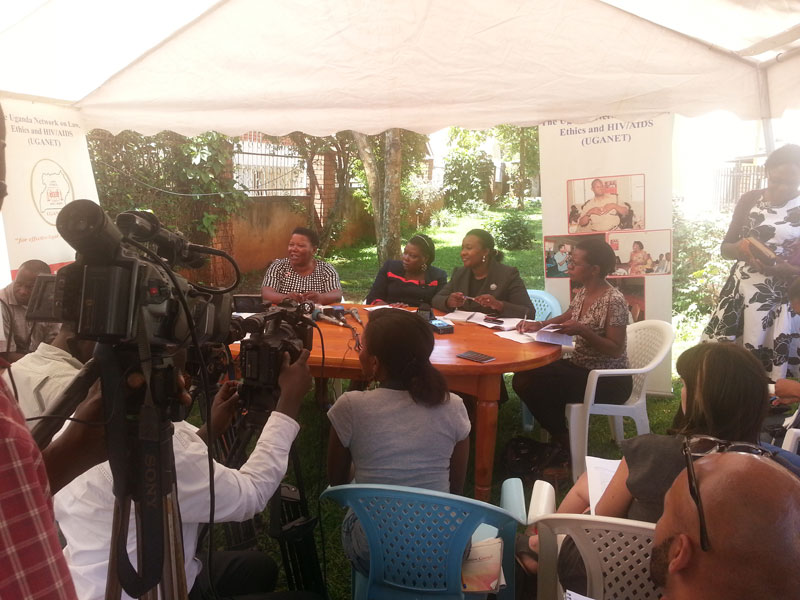
Uganda protects women to death

This past Tuesday Uganda’s Parliament passed something called the HIV Prevention and Management Bill. The law will not prevent the transmission of HIV. Everyone knows this. It will worsen the lives of all living with HIV. It will threaten the lives of LGBTIQ persons, and in Uganda, gay and lesbian identity is in the eye of the beholder. It’s not about being gay; it’s about being called gay. This law will have particular and catastrophic effect on women.

The law institutes mandatory HIV testing for pregnant women and their partners. Ostensibly it’s meant to `protect’ women and younger girls whose sexual partners conceal that they have Aids or are HIV-positive. It doesn’t protect women and girls. It endangers them.

The law also allows doctors to reveal the HIV status of those who have been tested. In Uganda, where HIV prevalence is higher among women and much higher among younger women, activists argue, the combination of mandatory testing and sharing of information is an invitation to domestic violence and even murder, at the hands of a partner who claims the woman brought the virus into the home.

That’s what protecting women looks like.

According to the International Community of Women Living with HIV, Eastern Africa: “The passage of the HIV Prevention and AIDS Control Bill represents a dangerous backslide in Uganda’s efforts to respond to HIV. While the bill may have been intended to facilitate and improve the HIV response in Uganda, the bill contains many poorly conceived and fear-induced provisions that have no place in a public health and human-rights-based response to HIV. As passed, this bill will actually weaken Uganda’s HIV prevention efforts and will have a detrimental and disproportionate impact on the rights of women and girls and in particular women living with HIV.”

Long-term HIV activist Milly Katana put it more succinctly: “All I can say now is doomsday has landed on all the people of Uganda. You will see fewer and fewer people testing.”

Margaret Happy, the Sexual Reproductive Health and Rights Officer of the International Community of Women Living with HIV Eastern Africa, agrees: “Uganda is already facing a serious backslide from its early advances in responding to HIV, Uganda is currently one of three African countries experiencing increases in their HIV prevalence rates previously from 6.5% to 7.3 %. The passages of this Bill will only serve to increase this backslide and the President must save Uganda from this backlash.” Lillian Mworeko, Regional Coordinator of the ICW Eastern Africa, adds that the legislators “chose to act out of fear and unfounded hysteria.”

“For Uganda to address its HIV epidemic effectively, it needs to partner with people living with HIV, not blame them, criminalize them, and exclude them from policy making. The president should not sign this bill and instead ensure a rights-based approach, recognizing that people living with HIV will prevent transmission if they are empowered and supported,” said Dorah Kiconco, executive director of Uganda Network on Law, Ethics & HIV/AIDS.

Dr Lydia Mungherera, of TASO, The AIDS Support Organization (TASO), explains: “This clause is taking us back centuries when all the progress we have made in fighting this pandemic is going to be ruled out. They are criminalizing people who are having consensual sex.”

Finally, Dianah Nanjeho, from UGANET, Uganda Network on Law, Ethics and HIV/AIDS warns that the bill will force HIV positive people, and especially women, underground: “The only path by which someone gets onto treatment is by taking a HIV test. People who don’t know their status are going to shun the health system and say ‘look I can’t go to take a HIV test because the results are going to be displayed in court some day. We will have someone who is HIV positive in the docks but without any justice system to fend for them.”

In every way, this Bill attacks women, and women know this. But Museveni will almost undoubtedly sign the Bill into law. Why? ““Because he knows the voters are going to like this bill it will be popular with him.” Who cares about science? Who cares about the knowledge of those, largely women, who have toiled in the fields for decades and dedicated their lives? Most importantly, who cares about the women? Really, all one must do is claim that protecting women is one’s goal, and it’s all good.


(Photo Credit: ICWEA)

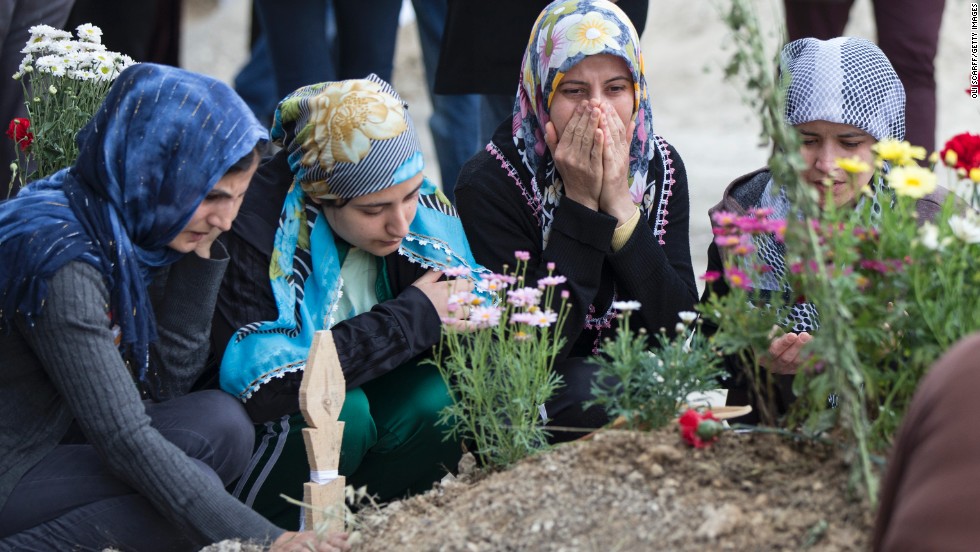
Outrage: The dirty, filthy Soma massacre


A mine exploded in Soma yesterday. Close to 300 miners are now dead. The world media sees this as tragedy, disaster, accident. Prime Minister Erdogan sees it as just one of those “ordinary things.” It’s mining, and shit happens.

No!

Across the country, through the haze of grief and sorrow, Turks are compelled by outrage and fury. They know. “This is not an accident, this is murder.” “We will not refer to it as an accident, we will call what happened a massacre.”

The ways of murdering miners are many. In this instance, it’s the crime of looking the other way, of refusing to inspect. For 19 years, Turkey has refused to sign the International Labor Organization’s No.176 “Security and Health in Mines Agreement”. The agreement places many responsibilities on the government and the employers. For 19 years of deteriorating mine conditions, the Turkish government said, “This can wait.”

Last year, a parliamentarian from the Republican People’s Party submitted a motion to investigate work-related accidents at the coalmines in Soma. All three opposition parties supported the proposal. However, the Justice and Development Party, Erdogan’s party, opposed the motion. Two weeks ago, it was rejected.

They knew the mine was a powder keg set to explode. But what are a few hundred miners in the big equation? And now, the keening women of Soma join the incandescent women of Marikana, in song and sorrow: “The love of my life is gone.”

There was no accident, disaster or tragedy. Instead, there was murder and massacre, and it was dirty and filthy. And there is outrage.


(Photo Credit 1: CNN) (Photo Credit 2: New York Times / Uriel Sinai)

But hey! How about boys bragging less?


19-year-old Tal Fortgang’s defensive response to those who reminded him to check his (male, white) privilege stirred quite the ‘dialogue’ this past week. Some chose to unpack Tal’s right-wing wunderkind syndrome, while others seized the opportunity to explain how privilege spawns the type of blindness that produces such letters. Proudly. Unapologetic. Defensive. Hurt.

But Tal’s letter also speaks to another critical social justice issue: the problem of gendered inequalities in adolescent self-esteem. This topic is on the minds of many who work for global youth development and gender equality in D.C and New York based headquarters. It has generated a huge discourse of its own these past years, but for some reason failed to make it into the discussion this past week. Despite the fact that Tal could be a poster child for how gendered inequalities in adolescent self-esteem play out in the U.S. context.

Sadly, this silence is typical. Perhaps it’s due to the breadth of the self-esteem and adolescence discourse that has grown exponentially in the last decade. This is due partly to the idea that adolescence is a crucial phase in which young people develop their identities and partly thanks to Nike’s girls-are-powerhouses-let’s-treat-them-as-data-to-validate-our-theory take on adolescence. Most of those involved with this issue, and eager to equalize the distribution of positive self-concepts, know very well that self-esteem goes hand in hand with gender, class and race. The fact that boys tend to have so much more self-esteem represents, in fact, the essence of the problem.

The silence is probably best explained by the fact that privilege is discussed at one table and global adolescent self-esteem at another. The latter is increasingly driven by Nike and the World Bank’s post-feminist neoliberal discourse that essentializes girls into development machines and reinforces harmful stereotypes.

More crucial to this disconnect is that adolescent self-esteem discourse treats the problem as a girls’ issue. It’s her problem to solve rather than a systemic issue or a problem of patriarchy. The underlying logic is that this form of inequality is best addressed by urging girls to spend time and energy on changing their behavior through ‘empowerment’ programs. Meanwhile, the engine of entitlement keeps spitting out boys like Tal left, right and center.

Boys’ higher levels of self-esteem are thus seen as the norm, from which girls deviate. And rather than the boys or the norm itself, it’s the girls who must be corrected for their difference. For example, a few days back, NBC posted a video about a program that professes that teaching girls to brag builds self-esteem. You can see where they’re coming from, but hey! How about boys bragging less? What about no longer condoning and rewarding entitlement and instilling the individualistic meritocratic illusion of ‘I deserved my place’ into kids who are at a clear advantage and who, from that position, are likely to develop wrong ideas about the merit of those who are not at their ‘level’?

Adolescence seems like a great stage in which to tackle the different dimensions of the self-esteem problem and burst the meritocratic myth that lies at the heart of privilege and was the ink to Tal’s epistle. Since schools are central spaces in which the myth of merit is cultivated, this is where change has to come from.

To begin to understand better how elite boys make sense of themselves and their privilege at one elite school in America, check out Shamus Khan’s book, Privilege: The Making of an Adolescent Elite at St. Paul’s School.


(Photo Credit: Princeton University Press)

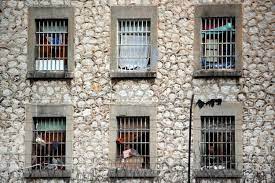
French prison guards strike for global incarceration and dehumanization

May 6, 2014, following other strikes by prison guards across Europe, French prison guards blocked about 100 of the 192 prisons in France. They protested their working conditions in the overpopulated prisons. Several unions joined forces for the occasion. They claimed to have lost authority over the inmates. They advocated against a tolerant approach of managing inmates. At the same time, the automation of prison work has resulted in a substantial reduction of personnel. The rising number of inmates has combined with the rising number of administrative tasks into a rising tide of aggression against guards.

The guards feel that they are at the mercy of this or that policy. None of this is surprising. Many had predicted this crisis. At the same time, the condition for inmates has been aggravated, both in sentencing and detention, which are intimately related.

Since the beginning of the 21st century, modifications of penal laws have sent more people to prison. At the same time, inequality has increased in France and around the world. The economy of debt has allowed transfer of public monies to private hands. The previous Sarkozy administration accelerated the Americanization of the French penal system: increase of incarceration, fewer sentence reductions and longer time in prison, fewer resources for reinsertion programs, longer distance between inmates and their families, higher prices for goods inside prisons, fewer jobs.

Between 2002 and 2012 in France, the politics of security served as an excuse to enact as many as 50 laws. These laws replaced the independence of justice with a political economy that favored building more prisons by so-called private public partnerships. These partnerships were a construction of a debt system through the public sector. For example, an investment of 679 millions of Euros by a private prison builder will generate 2.7 billion Euros for the private lender, paid for by the public over 27 years.

These laws brought more video surveillance into prisons and reduced the number of guards while sending more people to prison, 35.4% more over ten years, especially in recent years with the minimum mandatory sentencing system. The conditions in French prisons are untenable. The laws are ineffective, as evidenced by the rise in repeat offenses.

After her nomination in 2012, the Minister of Justice, Christiane Taubira announced that she would end this spiral that serves neither justice nor civil society. She had grand ambitions for a much needed reform of the penal system. The “conference de consensus de la prevention de la recidive” (consensus conference on the prevention of recurrent offenses) worked well and helped her to articulate a better vision.

This situation is endemic in Europe. Although the numbers cannot be compared with the United States’ figures, the change of policies associated with the diminution of financial means for public services, which include prisons, have contributed to a remarkable rise of incarceration in the past 15 years.

In Europe women are more incarcerated than ever before. Their offences reflect their social conditions and are often minor. In France 2 275 women are behind bars. 76% of them are mothers. They represent 3.7% of the total inmates. 50% are under the age of 30, and the duration of time behind bars has increased 50 % in 15 years. They are too many and too few to have adequate conditions of incarceration, if such a thing exists. They are marginalized in prisons built for men. In these quarters, they don’t exist as women but as incarcerated bodies.

Though the guards unions concerns were about the men’s prisons, women have been subjected to the modifications of penal laws in a harsh way.

The guards deal with these new conditions every day, with their own vision of their work and the limits of this system of hyper-incarceration. The demands are real as drug and weapons trafficking are more common than before. However these realities hurt inmates as well. In prison, everything is 30% more expensive; it is difficult to talk and report; where much power resides in a few hands. It is a place to which the general public does not want to be connecte

A prison psychiatrist who was recently taken hostage inside a prison by an inmate, said, “Apart from all the ethical and humanistic considerations, if we want to protect ourselves, we are going the wrong direction. The absence of hope and possibility of release pushes a person to the worst side of himself.”

Christiane Taubira will soon present a reform package to the parliament. The President has forced her to remove what the French section of the International Observatory of Prisons considered the coherence of the project. Nonetheless, some parts remain. For instance, it will overturn the mandatory sentencing and create more alternatives to prisons. The conservatives have already warned that they will oppose it. Taubira, a woman who has galvanized many women’s energy, has also been the target of unthinkable racist attacks. These issues are the reflection of the malaise that the neoliberal order creates and counts on to thrive.

The guards’ demonstrations may bring more populist responses or they might force society to consider what is happening in the penal system. A change of direction is needed in France and in the global prison orchestrated by the politics of impoverishment and control.

(Photo Credit: Anne-Christine Poujoulat / AFP / Libération)