Dan Moshenberg

Dan Moshenberg is an organizer educator who has worked with various social movements in the United States and South Africa.

Samburu women haunt the empire of charity

The Samburu of northern Kenya are pastoralists, and they are under attack. According to Survival International, the Nature Conservancy and the Africa Wildlife Foundation, two US-based `charities’, bought land, lots of it, from Daniel arap Moi. How’d he get the land? Good question.

The Samburu, who had been forced out of nomadic pastoralism by the encroachment of fenced off ranches, had settled there twenty years earlier. For twenty years they used this piece of land for grazing and access to water. They made land decisions on communal interests, with no one having the right to permanently dispose of the land. While the decision making process was dominated by male elders, women, especially married women, were involved in decisions concerning land use and allocation.

Until Daniel arap Moi bought the land, no questions asked. Then he sold it … to `charities’.

Since the sale, the Samburu have been harassed, beaten, raped. The lucky ones have `simply’ been evicted and had to fend for themselves in makeshift lean-tos. The Samburu have gone to court to retain their land … and to get some justice. Africa Wildlife Foundation has `gifted’ the land to Kenya, for `conservation’.

It’s a familiar enough story. “Native people”, “Africans” are caught, or not, in the crosshairs of conservation, charity, and gift economies bestowed upon them by the good people of the Global North.

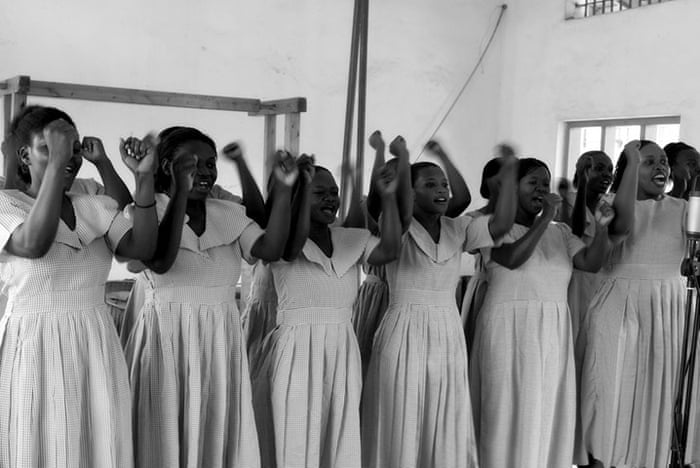
But there’s more. Women. The Guardian featured Samburu women prominently … in pictures. There “Samburu women sing a song” and “the women wear colorful beaded necklaces.”

Samburu women do more than sing songs and wear colorful beaded necklaces.

It’s not the first time that foreigners have visited sexual violence on Samburu women … in the name of progress and civilization. For the past fifty years the Kenyan government has leased land in Samburu District to the British military. It’s a training ground. Over 600 complaints of rape have been filed against the British military. Women like Miliyan LeKanta, Lydia Juma and Nigaripen Lesiamito have testified, in public, to the rapes. Testimony that resulted in their isolation and even expulsion from their own communities. The British `internal’ investigation found the military not guilty. Then the Kenyan government `lost’ the evidence. As the women’s lawyer explained, “There is no glory in reporting rape.” That struggle is ongoing … and it’s more than colorful beads and the singing of songs.

Locally, the Samburu Women for Education & Environment Development Organization has been key in documenting the devastation of the evictions and abuse on the Samburu. In their report, which Survival International sent to the United Nations, they have shown the ways in which women as herders and farmers have been rendered helpless by the violence of police. They have reported as well on women who have had to watch as their husbands have been beaten, sometimes to death, by police or by paramilitaries, and then left for dead in the fields. Houses are burned, villages ransacked, women raped. It’s the price of charity.

And who pays the price?

The bitter irony of conservation here is that the Samburu women are actually at the heart of the indigenous preservation of wildlife, in particular of elephants. The Samburu claim a kind of kinship between elephants and Samburu women, a kinship of everyday village labor. This kinship results in cultures of respect and honor. But those kinds of ties mean nothing to an important not-for-profit multinational charitable organization. After all, those ties involve Samburu women, singing and wearing fantastic bead necklaces.


(Video Credit: Vimeo / Cultures of Resistance)
They are neither mules nor witches. They are women.

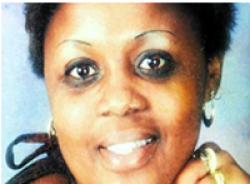
Janice Bronwyn Linden

Amina bint Abdul Halim bin Salem Nasser. Janice Bronwyn Linden. Sixteen elderly women, unnamed.

On Monday, Amina bint Abdul Halim bin Salem Nasser was beheaded by the Saudi Arabian government. The charge was witchcraft and sorcery.

On Monday, Janice Bronwyn Linden was executed, by lethal injection, by the Chinese government. The charge was drug smuggling, of being a `mule.’

On Monday, it was reported that, in one district of one province in Mozambique, from January to November of this year, sixteen elderly women had been accused of witchcraft and then were murdered.

Witches. Mules.

Amina bint Abdul Halim bin Salem Nasser was arrested in 2009. She was in her sixties. The charge was that she engaged in unorthodox healing methods. She charged people as much as $800 a session for … the claim of a cure. There is no way of knowing if this was, indeed, a fraud or if Nasser believed in her methods. She was never given the chance to explain. Instead, she was deemed “a danger to Islam”, and that was that.

Janice Bronwyn Linden was a thirty-five year old South African woman, from KwaZulu Natal, who was arrested in 2008 for smuggling three kilograms of crystal methamphetamine. The South African government tried to intervene, tried to appeal to the Chinese government for clemency. As is the practice in China, Linden was not informed of her impending execution until the morning of the day she was to die. Her family is distraught and despondent. South Africa, at least according to discussions in online forums and newspapers, is divided as to the execution. Many feel Linden deserved her fate. Why? She was a mule. She smuggled drugs into China. She should have known better. She `chose’ her path. She was a mule.

In Mozambique, in the district of Marromeu in the province of Sofala, women elders are under attack. A group of women elders, mulheres da terceira idade, women of the third stage, explained that when young men encounter failure, in work, in school, in life, they blame the elder women, they charge them with witchcraft, and then, filled with righteous indignation, they murder them. The women asked: “Estas situações estão a ser frequentes na nossa sociedade . Será que possuir 50 anos de idade deve constituir motivo para a idosa ser considerada feiticeira e condenada à morte?” “These situations are becoming common in our society. Is being old sufficient reason for being considered a witch and being condemned to death?”

Witches. Mules. These are terms that legitimate the murder of women. And they are terms of the current period, our period. They are the names of what is becoming common in our society. The real story is not crime but women’s power and audacity, “the struggle between orthodox men of the Establishment and an unorthodox woman making claims on forms of social power and authority. Ms. Nasir was low on the social hierarchy but making claims to high status by virtue of magical gifts. She posed not so much a danger to Islam as a danger to the authority of the clerics.”

The real crime is the witch-hunt. Amina bint Abdul Halim bin Salem Nasser. Janice Bronwyn Linden. The sixteen women elders. They are neither witches nor mules. They are women. Remember that.


(Photo Credit: South Africa History On Line)


The austerity of childbirth … in shackles

Austerity preys on women and children. So does State extravagance.

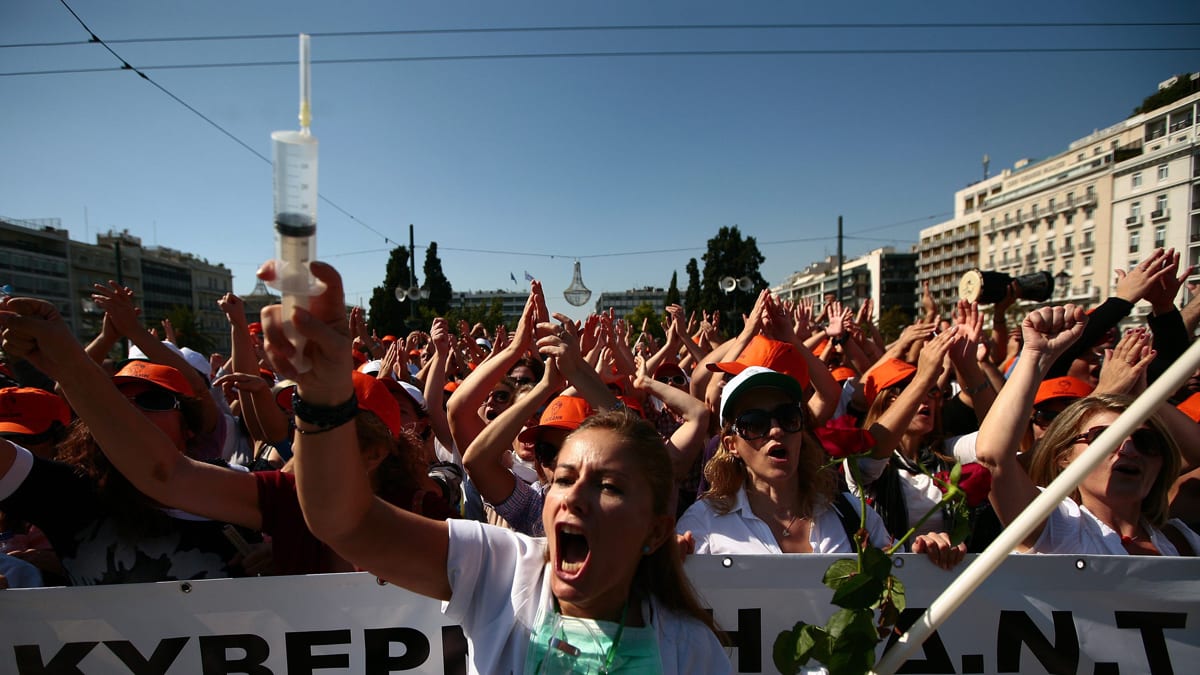
In Greece, women in labor were turned away from public hospitals in Athens, Thessalonika, Rhodes and Rethymnon. Why? They didn’t have jobs, they didn’t have insurance, and they didn’t have cash on hand. Because they couldn’t pay for their hospital visits, up front, they were turned away. It’s the new “health system”, the “unified medical care system”, also known as the “integrated unified hospital treatment”, under the new austerity. In this brave new world, women must pay in advance and then receive the childbirth allowance. The childbirth allowance is 600 Euros. The cost of childbirth is listed at 950 Euros, for `normal’, and 1500 Euros, for caesarean section. If a woman doesn’t have the full freight, she must just go. Even if she does have the money, in the end she bears the difference, anywhere from 350 to 900 Euros. Women bear the difference … literally.

Women’s groups, in particular the Women’s Initiative Against Debt and Austerity Measures and the Independent Women’s Movement, broke the news and mobilized public opinion. Greeks were outraged. The Ministry of Health and Social Solidarity was shocked and announced that, from here on, no woman would be turned away. However, she still must pay the difference.

This is the new face of Greece, the face of austerity. In the United States, this would be business as usual. As one Greek noted, “They turned us into America, where you are finished if you don’t have any good insurance!”. Another agreed, “I am touched, we are becoming America. Giving birth for free in public hospitals? Impossible. Wipe out childbirth allowance NOW as well.”

Welcome to the United States of America.

In the United States, if a woman prisoner is in labor, many states will spare no expense. They will buy the best shackles available. In 36 states, women prisoners in childbirth are handcuffed to beds and delivery tables, are shackled, are refused family in the birthing room, and are denied access to their newborns.

Florida is one of those states. A bill is currently in the legislature that would “create uniform and humane rules for the shackling of incarcerated pregnant women”. Gruesome as that phrase is, in Florida, and in the United States, it’s progress. Illinois passed a similar bill earlier this month.

For undocumented immigrant women prisoners, predictably, the situation is worse.

The line from shackling women prisoners in childbirth across the United States to refusing to treat women in childbirth in Greece is a direct line. In both instances, rational human beings decided that this course of action made sense. It makes sense to shackle women in childbirth? It makes sense to turn away a woman in childbirth? No, it does not.

Austerity and prison are parts of the new global unified medical care system, which is part of the global unified political economy. And in that `unification’, women bear the difference … literally.

(Photo Credit: Alkis Konstantinidis / The Daily Beast)

Violence against women is global, not regional

Friday, November 25, 2011, was International Day for the Elimination of Violence Against Women, the twelfth one since the United Nations 1999 resolution. November 25 is the beginning of 16 Days of Activism Against Gender Violence, a campaign which formally began November 25, 1991, twenty years ago.

Around the world, women and men are organizing events, workshops, vigils. Artists, such as Zanele Muholi, are articulating both the horror and the hope in their works and exhibitions. Activists and healers, like those of Rape Crisis Cape Town Trust, journey by bus to the homes and communities of their neighbors, near and distant, and engage in intensive discussions about sexual violence, about sexual freedom, about democracy.

Violence against women is global. It occurs everywhere and all the time. In households, in work places, in schools and hospitals, in police stations and prisons, in social movements, in political parties, in trade unions. Everywhere. All the time. The threat of violence against women is always already in the air. It’s an environmental hazard women face every day.

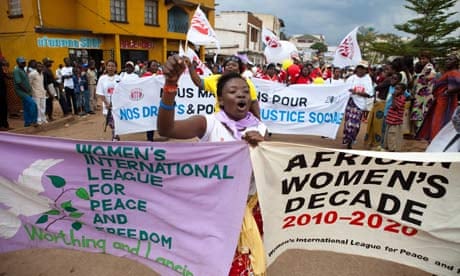
So, it is with some confusion that one notes the invitation by the Guardian, issued on November 25: “16 days of activism to stop global violence against women begins today. We want you to write for us about how change can be brought about in developing countries”.

Setting aside the division of the globe into “developing” and “developed”, the question remains, “Why?” Why “developing countries”? Do the Native women of the United States and Canada not count? Do the women of color, especially migrant and immigrant women, across Europe, Canada, the United States not count? Do all the women and girls across Europe, in the United States and Canada, who suffer, and organize to end and eliminate, domestic violence, do they not count?

The 16 Days of Activism to End Gender Violence emerged from a conversation among 23 women … from around the world. They spoke as a united group who recognized their differences and their shared experiences. They continue to do so. Violence against women is not a function of “under-development.” It doesn’t happen `over there’. It happens here … and here … and here … and here … and …

So, write to, and for, the Guardian, wherever you are. Share the news of the mixed things of organizing efforts, of the difficulties, successes, despondencies, joys. Make sure they find out that, when it comes to violence against women, the whole world is “developing.”


(Photo Credit: The Guardian)


We don’t burn children anymore. We send them to prison.

Monday, November 21, 2011, must have been Juvenile (In)Justice Day. Juvenile (In)Justice appeared everywhere, in the news.

In Kashmir, there’s juvenile (in)justice. Children charged with throwing stones are treated, formally, as terrorists. They can be jailed, caged, for up to two years without a trial. Children are placed in adult prisons, while awaiting trial and when convicted. And they will be convicted. Yes, there are laws that protect juveniles. But those laws don’t matter in a state of emergency. Children don’t matter in a state of emergency. They aren’t `juveniles’, and they aren’t `youth’. They’re children.

The state of emergency, the so-called public safety crisis, is always an alibi. States abuse children. In Kashmir, there’s juvenile (in)Justice, and the excuse is crisis. In Malawi, where there is no state of emergency, juvenile (in)justice is simply business as usual, the price of maintaining order. The law says children under 18 deserve special treatment and protection. In fact, children are tried in adult courts and then sent to overcrowded adult prisons. That is the rule of law… everywhere. Take children and maximize their vulnerability.

And then lie about it.

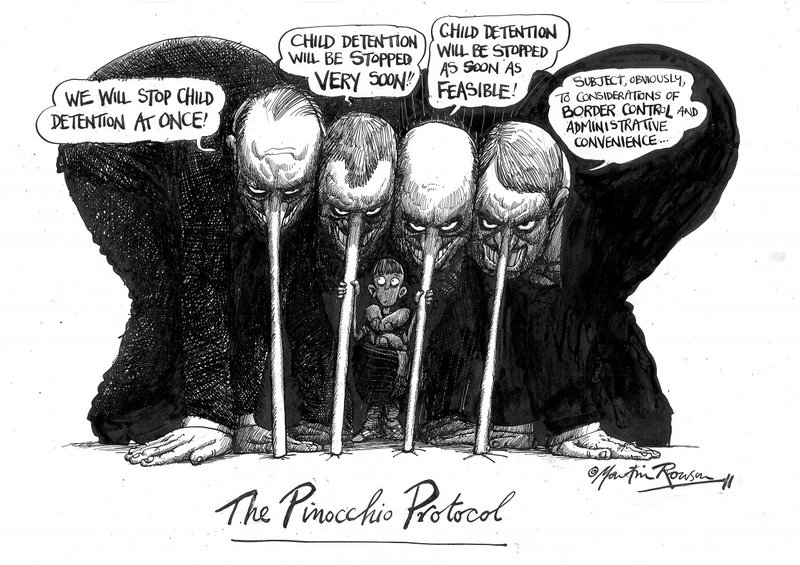
That’s what the United Kingdom has been doing, systematically lying about the abuse of children of asylum seekers and, worse, of asylum seeker children. Sexual abuse. Other forms of physical abuse. Psychological abuse. Spiritual abuse. Of course, there are no laws that address the crimes of breaking the spirit of a child. What’s going on in the United Kingdom is not `merely’ officials lying. It’s Official Lying. The State defines democracy by lying and then chants, “This is what democracy looks like.”

“The ministers lie, the professors lie, the television lies, the priests lie. . . .
These lies mean that the country wants to die.”

And then finally, in the name of security, stability, sovereignty, and, of course, peace, the State, in this instance the United States, proposes a budget that would gorge on prisons and gouge youth of resources, of hope, of life itself. Again, the youth, the juveniles, they’re children.

Meanwhile, cities, like New York, work on plans to increase the use of solitary confinement. It’s called “punitive segregation”, and it preys in particular on `juveniles’, those prisoners living with mental disabilities, and those awaiting trial. Maximize vulnerability. It’s a kind of efficiency that brings education, mental health care, and justice itself to a screaming, screeching halt.

None of this is new or news, of course. The abuse of children in prison is systemic. In the United States, for example, photographer Richard Ross has been exposing juvenile (in)justice for years, and it’s everywhere. It’s the fabric of national democracy. It’s today’s version of burning children, as Robert Bly wrote, some four decades ago:

“But if one of those children came near that we have set on fire,
came toward you like a gray barn, walking,
you would howl like a wind tunnel in a hurricane,
you would tear at your shirt with blue hands,
you would drive over your own child’s wagon trying to back up,
the pupils of your eyes would go wild—

If a child came by burning, you would dance on a lawn,
trying to leap into the air, digging into your cheeks,
you would ram your head against the wall of your bedroom
like a bull penned too long in his moody pen—
If one of those children came toward me with both hands
in the air, fire rising along both elbows,
I would suddenly go back to my animal brain,
I would drop on all fours, screaming,
my vocal chords would turn blue, so would yours,
it would be two days before I could play with my own children again.”

The news Monday was this. We don’t burn children anymore. We send them to prison.

(Image Credit: Open Democracy)

In the United States, when the police attack, “it’s the women’s fault”


Many have watched the video of Lt. John Pike, of the University of California Davis police department, casually spray a line of seated, peaceful protesters, and many have expressed horror. Many have expressed horror as well at the decision by the University President Linda Katehi to call in the police in the first place.

The horror is real and well deserved, as are the condemnations. But the surprise and shock are something else altogether. The violence committed was absolutely ordinary. Ask people of color across the United States. In particular, ask immigrant women of color.

Violence by police officers, by detention center staff, by the State, against immigrant women of color happens every day. The United States has declared war on immigrant women of color, and like so many wars of recent years, the war is identified as a form of peace making. Thus, the United States is `really’ waging peace against immigrant women of color. If they have scars, if they suffer trauma, if they lose their children or their partners, if they are sexually abused … it’s the women’s fault. They shouldn’t have opposed the peace process.

Institutional violence against women of color immigrants is ordinary. It happens every day in immigrant detention centers, like T. Don Hutto Family Residential Center in Taylor, Texas. Sara, Kimberly and Raquel `Doe’ are three asylum seekers currently suing Hutto’s owner/operator, Corrections Corporation of America, CCA, for the sexual violence and abuse they suffered while `guests of the system.’ They are part of a fast growing sisterhood, a nation of Does.

Police and State violence against women of color immigrants happens every day on the streets. Ask Susana Ramirez, who never had trouble with the law in either the US or Mexico, until one night she was stopped for … basically for nothing. She changed lanes without signaling. Next thing, her daughters were whisked away, and Ramirez faced deportation. Threatened in Durango, Ramirez was threatened in Illinois. She is part of a fast growing sisterhood as well, of women of color immigrants who face, and often face down, the culture of fear and intimidation.

State violence against women of color immigrants happens every day, when families are split up by ICE, when children are taken away and lost into the so-called foster care system. Those children are disappeared, kidnapped, and their parents are left to search for them. In the first six months of 2011, 46,000 parents of US-born citizens were deported. What happened to their children? What is happening to their children?

Sometimes, the mothers, like Clara and Josefina, sisters, are taken away, and the children, effectively, vanish. Other times, the mothers are US-citizen partners to men who are deported and are left stranded. That the children are US citizens is irrelevant to the State. Where once nations recognized citoyens du sang, citizens of blood, now they create immigrants of blood. Citizenship doesn’t matter: it’s what in your bones, in your blood, in your DNA.

Some say the brutality of the immigration detention system is inhumane. It’s worse than inhumane. It’s humanity-to-come, the promised land. Militarized police, militarized borders, increased sexual violence and abuse against immigrant women of color, increased and intensified systemic racist and sexist violence directed at immigrant women of color … and for what? To keep the nation safe, free and democratic. Behind those words is the real promise: this is what humanity will look like.

In Davis, police and University have committed violence casually and even comfortably. In so doing, they are not alone and they are not exceptional. In fact, they’re quite ordinary, and therein is the horror.


(Image Credit: PBS Frontline)

Queen Nzinga haunts the `scales’ of Angola’s autonomy


Queen Nzinga refuses to sit on the floor

A week ago, November 10, 2011, Angola marked its 36th Independence Day since the proclamation of independence, November 10, 1975. So, how better to acknowledge the day than to focus on … Angola asylum seekers? By and large, the Western media paid no attention to Angola today, but then again what else is new.

The great exception was Radio Netherlands Worldwide, which sported a piece entitled, “The `Mauros’ who could not stay.” `Mauro’ is Mauro Manuel, an 18 year-old Angolan lad who was recently informed he could stay in the Netherlands, where he’s lived, with a foster family, for the last eight years. Mauro wasn’t given asylum, but, on Tuesday of this week, he was allowed a reprieve. The Dutch Parliament gave him a student visa. What happens next is up in the air.

The “other `Mauros’” are women.

Amalia is 17, Tucha is 19. Their father was killed, for political activities, and the older sister was raped. That’s when they fled Angola. They lived in the Netherlands for five years. Then, they were denied asylum and, after five years, shipped back to Angola. No matter that Amalia was 16 at the time, a minor. No matter that no one knows where their relatives are or even if they are. A year on, they still don’t know if their mother is dead or alive.

“At the other end of the scale”, according to RNI, is Engracia. 33 years old. Completed her education in the Netherlands, where she lived for 14 years. No political violence. Supported by middle class kin in Angola and the Dutch Refugee Council, who paid for her ticket back and gave her 2000 euros.

So that’s the RNI Angola Scale: weeping, terrorized, impoverished failed asylum seeking girl, on one end; successful, entrepreneurial woman, on the other. On one end, desperately poor and with no apparent means of securing income; on the other, `gifted’ handsomely, as a `returning refugee’, by the largesse of Europe.

Really? That’s the scale?

What about all those other women in Angola? What about the ones who organize, struggle, and keep on keeping on? Women like Teresa Quarta, chairwoman of the Association of Angolan Women and Sports (AMUD), who argued this week that women athletes is all fine and well, but Angola needs to attend to developing and supporting women sports managers. What about women like primary school Maria Emelia and Rosa Florinda, women who don’t deny that things are tough, that classes are overcrowded, that the country lacks sufficient numbers of trained teachers, that too many children are too hungry. Women teachers, across the country, who keep teaching, keep pushing, keep pulling. Factory workers, farmers and farm workers, nurses and doctors, women. Ordinary women. Women not defined by their encounter with the European state. Women defined as simply Angolan.

When they look for a model, when they look for a Queen, for example, they need not look to Queen Beatrix, of the Netherlands, nor to her mother, Queen Juliana. Instead, they could look closer to home. They could look to Queen Nzinga, Nzinga the Warrior Queen of the Ndongo and Matamba, that woman who overcame local structures, who defied and often defeated the Portuguese, who almost single handedly created a new state. Nzinga was not a saint, was not some pure or ideal woman. She cut deals. She allied with the Dutch against the Portuguese. She provided safe haven for runaway slaves while at the same time engaging in the slave trade. That’s life. “It’s complicated.”

Nzinga was not a heroine nor is she an icon. She was a leader. Nzinga led in war, peace, commerce, politics, and life. Nzinga was an Angolan woman who led Angolans into action. Nzinga was an Angolan woman, who presaged not only Angola’s national independence but also its national autonomy. Nzinga haunts the `scales’ of Angola, and Amalia, Tucha, Engracia, Teresa Quarta, Maria Emelia, Rosa Florinda, and so many others, are her descendants. Tell that as the story of Angolan independence.

(This post originally appeared, in slightly different form and under different title, here http://africasacountry.com/2011/11/16/angolan-independence/


(Image of Queen Nzinga: Amazing Women in History)

The children just can’t stop crying

Makenda Kambana – Jimmy Mubenga’s wife – (left) with family and supporters

Today, November 10, 2011, Angola marked its 36th Independence Day. How does Europe mark Angola’s independence?

Jimmy Mubenga was on a `hit list’ in Angola, and so he fled to England. He applied for asylum. Denied asylum, he was put on a plane. His wife and five children remained in England. Mubenga resisted deportation. He was forcibly placed on a plane and, according to witnesses, killed by G4S escorts. His widow, Makenda Kambana, reported, “The children just can’t stop crying and I don’t know what to say to them.” That was then. A year later, Makenda Kambana reports that little has changed, except, perhaps, for her education. Now she knows that her husband was not an anomaly, that he was part of a culture of mistreatment and abuse of people of color by the so-called escorts. What does she say to her children now?

That was 2010.

Five years earlier, Manuel Bravo, suffered a related fate. Bravo had arrived in England, with his wife Lidia and two sons, in 2001. He had been imprisoned for pro-democracy activities, and his parents and sister had been killed. In 2004, his wife took their son, Nelio, and returned to Angola, to take care of ailing relatives. She was arrested, and, upon release, fled to Namibia. Manuel Bravo was denied asylum, and then, in the middle of the night, border agents came to the house, took him and his son, Antonio, to the notorious, privately run Yarl’s Wood Immigration Removal Centre, and told them to prepare for deportation the next day. That night, Manuel Bravo hanged himself, leaving a note that read, in part, “I kill my self, because I don’t have life for live any more. My son Antonio stay here in UK to continue his studying. When he grow up, he [illegible] your decision. I really sorry because I can’t return to Angola.”

Antonio did in fact stay in England. He did pursue his studies. He grew up to be a fine young man. And his reward, now that he’s an adult? The government seeks to deport him. Happy birthday, Antonio, welcome to adulthood.

And then there’s Amalia and Tucha. Amalia is 17; Tucha is 19. Their father was killed, for political activities. Tucha was raped. In 2005, alone and unaccompanied, they fled Angola. Last year, after living in the Netherlands for five years, they were denied asylum and peremptorily shipped back to Angola. No matter that Amalia was a minor. No matter that no one can locate their relatives.

Amalia explains, “A group of policemen entered our bedroom in the middle of the night. They said: ‘Pack your stuff.’ I said: ‘Why, why, why? I’m not yet 18!’ But they grabbed us and put us on a plane. Five people accompanied us; I don’t know who they were. I just cried and cried.”

I just cried and cried.

This is the narrative of empire: The children just can’t stop crying.


(Photo Credit: Socialist Worker)


In the UK, disbelief haunts the asylum process for women

Two hundred years ago, poetic faith was described as “that willing suspension of disbelief.” At that point, a culture of disbelief meant folk cultures and fantasy were relegated to the dustbin of history by `the lettered classes.’ Today, disbelief sends women asylum seekers to prison. Progress?

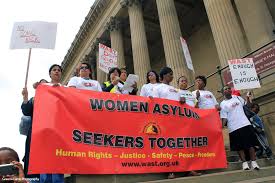
In the United Kingdom, women asylum seekers encounter a “culture of disbelief.” When Asylum Aid looked into the situation of initial decision-making in women asylum seekers cases, they found that 87 percent were turned down at the first hearing. Why? The UK Border Agency agents didn’t believe the claims. 87 percent is high, but that’s actually not the higher math. 42 percent of the rejected claims were overturned on appeal. In fact, 50% were ultimately overturned. The over-all average for overturning rejected appeals is 28%. That means that women’s stories are discounted as lies, at least by the border agents who make the preliminary decisions.

And it gets worse. Women wait longer than men to hear a final decision. How do they live while waiting?

In Scotland, all asylum seekers receive free healthcare. This includes those whose claims have been rejected. This means women. First, women make up a proportionately large part of those appealing, post rejection. Second, addressing women’s health concerns and, even more, women asylum seekers’ health concerns by engaging with the women as autonomous persons helps bring them into the larger and everyday social world. It is part of a larger Scottish project of refugee integration. But Scotland is the exception. For the rest of the United Kingdom, for Westminster, the situation is toxic, lethal.

Asylum seekers do not need to labor under the additional burdens, or are they punishments, of isolation and desperation. And depression. The vast majority of women asylum seekers are fleeing sexual and physical violence. Add to that isolation and a dehumanizing process, and you have a perfect recipe for self-harm and worse.

What is the architecture of the culture of disbelief? Prison. Private prison, at that, such as Yarl’s Wood, run by Serco. The typical scenario for a woman asylum seeker is travel long distance, end up in an overcrowded room with tons of strangers, approach a person sitting, austerely, behind a glass, and then, in a loud enough voice to be heard by a bunch of people, tell him or her the story of how you were violated. And then suffer rejection, being called a liar. And then go to Yarl’s Wood … or some other prison.

Welcome to the so-called “culture of disbelief.” Welcome to `democracy’.

It’s not disbelief. It’s efficiency. If 87 percent of the storytellers are rejected, that’s because the judge isn’t listening. Anyway, it’s more efficient to reject 87 percent, even if half will be overturned. Think of the savings from those who don’t appeal and from those who appeal and don’t succeed. And then think of the profits generated through the incarceration of innocent women courageous enough to tell their stories to strangers, courageous enough to seek a better world, despite all odds. That’s extraction of value, of profit, from time, from flesh, from pain and suffering, from degradation, from women.

This system, this version of `democracy’, was established during the bubbly times, during the economically ascendant times … for some. What is coming, as the UK charges from efficiency to austerity, is predictable. More cuts. Cuts to legal aid. Cuts to health services. Cuts upon cuts.

What is needed is a national campaign of willing a suspension of the culture of disbelief. Call it …  democracy. Call it, as well, feminism.

(Photo Credit: Liverpool Antifascists)

Ingrid Turinawe’s Long Walk to Work … and Democracy

The choir at Luzira women’s prison

Last week, Ingrid Turinawe, the leader of the Forum for Democratic Change (FDC) Women’s League, in Uganda, was sent to the infamous Luzira Prison.

Everywhere one looks, there are “infamous” prisons. For the United States, for example, Guantánamo, with its regime of torture and its regimen of violence, is but the tip of a national iceberg. Every country has at least one. In Uganda, it’s Luzira Prison.

Six years ago, two-thirds of Uganda’s then18,000 prisoners were awaiting trial. Some had been caged for years, for no reason other than not being able to post bond… or because, in the global security climate, they have been deemed `terrorists’, and so … stay in prison for years, without every being charged.

Of the 18,000, prisoners, 5,000 were in Luzira, built in the 1950’s, designed for a capacity of … 500. That’s ten people for every one person’s space. For years. And those were the good times. Last year, the prison system reported over 30,000 prisoners, of whom a little over 1,000 were women. In March 2010, Luzira Upper was at 366 percent of approved capacity; Luzira Women’s at 357 percent. The situation is only expected to worsen over the next decade.

What does overcrowding mean? Inadequate food, inadequate water, inadequate clothes, blankets, mattresses. Most prisoners sleep on the bare floor. The only prison in the entire system that has blankets is Luzira Women’s Prison. The result? Reports estimate that 10% of inmates die in prison, primarily due to malnutrition and AIDs, but really due to lack of this, inadequate that, and none of essential those.

Along with overcrowding, use of isolation cells as “persuasion” is fairly common, in both Luzira Upper and Luzira Women’s Prisons. For pregnant women prisoners, prenatal care is horrible and postnatal care is worse. For prisoners living with mental or psychosocial disabilities, their options are to languish or perish while the State dithers. Many of these prisoners are in Luzira. The same holds for many juveniles held in Luzira adult facilities and awaiting some sort of decision. The same holds for those on Luzira’s death row, where perhaps as many as 25% are innocent, but hey. For sex workers the situation is, at best, dire. For those accused of “homosexuality” … worse.

And of course the open secret of Luzira is the torture of political prisoners, covered by the fog of anti-terrorism. One woman was held incommunicado for six months, during which she was beaten senseless. Then she was taken to Luzira, for a month, before being released on bail. Her crime? Being married to a person of interest. Another woman was abducted by rebels, as a girl. When she was captured, by the army, she was sent, finally, to Luzira, where she applied for amnesty. After seven months, she was released, without amnesty, without a trial and with charges dropped. Nevertheless, she is required to report to the equivalent of a parole officer once a month … in perpetuity.

In Uganda, if one is charged, or suspected, of “treason or terrorism”, Luzira is in the cards.

So, Ingrid Turinawe was sent to Luzira. Why? She has been charged with treason. Because she participated in and led the “walk to work” protests and campaign, now in its second phase. Because she said something’s rotten in the state of Uganda. Because she proposed that democracy, now, is both required and possible … now. Of course, there’s barely a mention of Turinawe, or of the Walk to Work campaign, in the western press, but what else is new? As you read of the Occupy movements, the Indignados, the Uncut movements, the ongoing Arab Spring and Chile Autumn, and all the other manifestations, and as you read of the police “over-reaction”, which is always merely following orders, remember the Ugandans who, since last year, have been Walking to Work and think of Ingrid Turinawe, in Luzira Prison… for the treason of dreaming democracy.


(This post originally appeared, in slightly different form and under different title, here: http://africasacountry.com/2011/10/31/ugandas-guantanamo/)


(Photo Credit: The Guardian / Clifford Chance)