In South Africa, elderly rural women take a patriarchal King to court … and win!

Linah Nkosi

In South Africa in 1990, Sizani Ngubane co-founded the Rural Women’s Movement, a coalition of over 500 community-based organizations and a membership of over 50,000 indigenous women and girls. Until her untimely death at the end of last year, Sizani Ngubane, as Director of the Rural Women’s Movement, challenged traditional leaders’ misogyny, sexism, authoritarianism, patriarchy. In the last decades, she focused much of her work on KwaZulu-Natal, and especially on the Ingonyama Trust, a trust with only one trustee. At the time of Sizani Ngubane’s death, that trustee was King Goodwill Zwelithini. He alone controlled close to 30 percent of the land in KZN. Around five million people, about 50% of KZN, live on land the Ingonyama Trust controls. For years, the Ingonyama Trust ran roughshod over local landowners who actually had title, under traditional law, to the land. The Trust was especially vicious and dismissive of traditional women landowners. Last year, some of those women, along with the Rural Women’s Movement, took the Ingonyama Trust to court. This past Friday, the Court decided in the women’s favor. The court decided the Trust must repay the stolen money and land. This is a monumental victory for women, democracy, justice, and a demonstration that a person may die but the spirit lives on. Long live Sizani Ngubane!

In 2018, Sizani Ngubane described the Ingonyama Trust: “The Ingonyama Trust was established to secure the 2.8 million hectares of land in KwaZulu-Natal for white people, who were not sure if the ANC led government would accommodate them after the colonial and apartheid regimes took 87% of the South African land from the indigenous communities …. The Ingonyama Trust’s actions concerning land have been terrible for the communities who reside on land designated as the Trust land … The Trust invites people to bring in their Permission to Occupy (PTO) certificates and other documentary proof of land rights in order to convert them into lease agreements, whose annual rentals escalate by 10%. A PTO Certificate is an apartheid-era land right that is upgradeable to ownership in terms of the Upgrading of Land Tenure Rights Act 112 of 1991. Not everyone has PTO Certificates because under the apartheid regime the issuing of these certificates was only for men. Nevertheless, anyone who has established long-term occupation of land is likely to have customary ownership, especially in instances where the inheritance of the land occurred over generations. The Trust’s standard lease agreement turns the indigenous and/or rural communities from owners into tenants of the Trust, binding them to pay rent that escalates at 10% a year. If one defaults on the rent, one stands to lose the land, including any buildings and improvements one, or one’s family, made on the land.”

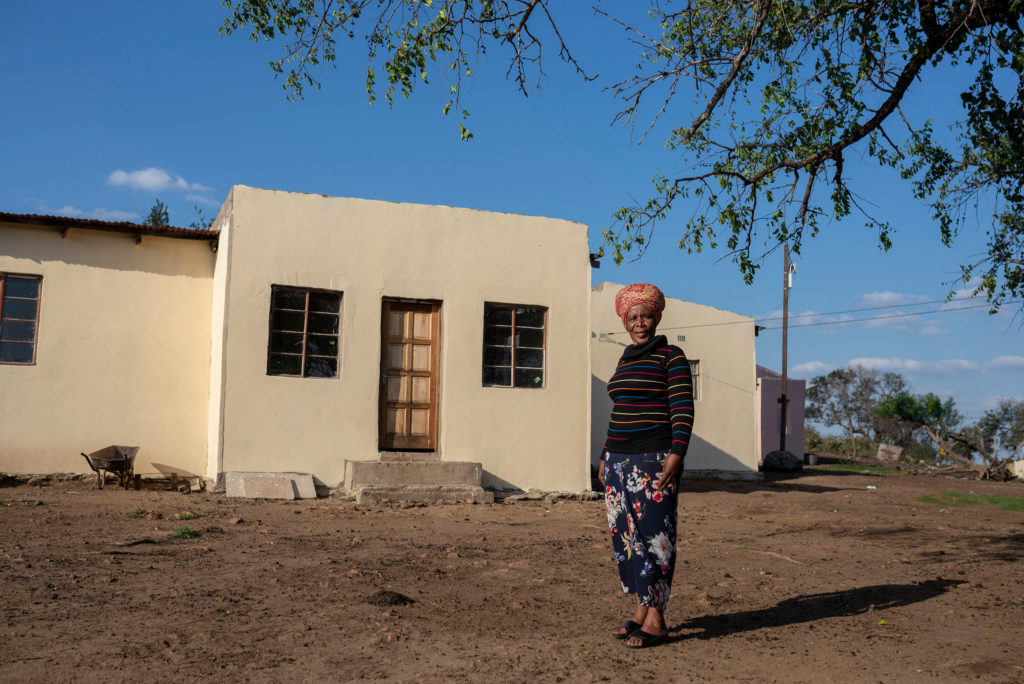
Linah Nkosi, 64, lives on a pension. She has a plot of land that’s about seven acres. Linah Nkosi and her sister acquired that land years ago, through the local traditional council. The Ingonyama Trust decided all landholders needed leases. When Linah Nkosi came to sign hers, the Trust rejected her because she’s a woman. The Trust told her to get a man to cosign. Linah Nkosi protested … to no avail. She returned with her male partner, and he signed. Linah Nkosi continued to protest and then, with others, went to court.

Margaret Rawlings, 65, Thembekile Zondi, 62, Hluphekile Mabuyakhulu, 75,and other women tell similar stories. Margaret Rawlings has a title deed that goes back to 1926, and yet traditional leaders and the Ingonyama Trust seized parts of her property, and when she protested, guns went off. Thembekile Zondi was married to a local traditional leader. When he died, a new leader was installed, and he promptly evicted Thembekile Zondi and her daughters from the house that Zondi and her husband had built. To this day, Zondi and her daughters “feel like refugees who have been forced to flee from their own home and watch the usurpers enjoying the fruits of our hard work.” At a community meeting, Hluphekile Mabuyakhulu was told to sign the lease or lose her land and become homeless. 

The women who were badgered, dismissed, threatened, injured, stolen from said “NO”. They said the Constitution, justice, decency, the rule of law, and women matter. On Friday, the Court agreed. The Legal Resources Centre, who represented the women in the case commented: “For the seven individuals, this fight is personal. The group comprises of single mothers, factory workers, pensioners, farmers and fathers trying to provide for their families. For many, their ascendents worked the land on which they are now being forced to pay rent. They have – along with the other 5.2 million residents of the Ingonyama Trust land – built their homes and their lives on this land. The applicants represent these 5.2 million South Africans and the threat that this matter poses to their security of tenure on this land.”

This fight is personal, for the seven individuals who took the Ingonyama Trust to court, as it is for everyone everywhere. Around the world, people face eviction from their homes, homes which they built, under all sorts of pretenses. Pandemic billionaires rake in untold wealth and avoid paying taxes, while the majority of the world population suffers economic crisis. Historically racist, sexist and economically discriminatory housing policies continue to build today’s Americas, Europe, Asia, Australia, as well as South Africa. Industrial capital was founded on pushing people off their land and then criminalizing them. Post-industrial capital continues to rely on the disenfranchisement and mass eviction of rural populations, especially women. No one, no one man, no one group of men, should control 30 percent of anything, but they continue to do so. That must come to an end. Friday’s judgement was a personal and a global victory. Long live Sizani Ngubane!

(By Dan Moshenberg)

(Photo Credit: New Frame)
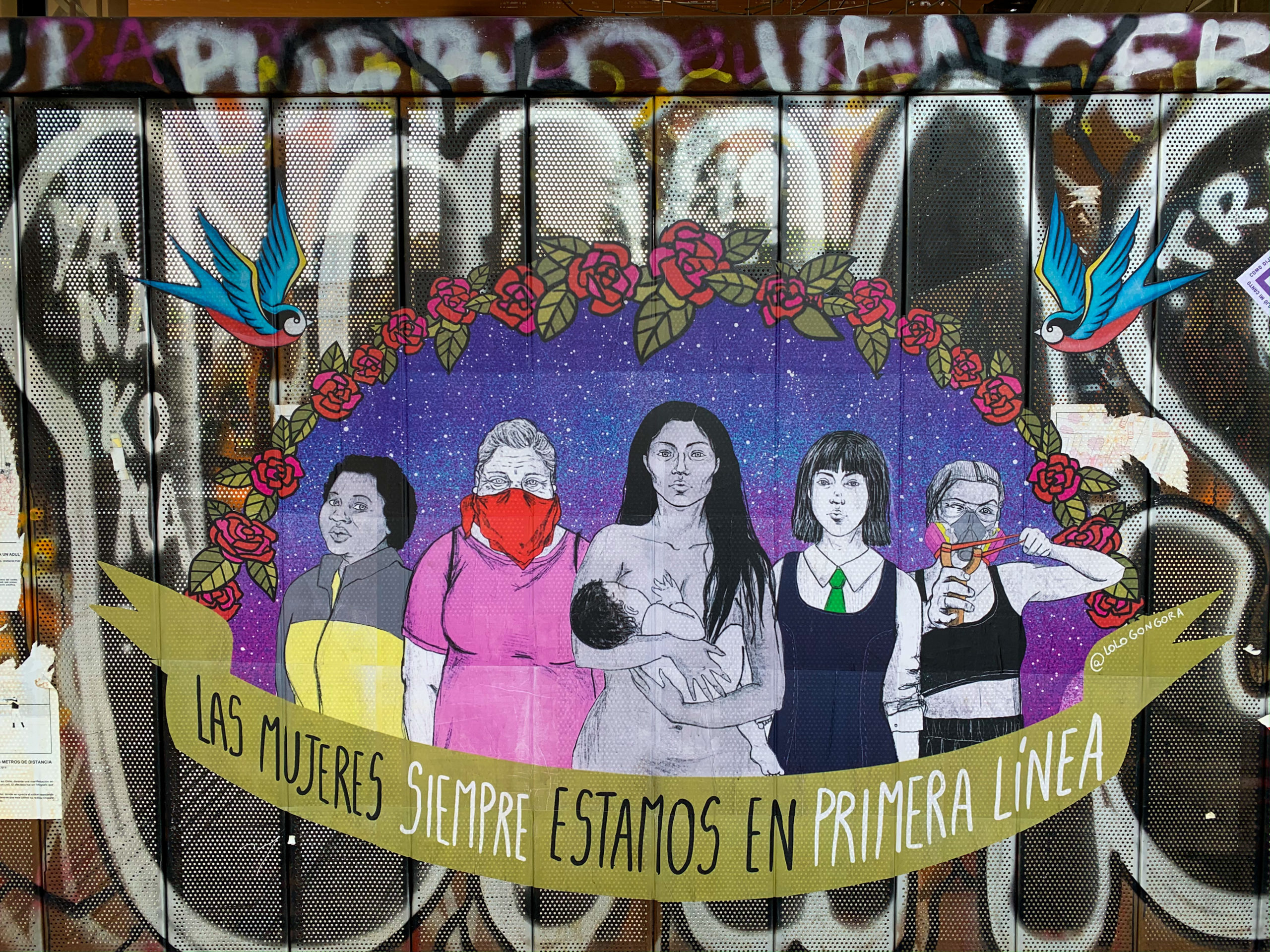
Chile’s Constitutional Reformation From a Feminist Perspective

Chile’s new constitution will be the first drafted in the aftermath of the global #MeToo movements and a wave of feminist activism across Latin America confronting strict abortion laws, violence against women, and femicide. The conception of the new document will be crucial in the fight for gender equality and political representation in Chile. The new constitution will spur progress for women in Chile and potentially set a new global standard for gender equality in politics. 

Generations of Chilean women have long fought for social, gender, and class equality—beginning under the two most decisive periods of Chilean history, the socialist government of President Salvador Allende and the military government of General Augusto Pinochet. More recently, feminists and LGBT organizations have mobilized to confront a brutal neoliberal and increasingly authoritarian state. Chilean feminists have protested state violence, anti-statism, and anti-capitalist beliefs. These movements centered on accessibility to legal abortion, violence against women, and femicide have ignited broader demands for social equity outside the parameters of gender and reproductive issues in Latin America. 

The 2019 Chilean feminist anthem, “Un Violador en Tu Camino” (“Rapist in your Path”), which is fundamentally rooted in the feminist theory and anti-statism, demands the Chilean state to claim responsibility and accountability for Chilean women’s violence and deaths. First performed in Chile by the interdisciplinary, intersectional, and trans-inclusive feminist collective, Las Tesis, the anthem and performance quickly became viral and spread from France, Mexico to Kenya, and India, igniting a global feminist movement against violence. 

In the wake of recent feminist movements such as “Un Violador en Tu Camino” and similar movements in Latin America, Chile has elected 155 members, 77 women and 78 men. The members will be in charge of writing Chile’s new Magna Carta and decide on fundamental issues as social rights, the country’s private property regime, and the state’s role. This process emerged in response to the demands of the social outbreak that shook the country in October 2019. The procedure, supported by 78% of the voters in a referendum in October 2020, will end in 2022 with another widespread consultation that will approve or reject the text that will replace the 1980 Constitution written under the military regime of Augusto Pinochet.

With the new constitution, what does that mean for women? The structural reformation will prove pivotal in creating a more inclusive and representative body. The nearly perfect, 77 women and 78 men, gender parity provides a step in the right direction. Feminist activists and organizers consider this provision a historic victory for women in obtaining political visibility. Activists believe the gender parity will create visibility for minority communities, including the country’s Indigenous communities, LGBT groups, and gender non-conforming people. 

Though the outcome of this gender parity and the new body of laws remains yet to be seen, one thing is certain—feminist grassroots organizers globally are eagerly awaiting the long-overdue seat(s) at the table that has the potential to set a new global standard of politics.


(By Tatiana Ruiz)

(Image Credit: Emily Matteson / Anthropology News)

Australia is not shocked by its torture of women refugees and asylum seekers

Ellie

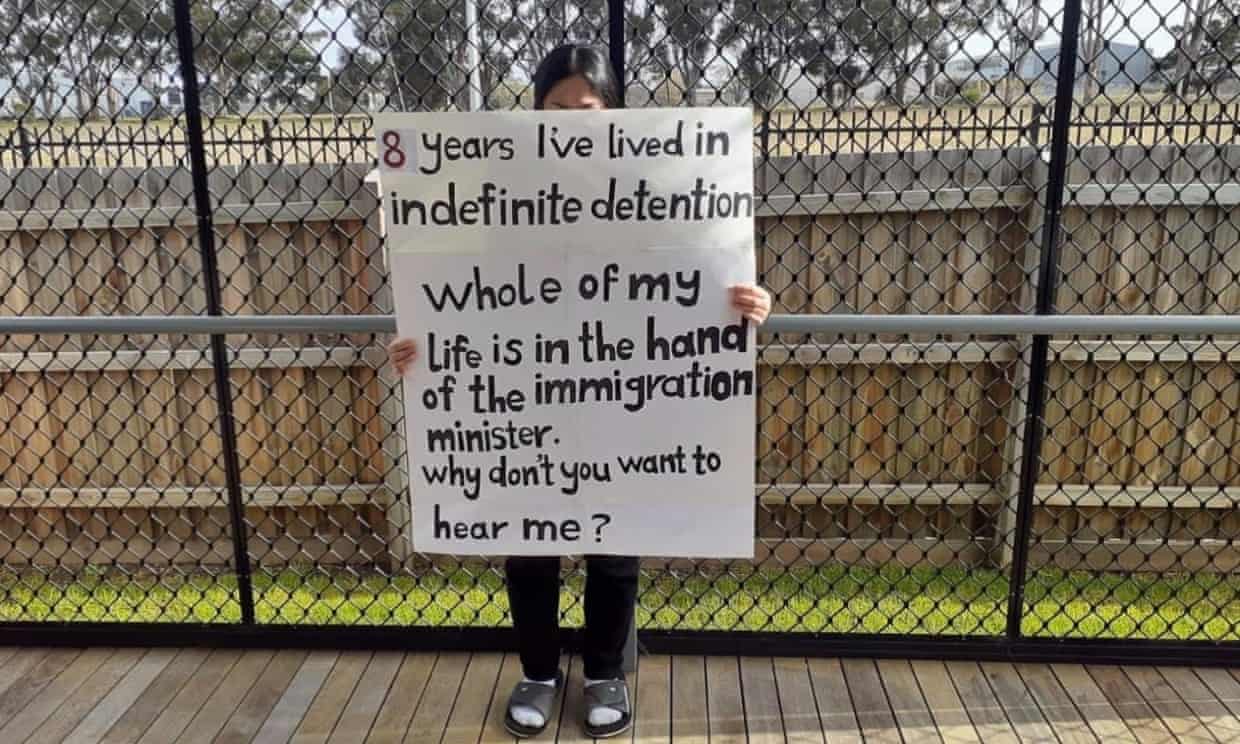
“I have been left like a worthless object in a corner of a prison …. Every day, I sink deeper into the swamp of fear and despair. But no one hears me.” Ellie is a 34-year-old Iranian refugee who fled Iran in 2013 to escape family violence. She attempted to reach Australia and apply for asylum. Australia shipped her off to Nauru, where she spent six years in detention. Then, Australia shipped Ellie to Melbourne, where she has spent the past 20 months in detention. Ellie is part of the `deal’ between the United States and Australia to `address’ the `situation’ on Nauru and Manus Island. Ellie is the last woman refugee in Australian detention. Because of Covid, she couldn’t have her interview with the U.S. Department of Immigration, and so was dumped in the Melbourne Immigration Transit Accommodation, or MITA, a place of neither transit nor accommodation. Eight years ago, refugee and asylum seekers at MITA went on hunger strike. Their request was simple: “Please release us into the community or please kill as on the mercy basis.” That’s where Ellie has been for the past 20 months. Because the U.S. hasn’t yet processed her application and so hasn’t yet decided on her case, she can’t apply to Canada. Because the Australian Department of Home Affairs has refused to issue a visa, Ellie can’t stay in Australia, and so she is currently scheduled for deportation to Nauru. Where irony died, cruelty reigns.

Over a hundred Australian-based academic researchers and experts in migration and refugee studies, including in Australian refugee law, history and policy sent an open letter to the Minister of Home Affairs: “We are extremely concerned about the effects of closed immigration detention on women refugees and asylum seekers in Australia. We are writing to express particular and urgent concern in relation to the prolonged immigration detention of one woman refugee in the Melbourne Immigration Transit Accommodation closed immigration detention facility who suffers from a range of health issues as a result of her previous detention on Nauru …. For women, in particular, immigration detention can be a place of heightened physical and sexual violence. Women in detention not only suffer the effects of prolonged, indefinite incarceration but they may also live in constant fear for their bodily safety and integrity …. In addition, routine practices such as room inspections and bodily searches within immigration detention can cause particular gendered harms …. For survivors of gender-based violence, such practices of routine or unannounced room checks and body searches can make the already-punitive experience of immigration detention extremely distressing. For such women, being involuntarily subjected to invasive body searches or room inspections also can be directly re-traumatising. It means that they are likely to experience immigration detention as an unsafe place where they lack bodily autonomy and their consent or privacy is disregarded. We respectfully ask that you act immediately to release any women refugees or asylum seekers who are being held in closed immigration detention. In particular, we draw your attention to the situation of Ellie, referred to above, and respectfully request that you grant her a permanent visa so that she can live in the Australian community.

Since 2013, Australia has effectively kidnapped scores of asylum seekers and refugees and shipped them off to detention center in Nauru and Manus Island. From the very beginning, reports of the torture of women, children, men circulated, and Australia shrugged its shoulders at that torture of the innocents. Australia was not shocked by the torture of refugees and asylum seekers. It was occasionally shocked by their survival. Australia was not, is not shocked, `shocked’, or SHOCKED at the torture of Ellie. “I have been left like a worthless object in a corner of a prison …. Every day, I sink deeper into the swamp of fear and despair. But no one hears me.” Ellie is a 34-year-old Iranian refugee who fled Iran in 2013 to escape family violence. For three years, Ellie has been described as “in limbo”. Ellie is not in limbo. She’s in hell … and absolutely no one is shocked.


(By Dan Moshenberg)

(Photo Credit: The Guardian / Saba Vasefi)

Keeping Appalachians out of the prison system

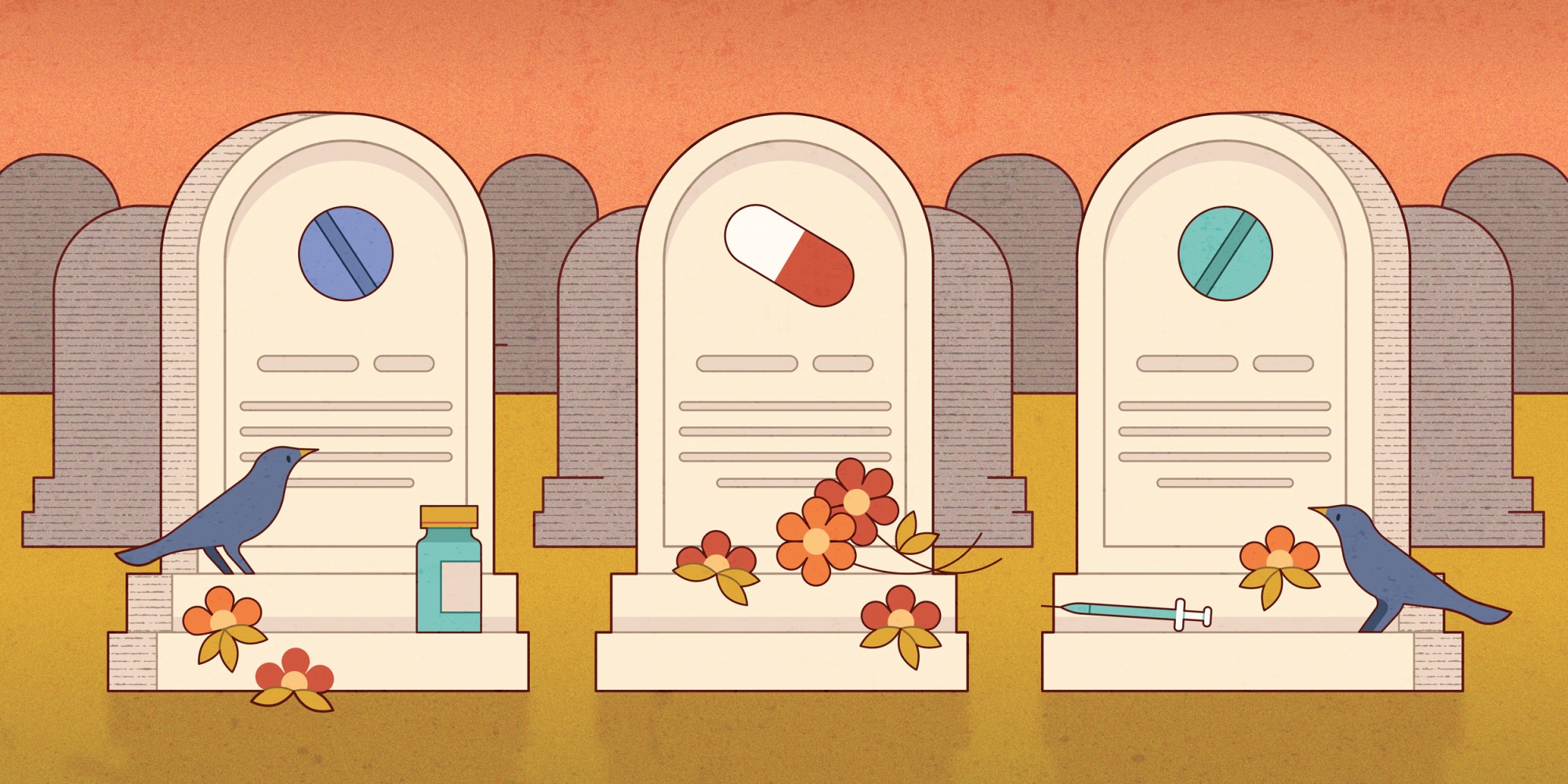
The people in Appalachia are currently battling two public health crises at once: the COVID-19 pandemic and the opioid crisis. Though overdose rates declined significantly across the country, they remain the highest in Appalachia and are surging again, currently at the highest rate since the start of the opioid epidemic in the late nineties. 

Overprescription, expansion of incarceration, and decades of economic stagnation created a breeding ground for addiction in the region. During COVID, the people of Appalachia are under more stress than ever before, leading more folks to relapse. When transportation modes and job opportunities are limited, it is significantly harder for those with substance use disorders to access proper treatment for their addiction. Compounding that, rehabilitation centers have severely decreased the number of patients they can take in order to follow pandemic safety protocols. 

Growing up in the mountains of southwest Virginia on the edge of Appalachia, the opioid epidemic hit us fairly hard though many areas nearby were worse off. All of the people I personally knew who passed due to heroin overdoses were women. All of them were single mothers. I don’t believe this is a coincidence. 

According to a 2017 report by the Health Resources and Services Administration, women were most affected by the opioid crisis, experiencing higher rates of usage, hospitalizations, and overdoses compared to their male counterparts. Though the epidemic is commonly framed as only impacting white people, the report found that the crisis affected women across all racial identities and ethnic groups equally. 

This comes as no surprise as women were disproportionately affected by the “War on Drugs”. While men are being incarcerated at a decreasing rate, the opposite is true for women who are currently propping up the carceral state. The “War on Drugs” fueled the mass expansion of prisons and jails and led to the imprisoning of large numbers of Black Americans and also introduced women as the fastest growing prison population. Whereas before women were mostly locked up in mental institutions, prison became the new way to control and abuse women. Even today, the majority of women incarcerated in the US are there for non-violent drug crimes. I want to emphasize this disproportionately affects BIPOC and transgender women even in Appalachia, a region with little racial and ethnic diversity. 

Poverty, sex work, and drug abuse are all risk factors for incarceration that often overlap. Across the region but particularly in West Virginia, many women with opioid addictions turned to selling their bodies on the streets as a form of survival. While some women choose to enter the sex work industry to make money to satisfy their addiction or trade sex for drugs directly, others are trafficked. The criminalization of drugs and sex work has created a vicious cycle of addiction, prostitution, incarceration, and relapse and uniquely affects women, both cis and trans.  

This gendered experience in the prison system is only exacerbated by the reality that a majority of incarcerated women (60%) are mothers, most of whom are single. Removing any parent from a home is severely destabilizing and increases the likelihood of an incarcerated individual’s own children from being locked up. 

In Appalachia, the foster care systems are currently being overloaded as a direct result of the opioid epidemic. Being under the intense surveillance of the state from such a young age conditions those within it in such a way that a quarter of foster children will end up in the justice system within just two years of aging out of care. In West Virginia, the state hit the hardest by the opioid epidemic, saw a 70% increase of children in the foster care system in the past six years. About 85% of the children in West Virginia’s foster care have at least one parent with an addiction issue. The currently overwhelmed foster care system is compounding the children’s odds of winding up in prison or jail as it’s more likely for them to be institutionalized and placed in a group home. Young girls in foster care, particularly black girls, are the most vulnerable to sex trafficking. Though not fully visible yet, in the next decade we can expect the incarceration rate in Appalachia to rise significantly partly due to the foster care to prison pipeline. 

It feels like there will always be a way for those affected by poverty and addiction in Appalachia to fall into the hands of the justice system. So, what is the solution? 

In the words of Angela Davis in her book Are Prisons Obsolete?, “…with respect to the project of challenging the role played by the so-called War on Drugs in bringing huge numbers of people of color into the prison system, proposals to decriminalize drug use should be linked to the development of a constellation of free, community-based programs accessible to all people who wish to tackle their drug problems.”

Though Davis addresses the need to rehabilitate BIPOC individuals, this approach, along with the decriminalization of sex work, will be crucial in reuniting families, healing those with substance use disorders, and keeping Appalachians out of the prison system. 

If the necessary change is not acted upon now, the carceral state will continue to seep further and further into the mountain ground, as deep as the coal deposits once did. 

(By Hadley Chittum)

(Picture Credit: Kiki Ljung – Folio Art / NBC)

In El Salvador, Sara Rogel was (almost) released from prison. She should have never been there

“The witch-hunt, then, was a war against women; it was a concerted attempt to degrade them, dehumanize them, and destroy their social power. At the same time, it was in the torture chambers and on the stakes on which the witches perished that the bourgeois ideals of womanhood and domesticity were forged.”  Silvia Federici

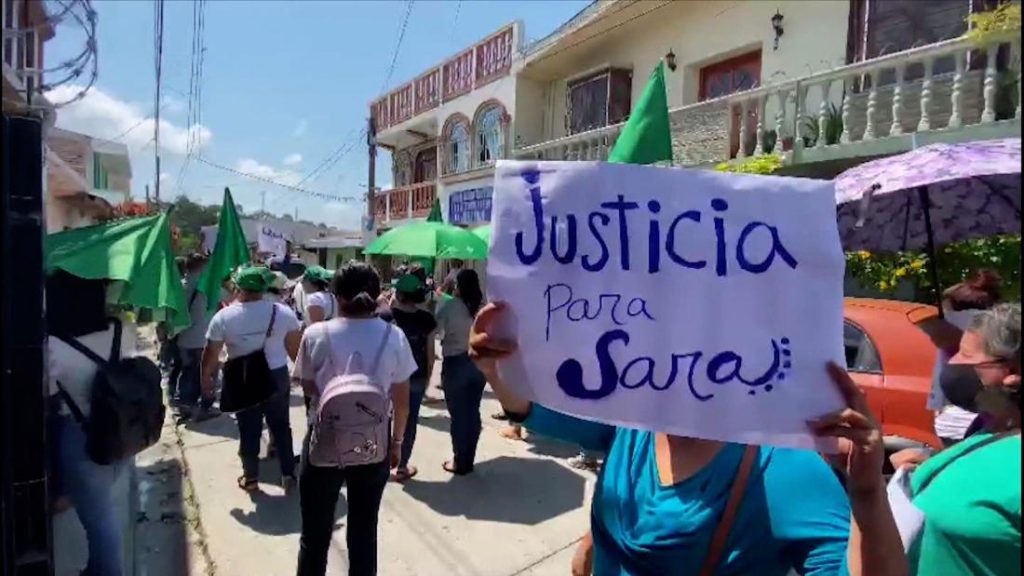
Sara del Rosario Rogel García, aka Sara Rogel, has spent the last ten years in a prison in eastern El Salvador for a crime she never committed which wasn’t a crime in the first place but which non-crime event never occurred. Once again, El Salvador is willing, even eager, to sacrifice a young woman’s life in the pursuit of complete control over women’s lives, bodies, everything. On Monday, a judge ruled that Sara Rogel could be released from prison because she no longer presented “a danger” to society. Sara Rogel still sits in prison, however, because the prosecution has five days to appeal. Even if Sara Rogel is released from prison, at the end of the week, it is clear that her `freedom’ will be conditional, as was the case with Cindy Erazo last year, Evelyn Beatríz Hernández Cruz in 2019, Maira Verónica Figueroa Marroquín and Teodora Vasquez in 2018, all women who were wrongly imprisoned … and for what?

In 2012, 21-year-old Sara Rogel was a student and was pregnant, a pregnancy of which,  according to her attorney, she was happy. While doing laundry, Sara Rogel slipped, fell, suffered a miscarriage, hemorrhaged, had to be taken to the hospital, where she was initially charged with an illegal abortion and then with aggravated murder. Sara Rogel was sentenced to 30 years in prison. From the moment Sara Rogel was charged to today, feminist groups, human rights advocates, international groups such as the United Nations Office of the High Commissioner for Human Rights protested the violations of Sara Rogel’s basic human rights. At first, to no avail, but finally, this week, a bit of light began to flicker through. For the last ten years, and beyond, Agrupación Ciudadana por la Despenalización del Aborto the Citizen’s Group for the Decriminalization of Abortion, has led, pushed, persisted.

Cindy Erazo, Evelyn Beatríz Crus, Maira Verónica Figueroa Marroquín, Teodora Vasquez, and Sara Rogel, together, spent a total of 44 years in prison … a life time. For what? For having suffered an obstetric emergency? No. When will Sara Rogel be free, and who will pay for the years of captivity? When and where does the witch hunt end? Where is the global outrage at the torture being visited upon women, especially young women, in El Salvador and beyond?


(By Dan Moshenberg)


(Photo Credit: CNN)

American school seclusion rooms continue to form a landscape of atrocity

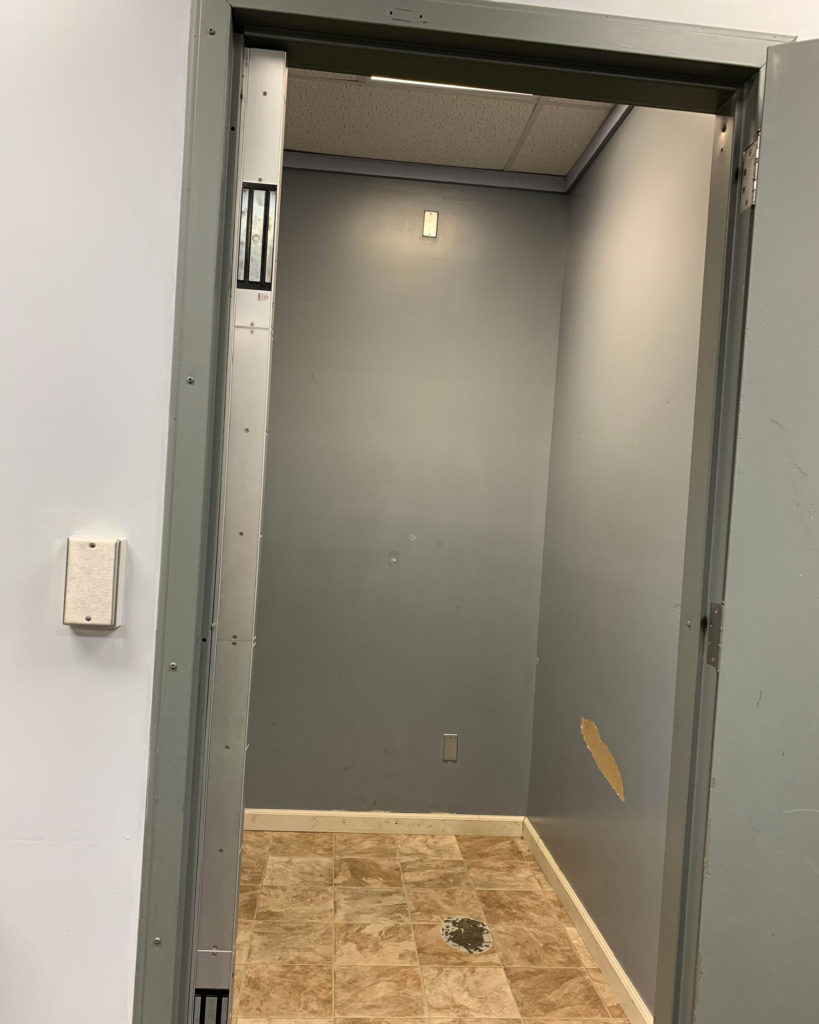
Just another seclusion room somewhere in the United States

On Wednesday, June 2, Senators Chris Murphy, of Connecticut, and Patty Murray, of Washington State, will introduce, or more precisely re-introduce, the Keeping All Students Safe Act, “To prohibit and prevent seclusion, mechanical restraint, chemical restraint, and dangerous restraints that restrict breathing, and to prevent and reduce the use of physical restraint in schools, and for other purposes.” In 2009, the Government Accounting Office released a major study documenting the severe harm rendered by seclusion rooms in schools, especially for students living with disabilities. In the same year, National Disability Rights Network released a major studySchool is not supposed to hurt: Investigative Report on Abusive Restraint and Seclusion in Schools. Since 2009, versions of the Keeping All Students Safe Act have been introduced, all to no avail.  And so here we are: “There are no federal laws governing how seclusion and restraints can be used in schools, and there are no sweeping federal laws with specific guidelines for police use of force on children in general.” Loaded with evidence and good intention … and completely stalled in place for twelve years and counting. What is the U.S. investment in torturing and damaging children, and in particular children living with disability? Why is the United States so committed to an endless war on children living with disabilities?

Three years ago, the U.S. Department of Education released data that showed that students living with disabilities constituted 12% of all students enrolled. 12 percent. That very small sector of students living with disabilities constituted 71% of all students restrained and 66% of all students “secluded.” This year, the most update study shows that students living with disabilities make up 13% of all students enrolled and constitute 80% of those physically restrained, 41% of those `mechanically’ restrained, and 77% of students subjected to seclusion: “Physical restraint is a personal restriction that immobilizes or reduces the ability of a student to move his or her torso, arms, legs, or head freely. Mechanical restraint is the use of any device or equipment to restrict a student’s freedom of movement. Seclusion is the involuntary confinement of a student alone in a room or area from which the student is physically prevented from leaving.” These are the numbers and key words of education for children in the United States. 

While restraint and seclusion directly assault children living with disabilities, it impairs all those children who are forced to stand as helpless, and themselves restrained, witnesses. Why is there no federal law, why is there no national will to end this torture of the innocents? Why is this left to the discretion of individual states, counties and cities? Three years ago, almost to the day, we asked, “What crime have these children committed? What is their terrible sin? Why do we continue to send these children into solitary confinement? Why do we continue to torture those who are most vulnerable? When will we stop this practice? What do you think we’re teaching children, all the children in all the schools, when we torture their classmates and then call it `seclusion’ and `restraint’?” Why has there been no answer? American school seclusion rooms continue to form a landscape of atrocity. Where is the outrage? Where is the action?


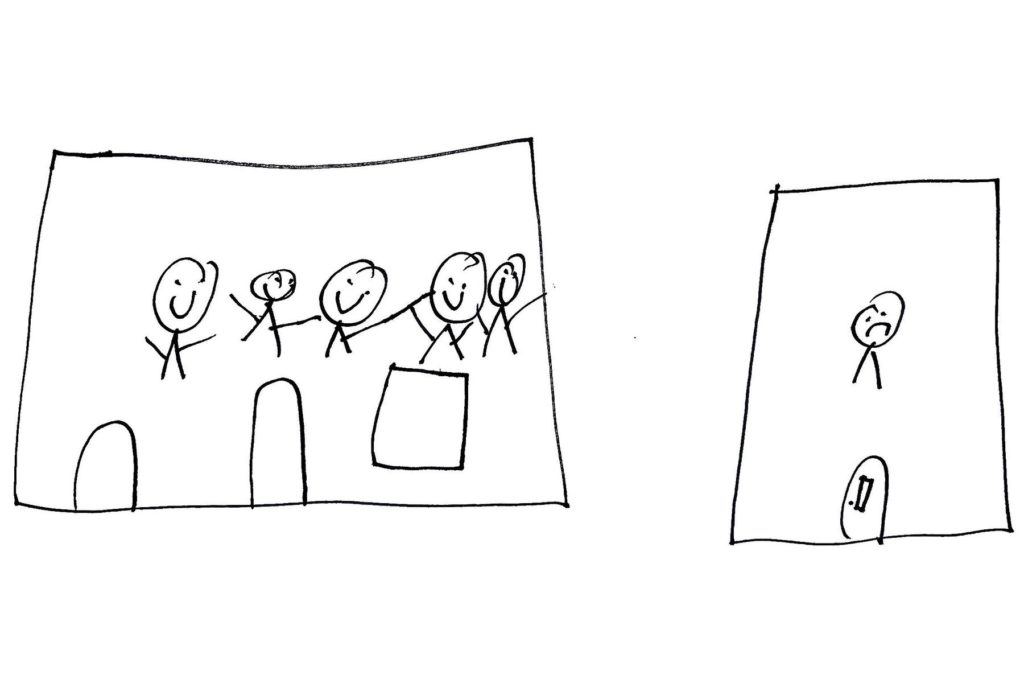
An eleven-year-old describes how it feels to be in class (left) and how it feels to be in seclusion (right)


(By Dan Moshenberg)

(Photo, Image Credit: ProPublica)

Armadale remembered: a Jamaican tragedy

When something like the Armadale fire happens, where seven young women were burned to death, there is always the anxiety that a similar incident could happen again in the future. The issue is always whether the organisation responsible has learned from the terrible experience and put in place everything that they possibly can to stop it happening again. In this case this was the State, in whose care and protection the girls – aged between fifteen and seventeen – found themselves at Armadale.

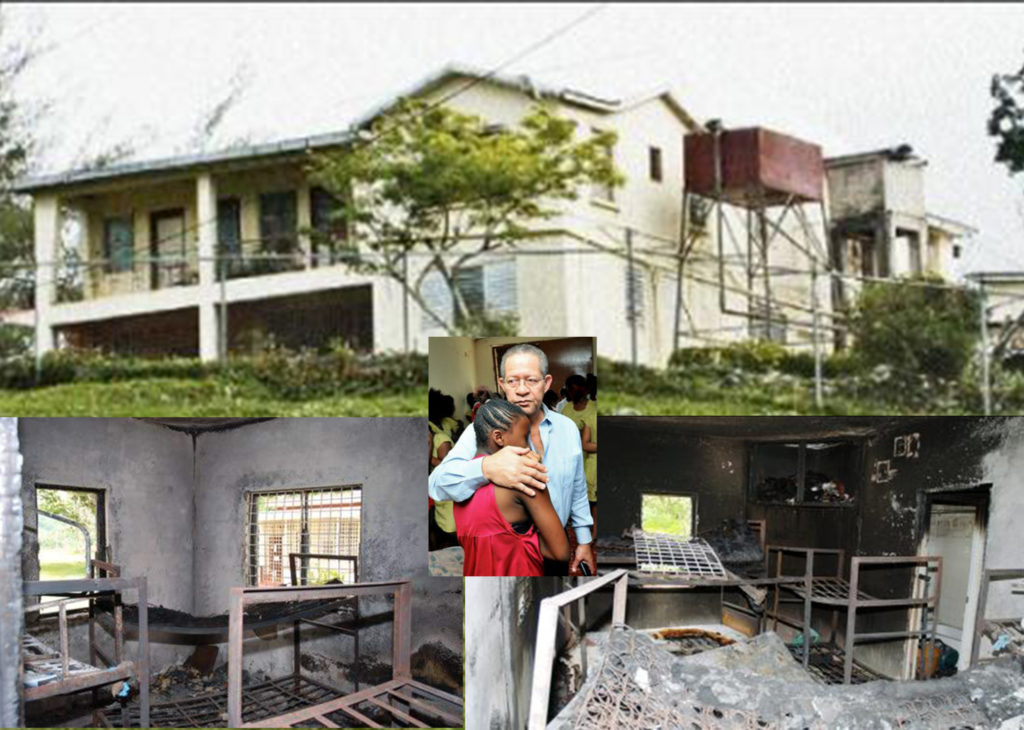
In May 2013, on the 4th anniversary of the disaster, Eve for Life and UNICEF partnered with ASHE – performing in this photo – for a session to cheer up the girl survivors of the Armadale fire. It was an emotional day. (Photo by Emma Lewis)

The Armadale fire, which took place exactly twelve years ago, was not so much a disaster as a series of agonizing failures, actions, and decisions that led to the disaster. One thing led to another. This evening there was an online gathering to remember those who perished with human rights activist Alexis Goffe, who shared his thoughts here on the tenth anniversary of the fire. Here is the Jamaica Youth Advocacy Network’s (JYAN) take on the matter. Please click on the highlighted links for more background information.

12 Years after the Armadale fire — has the Government learned their lesson?

On Friday, May 22, 2009, the unspeakable happened. Seven (7) young women, who were in the care of the state, perished in a fire at the Armadale Juvenile Correctional Centre. Today, on the 12th anniversary of that fateful blaze, The Jamaica Youth Advocacy Network (JYAN) would like to pay respects to those whose lives were lost and affected by the Armadale tragedy. We also want to take this opportunity to reflect on the systemic and operational issues that led to the fire and the state of State correctional care today. 

The 2010 Enquiry into the cause of the fire revealed various inadequacies in the operations at Armadale and the apparent unfitness of the staff to oversee children in correctional State care. It was found that the young ladies within the facility started the fire, which was one of several fires over the months leading up to May 22, 2009. A month prior to the incident the ladies were placed in a small room (12 by 12 feet) as punishment and while in that room, a Police Officer threw an explosive item in the room, allegedly contributing to the cause of the fire. The key for the room could not be found to release the girls in time, resulting in seven girls dying in the fire and others suffering terrible injuries. 

It was a tragic day in our country, and while some restitution was given to the survivors or their families, it remains that the Government of Jamaica (GOJ) was negligent, whether directly or indirectly, in discharging their duty to protect our young and vulnerable. Sadly, JYAN fears that the GOJ and their agents have not learned from this tragedy. Is History Repeating Itself? 

The Independent Commission for Investigations (INDECOM) in their quarterly report for July to September 2020 revealed disturbing details of the operations of the Rio Cobre Juvenile Correctional Centre (RCJCC). INDECOM noted that, among other things, the penalties applied to the boys are inappropriate and the facilities they are expected to use are subpar when measured against international standards. JYAN considers the report to be eerily hard to digest when one considers that it seems to be a replica of the various reports completed in the aftermath of the Armadale fire. 

At RCJCC, “Jail Block” is where the boys are placed for days at a time, often without the ability to leave to relieve themselves, when found to be in breach of rules (such as climbing trees; failing to rake premises; going downstairs without a shirt; and picking up clothes off the line as it was about to rain instead of going directly back to the dormitory). This bears an uncanny similarity to the “Lock-Down” practice at Armadale. Under this practice, in June 2020, a Ward on Jail Block had a seizure but could not be attended to because a Correctional Officer left the Centre with the only key to the cell, supposedly to make a duplicate. The cell only has a sponge on the ground, graffiti on the walls and has no bathroom area. This is already concerning enough but becomes even more problematic when understood that several boys are placed in the cell in some instances, in only their underwear as a strategy to mitigate against self-harm and possible suicide. This sequence of events, again, is reminiscent of those that led to the Armadale fire. 

While a percentage of the boys would have said that the facilities are satisfactory, the toilets have no seat, the faucets are missing in the showers and leakages are a regularity. The Nelson Mandela Rules, which are international standards on prison management, in Rules 15, 16 and 17 speak to the need for the sanitary installations, bathing and shower facilities and overall upkeep of the facility to be properly maintained. RCJCC’s management should be vigilant of and be guided by these, bordered on our own domestic laws governing childcare. 

Call to Action The GOJ must take the necessary steps to ensure that the Department of Correctional Services and other competent authorities with responsibility for the supervision of children in State care, conduct(s) a thorough assessment of the operating procedures in all such facilities in Jamaica. JYAN also recommends that current Officers be reviewed and vetted for possible additional training or removal from office, whichever the case may be. 

We at JYAN believe that State care should coincide with proper care, and that rehabilitation should be rehabilitation and not concentrated provocation of young children in detainment. As young men already found to be on the wrong path in life, the GOJ should take every precaution to ensure they are provided with the right behavioural guidance to become functional parts of society. It would be most unfortunate to witness a similar incident as May 22, 2009; especially if it is because of the government not learning from their severely consequential mistakes. The government should rely on and enforce the provisions of our own Child Care and Protection Act as well as the Nelson Mandela Rules, to completely overhaul the operational framework of RCJCC and other such facilities—more children should not have to die for our leaders to learn their lesson, which should not have had to be taught in the first place. 

This collage was posted by Wayne Chen on Twitter today. In the center is then Prime Minister Bruce Golding, consoling one of the surviving teenage girls.

(By Emma Lewis)

(Emma Lewis is a writer, blogger, social media activist, based in Jamaica, and the editor/curator of Petchary’s Blog: Cries from Jamaica, in which this first appeared, here. Thanks to Emma for allowing us to share.)

You move too slow

You move too slow

You move too slow
I get to hear
from a greyhead
behind me

not in the pecking order
not at the feeding trough
but in a shopping queue

You move too slow
clipping my heels
as she veers 
to the right

to another queue
where the grass is greener
and there is more
on offer

You move too slow
the over 60s are urged 
(on evening etv news)
not to rush to centres 
for their vaccine shots

so I am just
practising my slowness
my lack of speed
or slothfulness even

amused once was I
to hear two queueing locals
pondering which service
was the more slothful
(we won’t say which)

You move too slow
could be said to be

The state we are in

(By David Kapp)

(Photo Credit: Health-e News / NW Health Department)

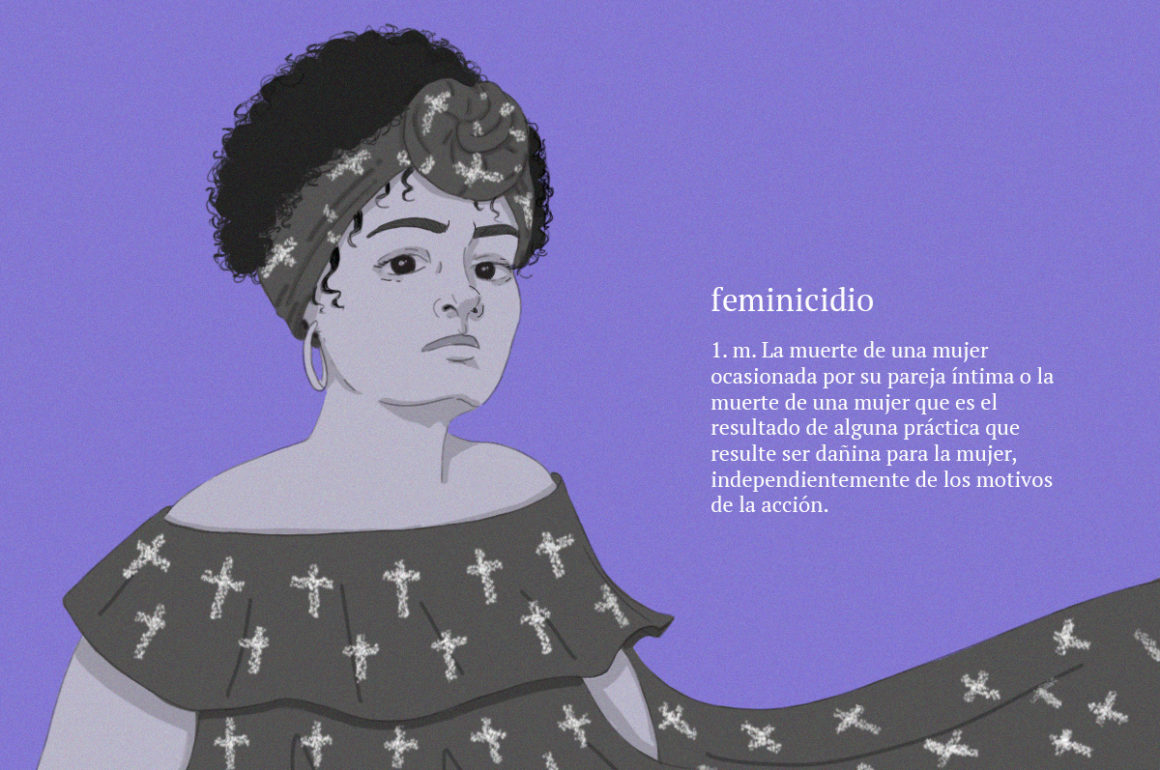
Blackness, Gender Violence, and Colonialism in Puerto Rico’s Feminicidios

After Hurricane María, the number of femicides in Puerto Rico started increasing at an alarming rate. Disappearances and femicides of women are ongoing issues in Puerto Rico, which has one of the highest femicide rates in the Western Hemisphere. But it was not until two years later, in 2019, that this was brought to public attention (in the continental United States). Gender-based violence calls to attention the consequences and history that colonialism, transphobia, racism, and sexism have on the island. Currently, women and feminists’ group like La Colectiva Feminista en Construcción have repeated their demand for a declaration of a State of Emergency against gender violence on the island but the Puerto Rican government has only recently acted on these demands, yet these efforts have not been sufficient; killings and disappearances of women on the island keep increasing and becoming common.

History is important and can be an act of resistance, but it is also about power; how it upholds the victories of the colonizer, not the colonized. Within the social contexts of Puerto Rico, heteronormativity is colonized by religious principles and gender-based perceptions that in recent years have caused an escalation of violence against transgender women and reports of anti-transgender violence, especially femicides. Along with the temporal displacement of Blackness and Black bodies that is closely connected to State modernizing agendas, Puerto Rico’s police has a history of marginalizing Black people without any consequences within the law, especially when it comes to racial profiling and recent police killings of Black (including LGBTQ+) Boricuas.

The history of colonization in Puerto Rico is not as buried as some are led to believe. By being aware of the history and current ways in which colonization is incorporated, there is resistance and a foundation for radical freedom on the island. Conversations about race and gender, however, need more work. Ethnicity and nationality are focal point in conversations about race, therefore causing erasure. Consequently, as a way to not talk about race, Latin America pushes its citizens to think of themselves in terms of their ethnicity and nationality. Puerto Rican’s acknowledge their history of Blackness; however, it is along admitting their Spaniard and Indigenous roots first, and Blackness last. Awareness about the danger trans women faced during the femicides is there, but no discussion as to why or how transphobia plays a part in it. Instead, trans women are placed into a generalized “all women in Puerto Rico are in danger” category, equating their fear and likelihood to femicide to cis women, which is highly problematic. 

And the government needs to be held accountable. As of January of 2021, the Puerto Rican government has issued a State of Emergency due to gender violence, yet these efforts have not been sufficient; killings and disappearances of women on the island keep increasing and becoming common. In order to take accountability, the government should provide more resources (including legal protection, housing, and financial support) to survivors of femicide, domestic violence, and any form of gender violence. A relationship and conversation between the State, survivors, community organizers, and the people of Puerto Rico must be formed in order to hold the Puerto Rican government accountable and responsible.


(By Glorimar Mariño)

(Image Credit: Michelle Dersdepanian / TodasPR)

Memorial Day in Manitowoc Wisconsin

Memorial Day in Manitowoc Wisconsin

I took an inhalation and like Bashō I traveled North 
Returning to native soil only to find my mother gone
Though unlike the hair in Bashō’s haiku
The silver strands caught in my mother’s hair brush 
Did feel as though they would melt in my fingers
She was Wisconsin strong 
And so was her hair
And it still smelled like her

I exhaled and traveled south to find my father gone
He had left to chase my mother’s ponytail into eternity
I inherited his sense of humor 
And wore a giant plastic wedge of cheese on my head
As I gave my father’s eulogy in a bright green sari 
His favorite color

Here I see my Mother 
Here I see my Father 
Here I see my brothers and sisters
And the line of my family reaching back through beginning-less time
We left coins on my parents tombstones 
Safe passage Mom and Dad for crossing both the rivers Styx and Lethe

My family takes so many photographs and movies
Among them 
Photographs of smiling children dancing on tombstones and graves sites
Like little Śivas and Kālīs
The older generations tell stories of posing in taffeta funeral dresses
Next to the caskets of the departed for stiffly posed pictures
Or cradling departed siblings in their arms to create final mementos

Photographs like these inspired my sister to become a photographer
And a Wisconsin State Treasure
But by the time Julie had died 
We had forgotten how to practice some of the old rituals
The rituals that had once allowed us to embrace Death like a lover

Now the younger generations call the old ways
“Wisconsin Death Trip”
Once we knew our rituals of life were true 
Because our rituals of death were true
Large gravestones baring the family name 
As certain as hand and footprints on a certificates of live birth

Here I see my Mother 
Here I see my Father 
Here I see my brothers and sisters
And the line of my family reaching back through beginning-less time
And when my time comes 
Leave coins for me, too
Two rivers to cross 
Same as it ever was

American Gothic
There they all lay in a Manitowoc cemetery 
My cradle named after Algonquian Demi-gods that rule nature
Though not death
The ancestors continuing to teach us
Even from the grave
Teach us about time 
And the folly of the vehement dreams and nightmares we choose to live
They are dust to dust
And they are the native soil 
On which I was nurtured 
And from which I drew my strength

Sing of Carl Sandburg and the Midwestern bread basket
Corn ripening and falling to the earth only to rise again
Become the popcorn my nieces and nephews eat while watching Disney movies
Become cows
Become milk
Become cheese
Become butter
And the bodies of the farmers that plant and replant crops generation after generation
Stalwart sunburned men, women, and children whose graves we pass 
On the way to our family plot
For the annual Memorial Day picnic

The cookies are made from molds taken from tombstone imprints
Children  merrily fight for particular flowers shapes
Or the letters that begin their given names
And the adults spill a little beer
Some because of clumsiness
And some on purpose

From time to time Memorial Day coincides with my oldest brother Phil’s birthday
And then there is birthday sheet cake too
It is cut into perfect squares and served on paper plates 
Waiting for the greedy tiny finger to take it 
From the top of the largest granite family headstone 

Sing of graveyards on Memorial Day and family picnics 
Celebrating the generations past and present 
Variations  on a singular theme
Experiencing a counterpoint in well kept bone orchards 
Proving that Omar Khayyam was right

Sing of Bashō’s cicada
And it’s song that showed no concern for imminent death
Like the children eating snicker-doodles, brownies and bars
That have been neatly packed in old shoeboxes saved for just such occasions
Carefully arranged in layers separated by wax paper

One day my breath will merge with the atmosphere 
Let me cover my body with this good rich earth 
Into which my ancestors have merged
In which they now rest
And on which the children are now playing
Their bodies too will someday become the loam that feeds America

Immortality is a song passed down from generation to generation 
Always changing 
And never changing
It can be heard in the lowing of cows waiting to be milked 
And in the sound of seed corn and wheat filling silos at harvest time

Life giving grain falling like rain

Let my body become this good earth too
The first of many who will follow me 
And in the midst of all who have preceded me
Let me remember all of my deeds 
Good and evil 
So that I can say
I have learned

Let me remember 
Let me remember 
Let me remember 

It momentarily died again to became me 
Now let me live again to become It all


(By Heidi Lindemann and Michael Perry)

(Image Credit: Cicada, by Hobun Kikuchi / Ukiyo-e)