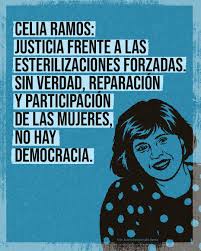
On Thursday, March 5, 2026, the Inter-American Court of Human Rights, the “highest human rights court in Latin America”, issued a landmark ruling, which opens: “In its judgment in the case of Ramos Durand et al. v. Peru…, the Inter-American Court of Human Rights declared the State of Peru internationally responsible for the forced sterilization and subsequent death of Celia Edith Ramos Durand in 1997. The Court also found the State responsible for the lack of due diligence and unjustified delay in investigating the events, and for the harm caused to Ms. Ramos Durand’s daughters, husband, and mother. Consequently, the Court determined that the State violated the rights to life, personal integrity, personal liberty, privacy, access to information, family, equality before the law, and health of Celia Edith Ramos Durand; and the rights to personal integrity, judicial guarantees, family protection, and judicial protection of her daughters, Marisela del Carmen Monzón Ramos, Emilia Edith Monzón Ramos, and Marcia Maribel Monzón Ramos. Baltazara Durand de Ramos, mother, and Jaime Enrique Monzón Tejada, husband of Mrs. Ramos Durand; and the rights of the children of Marisela del Carmen Monzón Ramos, Emilia Edith Monzón Ramos, and Marcia Maribel Monzón Ramos.”
According to the Center for Reproductive Rights, between 1996 and 2001, under Peru’s forced sterilization policy, almost 7000 women, almost all of whom were poor and Indigenous, were forcibly sterilized. During that period, more than 272,000 tubal ligations were performed. In almost 60% of the cases, there was no consent. Celia Ramos was one of a nation of women, a mother of three daughters. Celia Ramos died July 22, 1997. She was 34 years old.
The story is straightforward. Celia Ramos sought care at her local medical post in a rural village in the Andes. Health workers pressured her to have a surgical sterilization. Celia Ramos refused. The health care workers persisted. Using misinformation and intimidation, they “persuaded” Celia Ramos to agree to the operation. During the sterilization surgery, Celia suffered a severe allergic reaction and experienced respiratory arrest. She died 19 days later.
Marisela Monzón Ramos was ten years old when her mother died. Her younger sisters were eight and five at the time. In 2010, thirteen years later, after years of trying and failing to move Peruvian courts to act, they managed to persuade the Inter-American Court of Human Rights to consider the case. In 2021, the Inter=American Court of Human Rights issued a report finding the Peruvian state responsible for the violation of Ramos’s rights and recommending reparations be paid and measures be taken to prevent any repetition. Nothing happened. And so the daughters and their allies continued the struggle. After this week’s decision, Marisela Monzón Ramos explained, “We represent all of those thousands of women that suffered so much over so many years. For us, with this sentence, we are reliving what we have carried for so many years. It is both difficult and comforting. Although we have obtained justice and recognition of the truth, it does not take away from the injustice that Celia Ramos and other women lost their lives”.
The story of Celia Ramos and thousands of other mostly rural, mostly Indigenous women is a story of violence against women and of women’s struggle for autonomy and justice. At the same time, this week’s decision points to another aspect of public policy as an instrument of injustice. The decision notes, repeatedly, that Peru’s National Reproductive Health and Family Planning Programme set numerical targets for Indigenous, rural women of child-bearing age, pushed staff to meet those goals, rewarded staff who met those goals. In this program of national health, Celia Ramos was not a person, not a human, not a woman, she was a number. When national governments set numerical goals in the name of national well-being, it’s women and children first who suffer the consequences.
In the end, “the Court found that the family members of Ms. Ramos Durand—especially her three daughters, who were children at the time of the events—suffered profound harm as a consequence of the sterilization and death of Celia Edith Ramos Durand and the impunity surrounding the case.” Sterilization, death, impunity.
(By Dan Moshenberg)
(Image Credit: ONU Mujeres)