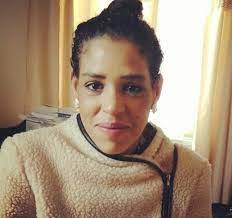
Honor Mariam Ibrahim Yusuf by shutting down the detention centers

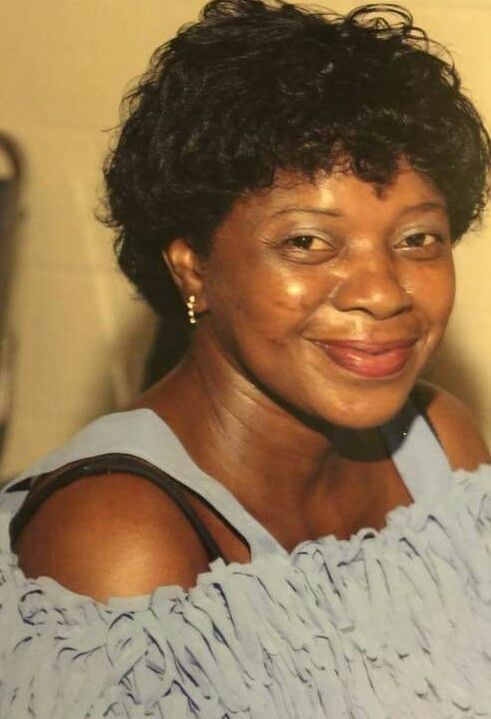
Mariam Ibrahim Yusuf

In England, today, the United Nations Refugee Agency (UNHCR) joined a local ngo, Migrants Organise, to award Mariam Ibrahim Yusuf the Woman of the Year Award. Mariam Ibrahim Yusuf fled Somalia years ago, landing up in Kenya, and then moved on to the United Kingdom. She knew no English, had no friends or acquaintances there, and knew nothing about asylum processes. She just knew she deserved to live with dignity and respect. Yusuf left her family, in particular her children, behind, and has not been able to contact them. Par for the course, Yusuf was dumped in Yarl’s Wood, days after arriving, and then denied asylum. She’s been appealing that decision for eight years. During the asylum process, the applicant cannot work, and so Mariam Ibrahim Yusuf is meant to beg. But instead she sings and speaks out and organizes. She is the woman of the year, and it is a year, another year, of shame and hope.

Mariam Ibrahim Yusuf moved to Manchester, found a place to live with other women asylum seekers, and joined WAST, Women Asylum Seekers Together. Together, Mariam Ibrahim Yusuf and her sisters have called, sung, stamped, chanted and organized to shut down Yarl’s Wood, and to shut down all detention centers. From Australia to the United Kingdom to the United States, abolition is in the air, and its current stations are immigrant detention centers. A global forest of hashtags is sprouting, from #ShutDownBerks to #ShutDownYarlsWood and #SetHerFree to #LetThemStay, individuals are forming local groups that are becoming national organizations that are becoming international, from Juntos to Women for Refugee Women and Movement for Justice to the International Alliance Against Mandatory Detention, made up of Australian activists living around the world. Another world is possible.

As nation-States built more and more special hells for women asylum seekers and for immigrant and migrant women, generally, the women organized and said, NO! We are not animals, we are humans. We are not trash, we are women. They also spoke for their children, who were daily being crushed by the prison experience. Their children cry out, “I am not a criminal. I don’t want to be locked up here anymore.”

The abuse of children in detention centers in Australia, the United Kingdom and the United States is torture, and it’s a crime against humanity, which is being called out and judged now. When a judge says that 3- and 4-year-old children can represent themselves in court, he has done more than condemn the process. He has shown what happens to the rule of law when it discounts the humanity of those who enter not only the court, but also the land itself. His tortured logic emerges as part of a systematic application of torture as a form of reasoned jurisprudence.

That system of torture is global, and it focuses on women and children.

Berks is inhumane and abusive, and even the lawmakers say so. Yarl’s Wood is a house of shame. Nauru, Villawood and all the Australian solutions to the crisis of human beings seeking help are one giant pit of disgrace. In each case, the arc of atrocity is expanding, infecting structures from education to health care but also the ways in which we view one another and ourselves. The debt that the abuse of asylum seekers creates is trauma for the asylum seekers and daily and increasing loss of our humanity.

Mariam Ibrahim Yusuf is the woman of the year, because another world is possible. Tomorrow, led by Movement for Justice, thousands will gather around Yarl’s Wood and raise a ruckus. Thousands are organizing across the United States to shut down Berks, Dilley and Karnes as well. Across Australia, people are organizing not only to shut down the detention centers and the entire juridical apparatus that feeds the monster. They are wondering if this is “the moment” in which we will join in solidarity, across oceans and borders. Maybe it is. One thing is certain. We’ve passed enough-is-enough. The time is now. #ShutDownYarlsWood #SetHerFree #LetThemStay #ShutDownBerks #Not1More #NeverAgain Do it for Mariam Ibrahim Yusuf, and for all the women and children. Until the prisons are closed, we are all imprisoned.


(Photo Credit: WorldPost / Rifat Ahmed) (Video Credit: Women for Refugee Women / YouTube)

Berta Cáceres: “We have to take action”


Berta Cáceres, Coordinator of the Civic Council of Popular and Indigenous Organizations of Honduras, COPINH, human rights defender, environmental activist, indigenous rights leader was murdered. It was a murder foretold. Threats against Cáceres had mounted over recent weeks, but there had always been threats and danger: “The army has an assassination list of 18 wanted human rights fighters with my name at the top. I want to live, there are many things I still want to do in this world. I take precautions, but in the end, in this country where there is total impunity I am vulnerable. When they want to kill me, they will do it.”

Yesterday, they did it. Despite constant calls for State protection, Berta Cáceres was put in further danger by the State, by the Honduran government and by U.S. support of that government. Berta Cáceres struggled for the rights of people, all people, to live in peace and with justice. That means that no entity can treat a community like dirt, to be moved this way for a big dam and that way for a highway or airport runway and the other way for a shopping mall or an upscale housing development. She fought for the dignity of women and of all indigenous peoples.

When Berta Cáceres was awarded the Goldman Environmental Prize, she explained, “We must undertake the struggle in all parts of the world, wherever we may be, because we have no other spare or replacement planet. We have only this one, and we have to take action. The Honduran people, along with international solidarity, can get out of this unjust situation, promoting hope, rebellion and organising ourselves for the protection of life.”

We have to take action, in the memory of Berta Cáceres. No more devastation of the earth, no more global assault on indigenous peoples, no more systematic violence against women, no more silence. We must undertake the struggle.


(Photo Credit: AWID / Goldman Prize)

(Video Credit 1: YouTube / Goldman Environmental Prize) (Video Credit 2: YouTube / Nobel Women’s Initiative)

What happened to Joyce Curnell? #SayHerName

Joyce Curnell

Last July, Joyce Curnell, a 50-year-old Black woman, died of dehydration in the Charleston County jail, in South Carolina. In her death, she joined Sandra Bland, Kindra Chapman, Ralkina Jones and Raynette Turner: five Black women who died in one month in jails across the country. In her death, she also joined Kellsie Green, whose family called the police to arrest her because she needed help and there was no other help locally available. Joyce Curnell is the latest headstone to be placed alongside the highway of women missing and murdered by the State.

On July 21, Joyce Curnell went into hospital with severe stomach pains. She was diagnosed with gastroenteritis. When she was discharged, the local police picked her up on an outstanding warrant. Joyce Curnell’s son, Javon Curnell, had called the police and told them of his mother’s location and outstanding warrant. Joyce Curnell was struggling with alcoholism, and her children thought that the jail would provide her with the help she couldn’t anywhere else: “She’s my mom, but I’m trying to help her. She won’t listen, she drinks a lot. She needs some time to detox herself.” Javon Curnell saw only two choices for his mother: jail or the graveyard.

At the hospital, Joyce Curnell was hydrated, given medications and told to seek medical help if she had any more pain or vomiting. No one at the Charleston County jail did anything to address her pain. Joyce Curnell spent the night wracked with pain and vomiting. Guards brought her a trash bag to vomit into. No one moved her to any medical facility. Joyce Curnell grew too weak to go to the bathroom. In the morning she was too weak to eat and continued vomiting. No one gave her any water or helped in any other way. Medical staff “checked” her around 3 pm, and did nothing. By 5 pm, Joyce Curnell was dead. There was no failure here, but rather deliberate and lethal refusal.

The family is suing the Carolina Center for Occupational Health, which provide “health care” at the jail. As the family’s attorney explained, “This is not a situation in which Joyce needed access to cutting edge medical care to save her life. She needed fluids and the attention of a doctor. Not only has nobody been prosecuted in connection with Joyce’s death, it does not appear that any employee has even been reprimanded … You don’t need a medical license to administer Gatorade. At some point, she would have needed more than simple hydration, but early on, it probably would have worked.”

Who killed Joyce Curnell? Everyone. As has happened so often before in similar circumstances, the autopsy concluded that Joyce Curnell’s death was “natural.” What nature is that? The fault here is not in the stars but in ourselves, in our collusion with murders that, taken together, comprise a massacre. Where is the sustained outrage? The Curnell family sued the health contractors on Wednesday, and by today, the following Monday, the world has moved on, and Joyce Curnell, who died in agony, begging for help, for a drop of water, is dead.

(Photo Credit: The Post and Courier)

What happened to Kellsie Green? Just another death in Alaska’s state of prisons

Kellsie Green

In Alaska this week, KTUU News has run a three-part special series, “State of Prisons.” In early February, Dean Wilson was tapped to be the new Commissioner of the Alaska Department of Corrections. Why all the sudden interest? On January 10, 24-year-old Kellsie Green died in the Anchorage Correctional Complex, and her death was perhaps the straw that broke the camel’s back. This is the story of one woman and her family who tried the best they could; and of a policy of criminal and vicious abandonment that passes for neglect. Kellsie Green was not neglected nor was she failed. The State wanted her dead, and she’s dead.

According to John Green, Kellsie Green’s father, Kellsie was a happy girl-child, until she was sexually assaulted by schoolmates. Then Kellsie’s life turned to tragedy. She switched schools, to no avail; got involved with alcohol and drug abuse; and started engaging in self-harm and then suicide. Her family tried to help. They sent her to counselors; they took her to the hospital. Kellsie went to Arizona to try to detox, which didn’t work. She returned to Alaska. The Green family lives in an area known as the Mat-Su, the Matanuska-Susitna Valley, about 35 miles north of Anchorage. There are no detox centers in Mat-Su. In Anchorage, there’s one detox center. It has 14 beds. Anchorage alone has around 300,000 residents.

Desperate to assist his daughter and knowing no other route, the family called the police. John Green explains: “We believed that our last option was to have her arrested. That it would save her life.” State troopers arrested Kellsie Green, turned her over to Anchorage police, who then dumped her in the Anchorage jail. Six days later, she was dead. Cellmates report that Kellsie Green vomited continually, struggled with withdrawal symptoms, and grew weaker and weaker. When she died, she weighed 80 pounds.

The Green family turned for help for their daughter who suffered and lived with a drug addiction and wanted to find a way to healing and healing. Instead, according to John Green, they encountered this: “Their protocol is to throw these people on the floor and let them vomit … It’s pretty clear that the protocol they have in place for dealing with addicts and people who are detoxing isn’t adequate, and that needs to be addressed. When you weigh 80 pounds and are as sick as she was, that’s a no-brainer. Anybody would say she needs to be in a different facility.”

Kellsie Green was finally moved to a different facility, a morgue.

None of this is new or surprising. The prisons in Alaska have been filling up for over a decade, at the same time staff numbers have plummeted. Drug abuse has skyrocketed across the state, and mental health facilities have been defunded in the ongoing economic downturn in Alaska. Yet again, prison and jail has become the largest mental health provider, except that there’s little to no health provision.

For women in the system, the situation is even worse. Between 2010 and 2014, the female prison population in Alaska increased by 24%, while the male prison population has increased by 14%. Alaska’s Department of Corrections reports that 169 prisoners have died in Alaska prisons since 2000. In 2015, fifteen died.

The new Commissioner, the Green family, the Alaska Correctional Officers Association, the media and pretty much everyone agree. Something bad happened, and Kellsie Green is dead. But here’s the thing. The State had report after report that documented the lethal and worsening conditions in Alaska’s prisons and jails, and nobody did a thing. More to the point, everyone persisted in doing nothing. The State of Prisons is a State of Abandonment, and it’s vicious and violent. Despite her own efforts and those of everyone who loved her, Kellsie Green was never meant to survive … and she did not. Kellsie Green was the latest, not the last, woman to die in agony, begging for help.

(Photo Credit: Alaska Dispatch News)

Kinew James? Maureen Mandijarra? Just more Aboriginal women’s deaths in custody

Kinew James

Kinew James and Maureen Mandijarra were two Aboriginal women who went into custody and never came out. They are part of the Commonwealth of Missing and Murdered Aboriginal Women. Canada killed Kinew James; Australia killed Maureen Mandijarra. And the abuse of these two women doesn’t end with their death. Kinew James died in January 2013, and her inquest is finally going to take place in April 2016. Maureen Mandijarra died in custody in 2012, and her inquest is only now taking place. The State honors Aboriginal women with brutality.

Kinew James was a “troubled” young woman. She entered prison at 18, sentenced to six years. That doubled to twelve, thanks to “misbehavior” and to her deteriorating mental health. Subsequent years were a blur of self harm and attempted suicide; frequent relocation as one institution after another failed to help her; and long and frequent periods of solitary confinement.

But she was improving. Kinew James succeeded in graduating from high school while in prison, and, at the age of 35, was looking forward to getting out and moving on. On Saturday, January 19, 2013, Kinew James talked with her mother, and all seemed well. By evening, she was complaining of pains. That night, moaning and crying, she pressed the distress button … five times. The guards ignored her pleas, and are reported to have turned off or muted her alarm. After an hour, a nurse finally went in, and found Kinew James unresponsive. The nurse then waited 12 to 15 minutes to declare a medical emergency.

James died in the hospital, but she was killed long before the ambulance took her away.

Maureen Mandijarra was arrested for public drinking on the evening of November 29, 2012. She died in police custody the next day. Mandijarra was 44 years old. The police brought her in and dumped her on the floor in a police cell. She lay there perfectly still for at least six hours. She never moved, and no one, other than a cellmate, noticed, because no one ever checked. Over three years later, the inquest is now taking place. It’s taken so long because provincial and local police dragged their feet for years, and never provided any reports until recently.

Kinew James’ and Maureen Mandijarra’s stories are not the same story. What is the same narrative is that of State abuse of Aboriginal women. Like the United States, Canada and Australia have invested heavily in the devaluation of Aboriginal women’s bodies and lives. The rising rates of incarceration married to the plummeting budgets for assistance say as much. So do the women’s corpses, decade after decade, year after year. For Aboriginal women, the histories and lived experiences of colonial occupation and violence not only continue to this day. They are intensifying. Since the 1990s, the number of Aboriginal deaths in custody in Australia has skyrocketed, through one Royal Commission on Aboriginal Deaths in Custody after another.

State practices and policies generally criminalize mental illness, alcohol abuse, and poverty; and add additional punishments if the subjects at hand are women. For Aboriginal women who live with mental illness, alcohol or drug dependency, poverty, the sentence is death.

(Photo Credit: CBC News

When it comes to affordable housing, Alexandria continues its race to the bottom


Since 2000, the very small city of Alexandria, Virginia, outside of Washington, DC, has “lost” 12,000 affordable apartments, most of whose residents were African American, Latino, and then African immigrants. In the past, the alibi was “development.” In the most recent episode, that of Ramsey Homes, it’s “heritage”. Either way, the result is the same.

Ramsey Homes is 74 years old and in terrible shape. It was originally built for African American defense workers, and so was always “very Spartan”. It has no air conditioning, inadequate heating and electricity, deteriorating plumbing, and the list goes on.

The residents want and deserve better. Many want to tear down the buildings and start anew, with promises that they will be among the new. They know the history of `urban renewal’ in Alexandria, and they know it hasn’t included them. But they believed that if they could make their case, this time the City would act differently.

It didn’t. Along with much bungling among city agencies responsible for housing, the City Council couldn’t move forward because some of its members listened to a call for `historic preservation.’

Charkenia Walker, a resident of Ramsey Homes, has tried to get the City Council and other city agencies to understand the situation: “It’s hard to believe the historic significance and relevance outweighs the standard of living in 2015. I just want neighbors to understand the construction of new units will benefit us as a whole. There are working-class citizens who cannot afford to live in the neighborhood in which they have grown, me included … The units are old. Think of an aging person. When you get old, you don’t walk as good as you used to, you don’t climb stairs as good as you used to, your mechanisms begin to change. The same thing is happening inside of these units, they are falling apart.”

Ramsey Homes is the architecture of affordable housing in Alexandria: disregarded by public officials and public policy for decades, crumbling, and toxic. The residents have struggled to secure decent housing, here and now, here where they live and have roots and commitments, and now. The residence may be Spartan, but the neighborhood is home.

Once again, the City has failed them, and this failure is nothing new. It’s systemic, longstanding and part of the plan. It’s time, it’s way past time, to reverse the past two decades of loss and violence.


(Photo Credit: Alexandria Times)

The women of Zomba Central Prison want more than a Grammy

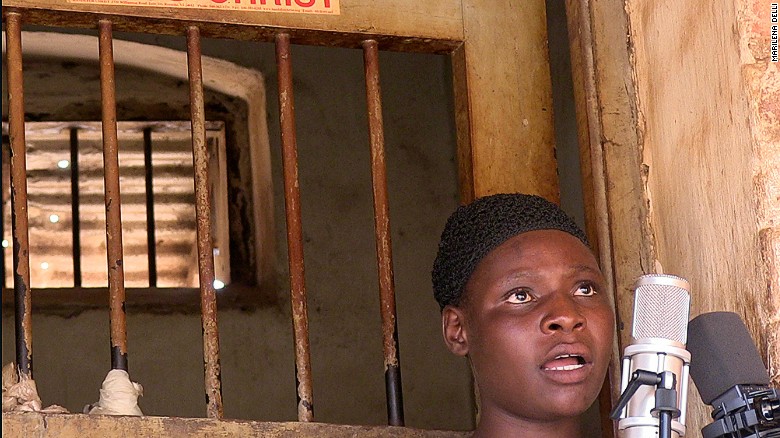
The Grammy Awards ceremony is tonight, and all, or at least more than some, eyes are on The Zomba Prison Project’s I Have No Everything Here, nominated in the Best World Music Category. The Project involves men and women prisoners in Malawi’s Zomba Central Prison. The cd comprises 20 songs, most of them sung by men, most of them written by women. From the outset, people wondered about the “mysteriously brief” presence of women on the album and, even more, about the missing women in the attention paid to the Zomba Prison Project. People wondered where are the women in the music and in the press, but omitted to ask, more directly, where are the women? They’re in prison, and in Malawi, that’s not a good place to be.

In Malawi, women prisoners end up in three main prisons: Chirichiri, Maula, and Zomba. Two years ago, the Malawi Human Rights Commission reported prisoners had died of hunger at Maula Prison, in Lilongwe. While the government claimed no prisoner had died, it had to admit that prisoners had gone without any food for three days, and that more “food shortages” were probably on the horizon.

That’s par for the course at Maula. Built for a maximum of 800 prisoners, it now houses over 2600 prisoners. Maula Prison has been built on overcrowding, malnutrition, poor to no sanitation, and rampant diseases and viral infection. Most of the scholarship on Malawian prisons concerns astronomical rates of HIV, AIDS, and hepatitis. Malawian prisons have been toxic for a long time, and they just got worse.

Recently, Malawi “cracked down” on migrants, mostly Ethiopian migrants, attempting to cross the continent in order to reach South Africa. Hundreds of migrants have ended up in Maula Prison, where they sit, in remand sections, indefinitely. Last June, Doctors Without Borders treated 18 prisoners for moderate to severe malnutrition.

In December, Malawian civil society expressed concern at the rising number of “prison babies”, infants and children in prison with their incarcerated mothers, some of whom are awaiting trial. Just last week, it was revealed that the Dowa First Grade Magistrate Court had written to the Prison Inspectorate Committee, urging the State to address systemic abuse, in particular dire overcrowding and inadequate food provision.

According to the most recent U.S. Department of State report on human rights in Malawi, “The most significant human rights issues in the country included excessive use of force by security officers, harsh and life-threatening prison and detention center conditions, and official corruption … Prison and detention center conditions remained harsh and potentially life threatening … The Zomba Central Prison was condemned as unfit for human habitation by the Prisons Inspectorate in 1997 but remained in use, holding more than 1,950 inmates in a facility built to hold 800.”

That’s the Zomba Prison Project: condemned as unfit 19 years ago and still in use; designed for 800, and housing almost 2000. That’s where the women are. Let’s hope that some day the Best World-Music Award is replaced with the Best-World Music Award, and on that day, there will be no Zomba Central Prison.


(Photo Credit: CNN) (Video Credit: You Tube / Six Degrees Records)

The Topo Chico massacre, Mexico’s fire this time

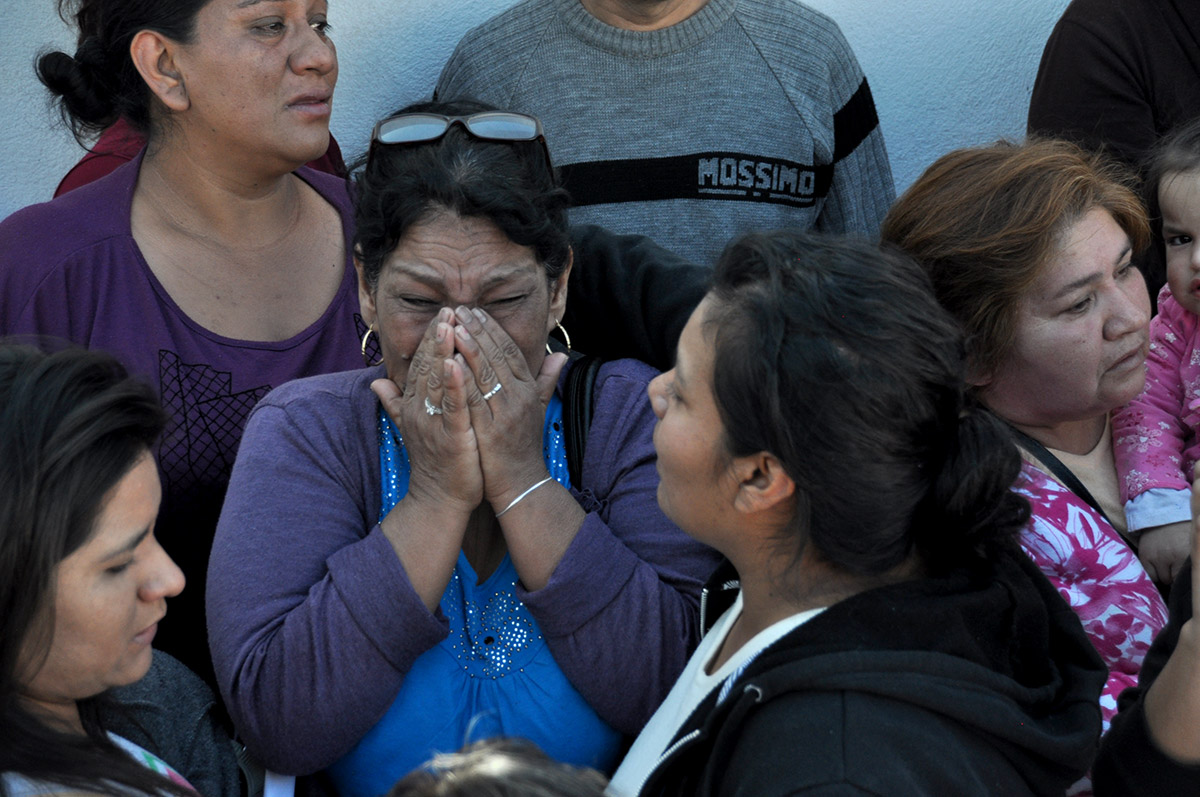
Yet again, women gather outside prison gates to find out if their loved ones are still alive. This time, it’s the Topo Chico prison, in Nuevo León, in northern Mexico.

Yesterday, something happened that left at least 49 prisoners dead and 12 injured. That `something’ has been variously described as a battle, riot, clash, brawl, fight, pitched battle, and gang war. It was all of those, and it was more. It was a predicted event, and to that extent, irrespective of the violent histories of the individual prisoners involved, it was a planned massacre.

In 2014, the United Nations Special Rapporteur on torture and other cruel, inhuman or degrading treatment or punishment, Juan E. Méndez, visited Mexico’s prisons, including Topo Chico: “Overcrowding … is a serious problem … The Government reported a total prison population of 248,487 men and women, distributed among centres with a total capacity of 197,993 persons … Overcrowding is … caused by a failure to use alternatives to prison and by abuse of pretrial detention, especially its mandatory application. Of the total prison population of 248,487 detainees, 104,763 have been charged … In … Topo Chico … inmates have excessive control over services, benefits and the functioning of the prison (inmate “self-rule”), which gives rise to disparities in the exercise of rights, corruption and situations of violence and intimidation among inmates, all of which the State has a responsibility to prevent. The Special Rapporteur accepts that protective measures must sometimes be taken and that it is often inmates who request them, but such measures cannot involve cruel, inhuman or degrading conditions. He draws attention to the conditions observed in the Topo Chico prison “doghouse”, a small enclosure where over 40 detainees allegedly in need of protection are living in unacceptably cramped and insanitary conditions … In …Topo Chico … inmates generally had no water, light or ventilation in their cells. Health conditions were usually grim and many inmates had to sleep on the floor or in shifts … Solitary confinement generally involves critical overcrowding in small cells and appalling conditions, particularly in … Topo Chico.”

In the same year, Mexico’s National Commission of Human Rights assessed all the prisons in Mexico, and rated Topo Chico a 5.72 on a scale of 10. The Commission reported that Topo Chico was designed for a maximum of 3635 prisoners, and held 4585. The Commission found that, in 2013, the male wing of Topo Chico was 55% over its limits, and the women’s section was 56% overpopulated.

None of this is new. Topo Chico was a well known bomb set to go off, and it did. That the pieces of that bomb are gang members or have violent pasts, or not, is a distraction. The real violence is the cramming of more and more bodies into less and less space that is itself less and less livable.

James Baldwin wrote, “There is a limit to the number of people any government can put in prison, and a rigid limit indeed to the practicality of such a course. A bill is coming in that I fear America is not prepared to pay.”

For Mexico, this Topo Chico massacre is the fire this time. The bill came in, and now, as so often, the women stand at the gates calling, weeping, mourning.


(Photo Credit: Juan Cedilla / Proceso)

We are the mothers, victims of the raids

Susana Arévalo Hernández and her two children have left the South Texas Family Residential Center, that special hell the United States paid Texas to build in Dilley. Arévalo was one of a number of women and children picked up in raids in early January, picked up, thrown around, and dumped into cages like so much trash. Since her imprisonment, Arévalo has suffered seven epileptic seizures. Her six-year-old son lives with a learning disability. What happened to Susana Arévalo Hernández is the ordinary torture of women who seek asylum.

Susana Arévalo Hernández fled gang violence in El Salvador to run straight into State violence in the United States. According to various reports, ICE agents lied to gain access to her home, and herself and her children. Doctors report that her condition in detention imperils her health and life. Lawyers report that every day in prison is a further violation of her and her children’s human rights and rights to due process. None of this matters. While Arévalo walked, other women and children remain in Dilley detention.

Here’s what should matter: “Every time I have a seizure, I think I’m not coming back. I don’t want my children to see that.” A mother’s concern for her children should matter. It doesn’t.

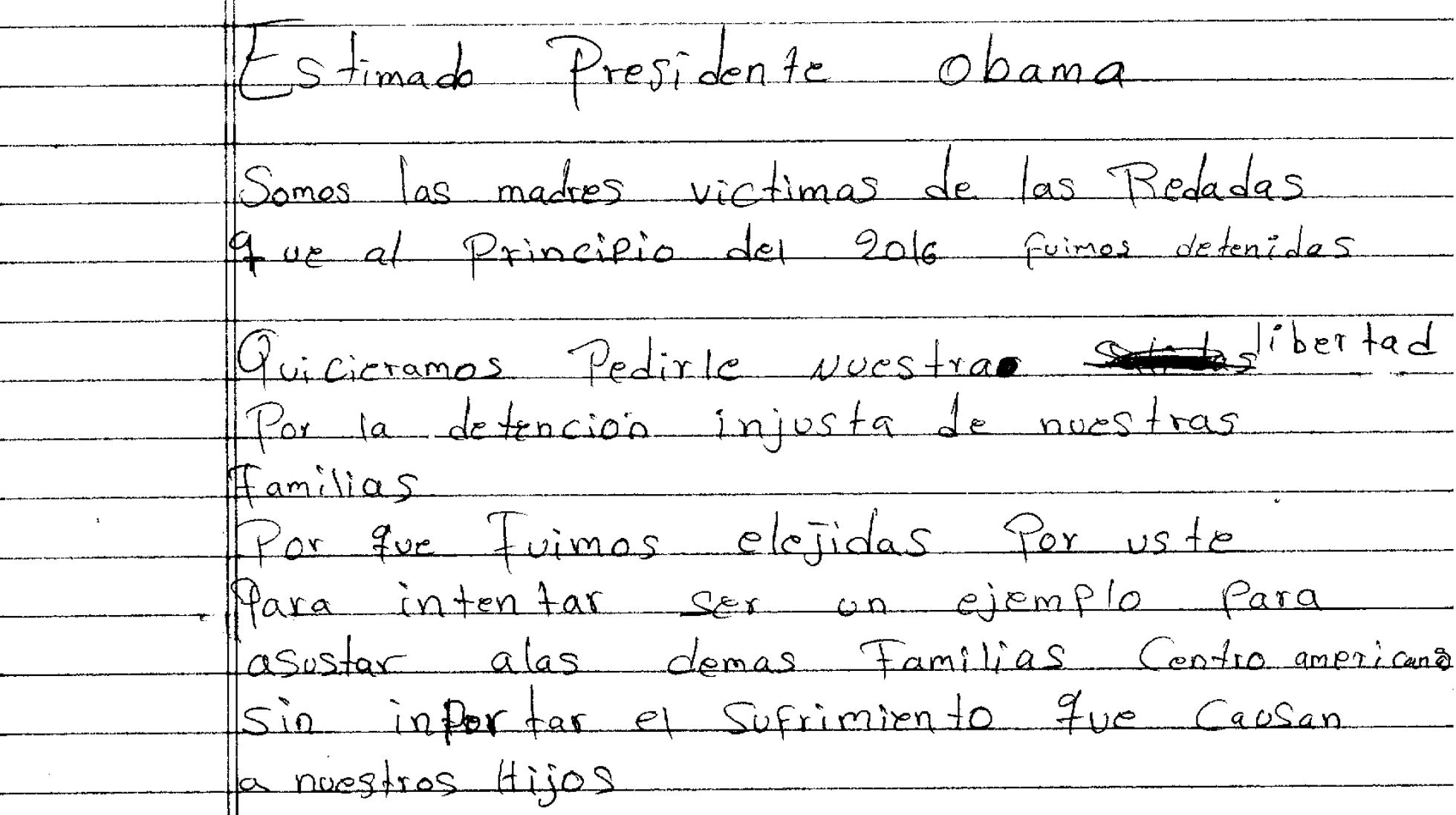
Susana Arévalo Hernández was one of seven women who wrote a letter to President Obama, which reads, in part: “We are the mothers, victims of the raids … We would like to ask you for our freedom from this unjust detention … We complied with everything that was asked of us, but the system that failed us, just because we came to this country to seek protection, because we couldn’t go back to our countries of origin due to being exposed to so much violence and threats against us and our children. That’s why we came to this country to request asylum … We are not criminals who you have to keep locked up. We have not committed any crime and it is unjust that our children, at such an early age, know what it’s like to be in a jail under guard 24 hours, when at this moment they should be in school living life with dignity like every child deserves to … We need to be free as human beings to be able to fight our cases outside with dignity.”

Ana Silvia Orellana, Dominga Rivas, Elsy Monge López, Gloria Díaz Rivas, Isamar Sanchez Chicas, Marta María Hernández and Susana Arévalo Hernández signed that letter. They represented 12 families imprisoned in Dilley and Berks County, in Pennsylvania. The twelve families add up to 33 women and children. This is the arithmetics of asylum in the United States today: lies, violence, indignity, criminalization, and more intense violence. Why must a Central American woman be on death’s door to get a hearing? Why must Central American children and their mothers live in an atmosphere of fear and a reign of terror? What sort of democracy is that?

Dear President Obama … We are the mothers

(Image Credit: El Pais)

What happened to Sarah Reed? The routine torture of Black women in prison

Sarah Reed

On January 11, Sarah Reed, 32 years old, Black, living with mental health issues and drug addiction, the victim of a famous police brutality case, was “found dead” in her cell at Holloway Prison, north of London. Her death went relatively unreported for almost a month, until the family managed to contact Black activist, Lee Jasper, and so now the reports of “failings” begin. There was no failure. The State got what it wanted: Sarah Reed is dead.

In 2012, Sarah Reed was viciously attacked by a Metropolitan Police officer. The attack was caught on camera, and, in 2014, the officer was dismissed from the force.

In October 2014, Sarah Reed was in a mental health hospital when she allegedly attacked someone. Her family says she wrote to them saying she had acted in self-defense. On January 4, Sarah Reed was shipped over to Holloway Prison, to await trial. While there, according to her family, she received no mental health treatment.

Prison authorities have claimed that Sarah Reed “strangled herself” while in her bed. Her family doubts that narrative. Further, they say they were called to the prison to identify Sarah Reed and then were prevented from seeing her body and were treated “in a hostile and aggressive manner.”

None of this is new, and none of it is surprising. Holloway Prison, the largest women’s prison in western Europe, is slated to be closed, precisely because it is unfit for human habitation. As outgoing Chief Inspector of Prisons, Nick Hardwick, noted, “Holloway has a fearsome reputation.” When Holloway’s imminent closure was announced, some hoped that the closure would begin a “prison revolution”, but they had forgotten that Holloway had already undergone its revolution. From 1971 to 1985, it had been “completely rebuilt”, and yet it remained a fearsome, loathsome place.

That’s where the State sent Sarah Reed. There was no failure. The State wanted Sarah Reed dead, and Sarah Reed is dead. What happened to Sarah Reed happened to Sandra Bland happened to Natasha McKenna happened to Kindra Chapman happens. Rebuilding the prison never ends, or even diminishes, State torture of Black women. Shut it down.


(Photo Credit: Lee Jasper / Vice)