In India, Janak Anand said NO to forced widow marriage and, yesterday, she won!

Janak and Dipak Anand

Soldiers go to war. Often, they die in war. Some receive medals of bravery. In India, the medal of bravery is the Vir Chakra. It’s called a gallantry award. Those who died “gallantly” are called martyrs. Decades ago, India created a special hell for martyr’s widows. Widows received a gallantry award, but it came with strings attached: “The widow will continue to receive the allowance until her re-marriage or death. The payment of the allowance will, however, continue to a widow who re-marries the late husband’s brother and lives a communal life with the living heir eligible for family pension.” If the widow wanted, or needed, to continue to receive the award and if she were to re-marry, she could only marry her dead husband’s brother. Janak Anand, a martyr’s widow, said NO to forced widow marriage, and to all the structures that support and normalize it, and yesterday … she, and women across India, won!

Janak Anand’s story is straightforward. In 1971, she and Captain S C Sehgal were married. In December 1971, the Indo – Pakistani War broke out. Captain Sehgal was killed, and posthumously awarded the Vir Chakra. Janak Anand received gallantry benefits, along with the regular family pension. In October 1974, Janak Anand re-married. She married Major Dipak Anand. At that point, she lost her gallantry benefits. Janak Anand protested. Finally, after 43 years of protests, inquiries and litigation, the Armed Forces Tribunal, in September, agreed with Janak Anand, and strongly criticized the government for its policy. Yesterday, the Ministry of Defence suspended the policy. After 43 years of pushing and prodding, Janak Anand will receive her gallantry award payments plus 10%. Additionally, she will have some sense of dignity as a woman recognized formally by the State.

The story of the policy itself is equally straightforward. Janak Anand was not the first to contest it, and each time it was contested, the State fortified the policy. For example, the language of the current rule, cited above, was issued in 1995 by the Minister of Defense. According to Janak Anand, the officials had no sense of urgency in deciding the matter or issuing her any relief.

In September, the Armed Forces Tribunal concluded, “We cannot have a policy which dictates as to whom a widow must marry if she wants to earn financial benefits of her martyred husband. It is nothing but an affront on the dignity of the war widow whose husband sacrificed his life for the country and earned the Vir Chakra. On one hand, the President of India confers the gallantry award to the lady as a mark of respect for her husband’s sacrifice for the country. On the other, our derogatory policies like that of January 31, 1995, humiliate the widow by denying her rightful dues. We are saddened to observe such slipshod treatment to a war widow of 1971.”

Yesterday, the Ministry of Defence said, “The government, after considering the issue and receiving several representations, has now been decided to remove the condition of the widow’s remarriage with her late husband’s brother for continuation of the monetary allowance.”

As Sharanya Gopinathan noted, “It’s great news that this bizarre rule has been scrapped, but it also makes you wonder how many more insanities we’re left to find in all our rulebooks and statutes, and how long it will take to clean our laws up.”

After more than four decades of struggling and pushing for her rightful due, both as money and dignity, Janak Anand has forced the unwilling State to begin to face its patriarchy, misogyny, and routine humiliation of women. We were saddened by the slipshod treatment of Janak Anand, and other war widows and other widows and other women, and are delighted and encouraged that, after a lifetime of struggle, yesterday, finally, she won. The struggle for women’s justice continues.


(Photo Credit: India Today)

Michael Komape did not fall to his death in a pit latrine. The State pushed and murdered him.

On January 20, 2014, Michael Komape, five years old, went to the toilet in his primary school in Limpopo, in South Africa. He never returned. The toilet seat was corroded, gave way, and Michael Komape fell into the pit and drowned to death in feces. Three years later, his parents and siblings have received neither apology nor support from anyone in government. His parents sued the Minister of Basic Education, and that trial began last week. Today, the court heard that the Department of Basic Education had been warned numerous times about the dangerous condition of toilets in Limpopo schools. The Department did nothing. The Department received three series of warning letters, in 2004 and 2008 and 2009, that described the school’s toilets as dangerously sinking. The State did nothing. Doing nothing means refused to act. Michael Komape did not fall to his death in a pit latrine. He was pushed, by a State that decided it had more important issues to deal with. In 2014, five-year-old Michael Komape did not fall to his death. He was murdered.

The afternoon of January 20, 2014, the school called Michael’s mother, Rosina Komape, to tell her that Michael was “missing.” Rosina Komape went to the school, and a classmate of Michael’s told her that Michael had last been seen going to the toilet, an outside pit latrine. School officials denied this, and claimed that Michael had gone out to play. Rosina Komape told the classmate to take her to the toilets: “When I looked inside the toilet I saw Michael’s hand. I then said that my child died asking for help … I asked them to pull him out by the hand maybe we can save him. I thought if we pulled him out we could save him. The principal said they had called someone to pull him out. I thought he was still alive and if we pulled him out and took him to hospital he would get help.” Michael Komape drowned in a pool of human feces, reaching to the sky. His mother came and found his outstretched arm.

The family is traumatized by and angry with the State. Days of testimony have revealed what we already knew, that the family of parents and siblings is grieving and living with nightmares, that the State has steadfastly stood fast and never extended any kind of hand to the family, and that this was a death foretold. In South Africa, 4624 schools have pit latrines.

The family is haunted, but not the State. Why not? While this story is particular to South Africa where it is seen as yet another referendum on the state of the democracy, and the human heart, it sits with similar stories around the world. It’s the story of neoliberal development, centered on global cities. Walk the streets of the Cape Town or Johannesburg or Washington, DC, metropolitan centers, and you will see extraordinary change taking place. Buildings go up, streets are torn up to lay underground cables, mansions rise where once modest homes sat, shopping malls and boutique shops proliferate, and the list goes on. Who pays for that? Michael Komape, Michael Komape’s brothers and sisters, Michael Komape’s mother and father. Last Wednesday, James Komape, Michael’s father, said, “They should have helped. My son was going to school. I did not send him to die.” I did not send him to die, and yet he was sent to his death, by a State that prefers waterfront malls to safe and secure school toilets.

Someone once wrote “Hegel remarks somewhere that all great world-historic facts and personages appear … twice. He forgot to add: the first time as tragedy, the second time as farce.” Today, the first time is tragedy, and the second horror. Michael Komape did not fall, and his death, however painful and haunting, was not tragedy. Michael Komape was murdered, and, other than the family, who today is haunted? Who is haunted by the dead of Marikana, by the dead of Life Esidimeni, by the dead five-year-old child drowning in a pool of shit, reaching to the sky? When we look, do we see Michael’s hand? We should have helped.

Michael Komape two months before he died

STATEMENT BY CIVIL SOCIETY ON THE CURRENT SITUATION IN ZIMBABWE

While we do not have total clarity as to the situation on the ground, it has come to our attention that there have been sudden changes in the government structures of Zimbabwe, resulting in the army taking control of leadership. This has raised concerns for many Zimbabweans in that their country is in a state of flux which can escalate and result in dire consequences for the people of Zimbabwe.

The people of Zimbabwe have continuously been subjected to oppression, exploitation and poverty, and the current developments have the potential to exacerbate their suffering.

The role of SADC and governments in the region in supporting the regime in Zimbabwe should also not be overlooked. Their actions, including at times inactions, have contributed to the current situation in Zimbabwe.

The Civil Society Organisations and actors listed below confirm their solidarity with the people of Zimbabwe in this volatile and unsettled period.

We call on the role-players within the country to exercise restraint and to place the well-being and protection of the Zimbabwean people at the top of their priority objectives.

We call on the role-players within the country to ensure that the civil liberties of the people of Zimbabwe are recognized and respected and that their physical integrity and democratic principles are guaranteed.

We call on our respective governments and SADC to engage with all relevant role-players to broker a positive way forward with the least possible upheaval and pain for the people of Zimbabwe.

We stand in solidarity with the movements and organisations in Zimbabwe that have engaged in the struggle for transformation and democratisation in their country and that will continue to do so. 

We call for people to people solidarity.

Civil Society Organisations and Actors in support of this statement: 

 A União Nacional de Camponeses, UNAC, Mozambique

 Acção para o Desenvolvimento Rural e Ambiente, ADRA, Angola

 Associação Moçambicana para Desenvolvimento da Família, AMODEFA, Mozambique

 Aurea Mouzinho, feminist activist, Angola

 Church Land Programme, CLP, South Africa

 Community Healthcare Worker Regional Movement, Southern Africa

 East Cape Agricultural Research Project, ECARP, South Africa

 groundWork, South Africa

 International Labour Research and Information Group, ILRIG, South Africa

 Just Associates, JASS, Southern Africa

 Justiça Ambiental, Mozambique

 La Via Campesina – Southern and Eastern Africa

 Labour Resource and Research Institute, LARRI, Namibia

 Legal Assistance Centre, LAC, Namibia

 Livaningo, Mozambique

 Positive Vibes, Namibia

 Rural Women’s Assembly, Southern Africa

 South African Careworkers Forum, South Africa

 Surplus People Project, SPP, South Africa

 Wellness Foundation, South Africa

 Women’s Legal Centre, WLC, Namibia

 WoMin, African Gender and Extractives Alliance, Africa

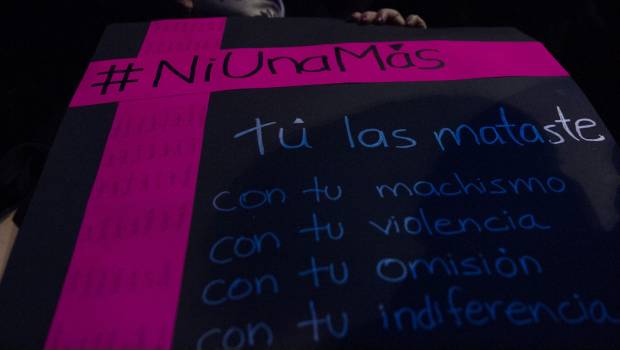
Every day in Latin America, 12 women are killed. Seven of them are killed in Mexico.


In 1993, a group of women shocked Ciudad Juarez, Chihuahua, with the news that dozens of girls and women had been murdered and dumped, like garbage, around the city during the year. As the numbers of murders grew over the years, and as the police forces proved unable and unwilling to find the perpetrators, the protestors became activists. They called the violence and consequent impunity for the crimes `femicide,’ and they demanded that the Mexican government, at the local, state, and federal levels, stop the violence and prosecute the murderers.”

In 1993, the murder of women, and the refusal of the State, in this instance the Mexican state, to do anything, was shocking. In an interview today, Luis Raúl González Pérez, President of Mexico’s National Commission for Human Rights, said that, across Latin America, 12 women are murdered every day. Seven women are killed every day in Mexico. In Mexico, this is called feminicidio. In English, it’s both femicide and feminicide. Whatever it’s called, it’s an atrocity, one that’s been created by successive Mexican governments, governments north and south, east and west of Mexico, multinational corporations, and more. Mexican femicide is the nation’s, and the world’s, cost of doing business. That’s why the hotspots of femicide in Mexico have moved from the southern border to the northern. Ever increasing mounds of women’s cadavers is not even collateral damage in the national, regional and global development scheme, and those mounds are piling up at an ever-increasing rate.

A recent report on household relations, from the National Institute for Statistics and Geography, suggests that in Mexico 7 out of every 10 women has experienced violence, most of which is sexual and emotional. Ten areas exceed the national average. In Mexico City, for example, eight of ten women have suffered violence.

Right now, 12 areas in Mexico have been issued a “femicide alert” by the Commission. Another five been under the alert for almost six months. When these alerts are issued, the locale often sees it as a hassle and an embarrassment. As González Pérez explained, “Local governments must see that this alert is a tool that does not seek to harm, but to contribute to the solution of the problem. [Some consider it a political coup] because it is misunderstood. It feels like it’s  reproaching them for the past, but it’s actually a proposal to move towards the future.” In what world do governments see femicide as a misplaced garbage dump, as bad for business, and nothing more? In our world.

Since that day in 1993, women have been protesting, organizing, militating against femicide. Mexican women have reached across borders and across oceans for support and for models of anti-femicide activism and policy. Since January 2016, Maria Salguero, a geophysical engineer, has designed and maintained an interactive femicide map. Guadalupe García Álvarez, a member of the Mazahua indigenous nation, suffered violence at home and then, at the age of 13, was sent to Mexico City to work as a maid. She decided enough was enough, and left. She went to university, completed her studies, and then returned home, where she founded, MULYD, Mujeres Lucha y Derechos Para Todas. Women’s Struggle and Rights for All (Women and Girls). Poets, such as Mijail Lamas, have invented new kinds of poetry, documentary poetry, to do more than “draw attention” to femicide and to violence against women. Lamas, and other poets, are insisting that the assault on women is an assault on language, on communication, on the soul and spirit of each and every human being, and not only in Mexico.

Every day, seven women in Mexico are murdered. That arithmetic is described as a crisis. It is. The crisis is violence, the violence committed by men in relationships, by men in corporations and investment agencies and banks, and by men in charge of governments, and not only the government of Mexico. Where is the global outrage at a contemporary witch hunt that threatens, as they always have, every woman?


(Photo credit: SDP Noticias / Claroscuro)

There are no plans to close the camp in Nauru

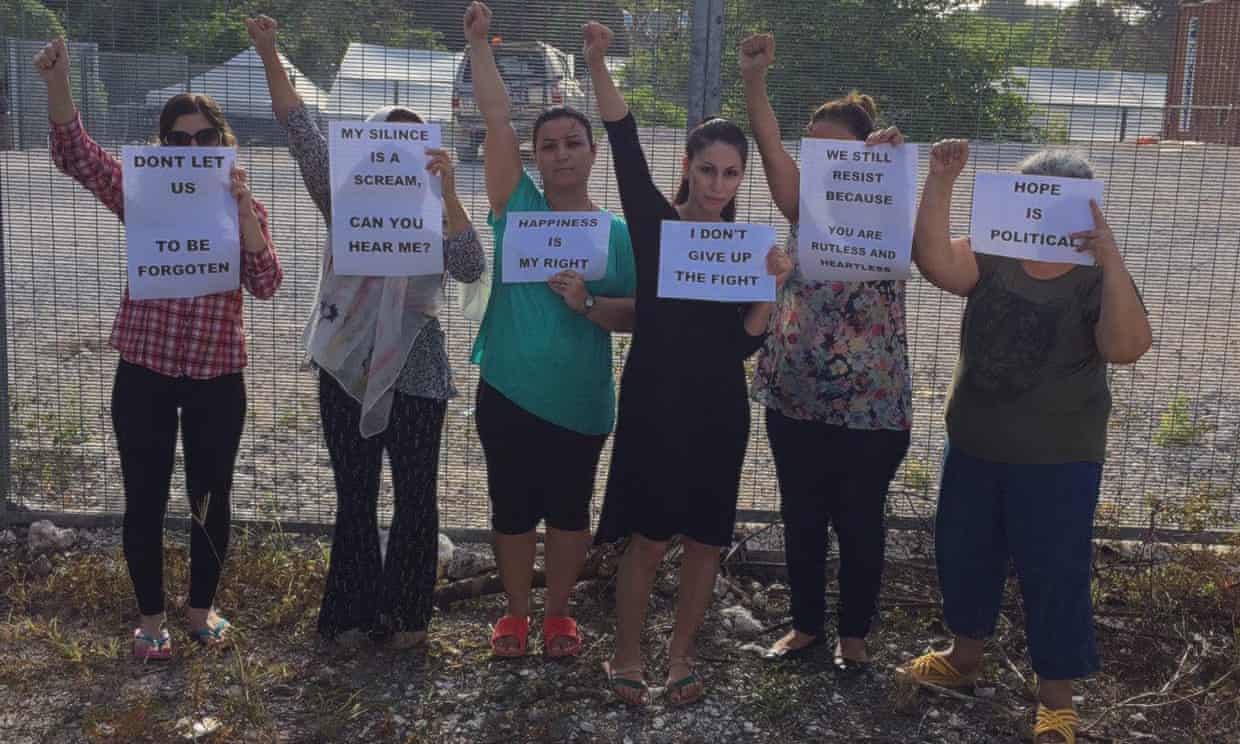
“There are no plans to close the camp in Nauru.” Thus ends Reuters “Factbox: Why does Australia detain asylum seekers in offshore camps?”. The “Factbox” relates the current situation in the closed detention centers on Manus Island and, to a much lesser extent, on Nauru. Last year, the Papua New Guinea High Court declared the Manus detention center illegal. Last month, Australia closed the center and tried to move its 700+ men to another center, one without running water. 600 some men decided to stay and have occupied the center since, at great risk to their own lives. Journalist and Iranian refugee Behrouz Boochani, imprisoned on Manus Island since August 2014, wrote, “Death is always ever so present. Death. The breath of death. The scent of death. The reign of death over Manus prison. This is the reality of living out here.” Death. This is Australia’s vaunted “Pacific Solution”: horror, torture, death. Take the bodies, the more vulnerable the better, and throw them in a pit, far away, where the “good people” of Australia need not see or hear them cry. Pregnant women, children, men, survivors all, throw them away. To re-open the “Factbox”, “So far, no `boat person’ detained on Manus or Nauru has been resettled in Australia.”

Last year, all eyes were on Nauru. Leaked reports last year showed that 2,000 incidents of sexual abuse, assault and attempted self-harm had occurred. Many of these involved children. The United Nations chastised Australia and Nauru for their failure, call it refusal, to protect asylum seeker and refugee children from sexual abuse. Amnesty International called the conditions on Nauru torture. Currently, Australia detains 369 people on Nauru. 46 of them are women, and 43 are children.

By air, Nauru is a little over 2000 miles from Brisbane, and, for those detained and tortured there, galaxies and light years away. And for Australians? Why does Australia detain asylum seekers in Nauru? Why is Australia not only not shocked but proud of its torture of refugee and asylum seeker children, women, and men on Nauru? Why does Australia hate pregnant and abused women asylum seekers on Nauru? The answer? “There are no plans to close the camp in Nauru.” There is no more to be said.


(Photo Credit: The Guardian / Saba Vasefi)

Virginians decided yesterday, and we decided to move forward

In 2006, Mazie Hirono was elected to the U.S. Senate. She was the first and only Asian-American woman U.S. Senator and the first woman Senator from Hawaii. A year ago, today, the people of Washington’s 7th Congressional District elected Pramila Jayapal to the United States House of Representatives. Pramila Jayapal was the first Indian-American woman elected to Congress. On the same day, in Minnesota, Ilhan Omar won a Minnesota House seat, making her the first Somali-American legislator in the history of the United States. Yesterday, Virginia voters decided to smash a few more glass ceilings, and elected Danica Roem, Elizabeth Guzman, Hala Ayala, Kathy Tran, Dawn Adams, Jennifer Carroll Foy.

Here’s the list of firsts. Danica Roem is the first openly transgender person to win elective office in Virginia. Elizabeth Guzman and Hala Ayala are the first Latinas elected to Virginia’s House of Delegates. Elizabeth Guzman is also the first social worker and the first AFSCME member elected to the House of Delegates. Kathy Tran is the first Asian American woman elected to the House of Delegates. Dawn Adams is the first open lesbian elected to the House of Delegates. Jennifer Carroll Foy is the first public defender elected to the House of Delegates. That’s a lot of firsts, and that’s a whole lot of women.

Who voted these first women into office? Extrapolating from those who elected Ralph Northam to be the next Governor of Virginia, women. 61% of all women voted Democratic. 91% of Black women voted Democratic. 58% of women with college degrees voted Democratic. 54% of married women voted Democratic, and 77% of women who are not married voted Democratic. The turnout yesterday was the highest in 20 years for a gubernatorial race. That’s a whole lot of women.

There were other firsts in the Commonwealth. Voters elected Chris Hurst, a first-time candidate and a leading gun control advocate. Voters also chose Justin Fairfax, the first African American elected to a Virginia statewide office since 1989.

Thanks to the great work of Governor Terry McAuliffe and New Virginia Majority, thousands of formerly incarcerated people – including LaVaughn Williams and Brianna Ross – voted for the first time.

Virginians decided yesterday, and we decided to move forward, not back. Virginians decided to remember and honor Heather Heyer, whose last, and lasting, public statement was, “If you’re not outraged, you’re not paying attention.” In the words of Sojourner Truth, “If the first woman God ever made was strong enough to turn the world upside down all alone, these women together ought to be able to turn it back, and get it right side up again!” And Mary Harris Jones roars in response, “Pray for the dead, and fight like hell for the living!” We’re outraged, we voted, and we’re going to keep on voting, organizing, mobilizing, and moving the agenda forward.


(Photo Credit: The New York Times / Chet Strange) (Infographic: The Washington Post)

26: The infinite mirroring of the horror we have created

Sutherland Springs

“Whose grave’s this, sir?”
Hamlet, Prince of Denmark

“Mourning. We will be speaking of nothing else.”
Jacques Derrida. Specters of Marx

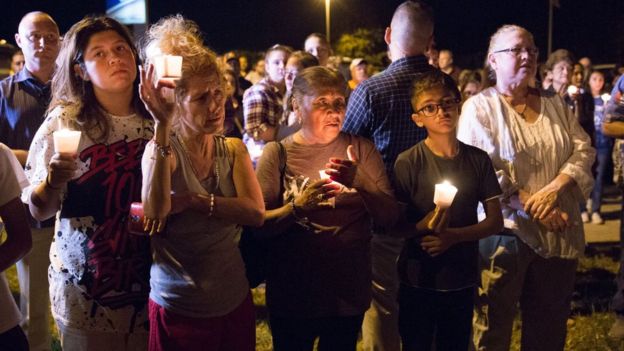
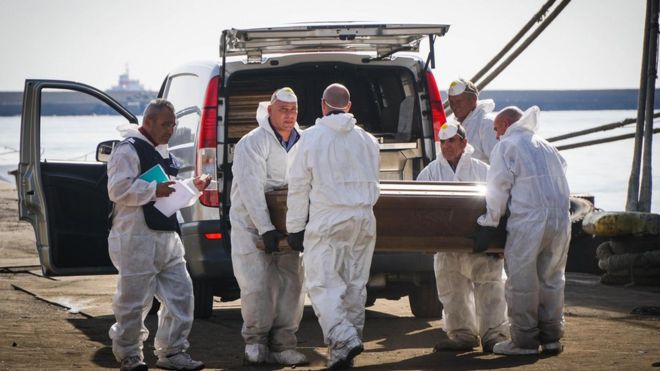
26. Two mirrors face each other. “Sutherland Springs: Texas church shooting leaves 26 dead”. “Italy probes deaths of 26 Nigerian women from migrant boats”. These headlines both appeared on the BBC news website today. In Texas, the Governor said, “This will be a long, suffering mourning for those in pain.” In Texas, half of the people killed were children. In Italy, most of the women were between 14 and 18 years old. This is the fearful symmetry we have produced. No immortal hand or eye would dare produce such horror. This is completely ours. 26. We should all be in pain, and not just today. Who will remember the day in which 26 innocents here and 26 innocents there became specters, objects for the work of mourning, subjects for the never-too-soon debates? Who will claim responsibility, for the wholesale mass production of guns, refugees, asylum seekers, and corpses? 26. Whose world is this? Whose grave’s this, sir? 26.

Salerno


(Photo Credit 1: BBC / AFP) (Photo Credit 2: BBC / EPA)

In India, the Bihar “stampede” was a planned massacre of elder women

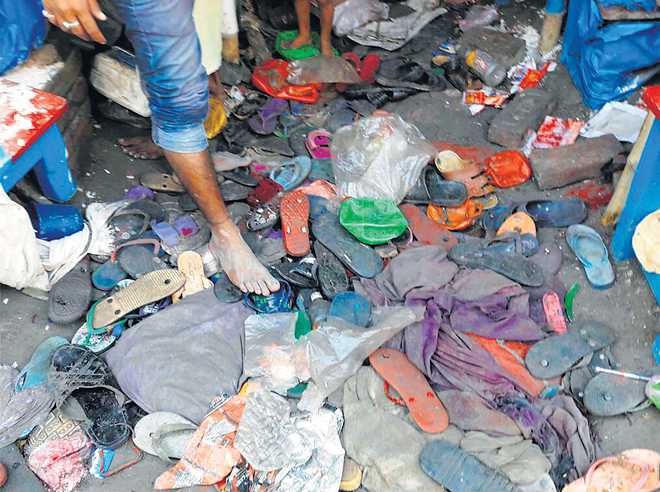
Kartik Purnima is a holy festival celebrated by Sikh, Jain and Hindu people. Yesterday, thousands gathered in the village of Simaria, in Bihar, to celebrate. They went to Simaria to dip into the Ganges River. Something happened. The press and the State called it a stampede. Three elderly women, each reported to be in their 80s, were killed. The State says the women died of suffocation. That may be the forensic determination, but those women, and so many others in stampedes – from Jakarta to New Delhi to KwaNongoma to Karachi to Abidjan to Valley Stream to Lahore to Johannesburg to Mymensingh to Khayelitsha – were part of the plan. Yet again, the gender of stampede is women, and yet again, the world takes little or no notice. Just another sudden rush, just another panic, just another day in which women `naturally’ dominate morbidity and mortality rates. Just another day.

In 1999, a “high powered committee”, established by the Indian government, released a report on disasters. They determined five categories: water and climate; geological; biological; nuclear and industrial; and accidental. They described accidental catastrophe as “urban and forest fires, oil spill, mine flooding incidents, collapse of huge building structures, bomb blasts, air, road and rail mishaps, boat capsizing and stampede during congregations.” None of these are “accidental”, since all are preventable. Since that report, the State has done less than nothing to “mitigate” the possibility of “stampedes”. In the intervening eighteen years, they have expressed “concern” at “the recurring stampedes at places of mass gathering, including religious places, and typically ad-hoc responses to those”, and issued “crowd managementguidelines, with absolutely no force and little promotion. At the same time, India’s National Management Authority lists three categories under “Man-Made Disaster”: nuclear, biological, chemical. No stampede, no crowd control, and no concern.

Yesterday, in Bihar, thousands of devotees passed through capillary alleys barely wide enough to allow passage to hundreds. The result was predictable, and the State did nothing. That was not a stampede in Bihar yesterday. Instead, three elderly women were massacred. Now, after decades of doing nothing, the State claims concern and pretends to act, but it will not acknowledge its own guilt. There was no accident. There was no stampede. Just another day.

Scattered slippers after the event


(Photo Credit 1: The Tribune of India / PTI) (Photo Credit 2: Scroll / PTI)

The factory fire in Indonesia was a planned massacre of women workers

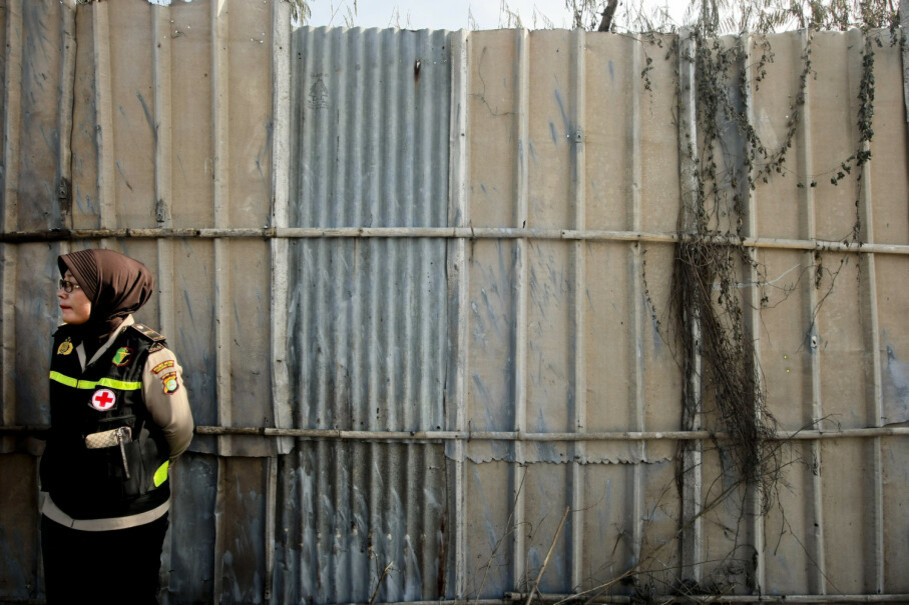
A police officer stands in front of the factory

On Thursday, October 26, 2017, in Tangerang, a city near Jakarta, local, national, regional, and global economic development tossed another 49 charred bodies, almost all women and girls, onto the sacrificial pyre. A fireworks factory “experienced” a fire. Two explosions roared, and 49 workers burned to death. The factory employed 103 workers, almost all women and girls. The death toll continues to rise. The 49 dead, and the 54 survivors, most of whom are severely injured, join their sisters from the Triangle Shirtwaist Factory in the United States, to the Kader Toy Factory in Thailand, to the Zhili Handicraft Factory in China, to the Tazreen Fashions Factory in Bangladesh, and to the Kentex Manufacturing Corporation in the Philippines two years ago and the House Technologies Industries earlier this year, also in the Philippines. Every one of these was a planned massacre of women workers. Last week’s fire in Indonesia was a planned massacre of women workers. Everyone knew it would happen, sooner or later.

Why did so many women die? So many women died because women were the workers. It makes “economic sense”, which means the pay is low and the working conditions abysmal. Now that the smoke and stench rise from the pile of 49 charred workers, almost all women and girls, now the world takes notice of “Indonesia’s conjoined struggles with workplace safety, widespread child labor and keeping children in school.”

Why did so many women die? So many women died because there was no rear exit, and so they were trapped by flames and smoke, and many were burned beyond recognition.

Since the early 1980s, researchers have been writing about women workers in Tangerang. Along with nearby Cikarang, Tangerang has been “at the heart of the Indonesian industrial system since the export boom of the 1970s”, and, from the 1970s until today, the living and working conditions have been described as “hell-like”. Women have organized, through unions and through other associations, for improvements, which come and go. Women workers in Tangerang have organized mass strikes, famously in 1991. Most of the women who work in Tangerang have migrated there, from rural areas in Indonesia, and so, despite decades of struggle, in some ways, the struggle begins anew with every new cohort.

And now? The factory owners are detained and under investigation. Families, friends and neigbhors keen and mourn. The world yet again stares, for a moment, at the pictures of grieving mothers, and reads of the loss and sorrow and loss. None of this is new or unforeseen. Tangerang specifically has been in the eye of public policy, environmental, labor, women’s, children’s, development scholars’ and activists’ studies for four decades. Industrial fire codes have been in everyone’s eyes for over a century. And yet, day in and day out, 103 workers, almost all women and girls, went to work in a fireworks factory that had no proper exit in case of fire or other catastrophe. That factory wasn’t a factory; it was a slaughterhouse. When the flames burst and the women and girl workers’ bodies exploded, when the daughters’ and mothers’ and sisters’ bodies blew up, there was no accident. That was an indiscriminate and brutal slaughter of people, a massacre, and it was part of the plan. The fire was like a roar. “After that, there were no voices anymore.”


(Photo Credit: Jakarta Globe / Yudha Baskoro)

Why does the English government hate Paulette Wilson and Patricia Simeon?

Paulette Wilson

Why does the English government hate Paulette Wilson and Patricia Simeon? What horrible crime has each committed? The only binding element in their combined story is that they are Black immigrant women. Individually, each woman’s story shows a State built of shameful violence against women. Taken together, the combined story of Paulette Wilson and Patricia Simeon shows a State in which State violence against women of color immigrants is an ever expanding and intensifying evil, a key part of which is the humdrum ordinariness of the women’s stories. What happened and is happening to Paulette Wilson and Patricia Simeon happens every day and all the time. Their stories are so common they barely get told.

Paulette Wilson is 61 years old. She arrived in England, from Jamaica, in 1968, when she was 10 years old. She has never left England. She has never returned to Jamaica. She grew up in Telford, where her grandparents looked after her. She has a British daughter and grandchild. She has 34 years of National Insurance payments. The law in the United Kingdom states that anyone who settled there prior to January 1, 1973, has the right to remain in the country. Paulette Wilson’s lawyers provided evidence, ample evidence, that she had been in the country since 1968, and that evidence was ignored. Last week, she was taken to Yarl’s Wood. Today, she and her daughter were informed that she was going to be released. When asked about the “heavy handed” approach applied to this Black woman who has lived, nonstop and without trouble for 50 years in the country, when asked about the reasons for ignoring both the law and evidence, the Home Office replied, “We do not routinely comment on individual cases.”

In so many ways, this is not an individual case; in so many ways, this case is routine.

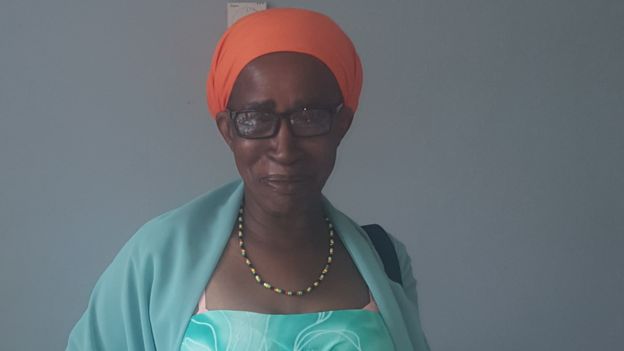
Just down the road a bit lies Sheffield, where Patricia Simeon has lived since 2012. Patricia Simeon is 30 years old, Hal Paulette Wilson’s age. Patricia Simeon is a lesbian organizer and human rights campaigner from Sierra Leone. She is locally well known for campaigning for LGBT+, refugee, and faith community rights. She is one of the founders of LASS, the Lesbian Asylum Support Sheffield group. Initially refused asylum, Patricia Simeon was preparing for a November 7 appeal when, last Wednesday, she was picked up and dumped in Yarl’s Wood. Friends and allies launched a campaign to set her free. They noted that Patricia Simeon has provided ample evidence of having been tortured, which means, according to Home Office rules, she should never have been detained. As with Paulette Wilson, the rules and evidence were ignored. On Tuesday, Patricia Simeon was released from Yarl’s Wood.

While the release of both Paulette Wilson and Patricia Simeon is a cause for celebration, the question remains, “Why does the English government hate Paulette Wilson and Patricia Simeon?” They join the list of women of color immigrant women who have had to live with that same question, a list that includes, in the past seven months alone, Kelechi Chioba,  Erioth MwesigwaShiromini SatkunarajahIrene ClennellChennan Fei. As members of #SetHerFree and Movement for Justice By Any Means Necessary know, and as every woman who’s been held in or threatened with a stay in Yarl’s Wood, there is no setting free and there is no justice until Yarl’s Wood and its adjudicating apparatus is destroyed, once and for all, brick by brick, razor wire by razor wire, pen by pen. Shut Yarl’s Wood down; do it now!

Patricia Simeon

(Photo Credit 1: BBC) (Photo Credit 2: Change.org)