Another Aboriginal woman dies of `natural causes’ in custody

In August, a 22-year-old Aboriginal woman, called Ms. Dhu, died in custody in Western Australia. She was being held for unpaid parking fines. Ms. Dhu complained, some say screamed and begged, of intense pains. She was sent to hospital twice and returned, untreated, to the jail. On her third trip to the hospital, she died, in the emergency room, within 20 minutes. It is reported that she never saw a doctor. Her grandmother says she “had broken ribs, bleeding on the lungs and was in excruciating pain.” That wasn’t enough.

Ms. Dhu joins a long line, actually a mob, of Aboriginal women who have died in custody in Australia. In 1982, 40-year-old Nita Blankett was in custody for driving under the influence, a six-month stay. She complained of pain, became distressed, was ignored. Finally, and too late, she was dumped into an ambulance, where she died en route to the hospital.

In 1989, 38-year-old Muriel Gwenda Cathryn Binks died in custody. She was in for non-payment of a $30 fine. She complained of severe pains. No one listened. For 22 hours, she received no medical treatment. Muriel Binks died of multiple organ failure … for thirty dollars. That was the going price for an Aboriginal woman’s life in 1989. It hasn’t gone up.

The stories pile up; the women’s bodies pile up. People gather in protests and demonstrations, as they did today across Australia. The family calls for an inquiry. The State at first refuses, then relents. Elected officials promise action. Everyone is shocked.

Two years ago, Maureen Mandijarra died in custody. As of yet, there’s been no inquest date set. The police report, two years later, was only recently turned over to the coroner.

Meanwhile, Aboriginal women are increasingly destined for incarceration. In the last year alone, incarceration rates for Aboriginal and Torres Strait Islander women have skyrocketed 18%. The government “response” is to cut funding Indigenous legal and family violence prevention services. Aboriginal? Woman? Need help of some sort? Have we got a place for you … prison.

Twenty-five years ago, commissioners looking into Muriel Binks’ death concluded, “the time for tolerance of such official neglect and complacency has passed.” Not.

Australia, like the United States, Canada, others, has invested heavily in the devaluation of Aboriginal women’s bodies and lives. The rising rates of incarceration married to the plummeting budgets for assistance say as much. So do the women’s corpses, decade after decade, year after year. For Aboriginal women, the histories and lived experiences of colonial occupation and violence not only continue to this day. They are intensifying.

A contemporary postcolonial, anti-colonial politics begins and ends with the State murder of Aboriginal women’s bodies, which runs from lack of services and assistance, from cradle to grave, to mass incarceration to dumping into the mass graves of historical amnesia. Another world is possible … and it requires more than an endless cycle of “discoveries” followed by commissions.

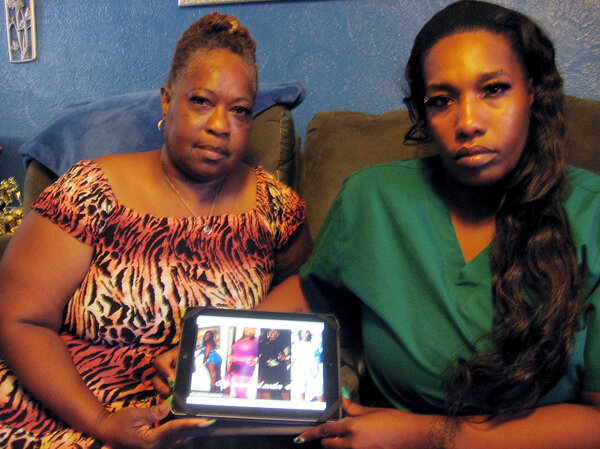
Ms. Dhu, who died in police custody, August 2014


(Photo credit 1: Jade Macmillan/ABC News) (Photo Credit 2: ABC)
Suicide Watch in Women’s Prison: Who Cares?

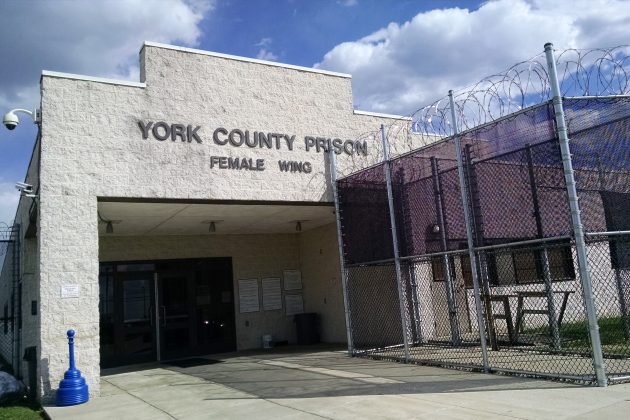
On Thursday, September 18, Megan Fritz hung herself. On Monday, September 22, Mary Knight did the same. Both women were incarcerated at Pennsylvania’s York County Prison when they committed suicide. Yet, as clearly indicated in nearly all of the media coverage of the incidents, neither woman was on suicide watch. Why weren’t Megan and Mary on suicide watch when they ended their lives?

One reason could be that what prisons and jails call “suicide watch” is an operating procedure disguised as a ‘prevention program’ implemented to protect facilities from liability. As the National Institute of Corrections notes, inmate suicides are financially, legally, and socially “devastating” for facilities and staff, often prompting lawsuits and negative publicity. Suicide watch is meant to care for prisons, not prisoners. Women behind bars are not ignorant– they are well aware of the negative consequences associated with suicide watch.

First, suicide watch leads to stigmatization for inmates, especially women. When women exhibit suicidal behavior or intention, they are often understood as ‘attention-seeking’ or ‘manipulative.’[1] Thus, suicidal women especially risk being labeled, distrusted, and disregarded. One correctional worker admitted that, “too often we conclude that the inmate is simply attempting to manipulat[e] their environment and, therefore, such behavior should be ignored and not reinforced through intervention.” One instructor of the Suicide Prevention training for correctional employees in Washington, D.C. taught his students that most suicide attempts are simply ways to “seek attention or misbehave.”

Pervasive attitudes like these lead to the poor treatment of inmates and impede care for those who need it.

In Northern Ireland, for example, female inmates at the Mourne House Unit and Maghaberry Prison reported[2] that it was normal for prison staff to bully suicidal women and those who self harmed. Correctional officers were known to taunt and laugh at women on suicide watch, blowing smoke in their faces and calling them names. When one woman felt she was in crisis, she called to ask for help, but the guard replied: “stop ringing the bell and shut the fuck up.” Another woman tried to hang herself twice in one day, yet inmates overheard a senior officer telling a subordinate officer, “don’t be looking in at her. Don’t even look at her. Fuck her.” Suicidal women are shamed, ignored, and persecuted when they express their feelings and needs.

Furthermore, when inmates admit to suicidal ideation or exhibit suicidal behavior like self-harm, they are often subject to harsher punishments as part of standard suicide prevention precautions. Those on suicide watch usually lose basic amenities like showers, bedding, phone calls, and family visits. They can be denied jobs and early release. Often, they are stripped of their clothing and are either left naked or are forced to wear “degrading and humiliating” paper safety smocks. National correctional standards require that they be housed in “suicide-resistant” cells; oftentimes, this means they are sent to solitary confinement or lockdown where they are isolated and deprived of sensory stimulation. In one county jail, suicidal inmates are confined in what they call “squirrel cages”: a 3x3x7 foot box fashioned out of chain-link fencing. Commonly, they are trapped there for more than 24 hours. Other correctional facilities utilize closed-circuit televisions to film suicidal inmates around the clock. Currently, the US Department of Justice is funding the evaluation of a device that “keep[s] track of inmates’ movements and vital signs using Doppler radar.” Being on suicide watch means losing what little freedom and autonomy inmates have. All of these ‘precautions,’ coupled with inappropriate responses from correctional staff, deter those in need from accessing mental health services, instead working as technologies of surveillance and control to further punish them.

Why didn’t Megan and Mary admit to feeling suicidal in York County Prison? Would you?

[1] Jaworski, Katrina. 2010. “The Gender-ing of Suicide.” Australian Feminist Studies 25(63):47-61.

[2] Scranton, Phil and Moore, Linda. 2005. “Degradation, Harm, and Survival in a Women’s Prison.” Social Policy & Society 5(1):67–78.

(Photo Credit: York County, PA, Government)

Florida built a special hell for women, the Lowell Correctional Institution

Latandra Ellington’s aunt, Algarene Jennings (left), and sister, Kawana Walker.

On October 9, Michelle Tierney, 48, died. On October 1, Latandra Ellington, 48, died. On August 22, Regina A. Cooper, 50, died. On April 30, Affricka G. Jean, 30, died. All four women were inmates at Florida’s Lowell Correctional Institution, and they are not the tip of an iceberg. They are just another part of the special hell Florida runs for women, the Lowell Correctional Institution. And they did not “die”. They were killed.

Both Affricka Jean and Regina Cooper died under suspicious circumstances, and both of their deaths are under investigation by the Florida Department of Law Enforcement and the Office of Inspector General. They are classified as “active death investigations.” Despite that, neither death raised much of a fuss in Florida or elsewhere, except among the usual suspects. Otherwise, it was just another season in hell, and women’s bodies continued to pile up.

Then Latandra Ellington died … or was killed. Ellington had written her aunt a letter in which she said a sergeant, known as Sergeant Q, had threatened to “beat me to death and mess me like a dog”. A few days later, Ellington was `discovered’ dead in a confinement cell.

Other inmates have written letters, anonymously, in which they describe, in detail, guards’ sexual exploitation, violence, and torture of inmates. They describe a culture of pure sadism, in which women are beaten for sport, and then intimidated into silence. At some level, none of this is surprising. It’s the story of Alabama’s special hell for women, Julia Tutwiler Prison for Women, translated to Florida.

The twist at Lowell is that recent evidence suggests that Latandra Ellington’s death, or murder, was part of a power struggle … between two factions of corrections officers. Lowell Correctional Institution is being ripped apart by a gang war between gangs of guards.

Ellington’s autopsy shows blunt force trauma to her abdomen, consistent with having been beaten.

Michelle Tierney, who died last week, was killed slowly. Tierney was scheduled to be transferred to another prison on October 30, in preparation for her release from prison in January. She was so close to getting out. By all accounts, Tierney was a model inmate, a friend to all, a mentor, and a teacher of basic to advanced reading and writing. So, what happened?

For most of her fourteen years in prison, Tierney had been in good health. Recently she started complaining about leg pains. According to a friend of Tierney’s, she said she was suffering from so much pain in her legs that she couldn’t walk and was always crying. She went to the infirmary day and night, and, day and night, was turned away with a “diagnosis” of arthritis, get used to it.

When Michelle Tierney was finally taken to the hospital, her feet were blue, she had cysts all over her body, she was in septic shock, she had a fever and suffered from pneumonia.

That’s how it is in hell. Your choices are a quick tortured death or a slow tortured death, both accompanied by terror, horror and indignity. None of this is new. None of the violence, terror, horror or indignity against these women is new. Maybe, just maybe now, at last, someone, like the Department of Justice, will do something. What they won’t do is bring back the women who have been systematically murdered in the Lowell Correctional Institution in Florida.


(Photo credit: NPR / Greg Allen)

From Texas to Paris, women fight for their lives

From Texas to Pennsylvania to France, women’s rights have to be re affirmed. Moreover, the engagement implies defending an idea of society that goes beyond the right to abortion or women’s right to control their bodies.

In September, in Paris’ City Hall, the forum “Feminist Struggles and Reflections to Advance Society” summed up the current need to switch to the offensive. The Deputy Mayor of Paris opened the forum recalling that feminist struggles always upset the men and women who want to go further in social regression at times of economic crisis. Maya Surduts, President of the National Coordination of Associations for the Right to Abortion and Contraception, concurred, “We are at a turning point. The status of women is being called into question in this society.”

Maternity and the right to decide are under attack as is as the conception of women as full citizens, in France and in the United States.

In the United States, two recent cases of mistreatment of women show that an individualistic, utilitarian, patriarchal, neoliberal idea of society normalizes cruelty.

A woman in rural Pennsylvania has been sentenced from 9 to 18 months in jail for providing, through an online vendor, RU 486 to her 19-year-old daughter, who wanted to end an unwanted pregnancy. The nearest abortion clinic is 75 miles away. The woman was reported to the authorities by the local hospital where they went when her daughter had stronger stomach cramps. The details of the story show the intricate manipulations of events that led to the charge that sent this woman to jail. A state senator commentating on the case accused her of endangering the welfare of a child. It is not clear which child he is referring to. In this judgment, the fact that a fetus is not an unborn child fades away along with the acknowledgment that her daughter is a person and not a womb made to carry children.

She was also charged with “offering medical consultation about abortion without a license”. The daughter did not have health insurance, and the mother and the family seemed to have limited resources. The reality is that the mother had no information about abortion and, working in this vacuum of respect for rights to help her daughter, used the Internet to cut costs. The judge ruled, “This was somebody taking life and law into their own hands”. In fact, this situation is created by a system that plays with women’s lives without any respect for the latter. It works by creating a halo of shame and guilt around the woman, a halo that obscures the shame that the state has for not fulfilling its responsibilities.

Meanwhile in Texas last week, a court decision authorized HB2 to go into effect. This bill imposes restrictions on abortion centers, demanding them to meet the standards of hospital surgery departments. There is no medical reason for that requirement. Nevertheless, it forced 13 clinics to close immediately.

Constraints imposed on women who decide to have an abortion are also medically unnecessary. Now, a woman must arrange four visits to the clinic with the same doctor in a very rigorous timing. She must undergo an unnecessary and invasive vaginal probe ultrasound. Then she has to listen to the description of the development of a fetus, completing her physical torture with a psychological one.

With this measure, women from the western part of Texas will have to travel up to 500 miles round trip to an abortion clinic in San Antonio, the last area where the eight remaining clinics are located. The situation’s worse for the large population of people who live in the Rio Grande Valley without documentation or who have work permits that allow very limited travel. Meanwhile, immigrant women will have to go through immigration check points to reach an abortion clinic, basically depriving immigrant women from this area of their rights.

From the United States to Europe, new measures and laws add devastating constraints on women. In Europe, austerity measures stripped women of their way of life, work, and access to public services, most notably in Greece.

Although in France abortion is free of charge and guaranteed by law, a certain rationale of profitability combined with austerity measures has made access to abortion centers and hospitals trickier. Forced restructuration has closed many locations where women had access to reproductive services. While the Pennsylvania and Texas cases would be inconceivable in France for now, Maya sees the attacks on labor laws and on public services as the point of entry to make women the first to be harmed and exploited. She emphasized that immigrant women are always in the forefront. She added that these situations are unacceptable and that it is time to retake the initiative to defend the rights that protect the majority of the population.

How women in jails die: Another world is possible!

Michelle Mata lives in San Antonio, Texas, and she lives with mental illness. Until recently, that meant living with the near certainty that at some time she would need help, and, instead of help, the police, with no training in mental illness treatment or crisis intervention, would be called: “Mental illness is the only disease that when you’re in a crisis, the cops are called. You’re having a heart attack, you don’t call the police … I’m a mother. I’m a sister. I’m a friend. I’m a volunteer. I’m all these people. I contribute to my community, and I have a mental illness. My diagnosis is major depression, with psychotic features, dissociative identity disorder, and panic disorder … I want to be treated the way you want your mother to be treated if she was ever diagnosed with a mental illness. If I’m in a crisis, you know, I’m in a crisis, and I don’t, I don’t understand what’s going on around me.”

It’s a common story, an American story, happening every day across the country, and with dire results. Women in crisis “resist arrest”, are handcuffed, shackled, and sent to jail. And then what?

The U.S. Bureau of Justice Statistics released a report yesterday on mortality in local jails and state prisons from 2000 to 2012: “The number of deaths in local jails increased, from 889 in 2011 to 958 in 2012, which marked the first increase since 2009. The increase in deaths in local jails was primarily due to an increase in illness-related deaths (up 24%) … Suicide continued to be the leading cause of death in local jails”.

Among women prisoners, from 2000 to 2012, suicide was the most common “unnatural cause of death”. In 2000 and 2001, 91 women died in jail. In 2012, 122 women died in local jails. Starting in 2003, the number of women dying in local jails has never dipped below 111. That’s a minimum 22% mortality increase … and rising.

From 2000 to 2012,1457 women died in local jails. Of that number, 312 committed suicide and another 172 died of drug or alcohol intoxication.

On any average day in 2012, 100,000 women were in local jails. That’s up from 68,000 in 2000, and from 2000 to 2005, the numbers stayed well below 100,000. Today, 100,000 is the norm. The “good news” is that the suicide rate among women in jail has gone down from 30 out of 100,000 to 25 out of 100,000. But more women in jail are dying of suicide, and if you throw in drug and alcohol intoxication, it’s a crisis.

Most women in local jails are awaiting trial or are being processed. Twenty some years of zero-tolerance `urban redevelopment’ have combined with the gutting of mental health services to create today’s perfect storm of suicide and self-harm by women being held in local jails.

San Antonio decided to go another way. About a year ago, the San Antonio Police Department instituted a Crisis Intervention Training program for its police officers, and Michelle Mata is one of the trainers. Since the program went into full effect, officers have not used force even once on someone in crisis. People in crisis are going to treatment centers rather than jail. People living with mental illness and people living with people with mental illness report they are leading better lives. Another world is possible. Ask Michelle Mata.

Reproductive Choice and Prison as Punishment: A Tale of Two States

Out West in California, incarcerated women are sterilized without their consent. Over in the Northeast in Pennsylvania, a mother was incarcerated for helping her daughter end an unwanted pregnancy. While these two stories may seem unrelated, at their intersection are important issues of freedom, choice, and women’s bodies.

As described in Women In and Beyond the Global last week, many women prisoners in California have been stripped of their reproductive freedom. The Center for Investigative Reporting revealed that California prisons had been illegally sterilizing female inmates either through coercion or without informed consent, using procedures such as tubal ligations. While it is encouraging that in light of this horrific finding the governor signed a bill prohibiting forced sterilization, the fact remains that these women will never again be able to choose to become pregnant. That choice was already made for them by prison authorities.

Across the country, authorities sent a woman to prison for supporting her daughter’s reproductive choice. Jennifer Ann Whalen’s 16-year-old daughter was pregnant, but she didn’t want to be. When they looked up their options, the mother and daughter found that they didn’t have many. From where they lived in rural Pennsylvania, the closest abortion clinic was 75 miles away. According to state law, Whalen’s daughter was required to receive counseling at the clinic and then wait 24 hours before returning for an abortion. Furthermore, without health insurance, the procedure would cost more than $300. They were unable to make the trip because they couldn’t afford the cost, the fact that their only car was shared with Whalen’s husband who was unaware of the pregnancy, and because Whalen couldn’t miss multiple days of work. Without any other options, they decided to induce a miscarriage themselves. So Whalen ordered abortion pills online and her daughter took them. She had no serious complications or side effects, but they worried when she experienced stomach pains and bleeding. They went to the hospital, where Whalen was arrested, and ultimately charged with a felony for performing an abortion without a medical license. Whalen will serve 12-18 months in prison. If her daughter had access to a safe, legal, and affordable abortion, Whalen would not be behind bars today.

Some women are punished by prison and consequently denied reproductive choices; others are denied reproductive choices and consequently punished by prison. Both of these scenarios illuminate the various ways that women in America are denied the freedom to control their own bodies and, ultimately, their own lives.


(Photo Credit: Care2.com)

What do you mean, sterilized without consent?

Last week, California formally banned forced and coerced sterilization of women prisoners … again. Governor Jerry Brown signed Senate Bill No. 1135 into law. The bill reads, in part: “This bill would prohibit sterilization for the purpose of birth control of an individual under the control of the Department of Corrections and Rehabilitation or a county correctional facility, as specified.” Not forcing sterilization on women prisoners seems pretty straightforward. Some would even say a no-brainer.

And yet, this law took a lot of brains, and muscle and organizing and history.

The quick story is that the Center for Investigative Reporting revealed, last year, that the California prison system had coerced women prisoners into sterilization. Lawmakers, and in particular the California Women’s Legislative Caucus, called for an investigation. A State audit showed that between 2005 and 2013, 144 tubal ligations were performed on women prisoners. At least 25% of these had no evidence whatsoever of informed consent. Most of the others were dicey. 88 of the women were Latina or Black, and 6 were “other”. All of the women, one hundred percent, had been jailed at least once.

Senator Hannah-Beth Jackson wrote the bill. She worked with Cynthia Chandler, co-founder of the prisoners rights group Justice Now. They worked with former prisoners, such as Kelli Dillon, who could confirm the allegations and, more importantly, put a human face on the story. When the bill was presented, it passed unanimously, thanks to the great work of great investigative reporters, community organizers, legislators, and current and former women prisoners.

The law’s back-story raises many concerns. Between 1909 and 1964, California had compulsory sterilization laws that targeted people of color, the poor, the disabled, those living with mental illnesses, and prisoners. About 20,000 men and women were sterilized without any pretense of consent. Forced sterilization laws were officially banned, by the California legislature, in 1979.

Prison doctors and administrators found loopholes in the ban, and they were back in business, and the only possible witnesses are `unreliable’. After all, they’re repeat offenders, many with low levels of formal education and many with “too many children.” And they’re women, mostly women of color.

In Maryland, when State Delegate Mary L. Washington discovered that women prisoners were being shackled in childbirth, she replied, “Wait. What do you mean, shackled?” When she learned that shackled meant shackled, she launched what she figured was a no-brainer, a ban on shackling women prisoners in childbirth. It took two years of lots of brain and brawn to get that no-brainer passed.

These crimes by the State succeed because the population at large has been persuaded, for decades, that these women are the problem, and it’s best to leave the problem to the experts, prison doctors and prison guards. That’s how we’ve ended up in a world of what-do-you-mean.

In California, members of Justice Now are organizing an education campaign for current women prisoners and another for former prisoners. We all need that education. What do you mean, sterilized without consent? What do you mean, shackled?

(Photo credit: CDCR via Common Dreams)

Amid the Stench of Human Feces, Ugandan Prisoners Earn Diplomas and Assist Peers

Susan Kigula and Pascal Nakuru graduate

With 42,000 prisoners and an official capacity of 16,000, Ugandan prisons are the most congested in East Africa and the 9th most overcrowded in the world, according to the International Centre for Prison Studies. These prisons are not only severely over-capacitated, but also have poor infrastructure and sanitation. Inmates are often denied a mattress or bedding, running water, electricity, adequate meals, and health care. As of last week, 40 prisons in Uganda still use the “bucket system,” which requires inmates to relieve themselves in a bucket during the night. The combination of stagnant urine and fecal matter in an overcrowded cell causes unhygienic conditions and a breeding ground for disease.

Many blame the country’s inefficient criminal justice system that fails to process cases in a timely manner, causing a severe backlog of cases. According to Human Rights Watch, “It’s clear that overcrowding and pretrial detention are interlinked.” In Uganda, 55% of inmates are on remand, meaning they are arrested and detained without having a trial. Many have never been convicted of an offense or sentenced to serve prison time. Some wait years or even decades in custody for their cases to be heard in court.

Uganda’s former Chief Justice Benjamin Odoki stated, “There is no doubt that [the case backlog] violates the right to a fair and timely trial, especially for the poor and marginalized, who spend their hard-earned resources [on legal support] only to be told that their cases cannot be heard.” More than 90% of prisoners have no legal representation and must defend themselves, despite the fact that the Ugandan constitution guarantees every citizen the right to a state attorney.

Yet, Susan Kigula and two other inmates at Luzira Maximum security prison in Kampala are now qualified to help their fellow prisoners navigate the Ugandan legal system. The three inmates were the first ever in the country to earn a Diploma in Common Law from the University of London while incarcerated, studying through a correspondence course supported by the African Prisons Project. Kigula intends to use her degree to provide legal counseling and assistance to her peers.

A survey of Ugandans found that only 0.3% were aware that they had the right to a fair and speedy trial. While Kigula and her fellow graduates now possess the knowledge to raise awareness about basic human rights in prison, more needs to be done. Today, there are 23,000 people held in pre-trial detention in Uganda’s prisons. They cannot demand a timely trial or a state attorney if they do not know that they deserve one.


(Photo Credit: KonnectAfrica)


Michigan Women’s Prison: “Ripe for Abuse”

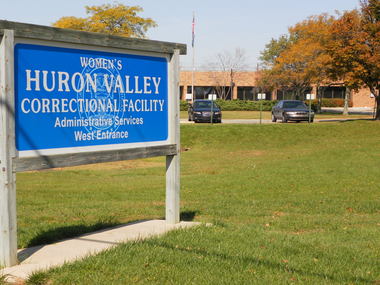
News broke this week that Michigan’s only women’s prison, Women’s Huron Valley Correctional Facility, is under investigation from the ACLU, Michigan Department of Corrections, and US Department of Justice for alleged human rights abuses against mentally ill female inmates.

Inmates are being hog tied naked, with their feet and hands cuffed together behind their backs, for two hours or more as a form of punishment if they do not “learn to behave,” witnesses claim. Prisoners have also been denied food and water. According to Kary Moss, executive director of ACLU of Michigan, the water was shut off in solitary confinement and guards failed to provide any to inmates for hours or even days. Some women are left standing, sitting, or lying in their own feces or urine for days on end, denied showers, and often controlled by the use of tasers.

For one mentally ill inmate at the Valley, poor sanitation, lack of food and water, and other forms of continuous abuse ended her life as she knew it. Last month she was found non-responsive in her cell. She was transferred to an outside hospital where she was pronounced brain dead. She is not the only the only casualty to come out of WHVC. There have been several prisoners who have died from both suicide and medical neglect in the past few years alone. Is this the intended function of our criminal justice system? What is the role of corrections in America today? Is it to punish mentally ill women until they are pronounced brain dead?

Luckily, women prisoners in Michigan have some advocates on the outside. Carol Jacobsen has been working for years to expose the conditions inside the prison. Jacobsen is a professor at University of Michigan and director of the Michigan Women’s Justice & Clemency Project. While she has done many interviews with inmates throughout the years, she has found that civilian access to living quarters inside the prison is nearly impossible. Jacobson stated, “As long as it’s such a closed system, it’s ripe for abuse.” Why the secrecy? According to Jacobson, “Abu Ghraib has nothing on Huron Valley or Michigan prisons. Our prisons in Michigan have torture going on every day.”

Prisoners themselves are speaking out against what they see as intolerable conditions. In February, three inmates wrote formal grievances to the MDOC describing how four women were housed together in a 96-square foot chemical caustic closet repurposed into a cell. Inmate Karen Felton wrote, “The cell I’m in is inadequately small for myself and three others, and there are not enough lockers, no privacy, inadequate desks and chairs, and there is no ventilation.”

The three women’s grievances, however, did not change their living conditions. As a matter of procedure, when more than one complaint is submitted regarding a given issue, all duplicates are rejected by the grievance coordinator. Therefore, only one of the three grievances, submitted by a prisoner named Robin Sutton, was investigated. The MDOC responded: “All prisoners housed in Dickinson unit have been treated humanely and with dignity in matters of health care, personal safety and general living conditions.”

The use of hog-ties, denial of food and water, unsanitary conditions, excessive use of tasers, and forcing four women to live in a chemical closet is considered humane? All inmates, including the mentally ill, deserve more dignity than this.


(Photo Credit: Michigan Deparment of Corrections)

Shackling pregnant women prisoners violates the law and women’s rights!

This past session, Maryland passed anti-shackling bill HB 27. It took two years to pass a bill that protects pregnant inmates from being shackled. The Maryland bill passed along with one in Massachusetts, making these the 19th and 20th states to have such legislation. A number of states have passed anti-shackling bills restricting the use of restraints. Still, these bills don’t guarantee protection of the right for dignity of pregnant inmates, especially considering that most pregnant inmates are African Americans, Latinas, American Indians or members of other stigmatized communities.

The Maryland bill was enacted on July 1, and already the question of monitoring and enforcement has emerged. Why? In the states where these “anti Shackling” bills have been enacted, women detainees are still being shackled.

Recently, some cases of shackled pregnant or post partum inmates made the news, in horrific cases of women who were degraded in the process and had long term health consequences or were put at risk of having complications for being shackled during pregnancy, labor or post partum. Equally shocking is that the reasons or justifications given ranged from lack of training of personnel in charge to lack of enforcement power attached to the bill. According to one report, “Many correctional systems, doctors, guards and prison officials simply are not told about anti-shackling laws, or are not trained to comply”

How can professionals in charge of women prisoners ignore what constitutes torture, despite “modern” means of communication? Speculators can place financial orders to make enormous amount of money in a nanosecond, but a bill that forbids torture needs so much effort to be understood? What type of training is needed to see that a pregnant women walking with chains or having chains around her waist is torture?

Despite anti-shackling legislation, pregnant women in Texas are constantly at risk of being shackled. New York passed an anti-shackling law in 2009. Recently, in a survey of 27 women who had given birth in New York prisons, 23 said that they have been shackled before, during or right after their delivery.

The women prison population is on the rise. The official language is that the vast majority goes to prison for non-violent offenses. The reality is their social position makes them more vulnerable to being punished for pitiful reasons. Meanwhile the punishment inside the prison is constant and degrading. Abuses go from restricting the number of maxi pads for periods per month and per woman, unless the woman pays for more, to restricting motherhood, making it difficult to keep contact with already born children as well as guaranteeing decent conditions for pregnancy, delivery and post partum recovery.

70% of incarcerated women are mothers, and about 6% are pregnant. Still, women inmates are treated like men. In Maryland during the discussion of the anti-shackling bill, testimonies arguing against the bill presented possibility of escape as a major risk. All the “evidence” concerned men’s attempts to escape while being transported to hospital. No one said anything to correct this. Women who are pregnant don’t escape. There has been no incident of women in labor escaping or causing harm.

The anti-shackling bills have also a tendency to be weak in the protection of pregnant women. In Maryland a series of amendments dulled the impact of the introduced bill. The language – including recognition of the conditions of pregnancy, the importance to comply with international human rights principles, and more precisions about the monitoring of use of restraints if deemed necessary of HB 27 – was crossed out. Still, this bill is important, and it is what we have in Maryland. All efforts should now go to monitoring the application and enforcement of the bill so pregnant inmates are not left alone to deal with abuses.

So far, when pregnant or post partum inmates are shackled in anti-shackling states, the response is a lawsuit. “But there is no policing entity that’s really going to hold these institutions responsible.”

The conclusion should be clear and should include the entire United States. The United States should pass a clear federal law that prohibits shackling pregnant incarcerated women. Why not become more human and make the incarceration of pregnant women more difficult if not impossible? Why not stop the cycle of violence and torture? Women’s right to dignity has to be defended at the national level. A right is a right, and a law to protect women’s dignity is a law!


(Image Credit: RadicalDoula.com)