#BlackLivesMatter: Across the Black Atlantic, mourning Black mothers demand justice

Mzee Mohammed

we were two Black women touching our flame
and we left our dead behind us
Audre Lorde, Our Dead Behind Us

Samaria Rice, in Cleveland, and Karla Mohammed, in Liverpool, sit across from each other at opposite ends of the Black Atlantic table, and whisper, speak, shout and howl, “Black Lives Matter.” Samaria Rice’s 12-year-old son, Tamir, was killed by a Cleveland police officer, on November 23, 2014. Karla Mohammed’s 18-year-old son, Mzee, died after being restrained by Liverpool police officers, on July 13, 2016.

Samaria Rice says, “I will never forget that day. Them taking my baby away at 12 years old, I still had nourishment to do for my son. He was only 12. He had just been 12 for five months. I still had a lot of nurturing to do for him, a lot of holding and kissing on him, and stuff like that. I know just 12 years old for a boy is like a turning point. I was guiding him in the right direction. I really was. He was really not a bad kid.”

Karla Mohammed says, “I want to ask the Lord to see justice for my son. I will not rest, I will walk in my son’s shoes until I get answers, and anyone who had a hand in my boy’s death will be brought to justice. My son will not be a number or a statistic. His death will not be in vain. I pray with my heart no mother or father go through what I am now. I would not wish this on my worst enemy. You can’t take the memories, the pictures … my son was not an animal, he was a human being.”

Samaria Rice and Karla Mohammed face each other across the pain filled abyss of their absent sons, Tamir and Mzee. They speak the same language of pain, love, and demanding justice.

This is the Black Atlantic today, from Liverpool to Cleveland and back and beyond, Black Mothers of the Disappeared surrounded by friends and supporters chanting, “Black Lives Matter”. “Black Lives Matter” is the prayer of today’s Black Atlantic. Meanwhile, Mzee Mohammed’s family is raising funds to have him sent to be buried in Jamaica. Karla Mohammed explained, “We’re here for Mzee, not for anybody else. My boy. My soldier boy. My chocolate boy. My baby boy is going to have the biggest send off, but no way on god’s greenery will my boy rest in this city. My boy is going to take his final journey and be entombed in Jamaica where he belongs. When he goes to Jamaica it’s going to open wide and he will fly like a bird. Where the song says three little birds, now there’s four little birds. My boy. My L8 soldier. My chocolate boy.”

Tamir Rice


(Photo Credit 1: Liverpool Echo) (Photo Credit 2: Voice of Detroit)

The United States prefers mass incarceration to mass education

Welcome to the United States of Incarceration. According to a recent federal report, from 1989 to 2013, “All states had lower expenditure growth rates for PK–12 education than for corrections, and in the majority of the states, the rate of increase for corrections was more than 100 percentage points higher than the rate for education … Over the past three decades, state and local government expenditures on prisons and jails have increased about three times as fast as spending on elementary and secondary education.” The three decades’ long surge in police violence as well as in prison and jail deaths has been funded by taking money from schools and dumping it, along with Brown and Black bodies, into prisons and jails.

Texas leads this punitive race to the bottom. Between 1989 and 2013, Texas’s “corrections” budget increased by 850 percent, handily leading all other states. Next in line are Wyoming (712% increase), New Mexico (704% increase), and Idaho (701%). While nationally prison spending has risen three times as fast as school spending, in Texas, prison spending has risen eight times as quickly. Between 1989 and 2013, Texas’s public pre-K through 12 budget increased a mere 182%. With a three decades’ long prison – to – school discrepancy of 668%, Texas “leads” the nation.

At the postsecondary level, the situation is even worse. Currently 18 states spend more on prisons and jails than on colleges and universities.

This robbing pupils to cage prisoners scenario is explained away by harsh mandatory sentencing guidelines combined with generalized broken windows policing that results in the working poor being herded into prisons and, even more, jails. In Houston, for example, 75% of those in jail are awaiting trial. They can’t afford to post bail, and so they sit behind bars. Their collective crime is poverty.

But there’s more to mass incarceration than “unfortunate” policy. There’s urban development. A recent federal report on the prison-instead-of-school pipeline notes, “Researchers at Columbia University found that a disproportionate number of the upwards of two million people in U.S. prisons and jails come from disadvantaged neighborhoods in the country’s biggest cities; the authors coined the term `million dollar blocks’ to refer to places where the concentration of incarcerated individuals is so dense that states are spending over a million dollars a year to incarcerate the residents of a single city block. Incarceration in the U.S. occurs disproportionately among people of color.”

Why invest in urban Black and Brown neighborhoods when you can ship resident bodies out of town, to failing predominantly White rural communities where land values have been forced to collapse and unemployment and precariousness reign? Follow the money. The fervid investment in prisons and jails at the expense of grade schools, colleges and universities is part of the overheated urban real estate market of “growing” and “redeveloping” cities. It’s the latest form of root shock where, thirty years ago, the racial politics of `blight’ as a form of `urban renewal’ became a targeted policy of no school left standing in Black and Brown neighborhoods, and no prison or jail cell left behind.


(Image Credit 1: Design4Peace) (Image Credit 2: Washington Post)

Radio WIBG: In France, in Saint Denis, Ghada Hatem opens a Women’s House

With Ghada Hatem holding, Inna Modja cuts the ribbon

With Ghada Hatem holding, Inna Modja cuts the ribbon

Two years ago Ghada Hatem, head of OBGYN at the Delafontaine Hospital, in Saint Denis, envisioned a Women’s House in Saint Denis, in the heart of the suburb of Paris that symbolizes immigration tensions and social precarity in France. Last Friday, the Women’s House was formally inaugurated.

Born in Lebanon, Ghada Hatem was fifteen when the civil war started in 1975: “It is probably what gave rise to a medical and social vocation in me.” She came to France to study medicine and choosing OBGYN as a specialty came naturally. She has always imagined exercising her “art” within a team.

Thanks to extraordinary teamwork, the Women’s House project went to completion. The day of the inauguration, a passionate and committed crowd was present along with some officials, all of them inspired by the project.

The Malian/French artist and singer Inna Modja has decided to be the benefactress of the Women’s House of Saint Denis. In her commitment to social justice, she has used her artistic expression to denounce female cutting, linking it to her engagement to end violence against women in general. As she explained, after she was cut in Mali when she was 5 against the will of her parents, “I fought to heal myself,” she remembered, first through surgery and then “step by step, I found the energy to become a woman again.”

Ghada and her colleagues received the surgical training to “repair” women who have been cut but as Ghada explains the repair is both physical and psychological and it is never a full restitution, the “scar” remains.

The House will offer many ways to address the trauma including support groups with the collaboration of Inna Modja.

While located within the hospital compound, the House has an independent entrance open to the street. Its role is to allow a free, intimate access to women who have already experienced all sorts of violence and humiliations: a place for them and with them. The need is enormous. The OBGYN department receives about 120 different nationalities and amid the 4500 births and 1000 abortions every year, and about 14% of the women had been cut. The medical system is not enough to help these women to recover their dignity.

This house should serve as a model to be reproduced everywhere it is needed.

Let’s listen to Ghada Hatem’s interview.

Ghada Hatem

Ghada Hatem


(Interview and photos by Brigitte Marti)

Zimbabwe: Now you have starved the women, you have struck their pots, you will be crushed

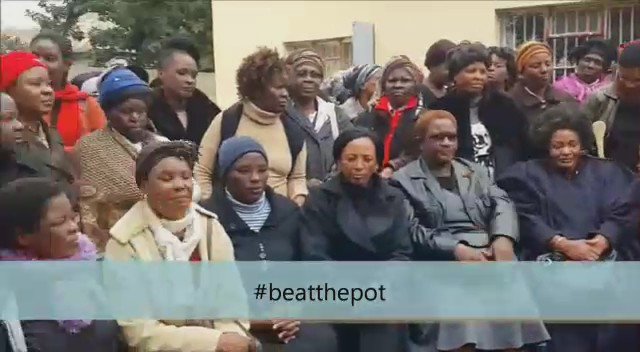
On Saturday, July 16, Zimbabwean women will go to the streets to protest hunger, starvation, deprivation, degradation, violence and all the other State programs in Zimbabwe. Like the women of Burkina Faso who carried giant spatulas and took to the streets two years ago, the women of Zimbabwe will carry and beat their pots, hoping to make the walls come tumbling down. The women are saying they have had enough of programmatic hunger and poverty, which targets women and children particularly viciously. They say, “Wathinta abafazi, wathinta imbokodo! A hungry woman is an angry woman.”

The past two weeks have seen major demonstration and protests, and police violence, in Zimbabwe. Over the past three months, Zimbabwe has been visibly simmering. In March, Pastor Evan Mawarire went to his Facebook page and recorded a four-minute lamentation, on the occasion of the nation’s 36th independence celebration. Cloaked in Zimbabwe’s flag, Mawarire described the symbolism of the flag’s colors and the reality of everyday lived experience in Zimbabwe. Within days, #ThisFlag appeared across Zimbabwe. As before, people said they had had enough, and, at the same time, they said that as Zimbabweans, they deserved better. They deserved to live and to thrive, with real access to decent food, education, health, employment, safety, well-being, everything.

Protests started at Beitbridge, on the border with South Africa, in response to a new government ban on certain small imports that are a mainstay and a lifeline in many communities. Cross-border traders protested, and were dealt with harshly. Then people demonstrated in Harare, and, again, were dealt with harshly. Videos started circulating showing police targeting, beating, and torturing women and children. In Bulawayo, an eighteen-month-old toddler is reported to have died of suffocation, caused by breathing in tear gas. These protests were followed by a daylong stayaway, last Wednesday. #ThisFlag begat #ZimShutDown2016. Meanwhile, across the country, youth have been organizing under the hashtag #Tajamuka.

More and more people started coming into the streets, concerned at reports that the government is out of money. Zimbabwe announced it would start issuing `bonds’, aka zombie money. Meanwhile, 4 million people in the rural areas face starvation.

Women have been organizing, and are saying enough is too much. According to Grace Chirenge, “Women bear the brunt of political violence, as they are at the centre of transformation in society … We are tired of being victims and survivors of this male dominance that is doing us no good.” Samukeliso Khumalo agrees, “Tomorrow’s female war veteran won’t be the one who allegedly gunned down a helicopter but a hungry woman who definitely rode on the back of a policeman.”

Through non-violent means, women are taking the battle to the streets because the war is already in the streets and homes and kitchens and pots and empty stomachs. Across Zimbabwe, women are organizing to beat their empty pots in the streets of Bulawayo this Saturday. “Wathinta abafazi, wathinta imbokodo! A hungry woman is an angry woman.” Zimbabwe, you have starved the women, you have struck their pots, you will be crushed. The time is now. #BeatThePot.


(Photo Credit: Twitter / Trends Zimbabwe)

We all killed Ashley Smith, Kinew James and Terry Baker, and it’s not over yet

On October 19, 2007, 19-year-old Ashley Smith died by self strangulation while seven prison guards in a Canadian women’s prison, Grand Valley Institution for Women, followed orders, watched and did nothing. By doing nothing is meant committed homicide. That was a decision of a coroner’s jury, December 19, 2013, six years and two months later. As a result of Ashley Smith’s murder, Howard Sapers, the Correctional Investigator of Canada, issued Risky Business: An Investigation of the Treatment and Management of Chronic Self-Injury Among Federally Sentenced Women – Final Report. This also appeared in 2013. Risky Business focused on eight federally sentenced women prisoners “selected for this investigation because they were deemed to be the most high risk and chronic self-injurious women in the federally sentenced women population.” Kinew James was one of those women. Kinew James was in and out of solitary confinement. Kinew James was interviewed in the middle of 2012. In January 2013, Kinew James died, in custody, because nobody answered her pleas for help. An inquest into Kinew James’ death was supposed to start in April 2016, but it’s been indefinitely postponed. Terry Baker was another of the eight most high risk and chronically self-injurious women. On Monday, July 4, in Grand Valley Institution for Women, Terry Baker killed herself. She was pronounced dead on Wednesday. Canada claims to be shocked, and yet for nine years now the State has “done nothing”, killing woman after woman with absolute impunity. What happened to Terry Baker? Kinew James? Ashley Smith? Absolutely nothing. After scathing reports and damning juries, the murder of women living with mental illness continues unabated. Despite sincere, or not, expressions of concern, suicide among women prisoners is part of the plan. It’s the new normal, and it’s too late to protest shock or concern. Shut down the segregation units, once and for all.

Kim Pate, Executive Director of the Canadian Association of Elizabeth Fry Societies, said: “We know that she was in restraints a number of times; we suspect there were uses of force, but we don’t know that for certain and we have asked the correctional investigator to also look into it … It’s a terrible tragedy for her family, her friends, the women she served time with. It’s a tragedy all around and it’s a travesty, and it should not be happening in this country. It needs to stop. I hope the minister pays attention to this and makes a decision very quickly to end the use of segregation. Terry was a very sweet, gentle young woman except when it came to herself. She had been very self-destructive and self-harming for a number of years,” said Pate. “She’s someone who, when I last saw her in Saskatchewan, she was actually doing quite well. She was involved in a dog therapy program. From our perspective, [this] underscores exactly why we have the position of no women in segregation, particularly those with mental health issues.”

Other prisoners said she was kind and courageous, but in need of help.

The week before her death, Baker had complained to prison advocates about being forcibly bound to her bed for prolonged periods of time. She had a history of self-harming, and a revolving door relationship with solitary confinement. Rosemary Redshaw, former chaplain at Grand View, remembered Terry Baker: “I really liked her. She had a childlike sense of humor and was great to get along with. In the midst of her struggle, she seemed to get help in the time I was there.” Redshaw added that Baker should not have been in prison or in isolation.

None of this matters. Terry Baker is dead, and nothing will bring her back. Her planned death will now be desecrated by a series of reports and recriminations, just like the deaths of Ashley Smith and Kinew James. Remember this: we all killed Ashley Smith, Kinew James and Terry Baker, and it’s not over yet. Close segregation units. Don’t send people who need help to prison. Invest in mental health and wellbeing. It’s not magic.

Terry Baker’s birthday would have been July 15. She would have turned 31


(Photo Credit: Office of the Correctional Investigator Canada)

The “crisis” of jails in Louisville, Kentucky, is the criminal justice system

Over the past few months, jails in Kentucky have been making headlines. Earlier in the year, the headlines were about how “a pattern of employee misconduct” in one juvenile jail killed a teenage girl named Gynnya McMillen.

The new headlines, though, are about the jails in Louisville, KY, the largest city in the State. You see, Louisville’s jails are overcrowded. How overcrowded are they? To quote former inmate Jennifer Kennedy, “It was terrible…I slept on the floor, on a mat. I had to borrow a cover from someone who had one in there.”

But wait, there’s more. Louisville’s jails are so overcrowded that the State has deemed it a crisis. The director of Louisville Metro Corrections even ordered the re-opening of an old, now illegal jail. This supposedly temporary jail is illegal because the building is not up to fire evacuation standards. One judge remarked that “If they have a fire there, people are going to die.”

Even when faced with the prospect of a holocaust of prisoners, the State continued putting people in jail, and so the old, illegal jail also filled up. Now prisoners are forced to sleep in gymnasiums and use portable bathroom facilities. With every new “temporary” solution, prisoners get moved around—and moving prisoners is a violent, destabilizing process.

It’s easy to think that this overcrowding crisis is sudden and surprising, but it’s neither. The State of Kentucky created this crisis. Faced with a surplus of revenue and falling wages throughout the commonwealth, state and local governments looked to prisons and jails in which to invest excess capital. More prisons and jails mean more prisoners, an induced demand that does not depend on crime rate. This resulted in the Kentucky having the fourteenth highest overall incarceration rate in the world and the third highest women’s incarceration rate in the world.

First, the State of Kentucky knowingly hyper-incarcerates people, especially women, who worldwide are the fastest-growing prison population. The State keeps demanding more, its thirst for caged bodies never satiated, and puts these prisoners in cramped, fire-prone conditions. State officials throw up their arms, wondering how anyone could have predicted this.

How will Louisville and the State of Kentucky “solve” the crisis? The State government offered to take 200 inmates into its custody from local jails, but the state jails are just as overcrowded; state facilities were already leasing out prisoners to local jails to begin with. Instead, the State is looking to reopen two private prisons run by the CCA as another “temporary” solution. Never mind that the Kentucky CCA facilities were major harbors of sexual abuse against women prisoners.

As Louisville and Kentucky scramble for solutions, two things are clear:

  • Women prisoners, and all prisoners, matter. As the State creates and covers up its own crises, women prisoners become targets of violence to solve said crises. The pain their bodies and minds must endure directly correlates to the amount of money the State invests in prison infrastructure. Women prisoners’ space and time are inversely related to these investments. The conditions that women prisoners endure—such as the risk of being burned to death in overcrowded facilities—are also the conditions on which entire modern cities, like Louisville, are currently being developed.
  • The solution for prison overcrowding is not to build more prisons or to find more “temporary” solutions. The existence of prisons at all, as Ruth Wilson Gilmore reminds us, is a crisis in itself, a major contradiction in a supposedly “free” society that allows “un-freedom” to exist. The only real, lasting solution is to abolish prisons and create alternative forms of justice that do not inflict more violence on other human beings.


(Photo Credit: WDRB)

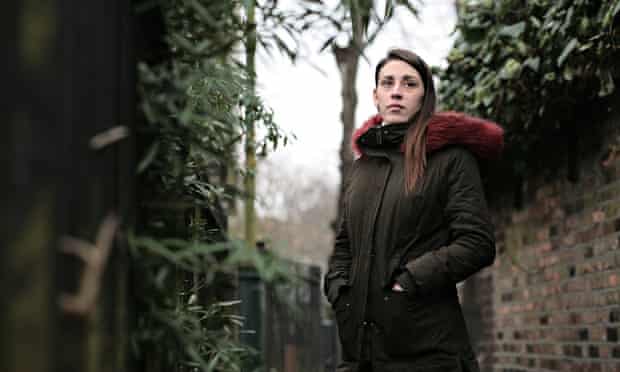
Women on community sentences are being failed by the system

Hayley, a former offender, worked for the St Giles Trust’s Wire project, which proved highly effective at helping women prisoners resettle after release from jail. Funding for the project ended March 2015.

The last big change put in place by Chris Grayling still standing is the break up of the 100 year old successful probation service. The impact on women has been catastrophic and something needs to be done urgently to change the system to protect women.

Women given a short prison term now have to be handed over to private companies to supervise them for a year after their release. This didn’t happen until Grayling unnecessarily added it to everyone given a short prison sentence. Some will argue that it was introduced to help and support women, and men, but as I far as I can see it is doing neither, it just punishes them for longer and sets them up to fail. We are already seeing hundreds of people being returned to prison for failing to obey the strictures imposed by the community rehabilitation companies (there is an oxymoron for you).

Many more women are given a community sentence but they too are being failed.

Baroness Corston and I went to see Simon Hughes when he was (briefly) the prisons minister to urge him to make sure that women’s centres were funded as part of the privatisation of probation. He didn’t. The consequence has been that women’s centres have had their funding cut by the private companies and some have withdrawn from delivering justice services completely because it was no longer financially viable.

I have seen a letter from the minister responsible for equalities and justice, Caroline Dinenage, clearly stating that women are being short-changed in the new landscape.

She admits that the capital coming from the sale of Holloway will not benefit women but will sink into the building of huge new prisons for men.

She admits that CRCs do not have to fund women’s centres or provide women only services. In fact, the cut-rate contracts and payment by results model pushes the CRCs to do everything on the cheap and that means getting as many people as possible processed through the system as they can. Group work is the way they do it. It is totally unsuitable, and possibly dangerous, to place a lone woman in a group of men to deal with offending behaviour which I fear is what will happen to women in rural areas and small towns where there simply are not enough women to form a group.

Anyway, group work is not appropriate for many very vulnerable women. The success of women’s centres has been to care for women as individuals. It works, as the Ministry of Justice research and evaluations show.

These years of expertise and experience of successful working with the few women who commit crimes is being lost.

The CRCs are not caring for women properly and safely; they are too expensive.

The only route out of this morass is to take women out of this structure completely.

I suggest we look at having a national system for managing women in the penal system including on community sentences. The CRCs would probably welcome having no more responsibility for managing the handful of women in their area and a national service, or the probation service, could resurrect the centres of excellence and good practice.

I would be all part of a chipping away at the muddle that is ‘Transforming Rehabilitation’ that over coming years is likely to implode anyway. Let’s rescue women first.


(This piece first appeared on Frances Crook’s blog. The original is here. Thanks to the Howard League for Penal Reform for allowing us to share this.)

(Photo Credit: Martin Godwin / The Guardian)

In India, domestic workers demand more than “protection”

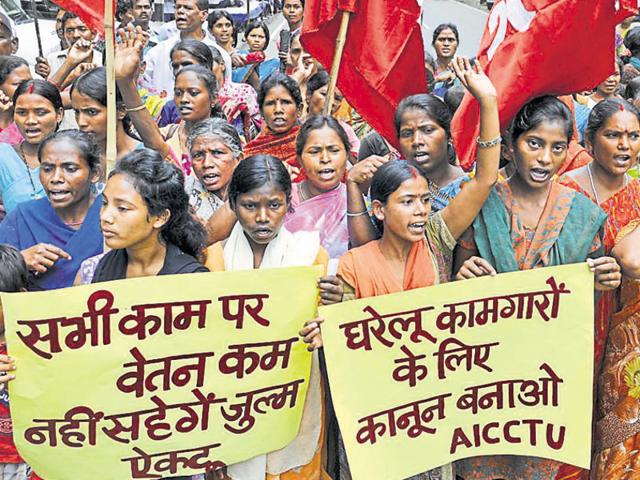
Domestic workers stage a protest in Jharkhand

For the last decade, domestic workers in India have organized to assert their dignity and rights as women, workers, and women workers. They have forced unwilling legislators to pass various laws. Numerous commissions have produced reports. At the same time, the conditions of domestic workers in India has stayed the same or worsened, because the State has refused to recognize them as workers, citizens or humans, and because that refusal is understood as `failure’. It’s not failure. It’s a consistent and persistent State policy to write low-income women workers under erasure. The State holds them on a string over an abyss, and then charges them for the gift of ever-intensified precariousness. Domestic workers as citizenship and humanity denied are not so much the face as the body of urban development in the new world disorder.

In the last days of 2009, Mumbai’s bais, or domestic workers, received a modicum of recognition when the state of Maharastra passed the Domestic Workers’ Welfare Board Bill. Maharastra was the seventh state to pass a domestic workers’ bill. At that time there were an estimated 500,000 domestic workers, mainly women, in Mumbai alone, and over a million across the state. Domestic worker unions and associations had been lobbying for such a bill for twenty years. Meanwhile, “State labour minister Nawab Malik, though, has termed this a `welfare measure’, adding that enforcement (punishment for violation) would not be considered at this stage.”  The rule of law has always translated domestic workers into recipient-clients of welfare. In the intervening years, in terms of enforcement, nothing has changed for domestic workers.

Indian domestic workers figure prominently in the news as surrogate mothers or as trafficked workers but seldom as simply workers. Domestic workers are the bricks of the construction of global cities, in India as elsewhere, and the epicenter is Delhi: “Women from tribal regions are considered to be hard working, honest, simple, docile, and unaware of market demands and are in great demand. A higher wage in the metropolitan than what they would otherwise get in their state attracts a large number to migrate to Delhi, Calcutta or Mumbai. The Delhi metropolitan is their most preferred destination. In Mumbai and Calcutta the locals from the surrounding areas take up domestic work but the Delhi locals are generally well-to-do and have opportunity to take up other work thus leaving the domestic work on the migrants. Another reason for high demand for domestic workers in Delhi is because of high concentration of business head offices, IT businesses, banking firms employing men and women in highly paid, skilled, professional work. The upkeep of these professionals working long hours is only possible because of the support of host of low paid workers. Amongst many such workers are the domestic workers – the house cleaners, care takers of children and elderly relatives of the high paid professionals. Urban professionals transfer a growing share of ‘domestic’ work to the market place by hiring labour themselves. Today many middle class women are doing higher skilled waged work and employing migrant poor women `maids’ to do the domestic work. In some cases it is seen that keeping a house helper has become a status symbol and women from affluent background have withdrawn themselves from household duties. Thus in the shadow of these growth sectors there is growth of low-paid low-status workers, who are often migrant and to sustain its urban population Delhi needs to import domestic workers from impoverished tribal hinterland.”

That hinterland is Jharkhand. A recent ILO report examined two of the most frequented migration routes for female domestic workers: Kerala to the Arab countries and Jharkhand to New Delhi. The report found that, along with the typical push factors, the Jharkhand-to-Delhi pipeline was increasingly dominated by unscrupulous labor agents, who charge employers high placement fees, charge workers with dubious travel costs, and trap workers in eleven-month contracts.

Two aspects stand out in the ILO report. First, there is no law regulating the recruitment of domestic workers in India. Second, there is little or no data on the conditions of labor, employment or anything concerning the largely tribal and adivasi women who travel from Jharkhand to Delhi and back. Why? Because the State actively does not care about women caregivers.

While organizing and advocating, women workers are also refusing: “When an employer repeatedly pressed Lata to take up domestic work at his house in place of an older worker, she refused to take up that job, although it would have added to her income. She questions why older workers are not hired. It’s not as if domestic workers get pension.” Lata refused, and in so doing bound herself to the older woman she was meant to displace.

The story of domestic labor is one of migration, and as much of that migration occurs within borders as across. The violence of invisibility visited upon domestic workers is a function of their gender, of being-women, of women doing `women’s work’ which is considered no work at all. In India, women domestic workers are saying NO! As workers and as women, they want the protections they deserve, but that’s only the beginning. Each refusal is an articulation of power. In India today, women domestic workers are organizing for power beyond protection. Delhi needs Lata, and Lata knows that.

(Photo Credit: Hindustan Times)

The illegal, systemic physical abuse of children in prison, sanctioned by the State

Ten years ago, the Howard League for Penal Reform released a report, the Carlile Inquiry, into the use of restraint, solitary confinement and strip-searching in penal institutions for children. This inquiry was inspired by the death in prison of Gareth Myatt, “a 15-year-old boy who weighed just seven stone, while being restrained by officers in Rainsbrook Secure Training Centre.” The report described a hell of vicious violence visited upon children’s bodies, psyches and souls. Today, the Howard League for Penal Reform released a ten-year follow up: “There is illegal, systemic physical abuse of children in prison, sanctioned by the state.” Ten years of civil society and governmental austerity and punitiveness have led to this: the State has built an expanding and intensifying hell for children.

In prison, in contravention of all laws, children are routinely restrained to get them to follow directions. “Techniques” that inflict deliberate pain on children make up over a third of all “approved techniques”, all of which are illegal. Between 2011 and 2015, children have been injured 4,350 times while being restrained. Solitary confinement, 23 hours a day in isolation, has become widespread: “Conditions in segregation units have not improved since 2006, when the Carlile Inquiry described them as `little more than bare, dark and dank cells that exacerbate underlying risks and vulnerabilities’. Segregation units should be immediately closed.” Again, the use of solitary confinement, especially long term, is completely illegal, and that illegality makes absolutely no difference whatsoever.

The “real story” is in the numbers. In the last five years, the number of children in custody has dropped. In the same five years, the rate of restraint has more than doubled.

What does the continued violation of the law say? What do the numbers add up to? In England, as in other countries that drank and then guzzled the Incarceration Kool-Aid, the will to punish morphed ineluctably into the will to harm. It’s an old story, now fueled by the political economies of neoliberal development and protectionism. Meanwhile, Gareth Myatt becomes Adam Rickwood becomes Joseph Scholes; and Rainsbrook becomes Medway, and the whole State-run theater of cruelty moves faster, farther, and more deeply.

Last year, children’s rights campaigner Carolyne Willow argued, “Nobody has ever designed a prison to make children feel valued, to treat them well and change their lives. It desperately needs a minister with the compassion and courage to change things. We closed workhouses, asylums and orphanages, let’s get rid of child prisons. Let us say, we are not going to do this to children any more.”

We are not going to do this to children any more.

Today’s report concludes: “Children are being harmed in prisons today and steps to ensure their safety must be taken immediately. We know what works – as the Carlile Inquiry found 10 years ago, small, local units that have a record of success in providing the best care and rehabilitation for the few children who require a period in a secure environment. Prisons and the privately-run secure training centres should be closed down forthwith. We do not need to reinvent the wheel or repeat the mistakes of the past.”

What will next year’s report conclude, and the one ten years on? We are not going to do this to children any more … anywhere. Prisons and the privately-run secure training centers must be closed down forthwith. Today. We cannot keep doing this to children.


(Image Credit: The Howard League for Penal Reform)

#ShutDownBerks: The United States of Abandonment Devours Three Year-Old Immigrant Children

When three-year-old child Catherine Checas vomited blood, Berks staff told her mother to have her ‘drink lots of water’.

Last week, from Wednesday until Saturday, the Berks County Residential Center held a 3-year-old boy-child from El Salvador without his mother. He was only released because of the intervention of local immigration attorney Carol Ann Donahoe. Otherwise, that three-year-old would still be behind bars, alone. The State will tell you mistakes happen. There was no mistake here. This is part of the establishment of the United States of Abandonment, and it now reaches to three-year old children.

The story here is that the boy’s 21-year-old mother was taken to hospital, and so the boy was left behind. That’s it. No one thought to call the mother’s contacts or attorney or anyone. In fact, the three-year-old is now in Virginia, where his grandmother lives. Again, that only happened because of the strenuous labor on the part of attorneys and supporters. If you want to know what the climate, call it reign of terror, is inside Berks, the mother “asked that her name not be used because she feared repercussions from staff.”

Carol Anne Donohoe remarked, “This is outrageous. Picture a 3-year-old being detained without his mother, who is in the hospital. He has no idea what that means at the age of 3.” According to Donohoe, after three or four days of “State care”, the child is “emotionally traumatized”, not eating, throwing tantrums and kicking at doors. This is how we take care of children.

Picture a 3-year-old.

Earlier this year, an immigration judge, who is also responsible for training other judges, stated, in a sworn deposition, that immigrant 3- and 4-year olds can represent themselves in court, “I’ve taught immigration law literally to 3-year-olds and 4-year-olds. It takes a lot of time. It takes a lot of patience. They get it. It’s not the most efficient, but it can be done.” The Legal Aid Justice Center, in Virginia, decided to picture the 3-year old and the 4-year old, and filmed them answering questions of law. The children failed … brilliantly and adorably, conclusively and predictably as well. Three short months later, a 3-year-old is left to fend for himself in prison.

This is the United States of Abandonment: “Zones of abandonment … accelerate the death of the unwanted.” These are the unwanted: “the mentally ill and homeless, AIDS patients, the unproductive young, and old bodies.” Add to that the Central American woman, and the list is complete.

Can a three-year-old represent herself in immigration court? No. Can a three-year-old take care of himself in immigration detention? No. No ethical human being can ask those questions. The questions are criminal. The posing of the questions is beyond inhumane. Nothing out of the ordinary happened in Berks last week. A three-year-old was traumatized, again, just like the four-year old boy-child last year in Karnes. A young mother was traumatized into anonymity and silence, again. The inhuman geography of the United States of Abandonment spreads and intensifies. End the carnage now. #ShutDownBerks #EndFamilyDetention #Not1More


(Photo Credit: The Guardian) (Video Credit: Legal Aid Justice Center / Vimeo)