Around the world, domestic workers demand decent, living wage and work conditions NOW!

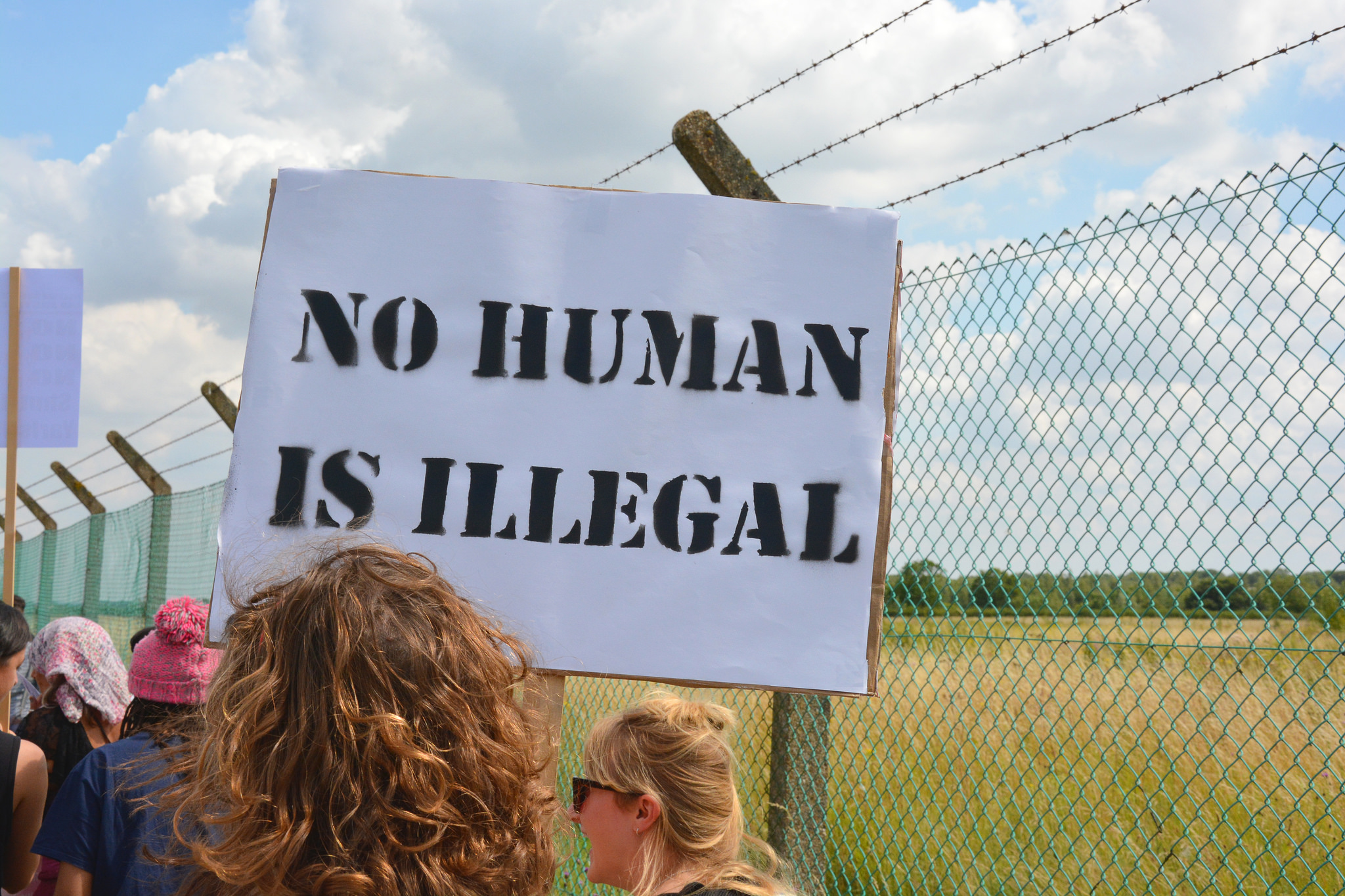
Across the globe, domestic workers are struggling and organizing for decent work conditions, a living wage, respect and dignity. In 2011, the International Labour Organization passed C189, Convention concerning decent work for domestic workers. In 2013, the Convention went into effect. As of now, 24 countries have ratified the Convention. And yet … Yesterday, domestic workers in Tamil Nadu, in India, gathered to demand a living wage and legally enforced protections. Yesterday, in Mexico, the ILO reported that 1% of domestic workers in Mexico have any kind of social security. Yesterday, a report from England argued that the way to end exploitation of migrant workers, and in particular domestic workers, is a fair and living wage. Today, an article in South Africa argued that Black women domestic workers bear the brunt of “persistent inequality”. Today, an article in France argued that economic indicators systematically exclude “domestic labor” and so exclude women. What’s going here? In a word, inequality. Women bear the brunt of urban, national, regional and global inequality, and domestic workers sit in the dead center of the maelstrom.

Today, the inaugural World Inequality Report was issued. Since 1980, income inequality has increased almost everywhere, but the United States has led the way to astronomic, and catastrophic, income inequality. In the 1980s, inequality in western Europe and the United States was more or less the same. At that time, the top 1% of adults earned about 10% of national income in both western Europe and the United States. Today in western Europe, the top 1% of adults earns 12% of the national income. In the United States, the top 1% earns 20% of the national income. It gets worse. In Europe, economic growth has been generally the same at all levels. In the United States, the top half has been growing, while the bottom half, 117 million adults, has seen no income growth.

According to the report, the United States “experiment” has led the a global economic, and state, capture: “The global top 1% earners has captured twice as much of that growth as the 50% poorest individuals …. The top 1% richest individuals in the world captured twice as much growth as the bottom 50% individuals since 1980.” The authors note, “The global middle class (which contains all of the poorest 90% income groups in the EU and the United States) has been squeezed.”

Call it global wealth – state capture relies on expanding “opportunities” for the global poor – particularly in countries like China, India, and Brazil – while squeezing the global middle class, and that’s where domestic workers come in. Paid domestic labor has been one of the fastest growing global labor sectors for the past four decades. Women have entered the paid labor force thanks to other women who have tended to the household work. After its preamble, the ILO C189 opens, “Recognizing the significant contribution of domestic workers to the global economy, which includes increasing paid job opportunities for women and men workers with family responsibilities, greater scope for caring for ageing populations, children and persons with a disability, and substantial income transfers within and between countries …”

That language was formally accepted in 2011. Six years later, domestic workers are still waiting, and struggling, for that recognition. In Mexico, groups are organizing to include domestic workers into Social Security programs as well as to ensure that employers pay the end of year bonus that all decent, and not so decent, employers in Mexico pay. In India, domestic workers are marching and demanding protections as well as a living wage. Domestic workers are women workers are workers, period. Today’s Inequality Report reminds us that the extraordinary wealth of those at the very top has been ripped from the collective labor and individual bodies of domestic workers. Structured, programmatic ever widening inequality, at the national and global level, begins and ends with the hyper-exploitation of domestic workers, through employers’ actions and State inaction. Who built today’s version of the seven gates of Thebes? Domestic workers. It’s past time to pay the piper. NOW is the time!

(Photo Credit: El Sie7e de Chiapas)

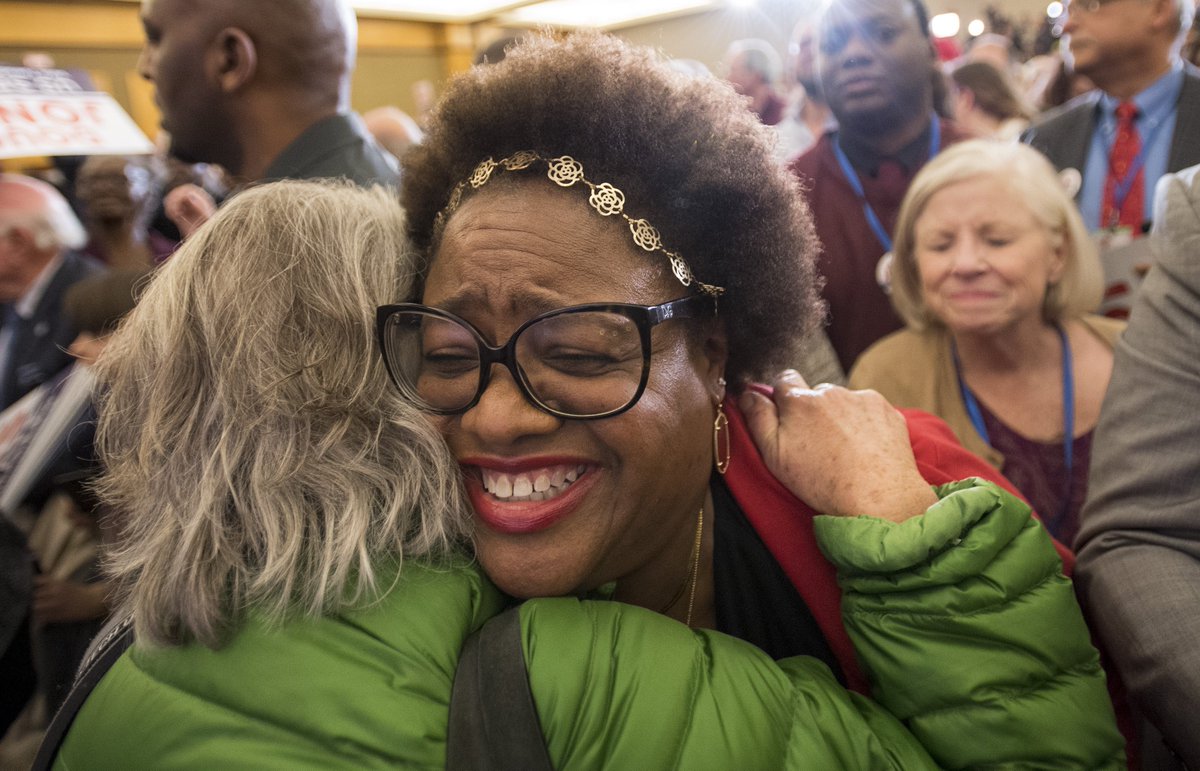
Despite restrictions and voter suppression, African Americans carry Alabama forward

There was a morbid thought during the special election on December 12th, that Alabama would elect an accused pedophile, anti-gay and anti-abortion as Senator to replace Jeffrey Beauregard Sessions. As election results trickled in, it seemed that Alabamians would do just that; but in a surprise upset, Doug Jones won a senate seat that has not been occupied by a Democrat since 1992, and that was all thanks to Black women and Black men.

To say that African Americans faced an uphill battle getting to the polls is an understatement. As the election wore on, reports of voter suppression came in droves. By 3:24 pm, The Lawyers’ Committee for Civil Rights Under Law voter hotline had received 235 calls. The NAACP Legal Defense Fund began collecting reports about people being put on inactive status, and either prevented from voting or given provisional ballots to cast their vote. To deter people from voting, police began showing up at polling stations, most notably in Montgomery, where in previous elections police checked voters for outstanding warrants.

Those were just the obstacles on election day. In 2011, Alabama passed one of the strictest voter ID laws in the country. Voters must have at least one of several specific kinds of photo ID to cast their ballot, including;

  • Driver’s License;
  • Non-Driver ID;
  • US Passport;
  • Student or employee ID at a college or university in Alabama; or
  • Military or Tribal ID

Under the guise of stopping voter election fraud, which rarely occurs, these laws disproportionately impact Black voters, who are often likely to have the means to obtain a voter ID. Since 25% of Alabama’s electorate is Black and Black residents tend to vote Democrat, having proper IDs was going to be crucial in this race. In a close election, the turnout that is impacted by voter ID laws, reducing it by a percentage point or two, could have swung the race.

Despite restrictions and reports of voter suppression, African Americans went to the polls, and gave Jones the votes he needed to eke out a victory over Moore. Over 98% of Black women and 93% of Black men voted for Jones, It was Black women and Black men who handed Jones his victory. Despite his anti-gay, sexist, racist, and homophobic rhetoric, despite multiple women accusing him of molesting them when they were teenagers, Moore was still able to capture a very sizeable portion of the white women vote.

White women, at this point we need to decide, right now, whether we want to join Black women and men and fight back against racism and sexism in politics, and everywhere, or continuously fight to maintain our white privilege in the face of rising gender inequality. We should not be fighting to put a child predator in the Senate; there shouldn’t have been a chance that would have happened. The fact that some women had to struggle, internally, to vote against Moore is egregious. And yet, here we are.

To the Democratic Party, there needs to be some serious discussion on how to give full representative voices to African Americans and minorities other than praying that they pull through during elections and save us from falling further away from common decency. We only give our thanks and strength to minorities when it benefits us politically; we are no closer to passing a clean DREAM Act, despite the fact that Democrats overwhelming voted to fund the government while undocumented minorities face the threat of deportation. Black communities are still reeling from mandatory minimums and three strike laws that were a part of Democratic President Bill Clinton’s “Tough on Crime” agenda, ballooning the already rising prison population and moving us into being one of the largest jailers in the world, and those incarcerated are disproportionately African American women and men. If you want to thank a Black woman or Black man for their part in the defeat of a child molester (especially since white men and women weren’t motivated to do so), start by addressing the damage that has been done to Black communities, and work to give back to them.

Today, we should be feel victorious. Tomorrow we need to work harder.

Lisa McNair, sister of one of the four girls killed in the 1963 church bombing, hears the news

(Image Credit: The Washington Post) (Photo Credit: The Root / Mickey Welsh)

Things fall(ing) apart

Things fall(ing) apart

It can only happen
where there are
no Bikos or Chés
no Harons Sobukwes
Timols or Mandelas even

It can only happen (here)
down South where women
and children are abused
ritually regardless

Out Heideveld way
where chess is in
at the local library
and a chess competition
acclaims young minds

Out Heideveld way
where some celebrate
their title deeds whilst
others decry and deny
the charges of the usual
corruption and incompetence

Houses falling apart
a metaphor for all
that is dark out there
on the Cape Flats
(where the city works)

Houses falling apart
out in Africa in the
Third World in the
undeveloped and
underdeveloped
end of our polluted planet

Houses for All was
once a slogan

now it is
Houses falling apart

Houses ‘falling apart’ (Athlone News, December 6 2017)


(Photo Credit: HouseIt)

December 6 should be the International Day of Remembrance and Action on Violence Against Women


In Canada, December 6, is the National Day of Remembrance and Action on Violence Against Women. In 1991, the Canadian government made December 6 the National Day of Remembrance and Action on Violence Against Women to commemorate the December 6, 1989, Montreal Massacre, also known as the École Polytechnique Massacre. On December 6, 1989, a man entered campus, sought and found a Women’s Studies class, separated the men and women, and killed 14 women, whom he identified as “feminists”. Those women were Geneviève Bergeron, Hélène Colgan, Nathalie Croteau, Barbara Daigneault, Anne-Marie Edward, Maud Haviernick, Maryse Laganière, Maryse Leclair, Anne-Marie Lemay, Sonia Pelletier, Michèle Richard, Annie St-Arneault, Annie Turcotte, Barbara Klucznik-Widajewicz. Across Canada, people hold memorial services. Everyone in Canada knows of the Montreal Massacre, the worse mass shooting in the country’s history. But what about elsewhere? Where are the memorials for the 14 women, and for the horror of the event, in other countries? What is the geography of our compassion?

After the assault on the women of the École Polytechnique, rape laws were strengthened. Men formed the White Ribbon Campaign, which, according to the organization, is the world’s largest movement of men and boys working to end violence against women. The École Polytechnique established the Order of the White Rose, which created the White Rose Scholarship, a $30,000 prize given to a Canadian woman studying in an engineering Master’s or PhD program.

For days after the massacre, people brought white roses to lay at the site of bloodshed. It was a sea of white roses.

Michele Thibodeau-Deguire was the École Polytechnique’s first woman civil engineering graduate. She graduated in 1963. In 2013, when she was appointed Chair of the Board of Directors of the École Polytechnique, Michele Thibodeau-Deguire became the first woman to chair the Board. On Wednesday, she reflected on Canada’s National Day of Remembrance and Action on Violence Against Women: “It was something that came out; people just wanted to show how they felt. And every year, white roses were brought here at the door of Polytechnique.” Along with the White Rose Scholarship, the Polytechnique sells white roses to contribute to a science camp for girls from marginalized communities. “From something horrible, something beautiful came out,” said Michele Thibodeau-Deguire.

Valerie Provost, a survivor of the Montreal Massacre, reflected, “In 1989, for me, for my classmates, everything was possible. We didn’t imagine that these doors could be shut, but that’s what Marc Lépine did. He slammed the door in front of us. My classmates will never enter the country of their dreams. No diplomas; no career; no professional achievements; no great love story; no children; no flourishing talents.”

Canadian feminist activist journalist Judy Rebick noted, “Today, rape is the only violent crime that has not declined to the degree that most other violent crimes have. In Canada, women reported 553,000 sexual assaults in 2014 according to Stats Canada. Fifty-three per cent of all women and 82 per cent of young women told pollsters that they experience sexual harassment in a 2017 Abacus poll. Levels of violence and harassment against Indigenous women, women of colour and women with disabilities are even higher. There has been a decline in domestic violence, but 32 women were killed by intimate partners so far this year in Ontario.” The Abacus report opens with numbers, “There are almost 15 million adult women in Canada and according to our latest survey, almost 8 million of them (53%) have experienced unwanted sexual pressure. The prevalence of this experience is highest among women under 45.”

For one day a year, across Canada, people discuss sexual violence, remember the names of the 14 women, remember the Missing and Murdered Indigenous Women, remember that the struggle continues. Why only Canadians? A review of major news outlets this past week has none in English, French or Spanish even mentioning the day. Canada remembers, the world ignores. What exactly is the geography of our compassion? Why must each nation, and each national community, be left to its own devices and ways of remembering? I live in the United States. Montreal is close; Canada is close, and yet, in the United States, there was no mention of the day. Commodities and capital flow across the border, in ever faster and increasing numbers. People move back and forth across the border as well. Why not memory? Why not the honoring of the martyrs of the war against women? It’s not only Canada’s war. December 6 should be the International Day of Remembrance and Action on Violence Against Women.


(Photo Credit 1: Feminist Current) (Photo Credit 2: Paul Chiasson / Canadian Press / CBC)

Justice for Retail Workers this Holiday Season!

Retail worker Moriah Larkins advocates for Fair Work Week

This year, many partook in Black Friday shopping sprees, mobbing stores with the hope of purchasing high-tech gifts at low prices. They stampeded through Wal Marts, malls and department stores, leaving a path of destruction in their wake. Too often, little regard is given to the retail workers who stock the goods, ring customers up, and are forced to hear the verbal abuse of consumers while barely make enough to survive.

Nearly 16 million people work in the retail industry in America, an industry that seems to be in decline, which has lost more than 100,000 jobs. Online retailing has gained in popularity, and Wall Street has called in massive debts from the retail industry. However, the retail industry is one of the leading employers of workers; one in ten people work in retail, and more stores opened than closed in 2017.

Meanwhile, upward mobility for retail workers is nearly impossible, and many do not make enough in a forty-hour workweek to survive. Many retail employees are part time. Only 8% of retail workers have full-time jobs, with health insurance, at least $15 an hour wage, and paid time off. One in three workers has not received a raise in two years, and only 18% of part time workers move into managerial roles.

Additionally, there are no formal schedules, so work hours and times are constantly fluctuating, with part time work ranging from 13-29 hour per week. Those employees lucky enough to move up in the chains only did so because they dedicated their lives to the impossibly fluctuating schedule, citing “open availability” as one of the main factors that led them to promotions.

Organizers have been fighting back against these precarious positions. The Fight for $15 has dedicated to policy and legislation that raises state and ultimately federal minimum wages to $15 an hour, lifting many part time workers out of poverty. There have also been victories in the fight for paid vacations, paid sick leave, and the right to a stable workweek.

Fair Work Week Laws would allow employees to know their schedules two weeks in advance, and require overtime pay for hours worked with less than 10 hours of rest between shift. It also gives employees the right to request a flexible work schedule. Fair flexibility means employees would have a say in the times that they would be working, not what employers define a “flexible”, meaning ready to work 24/7 and at a moment’s notice.

So, this holiday season, while some are mobbing stores and treating retail employees poorly, remember how hard those employees work, and though they might be fighting and winning fair pay and a fair workweek, they still have a long way to go to be paid equally and fairly for the work that they have to complete.


(Photo Credit: Annie Sciacca / East Bay Times)

In England, it’s official. Immigrant detention is bad for health. Shut them down!

Today, the British Medical Association issued a report calling for the closure of immigration removal centers. They’re bad for the detainees’ health. The British Medical Association, or BMA, “is the voice of doctors and medical students in the UK. It is an apolitical, professional organisation and independent trade union, representing doctors and medical students from all branches of medicine across the UK and supporting them to deliver the highest standards of care.” While nothing in the report is particularly new, it’s the first time the doctors’ union has formally acted.

According to the BMA, “The UK operates one of the largest immigration detention systems in Europe. It holds around 3,500 individuals in 11 immigration removal centres (IRCs) at any one time. There is no fixed time limit on immigration detention in the UK. This means detention can be for an indeterminate period. Individuals will rarely know the term of their detention. The BMA believes immigration detention should be phased out, and replaced with more humane means of monitoring people facing removal from the UK.”

The report is a study in the obvious. Detention is bad, worse for those living with mental health issues. Detention is particularly bad for the most vulnerable. The negative impacts of detention don’t end when detainees leave the prisons. The obviousness is the point. What kind of world needs yet another study to tell us that prison is bad for survivors of torture, rape, persecution, genocidal violence? What kind of world needs yet another study to tell us that the most vulnerable are most vulnerable?

What follows are excerpts from the report. Read them and weep.

“Various studies have identified the negative impact of immigration on mental health, and that the severity of this impact increases the longer detention continues. Depression, anxiety, and post-traumatic stress disorder (PTSD) are the most common mental health problems, and women, asylum seekers, and victims of torture are particularly vulnerable. Even if it does not reach a clinical threshold, all immigration detainees will face challenges to their wellbeing during their time in detention.”

“Detention can be especially detrimental to the health of more vulnerable individuals (including children, pregnant women, victims of torture, and those with serious mental illness) who should only be detained in exceptional circumstances.”

“Women:

–– Various bodies of work show increasing evidence that women in detention have distinct needs and particular problems and vulnerabilities.
–– Pregnant women have specific health needs, and can be particularly vulnerable in detention. [NB: Pregnant women are identified in the Home Office guidance asbeing particularly vulnerable to harm in detention.]
–– Women experience the same prior traumatic experiences as men, but can also experience trauma that is specific to women, such as female genital mutilation (FGM). They are also more commonly, but not exclusively, the victims of domestic or sexual violence, or trafficking. They are therefore likely to require care and interventions that acknowledge the differences in their experience and context. [NB. Victims of sexual or gender-based violence (including FGM) or victims of human trafficking or modern slavery are identified in the Home Office guidance as being particularly vulnerable to harm in detention.]
“–– Immigration detention has a negative impact on mental health;
–– The severity of the impact on mental health increases the longer detention continues;
–– Depression, anxiety and post-traumatic stress disorder (PTSD) are the most common mental health problems;
–– Women, asylum seekers, and victims of torture are all particularly vulnerable groups; and
–– The negative impact on mental health persists long after detention.”

“Retraumatisation can take on specific forms. Female asylum seekers, for example, report higher levels of sexual assault and gender-based violence, yet are frequently detained in centres with male custody staff, where a number of allegations of sexual assault have been made. The Home Office has continually refused to release details of the allegations or the outcomes of investigations. The detention environment may also be particularly retraumatising for LGBT individuals, many of whom will have faced persecution, victimisation, and violence as a result of their identity.”

The United Kingdom has 11 immigration removal centers: Brook House, Campsfield House, Colnbrook, Dungavel House, Harmondsworth, Larne House, Morton Hall, Pennine House, The Verne, Tinsley House, and Yarl’s Wood. They are factories for the production of trauma, and the assembly line is speeding up. The time for “concern” is over. The 11 black sites are a constellation of abomination: bad for the health of detainees, democracy, and humanity. Tear them down now. Shut Yarl’s Wood, shut all 11 centers, and shut their fraternal order of detention centers across the “free world”. Do it now! The doctors have spoken.

(Photo credit: The Justice Gap)

In Guatemala, 12 Q’eqchi’ women say NO to the violence of mining and may change the world

Angelica Choc, at the grave of her husband, Adolfo Ich Chamán

Angelica Choc, Margarita Caal Caal, Rosa Elbira Coc Ich, Olivia Asig Xol, Amalía Cac Tiul, Lucia Caal Chún, Luisa Caal Chún, Carmelina Caal Ical, Irma Yolanda Choc Cac, Elvira Choc Chub, Elena Choc Quib, Irma Yolanda Choc Quib are Q’eqchi’ Mayan women who live in El Estor, located on the northern shores of Lake Izabal, Guatemala’s largest lake. The Q’eqchi’ Mayan populations suffered during the long civil war, and then came “peace”, which meant further marginalization and exclusion, and then came the multinationals. There’s nickel in the ground under El Estor. Despite a ban on open pit mining, the Guatemalan government gave a 40-year lease and a promise of “stability” to a company owned by a Guatemalan company owned by a Canadian company owned by an even larger Canadian company, being Hudbay Minerals. “Stability” meant evicting the Q’eqchi from their ancestral lands. “Eviction” meant mass rape and murder.

On January 17, 2017, eleven Q’eqchi’ women were raped by security forces “removing” them from their homes and lands. In 2009, community leader, teacher and father of five Adolfo Ich Chamán was brutally murdered. His widow, Angelica Choc, sued Hudbay Minerals. In a separate case, Margarita Caal Caal, Rosa Elbira Coc Ich, Olivia Asig Xol, Amalía Cac Tiul, Lucia Caal Chún, Luisa Caal Chún, Carmelina Caal Ical, Irma Yolanda Choc Cac, Elvira Choc Chub, Elena Choc Quib, Irma Yolanda Choc Quib sued Hudbay Minerals for its involvement in their rape. In both cases, Hudbay Minerals was sued in Canadian courts. That makes these landmark, precedent setting cases. The cases are yet another testament to the courage and persistence of women saying NO to the seemingly inevitable devastation of mining corporations.

Canada is home to a majority of the world’s mining companies. In 2014, Canadian exploration and mining companies had overseas mining assets worth $170 billion in 100+ countries. When it comes to mining in Latin America, “Brand Canada” is toxic. According to a recent report, between 2000 and 2015, 28 Canadian mining companies were directly involved in 44 deaths, 30 of which were “targeted”; 403 injuries, 363 of which occurred during protests and “confrontations”; and 709 cases of “criminalization.” The violence was spread across Latin America: deaths happened in 11 countries; injuries in 13, criminalization in 12. Again, these figures are for Canadian mining companies in Latin America, 14 countries all told. Of those, only Argentina, Chile and Guyana had no deaths. Guatemala led the pack with 12 deaths; followed by Mexico with 8 and Colombia with 6.

Twelve Q’eqchi’ Mayan women refused to accept the violence as part of the natural order. They refused to submit to intimidation and worse. In 2010, with Toronto-based attorneys, the women initiated lawsuits in Canadian courts. Hudbay Minerals argued that the women had no standing in Canadian courts, and that the issue should be returned to Guatemala. In July 2013, the courts decided that the cases could go forward. This week, Margarita Caal Caal, Rosa Elbira Coc Ich, Olivia Asig Xol, Amalía Cac Tiul, Lucia Caal Chún, Luisa Caal Chún, Carmelina Caal Ical, Irma Yolanda Choc Cac, Elvira Choc Chub, Elena Choc Quib, Irma Yolanda Choc Quib gave their depositions. In January, Angelica Choc will be in Toronto to give hers.

Hudbay Minerals thought they could sweep the local women away and then bury them. They were wrong, just as mining companies have been wrong in Indonesia, Papua New Guinea, South Africa, Peru, and so many other places. As Margarita Caal Caal explains, “In my community we are fighting for our lands and we will protect them until we die. I am here to tell you the truth.”

From left to right: Lucía Caal Ch’n, Luisa Caal Ch’n, Rosa Elbira Coc Ich, and Elena Choc Quib


(Photo Credit 1: Adriana Zehbrauskas/The New York Times) (Photo Credit 2: Vice/James Rodriguez/ Mimundo)

Gretchen Carlson, Fox News, U.S foreign policy, and the women of Iraq, Afghanistan and Syria


Gretchen Carlson, sexual harassment, Fox News, POTUS, women’s lives in war-torn Iraq, Afghanistan, and Syria. Let’s connect the dots.

Fox News is the mouthpiece of POTUS; it is a brainwashing machine that spins the POTUS’ view, backing the U.S wars in Iraq and Afghanistan, and now Syria, makes the public believe that the country is fighting for freedom, and promotes white privilege ideology and American exceptionalism. Fox news anchors are expected to toe this political line, and they do, paying homage to the supreme leader, the troops, the NRA, pro-life. Fox is a right wing enterprise that supports unquestioningly the collateral damage of U.S. led wars—the overwhelming number of civilian casualties in Iraq, the number of females who are refugees in Syria and Jordan, some of them forced into prostitution in order to survive.

Gretchen Carlson, as one of these Fox news anchors, toed this line, barely blinking an eye at the extreme suffering of the Iraqi and Afghan women at the mercy of U.S. air strikes. Fox news only made the audience aware of American troop deaths, not the terrible loss of life of Iraqis and the plight of the survivors.

Fox News Corporation, built on the patriarchal, capitalist model, is a greenhouse for sexual oppression. Just as it views the outside world as inferior to a white, Christian U.S., so too does it have a hierarchy where victims would not be able to complain readily because of the stakes stacked against them. I am not sure if Gretchen was beginning to see the connection between Fox news’ attitude to U.S. policies toward the world and its own internal politics of how powerful males treated their female employees. Perhaps she was beginning to see the connection when she said last year that assault weapons ought to be banned, totally out of line for a Fox anchor to articulate. And filing the sexual harassment lawsuit against Aisles was another shock.

Gretchen, after her resignation from Fox, has now written a book, is advocating for women, speaking at women’s rights events, and so on. I am glad that she filed a lawsuit against Roger Aisles for sexual harassment. But does she see the larger picture of Fox’s vision of the world that ignores women under U.S. tyranny who have died, who have lost everything, their countries reduced, and infrastructure ruined? Can these women ever file lawsuits against the U.S. government?


(Photo Credit: Vox / Ahmed Hasan Ubeyd / Anadolu Agency / Getty Images)

Radio WIBG: Women’s voices from the Mediterranean: the state of play in Croatia

Nela Pamukovic

In 2008, women activists founded the Mediterranean Women’s Fund (MedWF) to support and strengthen women’s organizations around the Mediterranean region. The Mediterranean Women’s Fund (MedWF) has adapted its action to the new needs of Mediterranean women’s organizations. Relying on networking and collective intelligence training for activists, the MedWF has worked on developing strategies to respond to the continuous attacks on women’s rights. In its efforts to provide a comprehensive support to these organizations the fund has organized meetings to gather women activists in six countries, Egypt, Tunisia, Algeria, Croatia, Libya, and, last summer, France. They invited a delegation from Croatia, Rada Boric and Nela Pamukovic, to describe the situation and priorities of their women’s group.

Rada Boric and Nela Pamukovic are Croatian members of the Women’s Court created in 2010 in the Balkans. The Women’s Court is a space where women’s voices are heard; women can give their testimonies of the injustices they have experienced during the war and after. It is a space where resistance is organized.

Croatian women’s groups’ members have been on every front since the war in the Balkans in the 1990s, during which women were used as weapons of war. Since then, women, such as Nela Pamukovic, have organized to have this humiliating and devastating crime recognized as a war crime. About 20 years after the war’s end, Croati passed a law meant to compensate survivors of sexual war violence. Thus far, few women have been able to obtain that status and receive their rightful regular financial stipend. Meanwhile the war criminals have been released for good behavior, often being praised as Croatian heroes. They now  even receive government benefits and social welfare.

Croatian women have also fought on the turf of sexual and reproductive rights to protect women facing the increasing involvement of the church in the political arena. Church politics is based on the subordination of the woman’s body, constraining access to contraception, to abortion, as well as undermining the justice process for cases of sexual harassment, rape and all sorts of violence.

Although women compose 51% of Croatia’s population, they find their status to be in line with that of minorities.

Rada Boric

Brigitte Marti in collaboration with MedWF and 50 50 magazine


(Photo Credit 1: Global Fund for Women) (Photo Credit 2: One Billion Rising)

Chicago hotel housekeepers say NO! to workplace harassment … and win!

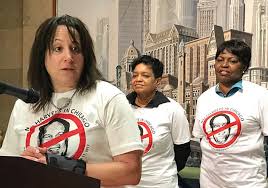
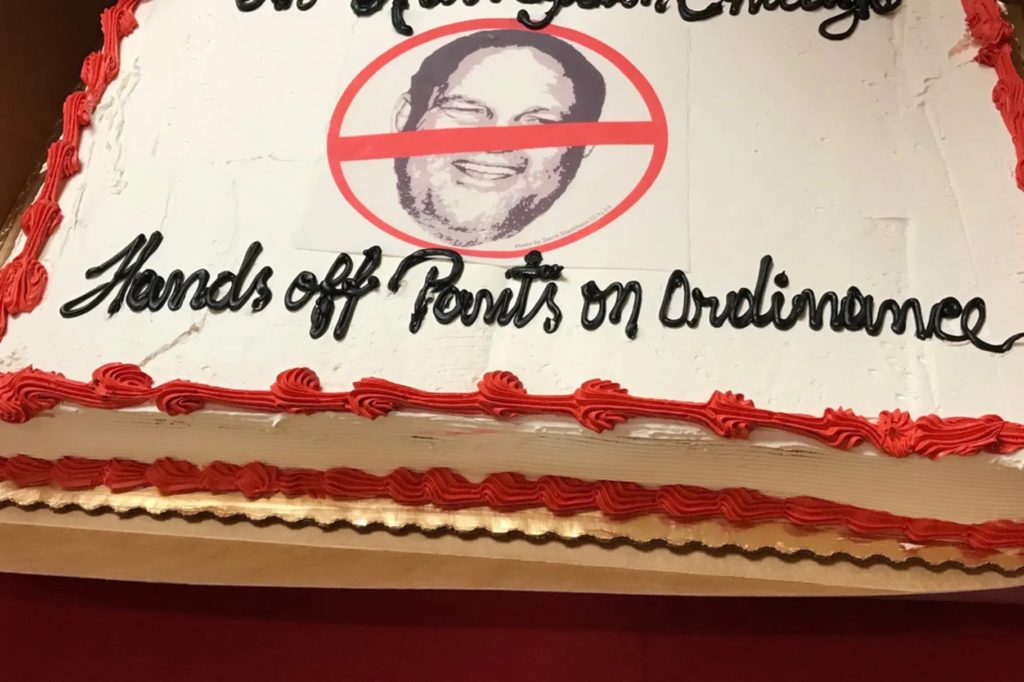
Unite Here members celebrate passage of Chicago ordinance protecting hotel workers from sexual harassment

While celebrities and politicians being accused of sexual harassment and sexual assault has brought workplace harassment into the national conversation, low wage workers, such as hotel housekeepers face similar instances of harassment cleaning hotel rooms and hope the conversation will help to end the harassment they’ve been fighting for years. Much less attention has been paid to the abuses and harassment low wage workers face, especially in the hotel industry.

A minibar attendant at a Chicago hotel, Cecilia walked to a guest’s door and was let in to a man masturbating at his computer. Given the satisfied look on the man’s face, it was clear that he had planned the encounter. Another guest once answered her knock by opening the door naked. “I felt nasty,” Cecilia recalled, “You’d expect that to happen to people in a jail but not in regular work. I felt like crying.” One of Cecilia’s colleagues confided that a guest tried to embrace her while in his room. Cecilia had to escort the housekeeper to security to report the incident.

Harassment in the workplace is not a new, or one-time, occurrence for housekeepers, who face abuses but are unable to report for fear of retaliation from an already exploitative work environment. Maria Elena Durazo, of Unite Here, has advocated for housekeepers to be given handheld, wireless panic buttons that can alert hotel security when a worker feels threatened: “Frankly, I don’t think much of the public understands what housekeepers go through just to clean these rooms and carry out the work.” The union won workers’ contracts to include the panic button, but the situation of sexual harassment for housekeepers is still dire. Durazo is now lobbying the city council to mandate them for all workers, union or not.

The panic buttons go a long way for workers to feel safe, but the imbalance of economic power between the harasser and survivors cannot solely be addressed by buttons. As Durazo argues, “We have to do something to equalize the power so that women really have the ability to speak up, without having to risk their livelihood. That goes for whether you’re a housekeeper or a food server or a big-time actor.”

To bring attention to the harassment of hotel and casino workers, Unite Here surveyed 500 of its Chicago area members. The majority surveyed were Latinx and Asian immigrants.

  • Nearly 58 % of hotel workers and 77% of casino workers had been sexually harassment by a guest;
  • 49 % of hotel workers said they had experienced a guest exposing themselves to the worker when answering their room door;
  • 56 % of casino cocktail servers said a guest had touched them, or attempted to touch them, without their consent;
  • Around 40% of casino workers had been pressured for a date or sexual favors by a guest.

Outfitting housekeepers with panic buttons started to receive attention and popularity after French politician Dominique Strauss-Kahn was accused of assaulting housekeeper Nafissatou Diallo in a New York Hotel. Tet next year, the New York Hotel Trades Council won a contract for 30,000 workers that guaranteed the use of panic buttons for housekeepers.

The Chicago campaign to mandate panic buttons for the hotel industry received little resistance from the hotel lobby. President of the Chicago Federation of Labor Jorge Ramirez stated. “We didn’t see them out there with pompoms, but they didn’t speak out against it, either. I think the industry would have a hard time opposing this, especially with everything that’s come to light in the last few months.”

To mark the passage of the ordinance for panic buttons, housekeepers wore “No Harveys in Chicago” T-shirts, hoping that the buttons bring a sense of security and safety to women like herself and the younger housekeeper she had helped a couple months prior, because, “You shouldn’t be scared to work.”

(Photo Credits: Chicago Sun-Times / Fran Spielman)