Landmark cases: In Ecuador, Petita Albarracín demands justice for Paola Guzmán Albarracín

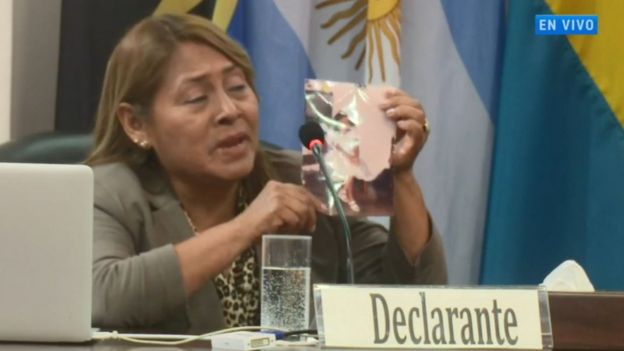
Petita Albarracín testifying

On January 28, 2020, Petita Albarracín, an Ecuadoran woman, pleaded before the Inter-American Court on Human Rights to restore dignity to the memory of her deceased daughter, Paola Guzmán Albarracín, as she demanded justice in the name of her daughter for young women and girls across Latin America. In so doing, in this case described as landmarkmilestone, and groundbreaking, Petita Albarracín opened a door and, hopefully, made history. 

Paola Guzmán Albarracín lived with her mother, younger sister and grandmother in a suburb of Guayaquil. She was a happy child, and life was good, if at times financially stressful. Then her mother started noticing a change in her daughter. For two years, starting at the age of 14, Paola Guzmán Albarracín was sexually abused by her school’s vice principal. When, at the age of 15, Paola Guzmán Albarracín discovered she was pregnant, she went to the school doctor, who offered an abortion and then sexually abused the teenage girl. On December 12, 2002, three days after her sixteenth birthday, Paola Guzmán Albarracín took an overdose, and the next day, she died. Since 2002, Petita Albarracín, Paola Guzmán Albarracín’s mother, has waged a campaign to demand justice and dignity, not only for the memory of her daughter but for all girls and young women in Ecuador, across Latin America and beyond.

After Paola Guzmán Albarracín’s death, Petita Albarracín demanded an investigation. Little was done. A warrant was finally issued for the vice principal, who immediately went into hiding. According to Petita Albarracín, “We exhausted all available resources. I did all that a mother could do, but unfortunately in Ecuador there was no justice. Today, he is free and alive, and my daughter is not. He works in private schools where they do not know him.”

Petita Albarracín sued the State, the case was thrownout . She secured allies, especially a local NGO, Centro Ecuatoriano para la Acción y Promoción de la Mujer – Guayaquil, and they brought in the Center for Reproductive Rights. Together, they approached the Inter-American Court on Human Rights. After eighteen years, the case has finally been heard. 

On the day of the trial, Petita Albarracín reflected, “When there’s impunity and no justice, a message of permissiveness is sent, which leads to these kinds of actions becoming naturalized, authorized and permitted. Then they become and remain part of the daily life for women across Latin America, in all the countries.”

For eighteen years, Petita Albarracín has persisted, has refused to accept the indignity for her deceased daughter, for her remaining daughter, and for all the girls and young women in Ecuador, across Latin America and around the world. She has demanded justice, justice for girls and young women, justice for all. The Court is expected to render its decision within the year. Paola Guzmán Albarracín would be thirty-three years old today, if she had lived. There is no justice for Paola Guzmán Albarracín. Her mother, Petita Albarracín, knows as much and has said as much, but there is justice and there is dignity, and, in the name of Paola Guzmán Albarracín, justice and dignity shall prevail.


(Photo credit: BBC)
We do not accept your apology, Mr. LeBlanc

We do not accept your apology, Mr. LeBlanc. 

We cannot accept your apology. 

People of color, especially Black people (whom you name in your metaphor but do not directly apologize to), have spent centuries being told to accept the apologies of whiteness. People of color are taught to stay gracious and forgiving, while whiteness continues its violent assault on them.

Accepting your apology would be accepting white supremacy. 

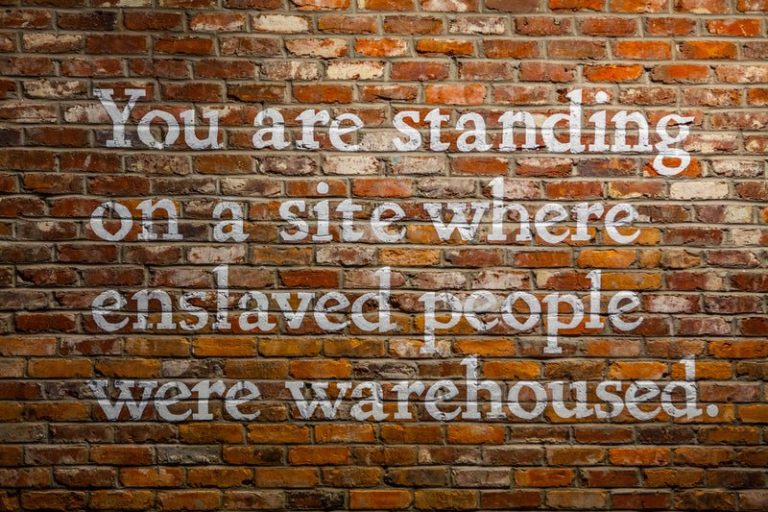
Accepting your apology would mean saying, “Yes it is okay for you to compare the state violence enacted against Black people to whatever topic to justify your point,” while standing on a land that has been violently snatched from Indigenous and Black communities. 

Accepting your apology would validate that Black death is simply a metaphor to be used when necessary, not a serious condition of this country that leaves Black communities in a constant state of mourning.


(Editor’s note: On February 3, The Washington Post reported: “The president of George Washington University issued an apology for making what he called an “insensitive” remark that compared support for fossil fuel divestment to hypothetical support for shooting black people.” The day before the GW Hatchet broke the news.)

(Image Credit: The Legacy Museum)

Feminist economics is everything. The revolution is now!


This talk is an exploration of a feminist centred world, where women’s labour, women’s energy, women’s contributions to the economy are not a side event but the main event. The talk is an invitation to view the economic world as a place of struggle and dispossession, a place of unearned male privilege must be displaced by African women’s presence. GDP cannot count us, we need new numbers and new models. We need a revolution

The problem of female misrepresentation in medical studies is very real

Reference Man

The misrepresentation of women in medical studies is a problem that has misled medical officials for generations. In “On the Generation of Animals”, Aristotle characterized a female as a mutilated male. No one corrected him. Instead, we make medical decisions based on data derived from Reference Man. Reference Man is a Caucasian male, aged twenty-five to thirty, weighing about 155 lbs. Reference-Man fails to represent half of the world population’s anatomy. Women have worked tirelessly to right these wrongs — and receive accurate medical care.

Through a whirlwind of decisions made from 1977 and 1993, women lost their right to participation and they took it right back. In 1977, women “of childbearing potential” were removed from the possible subject pool of medical studies. This was due to the fact that 10,000 children had been born between 1960 and 1962 with thalidomide-related disabilities because doctors prescribed it to pregnant women for morning sickness. Drug developers and doctors everywhere had made the mistake, and women continued to pay the price. In 1985, Public Health Reports released “Report of the Public Health Service Task Force on Women’s Health Issues”, which called for data on women – not data on Reference Man. Because the data simply did not exist. In response, NIH and FDA worked to develop more inclusive guidelines regarding the inclusion of women in medical studies. In 1993, the 1977 ban was rescinded. 

Yet we fail to learn from our mistakes. In 2012 and 2013, as recounted by Vox producer Kim Mas, headline after headline read that women were crashing their cars the morning after taking a sleeping pill, Zolpidem, commonly known as Ambien. Why? Men and women received the same prescription of a ten-milligram dosage for eight hours of sleep. But developers had failed to test the drug’s effects on women. Women’s metabolism took twice as long as men to break down the drug and remove it from their system. So, when they got started with their day the following morning, they were still under the influence of Ambien, impairing their ability to operate a motor vehicle. But the doctor prescribed it, so how could it be their fault? 

Well, it was. Surprise! Reference Man had gone through the trials, and his results were not generalizable. Not to women, and not to anyone besides Reference Man. Rather than take the time and money to test more subjects, developers assumed the data they had covered it all. Plus, the Vox report illustrates how even if women are included in these studies, their results are usually lost amidst the overwhelming male data. Following this scandal, the FDA released a safety warning in 2013 cutting the Ambien dosage for women in half. If drug companies cannot take the time to test the effects of their drugs on women, how can we trust our medical care? And how can we expect anyone else to give a damn about our needs?

We can’t. In February 2018, the British Journal of Clinical Pharmacology published an all-male-authored medical paper entitled ‘Gender differences in clinical registration trials: is there a real problem?’. Their conclusion? No, the problem was not “real”. If you ask me, when women are crashing their cars because their doctors did not know the effects of the drug dosage they were prescribing, I’d say that’s a real problem.

(Photo Credit: Vox)

Landmark cases: In South Africa, Agnes Sithole said NO! to the oppression of Black women elders … and won!

In South Africa, 72-year-old Agnes Sithole made history last month by insisting that [a] apartheid was really over and [b] as a Black woman elder, she has full and equal rights of every order: civil, legal, human and otherwise. In so doing, Agnes Sithole reminded everyone of the power of women’s insistence on their own dignity and the obligation of the State to recognize that dignity, formally and materially. Agnes Sithole’s individual story goes back almost 50 years, when she married Gideon Sithole. 

Almost 50 years ago, Agnes and Gideon Sithole entered into civil marriage. As two young Black South Africans, their marriage fell under the Black Administration Act of 1927, which specified that all Black marriages were considered out of community of property. That meant everything went exclusively to the man. Period. Gideon Sithole ran a business, which Agnes Sithole supported as a manager. She also has run her own successful clothing business. The money from Agnes Sithole’s business went to their four children’s education. The children are now adults, successful in their own rights, and “fiercely loving and protective of their mother”. She also raised four children and took care of … everything. She made the Sithole estate what it became. 

In 1984, the Matrimonial Property Act changed the marital property landscape for South Africans … except for Black South Africans, who were explicitly excluded from the new order. That meant that Agnes and Gideon remained under the rules of the 1927 Black Administration Act. In 1988, the government passed the Marriage and Matrimonial Property Amendment Act, which overturned conditions of the Black Administration Act for Black South Africans, but there was a catch. The State provided a two-year window in which change marital status from out of community property to community property. Gideon and Agnes Sithole had heard of earlier changes and assumed they were already in community property. They never filed for the change, and so Agnes Sithole remained under the jurisdiction of a 1927 law that specifically targeted Black South Africa women. About 400,000 Black South African women are in the same situation.

None of this mattered much, until, about two years ago, Gideon and Agnes Sithole’s marriage started falling apart. With the end in sight, Gideon Sithole threatened to sell their home and leave Agnes Sithole penniless. Much to Agnes Sithole’s surprise and dismay, according to the law, Gideon Sithole could actually do that, and she had no recourse. 

Agnes Sithole said NO! She said that apartheid was over, had to be over, and that she didn’t care what the State thought the law was, this was wrong, discriminatory, misogynist, racist, and evil. She decided that the specter that haunts South Africa cannot be apartheid, it must be the living mass of women, especially Black women, on the move, organizing, mobilizing, and setting things right. So, she sued.

On January 24, 2020, the Durban High Court agreed with Agnes Sithole, and her attorneys from the Legal Resources Centre, LRC, working with Geoff Budlender. Writing for the Court, KwaZulu Natal Deputy Judge President Isaac Madondo wrote, “The discrimination the impugned provisions perpetuate is so egregious that it should not be permitted to remain on our statute books by limiting the retrospective operation of the order or by suspending the order of invalidity to allow Parliament to rectify the error. The effect of the order is that all civil marriages are in community of property. The recognition of the equal worth and dignity of all black couples of a civil marriage is well overdue.” In response, LRC attorneys noted, “The default position for all other married couples in South Africa is in community of property – except for African couples married before 1988. The consequences of this discriminatory provision have remained to haunt older African women like Sithole.”

The consequences of this discriminatory provision haunt older African women, haunt Agnes Sithole, haunt South Africa … and beyond. The High Court decision must be approved by the Constitutional Court, and so, for now, Agnes Sithole “is relieved and overjoyed. She has celebrated with her children. She is now praying that the Constitutional Court application will go well” as do 400,000 African women elders in South Africa and their supporters. The struggle continues.


(Photo Credit: Legal Resources Centre)

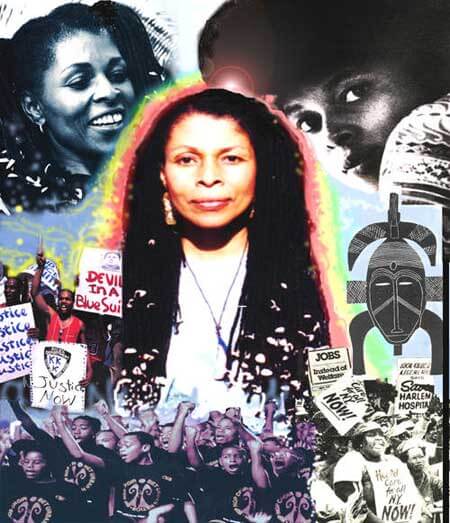
What Should I Do Assata: for the Ancestors

What Should I Do Assata: for the Ancestors 

What should I do Assata? They’re coming for my womb!

Shouted Justice

And, I won’t know who is grabbing my pussy because I’m blindfolded!

But, I can guess.

Is it quisling Alan Dershowitz forgetting the wisdom of “when they came for…”

Is it the narco-trafficante 

Killing Isabel Cabanillas while she bicycles home from a gathering in Ciudad Juàrez?

Was her music too dangerous?

Or, her murals too revolutionary and inflammatory?

Was it the artificial intelligence facial recognition technology that misidentifies Black, Brown, Yellow and female faces?

But can spot a Uyghur from outer space in a crowd of ethnic Chinese.

Removed from their homes

Their graveyards desecrated

By a country that claims to be re-educating them 

And protecting them from their own culture, religion, and language

To make them more productive citizens.

Uyghurs — apparently — are the new Niggers; or perhaps the new Redskins or Chiefs

And, A.I. Identifiable “Whiteface” is the new blackface warns the MIT Media Labs.

Was it the new laws in South Dakota outlawing treatment for trans youth? 

They won’t have to be oppressed if they just kill themselves and be done with it

Cause of death: body dismorphia

Is intersectionality dead 

The wisdom of “when they came for…”

Or are the opiates just that strong?

Because if they come for my body

They will come for yours, too.

Who was it who said:

I wish that they all had just one neck so that I could slit their throats all at once 

I think it was Caligula

If he had waited just 2000 years his wish would have come true. 

We rewrite the New Colossus to include a wealth and education test

While we install a new Caligula

His hand on the throat of Our collective dreaming 
One foot in America and the other in the Middle East

While pissing on immigrants. 

And the lies 

So many lies.

“Why don’t we get to keep the oil?”, he asks.

I shake my head in shame

Everyone I respect is dead 

And all of my enemies are in power 

The affirmation of an optimistic 

Revolutionary mind

I would root for the intelligence agencies if your COINTELPRO experience didn’t inform me, Assata.

What should I do, Assata? 

While you are still here for me to ask you the question

What should I do?

How did you find hope in your gunshot riddled and beaten body?

How did you not despair when your godson was taken away too soon?

When you were imprisoned with men

And they tried to murder both you and your hope

How did you escape to fight another day? 

Oh, 20 century escaped slave with a price on your head

A two million dollar bounty for helping people to get freed;

While America bends over backwards to exonerate a man murdering representative democracy

And renewing the call for your capture

The first amendment has been  shot through and beaten 

As if it were a Black Panther on the New Jersey Turnpike 

Tolls paid for with blood sweat and tears 

Hope left waterboarded, tortured, and gasping 

Through disinformation and the scrawl of a Sharpie marker

Assata, may the trade winds of Cuba ever caress your skin 

And Afro-Cuban music ever fill your ears. 

Spit in the direction of Mar Largo

And cast ancient curses at an Orange Man.

Should I learn how to make myself small like Harriet

Or should I become larger then Life itself like you?

If we sing out loud; or paint our murals; or march

Will the Space Force and the A.I. cameras see us? 

They are coming to get me

And I AM paranoid.

Justice is blind 

But not stupid. 

At midnight all the agents and the superhero crew 

Will round up all the people who Love more then they do

Then they’ll hook us to Alexis to publicize our dreams 

And sell our souls to Facebook and the information machines.

Ain’t I a woman, too?

Asks justice 

Taking off her blindfold 
And baring her breasts.

Ain’t I a fuckin’ woman, too.


(Image Credit: LA Progressive)

Landmark cases: Sierra Leone’s ban on pregnant girls attending school is overturned!

In December and January, separate courts heard and rendered decisions that will expand rights for women and girls in Sierra Leone and South Africa, and beyond. At the same time, this week, a court heard a case, from Ecuador, that could expand rights for girls across Latin America, and beyond. In all three instances, the cases have been described as landmark cases, cases that serve as a guide and mark a turning point in women’s and girls’ history, and thus in the history of the world. In all three instances, the claim for justice for women and for girls emerged from the persistence of women and girls, pushing, organizing, demanding justice.

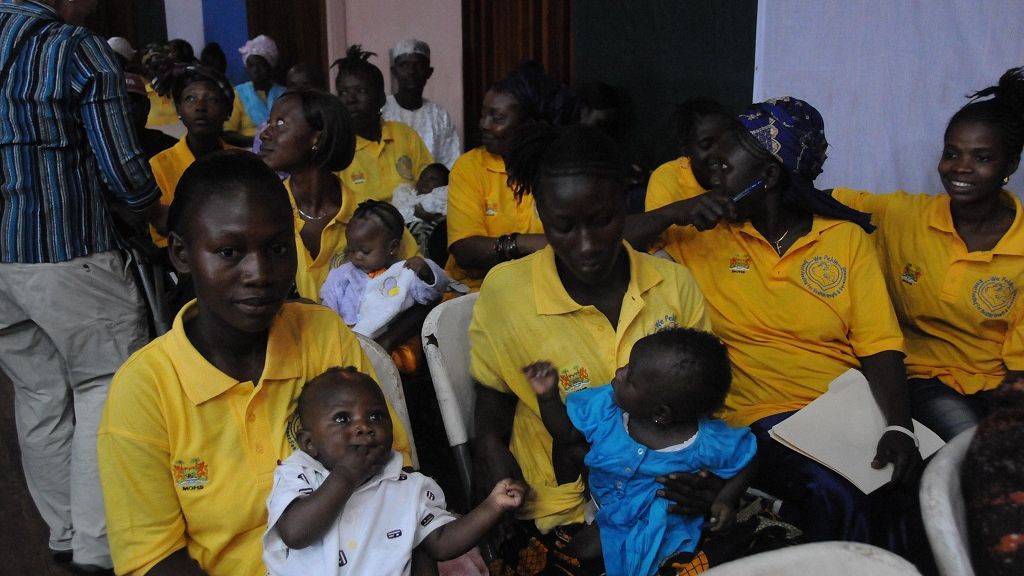
In 2015, the government of Sierra Leone issued a ban on “visibly” pregnant girls attending mainstream schools. Once their pregnancy was “visible”, the girls were to attend an “alternative” school in which only four subjects were taught, and which met only three days a week. Additionally, all the girls were placed in a single classroom, with no attention to age or academic level. Finally, the girls were prohibited from sitting for exams.

In 2018, a Sierra Leonean NGO, Women Against Violence and Exploitation, WAVES, filed a case, on behalf of pregnant adolescent schoolgirls, before the ECOWAS Community Court of Justice. WAVES was represented by Equality Now and the Institute for Human Rights and Development in Africa, IHRDA. In June 2019, Amnesty International was allowed to join the case, as an amicus curiae, to provide further international context.  

The ECOWAS Court ruled “that the ban is discriminatory and impacts negatively on the actualisation of the right to education of the pregnant girls, similarly the establishment of separate school for the pregnant adolescent girls with four (4) taught subjects operating three (3) days a week not being at par with the main stream schools thus providing lesser quality of education is equally discriminatory and a violation of the right to education.” The Court further enjoined Sierra Leone to “immediately revoke the prohibitive policy; abolish the separate school established for the pregnant girls and absorb the said girls in the main stream schools; develop strategies, programmes and nation-wide campaigns that will remove the negative societal attitudes that support the discrimination and bias against pregnant girls attending schools; and integrate sexual and reproductive health education into school curricula to minimise the high rates of teenage pregnancy.”

Judy Gitau, of Equality Now, exclaimed, “This is a great victory!!! Finally the girls have had their day in court and have emerged victorious. The ECOWAS court has given them their voices back and by that a chance at life again.” Marta Colomer, of Amnesty International, added, “Today’s ruling is a landmark moment for the thousands of girls who have been excluded from school, and whose right to access education without discrimination has been violated for the past four years because of this inherently discriminatory ban. It is also a glimmer of hope for all those girls who if pregnant in the future will not be punished by being forced to leave school and not being able to sit exams. This also delivers a clear message to other African governments who have similar bans, such as Tanzania and Equatorial Guinea, or may be contemplating them, that they should follow this ground-breaking ruling and take steps to allow pregnant girls access to education in line with their own human rights obligations.”

Hannah Yambasu, WAVES Executive Director, added, “This victory belongs to the girls in Sierra Leone who have been degraded and dehumanised because of their status since 2014. Now our government in Sierra Leone has no option but to comply with their obligations as declared by the court.” Sabrinah Mahtani, who had originally reported on the impact of the ban, agreed, “The vast majority of girls we interviewed had become pregnant during the 2014-15 Ebola outbreak when there was an increase in teenage pregnancy, accompanied by a spike in sexual violence. The negative economic impact of the crisis led to an increase in exploitative and abusive relationships. Many girls had little information about sex education or access to contraceptives. I was struck by the bravery of the girls and their determination to access education despite the obstacles. Some said they tied their stomachs so teachers could not tell they were pregnant, a risky strategy for their health. Others said they were prepared to face any stigma in order to continue in school and obtain a qualification, something that becomes more challenging for many girls after giving birth due to the lack of child care support.”

Patience, who was 17 years old when she was forced out of school, reflected on the decision, “I am very happy because I did not have the opportunity to stay in school myself. If I had been able to stay in education, I would be in my last year at uni now, or maybe I would have graduated already. I would have liked to have studied nursing. Instead, my name was taken off the school register and I was offered vocational training. Yet my daughter’s father was never banned from school, and he was able to continue to do everything he wanted to do.”

Landmarks change the landscape in all directions. This decision concerning school age girls in Sierra Leone has impacts for the entire continent and beyond, and it was brought about thanks to work of women, organizing, militating, pushing, and, equally, the bravery of the girls and their determination to access education and justice despite all obstacles. They know … the struggle continues.


(Photo Credit: AfricaNews)

Once again, prison is Canada’s “travesty”, England’s “scandal”. Who cares?

This week, within a 24-hour span, major reports revealed that Canada’s prison system “is nothing short of a national travesty” and the prisons of England and Wales are “a national scandal”. The reports are important, well researched, and grim, but they also repeat the findings of earlier reports, with one glaring exception. The situation is worsening, in fact the negative aspects are at an all-time high. If the various national populations have time and again received reports of a terrible situation worsening and if those populations and their national governments have done nothing, have done less than and worse than nothing, it is reasonable to ask, “Who cares?”

On Tuesday, January 21, 2020, Canada’s Correctional Investigator, Dr. Ivan Zinger, released a report on the current status of Canadian prisons: “Four years ago, my Office reported that persons of Indigenous ancestry had reached 25% of the total inmate population.  At that time, my Office indicated that efforts to curb over-representation were not working.  Today, sadly, I am reporting that the proportion of Indigenous people behind bars has now surpassed 30% … On this trajectory, the pace is now set for Indigenous people to comprise 33% of the total federal inmate population in the next three years.  Over the longer term, and for the better part of three decades now, despite findings of Royal Commissions and National Inquiries, intervention of the courts, promises and commitments of previous and current political leaders, no government of any stripe has managed to reverse the trend of Indigenous over-representation in Canadian jails and prisons. The Indigenization of Canada’s prison population is nothing short of a national travesty.” Indigenous women are the core of this Indigenization of Canada’s prison system, accounting for 42% of women inmates. In some prairie regions, Indigenous women comprise almost 90% of the prison population. Where once there were boarding schools, now there are prisons and jails.

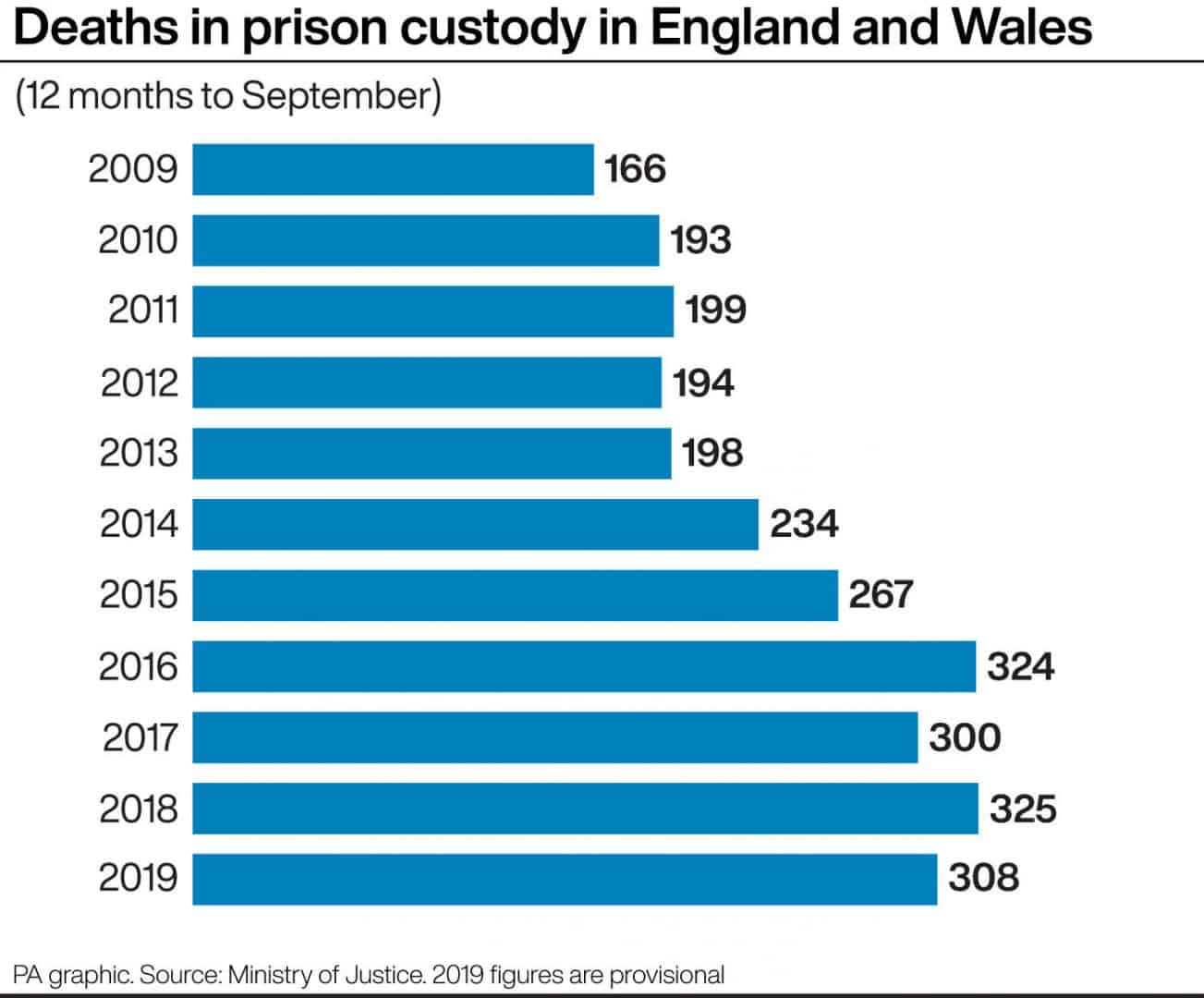
On Wednesday, January 22, 2020, Inquest released its report, Deaths in prison: A national scandal. At the outset, the report notes that “levels of distress are at record high levels” and that “since 2016 the number of deaths have remained at historically high levels, with little sign of significant change.” 2016 was “deadliest year on record”. In their press release, Inquest suggests that that “‘national scandal’ of deaths in prison caused by neglect and serious failures.” But what if it’s neither neglect nor failure? What if death, largely through self-harm, is the system successfully at work?

This question arises out of the cyclical redundancy of these discoveries. 2013: Canada’s Correctional Investigator reports that federal and provincial prisons are booming, with Aboriginal people, especially women, “over-represented” in prisons, in maximum security and solitary confinement. 2014: Canada’s Correctional Investigator reports concern over the incarceration of Aboriginal women and the routine use of psychotropic drugs to control Aboriginal women behind bars, producing a mass population of “walking zombies”. 2016: another report, more expression of concern: Of 683 women prisoners, 248 are Aboriginal. Over 36% of women prisoners are Aboriginal. There’s more, but you get the picture.

In England and Wales, the picture is the same. Here’s 2014: “In 2014, 84 people killed themselves `in custody’ in England and Wales That’s the highest figure in seven years and an increase of 12% over the year before. The rise in suicide is surpassed by the rise in self-harm, up more than 25%. Overall, it was a banner year for the prison state, with 243 deaths in custody.” 2016, as noted, prison deaths, and particularly suicides, soared, as did self-harm: “When considering females, despite the falls seen between 2009 and 2012, rates of individuals self-harming among females remain disproportionately high in comparison to the overall rates of individuals self-harming … Females accounted for nearly a quarter of self-harm incidents in this reporting period, but only make up less than 5% of the prison population.” Again, there’s more, but the picture is already clear.

Both the Office of the Correctional Investigator of Canada and Inquest note the need to learn from past experiences while both express disappointment at lessons unlearned, unheeded, but what if there are no lessons to learn? What if these deaths are but a station on a global assembly line at which employees dutifully stand and wait for the next body to ignore? The prisons of Canada and of England and Wales are a tiny part of the global labor of necropower: “New and unique forms of social existence in which vast populations are subjected to conditions of life conferring upon them the status of living dead … Under conditions of necropower, the lines between resistance and suicide, sacrifice and redemption, martyrdom and freedom are blurred.” Once again, prison is Canada’s “travesty”, England’s “scandal”. Who cares?


(Infographic Credit 1: Office of the Correctional Investigator of Canada) (Infographic Credit 2: The London Economic)

England’s school seclusion rooms still form a landscape of atrocity and shame

A primary school seclusion room

England learned this week that, across England, schools are converting toilet stalls into “isolation booths”. Other English schools use portable isolation booths. That means a cardboard box is brought to the classroom and placed over the child. Educators like to point out that there are isolation rooms and there are confined booths, and they’re not the same. Isolation rooms are solitary confinement. Confined booths are stalls where children face the wall in perfect silence, often for hours on end, often for days and even weeks at a time. These are the distinctions that are meant to prove the humanity and educative function of time spent in school. At least your six- or eight- or ten-year-old child is not spending hours in a cardboard box. A salient problem in this narrative is that England learned this lesson last year, and the year before, and the year before thatMeanwhile, sales of isolation booths to schools are booming.  

Last week, another report alerted the nation to the widespread use of seclusion rooms. The Centre for Mental Health published Trauma, challenging behaviour and restrictive interventions in schools. Though disturbing the findings are not surprising, are in fact altogether familiar: “Exposure to trauma is relatively common among young people … Challenging behaviour and trauma are associated. Young people who show challenging behaviour are more likely than average to have been exposed to trauma … Thousands of young people are subject to some form of restrictive intervention in schools in England every year for challenging behaviour. There is reason to believe that these interventions have a negative impact on mental health, irrespective of previous trauma exposure. Young people who have experienced trauma in the past are especially at risk of experiencing psychological harm from restrictive interventions. For example, exclusion and seclusion can echo relational trauma and systemic trauma …As a result, these interventions may cause harm and potentially drive even more challenging behaviour.”

Solitary confinement harms children. Solitary confinement is infinitely and measurably worse for vulnerable children. Solitary confinement creates a cycle that begins in trauma and then cycles, repeatedly, through trauma, each time more deeply felt and each time more damaging. Isolation booth sales are booming.

Anne Longfield, Children’s Commissioner for England, says she has heard “horror stories” of children in isolation for days, weeks, months on end. What qualifies as “challenging” behavior. One school website boasts, “Students with inappropriate hairstyles will be placed in isolation.” In another instance, a child was placed in isolation because she forgot to bring her planner. Her father was told either bring the planner or bring £5: “The school said bring in £5 for a new planner and she can come out. It’s ridiculous, having to pay a ransom to get your daughter out of ‘prison’ just because she forgot her planner for the first time ever.”

These isolation rooms and booths and boxes are not some underground, hidden, clandestine practice. They’re widespread, on websites, in official policy. They are and they have been, and they form today as they have formed a landscape of atrocity and shame. While research reports are important, the last five years of reports demonstrates that that is not enough. How many more times must we “discover” that throwing children into seclusion rooms, no matter what they’re called, is wrong? Why do we need to discuss whether the rooms “work” or are too “costly”? What about the cost to children’s lives? What about the cost, as well, to the very concept of education? What does a child learn when exclusion is called inclusion, terror is called calm, and a war on children is called education? But there is a flickering light. Later this month, advocates are holding a Lose the Booth conference. Another school is possible.


(Photo Credit: BBC) (Image Credit: Centre for Mental Health)

Why is women’s leadership so scary for men?

Data shows that start-ups which are women-led receive more revenue than those led by men. Data also shows that women score higher than men in five key traits of a successful leader. In her book, Invisible Women, Caroline Criado Perez touches on an interesting aspect, how women’s leadership is shown to be successful but men still want to discount it from successful women. According to BI Norwegian Business School research, the five key traits used to identify a successful leader are emotional stability, extraversion, openness to new experiences, agreeableness and conscientiousness. After reading this, I looked up to my male friend and asked whole-heartedly, “Why is female leadership so scary for men?” He answered this might be because in the past, there has always been this tough, demanding white boss, and intimidation brings (or brought) results.

The BI Norwegian Business School traits all have to do with listening, being empathetic and having emotional stability. Who on Earth wants to work for a mean, disrespectful boss? Criado

Perez writes that “women are better suited for leadership than men” and I cannot help but think about the reactions people have towards this. What is so bad about it? Why can’t women be great leaders, and why can’t men be led by them?

While Criado Perez was talking about leadership in the workplace, I would ask the same question for the feminist movement. The anti-femicide demonstrations that have been happening around the world with the song “Un Violador en Tu Camino” has impacted the feminist movement greatly. Why can’t women be great leaders, and why can’t men be led by them? Across Latin America, people are attacking feminists who performed this song, mocking their movements without knowing their meaning, objectifying them, and the comment that bothers me the most: “n=No one would ever want to rape you!” Are these trolls saying that wanting to be raped is an honor? Society needs to understand what feminists are fighting for. Men need to be open to learning and understanding what women go through every day. It would be interesting to see people take a step back, listen to what the feminist movement is asking for, and let women lead into more peaceful, inclusive communities, both in the workplace and beyond.

https://www.youtube.com/watch?v=mjhGYeKHkbQ


(Photo Credit: Pagina 12) (Video Credit: YouTube / El Mundo)