I crush them

I crush them

Justice Albie Sachs
on evening Safm radio
is reading from his
Quest for justice

I crush them
says a teacher 
quite nonchalantly 
of the insects falling 
into her tea

Cutting Edge
is on evening TV
highlighting schools
or rather their dilapidated 
physical states

shaky toilets
shaky classrooms
shaky infrastructure 
shaky promises too 

Justice Sachs tells
of The New Age paper
distributed back then

I crush them
the school’s office ceiling
letting the insects in

No New Age there
No Albie Sachs there
No justice either

How much longer
for learners 
and educators
will to be
crushed

A Tuesday night passes.


(Photo Credit: Daylin Paul / New Frame)

Eat the rich!

“Quand le peuple n’aura plus rien à manger, il mangera le riche.”
“When the people have nothing left to eat, they’ll eat the rich”
                                                                        Jean-Jacques Rousseau

In the midst of pandemic and deepening and expanding economic crisis, “the total net worth of the nation’s 644 billionaires has risen from $2.95 trillion on March 18 to $3.88 trillion on October 13.” While state and local governments face cataclysmic budget crises; while communities, families, and individuals across the country have faced job loss, loss of health care, eviction, hunger, the top 644 have been raking in money at a rate never before seen. Clearly, we are all in this together, and why worry about economic revival when `we’ are doing so well and there’s a Supreme Court vacancy to fill?

Last week, Americans for Tax Fairness and the Institute for Policy Studies released their analysis of the current situation, and it’s not a pretty picture. 8.2 million were infected with Covid-19, and 220,000 people had died (that was last week; the numbers today are far worse, a week later). “Collective work income of rank-and-file private-sector employees—all hours worked times the hourly wages of the entire bottom 82% of the workforce—declined by 3.5% from mid-March to mid-September”. Between March and September, close to 62 million lost jobs. 98,000 businesses have closed for good. As of end of August 12 million people have lost employer-sponsored health insurance. In September 22 million adults reported not having enough food the week before. Of that group, 14 million lived with children in their respective households. In September, close to 17% of renters in the United States reported being behind on rent payments. America I’ve given you all and now I’m nothing.

The 644 billionaires’ increase in wealth represents a 31.6% growth. Imagine if that $931 billion that went to a very small number of people, who themselves represent an even smaller number of families, instead benefited the entire population. $931 billion is more than triple the amount of Mitch McConnell’s proposed `relief’. Imagine all the people who could be served, who could be saved, with $931 billion.

Let’s take Virginia as an example. Seven billionaires call Virginia home: Jacqueline Mars, Pamela Mars, Winifred J. Marquart, Daniel D’Aniello, William Conway, Jr., Matthew Calkins, and Steve Case. In seven months, during this pandemic, this group’s wealth grew by $6.5 billion. That’s almost a 16% increase … a `modest’ showing. To put this modest increase into perspective, the Commonwealth of Virginia faces a $1.3 billion revenue shortfall in 2021 and a $2.7 billion shortfall over the next two years. Meanwhile, and again, seven individuals in that same Commonwealth increased their wealth, in seven months, by $6.5 billion. There is more than enough money for rent relief, health care, food assistance, education, and so much more. Imagine all the people who could be served, who could be saved.

Meanwhile, sales of million-dollar homes has doubled in the United States. According to the National Association of Realtors, `we’ are in a real estate boom, right now. Here’s another sign of that boom: “From early September to Oct. 17, despite the CDC eviction ban, almost 10,000 eviction actions have been filed in 23 counties in Arizona, Florida, Georgia, Tennessee and Texas.” Here’s another sign of the boom: “In September, 865,000 women dropped out of the U.S. labor force compared with 216,000 men. Black and Latina women in the U.S. have been hit the hardest. While unemployment in September fell to 7.7 percent for all women, it remained at 11.1 percent for Black women and 11 percent for Latina women.”

Boom.

(By Dan Moshenberg)

(Image credit: Zeph Farmby / Chicago Reader)

Early morning ER thoughts: Black patients receive pain medication nearly half as often as their white counterparts

In my white and lavender slippers that are just one size too small, I shuffle shakily towards the wheelchair being rolled in my direction. Just a few difficult steps and my tiny, hundred- and thirty-pound frame collapses heavily into the medical chair. The whole time, I am doubled over at the waist, clutching the same solid-gray hospital waste bucket that they had given me on my discharge just yesterday. I cannot even look up as a temperature gauge scans me for fever to enact proper COVID-19 protocols. After the quick scan, I’m rolled, achingly slowly, over to the triage nurse that instantly addresses me by name. I am impressed that they know me so well through my frequency of visits. The nurse asks me standard questions, like what my symptoms were, how long they’ve persisted, and my medical history; all a very slow, painful recounting of the morning’s events. I woke up. I felt pain. And now I am here, simple as that. With registration complete they wheel me over to get some vitals done, my head practically buried in my waste bucket the whole time. I can barely croak out measly responses to their rapid questions. This whole introductory protocol takes about fifteen minutes of sharp, pulsing agony before I am finally wheeled back into a hospital room. My fiancé, having stood sentry and assisted in my care the whole time, helps me climb into the uncomfortable little hospital bed and change into a gown. From there, the second longest wait in this process begins, the wait to actually be seen by a medical professional; the first being the hours spent in sheer pain trying to convince myself not to go to the hospital because of expense and previous gaslighting of my symptoms. It can take minutes, it can take hours, but either way I lay there in the fetal position begging for some semblance of peace in the near future. 

I think it was probably the umpteenth time of being stuck with a needle that I finally stopped responding to the pinch entirely. It was incomparable to the hot pain snaking through my abdomen at the moment. After waiting what feels like decades for a doctor to appear, there are a few medical interventions that can or cannot be enacted dictated solely by the doctor’s bias. The most common line I hear in the ER is, “We will not be prescribing you any narcotics”, as they claim it will do more damage than this frequent, intense, vomit-inducing pain will. An ignorant and empty observation from my perspective, as I know that I have far more knowledge from my direct experiences of living with this ailment than this half-empty opinion based in historic racial discrimination. 

Black patients receive pain medication nearly half as often as their white counterparts. This is exactly the situation presented to me as I have been told directly that it is their personal bias dictating this decision and have even brought it up myself; which ends up with the doctor shutting down any further conversation with the frustration almost akin to a child’s fit. I am hurting. I am in pain. I need a serious medication to stop that yet next door I can hear a man getting prescribed four milligrams of morphine for his inexplicable “back pain”. And yes, before you ask, he was an older gentleman of white complexion. For what I have to fight for, they are given so liberally without argument. The result of such medical ignorance is me, a scrawny twenty-one-year-old, writhing in agony for hours with no true medical aid. I tell them which medicines do nothing; they administer them anyway. I tell them what actually works, they just turn away. I am entirely powerless here and all I beg for, with every aching minute, is for someone to open their heart and help me. It hurts and I am hurt, and the American healthcare system continues to fail and ignore me. 

(Image Credit: Shannon Wright / Today)

LET’S OPEN THE CAGES / ABRAMOS LAS JAULAS

LET’S OPEN THE CAGES  

Inside the cage,
The little boy misses eating wet soil,
splashing in the rain puddles,
And riding white cloud dragons.

Let’s open the cages, 
So that the little boy with his stomach swollen 
Can fly Like a bird,
Can learn  letters,  numbers,
and have food to eat.

Let’s open the cages
So that the boy with brown hands,
his mother hugs him,
and in the starry night
a lullaby will sing to him.

ABRAMOS LAS JAULAS

Porque el niño extraña comer tierra mojada,
Chapalear  en los charcos de lluvia,
y cabalgar dragones de nubes blancas.

Abramos las jaulas,
Para que  el niño barriga inflada,
Vuele como pájaro,
Aprenda las letras, los números 
Y tenga comida en su casa.

Abramos las jaulas,
Para que  el niño de manos moradas,
Mirada asustada,
Su madre lo abrace, 
Y en la noche estrellada,
Un cuento de cuna le cante.


(Image Credit: Lucinda Yrene / EFE)

Magical Brown Bags that Never Emptied

Magical Brown Bags that Never Emptied

Let me sing to you about magical, brown, road lunch bags that never seemed to empty.

Of James Brown silencing the riots in the streets
Of an attorney general who actually reconsidered his initial strident positions

Of AM radio
And Black radio stations nationwide 
Always found at the very top and bottom of the car radio dial

Of Nina Simone singing songs I wouldn’t understand until right now

Of a time when Kentucky fried chicken was one of the only restaurants that would serve everybody on the road
And they were only found in the South
(although the Colonel definitely stole the recipe) 

Of a time when there were only two McDonald locations in our area

And families went to Drive in movie theaters 
Sometimes hiding the little ones in the back under blankets.

We found ways to live and love through anything and everything

I wanted to write a love poem today

About when we — my sister and I — were little 
And we had to travel down South 
By car 
By train
Or, by The Greyhound Bus 
as Southern people use to say

We always made special “Trip Food”.

Grandma used to make us huge bag lunches. 
You don’t need a Green Book when you’ve got a bag lunch
She always packed them in huge brown paper grocery store bags
And this is where “saving the paper bags” comes from

Black people have always recycled

Before a big trip, Grandma would fry several chickens and put them into doubled brown paper bags
Along with loaves of gummy Wonder Bread in wax paper

Mom always liked the wings

My little sister would go crazy if she didn’t get the drumstick
But this was cured when it was discovered — quite by accident
That she was a huge fan of the sliced ham and cheese sandwiches
Neatly wrapped in wax paper bags
And suddenly, I could eat as many drumsticks as I wanted

People ask me why I don’t write other types of poems
Poems about ecstasy 
Or transcendence
Or peace

But that is all I write about

The ecstasy of naming daemons 
The transcendence of crystallizing my thoughts
And the peace that allows me to stare at the face of Gorgans again and again
Without turning into stone

I can write love poems, too

This is a love poem to Sonia Sanchez who asked me to find my fire and send it into the future

To Nina Simone singing God, God, God, with Nubian passion

To Gil Scott Heron who said we’ve got to do something to save the children
This is a love song to my and my sister’s yester-selves
I say that 
The inner child can never be healed 
But only hugged
And this is the best I can do

To big Southern women who urged us to “Stay together children“
And the laundry dancers in galvanized steel tubs 
Who always made sure that we were clean.

This is a love poem
As they all are.

But most importantly this is a poem dedicated to greasy brown paper bags 
with huge oily spots in them 
that always seemed full 
And everything that they symbolized

The comfortable freedom of bounty in an uncomfortable world

This is to the generations to come. 
You won’t have to eat lunches out of brown bags
But you can still learn from this love song


(Photo Credit: N. Jay Jaffee, “Strange Fruit” / The Smithsonian American Art Museum)

A day in the Life of a Chronically Ill Black Woman

A day in the Life of a Chronically Ill Black Woman 

As the first rays of dawn 
Crest upon the morning sky 
A trickle of pain begins dribbling, 
At the courtesy of severe IBS, 
From my lower left abdomen. 

With that, 
Sudden jolts of pain right me from my sleep 
And send me scrambling to the bathroom 
Pleading for sweet relief 
Sometimes it comes, 
Other times I’m hospitalized, 
But all the same 
I am in pain. 

This 5 o’ clock routine is followed by 
An assortment of possibilities 
For my mental and physical health 
A 9 o’ clock rerun of the morning’s sickness 
Or perhaps a 10 o’ clock report 
On the little hospital television 
That another Black american has been killed 

If it is not my body that cripples me 
It is the fact that this country can 
And very well might 
Kill me 
And you won’t ever hear my name 
Whether it be in the street 
Or from institutions racist towards me.

(Image Credit: Adelaide Damoah)

Where is the global outrage at the systemic racism that killed Joyce Echaquan?

On Monday, September 28, Joyce Echaquan — mother of seven, partner to Carol Dube, member of the Atikamekw nation of Manwan, 37 years old – died … or, better, was tortured to death, while lying in a hospital bed in Joliette, in Quebec, Canada. Suffering severe stomach pains, Joyce Echaquan checked herself into a hospital. That was September 26. On September 28, as the pain intensified, nurses administered morphine, even though Joyce Echaquan told them she was allergic to morphine and that she had a pacemaker. As Joyce Echaquan screamed in intensifying pain, the nurses told her, “You’re as stupid as hell”; “Are you done acting stupid? Are you done?”; “You made some bad choices, my dear. What are your children going to think, seeing you like this?”; “She’s good at having sex, more than anything else”. We know this because Joyce Echaquan, in excruciating pain, dying, pulled out her phone, started filming and posting on Facebook. The video is a bit over seven minutes long. Soon after Joyce Echaquan died … or, better, succumbed to torture. Now there’s an `outcry’ in Canada at the treatment Joyce Echaquan received, which was perfectly ordinary treatment for Indigenous women. Outcries have a short life span, especially when the subject is the torture and abuse of Indigenous women.

Joyce Echaquan pulled out her phone because she knew. She knew because it had happened before, to her. She knew because she was an Atikamekw woman. She knew because. Period. She knew that her family would organize and protest, decrying systemic racism. She knew they would hold her in their hearts and souls. She knew as well that the government of Quebec and Canada would deplore the horrible act, would demand an investigation, and ultimately would do absolutely nothing. 

Joyce Echaquan told the staff that she should not be given morphine, and they refused to listen. None of this is new. It has happened before, certainly across Canada, and will happen again. Violence against Indigenous, Native, First Nation, Aboriginal women is a core part and principle of the colonization processes and practices that continue, unabated, to this day. Why, for example, it the outcry and outrage only Canadian? Where is the coverage of Joyce Echaquan’s torture in the various new media around the world? The BBC, Al Jazeera, and the Guardian had articles, and that is pretty much it.

Where is the outrage at the torture of an Indigenous woman who only wanted, needed, and deserved care? Who cares about Joyce Echaquan? Tomorrow, Monday, October 11, is Indigenous People’s Day. It took 48 hours and a little over four centuries to torture Joyce Echaquan to death. Other than family, friends, community, who will remember Joyce Echaquan a year from now? Joyce Echaquan lived in a world in which, on her deathbed, she had to pull out her phone and start recording the torture she was suffering. We continue to live in that world. This is us. 


(Photo Credit 1: The Star) (Photo Credit 2: The Guardian / Canadian Press)


University Administrators Promised Their Students Would be Safe: They Lied.

I work at a university, and it’s been a rollercoaster of emotions for students. As COVID-19 cases are rising across the country and multiple universities, professors are having to contend with the fallout, the students are suffering, both emotionally, physically, and financially. And administration, which has promised to keep students safe, to get them testing and a way back to college life, has failed.

It didn’t have to be like this. 

Firstly, students were promised a clear path back to the university campus—that included aggressive testing, aggressive social distancing measures, and mask mandates. The reality, however, seems to massively different than the expectation. “The first six weeks of the semester has taught colleges an important lesson: ‘It’s not simply testing—it’s testing, testing, testing,’ says Terry Hartle of the American Council on Education, a national group of college presidents, ‘but it’s an expensive undertaking.’” And the expensiveness of the tests—of more than $100 per test—is showing how difficult it is for universities to do the rapid testing that is required to keep faculty and students safe. “Of colleges with in-person classes and more than 5,000 undergraduates, only 25% are conducting mass screening or random ‘surveillance’ testing of students. Only 6% are routinely testing all of their students. Most, instead are relying on only diagnostic testing of symptomatic students, which many experts say comes too late to control outbreaks and understates the true number of cases.”

All this has contributed to universities becoming hotspots and contributing to the large increase in coronavirus cases across the country—up to a 55% nationally increase among adults by August and early September, when colleges opened for the Fall semester. In-person classes have contributed to about a 3,000 increase in cases a day in the United States. 

But testing is not the only issue at hand when it comes to the university desperately trying to maintain a safe environment for workers and students. It didn’t have to be that students were made to come back to campus to do in-person classes, or hybrid classes, or even a cacophony of one class online, one class in person, one hybrid, that would make it mandatory to be on campus to begin with. 

All classes should have been online. 

Unfortunately, that would require universities to do something that no university, structured by a corporatist model, would have to do—cut tuition. And I don’t mean a paltry cut to tuition, that would mean administration acknowledging that the model currently makes it impossible to maintain the level of safety and health for their students than they originally thought. That means university presidents taking substantiated salary cuts and other higher administration cutting their salaries as well, so that the faculty are kept safe from lay-offs and austerity measures and tuition reimbursements can be issued. 

The consequences cannot be overstated: universities are closing doors for two weeks to stop the spread of COVID, leaving students in the dark about their futures on campus. Others are staying closed and refusing to offer tuition refunds to students should they have to leave. Students already had to sue for refunds after universities refused refunds in the Spring semester, after closing and leaving students in out on their own.  

Yet others, at the complete detriment to the student body, are trying to open once again. “Just days after classes resumed, Wisconsin recorded its highest number of coronavirus hospitalizations yet. This left many puzzled by the return to in-person instruction when the situation in the area was only worsening. Moreover, continued the decision to stay open conflicts with the county leadership’s request for the university to move online. The university’s choice demonstrates behavior that contradicts both public health and politics, with a heavy focus on its consumers, the students.” 

And students that do test positive for the coronavirus are experiencing an ever-worsening lack of support from the university. Isolation in a specific dorm, no contact with anyone, and half-hazard meals prepared that cost students thousands of dollars extra in their tuition. One student that tested positive and was quarantined experienced isolation and a lack of care, “Besides my test at campus health, every one of my interactions was held over the phone. Students in quarantine were given one bag meal a day, which mostly consisted of snack foods, but we also had three bottles of water and one hot meal.” 

All the testing, the contact tracing, the quarantines, and isolation make it clear that online learning was the optimal solution for students this semester. But because online learning wouldn’t have been a justifiable learning apparatus for students that costs tens of thousands of dollars each year, or the extra money that it costs for students to live and eat on campus as well. We have to acknowledge the corporate model of university life—increasing profit margins, increasing costs—has not and will not work during an epidemic. It’s time to prioritize the health of the students and faculty, move the students to online learning. 

And cut tuition rates. 

When it comes to a COVID 19 vaccine, fairness in health care is not in sight

We believe that a COVID-19 vaccine will not be distributed fairly in our world. Why? We know about the systemic inequality of the world organized according to race, gender, and class that determines who are the have and the have-nots, the ones who may live and the ones who must die.

The race to get the vaccine has started. A recently released OXFAM report confirms that health inequality is well established in a market-driven environment, concluding that wealthy nations, representing 13% of the world population, have already struck a deal with the five big pharmaceutical companies to receive 51% of the promised doses of the vaccine. The distribution of health care vs. excessive wealth is still following the same pattern as before the pandemic struck, despite all the promises of change. Of course, this is no surprise. The profit market system has generated inequalities in every aspect of modern society while justifying it with illusionary access to modern technology and comfort.

The coronavirus pandemic’s story has generated an interlocking system throwing into deeper poverty many women, children, and men. It has revealed the dirty secret that the neoliberal system only serves the wealthy to make them wealthier. Déjà vu! Yes, but what is striking is the nature of the discourses about solidarity in this world pandemic, making populations believe that the market had gotten the message of its inability to serve us. Although the discussion of the Coronavirus 19 has been technical, it has rarely linked this new type of virus behavior to deforestation and the industrial production of meat.

Similarly, the absurdity of the global neoliberal monopoly approach to global health is kept invisible and not discussed as the pandemic’s leading cause and its consequences. In the 1980s, we saw the devastating effects of the Structural Adjustment Programs on global health. Restricting access to healthy living was part of that program. By the same token, we have seen the impact of this approach on AIDS, the Executive Director of the UNAIDS reminded the public that “the corporations use monopolies to artificially restrict supplies of life-saving medicine and inflate their prices.”

Big pharma industry’s ethics-devoid lobbying is supported by a number of world leaders and quietly pulls the political process’s strings, warping the solidarity attempt to have a patent-free accessible worldwide vaccine. The Oxfam report underlines the absurdity of not sharing and cooperating: “The estimated cost of providing a vaccine for everyone on Earth is less than 1 percent of the projected cost of COVID-19 to the global economy.”

Meanwhile, COVAX is an entity whose goal is to accelerate the development and manufacture of COVID-19 vaccines and “guaranteeing” fair and equitable access for every country in the world. COVAX is co-led by Gavi, the Coalition for Epidemic Preparedness Innovations (CEPI), and WHO. It aims to accelerate the development and manufacture of COVID-19 vaccines and guarantee fair and equitable access for every country in the world. GAVI, the Vaccine Alliance, pledges to ensure that no one is left behind in having access to health care, including the vaccine. It regroups The World Health Organization, UNICEF, the World Bank, and the Bill & Melinda Gates Foundation. It is presented as playing a critical role in strengthening primary health care (PHC). These entities have minimal means and might also be influenced by massive lobbying.  

All these mechanisms and the pledges of some countries to support COVAX might be vain in this neoliberal environment as freedom for the few is synonymous with freedom to purchase. The absurdity of not considering the global interest of solidarity in facing a pandemic mirrors the folly of continuing politics of gender discrimination, impoverishing environmental equilibrium (encouraging fossil fuel use, deforestation, the industrialization of food production, etc.).  In all cases, women and girls lose out, and they will be the ones on whom the burden of protecting life will fall. 


(Image Credit: Cristian Newman) (Photo Credit: Avel Chuklanov)

Cindy Erazo left El Salvador’s Ilopango Women’s Prison. She should have never been there.

Cindy Erazo

“The witch-hunt, then, was a war against women; it was a concerted attempt to degrade them, dehumanize them, and destroy their social power. At the same time, it was in the torture chambers and on the stakes on which the witches perished that the bourgeois ideals of womanhood and domesticity were forged.” Silvia Federici

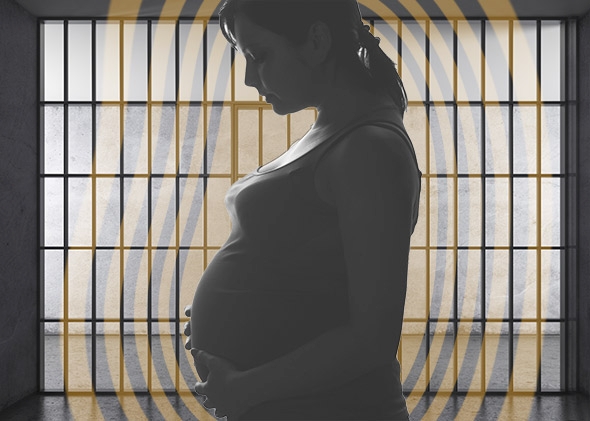
On Wednesday, Cindy Erazo, 29 years old, mother of a 10-year-old child, walked out of Ilopango Women’s Prison, that special hell El Salvador built for women. Cindy Erazo spent the last six years in Ilopango Women’s Prison for a crime she never committed, and even now her freedom is conditional. Given her story, every woman’s freedom in El Salvador and beyond is `conditional.’

In August 2014, Cindy Erazo suffered an obstetric emergency. She has said she was not aware at the time that she was pregnant. She was at a mall and started bleeding. She went to the restroom where she passed out. When Cindy Erazo regained consciousness, she was in a hospital bed, chained to the bed. She was immediately charged with having an illegal abortion. Cindy Erazo was promptly sentenced to 30 years in prison, in that special hell Ilopango Women’s Prison. Later, her sentence was reduced to 10 years, for aggravated assault. After six years, this week, Cindy Erazo won `conditional’ freedom. In so doing, she joins women such as Evelyn Beatríz Hernández Cruz, released in 2019, and Maira Verónica Figueroa Marroquín and Teodora Vasquez, both released in 2018. Since her release, Evelyn Beatríz Hernández Cruz has been informed that the State seeks to charge her yet again. Freedom for women, and not only is El Salvador, is `conditional’ to the extreme.

Starting in 1998, El Salvador banned all abortions. Previously, abortion had been illegal but generally not prosecuted.  El Salvador is one of six countries to ban all abortions. El Salvador opened hunting season on pregnant women; any woman who suffered a miscarriage was suspected of both having had an abortion and of having committed murder. Between 2000 and 2014, over 250 women were reported to the police. 147 women were prosecuted.  49 women were convicted – 26 for murder and 23 for abortion. Salvadoran women’s groups, such as the Citizen’s Group for the Decriminalization of Therapeutic and Ethical Abortion and Abortion for Reasons of Fetal Anomaly and the Feminist Collective, have waged a mighty campaign. Cindy Erazo’s release is in large part due to their persistent organizing.

Cindy Erazo leaves behind at least 18 women, caught in the overcrowded, toxic conditions of Ilopango Women’s Prison, none of whom have done anything wrong or illegal other than being women. Cindy Erazo was given `conditional’ freedom. When will she be free, and who will pay for the years of captivity? When and where does the witch hunt end? Where is the global outrage at the torture being visited upon women, especially young women, in El Salvador and beyond? 


(Photo Credit: BBC / Centro de derechos reproductivos)