The Republic of Chikurubi


What passes today for good news from the government of Zimbabwe? The 100-trillion dollar note? No. The rate of deaths from cholera exceeding the rate of inflation, having topped 2000? Not even close.  “The twisted arithmetic of crumbling Zimbabwe” that makes burials out of reach of ordinary peoples’ economies? Nope. Give up?

Good news in Zimbabwe is the release of two-year old bandit terrorist Nigel Mutemagawo, abducted, held in custody for 76 days, held at Chikurubi Maximum Security Prison for close to two weeks: “Medical reports show that during his abduction and continued detention for charges of banditry and terrorism, two year-old Nigel was assaulted and denied food and medical attention by his captors.” Two years old. Talk about early childhood education. Not to worry, though. The news isn’t all good. Nigel’s parents, Violet Mupfuranhehwe and Collen Mutemagawo, remain `in custody’, and Nigel was sent to MDC officials, “who are total strangers.” Zimbabwe has figured out both the national security issue and child care. Democratic socialists, take note.

Jestina Mukoko appeared in court Thursday, January 15: “Jestina Mukoko, a well-known human rights campaigner in Zimbabwe, was forced to kneel on gravel for hours and was beaten on the soles of her feet with rubber truncheons during interrogations, she said in a sworn statement recently submitted to a court in Zimbabwe.” Not to fear, the rule of law still presides in Zimbabwe: “Zimbabwe’s director of prosecutions, Florence Ziyambi, said Thursday that Mukoko’s rights were not violated by her detention.`She can ask for remedies and compensation for the ill treatment she claims she went through,’ Ziyambi said.” In 100-trillion dollar notes, no doubt.  It’s a good thing that Zimbabwe’s Attorney General had already declared Mukoko a national and societal threat and had said that she would stay in jail, no matter what the courts decide.

While the Big Parties do and don’t negotiate, people, ordinary extraordinary, are changed, perhaps forever. Beatrice Mtetwa said of Jestina Mukoko, after her two court appearances on Thursday: “It’s like she’s no longer the same person they took away.” She is no longer the same person they took away.

Where was Jestina Mukoko taken? Where was Violet Mupfuranhehwe taken?  “All the female detainees, including the former ZBC broadcaster, are being held in solitary confinement in the male section of the notorious Chikurubi Maximum Security Prison – an area of the prison reserved for only the hardest of criminals.” Perhaps this is the government’s plan, to change the name and substance of the country from Zimbabwe to Chikurubi: worthless money, rampant disease, collapsed infrastructure, feuding gangs committed to interminable conflict. Sounds right.

What if every country were renamed according to its most notorious prison? The Republic of Zimbabwe could become the Republic of Chikurubi. The United States of America could become the United States of Guantanamo. The Republic of Turkey could become the Republic of Imrali. The Republic of Indonesia could become the Republic of Nusakambangan. The Commonwealth of Australia could become the Commonwealth of Christmas Island. The possibilities of translation are endless. They form a chain, an archipelago, around the globe. Where were Jestina Mukoko and Violet Mupfuranhehwe taken? The Republic of Chikurubi. Where did they go? That remains to be seen.

(Photo Credit: Reuters / Philimon Bulawayo)
Refugees here, there, and everywhere

Refugees have been in the news a lot lately. The strikes on Gaza offer one of the most prominent and horrifying examples happening right now.  Zimbabweans fleeing the Mugabe regime, often classified as economically displaced, fall under the category of ¨refugee¨ in mainstream reporting. The U.S. occupation of Iraq has led to the displacement of millions of individuals and families, creating a massive refugee crises in which over 4 million have left their homes to find refuge in other parts of Iraq, Syria, Jordan, or other neighboring countries. Reporters cover humanitarian crises in Darfur, Bangladesh, Afghanistan, Chad, Georgia . . . and the list continues. Given this broad naming of displaced individuals around the world as refugee, it would appear that all of these groups fall similarly under the category of refugee, although the historical and geopolitical contexts are markedly different. 

This undifferentiated category of refugee seems to pop up, well, everywhere.

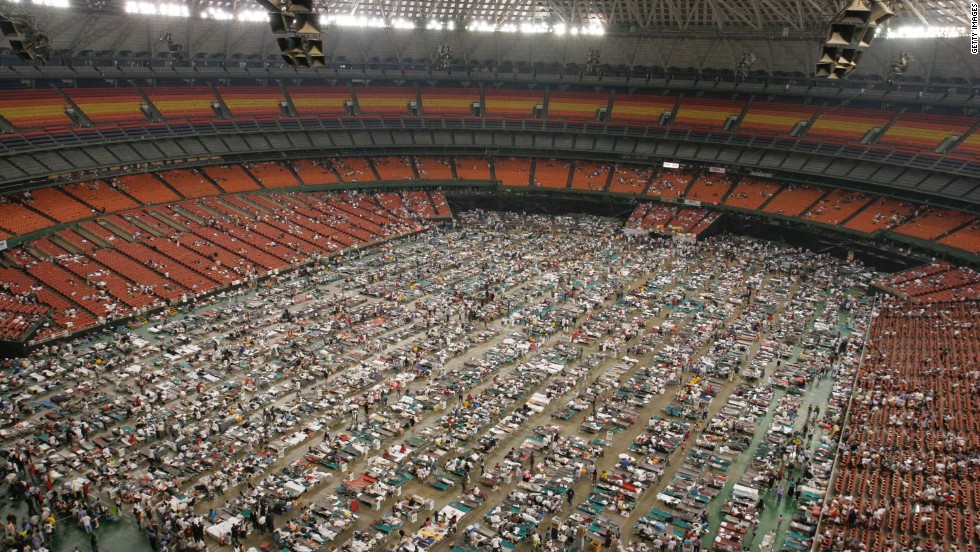
After reading a recent article in The Nation about New Orleans and the aftermath of Hurricane Katrina, referenced in Dan Moshenberg´s recent post, I was caught off guard by A.C. Thompson´s mention of refugees.  Recounting race-specific violence following the storm, Thompson says, ¨Facing an influx of refugees, the residents of Algiers Point could have pulled together food, water and medical supplies for the flood victims.¨ Refugee is just sort of slipped in there, no? Indeed, refugee became the contentious, yet popular, way of identifying displaced New Orleanians following the storm.  However, while Thompson takes on the very important task of discussing forgetten histories of extreme white on black urban violence, he refers to the refugees rather nonchalantly.  Information about where the refugees came from and why they might have fallen into the category of refugee remains curiously absent. Moreover, his portrayal of New Orleans is decidedly male, or at least male-normative, as all of the active players in the article are men. As we continue to remember Hurricane Katrina, we must ask the following question that few critics taken into consideration: where were/are New Orleanian women displaced by the storm, the majority of whom were poor and black? How did refugeeness following the storm differ along the lines of race, class, gender, location, age, and ability?

It is the frequent, unspecific, and gender-neutral use of the label refugee that concerns me.  While the United Nations and individual nations maintain their respective legal definitions of refugee status, the name is used all too frequently in reporting about conflict and disaster to describe those who are victimized and desperately in need of aid, often perceived as coming from the largesse of the West.  It seems that refugees, whether considered to be economic, political, religious, or otherwise, remain largely nameless, faceless, and desperately in need of help.  

One of the most curious examples I have recently seen is the labeling of refugees fleeing Ciudad Juarez and moving to El Paso.  According to Alfredo Corchado of the The Dallas Morning News, Senator Eliot Shapleigh says, “Just like the good people of Houston took in the refugees from New Orleans, El Pasoans will also help the refugees from Juárez.¨ Similar to Thompson´s portrayal of Algiers Point, all of the active players in the El Paso-Ciudad Juarez area are men. Given the use of label refugee to describe crises around the world and the increasingly high levels of femicide in Ciudad Juarez, this portrayal of ¨refugee¨ as narco-economic, male migrant is painfully shortsighted and disturbingly problematic.  

In the majority of representations of mass displacement, the situations of women, especially women of color, remain obscured.  These women, the third world `others´ lost in the traffic of disaster, conflict, and humanitarianism, exist outside of and below public intelligibility and political recognition. Given current reporting practices concerning refugees, especially those circulating in the U.S. public sphere, these feminized groups remain largely un-trackable and unspeakable.


(Photo Credit: CNN)

WIBG on Facebook

We started a Women In and Beyond the Global Facebook group!

If you are a Facebook member, please join the group to connect and share ideas with transnational feminists working around the world.

If you are not on Facebook yet, be sure to join here so that you don´t miss out on WIBG events, discussions about women in global households, prisons, and cities, and opportunities to colloborate with feminists.

“Mugabe’s wife raids bank vaults”: who built the vaults?

The headline reads: “Mugabe’s wife raids bank vaults”. Remember Brecht’s poem about the worker who reads history, which ask, “Young Alexander conquered India. He alone?” She alone?

Grace goes shopping, Bob goes for `reflection.’ What does he see when he looks in the mirror? Who does he see? Does he see the starving, the dying, the tortured? Does he see Jestina Mukoko? Reporters Sans Frontieres do. They wrote yesterday to “Tomaz Salamao, the executive secretary of the Southern African Development Community (SADC), urging his regional organisation to put pressure on President Robert Mugabe’s government to release journalist and human rights activist Jestina Mukoko as soon as possible. As soon as possible is always too late. Ask the citizens and residents of Gaza. Ask the citizens and residents of Zimbabwe.

The Times today posted a Civicus video made largely in Zimbabwe over the Christmas holiday. It’s called `Inside Zimbabwe’. Not a single woman is interviewed. They must have all been in Malaysia shopping. But it does have some great lines: “South Africa is acting like a condom to Robert Mugabe.”

Who built the bank vaults? Not Grace, not Bob, not the South African government nor the South African corporations, not SADC. Cooks, domestic workers, farmworkers, and others. As soon as possible is always too late.

 (Photo Credit: Civicus)

Everyone is astounded: Chadian women making freedom

Africa may face centuries of poverty. Social Watch has developed a basic capabilities index  that shows that economic growth does not necessarily produce drops in poverty levels. In fact, “the basic needs required to escape poverty persists; even more, it is increasing, in spite of impressive economic growth in most developing countries.”  Meanwhile, according to the Social Gender Equity Index, “More than half the women in the world live in countries that have made no progress in gender equity in recent years.” And this has nothing to do with lack of resources. It’s about decisions that governments, that people in government, mostly men, make … freely.

Everyone is `astounded’: “Reed Brody, a campaigner with Human Rights Watch, said it was `astounding’ that 60 percent of the world’s countries have made no progress in recent years in expanding female access to education. He called for increased investment in the realisation of basic entitlements as part of a `human rights stimulus package. When you free women from the discrimination and poor health that they face in their daily lives, you unleash the powers of half of humanity to contribute to economic growth,’ he said ‘.” `Free women’ to become productive laborers; `free women’ to sell their free labor freely? At the heart of the human rights version of women in the world is precisely this liberal bourgeois capitalist model: the problem with women is women aren’t free laborers.

As long as freedom is viewed as an economic term, as long as freedom is `justified’ because it produces and reproduces `economic growth’, there will be no freedom. But don’t worry. Global warming will lead to a perpetual food crisis. In the by and by of the perpetual food crisis, we will all be free to starve. According to climate researcher David Battisti, “This is going to unfold in the next 100 years.” So, the developing world need not worry about basic this and gender that. Time is no longer of the essence, time has become the substance.

Where is all this food not going? According to Mike Davis, to urban slums in the global neoliberal metropole. For Davis, the failed state is more often than not a failed city, and the role of empire is to figure out what do about the failures: “The most interesting thing happening right now is the joint efforts of the US and Brazil in Port-au-Prince, Haiti. I would argue that the US sees that effort as a possibility to test and develop strategies to stabilise cities by means of security measures, city planning and social efforts.” The militarization of social space is not new, and, as women have known for centuries, it emerges as much from boardrooms and bedrooms as it does from war rooms. There must be something more interesting.

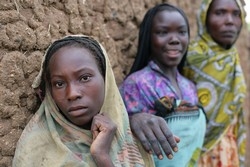
How about this: a hundred or so women in Chad, carrying knives and sticks and who knows what else, march through the streets, organize, take charge, do things. Cécile Moutouba. Larlem Marie. Others who chose to remain anonymous. Freedom.

Freedom, not because it’s economically viable, but because it’s freedom. The refusal to accept bare life, the refusal to accept extermination, the refusal to accept violence, the refusal to accept `the acceptable’, the refusal to accept failure. These hundred or so women in Chad are making freedom, and that production is as real as any goods production, as any economic growth that doesn’t pull women out of poverty or anything else.

(Photo Credit: Unicef/Giacomo Pirozzi)

Maids: bais, confiage, mujeres unidas y activas, pigavdrag, vårdnadsbidrag

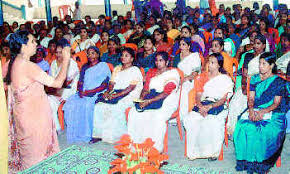
Mumbai’s bais, domestic workers, received a modicum of recognition when the state of Maharastra passed the Domestic Workers’ Welfare Board Bill at the end of December. Maharastra is the seventh state to pass a domestic workers’ bill. There are an estimated 500,000 domestic workers, mainly women, in Mumbai alone, and over a million across the state, according to government estimates. Domestic worker unions and associations, who have been lobbying for such a bill for twenty years, are supportive. Meanwhile, “State labour minister Nawab Malik, though, has termed this a “welfare measure”, adding that enforcement (punishment for violation) would not be considered at this stage.”  When it comes to domestic workers, the rule of law always translates them into recipients, or worse clients, of welfare.  The legislation emerged from women domestic workers’ decades long sustained campaigns.

There’s the rule of law and there’s the rule of household. Togo has confiage, or entrustment. Rural families send their daughters to live with urban relatives. The girls are supposed to get education, and in exchange they are to `perform’ domestic chores. Here’s what’s been documented: beatings, deprivation, rape. Guess what? The conditions of adult domestic workers, all women, is just as bad. In 2007 the Togolese government categorized domestic labor as one of the worst forms of labor. So, CARE International worked with a recruitment agency to help them improve their working conditions. Then the agency helped the domestic workers to organize a domestic workers’ union. Workers complain to the agency, and the agency places them in a different household. The offending household loses a domestic, for two seconds. No negotiations, no consultations, no strikes, no change in dominant order. No unions.

In the United States: “Employed mostly in private homes, domestic workers experience levels of exploitation and physical abuse rarely seen elsewhere. Mostly women and of color, they face those conditions without the protection of collective bargaining or other union tactics. As nannies, caregivers for the elderly, and housekeepers, they have remained almost invisible, their lives often akin to modern-day slavery. An estimated 1.5 million (U.S. Census Bureau) face these conditions.” As in Togo, as in India, domestic workers, mostly women, are organizing. In the U.S., the National Domestic Workers Alliance, the National Domestic Workers Congress, a myriad of local and regional organizations are women pulling women together. Mujeres unidas y activas.

In India, Togo, the United States, in recent decades, domestic labor has become a key of neoliberal economic `development.’ In Sweden, the neoliberal assault on women involved pigavdrag, maid deductions, and vårdnadsbidrag, care support. The state subsidizes private, individual childcare. Who suffers? Working class and low income women. What is under assault? Feminist political economy: “Vårdnadsbidraget delivers the final blow meant to send women back into the household. After the long struggle to free women from their homes, women are now offered 3000 Swedish crowns (ca 320 ) per month to stay at home with their children. This is obviously not an offer aimed at single mothers: it is impossible to survive on this sum in Sweden. Those lucky women who have a real man who brings home a big salary, however, can contentedly stay at home and accept the pocket money. And so women are again made financially dependent on men. The pigavdrag and the vårdnadsbidrag are both solutions only for the upper classes, who don’t want to pay the real price for a maid or send their children to a kindergarten. They represent the government’s mobilization of several types of oppression, which they have the guts to call a new `gender equality politics’.”

When it comes to domestic workers, the State translates labor law into welfare or goes on the attack. In India, Togo, the United States, Sweden, and everywhere else, women domestic workers are organizing their own structures.

(Photo Credit: The Hindu)

Root Shock, 2009

Two novel and not so novel forms of urban renewal in the new and renewed year.

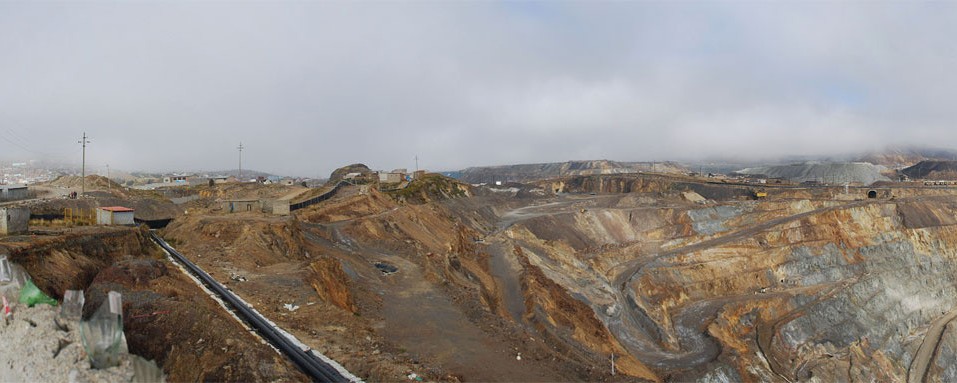
One: Have a pit mine gobble up your city.  Along the way, try to make sure that 82% of women of childbearing age (what is that anyway?) have high levels of toxic substances in their blood. That’s what happening in Cerro de Pasco, in the central highlands of Peru. Right to the city? More like dart to the heart of the city. Not to worry, though, the McMansion trend — buy a house, tear it down, build a monster, piss on your neighbors — is slowing down.

Two:  Try a few weeks, maybe more, of aerial bombing attacks followed by ground invasion. That’ll clear out that seedy city center you’ve wanted to redevelop for so long. In Gaza, Filipinas, mostly married to Palestinian residents, refuse to leave and decide to stay. Both. GMA News describes this as “`love’”. Their quotation marks. I won’t get into that, but it is interesting that they also feel compelled to note that only one of the Filipinas is an overseas Filipina worker. So? Do domestic workers not establish roots, merely because they `only’ stay for five or ten or twenty or fifty years? Really? Anyway, a reminder, as if you needed it, that Gaza is like everywhere else: local and transnational. And that like everywhere else, women make important, and diverse, decisions and take action.

Mindy Fullilove, in Root Shock: How Tearing Up City Neighborhoods Hurts America, and What We Can Do About It, describes the racial politics of `blight’ and `urban renewal’ legislation and policy in the United States. Welcome to Cerro de Pasco, where women’s blood is being poisoned, welcome to Gaza City, where, given an opportunity, women under attack decide to stay and refuse to leave. Welcome to urban renewal, January 2009.

(Photo Credit: Vice/Arthur Holland Michel)

Zimbabwe: what else can we say?

Jestina Mukoko

Nigel Mutamagau, a two year old, abducted with his parents and now in jail, has been beaten and has not received medical attention. Jestina Mukoko, director of the Zimbabwe Peace Project, was abducted, is now in jail, and reports suggest that, along with torture, she may be suffering poisoning.

Welcome to Zimbabwe, where the rule of law means once you’ve been abducted and disappeared for a while, you’re meant to be grateful if you show up in jail and then in court. Where’s the gratitude, where’s that thank you note to the government, to ZANU-PF? Last week, in “Fighting for Jestina Mukoko,” an interview with Elinor Sisulu and Barbara Nyangairi of the ZPP, Mukoko was described as a role model because she would speak publically in a place where none do, a zone of collective social self abandonment, Zimbabwe: “”The day before she was abducted she spoke about women and police violence, in an address to the women’s coalition in Mount Pleasant.” When her lawyer, Beatrice Mtetwa, of Zimbabwe Lawyers for Human Rights, finally saw Mukoko, she reported: “We saw Jestina. Of course someone who has been tortured cannot look good. She was seen by a doctor who is working in cahoots with her torturers, they [usually] want to make sure [the effects of] her torture [are] not too visible.” That was last Sunday.

Jestina Mukoko is still in jail; Beatrice Mtetwa still represents her and still speaks out. Mukoko was kidnapped on December 3, was disappeared for three weeks and then `magically’ appeared in court on December 24. Mtetwa filed motions to know who her abductors were, to dismiss any information obtained under `duress’, aka torture, and to be allowed to go to hospital for treatment. Friday, January 2, all motions were denied: “`The law has absolutely broken down in Zimbabwe,’ Mtetwa told journalists outside the court. `If a High Court can refuse to investigate an admitted kidnapping, refuses a patient a right to medical treatment — to a place she can get treatment — what else can we say?’”

What else can we say?

At the very least, we can speak, shout, sing their names: Nigel Mutamagau, Jestina Mukoko, Barbara Nyangairi, Beatrice Mtetwa, Elinor Sisulu. We can try to find the names of others who have been abducted but for the moment remain disappeared, and we can invoke the names of those `whose bodies have been identified.’ Let these names engulf and erase the names of the murderers who run Zimbabwe, the names of the murderers of adjacent countries who support the murderers who run Zimbabwe, the names of the murderers of distant countries who have supported the murderers who run Zimbabwe.

(Photo Creidt: Frontline Defenders)

The bombing of the prison set free . . .

Paul Klee: Angelus Novus, 1920

For over two years Gaza has been referred to as the largest open-air prison on earth. Vivian Salama wrote yesterday: “Gaza has already been shut to the outside world for some 19 months, making it more of an open-air prison for its 1.5 million residents.”

And then Israel struck, and reminded the world that there are prisons within the prison. According to Amira Hass, “At noon Sunday, the Israel Air Force bombed a compound belonging to Gaza’s National Security Service. It houses Gaza City’s main prison. Three prisoners were killed. Two were apparently Fatah members; the third was convicted of collaborating with Israel. Hamas had evacuated most of the Gaza Strip’s other prisons, but thought this jail would be safe.” What is safety in a prison within a prison? According to the AP, “The bombing of the prison set free dozens of prisoners, who rushed out from their cells, carrying bags of clothes and blankets with them as they scrambled over rubble, fleeing Hamas police.” The prisoners were set free. What is freedom in the largest open-air prison in the world? Not much. As Amal Hassan, 38, a mother of three children, said, at the end of the same AP report: “My children are wetting the bed, they cry when they hear planes…I don’t know what’s going to happen next. Maybe the next bomb will fall here, maybe the next person killed will be one of us”. One of us. One of us?

Safety, freedom, prison. You know what happens to prisoners who are freed by Israeli weapons in Gaza? Ethan Bronner and Taghreed El-Khodary do: “In the fourth-floor orthopedic section [of Shifa Hospital], a woman in her late 20s asked a militant to let her see Saleh Hajoj, her 32-year-old husband. She was turned away and left the hospital. Fifteen minutes later, Mr. Hajoj was carried out by young men pretending to transfer him to another ward. As he lay on the stretcher, he was shot in the left side of the head.

“Mr. Hajoj, like five others killed at the hospital this way in 24 hours, was accused of collaboration with Israel. He had been in the central prison awaiting trial by Hamas judges; when Israel destroyed the prison on Sunday he and the others were transferred to the hospital. But their trials were short-circuited.

“A crowd at the hospital showed no mercy after the shooting, which was widely observed. A man in his 30s mocked a woman expressing horror at the scene.

“`This horrified you?’ he shouted. `A collaborator that caused the death of many innocent and resistance fighters?’

“Sobhia Jomaa, a lawyer with the Palestinian Independent Commission for Citizens’ Rights, said 115 accused collaborators were in the central prison. None had been executed by Hamas since it took office and their cases were monitored closely.

“`The prison provided the sole protection to all of them,’ she said. `But once it was bombed, many wanted to take revenge.’”

A woman came to find her husband, another woman explains, when prisoners are freed by invading forces, they are freed into the hands of revenge. None of them had been executed by Hamas.

The UN reports that as of the fourth day of the invasion, 320 Palestinians were killed, of whom 62 were civilians. In a separate report, a UNICEF spokesperson notes, “Civilians are paying the price.” Not for the bombing, although there is that, but rather “for a long blockade.”

When nations war, civilians suffer. It is tragic and it is never a great surprise, though many claim shock. But this, this is not nations going to war. This is one country bombing a prison in the name of national security and peace. The bombing of the prison set free … the angel of history: “This is how one pictures the angel of history. His face is turned toward the past. Where we perceive a chain of events, he sees one single catastrophe which keeps piling wreckage upon wreckage and hurls it in front of his feet. The angel would like to stay, awaken the dead, and make whole what has been smashed. But a storm is blowing in from Paradise; it has got caught in his wings with such violence that the angel can no longer close them. This storm irresistibly propels him into the future to which his back is turned, while the pile of debris before him grows skyward. This storm is what we call progress.” [Walter Benjamin, “Theses on the Philosophy of History”] What is progress in a prison within a prison? What is progress in the largest open-air prison in the world? This is.

(Image Credit: The New York Review of Books)

Here’s what isn’t in dispute: Dymond and Clara

Dymond Milburn

Dymond Milburn is in dispute with more than the police force of Galveston, Texas. On Wednesday, The Houston Press reported an incident, two years earlier, involving Dymond, African American, 12 at the time, in front of her family home: “a blue van drove up and three men jumped out rushing toward her. One of them grabbed her saying, `You’re a prostitute. You’re coming with me.’ Dymond grabbed onto a tree and started screaming, `Daddy, Daddy, Daddy.’ One of the men covered her mouth. Two of the men beat her about the face and throat. As it turned out, the three men were plain-clothed Galveston police officers who had been called to the area regarding three white prostitutes soliciting a white man and a black drug dealer.” Three weeks later, the police came to Dymond’s school, where Dymond is an honors student, and arrested her for assaulting a public servant.

On Thursday, Radley Balko picked up on the story, and then it took off into the blogosphere. Later, Balko updated his account: “Here’s what isn’t in dispute:  Milburn was wrongly targeted during a prostitution raid.  The police were looking for white prostitutes.  Milburn is black.  She was apprehended by plain-clothes narcotics officers who emerged from a van as she stood outside her home.  She resisted.  The police have acknowledged they targeted the wrong house.  Three weeks later, Milburn was arrested at  her school, in front of her classmates, for `assaulting a public official.’  At some point, her father was arrested on a similar charge.  The judge declared a mistrial on the first day of Milburn’s trial.  According to Vogel [the Houston Press reporter], she’s scheduled to be tried again in February.”

J.D. Tucille, writing in response, concluded: “So the Galveston Police Department’s position is that it’s a criminal act for a little girl to resist being dragged into a van by strange men? If that’s the lesson the police want to send to the community, then it’s nothing more than an association of thugs intolerant of the slightest challenge to its authority. It’s certainly not an agency for preserving the peace and defending the rights of local residents. A police department like that shouldn’t just be sued; it should be disbanded.”

We already heard, the week that Dymond Milburn `became news’, that sex workers in the United States face police violence, and if you didn’t already know that African American women and girls face police violence and, even more, police sanctioned violence, A.C. Thompson’s “Katrina’s Hidden Race War” and Rebecca Solnit’s “The Grinning Skull: The Homicides You Didn’t Hear About in Hurricane Katrina” would remind you. Brent Staples has seen “Without Sanctuary”, an exhibition that exposes U.S. lynching cultural histories, and knows that “lynching … was a method of social control”. A Black girl in Texas, a state notorious for the quantity and quality of lynchings, hung to a tree for safety and freedom. Welcome to the 21st century.

White supremacist violence against Black people, Black communities, Black knowledge and culture, is not new. State violence against Black girls is not new. State use of sex and sexuality – what were you doing on that street or what were you doing out at that late hour – to justify violence against women, and in particular against Black women, is not new and is not news.

The occlusion of sexual violence that lies at the heart of all power relationships and hierarchies is also not new and never makes the news. Writing about the case of Brian Gene Nichols, accused and convicted to many life sentences without parole, for having beaten a courthouse sheriff’s deputy, and having killed a judge, a court reporter, a sheriff’s deputy, and an off-duty federal officer,  Marie Tesler finds that what is continually scanted, or not reported at all, is that Nichol’s initial charge was one of sexual assault, and it’s one that proved exceedingly difficult for a jury to take seriously. When it comes to sexual violence, the jury is always out. For Tesler, “Domestic violence and sexual violence are the DNA of violence throughout society. It’s where violence begins.”

What if the story involved the DRC, rather than Texas, and the Black girl was Clara, instead of Dymond: “That night I was coming back from my sister’s home when I was accosted by men in civilian clothes in a jeep with blacked-out windows at about 8pm. They showed me police badges,” she said. The men told Clara she was not allowed to be outside in the night and she climbed into their car expecting to be driven home to her parents. But the men drove her to the Ngaba district of Kinshasa where they ordered her to pay a 70 000 CDF ($120) fine. “I told them: ‘I am young. I do not have that kind of money.’ But they took the 1 500 CDF (about $3) that I had on me and my gold chain as money for transport,” she said. “Then they took me to a dark place. As two men raped me, the driver watched,” she said, adding that the men “gave me a lot of pain. I still have pain”.” What’s the distance between men who are police and men who claim to be police, between men who rape and men who `merely’ beat and injure, between fines and arrests, between Kinshasa and Galveston or Atlanta or New Orleans or wherever you are at this moment? The distance is important, and so is the shared space.

As more men commit more rape and sexual violence more intensely and furiously in one part of a country, others begin to do so in another. Call it liquidity. The cleansing niceties of geopolitical distance, rural – metropolitan or periphery – capital or dangerous – safe or bare life – my life, are worse than alibis. From the Democratic Republic of the Congo to the democratic United States of America, sexual violence, and even more the refusal by State and civil society to acknowledge and address sexual violence, `inspires’ rampage, and then the world expresses shock and horror, again, at the brutes and savages, once more. Pain is the currency, it is a quantity: “they gave me a lot of pain.” Pain is the trace, it is a quality: “I still have pain.” In patriarchy, pain has ever been the gift women are meant to receive. In global capital, women’s pain, in particular the pain of Black women, in particular the police sanctioned pain of Black women, is identity. Because the pain is identical and cannot be in dispute, no distance divides Dymond from Clara. Where is the State that acknowledges their pain and does more than acknowledge? Where are the reparations? Where is the place where justice, rather than violence, begins?


(Photo Credit: Breaking Brown)