India’s prison system is at 155% capacity, 80% await trial, the process is the punishment

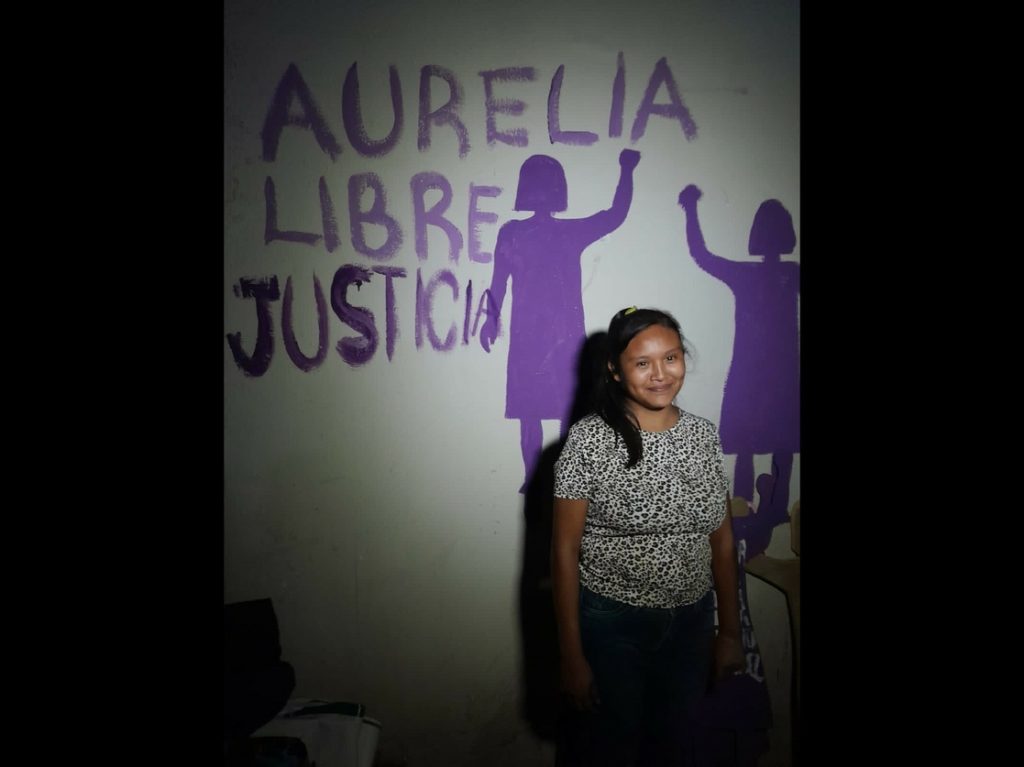
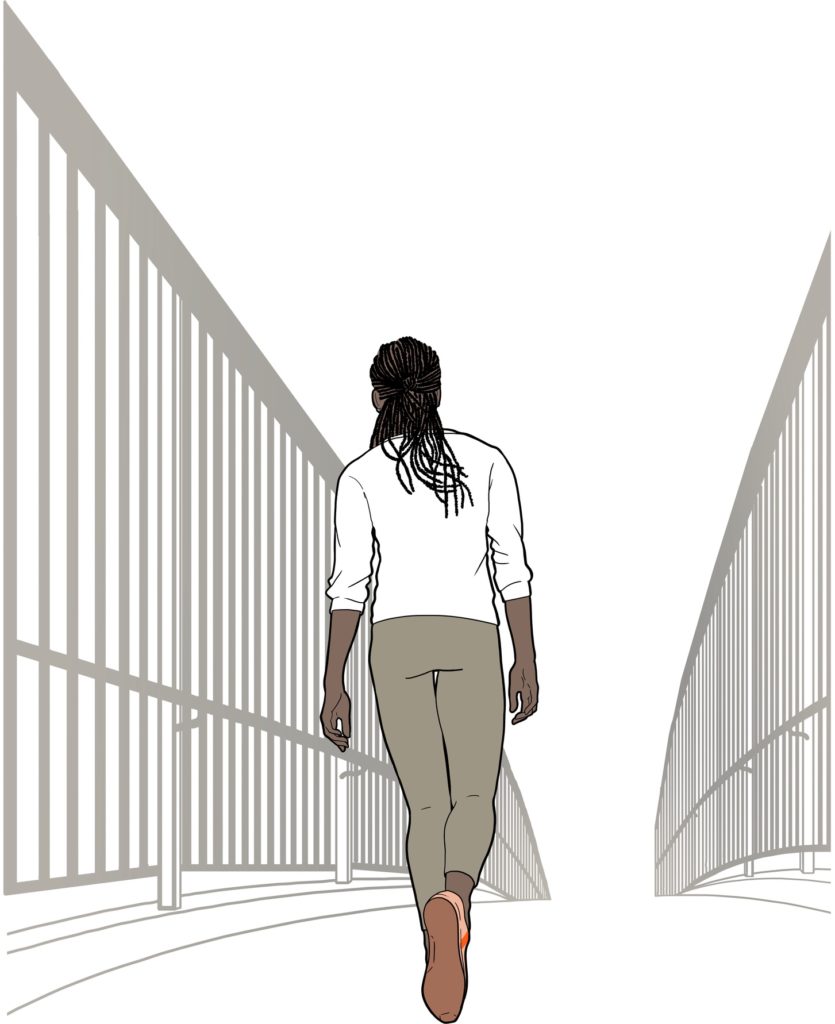
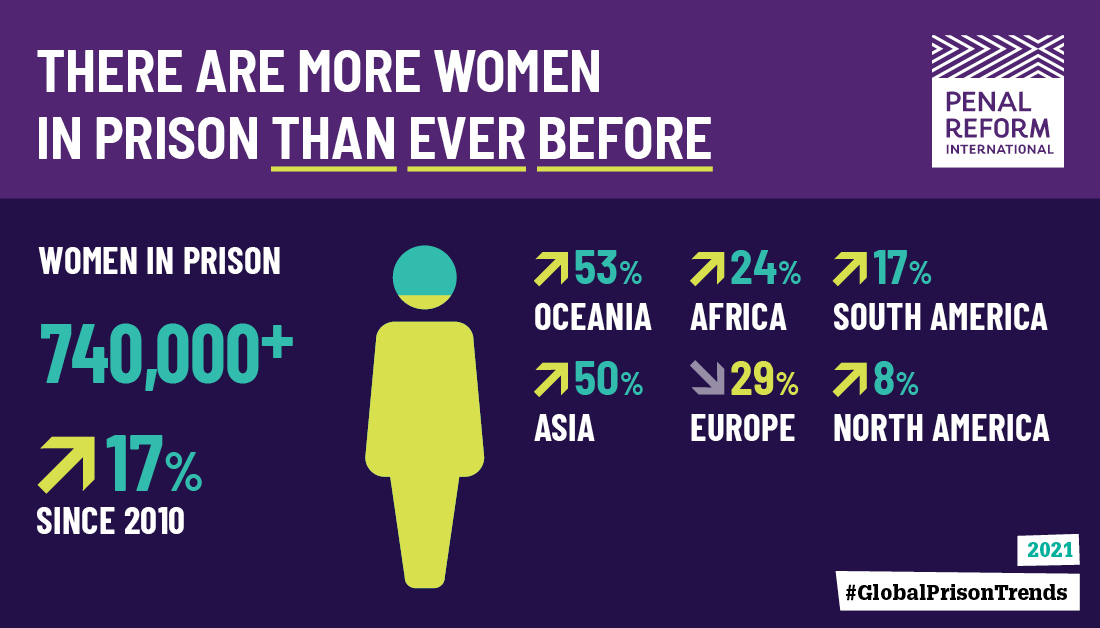
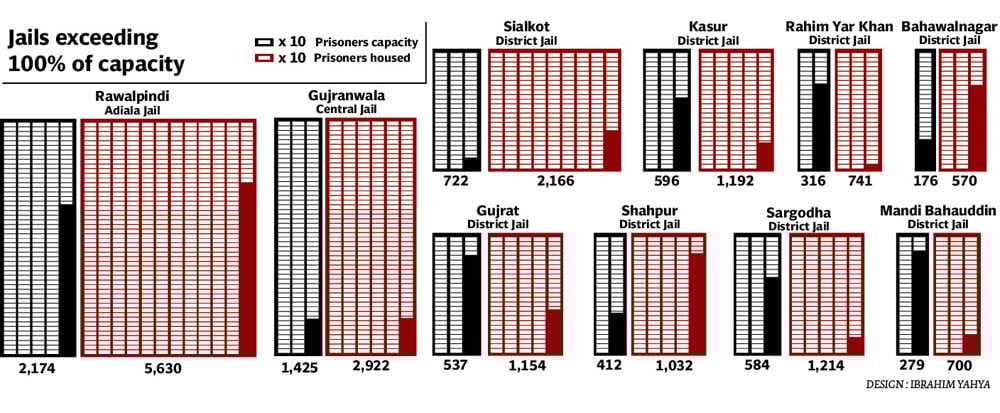
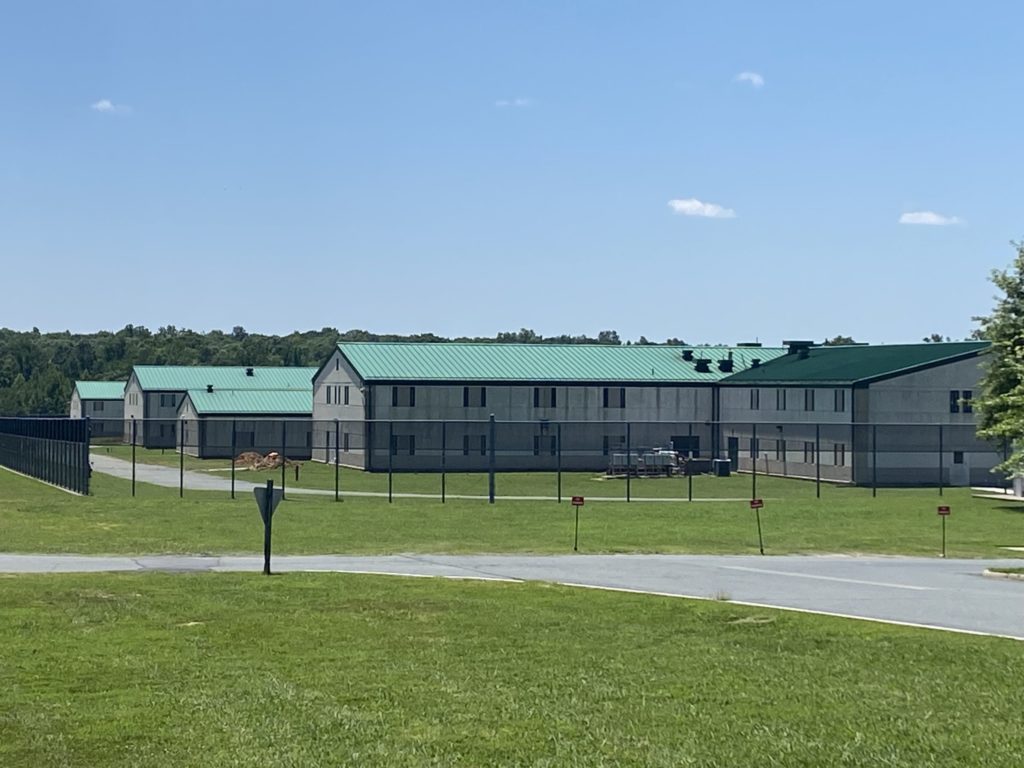
India’s prison system, consisting of 1,378 prisons, is designed to hold a maximum of 403,739 people. On July 16, Chief Justice of India N.V. Ramana noted that the prisons held 610, 000 people. By July 17, that number was just under 620,000. Today, July 19, that number is 626,259, and rising. As of last count, India’s `correctional’ system is currently at 155% capacity. According to Chief Justice Ramana, 80% of incarcerated people are awaiting trial and presumed to be innocent. As Chief Justice Ramana noted, “In the criminal justice system, the process is a punishment. From indiscriminate arrest to difficulty in obtaining bail, the process leading to prolonged incarceration of undertrial prisoners needs urgent attention. Prisons are black boxes. Prisoners are often unseen, unheard citizens.” While the cloak of coerced silence and visibility cuts across several sectors, in each, the epicenter is women, and that is intentional.

Where are the women? Everywhere and nowhere. When it comes to overcrowded carceral spaces for women, six states lead: Uttarakhand, 156.5%; Uttar Pradesh, 140.6%; Chhattisgarh, 136.5%; Maharashtra, 105.8%; Jammu and Kashmir, 104.1%; and Jharkhand, 102.6%. Uttarakhand, Chhattisgarh, Jammu and Kashmir, and Jharkhand have no dedicated women’s jails; women are housed in enclosures in men’s prisons, designed for men. The process is the punishment. While this `unprecedented overcrowding” is shocking, it’s no surprise.

In 2015, 612 women in Tihar Jail, New Delhi’s Central Jail, refused to accept `the process’. They informed the State that they had been in prison awaiting trial for more than half of the maximum sentence for their various crimes. Responding to a letter by Supreme Court Justice Kurian Joseph, the Delhi High Court decided to take over. Justice Joseph had written directly to the Delhi High Court Chief Justice G. Rohini, the High Court’s first woman Chief Justice, “earnestly” requesting her “to take up the matter appropriately so that the cry for justice is answered in accordance with law with the promptitude with which a mother responds to the cry of her child”. In a plea to Justice Joseph, the 612 women in Tihar Jail described the cruel separation from their children six years and older; the severe overcrowding of the women’s jail; the insufferable delay in disposal of their cases; the unjust bail bonds conditions; the “lack of sympathy” from the jailhouse courts and doctors; and the inadequacy of legal aid made available to women prisoners. The women asked to be released immediately on personal bond. Testifying before the High Court, the Delhi government agreed: “Out of 622 inmates, 463 are undertrial prisoners, and there are only 159 convicts.” The Delhi government advocate noted that Jail No. 6, the women’s jail, was designed to hold a maximum of 400 women, and at that point, seven years ago, held 622. Effectively, one State agency told another State agency it was time to let my non-people go.

In 2019, after a bit of a delay, the National Crimes Record Bureau, NCRB, finally released its Prison Statistics India 2016 Report, which reported that, in 2016,  67% of India’s prisoners were “undertrial”. 72% of women prisoners were awaiting trial. Much more than with male prisoners, women prisoners were overwhelming young, minimally educated, poor … and formally innocent. Additionally, there were 1,809 children in prisons and jails across India, and they were all cared for by their incarcerated mothers. Of the 1809 children living behind bars, 78% of their mothers were awaiting trial, minimally educated, poor … and formally innocent.

And then came Covid.

In 2020, India’s Supreme Court, on its own, recommended various measures to control the spread of Covid in prisons and jails. In 2021, the same Supreme Court ordered state authorities to reduce arrests and decongest jails and prisons. States convened “high-powered committees” which came up with presumably high-powered plans. Today, those prisons and jails suffer unprecedented overcrowding. The last two years saw a 30% rise in incarceration numbers. From 2019 to this year, Haryana’s prison population went from 105.78% capacity to 224.16%. Uttar Pradesh went from 167.9% to 198.8%. Bihar went from a `respectable’ 94.2% to 164.3%.

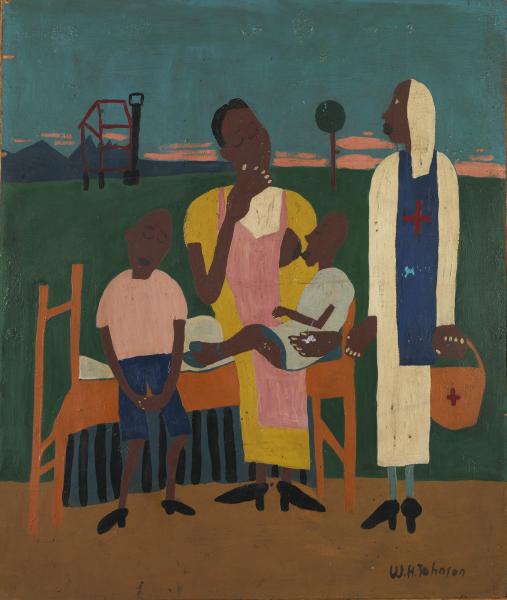
Maharashtra has 60 central and district jails. Of them, one, Byculla Women’s Jail, is the only one dedicated for women and children. In 2020, Byculla Women’s Jail was at 101.5% of capacity, in the midst of the ferocious first wave that hit India, and Mumbai in particular, where Byculla is located.  On March 31, 2020, Byculla, capacity 200, held 352 women. That’s 176% occupancy rate.  In September 2021, when Covid raged through Byculla, the jail held close to 300 womenAccording to activist Sudha Bharadwaj, her Byculla unit housed 75 women. It had a maximum capacity of 35. Women slept side by side by side on the floor, each on a mat the “size of a coffin. Overcrowding becomes a source of fights and tensions. There’s a queue for everything – food, toilets.” 24% of the women in Sudha Bharadwaj’s unit were infected with Covid: “The judiciary should consider decongesting our jails more seriously. Even during the pandemic most people did not get interim bail to return to their families.” In April 2021, Byculla accounted for 33% of the Covid cases in Mumbai’s five jails.

The judiciary should consider decongesting our jails more seriously. The judiciary did consider decongesting the jails more seriously, and today the women’s carceral spaces are more overcrowded than ever. For women in India, the process – rule of law, due process, presumption of innocence, innocence itself, justice itself – is the punishment.


(By Dan Moshenberg)

(Art Work: Arun Ferreria / Free Them All)

Hope in a time of choler: From Thailand to Mexico to Switzerland to Slovenia to Ukraine, “hope has a place”

The Rainbow Coalition for Marriage Equality campaigns outside Thailand’s Parliament in support of Marriage Equality.

In his concurring opinion in the Dobbs v Jackson Women’s Health Organization, Justice Clarence Thomas wrote, “For that reason, in future cases, we should reconsider all of this Court’s substantive due process precedents, including Griswold, Lawrence, and Obergefell. Because any substantive due process decision is `demonstrably erroneous’, we have a duty to “correct the error” established in those precedents.” That is, `we’ have a duty to do away with Constitutionally protected legalized same-sex relationships and marriage equality, respectively, as well as respect, mutuality, and democracy. That decision was handed down June 24, 2022. As Virginia State Senator Adam Ebbin noted, “Nationally, it is clear there is a bull’s eye on the LGBTQ community.” Nationally … and globally. On June 20, the Osaka District Court ruled that the national ban on same-sex marriages is constitutional. (Last year, in “a landmark ruling”, the Sapporo District Court found the ban unconstitutional.) In both Hungary and Romania, national legislatures are considering so-called “gay propaganda” laws, of the sort instituted by Russia in 2013. Welcome to July 2022, where the Thunderdome continues to dominate our attention, but it’s not all gloom and doom. These are grim times. But they are not without hope. Hope has a place, from Thailand to Slovenia, between and beyond.

In Ukraine, faced with cataclysmic prospects, over 28,000 people signed a petition calling for legalization of same-sex marriage. As Anastasia Andriivna Sovenko, author of the petition, wrote, “At this time, every day can be the last. Let people of the same sex get the opportunity to start a family and have an official document to prove it. They need the same rights as traditional couples.” President Volodymyr Zelensky has ten days to respond. When every day can be the last …

In September 2021, 64.1% of Swiss voters supported the “Marriage for All” law in a national referendum. On Friday, July 1, 2022, the first same-sex marriages were formally conducted. As Aline, who married Laure on Friday, said, “It’s true that Switzerland has been a little slow. It’s not a moment too soon, after all. Now’s the time.” Now is the time.

On Friday, July 8, Slovenia’s Constitutional Court ruled that bans on same-sex marriage and adoption are unconstitutional. The Court ruled that discrimination is discrimation, and that discrimination against same-sex couples “cannot be justified with the traditional meaning of marriage as a union between a man and a woman, nor with special protection of family”. The Court ordered the Parliament to amend the law within six months.

On Friday, June 24, hundreds of same-sex couples in Mexico City were married in a city-funded mass wedding ceremony, a ceremony that had been cancelled for the previous two years, due to Covid. Mexico City legalized same-sex marriage in 2010. Since then, 26 of Mexico’s 32 states have done so as well.

Finally, in June, Thailand’s Parliament passed both a same-sex civil partnership and, separately, a marriage equality bill for further consideration. While activists would prefer full equality, either would be a step forward. If the Parliament passes either bill into law, Thailand would become the first South East Asian country to legalize some form of same-sex relationships, and to provide partners within those relationships with legal rights regarding personal and jointly held property and the right to adopt children. As LGBTQ+ rights activist Nada Chaiyajit explained, “It’s like we were able to open the first door toward marriage equality rights in Thailand. Up until now, every draft that we’ve had in the past, had no chance to even be considered during the process.” #MarriageEquality dominated Thai Twitter on the day the Marriage Equality Bill moved forward. LGBTQ+ activist Ray Laohacharoensombat reflected on the situation in Thailand, and beyond, “Hope has a place”. Hope has a place.


(By Dan Moshenberg)

(Photo Credit: Pornprom Satrabhaya / The Bangkok Post)

Mental illness does not cause mass shootings

This is what mental illness is.

Depression is the inability to get out of bed even though you will eventually because you have to function. You may skip the shower though because what’s the point anyway? And then on your days off you stagnate, head cloudy with negative thoughts about your life and your job and your performance and everything about your body. You’re too fat, you have too much excess skin, you aren’t exercising why aren’t you exercising but what’s the point of exercising you’ll never live up to that expectation you have in your head. It’s being so tired and wanting to sleep but waking up at intervals during the night-or oversleeping the next day. It’s feeling like you’re holding the weight of the world on your shoulders and crying because you can’t take the pressure anymore.

The lead up to a depressive episode is checking to make sure the routines you like to do are something you are doing. Am I making my bed? Cleaning my room? Going for a run? Am I starting to withdraw? Is the haziness beginning to come over you?

…sometimes, it’s a feeling that no one will miss you if you’re gone…maybe the world and your loved ones would be better off without you…sometimes it’s a feeling that you’re not worth all the trouble so maybe it’s time to think about ending it all…

Anxiety is that gut wrenching feeling of the world not being in the organized space and time you need it to be. The world is chaotic, and you can’t understand or react in a way that’s beneficial to you. You stress over the littlest tasks because you believe you’ve done them wrong-all you ever do is something wrong. It’s the pit in the bottom of your stomach when you have to rectify a mistake that might not even be caused by you; it’s always your fault anyway, you’re the problem. It’s panicking and overthinking and rocking back and forth for self-soothing. It’s clawing your arms and your scalp because that’s the only grounding you have to help you; you know it’s bad, you know it’s not right, but god the overwhelming twisting in your stomach and pain in your chest hurts just a little less when you do it.

It’s the expensive therapy appointments and relearning how to counteract your brain’s instincts to assume the worst. It’s learning to be kind to yourself because all your life you’ve been fighting the same battles so of course it’s going to take just as long to recover. It’s medicines and visits to psychiatrists to regulate the hormones and chemicals in your brain to the point of being functionally a human being again and not a dark, spiraling cloud about the burst.

Mental illness is never mass shootings.

Mental illness is never hating minorities, or women, or wanting to cause mass harm to so many people. It’s not an ideology that everyone is inferior to you and they need to die (further from the truth, actually, everybody is better than me and I am a waste of space). Mental illness is turning the gun on yourself rather than on others. Mental illness is knowing how terrible you feel and never wanting to wish that on another person.

And I know my experience is not universal, but blaming the mass shootings that have been racking the United States on people who are mentally ill is not only statistically unsound but a dangerous precedent in re-stigmatizing a population that is already struggling to be acknowledged. It’s deterring from having a real conversation about gun violence and mass killings that can lead to policy change and action-something that gun rights advocates want. Because ultimately, the problem isn’t mental illness but access to firearms that can cause so much harm.

(By Nichole Smith)

(Image Credit: Everyday Health / Aleksei Morozov)

Hope in a time of choler: Sierra Leone, Kenya, Antigua and Barbuda

Mothers and children in Sierra Leone, with one of the highest maternal mortality rates in the world

In streets and legislatures as well as in representations in news and social media, from Hungary to India to Brazil to Zimbabwe to the United States and beyond and between, these are trying times in which a threat of totalitarianism looms around us. Welcome to July 2022, where, on one hand, the Thunderdome continues to dominate our attention, but it’s not all gloom and doom. These are grim times. But they are not without hope. There is light, there is real and serious opposition in the Thunderdome. Consider the news this past week from Sierra Leone, Kenya, Antigua and Barbuda.

In Sierra Leone this week, President Julius Maada Bio and his cabinet announced their unanimous support for the Safe Motherhood and Reproductive Health Act which would decriminalize abortion, expand access to contraceptives, post-abortion care and other reproductive health services. On one hand, the support is important in and of itself for women and girls in Sierra Leone and beyond. At the same time, support for the Safe Motherhood and Reproductive Health Act is seen as part of the process of decolonization. The current law dates from 1861, during the English occupation of what became Sierra Leone. As President Bio pointedly noted, “At a time when sexual and reproductive health rights for women are either being overturned or threatened, we are proud that Sierra Leone can once again lead with progressive reforms. My government has unanimously approved a safe motherhood bill that will include a range of critical provisions to ensure the health and dignity of all girls and women of reproductive age in this country.” Sierra Leone joins Benin, which legalized abortion last year.

In March 2022 a High Court in Malindi, in Kenya, found abortion related arrests to be illegal. “The court noted that abortion care is a fundamental right under the Constitution of Kenya and that protecting access to abortion impacts vital Constitutional values, including dignity, autonomy, equality, and bodily integrity. It also ruled that criminalizing abortion under Penal Code without Constitutional statutory framework is an impairment to the enjoyment of women’s reproductive right”

This week, still in Kenya, Justice Okong’o Samson Odhiambo, appearing before the Judicial Service Commission during the Court of Appeal judges interviews, when asked about his views on abortion, responded, “My personal view is that people have the freedom to decide on what to do with their lives.”

Meanwhile, in Antigua and Barbuda this week, the High Court struck down a colonial-era law banning same-sex acts between consulting adults. The case was brought before the court by Orden David, an openly gay man; and Women Against Rape. High Court Judge Marissa Robertson ruled, “The right to privacy extends beyond the right to be left alone and includes the concept of dignity of the individual, aspects of physical and social identity, and the right to develop and establish relationships with other human beings.” Alexandrina Wong, President of Women Against Rape, agreed, noting “We are very much hoping the Antigua ruling will prompt other legal systems in the Caribbean to review their laws and policies, and how they impact on vulnerable populations.” Lucien Govaard, Co-Chair of the Caribbean Forum for Liberation and Acceptance of Genders and Sexualities, added, “We reiterate that it is time governments in the region let go of these colonial structures as they have no place in a modern, diverse, and developing the Caribbean.” According to the Eastern Caribbean Alliance for Diversity and Equality, ECADE, three more Caribbean national courts will decide on similar cases by the end of 2022: St Lucia, St Kitts and Nevis, and Barbados.

The struggle for expansion of rights, decolonization, respect for human dignity is regional, transnational, and global. This week, Sierra Leone, Kenya and Antigua and Barbuda shine the light. It is time, way past time, governments, nation-State, societies, people let go of colonial structures.

A rainbow in Antigua


(By Dan Moshenberg)

(Photo Credit 1: AfricaNews) (Photo Credit 2: LGBTQ Nation)

Journeys have a way of evoking unexpected things

Sibongile Mtungwa

Journeys have a way of evoking unexpected things – emotions, memories, reflections, new and old doubts, questions and answers about possible pathways to the future. I’ve been meaning to write about this Mzantsi short left experience visiting one of KZN’s fiercest social justice leaders and community organisers, Sibongile Mtungwa. I’ve known about her work for a while, but for me, the “visit” did much to elucidate her intersectional feminist organising praxis. Her command of complex relationships and nuanced approach to disrupting power hierarchies in a largely traditional socio-cultural set up. Her nuanced feministing that comes so effortlessly that it may be easy to miss. Her everyday facilitation of a critical, if curious, intergenerational dialogue where culture, tradition and so called “modernity” collide into each other exploding into new spheres of imagination.

Her depth and breadth of knowledge on diverse issues and her ability to zone in on what it all means for women is beyond commendable.

As fascinating is her treatment of the politics of identity. In a world where one of neoliberalism’s colonising effects is its injection of a mortal fear in our imagination, that we are disappearing together with everything we once knew or were, identity often becomes the life boat we cling to, sometimes pathologically so, in navigating our way to survival. When it is not the life boat it becomes this perverted instrument for a neo-colonialism of a special type. Her “intersectional” feminist approach challenges and stretches mine, and that of many other feminists, with their tendency to be overly matter of fact and fail the task of recognising the bridges there are for traversing “cites of struggle”. That identities, including cultural identities, can be claimed and repurposed into resources from which to advance liberation, expanding our “decolonial” possibilities as opposed to new identity prisons that patriarchy and his friends prefer to fashion them as. The idea that the art of liberatory feministing, or what the “new” NGOism calls “Transformative Feminist Leadership”, is the ability to creatively and effectively hold contestation as dialogue between intersecting oppressions and possibilities for liberation. Imagine the possibilities for the restoration of “health” and wellness that such an approach can yield!

Leadership like this is only possible to be produced from communities that are rich in spirit, agency, self-knowledge and vision, even when everything exists around them to strangle that vision. And there are as many stranglers of vision in Harry Gwala District Municipality as leaders and vision are plentiful.

Sibongile has chosen for herself a spirituality that seems to ground her faith in, and commitment to the art of possibility. The work she does is a daily grind that can only be made light by that kind of grounded commitment. Those who have organised anywhere, and especially in rural South Africa know how isolated rural activists often are, and feel. Donors have many excuses for marginalising these organisation’s and the rural organising space. Oh it’s too far. The organisations are too small and local. The context is too complex. It’s not easy to reach. We’ve all heard the excuses. Donors don’t like journeying off the beaten path, it’s easier to fund mainstream social change with its mainstream actors and their glossy reports and simplistic narratives and roll-off the tongue (if often vapid) strategies. So despite years of experience, a proven track record and commanding vision, Sibongile’s organisation continues to shrink in capacity because if there are going to be casualties in this war of attrition in social justice it’s going to be those organisations at the cliff’s edge of the urban/rural divide. But she pushes on. Art of possibility. And from the plentiful fruits of her labour the future is birthing itself in the cracks that time has made on the shell of the old.

The girls whose leadership journey her work fosters are beautiful and hopeful and have found the song of their hearts. The old ones are puzzled and curious, if somewhat desperate to believe the past has not taken everything with it. They walk slowly towards the hills where the sounds of water beckon. The future has made its call to the past!

Sibongile is not a lone warrior because she knows that futures that are liveable for all are made possible through community effort. She is a representation of so many multi-generational feministars the world over who are as they say “flipping the script”!

Gazing into those hills, I couldn’t help but be reminded of mama Sizani Ngubane and how in some way her spirit lives in Sibongile and so many others working hard to ensure rural South Africa is not relegated to the country’s own forgotten wild west.

May those she walks with in this organising journey be strengthened by the knowledge their work is known beyond the hills, and it’s kind of philosophies has a name.

Among her many affiliations, Sibongile is a Tekano Fellow and member of the Atlantic fellows global community of leaders dedicated to the advancement of “fairer, healthier, more inclusive societies”.

Hers is an inspiring example of the transformative pedagogy of struggle the pursuit of equity and justice, from a health or any other angle, demands.

Sibongile has told snippets of her story whose contours as vast and deep as her home province. Check this snippet: https://tekano.org.za/tekano-fello/sibongile-mtungwa/

Niqine maqabane ase WLTP!

And as for especially so called “feminist” donors, say thank you, you’re welcome! Fundani nazi and fund the work of women like her. Find Sibongile and fund their visionary feminist work here!


(By Siphokazi Mthathi)

(Photo credit: Siphokazi Mthathi / Facebook)

South Africa’s media landscape is a mess and this must change

South Africa’s media landscape is a mess, and this must change.

The horrible news that New Frame will be shutting down immediately because its only funder is pulling the entirety of its support in one swoop, underscores the vulnerability of not-for-profit news in South Africa.

I think this also underscores a massive structural problem in South African for-profit media which relies heavily on progressive, well-researched and investigative *free content* from non-profit media. This is especially the case with the Daily Maverick, an outlet that will publish dozens of articles a week from various non-profit news sites, will make tons of money off this free content, but will not pay a single cent back to the non-profit site in exchange for this content.

This form of crass exploitation by for-profit news in South Africa cannot continue.

Non-profit media in this country needs to come together and rethink this model. They cannot continue to rely on for-profit media for exposure while at the same time allowing the for-profit media to exploit their hard work. Some options that I think non-profit media in South Africa should consider:

Non-Profit Media Consortium. Forming a consortium (or association) which sets a minimum price that all for-profit outlets must pay if they are going to use non-profit content. This minimum price can be per article or per word. But there must be a minimum cost. GroundUp, Bhekisisa, amaBhungane, New Frame, AIAC, ViewFinder, and the list goes on, cannot continue to give free content to for-profit news. This is capitalist theft from the commons.

New Non-Profit News Website. Forming a collectively run or cooperatively owned non-profit news website to rival Daily Maverick, News24 and IOL and that is the primary or sole publisher of all non-profit media in the country. The purpose of this website would be to bring readers over from capitalist outlets like the Daily Maverick and starve these for-profit entities of the free content they rely on so heavily. Why should anyone go to DM for their news if GroundUp, Bhekisisa, amaBhungane, and the others, are all publishing in one collective place and Daily Maverick is stuck with its sub-par journalists like Stephen Grootes who can only write nonsense about Zuma and Ramaphosa?

Op-ed writers and other writers must be paid. In the past, newspapers used to pay people whose opinion pieces they publish. In this day, most op-eds are published without compensation. Again, the Daily Maverick is one of the worst perpetrators. It’s time the media stop exploiting the ideas and unpaid labour of intellectual workers. If the above consortium could also act as a union of sorts or a clearinghouse for opinion writers, they could negotiate with the for-profit media in order to ensure that Op-ed content is paid for. Or it could post the pieces directly on their own website. Those of us, especially those of us who are progressive, must stop publishing think pieces for free in places. If we work instead through such a consortium, not only would we be able to receive compensation, but we would ensure that we also retain the rights over our own ideas instead of giving them away for free to media moguls.

(By Jared Sacks)

To Keep the Poor Poor…and Working


Fuck!

FUCK

FUCK FUCK FUCK FUCK

The Supreme Court’s ruling, effectively dismantling Roe v. Wade and setting precedence that will roll back hard-won rights for minorities, women, and LGBTQ people was not a surprise. Documents that leaked before the ruling all but insured that Roe would not make it to the end of my lifetime, but still, the decision was read with the same emotions and feelings…

FUCK.


FUCK YOU.


FUCK EVERY DECISION YOU’VE MADE AND WILL CONTINUE TO MAKE.


FUCK YOU FOR TAKING AWAY THE RIGHTS THAT MY MOTHER, MY GRANDMOTHER HAD, FROM ME.


I am tired. I’m so tired. And I know, that organizing is a long and arduous process, full of losses and set back-with the endgame being victory. But I am tired. And I’M PISSED


This has never been about protecting the sanctity of life. Historically abortion bans have never been about being pro-life, or about morality, or about anything that pertains to protecting the unborn or whatever a fetus is called in the eyes of hypocrites.


Abortion bans started in this country because of an influx of Catholic immigrants, striking fears about a Protestant minority (Comstock Laws). Abortion bans and controlling women’s sexuality have been about chattel slavery, creating an influx of enslaved black people when the slave trade was shut down.


Abortion and contraceptive bans were NOT stringently enforced when women had to replace men as laborers in the World Wars.


I wonder why?


And lastly, abortion bans pre-Roe were about a return of those men from war, and a forcing of women out of the workforce and back into where America thinks they belong-in the home, under patriarchal power.


We all know banning abortion doesn’t stop abortions. We know that abortion bans are one next step to beginning to ban contraceptive. And Covid highlighted the reason abortion bans and contraceptive bans are being reintroduced. FUCK, even those assholes in positions of power know. They’re not stupid-they’re pure evil.


It’s all about creating and sustaining an influx of those in positions of poverty.


Childbirth for people is about a descent into poverty. Raising children is expensive. Forcing people to carry a pregnancy to term, to give birth without any insurance (a more than $20,000 bill), raise them without universal childcare, with no living wage, almost guarantees a pool of workers that can be exploited.


And given that poor people and workers were hardest hit during Covid-19 (they DIED), it’s more necessary to make sure there are people that can work low wage jobs. We do not have enough labor power to replace the aging population.


AND I AM SICK AND TIRED OF DEMOCRATS DOING NOTHING BUT SENDING ME FUNDRAISING EMAILS.   


The mistresses and wives of the people who struck down Roe—and are stamping on its ashes—will still be able to get abortions. They’ll be able to afford a ticket out of the state or, if a national ban is implemented (which it sure as fuck sounds like), a plane ride first class to another country.


Poor people, people of color, and queer people will be harmed the most from this loss.


But really, isn’t that what the Supreme Court wanted?


FUCK.


(By Nichole Smith)

(Image Credit 1: Simone Noronha / NBC) (Image Credit 2: by Raffaele Ciotola: Saatchi Art)

The spectacularly ordinary and vicious cruelty of the Supreme Court’s Gang of Six

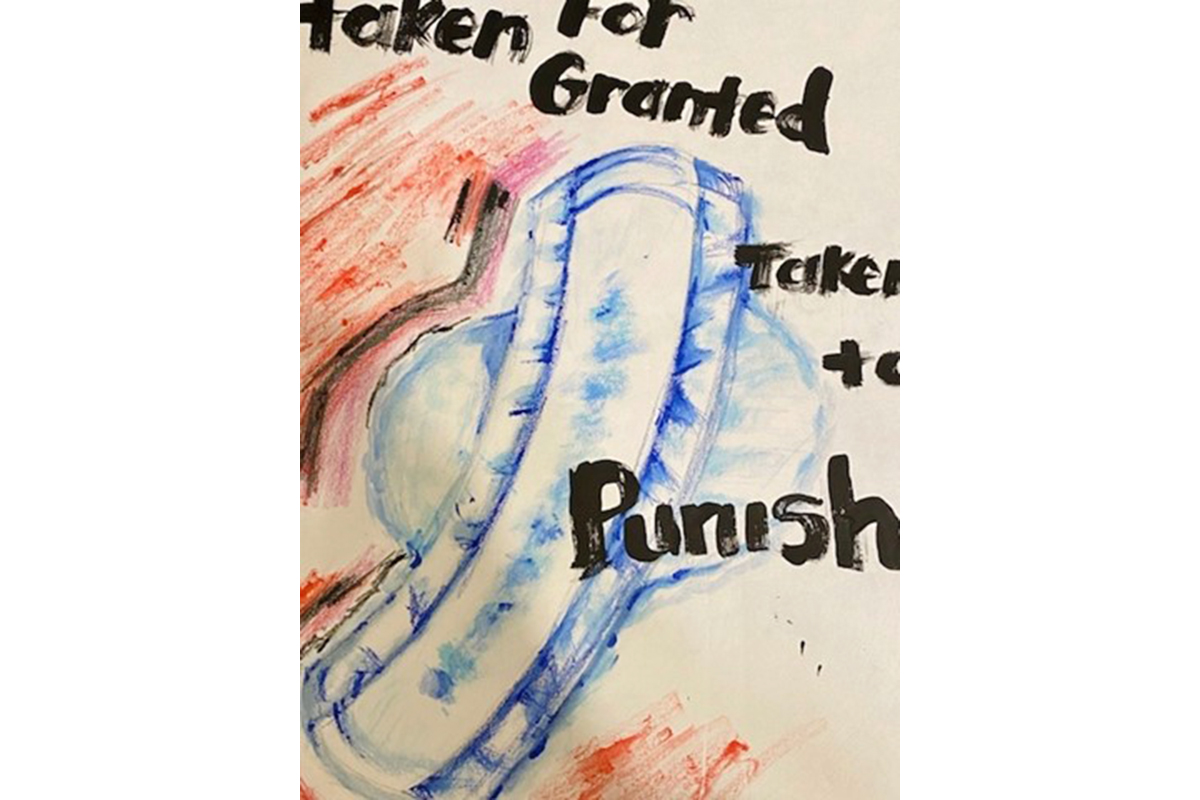
A gang of six, with a stroke of a pen, condemned women in the United States to a world of second class, if that, `citizenship’; increased maternal mortality; peril and precarity. When patriarchy rules supreme, cruelty is the point, in this case masquerading as Constitutional concern, even when the Constitution is grossly misread. It’s a femicidal program, and pogrom, as old as patriarchy and capitalism, as Silvia Federici  noted twenty years ago, when she argued that the great witch hunts of Europe and then of the colonies, including the United States, focused on women’s reproductive knowledges and capacities in a campaign of degradation of women: “In the `transition from feudalism to capitalism’ women suffered a unique process of social degradation that was fundamental to the accumulation of capital and has remained so ever since.”

The United States has the highest maternal mortality of any so-called developed country. In 2018, the maternal mortality rate was 17.4 per 100,00 live births; in 2019, 20.1, in 2020, it was 23.8. At the time, 17.4 was considered astronomical, compared to national comperes. It was. 23.8 is criminal. For non-Hispanic Black people, the maternal mortality rates for those three years are 37.3, 44.0, 55.3, respectively. The recent decision will only intensify this situation, raising maternal mortality rates, already critical and criminal, precipitously. According to one study, a nationwide ban would raise maternal mortality rates by 21%. It would raise maternal mortality rates among non-Hispanic Black people by 33%. This decision merges Witch Hunt with Jane Crow, with altogether predictable consequences of increased mortality, intensified control, devastation, immiseration. Women, and especially women of color, will become refugees in their own lands and their own bodies. As Federici noted, again, the degradation of women is always forced through programs of privatization, in which women are separated from land, home, community, body, self.

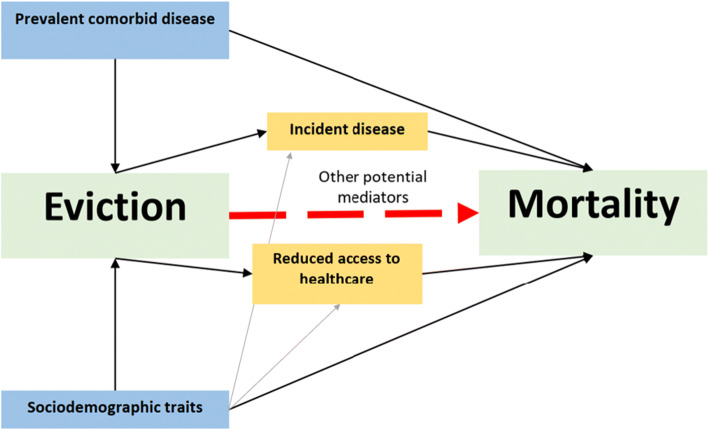
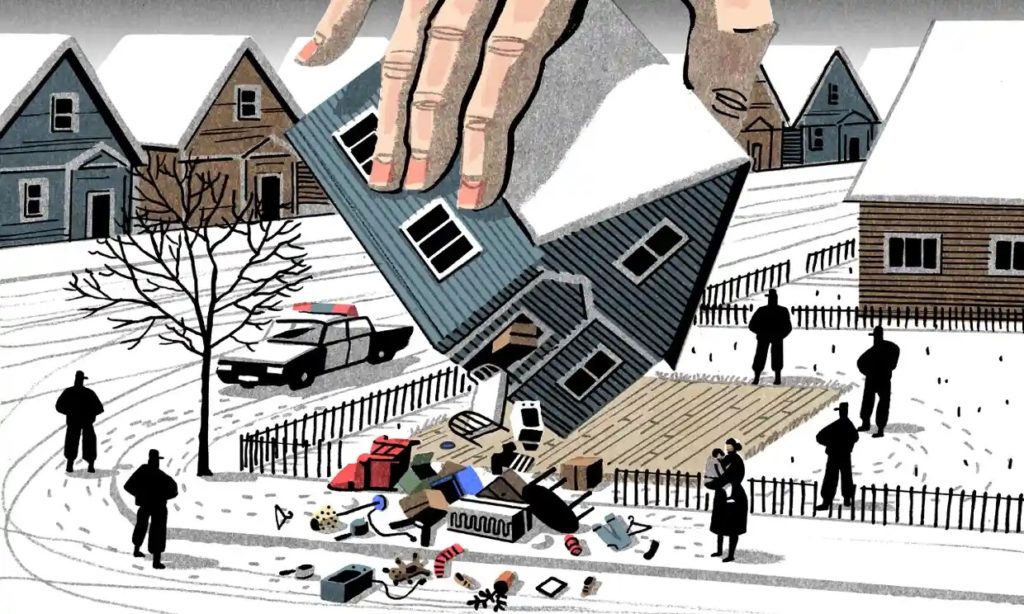
The Economic Consequences of Being Denied an Abortion”, published in 2020, brings the impact of denied access to abortion home … literally. Debts increase by 78%, bankruptcy and eviction increase by 81%: “Women who were denied an abortion experience a large increase in financial distress that is sustained for several years … We find evidence that being denied an abortion has large and persistent negative effects on a woman’s financial well-being. Women denied an abortion experience a significant increase in financial distress during the year that they give birth. Unpaid debts that are 30 or more days past due more than double in size, and the number of public records, which include negative events such as evictions and bankruptcies, increases substantially. This financial impact extends…up to four years after the birth year …. The impact of being denied an abortion on collections is as large as the effect of being evicted and the impact on unpaid bills is several times larger than the effect of losing health insurance …. Denying a woman an abortion reduces her credit score by more than the impact of a health shock resulting in a hospitalization or being exposed to high levels of flooding following Hurricane Harvey.”

The impact on women, children, communities, generally, and even more on Black and Brown women, children, communities is known. There’s no mystery here, and no misprision of either the Constitution or of a sense of humanity can be allowed to cloud the issue. Along with the immediate violence visited upon women’s bodies, lives, dreams, the long-term impact built into a ban on abortions is eviction and homelessness; severe reduction of access to education, health care, social services; increasing inequality; more deaths, more debts.

Yet again we encounter the ordinary, everyday cruelty of necropower: “In our contemporary world, weapons are deployed in the interest of maximum destruction of persons and the creation of death-worlds, new and unique forms of social existence in which vast populations are subjected to conditions of life conferring upon them the status of living dead.” Cruelty is the point.

(By Dan Moshenberg)

(Image Credit: Caliban and the Witch)

Louise Powell, Hollie Grote, Leah Porter, Delilah Blair cried out in pain. Nobody in charge cared.

In 2020, in HMP Styal, in Cheshire, England, Louise Powell was in excruciating pain. She told the staff. The staff gave her two aspirins and told her to chill out. On June 18, 2020, Louise Powell delivered her baby, stillborn, in a cellblock toilet. Across the ocean, Hollie Grote, in the Pike County Jail, in Missouri, began feeling excruciating pains. The staff gave her two aspirins and told her to chill out. For months, she cried out, in pain, begging for help. Finally, Hollie Grote died of a brain tumor. Chill out, they said.

What happened to Louise Powell? A young woman, call her Louise Powell, was held in HMP Styal. She did not know that she was pregnant. She did know that she was in excruciating pain. She did tell the staff, who told her to take two aspirins and chill out. The pains increased. Finally, someone realized that the woman was pregnant. By then, it was too late. The young woman delivered her baby, stillborn, in a cellblock toilet. The Prison Service expressed its deep concern, promised an investigation. None came. No changes came. Today, two years later, members of the “No Births Behind Bars” campaign organized a demonstration outside the walls of HMP Styal.

Organizers said the demonstration was too traumatic for Louise Powell to attend, and so instead she sent a message: “Brooke is always in my heart and my mind. Two years ago on 18 June 2020 I was left to give birth in a toilet, despite begging for help. It has been two years since she died and still we do not have accountability for what happened. I fully support the campaign for ‘No Births Behind Bars’ and thank you for your condolences and support for Brooke.”

What happened to Hollie Grote? A 41-year-old mother, call her Hollie Grote, was detained in the Pike County jail a year ago, in June, 2021. In July, she started complaining of pains. The first recorded complaint was July 28,2021. When Hollie Grote told her family she couldn’t get medical assistance, the family went to talk with the sheriff, to plead to have her sent to the hospital, the sheriff responded that people claim excruciating pain to attract attention. Take two aspirin, don’t call me in the morning. By October 23, Hollie Grote said the pain was so intense that she was considering suicide. A staff member noted “scratch marks on the forearm/wrist area.” She still wasn’t sent to hospital or given any medical attention. Staff noted that she was lying on the floor, groaning, grunting. They put her in suicide watch. Then they watched and did nothing. Finally, she rolled off her bed and died on the floor. Hollie Grote’s sister and daughter claim that when they asked the sheriff what it would take to send someone to hospital, he replied “someone would have to be bleeding out or vomiting in a way that it would be obvious something is wrong.” An investigation is `in process’.

It’s easy, and correct, to condemn the staffs of HMP Styal and of Pike County Jail. But what about the State, the society, and the world, that has decided that women behind bars deserve this sort of treatment, medical staffs who refuse to offer medical care, systems in which sheriffs and guards decide major health issues? Last month, Leah Porter, mother of two, was “found dead” in her cell at Villawood Immigration Detention Centre, in Sydney, Australia. Leah Porter lived with mental health issues. She told the staff she needed her medication and she needed it at specific times. The staff decided they knew better, and gave the medication midday, rather than early in the morning, as she had requested. The night before she committed suicide, Leah Porter told other detainees, “I want my story to be heard. I want the people to know what happened to me. I want to tell the people what these detention centres do to the people.” When the Villawood staff expressed shock and dismay, Leah Porter’s relative, Narelle Aitken, replied, “She should never have been in detention. I loved her to pieces. She was very funny.”

In 2017, Delilah Blair, 30-year-old mother of four, Cree, was detained at South West Detention Centre, in Windsor, Ontario. What happened to Delilah Blair? On May 21, 2017, Delilah Blair was in the mental health block when a staff member “found her body” lying on the floor, with a blanket tied around her neck. The State is currently holding an inquest, delayed by over two years by Covid. Selina McIntyre, Delilah Blair’s mother, who testified today, described the last time she saw her daughter, “When I held my daughter for the last time, I made a promise to her that I would not stop until I had the answers of what happened.” What happened? Delilah Blair was a woman with a mental health issue, which meant she was placed in an inferior system of health care. In the men’s unit, everything from supervision protocol to room and furniture design was designed to improve health and prevent suicide or self-harm. None of that was, or is, the case in the women’s unit. This was “revealed” in testimony yesterday, revealed even though everybody involved knew.

They should never have been in detention. Tell the people what these detention centers do to the people. I loved her to bits. What happened to Louise Powell, Hollie Grote, Leah Porter, Delilah Blair? Take two aspirin, chill out.

(By Dan Moshenberg)

(Photo Credit: James Speakman/Manchester Evening News)

The spectacularly ordinary cruelty of England’s abuse of the vulnerable

While State cruelty is nothing new, since the advent of neoliberal state practice, the cruelty has become `dignified’ by rendering the objects of the violence both invisible and fully public, through a prism darkly of obfuscating discourse, networked technologies that are both massive and seemingly impenetrable and simultaneously intimately invasive, and a State addiction with policing and incarceration, all in the name of security and something aptly named criminal justice. In the United Kingdom in the past month, this has somewhat garnered attention with the Home Office’s plan to send asylum seekers to Rwanda. Yes, Rwanda. This plan has been referred to as callous and torture. Prince Charles, who is headed for a Commonwealth meeting in Kigali later this month, has called the plan, and the entire direction it betokens, “appalling”, and Prince Charles is certainly someone who knows a thing or two about appalling behavior. While all these critiques are apt, they miss the point. The plan is spectacularly ordinarily cruel, and the cruelty is the point.

From the international perspective, the idea of Rwanda is an extension of the global “safe third country” programme. Trump tried it with El Salvador, Guatemala, and Honduras. The United States still has a “safe third country” agreement with Mexico. Australia tried it with Cambodia, Nauru, Manus Island. Sometimes it’s called “safe third country”, other times It’s called “country of first asylum”, as Europe has `negotiated’ with Greece and Turkey. Whatever it’s called, it means “Don’t come here if you really need help.” Also, whatever it’s called, every iteration has been, on the surface, a screaming disaster … unless, of course, cruelty is the point.

The latest British iteration is marked by deception and investment. The Home Office spent £14,273.32, or $ 17,593.79, to develop “branding and messaging.” The spent an additional £38,000 to £50,500, or up to $109,000, on Facebook and Instagram ads. This is only a partial accounting. All of this in a time of rampaging inflation and government calls for austerity, for “the public good.” The Home Office informed asylum seekers that the United Nations High Commissioner for Refugees was intimately involved and working with the Rwanda plan. That was not and is not true, as the UNHCR has stated publicly.

In its implementation and design, the Home Office refused to consider the particular dangers to LGBTQ+ refugees. It refused to consider the particular dangers to refugees living with disabilities. For those asylum seekers who reported that, due to past trauma as well as the prospect of being shipped off to Rwanda, they were at serious risk of suicide, the Home Office provided a “trauma handout pack”. Here’s their considered advice: “Do a crossword or Sudoku”. “Ask the officers for a job”. “Punch a punching bag”. “Do some colouring or paint”. “Try aromatherapy”. In other words, just die already. Cruelty is the point.

In the past month, reports have shown that, between 2016 and 2021, more than half of the 5,403 incarcerated people in England assessed by prison-based psychiatrists to require hospitalization were never transferred. That’s an 81% increase over the preceding five years. The situation is particularly dire for and prevalent among incarcerated women. Women who should be in treatment are left, often in solitary, at places like HMP Styal, where 18-year-old Annelise Sanderson was sent in the summer of 2020. From the outset, Annelise Sanderson said she was unwell and wanted to die. The staff did less than nothing, and in December 2020, Annelise Sanderson killed herself, or better was executed. According to Shell Ball, a formerly incarcerated woman, speaking of her time at HMP Styal, where, despite being diagnosed with anxiety, depression, PTSD and borderline personality disorder, she never saw a psychiatrist, was never transferred to any medical facility, said, “About 90% of the women in there had mental health issues – most probably that’s why they were in there in the first place.”

In 2020, a woman at HMP Styal endured a stillbirth, in her cell. When she had cried out, saying she was in excruciating pain, she was given two aspirins and told to chill out. Do a crossword or Sudoku. Months earlier, a woman at HMP Bronzefield, England’s and Europe’s largest women’s prison, alone in her cell, gave birth to a child. The child died. In both institutions,  self-harm is rampant. No matter. Pregnant women are sent there anyway. Looking at this situation, some ask, “How cruelly they must have been treated. And for what?

From the “Rwanda plan” to HMP Styal and HMP Bronzefield, the message to the vulnerable, to those living with trauma, mental health, grief and sorrow, is as it has been, “Do a crossword or Sudoku, and then just die”. Cruelty is the point. The point is cruelty.

(By Dan Moshenberg)

(Image Credit: Raluca Bararu, “Anatomy of Cruelty” / Artsper)