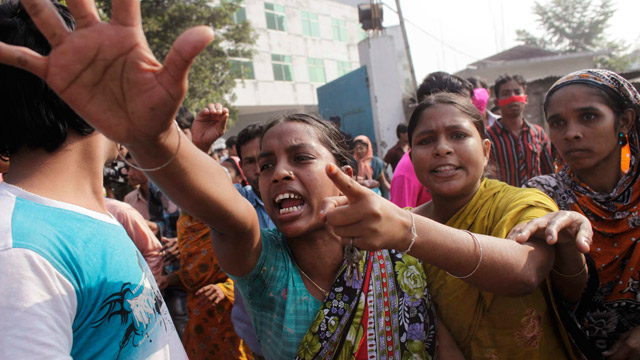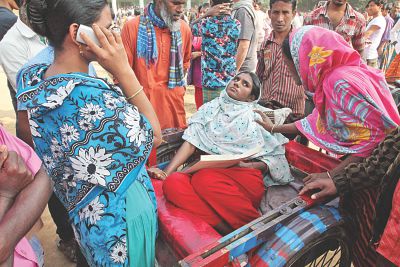
The Bangladesh factory fire was a massacre of women workers


On Sunday, November 25, 2012, Bangladesh suffered its worst-ever factory fire, at the Tazreen Fashions factory. At last count, 123 workers died. By all accounts, the workers were all or almost all women. Nothing here was new. Bangladesh has 4500 garment factories. The garment industry in Bangladesh employs more than 3 million people. Most of them are women. Many of them have died in `industrial accidents’.

There was no accident.

And now, less than two weeks later, the `discoveries’ begin. Today’s breaking news is the factory had no safety certificate. No one thought it did. Exit doors were locked. We knew that. Managers wouldn’t let workers leave until the flames were obvious, until it was too late. We `learned’ this week that Wal Mart actively blocked, or nixed, safety moves in Bangladesh, including in Tazreen Fashions factory. Are you surprised? Neither am I. The news is not that Wal Mart stopped a move towards worker safety, but rather than now the documents proving it have been made public as have the Wal Mart receipts left on Tazreen’s burnt floors. All of this has undermined Wal Mart’s account and credibility. Who believed Wal Mart in the first place? Who believes Wal Mart now?

Who believes the fashion industry when it claims shock and dismay? Who believes The New York Times or any other news outlet when they only now `discover’ a “gap in safety for local brands”?

Investigative reporting is important, as is research. So is accountability, including accountability in tone and diction. There was no accident, there was no gap, there was no absence, and there is no surprise. Call the event by its proper name: massacre. “An indiscriminate and brutal slaughter of people”, specifically of women. And the factory was no factory. It was a slaughterhouse. It always was, and we cannot claim to be surprised when the flames burst and the women workers’ bodies explode … again.

(Photo Credit: TheDailyStar.net)

In criminalizing HIV transmission, the US and Canada lead a global war on women

The United States leads the world in prosecuting people for HIV transmission and exposure. Canada comes in second. All but two of Mexico’s 30 states criminalize HIV-status nondisclosure. North America leads the way … in a global war on women.

Globally, women bear the brunt of the HIV pandemic. In the United States, that’s particularly true for women of color. In the US, HIV-positive women of color face extraordinarily high rates of morbidity and mortality. They also report high rates of intimate partner violence. This doubles the risk of death for HIV-positive women. The house is a war zone, and then the State jumps in and intensifies it … through laws that universally and without distinction criminalize `everyone’ for nondisclosure of their status.

Women in abusive, toxic relationships are supposed to `share’ with their partners? It’s that simple? Cicely Bolden shared with her partner. He killed her. He justified his murder by claiming the disclosure drove him mad.

In October, the Supreme Court of Canada handed down two decisions concerning so-called criminal transmission. The Court claimed its decisions were meant to clarify some vagueness in a 1998 decision, R. v. Cuerrier. In that decision, the Court said people living with HIV and AIDS had to disclose their status before engaging in sex. To not do so constituted `fraud’. The two recent cases, R. v. Mabior and R. v. D.C., dismally clarified the Court’s understanding of what’s at stake here: risk.

Here’s the story of the D.C. case:

A woman living with HIV, D.C., had a partner for four years. The partner claims the first time they had sex together, she had not disclosed her status to him. When she did reveal her status, he said it was fine. They stayed together for four years. At some point, he became abusive and violent. Finally, he was convicted for beating D.C. and her son. That’s when he accused her of not disclosing her HIV+ status. Although she claimed that they used a condom the first time they had sex, the trial judge did not believe her and found that their first sexual encounter was unprotected. D.C. was convicted of sexual assault and aggravated assault for not disclosing her HIV status to her partner. The partner is HIV negative, by the way. On appeal, the Quebec Court of Appeal overturned D.C.’s convictions on the basis that, even if no condom had been used for that first sexual encounter, her viral load was undetectable at the time. Based on her viral load, there was no “significant risk” of transmission. Non-disclosure, thus, was not a crime. That’s the case Supreme Court of Canada heard.

The Court decided against D.C. and, in so doing, declared that the risk of AIDS is so great that those living with AIDS must disclose, use condoms, and have low viral loads if they are to avoid criminal prosecution.

According to the Canadian HIV/AIDS Legal Network, with this decision “the Supreme Court of Canada made the law even harsher for PHAs: people must now disclose their status before having sexual relations that pose a `realistic possibility’ of HIV transmission. But in the Court’s view, a `realistic possibility’ encompasses almost any risk, no matter how small.”

For the Court, the risk of disclosure, especially for women, means less than nothing. In its decision, the Court further codified the absolute lack of value of a woman’s life. It ignored study after study and legal argument after legal argument, some local and others international, which demonstrate that criminalization of HIV-positive status does not impede the spread of AIDS. The Court ignored as well innumerable studies and legal arguments that clarify the impossible position HIV-positive women in dependent as well as abusive relationships face when forced to disclose.

None of that mattered. All that mattered was `risk aversion.’

You know what has actually spread over the last decade? Criminalization of HIV disclosure. And you know who has pushed that spread? The United States Agency for International Development, USAID, which first funded and then `encouraged’ nations to adopt a so-called Model HIV/AIDS Law. Over 60 countries now criminalize HIV transmission or exposure. These laws do not protect women. These laws attack women and do them harm. It’s an active front in a global war on women, lead by the United States and Canada.


(Image Credit: Positive Women)


Violence against women has many faces

November 25th is marked as the International Day for the Elimination of Violence Against Women. This date was decided upon in the United Nations to remember the assassination of the Mirabal sisters by the Trujillo regime, in the Dominican Republic, November 25, 1960.

This day is to raise awareness of the fact that women around the world are subject to rape and domestic violence and other forms of violence. The secretary general of the United Nations Ban Ki-Moon declared: “Millions of women and girls around the world are assaulted, beaten, raped, mutilated or even murdered in what constitutes appalling violations of their human rights. […] We must fundamentally challenge the culture of discrimination that allows violence to continue. On this International Day, I call on all governments to make good on their pledges to end all forms of violence against women and girls in all parts of the world, and I urge all people to support this important goal.”

Should the European Union support this important goal and challenge the culture of discrimination within its behavior as an institution, as crimes against women are committed in member states? The death of Savita Halappanavar for denied therapeutic abortion in Ireland is only one of numerous cases of women being killed or injured because some States still have laws denying reproductive care to women. Those laws have remained the same sometimes since the 19th century. For instance in Ireland, doctors or nurses who help women who seek an abortion are punishable under the Offences Against the Person Act of 1861 that prescribes a minimum sentence of two years hard labor and can result in a life sentence.

The nomination of Tonio Borg (overtly against women and LGBT’s rights) as the new commissioner for Health will accentuate the impossibility for the European commission to stop state-legitimized violence against women in Member States with anti abortion, restrictive reproduction laws, such as Ireland, Poland,  and Malta. These laws are generalized in many countries from Africa to the Americas, including the United States.

Restrictions for women are economic as well. Where contraceptives are expensive or simply difficult to obtain, abortion services are generally illegal or restricted. Meanwhile, women are in the main still economically dependent.

Having a weak health commission in the Europe Union is no surprise. It results from lobbying from member states that don’t want to see the European convention on human rights and parliamentary resolutions applied to health care and in particular to women’s reproductive health. If women’s reproductive health were seen as a human right, those members who are inconsistent with EU conventions would finally be held accountable.

Violence against women has many faces. Often the violence stems from state denial of services or state practices of humiliated access to important services. In Baltimore, Maryland, for example, as in much of the United States, incarcerated pregnant women travel shackled to medical appointments.  These women are seen in regular hospitals walking among other patients with their guards and shackles.  Their treatment and humiliation is shaped by federal, state or local policies, which even force them to deliver their babies in chains, putting their lives at risk exactly as Savita Halappanavar lost hers.


(Photo Credit 1: AP / Shawn Pogatchnik / Salon) (Photo Credit 2: Reuters / Cathal Mcnaughton / Salon)

The tragic and the everyday of the garment industry


On May 10, 1993, 188 workers died, or were killed, in a fire at the Kader Toy Factory, in Bangkok, Thailand. 177 of the killed workers were women. The factory had no fire alarms, no sprinklers, very few fire extinguishers, and practically no means of escape. Those not immediately burned to death jumped out of third and fourth story windows … and were killed or seriously injured.

On November 19, 1993, 87 workers, all women, died, or were killed, in a fire at the Zhili Handicraft Factory, in Shenzhen, China’s first Special Economic Zone. A month later, on December 13, 61 women workers died, or were killed, in a fire at the Gaofu Textile Factory, in Fuzhou.

On Sunday, November 25, 2012, Bangladesh suffered its worst-ever factory fire, at the Tazreen Fashions factory, one of 4500 garment factories in the country. At last count, 123 workers died. By all accounts, the workers were all or almost all women.

Nothing here is new. Industries rely on women’s `nimble fingers’ to produce goods. Factories filled with women are overcrowded, have no fire alarms or sprinklers, and have no means of escape. Many women are burned to death. In these more recent versions, as in the earlier Triangle Shirtwaist Factory fire, the factories are the signature of the modern. They are proof positive of progress made, or so the public is told.

Until the fire next time.

And each time, the fire, the tragedy, `enlightens’ a public that was previously innocent of any knowledge of the circumstances of industrial women workers. Fortunately for the innocent public, the dead cannot speak, cannot contradict the protestations of surprise and the performances of dismay.

But the living can.

At almost the same time the Tazreen factory burst into flames, garment workers, women workers, gathered in Bengaluru, in India, to give testimony to their working lives and to make demands. Managers abuse the women verbally and physically. The production targets are impossible. The pay is bare. The list goes on. What do the women want? They want what every worker wants. They want dignity, they want a living wage, they want the right to organize. They want everything that constitutes dignity, they want everything that expands dignity.

The women know they are working in a factory that is all women workers because a factory full of women is a factory of low wages. They are told this is a sign of development, of modernity. The women know better.

As we enter into the 16 Days of Activism Against Gender Violence, mourn the women workers who have died in the fires and support the women workers who continue to organize and make demands, as they produce clothing, toys, microchips, textiles, and more. Don’t let the brilliance of the fire obscure the urgencies of women workers’ everyday struggles for dignity and a living wage.


(Photo Credit: The Guardian)

From Paris to Baltimore, our prisons are full but empty of sense

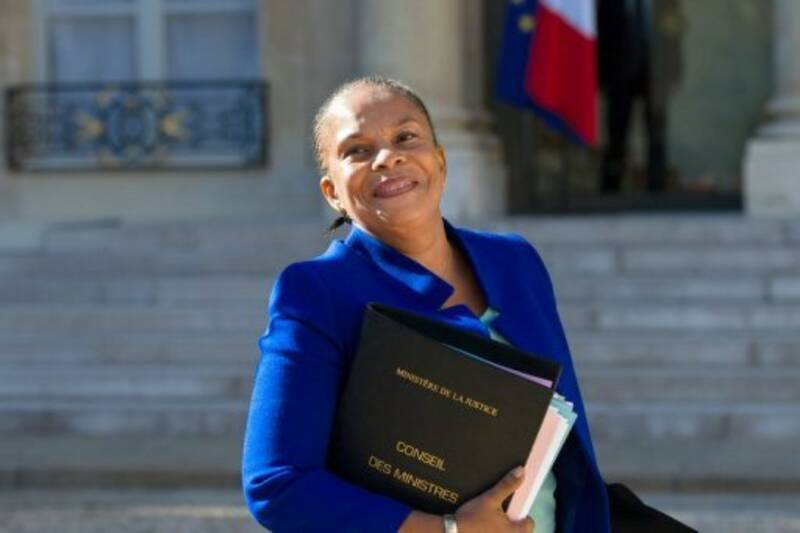
Christiane Taubira

The majority left French Senate has rejected the 2013 budget for Social Security presented by the socialist government. Amazingly, right wing and communist senators joined forces to vote the budget down, although not for the same reasons. The Communists opposed the austerity measures arguing that they add up to social injustice whereas the right wing senators would like to have more austerity and reduce the social/health care welfare that is one of the pillars of French society.  Despite this seeming setback, many hope that social security and the French Health Care system will remain a key part of a societal structure of public service.

To understand the reason for this hope, we must turn to the justice department and its rhetoric of welfare and criminalization. The previous ministers of justice under the presidency of Nicolas Sarkozy, inspired by the American approach of “le tout incarceration” (every thing converges into incarceration), had planned to build more prisons. In order to fill these new cells, the Sarkozy’s justice department designed a series of programs, including charging youth as adult; instituting immediate sentencing which often meant no jury and little time for the accused to prepare for trial; and introducing mandatory sentences. In 2007, a bill requiring minimum mandatory sentencing for repeated offenders passed. And so the prisons and jails filled up.  At the same time, under the rule of austerity, a series of welfare programs were cut.

After the election of a socialist president, Francois Hollande, his justice minister, Christiane Taubira, presented a “new penal politics of the government”. She broke with the policies of her immediate predecessors. She sent an official memorandum to all public prosecutors recommending sentencing reduction and favoring alternative sentences. As for repeated offenders she said, “All decisions must be personalized, including for repeated offenses.” She went on to clearly delineate the limits of mandatory sentencing and as well as its ultimate suppression.

Taubira went further and refused the logic of immediate trial, responsible for one third of the 66 748 people incarcerated in France, and asked the public prosecutor to stop using it. Christiane Taubira declared: “Nos prisons sont pleines, mais vides de sens.” “Our prisons are full, but empty of sense.” Her predecessors were eager to send people to jail; their motto was “tough on crime.” In the past 10 years the tally of prisoners increased by 20,000, creating “inhuman conditions” as was noted by the European committee for the Prevention of Torture (CPT), which also recommended “a zero tolerance of ill-treatments” by police officers. Christiane Taubira wants to remedy these conditions by quickly reducing the number of people in French prisons recognizing that incapacitating people in over-populated cells only creates more precarious lives.

Meanwhile, in Baltimore the debate about the construction of a new juvenile detention center rages, with no signs of a change in paradigm. Juveniles may be tried as adults, and the majority of women in prisons are single mothers. Meanwhile, welfare support is shrinking. Where is the Commission in Baltimore that will declare zero tolerance of ill treatment of the city’s most vulnerable?


(Photo Credit: Liberation / Bertrand Langlois / AFP)


World Toilet Day is WORLD Toilet Day, not developing world toilet day

November 19, 2012: it’s World Toilet Day. Around the world, one in three women has no access to a safe toilet. The situation, especially for women, is desperate. It’s a global crisis, driven in many instances by taboos and stigma and in others by public policy. From Uganda, Mozambique, India, and the Solomon Islands to Mongolia and Vietnam to Haiti to Bolivia to South Africa and Kenya and Zambia and Ghana to Sri Lanka to Ethiopia, the situation is serious.  As Jack Sim, founder of the World Toilet Organization, the real WTO, and one of the initiators of World Toilet Day has argued, it’s a human tragedy.

Women’s lack of access to safe toilets is a human tragedy everywhere. Not just in developing countries.

Last week, 20 women U.S. Senators gathered for an event. Before the event, they headed off to the women’s bathroom, only to discover there were only two stalls. While much levity has been generated by “first time ever traffic jam at the women’s Senators’ bathroom”, by women Senators hitting up against the porcelain ceiling, the Senators’ lack of access to a safe, clean, available toilet points to a more dire situation, in the United States.

Women prisoners often lack access to safe, clean, available toilets. Women living with disabilities who have been institutionalized often lack access to safe, clean, available toilets. In fact, women living with disabilities out on the streets often lack access to safe, clean, available toilets. Women and girls in schools often find going to the bathroom a hazardous journey.

Women in traditionally all-male fields often lack access to safe, clean, available toilets. For example, women in the building trades often describe “limited access to sanitary toilets.”

Many women farm workers find no toilets in the fields, and when there is one, it’s often a site of sexual harassment. They find the housing provided to farm workers has a similar lack of functioning toilets, as well as a lack of functioning sewage and potable water.

And of course, across the United States, when landlords look to move tenants out in the name of `development’, the first line of attack is maintenance. Along with failure, or refusal, to repair public spaces, such as hallways and lobbies, landlords use broken plumbing in their `assault by blight’. Across the United States, women, mostly women of color, living in targeted neighborhoods struggle with lack of access to safe, clean, available toilets.

World Toilet Day is WORLD Toilet Day, not developing world toilet day.

(Image Credit: United Nations)

Kadi Sesay, a Sierra Leonean feminist leader and builder of democracy

All eyes are on Sierra Leone and its cliffhanger elections tomorrow. It actually is a crucial election, with a great deal at stake (even if The New York Times has thus far not mentioned a word). And one group that is precariously positioned in this election is women.

Out of 538 candidates for Parliament, only 38 are women. Of 1,283 candidates for local council seats, a mere 337 are women. Many women activists, such as Barbara Bangura, the director of the women’s organisation Grassroots Empowerment for Self Reliance, lay much of the blame on current women parliamentarians who failed to get the Parliament to pass, or even seriously consider, the Gender Equality Bill. The Gender Equality Bill would have mandated that 30% of the legislators be women.

Why did the Bill fail? Some in the Women’s Parliamentary Caucus claim there was confusion. Others say intimidation of women candidates and office holders is all too common.

Whatever the reason, there will be a sharp decline in the number of women in Parliament and in local offices. For that reason alone, women are already organizing to re-table it post election.

While the numbers are fairly dismal, there’s one number that shows some promise: 2. And that number 2 has a woman’s name: Kadi Sesay. The opposition party, Sierra Leone People’s Party (SLPP), is running Kadi Sesay as vice-president. If Julius Maada Bio becomes President, Sierra Leone will have a woman Vice-President for the first time.

Sesay has been a first woman on a number of occasions, from academic head of department to National Commission head to Ministerial positions. She’s a groundbreaker Sierra Leonean feminist leader and feminist builder of real democracy who, for decades and at every step, has worked closely with women’s groups, women’s movements, women.

While the election of one woman to a high office won’t resolve the extraordinarily high maternal mortality rate in Sierra Leone, nor the crisis of women’s high indebtedness, nor the challenges women farmers face either in the rural zones or in the cities, nor the inequities women face in the courts,  it’s still something.

According to the BBC tomorrow’s election is all about becoming an adult: “Sierra Leone may be about to prove it has grown up.”

The possible accession of Kadi Sesay to the Vice-Presidency of Sierra Leone is not a passage into adulthood. Sierra Leone is not a child. Tell the BBC. Tell them, as well, about Kadi Sesay, an African feminist leader.


(Photo Credit: SierraExpressMedia.com

The agony of Savita Halappanavar

Savita Halappanavar

Savita Halappanavar

Savita Halappanavar died, or was killed, because an Irish hospital refused to perform a medically necessary abortion until they were absolutely positively sure the fetal heartbeat had stopped. The life of the mother was of no concern. Savita Halappanavar spent more than two days in agony, and died, or was killed, in agony.

The agony of Savita Halappanavar is a commonplace globally, according to the UN’s  The State of World Population 2012, released today. From Poland to Armenia to Uganda to Swaziland to India to Nicaragua to the United States, and all points between and beyond, pregnant women, women in childbirth, women die in agony, thanks to criminalization, stigma, public policy and more.

They die in agony like so many prisoners, begging for care, screaming for mercy. They receive neither. Why? What is a global culture of women-dying-in-agony? A little over 50 years ago, Frantz Fanon had an answer to that question: “Le colon oubliait singulièrement qu’il s’enrichissait de l’agonie de l’esclave.” “The colonist forgot strangely enough that he was getting rich on the agony of the slave. In fact what the colonist was saying to the colonized subject: “Work yourselves to death, but let me get rich!

The agony of Savita Halappanavar is part of the ongoing global crisis of the wretched and the damned: women. Slavery has not ended; it has simply changed clothes for the new season. Colonialism has not ended; it has moved the furniture around. The colonists continue to forget strangely enough and continue to enrich themselves on the agony of women.

(Photo credit 1: The Irish Times) (Photo Credit 2: The Journal)

Where are the women of rural Mozambique?

In an otherwise informative article this past Sunday, the New York Times reported on a rural Mozambique without women. Reporting on the “rural poor…left behind”, and pushed around, by multinational mining and natural gas companies and by the national government, the Times mentioned not a single Mozambican woman. In the accompanying slide show, there’s a slide of “people gathered by a river to bathe, play and wash their dishes”. The `people’ are, not surprisingly, all women and girls. Another slide shows, and names, Beatriz Jose, condemned to living in a tent, thanks to the dismal housing provided by the mining companies. And that’s pretty much it.

Where are the women of rural Mozambique? On the farms and in the countryside of Mozambique, the women are everywhere. Study after study has described the relentless feminization of poverty in rural Mozambique. As one study, conducted for the Mozambican government, explains, “The majority of agricultural workers in Mozambique are women and an increasing number of households are being headed by females.” Eighty percent of Mozambique’s population is rural, and 80% percent of rural workers are women. An exceptionally high number of those rural women workers are divorced, separated or widowed. That means a very large numbers of households are headed by single women. The feminization of poverty has been accompanied by the feminization of household headship. At the same time, women farmers have organized into cooperatives and cooperative associations, such as MuGeDe – Mulher, Genero e Desenvolvimento (Women, Gender and Development).

Thanks to labor migration of men, to the HIV and AIDS pandemic, and to women’s organizing on the ground, the lives of women in rural households and in the fields has been constantly changing in Mozambique. Personal and structural, or sectoral, vulnerability has intensified at the same time that women’s formal and informal organizing has intensified. It takes real work to write about rural Mozambique and avoid any mention of women.

And that’s precisely what The New York Times did this weekend.


(Photo Credit: La Via Campesina)

Ashley Smith, who haunts the Correctional Service of Canada


Ashley Smith and her guards

On October 19, 2007, 19-year-old Ashley Smith, a prisoner under suicide watch, killed herself. Seven guards watched and did nothing to stop her. They were under orders to let her go. Someone wanted to teach her a lesson, not to be `a nuisance’. And so, she died … or was killed by active neglect.

Now, five years later, perhaps, the Canadian government will finally conduct an inquest. The murder of Ashley Smith didn’t stop at her death. For five years, the Correctional Service of Canada has fought tooth and nail to bury any evidence of the event … other than the corpse of Ashley Smith, the pain of her family and friends, and the horror.

For five years, the Canadian prison system first denied the existence of the damning videos released, finally, just recently. They didn’t inform the parties in the inquiry of the existence of the tapes. Then, when the tapes could no longer be denied, the Correctional Service tried to keep the public from having access.

If Ashley Smith were the only young woman prisoner who was effectively tortured in prison, left to die slow death or `self-inflicted’ death in solitary, left to die while monitored in suicide watch, her death would indeed be a tragedy.

But Ashley Smith is not alone in her fate. Many prisoners, and especially women prisoners, living with mental health disabilities, find themselves deep in a system of abuse and exploitation. Many prisoners, and especially women prisoners, find their attempts at self-harm are not viewed as symptoms of a need to be treated but rather as bureaucratic inconveniences. Taking care of mentally ill prisoners `costs’ too much. Caring about the welfare of mentally ill prisoners costs way too much. Caring about the destiny and lives of young women … priceless.

There has been and will continue to be much condemnation, much finger pointing, all of it well deserved. But at the same, Ashley Smith’s death by proxy was precisely part of the `service’ the Correctional Service offers. Adjudicating those involved is important, getting the details of the story is important, too. Transforming the system and the nation and world that built it is necessary.

That won’t bring Ashley Smith back. That won’t mean she didn’t die in vain. But it could mean something for those who follow.


(The Globe and Mail)