Marikana: Don’t commemorate. Compensate.

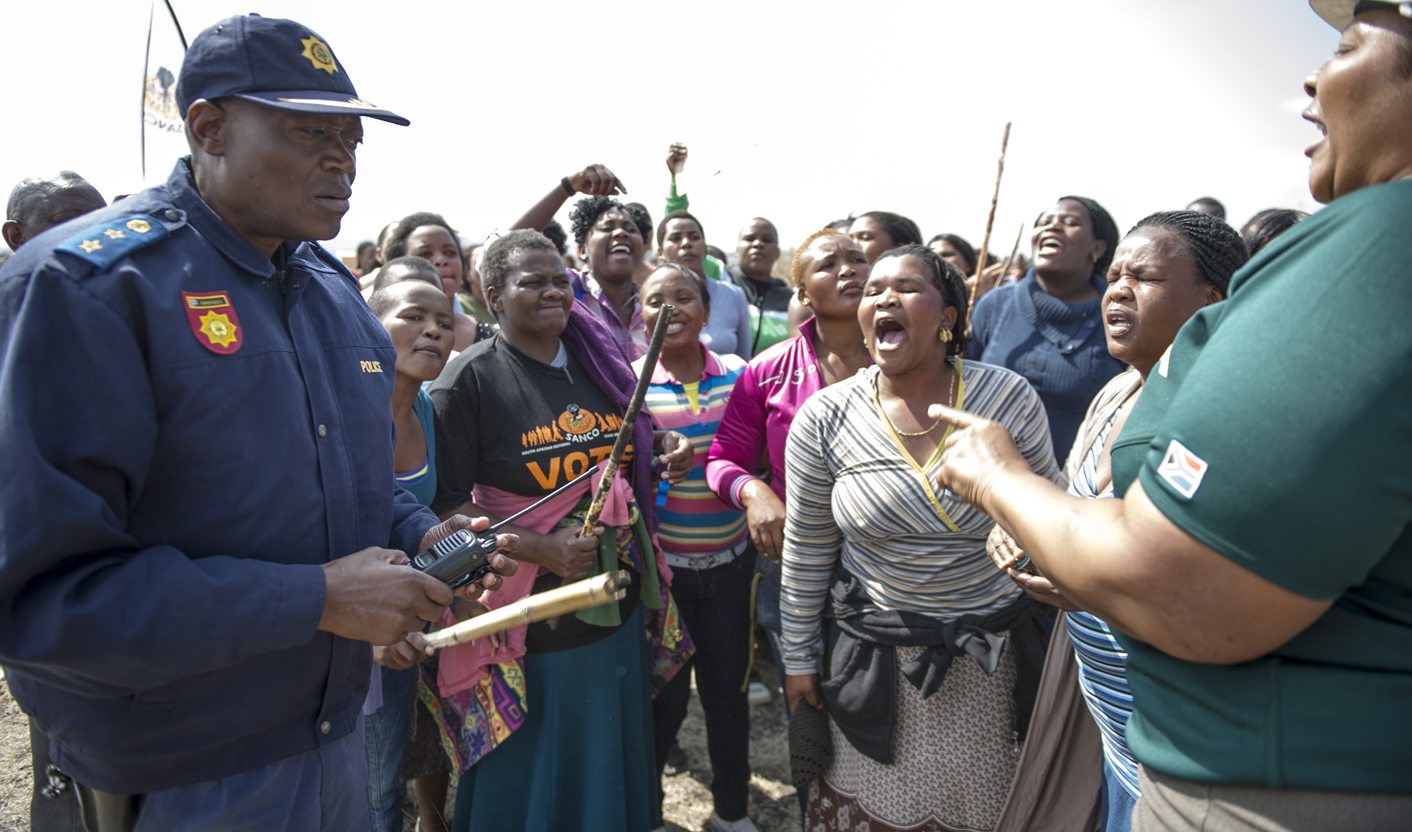
It’s been a year, almost, since the massacre at Marikana, and the nation, and its media, are struggling, sort of, to find a way to address all that has, and even more has not, happened in the intervening year. A year later, tensions simmer, the Farlam Commission is more or less falling apart, some great and moving documentaries are beginning to emerge, and the widows of Marikana organize and wait, wait and organize.

This is how the week began. On Sunday, in a prayer service in Langa, national police commissioner Riah Phiyega announced that South Africa would `commemorate’ the Marikana tragedy. How exactly will the police, who used live ammunition to put down a mineworkers’ strike, `commemorate’ the event?

More to the point, is commemoration the best way to honor the dead miners and, even more, their survivors, the widows and children? As one widow explained, soon after the massacre, “Today I am called a widow and my children are called fatherless because of the police. I blame the mine, the police and the government because they are the ones who control the country.”

How will `the nation’ commemorate those who are now called widows and those who are now called fatherless? What happened on August 16, 2012? 34 miners were killed. Many others were wounded. And widows were made. Soon after one mineworker was arrested, police told him, “Right here we have made many widows … we have killed all these men.”

The State machinery, call it a factory, produced widows of women that day, and has continued to produce widows of those very women every single day since. So, here’s a suggestion. Rather than `commemorate’, compensate.

(Photo Credit: Greg Marinovich /Daily Maverick)

In `the Congo’, the `truth’ takes time, rather than a parachute


In October 2012, The Guardian reported a dramatic rise in sexual violence in the eastern Congo. Five months later, Foreign Policy published, “What happened in Luvungi? On rape and truth in Congo”. What exactly is `the truth’, according to Foreign Policy? It’s a `spectacle’: “When the interviews were over and we were out of earshot, my colleague and I stood in confused silence. I had interviewed survivors of rape in eastern Congo before; a psychological element seemed to be missing in these interactions. Before I managed to articulate the uncomfortable feeling that we had just been lied to, my Congolese colleague spit it out: `Those women have been coached’.”

The FP author supports her suspicion by visiting a local health care professional, who tells her that during the insurgency he only treated six rape survivors. Yet when the UN came in, the numbers soared into the hundreds. This drastic increase seemed odd at best and outright manipulative at worst. One way in which the numbers could have been distorted, he figured, was that the large majority of female patients were listed as rape victims, regardless of the actual cause of their injury or illness.

Was the clinic purposefully cheating in the numbers game, and if so, to what effect? The author suggests that fabricated high numbers will cause aid to flow disproportionately towards sexual violence to the neglect of other urgent needs. She further suggests that over-reporting induces both aid workers and Congolese women to frame their work and suffering as sexual violence, because this increases aid workers’ chances for funding and Congolese women’s access to medical care, credit and housing.

Have ‘we’, donors, sympathizers, aid workers and readers all been fooled? According to the UN and the service provider at the clinic, no, we have not. The sudden rise in reporting is neither manufactured nor difficult to understand. The numbers soared because it took a while for most women to feel safe enough to leave their homes.

Whereas the various drivers of sexualized violence in conflict areas are complicated and riddled with contextually specific complexities, the reason that in any society rape is underreported is fairly straightforward. It’s not difficult to imagine why rape survivors hesitate to report their suffering. Sexual assaults are extremely personal and heavily sensitive types of violations, which render them difficult to discuss with authorities, especially with men. Additionally, often the women are not taken seriously or are blamed for the crimes. Thus, the rapes that actually get reported most likely only cover the tip of the iceberg. In the context of a war-torn eastern DRC, stigma and social shame can lead to social exclusion and rejection from their partners. And when soldiers are still around, incentives to venture out to a clinic or authority to report on the abuse can be crushed by fear.

Nonetheless, the sensitive and horrendous nature of rape shouldn’t stand in the way of critically examining the efficacy and side effects of support, be it media attention or monetary aid. And if experiences and conversations in one location (Luvungi), in a particular point in time (after a recent armed invasion), reveal problems around the role and impact of the media, politicians and international organizations alike, critical questions must be raised.

As an outsider, you should have to ask such questions with great caution. Especially in the context of a highly complex conflict in a nation as vast as the DRC, you may want to ask the question “is it really that bad?” carefully. Caution means not generalizing from micro-contextual findings about one insurgency to a national rape epidemic that has been going on for many years. Every district and town is different. No matter, the FP author moves seamlessly from the particular context of what happened in Luvungi to make broader assumptions about the scale of current and past rape exaggeration in the country as a whole: “Even in Luvungi, ground zero of Congo’s rape epidemic, things aren’t exactly what they’ve been made out to be”.

Does lifting out one allegedly staged group interview to make such claims actually arrive at and reflect the truth? According to former journalist and UN official Iain Guest, who works with and for sexual violence survivors in the DRC, the truth lies not only elsewhere but anywhere but. In November 2012, he sought to counter exaggeration claims by the UN and others. Guest argued that rape is systematically underreported. For example, he noted, the UN doesn’t visit areas such as Fizi, in south Kivu, for the simple reason that it’s too dangerous: “This may explain why the UN’s January report only confirmed 167 cases in the whole of south Kivu last year- a ridiculously low figure”.

So, the UN pressures the Congolese government to suspend some senior army officials for having been involved in mass rape, but the Congolese government can’t be expected to be on top of things when its own troops are key players. According to Guest, the world was more or less forced to pay attention for two years, 2009 and 2010: “That sort of publicity is impossible to sustain”. The attention diminishes, the violence continues. According to some reports, the UN’s suggested rape rate in the DRC might have been 26 times too low.

The point is that the `truth’ takes time, rather than a parachute. Reporters, researchers, and readers alike must resist the temptation to hop from observation to generalization and (jump) from conversation to conclusion.

Many women in Eastern DRC are facing, and have faced, horrible levels of sexualized violence, and that’s the truth.

(Photo Credit: Peter Muller / Open Society Foundation)

I nearly lost it

I nearly lost it
I nearly lost it
on our Women’s Day
dropped Alice Walker’s
A poem travelled
down my arm”
A gem amongst others
found at the Rotary Club
containers where there are
Books for the World
I nearly lost it
(later) on Eid-al-Fitr
traipsing around
showing off our collection
(The Babysitters Club series
A series of Unfortunate Events series
the Sweet Valley Twins series
even the Captain Underpants series)
The morning after
reading aloud extracts
to a literary associate
(from Mutual to Lansdowne
journeying Metro-hell turd-class)
What hair
we here!
Mandela
Douglass
Einstein
Between assassination
&
suicide
living
happily
I nearly lost it
on our Women’s Day
Our Women’s Day skies are blue as Alice Walker’s lovely tome drops from my grasp,
on the way to show off Belthorn Primary School’s collection of books in the neighbourhood. 
She invokes “Mandela with a free heart ... (Frederick) Douglass the same ... refusal of 
enslavement ... Einstein different but similar” in her intro titled “This is a strange book”
(Image Credit: Penguin Random House)

So it’s Women’s Day in South Africa

So it’s Women’s Day in South Africa, and we went down to hear a friend of mine speak at a local event. It was faintly cheering: we got to sing Malibongwe, which is the one struggle song white people can actually sing. There was clapping, and a bit of praying, which went down well. We then settled in for a desperately dull morning, in which we all bemoaned the general state of women in South Africa, and the wave, torrent, oh all right, tsunami of violence that is unleashed on us every day.

Yawn.

Yes, we agreed, we are dying. In fact, more than we can count, because the statistics are so unhelpful, given the level of underreporting of rape. Yes, we agreed, it’s very bad. We must fight patriarchy. We nodded our heads. Yes, indeed we must.

And speaker after speaker belaboured this, as though we had just woken up, and decided to talk about this for the first time. Lordy, it was dull. Except for one moment, one interesting electrifying moment. A woman academic, and feminist, and part of the national Commission on Gender Equality said, in one of the tightest, most frustrated voices I have ever heard, ‘We should go and stop the traffic. We should go to the nearest national road, and protest, and stop the traffic.”

And the hall of women groaned and rumbled, and it seemed like for a moment, for a flicker of time, that they would rise up as one and march, limping and dancing, out into the streets and burn things, and break things, and generally get seriously out of hand. It seemed to me that this wave of the possible reached her across the stage and she caught herself, aware of her responsibilities, and said, ‘No, not that I am suggesting violence or anything. But we must do something.’

The hall settled back down. We went to lunch. But that thought spoken aloud is still ringing in my ears.


(Photo Credit: http://theinspirationroom.com/daily/)

Be a leader in your community this Women’s Day

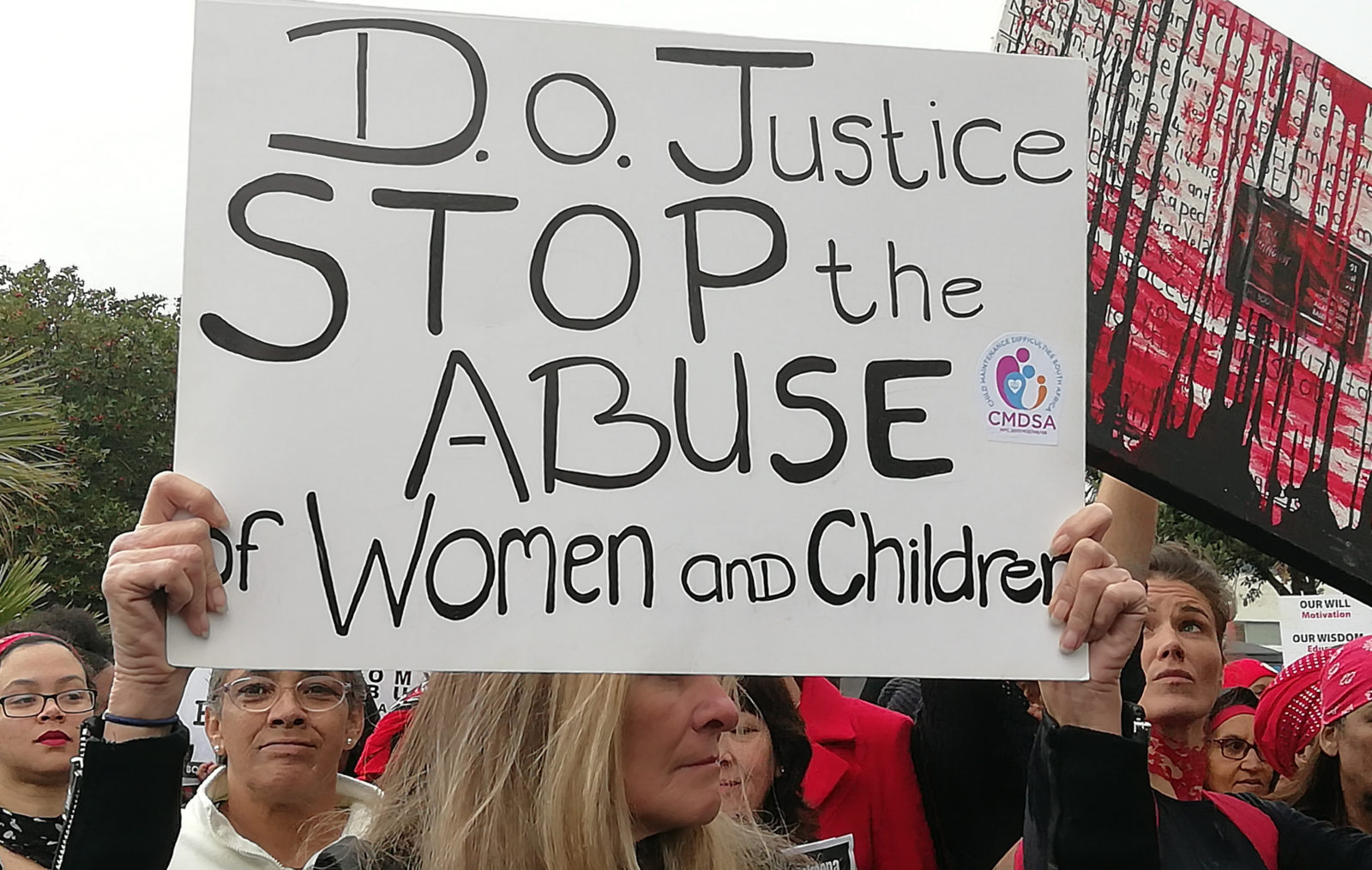
This week’s news of the rape of a four-month-old baby and a seven-year-old boy in the same household has left the community of Ceres reeling in shock. These rapes form part of a litany of abuse and violence against women and children in South Africa that just doesn’t seem to stop.

Victims, families and communities are reaching out for support in the immediate crisis and for healing over the longer term so that they can stitch their lives back together again. While services are available in some of the bigger cities and towns across the country, in towns like Ceres there is no specialised Rape Crisis organisation. Victim support will be limited to general welfare services and lay people who volunteer at the local police station.

How can this be the case 47 years after 20 000 women marched on the Union Buildings in Pretoria in order to claim their rights to move freely in their society without harassment? Women activists and organisations have been working ever since to try and create safe spaces for women in our communities. At organisations like Rape Crisis we can truly say that survivors of rape leave our counselling programmes with a sense that they have recovered from their trauma with more confidence in themselves, with a greater sense of meaning and purpose in their lives, feeling more in control, with closer relationships and more willingness to be open to new experiences.

The extent of rape in 2013 is enormous and incidents are becoming increasingly violent in nature. In this context why is there such a dearth of services to victims? Rape Crisis was threatened with closure a year ago and was in part pulled back from the brink by the incredible support and generosity of our community of supporters who gave generously of their time and money and in part by the amazing dedication of our staff who worked alongside volunteers with no pay. Yet we are still not meeting the need in the Western Cape. In part this is because provincial government has so seriously underestimated the problem of rape in their situational analysis and have therefore failed to allocate adequate resources.

Many people feel overwhelmed and helpless. Community members are calling out for NGOs “to be everywhere”. This Women’s Day Rape Crisis will celebrate by launching a rape information portal on MXit so that wherever you are in the country you have the information you need at your fingertips if someone has raped you or someone close to you. In this way Rape Crisis is finding creative an innovative ways to extend our services to women in poor and rural areas.

At the end of the day NGOs are simply groups of concerned people that have come together to find a way to support survivors in their communities and to try and talk about violence against women in order to try and bring the voice of the victim of rape to the leaders of our country so that they will again have to listen to the demands of women and respond in a meaningful way. In order for this to happen, people have to do what they did for Rape Crisis. Step forward. Talk about the problem. Donate time. Donate resources.

In past Women’s Days we looked for leaders to step up and respond with purpose and resolve. This Women’s Day we are calling on ordinary men and women to become the extraordinary leaders that the women of 1956 were in their day and ask them to do what they can, where they are, with what they have.

(This was originally posted at the Rape Crisis Cape Town Blog. Thanks to Kathleen Dey and all the workers at the Rape Crisis Cape Town Trust. Do consider joining their 1000Hearts Campaign and donate now.)

(Photo Credit: Daily Maverick)

A girl hanged herself. A girl was hanged here.

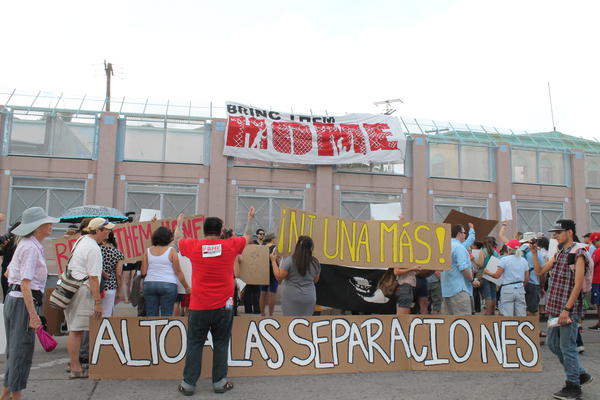
Women prisoners in Eloy Detention Center in Florence, Arizona, are on hunger strike to protest conditions there. This hunger strike was sparked by the internment of the Dream 9 activists, and in particular of 24-year-old Lulu Martinez and 22-year-old Maria Peniche, who have spent practically all of their time in isolation. No doubt, the conditions are `preventive’. What is the women’s crime that places them in solitary? Too much autonomy? Too much independence? Too much hope?

The U.S. Supreme Court yesterday ruled that overcrowded is overcrowded, and too much overcrowded is inhumane, as in cruel and unusual punishment. It’s good news for thousands of prisoners in the California prison system, who soon will be released. And who “bears the brunt” of California’s systematic prison overcrowding? Women.

At first, women benefited from both early-release programs and from alternative sentencing programs. Those benefits were shortlived. Now the women’s prisons are once severely overcrowded and getting worse by the day. As so-called low-level women offenders are shunted off to county jails, which are not and more to the point have not prepared for the particularities of this influx, the levels of violence in the prisons intensifies. This means more and more women are being sent to solitary. And so the cycle not only continues but spins ever more rapidly, ever more violently, ever more viciously.

Given all the studies that point to the concentrated levels of mental health issues among women prisoners, what has been California’s response? Solitary isolation. It’s … preventive. It’s also typical.

The same abuse of women prisoners occurs around the world. In Australia, journalist Christine Rau laments that nothing was learned from the abuse her sister, Cornelia Rau, suffered in immigration detention. It’s a common story. Cornelia was picked up and wrongfully detained, by immigration authorities. She then vanished into the system. Literally. For a year, her family and NSW Missing Persons detectives searched for her. Finally, she was located, in an immigration detention cell.

While fellow prisoners recognized that Cornelia Rau lived with serious mental illnesses, the prison guards and system chose to ignore the symptoms, and so effectively ignored the woman.

Upon her release, Cornelia Rau received a hefty settlement for her torture, but the money is meaningless. As Christine Rau, her sister, notes: “Her life is a misery. Her neurological pathways have been so damaged after 10 months in an untreated psychosis, that she cannot settle in any permanent residence, she can’t sustain relationships beyond fleeting ones, and she is one of the unhappiest people I know. The money is meaningless: it’s handled by financial administrators employed by the NSW Government; her medical needs are rarely followed up, and we rely on a network of friends and acquaintances to try and make sure she’s safe. It’s a nightmare; but anyone with a family member without insight into a mental illness would tell you that. It’s hardly unusual.”

It is hardly unusual.

It is more than hardly unusual. It is the entire system. While immigrants are treated abysmally in “detention centers” around the world and prisoners with disabilities are abused pretty much universally, there is a special hell designated for women immigrants, for women prisoners with disabilities, for women. In Australia as in the United States, private corporations profit from the particular abuse of women, and so does the State.

It is hardly unusual. It is the systematic abuse and torture of women.

So, the women prisoners of Eloy are on hunger strike. As Thesla Zenaida, a sister prisoner and hunger striker at Eloy, explained: “Look, a girl hanged herself. A girl was hanged here. [After] she was hanged, they didn’t want to take her body down. And for the same reason—because they treat us poorly. A guard treated her poorly, and that guard is still working here.”

The torture and abuse of women is the work of the State. That’s the lesson we are meant to learn.


(Photo Credit: NACLA.org)

What exactly is the women’s crime? Democracy? Autonomy?

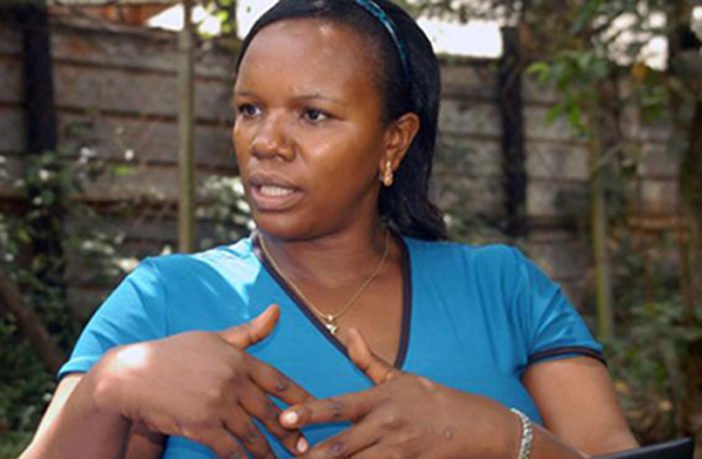
Ingrid Turinawe

In Kampala yesterday, Ingrid Turinawe and eleven other women activists were placed under `preventive arrest.’ Preventive arrest means the person arrested hasn’t actually done anything wrong … but might. What was the imminent danger posed by Turinawe and her sisters? Some would say a petition, others might say illegally approaching Parliament, and still others would say, democracy. Yet again, Ingrid Turinawe has been arrested for wanting to take that long walk to democracy.

The story, in a nutshell, is this. A hundred or so Forum for Democratic Change women activists gathered at the FDC headquarters. They wanted to write and present a petition to Parliament protesting new, higher taxes on water and kerosene. Water and kerosene are women’s issues, in Uganda as everywhere else in the world. That’s it. That’s the whole present and imminent danger. A women’s petition to Parliament. The police heard of the meeting, surrounded the building, forced their way, selected and arrested 12 of the women, including Ingrid Turinawe, head of the FDC Women’s League, and Anna Adeke Ebaju, Makerere University Guild President.

As of this morning, five of the women are still being held.

What exactly is the women’s crime that is being prevented? Democracy? Autonomy?

The same question is being asked in Harare, where, on the cusp of today’s elections, dozens of women were rounded up and charged with prostitution. The women’s initial `crime’ was ostensibly `loitering’, which simply means being a woman on the street. This time, the manly cleansing of the public spaces was dubbed “Operation Zvanyanya.” Operation It’s Too Much.

It’s too much … what?

Zimbabwean feminist activist Judith Chiyangwa went to the places where the women had been arrested and she found loads of men, hanging out on the streets, selling, chatting, being. They weren’t arrested.

Too much … what? Too many women in one room in Kampala? Too many individual women on the streets in Harare? Too many women being women, demanding and creating oppositional, autonomous, independent, and even democratic women’s spaces?

(Photo Credit: Pearl Posts)

Roseline Akhalu and the atrocious barbarism of the Home Office

Roseline Akhalu on her way to an immigration tribunal

Despite the greatest efforts of the United Kingdom Home Office, it appears that Roseline Akhalu will be allowed to live. Last week, judges rejected `an appeal’ by the Home Office to deport Roseline Akhalu. Akhalu committed no crime, other than that of being ill and of being Nigerian. If she were to return to Nigeria, it is certain that she would die. No one disputes this. And yet … the Home Office has spent years and untold resources trying to deport her. Why?

Furthermore, why do they call it the Home Office, when that agency dedicates its resources to expelling, incarcerating, and generally despising the precisely those who need help? What kind of home is that, anyway?

In 2004, Roseline Akhalu was one of 23 people to win a Ford Foundation scholarship to study in England. That would be enough to celebrate in itself, but Akhalu’s story is one of extraordinary pain and perseverance. Five years earlier, she and her husband were working in Benin City, in Nigeria. Her husband was a nurse, and Roseline Akhalu worked for the local government. They didn’t earn much but they got by. Until March 1999, when her husband was diagnosed with a brain tumor. The couple was told that they must go to South Africa, or India, for care, but the costs of such a venture were prohibitive. And so … Roseline Akhalu watched her husband die because there was no money.

Now a widow, and a widow without a child, Akhalu confronted a hostile future. After her in-laws took pretty much everything, Roseline Akhalu set about the work of making a life for herself. She worked, she studied, she applied for a masters’ scholarship, and she succeeded.

Akhalu went to Leeds University, to study Development Studies. She joined a local church; she tended her gardens, saving tomatoes that were otherwise destined to die; she worked with young girls in the area. She planned to return to Nigeria and establish an ngo to work with young girls. It was all planned.

Until she was diagnosed with kidney failure. That was 2004, a few months after arriving. In 2005, Akhalu was put on regular dialysis. In 2009, she had a successful kidney transplant, but the transplant meant that for the rest of her life Roseline Akhalu would need hospital check-ups and immunosuppressant drugs. In Nigeria, those drugs would be impossibly costly.

Her attorney informed the government of her change in status, that due to unforeseen circumstances Roseline Akhalu, who had never planned on staying in the United Kingdom, now found that, in order to live, she had to stay.

And so began Roseline Akhalu’s journey into the uncanny unheimlich of the Home Office, where home means prison or exile, and nothing says “compassion” like humiliation and degradation and persecution.

Once a month, Akhalu showed up, in Leeds, at the United Kingdom Border Agency Reporting Office. Then, in March of 2012, without explanation, she was detained and immediately packed off, by Reliance `escorts’, to the notorious Yarl’s Wood, where she was treated like everyone’s treated at Yarl’s Wood, and especially women … disgustingly.

So far this is business as usual. Here’s where it gets interesting. In May, Akhalu was released from detention. In September, the Home Office refused her appeal. In November, a judge overturned the Home Office decision. The judge declared that, since Akhalu had established a private life of value to her, to members of the Church, and to a wider community, removing her would violate her right to a private and family life protected by Article 8 of the European Convention on Human Rights. The judge noted that Akhalu had done absolutely nothing illegal. She had come to the United Kingdom legally and was diagnosed while legally in the country. Most chillingly, perhaps, the judge agreed that to send Roseline Akhalu back to Nigeria was a swift death sentence. Given the health care system and costs in Nigeria, she would be dead within four weeks. Nigerian and English doctors agreed.

On December 14, the Home Office appealed the decision. That’s right. They’re pursuing a case against Roseline Akhalu, despite all the evidence and mounting pressure from all sides. Why? Because that’s what the Home Office does. Want an example? In 2008, Ama Sumani, 43-year old Ghanaian woman, was lying in hospital in Cardiff, in Wales, receiving kidney dialysis for malignant myeloma. That was until the good old boys showed up and hauled her out and then shipped her off to Ghana, where she died soon after. The Lancet put it neatly: “The UK has committed an atrocious barbarism.” That was January 19, 2008. Five years later and more … the atrocity continues.

(This originally appeared, in January 2013, in a different version, at Africa Is a Country. Thanks as ever for the collaboration and support.)


(Photo Credit: guardian.co.uk)

(Daddy) Why is everyone standing


(Daddy) Why is everyone standing

(Daddy) Why is everyone standing
a young one asks of dad
he struggle-grey of head
like more than most about
(they weathered the storms)

Everyone is standing
over the road
at a monument
to an incident
we remember

(Others remember too
when reminded
perchance election-time
will occasion a sound-byte)

Over the road
everyone else
on their way
to whatever

Over the road
Robbie and Coline
standing tall
as did so many

(so many unknown
and even unheralded
as the past is reassembled
for the sake of the present)

Over the road
for all to see
and bear witness

(though under the radar
more often than not
as we turn the other cheek)

Everyone standing
reminding the world
how they got here
and why in the first place

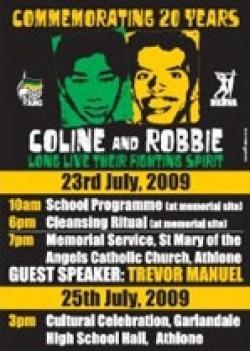
Grey-heads, mostly, congregate, as they have done before, at the memorial tribute to slain Umkhonto we Sizwe freedom fighters Coline Williams and Robert Waterwitch, over the road from the Athlone Magistrate’s Court, 24 years on, 27 July 2013.

(Image Credit: South African History Online)

The tragedy of Sybrina Fulton, the agony of Marissa Alexander

Sybrina Fulton

“My message to you is, please use my story, please use my tragedy, please use my broken heart to say to yourself, ‘We cannot let this happen to anybody else’s child… I speak to you as Trayvon’s mother. I speak to you as a parent, and the absolutely worst telephone call you can receive as a parent is to know that your son — your son — you will never kiss again. I’m just asking you to wrap your mind around that, wrap your mind around: No prom for Trayvon. No high school graduation for Trayvon. No college for Trayvon. No grandkids coming from Trayvon, all because of a law, a law that has prevented the person who shot and killed my son to be held accountable and to pay for his awful crime.”

Sybrina Fulton spoke these words yesterday.

Sybrina Fulton and Marissa Alexander face each other across a chasm of tragedy and agony, a condition known by far too many Black women in the United States, women who live under the regime of more than Stand Your Ground laws. Black women in the United States today live in an internally coherent system of racial-sexual oppression.

When Trayvon Martin was killed, and even more when his killer was released, across the country, Black families understood that Stand Your Ground was code for Understand Your Place. Understand that your place is the crossroads of your race and gender.

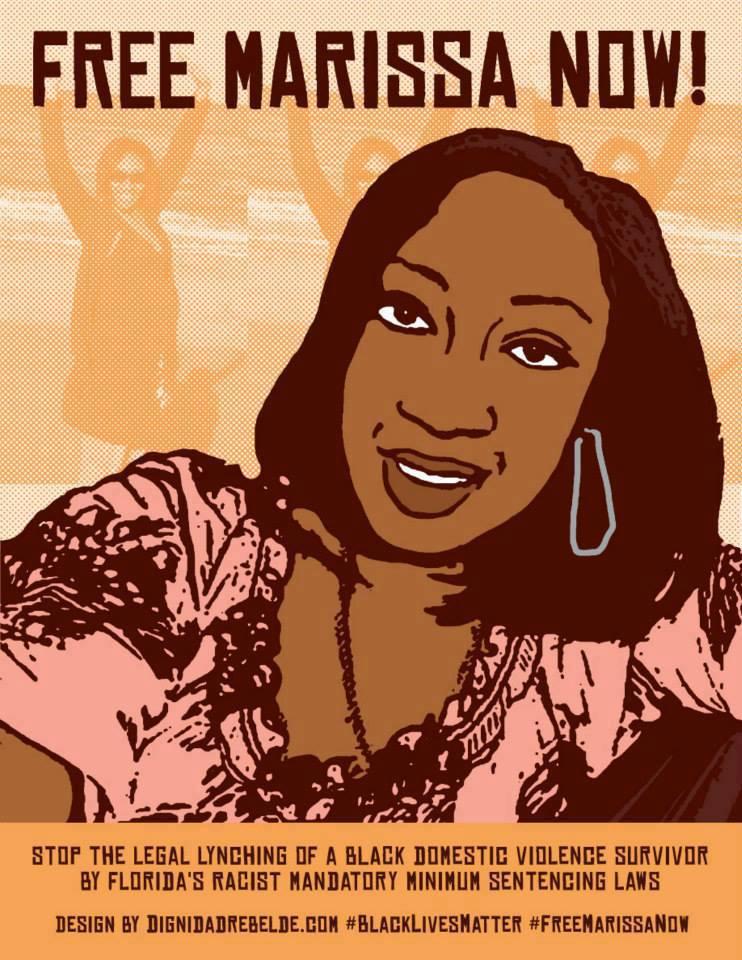
This lesson is being lived out today by Sybrina Fulton. Marissa Alexander is also living out that hard lesson. Marissa Alexander is a Black woman in Florida, in the same jurisdiction as Travyon Martin. She is the mother of three children. One day, in desperation at the abusiveness of her partner, she picked up a gun and shot it, once, in the air. It was a warning shot.

When she was arrested and tried, she said she was protecting herself and her children, she argued their lives were in real, present and immediate danger. She invoked Stand Your Ground. The prosecuting attorney Angela Corey, the same prosecuting attorney in the Trayvon Martin case, rejected the argument.

Many want to know why. Why does a Black woman get such different treatment? Others respond, “Hey, welcome to Florida. Welcome to America.”

Marissa Alexander was sentenced to 20 years behind bars. She now `awaits her appeal.’ For Black women in the United States, the options provided by the so-called criminal justice system are simple, agony or tragedy. Those options are unacceptable. Release Marissa Alexander from prison. Relase CeCe McDonald from prison. Reject the Stand Your Ground, `Stand Your Position program. Instead, Stand Your Dignity

(Photo Credit: New York Times / Chang W. Lee ) (Image Credit: DignidadRebelde.com)