In Botswana, a great victory for Edith Mmusi and women everywhere


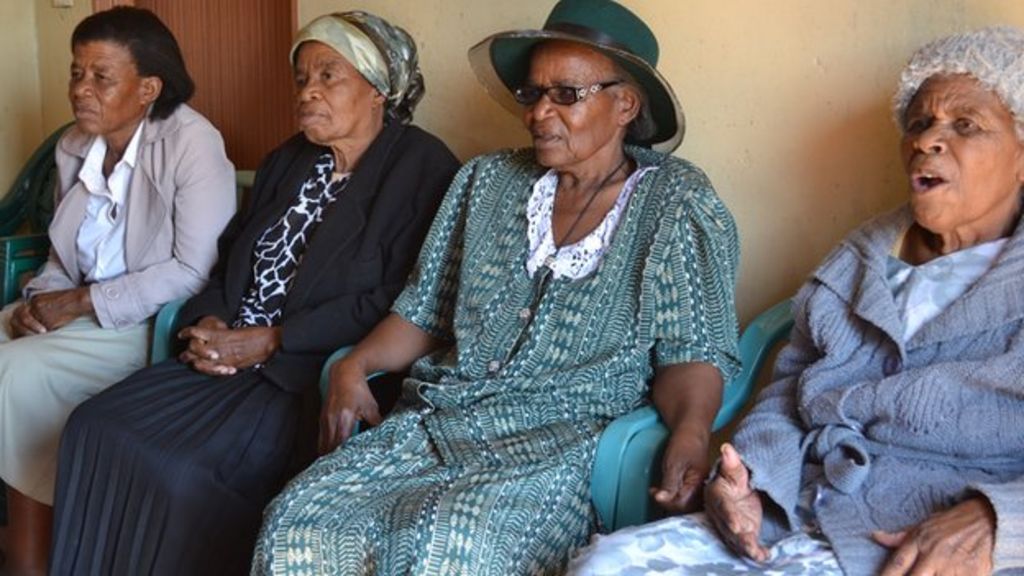
Edith Mosadigape Mmusi and her three sisters – Bakhane Moima, Jane Lekoko, Mercy Kedidimetse Ntshekisang

Edith Mosadigape Mmusi and her three sisters – Bakhane Moima, Jane Lekoko, Mercy Kedidimetse Ntshekisang

October 12, 2012, was a great day for Edith Mosadigape Mmusi, her three sisters – Bakhane Moima, Jane Lekoko, Mercy Kedidimetse Ntshekisang – and women across Botswana and southern Africa. On that day, the High Court of Botswana ruled that women should be allowed to inherit by customary law. The Court ruled that Edith Mmusi, who had lived continuously in her house and home, should not be excluded from inheriting … her own home.

The sisters were supported by Priti Patel, of the Southern African Litigation Centre, based in Johannesburg, as well as other women’s rights activists across Southern Africa. They were also supported by the earlier Attorney General v Unity Dow, a landmark women’s rights case. From top to bottom and side to side, this was a women’s case, brought by women activists, women jurists, women elders, women. Upon leaving the High Court in Gabarone on October 12, Edith Mmusi said, “It’s a great day for us.”

It was indeed, and it just got better.

Yesterday, in a unanimous decision, the Court of Appeal in Ramantele v Mmusi and Others upheld and strengthened the High Court’s October decision: “Constitutional values of equality before the law, and the increased leveling of the power structures with more and more women heading households and participating with men as equals in the public sphere and increasingly in the private sphere, demonstrate that there is no rational and justifiable basis for sticking to the narrow norms of days gone by when such norms go against current value systems.”

In his concurrence, Chief Justice Kirby noted, “Any customary law or rule which discriminates in any case against a woman unfairly solely on the basis of her gender would not be in accordance with humanity, morality or natural justice. Nor would it be in accordance with the principles of justice, equity and good conscience.”

Priti Patel put the day’s decision and event in context: “The judgment today by the Court of Appeal made it clear that women are not second class citizens in Botswana. The Court of Appeal’s unanimous decision – noting that customary law unjustly discriminating against women solely on the basis of their gender would violate the Constitution and the laws of Botswana – was a significant move forward in ensuring the end of gender discrimination in Botswana. Some people had feared that the Court of Appeal would set the fight for women’s rights back yet again,” said Patel. “But instead they ruled unanimously in favour of equality and against gender discrimination. It is a hugely important decision not only for Botswana but for women across southern Africa.”

It’s a great day for Edith Mmusi, for Bakhane Moima, Jane Lekoko, Mercy Kedidimetse Ntshekisang, for Unity Dow and Priti Patel, for women across Botswana, across southern Africa … and beyond.


(Photo Credit: BBC)
At HMP Bronzefield, we were dismayed

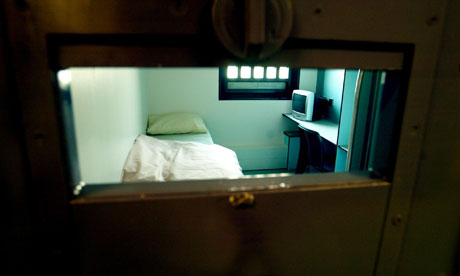
Welcome to HMP Bronzefield, a “Private Finance Initiative”, or PFI, prison for women in southeast England. If you are a `women with complex needs’, a women who is both `vulnerable and violent’, you can expect to spend your time, years and years of it, in isolation, in a squalid cell.

That is the finding of an unannounced visit by Nick Harwick, the Chief Inspector of Prisons. In April he visited Bronzefield, and here’s part of his report: “HMP Bronzefield is a closed women’s local prison run by Sodexo Justice Services that at the time of this inspection held 446 women on remand or serving sentences ranging from a few weeks to life … At our last inspection in 2010 we reported:

“The prison held a small number of ‘restricted status’ women, some of whom had severe personality disorders. Their needs could simply not be met by the prison. One woman, who had exhibited unpredictable and violent behaviour, had effectively been held in the segregation unit for three years with very little human contact or activity to occupy her. The conditions in which she was held seemed likely to lead to further psychological deterioration and were completely unacceptable. There was little evidence that senior staff in the Prison Service had oversight of women segregated for long periods to ensure their conditions were humane. Bronzefield is not an appropriate place for women with these needs and there was a lack of a national strategy to manage women with such complex demands.

“We were dismayed that the woman who had already been in the segregation unit for three years in 2010 was still there in 2013. Her cell was unkempt and squalid and she seldom left it. Although more activities had been organised for her and better multi-disciplinary support was available, she still had too little to occupy her. Her prolonged location on the segregation unit amounted to cruel, inhumane and degrading treatment – and we use these words advisedly. The treatment and conditions of other women held for long periods in segregation was little better. Much of this was outside the prison’s direct control and required a national strategy for meeting the needs of these very complex women – as exists in the male estate. However, Bronzefield itself needed to do more to ameliorate the worst effects of this national failure.”

When Bronzefield opened in 2004, it was the first PFI prison for women in the United Kingdom. In their nine years of operation, they have not managed, or refused, to take into account `women with complex needs.’

Juliet Lyon, of the Prison Reform Trust, wondered, “Why in this day and age are women with such complex needs transported like cattle and dumped in prison, where one of the most damaged women is left to rot in some form of solitary confinement for five years?”

Frances Cook, Chief Executive of the Howard League for Penal Reform, was a bit more direct: “This shocking case of treatment, which appears to amount to torture, in an English prison should shame ministers who tolerate the over-use of custody for women and consequent poor treatment.”

It should should … but it didn’t. They loudly proclaim their opposition to violence in Syria but for `women with complex needs’ in their own backyards? Not so much.

Jan Sambrook, the Chair of the Independent Monitoring Board at Bronzefield, wrote, today, “We are … very concerned about the humane and fair treatment of a small number of such women. The discussion so far has been about one woman. This is not an isolated case … I, previous chairs, and members of the IMB have raised our concerns repeatedly about the women held long-term in the segregation unit. This is in direct contravention of National Offender Management Service (Noms) guidance, falls well below what is fair, decent and humane, and discriminates against female prisoners, as the special accommodation available to men is not provided for women … I’d like to emphasise that the concern is not just about the one woman being talked about today, but the wider issue of the holding of the small number of women who are potentially very violent, difficult and volatile but also vulnerable. Presently there are no dedicated facilities for the holding of these women such as those available in the male prison estate, meaning that they get held in what we consider unsuitable conditions, including being isolated for far too long. This is unfair and discriminatory.”

What do we know about women’s prisons? They have a higher ratio of people living with mental health illnesses and a higher ratio of people who have been sexually and otherwise abused. What else do we know about women’s prisons? If you’re a woman prisoner in the United Kingdom and you’ve got any problems, unlike in the male prison system, there’s nowhere to go but in a hole … for a long time.

Call it torture. Call it systematic as well. And please refrain from expressions of shock. This is not an isolated case; this is not about one woman or one prison; and none of this is new.


(Photo Credit: Martin Argles / The Guardian)

Evolution of a scandal in France

Christiane Taubira announces new penal reform plan

Christiane Taubira announces new penal reform plan

Last Saturday the dispute between Minister of the Interior Manuel Valls and Minister of Justice Christiane Taubira concluded …  at least for now. First, Taubira responded to Valls’ letter by debunking the manipulation of numbers and ideas that were the basis of his attacks on her reform agenda. In so doing, Taubira underlined the dangers of exploitation in penal populism.

Then she announced the main points of her penal reform proposal. She called for an end to the “enfermer, enfermer sans cesse” (lock up, ceaselessly lock up) doctrine of the past 10 years when Nicolas Sarkozy was, first, Minister of the Interior and, then, President. In a speech to Europe Ecologie Les Verts, Taubira described these as ten years that had damaged French society, ten years of constant social tension, “of martial discourses, of great threats, of intimidating virility”.

The crux of Taubira’s reform is repeat sentences. About 58% of the offenders in France re-offend.  In response to this crisis, she proposed alternative sentencing, known as probationary sentencing, for any sentences under five years. Probationary sentencing would be used at the discretion of the judge.

Taubira further announced the official end of mandatory sentencing. She explained that her approach to reform is both serious and rigorous. To that end, she introduced a social component that would limit the “sorties seches” (or “dry releases”), releases that offer absolutely no personalized support.  The vast majority of releases from prison are of the “dry” variety.

In Europe, most sentences are short, anywhere from a few months to a few years. Nevertheless, the shock of incarceration, the shock at the series of humiliations, is enormous. Then the shock of being released without support is equally enormous and is considered a kind of second sentence. One third of the people in sheltered housing have been in prison before. Taubira amassed an array of measures and means to foster personalized assistance for former prisoners.

What lies behind Christiane Taubira’s announcement is a clear sign that we are witnessing the end of the pile of devastating penal laws passed in the last 10 years. Most, if not all, have just increased the tension between justice and society and increased the sentiment of malaise and insecurity.

The instrumentalization of victimhood in the political arena has changed the role of justice and served to construct a penal populism.

The latter has been used in the United States for political and economic purposes. It hurts and renders many people and communities more vulnerable. One should be particularly wary of the multiplication of laws after intense media coverage of crimes. For instance, the murder of Laci Peterson, eight months pregnant, in 2002 brought the Unborn Victims of Violent Act in 2004. Ever since, numerous pregnant women have been threatened and often wrongly convicted by this act. The consequences for pregnant women are dire, especially for poor women, and have affected reproductive rights in general.

The real scandal is the spread of poverty and social fractures, the real junction between the ruthless neoliberal global market and the population.

Christiane Taubira has to deal with a public opinion whose sentiment for “security” has been stirred up by the previous government, which shook the social solidarity system with its neoliberal privatization of public services. She is demonstrating that there is a way to get out of this logic of reactionary repressive system of punishment. In the end, she quoted the poet Rene Char “stupidity likes to govern…” She added that her goal is to destroy the methods that led to increased incarceration and have endangered the true security of a society.


(Photo Credit: Sebastien Calvet / Libération)

A specter haunts Pennsylvania


Sharon Wiggins

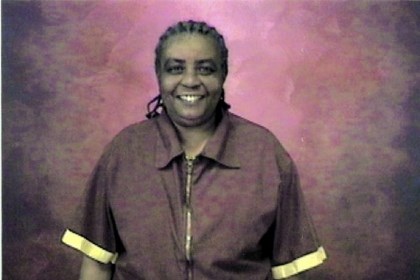
Sharon Wiggins died in March. Wiggins was a 62-year-old Black woman living with serious health problems. But it wasn’t her health that did her in. What killed Sharon Wiggins was the criminal justice system in Pennsylvania. Sharon Wiggins died behind bars at SCI-Muncy, the maximum security and intake `facility’ for all women prisoners in Pennsylvania, as well as the site of its death row for women.

Wiggins entered Muncy at the age of 17, convicted initially to death and then, a few years later, to life without parole. She spent 45 years behind bars. When she died she was the oldest and the longest serving woman prisoner in Pennsylvania. That’s no mean feat. Pennsylvania has more prisoners who began as juvenile lifers than any other state in the Union. Effectively, this means Pennsylvania has more juvenile lifers than any place else in the world.

Reports suggest that Wiggins set out, early on, to improve her life, to atone for her crimes, sins, and mistakes. She finished a degree at Penn State and when on to tutor and to manage tutoring programs. She completed thousands of educational certificate programs. She mentored others; she took care of women and helped women grow, and not only women prisoners. Nancy Sponeybarger, a former counselor at Muncy, has said, “As I got to know her a little bit, she was the one person who always made me feel my humanity.”

On another occasion, Sponeybarger elaborated, “She’s grown into a really insightful, compassionate, capable older woman – despite all the odds, because it’s not like you have a ton of role models when you’re in prison, especially when you’re tossed in there as a little girl.”

Especially when you’re tossed in there as a little girl.

Last June, the U.S. Supreme Court ruled that it’s unconstitutional to sentence juveniles to mandatory life sentences without parole. Wiggins applied for release, and she and her lawyers and supporters hoped that she would be released, at last: “I want to know what it feels like to wake up by myself. Here, you live on public view. There’s always a big piece of glass on your door. I want to wake up by myself. I want to know how it feels to walk down the street. I want to know how it feels to sit in the car and hear the rain just beat down. I want to know how it feels to sit with my sister and have a cup of coffee.”

The State dragged its feet, and Sharon Wiggins died. She never got to know.

Pennsylvania leads the nation and the world in the incarceration of children for life without parole. Last year, nationally, close to 1600 people were serving out juvenile life sentences without parole. Of the girls, almost 80% reported physical abuse, and over 77% reported sexual abuse.

And it gets worse. Historically and immediately, juvenile justice institutions are designed for boys. They don’t work for boys, mind you, but for girls, they’re particularly and specifically toxic, lethal even. The research on this systematic `oversight’ is abundant and easily available.

Custody for girls virtually guarantees that that their unique needs are not met and they react differently to their treatment than boys. Sentencing young girls to LWOP (life without parole) in adult court exacerbates girls’ unique issues in several ways. First, with the small number of women in the prison population, girls are often sent to women’s prisons with adult offenders rather than to separate units for youth offenders.  Girls are all too often subjected to sexual abuse and rape while in prison. Male corrections staff at women’s prisons may use coercive methods to initiate sexual relationships with inmates, or may abuse their position to obtain sexual favors. Sentencing girls to serve a life sentence in adult prison creates circumstances that are very traumatic and that should raise the specter of a punishment that is cruel and unusual.”

A specter haunts Pennsylvania, the specter of a punishment that is cruel and unusual, the specter of compassion and decency, the specter of justice for Sharon Peachie Wiggins. It is the specter of those children tossed in there as little girls.


(Photo Credit: Pittsburgh Post-Gazette)

Delusions, madness, and statistics


I give you the fifth edition of the Development Indicators that were approved by the South African Cabinet in March 2012, published by the Department of Performance Monitoring and Evaluation, published on the Presidency’s website.

According to which South Africa’s conviction rate for rape was 71.7% in 2011.

On whose planet? In which universe? What drugs haves these guys been mainlining? Have they being playing a lot of contact sports recently, without helmets? Did someone steal the calculators, again? Can we please stop smoking the aspadistras?

Lilly Artz from the University of Cape Town says that in South Africa, rape has one of the lowest conviction rates of all serious crimes, with research indicating that only about ten per cent of reported rapes receive guilty verdicts (SALC 1999). The Department of Justice and Constitutional Development figures also show that of more than 54 000 cases of rape reported in 1998, fewer than seven per cent were prosecuted.

Of course, they just don’t prosecute unless chances of a conviction are pretty good. But the basis on which the Presidency is planning is that 71.7% of rapes resulted in conviction.  I see.

I have to go and lie down now, in a darkened room.


(Photo Credit: On Being / DFID / Flickr)

Prison is torture!


Amid all the discussions of prison, people on the outside only rarely hear the voices of  the prisoners themselves. In a series of interviews with prisoners, Le Monde and the France Culture program  “24 hours in prison” attempted to give a somewhat autonomous audio space to those voices.

The arrival in prison is always a traumatic event. Hugo (56 years old now) describes his first arrival in prison, when he was only 16. He returned years later and spent 29 years altogether in jail. At 16, he was terrorized and felt deeply the foreign gaze that scrutinized his naked body with a simultaneous purpose of watching and penetrating. During the strip search, he was indeed penetrated. He felt that his body was being thrown to the lions.

The search is a form of punishment, says Helene who spent 11 months in pretrial custody. Hafed explains that he always accepted getting undressed but always refused what he calls “les à côtés”, the things on the side that are all kinds of penetrating searches. He paid for his resistance with many stays in solitary confinement. Djemel adds that there is nothing more humiliating than the search.

Helene remembers solitary confinement as a place where the image of the self disappears: “You are alone truly alone; nobody else is there.”

Solitary confinement is another humiliation within the punitive system that erases personality as it destroys prisoners’ bodies. Helene recalls that she started to lose her hair immediately after her incarceration. Her hair would stay in her hands; she cut her hair short with little school scissors.

Hugo says that he has 5 upper teeth and 6 lower teeth left. He adds, “Most of the people who land in prison are already poor and arrive with dental problems and living in confinement just aggravates the problems.” He admits that he even pulled some with a fork.

The body is malnourished in prison, thanks to the mediocre quality of the meals served by Sodexo. In 2009, the Sarkozy administration contracted with Sodexo to serve 27 French prisons. Prisoners often have to buy at excessively high cost additional food to ameliorate their poor ordinary diet.

“In 2003 before I had my problems. I weighed 75 kg. Now I am 50 and weigh 54 kg. Prison makes you ugly! Because you are in a constant state of humiliation,” explains Hugo.

Sport is often a way for prisoners to remedy the effect of the penal environment. Hafed explains: “You lift weights… In that way, you wipe clean the windows and let the backroom turn to trash.”  The body becomes even more mutilated. “Sport is not a matter of harmony,” explains Djemel, “You are in constant brutal relationship with sports.”

In France, as elsewhere, there are a large number of suicide attempts in prison: “Your body is in prison. You cut yourself to attract attention,” says Hugo. Desperation from the humiliating process entails mutilation but cutting is also a way to assert one’s personality and existence when facing the impossibly heavy and brutal weight of the penal system.

These prisoners’ testimonies are there to remind everyone that prisons today are designed to break their bodies and minds. As one prisoner said, “Prison is torture!”


(Photo Credit: Le Monde)

More support is needed for South Africa’s subsistence fisherwomen

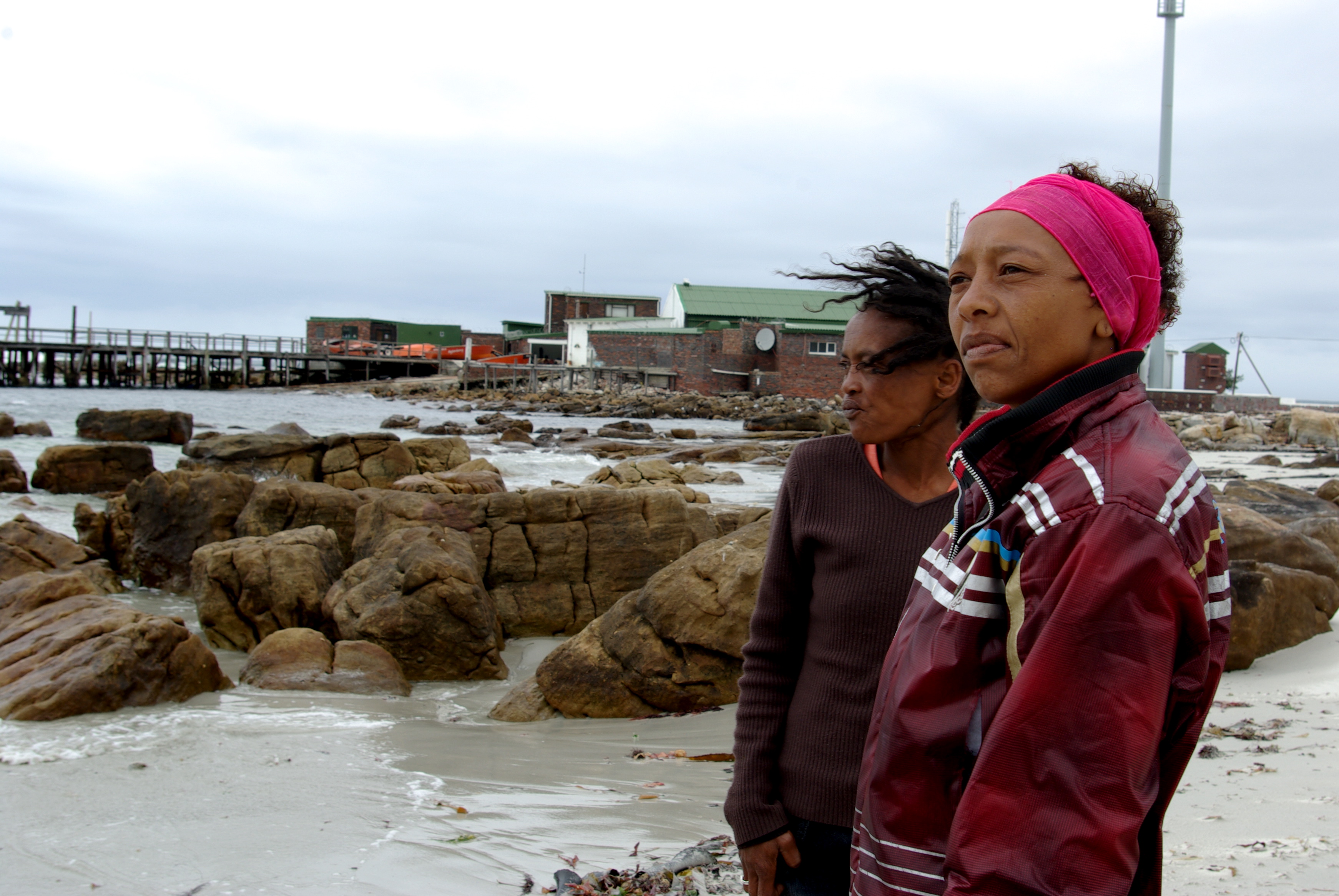
South African women fish for a living, and for their lives.

Fishing for a living is a hard life, everywhere. Subsistence fishing can be brutally difficult, but it has its dignity. For example, in Durban, on the east coast of South Africa, women and men have been subsistence fishing off the piers and beaches for over a hundred years. Generation after generation, they have used the skills their forebears brought when they came from India as indentured workers. Across generations and for decades upon decades, subsistence fishing brought fisherwomen and fishermen economic income as well as spiritual and cultural fulfillment.

Four years ago, that all came to a crashing close when much of the harbor was closed to fishing. On one hand, there were `security’ issues. On the other hand, there was rapid private development, referred to `expansion’. It wasn’t `expansion’. It was privatization; it was theft of public and common space. The results for the subsistence fisherwomen and fishermen were devastating, and continue to be so.

For the fisherwomen and fishermen, the act of fishing successfully, of bringing home food and some money from the sales of their day’s labor, is value. Honoring the labor of their forebears is value. Being on the water, being together, being a community, is value.

For those who occupy the commanding heights of Durban, real estate is value, and the water, the beach front, recreational fishing, have all become big business, and promise to intensify, or `expand’, in the future. For them, extraction is value.

For fisherwomen, the closure of and exclusion from public spaces has particular, gendered aspects. Fishing together off the piers provided safety. As the spaces closed, competition increased. As the competition intensified, tensions turned to violence. This occurred in an environment that was already hard on fisherwomen. Women’s subordinate position in fishing communities generally made them more vulnerable to exploitation and abuse. This has meant high levels of HIV and AIDS, drug and alcohol abuse, and violence. With the reduction of available spaces for fishing, the loss of income, increased and intensified unemployment, the daily lives of fisherwomen and of women in fishing communities predictably became more perilous and more toxic.

It’s the predictability that has to be taken into account. None of this is a surprise and none of this is a secret. It’s public policy; it’s part of the development scheme for Durban … and beyond.

During the last two decades, South African fisherwomen have organized. The South African Fisherwomen’s Association, organized by Sahra Luyt, has been on the frontline of integrating women into the fishing industries, as well as combating the increased difficulties due to climate change. There’s the Oceanview Fisherwomen’s Association, colored women from the Cape Flats who took up fishing to survive and to live with dignity, as documented in Penny Gaines’ 2002 documentary, “Strong Enough”.

That women fish for a living, and for their lives, in South Africa is well known, except at IRIN, “a service of the UN Office for the Coordination of Humanitarian Affairs”, which ran a news piece today headlined, “More support needed for South Africa’s subsistence fishermen.” The article should come with a disclaimer, “No fisherwomen were interviewed in the making of this article.” Nowhere does the article reference fisherwomen. Not even fisherfolk. Only `fishermen’ make the IRIN cut.

South African subsistence fisherwomen have always had a tough time in fishing communities. More recently, they have been under attack by State and private developers. And now they are erased by coordinators of humanitarian affairs. More support is needed for South Africa’s subsistence fisherwomen.


(Photo Credit: Lee Middleton / IPS)

From “Mammy” to Stay-at-Home Mom

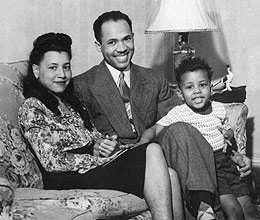
Eugene and Helene Allen with their son, Charles, in 1948

Eugene and Helene Allen with their son, Charles, in 1948

What caught my attention in Lee Daniels’ “The Butler” was not the character Cecil Gaines, played by Forest Whitaker, but rather his wife, Gloria, portrayed by Oprah Winfrey. In addition to the representation of a White House butler, the film depicts an African American wife and mother whose husband’s gainful employment allows her to remain home and rear the couple’s two sons: an anomaly in the portrayal of black women in the history of Hollywood movies. Many persons with whom I discussed the film overlook this fact. At the same time, this depiction of a black woman conjures up a salient and often contested aspect of black women’s history in the U.S. That is, there was, and continues to be, a cadre of stay-at-home black wives and mothers rearing their children, taking care of their husbands and partners, and being active in their communities and churches.

So while the film unveiled the life of the character Cecil Gaines, I was more intrigued by the development of his wife, Gloria, because too many Hollywood films continue to portray African American women as caricatures, mammies, and jezebels or some semblance of all three. I watched the Gloria character intently despite my ongoing disappointment with the inability of Oprah to produce a film that allows me a glimpse into the black life that rings true to my experience and my reservations about her acting (Am I the only person not enthralled by Oprah’s acting?).

As a former maid, Gloria recognizes how coveted the position is that her husband has landed at the White House. She reminds her neighbors “the White House called him” stressing the level at which Cecil has mastered the skill of being in a room without being noticed, anticipating a person’s needs, and speaking only when being spoken to: the criteria for being an excellent butler. Gloria’s elation soon gives way to anger and loneliness, which she attempts to mitigate with drinking and possibly an affair with a neighbor, as she loses her husband to his job.

Despite the film’s pat domestic ending, allowing viewers to depart the theater with the delusion that some progress has been made in race relations in the United States and in the representation of African Americans in Hollywood films, the film nonetheless stirs up complicated questions about wage disparity versus job security, generational alliances versus intergenerational conflicts, and the sacrifice of self and family for inclusion within the status quo and an opportunity to sit at the table.  But what is more important to me is that Lee Daniels’ “The Butler” shatters a poignant stereotype of the black woman as mammy only to re-inscribe the black man as stepin fetchit, holding Cecil Gaines fast within a frame that keeps him passive, self-sacrificing, and more in love with the first families and their children than he is with his own son.

Despite the lecture about the potential subversiveness of the black domestic given by Dr. King in the film to a group of Freedom Riders, one of whom is Cecil Gaines’ son, I still await the day when filmmakers, other than Spike Lee, will produce a film with characters who resemble some of the black people whom I have known in my life, those persons who have truly been subversive and paid the price for their resistance.


(Photo Credit: History vs. Hollywood)

Scandal in France! Prison as a last resort!

Christiane Taubira explains prison

Scandal in France! August 5th, at the beginning of the sacrosanct vacation month for the French, three “delinquents” who had not yet served their full sentences were released, due to lack of space in the overpopulated French prisons. The three men had been sentenced to 2 to 3 months in prison for light offenses. The decision to remit their time in prison was made by the public prosecutor department of Chartres/Dreux, in the western part of France.

Some politicians from the right decided to use this story to denounce the approach taken by the current Minister of Justice Christiane Taubira that departs from the previous government. Taubira wants to reform the system of sentencing, rather than keeping incarceration as the central remedy for all social problems.

Under Sarkozy, the State used the imagery of (in)security to call for tougher punishments on behalf of the victims. It developed a policy of prison expansion and the use of incarceration as incapacitation, along the lines of the United States penal system. Laws such as minimum mandatory sentences, until that time unknown in France, were proposed and passed, guaranteeing 4000 additional bodies every year on the assembly line to prison. These additional prisons ensured a smooth transfer of funds to private prison contractors, in particular Sodexo.

Christiane Taubira responded to her critics by denouncing the previous policies that created the current prison overcrowding crisis. But things got complicated when a letter by the current Minister of Interior Manuel Valls, who is in charge of police, to President Francois Hollande was leaked. In the letter expresses, Valls disagreed with his colleague Taubira, asserting that the individualization of sentence and the reduction of prison sentencing through alternative sentences should not be applicable for recidivists for whom he demanded tougher laws.

Manuel Valls voices a populist approach that tends to eliminate the individualization of sentencing, therefore edging closer to the American system of mass incarceration. Denis Salas, a law professor at the magistrate institute in France, argues for the importance of individualized procedure to avoid the mechanical effect of a law that prescribes incarceration as an unavoidable, or mandatory, sentence.  He explains: “The shock of incarceration, detention on remand, then the first incarceration as most of the suicidal attempts occur in the first weeks of imprisonment have irreversible effects.” Moreover, many reports have concluded, including the recent report “Conférence de Consensus de prevention de la recidive” (consensus conference on the prevention of recurrent offenses), that prison does not help prevent the recurrence of offenses. The report was handed to the current Prime Minister last February and contained 12 recommendations for better penal public policies that all call for reestablishing human dignity, rather than tougher laws.

If the real goal is to break the cycle of repeating offense, one can only encourage Christiane Taubira to continue her work to sustain a society that sees prison as a last resort. A repressive police force and criminal justice system only serves the market economy, erasing the lives of individuals and collectivities as it strips bodies of very social existence. In this `debate’ between human dignity and mass incarceration, where exactly is the scandal?

(Photo Credit: http://www.lemonde.fr)

The political economies of mental illness, solitary confinement, and women’s labor

Sonya Hall, Amir Hall’s aunt.

Across the United States, people living with mental illness are sent to prisons, rather than hospitals, clinics or other health programs. In the last three decades, prisons and jails have become the single largest institutional residence for those living with mental illnesses. While this is more or less public knowledge, the prison and jail systems have steadfastly refused to address the new tsunami. Funding for mental health providers has not increased. If anything, it’s been sliced and diced. Guards and other staff have not received additional training to address the `new populations.’

And so …

And so, what happens is exactly what you expect would happen. Prisoners `manifest symptoms’ and are placed in solitary confinement, often for prolonged periods of time. Acting out is seen as acting up, and that means the hole. And for prisoners living with mental illnesses, that can, and often does, mean death.

In this theater of atrocity, women take a number of specific hits. Here’s one.

Meet Sonya Hall, Shaleah Hall, and Donna Currao.

Donna Currao is the wife of Tommy Currao. Tommy Currao is one of the `lucky ones’. Currao attempted suicide at least ten times in ten months in solitary confinement. He tried to overdose, to hang himself, to slash himself, using the metal inside of his hearing aid. For the last attempt, with the hearing aid innards, Currao was charged $500 for `destruction of state property.’ In New York, where Currao is imprisoned, irony is not dead.

Donna Currao pushed and pulled and pushed some more. She saw what was happening to her husband in solitary. She knew how to read the words and, even more, the silences, and she forced the State to do something as her husband lost both weight and words.

A few months ago, Donna Currao’s insistent organizing finally forced the State to send her husband to a psychologist, who diagnosed the prisoner as in serious need of help. He was moved from the hole to health treatment and now, a mere months later, is “1,000 times better.”

Donna Currao now wonders, “Why do we have to fight so hard to get them evaluated?”

Sonya Hall and Shaleah Hall also ask why. Sonya Hall is Amir Hall’s aunt. Shaleah Hall is Amir Hall’s sister. Both are now part of the United States’ version of Mothers of the Disappeared.

Amir Hall’s story is tragically short. He lived with severe mental illness. He would have outbursts. One outburst resulted in prison, for parole violation. He had outbursts in prison. That led, finally, to ten months in solitary. He never returned. As Shaleah Hall noted, watching a video of his `transfer’, “There was somebody who looked defeated, like the life was beat out of him. I don’t know who that person was. The person in that video was not my brother.”

Why? Why, when doctors and pretty much everyone else had diagnosed and recognized Amir Hall as someone living with severe mental illness was the young Black man `diagnosed’ by prison staff as not serious? Why? Why must Shaleah Hall and Sonya Hall now work so hard, so intensely, so long to get something that will not be justice and will not be healing but will be something? Why? Why must Donna Carao fight so hard to get something so obvious?

The populations targeted for incarceration are also targeted for intensive and extensive labor, none of which counts as labor. That population, the laboring non-laboring ones, is made up overwhelmingly of women. Who benefits from women’s non-laboring labor in the prison industrial factory system that shoves those living with mental illnesses into death holes?


(Photo Credit: Shannon DeCelle / ProPublica)