Reproductive Choice and Prison as Punishment: A Tale of Two States

Out West in California, incarcerated women are sterilized without their consent. Over in the Northeast in Pennsylvania, a mother was incarcerated for helping her daughter end an unwanted pregnancy. While these two stories may seem unrelated, at their intersection are important issues of freedom, choice, and women’s bodies.

As described in Women In and Beyond the Global last week, many women prisoners in California have been stripped of their reproductive freedom. The Center for Investigative Reporting revealed that California prisons had been illegally sterilizing female inmates either through coercion or without informed consent, using procedures such as tubal ligations. While it is encouraging that in light of this horrific finding the governor signed a bill prohibiting forced sterilization, the fact remains that these women will never again be able to choose to become pregnant. That choice was already made for them by prison authorities.

Across the country, authorities sent a woman to prison for supporting her daughter’s reproductive choice. Jennifer Ann Whalen’s 16-year-old daughter was pregnant, but she didn’t want to be. When they looked up their options, the mother and daughter found that they didn’t have many. From where they lived in rural Pennsylvania, the closest abortion clinic was 75 miles away. According to state law, Whalen’s daughter was required to receive counseling at the clinic and then wait 24 hours before returning for an abortion. Furthermore, without health insurance, the procedure would cost more than $300. They were unable to make the trip because they couldn’t afford the cost, the fact that their only car was shared with Whalen’s husband who was unaware of the pregnancy, and because Whalen couldn’t miss multiple days of work. Without any other options, they decided to induce a miscarriage themselves. So Whalen ordered abortion pills online and her daughter took them. She had no serious complications or side effects, but they worried when she experienced stomach pains and bleeding. They went to the hospital, where Whalen was arrested, and ultimately charged with a felony for performing an abortion without a medical license. Whalen will serve 12-18 months in prison. If her daughter had access to a safe, legal, and affordable abortion, Whalen would not be behind bars today.

Some women are punished by prison and consequently denied reproductive choices; others are denied reproductive choices and consequently punished by prison. Both of these scenarios illuminate the various ways that women in America are denied the freedom to control their own bodies and, ultimately, their own lives.


(Photo Credit: Care2.com)
A time of challenge and opportunity for U.S. domestic workers

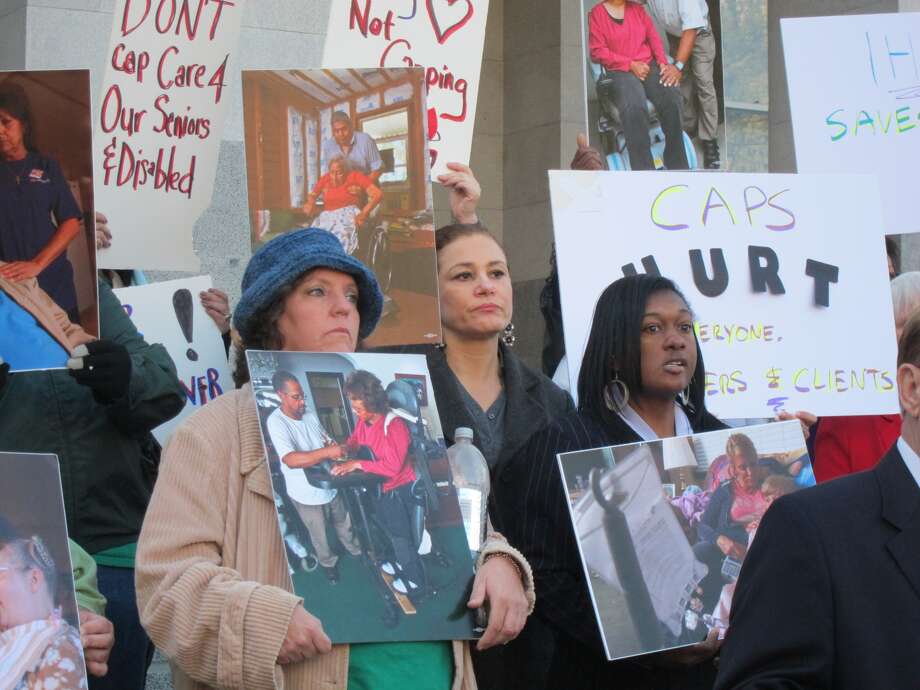
The past few months have been marked by both progress and setbacks for domestic workers in the United States, especially those who provide in-home care to seniors, people with disabilities and others in need. The developments have made it increasingly evident both that there is much work to do to generate the policy and cultural changes U.S. domestic workers need and deserve – and that now is the time to make it happen.

Home care is one of the United States’ fastest-growing and lowest-paying industries. More than 90 percent of U.S. home care workers are women, more than half are people of color, nearly a quarter are foreign born, and more than half rely on public assistance. The vast majority are also paid through public funds, primarily from Medicare and Medicaid. When combined with misguided views of women’s work and caregiving, these factors have long made the workforce especially susceptible to cutbacks and exploitation.

A major recent setback happened this June when the U.S. Supreme Court ruled in Harris v. Quinn that 26,000 Illinois home care workers are only “partial” public employees because they provide in-home care for private clients through a publicly funded state home care program. As a result, according to the ruling, these workers are no longer entitled to the same labor protections and union representation as other workers, specifically those who provide care outside of a private home.

The decision brings to light notions of both the home and the workplace that are routinely used to justify the devaluing of women’s labor: The home is not a workplace and, therefore, even basic labor protections do not apply to it or those who work within it. This is the same flawed rationale that resulted in home care workers being classified as “companions” and denied minimum wage and overtime protections under the federal Fair Labor Standards Act (FLSA) in 1974. That classification isn’t supposed to change until next year.

Another setback came a few weeks ago. In what should have been a monumental victory for working families, California Governor Jerry Brown signed the nation’s second statewide paid sick days law, which will guarantee an additional 6.5 million workers the right to earn paid sick time. But, just before the bill passed, the governor negotiated an amendment to exclude one critical group from its protections: 400,000 workers who provide in-home care through the state’s publicly funded home care program.

Governor Brown’s actions may not surprise some. The first two times the state’s domestic workers’ bill of rights came across his desk, he vetoed it. He eventually signed the law – the nation’s third – in 2013. He also previously sought hundreds of millions of dollars in cuts to the state’s home care program. This time, the governor cited cost as the reason to exclude home care workers from the new paid sick days law. Viability of that concern aside, there is simply no excuse for making cuts or special exceptions at the expense of the workers who can least afford it, and whose health and well-being have such a widespread impact.

So why did the governor of one of the more progressive states in the country do it? Because he can. Home care workers are still positioned as easy targets in the United States, and it is not unusual in the nation’s history (or globally) for women’s work to be undervalued and excluded from even the most basic protections. That is part of what makes the most recent potential setback so disappointing.

In 2013, in a major victory for domestic workers, the Obama administration announced official changes to the classification of home care workers under the FLSA that would extend minimum wage and overtime pay protections to two million home care workers. It also gave employers and states at least 15 months – until January 1, 2015 – to prepare. Now, some state and private home care industry officials are lobbying for more time. If they are successful, it will mean that the needs of home care workers will come last, yet again.

The good news is that workers, unions and advocates are pushing back, and there are reasons for U.S. domestic workers to be hopeful. Despite the Harris ruling, the union of home care workers most impacted by the decision says 10,000 workers have signed up. Just two months after the decision, thousands of Minnesota home care workers voted to unionize. And Ai-jen Poo, director of the National Domestic Workers Alliance, was recently awarded a MacArthur Foundation ‘genius grant’ of $625,000 to support organizing and policy advocacy efforts.

So, at a time like this, when there is a tremendous amount of great work happening to elevate and address the needs of U.S. domestic workers, the challenges and opportunities made clear in the last few months are a reminder that workers, advocates and organizers must remain vigilant. The United States cannot afford to take steps backward and further ingrain archaic and inexcusable understandings of domestic labor and women’s work, especially with such great progress on the horizon.


Update: On October 7, 2014, the U.S Department of Labor announced that the rule extending minimum wage and overtime protections to home care workers will be implemented on January 1, 2015, as planned. However, it also announced that it will not enforce the changes for six months, followed by another six months during which enforcement will be determined on a case-by-case basis. Although the move does not technically delay implementation of the long overdue rule, it will mean that some U.S. home care workers will have to wait at least a year before receiving the pay protections they deserve.


(Photo Credit: Melody Gutierrez, The Chronicle)

What do you mean, sterilized without consent?

Last week, California formally banned forced and coerced sterilization of women prisoners … again. Governor Jerry Brown signed Senate Bill No. 1135 into law. The bill reads, in part: “This bill would prohibit sterilization for the purpose of birth control of an individual under the control of the Department of Corrections and Rehabilitation or a county correctional facility, as specified.” Not forcing sterilization on women prisoners seems pretty straightforward. Some would even say a no-brainer.

And yet, this law took a lot of brains, and muscle and organizing and history.

The quick story is that the Center for Investigative Reporting revealed, last year, that the California prison system had coerced women prisoners into sterilization. Lawmakers, and in particular the California Women’s Legislative Caucus, called for an investigation. A State audit showed that between 2005 and 2013, 144 tubal ligations were performed on women prisoners. At least 25% of these had no evidence whatsoever of informed consent. Most of the others were dicey. 88 of the women were Latina or Black, and 6 were “other”. All of the women, one hundred percent, had been jailed at least once.

Senator Hannah-Beth Jackson wrote the bill. She worked with Cynthia Chandler, co-founder of the prisoners rights group Justice Now. They worked with former prisoners, such as Kelli Dillon, who could confirm the allegations and, more importantly, put a human face on the story. When the bill was presented, it passed unanimously, thanks to the great work of great investigative reporters, community organizers, legislators, and current and former women prisoners.

The law’s back-story raises many concerns. Between 1909 and 1964, California had compulsory sterilization laws that targeted people of color, the poor, the disabled, those living with mental illnesses, and prisoners. About 20,000 men and women were sterilized without any pretense of consent. Forced sterilization laws were officially banned, by the California legislature, in 1979.

Prison doctors and administrators found loopholes in the ban, and they were back in business, and the only possible witnesses are `unreliable’. After all, they’re repeat offenders, many with low levels of formal education and many with “too many children.” And they’re women, mostly women of color.

In Maryland, when State Delegate Mary L. Washington discovered that women prisoners were being shackled in childbirth, she replied, “Wait. What do you mean, shackled?” When she learned that shackled meant shackled, she launched what she figured was a no-brainer, a ban on shackling women prisoners in childbirth. It took two years of lots of brain and brawn to get that no-brainer passed.

These crimes by the State succeed because the population at large has been persuaded, for decades, that these women are the problem, and it’s best to leave the problem to the experts, prison doctors and prison guards. That’s how we’ve ended up in a world of what-do-you-mean.

In California, members of Justice Now are organizing an education campaign for current women prisoners and another for former prisoners. We all need that education. What do you mean, sterilized without consent? What do you mean, shackled?

(Photo credit: CDCR via Common Dreams)

England’s vicious assault on women awaiting trial

Around the world, people suffer the overuse of pre-trial detention. Too many people are kept for too long, often in violation of national Constitutions and laws. Second, too many people are kept in prison lock-ups, which are not equipped to handle diverse populations. This often means children are held with adults; men and women are held in the same space; remand prisoners and convicted prisoners are held together, and the list goes on. It’s a global crisis, and it’s getting worse by the day.

In England and Wales, this presumption of guilt has particular gendered aspects:

In England and Wales, about a third of men and half of women remanded to pretrial detention are poor enough to receive council housing benefits. … In England and Wales, half of men and two-thirds of women who were employed at the time of arrest lost their jobs as a result of their pretrial detention.”

While the ratios may not be shocking, they bear reflection. How does the so-called criminal justice system, and the State of which it is an ever-growing part, address the gender imbalance? How does the State respond to half of the women being in need of assistance and two-thirds of the women workers losing their jobs as a result of pre-trial detention?

A 2009 report noted that, in the preceding decade, the number of women in English and Welsh prisons had increased by 60%, compared to 28% for men. Much of this rise was due to revised sentencing rules, or better, the intersection of the State will-to-incarcerate and the political economic war on women. Here’s what that looks like.

Between 1997 and 2007, there was a 40% increase in the number of women in prison awaiting trial. In the same period, men prisoners awaiting trial decreased by 11%. More than 40% of women prisoners awaiting trial have attempted suicide at some point in their lives; for men that number is a little over 25%. Nearly two-thirds of women remand prisoners suffer from depression, a figure far higher than that of sentenced women prisoners. Half of all women on remand receive no visits from their family (for men, that number is 25%).

An earlier report by the Inspectorate of Prisons for England and Wales noted that, at the beginning of the twenty-first century, 65% of women had lost their jobs because of detention, and only 11% expected to have a job on release. This compared with 51% of men losing their jobs and 18% expecting to have a job upon release. Between 2000 and 2009, the numbers for women only worsened.

For decades, British public policy has wreaked havoc on women’s lives by eliminating mental health assistance, severely limiting housing and other forms of assistance, and increasing and intensifying “opportunities for arrest”. More women are arrested, held, receive little to no proper attention, receive little to no preparation for trial, lose their jobs, communities, support network, and, often, lives, and for what? Who has benefited from this decades long vicious assault on women’s lives? When innocence is gutted, who profits?


(Image Credit: Open Society Foundations)

Jamila Bibi and the high price of compassion

On Tuesday, September 16, Jamila Bibi was deported from Canada to Pakistan. The story is straightforward, and then again it’s not. Jamila Bibi is 65 years old. In 2007, Bibi fled her home. She says she was accused, falsely, of adultery. If convicted, Jamila Bibi could face death by stoning. Bibi went to Canada and applied for asylum.

In 2009, her asylum case was heard. Negar Azmudeh, who presided over the case, concluded that Jamila Bibi was a credible witness, that there was ample evidence that she had been unjustly accused of adultery, and that if convicted she would face death by stoning. However, Azmudeh reasoned that since Jamila Bibi’s husband had not filed for divorce, she was not only still married but under the protection of her husband. It was her husband’s uncle who had filed the adultery charges. And so Jamila Bibi was denied asylum. She did not have enough money for a lawyer, and so did not immediately appeal the decision.

Three months after the 2009 hearing, Bibi’s husband filed for and received a divorce. That action did not change the decision. Bibi has been working in Saskatoon as a cook. She reported dutifully every week. She made friends, some very dear, such as her employer Sahana Yeasmin.

In 2012, Bibi had enough money set aside to approach a lawyer, who immediately appealed the case. Again, Bibi reported every week. Two weeks ago, on her regular visit, she was informed she was to be deported. She was immediately taken into custody. Less than a week later, she was deported to Pakistan. According to Sahana Yeasmin, Bibi, now in Pakistan, fears for her life and is in hiding. Yeasmin reports that Bibi is thankful for the support and remains hopeful that she will be able to return to Canada and to her life in Saskatoon.

Jamila Bibi’s story, up to now, is painful and terrible, but Canada’s story, in many ways, is far worse. How is it that an adjudicator can say that despite credible and ample evidence, a woman accused of adultery is safe because her husband has not divorced her? How is that no one applied compassionate grounds to keep Jamila Bibi in Canada? Where exactly is the intersection of the rule of law and the exercise of compassion, in particular in asylum cases? Surely, these are the exceptional cases that test and prove the rule.

As Nida Shahzeb wrote, “What evidence are they talking about? Did they expect Jamila Bibi to pull some strings even though they know she does not come from privilege back in her village? Or do they expect her accusers to now shower her with petals at the airport? What makes this action of the Canadian government different from the numerous acts of brutality in Pakistan? Is Canada to be held accountable if Jamila Bibi is killed in Pakistan, a country which has a continuing history of honour killings?”

Why did Canada ship Jamila Bibi back to Pakistan, perhaps to a slow and painful death? Because she wasn’t worth keeping. As a woman, a woman of color, an older woman, a woman worker of meager means, she simply didn’t have enough value for the State to be bothered. In the global asylum and refugee marketplace, the price of compassion for such women has become prohibitively high.


(Photo Credit: cbc.ca)

Aurora Anaya-Cerda, Isabel Martínez and the Casa Azul-ULAMP book drive


Around the world, women understand that caring is both personal and individual, on one hand, a global, on the other. They understand that there must be person-to-person caring, intimate relationships that are also connected, intimately, to large issues and larger campaigns for justice and well being. Meet Aurora Anaya-Cerda and Isabel Martínez, two women who refused to be haunted and insist that a better world is possible, right here, right now.

Aurora Anaya-Cerda is the founder and owner of La Casa Azul Bookstore, in East Harlem, open as a brick and mortar enterprise since 2012. Here’s how Anaya-Cerda describes the project: “In the height of the economic meltdown of 2008, Aurora Anaya-Cerda founded La Casa Azul Bookstore, an online resource promoting children’s literature, educational programing and literature by Latino writers. In the Fall of 2011, Aurora ran the ’40K in 40 days’ campaign and successfully crowdfunded for La Casa Azul Bookstore. With the financial backing of 500 funders – La Casa Azul Bookstore opened in El Barrio on June 1, 2012.”

When Anaya-Cerda heard and read about the child migrants coming into the United States, and way too often into detention centers, she immediately leapt into action. She contacted her close friend, Isabel Martínez, who teaches at John Jay College of Criminal Justice and runs the Unaccompanied Latin American Minor Project, U-LAMP: “U-LAMP (Unaccompanied Latin American Minor Project) focuses on providing academic support to recently arrived immigrant minors, or newcomers, who are presently in deportation proceedings. Working in conjunction with Safe Passage Project, U-LAMP interns (all CUNY students) work with the youth and their families to assist with finding proper educational programs in New York City including traditional and alternative educational services as well as social support.”

Anaya-Cerda and Martínez decided that one thing the children newcomers would both want and need would be age- and language-appropriate books. Along with age and language, the two paid close attention to situation and context. Children in immigration detention don’t necessarily want books about being migrants and being in detention. To the contrary, they want books about being and becoming. They want the same books all children their age, across the country, want.

And so they have organized a book drive for the kids. They set a goal for how many books they hoped to send, and that goal was far exceeded. They set a goal for how much money they hoped to raise to ship the books, and that goal was far exceeded. Each book has a project name plate, so that each child knows the book is hers. Each book is accompanied by a personal note from someone somewhere, someone touched by the situation of these 90,000 children and by the project. Those cards came out of community education forums organized by Anaya-Cerda and Martínez.

This is neither a big nor a little story. It’s not about the scale, it’s about the doing, the making it happen. As Anaya-Cerda explained, “That’s what you do. It’s really part of what you do. Our resources, collectively, is what made it happen.” Part of what you do is who you are. As Martínez notes, “My grandmother was a 15-year-old pregnant teenager when she crossed in 1918, and if she hadn’t crossed, I wouldn’t be here. This is part of the story of the United States.”


(Photo Credit: bookaholic.ro)

Violence is violence……

Gloria Amparo Arboleda, Maritza Asprilla, Mary Medina of the Mariposas Network

Gloria Amparo Arboleda, Maritza Asprilla, Mary Medina of the Mariposas Network

When a woman is knocked out by her partner, fiancé, or spouse and her assault is caught on camera, is there something to be done at the time of that assault instead of waiting for a tabloid media to use it to make profit?

In “For real equality between women and men,” recently passed in France, violence against women appeared as a component that keeps women dominated. The telephone “grand danger” was part of the tools used to address the immediate crisis and to guarantee the woman who is threatened that she won’t stand alone. In the case of Janay Rice, the “surveillance” camera of an elevator in a casino was not there to protect the woman.

Whether both were drunk is not the issue, the issue is violence and what should be done about it.

Now the video of the assault on Janay Rice is shown everywhere, many have commented and nothing is done to exit from this violence. The woman is re victimized, she is accused of many things from having married the man after the assault to having angered her fiancé and thereby triggering the attack. Meanwhile the main issue for women experiencing this violence is that they don’t have a space to speak.

In this case, Ray Rice, the perpetrator, is punished by the corporate sport organization, the NFL. The sport itself is a spectacle that uses violence to attract viewers. Some studies have suggested that the numerous injuries, mainly cranial injuries, have been overlooked. In a racialized way, the Bread and Circus of the Roman Empire is still a concept in men’s sport. Capitalist ventures in sport demand return on investment, and an organization like the NFL acts as if protecting its logo is more important than reducing the impact of violence on women’s lives. At the same time, players’ injuries may have a role in transporting violence from the playing fields to the everyday life of players. Although it is just one factor, it speaks volumes about the organization and what women who are with the players have to deal with as if it were their designated role.

Meanwhile, the statistics on domestic violence are staggering. In the United States and elsewhere, many don’t report their assaults for fear of repercussions, which take various forms but always affect women gravely, socially and physically.

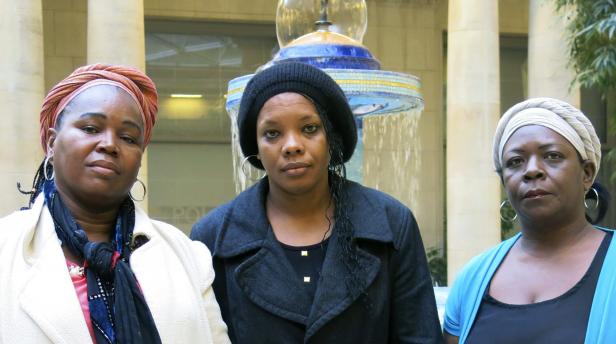
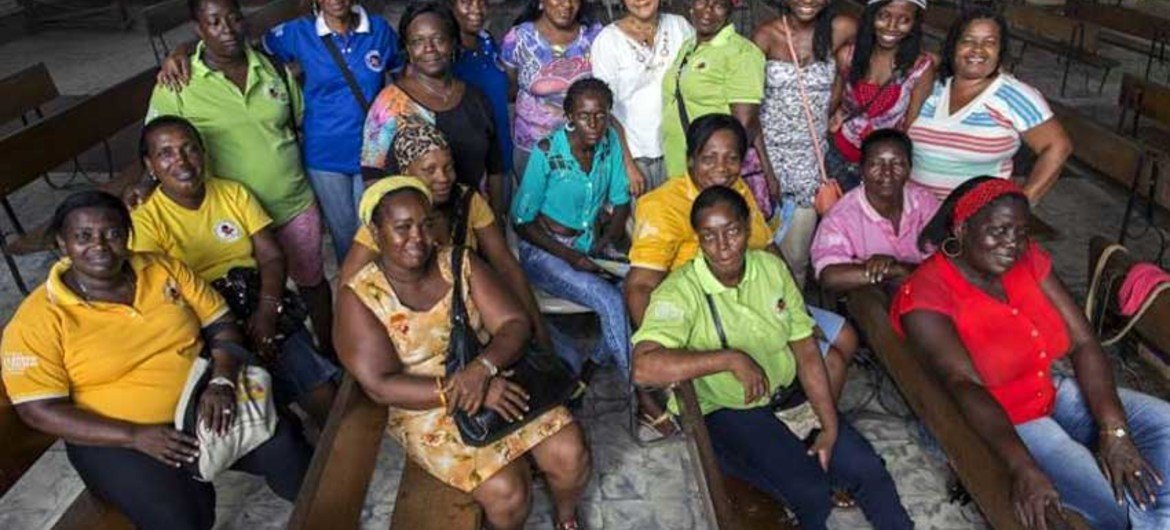
Celebrity cases are unfortunately not about violence against women. Instead, they contribute to the overall normalization of violence. Many should learn from the women of Mariposas de Alas Nuevas Construyendo Futuro who received the UN Nansen prize on September 12, 2014 for helping and caring for victims of domestic violence in Bonaventura, a place where violence is rampant. As Mery Medina, a member of the group, declared, “The fight is to fight indifference. One way of protesting is not to keep our mouths shut.” It is the only way to form solutions to exit from the violence.


(Photo Credit: Radio Nacional de Colombia / EFE / Raquel Castán)

Amid the Stench of Human Feces, Ugandan Prisoners Earn Diplomas and Assist Peers

Susan Kigula and Pascal Nakuru graduate

With 42,000 prisoners and an official capacity of 16,000, Ugandan prisons are the most congested in East Africa and the 9th most overcrowded in the world, according to the International Centre for Prison Studies. These prisons are not only severely over-capacitated, but also have poor infrastructure and sanitation. Inmates are often denied a mattress or bedding, running water, electricity, adequate meals, and health care. As of last week, 40 prisons in Uganda still use the “bucket system,” which requires inmates to relieve themselves in a bucket during the night. The combination of stagnant urine and fecal matter in an overcrowded cell causes unhygienic conditions and a breeding ground for disease.

Many blame the country’s inefficient criminal justice system that fails to process cases in a timely manner, causing a severe backlog of cases. According to Human Rights Watch, “It’s clear that overcrowding and pretrial detention are interlinked.” In Uganda, 55% of inmates are on remand, meaning they are arrested and detained without having a trial. Many have never been convicted of an offense or sentenced to serve prison time. Some wait years or even decades in custody for their cases to be heard in court.

Uganda’s former Chief Justice Benjamin Odoki stated, “There is no doubt that [the case backlog] violates the right to a fair and timely trial, especially for the poor and marginalized, who spend their hard-earned resources [on legal support] only to be told that their cases cannot be heard.” More than 90% of prisoners have no legal representation and must defend themselves, despite the fact that the Ugandan constitution guarantees every citizen the right to a state attorney.

Yet, Susan Kigula and two other inmates at Luzira Maximum security prison in Kampala are now qualified to help their fellow prisoners navigate the Ugandan legal system. The three inmates were the first ever in the country to earn a Diploma in Common Law from the University of London while incarcerated, studying through a correspondence course supported by the African Prisons Project. Kigula intends to use her degree to provide legal counseling and assistance to her peers.

A survey of Ugandans found that only 0.3% were aware that they had the right to a fair and speedy trial. While Kigula and her fellow graduates now possess the knowledge to raise awareness about basic human rights in prison, more needs to be done. Today, there are 23,000 people held in pre-trial detention in Uganda’s prisons. They cannot demand a timely trial or a state attorney if they do not know that they deserve one.


(Photo Credit: KonnectAfrica)


In Colombia, the Butterflies’ bravery beyond words

Members of La Red Mariposas de Alas Nuevas Construyendo Futuro
In 2010, in the Colombian Pacific port city and environs of Buenaventura, a small group of women decided that enough was too much. Too many women were suffering violence at the hands of too many armed groups. Too many children were being assaulted. Too much violence was becoming the air and water of everyday life in Buenaventura. And so they set out to create a space of healing. The started a group, a movement really, called “Red Mariposas de Alas Nuevas Construyendo Futuro”. The Network of Butterflies With New Wings Building the Future.

Today, they number around 120. One hundred twenty women go out each day and meet with women and child survivors and organize. They mobilize as they empower, yes empower, the women to, first, resist the violence, both internal and external, and then to turn the swords into ploughshares. This movement began with just a few women, like Gloria Amparo Arboleda and Mery Medina. Today, it includes women organizers and leaders such as Maritza Asprilla Cruz, Fabiola Rodríguez Salazar, Loira Cecilia Rosero, and many others.

Today, the United Nations recognized the Butterflies with the Nansen Refugee Award. In awarding the prize, the UN representative said, “Their bravery goes beyond words.” Yes and no. Their bravery is in words and deeds. As Gloria Amparo Arboleda explained, “Denouncing violence here is a risky business. But somebody has to. Besides, here you risk losing your life whether you put up a fight or not. It’s better to die fighting.”

Here’s how the Butterflies describe themselves: “We are a network of women and organizations that work to defend the rights and quality of life for women in Buenaventura, bringing tools for the eradication of all forms of violence against women. The `Butterflies with New Wings Building the Future’ envisions a Pacific region free of all forms of violence against women, contributing to the formulation of public policy, the formation, investigation and intervention for the visibility and eradication of this problem in the entire zone of Buenaventura.”

The Butterfly women work towards complete transformation. They intend to do more than heal individual women and children, although that would be accomplishment enough, and they have already worked closely with 1000 families in their short four-year history. They aim to transform Buenaventura, Colombia’s new horror capital, into a place of peace that will inform the rest of the country, the national government, every single household in the country, and the world.

Their work is precisely not bravery beyond words. Their work is the work of ordinary women everywhere, who address the violence and, first, say no more, and then work, every day, to heal, to create peace, to build the future … today.

Gloria Amparo Arboleda builds a new future

(Photo Credit 1: United Nations) (Photo Credit 2: BBC / UNHCR / J. Arredondo)

Michigan Women’s Prison: “Ripe for Abuse”

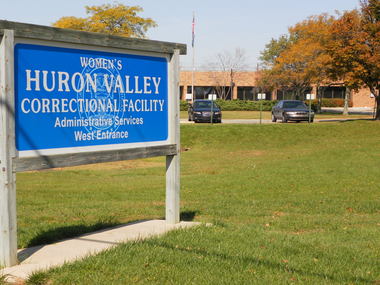
News broke this week that Michigan’s only women’s prison, Women’s Huron Valley Correctional Facility, is under investigation from the ACLU, Michigan Department of Corrections, and US Department of Justice for alleged human rights abuses against mentally ill female inmates.

Inmates are being hog tied naked, with their feet and hands cuffed together behind their backs, for two hours or more as a form of punishment if they do not “learn to behave,” witnesses claim. Prisoners have also been denied food and water. According to Kary Moss, executive director of ACLU of Michigan, the water was shut off in solitary confinement and guards failed to provide any to inmates for hours or even days. Some women are left standing, sitting, or lying in their own feces or urine for days on end, denied showers, and often controlled by the use of tasers.

For one mentally ill inmate at the Valley, poor sanitation, lack of food and water, and other forms of continuous abuse ended her life as she knew it. Last month she was found non-responsive in her cell. She was transferred to an outside hospital where she was pronounced brain dead. She is not the only the only casualty to come out of WHVC. There have been several prisoners who have died from both suicide and medical neglect in the past few years alone. Is this the intended function of our criminal justice system? What is the role of corrections in America today? Is it to punish mentally ill women until they are pronounced brain dead?

Luckily, women prisoners in Michigan have some advocates on the outside. Carol Jacobsen has been working for years to expose the conditions inside the prison. Jacobsen is a professor at University of Michigan and director of the Michigan Women’s Justice & Clemency Project. While she has done many interviews with inmates throughout the years, she has found that civilian access to living quarters inside the prison is nearly impossible. Jacobson stated, “As long as it’s such a closed system, it’s ripe for abuse.” Why the secrecy? According to Jacobson, “Abu Ghraib has nothing on Huron Valley or Michigan prisons. Our prisons in Michigan have torture going on every day.”

Prisoners themselves are speaking out against what they see as intolerable conditions. In February, three inmates wrote formal grievances to the MDOC describing how four women were housed together in a 96-square foot chemical caustic closet repurposed into a cell. Inmate Karen Felton wrote, “The cell I’m in is inadequately small for myself and three others, and there are not enough lockers, no privacy, inadequate desks and chairs, and there is no ventilation.”

The three women’s grievances, however, did not change their living conditions. As a matter of procedure, when more than one complaint is submitted regarding a given issue, all duplicates are rejected by the grievance coordinator. Therefore, only one of the three grievances, submitted by a prisoner named Robin Sutton, was investigated. The MDOC responded: “All prisoners housed in Dickinson unit have been treated humanely and with dignity in matters of health care, personal safety and general living conditions.”

The use of hog-ties, denial of food and water, unsanitary conditions, excessive use of tasers, and forcing four women to live in a chemical closet is considered humane? All inmates, including the mentally ill, deserve more dignity than this.


(Photo Credit: Michigan Deparment of Corrections)