Dan Moshenberg

Dan Moshenberg is an organizer educator who has worked with various social movements in the United States and South Africa.

Did Mother’s Day end early this year?

Mother’s Day seemed to end early and abruptly this year.

In Australia, under the proposed new national budget, women who have a child, otherwise known as mothers, face paying 30% more on student loans than their male counterparts. No matter that another government policy encourages women to have three children, one for ma, one for pa, and for the nation down the road: “These aren’t choices we force on men. These are penalties we extract from women, based on their gender.”

Speaking of penalties, this week, the Pennsylvania ACLU revealed that in Pennsylvania, pregnant women prisoners are routinely shackled, including during childbirth. Pennsylvania is one of the states that actually has a law, the Healthy Birth for Incarcerated Women Act, which prohibits this kind of treatment. That law was passed in 2010. The ACLU has written to the Attorney General of Pennsylvania asking her to `clarify the law.’

Speaking of clarifying the law, Marissa Alexander still can’t catch a break. For having shot once in the air and not endangered anyone, in order to ward off an abusive partner, Marissa Alexander still faces a possible 60 years behind bars. While her lawyers may have all sorts of new evidence, the prosecuting attorney says the evidence isn’t new enough and the judge is worried about the precedent set by having a second Stand Your Ground hearing. Happy Mother’s Day.

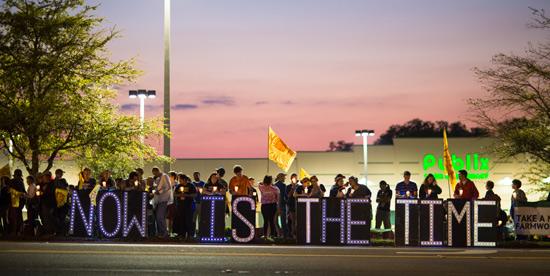
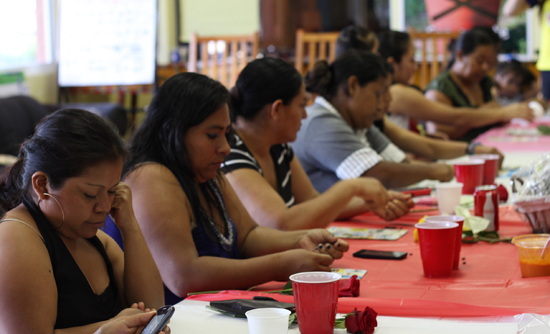
But for the women farmworkers of Immokalee, it may just be a Mother’s Day to celebrate. For the fourth year in a row, farmworker mothers, members of the Coalition of Immokalee Workers, stormed the ramparts of Publix, armed to the teeth with hope, a vision of a decent and dignified future for all, a dream of industrial democracy, and a letter, which read:

“May 11, 2014
Mother’s Day

To Publix:

We are farmworker women.  This is the fourth celebration of Mother’s Day in which we are writing to Publix to ask that you join the Fair Food Program.

As mothers, we work in the fields to support our families, especially to help our children through school.

As mothers, we do not make enough to fully support our family.  And the little that we do make is not easy to earn: We work under the sun and rain of Florida.  We do everything so that you can have tomatoes:  we plant, we tie up the plants, we harvest, and then we do it all again the next season.  In spite of all that, it seems that you do not understand and do not want to hear the voice of farmworkers.

Publix profits from the sweat of those of us who work in the fields.  We deserve respect and we deserve a fair wage.

Now is the time to join the Fair Food Program to protect the rights of workers and ensure a fair wage, with the penny per pound that 12 other corporations are already paying.  What are you waiting for, Publix?

Sincerely,

The Women’s Group of the Coalition of Immokalee Workers”

After delivering the letter, Lupe Gonzalo reported, “Publix presumes to say that they support families — but in reality, we don’t see this support. And we are not afraid to tell them that what they are saying is not true.  We are not afraid to come and protest in front of their stores.  Because we are speaking the truth, with our heads held high. For all of us, when we speak to our children, we tell them the truth.  And we tell them that Publix has not signed onto the Program because they are afraid.  Even children can see that.  But what does Publix say to its children?  Only lies?  Is that how they are educating their children?  That is not how we prepare our children for the future.”

Others, like Nely Rodriguez, mother of four, agreed. Now is the time!

Thanks to the work of women like Marissa Alexander, Lupe Gonzalo, Nely Rodriguez, maybe Mother’s Day didn’t end early this year, because, for them, the struggle of women continues, and that’s what Mother’s Day is all about.

(Photo Credit: Coalition of Immokalee Workers)
Uganda protects women to death

This past Tuesday Uganda’s Parliament passed something called the HIV Prevention and Management Bill. The law will not prevent the transmission of HIV. Everyone knows this. It will worsen the lives of all living with HIV. It will threaten the lives of LGBTIQ persons, and in Uganda, gay and lesbian identity is in the eye of the beholder. It’s not about being gay; it’s about being called gay. This law will have particular and catastrophic effect on women.

The law institutes mandatory HIV testing for pregnant women and their partners. Ostensibly it’s meant to `protect’ women and younger girls whose sexual partners conceal that they have Aids or are HIV-positive. It doesn’t protect women and girls. It endangers them.

The law also allows doctors to reveal the HIV status of those who have been tested. In Uganda, where HIV prevalence is higher among women and much higher among younger women, activists argue, the combination of mandatory testing and sharing of information is an invitation to domestic violence and even murder, at the hands of a partner who claims the woman brought the virus into the home.

That’s what protecting women looks like.

According to the International Community of Women Living with HIV, Eastern Africa: “The passage of the HIV Prevention and AIDS Control Bill represents a dangerous backslide in Uganda’s efforts to respond to HIV. While the bill may have been intended to facilitate and improve the HIV response in Uganda, the bill contains many poorly conceived and fear-induced provisions that have no place in a public health and human-rights-based response to HIV. As passed, this bill will actually weaken Uganda’s HIV prevention efforts and will have a detrimental and disproportionate impact on the rights of women and girls and in particular women living with HIV.”

Long-term HIV activist Milly Katana put it more succinctly: “All I can say now is doomsday has landed on all the people of Uganda. You will see fewer and fewer people testing.”

Margaret Happy, the Sexual Reproductive Health and Rights Officer of the International Community of Women Living with HIV Eastern Africa, agrees: “Uganda is already facing a serious backslide from its early advances in responding to HIV, Uganda is currently one of three African countries experiencing increases in their HIV prevalence rates previously from 6.5% to 7.3 %. The passages of this Bill will only serve to increase this backslide and the President must save Uganda from this backlash.” Lillian Mworeko, Regional Coordinator of the ICW Eastern Africa, adds that the legislators “chose to act out of fear and unfounded hysteria.”

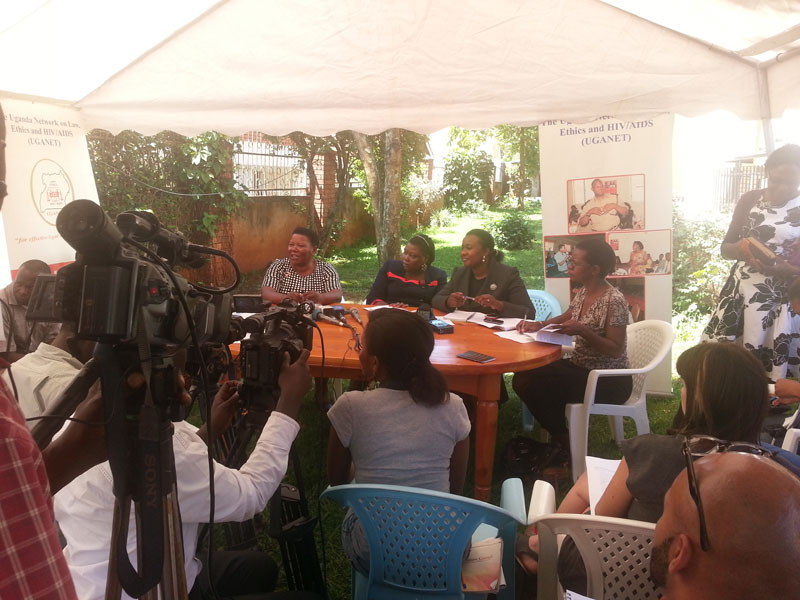
“For Uganda to address its HIV epidemic effectively, it needs to partner with people living with HIV, not blame them, criminalize them, and exclude them from policy making. The president should not sign this bill and instead ensure a rights-based approach, recognizing that people living with HIV will prevent transmission if they are empowered and supported,” said Dorah Kiconco, executive director of Uganda Network on Law, Ethics & HIV/AIDS.

Dr Lydia Mungherera, of TASO, The AIDS Support Organization (TASO), explains: “This clause is taking us back centuries when all the progress we have made in fighting this pandemic is going to be ruled out. They are criminalizing people who are having consensual sex.”

Finally, Dianah Nanjeho, from UGANET, Uganda Network on Law, Ethics and HIV/AIDS warns that the bill will force HIV positive people, and especially women, underground: “The only path by which someone gets onto treatment is by taking a HIV test. People who don’t know their status are going to shun the health system and say ‘look I can’t go to take a HIV test because the results are going to be displayed in court some day. We will have someone who is HIV positive in the docks but without any justice system to fend for them.”

In every way, this Bill attacks women, and women know this. But Museveni will almost undoubtedly sign the Bill into law. Why? ““Because he knows the voters are going to like this bill it will be popular with him.” Who cares about science? Who cares about the knowledge of those, largely women, who have toiled in the fields for decades and dedicated their lives? Most importantly, who cares about the women? Really, all one must do is claim that protecting women is one’s goal, and it’s all good.


(Photo Credit: ICWEA)

Outrage: The dirty, filthy Soma massacre


A mine exploded in Soma yesterday. Close to 300 miners are now dead. The world media sees this as tragedy, disaster, accident. Prime Minister Erdogan sees it as just one of those “ordinary things.” It’s mining, and shit happens.

No!

Across the country, through the haze of grief and sorrow, Turks are compelled by outrage and fury. They know. “This is not an accident, this is murder.” “We will not refer to it as an accident, we will call what happened a massacre.”

The ways of murdering miners are many. In this instance, it’s the crime of looking the other way, of refusing to inspect. For 19 years, Turkey has refused to sign the International Labor Organization’s No.176 “Security and Health in Mines Agreement”. The agreement places many responsibilities on the government and the employers. For 19 years of deteriorating mine conditions, the Turkish government said, “This can wait.”

Last year, a parliamentarian from the Republican People’s Party submitted a motion to investigate work-related accidents at the coalmines in Soma. All three opposition parties supported the proposal. However, the Justice and Development Party, Erdogan’s party, opposed the motion. Two weeks ago, it was rejected.

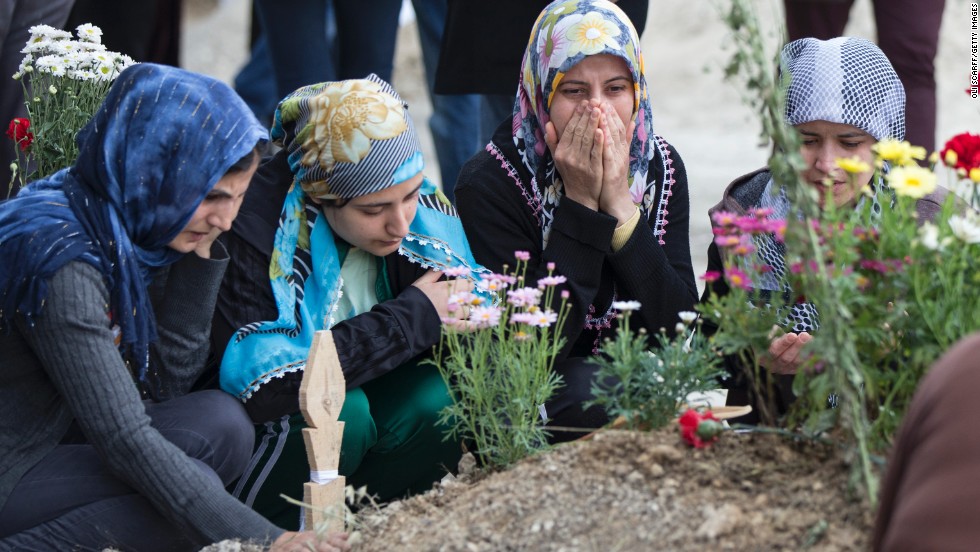
They knew the mine was a powder keg set to explode. But what are a few hundred miners in the big equation? And now, the keening women of Soma join the incandescent women of Marikana, in song and sorrow: “The love of my life is gone.”

There was no accident, disaster or tragedy. Instead, there was murder and massacre, and it was dirty and filthy. And there is outrage.


(Photo Credit 1: CNN) (Photo Credit 2: New York Times / Uriel Sinai)

The women are united. When we say `no’, we mean `NO!’


Around the world, forest dwelling women are organizing and mobilizing, and leading agrarian movements, land rights movement, and more. They are part of a global movement of rural women workers who are seizing the threats of multinational corporations and big money, turning them upside down and inside out, and shaking them to see what falls out. Often, what fall to the ground are the seeds of democracy.

In Ecuador, for decades, Wuaroni women have been organizing to stop the degradation and theft of their lands and lives. Ten years ago, they organized formally into AMWAE, Asociación de Mujeres Waorani de la Amazonía Ecuatoriana, to make sure they represented themselves in ongoing struggles and negotiations. In particular, they have been organizing against Texaco’s, then Chevron’s, incursions into Yasuní National Park. From the start, women of AMWAE argued that the loss of water, land, and home would hurt everyone and would target Wuaroni women. Recently, they have worked with the YASunidos campaign for a popular, and extended, consultation on the fate of the Yasuní area, foregrounding its residents. At the same time, they have affiliated with another new group, Colectivo Miradas Críticas del Territorio desde el Feminismo, who have just published their report, La vida en el centro y el crudo bajo tierra: El Yasuní en clave feminista. The report found that along with the contamination of the local ecology, one of the richest in biodiversity in the world, the assault on community increased inequality between men and women by rewarding and subsidizing patriarchal structures. At the same time, the poisoning of the waters has been a direct assault on women’s labor and bodies. In linking with feminist and women’s movements and with women in online advocacy movements, as well as others, rural indigenous women are opening spaces of common and mutual dialogue, action, and vision. And, little by little, they are winning.

From petroleum to the dirty business of palm oil, women are engaging in the struggle for autonomy, respect, and dignity. In Liberia, the Jogbahn Clan has been organizing to stop British palm oil company Equatorial Palm Oil PLC (EPO) from stealing their forest lands. While Liberian President Ellen Johnson Sirleaf has declared that the land under question is to be considered community land, and thus protected from external interference, reports claim EPO is still cutting down trees, surveying the land, and intimidating the Jogbahn Clan. In a recently released video, Deyeatee Kardor, the Clan’s Chairwoman, explains, “There’s no happy relationship with the company. From the time they arrived, there’s been nothing, just nothing for those who were evicted. All they have done is try to divide us. They identify important people, then offer them a little money to convince them to change others’ minds. As owners of the land we were intimidated because we stopped the company from taking our land, grabbing land. Now they must not expand their plantation onto our land. The women are united, not divided. When we say `no’, we mean `no.’ We stand together and say no! I am very happy my land is free, because when our land is free, we are all free.”

The women are united, not divided. When they say `no’, they mean `NO!’


(Photo Credit: IFADTV / You Tube)

Harmondsworth, where a sense of humanity is lost

Asylum seekers in detention in the United Kingdom are on strike. They object to being treated as trash. The action began last Friday at Harmondsworth IRC, Immigration Removal Centre. Over 300 prisoners staged a sit-down protest and hunger strike. They are protesting the fast-track deportation program; the toxic health care system; the lack of access to legal representation, and more: “They’re not running detention. It’s like prison over here.”

The spark, this time, was a broken fax machine. The fax machine broke and was left broken for days. That meant prisoners could not file their appeals against deportation. Everything came to a standstill. For the prison, the fax was just another machine. For the prisoners, it meant life or death.

The urgency that turns a fax machine into a lifeline is produced by the fast-track system, which places practically every asylum seeker into a 14-day pressure cooker, during which they must do everything, from find an attorney to learn English to get comfortable speaking the unspeakable suffering and pain. Fourteen days. The detention center is not a detention center. It’s a prison. And the prison is not a prison. It’s a factory, and its business is removal.

On Tuesday, 20 prisoners in Brook House IRC staged an all-night protest in the exercise yard. They all refused to return to their cells. Over 50 prisoners at Colnbrook IRC have also engaged in a collective action. Yesterday, at Campsfield IRC, near Oxford, about 50 prisoners started a hunger strike. In each instance, the prison’s response has been to take the bulk of prisoners and dump them into solitary. That’s what you do with defective parts.

At 615 prisoners, Harmondsworth IRC is one of Europe’s largest detention centers. It has always been an abomination. The conditions have always been inhumane. Last year, a surprise visit by the Chief Inspector of Prisons found mismanagement and worse: “A number of security procedures lacked proportionality. Separation was being used excessively and was not in line with the Detention Centre Rules. Disturbingly, a lack of intelligent individual risk assessment had meant that most detainees were handcuffed on escort and on at least two occasions, elderly, vulnerable and incapacitated detainees, one of whom was terminally ill, were needlessly handcuffed in an excessive and unacceptable manner. These men were so ill that one died shortly after his handcuffs were removed and the other, an 84 year-old-man, died while still in restraints. These are shocking cases where a sense of humanity was lost.”

They should be shocking cases. They’re not. The State responded by yanking the prison contract from Geo and giving it to Mitie, which is to say no response at all. Harmondsworth has been a private operation since the 1970s, and it’s been bad for forty years. There is no shock at the end of four decades of abuse.

Ten years ago, doctors commented on the inappropriate shackling of sick and dying prisoners: “I had told the manager of the centre that in my professional opinion handcuffing was wholly inappropriate. We have a number of detainees brought here in cuffs. The question is: at what point does a doctor’s intervention cease to carry weight?” There is no room for shock. In 2007, the Inspectorate found Harmondsworth was more a high-security prison than an immigration removal center, complete with over use of solitary confinement and unrestricted antagonism from prison staff. In other words, they found in 2007 what they found last year.

In 2004, the atrocity of Harmondsworth’s mental health care and health care was so bad it inspired doctors to form Medical Justice. Today, despite advocacy and services, the vulnerability of asylum seekers means less than nothing. It provides one more reason to speed up the line and move them out more quickly.

In 2005, Amnesty wrote extensively about the horror of Harmondsworth. In 2006, the Chief Inspector of Prisons Anne Owers commented: ‘This is undoubtedly the poorest report we have issued on an Immigration Removal Centre’. And what comes of these reports? Some other corporation gets the contract, and then, two years later, the Inspector is shocked.

In 2010, the Inspector found there was no information about legal rights and no up to date legal materials available for prisoners. The only legal help for prisoners was a consultation room open for only ten hours a week. In any week, only 20 clients could be seen. So, the room was booked two weeks in advance. But unrepresented prisoners in the fast track could not defer their asylum interviews for lack of legal counsel. So, by the time legal help was available, their claims had been refused and appeals dismissed. It’s a perfect amped up production line factory system.

Since 1989, 21 people have died in immigration removal centers in the United Kingdom. At the top of the list, with eight deaths, is the Harmondsworth IRC. Stop being `shocked’. Close Harmondsworth. End the brutality of fast-track asylum, which turns time into torture. One Campsfield prisoner explained, “We want our freedom. We want our life with dignity.” It’s time.


(Photo Credit: Snipview.com)

#BringBackOurGirls #BringBackOurGirls #BringBackOurGirls

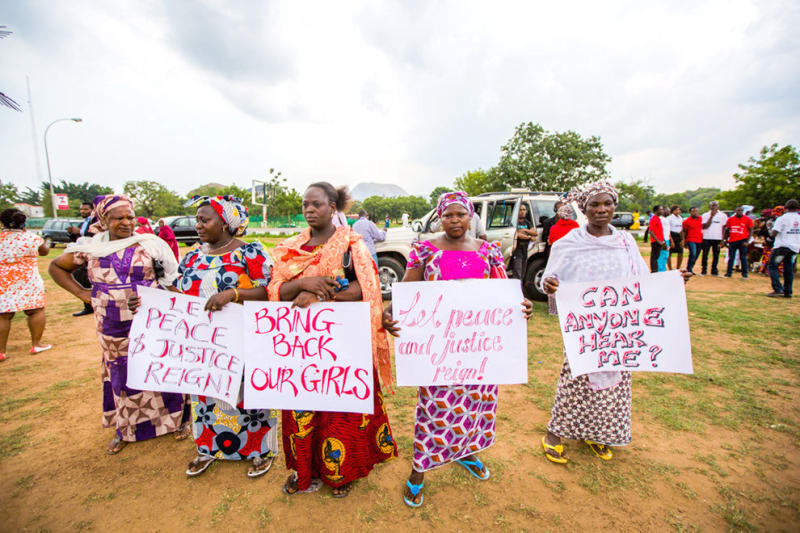
April 14, 2014, over 300 schoolgirls were stolen, like so much property, from their school in Chibok, in Borno State, in northeastern Nigeria. Over at Africa Is a Country, Karen Attiah and I wondered, separately, why the coverage was so little so late. We also wondered why the coverage was so bad. For example, it took a long time for the so-called world press to start reporting on women’s organizing efforts, under the rubric of #BringBackOurGirls. Since then, the European and American media have begun to pay attention, sort of.

Meanwhile, women, students, concerned people across Nigeria are organizing, mobilizing, and demanding. They’re demanding stronger and more effective action on the part of the government, and they’re demanding more consultation and more respect. The mothers of the stolen girls, in particular, understand that this is about women’s and girls’ dignity, respect, autonomy. Those girls were stolen partly because they are girls pursuing studies, mostly because they are girls. Reports say they are to be sold into slavery. In Borno today eight more girls were stolen.

Yesterday, Naomi Mutah Nyadar, one of the leaders of the #BringBackOurGirls movement, was or was not arrested. Her colleagues, Lawan Abana and Saratu Angus Ndirpaya, say she was detained. The police say the encounter was “purely an interactive and fact-finding interview.” There’s nothing pure here, and it doesn’t matter. What matter is this: #BringBackOurGirls. #BringBackOurGirls #BringBackOurGirls.

That’s all that matters.

That’s the message delivered today by Fatima Zanna Maliki, a student, a woman, a woman student: “We appreciate the concern and efforts of all the civic society organisations, women groups, leaders and the international communities towards our plight and we are urging them not to relent until our girls are brought back home safely in particular and peace returns back to our country in general. We, the youth and students in Borno State, have endured unimaginable hardship for the past four years and we took it upon ourselves to call upon stakeholders and the President in particular to act urgently… The abducted students of GSS, Chibok are our sisters and colleagues, after 21 days of their abduction, we don’t know their condition, we don’t know how they are faring, we don’t know if they have eaten this morning, we don’t know their health condition, we don’t know there whereabouts, we don’t know! We don’t know!! We don’t know!!!”

Students of Borno have called for a day of sympathy tomorrow, during which no classes or lectures would occur. They also warned the President that if something isn’t done, they’ll be back.  If the girls, all the girls, aren’t back by May 24, 40 days into their captivity, the students and youth of Borno will mobilize students from across the country to gather in Maiduguri, the capital of Borno:  “Students will be brought across the nation if no success is recorded before the 40th day of the abduction, to sit tight on Ramat Square to protest until the schoolgirls are freed.”

I teach and work in a Women’s Studies Program. Every year that I’ve taught, somewhere a group of women students, girl students, has been attacked, for being students, for being girls and women, for being girls and women pursuing education. It’s a long and tragic list that the schoolgirls of Chibok have now joined. Tomorrow, stop at some point at least and do something to acknowledge the schoolgirls of Chibok and the long list of women and girls, of women and girl students, who have suffered the same violence they are now suffering. For women and girls, there has to be something other and better than the work of mourning.

#BringBackOurGirls #BringBackOurGirls #BringBackOurGirls

Bring them all back.

(Photo Credit: Tom Saater for Buzzfeed)

For rural women around the world, NOW IS THE TIME!

Around the world, rural women are organizing and mobilizing, and leading agrarian movements, land rights movement, farm workers and peasant movements, and more. From the farmlands and highlands of Peru and Colombia to the farmlands of Zimbabwe and the United States, to the polling stations of India, and beyond, rural women are taking charge.

In the highlands of Peru, in Cajamarca, women are fighting to stop a multinational mining consortium from devastating their waters, lands, and lives. At the helm of this struggle are Máxima Acuña Chaupe, who began her campaign as an attempt to secure her family’s land; and Mirtha Vasquez Chuquilin, a lawyer who works for Comprehensive Training for Sustainable Development (Grupo de Formación Integral para el Desarrollo Sostenible, GRUFIDES). Together, these two women are bringing together popular forces, women’s groups and knowledge, and legal and technical skills. They combat the mining security forces as well as the mining companies’ lawyers while they also combat State security forces and other, more anonymous agents.

The risk to their lives is great, but the risk of not struggling is greater.

Likewise, in Colombia, peasant farmers are engaged in an agrarian strike that has paralyzed much of the country. At the helm of this campaign is Olga Quintero, a leader of the Asociación Campesina del Catatumbo, which was on strike last year for 52 days. Last December, two armed masked men broke into Quintero’s home. She wasn’t there, and so they bound and gagged her three-year-old daughter. Quintero’s response: “Ni el dinero ni la tierra. El miedo fue lo único que quedó bien repartido entre todos en Colombia.” “Neither money nor land. Fear was the only thing well distributed among all in Colombia.”

Her response is to meet fear with courage, hope, love, and mass organization.

In Zimbabwe, Lena Murembwe, saw a problem. Rural women didn’t know their rights to land. More to the point, rural women didn’t know they had any rights. And so Murembwe’s organization, the Women’s Resource Foundation, began giving workshops and trainings to women in their own rural districts. Widows like Lucia Makawa, 43 years old and the mother of five children, grabbed the opportunity, studied hard, organized, met with traditional chiefs, and took claim to their land. Now Makawa owns six hectares of land, and can see something like a future: “As women we were not even allowed to own a piece of land. But with support from WRF, we have managed to mobilise the support of the chiefs and we have helped solve cases where women were deprived of their right to own land. Now I have my own land and I am in the process of sourcing materials to start building structures. I also have enough space to do my farming.”

Other women, such as Beulah Muchabveyo, studied, learned their rights, and organized to create a dignified, safe space for themselves: “In the past my husband was not treating me as a person at all. He was abusive and never helped with farming work but expected me to give him money after selling our produce. Things are now different in my family after I underwent training in gender and human rights. The training has also given us a platform to meet and discuss issues affecting our lives as women.”

These women know and teach: there is power in knowledge, in union, and in organizing.

In India, as the elections proceed, there’s unprecedented movement among rural women, and unprecedented discussion of `what rural women want.’ What do rural women want? Everything! Rural women say they want public dialogue. They want to be heard. They want a say. They want respect and dignity. They want decent jobs, education, health care. They want an end to violence against women and girls. They want an end to violence. They want an end to predatory lending that targets rural populations and often sends them headlong into bondage or death. They want their own representatives – like Dayamani Barla or Soni Sori – and their proven allies, like Medha Patkar, in Parliament. They want the State. They want democracy. They want it all.

And in the United States, the women of the Coalition of Immokalee Workers want it all as well. When women in the tomato fields of Florida, women like Lupe Gonzalo and Isabel, organize for farm worker’s rights and dignity, they put the struggle to end sexual violence and harassment front and center. They say they cannot wait til after the vote, after the contract, after the revolution for their bodily and spiritual well being to become `an issue.’ They say now is the time.

From Peru and Colombia to Zimbabwe to India to the United States, and beyond and between, rural women, peasant women, women farm workers are organizing intensely because their lives matter urgently: NOW IS THE TIME!

(Photo Credit: Forest Woodward / Facebook)

The growth of women’s incarceration in the United States

Women walk along a corridor at the Los Angeles County women’s jail in Lynwood, California April 26, 2013.

Yesterday, the National Research Council released The Growth of Incarceration in the United States: Exploring Causes and Consequences. It’s a useful, long, exhaustive, not particularly surprising, review of the literature on mass incarceration in the United States over the past four decades. Media discussions have managed to avoid the report’s sections on women. Here’s a summary of what the report says about women’s incarceration:

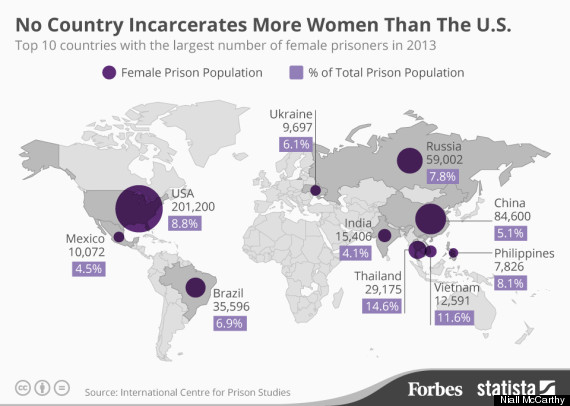
For four decades, women have been the fastest growing prison population. The United States has one third of the world’s female prison population. The majority of women in prison are mothers. Women’s prisons are historically `under resourced’ and it’s only getting worse. Women prisoners face particularly high rates of sexual violence from prison staff. Women prisoners have exceptionally high rates of PTSD, mental illness, and alcohol and drug dependence. Women prisoners have astronomically, shockingly high rates of abnormal pap smears.

Here are excerpts from the report:

“25-40 percent of female inmates have abnormal pap smears, compared with 7 percent of women in the general population.”

“More than 200,000 women are in jails or prisons in the United States, representing nearly one-third of incarcerated females worldwide. The past three to four decades have seen rapid growth in women’s incarceration rates—a rise of 646 percent since 1980 compared with a 419 percent rise for men”

“Incarceration rates have increased more rapidly for females than for males since the early 1970s. In 1972, the prison and jail incarceration rate for men was estimated to be 24 times higher than that for women. By 2010, men’s incarceration rate was about 11 times higher. Women’s incarceration rate had thus risen twice as rapidly as men’s in the period of growing incarceration rates.”

“Approximately 1 of every 14 prisoners in the United States is female. In fact, the incarceration rates of white and Hispanic women in particular are growing more rapidly than those of other demographic groups. Compared with men, women are sentenced more often to prison for nonviolent crimes: about 55 percent of women sentenced to prison have committed property or drug crimes as compared with about 35 percent of male prisoners. Women also are more likely than men to enter prison with mental health problems or to develop them while incarcerated: about three-quarters of women in state prisons in 2004 had symptoms of a current mental health problem, as opposed to 55 percent of men.

“Women’s prisons historically have been under resourced and underserved in correctional systems, so that women prisoners have had less access to programming and treatment than their male counterparts. Women prisoners also are more likely to be the targets of sexual abuse by staff.”

“A majority of women prisoners are mothers, who must grapple with the burden of being separated from their children during incarceration. In 2004, 62 percent of female state and federal inmates (compared with 51 percent of male inmates) were parents. Of those female inmates, 55 percent reported living with their minor children in the month before arrest, 42 percent in single-parent households; for male inmates who were parents, the corresponding figures were 36 and 17 percent.”

“Although female inmates make up only about 10 percent of the correctional population, they have higher rates of disease than male inmates and additional reproductive health issues. Rates of mental illness are substantially higher among female than male inmates, particularly because they have high rates of childhood sexual abuse and PTSD … 18-30 percent of male prison inmates exhibited alcohol dependence/abuse, only slightly in excess of figures for the U.S. general public, while at 10-29 percent prevalence, female prisoners were two to four times as likely as nonincarcerated women to have alcohol dependence/abuse.”

“As the rate of women’s incarceration has grown, so has the risk of maternal imprisonment. One in 30 children born in 1990 had a mother incarcerated by age 14, compared with 1 in 60 born in 1978… Nearly two-thirds of mothers in state prisons were living with their child(ren) prior to their incarceration, many in single-parent households.”

As you watch, listen to, or read discussions about this report, remember the women prisoners. They’re in the report, as much as they’re absent in the press coverage. The report says they matter. And they do.

(Photo Credit: IRETA)

Botched: How Oklahoma got away with murder


Oklahoma successfully tried to kill a man last night.  After writhing and groaning for 43 minutes, Clayton Lockett died. Almost universally, this has been translated into a “botched” execution. Democracy Now, The Guardian, The New York Times, The Washington Post, the BBC, CNN, Slate, and The Tulsa World all agree. The execution was “botched”.

The execution was not botched. It was successful. Oklahoma got exactly what it wanted, what it’s been pushing strenuously to get. A corpse. When it couldn’t get approved lethal drugs, Oklahoma insisted on using an untested combination of killer drugs. Oklahoma fought for the right to kill a human being last night, and it won.

Let no one tell you that that execution was botched. It wasn’t. It was ugly, but executions are ugly. It didn’t go exactly according to plan, but then what does? The end goal was attained, and that’s all that matters. To botch means to clumsily repair or to bungle. No one clumsily repaired or bungled the execution. Clayton Lockett is dead. If anything, by the performative terms of executions, it’s Clayton Lockett who botched his own death. Fortunately, the State was there to make sure the execution wasn’t botched.

A character in a novel once turned to his friend and exclaimed, “What should be displayed in public is something that‘s never shown. What the public really should see are – executions! Why don‘t they put on public executions?”

In Oklahoma last night, that’s just what they did.

In 1930, Georges Bataille suggested, “According to the Grande Encyclopédie, the first museum in the modern sense of the word (that is to say the first public collection) would seem to have been founded on 27 July 1793, in France, by the Convention. The origin of the modern museum would thus be linked to the development of the guillotine.”

What museum will emerge from the story of Oklahoma’s botched execution?

Nothing was botched last night, but a man was butchered to death.


(Photo Credit: KWTV.com)

The United States built a special hell for women: prison

According to a recent infographic, from 1978 to 2012, the United States went from whitish pink to deep purple. These shades represent the number of prisoners under state or federal jurisdiction with a sentence of more than 1 year per 100,000 U.S. residents. At one end, whitish pink, the rate is 0 – 260 per 100,000. That was then. At the other end, the deep purple represents 770 – 900 per 100,000. That is now.

According to an ACLU report, Worse Than Second Class: Solitary Confinement of Women in the United States, released yesterday, “More than 200,000 women are locked in jails and prisons in the United States. These prisoners are routinely subjected to solitary confinement, spending at least 22 hours a day without human interaction for days, weeks, or months at a time. And yet, the solitary confinement of women is often overlooked.”

The report suggests that women suffer “unique harms and dangers”. These include the needs of pregnant women, of women living with past trauma, of women living with disabilities and illnesses, of mothers, of anyone living as a woman. The report highlights the experiences of Meghan, who was pregnant when placed in extended solitary; Melanie H., a rape survivor who at 15 years old was placed in extended solitary; a 73-year-old living with cancer placed in solitary for five weeks for complaining about the quality of medical care, and of Maria Benita Santamaria, a transgender woman prisoner.

The report recommends severe reduction of use of solitary confinement, and provision of alternative and decent services to women in need, which pretty much defines most women in prison. But it doesn’t address the contradiction of women’s imprisonment. Women are primarily in prison for status offenses, if they’re juveniles, and for the adult version of status offenses, minor and nonviolent and more often than not a function of poverty, mental illness or both. Women suffer more for committing nonviolent offenses than do men, and it’s all done in the name in of protecting women. Women are in prison for next to nothing and then end up disproportionately disappeared into, and deeply damaged by, solitary confinement.

Remember that when you read that the federal government is launching a clemency initiative. Closing down the prison house does not end the age of mass incarceration. Neither does releasing the prisoners, although both would be an improvement.

Mass incarceration did not target individuals; it targeted communities and, even more, neighborhoods. And now whole neighborhoods will receive women who have spent time, long time, deep in the hole. Who will pay for that? Who will pay for the suffering and the years lost? Who will pay for the consequences? Will the State expunge `criminal’ records, so that women might be able to apply for jobs with some modicum of hope, or for school loans, or for housing, or for public assistance?

Prison doesn’t work. Prison especially doesn’t work for women. But for 40 years, it’s worked `for America’. Who will pay to remove and replace the wounds and scars on the soul of the country? Who will pay that debt?


(Infographic Credit: Forbes)