Women dying in jails across the United States: This is what catastrophe looks like

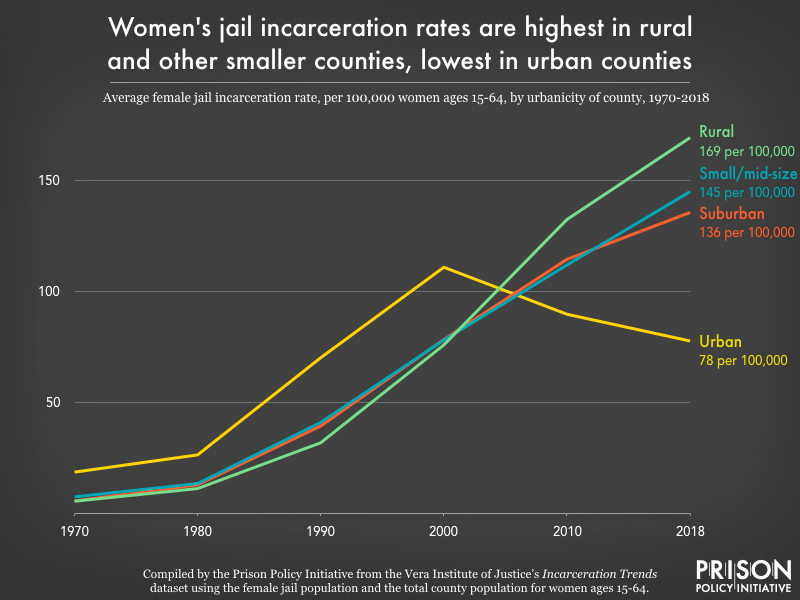
Tomorrow, Sunday, July 18, the United Nations will celebrate Nelson Mandela International Day. With that in mind, on Friday, July 16, the United Nations released its first global research data on the state of prisons over the past twenty years. It’s predictably grim, especially for women. Globally, one in three incarcerated persons has not been found guilty by a court of justice. Either they are awaiting trial or they are simply being held. This means overcrowded conditions, which means spikes in covid, as we’re seeing this week in Missouri’s prisons. A surge in prison population = a spike in covid. For women, this means a global war on women and girls. From 2000 to 2019, the number of prisoners worldwide increased by more than 25 per cent. During that period, the number of women in prison increased by 33% while the increase for men was 25%. According to the UN, “the female share of the global prison population has increased, from 6.1% in 2000 to 7.2% in 2019.” What does this trend look like in the United States? Catastrophic, and especially so for women being held in jails.

According to the latest jails report from the U.S. Department of Justice, from 2008 to 2018, the female jail population increased by 15% while the male population decreased by 9%. From 2005 to 2018, the female incarceration rate rose by 10%, while the male rate of incarceration dropped by 14%. Between 2008 and 2018, the female jail population rose by 15%, the male jail population dropped by 9%. In terms of criminal justice systems and, specifically, policing and incarceration, the past twenty years have been catastrophic for women globally and nationally.

What does catastrophe look like? According to the most recent U.S. Department of Justice report on mortality in jails, “In 2018, females held in local jails had a higher rate of mortality …  than males.” Chronic diseases, especially respiratory infections, cancer, heart disease; suicide; drug and alcohol related problems are `credited’ as cause of death, but the cause of death is jail itself. While the pandemic has exacerbated the situation, the United Nations report covers two decades, 2000 to 2019, and this is only the second time since 2000, when the Department of Justice started reporting on the situation in jails across the United States, that women had a higher jail mortality rate than men, and that was in 2018, before the pandemic.

Tomorrow, July 18, is Nelson Mandela International Day. Earlier this week, July 13, marked the sixth anniversary of the death of Sandra Bland, in a jail in Texas. Since then, the situation for women in jails across the United States has only worsened. The UN report concludes: “Measures can be taken to counteract the relative increase in the female prison population, including the development and implementation of gender-specific options for diversion and non-custodial measures at every stage of the criminal justice process. Such measures should take into account the history of victimization of many women offenders and their caretaking responsibilities, as well as mitigating factors, such as lack of a criminal history and the nature and severity of the offense.” In other words, find and enforce ways of keeping women out of jail. How many more women must die before we hear and act on this common and evidence-supported sense? 

(By Dan Moshenberg)

(Infographic Credit: Prison Policy Institute)
The Myth of “Market Forces”: Speculators, Not Demand, Are Raising the Rent Too Damn High

On Friday, Joe Biden signed an executive order “intended to increase competition within the nation’s economy and to limit corporate dominance, factors the White House says have led to higher prices and fewer choices for consumers while dampening pay and restricting the freedom to change jobs.” Non-compete clausesprohibit workers from “competing’ with a current employer by joining another group in the same business sector. These clauses are also known as restrictive covenants. They restrict freedom. You know what else restricts people’s freedom? Raising the rent by 30 percent in a single swoop, and that is what is happening around the country. This is not a story of “market forces”. This is a story of speculators drawing excessive profit from the veins of working people, especially women of color.

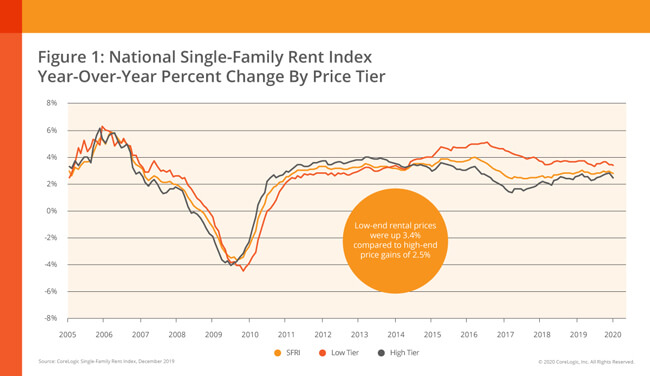
Nationally, rents have risen 7.5% since January, three times the average rate of rise. Meanwhile, according to Apartments.com, “household debt is at levels not seen since the Great Financial Crisis or wartime.” In every price category, rents for single-family homes are rising quickly. Rents on lower-middle priced single family homes have risen 4.8%, up from 2.5%, almost a 100% increase. 

For forty years of neoliberal urban development, the United States has steadily decreased the affordable housing stock. Trickle down development, irrespective of which party was in control of the municipality, and the drive to purchase global city status, meaning hordes of low-wage service sector workers servicing and serving a minority of upwardly mobile `clients’, turned urban real estate into the playground of the corporate speculators, many of whom used eviction, formal and `informal’, as a regular means of investment. Remember, during this past year’s eviction moratorium, the majority of eviction filings were done by a relatively small group of corporate landlords. Remember as well that prior to this past year’s eviction moratorium, the majority of eviction filings were done by a relatively small group of corporate landlords. Plus ça change, plus on meurt.

The current skyrocketing of rents is described as a `natural consequence’ of market forces. More people suddenly want rental units in places where there aren’t enough, but for those seeking affordable housing, or even somewhat affordable housing, this is the latest, more dire chapter of a novel they’ve been living in for decades. A woman in Phoenix wakes up one day and gets a note saying her rent is going up, effectively immediately, almost $400 a month, or 33 percent. She is informed she has four days to decide. There’s really nowhere else to go:  “It almost feels like there is nowhere to go. It’s just insane everywhere. It feels like I’m being chased out of my own home, and it’s the worst feeling in the world.” There is nowhere to go, she is being chased out of her own home, it is the worst feeling in the world. When she moves, as she will, her move will not be counted as an eviction, partly because there was no filing and more because, as a renter, she has little to no rights and less power.

Landlords … are realizing the power they suddenly have.” There’s nothing sudden about landlords’ power. Remember, in many places, the reasons rent relief hasn’t reached tenants is because landlords decided it wasn’t worth it to wait months to receive the overdue rent and chose to evict their tenants anyway. Before someone says, “Not all landlords”, the landlords who own and control the largest part of the rental market are the ones who opted out of the rent relief program. The landlords who own and control the largest part of the rental market make up a disproportionate part of those evicting and an even larger portion of those filing evictions. (There are exceptions, some, too few, such as the Winn Company, but they are exceptions and have not impacted their colleagues.)

The struggle for housing, and in particular affordable housing, has entered a new and perilous phase, made all the more dire by its being absolutely predictable and even foreseen. Adding fuel to the fire is this narrative of `market forces’. Stop talking about demand and talk, instead, about corporate landlords’ decisions and actions, their power, to restrict the freedom and impair the lives of millions of people who rent homes. Want to secure freedom in housing? Restrict the unrestricted power of corporate landlords, support tenants’ rights and power. Support rent control, support right to counsel in eviction cases, support freedom. 

(By Dan Moshenberg)

(Infographic Credit: CoreLogic)

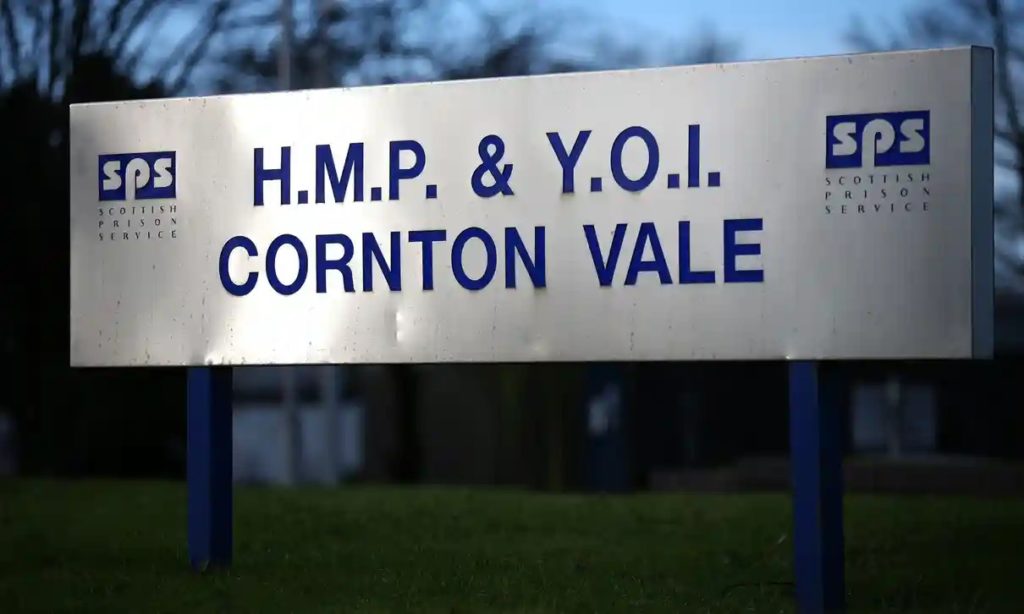
In Cornton Vale, Scotland’s one women’s prison, women with complex mental health needs are routinely thrown into solitary for days on end

Today, Scotland’s Mental Welfare Commission released the findings of their investigation into the treatment of women with complex mental health needs who have the great misfortune of ending up in Scotland’s one all-women’s prison. The Commission reports that women with mental health needs were sent into solitary confinement, euphemistically called Separation and Reintegration Units, for anywhere from a day to 82 days. The cells are described as “sparse and lacking in comfort. The narratives in women’s notes suggested there was little in the way of positive sensory stimulation in the environment of the SRU. There was limited human contact and if other women in the SRU were distressed or unwell, their vocalisations were likely to be audible, disturbing and distressing. When women’s self-care deteriorated, they may also have experienced physical and sensory discomfort in this context.”

The report goes on to note, “Part of the ethos, and indeed the name of SRUs, is that offenders are reintegrated into the mainstream environment after a period of time. Reintegration did not appear to feature in the majority of cases we reviewed …. For women who were floridly unwell with acute psychosis or manic psychosis, the severity of their symptoms and level of disturbance significantly worsened in the SRU.”

None of this is surprising or new. That solitary confinement, for anyone, is torture is not new. That solitary confinement as a response to women’s health needs is torture is not new. That solitary confinement as a response to women in need is, nevertheless, altogether ordinary also is not new. That solitary confinement worsens everything is also not new. That Cornton Vale is a toxic hot mess, with high levels of suicide and self-harm is also not new. Due to its high rates of suicide and self-harm, Cornton Vale has been called the “vale of death”. None of this is new or surprising.

In 2018, the European Commission on the Prevention of Torture visited Cornton Vale: “The CPT raises serious concerns about the treatment of women prisoners held in segregation at Cornton Vale Prison …. The CPT found women who clearly were in need of urgent care and treatment in a psychiatric facility, and should not have been in a prison environment, let alone segregated for extended periods in solitary confinement under Rules 95 and 41 (accommodation in specified conditions for health or welfare reasons). Prison staff were not trained to manage the highly disturbed women.” When they returned, in 2019, they found that the situation was somewhat improved, in some senses, but that the use of segregation, and in particular long-term isolation, persisted. None of this is new or surprising.

What is new is that this is not new. On July 10, 2017, Nicola Ferguson Sturgeon, First Minister of Scotland and leader of the Scottish National Party, wrote, “Tomorrow sees a major milestone in the transformation of our justice system. We will begin the demolition of Cornton Vale women’s prison, a move that marks the next stage in our plans to ensure Scotland’s penal policy doesn’t just punish people who’ve committed crimes – important though that is – but helps deliver safer communities in the long term.” What happened? Why, four years later, is Cornton Vale still standing? What happened to the alternatives — an 80-bed prison, five regional 20-bed facilities, community sentencing and service, and much greater funding for mental health, drug abuse, counseling? What is the investment in Cornton Vale’s catastrophic failure, such that, four years later, the vale of death, the vale of women’s slow and painful death and deaths? Haven’t there been enough inquiries and enough `discoveries’, enough corpses and enough ruined lives?

(By Dan Moshenberg)

In Ireland, the Dóchas Centre is a dumping ground for women living with mental health issues

Dóchas Centre

In Irish, dóchas means hope.  Every year, Chaplains who serve Ireland’s prisons issue a Chaplains Report. Usually, these reports are fairly modest, tame even, describing the situation in the various prisons. These reports seldom make news. This year, however, the Chaplains reported that the situation in Irish prisons has become dire, and the direst prison is the Dóchas Centre, nestled in the larger Mountjoy Prison, in Dublin. According to Ireland’s Department of Justice, the Dóchas Centre is a “closed, medium security prison for females aged 18 years and over. It is the committal prison for females committed on remand or sentenced from all Courts outside the Munster area.” The Chaplain’s report is more succinct: Dóchas has become “a dumping ground” for women living with mental health issues.

According to the Dóchas Centre Chaplain, “Most recently a prisoner was remanded to the Dochas Centre after having spent over a year in a psychiatric facility. The prisoner was clearly unwell and confused to the extent that after a few days in custody the prisoner wanted to know what hospital she was in. From as soon as she arrived in the Dochas Centre the prisoner remained in bed all day. Prison was obviously not the place for that prisoner, yet the prisoner had been charged, arraigned in Court and remanded to prison. After considerable intervention by the Governor and Health Care Staff, the prisoner was removed back to the psychiatric facility that she had come from …. While Staff were dealing with this prisoner two other prisoners on the same landing were even more difficult to deal with: both were self-harming and both were violent. Both of the prisoners had been treated for mental illness before coming to prison. One of the prisoners had been brought to the Dochas Centre infected with Covid 19. The other prisoner was returned to the psychiatric facility where she had been a patient. That prisoner however was returned to the Dochas after she behaved in the same violent way that she had behaved in when she was being held in the Dochas previously. Obviously she had been referred to the psychiatric facility for specialist treatment. How was she expected to receive that treatment when she was returned to the Dochas? This is a clear example of the Dochas being used as a dumping ground.”

While the Chaplain states repeatedly that the staff at the Dóchas Centre are doing the best they can, the best they can was never meant to address the needs of women living with mental health issues: “The Prison Service is too well aware of how prisons are constantly being used as the dumping ground for other agencies’ problems. Offenders whose offence is rooted in mental illness invariably get sent to prison because the State cannot accommodate them elsewhere. This imposes a duty of care on the Governor and his Staff which the normal exercise of their duty was not designed for. Prison Officers are not trained to handle psychiatric cases …. Covid has preoccupied all our thinking for almost a year. Hospitals filled to capacity are part of everyday discussion. At this time of terrible fear and anxiety in the community, no one is going to be surprised to hear that the Central Mental Hospital has no bed space available either. The difference however is that the CMH had no available space before the Covid 19 pandemic. Most prisons have prisoners suffering from mental illness who have been waiting for a bed in the CMH for over a year.” According to the Chaplain’s Report, the situation is “soul destroying. No one seems to care.”

The Chaplain concludes, “Government could find the resources to rescue the collapse of the banking system. Government could find the resources to pay workers to stay at home during the pandemic. Government could find the resources to protect the vulnerable from a life of addiction, homelessness and petty crime. Government instead sends the weakest and most vulnerable in society to prison at the cost of the tax-payer and the fabric of society.”

There are currently 3866 people held in prisons in Ireland. According to the Justice Minister, over 1700 prisoners are awaiting mental health and substance abuse services. Across Ireland, close to half of all those living in prisons are waiting for treatment. In the Dóchas Centre, bedridden women, dumped and abandoned by the State, stare at the prison walls and imagine they’re being helped. In Ireland, today, dóchas means hope. 

(By Dan Moshenberg)

(Photo Credit: Irish Examiner)

Nobody is above (everyone is equal)

Nobody is above (everyone is equal)

Nobody is above the law
everyone is equal before

the much-lampooned man
has done whatever he can

Nobody is above the law
everyone is equal before

there are those ones
who give you the runs
(election-time they comes)

Nobody is above 
everyone is equal

an emperor-ex will serve
that which many more do deserve

Nobody is above the law
everyone is equal before

Miscreants and dictators plunder
tearing their countries asunder
(each according to their ability)

Orwell’s Animal Farm rings true 
but will it do for you 


SAFM radio’s afternoon show ends with a Ray Charles’ rendition of “Let it be”.

(By David Kapp)

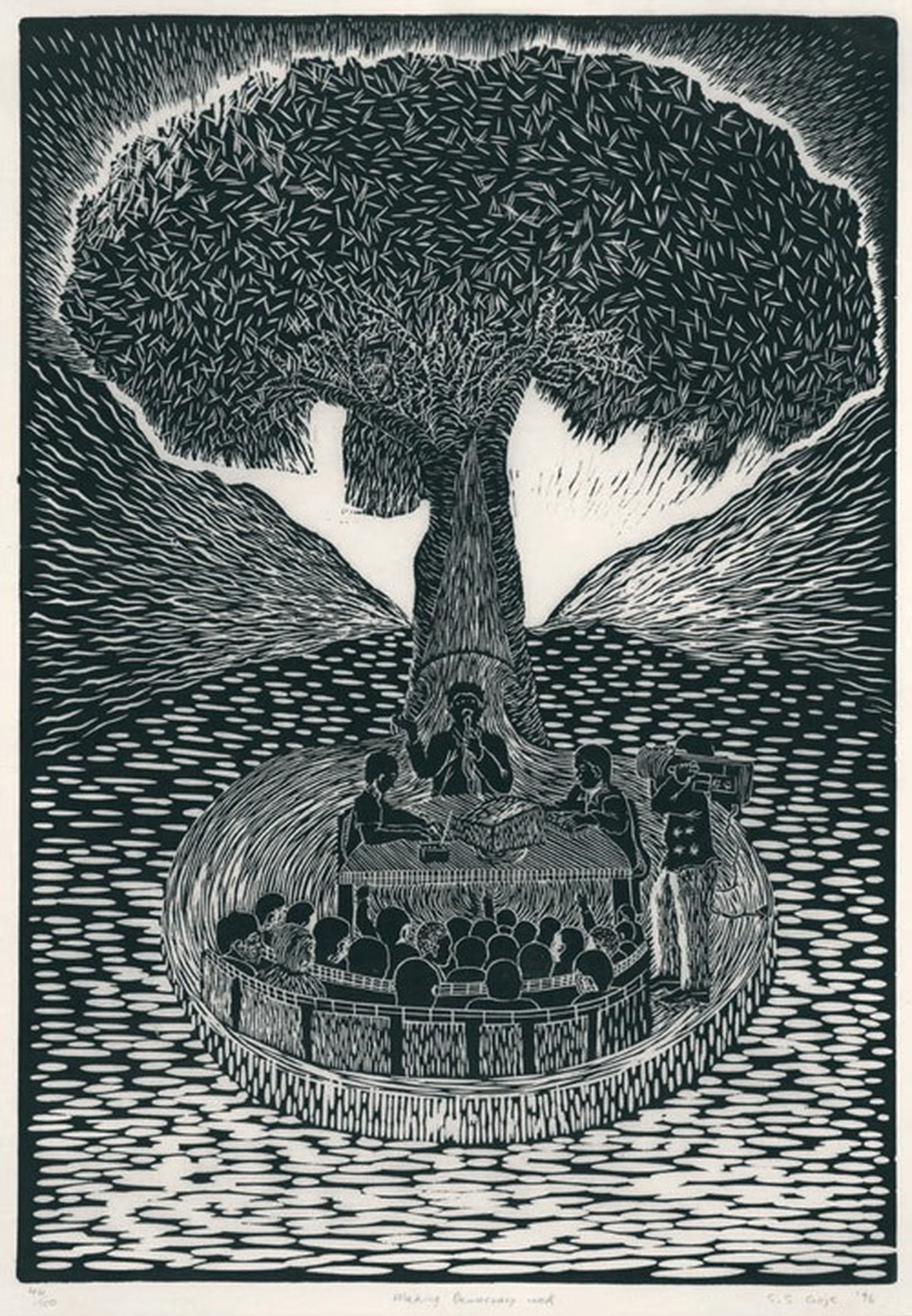
(Image Credit: Sandile Goje, Making Democracy Work / Constitutional Court Art Collection)

BTS: Caught between an entertainment rock and a military service hard place

The South Korean boy band, BTS, continues their domination of the music charts. On May 21st, they released a new all-English pop song, “Butter,” which has broken a number of records because of their devoted fan base and the fact that it’s a catchy song. (You, too, should stream “Butter”). While BTS’ musical successes continue to set them apart as leaders in the global music industry, their domination can only continue for so long. Fans know that a concern for many male groups is their time away from music and in South Korea’s mandated conscription. For 18 months, male South Korean citizens are required to enlist in the military by the time they are 28 years old. However, a recent change in the law prompted by the success of BTS, allowed individuals who elevate the country’s global reputation to postpone their mandated time in the military by two years, when they are 30 years old. The reason for this mandate is because the Korean War never ended and at any point, active combat between North Korea and South Korea can start again. As with many wars in Asia, America is involved; therefore, BTS and other male groups straddle an in-between of success determined by America. 

In a previous blog post, I noted the popularity and dominance of BTS in the American music industry that secures them the title of one of the most successful Korean male acts. Their success as global superstars is tied to their global dominance which is primarily denoted by Western accolades: they are Grammy-nominated and have topped the Billboard charts since the release of their new song, “Butter.” Interestingly, it is these accomplishments, determined by American critics, that define BTS as one of the most successful male group acts. On the other hand, the possible end of their career is military service for 18 months that is influenced by American intervention in the Korean War.

A brief overview of the Korean War: after World War II, America’s concern about communism forced them to focus their foreign policy on containing it. Asia and specifically, Korea was the site of this war on communism when the US and “the Soviet Union agreed to temporarily divide Korea and oversee the removal of Japanese forces” (National). The Soviet Union occupied the North and was organized as a communist government by Kim Il Sung; the United States occupied the South and was organized as the Republic of Korea (National). It was primarily these concerns about the growth of communism around this time and in Asia that prompted the US to intervene, and unfortunately, Korea was a puppet of some sorts for the stronger powers of the US and the Soviet Union. The outcome: a military and humanitarian disaster. Many lives were lost on both sides with many civilians caught in the crossfire and the separation of families, consequences that can’t ever really be resolved or healed. 

BTS is similarly caught in a crossfire in both their entertainment and military obligations. While they were a largely successful act before they caught the attention of the US market, it was this very attention that placed them in their own stratosphere as global artists. It capitulated them into a whole new level of fame and thousands of new loyal and dedicated fans. On the other hand, the presumed end of their careers is tied to their military service which the US has played a part in. This is an example of the damaging effects of US imperialism (if it wasn’t clear before) and how the US continues to dictate the people of the countries that it has intervened in. 

Recently, President Biden was abroad building a foreign policy agenda focused on repairing alliances and re-establishing America’s leadership on the global stage. Biden’s approach is focused on ensuring that any foreign policy decisions are made with domestic impacts in mind. While it is important that the President of the United States leads with clear commitment to protecting American citizens abroad, it might be worthwhile to also lead with consciousness of the effects for the very people and countries in which the US believes it necessary to establish its presence.

(By Michelle Nguyen)

(Photo Credit: UNICEF)

ICE is the super spreader agency

The Washington Post reported that more than 8 percent of individuals held in migrant detention centers have contracted the coronavirus, proving that ICE is the super spreader agency. This update comes months after aCongressional Oversight Committee found that migrants died after receiving inadequate medical care in detention centers. In fact, in 2020 ICE detention centers had the highest annual death toll of people in ICE custody since 2005, with 21 deaths—8 of which were caused by COVID-19. Just this week, 47 children tested positive for coronavirus at a temporary migrant facility in Long Beach. Overall, deaths in detention have increased sevenfold since 2018, despite a marked decrease in the population of migrants living there.

Why is ICE the super spreader agency? Why is ICE unable, or unwilling, to protect the health of migrant detainees? The state of COVID-19 in prisons, jails, and detention centers is an illustration of state necro politics at work. Achille Mbembe describes necro politics as, “the use of social and political power to dictate how some people may live and how some must die.” This framework questions: Who lives, who dies, and how are state actors implicated in the outcome?

In the US, the pre-existing structural vulnerabilities faced by migrants are compounded by statuses of illegality that further restrict access to healthcare and community-based services. In detention, migrant health is deprioritized due to their criminal status. The state weaponizes social notions of (il)legality by asserting visibility or invisibility, presence or absence, according to its interests. In the case of transnational migrants, the state’s absence is felt through neglect and invisibility, ignorance and intentional abandon. ICE enforces large-scale detainment while failing to account for the health and safety of those confined.

Clearly, carceral spaces are particularly susceptible locations for COVID-19 transmission. And yet, ICE continues to detain migrants in large numbers. The agency does not even have enough spaces in detention for all the migrants it imprisons. Overcapacity further complicates health promotion measures, especially in relation to COVID prevention. A lack of resources leads to inappropriate medical responses to health emergencies. The underdevelopment of medical capacities and frequent documentation of “health emergencies” in detention proposes the question: Does ICE even try to protect migrant health and limit COVID-19 transmission? If it really intends to protect migrant health, wouldn’t the logical approach be decarceration? After all, incarceration is the antithesis of social distancing.

Migrants in detention are subject to intersecting sources of acute violence: the violence of COVID-19 and exposure to illness are compounded by the violence of incarceration. The inability to exert bodily autonomy—to isolate, protect, and remove oneself from sites of COVID-19 exposure—is another source of violence. The fear of potential exposure to the virus, without any way to fully protect yourself, is paralyzing. Despite being the most recent and publicized threat to migrant safety, COVID-19 exposure is just one danger to migrant health. Suicide rates continue to rise in detention centers. Research shows that detention centers are dangerous for women’s health and rights. Trans women are particularly vulnerable to abuse, illness, and death in detention centers. Why is the criminalization of migration prioritized over the safety of migrant bodies?

The dehumanization of migrant communities correlates to their danger in detention. Each day, new facts and statistics regarding a rising number of migrants crossing the border arise in the media. A “number of unaccompanied children,” “US border surge,” or a new “wave of migrants” are coming to the US in “record” numbers. How does our rhetoriccontribute to the dehumanization of migrants? Should we use these words to describe human beings? “The rhetoric framing immigration prisoners as criminals disassociates prisoners from those who may influence their wellbeing, leading to treatment of confined migrants as dangerous and disposable.” Through this rhetorical process, the state “creates illegality,” inviting mistreatment and exclusion for a community depicted as criminal.

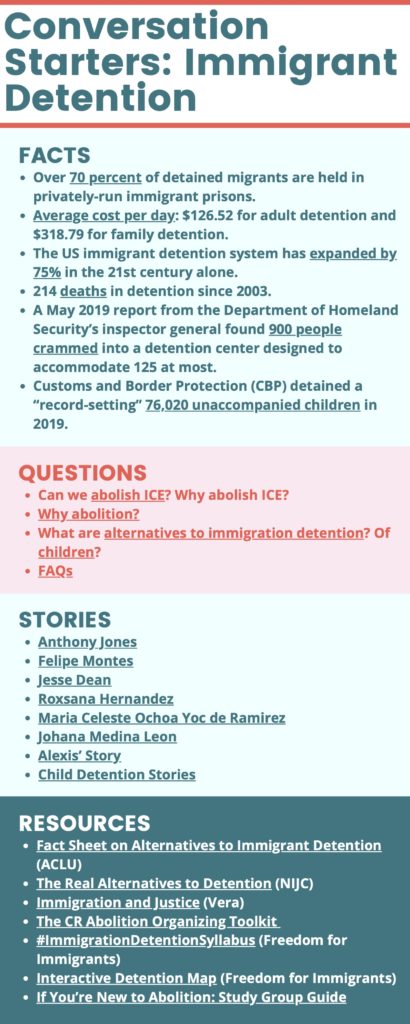
This rhetorical framing manifests in the poor quality of care and abuse prevalent in detention centers. How much more compelling is it to describe a “wave of migrants” as a “group of persecuted, oppressed vulnerable men, women, and children seeking economic, social, and political security from a neighboring country”? Perhaps even this description fails to sensitize opponents. Nonetheless, it is our responsibility to put names to the “waves” and “surges” in an attempt to acknowledge the grief experienced by communities of color across the United States—migrants whose loved ones were not “martyrs” but casualties of state policy and carceral beliefs: Anthony Jones, Felipe Montes, Jesse Dean, Roxsana HernandezMaria Celeste Ochoa Yoc de Ramirez, Johana Medina Leon, and many more.

(By Alex Groth: Alex Groth, a young advocate, is passionate about deconstructing migrant detention centers and promoting safer, more dignified alternatives to incarceration.)

(Image Credit: Alex Groth)

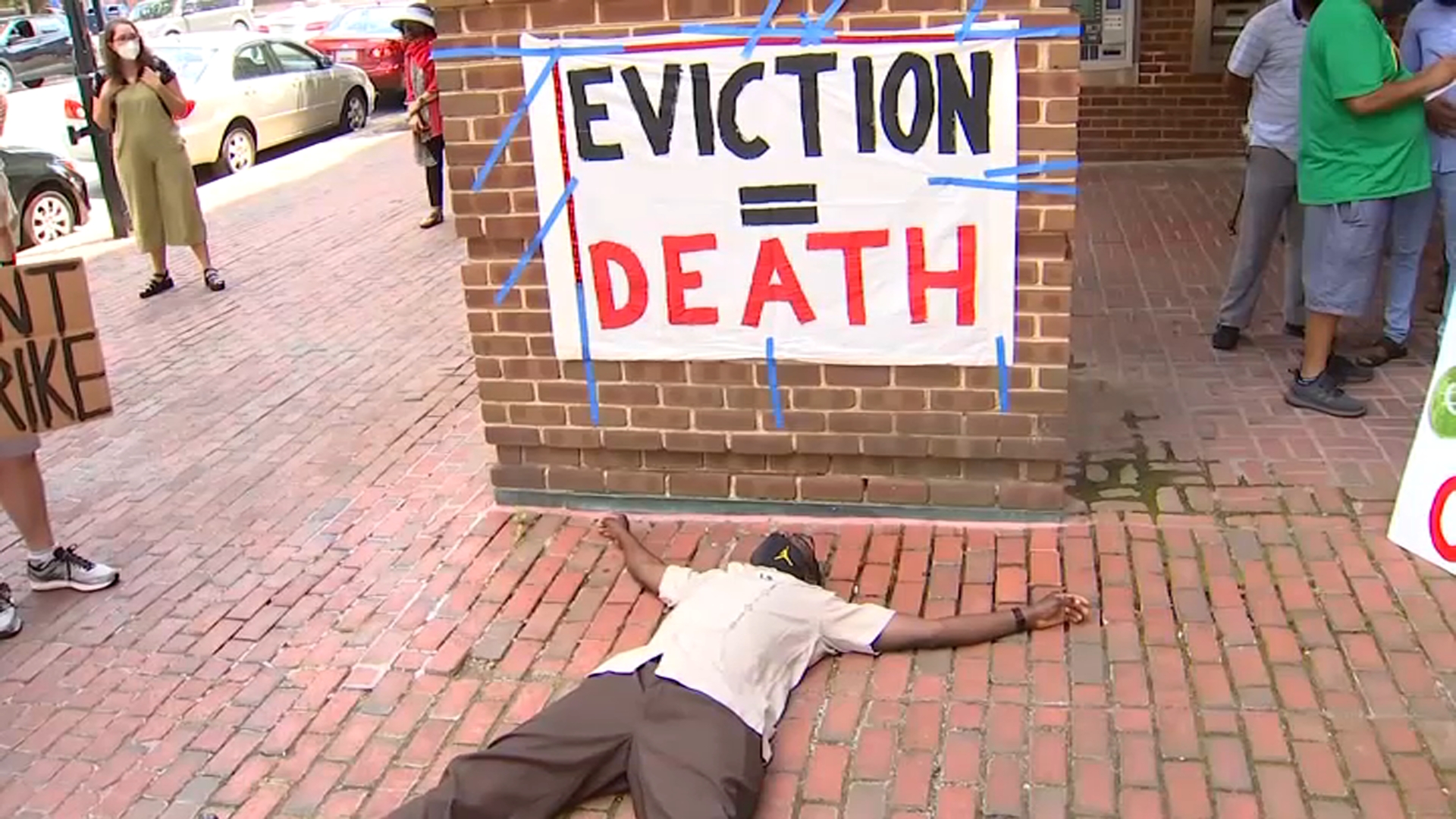
Why do landlords have so much discretionary, and ultimately fatal, power?

Yesterday, Virginia’s Secretary of Finance Aubrey Layne informed the Virginia House of Delegates’ Appropriations Committee that the Commonwealth of Virginia is looking at a $2 billion surplus. The Virginia state legislature will meet in special session, starting August 2, to decide how to divide the Covid relief moneys. No matter what they decide, $2 billion is a lot of money. And yet … and yet people concerned about eviction are worried, very worried. Why? Partly because the money in Virginia, as elsewhere, has moved at a snail’s pace. The process of application is cumbersome and, for many, almost impossible. The scale of demand has far exceeded the capacity of state agencies. But there’s something else, something more structural than agency capacity and poorly designed procedures: landlords’ discretionary power. 

Virginia has more than a billion dollars in aid for people behind on rent”. Again, that’s a lot of money, and, again, people who need that money and their allies, communities and networks are worried. Why? “To tap into $1 billion worth of federal aid earmarked for Virginia, tenants or their landlords must proactively apply, and there’s no longer any rules requiring property owners to cooperate.”

Fairfax County, in northern Virginia, is the second richest county in the United States, a close to its neighbor, Loudoun County. Despite its great wealth, and despite the fact that it has access to great sums of rent relief money, Fairfax County officials and advocates are worried about eviction. Why? “Although Fairfax officials and other stakeholders say there’s plenty of emergency rental assistance to help low-income residents, they are concerned that it’s taking too long to get that money to landlords. County officials said that even if the rental assistance is available, landlords may decide it’s not worth it to wait months to receive the overdue rent and may evict their tenants anyway.”

Landlords may decide it’s not worth it to wait months to receive the overdue rent and may evict their tenants anyway.

Despite all the research and all the public discussion of the intimate link between transmission of the pandemic and eviction, between health and housing more generally, landlords still get to decide whose life is `worth it’ and whose life is not worth it. Do not ask what it is … 

Across the country, local jurisdictions are responding to this injustice. Some are instituting “just cause” eviction restrictions, others are going with right to counsel. Philadelphia, today, approved legislation to restrict landlords’ decision-making process. From now, landlords will not be able to deny potential tenants just because they have low credit scores or past evictions or evictions filings. The landlords’ process will have to be transparent and rational. Housing is not only a right, it’s also a matter of life and death, and that matter is passed down from one generation to the next. 

How did landlords become the arbiters of life and death, in the midst of a pandemic … or ever? Where does landlords’ discretionary power come from? And why and h ow did we let this happen? On one hand, the answer is in decades of real estate driven urban economies, that reward White homeowners and punish Black and Brown renters, creating an ever wider racial wealth gap, that is also a death gap. Some live long, others are “not worth it”, and the necropolitical maps of `urban development’ proceed. At its source, the concept of landlord is the power of a lord, “the male head of a household; a man who has authority over servants, attendants, or slaves.” It’s time to rewrite the terms and change the power. Our lives are worth it.

(By Dan Moshenberg)

(Photo Credit: NBC Washington)


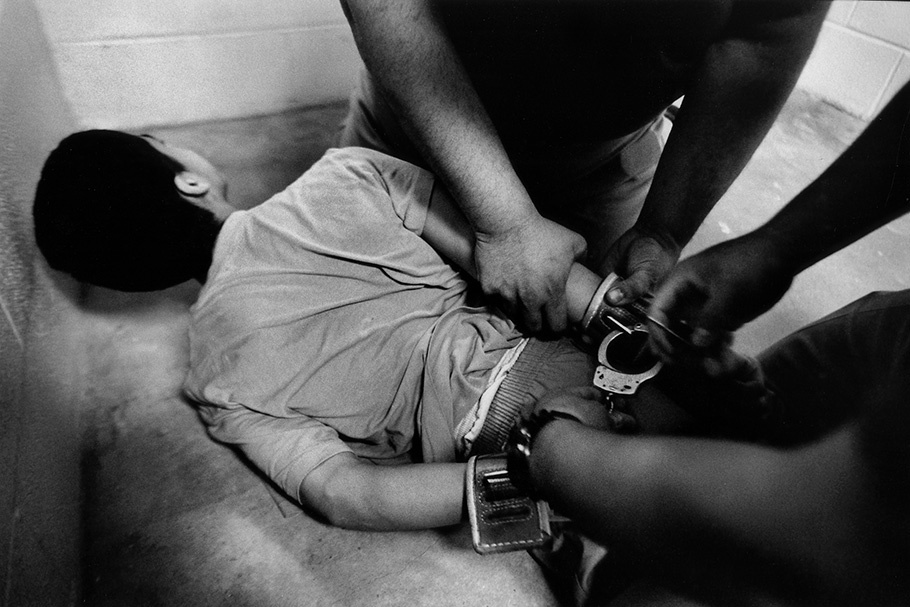
Welcome to the USA, where we routinely shackle children!

Minnesota lawmakers could end routine shackling of children in court”. Minnesota legislators are currently debating a bill that would end the routine shackling of children in court. You know what routine means? “Acquisition of skills through practice (as opposed to academic study)”. When public defender Sarah Ellsworth greets a client, a ten-year-old child, in shackles, what does she say? “Small steps. It breaks my heart.” The children need to learn that, if you don’t want to fall on your face and your legs and belly and arms are shackled, you must take small steps. Welcome to the United States where this routine is the lesson we teach certain children. 

Up to the present, this routine shackling of children hasn’t been deemed important enough to merit any kind of uniform legislation or guidance. Thus, some counties don’t shackle juveniles, others shackle children at the discretion of the judge, other routinely shackle children. As of July 2019, 32 states including the District of Columbia limited the indiscriminate use of restraints on children in court, but even there the guidelines are fairly inconsistent

So, some counties indiscriminately shackle and some counties … discriminately shackle. Of course, the whole system is based on discrimination, anyway, as a study released earlier this year suggests. The national youth incarceration rate is 138 per 100,000. The rate in Minnesota is 116 per 100,000. At the national level, for every 83 White children incarcerated, 383 Black children are incarcerated. That’s a disparity of 4.61. In Minnesota that looks like this: for every 56 White children incarcerated, 473 Black children are sent behind bars. That’s a disparity of 8.45. That is the eleventh worst in the country (New Jersey has the worst). Nationally, for every 83 White children incarcerated, 118 Latinx are incarcerated. That’s a disparity of 1.42. In Minnesota, for every 56 White children incarcerated, 89 Latinx children are incarcerated, with a disparity of 1.59 (Massachusetts `leads’ the pack in this disparity race to the bottom). In Minnesota, as across the United States, the routine of shackling is the lesson we teach certain children

When Angel Knutsen was 14 years old, she violated probation and `consumed’ something she shouldn’t have. Her ankles and hands were shackled and attached to a chain around her belly, and then she was loaded into a van. She was 14 years old. She never committed anything but petty nonviolent offenses, for which she was in and out of the criminal justice system for five years. During that period, she figures she was shackled 30 times or so. What lesson did this routine teach Angel Knutsen? “I felt a lot of shame.” She also felt the system was telling her she was a bad person who was destined to do bad things, and so she did. Today, at the age of 21, Angel Knutsen is a certified nursing assistant who wants to teach a better lesson, a better routine.

Minnesota has debated a version of this year’s bill every year since 2013. Why is it so difficult to stop shackling children? Why must these bills be debated year in and year out? Even when they’re passed, why is it that, so often, the language is rife with vagueness and loopholes? Stop shackling children. Period. In fact, stop shackling people. Period. This should not be so difficult. Can we not routinely act better towards one another?

(By Dan Moshenberg)

(Youth Law)

In South Africa, women assert the Constitutional right to breathe fresh air is a State responsibility

Promise Mabilo

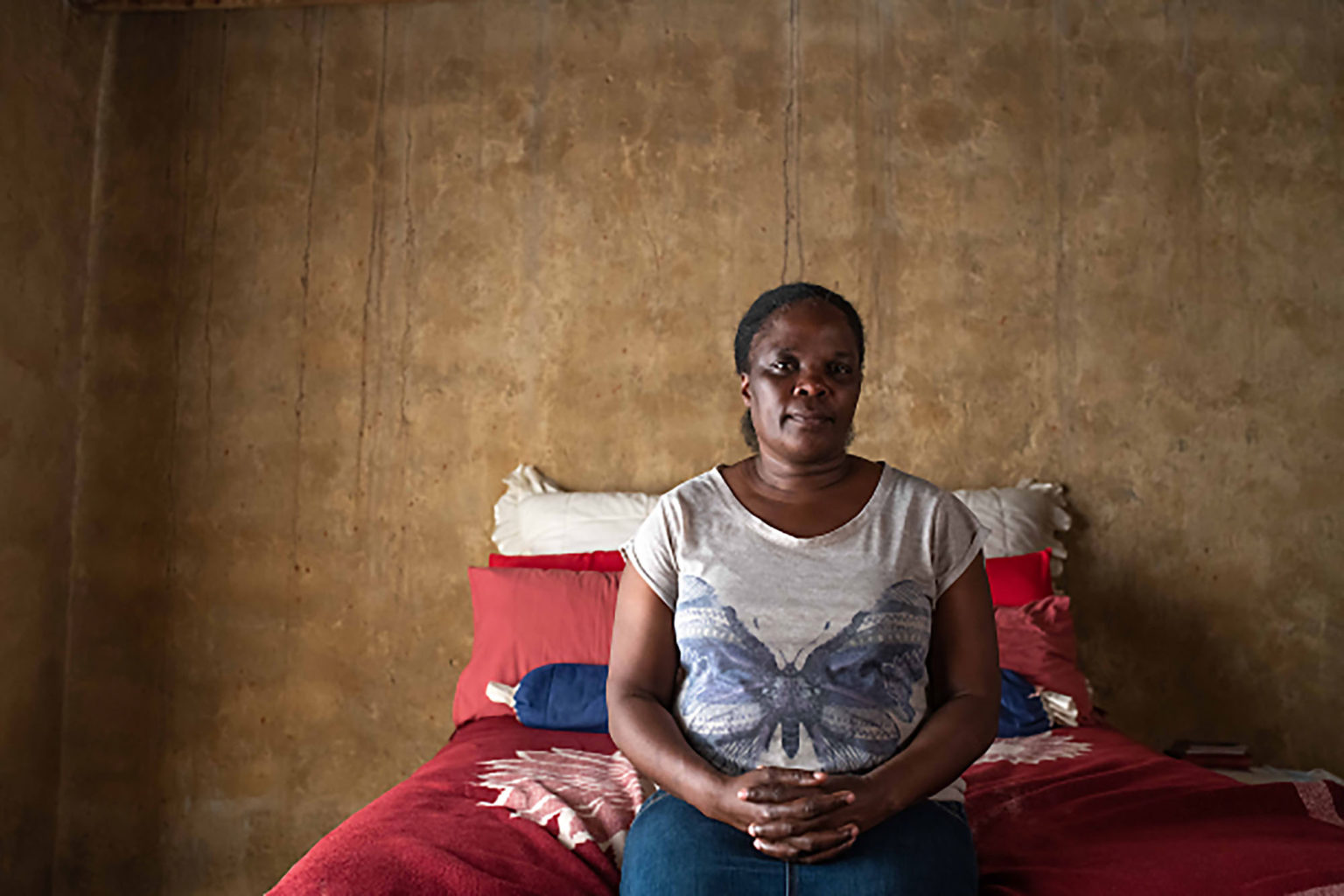
Section 24a of the Constitution of the Republic of South Africa declares, “Everyone has the right to an environment that is not harmful to their health or well-being.” Everyone means, or should mean, everyone. For decades, coal mining and coal-fired power plants have turned the Mpumalanga Highveld into the site of the most polluted air in the world. Two years ago, Greenpeace reported that the area was the world’s largest power plant emission hotspot. In 2007, the South African government created the Highveld Priority Area to respond to the deadly situation. Nothing changed. If anything, the air became more deadly. This year, women in Mpumalanga, most of them members of the Vukani Environmental Justice Movement in Action, decided enough was already way too much, and, with another environmental justice organization, groundWork, sued the South African government. The women declared they knew what was happening to their children, neighbors, community, and to themselves, and they said that they had pushed every other way conceivable and now, it was time for the South African government to abide by its Constitution. Everyone has the right to an environment that is not harmful to their health or well-being. Everyone means everyone. The case is known as the “Deadly Air” case. In May, the Pretoria High Court heard the case, and the decision could come out any day.

After the case was heard, Promise Mabilo, coordinator of Vukani Environmental Justice Movement in Action and one of the claimants, explained, “For me, this case is very important because people around the Highveld are really suffering. I have a son who is suffering from asthma and I feel the pain when I look at him. His childhood had limitations because he couldn’t play with other children, run around or carry heavy objects. I also noticed his school performance dropping because he wasn’t attending school regularly as he would be sick for one week then be okay the next …. The more I see the results of breathing in this polluted air and the people I live with in the community who are also sick and suffering from asthma, I feel abused and violated because I know what the cause is … We wish for the government departments to work together with other departments, such as the Department of Health. We do not just want compliance from the polluters because once we get sick, we even struggle to get proper healthcare because we don’t have money.”

Mbali Vosmang added, “I live with my  two children. Princess is seven, and Asemahle is three years old. When they were born, they were not sick but since living Emalahleni, we have become sick. It is very tough to sleep in hospitals due to COVID-19. The beds are full, and our children are put on oxygen tanks from the bench. The Deadly Air case is very important because I do not want others to continue to suffer the same issues as we do.”

When the government tried to explain that cleaning up an area takes time and that the claimants, majority women, were being emotional rather than rational, their attorney, Steven Budlender, responded, “The Constitutional Court has spoken with great force and passion about the need to … make a difference in ordinary people’s lives, and when you speak about 10 000  deaths of predominantly poor people in an area, that’s not emotional, it’s not irrational. It is the fact and the facts give rise to a constitutional violation.”

The facts give rise to a constitutional violation. The women of the Mpumalanga Highveld know the cause of the rampaging death in their communities. It is the air and it is the refusal of the State to care sufficiently. A state that can save its airline industry and its tourist industry is able to address the deadly air, produced by mines and power plants, in its rural areas. In Mpumalanga, in the northeast of South Africa, the women want the world to know, everyone has the right to an environment that is not harmful to their health or well-being. The women want the world to know, everyone means everyone.

(By Dan Moshenberg)

(Photo Credit: Daily Maverick / Daylin Paul / Life After Coal)