Immemorial Day and the unbroken surface of the Mediterranean

“Fear not suffering’s gravity.
Return to earth its weighty share;
heavy are its mountains, heavy the sea.”
Rainer Maria Rilke, Sonnets to Orpheus

Last week at least 700 people – refugees and asylum seekers – drowned in the Mediterranean. That raises this year’s known death toll to 2000. Italy plans to build a cemetery, a memorial of sorts, to those who die at sea. It would be located next the remains of the country’s largest fascist concentration camp. While the cemetery is the least Italy, or any country, can do, that cemetery is not a “final resting place”. There is no final resting place for those refugees and asylum seekers. This weekend is filled with images of cemeteries and those who come to the cemeteries: families, dignitaries, people. But there is no picture of the surface of the Mediterranean, and there should be. As we stare at the photographs of cemeteries, we should be made to stare at the unbroken surface of the Mediterranean. We should remember all who have perished in the name of war.

One day, impossibly, we will come to the water’s edge and grasp one another’s hands. We will encircle the Mediterranean and we will say the names of every child, woman, and man who drowned in the heavy sea while trying to find haven. Amen.

(Photo Credit: Europe Now)
Hong Kong and Singapore face a day without Indonesian domestic workers

Earlier this month, Indonesia’s President Joko Widodo, commonly referred to as Jokowi, started quite a stir, especially in the Middle East and East Asia, when he announced plans to limit and then stop the migration of live-in domestic workers. The President argued that much of the abuse of young Indonesian women stemmed from their working in informal, unregulated sectors, and that that has to stop. Indonesia wants those who work as domestic workers overseas to live in their own quarters, to work regular hours, and to enjoy one day off each week and public holidays. This is big news, on a scale of Los Angeles imagining a day without Mexicans.

Indonesia provides Singapore with most of its domestic workers. Currently 125,000 Indonesian women work as domestic workers in Singapore, the overwhelming majority as live-in. 50,000 Indonesian women work as domestic workers in Malaysia, and 150,000 work in Hong Kong. According to the Indonesian government, of the more than 7 million Indonesians working abroad, 60% are domestic workers. That’s over 4.2 million women, a lot of women and a lot of money.

Not surprisingly, employers in the receiving nations are `lukewarm’. Indonesian women workers’ groups argue that the solution to the problem of abuse of domestic workers overseas is for the State to actually protect them, rather than cut off their freedom of movement. While the President talks of national shame and dignity, women workers’ groups argue for decent work and more protections.

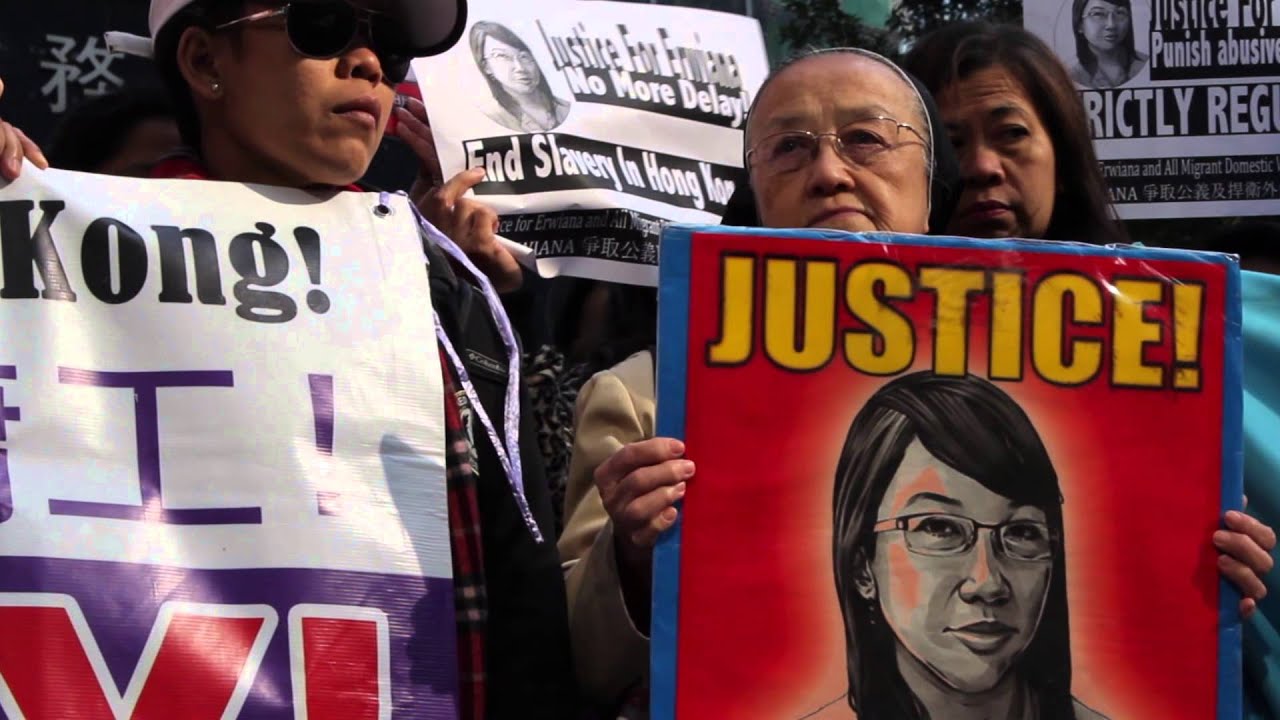
Where everyone is in agreement is that abuse of Indonesian, and other transnational, domestic workers is rampant. The case of Erwiana Sulistyaningsih, two years ago, sparked more than mass mobilizations. Erwiana Sulistyaningsih had gone to Hong Kong to work so as to be able to attend university. After eight months of torture, she was dumped at the airport and sent back to Indonesia. The sight of her damaged body sparked outrage. Two years later, she says, “I still have problems breathing. I cannot go swimming because I cannot get water into my ears. And I still have the scars. I need to see the doctor from time to time.”

The abuse of domestic workers is as old as domestic work itself, as is the work of organizing among domestic workers. What’s new is the transnational. That has meant, on one hand, that domestic workers, especially live-in domestic workers, are radically, viciously isolated, often with no place to go. In many countries, that lack of place is codified by labor and migration laws. These women are beaten by their bosses and trapped by State policy. Additionally, it takes money to travel, obtain visas and work permits, and to find employment. That means overseas domestic workers necessarily incur large debts. They are trapped in indebtedness. They are beaten by the bosses and trapped by international fiscal and monetary policy.

The domestic workers of this not-so-new neoliberal world order engage in domestic work largely because they want to use the money for the future, and the jobs available at home are too few and too low paying. For the past decades, this scam has been run to the fill the coffers of the sending nation-States, through remittances, and of the receiving nation-States, by subsidizing the entire care industry. People in Hong Kong are wondering who will pay for childcare, eldercare, home health care and so much more if the Indonesians really do vanish and, even more, if the Philippines national government follows suit? From Hong Kong to Singapore and beyond, people really are beginning to imagine a day without Indonesians.

Around the world, women domestic workers are organizing. They’re pushing for Domestic Workers’ Bills of Rights in the United States and in Kuwait. They’re organizing domestic workers’ unions in Jordan and Lebanon. They’re mobilizing everywhere. Most South American countries have ratified the ILO Convention Concerning Decent Work for Domestic Workers. In South Africa, Namibia, Zimbabwe and Tanzania domestic workers’ unions are on the move. The time to end the super-exploitation of domestic workers occurred decades, centuries, ago, but now is the time to support their efforts to end the global household plantation system. This is the story of women breaking the chains, locally and globally, of bondage, old and new, and seizing and creating power for themselves, collectively, in the name of women’s dignity. My name is Erwiana Sulistyaningsih, and I am unafraid. Justice for all!


(Photo and Video Credit: You Tube)

Chikurubi = death. Tear it down!


“In the endless moments that I spent in the cells at Highlands police station, I did not imagine that I could ever be in a worse place. That was before Chikurubi. As it turns out, hell is other people, especially when those other people are your fellow women prisoners and there has been no water for a week and flies are buzzing over the gamashura and the only ablution possible is to run a dry towel across your body, hoping that the dirt and smell will somehow be absorbed by as inadequate an object as a prison-issue towel with a visible thread count”
Petina Gappah, The Book of Memory: A Novel

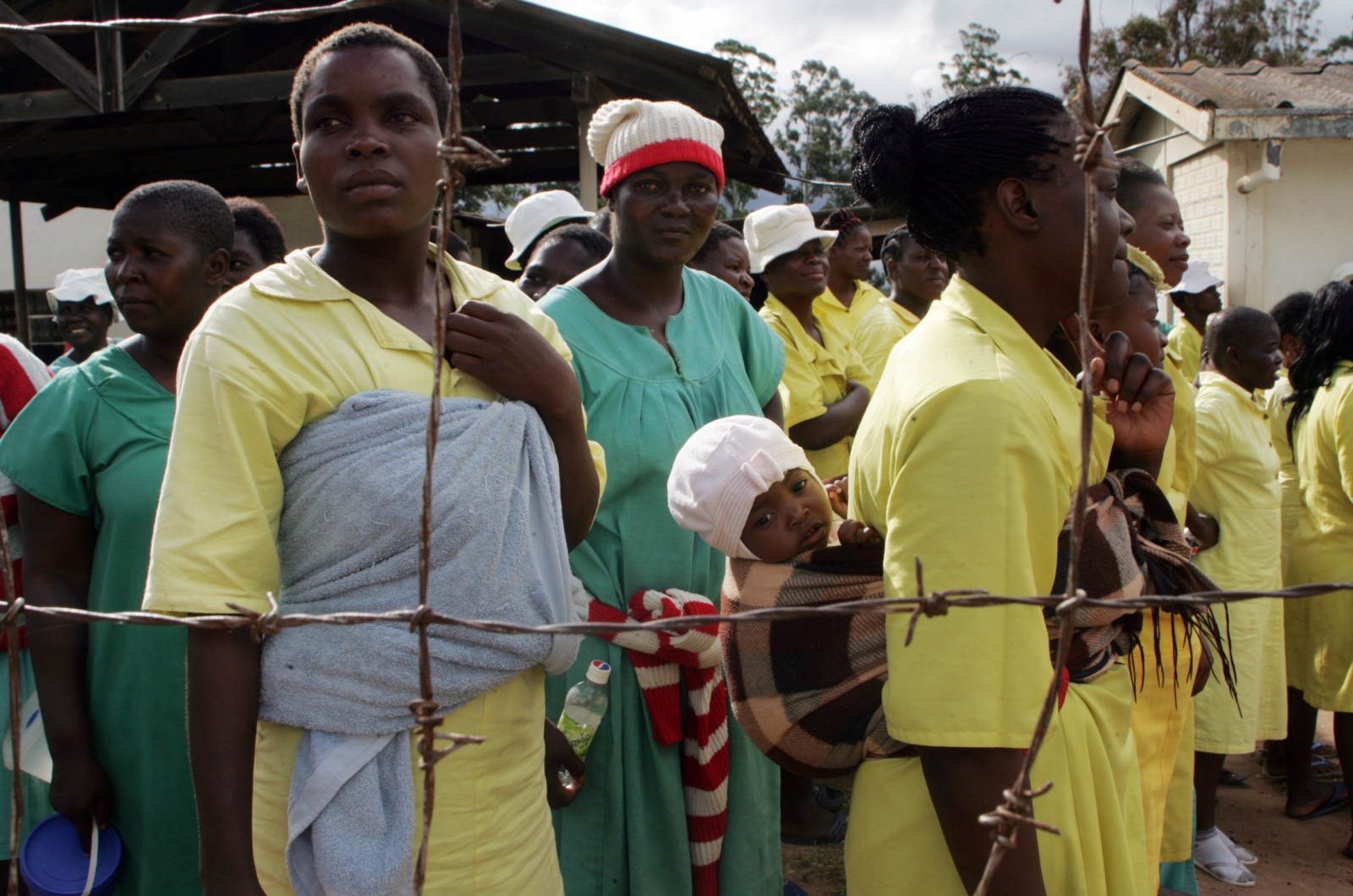
This is the Republic of Chikurubi, aka Zimbabwe. Robert Mugabe pardoned more than 2000 prisoners this week: “The amnesty has freed all convicted female prisoners … leaving Chikurubi Female Prison literally empty. Only two females serving life sentences have been left behind.” No one was freed, but they were released from prison, and the prison is not literally empty, both because there are still women prisoners inside and because we have been here before and we know Chikurubi is not empty until Chikurubi is torn down once and for all.

These prisoners were sent home ostensibly because the prisons are overcrowded, but the prisons in Zimbabwe have always been overcrowded and toxic. In 2013, the Deputy Commissioner of the Zimbabwe Prisons and Correctional Services reported that 100 or so prisoners had died that year due to lack of food and medication. They died slowly, starving and writhing in pain, and so in February 2014, Robert Mugabe “freed” thousands of prisoners. In 2009, Robert Mugabe “freed” 2,513 prisoners, due to overcrowding.

Meanwhile, Chikurubi still stands. Built by Rhodesia in 1970, the year that entity declared itself a republic, and maintained since by Zimbabwe, from the first day to today, Chikurubi has been “notorious for its filthy, freezing and overcrowded cells infested by maggots and rats.” It’s the one constant, and that’s why Zimbabwe is truly the Republic of Chikurubi. Half the population dies of starvation one year, and there’s barely a murmur. A two-year old child, Nigel Mutemagawo, is abducted and held in custody for 76 days. He was held in Chikurubi Maximum Security Prison for close to two weeks: “Medical reports show that during his abduction and continued detention for charges of banditry and terrorism, two year-old Nigel was assaulted and denied food and medical attention by his captors.” He was two years old. Prominent human rights and women’s rights advocates, such as Jestina Mukoko, are tortured in Chikurubi. What of it? Women like Rebecca Mafukeni are denied access to necessary medication and die in Chikurubi. Too bad. Rosemary Margaret Khumalo, affectionately known as Makhumalo, died, waiting for the new Constitution to be followed. Bad luck.

While it’s a relief to the women and their families and friends and communities to no longer have to sit in the hellhole that is Chikurubi, the flies are still buzzing over the gamashura. Don’t call it freedom. There is no freedom in the Republic of Chikurubi until the Chikurubi prison is destroyed, first the buildings and then structures. Don’t fix it; be done with it. Chikurubi = death. #ChikurubiMustFall

(Photo Credit: International Business Times / Jekesai Nijikizana /AFP /Getty Images)

This story is about Jessica Williams. #SayHerName


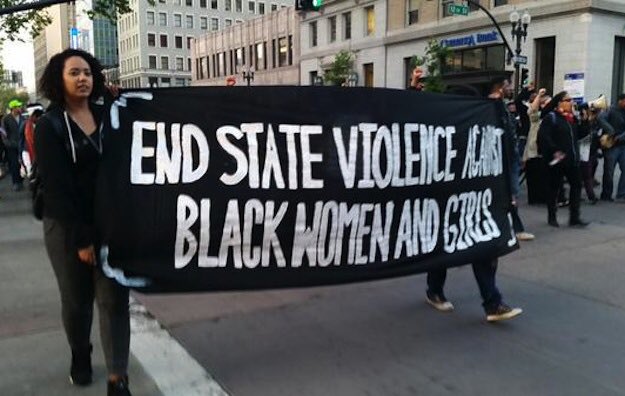
On Thursday, May 19, activists from various national movements – including Black Youth Project 100, Project South, Ferguson Action and Black Lives Matter – joined with local activists around the country for a day of action to protest and do something about State brutality against Black women. The banner and hashtag for the day were #SayHerName. On Thursday, May 19, Jessica Williams, 29 years old, Black, was killed by a white San Francisco police sergeant. Jessica Williams was unarmed. The reports on Jessica Williams’ death have barely said her name. Until late Friday night early Saturday, Jessica Williams was “an unarmed Black woman.” More to the point, the story line has been about the Police Chief being removed, about the new Police Chief, and about racism in the San Francisco Police Department. While all of those count, the story should be about Jessica Williams. Even in her own death, even now, Jessica Williams suffers the indignity of being removed from the center of her own life and death story. Jessica Williams. Say her name. #SayHerName

The story of Jessica Williams’ death is a common one, both for San Francisco and beyond. Williams was in a car identified as having been stolen. She refused to leave the car and allegedly tried to drive away. That’s when a police officer shot and killed her. According to all reports, Jessica Williams was not driving towards the officer. In fact, she wasn’t driving at all. According to police, “Williams drove away after officers tried to talk to her, officials said, but crashed into a parked utility truck about 100 feet away. She continued to disobey police instructions, and the sergeant then fired one shot and killed her as she sat in the car, said police, who added that no weapon was found on Williams.”

From 2000 to today, San Francisco police officers have been in 95 shootings. Forty have been fatal. Twenty-three of the shootings involved people “in moving or stopped vehicles.”

Jessica Williams was killed in the Bayview District, a hotbed of `revitalization.’ Bayview is the epicenter of San Francisco’s “shrinking African American population”. In early December last year, Mario Woods, 26 years old, Black, was shot 20 times by police officers in Bayview.

The San Francisco Police Department has already been under investigation for racist and homophobic practices, both formal and informal. Police Chiefs will come and go, as will police sergeants and other police. It’s important to address the police, as a group of people, a culture, a public agency, and a body of practices. But first and last, we must learn to move the police off center in the narratives of those killed by police. Jessica Williams is the story, not this sergeant or that chief.

Her name is Jessica Williams, and she did not deserve the fate that was dealt her by the State. No one deserves that fate, and no one deserves that treatment. Jessica Williams is the name of `urban redevelopment’ and skyrocketing real estate markets. Jessica Williams is the name of militarized and uncontrolled policing, witch-hunting, all in the name of zero tolerance and urban revitalization. Jessica Williams, 29 years old, Black, female, was sitting in a stationary car when she was killed. This story is about Jessica Williams. Say her name. #SayHerName


(Photo Credit: Twitter / @SisterSong_WOC) (Image Credit: Ferguson National Response Network)

For the silicosis widows of India, the struggle continues

On May 4, India’s Supreme Court directed the Gujarat government to compensate the families of 238 workers who died of silicosis while working in unregulated quartz crushing factories. Within the month Gujarat is supposed to pay each family 300,000 rupees, or around $4,500. The Court also directed the Madhya Pradesh government to take care of an additional 304 workers currently suffering from silicosis. As in South Africa, the story of industrial silicosis is a widows’ tale, from horrible start through brutal inner chapters to whatever the end will be.

According to a 1999 Indian Council of Medical Research report, in India about 3 million are at risk of silica exposure. Since that report, the numbers of workers in the various fields – mining and quarries, manufacture of non-metallic products, manufacture of basic metals and alloys, and construction – has only increased, and since that time pretty much nothing has improved in the conditions of labor, and so one assumes that the 3 million mark has been exceeded by quite a bit.

Across Madhya Pradesh, this “occupational trend” has produced an archipelago of widow villages, and that’s the point. The villages are not new and are not unknown. Women’s organizations have long lobbied for compensation. For ten years, the National Human Rights Commission has documented and organized to improve the situation of the workers and their families. At every step of the way, the Rajasthan and Madhya Pradesh governments have refused any sort of assistance.

It’s a common enough story. Small hold farmers from tribal communities were forced off their lands by market forces, weather, and the poverty of the Mahatma Gandhi National Rural Employment Guarantee Act, which, in Madhya Pradesh, guarantees stay-at-home-and-die. And so populations of mostly male workers went off to work in the factories of Gujarat. When they returned home, usually earlier than expected, they were frail, coughing, bleeding versions of the men who had left. And women were left to tend to the dying, the dead, and the debts. Then the women started going to Gujarat to work crushing stones.

Madhavi comes from a village in Madhya Pradesh. She joined four family members who went to work in Gujarat. Six months later, sick, they all returned home. To pay for medical treatment, they sold off their livestock and mortgaged their land. Then Madhavi’s mother, two brothers and sister-in-law died of silicosis. Now, sick with silicosis, Madhavi cares for her father and struggles with debt: “With my brothers gone, I am not sure when I‘ll be able to pay off all the loans. I have received no support from the government. My father does not receive any pension. It is very difficult to get by as I am always tired and run out of breath while working.”

Meanwhile, across Rajasthan, mineworkers’ widows tell the same story of death, debt, and desperation. Prembai explains, “[My husband] could not work for the last six years of his life, so I would work to keep things going. Women earn just Rs100 a day in the mines, while men are paid about Rs250.” The bodies and debts pile up; the State looks away. In Rajasthan as elsewhere, entire villages are called “the land of widows”.

The story of silicosis in India is the same as that in South Africa. For those who work the mines and factories, there is no dignity in labor. For the widows, there is no dignity in death. The bodies come home, the debts and demands mount, the extraction continues.


(Photo Credit: The Hindu / Rohit Jain Paras)

Prison is neither a childcare nor a residential center

Dunia Romero and daughter Stefany.

The United States has built three special hells for immigrant women and children: the Berks Family Residential Center, in Leesport, Pennsylvania; the South Texas Family Residential Center, in Dilley, Texas; and the Karnes County Residential Center, in Karnes City, Texas. U.S. Immigration and Custom Enforcement is very proud of Karnes. When first opened, ICE boasted, “The Karnes County Residential Center (KCRC) is the first facility housing ICE detainees built from the ground up with ICE’s civil detention standards in mind. It represents a significant milestone in the agency’s long-term effort to reform the immigration detention system.” Last Friday, April 29, despite numerous `deficiencies’, Karnes was issued a temporary residential childcare license. Rather than a significant milestone in any attempt to reform anything, this is just another scene in the theater of cruelty that is immigration policy. Prison is neither a childcare nor a residential facility. Ask Dunia Romero and her fifteen-year-old daughter Stefany; ask Josie and her ten-year old son Manuel; ask Susana Arévalo Hernández and her two children; ask the mothers of Berks, Dilley, Karnes, and to a person they will tell you the same thing: “This is a prison. We fled violence and you have treated us as criminals. Why?” End the torture of women and children, and while you’re at it, stop the abuse of language and common sense. Prison is not childcare.

Yesterday, Dunia Romero and her daughter joined dozens of other undocumented mothers and children in a demonstration outside the White House. They are part of the Esperanza que Florece – Blooming Hope campaign, urging people to send Mother’s Day postcards to four prominent and influential mothers: Michelle Obama, Jill Biden, Celia Muñoz, Valerie Jarrett. The postcards call for an end to “family detention.”

Yesterday, as well, a judge in Austin granted a temporary restraining order to stop the Dilley prison from being licensed until a full court hearing on May 13. While it’s only a temporary stay, it’s an important step, and it was initiated by a lawsuit filed by two women prisoners of Dilley and Grassroots Leadership. The Karnes prison retains its license.

Today, the Center for American Progress released A Short-Term Plan to Address the Central American Refugee Situation, which noted, “The administration should close the South Texas Family Residential Center in Dilley, Texas, and the Karnes County Residential Center in Karnes City, Texas, and release those detained mothers and children who do not pose a security or flight risk that cannot otherwise be mitigated … The administration should create short-term processing centers for families upon arrival that function like shelters rather than prisons. These centers would give families the ability to get their bearings in the United States; attend legal orientations and connect with pro bono counsel; and receive medical, mental health, and other needed care.”

This Mother’s Day, various groups – including currently and formerly imprisoned women and children refugees, legal teams, advocacy groups, and just plain folks – again attempt to move the State to turn its prisons into shelters and its swords into welcoming arms. Please consider joining others by sending a postcard, the link is here. Honor Mothers’ Day this year by joining the fight to release imprisoned immigrant mothers and children and by ending family detention now.

(Photo credit: Armando Trull / WAMU)

It’s way past time to recognize AND support women prison journalists

We live in an age of news desertification. Today, May 3, is World Press Freedom Day, and much of the discussion of press freedom centers, rightly, on censorship, and on the intimidation, brutalization and imprisonment of reporters. At the same time, and especially in the United States, “news deserts” are popping up in fairly predictable communities: rural areas and urban minority neighborhoods: “Minority communities in big cities tend to be the most arid news deserts of all.” News deserts are places in which people can no longer get the local news, and it’s the no longer that matters here. News deserts are places that had local community newspapers, usually for generations that either failed or, as with the vast majority, were bought out by corporate interests and then dumped or `re-tooled’ out of their community base. While the news air is indeed very dry in urban minority communities, the epicenter of news desertification across the United States is the prison, and the dead center of that map is the women’s prison.

Prison journalism has a long and storied record in the United States. In 1887, a group of prisoners in the Stillwater Prison, in Minnesota, pooled money and energies and founded The Prison Mirror. Today, The Prison Mirror is the longest running jailhouse newspaper in the United States. Today, The Prison Mirror, The Angolite, started in 1976, and the San Quentin News, revived in 2008 after 26 years of silence, are the only three prisoner-run publications that do serious and investigative reporting on criminal justice and injustice. But the real story is the rise and fall of prison newspapers.

The Prison Mirror was wildly successful from the beginning, so much so that prison newspapers, newsletters and news magazines started popping all over the country. By the early 1960s, there were prison reporters in almost every state. From 1965 to 1990, there was an active Penal Press Awards, with real competition among real prison house journalists. Then the 1990s happened. A predictable component of mass incarceration’s austerity budgets was the elimination of educational and cultural programs, included in which was the programmatic disappearance of jailhouse news venues. More prisoners, more isolation, more self harm and suicide, and more silence. Mass incarceration = news desertification.

Today, there are very few prisoner-run news outlets, and that’s a shame. These projects did more than “help” prisoners, although prisoners certainly benefited from them. Check out The Prison Mirror, The Angolite, or the San Quentin News and you’ll see hard hitting and urgently useful news reporting.

Where are the women? Here, there and everywhere. Short-lived newspapers emerge from a journalism course, and women prisoners produce newsletters, like Through the Looking Glass, published by women prisoners at the Purdy Correctional Treatment Center, outside Seattle, Washington, between 1976 and 1987. From 2002 to 2006, women prisoners at the Edna Mahan Correctional Facility for Women in New Jersey published a monthly magazine, Perceptions. In 2003, women prisoners in Oregon approached Vikki Law to help them publish their voices and visions, and so was launched Tenacious, a zine of art and writings by women incarcerated across the United States. The most recent issue, Tenacious 35, was published in December 2015.

None of these has received the kind of support, institutional and cultural, given to similar projects in men’s prisons. The Prison Mirror, The Angolite, and the San Quentin News are great examples of prisoner run news media, and they are great examples of the resources needed to sustain such projects, from the warden and staff to time and space to training to encouragement, from within and without. It’s way past time to recognize AND support women prison journalists. Prison doesn’t have to be a news desert, and women’s prisons don’t have to be shrouded in silence.


(Image Credit: California Coalition for Women Prisoners) (Photo Credit: POC Zine Project)

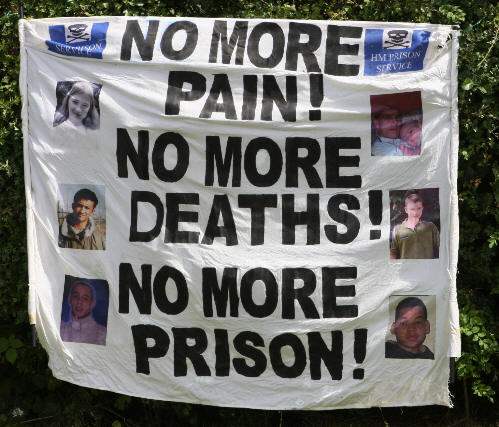
Suicides in prisons in England and Wales hit 25-year high, and who cares?


Today, the United Kingdom’s Ministry of Justice released Safety in Custody Statistics England and Wales / Deaths in prison custody to March 2016. To absolutely no one’s surprise, the numbers are bad, the worst in 25 years. One hundred people committed suicide in prisons across England and Wales, in the twelve months between March 2015 and March 2016. Last year, according to the Howard League for Penal Reform, the Prison and Probation Ombudsman for England and Wales, and the House of Commons Justice Committee, prison suicides in England and Wales reached a seven-year high. Last year, the Ombudsman found a 64% increase in self-inflicted deaths in custody over the previous year. Additionally, “there were self-inflicted deaths at 53 different prisons, 56% more than the previous year. This included prisons where there had not been self-inflicted deaths for many years, sometimes ever.” In February 2016, the Ombudsman published a “Learning Lessons Bulletin” on prisoner suicide within the first month of custody: “It is a sadness to me that this bulletin repeats learning that I have frequently published elsewhere, about staff not spotting or using essential information about risk of suicide. This suggests that lessons still need to be learned.” The sadness goes deeper and broader than repetition and not learning. The sadness is that the bodies pile up and nobody cares.

Today’s report notes that prison suicides have soared from 79 last year to 100 this year, a 27% increase, and that prison suicide make up a little over one-third of prison deaths. Further, “the rate of self-inflicted deaths had reached its peak in the time series in the 12 months to March 2003 of 1.5 per 1,000 prisoners. After a period of fluctuations from 2004 to 2008, the self-inflicted death rate had stabilised until 2013. Subsequently the rate began to rise again to the highest point, since the prior peak, in the most recent 12 months ending March 2016 of 1.2 per 1,000 prisoners.”

While today’s report does not distinguish between men and women prisoners who have `successfully’ committed suicide, its profile of self-harm in the same period is telling: “When considering females, despite the falls seen between 2009 and 2012, rates of individuals self-harming among females remain disproportionately high in comparison to the overall rates of individuals self-harming … Females accounted for nearly a quarter of self-harm incidents in this reporting period, but only make up less than 5% of the prison population.”

None of this is surprising, and that’s the point. Critics say the system is in meltdown; it’s not. The system is working perfectly. Every year, a report comes out and some ask why the numbers continue to spike. Every year, the staff is blamed or the community or the individual prisoners. Every year, “safety in custody” is measured in suicide and self harm, and no one asks about well being and absolutely no one asks if those who die and hurt themselves in the pursuit of their own deaths belong behind bars in the first place. Every year, the public budgets for mental health are cut more deeply, and the butchers mutter in surprise at the “decrepit state” of the prisons and those who live and die therein.

Here there are no lessons to learn. These deaths are a station on a global assembly line at which employees dutifully stand and wait for the next body to ignore. The prisons of England and Wales are one tiny part of the global labor of necropower: “I have put forward the notion of necropolitics and necropower to account for the various ways in which, in our contemporary world, … new and unique forms of social existence in which vast populations are subjected to conditions of life conferring upon them the status of living dead … Under conditions of necropower, the lines between resistance and suicide, sacrifice and redemption, martyrdom and freedom are blurred.”

It is a sadness frequently published elsewhere.


(Photo Credit: Indymedia UK)

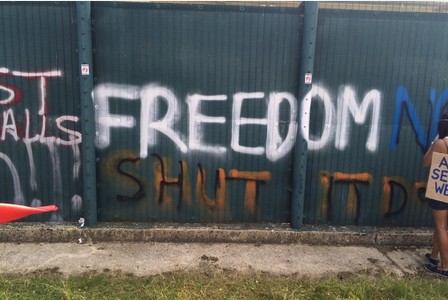
Mabel Gawanas demands FREEDOM! #SetHerFree

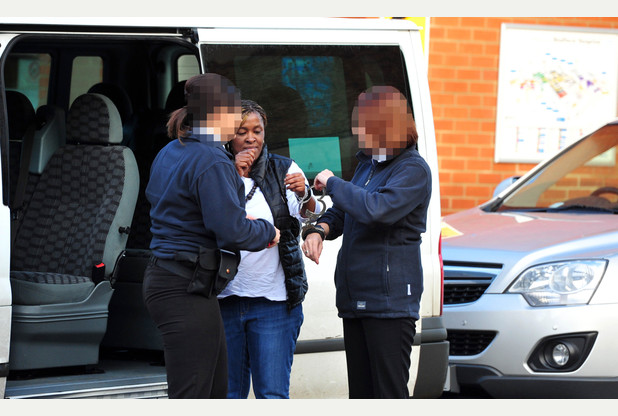
08/01/16 Pixelated 04/01/16 Yarlswood.A Yarl's Wood Immigration Removal Centre detainee is taken to a hospital appointment in hand cuffs. Pic by Keiron Hillhouse

Mabel Gawanas is taken to hospital in handcuffs

Why does the English government hate Mabel Gawanas? What horrible crime has she committed that the State has chosen to persecute and cage her for close on to two years? Mabel Gawanas has been in Yarl’s Wood for 22 months for the crime of having sought freedom and safety. Last week, the State moved to deport Mabel Gawanas. Thanks to her organizing and that of supporters in Movement for Justice, Black Sox, and Sisters Uncut, her ticket was cancelled. While that is great news, the idea that being sent back to prison is great news is an apt description of the current moment of State-sponsored violence against and torture of women. This week, Mabel’s daughter, Alexandra, born in England and a citizen of the European Union, turned seven years old. Who will restore those years to Mabel and Alexandra?

Mabel Gawanas is 42 years old and comes from Namibia. Orphaned as a young child, Mabel Gawanas was forced to work as a child minder when she was herself only a child. She says she was beaten, raped and abused by members of her extended family. Finally, she fled the violence. In 2006, she went to the United Kingdom, where, again, she was trapped in a family home. Mabel Gawanas has lived with mental illness for years. According to many, her mental health conditions arise largely from the violence she has endured.

Subjected to the trials of Job, Mabel Gawanas has survived with dignity, and has been rewarded with prison and worse: “I came here as a victim of torture, I was sexually abused by my own family and I am a victim of trafficking … I’ve been offered a place to stay – but I’ve been refused bail three times. Why would I run away from the people who are giving me somewhere to live? I would rather die than be deported. I am so frustrated, I should be bringing up my daughter.”

Mabel Gawanas has been one of the lead organizers of women held in Yarl’s Wood. Last year, when she discovered that she would be taken to medical appointments in handcuffs, she organized the press to come photograph and interview women prisoners in transit. In another instance, she stopped a Kenyan woman from being deported: “We protested when a woman who was tortured in Kenya, and all her family tortured or dead, was due to be deported. Ten of us filled her room with furniture so she missed her flight. She was later freed; we saved her that day.”

According to Movement for Justice, “Mabel is the foremost freedom fighter, leader and organiser of women imprisoned in the notorious Yarl’s Wood detention centre, a role model for every woman struggling for justice against Britain’s inhuman and racist immigration. She is one of the leaders who have made Yarl’s Wood the central battleground in the fight for women’s rights and the right of asylum in Britain … She has been a leader in every struggle in Yarl’s Wood from the protests that followed the Channel 4 exposures in March last year, and she has always been an active part of the Yarl’s Wood Movement for Justice group. She is a leader for women of every nationality in Yarl’s Wood – from every part of Africa, from India, Bangladesh, China, Eastern Europe etc. She has been organising the protests and placards at the windows on every one of the Surround Harmondsworth demonstrations since April 2015; people at the 12 th March demonstration heard Mabel speak over the phone and saw the large placard she held at the window, denouncing the sexual abuse of women by male guards. Mabel has been central to making the fight inside the centre more organised. She was part of the 3-day courtyard protest by over 100 women in the run-up to September’s parliamentary debate on detention, and organised successful collective action to support get a Chinese detainee taken to hospital. In November and March she organised women of different nationalities to defend Nigerian & Ghanaian women who were collectively resisting deportation. Both charter flights had to leave without any of those women on board.”

The English government hates Mabel Gawanas because she is a freedom fighter. She brings to light the brutality of Yarl’s Wood, immigrant detention and prison more generally. She calls out the State’s violence against women, which begins with a policy of disbelief in women and ends with the torture of indefinite detention. She demonstrates the special hell the State has constructed for African women, and for all women inside. Mabel Gawanas demands FREEDOM. Free Mabel Gawanas! #SetHerFree #ShutItDown


(Photo Credit 1: Bedfordshire on Sunday) (Photo Credit 2: Bedfordshire News)

In Virginia, Raja Johnson, Kimberly Carter and 206,000 more people just won back the right to vote!

Raja Johnson and Terry McAuliffe

Sometimes, as in Virginia this past week, democracy happens, and when it does, it’s largely thanks to the work of women of color organizing. Last Friday, Governor Terry McAuliffe restored voting and civil rights to 206,000 people who had been disenfranchised permanently, thanks to Virginia’s lifelong voting ban on former prisoners. As the Governor explained, “I believe our commonwealth can not achieve its full potential until all men and women act on this fundamental right and participate in the decisions about their own children’s education, about their taxes and every aspect of their lives. Unfortunately, Virginia has had a long and sad history of effectively suppressing the voices of many thousands of men and women at the ballot box … I believe it is time to cast off Virginia’s troubled history of injustice and embrace an honest clean process of restoring the right of these men and women. And so today, I will sign an order restoring the civil and voting rights of every single individual who has completed his or her sentence as of this day.” On that day, Raja Johnson stood with Governor McAuliffe as he spoke, and Kimberly Carter watched on television. These women, and thousands of others overwhelmingly women of color, will finally be able to vote, and so a chapter in Virginia’s decades long war on women of color may be drawing to a close.

In 1999, Raja Johnson, an 18-year-old Black woman, made a mistake. She was convicted of grand larceny. In 2014, Governor McAuliffe restored her right to vote. According to Johnson, “It sort of did something on the inside…and it gave me that motivation to go on. I’m about to graduate. I’ll have an associate degree in two months. In June I’ll be going for a bachelor’s degree. So, it’s sort of made me feel more like a citizen, just having my right to go back.” About ten years earlier, Kimberly Carter, a woman in her late teens, was arrested on a drug charge. Today, Kimberly Carter is 45 years old. Last Friday, Kimberly Carter watched Governor McAuliffe’s speech and then went and filled out a voter registration card: “You make a mistake, 20 years later you’re still paying for it.”

According to Tram Nguyen, co-executive director of New Virginia Majority, “It is a historic day for democracy in Virginia and across our nation. The disenfranchisement of people who have served their sentences was an outdated, discriminatory vestige of our nation’s Jim Crow past.”

Virginia’s current code of lifelong disenfranchisement began, in 1902, as a racist attempt to keep newly enfranchised Black populations from voting. For over a century, the Commonwealth actively sustained and intensified that racism. According to Governor McAuliffe’s office, “It is estimated that 1 in 5 of the African American voting-age population is disenfranchised in Virginia because of this provision.” While the lifelong voting ban in Virginia has always been an assault on African Americans, and then on communities of color more generally, in recent years, it has also been the preferred weapon of State in a war against women of color. The so-called war on drugs targeted women of color, in particular through conspiracy laws, which have caught women for the crime of intimate relationships with someone involved in the drug trade. That’s the reason Virginia’s rate of incarceration of women has soared to 146 per 100,000. With the war on drugs, Jim Crow became Jim and Jane Crow.

It’s time Virginia returned the right to vote to those who paid their debt, a debt was largely the result of racist legerdemain. It’s past time to stop the war on communities of color, and in particular on women of color. It’s time for Virginia, and all the States, to pay back their debts to the unfinished project of democracy. Raja Johnson, Kimberly Carter and hundreds of thousands in Virginia and millions across the United States are saying that the time for democracy-to-come has passed. It’s spring, and it’s time for democracy here and now.

The crowd responds to Governor Terry McAuliffe’s restoration of voting and civil rights to 206,000 neighbors.

(Photo Credit 1: New York Times / Chet Strange) (Photo Credit 2: Richmond Times-Dispatch / Mark Gormus)